Home Blog Page 5015

NIA takes over Bengaluru riots probe, names SDPI leader Muzammil Pasha for instigating violence

0

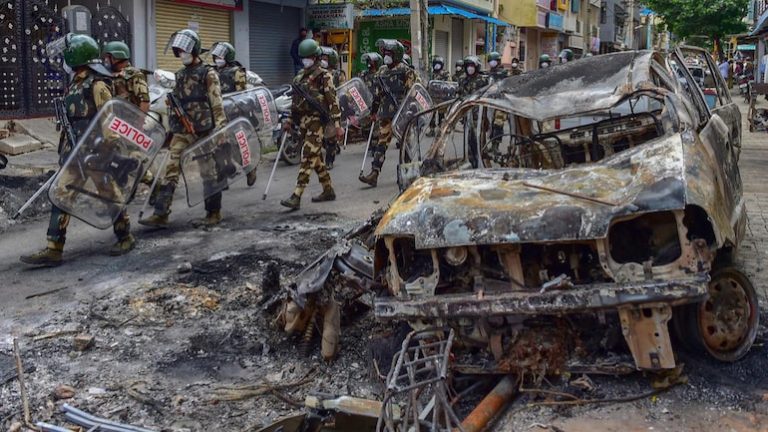
The National Investigation Agency (NIA) has taken over the investigation into the Bengaluru riots case that occurred in August. Four people had lost lives and more than 60 police personnel were severely injured following the attacks by a violent Muslim mob, enraged over a Facebook post.

According to the reports, the National Investigation Agency (NIA), taking over the probe, has named SDPI leader Muzamil Pasha for “instigating the mob” to unleash violence on the streets of east Bengaluru. The Muslim mob had attacked and torched down two police station and also the residence of Congress MLA Akhanda Srinivasamurthy.

“The state secretary of SDPI, Muzamil Pasha, had earlier called a meeting and directed the members of PFI/SDPI to instigate the mob and incite violence. The mob went on a rampage in DJ Halli, KG Halli, and Pulakeshi Nagar areas under Bengaluru City,” the NIA statement issued on Tuesday read.

The NIA also stated that more than 1000 people had gathered in front of Congress MLA Akhanda Srinivasa Murthy’s residence in Kaval Byrasandra on August 11 over a derogatory post posted by his nephew Naveen on Facebook which allegedly insulted the religious sentiments of Muslims.

Till now, about 280 people in the case have been booked under the stringent UAPA (Unlawful Activities Prevention Act) and various other provisions of the IPC. The central agency will investigate if the accused persons had links with terror organisations.

It was earlier reported that the SDPI leader Pasha, along with two other SDPI leaders, Jaffar and Khaleel Pasha had instigated the Muslim mob to pelt stones and torch vehicles near the police station. Pasha and others had been arrested.

The Bengaluru Riots

A Muslim mob went on a rampage and unleashed widespread violence in Bengaluru on the 11th of August over a Facebook post that was allegedly derogatory to Prophet Mohammad. Subsequently, FIRs have been filed which names five individuals who are said to have led a mob of 200-300 on that particular day.

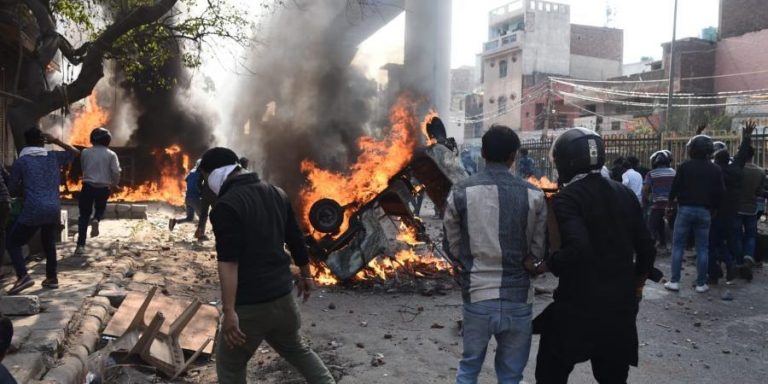
Four people were killed and more than 60 police personnel were injured in the stone-pelting and the subsequent riots unleashed by the irate Muslim mobs. At least 10 vehicles, including Innovas of two DCPs, were damaged in front of the stations. The mob also set fire to the vehicles in front of the DJ Halli police station.

During the organised riots, the violent mob, carrying petrol bombs and other weapons, also barged into the nearby police quarters and attacked the premises. The house of MLA Akhanda Srinivasmurthy was brutally attacked and damaged by the mob.

5 questions about the new Industrial Relations Code and the Occupational Safety, Health and Working Condition Code answered

In the current parliament session, three bills – Code on Occupational Safety, Health and Working Conditions, Industrial Relations Code and Social Security Code were passed to reform Labour laws.

The central government had said that there are over 100 state and 40 central laws regulating various aspects of labour such as the resolution of industrial disputes, working conditions, social security and wages. The Second National Commission on Labour (2002) found existing legislation to be complex, with outdated provisions and inconsistent definition, hence, to improve ease of compliance, the Commission recommended the consolidation of central labour laws into broader groups.

In 2019, the Ministry of Labour and Employment introduced four Bills to consolidate 29 central laws. While the Code on Wages, 2019 was passed by Parliament, Bills on other areas were referred to the Standing Committee on Labour. The Standing Committee submitted its report on the three Bills, and then, the Modi government replaced these Bills with new ones on September 19, 2020. To that end, the three bills – Code on Occupational Safety, Health and Working Conditions, Industrial Relations Code and Social Security Code were passed.

There have been several questions raised in connection with the three bills passed by the parliament and in this article, we aim to answer 5 such questions that have been raised.

The Industrial Relations Code 2020

The Industrial Relations Code seeks to replace three specific labour laws:

  1. The Industrial Disputes Act, 1947.
  2. The Trade Unions Act, 1926.
  3. The Industrial Employment (Standing Orders) Act, 1946.

Question 1: Unites up to 300 can hire and fire without seeking government permission, and thus, it might lead to increased hiring and firing

The threshold that has been increased from 100 to 300 was recommended by The Parliamentary Standing Committee. The Parliamentary Standing Committee has recommended that the threshold of one hundred workers may be increased to three hundred workers for seeking prior permission for lay-off, retrenchment and closure. In the previous provisions, the rule of prior government permission for hire and fire only pertained to factories, mines and plantations.

The criticism in this case is that this change in the law would compromise the workers’ rights and promote firing practises. However, the only change in this aspect is that units with up to 300 workers will not have to take prior permission of the appropriate Government before hiring and firing. The workers’ rights workers such as notice before retrenchment, compensation at the rate of 15 days wages per completed year of service and pay in lieu of notice period has not been compromised. 

It is to be kept in mind that there is no evidence that a change of this rule to extend it to units with up to 300 workers would promote hire and fire practises. What is also being pushed under the rug is that the Industrial Relations Code envisages an additional monetary benefit equivalent to 15 days of wages under newly created Reskilling Fund.

The Economic Survey, 2019 had analysed that due to the threshold of 100 workers, there were several businesses that were incentivised to remain a small unit. The State of Rajasthan in 2014 had increased the threshold from 100 to 300 workers and done away with the requirement of prior permission before retrenchment etc., in case of firms having less than 300 workers. The impact of increase in threshold in the state of Rajasthan, showed that average number of factories in Rajasthan having more than 100 increased significantly as compared to the rest of India.  The total output in those factories also increased.  

Following the footsteps of Rajasthan, 15 more States have enhanced threshold to 300 workers even before the Industrial Relations Code 2020 was passed. These States include, AP, Arunachal Pradesh, Assam, Bihar, Goa, Gujarat, Haryana, HP, Jharkhand, Karnataka, MP,  Meghalaya, Odisha, Punjab, Rajasthan and UP.

Question 2: Won’t Fixed Term Employment introduce hire and fire

By several people, the introduction of ‘Fixed Term Employment’ is being touted as a new rule that has been introduced by the government. However, Fixed Term Employment has already been notified by Central Government and 14 other States. These States include Assam, Bihar, Goa, Gujarat, Haryana, Himachal Pradesh, Jharkhand (apparel and made up) Karnataka, MP, Odisha, Punjab, Rajasthan, UP (textile and EOU), and Uttarakhand.

Earlier, an employer could only hire either permanent employees or contractual employees. There were several issues with this limitation. The employer often had to hire unskilled labourers with no commitment and long term relationship with the company, in case of contractual employees. There have also been allegations that the contractors charges full amount in terms of minimum wage and other entitled benefits like EPF, ESIC but do not pass the same to the contract labour.   

However, now with the introduction of Fixed Term Employment, the employer can directly get into a fixed term contract with the employee without the middleman. A fixed term employee has been made statutorily entitled for all benefits and service conditions equivalent to that of a regular employee. In fact the code on Industrial Relations also extends benefit of gratuity even for a Fixed Term Employee contract of one year which is five years in case of regular employee.

Hence, the introduction of the Fixed Term Employee option is actually a pro-labour reform that the Industrial Relations Code, 2020 has introduced.

The Occupational Safety, Health and Working Condition Code, 2020

The Occupational Safety, Health and Working Condition Code, 2020 consolidates 13 acts regulating health, safety and working conditions. These include Factories Act 1948, The Mines Act 1952, and the Contract Labour (Regulation and Abolition) Act, 1970.

Question 1: The definition of Inter-State Migrant worker is different in Inter-State Migrant Workmen Act, 1979 Act and new Code – will it create confusion?

The Inter-state Migrant Worker Act, 1979 has been subsumed in OSH Code.  The various provisions of the erstwhile Act have been further strengthened in the OSH Code. The definition of Inter-State Migrant worker is same in the Social Security Code and the OSH Code. 

The definition of the inter-state migrant worker was very restrictive in the Inter-state Migrant Worker Act, 1979. It provided that a person who is recruited through a contractor in one state for employment in another state, to be an ‘Inter-state Migrant Worker’. The OSH Code expands the definition of the migrant worker to include those workers who would be directly employed by the employer besides by contractor.  Further, it has also been made possible that a migrant, who comes on his own, in the destination State, can declare himself a migrant worker by registering on an electronic portal on the basis of self-declaration seeded with Aaadhar. The registration on the portal has been made simple and there is no requirement of any other document except Aaadhar.  

The Ministry in this regard has also taken steps to develop a national database to enrol unorganised workers including migrants, which will inter-alia help migrant workers get jobs, map their skills and provide other social security benefits.  It will also help in better policy formulation for unorganised sector workers, in general. 

A statutory provision for helpline for migrant workers has also been made.

The migrant workers will also be able to enjoy the benefits of portability in respect of ration and avail benefits from building and other construction cess. They will also get all other benefits of ESIC, EPFO and annual medical check-up etc.

Question 2: Won’t night shifts for women compromise their safety?

Gender equality in the workplace and in hiring practices has been a long-time demand. The Occupational Safety, Health and Working Condition code ensures that gender equality is maintained in workplaces and women, should they want, be entitled to get the same working opportunity, including the night shift.

However, safety of women is always a paramount concern and to that end, sufficient safeguards for employing women at night have been provided. The consent of women for employing them at night has been made mandatory. Further, it is said that the appropriate government shall prescribe conditions for safety, holidays and working hours or other conditions before permitting women to work at night.

Question 3: Have Welfare provisions been diluted in the new Codes?

It is being alleged that in the new code, several welfare benefits have been diluted and that would affect the rights and well-being of the workers. However, that allegation is far from the truth since several new provisions for the welfare of the workers have been introduced through these bills.

Following are some of the welfare provisions:

  1. There is generally a threshold of workers employees, beyond which, the government notifies certain health and safety measures. Through these codes, for establishment carrying on hazardous and life-threatening occupations, the Government can notify coverage even on establishment having workers less than the threshold.
  2. ESIC has been extended to plantation workers.
  3. Appointment letter has been made mandatory. Earlier, hiring workers without an appointment letter could be a means to exploit workers by employers. If there was no appointment letter and no record of the hire, the establishment could arbitrarily fire workers and even deny them there basic rights like ESIC, Provident Fund etc.
  4. Free annual health checkup has been introduced.
  5. The bipartite safety committee has been introduced for establishments in factory, mines and plantation in place of hazardous factories. The involvement of two separate parties in the committee ensures that the steps taken are fair to the workers.
  6. Activities of the plantation worker dealing with elements like insecticides, pesticides have been included as hazardous processes. Earlier, though the health effects of these jobs were severe, they were not considered a hazardous process and thus, these workers were not given certain benefits extended to workers in the hazardous process category.
  7. There are certain other facilities that factories and establishments have to provide, for which, the number of workers threshold has been reduced. For example, the number of workers beyond which an establishment will have to provide canteen services has been reduced to 100. Earlier, in certain acts, the threshold was higher – for example, in Factories Act and Mines Act it was 250. An establishment has to provide Crèche facilities if it employees more than 50 women, and a Welfare Officer has to be employed beyond 250 workers for factory, mine, plantation. Earlier, a Welfare Officer only had to be employed beyond 500 workers for Factories and Mines and 300 workers in Plantations.


Delhi riots accused and former JNU student Umar Khalid sent to judicial custody till October 22

0

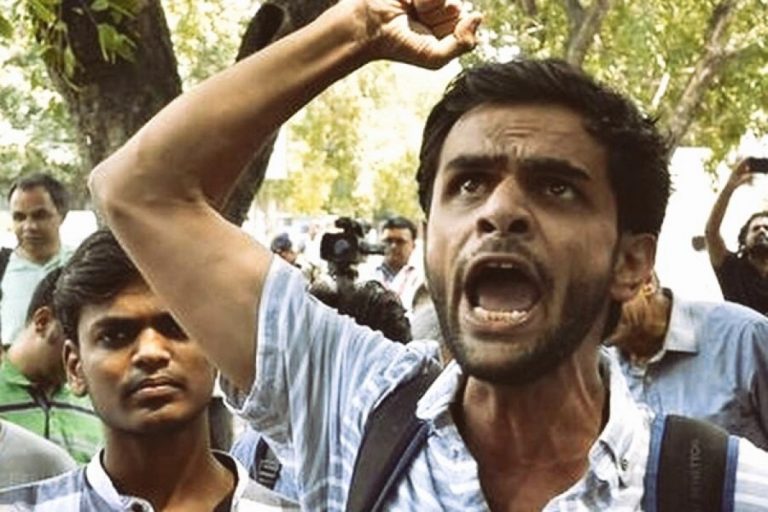
Delhi riots accused and former JNU student Umar Khalid has been sent to judicial custody till October 22 by a Delhi court. Khalid was booked by Special Cell of Delhi police under the Unlawful Activities (Prevention) Act in relation to the riots that had taken place in Northeast Delhi.

On September 21, a Delhi court had rejected Khalid’s plea in which he had requested the court to be allowed to meet his family. Khalid had contended in his plea that he had been the custody for “extraordinarily” long time and that he was given oral assurance that he would be allowed to meet his family. His request was opposed by the Investigating Officer who had said that Khalid was non-cooperative during the investigation and that he might hinder the investigation process of set free.

Alleged Role in Delhi Riots

Khalid was arrested by the police September 14 for his alleged involvement in the horrific Northeast Delhi riots. He was summoned by the police for investigation and was later arrested. In a charge sheet filed by the Delhi police and admitted by the court, it is alleged that Khalid had hatched the conspiracy of the anti-Hindu Delhi riots along with his friends during the visit of the US President Trump to India. Khalid had allegedly met the former AAP Councillor Tahir Hussain and another accused Khalid Saifi to assure logistical support during the riots through his contacts in the PFI.

“Reports say otherwise”: Justice Lalit rejects Sudha Bharadwaj’s bail plea sought on medical grounds

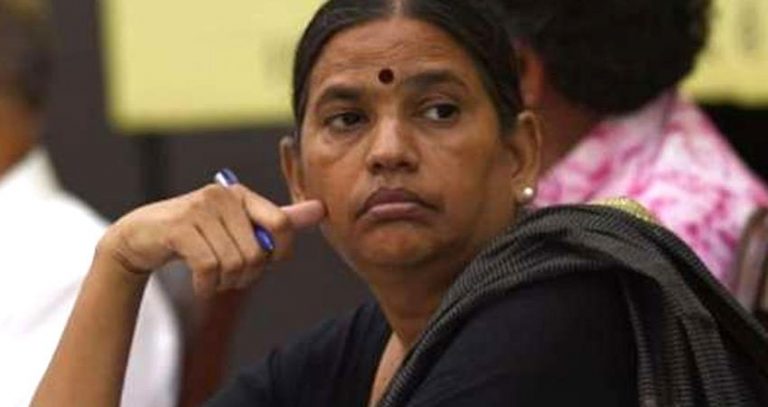
A Supreme Court Bench headed by Justice UU Lalit dismissed as withdrawn the bail plea filed by ‘Urban Naxal’ Sudha Bhardwaj’ against the order of the Bombay High Court in which the court had rejected his plea seeking interim bail on medical grounds last month.

Bharadwaj who is lodged in jail since 2018 had moved the Bombay High Court seeking interim bail after her pleas was rejected by the special NIA court. Bharadwaj, who was represented in the Supreme Court by Advocate Vrinda Grover, had pleaded that she suffered from comorbidities and was at higher risk of Covid-19. Justice Lalit said that her medical report was “good”.

Grover further pleaded that Bharadwaj also had a heart condition therefore she needed a full cardio profile and that she was only requesting for an interim bail, she will be back. She pointed out that charges have not yet been framed against Bharadwaj. When Justice Lalit asked her about the status of investigation, Grover said that there was a conspiracy hatched against her client. Justice Lalit remarked that the court not be able to grant her plea solely on medical grounds as her reports said otherwise.

Justice Rastogi, who was on the Bench hearing plea, rebuked Grover for making a statement before the Bombay High Court that the report was false. “Who made the statement in the High Court saying that this report was false”, Justice Rastogi questioned Gover.

Justice Lalit told Grover that the court would dismiss the application if she did withdrew it.

The Bhima Koregaon Case

Bharadwaj along with several other ‘intellectuals’ was arrested in relation to the Bhima Koregaon violence. An event called Elgar Parishad was organised in 2018 to commemorate the battle of Bhima Koregaon in which Dalits had fought in the British Army with the Peshwas which had resulted in extreme violence.

Anti-Hindu Delhi Riots: Salman Khurshid, Prashant Bhushan, Kavita Krishnan named in the disclosure statement of the accused

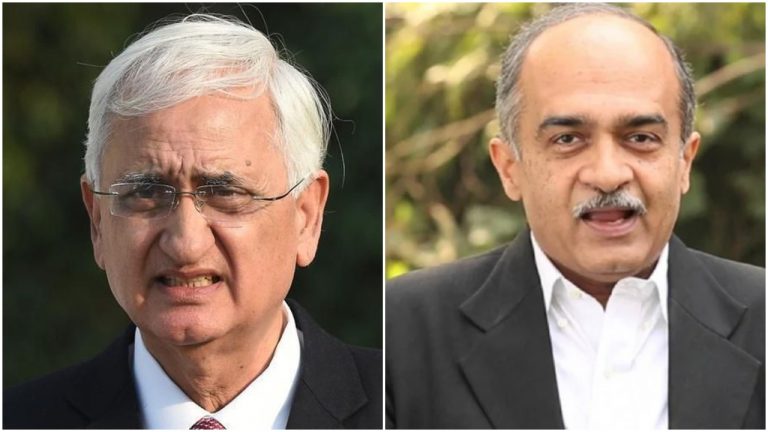
The Delhi Police have named various senior Congress, CPM leaders as well as lawyer-activist like Prashant Bhushan in the charge-sheet filed in connection with Anti-Hindu Delhi riots.

According to the reports, former Union Minister Salman Khurshid, CPM leader Brinda Karat, Prashant Bhushan was among the ones who gave provocative speeches during the protests against the Citizenship Amendment Act (CAA), said the Delhi police in the charge-sheet. Addition to these names, far-left ‘protestors’ Kavita Krishnan, Kawalpreet Kaur, Gauhar Raza have also been named mention in disclosure statements of accused persons in a charge-sheet filed by the Delhi Police.

The name of Congress leader Salman Khurshid was mentioned in the disclosure statements of accused Khalid Saifi as well as former Congress councillor Ishrat Jahan. The disclosure statement of Saifi mentioned that to keep the protest going and sustaining it for long, he and former Congress leader Ishrat Jahan had invited the likes of Khurshid, to deliver “provocative speech”.

The statement of a protected witness, made under Section 164 CrPC, has also named Salman Khurshid stating that the Congress leader had made a provocative speech.

Prashant Bhushan, Kavita Krishnan named in the charge-sheet

Similarly, controversial activist and Supreme Court advocate Prashant Bhushan has been named in the disclosure statement of Saifi and Ishrat Jahan, who have allegedly blamed Prashant Bhushan for giving a provocative speech at Khureji.

Raza, who is claimed to be a ‘scientist’, has been mentioned for “instigating Muslims” through his speech at Khureji. A protected witness confessed that Raza, along with others, “spoke wrong and objectionable things against CAA, NRC and the current government, and instigated Muslims”.

Kawalpreet Kaur, another left-wing activist’s name has also been named in the disclosure statement of Saifi dated May 25, in which he said he was in touch with Kaur and others to “plan with them” and get them to send “provocative messages/tweets” so that the “Muslim community feels angered towards the government and its policies due to religious reasons”.

The charge-sheet filed by the Delhi Police further said that Ishrat Jahan, in her disclosure statement, alleged that in order to sustain the anti-CAA protests, filmmaker Rahul Roy and Bhim Army member Himanshu were also invited by her and Saifi on the instructions of Jamia Coordination Committee (JCC).

Delhi court admits charge-sheet filed by Delhi Police

Earlier, this week, the Delhi Court admitted the charge-sheets filed by the Delhi Police against the 15 accused in the Delhi riots. In its charge-sheet, the Delhi police had alleged that the anti-Hindu Delhi riots that took place in February were the result of a pre-planned conspiracy.

The Delhi police had invoked various sections of the Unlawful Activities (Prevention) Act (UAPA) along with the Indian Penal Code in the case. The case emanates from FIR No. 59, which was lodged by Delhi Police’s Crime Branch on March 6, 2020.

The Delhi Police has named 15 prime accused in the Anti-Hindu Delhi riots case that includes former Aam Aadmi Party leader Tahir Hussain, former Congress leader Ishrat Jahan, self-proclaimed activist Khalid Saifi, Jamia Coordination Committee members Safoora Zargar and Meeran Haider.

Far-left ‘activists’ and members of Pinjra Tod members – Devangana Kalita and Natasha Narwal have also been named in the charge-sheet along with Jamia Millia Islamia (JMI) student Asif Iqbal Tanha.

‘We’ll have to spill the blood of these kaafirs’, eyewitness’ testimony shows Delhi riots were well-orchestrated: Reports

A sensational testimony of an eyewitness to the February 2020 anti-Hindu Delhi riots proves beyond doubts that the violence were well orchestrated and was not a spontaneous action.

The testimony accessed by Times Now confirmed that an eyewitness has said before the magistrate that the violence was planned in the meetings held before the riots took place in the national capital. The eyewitness confessed that “Sadko par utrenge”, “Khoon bahayenge” calls were made and the Muslim mob was brainwashed into taking to the streets.

The eyewitness, who had attended the meeting which was conducted to plan the riots, said that in the meetings it was discussed that only protesting would not help. They would have to hit the streets and cause bloodshed to achieve the “cause”- that is to stir up communal violence.  

The extremists who conducted these meetings told the attendees, “Yahan bethe rehne se kuch nahi hoga, sadko par utarna hoga” (sitting here will not help, we will have to hit the streets), furthering that they would also need to gather weapons.

The eyewitness said that the violence was systematically planned beforehand, in these meetings. It was discussed that though they would speak about “bhaichara” (brotherhood), tolerance and violence against Muslim, their main aim would be to do “chakka jam” (block traffic) as a means to protest against the Citizenship Amendment Act (CAA). The eyewitness confessed how they were brainwashed into perpetuating the violence.

The eyewitness confirmed that it was discussed in the meetings that even if they were required to shed blood to coerce the government into taking back the law (speaking about revoking the Citizenship Amendment Act), they should not hesitate. It was discussed that it was pertinent that the blame of the violence was pinned on others. They contended how they should exert pressure on the Delhi’s CM to put the onus of the violence on to the Delhi police instead on them.

The conspirators discussed that they would have to shed blood of at least 2 to 4 cops. “We’ll have to spill the blood of these kaafirs“. When the magistrate reportedly asked the eyewitness as to who were these Kaafirs, he said that all the non-Muslims were Kaafirs.

The eyewitness confirms to the magistrate that Yogendra Yadav, filmmaker Rahul Roy and Saba Dewan were a part of the meeting and in addition to that the former Jawaharlal Nehru University student-Umar Khalid was part of the Whatsapp group called ‘Delhi Protests Support Group’, which he was administrating along with Safoora Zargar and several others.

The Delhi police also mentioned in its charge sheet that former JNU students Umar Khalid and Sharjeel Imam used social media to radicalise youth and mobilise them for the ‘chakka jam’ as a means to protest against the Citizenship Amendment Act (CAA).

Notably, the charge-sheet had stated that the conspiracy to cause communal riots was hatched by Umar Khalid and his friends during the visit of United States President Donald Trump to India. 

On September 14, Delhi police have summoned documentary filmmakers Rahul Roy and Saba Dewan for questioning in connection with the North-East Delhi riots, a day after they arrested former Jawaharlal Nehru University (JNU) student Umar Khalid on charges of conspiracy in the case.

OpIndia’s extensively documents events that led to the anti-Hindu riots

OpIndia in its extensive report on the anti-Hindu Delhi riots concluded how the communal violence in the national capital was the manifestation of deep-seated bigotry that festers in the hearts of the anti-CAA protesters. Our report documented the anti-CAA protests and other significant developments related to the matter from the month of December when violence first broke out not only in Delhi but across the country. We reported the manner in which politicians, non-governmental organisations and ‘civil society’ joined hands with the extremist elements within the Muslim community to wreak havoc across the country.

Delhi Court admits charge-sheets filed by the Delhi Police against accused in the Delhi riots

Meanwhile, on September 19, a Delhi Court has admitted the charge-sheets filed by the Delhi Police against the 15 accused in the Delhi riots. In its charge-sheet, the Delhi police had alleged that the anti-Hindu Delhi riots that took place in February were the result of a pre-planned conspiracy.

The bills will bring a revolutionary change in farmers’ life: Minister of Agriculture and Farmer Welfare, Narendra Singh Tomar

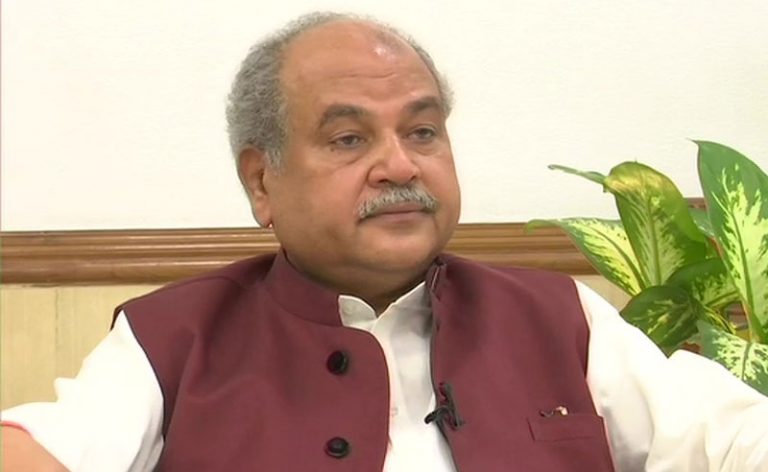
While talking to ANI, Minister of Agriculture and Farmer Welfare, Narendra Singh Tomar, said that the agriculture bills that have been recently passed in both houses would bring a revolutionary change in the lives of the farmers.

He said that during the first tenure of PM Modi in the office, the government decided to ensure a 50% increase in the Minimum Selling Price (MSP) in order to improve the financial condition of the farmers. The government took several initiatives to improve productivity and reduce the cost of farming.

A mission to double the income

He said that when the government announced that by 2022, they want to double the income of the farmers, several meetings were done with the states and the stakeholders to formulate the plan. As a part of the initiative, the government announced PM Kisan Samman Nidhi Yojana under which every registered small and marginal farmer will get Rs.6000 every year divided into three instalments. Under the scheme, the government has paid Rs.93,000 crore to the farmers.

The government has decided to open 10,000 Farmer Producer Organization (FPO) centers across the country to help small and marginal farmers. The government is going to spend 6,850 crores on the scheme in five years. These centers will help them in improving their production and income. The government has also announced a 1 lakh crore infrastructure fund in the field of agriculture.

Why are new bills essential?

The union minister said that the new bills dubbed as Farmers’ Produce Trade & Commerce (Promotion & Facilitation) Bill, and Farmers (Empowerment & Protection) Agreement of Price Assurance & Farm Services Bill would help in removing the hold of the Agricultural Produce Market Committee (APMC) from the market. These bills will enable the farmers to sell their produce at a higher price directly to the buyers without any middleman.

He said, according to the present system, the farmer brings the produce to the market. 25-30 licensed traders hold the auction for the produce. The farmer has to sell the produce at the price they have decided. The farmers often bend down to the price the market chooses to, due to the fact that most of them cannot afford to take the produce back with them. This act will enable the farmer to sell the produce in the market or outside the market directly to the end-buyer.

The end of the state and center tax

Tomar said that anyone who sells the produce outside the APMC market would not have to pay tax to the centre or the state. He said that these bills should not be seen as an end to the APMC market. APMC act functions at the state level. The farmer will have the right to decide where he wants to sell the produce. He can either trade in the APMC market, or he can sell in accordance with the new reforms introduced by the central government.

MSP and procurement of the produce by the government

The union minister said that the government would continue to procure the produce from the farmers. MSP has already been announced for the Rabi and Kharif crops. As soon as the Kharif crop comes to the market, the government will start the procurement procedure. He said that those who are raising questions on MSP should answer if it was a part of any law before. MSP was never a part of any law.

About contract farming

When he was asked about the concerns where some experts suggest these bills will only work in favor of contract farming, he said they do not understand the agriculture sector itself. He said that the bills would help the small farmers in the long run as they will not be forced to bring the produce in the APMC market. They will save on the logistics as the sellers will be able to buy the produce directly from the farm.

The minister said the small formers would be able to form a group in their villages and sell their produce together. He said as the buyers will know that they produce will not reach the market, they will work on contacting the farmers to get products directly. When he was asked that there are concerns that corporate will exploit farmers, he said that bills passed give MSP guarantee at the time of sowing a crop.

Also, as per the law, the contract between the corporate and the farmer will only be for the produce and not for the land. The farmer will have the right to nullify the agreement at any stage, but the corporate cannot step out of the agreement. If there is any dispute, and the decision is in favor of the corporate, the farmer only has to pay the amount that the corporate has paid as initial payment. The cases related to any dispute between the corporate and the farmer will be handled by Sub Divisional Magistrate. As per the law, the SDM has to resolve such cases in 30-days of filing.

About food security

Tomar was asked about food security during the interview. There are some concerns that, due to the lack of incentive in conventional crops, the farmers will shift to cash-crops. It will lead to a decline in the production of traditional crops that are essential, especially in the time of need, such as the current situation of the pandemic. The buffer stock is being used extensively during the Covid-19 widespread across the country.

Tomar said that India has a surplus of buffer stock of essential grains. India does not have enough storage capacity to store the produce. Every year tons of crops go bad due to the lack of storage capacity. Also, it is the need of time that the farmers shift to crops that utilize lesser resources to fight climate change. It will be good if farmers choose to grow crops that require a lesser amount of water and chemical fertilizers. The crops that can provide higher profit at less cost will be beneficial for the farmers.

The noise from the opposition is only a political game

Towards the end of the interview, Tomar said that during his reply in the parliament houses, the opposition parties raised voice against the bill without providing any base to their objections. He said when he was asked to answer the queries of the MPs, he thought he had to talk about the bills, but the queries were just political noises and are not meant for the welfare of farmers.

More details about the bills can be read here.

ABP journalist manhandles and slaps psephologist Pradeep Bhandari

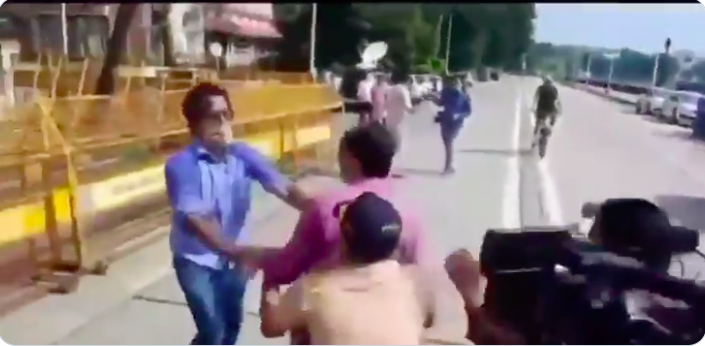
ABP journalist Manoj Verma manhandled and slapped Republic TV journalist and psephologist Pradeep Bhandari while reporting from Mumbai, Maharashtra.

Speaking to OpIndia, Bhandari said that Verma even broke his goggles and phone. “They are like hooligans,” he said.

“I was punched for asking drug-related questions. Maybe because of their falling TRP which is 14. These are all dalals who don’t ask questions. Mumbai Police also asked me to speak softly,” Bhandari said.

Bhandari was in Mumbai near the Narcotics Control Bureau (NCB) covering the bollywood drug abuse scandal where he was manhandled by the ABP News journalist.

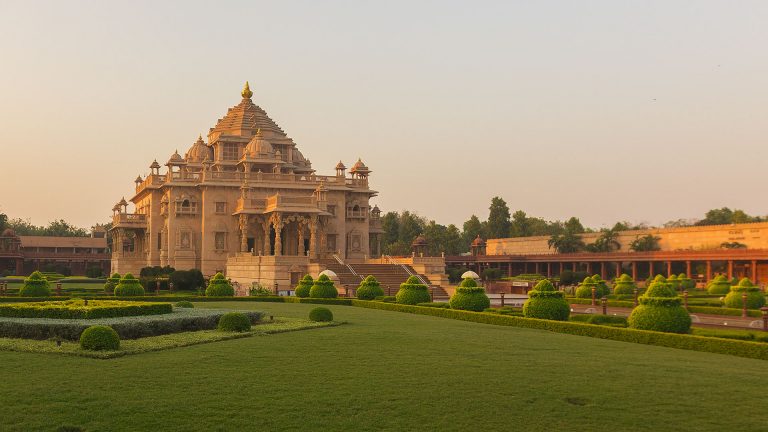
Akshardham Temple attack: 18 years ago, on this day, two terrorists laid siege on our faith

0

Eighteen years ago, on 24th September 2002, two terrorists attacked the Akshardham Mandir, Gandhinagar, Gujarat. 30 people were killed in the attack, and 80 were injured. Laskar-e-Taiba was believed to be behind the attack. Here is the sequence of events that happened during the attack.

The entry of two terrorists on 24th September

As per the reports, at 4:45 PM, two terrorists were dropped off at Gate 3 of the Akshardham Temple Complex. They tried to enter the complex, but BAPS volunteers working in the temple premises stopped them for security screening. Bochasanwasi Akshar Purushottam Swaminarayan Sanstha (BAPS) is the organization that manages the temple.

The terrorists skipped the screening to jump over a high fence. They started firing while making their way through the amusement park in the complex. They rushed towards the main walkway of the complex while firing and throwing grenades at innocent pilgrims. Witnessing the attack, BAPS volunteers, including the temple supervisor Khodsinh Jadhav, communicated with the volunteers present in the main temple and asked to shut the doors immediately.

CM’s office informed about the attack

At around 4:48 PM, the Chief Minister’s office was informed about the attack. Within 15 minutes, state police and commando units reached the premises. They escorted hundreds of pilgrims present in the premises to the safety, and many local individuals came forward to help provide support to transport injured to the hospitals.

Targets shifted

When terrorists realized they could not open the main temple doors, they got into the Exhibition Hall 1 where a multimedia show was being played. They fired shots at the audience resulting in death and injuries to men, women, and children present in the hall. After leaving the Exhibition Hall, they hid in the parikrama.

Evacuation continued

While the security forces searched for the terrorists who were hiding in an alternative spot, they kept on evacuating visitors from the premises. The pilgrims present in the main Temple were escorted out at around 7:30 PM. Realizing there is no escape, the terrorists jumped out of the parikrama area and fired on the commandos.

NSG called

At around 5:15 PM, then-CM Narendra Modi called Deputy Prime Minister LK Advani and asked for National Security Guards to manage the situation. At around 10:10 PM, NSG commandos reached Akshardham. At around 11:30 PM, they started the operation. The terrorists entered a bathroom to hide around midnight. By that time, several security agencies, including Rapid Action Force, Border Security Force, State Reserve police and Anti-Terrorist Squad, had reached the premises.

Terrorists neutralized next day

As the sun started to rise, the terrorists became impatient and fired continuously on the security forces. At around 6:45 AM, the commandos managed to neutralize the terrorists who by then had moved into bushes close to Exhibition Hall 3.

Several lives lost

30 pilgrims, one state police officer, and one commando lost their lives during the attack. Another commando was seriously injured and died later in the hospital after fighting for his life for two years.

Reopening of Akshardham Temple

On 7th October 2002, the temple premises were reopened for the public. Several steps were taken by the temple administration and the state government to ensure improved safety measures.

POTA court convicted and sentenced the six accused but they were acquitted by the Supreme court in 2014 in lack of evidence. An absconding accused was arrested by ATS in 2019 from Jammu and Kashmir.

Triple talaq to child marriage: All the crimes against ‘Bilkis’ that Indian liberals would have supported

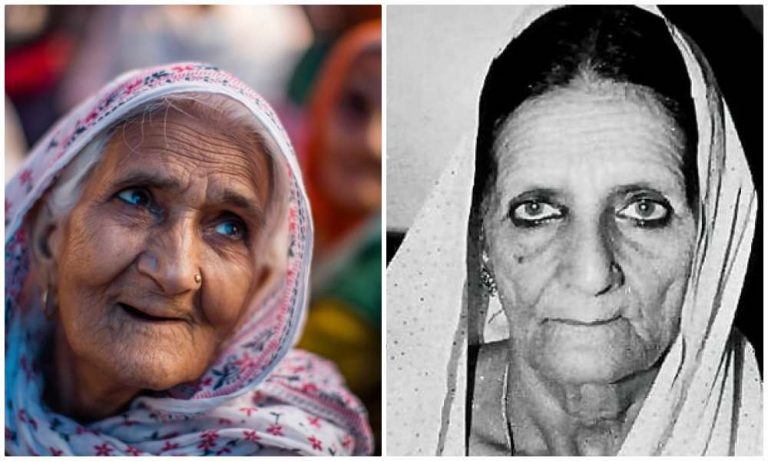
If you stand in the crowd at Mumbai’s CST station, you are likely to come across at least one Bilkis. A common name for an Indian Muslim girl, “Bilkis” could be almost anyone among the great masses. But today, among the 1300 million citizens of India, one Bilkis stands apart.

Indian liberals are very proud of her. The 82 year old Bilkis has been featured as one of the most influential people in the world by TIME Magazine.

At 82 years of age, Bilkis must have seen a lot of life. This is not a biography of Bilkis. I do not know about her, except that she was part of the protests at Shaheen Bagh in Delhi. Like I said, Bilkis could be any face in the crowd. This is a telling of all the things that could have happened to someone named Bilkis as she grew up in India, all the way to the ripe old age of 82. All the crimes that could have been committed against her. All the crimes that would have been approved by Indian “liberalism.”

What if ‘Bilkis’ was a 62 year old mother of five, who had dedicated her whole life to raising her children? And what if her husband had one day pronounced a talaq against her and turned her into the street, without a single paisa to her name? What if, at the age of 62 years, she found the strength to approach the Supreme Court and actually win the right to alimony? What would liberals do? Would they want to see her on the cover of TIME Magazine?

No. Of course not. Indian liberals would want Parliament to call an emergency session and pass a law to deprive her of the means of living. The liberals would go on to proudly call this the “Muslim Woman (Protection of Rights on Divorce) Act.” She would receive the “protection” of losing everything. Like George Orwell said, “Freedom is slavery.”

What if ‘Bilkis’ was a woman living an ordinary married life and one day her husband just decided to get rid of her? All he would have to do is say “Talaq – Talaq – Talaq.” Three times. That’s all. If he was an even bigger coward and unable to look her in the eye, he could just say the words by SMS. And she would be out of his life instantly. She would have been cast away with no rights to anything. Indian liberals would have supported that.

What if ‘Bilkis’ gave up her self respect and begged and pleaded on hearing those three words, or reading them in an SMS? What if her begging and pleading melted her now ex-husband’s heart and he agreed to take her back? What would ‘Bilkis’ have to do? First, she would have to sleep with a strange man as part of “Nikah-Halala.” Indian liberals would have supported that too.

What if ‘Bilkis’ was 30 years old and suddenly heard the terrible news that her father had passed away? Her father would have worked hard his whole life to leave something for all his children, whom he would have loved equally. So can ‘Bilkis’ get an equal share of the inheritance?

Not if ‘Bilkis’ had any brothers. As a daughter, she would be entitled to receive [pdf] only half of what her brothers get. Actually, that’s wrong. As a daughter, she isn’t “entitled” to anything. Muslim personal law divides people into “sharers” and “residuaries.” The sons are “sharers” : they are the ones who are entitled to a share of the property. As a ‘daughter’ she can only be a “residuary”: those who take up what is left over after the sharers have taken their part!

Equal citizen of India. But not equal in the eyes of the law. Indian liberals support this.

What if ‘Bilkis’ was a mere teenager, perhaps 15 or 16 years old? At that age, she would most likely be starting to develop an interest in boys. Perhaps thinking about holding hands with a boy or dreaming about her first kiss. Not old enough for marriage. Or for that matter, dating anyone seriously. She would have too much homework at school anyway. Could they take young ‘Bilkis’ and force her to get married? They absolutely could. A Muslim girl in India can be legally married off once she has hit puberty. Liberals support this as well.

What if ‘Bilkis’ was a naturally curious 10 year old girl, with an interest in math or science? Would her teachers at school spot her talent and try to nurture it? Well, not necessarily. Her “school” could be a madrassa that does not even teach science or math. It would still be called a “school” despite the fact that it doesn’t teach math or science. In 2015, the Govt of Maharashtra decided that in order to be recognized as a school, it must teach math and science. Liberals were very angry with this. They said this was an example of “intolerance.” When has anything good ever come from teaching math and science to kids?

What if ‘Bilkis’ was a six or seven year old girl and they decided to mutilate her genitals? Should that be legal? Indian liberals seem to think it should be. As for the Supreme Court, they have referred the matter to a larger bench. They are still thinking. We will know when the honorable justices have made up their minds.

And finally, let us get back to a protest site such as Shaheen Bagh. What if ‘Bilkis’ was an infant, a newborn barely a few days old? What if her mother and father kept taking her out to the protest in the bitterly cold Delhi winter nights? What if ‘Bilkis’ was coughing, but she was so little that nobody even noticed? What if one day, her struggles suddenly came to an end, without so much as making a sound? And she left the cruel world, just a few weeks old? All this while, secular intellectuals would be circling like vultures, making provocative speeches and glorifying the mothers for bringing babies out there. And of course, scouting for a kind looking 82 year old grandmother to put on the cover of TIME Magazine…

Like I said before, ‘Bilkis’ could be any face in the crowd. In India, ‘Bilkis’ could come in many forms. But Indian liberals love just one of them.