Home Blog Page 5265

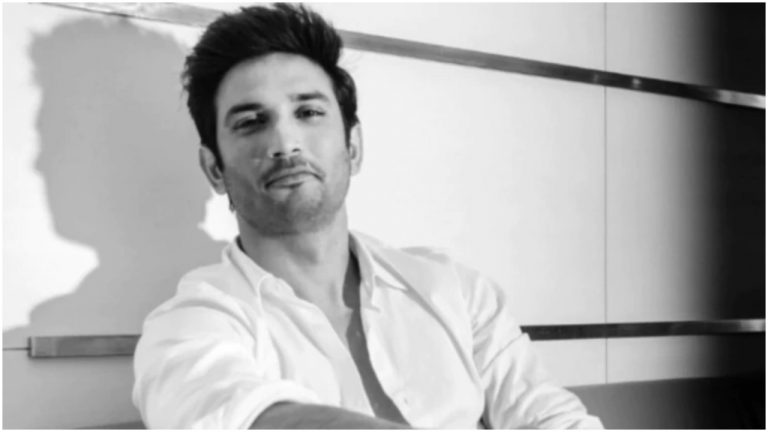
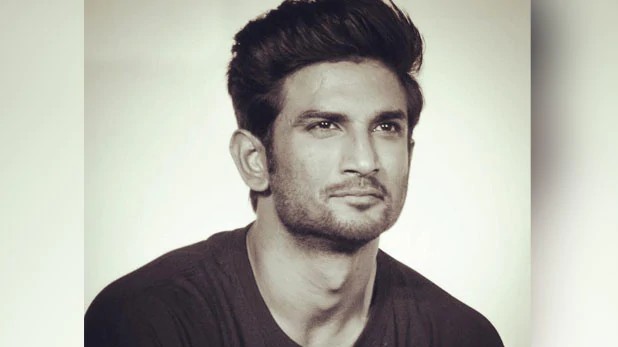
Sushant Singh Rajput: Pakistani celebrities get attacked for mourning death of a ‘kaafir’ who committed suicide

Pakistani celebrities who mourned the death of Bollywood actor Sushant Singh Rajput were attacked by their fellow countrymen for mourning death of a ‘kaafir’ (non-believer). Pakistani cricketer Shan Masood, who took to Twitter to express his grief over Rajput’s passing was abused for wishing peace upon death of a ‘kaafir’ who committed suicide.

He was told not to pray for peace for the departed soul who is not a Muslim. He was also accused of being a ‘liberal’ for mourning death of a Hindu.

Similarly, Pakistani actress Mahira Khan, who has also acted in Bollywood films, was attacked for mourning over Rajput’s suicide.

One Bushra with Pakistan flag next to her name was particularly hateful without provocation. Another Twitter user explained how suicide is ‘haram’ and anyway a ‘kaafir’ cannot go to heaven. One person even gave a suggestion to Mahira that it is good to show humanity but don’t forget religion for ‘kuffars’ (kaafirs).

Similarly, Pakistani actor Humayun Saeed was also attacked for praying for a ‘kaafir’.

He was also asked to brush up on his Islamic knowledge.

Actor Sushant Singh Rajput commits suicide

Bollywood actor Sushant Singh Rajput was found dead in his Mumbai apartment earlier today. As per initial reports, he had committed suicide by hanging himself. He rose to fame from television serial Pavitra Rishta and was seen in Bollywood films like Kai Po Chhe and MS Dhoni biopic.

Read what ‘kaafir’ is and how Allah punishes them as per Islamic scriptures.
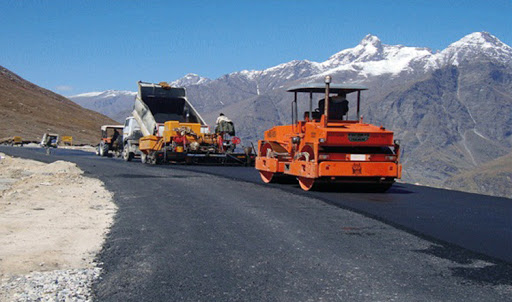
India to complete the construction of strategic Darbuk-Shyok-Daulat Beg Oldie (DSDBO) road in Ladakh by year-end: Read details

Amidst the ongoing tensions between India and China along the Line of Actual Control (LAC) over the border dispute in eastern Ladakh resulting in military buildup by both the sides, the Indian security establishment, understanding the seriousness of the border infrastructure, seems to be hurrying upon completing the infrastructure projects that are critical to national security.

According to an ANI report, the Border Roads Organisation (BRO) is expected to complete the work on the 255 Km-long strategic Darbuk-Shyok-Daulat Beg Oldie (DSDBO) road including eight bridges. The BRO will also finish blacktopping at some of the stretches by the end of this year.

“We are planning that the work on the entire stretch should be complete by the end of this year which includes eight bridges of different sizes and blacktopping of the road at some of the stretches,” government sources said to ANI.

The report said that senior sources in the government told them that the labour workforce from Jharkhand has started the movement towards the high altitude locations in Ladakh. The workforce in Jharkhand is considered to be the most suited for working in this hilly terrain as they adapt to the conditions there very well, the sources said to ANI.

With the construction of DSDBO road, there will be a reduction in time of travel for the Indian security forces moving from Leh to Daulat Beg Oldi to six hours.

The BRO gets a very narrow working window in the Eastern Ladakh sector as only four to five months available due to the extreme cold conditions there. The construction of the strategic road has been making for over two decades now, but a special focus was laid on it after the Narendra Modi government came to power in 2014.

Northern Army Commanders, the Border Roads Organisation project chief engineers and commanders of the 81 Brigade looking after DBO have been working in close coordination in the last many years to make sure that the project is completed in time. The engineers also keeping in mind regarding the manner in which the road remains an all-weather road.

The bridge connecting the Patrolling Point 14 in Galwan area with the territory across the Shyok river is also linked to the strategic road.

Strategic importance of Darbuk-Shyok-Daulat Beg Oldie (DSDBO) road

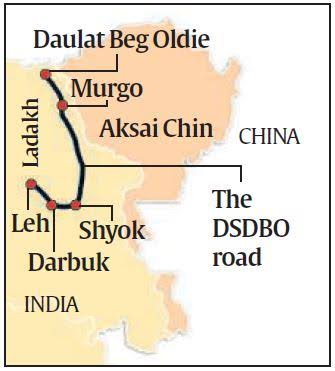
The DSDBO road, which runs parallel to LAC, passes through altitude ranging between 13,000 ft and 16,000 ft connecting Ladakh’s capital city Leh, through the villages of Darbuk and Shyok at southern Shyok Valley, with the Daulat Beg Oldi (DBO) post near the China border.

The strategic road which has now caused worry for the Chinese, is actually not new but large segments have been realigned and rebuilt by the BRO. The construction of the DSDBO Road by the Border Road Organization (BRO) began 19 years ago in the year 2000 under direct monitoring of the PMO. It was fast-tracked in 2014 after Narendra Modi became the Prime Minister of the country.

Image Source: Ashu Muglikar

The strategic importance of the DSDBO road is that it connects Leh to DBO, virtually to the base of the Karakoram pass that separates China’s Xinjiang Autonomous Region from Ladakh. DBO is the northernmost corner of Indian territory in Ladakh, in the area better known as Sub-Sector North by the Indian Army.

Most importantly, from the DSDBO road, a road is being built towards Galwan Valley, a hill feature. The branch road, which is critical for India to overlook the LAC has prompted the Chinese to object and start the current stand-off in Galwan Valley.

For years, the Indian troops have been patrolling near these areas. However, with all-weather road connectivity will provide a huge advantage to Indian troops. Meanwhile, China has objected to the construction of the road and does not want India to continue the construction of the DSDBO, which has now led to the ongoing confrontations.

Incidentally, Daulat Beg Oldi also has the world’s highest airstrip, originally built during the 1962 war but abandoned until 2008, when the Indian Air Force (IAF) revived it as one of its many Advanced Landing Grounds (ALGs) along the LAC, with the landing of an Antonov An-32.

The Indian Army maintains helipads and a gravel airstrip here, the highest airstrip in the world. The outpost is strategically important as it helps Indian Armed Forces to keep a check on Chinese troops that patrols along the Line of Actual Control.

DSBDO highway gives direct access to Tibet-Xinjiang highway, Pakistan-occupied-Kashmir

Reportedly, The under-construction DSDBO highway gives a strategic advantage to the Indian military as it provides direct access to the section of the Tibet-Xinjiang highway that passes through Aksai Chin. The road runs almost parallel to the LAC at Aksai Chin, which is part of Union Territory of Ladakh, which was later occupied by China in the 1950s, leading to the 1962 war in which India.

The DSDBO’s emergence has resulted in Chinese getting increasingly worried, which was evident by PLA troops intruding into India in 2013 at Depsang Plains, lasting nearly three weeks.

Additionally, the Pakistan-occupied areas of Gilgit Baltistan, which is west of DBO is the region, can also be overseen once the strategic DSDBO road is completed. The Gilgit Baltistan is also the region where China is funding the China-Pakistan Economic Corridor (CPEC) in Pakistan-Occupied Kashmir (PoK), to which India has expressed strong objection.

The DSDBO, which ends at Daulat Beg Oldi is at the northern tip, just south of the areas which were ceded by Pakistan to China in under a Sino-Pakistan Boundary Agreement, contested by India.

Coronavirus: Centre gives 500 Railways coaches to Delhi to provide 8,000 beds, Radha Soami Satsang Beas campus to be turned into 10,000 bed facility

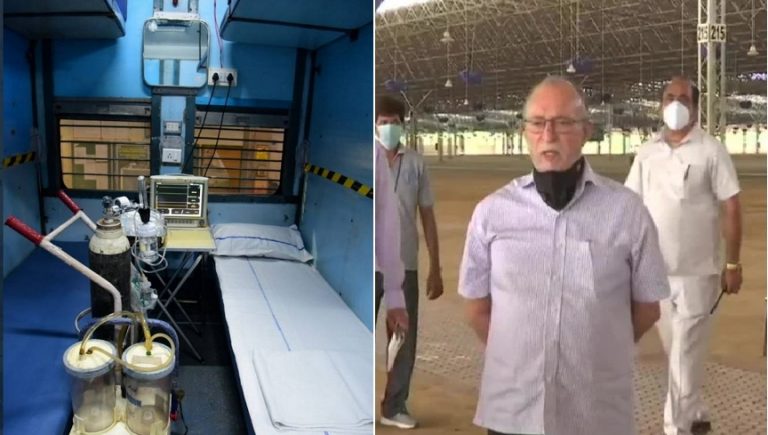
Amidst the rising cases of Coronavirus cases in Delhi, coupled with the mishandling of the pandemic by Arvind Kejriwal-led-Delhi Government, there has been an acute shortage of space to treat patients while maintaining adequate social distancing. Amid this situation, the central government has decided to give 500 railway coaches to the Delhi government on an immediate basis to help in the fight against Coronavirus.

This was decided in a meeting held by Union home minister Amit Shah today to review the alarming situation in Delhi amid the pandemic. The meeting was attended by union Health Minister Dr Harsh Vardhan, Delhi LG Anil Baijal and Chief Minister Arvind Kejriwal.

These 500 railway coaches will result in 8,000 beds available for patients. These beds will be equipped with all facilities required for the treatment and care of Covid 19. This move will significantly increase the number of beds available for Coronavirus patients in Delhi.

Apart from this, it was also decided in the meeting that Coronavirus testing will be doubled in the next 2 days, and it will be tripled in the next 6 days.

Radha Soami Satsang Beas campus to be turned into a Coronavirus treatment facility

In another significant development in the national capital, Lieutenant Governor of Delhi, Anil Baijal inspected the campus of Radha Soami Satsang Beas in Chhatarpur in Delhi on Sunday for setting up a Coronavirus treatment facility with a total capacity of 10,000 beds.

“There is a need for additional medical infrastructure to fight the Coronavirus pandemic. We have come here to inspect the site. I was told that necessary facilities are available here. We will see what challenges come our way. We are here to check the feasibility (of turning it into a COVID-19 facility). We have the District Magistrate here who is taking note of all requirements. We will let you know once a decision is made”, Lieutenant Governor Anil Baijal was quoted as saying. “This is a unique joint venture between the government and a community group and will be a great help to meet the projected requirement of beds,” Anil Baijal said after inspecting the site.

15000 beds required in Delhi

On Wednesday, Satyendra Jain, the Health Minister of NCT Delhi, had stated that the capital was likely to witness another 30,000 coronavirus cases in the following 12-15 days. While speaking to ANI, Satyendra Jain further added that orders had been issued to increase the number of beds by 2000 in the following 2-3 days. It is expected that Delhi will need 15000 beds by the end of the month. Jain said that Delhi would use space available in banquet halls, hotels, and stadiums when required. On Thursday, Jain claimed that most cases of Coronavirus in Delhi was due to community transmission, but was later refuted by Deputy CM Manish Sisodia.

UP Police challans a groom for not wearing a mask in Ramgarh district

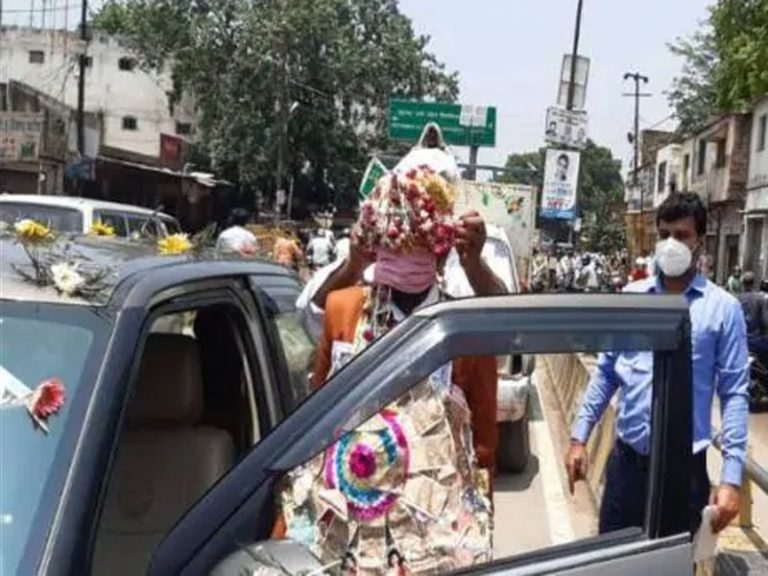
A groom was going for his wedding in Rampur district of Uttar Pradesh when police stopped him and issued a challan for not wearing a mask. The UP government has issued strict orders for everyone to wear masks while going out of the house. Currently, only 50 people are allowed in a wedding that too after taking permission from the local authority.

Groom apprehended during checking

When the police apprehended the groom, he was wearing sehra and garland of notes, but he ignored the government’s instructions to wear a mask. Rampur district’s local administration has issued strict orders to follow social distancing and wear masks to stop coronavirus spread. The markets are open in the district, but everyone has been asked to follow social distancing while shopping.

District Magistrate Rampur noticed him when he was passing through Anjaney Kumar Singh Johar Ali Marg. He stopped him and issued a challan for not wearing a mask. He said in his statement that there has been an increase in the number of Covid-19 positive cases in the last few days. The administration has issued strict orders to take extra precautions.

He added that when someone takes permission for marriage from the administration, they must follow the security measures like social distancing and wearing masks. They mustn’t touch the mouth without washing hands. When the administration provides permission, they give a list of terms and conditions that must be followed by both bride and groom sides.

Increasing cases of Covid-19 in India

In the last 14 days, since unlock-1 was announced, India has seen a spike in coronavirus-positive cases. Maharashtra, Delhi, Tamil Nadu and Gujarat are among the worst-hit states. The health ministry of India has issued several advisories and the states are taking all measures in their power to stop the spread. With an increase of more than 10,000 cases in a day, it is essential to follow all the instructions provided by the administration to prevent the spread of the infection.

Rajasthan police arrest one Riyaz who had introduced himself as a Hindu man to entrap, rape and blackmail minor Hindu girl

On June 8, the Rajasthan police reportedly nabbed one Riyaz for raping a minor girl and threatening to make the video clip of the heinous act viral. The incident occurred in the Lasani village in Rajsamand district of Rajasthan. Reportedly, the accused and two of his accomplice, namely, Sulaiman and Saiyed Anwar, tortured the victim into converting to Islam and coerced her into marrying Riyaz. Since the girl was a minor at the time of her rape, a case was registered under relevant sections of the POCSO Act at the Deogarh police station.

As per the report, the victim who is now 19 has complained that the accused Riyaz came to her house to drink water, 4 years ago. Later, they got along and had a physical relationship. Riyaz had initially introduced himself with a Hindu name but the victim later found out that he was a Muslim. Although he pressured her into marriage, she broke off the relationship. The cops informed that the accused then raped the victim, recorded the crime and threatened to make the video viral, in case she did not give in to his demands.

Forced to convert to Islam

On June 1 this year, the accused along with Sulaiman and Saiyed Anwar took the victim to a dargah and coerced her into agreeing to the nikah (Islamic marriage). Reportedly, the trio forced her into accepting Islam. When she refused, they brutally thrashed her and threatened to murder her family members, besides burning their house. According to SHO (Deogarh), she could escape when a few boys who were playing cricket in the vicinity rushed to the dargah. When the news spread, locals gathered in large numbers near the Khari river, adjoining the dargah, and the cops were informed.

Shakib becomes Aman and beheads victim

This is not the first time when a Muslim perpetrator assumed a Hindu name to trap his victim. Earlier, the Meerut Police in Uttar Pradesh had nabbed one Shakib who beheaded a Punjabi girl and buried her dismembered body in a sugarcane field. He had faked his identity as a Hindu to befriend the girl. On winning her trust, he convinced her to elope with ₹25 lacs worth of jewelry. When the victim resented after knowing his real identity, Shakib murdered her, and chopped off her neck and head. SSP Ajay Sahni said that the girl’s head and hand was missing when the body was recovered from the field.  The case took almost a year to solve.

‘Gone too soon,’: Bollywood celebrities, sports stars mourn the sudden demise of actor Sushant Singh Rajput

On Sunday, Bollywood actor Sushant Singh Rajput ended his life by committing suicide in his residence in Mumbai. The actor was found hanging himself to the fan in his Bandra residence has left the country with a sudden shock.

The 34-year-old actor was known for his blockbuster hits such as Kedarnath, Kai Po Che, M.S.Dhoni: The Untold Story and the TV series Pavitra Rishta.

Various celebrities, upon the untimely death of Sushant Singh Rajput, took to social media to express their shock and anguish over the sudden death of the Bollywood actor.

Bollywood Superstar Akshay Kumar took to Twitter to say how shocked and speechless he was after he heard the news of Sushant Singh Rajput’s death.

Actor Sanjay Dutt also expressed his shock over the death of Sushant Singh Rajput. He shared his condolence on Twitter.

Bollywood actor and philanthropist Sonu Sood said he hoped that the news was not true. The actor said he has no words to react.

Popular South Indian actress Priyamani also took to social media to express her grief after Sushant Singh Rajput ended his life.

Veteran cinema critic Kamaal R Khan also expressed his disbelief over the death of Sushant Singh Rajput and said that the actor could have fought with his problem instead of giving up.

Not just Bollywood, sport stars also condoled the death of the Bollywood star Sushant Singh Rajput.

Former Indian cricketers Virendra Sehwag, Irfan Pathan posted their condolence messages after news reports emerged that the actor had committed suicide at his residence in Mumbai.

Cricket commentator Harsha Bhogle said he was shaken after hearing the unfortunate news.

Badminton player, Saina Nehwal tweeted saying that the news was shocking and added that the young talented actor will be missed.

Maharashtra CM Uddhav Thackeray also took to Twitter to convey his condolences and said he was shocked to hear about Rajput’s demise.

Prime Minister Modi, too, expressed his condolences.

Sushant Singh Rajput ends his life

On Sunday, Bollywood actor Sushant Singh Rajput ended his life by committing suicide at the age of 34. The actor was found hanging at his Bandra residence. His domestic help found him hanging and informed the police. 

Reportedly, the actor was suffering from depression. The Bandra police reached the actor’s residence in Bandra. Reportedly, no suicide letter has been found at his house by the police. The police have begun the investigation.

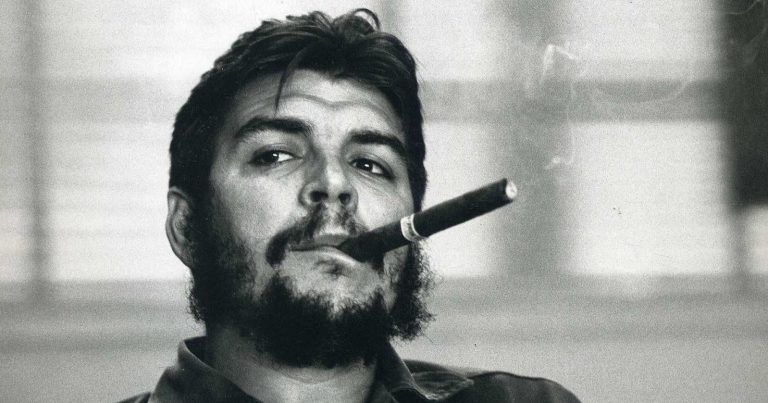
After justifying rioting and looting in the name of ‘Black Lives Matter’ protests, Leftists wish racist homophobe Communist leader Che Guevera a “happy birthday”

The 14th of June 2020 marks the 92nd birth anniversary of one of the poster-boys of Communism, Che Guevera. An Argentine Marxist Revolutionary, Ernesto ‘Che’ Guevera, became a major figure in the Cuban Revolution. Since then, he has become a symbol of Communist revolution worldwide and t-shirts with his stylised visage printed on them and other regalia have become a marker of rebellion in popular culture.

Thus, on Sunday, fledgling Communist rebel from the Jawaharlal Nehru University, Aishe Ghosh, wished a ‘happy birthday’ to ‘Comrade Che Guevera’. The organisation that Ghosh belongs to, the SFI, has a history of unprovoked violence against its political opponents, consistent with Communist tactics worldwide.

Aishe Ghosh was, of course, not the only one. Social media was littered with birthday wishes to the deceased Communist leader.

Intriguingly enough, the ones hailing Che Guevera on his birth anniversary are the same people who have been cheering the violent ‘Black Lives Matter’ protests and the vandalism of statues of racist historical figures. It appears to be lost on the individuals that Che Guevera himself was a racist of the highest order.

For instance, Che Guevera once remarked, “The blacks, those magnificent examples of the African race who have maintained their racial purity thanks to their lack of an affinity with bathing, have seen their territory invaded by a new kind of slave: the Portuguese. And the two ancient races have now begun a hard life together, fraught with bickering and squabbles.”

The Communist leader had continued, “Discrimination and poverty unite them in the daily fight for survival but their different ways of approaching life separate them completely: The black is indolent and a dreamer; spending his meagre wage on frivolity or drink; the European has a tradition of work and saving, which has pursued him as far as this corner of America and drives him to advance himself, even independently of his own individual aspirations.”

On another occasion, Che Guevera said, “Given the prevailing lack of discipline, it would have been impossible to use Congolese machine-gunners to defend the base from air attack: they did not know how to handle their weapons and did not want to learn.” However, the most glaring indictment of his antipathy towards Blacks came after the revolution of 1959. He stated, “We’re going to do for blacks exactly what blacks did for the revolution. By which I mean: nothing.”

June is also celebrated as pride month to create awareness about LGBT Rights. And as it so happens, Che Guevera was also a homophobe. He believed homosexuals were sexual perverts. He and Cuban dictator Fidel Castro believed homosexuality was a manifestation of bourgeois decadence and hence, ‘counter-revolutionary’.

The establishment of the first Cuban concentration camp was also overseen by Che Guevera in 1960. As per Alvaro Vargas Llosa, homosexuals, Jehova’s Witnesses, Afro-Cuban priests, and others deemed to have committed a crime against ‘revolutionary’ ideals were forced to work in these camps to correct their ‘anti-social behaviour’. A significant number of them died, others were tortured or raped.

In addition to this, Che Guevera is guilty of having committed a host of other crimes. Like other Communist despots of the 20th Century, Che Guevera is guilty of having committed mass-murder on an unprecedented scale and he helped establish a regime that persecuted its citizens greatly. Despite such morbidity, he continues to remain a hero for Communists worldwide.

Che Guevera never made any effort to hide the festering hatred in his heart. In fact, he revelled in it. He once said during a speech, “Hatred is the central element of our struggle! Hatred that is intransigent…hatred so violent that it propels a human being beyond his natural limitations, making him violent and cold- blooded killing machine…We reject any peaceful approach. Violence is inevitable. To establish Socialism rivers of blood must flow! The imperialist enemy must feel like a hunted animal wherever he moves. Thus we’ll destroy him! These hyenas are fit only for extermination. We must keep our hatred alive and fan it to paroxysm! The victory of Socialism is well worth millions of atomic victims!”

While Leftists continue to glorify Che Guevera, their attitude towards others are quite different. For instance, when ‘Black Lives Matter’ protesters vandalised a statue of Mahatma Gandhi outside the Indian Embassy in Washington DC, Leftists have no issues with it at all because apparently, it is alright because he was apparently a racist. Similarly, all the rioting and looting and mob violence was justified because it was, apparently, against ‘systemic racism’.

But when people point out the racist and homophobic inclinations of Che Guevera, the same people claim that his words and actions need to be veiwed in their proper ‘context’. Amusingly enough, when their critics demand that the actions of others then need to be viewed in its accurate context as well, Leftists scream Nazi and racist at them. All of this only goes on to further demonstrate that the sole objective of leftists is capturing power, the facade of principles is merely a carefully constructed charade to weaken the self-defence of their opponents.

Odisha: 500-year-old Gopinath Temple emerges from waters of Mahanadi after 11 years, devotees gather for darshan

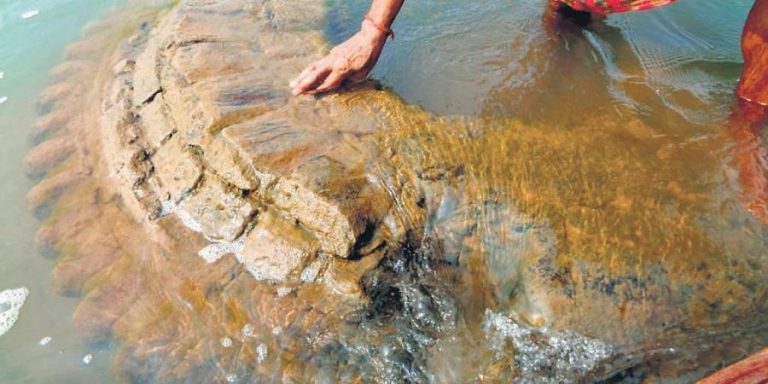
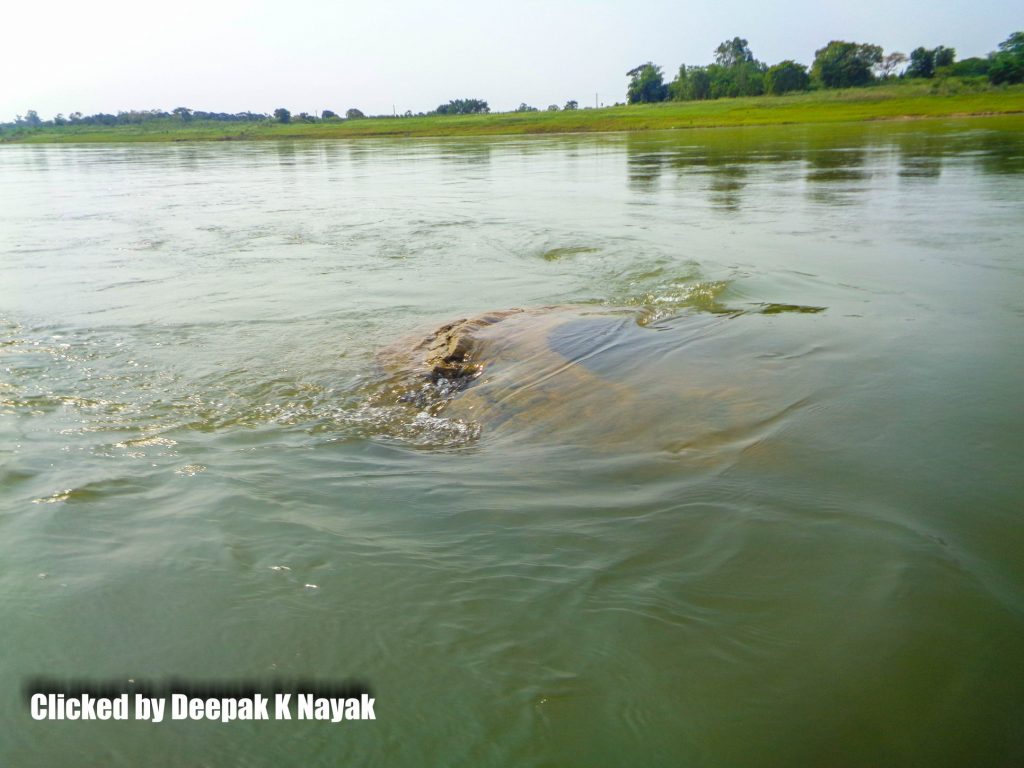
500-year-old Gopinath temple has emerged again from the waters of Mahanadi after 11 years in Nayagarh district of Bhubaneswar, the capital of Odisha. A large number of people are reaching near Padmavati village for darshan of the temple. The ancient submerged temple was discovered in the Mahanadi upstream from Cuttack.

INTACH documented the remains

There is an ongoing project by the name Mahanadi Valley Heritage Site Documentation Project by INTACH under which the remains of this temple were spotted and documented. Deepak Kumar Nayak, who is the project assistant, visited the site with the help Ravindra Kumar Rana who is a history enthusiast. Gopinath Temple was dedicated to Lord Krishna.

Deepak shared the entire store in an elaborate post on Facebook. He explained how Padmavati village was a part of Satpatna, and there was an alliance of seven villages at that time. In the 19th century, there was a drastic change in the river level and people had to move to a higher place. The villagers took the deities of the temple with them.

At one time there were 22 temples at this place and all of them submerged into the river after water levels rose. When the water level is low, you can see the front of the Gopinath temples as it was one of the biggest temples of that time.

Around three months ago, Ravindra Rana called Nayak and told him about the temple. Nayak was aware of some water-immersed temple in Sambalpur, but he never knew about the submerged temple in the lower-central region of Mahanadi valley. He added this temple to his ongoing campaign to document heritage sites of the area.

Gopinath Temple Head
Gopinath Temple Head emerged from waters of Mahanadi River (image courtesy: Deepak K Nayak)

Nayak, along with his senior Anil Dheer, made a plan to visit the site, but due to lockdown, they had to postpone it. Once the lockdown was lifted, they visited the site three times, but every time temple was submerged in the water. Then later on 7th June, Rana called them that the upper part of the temple ‘Mastaka’ has started to appear again. Nayak rushed to the site the next morning. It took him a 10-minute boat ride to reach the temple.

Nayak documented the remains and took many photographs as proof. He had to step back because of the high velocity of flowing water, making it next to impossible for him to continue. The present-day Gopinath temple in Padmavati village has the original statue from the submerged temple. Nayak mentioned in his post that after analyzing the stones used to build the temple, he could verify that those were the similar stones used to build temples in the 15th and 16th centuries.

History should be preserved

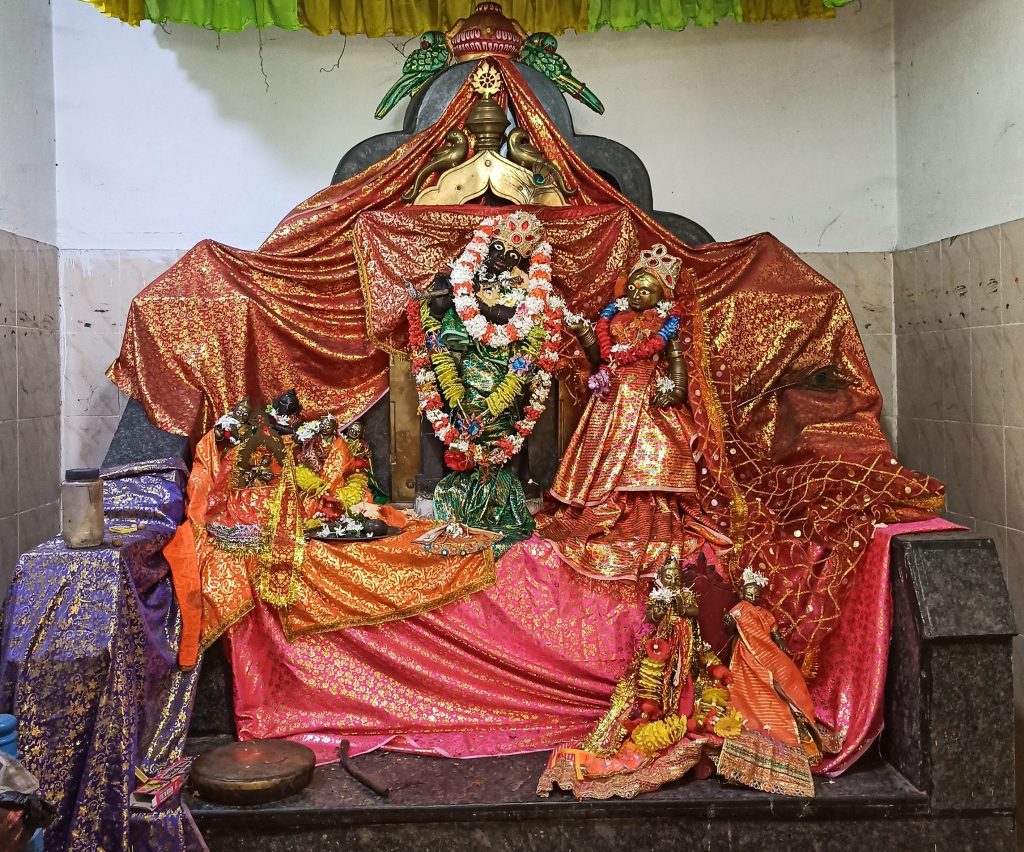
Deities of Gopinath Temple
Villagers worship original Krishna Idol from Gopinath temple in Padmavati village.

Along with Gopinath Temple’s idol, the villagers shifted many idols from temples of Narsingh, Ras Bihari, Kamna Devi and Dadhibhaman. They worship them in nearby Tikaripada village and Padmavati village. Project head Anil Dhir said that there are many temples submerged in water in Odisha, which includes 65 temples in the Hirakud reservoir. He added that Gopinath Temple should become a model for restoration projects and should be the first one to be transferred to the ground.

Gopinath Temple in Padmavati village

Experts say that the temple dates back to 15th or 16th century because of the construction and design of the ‘Mastaka’ and the material used for the same. Lord Gopinath is a form of Lord Vishnu. In mid-19th century, the deities were removed and installed at a higher place which was safer. The Gopinath Dev temple in Padmavati village is where the deities are installed. The last time the ‘Mastaka’ was seen was about 11 years back.

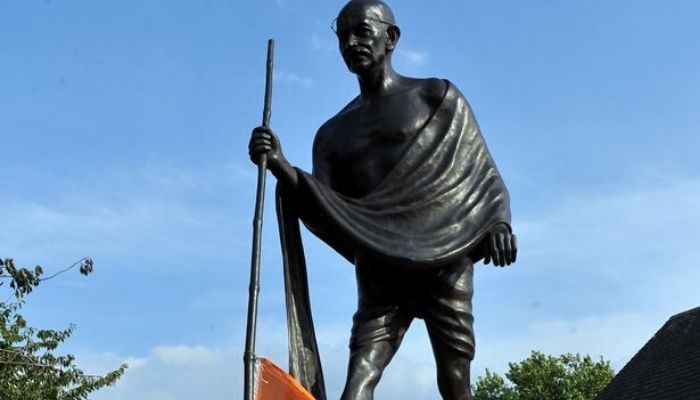
UK: Leicester City Council decides to consider online petition to remove Mahatma Gandhi’s statue, Gandhi supporters hold protest against the decision

The extra-judicial killing of African American George Floyd by a white police officer in Minneapolis, US, has stirred massive protests across several countries, some of which have turned violent. Statues of historical personalities such as Winston Churchill and Christopher Columbus have been toppled, vandalised or defaced. Amid this, an online petition bearing more than 6,000 signatures demanding to remove a statue of Mahatma Gandhi in Leicester, United Kingdom has been accepted by the City Council for consideration.

The petition accuses Gandhi of being “a fascist, racist and sexual predator”. The petition adds, “For years he has been idolised and taught in school curriculum. For a lot of people in my community, he has bought inconsolable suffering against my people. As a result, I do not wish to see a statue and praise of that kind of character”. The petitioner asked people to conduct their own research on Gandhi and align it with their beliefs before signing the protest.

The petition has now been closed after Leicester City Council requested the petitioner to close it and formally submit it with presenting arguments.

Objection to the Petition

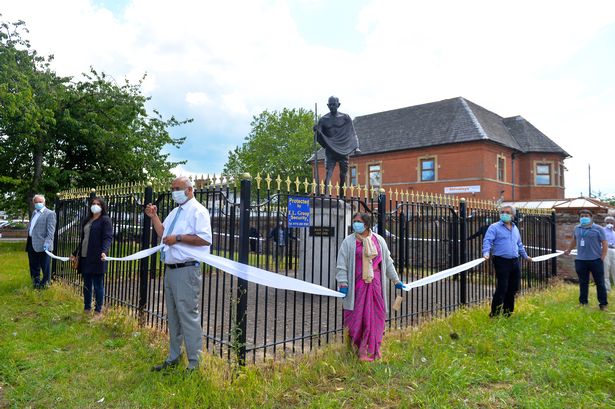
After the city council decided to deliberate on the demand, it has triggered a debate on the issue in the UK. Several people have come forward to defend the statue and oppose the demand to dismantle it. Supporters of the statue formed a symbolic human chain with ribbons around the statue on Saturday to protest against the City Council’s decision to consider the petition demanding the demolition. Volunteers from the Hindu organisation Samanvaya Parivar organised the protest, who were joined by former Leicester East MP Keith Vaz and city councillors. The group also tied white ribbons to the railings and held a silent vigil.

Gandhi supporters hold symbolic protest against petition to dismantle the statue in Leicester

According to Labour MP Claudia Webbe from Leicester (East), the uncanny petition was a ‘massive distraction’ from the anti-racism protests. She argued that Gandhi was able to create a mass movement, just like Martin Luther King did with his Civil Rights Movement. “His form of peaceful protest, like Black Lives Matter, is a force for change. There is not any desire from the black community to move that symbol of change,” she was quoted as saying.

Faisal Devji who is a professor of Indian history at Oxford University dubbed the petition as ‘absurd’ and stated that the comparison of Mahatma Gandhi with slave owners was a ‘bit much.’ He added that the statue of the ‘Father of the Indian Nation’ was also a representation of the Gujaratis who had come to live in Leicester, after their exodus from Uganda during the regime of military dictator Idi Amin.

Besides, he argued that Gandhi sympathised with the native Africans during Zulu and Boer wars and thus his track record was ‘mixed.’ Former Member of Parliament, Keith Vaz, who had unveiled the said statue in 2009 and hailed Mahatma Gandhi as one the greatest peacemakers reiterated that he would defend the statue ‘personally’.

‘Documented Racism’ of Mahatma Gandhi

Mahatma Gandhi during his time in South Africa had referred to native Africans as ‘dirty, uncivilised, and savages.’ He had written in 1893 that “Indians are a little better, if at all, than savages or the Natives of Africa”. In 1904, he wrote to a health officer in Johannesburg that the council “must withdraw Kaffirs” from an unsanitary slum known as the “Coolie Location” where a large number of Africans lived alongside Indians. He had also petitioned against the system in public places in South Africa where there was one entrance for white people and another for Indians and native Africans. He was against clubbing Indians with Africans, and sought a different entrance for Indians.

His grandson and biographer, Rajmohan Gandhi, had conceded that Mahatma Gandhi was ignorant and prejudiced towards the African black community but also highlighted his progressive behaviour that was distinct from other compatriots.

Controversial historian Ramchandra Guha, in his defence argued, “Speaking of comprehensive equality for coloured people was premature in early 20th Century South Africa.” However, according to Ashwin Desai, Mahatma Gandhi endorsed higher taxes on poor African peasants and ignored the brutality of the British Empire against native Africans. As such, the demand to remove his statue in Manchester was made by student activists in October last year.

Statue of Mahatma Gandhi vandalised in London

Days after some Balck Lives Matter protesters in the US vandalised the statue of Mahatma Gandhi outside the Indian Embassy in Washington DC, some similar unruly elements had desecrated another Gandhi statue on Parliament Square, London. The miscreants defaced the statue on Sunday with scribbling ‘racist’ on its plinth and splattering it with white paint. They also taped placards with anti-racism messages on it. The said statue was installed in 2015 along with 11 other prominent British, Commonwealth, and foreign political figures, such as Abraham Lincoln and Nelson Mandela and Winston Churchill. Following the attack on statues, several prominent statues in London have been covered with boards to protect them from vandalism.

Jamiat-Ulema-e-Hind asks Supreme Court not to admit pleas of Hindus seeking to reopen Kashi-Mathura dispute cases

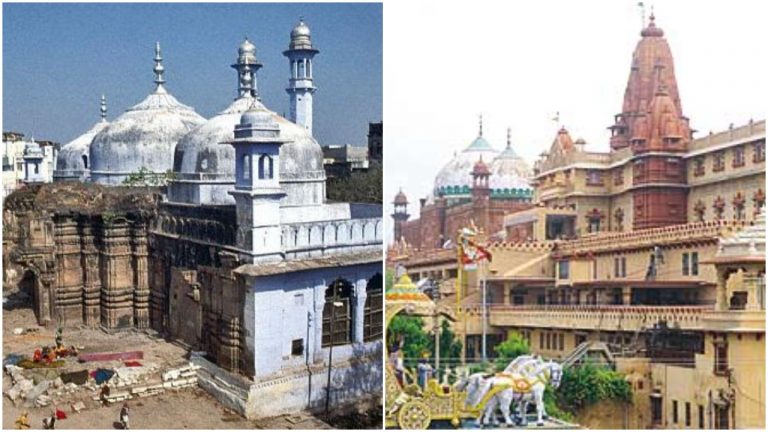
The Islamic body Jamiat-Ulema-e-Hind has filed a petition in the Supreme Court asking not to admit petitions filed by Hindu groups seeking to re-open cases related to reclaiming disputed religious sites at Kashi, Mathura and some other places, where Muslim religious places were built after demolishing ancient Hindu temples.

According to the reports, the Jamiat-Ulema-e-Hind has filed an impleadment plea in the Supreme Court not even to admit the petition filed by the Hindu group in the Kashi-Mathura temple land dispute cases. The Jamiat also said that they should be heard before they give notices to Hindu petitioners in the case.

On Friday, Hindu organisations had moved the apex court seeking re-opening of cases pertaining to Kashi and Mathura temple disputes.

The petition was filed to challenge the validity of the Places of Worship (Special Provisions) Act, 1991, which states that the character of religious places at the time of Independence cannot be changed. The petition is being seen as an attempt to re-open cases to reclaim disputed religious sites at Kashi, Mathura and some other places.

However, in response Jamiat-Ulema-e-Hind has also filed the petition demanding the Supreme Court not to entertain petitions of the Hindu side, as it claimed that such petitions not only threatened the secular fabric of the country but also will create fear in Muslim minds who are still recovering from the Ayodhya verdict.

Hindu organisation file plea in SC challenging Places of Worship Act, 1991

A Hindu organisation, Vishwa Bhadra Pujari Purohit Mahasangh, had moved the Supreme Court of India challenging Section 4 of the Places of Worship (Special Provisions) Act, 1991 that calls for maintaining status quo of all places of worship, except the Ram Mandir at Ayodhya. 

The PIL filed by Vishwa Bhadra Pujari Purohit Mahasangh had sought directions to declare Section 4 of the 1991 Act as ultra vires and unconstitutional as the law is a hindrance in the path of legally reclaiming disputed religious structures, such as Kashi and Mathura.

“The impugned Act has barred the right and remedy against encroachment made on religious property of Hindus exercising might of power by followers of another faith,” it said.

The section 4(1) of the Places of Worship (Special Provisions) Act, 1991 states, “It is hereby declared that the religious character of a place of worship existing on the 15th day of August 1947 shall continue to be the same as it existed on that day.”

According to the act, no mosque can be converted into a temple and vice-versa. 

Re-opening of Kashi, Mathura land disputes attains significance

The petition to re-open cases of land disputes related to Kashi, Mathura and other places of worships attains significance as it comes just seven months after the Supreme Court in a historic verdict had paved wat for the construction of a Ram temple by a trust at the disputed site in Ayodhya.

On November 9, the Supreme Court, in a historic decision, accepted the Hindu claim and handed over the Ram Janmabhoomi site to Hindus to build Ram Mandir and finally end the century-long dispute. The five-judge bench had unanimously come to the decision after weighing the arguments presented by all sides for 40 days.

The Muslims were given a 5-acre site at an alternate location by the government of Uttar Pradesh, as per the SC order.

However, the five-judge bench, headed by then Chief Justice of India Ranjan Gogoi, had dealt with the 1991 Act and had pointed that the law is a legislative instrument designed to protect the secular features of Indian polity, which is one of the basic features of the Constitution.