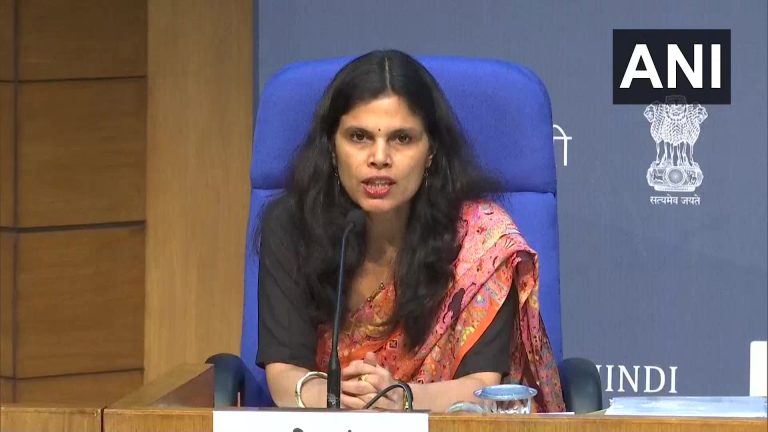
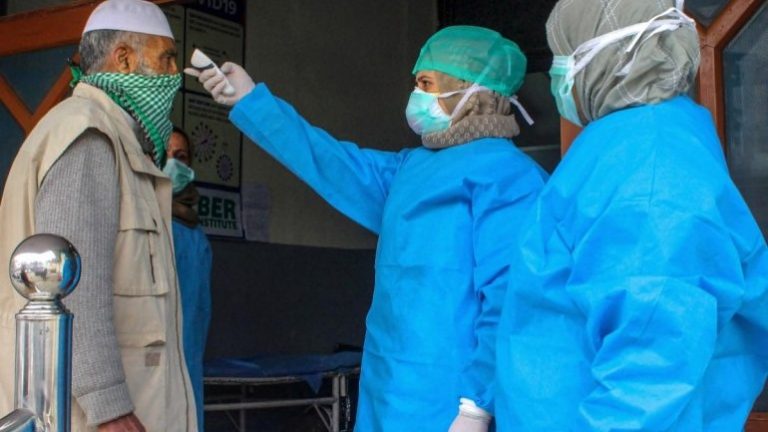
In a massive effort of the government authorities to contain the Wuhan Coronavirus, 22,000 Tablighi Jamaat workers and their contacts have been traced and kept under quarantine, informed Punya Salila Srivastava, Joint Secretary of Ministry of Home Affairs.
Through a massive effort around 22,000 Tableeghi Jamaat workers and their contacts have been quarantined: Punya Salila Srivastava, Joint Secretary, Ministry of Home Affairs (MHA) #NizamuddinMarkaz#COVID19pic.twitter.com/vEiR7jx670
Nizamuddin Markaz event has emerged as the epicentre of most of the cases of Wuhan coronavirus as several of the attendees being tested positive for the deadly contagious disease. The Ministry of Home Affairs is conducting a massive search operation to trace and identify the attendees and their contacts to isolate so that the infection can be avoided to grow further.
295 persons out of the total 485 confirmed new positive cases of Wuhan Coronavirus were detected within a single day had attended the Tablighi Jamaat held at the Nizamuddin Markaz. The event was held between March 13 and March 15 and saw a footfall of around 3400 members.
The massive jump of cases in India is solely due to the Tablighi Jamaat members who had gathered in the Nizamuddin mosque despite government orders against mass-gatherings and follow the safety norms like social-distancing. The Jamaat members taking buses and trains to their respective localities all over India has resulted in a massive nation-wide spread within a span of few days.
The attendees of the event have been spread all over namely – Karnataka: 64 quarantined, Tamil Nadu: 981 of 1500 attendees traced – 45 tested positive, Telangana: 1300 attendees with 6 deaths and 15 positives, Andhra Pradesh: 626 of the 806 attendees traced (8 have tested positive), Andaman: 9 out of 10 positive cases attendees, UP 157 attendees of which 14 quarantined, Jammu & Kashmir has identified 6 attendees. All states are doing contact tracing and quarantining all attendees.
Odisha reported 15 new Wuhan Coronavirus cases, including three who attended the Tablighi Jamaat event in Delhi’s Nizamuddin, on Friday, the largest single-day increase in the state, taking the total number of positive cases in the state to 20.
The Jajpur administration in Odisha has announced a total shutdown, akin to curfew, in Odisha’s Jajpur and all block headquarters of the district for 48 hours from 8 PM tonight to 8 PM of April 6 as a precautionary measure to prevent community transmission of the Covid-19 after a Muslim cleric who had visited the Tablighi Jamaat event in Delhi’s Nizamuddin tested positive on Friday.
After his return from Tablighi Jamaat to his village Brahmabarada in Jajpur district on March 18, the cleric had reportedly visited many places. According to the authorities, the cleric said that he had come in contact with 13 people after returning from the Nizamuddin Markaz, but the District Collector, Ranjan Das, was of the opinion that the cleric cannot be trusted as he has been changing statements frequently.
The Maulvi in Jajpur who has tested +ve for #COVID19 visited many places post his return from #TablighiJamaat on March 18. He says he’s come in contact with 13 people. But we can’t trust him as he is changing statements frequently: Dist Collector Ranjan Das to #OTV on shutdown https://t.co/aaSTWEplyE
Therefore, the district along with all adjoining districts have been put under a complete 48-hour curfew. All the major market places, Vyasnagar, Chandikhole, Panikoili, including Sadakpur of Koraie Block, Charinangala of Badachana Block, Neulapur area of Dharmashala Block shall be shut down completely.
Since the other two new cases in Odisha, also attendees of Tablighi Jamaat, are from Cuttack and Bhadrak respectively, the Odisha government has also announced a curfew-like shutdown in Cuttack, Bhubaneswar and Bhadrak on Friday to prevent community transmission of Coronavirus.
Officials said among the 28 people who had attended the religious congregation in Nizamuddin Markaz and returned to Odisha, 25 have tested negative.
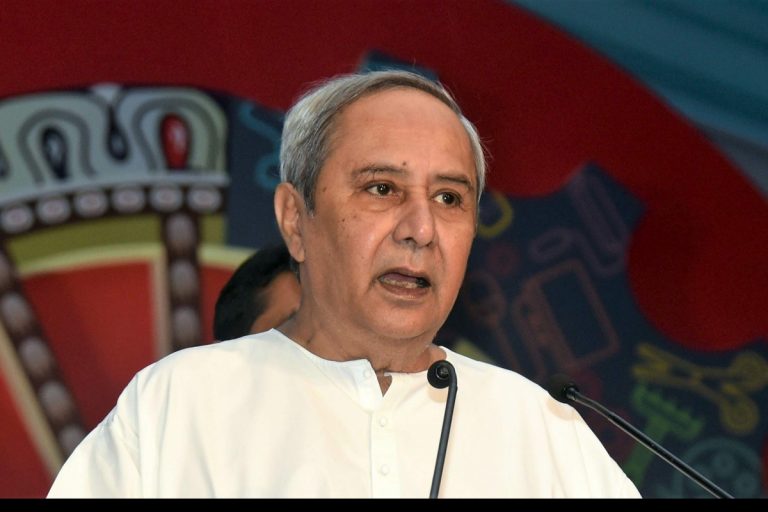
The shutdown will begin from 8 pm today (Friday) and will be in force for the next 48 hours. “The Odisha Government has announced a complete shut down in Bhubaneswar, Bhadrak and Cuttack for 48 hours to knockdown #COVID19. The shutdown will start from 8 PM, Friday and will be in force till 8 PM, Sunday,” the chief minister’s office tweeted.
#Odisha Government has announced complete shut down in Bhubaneswar, Bhadrak and Cuttack for 48 hours to knockdown #COVID19. The shutdown will start from 8 PM, Friday and will be in force till 8 PM, Sunday. #OdishaFightsCorona. pic.twitter.com/Lpv0qx28i9
During the shutdown, all shops including groceries and vegetables will be shut while a restricted number of medicine stores will remain open. “All lockdown passes have been suspended,” the CMO added.
The local administration will select the medicine shops that will remain open and decide on their time of operation, Chief Secretary A K Tripathy said.
Moreover, certain essential services have been kept out of the purview of the shutdown, an official said. These include ambulance, police, telecommunication, media, water and power supply, sanitation, and fire and coronavirus disease related services, the official said.
Tripathy furthered that the 48-hour shutdown order under the Disaster Management Act was issued to prevent community transmission of the highly infectious coronavirus disease.
On Friday, the Supreme Court of India quashed a notice by the Income Tax department alleging non-disclosure of complete income for the year 2008-09. The apex court had quashed the notice on the ground that it was filed after the limitation period was over, while the court refused to go into the merits of the allegations against NDTV.
NDTV claimed this judgement as a win for them, while others claimed that the Supreme Court has given a clean chit to the controversial media house which is facing several cases of financial irregularities. But a careful reading of the judgement reveals that this is not a complete clean chit to NDTV, and the I-T notice has been quashed on procedural grounds.
The I-T department had reopened the assessment of NDTV for 2008-09 in 2015 for an issue of coupon bonds by NDTV Network Plc., U.K., an overseas subsidiary of NDTV, amounting to US$ 100 million in July 2007. This amount was redeemed in 2009 at 72% value, which means the investors of the bonds had suffered a loss. Moreover, capital of NNPLC was very low, and it was liquidated in 2011. The department was of the view that NNPLC can’t raise such a large amount, and it actually belongs to NDTV. Therefore, the income made by NNPLC from the transaction was added to the books of NDTV, and an amount of Rs 405.09 crore was added to the assessment year 2008-09.
According to the income tax department, the amount of Rs 405 crore is nothing but NDTV’s own undisclosed income, which was re-routed to itself through its subsidiary companies.
The alleged violation took place in the assessment year 2008-09, but the assessment officer had raised the issue in 2015. The apex court held that it was outside the limitation period of six years, hence the notice was quashed as per first provision of section 147 of the income tax. The first provision says that if an assessee has made full disclosure related to incomes for an assessment year, no action can be taken after the expiry of four years from the end of that assessment year.
The Supreme Court has held that NDTV had disclosed everything that was asked by the assessment officer in the for the assessment year 2008-09, hence action can’t be taken against it under the first provision of section 147.
But the apex court has left the window open for the Income Tax department to initiate proceedings against NDTV under second provision of the second provision. The second provision says that if there is allegation that an assessee didn’t disclose about earnings made in a foreign country, then the period of limitation will be 16 years instead of 6 years for domestic income under first provision. The judgement says that the first notice issued to NDTV didn’t mention invocation of the second provision, and as the assessee can’t be taken by surprise, they must be informed under which sections actions are being taken, the notice was quashed.
In the conclusion of the judgement, the court says, “Having held so, we make it clear that we have not expressed any opinion on whether on facts of this case the revenue could take benefit of the second proviso or not. Therefore, the revenue may issue fresh notice taking benefit of the second proviso if otherwise permissible under law.”
The union finance ministry has said that the case comes under the second provision as foreign assets as involved, as it is based on funds raised by NNPLC in the UK. And accordingly, a fresh notice has already been issued to NDTV for a reassessment of its books, this time under the second provision of section 147 of the income tax act.
The Revenue Department has said that SC has not given clean cheat to NDTV. On the contrary, it has upheld saying the department’s view, that the “undisclosed income” of Rs 405.09 crore has escaped assessment, by giving it liberty to assess the same by resorting to the second provision relating to foreign assets where the limitation is extended to 16 years. The department also blamed the UPA govt for failing to take action against NDTV withing the limitation as per the first provision.
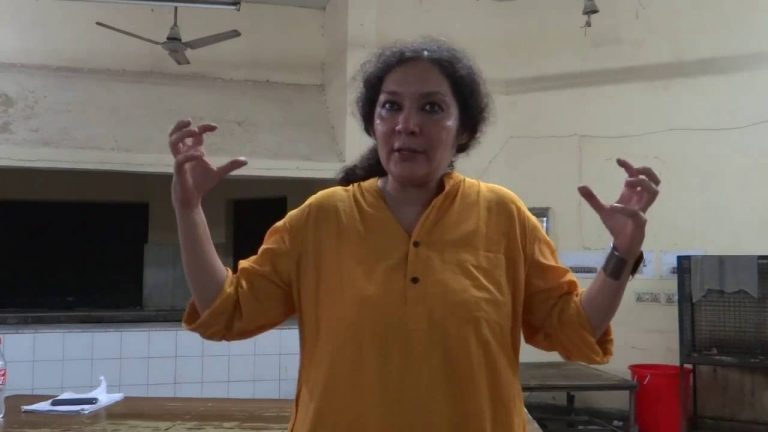
When it became increasingly difficult to defend the rabid Islamist organisation Tablighi Jamaat for its horrendous role of brazenly defying lockdown restrictions and providing a propitious environment for the Wuhan coronavirus to proliferate, ‘journalist’ Saba Naqvi, long known for bringing disgrace to the profession of journalism and harbouring pathological hatred for Hindus, today shared a video to implicate Hindus of breaching lockdown restrictions.
In a bid to draw an equivalence between the Tablighi Jamaat violators who defied the restrictions and congregated at the Markaz Nizamuddin, effectively turning it into a hotspot of coronavirus outbreak in the country, with pious Hindu devotees, Saba Naqvi shared a video of outsize Hindu devotees thronging temples to assert that Hindus have also disobeyed the strictures imposed by the government, implying that they have also partaken in disseminating Coronavirus across the country.
“Worrying. Disturbing..no social distancing,” Saba Naqvi tweeted while sharing a video of a news report which shows a raft of Hindu devotees visiting various temples and dismissing the threat of coronavirus in their neighbourhoods.
However, while Ms Naqvi endeavoured to mitigate the enormity of the crime perpetrated by Tablighi Jamaat members, she shared an old video of Hindu devotees visiting their temples when social distancing was not a catchphrase and lockdown restrictions were unheard of. The video that Ms Naqvi shared is from March 18, 2020, 4 days before the ‘Janata Curfew’ took place and one day before when the Prime Minister Modi called upon the citizens of the country to observe ‘Janta Curfew’ on March 22, 2020 in the wake of country’s fight against the novel coronavirus.
Here’s the entire news report from March 18, 2020, whose snippet is shared by Ms Naqvi to allege that Hindu devotees contravened the lockdown orders:-
When the Hindu devotees in Ayodhya visited temples in droves, there were no restraining orders from the state government or the central government limiting the mass gathering of people or prohibiting them from congregating at their religious places. However, Ms Naqvi, through her tweet, deviously alluded to draw a parallel between the Hindu devotees who visited the temples on March 18 and the Tablighi Jamaat holdouts who flagrantly violated the central government and organised a congregation at Markaz Nizamuddin between March 21 to March 27.
Last week, the role of Tablighi Jamaat in the spreading of the Wuhan Coronavirus across numerous states of India had come to light when 10 people who had attended the congregation at Markaz Nizamuddin died of COVID-19. Muslim clerics of Tablighi Jamaat organised a congregation in violation of the government’s lockdown orders, providing a conducive environment for the novel coronavirus to proliferate.
As per conservative estimates, the congregation organised by Tablighi Jamaat was attended by more than 2000 people, both from various parts of the country as well as from abroad. Out of India’s 2500 odd cases, 647 have been linked to the congregation organised by Tablighi Jamaat, a staggering 28 per cent of the total cases. The investigative agencies are scrambling to identify other attendees who they believe may have contracted the virus due to the unhygienic and unhealthy sanitation at the Jamaat premises.
Tablighi Jamaat members who were transported to quarantine centres were found spitting on the Delhi roads. In fact, they also threw tantrums, made unreasonable food demands and spitted out on doctors and other healthcare professionals who were attending them at the quarantine facilities. The crass Tablighi Jamaat members held in Ghaziabad hospital roamed naked in the ward, and made lewd gestures toward the female staff.
However, in order to deflect attention from the reprehensible behaviour of the Tablighi Jamaat members and their indubitable criminality in spreading the virus across the country, Ms Naqvi, perhaps, thought that by sharing a video that showcased violations committed by Hindus, even if that video was from the period before the lockdown kicked in, she could extenuate the culpability of Tablighi Jamaat as the organisation is facing a growing criticism for its inherently subversive conduct.
It is pertinent to note that this is not the first time that Ms Naqvi has indulged in sharing fake or irrelevant news suitable to her propaganda. Ms Naqvi has a long and chequered history of sharing fake news brimming with Hinduphobia. Last year, Saba shared a fake report published by the dubious website Caravan, which alleged that a Muslim driver was tied up and cruelly beaten up for refusing to chant “Jai Shri Ram”. When it was established that the report is fake, Saba unabashedly tweeted a conditional apology, requesting the Caravan and Altnews, two notorious websites that are known for peddling fake news, to fact check the matter.
In 2018, she had shared old fake news from 2015 where she asserted that a Dalit man was murdered for entering a temple in Uttar Pradesh. The news, firstly, was from 2015 when Akhilesh Yadav was Chief Minister. Secondly, the man was murdered by a drunk and not because he entered the temple. However, this did not deter Saba from exploiting the caste fault-lines by trying to pit Dalits against Hindus.
Today, when the nation is facing an existential crisis due to coronavirus outbreak, which threatens to overwhelm the country, largely because of the malevolent tendencies exhibited by the members of Tablighi Jamaat, instead of condemning the Islamist organisation and denouncing their practices, Ms Naqvi is more concerned about secularising the culpability of those responsible for the inexorable spread of the virus in the country. It is to this end, that Ms Naqvi shared an old video of Hindu congregation, alleging them of breaching the lockdown restrictions, and downplaying the blatant criminality of the Tablighi Jamaat members.
This is an actual Twitter conversation between two Indian liberals – The Wire’s Arfa Khanum Sherwani and Sadanand Dhume, trying to protect the Tablighi Jamaat who have been spreading Coronavirus everywhere.
Conversation between Arfa Khanum Sherwani and Sadanand Dhume
The fallacy here is so obvious, so in your face, that it hardly needs to be debunked. Since when have we started giving clean chits to organizations based purely on their claims of religious purity? By this absurd logic, the Babaji who heads Dera Sacha Sauda would be innocent too. All the so-called godmen who have been accused of rape and various other crimes would be declared innocent. Priests of the Catholic Church would receive a clean chit, whether in matters of sexual exploitation of nuns or of young children.
Even Maulana Masood Azhar and Hafiz Sayeed claim to be running religious charities. Clean chits for them as well? Which religious organization in the world would admit to supporting criminal acts? Should they all be treated as above suspicion purely based on their claims of religious piety?
It is hard to believe that Indian liberals would endorse all of that. If there is prejudice here, it is coming from Indian liberals who perhaps feel that certain Islamic organizations enjoy a special moral status, high above the ranks of so-called non-believers.
It is not bigoted to point fingers at the Tablighi Jamaat. Their irresponsible behavior is a matter of public record. As is the fact that they didn’t cooperate with authorities. And finally, the fact that even after the disaster became apparent, their members behaved with police, doctors and nurses in extremely anti-social ways. Teams of police and healthcare workers looking for Jamaat attendees were assaulted, pelted with stones. There are reports of those being taken to quarantine spitting on the streets, trying to endanger everyone. And finally, reports of them misbehaving while in quarantine, including obscene behavior towards women.
But there’s more. Can you believe this?
Outlook article on Tablighi Jamaat sharing links with terror outfits
Reportedly, some 6000 Tablighis were trained in Harkat ul Jihadi Islami in Pakistan! And reports also say that the terrorist group responsible for the infamous Kandahar hijacking was founded by members of the Tablighi Jamaat!
Outlook article on Tablighi Jamaat sharing links with terror outfits
Their names even came up in connection to the Godhra carnage. And apparently, being a preacher of the Jamaat was regularly used as cover story by terrorists headed to camps in Pakistan.
And finally, here is the most terrifying bit of all.
Outlook article on Tablighi Jamaat sharing links with terror outfits
The same building in Nizamuddin West in Delhi. According to Wikileaks, 9/11 Al Qaeda suspects detained by the Americans may have stayed in that building!
In the light of all this information, surely it makes sense to at least ask the question of whether the Corona virus disaster related to the same Jamaat was at least in some part deliberate.
In fact, it makes us wonder how this organization was even still legal. Whether it has been subjected to a full and complete investigation by agencies.
Political correctness cannot be allowed to stand in the way of national interest, nor national security. The immediate need of the hour is to put an immediate ban on all activities of the Tablighi Jamaat, subject its office bearers to detailed interrogation, carefully trace all their contacts and verify every single claim. There are now over 1000 cases of infection related to this single source. As a nation, we deserve to know if this was deliberate sabotaging of a national effort.
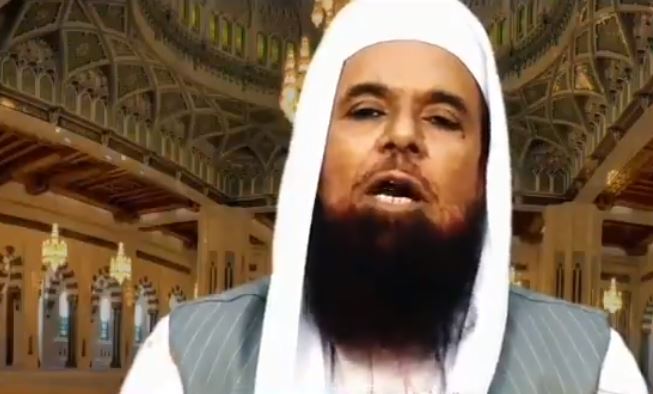
A video of a Muslim cleric and a member of the Tablighi Jamaat warning media not to report against the Islamic organisation has surfaced on social media. The video of the Tablighi Jamaat member where he threatens the media was released by Maulana Mahfooz Ur Rahman, the Tahaffuz-E-Deen India.
In the video, the cleric accuses media of spreading rumours and disseminating propaganda against Tablighi Jamaat and coronavirus pandemic and targeting a particular community.
A #TabligiJamaat spokesman giving the real background of Jamaat members: Most of them were big goondas and bad elements. They revere Maulana Saad who is uncrowned King of India – Ameerul Hind. That’s why NSA has to be used against them. pic.twitter.com/mftxD80NYv
— Sanjay Dixit ಸಂಜಯ್ ದೀಕ್ಷಿತ್ संजय दीक्षित (@Sanjay_Dixit) April 3, 2020
Naming ZEE TV, Aaj Tak, ABP News, India TV and others in his speech, Rahman can be heard saying: “I ask Rajat Sharma as the general secretary of AIMIM for Maharashtra state, what proof do you have that Tablighi Jamaat spread the coronavirus? That the people assembled because of Maulana Saad’s call?”
Rahman also criticised the central government as well as Arvind Kejriwal for using Jamaat to hide their own failures.
The cleric claimed that Jamaat is benefiting the country by bringing in foreign currency, and good publicity to India from all around the world. The organization has its reach in the smallest and remotest corners of the country and its goal is to bring the Muslims on the right path, said Rahman.
Jamaat works towards social reform, fighting against alcoholism etc, claimed the cleric, urging the media to find out the reality of the Jamaat’s work. “Media zabaan sambhal kar kaam kare..tablighi jamaat aur markaz ko badnam karne ki koshish na kare.. Maulana Saad Amir-ul-Hind hain, wo musalmano ke betaaj badshah hain… aap musalmano ke jazbaat se khilwad mat kijiye”, roughly translated as “media should weigh its words carefully. Media shouldn’t try to defame Tablighi Jamaat and Markaz. Maulana Saad is Amir-ul-Hind, he is a king without a crown. Don’t play with the emotions of Muslims”, he warned the media.
“If you interview any Jamaat member…you will find out he used to be a big-time criminal…if these people come to their asalaiyat (reality), you will be in a lot of trouble. I want to warn you, I want to tell the media”, he added.
Rahman further added that the media should interview these Jamaatis to know their pain and how Jamaat made good Muslims out of them.
A couple of days ago, the role of Tablighi Jamaat in the spreading of the Wuhan Coronavirus across numerous states of India had come to light. Muslim clerics of Tablighi Jamaat organised a congregation, which was roughly attended by 1500 people both from various parts of the country as well as from abroad, in violation of the government’s lockdown orders, providing a conducive environment for the novel coronavirus to proliferate.
The Tablighi Jamaat super spreader caused a Coronavirus explosion in India. Over 95% of the coronavirus cases reported over the last two days in India have been found to have links with the Tablighi Jamaat congregation in Delhi.
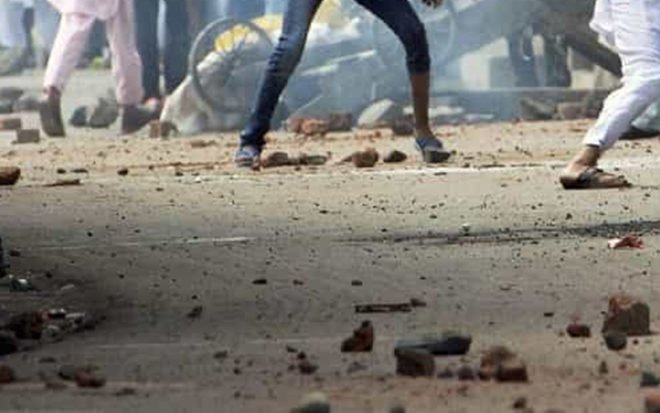
In another appalling incident of mob attack on police personnel and medical workers amidst the Coronavirus lockdown, around 200 Muslims in Birla Marg area in Khargone district, Madhya Pradesh reportedly pelted stones at the police personnel who had gone there to appeal to the locals to stay home and not defy the nationwide lockdown.
Khargone Kotwali TI (Traffic Inspector) Lalit Singh Dagur along with his team had visited the village in MP’s Khargone district to patrol the area amidst lockdown. The team were asking people loitering outside on the road to go to their respective houses. Suddenly, around 200 Muslim residents cornered the group of policemen and rained stones and bricks on them. They also damaged police vans.
Confirming the incident, Superintendent of Police Sunil Kumar Pandey said that the situation is under control at present. Police are now using drone cameras to keep an aerial vigilance in the area.
The attack on police personnel, healthcare workers continues unabated in the country at a time when these frontline workers have put their lives at stake to limit the spread of coronavirus.
On Wednesday, a medical team that had gone to check on a patient with suspected coronavirus symptoms was attacked and pelted with stones in Indore’s Tatpatti Bhakhal. As per reports, the gathered mob had viciously attacked the team of health workers and had even thrown stones from nearby rooftops.
As per reports, when the medical team sought help from the police, the police team was attacked too. The gathered mob even broke down the barricades and used the women among them as human shields when the police tried to take action.
A police officer while speaking to the media said that an old lady was to be taken for medical tests but people started opposing. Soon, a crowd gathered. Following this, police was called upon. The mob then directed the authorities that before anyone from the locality is taken for medical tests, they should be first informed.
This is one of the many such cases when a mob had tried to resist the works of the authorities during the coronavirus outbreak. Earlier, reports of vicious attacks and stone-pelting on police officials had surfaced in Uttar Pradesh, Bihar and Gujarat. In Bihar’s Madhubani, a police team was attacked, pelted with stones and even fired at by a Muslim mob when said team tried to prevent a mass gathering for Namaz at a Mosque.
In Ahmednagar, Maharashtra, health officials seeking contact details of coronavirus positive patients were assaulted on the suspicion that they were collecting data for CAA and NRC.
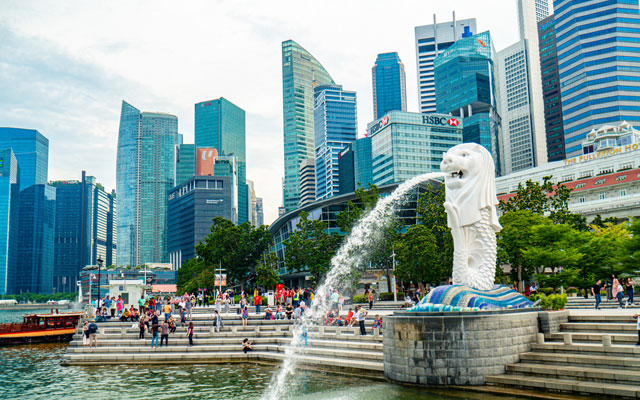
Singapore Prime Minister Lee Hsien Loong declared a near-total lockdown of the country on Friday, barring essential services, from the 7th of April for a duration of one month due to the Coronavirus pandemic. Most schools and workplaces will be shut down during this period, however, essential services and key economic sectors will continue to operate. The city-state, which had managed to curb the spread of the Wuhan Coronavirus for a long time without enforcing a lockdown, has recently seen a sharp spike in the number of new cases.
“We have decided that instead of tightening incrementally over the next few weeks, we should make a decisive move now, to pre-empt escalating infections,” Prime Minister Lee said in his speech. He also urged citizens to stay home as much as possible and avoid socializing beyond one’s own household.
Singapore had hitherto shined as a beacon in the fight against the Wuhan Coronavirus as a state that had managed to tackle its spread without resorting to a lockdown. For a time, it was thought that managing the crisis without a lockdown was even possible given the manner in which the city-state had approached the crisis. However, as the recent increase in cases force Singapore into a lockdown, the world has to reckon with the fact that fighting Covid-19 without a lockdown may well be impossible.
Singapore has used a combination of adequate surveillance measures, efficient contact tracing, proper quarantine facilities, strong community engagement and mass testing to contain the spread of the virus. However, despite it efficient handling of the situation, the city-state has witnessed a sharp upsurge in the number of confirmed cases. Prime Minister Lee admitted that “despite our good contact tracing, for nearly half of these cases, we do not know where or from whom the person caught the virus”.
Thus, until now, Singapore had managed to avoid a lockdown but only thus far, no further. It does force one to change a great many perceptions regarding the nature of the Wuhan Coronavirus. It is also pertinent to note that the United Kingdom had initially planned to go ahead with its ‘herd immunity’ approach. The plan was to allow the virus to spread as much as possible in order to develop a collective resistance to it within the population. However, that plan was doomed to fail from the very beginning as the death toll would have been catastrophically high. Britain eventually backed off from that harebrained idea.
Thus, all things considered, Singapore made a calculated decision to implement a lockdown now in order to ensure that things do not escalate to a point where the virus overwhelms the healthcare system. In other words, the city-state is trying to ‘flatten the curve’. “It will help reduce the risk of a big outbreak occurring and it should also help to gradually bring our numbers down,” Prime Minister Lee said. “If we don’t go out, if we avoid contact with others, then the virus won’t be able to spread. It is as simple as that,” he added.
As Singapore goes into lockdown, here is what makes the Wuhan Coronavirus so deadly
Certain people have pointed towards the fact that the virus has a low death rate. The lower death rate initially has led people to claim that “It is just the flu!” However, the virus spreads at a remarkable speed and is extremely contagious. It can last on surfaces for hours, on certain surfaces up to three to four days. There is some evidence to suggest that it can spread in aerosolized form as well. A person could even get infected just by talking or breathing.
All of these factors combine to cause an exponential growth in the number of cases. Worst of all, even seemingly normal people can be carriers of the virus (asymptomatic carriers) and even when they don’t suffer any symptoms or suffer only mild ones, they could very well infect others who might suffer critical symptoms or could even die.
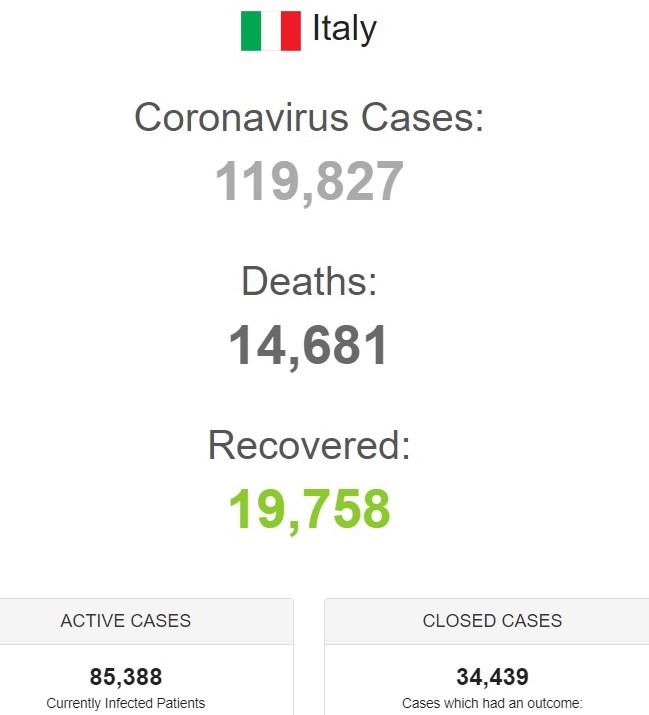
While people have correctly noted that the virus tends to have a low fatality rate, this holds true only during the initial phases of the spread when the virus is yet to overwhelm the healthcare system. However, once the virus has infected too many people and the healthcare system has been overburdened, the death rate tends to increase too. Take Italy for example. As of 6:32 GMT on the 4th of April, the total number of Coronavirus cases was 119,827 and the total number of deaths was 14,681. That is a more than 10% Case Fatality Rate, well over it in fact.
Source: Worldometer
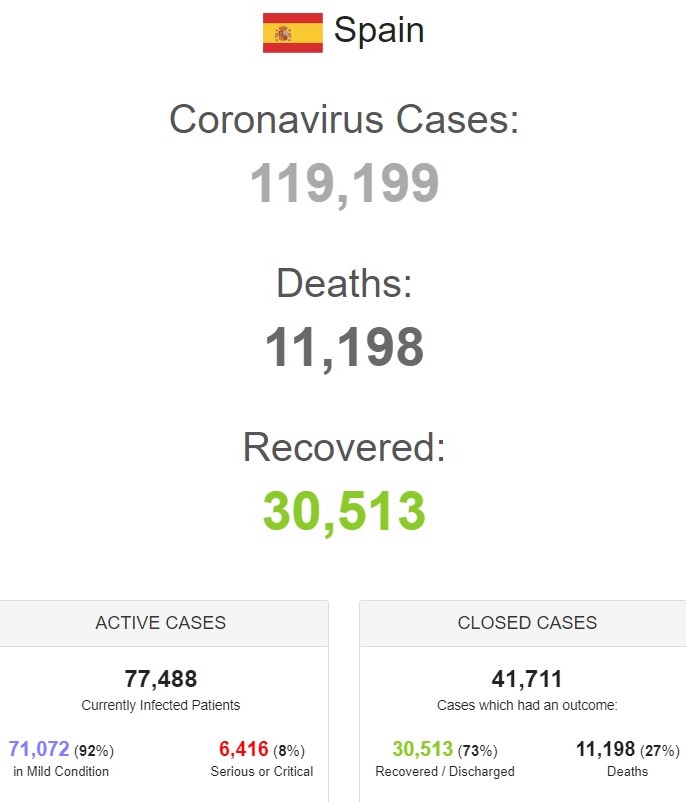
The case is similar with regards to Spain. As of 6:41 GMT on the 4th of April, Spain had a total of 119,199 Coronavirus cases and at least officially, 11,198 people had died due to the virus. Therefore, relying on official statistics alone, that is a death rate of well over 9%. For the past couple of days, Spain has recorded over 900 deaths on both occasions.
Source: Worldometer
The story is similar in countries most affected by the virus. In Britain, there have been 3,605 deaths out of 38,168 cases with a death rate of 9.44%. Iran, whose official statistics are not reliable at all, say that 3,294 people have died out of 53,183 Coronavirus cases with an official death rate of 62.%. However, these numbers from Iran are not reliable and the number of deaths is most probably much higher. France has recorded 6,507 deaths out of 82,165 Coronavirus cases with a death rate of 7.92%.
There are other countries that have recorded much lower death rates than the countries mentioned. The USA, which is providing one of the most reliable indicators of the potential death rate of the virus, has recorded 7,402 deaths out of a total of 277,476 cases with a death rate of 2.67%. Germany has recorded 1,275 deaths out of 91,159 cases with a death rate of 1.40%. However, there are some allegations that Germany is ‘fudging’ the data. Then, there are countries such as Switzerland, South Korea, Canada and Austria and even India which have managed to contain the virus exceedingly well thus far. Globally, the death rate currently stands at 5.30%. However, it has to be mentioned here that these death rates reflect countries where the healthcare system has not been overwhelmed by the virus. And it includes countries such as China and Iran which haven’t been entirely honest about their death rates.
What happens when the healthcare system has been overburdened like in Italy or Spain? Medical supplies will run out and countries will face a shortage of medical equipment. Before long, doctors will have to make the call regarding who continues to receive medical attention and who doesn’t, essentially, they will have to make the call between who gets to live and who doesn’t. It’s a horrible situation for any doctor to be in but if the healthcare system of the country is overrun, this is what will happen. Thus, when the number of cases starts increasing horribly, the death rate will also increase when medical supplies start falling short.
Experts have said that with increased testing, the death rate is likely to go down. However, it needs to be mentioned that if the number of infected cases are just too many, then the death count could very well run into hundreds and thousands if not millions. The United States, for instance, predicted that anywhere between 100,000 to 240,000 people could die from the virus even if all federal guidelines are followed precisely. The time frame was not mentioned.
Unconfirmed theories of the impact of the Wuhan Coronavirus
There is at least some evidence to suggest that infected individuals who eventually recover carry lasting damage to their system even after recovering from the disease. A report that was published by a team based at the Reproductive Medicine Centre at Tongji Hospital in Wuhan, China and published on the Hubei Government’s website suggested that men who had recovered from the disease should consult experts to determine whether their fertility had been affected by the virus. The report said it was theoretically possible that COVID-19 could impact men’s reproductive health, as a receptor that the virus is thought to use to infect human cells, called angiotensin-converting enzyme 2 (ACE2), is also highly expressed in the testes. However, the report was later removed from the website.
Furthermore, seasonal flu is known to affect male fertility at least in the short term. “Seasonal flus are known to reduce male fertility… We think that it’s due to the fever associated with the illness, which overheats the testicles,” said reproductive urologist Dr. Paul Turek. “Currently, it is believed that the [novel coronavirus] is similar to a common seasonal flu virus regarding its impact on male fertility,” explains Dr. Turek. However, he said that the impact should be temporary. “The effect is similar to that of hot baths or tubs, and is fully reversible,” he said.
SARS, with which Covid-19 (SARs-CoV-2) shares genetic similarities is known to cause damage to testicles. A research paper stated, “All SARS testes displayed widespread germ cell destruction, few or no spermatozoon in the seminiferous tubule, thickened basement membrane, and leukocyte infiltration.” Orchitis, or inflammation of the testicles, is caused by SARS, the research observed. Therefore, it is at least theoretically possible that Covid-19 could have similar consequences but it has not been confirmed yet and it is still too early to say.
Evidence also suggests that at least some of those who have recovered from the disease are likely to sustain severe long-term damage to their lungs, heart, brain and other organs and in certain cases, the damage could very well be permanent. One prominent issue that has been observed is the occurrence of Acute Respiratory Disease Syndrome (ARDS) in recovered patients. Doctors in Hong Long found that out of a small study of 12 recovered patients, two or three had diminished lung function.
The coronavirus has been treated “as though it’s life and death – if you have the right medical care you can survive – but some survivors are having issues that are lingering”, observed Lynn Goldman, dean of the Milken Institute School of Public Health at George Washington University. “Because of how serious the ARDS is, the damage that you can have for that is for a lifetime.” “Large numbers of ARDS survivors are not able to go back to work,” added Onjen Gajic, a critical care specialist at the Pulmonary Medical Department of the Mayo Clinic in Rochester, Minnesota.
“The most severely ill patients require mechanical ventilation to keep their tissues supplied with oxygen until the inflammation subsides,” Julie Fischer, an associate research professor of microbiology and immunology at Georgetown University Fischer, stated. “Both the inflammation and the mechanical ventilation required to help patients survive can damage the delicate tissues of the lung that are involved in oxygen transfer, which may affect the function of the lungs even after recovery from acute COVID-19 disease.”
Thus, the Wuhan Coronavirus could very well have debilitating affect on the people it has infected, even the ones who ultimately recover from the disease. However, the extent of the pandemic means that the lives of everyone will be impacted, to varying degrees. All aspects of an individual’s life will undergo drastic changes and a lot of it may very well be permanent. In short, we could very well be at the dawn of a new age.
Impact of the Wuhan Coronavirus on International Relations
Unsurprisingly, the Wuhan Coronavirus has also impacted the manner in which countries interact with each other and the geopolitics of the world. The USA, for instance, has upped the ante, at least rhetorically thus far, against China which it blames for failing to warn the world of the actual threat of the virus. Calls for manufacturing bases to be moved out of China are gaining momentum and appeals for at least essential medical supplies to be manufactured domestically in the US have gained particularly. And it is not only relations between China and the USA which have been affected or expected to be affected in the near future, Covid-19 has the potentially to alter the fundamental relationships between countries as well.
For instance, countries have been sparring with each other over medical supplies. The Turkish government has reportedly seized medical ventilators Spain bought from China. The supplies were en route to Spain when the plane made a stop at Ankara. Turkish authorities confiscated the supplies there and are expected to use it for their own needs. Not too long ago, thousands of masks sent by China to Italy ended up in Czech Republic after the latter’s authorities seized them. Germany, too, has accused the US of ‘modern piracy’ after it was alleged that Berlin-bound medical supplies were stopped at Bangkok in Thailand and diverted to the USA. There have been other instances of such cases as well. All of this is likely to leave a bitter taste in the mouth of actors at the international level.
International institutions are being undermined by the pandemic as well. As a consequence of the World Health Organization’s (WHO) conduct, people’s faith in global institutions has been vastly undermined. Ever since the beginning of the chain of events, the WHO helped further China’s propaganda at the international level, as a consequence of which many countries that are now severely affected did not take the virus seriously in its early stages. The European Union has seen increasing dissonance between member states. Apart from squabble between Italy and the Czech Republic, there have been regarding the order of affairs among other members as well.
We can expect a resurgence of nationalism and a rejection of Open Borders Globalism going forward. The manner in which countries conduct their trade will change greatly as well. All things considered, we will see a great realignment once the immediate crisis begins to fade. Even in the midst of the crisis, we can already see that calls are being made for drastic changes. Countries have already shut their borders, even in regions such as the European Union where certain member states practiced an open borders policy. The world as we know it is about to change forever.
Changes in Domestic Policies of Governments due to Coronavirus pandemic
Going forward, we are also likely to witness drastic changes in the manner in which governments conduct their business domestically. The internal politics of countries will change too. Although it is too early to say conclusively as of now, it should not surprise anyone if the Coronavirus pandemic marks the end of the age of liberal democracies. Every country has been forced to suspend the personal liberty of individuals, and criminalize the individual’s right to exercise his or her personal liberty, in order to suspend laws that form the cornerstones of liberal democracies. And no one could accuse the countries of acting against the interests of its population.
Furthermore, border patrols will most likely be increased as well and countries will be very hesitant to unilaterally open their borders any time soon. Trade policies will change as well and countries will at least attempt to ensure that essential supplies are either manufactured within their own territories or in countries that they are confident they can rely on in times of distress. Given the conduct of China in recent times, where they have essentially robbed countries of medical supplies during their times of crisis, countries will look to curb their dependence on China for manufacturing and at least distribute their dependence across several countries.
Surveillance measures will gain increasing acceptance in matters of governance. Countries such as Singapore, South Korea and Taiwan have managed to contain the spread of the virus thus far by employing sweeping surveillance techniques. India has attempted to use surveillance techniques as well to effectively monitor those in quarantine, but to a vastly lesser disagree. Going forward, we can expect surveillance measures to have much wider acceptance than they do now. In addition to all of this, industries and businesses will be hugely impacted as well. Work From Home (WFH) is likely to become a permanent feature across several companies. E-Commerce will likely receive a boost as well. But it is much too soon to make sweeping predictions about the consequences of the pandemic on businesses. Wearing masks in public will become a lot of frequent and could very well become the norm. The fog will probably take months to clear.
The Dawn of a New Age?
For all the reasons mentioned above, we are likely at the cusp of a new age. Things will change forever and countries will find it extremely difficult, nigh impossible, to go back to how things were before. For a long time, Singapore was held up as an example of how things could continue to function normally. It was a beacon of hope for people all over the world that business could continue as usual and effective measures could be undertaken to avoid any radical shift from the normal order of affairs. But now, even Singapore is going into a lockdown for a month.
It is not yet clear precisely when the pandemic will begin to recede. Dr. Anthony Fauci, director of the US National Institute of Allergy and Infectious Disease, said that the earliest vaccine for the Wuhan Coronavirus is 12 to 18 months away at the very least. It could very well take longer than that. Despite social distancing and other measures, the only definitive way to prevent a spread of the virus is through a vaccine and a vaccine is a significant time away. A lot of experts do believe it could take even longer than that.
People should not expect life to return to normal anytime soon. While India may well lift the nationwide lockdown at the end of 21 days, and the government has amply indicated its intentions to, other countries are likely to continue with theirs for a significantly more amount of time. In many countries or at least in their states or specific regions, the lockdown could continue for a month or two, maybe even six. Most countries that can afford an extended lockdown will probably increase it. Singapore has declared lockdown for a month. Others could very well have a lockdown for months. But all things considered, the pandemic is likely to remain a part of our lives for at least a couple of years.
*All death counts and total number of cases mentioned were of the time of writing this report unless stated otherwise.
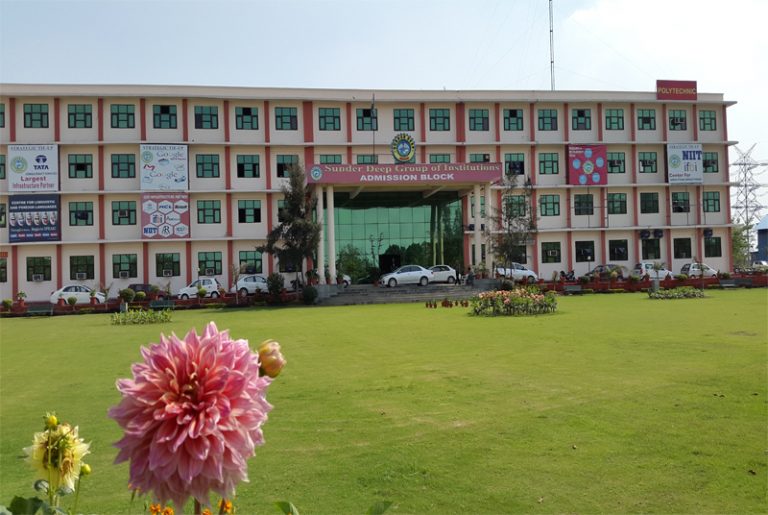
After the molestation incident of nurses by the members of Tablighi Jamaat kept in isolation in MMG hospital in Ghaziabad, another incident of molestation of nurses has emerged. This time the jamaatis are reported to have passed lewd comments on the female staff in the Sunderdeep Ayurvedic College in Ghaziabad.
The jamaatis, who have been kept in isolation in there after the huge surge in coronavirus cases in the country linked to the event at Nizamuddin Markaz, passed lewd comments on the nurses and the female staff. Some were heard saying to female employees, “come to Hyderabad with us, will show you heaven.”
After this, the Nurses lodged a complaint with the staff administration. The management stated that now only male health workers have been placed to attend the jammatis, they’re also investing in the matter.
It is notable that due the orders of District Health Administration, the coronavirus suspects of Nizamuddin Markaz have been admitted at MMG hospital of Ghaziabad and Sunderdeep Ayurvedic college that had been modified in view of coronavirus outbreak. The administration has provided isolation facilities along with quarantine wards. More than 100 jamaatis have been isolated in these places. The incidents of molestation with female doctors, nurses, and other female staff by the jamaatis are often being heard. Nurses alleged that some chaotic jamaati tell them to take along to Hyderabad, some talk about showing ‘Jannat’. They even try to touch the female staff who is attending them. The female staff has stated even more serious allegations.
CMO Dr. NK Gupta said that he has received a complaint regarding this matter. He said that female nurses and staff have been replaced with the male ones. And the investigation is still underway. Rural SP Neeraj Kumar Jadoun said that they have received the complaint of molestation of female staff in Sunderdeep ayurvedic college, but it isn’t in written form. Once the application is submitted, we’ll take strict action towards the perpetrators.
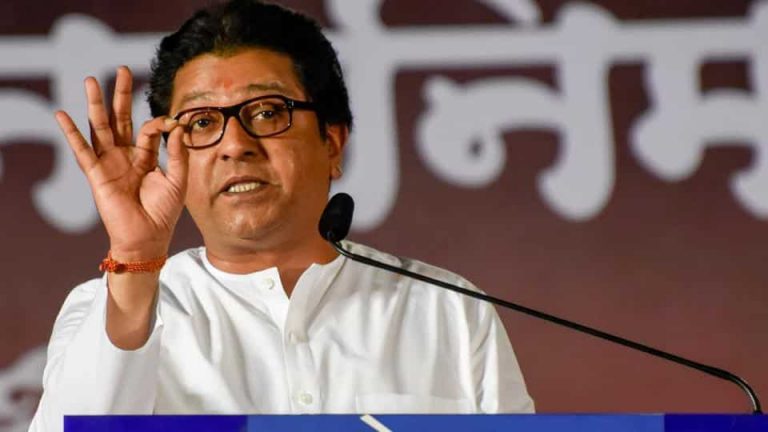
Firebrand politician and MNS chief Raj Thackeray, who is known for not mincing his words, said on Saturday that the unruly and indecent members of Markaz should be shot dead right away. Raj Thackeray further added that Tablighi Jamaat members, who attacked police personnel, should be publicly thrashed to set an example that the miscreants won’t be spared.
“You are abusing police personnel who are coming to your rescue? You are assaulting police officers? Such people should be shot dead right away. I want to ask the government, why are you providing treatment to these unworthy ingrates?” MNS chief Raj Thackeray exclaimed about Tablighi Jamaat members while adding, “They should all be kept in a separate facility and their treatment should be stopped immediately.”
Lashing out at the Tablighi Jamaat members, Thackeray exhorted the authorities to thrash the malevolent Jamaat members and make the videos of their beating viral so that others realise that they cannot get away with it. “Even in these times, these people consider faith bigger than the country, they think they can exploit the tragedy to destroy the country, applying saliva on vegetables and notes, spitting everywhere as well as on nurses and doctors in the quarantine facilities, I ask the authorities to beat the living daylights out of these people and make their videos go viral so that it serves as a lesson for others contemplating of indulging in such behaviour,” Thackeray said.
Thackeray also launched a scathing attack against the Muslim clerics who come forward during the election times to suggest them about their voting preference. “Where are Mulla-Maulvis who ask them to vote a particular candidate during the elections? Why are they not appealing to the community now? It appears as if they are agreeing with the Tablighi Jamaat members’ unruly behaviour. Don’t blame us if we take strong measures tomorrow,” Thackeray warned.
Besides, Raj Thackeray exhorted people to strictly follow the lockdown and warned of its extension if they failed to do so, on Saturday. Highlighting the listless response of the citizens to the lockdown, the MNS chief said that it is imperative for everyone to observe the lockdown restrictions with complete sincerity in order to deal with the pandemic effectively.
Persuading people to understand the importance of those providing essential services including the healthcare professionals, police & the media, Raj Thackeray insisted that the gratitude for their selfless services could be paid back only by staying indoors.