Home Blog Page 5868

Priyanka Gandhi shares a story about Jawharlal Nehru, but Twitter wants to know more

On the occasion of Jawaharlal Nehru’s birthday, Priyanka Gandhi shared a story about her great-grandfather on Twitter. It was about how one night, the first Prime Minister of India came back to his room and found his bodyguard sleeping on his bed. Upon seeing him asleep, Nehru supposedly pulled a blanket over him and slept on an adjacent chair.


The tweet sparked the curiosity of people on the social media platform. They had numerous questions with regards to the story that they sought an answer to. The most common among them was why wasn’t the bodyguard accompanying Nehru that late into the night.


Others wondered what kind of work was it that required Nehru to venture outside that late at night without his bodyguard.


Then there were those who wanted to know if there was only one bedroom at the Prime Minister’s house during those days. Some even dismissed the story on that account as Nehru could have easily gone and slept in a different room. The question obviously implies another question: Why didn’t Nehru sleep in another room?


People are also sceptical of the story shared by Priyanka Gandhi about Nehru and believe it is ‘made-up’. Some even wanted to know which ‘idiot’ had manufactured the story.


Then there were those who wanted AltNews to verify the story.


According to one user, Priyanka Gandhi’s story has more plot holes than the last season of Game of Thrones which was considered to be a huge let down by fans worldwide.


While many comments were made in jest, some of the pertinent questions do remain unanswered. While on the face of it, it appears to be an innocent story shared by Priyanka Gandhi about her great-grandfather Jawaharlal Nehru, it has opened a can of worms on the social media platform.

Muzaffarpur: Cleric in village Mosque raped minor girl repeatedly, panchayat asks her to sell her child

0

The Muzaffarpur Police on Monday ordered a probe into a case wherein a 15-year-old rape survivor was allegedly asked to sell her baby on the orders of local panchayat. The minor girl had given birth to the baby last month.

Shockingly, the local panchayat in Katra, Muzaffarpur, whom the girl had approached with a demand that a DNA test is conducted to identify the baby’s father, had blamed the girl and her family for rape and asked the victim to sell her baby for Rs 20,000.

The police had lodged an FIR under sections of the IPC and POCSO Act after the minor rape victim, who was allegedly repeatedly raped by a local Muslim cleric at Muzaffarpur mosque and later by an electrician, filed a complaint in July.

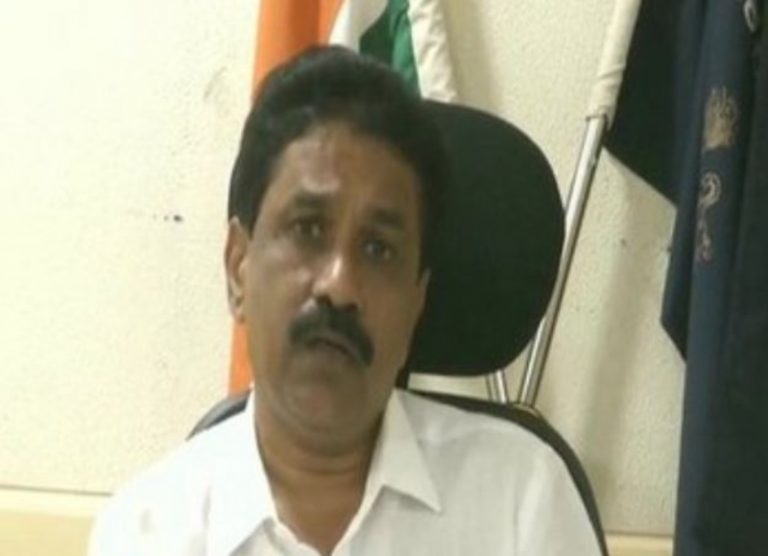
Superintendent of Police (SP) Jayant Kant said, “We have ordered a probe into the entire case, including allegations against the local panchayat, under additional SP (East) Amitesh Kumar. The team would intensify the search for the two accused,” said Kant.

As per the FIR, the villagers used to send food for the cleric of the Mosque on a rotational basis. In what transpired in January 2019, the victim, who was illiterate, had gone to deliver food to the cleric at the mosque where he allegedly sedated her and subsequently raped her. The accused had also made a video of the heinous act and used it to blackmail the minor girl to rape her repeatedly. A local electrician who came to know about the matter had also raped the girl later.

The minor victim, who initially kept quiet about the doings, had approached the police at an advanced stage of her pregnancy and also sought the panchayat’s intervention recently to seek help for the maintenance of her and the child. Both the cleric and the electrician have been absconding.

Why Sabarimala temple issue should not be clubbed with women entry to mosques

Today, a five judge bench of the Supreme Court decided to refer a bundle of cases to a larger seven judge bench: the Sabarimala Temple case, petitions relating to entry of women into mosques as well as the matter of female genital mutilation within the Dawoodi Bohra community.

At first sight, these might appear like similar issues, all related to the common theme of dignity and rights of women. They are not.

Read: SC refers the Sabarimala matter to a larger bench by 3:2 majority, pegged with issues like women entry into Mosques and FGM

One of the things that has been missing from the public discourse surrounding Sabarimala Temple has been moral clarity. So here is my humble effort to explain things, carved into a simple Q & A format.

Isn’t it wrong that Sabarimala Temple denies entry to women (of certain ages)? 

That is not for us to decide. That is for the management of the temple to decide in consultation of devotees of Ayyappa.

But still, isn’t it always discriminatory to admit people of one sex and not another? 

Let’s make this simpler. Suppose that Sabarimala were not a temple but a school exclusively for boys. Or for that matter, a school exclusively for girls. Would you still call it discrimination? Would you still ask the state to intervene and make sure that the Sabarimala school admits students of all sexes?

Read: Sabarimala is NOT about ‘impurity’ being associated with menstruation, stop repeating that lie

Shouldn’t the state act to end discrimination in public spaces?

The Indian Constitution does allow for an ‘activist state’ : where the state intervenes to ensure social justice and dignity for all.

However, a temple is not a public space in the same way as a public park or even a privately owned shopping mall. This is intuitively clear to all. For example, beef is legal in Kerala. If you think of a temple as a public space similar to a park, then should it be legal to eat beef inside the temple? What if someone wanted to enter the temple wearing a shirt carrying abusive slogans against the gods? Can they be denied entry for that?

I believe most people would agree that the temple should be allowed to ban beef eating within its premises.

Read: Sabarimala: Consent of the Governed vs Divine Right

The truth is that the status of Hindu temples in India is based on a tricky compromise between religion and state. The state takes over the temple and in return agrees to respect religious sentiments in the running of temple affairs.

So the state should never intervene just because a temple says they have a tradition? What if they try to deny entry to Dalits?

The question is under what circumstances should the state intervene. When there is a systemic social injustice that denies dignity to a group of people, the state should intervene and set it right.

Denying temple entry to Dalits has a long and painful history in our country. If a temple tried to deny entry to someone based on caste, the state should intervene and act against them immediately.

The Sabarimala case is exactly the opposite. It is *one* temple with one specific tradition grounded in ancient faith.

How is the Sabarimala case different from women seeking entry to mosques?

Because women are uniformly denied entry to mosques. This is a systemic injustice that is happening everywhere. State intervention is needed to correct this.

Read: No Mr Owaisi, the oppressive practice of Triple Talaq and the traditions of Sabarimala cannot be equated. Here is why

In the case of Sabarimala, this is one temple making a choice based on a specific tradition. There is no history of Hindu women being denied entry to temples as a general rule.

If Sabarimala is allowed to uphold its tradition, why not triple talaq? 

Again, triple talaq is a systemic injustice that humiliates women, which could affect almost any Muslim woman anywhere.

Sabarimala is one temple in one corner of Kerala.

The reality is that, once you strip away the rhetoric and agendas, the Sabarimala Temple issue is quite simple. The matter has been unnecessarily caught up in the rhetoric of gender justice. At the heart of all this is just one temple in one place with a specific tradition. The existence of this temple and this tradition causes no systemic harm or humiliation to anyone. If you do not like the tradition, you don’t have to be in their face with your business. You can always go to the hundreds of thousands of other Hindu temples all around the country. No harm done.

ISIS shifting base to Afghanistan, poses threat to South Asian countries including India: Iran Minister

0

Days after ISIS chief-terrorist Abu Bakr al-Baghdadi was killed during the raid conducted by the US military in northwest Syria, Iran Foreign Minister Javad Zarif said in an interview to India Today that the terror organisation is shifting its base to Afghanistan.

He said that the recent attacks which were carried out in Tajikistan and Uzbekistan border were done by ISIS while operating out of Afghanistan. The deadly gun battle left at over a dozen people dead.

Zarif said that his government is in regular touch with the Indian agencies reprising about the updates of ISIS. ISIS shifting base to Afghanistan also poses a threat to other South Asian countries like Pakistan, Russia and China. “This (fight against terrorism) is an issue that can unite all of us,” Zarif said, asserting all these countries need to unite to fight the threat emanating from the terror group.

Read: ISIS terrorist from Kerala killed in US drone strike in Afghanistan, was ‘missing’ since 2017

He added that ISIS’ revival and its move of base from Syria to Afghanistan is a matter of great concern for all. Zarif added that not just his country but entire region will face the threat with this.

Indian youth have also been vulnerable as hundreds have joined the terror organisation. As reported by India Today, Indian agencies believe that key areas in Afghanistan were on the radar after 21 youth from Kerala went missing in 2016 and later joined IS. However, despite Iran’s anti-Islamic State stand, IS operatives in India have been using the country to escape to neighbouring Iraq and Afghanistan.

The National Investigation Agency (NIA) had uncovered a modus operandi where it found that over two dozen IS operatives, mostly from Kerala, used Iran as a route to hoodwink Indian agencies. Between 2016 and 2018, several IS operatives have tried to dodge the Indian authorities in a similar fashion.

Catholics, including an Archbishop, equate Pagan Gods to Demons, condemn Pope Francis for promoting ‘idolatry’

0

Pope Francis has spoken out against “envy” and “gossip” amidst protests against him by prominent sections of the Catholic community for allegedly promoting ‘sacrilege’, ‘idolatry’ and ‘superstition’ by consecrating the Amazonian fertility Goddess Pachamama. The ceremony took place in the Vatican Gardens at Rome during the Amazon Synod with the Pope’s active participating and apparent support.

Archbishop Carlo Maria Viganò heavily criticized the Pope on Tuesday for his participation and called upon him to “repent publicly and unambiguously of these objectively grave sins” and asked bishops across the globe to “offer fraternal correction to Pope Francis for these scandals.” The eminent members of the Catholic community claim that they “protest against and condemn the sacrilegious and superstitious acts committed by Pope Francis, the Successor of Peter, in connection with the recent Amazon Synod held in Rome.”

The Catholics claim that the ‘sacrilegious acts’ of the Pope include “idolatrous worship of the pagan goddess Pachamama.” Their statement claims, “When wooden images of this pagan deity were removed from the church of Santa Maria in Traspontina, where they had been sacrilegiously placed, and thrown into the Tiber by Catholics outraged by this profanation of the church, Pope Francis, on October 25, apologized for their removal and another wooden image of Pachamama was returned to the church. Thus, a new profanation was initiated.”

Read: Being gay is ‘fashionable’, homosexuals should leave the Church: Pope Francis on gay clergy

The statement also cited the words of St. Paul. It said, “St. Paul taught the early Church that the sacrifice offered to pagan idols was not offered to God but rather to the demons when he said in his First Letter to the Corinthians:

What then? Do I say, that what is offered in sacrifice to idols, is any thing? Or, that the idol is any thing? But the things which the heathens sacrifice, they sacrifice to demons, and not to God. And I would not that you should be made partakers with demons. You cannot drink the chalice of the Lord, and the chalice of demons: you cannot be partakers of the table of the Lord, and of the table of demons.” (1 Cor. 10:19-21)”

The Catholics claim that Pope Francis has incurred the ‘reproach’ uttered by the Second Council of Nicaea. The ‘reproach’ says, “Many pastors have destroyed my vine, they have defiled my portion. For they followed unholy men and trusting to their own frenzies they calumniated the holy Church, which Christ our God has espoused to himself, and they failed to distinguish the holy from the profane, asserting that the icons of our Lord and of his saints were no different from the wooden images of satanic idols.

In a recent interview with LifeSiteNews, Vigano had called Murthi-puja (idol worship) “appalling idolatrous profanations.” “The abomination of idolatrous rites has entered the sanctuary of God and has given rise to a new form of apostasy whose seeds, which have been active for a long time, are growing with renewed vigor and effectiveness,” he stated.

He further said, “The process of the internal mutation of the faith, which has been taking place in the Catholic Church for several decades, has seen with this Synod a dramatic acceleration towards the foundation of a new creed, summed up in a new kind of worship [cultus]. In the name of inculturation, pagan elements are infesting divine worship so as to transform it into an idolatrous cult.”

Read: Pope Francis and Catholic Church shamed after Chile gets tough against child sexual abuse scandal

Earlier, the Idols were thrown into the Tiber river. It was reported that thieves had stolen the Idols and thrown them into the Tiber river. It was later recovered and consecrated in the ceremony that Pope Francis attended and participated in. Even ahead of the Amazon Synod, Catholics had slammed the occasion as a ‘heretical celebration of paganism’. Pope Francis had personally apologized for the incident.

On Wednesday, the Pope said that the “envy of that proud angel who refused to accept the incarnation” led him “to destroy humanity” and added that this is how “jealousy, envy [and] rivalry” entered our hearts. He also said, “When you talk badly about someone you destroy them. The tongue is a fearsome weapon – gossip kills, slander kills, but the jealousy and the envy of the one destroyed the other.”

The statement is clearly not an apology amidst demands that he”repent publicly and unambiguously … of all the public offences that he has committed against God and the true religion”. However, the Pope has clearly not addressed the core doctrines which pave the way for bigotry of the worst kind.

Driver of Tej Pratap Yadav’s BMW beats up auto driver, demands Rs 1,80,000 as compensation for car damage

On Thursday, Tej Pratap Yadav, the eldest son of Rashtriya Janata Dal (RJD) chief Lalu Prasad Yadav, found himself in yet another controversy after his BMW car reportedly got involved in an accident with an autorickshaw in Varanasi’s Rohaniya area.

According to a Dainik Bhaskar report, the incident took place today on Thursday morning in which a BMW car belonging to Tej Pratap Yadav suffered damages after it hit an autorickshaw in Rohaniya’s Karnadadi road.

Soon, an argument broke out between Tej Pratap’s driver, Jayapal and the man driving the auto as the former asked the latter to pay compensation of Rs 1,80,000 towards damages of the luxury car.

SO Parshuram Tripathy has been quoted by the report as saying that the car was travelling to bring Tej Pratap. As per reports, Tej Pratap is in Vrindavan nowadays and the car, along with other escort vehicles, was travelling to bring him to Bihar.

As the auto driver could not pay the damage, Tej Pratap Yadav’s driver had allegedly resorted to vandalism and attacked the auto driver. Though no one had been injured in the accident, local eyewitnesses have stated that it was the car that had hit the autorickshaw and it was not the auto driver’s fault. The police were informed by the local people who had also mediated and rescued the auto driver.

The police have also stated that if the auto driver wishes to press charges, they will file a complaint. Local people have stated that the car driver was threatening the auto driver repeatedly.

As per reports, Tej Pratap, who was not in the car at that time, later called up both the parties involved in the incident and inquired about their well being. Varanasi police have reportedly informed that both parties have agreed not to press charges and have compromised.

BRICS Summit: PM Modi and Xi Jinping meet, hold bilateral talks in Brasilia over key issues to ensure co-operation

Prime Minister Narendra Modi, who is in Brazil for the 11th BRICS Summit, met Chinese President Xi Jinping on Wednesday on the sidelines of the meeting. The two leaders met over a month after they held their second informal summit in India on October 11-12.


Addressing the bilateral meeting, PM Modi stated that the informal meets between the two leaders to ease relations without any set agenda has been great in maintaining healthy ties between the nations.

Meeting in Brazil on the sidelines of meeting the BRICS nations – Brazil, Russia, India, China and South Africa,  Xi told Modi that he was willing to maintain close communication “to guide a better and more stable development of China-India relations.” The two should “increase political mutual trust, properly manage differences and expand practical cooperation so as to guide a better and more stable development of bilateral ties,” Xi was quoted as saying.

President Xi also reiterated the next year’s informal summit between the two leaders. “2020 will be here soon, and I hope China-India relations will achieve new and greater development in the new year,” the statement quoted Xi as saying. “I welcome you to come to China for another meeting next year.”

Jinping also thanked PM Modi for India’s substantial participation in the just-concluded China Import Export Expo in Shanghai.

The meeting between Modi and Xi comes days after India decided not to join China-backed mega Regional Comprehensive Economic Partnership (RCEP) over unresolved “core concerns”. Conveying India’s decision not to join the China-backed RCEP deal at a summit meeting of the 16-nation bloc PM Modi had on Monday said that the proposed deal would have an adverse impact on the lives and livelihoods of all Indians.

It is notable here that despite differences over many issues, from BRI to blacklisting Pakistan and taking a pro-Pakistan line in the issue of Kashmir, Modi and Xi have been successful in skirting these differences and ensuring co-operation over key issues of bilateral trade and relations.

Read: Air strikes by India: Pakistan’s ‘all-weather friend’ China urges to observe ‘restraint’

In the meanwhile, India, under the Modi government has also successfully conveyed to China that as far as national interests are concerned, India will meet China as equals and will no longer be bullied by it. The Doklam standoff between India and China had delivered the message well.

Read: After constant criticism over Doklam, Shashi Tharoor led parliamentary panel which included Rahul Gandhi, praises govt’s handling of the standoff

After the Modi government effectively abrogated Article 370 and accorded Union Territory status to J&K and Ladakh, Pakistan and China had criticised India’s bold move. Then too, India had reacted sharply to China’s ‘concern’ asking China not to interfere in the internal matters of India.

Mumbai: Minor girl lured on the pretext of Eid procession and raped, Chand Babu Sheikh arrested

0

A 19-year-old resident of Wadala in Mumbai was arrested on November 11 (Monday) for allegedly luring an 8-year-old on the pretext of showing her an Eid procession and later raping her in a public toilet.

A case has been registered against the accused, Chand Babu Sheikh, under section 376 (rape) of the Indian Penal Code (IPC) and relevant sections of the Protection of Children from Sexual Offence (POCSO) Act.

On Sunday, November 10, Sheikh saw the minor girl playing near her home in Kamala Nagar and asked her whether she wanted to see the ‘Eid E Milan’ procession. The girl readily agreed to go with him. Sheikh then allegedly took her to a public toilet in suburban Walada and raped her.

When the victim’s family could not spot her for some time, they inquired about the girl’s whereabouts with one of her friends who allegedly informed the family that she last saw the victim with Sheikh. After failing to locate their minor daughter, the victim’s family filed a complaint at the Wadala Truck Terminal police station.

The girl returned home late on Sunday night and had narrated her ordeal, following which the police launched a manhunt and checked CCTV footage where they found the man walking away with the girl. Locals immediately identified him as Chand Babu Sheikh. He was arrested on Monday.

Sabarimala is NOT about ‘impurity’ being associated with menstruation, stop repeating that lie

The Supreme Court, in a split verdict, referred the review petitions challenging the Sabarimala verdict to a larger bench. The Supreme Court said that the issue of women’s entry into the Sabarimala temple is not just limited to Sabarimala. It involves the entry of women into Mosques as well. The Supreme Court referenced to larger Bench of issues arising in case of entry of Muslim women into a mosque, female genital mutilation cannot be ruled out.

Needless to say, the usual suspects like Barkha Dutt and Sagarika Ghose were not too happy with the Supreme Court’s decision. Some called it ‘disappointing’ while others claimed that the tradition labels menstruating women as ‘impure’.


In reality, the tradition has absolutely nothing to do with ‘impurity’ whatsoever. It is based on the celibate nature of the presiding Deity Swami Ayyappa. At Sabarimala, Swami Ayyappa is worshipped in His manifestation as a Naishtik Brahmachari. It was never argued by any party in the Court that the basis of the tradition lies in the belief that menstruation is impure. The basis was simple: The Brahmachari character of the Deity would be violated if women of a reproductive age enter the Temple.

Read: Right to worship: The good, the bad, and the ugly aspects of the ‘debate’

The pilgrimage to Sabarimala also imposes various other restrictions on the devotees. A strict 41-day penance and celibacy is observed by the devotees and various other associated rituals are also performed. K Parasaran, who had recently won the Ayodhya dispute in favour of the Hindus, said quite clearly that it cannot be achieved by women when they are menstruating and when men are travelling with them.

J Sai Deepak argued that the exclusion was not ‘men vs women’ but rather ‘men vs men and women vs women’. Even a man will not be permitted to enter merely because of his gender. He has to observe a set of rituals in order to become eligible for the pilgrimage. He argued that if exceptions are made for women on the basis of their age, then men could in the future argue for exemptions of the 41-day ritual.

Furthermore, he argued that Swami Ayyappa Himself took a vow of Naishtik Brahmachari and He is worshipped as such at Sabarimala. The vow carries with it certain restrictions which include the avoidance of contact with the opposite gender. Sai Deepak further argued that the rules are the same for a Brahmachari as well as a Brahmacharini. Therefore, such rules can not be painted as misogyny or misandry.

Read: No Mr Owaisi, the oppressive practice of Triple Talaq and the traditions of Sabarimala cannot be equated. Here is why

Therefore, quite clearly, the restriction on the entry of women of menstrual age is not imposed as a consequence of opinions on menstruation. It flows from the necessity of protecting the Brahmachari character of the Deity. Sai Deepak further asserted that ‘Naisthika Brahmacharya is, not a men-only practice and hence the rituals associated cannot be regarded as patriarchal’. Essentially, he argued that not all forms of exclusions are discrimination, a position that was complimented by the then CJI Deepak Mishra himself.

Swami Ayyappa Himself said that He will grace only those devotees at Sabarimala who observe the 41-day penance and live the life of a Brahmachari during that period. Therefore, quite clearly, the traditions are based on the will of the Deity and not on perceptions that consider menstruation impure. Thus, quite clearly, it is a straw-man argument that has been propped up by those who seek to desecrate the Temple.

Moreover, women of reproductive age are not prevented from worshipping Swami Ayyappa at other Temples dedicated to God. Those women who wish to worship Him can still very well worship Him at Temples where the rules of celibacy do not apply. Sabarimala is a very special Temple and the rules and regulations pertaining to the pilgrimage are what make the Temple so special. Permitting the entry of women of reproductive age at Sabarimala serves no other purpose than the desecration of it.

Read: Sabarimala: Consent of the Governed vs Divine Right

There is a diversity of traditions within Hinduism. There is a multiplicity of the Divine within the polytheistic traditions of Hinduism and the numerous traditions unique to particular Temples are a reflection of it. For instance, The Panchubarahi temple in the coastal village of Odisha’s Satabhaya permits only married women of the local sabar community to enter the sanctum sanctorum and touch the five idols. The daily rituals of the temple deities are exclusively performed by these women. Men are allowed darshan but not entry into the sanctum sanctorum.

The advocacy for the indiscriminate entry of everyone at a particular Temple with utter disregard for the unique practices and lore associated with the Temple itself would destroy the diversity of traditions within Hinduism. Sai Deepak had argued the same in the Court. It essentially demonstrates that there is a fervent desire to view Hinduism through the lens of Abrahamic faiths.

Unlike Abrahamic religions, which are universal in nature, Hinduism is nativist in its interpretation of the Divine. Our Temples have their own sacred traditions and these traditions will not be universal in nature as, quite clearly, the emphasis is always on the manner in which local communities worship the Gods.

Most importantly, our Temples are not a battleground for modern ideologies. They are the sacred abodes of our Gods. Temples are where we go in order to pay obeisance to the Divine. Ideological battles end where the rights of the Deities begin. Failure to understand such a simple matter shows the extensive manner in which Abrahamic ideals are still engraved in the institutions of our country. Our Gods and the manner of worship should not and does not fall under the purview of the state machinery.

Shiv Sena MLAs get into an abusive argument over Uddhav Thackeray’s insistence on CM post: Reports

In a significant development in Maharashtra politics, massive unrest is being reported within Shiv Sena resulting in party chief Uddhav Thackeray allowing the legislators to return to their respective constituencies, reports Times Now.

According to the reports, amidst the ongoing power tussle in Maharashtra, a fight erupted between Shiv Sena elected MLAs as they engaged in abusive arguments over Uddhav Thackeray’s insistence on the post of Chief Minister of Maharashtra. Shiv Sena MLA Aaditya Thackeray had to rush to the hotel on Tuesday night following a revolt by Sena MLAs.

Shiv Sena MLAs are currently kept at The Retreat Hotel in Mumbai’s Malad due to the fear of poaching. Reportedly, the fight between Shiv Sena MLAs took place at the resort on Tuesday and Wednesday nights.

Read: 5% reservations to Muslims to be part of Shiv Sena-NCP-Congress govt in Maharashtra, journalist claims

The Shiv Sena MLAs were reportedly angry about the entire party being held to ransom over the whims of Uddhav Thackeray. The alliance between BJP and Shiv Sena failed because of Shiv Sena’s insistence that the Chief Minister post should be reserved for Shiv Sena’s Aditya Thackeray. The party MLAs were reportedly angry because the entire party was paying the price for a post that would only benefit one person from the Thackeray clan.

Shiv Sena, which emerged as the second-largest party in the 288-member Maharashtra Assembly, quit its alliance with the BJP after it decided to tie-up with NCP-Congress in an expectation that the party could get the post of Chief Minister. However, NCP-Congress alliance dumped Shiv Sena, forcing the Maharashtra governor to enforce the President’s rule in the state.

Read: Six things that follow from the new Shiv Sena-NCP-Congress govt and what the Hindus of India should learn from this

In a hurry to form the government in Maharashtra by joining hands with NCP-Congress, Shiv Sena had even pulled out its MP Aravind Sawant from the NDA government. However, both NCP and Congress backtracked regarding their support to Shiv Sena and clarified that they have not sent any letter of support for Shiv Sena.

After facing a huge embarrassment for failure to garner enough number to form a government and getting dumped by NCP-Congress, the defeated Shiv Sena has now hoped for a reconciliation with its pre-poll alliance partner BJP.