Home Blog Page 72

Will Congress join an Islamist bloc, comprising SDPI, ISF and others? How an anti-TMC alliance led by Babri Mosque replica proponent could take shape in Bengal

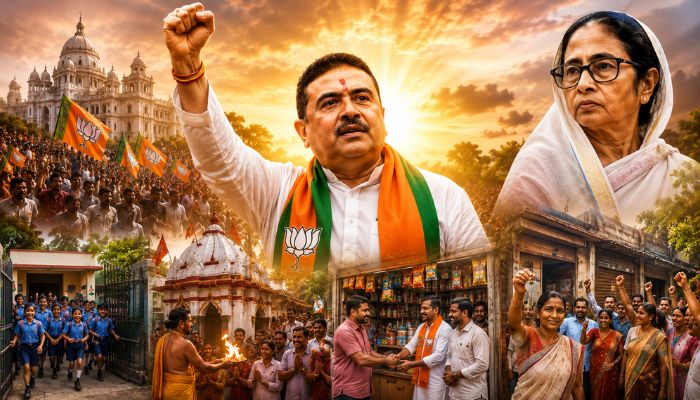
As the assembly elections approach, West Bengal is expected to witness a political realignment of parties relying on Muslim votes. A look at recent political events suggests that a minority front, excluding the TMC, might emerge ahead of the assembly elections. Historically, the TMC has received the electoral support of the Muslim community in West Bengal.

However, last year in December, in what appeared to be a meek attempt to distance itself from hardline Islamic ideology, the TMC suspended its MLA, Humayun Kabir, after he announced that he would construct a replica of the Babri Mosque in Murshidabad.

Humayun Kabir, who is building the Babri mosque replica, has Muslim support

Unbothered by his suspension, Humayun Kabir went ahead and laid the foundation for the replica of the Babri Mosque in Beldanga, Murshidabad. Kabir’s proposal to build a replica of the Babri Mosque found widespread support from the local Muslim community. While the ruling TMC tried to impress its minority vote bank by opposing the Special Intensive Revision (SIR), alleging it would disenfranchise a large number of voters, Humayun Kabir’s proposal to build a replica of the Babri Mosque drew massive support from his community. He floated his own political party, named the Janata Unnayan Party (JUP) and now plans to field his candidates in the upcoming state Assembly elections. Moreover, Kabir accused the TMC of being anti-minority and urged the Muslims in the state to unite.

ISF MLA Naushad Siddiqui calls for an alliance against the TMC and the BJP

On the other hand, the Indian Secular Front (ISF) MLA Naushad Siddiqui, who is the only non-TMC and non-BJP MLA in the state Assembly, called on 17th January for an alliance against the TMC and the BJP. Siddiqui’s call found Kabir’s support, who said that the alliance should come into existence at the earliest. Earlier, in December 2025, Kabir, after being suspended from the TMC, had announced that he would ally with All India Majlis-e-Ittehadul Muslimeen (AIMIM) chief Asaduddin Owaisi ahead of the state assembly elections. Kabir had said that his party’s alliance with AIMIM is aimed at stopping the BJP and the TMC in the state.

JUP and ISF invite the Left and the Congress to join the alliance

Notably, the ISF and Naushad Siddiqui are linked to the Furfura Sharif shrine in Hooghly district, whose chief Abbas Siddiqui is notorious for triggering communal passions in West Bengal over perceived threats ot Islam. According to the Indian Express, the JUP and the ISF are in the process of chalking out a plan to contest the state assembly elections together. In addition to the two parties, other smaller Islamic groups, including the Social Democratic Party of India (SDPI), the political wing of the banned Islamic extremist organisation, the Popular Front of India (PFI).

Interestingly, the JUP has reportedly submitted proposals to the Left Front and the Congress Party and is awaiting their replies. Speaking about the proposed alliance, Humayun Kabir said on Monday (16th January) that if the Congress did not respond in time, the alliance would proceed without the Party in Malda.

What the future holds in West Bengal

The ongoing political churn in West Bengal raises two significant political questions: First, whether the Congress Party, which has been struggling to maintain its political existence across the country, will join an Islamist-led alliance in the state, and second, whether the proposed alliance, with or without the Congress, would be able to leave a dent in the TMC minority vote bank.

Kabir and Siddiqui are banking on the recent disappointment within the Muslim community in West Bengal over the removal of 37 groups from the OBC list, and the reclassification of 34 more minority groups by the West Bengal Commission for Backwards Classes earlier this month. The announcement triggered protests by the Muslim community in the state, who were already displeased with the TMC government’s acceptance of the Waqf Amendment Act, 2025, after months of opposing it.

Whether the resentment of West Bengal’s Muslims against the TMC would translate into a shift of electoral support to the proposed Islamist alliance remains to be seen.

Big jolt to Congress in Uttar Pradesh: Read why senior leader Naseemuddin Siddiqui resigned and how it may affect the party

On the one hand, the Indian National Congress is suffering from a series of repeated electoral setbacks and on the other hand, senior leaders are leaving the party on a regular basis. Now, a similar situation has arisen that could jeopardise the grand old party’s narrow prospects in the upcoming assembly polls in Uttar Pradesh. Senior leader Naseemuddin Siddiqui unexpectedly resigned on 24th January (Saturday) along with seventy-two other leaders, including two dozen ex-MLAs.

The former senior functionary insisted, “I had joined the Congress along with my associates to fight against injustice rooted in caste and communal discrimination. But I am not able to fight that battle here. That is why I have resigned.” Afterwards, prominent Congress leaders from the state, Avinash Pande and Ajay Rai visited him and had an hour-long conversation. Rai later stated, “We are hopeful that he will not leave the party.”

The development happened alongside the party’s Samvidhan Samvad Mahapanchayat, a series of 30 conventions held around the state on matters such as Special Intensive Reservation of the electoral roll. According to sources, Siddiqui felt marginalised in the party and was dissatisfied with the Congress leadership. On 20th January, he tried to meet the Leader of the Opposition in Lok Sabha, Rahul Gandhi, who was travelling to his Raebareli constituency however failed despite hurrying to the Lucknow airport from Moradabad.

Siddiqui has stated that he had been trying for about a year to have time for an extensive discussion with him but he had been unsuccessful in gaining a greater stake in the party’s decision-making process. However, he described himself as “a person who works on the ground at the grassroots level” and added that he felt his work style had not been fully used over the previous eight years. “To put it differently, I felt that rust was settling on my work and on my abilities,” he further mentioned.

According to Siddiqui, a decision on the future course of action would be made collectively and conversations were in progress with all of the individuals who had resigned with him. He declared, “We are holding discussions with everyone who has stepped down. Whichever direction we agree upon, we will move forward with that and continue the struggle for the people.”

Siddiqui and Azad Samaj Party (Kanshi Ram) supremo Chandrashekhar Azad could forge a new political front. His departure also took place one day prior to the latter’s speech at a rally in Agra. Siddiqui earlier served as a minister in the Bahujan Samaj Party (BSP) government. He was later removed from BSP due to anti-party activities in 2017 and became a member of Congress in February 2018.

A serious hit to a faltering Uttar Pradesh Congress

The loss of Naseemuddin Siddiqui has dealt a considerable blow to the Uttar Pradesh Congress which is desperately trying to fortify its fragile foundation in the poll-bound state and improve its position within a potential alliance with the Samajwadi Party (SP).

Uttar Pradesh Congress Committee president Ajay Rai and All India Congress Committee (AICC) national secretary in charge of the state Avinash Pande visited his home to try to convince him to change his mind but did not succeed. This immediate response to bring Naseemuddin Siddiqui back to the Congress fold outlined the impact of his voluntary exit, particularly in light of the upcoming elections. However, he didn’t waver and has already started considering alternative political choices for the future.

Insiders disclosed that Siddiqui had been feeling excluded for a while, as he did not have an influential role in the party currently, reported The Indian Express. His action is reported to have been prompted by two recent events, including when he was turned away at the airport during Rahul Gandhi’s trip to the state. However, Siddiqui has denied that it had any bearing on his resignation.

He declared, “I was unable to work in my own style, which is grassroots-based. I did not have any significant work. For long, I felt I was unable to utilise my abilities within the Congress. I have 36 years of experience. I joined the party to contribute, but that did not happen,” at the time of the resignation alluding to his dissatisfaction with the party.

Congress believes that the political message conveyed by the ouster could be more challenging to handle than the loss of a specific person.

According to people close to Siddiqui, he has been contacted by Chandra Shekhar Azad, BSP and SP. Others like former minister and Rashtriya Shoshit Samaj Party (RSSP) chairman Swami Prasad Maurya have also reached out to him but he has not yet made his mind. Siddiqui asserted to have the support of over 70 powerful groups across regions.

Hence, the opposition is vying for his attention in the hope of solidifying its minority votebank ahead of the assembly elections while his departure is akin to a substantial disaster for the already struggling grand old party.

An unending series of blows for Congress

Siddiqui parted ways from the party only a few months following the departure of generational Congressman Shakeel Ahmad in November. Afterwards, Ahmed commenced a barrage of criticism aimed at the senior leadership, referring to the Gandhi scion as a “coward” and an “insecure” politician. Ahmad indicated that the latter is not only undemocratic, harbouring a superiority complex due to his family heritage but also intimidated by his counterparts who possess extensive grassroots support or popularity.

“There is no internal democracy in the Congress and whatever Rahul Gandhi says is final. There are many leaders who are disappointed, but their next generation has joined the party. So they are in Congress even after facing humiliation,” Ahmad mentioned. He emphasised that the Raebareli MP has created a strong group within the party operating only within it. Furthermore, he voiced that his revelations have led to a threat against his life as Congress members are planning to attack his Patna and Madhubani residences under the pretext of burning his effigy.

There is an unceasing array of notable figures who have left Rahul Gandhi and Congress to either join the Bharatiya Janata Party, other political groups or form their own parties. However, there has been a striking similarity behind their move. Each of them has pointed out their discontent with the Congress leadership with some being more candid than others.

Ghulam Nabi Azad who left Congress in 2022 and later formed his own political party, explicitly challenged Rahul Gandhi’s ability to lead in his letter addressed to Sonia Gandhi and also slammed its “remote control” culture. Notably, the veteran politician was one of the 23 leaders, collectively referred to as the G-23, who had been outspoken about the need for Congress to alter its structure of authority and stop relying on the Gandhi family for every important matter.

Azad was among a multitude of notable Congress members including Amarinder Singh, Ashwani Kumar, Baba Siddique and even Kapil Sibal. These leaders not only outlined their humiliation at the hands of the top leadership in New Delhi and the neglect of their critical concerns but also stated how the party has completely lost its connection with the grassroots sparking their decision.

Several popular figures from the core team of Rahul Gandhi, such as Milind Deora, Jitin Prasada, RPN Singh and Jyotiraditya Scindia gradually abandoned his side after disgruntlement with the leadership and its blatant disregard for their grievances.

In December 2025, the Odisha Congress expelled senior leader Md Moquim, the father of MLA Sofia Firdaus, just days after he wrote a letter to former party president Sonia Gandhi, questioning the leadership of current Congress chief Mallikarjun Kharge. 

Additionally, national spokespersons of Congress such as Gourav Vallabh, Rohan Gupta and Radhika Khera switched their allegiance to represent the saffron party on national television. All three articulated their displeasure with the party’s anti-Hindu stance and opted to leave. Khera even charged that she was subjected to mistreatment for visiting the Ram Mandir in Ayodhya but did not obtain justice from the senior leaders.

Conclusion

Congress has a longstanding tradition of overlooking its leaders, from Mamata Banerjee and Sharad Pawar to Jagan Mohan Reddy and others. Their departure catalysed the formation of powerful regional political parties, creating a substantial dent in voter base of Congress. The same has been consistent over the years, continuing to this day, where either influential Congress leaders are leaving the party or are at odds with the leadership, as illustrated by Shashi Tharoor’s case.

Meanwhile, the power centre within the party remains firmly in the hands of the Gandhi family which is surrounded by its sycophants as Congress jumps from one political defeat after another while simultaneously losing leaders, states and the country. Siddiqui’s move is only a part of this trend and the number of such leaders is only expected to increase in the near future.

Ambedkar, omission, and the rise of ideological vigilantism by on-duty officials: How the Nashik incident exposes a dangerous shift in Constitutional discourse

0

The disruption of Maharashtra minister Girish Mahajan’s Republic Day speech in Nashik by a serving Forest Department official is not a minor episode of emotional overreach, nor is it merely a debate about reverence for Dr B. R. Ambedkar. It is a disturbing marker of deeper institutional decay, in which state functionaries increasingly see themselves not as neutral executors of constitutional authority, but as ideological enforcers empowered to confront elected representatives publicly while on duty.

At the heart of the Nashik incident lies a simple fact: Girish Mahajan, while delivering an official Republic Day address after unfurling the national flag, did not mention Dr Ambedkar’s name. This omission, whether intentional or not, was seized upon by Madhvi Jadhav, a Forest Department staffer, who interrupted the speech mid-event to demand an explanation. Police intervened, she was briefly detained, and the matter quickly snowballed into a full-fledged political controversy.

Mahajan later clarified that the omission was unintentional and apologised. He stated that he regularly invokes Ambedkar in his speeches and had no motive to disrespect him. Under normal democratic and civic standards, the episode should have ended there.

Instead, it escalated into a manufactured outrage, replete with allegations of “erasing Ambedkar’s identity,” calls for FIRs, and political leaders demanding the minister’s removal.

Madhavi went a step further, declaring that the so-called “sin” committed by Girish Mahajan was so grave that it was beyond forgiveness, so severe, she claimed, that even a holy dip at the upcoming Maha Kumbh would fail to wash it away.

This escalation is telling. Not only does it reveal a brazen contempt for Hindu rituals of taking a dip at Maha Kumbh, but it also shows how omission has now been weaponised as insult, and how sections of the political ecosystem have transformed Ambedkar into a figure whose invocation is no longer symbolic or reverential, but compulsory.

This is perhaps the first time in India’s recorded history that a leader has been accused of “insult” not for what he said, but for what he did not say.

That shift is dangerous.

There is no constitutional provision, legal mandate, or civic convention that requires every Republic Day speech to name Dr Ambedkar. Speeches are not affidavits. They reflect emphasis, context, and thematic focus. A minister may speak about nationalism, federalism, Shivaji Maharaj, or contemporary governance without enumerating every historical contributor to India’s constitutional journey. The Constituent Assembly itself was a collective body. Ambedkar was undoubtedly its most prominent intellectual force, but he was not its sole contributor.

If the standard of “insult” is reduced to non-mention, then no speech is safe. Every address can be interrupted. Every minister can be accused. Every omission can be reframed as malice.

That path leads not to constitutional reverence, but to perpetual disruption.

Political activism dressed up as personal grievance

What makes the Nashik incident especially troubling is not merely the outrage, but who initiated it. Madhvi Jadhav was not a private citizen exercising dissent. She was a government employee on duty at a constitutional function. Service rules, administrative discipline, and the basic architecture of the Indian state require bureaucrats and uniformed personnel to remain politically neutral while discharging official responsibilities.

Her conduct was not an act of democratic protest; it was indiscipline.

The fact that she later demanded an FIR against the minister, despite his apology, only reinforces the suspicion that the confrontation was less about constitutional values and more about political posturing and self-justification following an emotional outburst.

More alarming still is the reaction that followed. A section of the political ecosystem was quick to appropriate and celebrate Madhavi’s stunt as an ‘act of defiance’, hiding their dishonesty in hailing what has been a serious act of indiscipline and dereliction of duty.

Instead of condemning the breach of protocol, several opposition leaders and ideological commentators rushed to glorify the official. Mumbai Congress MP Varsha Gaikwad framed the interruption as the “voice of every self-respecting Marathi citizen.”

Congress leader Shama Mohamed went further, calling the forest official “brave” and demanding Mahajan’s immediate sacking for allegedly insulting the “architect of the Constitution.”

Pro-Congress social media handles hailed Jadhav with slogans and salutes.

When political actors publicly endorse indiscipline by serving officials, they send a clear signal: ideological confrontation will be rewarded, not punished. Neutrality will be penalised; activism will be celebrated.

This is how institutions corrode.

The elevation of Ambedkar as sacrosanct figure beyond reproach

The transformation of Ambedkar into a sacrosanct figure beyond criticism, beyond omission, beyond contextual restraint adds another troubling layer. Much like figures in rigid monotheistic belief systems, any perceived slight now triggers outrage, allegations, and punitive demands. In extreme cases, dissent or critique attracts the threat of stringent legal provisions, social ostracism, or career destruction.

The irony here is profound.

Dr Ambedkar himself was among the fiercest critics of hero worship. In his final speech to the Constituent Assembly, he issued a prescient warning, “Bhaktiin religion may be a road to the salvation of the soul. But in politics, Bhakti or hero-worship is a sure road to degradation and to eventual dictator”

Yet today, many who claim to act in his name have elevated him into precisely the kind of infallible icon he warned against, one whose name must be ritually invoked, whose absence is treated as blasphemy, and whose legacy is enforced through coercion rather than understanding.

This is not homage. It is instrumentalisation.

More importantly, it narrows the space for free political speech. The Indian Constitution guarantees freedom of expression to every citizen, including ministers. Forgetting to mention Ambedkar is not a crime. It is not even misconduct. A Republic Day speech may focus on any number of themes without being compelled to follow a prescribed ideological script.

If tomorrow a minister omits Jawaharlal Nehru, Sardar Patel, Savarkar, Netaji Subhas Chandra Bose, or any other historical figure, will that too justify disruption India’s freedom struggle and constitutional journey involved countless contributors across centuries. No speech can name them all, nor should it be expected to.

The absurdity of the current outrage becomes clear when viewed against historical precedent. Since Independence, Prime Ministers, Chief Ministers, or even people of some prominence have delivered hundreds of speeches on Republic Day and Independence Day. None have ever been forced to list every freedom fighter or Constitution framer. No one has been accused of “insulting” Bhagat Singh or Vivekananda or Ambedkar because their names were not mentioned in a particular address.

Why, then, this exception?

The answer lies in politics, not principle.

CISF official assaults Kangana Ranaut

The Nashik episode fits into a broader and deeply worrying pattern, where the politicisation of the bureaucracy and uniformed services has been steady and irreversible. In recent public memory, the most striking example was the 2024 incident involving CISF official Kulwinder Kaur, who allegedly slapped MP Kangana Ranaut at an airport, a highly sensitive security zone. Kaur later justified her action by citing Ranaut’s past comments on farmres protests.

The act constituted a serious breach of security and protocol. Yet what followed was even more disturbing. While Kaur was suspended and transferred pending inquiry, there was no firm institutional condemnation. Instead, public figures openly normalised the assault. Music composer Vishal Dadlani even offered to secure employment for her if action was taken. Political supporters lauded her conduct as ‘brave resistance.’

The message it sent was unmistakably stark: ideological violence by on-duty officials is acceptable if the target is politically convenient.

The Nashik incident echoes this logic. The official is portrayed as courageous. The minister, despite apologising, is cast as the offender because he is from the BJP, PM Modi’s party, and, therefore, a fairgame for warriors of Congress ecosystem. Discipline is reframed as oppression. Neutrality is dismissed as moral cowardice.

Bareilly Magistrate Alankar Agnihotri resigns over new UGC regulations

The resignation of Bareilly City Magistrate Alankar Agnihotri on Republic Day further underscores this trend. While resignation is an individualrightAgnihotri’sssss public framing of his exit as a political protest against government policies, complete with media briefings, ideological rhetoric, and mobilisation by caste and political leaders, again blurred the line between administration and activism.

When serving or recently serving officers position themselves as ideological actors, governance itself becomes performative. Administration turns into a platform for signalling dissent rather than executing policy.

A constitutional democracy cannot function this way.

The civil services and uniformed forces are not pressure groups. They are not activist collectives. Their legitimacy derives precisely from their neutrality. Once officials begin to see themselves as moral arbiters empowered to confront elected representatives based on personal or ideological conviction, the chain of authority collapses.

The slippery slope of ideological policing by the state

Today, the justification is Ambedkar. Tomorrow, it could be caste, religion, language, reservation policy, or faith. If every official feels entitled to disrupt, resign theatrically, or physically confront politicians while on duty, governance will grind to a halt.

Republic Day commemorates not just the adoption of the Constitution, but constitutionalism itself, restraint, procedure, institutional boundaries, and respect for roles. The Nashik disruption violated all of these principles.

Political activism while on duty is not courage. It is dereliction. And when such dereliction is celebrated, encouraged, and politicised, it ceases to be an aberration. It becomes a contagion.

India should be deeply concerned, not because Ambedkar was forgotten in a speech, but because the state itself is forgetting the meaning of constitutional discipline.

When Republic Day turned bloody: How the 1965 anti-Hindi agitation in Tamil Nadu claimed over 70+ lives and changed the state politics forever

26th January, 1965. The entire country was celebrating Republic Day. The parade was underway in Delhi, the tricolour was waving, and people were filled with enthusiasm. But in Madras (present-day Tamil Nadu), the atmosphere was completely different. The morning sky was gloomy, black flags were flying, and the streets were crowded with young students. This day became not a day of celebration, but of mourning. The movement that began to oppose making Hindi the official language became so violent that many young men lost their lives. Many were killed in police firing, and many committed suicide.

Official figures put the death toll at around 70, but witnesses and activists say the number was much higher. This was a disaster that unfolded on Republic Day. The sacrifices made by students here decades ago were sacrificed to the politics of language. Today, decades later, we must remember that time to understand how a linguistic issue was turned into a political weapon, putting the lives of young people at stake.

This issue isn’t just about supporting or opposing Hindi. It’s about the politics of the DMK, which mobilised youth under the guise of an anti-Hindi movement, and the Congress government mishandled it. The DMK turned it into a North India versus South India issue, while the Congress party tried to retain or regain power by linking its protests to anti-Hindi sentiment. The result: the deaths of innocent students, chaos in the state, and prolonged political change.

Anti-Hindi roots in Tamil Nadu go back to before Independence.

The movement had ancient roots. Even before independence, in 1937, the Congress government in the Madras Presidency, led by C. Rajagopalachari, made Hindi compulsory in schools. Even then, there was opposition, and the government was forced to back down. Even in the Constituent Assembly, leaders like T.T. Krishnamachari warned that linguistic imperialism could endanger the nation’s unity. Consequently, the Munshi-Ayyangar formula was adopted in the 1950 Constitution, making Hindi the official language, but retaining English as an auxiliary language for 15 years.

This period was to end on 26th January, 1965. Leaders in the Hindi belt hailed this as a victory for Hindi. However, in the South, and especially in Tamil Nadu, it was seen as linguistic dominance and a cultural assault. Students feared that civil service exams would be conducted in Hindi, and non-Hindi speakers would be excluded from jobs.

DMK did politics by sacrificing students

Tensions had been rising since 1964. DMK leader C.N. Annadurai initiated large demonstrations. Student organisations also became active. The DMK declared it a “day of mourning.” Madras’s Congress Chief Minister, Bhaktavatsalam, warned that anyone observing Republic Day as a day of mourning was a traitor. Annadurai and several DMK workers were placed under house arrest. The government thought the movement was limited to one party and would be suppressed. But this was a misconception. The real strength lay with the students. The DMK put students at the forefront and tried to gain political advantage under the guise of the movement.

Congress workers resorted to violence to stop the Madurai procession.

On 25th January, students in Madurai took out a procession. They carried placards that read, “Hindi never, English always!” They were about to burn copies of the Constitution, which provided for Hindi to be the official language. Clashes broke out with Congress workers. The small clash quickly escalated into a riot. Stones were thrown, buses were burned, and the strong smell of burning rubber spread. News spread throughout the state, and violence erupted. Several protesters were killed in clashes with police, and others committed suicide.

On 26th January, black flags were raised in Madras. Students took to the streets. Railway tracks were blocked, and railway property was burned. Transportation came to a standstill. The agitation continued until February. Students formed the Anti-Hindi Agitation Council, which united college students. Violence reached its peak, resulting in several deaths in police firing. Two Union ministers, C. Subramaniam and O.V. Alagesan, resigned. They told Prime Minister Lal Bahadur Shastri that they could not remain in a government that was fighting its own people.

English got a permanent place in 1967

Shastri and Home Minister Gulzarilal Nanda were embroiled in legal wrangling in Delhi. Political courage was lacking. Indira Gandhi, then Minister of Information and Broadcasting, broke all protocol and went straight to Madras. She spoke to the protesters and, without consulting the government, acquiesced to their demands, assuring them that English would remain. However, in February, Prime Minister Lal Bahadur Shastri himself assured Parliament that English would remain an associate language indefinitely. This was formalised in the 1967 amendment to the Official Languages ​​Act. English would remain so until all non-Hindi-speaking states agreed, virtually forever.

Congress is out of power forever

This agreement wasn’t a complete victory for anyone, but it recognised India’s pluralism. Hindi would be promoted, but not imposed. But what was the cost? Dozens of young people were killed. The DMK turned this movement into a political weapon, turning opposition to Hindi into a North-South divide. It is capitalised by putting students in the forefront while remaining behind the scenes. The Congress government also made mistakes—first attempting to suppress the protests, then delaying the agreement.

The result? The DMK came to power in 1967. Congress was permanently weakened in Tamil Nadu. To this day, Congress has never won an election on its own. Power rotates between the DMK and the AIADMK, with Congress reduced to a mere tail-ender in one coalition or another.

The enemies of that time have now become permanent friends.

Today, the DMK and Congress are together in Tamil Nadu. They cannot survive without each other. But what did the politics of that time do? Young people were made pawns for sacrifice. Under the guise of opposing Hindi, regional sentiments were incited, and power was gained. We oppose the violent form of the anti-Hindi movement, which resulted in the loss of innocent lives. Imposing Hindi would have been wrong (though it wasn’t), but making the movement so violent, using students as a front, and using deaths as a political stepping stone was also wrong. The Congress mishandled this situation, and the DMK capitalised on it.

DMK still uses anti-Hindi as a political weapon

However, the DMK continues to use this issue as a weapon. On Sunday, January 25, 2026, on “Tamil Language Martyrs’ Day,” Chief Minister MK Stalin reiterated his old rhetoric.

Stalin wrote on social media – “Language War Martyrdom Day: Then and now, there is no place for Hindi here! A state that loved its language more than life itself fought against the imposition of Hindi. Every time it was imposed, it fought with the same zeal. It protected the rights and identity of the different linguistic nationalities in the subcontinent. I pay tribute to those martyrs who sacrificed their lives for Tamil. No more lives will be lost in the language war; our Tamil identity will not die! We will always oppose the imposition of Hindi.”

Stalin also shared an old video of the 1964-65 movement, which features images of protests, self-immolations, and violence. He paid tribute to Annadurai and Karunanidhi. He accused the central government of imposing Hindi through the NEP 2020 and the three-language policy. Stalin claimed that Tamil Nadu’s progress was due to its two-language policy (Tamil and English).

But the question is, is Hindi being imposed today? Union Education Minister Dharmendra Pradhan has repeatedly stated that Hindi is not mandatory in the NEP, but that all Indian languages ​​are promoted. Yet, Stalin calls it an “imposition.” Why? Because the 2026 assembly elections are near. Reviving old movements, stirring emotions, and awakening regional identities… this is the DMK’s old strategy. They came to power in 1965 through the deaths of students, and now they are remembering those deaths and asking for votes.

Republic Day is supposed to be a day of celebration. But in 1965, it became a day of mourning in Tamil Nadu. Let’s remember the students who thought they were saving language and culture but were sacrificed to the machinations of politics. We must remember that linguistic issues should not be used as a weapon for political division.

Forced conversion, blackmail with private pics, ties with Delhi blast accused Shaheen Saeed, fugitive Zakir Naik and more: Probe exposes KGMU’s Dr Rameezuddin Malik

King George’s Medical University (KGMU) of Lucknow is presently under scrutiny after a group of doctors has been exposed for trapping Hindu girls into romantic relationships and subsequently forcing them to marry as well as convert to Islam. They blackmailed their victims with explicit photographs and videos as well as fabricated marriage certificates. It has been reported that a maulana was instructing them to focus on two female doctors. Furthermore, the “price” for the conversion of each Hindu woman differed as many such disclosures have been made during the ongoing investigation.

The issue came to public attention on 17th December when a Hindu doctor attempted suicide by ingesting poison. She accused her superior, Dr Rameezuddin Malik alias Rameez Malik, from the pathology department, of pushing her to marry him and become Muslim. She further conveyed that he put her through physical and mental harassment.

Hence, the distressed woman tried to take her own life. Her father lodged a complaint with Chief Minister Yogi Adityanath and the State Women’s Commission. Babita Chauhan, the chairperson of the commission, along with vice-chairperson Aparna Yadav, took an active role in the matter. They convened with the Vice-Chancellor of the institution to obtain information and asserted that a gang, rather than a single person, was implicated in the conversions and the perpetrators would be brought to light.

Blackmail and sexual exploitation after making obscene videos

The victim shared her traumatic experience. She stated that Malik pressured her to undergo an abortion. He also recorded explicit videos of her and blackmailed her. She emphasised that he had forced her to embracing Islam for the purpose of marriage. She recounted that he regularly exploited her sexually in the name of marriage. As a result, she conceived and he pressured her into having an abortion by administering medication. She urged him to tie the knot in October 2025 and he began telling her to change her religion.

The Hindu doctor started to distance herself from Malik but he relentlessly pursued her. He continuously blackmail her by displaying the explicit videos and threatening, “I will make these viral. You will not be able to marry anyone. Submit and convert to Islam.” She also mentioned the his first wife, Mansi Saxena, whom she met in September 2026. Mansi was also compelled to become Muslim before marrying Malik.

CM Yogi assures strict action

The victim met with CM Yogi and provided a detailed account of her ordeal. He assured her that decisive action would be taken against the offenders. He noted that anyone found to be involved in the case would face similar repercussions. The Women’s Commission also met with him to inform him about the situation.

Afterwards, Malik was suspended from the university. He participated in the college administration’s inquiry, claiming innocence. However, he soon went into hiding as the police intensified their efforts. The authorities later announced a reward of ₹25,000 for his capture which was subsequently increased to ₹50,000.

A non-bailable warrant had been issued for him and raids were carried out at multiple sites. On 7th January, a property attachment notice was affixed to his ancestral residence in Pilibhit. On 9th January, he was arrested and reportedly intended to surrender before the court.

Malik’s jihadi father

Lucknow police apprehended Malik’s father Salimuddin and mother Khatija, in the Thakurganj area on 5th January after the complaint. Afterwards, startling information surfaced regarding Salimuddin. He had previously married four Hindu women from various states and converted them to Islam. His spouses hail from Jammu and Kashmir, Punjab, Uttarakhand and Uttar Pradesh.

Khatija is also a former Hindu and Malik is the son of his first wife who was of Punjabi descent. Salimuddin operated a homeopathic clinic in Khatima in Uttarakhand where he would attempt to form relationships with women under the pretext of providing treatment. He maintained contact with a qazi from Pilibhit and often travelled to Deoband.

The family underwent a rise in religious extremism which instilled a sense of animosity towards Hindus in his son. Malik excelled academically and was admitted to Agra Medical College in 2012. He was largely influenced by both his father and the qazi.

“Islamic Medicos Meet” at Agra Medical College

Malik enrolled in the MBBS program at SN Medical College in Agra in 2012 when the Samajwadi Party (SP) had assumed power in the state, leading to a rise in the confidence of Muslim radicals. Hence, meetings commenced at Agra Medical College under the title “Islamic Medicos Meet” where maulanas and senior students began grooming their juniors on how to approach Hindu girls. Additionally, a WhatsApp group “Islamic Medicos” was created which connected these extremists.

Several Muslim doctors seduced Hindu girls in relationships within the institution and converted them to Islam. Malik also had four or five close associates who shared the same ideology. One of his acquaintances at KGMU was involved in similar activities for the past year.

It remains uncertain whether the groups at KGMU and Agra were interconnected or functioning independently. Nonetheless, it is evident that the presence of maulanas in medical colleges gradually became a norm. Over the past year, they began visiting Basti Medical College. A first-year Head of Department (HOD) faced accusations of citing exmaples from Hadith during medical science lectures at Bulandshahr Medical College. The practice was swiftly stopped by his colleagues.

An ex-KGMU doctor Bhupendra Singh expressed, “These students became confident during the regime of the Samajwadi Party and the Bahujan Samaj Party. Within three to four years, they turned seniors and commenced delivering speeches. This group remained active until around 2011-12.” Muslim medical students were simultaneously being assembled and indoctrinated under the “Islamic Medicos Meet.” The trend of Muslim doctors marrying Hindu women became notably widespread at Agra Medical College.

15 girls pressurised to convert, images of over 50 girls discovered

The police examined Malik’s mobile phone and indicated that he was in contact with 15 Hindu girls whom he was enticing and forcing to embrace Islam. His targets comprised not only students but also professors. These women were from Agra, Noida and several other districts. His network extended beyond Lucknow to other cities as well.

Malik had also ensnared a female professor from KGMU. A girl working in Noida informed the police that in 2012, he drugged and raped her as well as recorded a video. He had been blackmailing and exploiting her ever since. According to the police findings, he was charged with pushing a Hindu female doctor from Agra to change her religion and wedding her through deceit. The victim asserted that he faked a marriage certificate and sexually abused her for a prolonged period.

The marriage was conducted by Qazi Zahid Hasan Rana of Pilibhit with a young man named Shariq as a witness. The marriage certificate was regarded as bogus because neither Malik nor the woman were in Pilibhit at the time of the ceremony. It was produced without their actual presence.

Malik’s mobile unveiles numerous secrets

Malik’s mobile phone and laptop were confiscated amid the probe. He had erased many chats and contact numbers from his device which the authorities are trying to retrieve with the assistance of a forensic team. He underwent strict interrogation by the police, however. didn’t answer various questions. He also failed to provide a definitive response concerning his association with Red Fort blast accused Dr Parvez in Agra. Parveez is the brother of one of the main conspirators Dr Shaheen Saeed in the suicide bombing case.

Cops have secured vital information from his phone and laptop. According to the agencies conducting the inquiry, Malik had made a folder named “Jannat” (Paradise) on his digital devices, where he saved data, objectionable videos and the contact details of Hindu girls. The initial investigations have mentioned that he had been documenting his activities digitally for the past 13 years.

Collected information about Hindu girls

The interrogation revealed that Malik wielded influence over the KGMU medical group and its students which he leveraged to broaden his network. Over 50 videos featuring young women, lewd content and information about dubious contacts were recovered from his laptop. He has also identified several accomplices whose involvement is currently under probe.

Malik kept records of call girls in a distinct folder on his laptop which encompassed their names, phone numbers and additional details. The authorities asserted that he utilised them to entice Muslim youths into his conversion conspiracy. The inquiry uncovered that whenever he interacted with a Hindu girl, he would gather her photographs, personal data and store them.

15 lakh “reward” and conversion network

Many alarming discoveries were made during the inquiry into these religious conversions. It was found that Malik was involved in a major conversion network where a reward of 15 lakh was intorduced for converting medical professionals (doctors) and 5 lakh for others.

The investigation highlighted that Malik had wed a Hindu doctor in February for which he received 15 lakh. Call records pointed out that he was also in communication with 15 other female resident doctors, manipulating and forcing them to convert. There is also suspicion at KGMU that this entire operation was orchestrated through a structured network that allocated substantial funds to facilitate conversions.

The inquiry stated that Malik, along with certain medical personnel linked to this gang, were attending distinct sessions led by different maulanas who were giving particular messages to the doctors. They directed their audience to wed two Hindu women each, framing it as a commendable deed and encouraging them to comply. Each doctor linked with the group was assigned similar objectives.

KGMU management’s collusion

Two professors have been implicated in relation to this conspiracy and accused of aiding Malik. Call records outined that he had extensive discussions with them. Likewise, they not only assisted him in evading capture but also coerced the victim into withdrawing the case. KGMU’s inquiry committees are currently interrogating the duo over their failure to notify the administration in light of her suicide attempt.

Moreover, Wahid Ali, the head of the Pathology Departmen was made aware of the incident on 17th December yet the issue was concealed for several days. It had been reported that many complaints were lodged against Malik previously but the officials who were expected to act were shielding him.

The KGMU administration chose to remain silent on the matter until the police submitted a First Information Report (FIR). They only acknowledged the sensitive situation and took action on Malik afterwards. Wahid has also been dismissed from his position and Dr Rashmi Kushwaha succeeded him.

Another KGMU doctor arrested

The police nabbed Mohammad Adil, an intern doctor at KGMU for sexually exploiting a female student over an extended period by making marriage promises and threatening to release her personal photos and videos. He first befriended her and then began inviting her to his apartment, assuring her of marriage.

He engaged in physical relations with her multiple times. However, when she reminded him of his promise, he would consistently avoid the subject and intimidate her. Adil warned her that if she did not stop he would publish her photos and videos. The victim became fed up with this behaviour and filed a complaint regarding sexual harassment and intimidation at the Kaiserbagh police station on 29th December. Adil initially went into hiding and often changed his locations but he was arrested on 14th January.

Delhi blast case and Malik’s connection to Zakir Naik

The investigation revealed Malik’s association with Dr Shaheen Saeed who was apprehended in connection with the Delhi blast case. According to media reports, he encountered her at a medical conference. Afterwards, he became very influenced by her ideology and accepted his ties with her during the interrogation.

Malik had suspicious chats regarding religious conversion and several videos featuring the controversial Islamic preacher and fugitive Zakir Naik were on his mobile phone. The authorities suspect that he used these to weave the web of religious conversion. Dr Bhupendra mentioned that some medical students at KGMU interacted with Naik around 2004.

Over time, the wearing of beards and hijabs became prevalent in certain areas of the campus. During this time, extremists linked to Naik’s ideology began to target Hindu girls. BDS students were notably involved in this activity which gradually established itself as a norm.

The police have stated that Malik’s phone held not only coversations with the victim but also with various other Hindu girls and doctors. Some nude images were also retrieved from the device during the data recovery process. These conversations clearly demonstrated that he was simultaneously in contact with multiple women and was luring them into his trap.

The police, along with the STF (Special Task Force), are currently looking into this matter. Malik’s close associates have erased mobile data and WhatsApp conversations and many individuals have gone into hiding.

Illegal mazars/dargahs at KGMU campus

Over six illegal mazars or dargahs have been constructed on the KGMU campus, creating a considerable security risk. Vishva Hindu Parishad stated that a team attempting to remove encroachments near a structure located behind the Ophthalmology Department was assaulted, resulting in injuries to several doctors in last April.

The illegal shops in the area were dismantled with assistance from the police administration, however, the mazar remained intact. The organisation argued that more Islamic structures can be found in proximity to the Trauma Center, Queen Mary’s campus, the newly constructed OPD and dental building, the RLC Building in Daliganj and the Pulmonary Department.

KGMU served as a massive center for religious conversions during the governance of the Samajwadi Party and the BSP, approximately 10-15 years ago. Maulanas from local mosques regularly frequented the campus at the time. The atmosphere was peaceful for an extended duration after the Yogi government stormed to power in Uttar pradesh. However, these notorious activities have recommenced in recent years.

Read the report in Hindi here.

Inside IIT Delhi’s caste conference: Divya Dwivedi, Equality Labs, and the Dalit-Palestinian parallel – A push to frame caste as global oppression

0

On 25th January, the Indian Institute of Technology Delhi acknowledged “serious concerns” raised over the “Critical Philosophy of Caste and Race” conference held on its campus between 16th and 18th January. In an official statement, IIT Delhi said it has sought an explanation from the concerned faculty members and constituted a fact-finding committee with independent members to examine objections related to the choice of speakers and the nature of the content presented.

The institute further stated that appropriate action would be taken in accordance with institutional protocols once the committee submits its findings. The institute reiterated its commitment to national goals, academic integrity, and established institutional guidelines.

What the conference was about

The three-day event, titled “Critical Philosophy of Caste and Race” or CPCR3, was organised at the Senate Hall of IIT Delhi’s main building. It was positioned as an academic conference marking 25 years of the 2001 World Conference Against Racism held in Durban, South Africa.

According to the organisers, the conference aimed to examine caste as a form of descent-based discrimination and to frame it alongside race within global human rights discourse. The programme brought together academics, activists, writers, and international speakers for keynote lectures, panel discussions, round tables, book launches, and film screenings centred on caste, race, gender, religion, and global advocacy.

While it all sounds good from the outside, the conference provided a biased platform to a one-sided narrative of caste politics. The whole structure was designed to show that there are high levels of discrimination everywhere against minorities and marginalised communities in India.

The conference was organised by Divya Dwivedi of IIT Delhi and Sowjanya Tamalapakula, with support from the Department of Humanities and Social Sciences. Divya Dwivedi is the same professor who once claimed that Hinduism was invented in the 20th century during a debate on a news channel. She also called Hinduism a “hoax” in an article she wrote for The Caravan.

Among the speakers, there were international “activists” and “scholars”, including Thenmozhi Soundararajan, founder of Equality Labs, whose work has been controversial for its framing of caste within race-based and international advocacy narratives. Equality Labs has been pushing a caste narrative in the United States, claiming that upper-caste Indians who have migrated to the US often indulge in caste-based discrimination against Indian-origin colleagues and employees from the SC/ST community.

Several sessions explicitly linked caste with race, global governance, religion, and contemporary political movements, including discussions comparing Dalit issues with other international conflicts. These sessions called for transnational alliances to address “caste-based discrimination”. The ideological orientation of these sessions and the speakers in the sessions, as well as the activist-driven framing of caste within an elite technical institution, have now come under scrutiny.

Who is Divya Dwivedi and what she represents

Divya Dwivedi is a professor in the Department of Humanities and Social Sciences at IIT Delhi who is behind the CPCR conferences. She teaches philosophy and literature. Over the past decade, she has emerged as an ideologue who consistently frames Hindu identity, caste, and Indian society through a confrontational political lens that is rooted in race discourse and global activist frameworks.

Her academic career includes publications with international publishers, fellowships in European institutions, and advisory roles linked to UNESCO affiliated platforms. This global positioning is central to her work, as it means she is not confined to classroom debate. She actively seeks to shape how India’s social structure is interpreted, critiqued, and judged in international intellectual and political spaces.

Her public record on Hinduism and the Hindu identity

The ideological positioning of Dwivedi is in itself highly problematic. During a television debate in 2019, she declared, “The Hindu religion was invented in the early twentieth century in order to hide the fact that the lower caste people are the real majority of India.” She went on to claim that Mahatma Gandhi “helped construct a false Hindu majority and a new Hindu identity”, adding that this political construct must be “discarded”.

These views were elaborated further in the essay she co-authored for the controversial magazine, The Caravan. The essay, titled “The Hindu Hoax”, presented Hindu identity as a deliberate political fiction created by upper caste elites. In the essay, she argued that there is “no innocent use of ‘Hindu’” and portrayed the term itself as inseparable from caste oppression and political domination.

Such claims are not framed as one strand of interpretation among many. They are presented as definitive conclusions, leaving little room for historical continuity, internal reform traditions, or the lived religious experience of millions of Hindus across caste. By presenting Hinduism as a “hoax”, she effectively denies the followers of Sanatan Dharma their legitimate place in India’s religious and civilisational space, reducing a living faith to a political construct and disregarding how millions of people understand and practise their own religion.

G20 intervention and internationalisation of the narrative

Dwivedi’s ideological posture became even more explicit during the G20 meeting in India in 2023. During that time, she used an interview with the French broadcaster France 24 to argue that India’s future must move beyond Hinduism itself.

She said, “There are two Indias. One is the India of racialised caste order and then there is the India of the future, an egalitarian India without caste oppression and Hinduism.”

When confronted with on-ground stories of social mobility and economic change, she dismissed them as “mediatised anecdotes” and reiterated that “10% of the upper caste occupy 90% of the lucrative and powerful positions”. She further described Hinduism as a “false to hoax representation” and went on to label the RSS as a “fascist organisation” representing “upper caste supremacist interests”.

This was not a casual remark. It reflected a consistent attempt to export a specific narrative about India to global audiences at a time when the country was hosting world leaders. She sought to reinforce the same ideological framework she advances in her academic work.

What she argued at the IIT Delhi conference

At CPCR3, Dwivedi presented a paper titled ‘Remnants of Durban: Towards a Critical Philosophy of Caste and Race’. While the full text of the paper or a video of her presentation is not publicly available yet, the abstract of the paper itself is revealing.

Source: IIT Delhi

In the paper, which was published by Oxford Press in March 2025, Dwivedi reiterated the claim that “caste is race plus”, a slogan that originated from the 2001 Durban conference. She argued that caste and race share a deep structural homology rooted in what she described as the pre-colonial and colonial “Aryan doctrine”. According to her, this constitutes not merely discrimination but a form of “paleo racism”, predating modern racial categories.

Source: Oxford Press

She further suggested that opposition to equating caste with race exists primarily to prevent confrontation with this so-called homology. The abstract framed caste as possessing “calypsological powers” which allow it to perpetuate oppression through concealment and denial. It concludes by calling for new global anti caste and anti-racist struggles, presented as unfinished political projects awaiting activation.

The aim of the argument is to prove that Hindu society is not viewed as reformable or internally plural. It shows society as an inherently racialised order whose very foundations must be challenged through global ideological mobilisation.

Why this framework is deeply problematic

Dwivedi’s approach collapses religion, history, social practice, and political power into a single accusatory framework. Hinduism is reduced to a tool of domination, caste is racialised in absolute terms, and dissenting interpretations are treated as moral evasions rather than scholarly disagreements.

This is one of the major problems with Left-liberal intellectuals. In their view, it is “my way or the highway”. Anyone presenting an alternative narrative or perspective to counter theirs becomes a right-winger, no matter how rational the argument is.

Her work invites external interventions into India’s internal social processes by framing caste as race and Hindu identity as a hoax. It delegitimises indigenous reform movements, philosophical traditions, and social mobility that do not align with her thesis. It replaces social complexity with ideological certainty.

Most critically, her repeated use of global platforms, whether academic conferences or international media during the G20, demonstrates how this narrative is not merely academic inquiry, but political advocacy presented as scholarship.

Why her role at IIT Delhi matters

When such an ideological framework is institutionalised within a publicly funded premier institution like IIT Delhi, it raises legitimate concerns. Jawaharlal Nehru University (JNU) has long been seen as a hub of Left-liberal, anti-Hindu, and anti-India narratives, largely because such ideologies have been allowed to flourish without meaningful administrative intervention.

Academic freedom does not mean ideological monopoly. Yet the conference curated by Dwivedi overwhelmingly reflected her worldview, with little evidence of balance or counter scholarship. The concern is not that she holds controversial views. It is that these views are advanced as academic consensus, amplified through elite institutions, and projected internationally as representative of Indian reality. That is precisely why scrutiny of her role, her conferences, and her intellectual networks has become unavoidable.

Who is Thenmozhi Soundararajan, founder of Equality Labs

Thenmozhi Soundararajan is the founder and executive director of Equality Labs. She describes herself as a transmedia artist, theorist, and futurist. She is a Dalit American commentator on religion, race, caste, gender, technology, and justice, with highly objectionable views on Hinduism, Hindu society, and culture. Her topic for the conference was “25 Years of Racial and Caste Equity Impact of Durban on Dalit Americans”.

Source: IIT Delhi

Her organisation, Equality Labs, has emerged as one of the most influential anti-Brahminism advocacy groups in the United States. She is also the author of The Trauma of Caste and has positioned herself as a key voice seeking to internationalise caste discourse by framing it within the language of race, systemic oppression, and genocide.

Source: Instagram

Under Thenmozhi Soundararajan‘s leadership, Equality Labs has actively pushed narratives portraying Hindu society, particularly Brahmin communities, as structurally oppressive, often using sweeping generalisations rather than case specific evidence.

Equality Labs and its activism record

Equality Labs gained global attention when former Twitter CEO Jack Dorsey posed with a placard reading “Smash Brahminical Patriarchy”, a poster designed by Soundararajan herself. The image became emblematic of the organisation’s confrontational activism, which promotes social antagonism rather than reform.

Source: File photo

The organisation has collaborated with the Organisation for Minorities in India (OFMI) on reports claiming widespread caste discrimination among South Asian Americans. OFMI was founded by Bhajan Singh Bhinder, a known ISI operative, and included Pieter Friedrich, who has repeatedly targeted Hindu political figures and organisations. Despite these associations, Equality Labs continued to be cited by activist lawmakers and media outlets as an authoritative voice on caste.

Political lobbying and ideological campaigning

Equality Labs holds significant influence within the Justice Democrats wing of the US Democratic Party. The organisation actively campaigned against India’s Citizenship Amendment Act in the United States, amplifying allegations of genocide and popularising slogans such as “Stop Hindu fascism”.

Controversial claims and workplace pushback

Soundararajan has made repeated controversial assertions, including claims that Sanskrit was exclusive to Brahmins in the Vedic period and that the Manusmriti ordered molten lead to be poured into the ears of Dalits, assertions that have been disputed by multiple scholars. She has also accused yoga traditions and instructors of promoting sexual control and predatory behaviour under the guise of ancient practices.

In April 2022, Google cancelled a scheduled talk by Soundararajan after internal concerns that her presentation could create division and rancour within the workplace. The tech giant clarified that while caste discrimination has no place at Google, it would not host sessions that risked polarising employees.

Links to Khalistani elements and SB403 controversy

Soundararajan has also drawn attention for appearing on the same stage as Khalistani terrorist Gurpatwant Singh Pannun of Sikhs For Justice, a fact highlighted by US Congressional candidate Ritesh Tandon. The event took place in Washington DC, and photographs of the gathering were later shared by Hindu advocacy groups.

Equality Labs was among the strongest backers of California’s SB403, a proposed anti caste discrimination bill that relied heavily on the now collapsed Cisco caste case. Despite the bill being returned by Governor Gavin Newsom, Soundararajan described the setback as “heartbreaking”, signalling the organisation’s continued push to legislate caste narratives into American law.

Aarushi Punia and the Dalit Palestinian comparison

During the conference, one of the speakers, Aarushi Punia, spoke on the topic “What’s common between Dalits and Palestinians?”. Aarushi is a scholar trained at IIT Delhi, where she completed her PhD comparing Dalit and Palestinian literature and narratives of suffering.

Source: IIT Delhi

Her academic work focuses on caste, Palestine, gender, and what she describes as racialised structures of oppression. She has also been a visiting fellow at the University of Cambridge and has written for platforms such as the Indian Express, Middle East Eye, and other left leaning publications.

In an article published in the Indian Express in May 2024, she argued that Dalits and Palestinians share comparable experiences of oppression, humiliation, segregation, and erasure at the hands of ‘ethno-national states’. She equated the Indian social order with the Israel Palestine conflict by portraying both as “carceral” systems in which dominant groups allegedly exercise racial control over subordinated populations.

Her article repeatedly framed Hindu society and the Indian state as structurally analogous to Zionism, asserting that caste operates as a form of racial domination similar to Israel’s actions in Gaza and the West Bank.

This comparison is deeply problematic. Dalits are citizens of India with constitutional rights, political representation, affirmative action safeguards, and legal remedies. Palestinians, by contrast, are located within a geopolitical conflict involving borders, war, terrorist groups like Hamas, and competing national claims. Collapsing social discrimination within a civilisation into an active military conflict between states and non-state actors is not scholarship, but ideological flattening.

She drew moral equivalence between caste oppression and war driven territorial conflict without considering the fact that such arguments erase historical specificity, reduce complex realities into grievance narratives, and have the potential to push specific communities towards armed conflicts.

This framing does not advance reform or justice. Instead, it feeds into a broader academic tendency to recast Indian society as inherently oppressive and comparable to global conflict zones, a move that aligns more with political advocacy than rigorous analysis.

Not an isolated event, but a growing pattern

The controversy around the CPCR3 conference at IIT Delhi points to a larger issue within India’s academic spaces. What was presented as an academic discussion on caste and discrimination ended up promoting a narrow and one sided narrative that portrayed Hindu society as inherently oppressive and beyond reform.

The conference was organised by Divya Dwivedi, and the presence of Equality Labs founder Thenmozhi Soundararajan makes the nature of the conference clearer. Their past statements and activism show a consistent pattern of framing Hindu identity as a political conspiracy and caste as a racial system comparable to global conflict patterns. This approach is less about reform and more about confrontation, often aimed at international audiences.

Such conferences do not exist in isolation. Similar events are increasingly being organised across campuses, where activist narratives are presented as academic consensus, while alternative perspectives are ignored. When caste is repeatedly equated with race and India’s social realities are compared with war zones, it creates division rather than dialogue.

Academic freedom does not mean ideological monopoly. Institutions like IIT Delhi have a responsibility to ensure balance, intellectual rigour, and genuine debate. The institute’s decision to seek explanations and set up a fact finding committee is an important step, but the larger issue remains.

This episode is only the tip of the iceberg. Unless such narratives and conferences are examined more closely, academic spaces will continue to lean towards ideologically driven political advocacy rather than serving as centres of learning and inquiry.

Who are Budhri Tati and Dr Armida Fernandez: Modi govt awards Padma Shri to social worker in Naxal-affected Bastar and the mother of Indian neonatology

Every Republic Day, India rolls out the Padma awards to celebrate everyday folks doing extraordinary things. This year, on 26th January, the government announced the list, spotlighting 45 unsung heroes with Padma Shri in exceptional work across fields like social service, medicine, education, public affairs, and community development. These aren’t big celebrities, they’re regular people making real change. From a retired IPS officer cleaning streets, to a bus conductor building the world’s largest free library, the list celebrates people who chose service over comfort. 

Among them are names like Budhri Tati, a social worker from a Naxal-affected region of Chhattisgarh, and Dr Armida Fernandez, a pioneering paediatrician and neonatologist who transformed infant healthcare in India. Both are getting the Padma Shri for their lifelong dedication.

Budhri Tati: A quiet force of change in Naxal-affected Bastar

Budhri Tati, from the Naxal-hit Hiranar village in Dantewada district, South Bastar, Chhattisgarh, is one of those rare gems earning the Padma Shri this year. She’s spent over 36 to 40 years pouring her heart into social work in one of India’s most dangerous and backward spots, the hardcore Naxal area of Abujhmad. 

Locals fondly call her “Badi Didi”, like a big sister everyone looks up to. She’s all about lifting girls, women, and the elderly in places where violence and poverty keep dreams out of reach.

Budhri’s work is hands-on and tireless. She runs sewing training programs to make women self-reliant. Over 500 have learned skills to stand on their own feet, stitching clothes and earning a living. 

She pushes education hard, setting up schools and spreading the word to kids who’ve never seen a classroom because of the Naxal shadow. In old-age homes, she lends a hand, making sure the forgotten aren’t alone. Even the Chhattisgarh government has honoured her before for this quiet revolution. In Abujhmad, where outsiders fear to tread, Budhri’s built trust and change, one stitch, one lesson at a time. Her story shows how one woman’s grit can light up the darkest corners.

Speaking to PTI, on being conferred with Padma Shri, Budhari Tati says, “It’s a proud moment for my tribal community, nearly 545 women were educated through my efforts.”

Dr Armida Fernandez: Mother of Indian Neonatology

83-year-old Dr Armida Fernandez from Karnataka is being awarded the Padma Shri too; she’s one of 15 from the state. Based in Mumbai, this neonatologist is known as the ‘mother of Indian neonatology’ for revolutionising baby care. Back in 1989, she set up Asia’s first human milk bank at Sion Hospital (Lokmanya Tilak Municipal General Hospital). It was a game-changer, slashing infant deaths by giving preterm babies donated mother’s milk when their own moms couldn’t provide it.

Dr Fernandez didn’t stop there. She’s trained over 2,000 nurses and kicked off one of India’s earliest doctoral programs in neonatology. She served as dean of Sion Hospital till retiring in 2001, and her innovations were low-cost and smart, like using overhead lamps to keep newborns warm. 

At a time when hospitals banned moms from neonatal units over infection fears, she let them in, proving it actually protected the babies. Her peers rave about her vision. Dr Jayshree Mondkar, a close colleague and former dean, recalls how Dr Fernandez started as her teacher, then became HOD, and later dean. “She persisted despite pushback on milk banks,” Mondkar says. Donors kept it going for five years until the Mumbai civic body took over.

Pioneering health beyond hospital walls

Dr Fernandez always thought bigger than bedsides. In 1999, she co-founded SNEHA, the Society for Nutrition, Education and Health Action, an urban health NGO operating in Mumbai’s slums. It started with moms and newborns, fighting violence against women and kids, then grew to childcare, nutrition, and teen health. 

Today, SNEHA has over 500 staff tackling informal settlements, a shift from rural-only health talks back then. Dr Shanti Pantvaidya, former anaesthesiology head, remembers her summoning all department heads as dean to craft a shared hospital vision, something totally new and exciting.

No possessiveness for her; she built these setups and handed them off. When the milk bank idea faced scepticism, people weren’t used to donated human milk – she pushed through. Her work transformed pediatric care, focusing on nutrition and community reach.

A personal touch: Palliative care legacy

In 2017, Dr Fernandez added another layer by starting a free palliative care centre in Mumbai, honouring her daughter Romila, who passed away from cancer. Run mostly by volunteers, it’s open to anyone with life-limiting illnesses, offering emotional support and medical relief. Colleagues like Dr Pantvaidya call her a joy to work with, full of genuine care, vision, and stick-to-it-ness. “This award shows there’s still room for goodness,” Pantvaidya says. Dr Fernandez’s life proves that one doctor can save thousands of tiny lives, build lasting institutions, and touch hearts in slums and beyond.

The Padma Shri awards for Budhri Tati and Dr Armida Fernandez are a reminder that lasting change often comes not from grand speeches or headlines, but from years of quiet, persistent work. 

Modi govt awards Padma Shri to Satyanarayan Nuwal: Read how the weapon systems of his company, Solar Industries, were successfully battle-tested during Operation Sindoor

On the eve of Republic Day, Satyanarayan Nuwal, the founder and chairman of Solar Industries India Limited, was conferred the Padma Shri for Trade and Industry. His company manufactured the “Nagastra” weapon systems used in “Operation Sindoor” last May, reported The Times of India. He is the chairman of Solar Defence and Aerospace Limited (SDAL), which is perhaps the first and largest private military-grade explosives manufacturing facility in the nation. Notably, SDAL also provided boosters for BrahMos missiles.

Nuwal, who was chosen for his exceptional contributions to industry and society, is the only businessman from Vidarbha of Maharashtra to have bagged the esteemed honour in recent years. “I did not expect that such a big honour would be conferred on me. The award only adds to my commitment towards the country, and profit is not the objective in running the defence business,” he voiced while speaking to the TOI.

Nuwal is a first-generation businessman who started modestly in the mid-1990s as a supplier of commercial explosives to Coal India Limited. He frequently travelled alone and waited on train platforms. However, he successfully entered into defence when his company began producing military-grade explosives in 2010.

The 74-year-old recounted, “It was an entirely new field for a private-sector company to enter. I used to hear about the supply-side challenges faced by the armed forces and realised that the country needs more players. Considering the scenario, we decided to make a small contribution towards the country’s defence.”

During his visit to the SDAL facility this month, Defence Minister Rajnath Singh confirmed that the company’s Nagastra drone-mounted loitering munition hit enemy objectives precisely during India’s pivotal military action. “In America or any other country, they can launch four missiles simultaneously. But our Bhargavastra fires 60 micro-missiles at once. No such system exists anywhere else in the world to date,” Nuwal had informed Singh at the time. Bhargavastra is a multi-layer micro-missile Anti-Drone or Counter-Unmanned Aerial System (C-UAS).

The union minister was also told about the Pralay short-range ballistic missile. “We make so many motors of Pralay but our capability is that we can manufacture the whole missile,” a company official mentioned, outlining that they could develop the entire missile in only two months if given the chance.

Furthermore, SDAL created SE-BEX-2, considered the most potent high-energy material after an atomic bomb and twice as potent as conventional trinitrotoluene (TNT). It was the first private entity to provide the Army with a whole munitions system, including multimodal hand grenades that replaced the outdated models.

The company started off as a military manufacturer by filling orders for Pinaka rockets. Afterwards, it produced multimodal grenades, the first complete systems built by a commercial enterprise, adding another milestone to its record. It then grew over time to produce anti-drone devices and drones. SDAL recently purchased land in Nagpur’s Mihan-SEZ to create robotics-based and artificial intelligence technologies.

The humble beginnings

Nuwal is among the richest persons in India with a net worth of $5.2 billion (more than ₹46,500 crore), according to the Forbes list. His company is widely recognised in the field of defence and was the initial corporation in India to be granted a government licence to produce explosives for the armed forces. However, the individual who established this business empire originated from a modest family in Rajasthan’s Bhilwara. His father was a government accountant who stressed the value of developing business acumen early in life.

Nuwal was unable to continue his studies after 10th grade because of financial constraints after which he tried his hand at small businesses as he spent a year in Mathura with his gurudev. He noted, “More than education, I was interested in doing business,” in a Forbes interview.

He experimented with a variety of ventures, such as manufacturing fountain pen ink, leasing companies and even a transportation company after returning home. Meanwhile, Nuwal was married at the young age of 19 as the load of obligations continued to mount. He left home to provide for his family and went to Chandrapur in Maharashtra in 1977 to work with a relative. He had to spend nights at the train station since he was unable to afford basic living expenses.

Nuwal met Abdul Sattar Allah Bhai, who owned a gunpowder depot and was licensed to use explosives. He negotiated renting the place for ₹1,000 per month but the amount was too much for him. His firm eventually flourished and he started getting substantial orders from coal mines. His company evolved to become a consignment agency by 1984 and he was a crucial explosives dealer by 1990.

A new light dawns

The 1990s marked a turning point for him when he founded Nagpur-based Solar Industries in 1995 because of his extensive experience in this field. He managed ₹60 lakh from the bank along with other savings and began producing slurry explosives and soon ventured into the production of bulk explosives alongside detonators. Coal India Limited was listed as one of the company’s major clients. The public sector undertaking (PSU) has been using the explosives for its mines.

The business made the decision to go public in 2006 when it had a net profit of about ₹11 crore and a turnover of ₹78 crore. The funds were mostly utilised to build up the operation and set up 13 production facilities. Solar Industries opened six plants in Zambia, Ghana, Nigeria, Turkey, Tanzania and South Africa while its units already spanned 29 cities in nine states. It also started its plants in Thailand, Indonesia and Australia.

Furthermore, it was the first private business to be granted a government licence to produce weapons and explosives for the country’s armed services. Nuwal understood that ammunition would ultimately have to be produced domestically. Hence, he commenced developing capacity for expansion into ammunition, including grenades, medium and large calibre ammunition as well as high energy explosive (HMX) and HMX compounded products, propellants and warheads.

Solar Industries was awarded an ammunition order for the delivery of multi-mode hand grenades (MMHG) valued at around ₹450 crore to be delivered over a two-year period. For the first time in the annals of India’s defence, it distinguished itself as the first private entity to be awarded an ammunition order.

Chairman of Sandeep Metallics, a division that manufactures ammunition round systems, Sandeep Agrawal also explained Nuwal’s hardships as a self-made entrepreneur who began as an explosives supplier to the mining industry. He expressed, “Over the years, he came up with systems which were never put in place by private industries in the defence sector. He started investing in the sector in 2010, and only now the company started getting dividends, though the commitment remains strong.”

The company is currently one of India’s key private-sector partners in strategic weapons manufacturing for multiple Defence Research and Development Organisation (DRDO)-made missiles, such as Pralay, Pinaka, Akash and other guided weapon systems. It is also a major supplier of solid rocket motors and propulsion systems.

Similarly, Nuwal is now well known for transforming Solar Industries into a worldwide-renowned corporation while upholding a strong commitment to social responsibility. Likewise, his steadfast support for social welfare, education, and community development earned him appreciation across the country. His Padma Shri award emphasises not just his career accomplishments but also his vital role in nation-building.

Rajasthan: Nagaur police seize 10,000 kg ammonium nitrate ahead of Republic Day, accused Suleman Khan arrested; Read what FIR says

0

On the intervening night of 24th and 25th January, Nagaur police in Rajasthan carried out a major security operation and seized around 10,000 kg of ammonium nitrate along with a huge cache of detonators, fuse wires and other explosive material from a farmhouse in the Thanwala police station area. The raid was conducted in Harsaur village. The explosives were stored illegally in multiple rooms of a farm structure built on agricultural land.

The police arrested one accused identified as Suleman Khan during the raid. According to police officials, the recovery was among the largest ammonium nitrate seizures in recent years. Notably, ammonium nitrate was used in a car blast near the Red Fort in Delhi in November last year. The development came at a sensitive time as security has been heightened across the country ahead of Republic Day celebrations. OpIndia accessed the FIR in the matter.

Detonators, fuse wires and blasting material recovered

According to police, the seizure was not limited to ammonium nitrate alone. Large quantities of detonators, detonating cords, safety fuse wires and other accessories commonly used in blasting operations were also recovered. Officials pointed out that the material seized was sufficient to cause devastation if used for unlawful purposes or mishandled.

Senior officers indicated that preliminary questioning suggested the explosives were being supplied to those involved in legal and illegal mining activities in the state. However, given the volume and timing of the seizure, the possibility of wider misuse has not been ruled out. Central agencies have been informed and are expected to join the investigation.

What the FIR says

The FIR has been registered at Thanwala police station in Nagaur district of Rajasthan on 25th January on the complaint of ASI Surendra Kumar under Sections 5 and 9(b) of the Explosives Act, Section 5 of the Explosive Substances Act, and Sections 112(2) and 288 of the Bharatiya Nyaya Sanhita (BNS) against 58-year-old Suleman Khan of Harsaur.

Source: Rajashtan Police

How the raid unfolded

According to the details provided by ASI Surendra Kumar in the FIR, he, along with police staff, departed from the police station on 24th January at 4:51 PM. The team reached the kachcha road leading to Harsaur, where they met SI Vijay Singh, DST in charge, and other team members. The DST team informed ASI Surendra that there could be explosive material stored in a house built in the fields belonging to Suleman.

Additional police personnel were called. When the police team reached the front of the house, one person was found who was identified as Suleman Khan. When he was asked about the items kept inside the rooms, he initially did not provide any satisfactory answer. After being questioned further, he stated that explosive material was kept inside.

The team opened the rooms and checked them. In one of the rooms, white plastic sacks were found filled with ammonium nitrate. In another room, multiple cartons and bundles of explosive accessories and blasting material were found, including detonators, blue and red wire bundles, gelatine sticks, dudet and AP SOD packets.

It was noted in the FIR that Suleman acknowledged that the material was explosive in nature. The police then asked him to produce any licence or permit authorising him to keep such explosive material in his possession. Suleman failed to provide the same.

On this basis, the complainant stated that Suleman’s act of illegally storing explosive material created an apprehension of danger to human life and serious damage to property.

Though police requested people present nearby to become independent witnesses, they refused to help. Thereafter, constable Mukesh and constable Narsiram were appointed as witnesses.

The seizure also included detonators comprising three large cartons with 1,250 units each, five smaller cartons weighing 20 kg each, and one carton containing 388 detonators. In addition, 12 cartons of blue safety fuse wire weighing 10.5 kg each and three plastic sacks containing a total of 15 bundles were recovered. Red safety fuse wire was seized in eight cartons of 1,500 metres each, four cartons marked “Tiger Card” of 1,500 metres each, and two plastic sacks containing five bundles.

Source: Rajashtan Police

The recovery further included five cartons of large gelatine sticks with nine units per carton, 25 cartons of smaller gelatine sticks weighing 25 kg each, dudet consisting of four large cartons with 500 units each, five smaller cartons with 400 units each, one carton containing 200 units, and one plastic sack. Two wooden cartons of AP SOD were also seized, one containing 20 packets and another containing six packets.

After confirming the recovery, Suleman was made aware of the offence and informed of his constitutional rights. He was then arrested at the spot, and a seizure memo and arrest memo were prepared. The seizure memo and arrest memo are crucial as they are required to be submitted in court. Furthermore, the raid was videographed.

Accused has history of similar offences

Police stated that Suleman has a criminal history, with three previous cases registered against him under explosives related laws. Two of those cases are reportedly pending before courts. He was acquitted in one earlier matter. Police are now probing the source of the ammonium nitrate, how it was transported and stored, and whether there are links to a larger supply network operating across districts or states.

In a statement, Superintendent of Police, Mridul Kachhawa, said, “A major action was carried out yesterday by the district police. A large quantity of explosive material has been seized from the spot, which is substantial in amount and possibly. This is the biggest action under the Explosives Act in the state so far. Around 10,000 kilograms of ammonium nitrate have been seized.”

Delhi Red Fort blast case

The seizure in Nagaur has renewed focus on the repeated misuse of ammonium nitrate in terror attacks and large-scale blasts. Notably, it is the same explosive material that was used in the deadly blast near Delhi’s Red Fort on 10th November 2025, in which 15 people were killed. The blast was linked to a white-collar terror module associated with the Al Falah university network.

Security experts have repeatedly warned that while ammonium nitrate has legitimate industrial and agricultural uses, its diversion in bulk quantities poses a serious national security risk. The Nagaur seizure, coming just a day before Republic Day, has been described by officials as a crucial intervention that may have prevented a major disaster.

West Bengal SIR – Why is it necessary: An OpIndia Research Paper

The report examines the electoral rolls crisis unfolding in West Bengal in the backdrop of the Election Commission of India’s nationwide Special Intensive Revision (SIR). A massive, legally mandated voter roll review started across 12 states and Union territories. The decision to adopt a national SIR followed Bihar’s SIR, which exposed profound structural distortions in voter lists, including unmatched entries, duplicate voters, and suspected foreign nationals. The findings in West Bengal, however, have proven far more alarming.

The ECI’s mapping exercise has already flagged significant discrepancies in West Bengal during the SIR. About 24.16 lakh voters have been identified as deceased in the course of the revision exercise. UIDAI has informed the Election Commission that roughly 34 lakh Aadhaar cardholders in the state have been marked as deceased, with an additional 13 lakh deceased individuals who did not possess Aadhaar, according to the latest data shared during the process.

The SIR exercise has proven self-correcting in certain situations as well. The fact that a roll revision is being conducted has led to several illegal infiltrators fleeing the country back to their country of origin (especially Bangladesh), owing to the fear of being detected. Border forces have confirmed nearly 1,600 illegal migrants fleeing to Bangladesh within weeks.

West Bengal has historically been a state where administrative tasks have been challenging to conduct, owing to political intimidation, pressure, and violence. For example, on November 28th 2025, the Calcutta High Court came down heavily on the Mamata Banerjee government for failing to submit a status report on the Bengal-Bangladesh border fencing. The Central Government revealed in court that the border fencing process had stalled because the Mamata Banerjee government was refusing to cooperate and failing to facilitate land acquisition. Mamata Banerjee has also been shielding and protecting illegal Bangladeshis, at one point, claiming that an exercise like the NRC (National Registry of Citizenship) would lead to bloodshed and civil war. 

During the SIR exercise as well, several ground-level disturbances made the process far more complicated. Reports of intimidation, protests by politically backed committees, and aggressive obstruction by ruling party workers reflect a volatile environment in which the clean-up is taking place. The Supreme Court’s ongoing hearings have reinforced the legitimacy of SIR, with the Chief Justice noting that fears of mass deletions had not materialised in Bihar and that citizens had not approached the Court alleging wrongful disenfranchisement.

West Bengal’s SIR must be seen within a broader historical pattern of electoral manipulation.  A series of documented cases from illegal cross-border Bangladeshi obtaining voter IDs to fake voter networks operating in North 24 Parganas, Nadia, and West Midnapore demonstrate that the distortions uncovered today are not new, accidental, or administrative glitches. They are the result of systematic negligence, political interference, and logistical vulnerabilities across border districts.

The ongoing SIR represents India’s most ambitious attempt to restore electoral integrity in the state, but it is also exposing the depth of distortions previously hidden beneath surface-level processes. This study examines why the SIR exercise is a necessity in West Bengal, relying on publicly available data and case studies. 

Click on the button to download the full research paper.