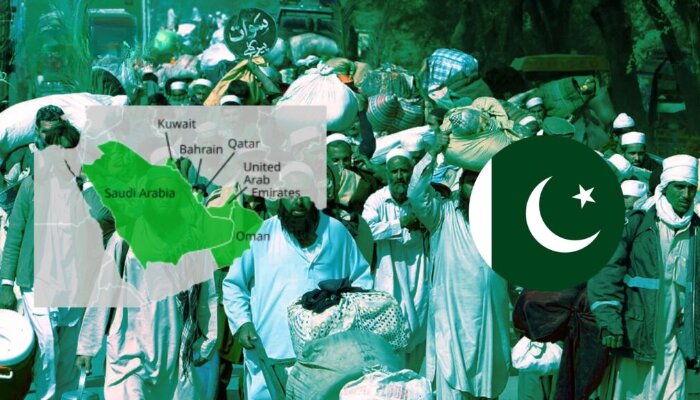
In yet another degrading development for the financially bankrupt Pakistan, several Gulf countries have expressed concerns regarding Pakistani expats and the Pakistani labour force which might have serious ramifications for many citizens of the country. The information was disclosed at a Senate Standing Committee on Overseas Pakistanis meeting.
As per reports, Secretary Dr Arshad for Overseas Pakistanis informed the group that the Kingdom of Saudi Arabia, Qatar, Kuwait, and the United Arab Emirates (UAE) have raised reservations over many issues pertaining to Pakistanis living abroad.
The revelation comes months after the government told the same council in September 2023 that the majority of Pakistanis departing the nation are beggars. The official had stated that beggars from Pakistan go under the pretence of ziarat, or pilgrimages, to Iraq and the Kingdom of Saudi Arabia. Most tourists with Umrah permits enter Saudi Arabia and engage in begging afterwards. 90% of the beggars who were arrested, per the secretary, were Pakistanis.
Notably, the recent statement is related to a far more problematic issue as it exposes the fairly “inappropriate” conduct of Pakistanis living in the United Arab Emirates, including recording videos in front of females in Dubai. Secretary Dr Arshad informed the committee on 30th July that between 200,000 and 300,000 Pakistanis return from their travels overseas, out of an annual total of 0.6 to 0.8 million. 96% of all travellers go to countries in the Gulf Cooperation Council (GCC), according to their disclosure.
‘50% of crimes in the UAE are committed by Pakistanis’
The committee was briefed by the officials regarding the issues other countries have with Pakistan. They remarked that the country has a quota of 1.6 million people, but it has been exceeded to 1.8 million by the UAE. They mentioned that Pakistanis spend a year in Malaysia and then get arrested for extending their stay. According to the officials, there have also been slips in Iraq, though the precise number is unknown.
Senator Nasir Abbas stated that Bangladeshis are getting more jobs than Pakistanis. He dubbed Pakistanis as “helpless” in Iraq since they are used as cheap labour. He unveiled that they are treated like “prisoners” in Iraq. The senator added that labour is needed for the ongoing development projects in Iraq. The foreign officials responded by stating that there are multiple grievances from Pakistanis living in Iraq.
The officials informed the committee members that 0.4 million Pakistanis visit Saudi Arabia annually, out of the 2 million who now live there. The officials confirmed that Pakistanis had been asked not to send “beggars and sick people” by the KSA authorities. The Gulf Cooperation Council (GCC) is now modern, they highlighted, emphasizing development and technology. The officials from the overseas ministry asserted that Pakistanis leaving the country are “unskilled” and that their people aren’t receiving the same training. “People from other nations are replacing ours,” they reported.
They additionally stressed how important it is to address Pakistanis’ attitudes toward their jobs, work ethics and their involvement in criminal activities. They underlined that 50% of all crimes committed in the UAE are committed by Pakistanis. According to the officials, countries are looking elsewhere and are “suspicious” of Pakistanis. Giving more information, they pointed out that 96% of the 600,000–800,000 individuals who travel overseas do so to the Middle East. “Sensible people search for opportunities and go abroad.”
Pakistani workforce’s future
The ministry voiced fears for the future of Pakistani workers hoping to find employment in the UAE by noting that Gulf governments are now turning to African labourers because their labour is even less expensive than that of Pakistani expatriates. Furthermore, they underscored other work-related ethical issues that Pakistanis face, as conveyed by the GCC nations. Kuwait has lodged complaints about Pakistani nurses’ reluctance to carry out specific job-related tasks, placing the responsibility for routine tasks like helping a patient sit up on ward boys. The nurses not only wish to leave the country after just six months but also refuse to learn the language.
According to representatives of the Ministry of Overseas Pakistanis, Qatar has shown dissatisfaction with Pakistani labourers’ refusal to wear safety helmets. On the other hand, KSA has insisted that it will only hire individuals who have successfully passed the examination administered by their respective authority, the National Center for Human Resources Development (Takamul).
The authorities, in response to questions on the steps the government is taking to solve the urgent issues, announced that the ministry is collecting information on new and open positions across international borders. They added that Shehbaz Sharif, the prime minister, has formed a cabinet committee to handle immigration-related issues. They claimed, “We want people to think that these (Pakistani) people are skilled.”
On Friday, 27th July, the Bombay High Court ordered the Mumbai Police to safeguard an interfaith newlywed couple who were concerned that the Gujarat Police might take the woman away. The court issued the ruling after consulting with both the man and the woman individually who married each other as per Muslim law.
During the hearing, the woman informed the court that she had married the man, who was already married with three children. She further stated that she married the man voluntarily and was not forced to be with him.
The bench of Justices Revati Mohite-Dere and Prithviraj Chavan heard a case filed by the couple when it said, “We direct that two armed guards be given to the petitioners 24×7, (12 hours each), who will accompany them wherever they go, until August 8, 2024.”
The judge further asked the Narol Police Station in Ahmedabad not to take coercive action against the petitioners until they are heard.
The man lives in Mumbai, while the woman left her home in Ahmedabad to marry according to Muslim law. However, after she left home, her family filed a missing notice, and her brother filed a theft case against her, alleging that she had fled with Rs 4,50,000 in gold jewelry and Rs 50,000 in cash.
Advocates ML Kochrekar and Mohammed Ahmed Shaikh, representing the couple, contended that the theft case was an afterthought, as it was filed after the couple sought protection from the high court.
The 24-year-old woman’s parents and brother, as well as Gujarat Police, were present in court. The woman informed the bench that she had not stolen anything when she fled her home on July 15th, 2024.
She also indicated that she was willing to give her parents the gold chain and earrings she was wearing. However, she refused to return to her parent’s home, even for a few days, and refused to look at them.
The woman had known the man for the past six years because he worked with her maternal uncle in a firm. She informed the court that she was aware that the man was married with three children, and despite this, she decided to get married to him.
The judges interacted with all of the parties involved, both individually and together. The judgment noted that there was a lot of “animosity between the parents against the petitioners,” and “in order to avoid any untoward incident,” the bench asked police to immediately protect the couple.
The Narol Police Station officials from Ahmedabad informed the bench that they were in Mumbai solely to record the couple’s statements and had no intention of returning them to Gujarat.
The bench directed that they could do this via videoconferencing.
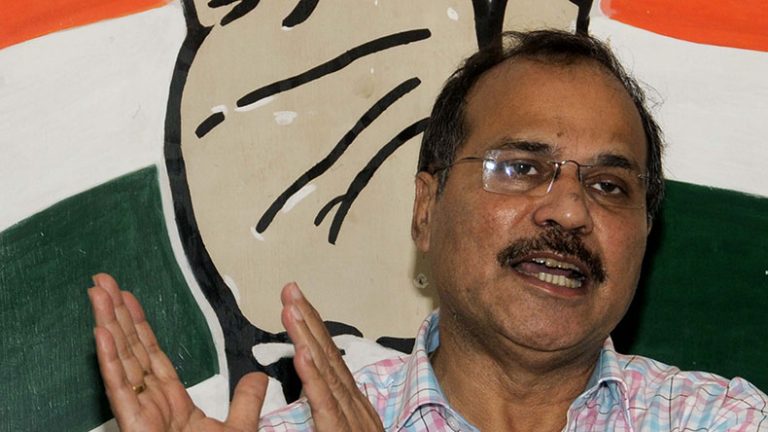
Adhir Ranjan Chowdhury has officially stepped down as president of the West Bengal Congress committee. AICC general secretary in charge of the state Ghulam Ahmad Mir confirmed the same on Tuesday morning. He added that the process to appoint a new chief of the state unit is on.
According to reports, Chowdhury resigned after Congress leader Rahul Gandhi and party president Mallikarjun Kharge met senior functionaries from West Bengal in Delhi on Monday to select the next state president.
Notably, Chowdhury won Murshidabad district’s s seat five times since 1999. He was defeated in the recent Lok Sabha election by former Indian cricketer Yusuf Pathan fielded by Trinamool Congress (TMC) chief Mamata Banerjee.
On Tuesday, Adhir Ranjan Chowdhury gave his first reaction after his resignation and spoke about a rift in his relationship with the Congress high command. He criticized the party’s national president Mallikarjun Kharge and Bengal minder Ghulam Ahmad Mir for the way they treated him during his tenure as the departing chief of the state unit.
He said he was unaware of the high command’s decision to accept a resignation he had submitted till he was referred to as the “former” Pradesh Congress Committee president at a meeting on Monday.
Adhir Ranjan Chowdhury claims that he resigned as the party's West Bengal Chief after the Lok Sabha polls but he wasn't informed whether or not the resignation was accepted.
A meeting had been called under my presidency but during the meeting, Ghulam Ali Mir while addressing… pic.twitter.com/ENrmoA6WpH
“I had offered my resignation to Khargeji (after the June 4 results), to which he had asked me to come to Delhi for a discussion. Accordingly, I had gone to attend the meeting,” said Chowdhury.
“There, I saw I was being referred to as the former president. I was not even aware my resignation was accepted,” added the former MP, whose resistance to any truck with Mamata Banerjee in Bengal was instrumental in her decision to go it alone in the state.
Slamming the Congress’s top leadership for removing him from his position without prior intimation, Chowdhury said, “The day Mallikarjun Kharge became the party president, all other posts of the party in the country became temporary, according to the Constitution of the party. Even my post became temporary…While the election was underway, Mallikarjun Kharge said on television that if necessary I would be kept out, which made me upset.”
Meanwhile, reacting to Chowdhury’s removal as the WB Pradesh Congress Committee president, TMC MP Sagarika Ghose said, “Adhir Ranjan Chowdhury has insulted our leader Mamata Banerjee and our party many times. Adhir Ranjan Chowdhury is not the Congress, we always believed that he’s a BJP front.”
Adhir Ranjan Chowdhury resigns as West Bengal Congress Chief; As per sources:-
– 'State unit had demanded change'
– 'Netas favour Ekla Chalo plan'
– 'Local unit unhappy with Adhir Ranjan Chowdhury's work'
Notably, during the Lok Sabha elections, even when the Congress and TMC were in the midst of alliance talks, Adhir Ranjan Chowdhury continued to criticize Mamata Banerjee. Later, the TMC called off the talks, blaming Chowdhury for the decision.
Mamata Banerjee’s party contested the elections alone and scored a landslide victory in the state.
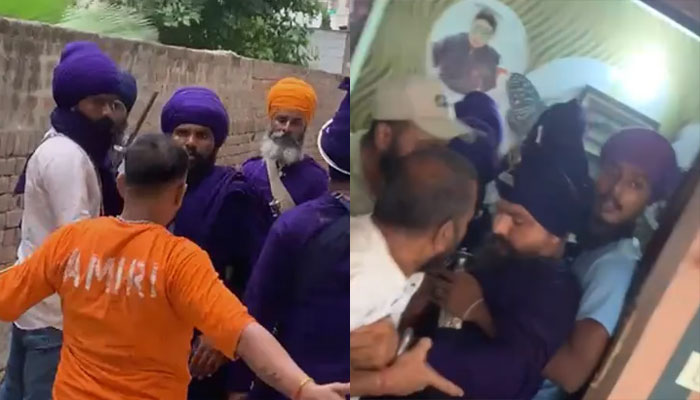
On 30th July, a group of seven Nihang Sikhs killed a businessman identified as Shammi Puri in the city of Patti of district Tarn Taran, Punjab. Patti is located 28 KM away from the District headquarters in Tarn Taran. Shammi’s son and nephew also got injured in the attack. A case against the seven accused has been filed by Tarn Taran police. Video of the incident has gone viral on social media.
On 30th July, Nihang Parminder Singh, a resident of Waltoha, came with his six associates at around 12 PM to Shammi’s residence. At that time, his son Karan Puri and nephew Aman Puri were also present at the home. They got into a verbal argument that led to the attack.
During the argument, Nihangs drew their swords and attacked the trio. Shammi’s arm was chopped in one strike while Karan and Aman got injured. TV9 report stated Karan’s fingers were also chopped during the incident. Speaking to the media, family members said that seven men dressed in Nihang attire entered their home and started assaulting Shammi. They drew swords and attacked Shammi, his son and nephew. The attackers first got into an argument with Shammi. Karan tried to intervene after which they drew swords and attacked them. Shammi’s younger brother Rajan also got injured in the incident. The family members said the attacker was repeatedly demanding his money back from Shammi. He had threatened the victim on the phone several times but the family never thought they would come and attack them with swords.
Breaking: Nihang Sikhs entered the house and killed a Hindu Shammi Kumar in Patti Tarn Taran. His son's wrist was also cut by Nihangs. The whole matter is being told about money transfer.
The residents of the area heard the argument and rushed to Shammi’s house. They pelted stones and bricks after which Nihangs fled the scene. Shammi, Karan and Aman were rushed to the hospital where Shammi succumbed to his injuries due to heavy blood loss.
Speaking to the media, Patti City Police Station SHO Jaspal Singh said that there was a monetary dispute of Rs 1.75 lakhs between Shammi and the attackers for over two years. On the day of the incident, the attackers came dressed as Nihangs and killed Shammi. SSP Ashwini Kapoor rushed to the spot to take stock of the situation. The family members raised slogans against the administration and the police upon seeing him. SSP had to leave after taking the information about the incident amidst the protests by the family members and locals.
In a statement, Aman Puri said, “My uncle had a dispute over a transaction of money with nihangs. A compromise had been reached 15 days ago at their dera in Goindwal Sahib. Despite the compromise, they attacked my uncle.” The family of the victim staged sit-in protest in the city and stated they would not cremate the body till the accused were arrested. Some of the family members also created ruckus at the hospital claiming negligence in treatment. Police officials including SP(D) Ajayraj Singh and Patti DSP Kanwalpreet Singh reached the crime spot and assured the family members and the accused have been identified and would be arrested soon.
Attacks by Nihang Sikhs
The incidents of attacks by Nihang Sikhs in Punjab have increased exponentially over the years. On 23rd July, a man near Harmandir Sahib was attacked by Nihang Sikhs claiming he was consuming tobacco. On 8th July, Nihang Sikhs halted the shooting of a TV series in Mohali claiming sacrilege. On 5th July, Nihang Sikhs attacked the chief of Shiv Sena in Punjab, Sandeep Thapar in broad daylight. On 15th January, Nihang Sikhs allegedly killed a youth at a Gurdwara in Phagwara claiming sacrilege. On 22nd November 2023, Nihang Sikhs opened fire at police officers in Sultanpur Lodhi of district Kapurthala. A list of such recent attacks can be checked here.
In 1999, a mob murdered Australian missionary Graham Staines and his family in Manoharpur, Odisha. The crowd claimed that Graham Staines was converting innocent tribal members to Christianity. According to police investigations, Ravindra Kumar Pal alias Dara Singh of Uttar Pradesh’s Auraiya district played a major role in the offense in question. Dara Singh was eventually convicted to maximum life imprisonment and a fine in four separate cases by the Supreme Court.
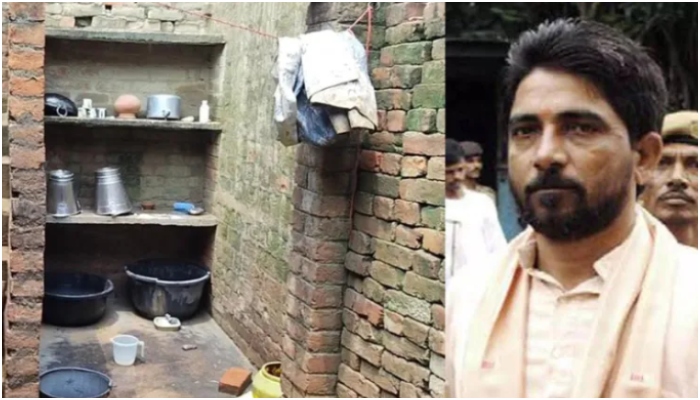
OpIndia’s team visited the village of Dara Singh, who has been imprisoned for more than 24 years, and assessed the present condition. We discovered that Dara Singh’s family is living in deplorable conditions.
Dara Singh’s residence is located on a street after entering Auraiya’s Kakod Bazaar, around 200 meters from the main road. The roadway was full of water, and the drain was gushing. Dara Singh’s unplastered house is built ahead of a drain. As we entered through the iron gate we saw that the cows, buffaloes, and goats were tied up. Dara Singh’s family considers rearing goats as their ancestral work. He is originally from the Pal Hindu community in Uttar Pradesh, widely known as Gadaria. Animal husbandry is the primary occupation in the village.
No place to sit or sleep
After entering Dara Singh’s house, a shattered plank lay in the outer hallway. Raindrops dripped from the roof and landed on the fractured plank. A rusty bicycle was parked nearby, and Dara Singh’s brother Arvind Kumar Pal rode it to work. Inside the house, two cots have been put together in the courtyard to provide sleeping space for Dara Singh’s family members. There are no concrete floors throughout the house. Bricks have been laid in the area where animals are tied.
The kitchen and toilet are both dilapidated
Dara Singh’s kitchen and toilet are in disrepair as a result of poverty. Dara Singh’s brother, Arvind Singh, informed us that he will have it repaired soon because it is causing a lot of hardship for the family. The kitchen included some utensils, including a cylinder gas, but outdoors there was also an earthen burner. We were told it was to save money.
Broken glass and 25-year-old television
Dara Singh’s family’s mirror, which they use to get ready before leaving, is at least 15 years old. The mirror is cracked on one side, and Arvind Pal has plastered it to the house wall with a mud mixture. Along with this, there is a small black and white television inside the house that is around 25 years old and is still operative. We were told that when Dara Singh’s news was carried on Doordarshan 24 years ago, his father took out a loan to buy this television. Since then, Dara Singh’s family has been unable to acquire funds to purchase a new television.
House filled with water during rains
When the OpIndia team arrived at Dara Singh’s house, it had begun to pour severely due to heavy rains. Dara Singh’s neighborhood and the majority of his house had been submerged within a brief period of time due to the rain. The outer area of the home where the animals were chained was inundated. The inner half, where food is cooked, was likewise filled with rainwater. Dara Singh’s family members described it as an everyday concern. They further stated that, in addition to insects and mosquitoes, snakes and other creatures emerge as a result of this.
Religion is still paramount for the family
Even though Dara Singh’s family has been financially devastated by court disputes over the previous 24 years, religion remains paramount to them today. The family takes extremely good care of the cattle raised at home. Aside from that, the images and idols of Gods and Goddesses have been carefully placed in areas where water and dust won’t damage them. Dara Singh’s house’s front entry gate also bears the ‘Om’ symbol.
Bricks marked ‘Ram’ were also used in building the house. Even today, the family members of Dara Singh start their work in the morning after taking a bath and performing puja. Dara Singh’s brother Arvind Kumar Pal told us, “Our religion is our heritage.”
Ruined in litigation and legal battles
Arvind Pal explained that the family’s immovable property, as well as their jewelry, were sold during the 24-year-long legal battle. Loans have been taken out to keep the family afloat, and people still come to get the loan amounts back. Arvind Pal further claims that the legal battle would continue until Dara Singh gets released from jail and comes home.
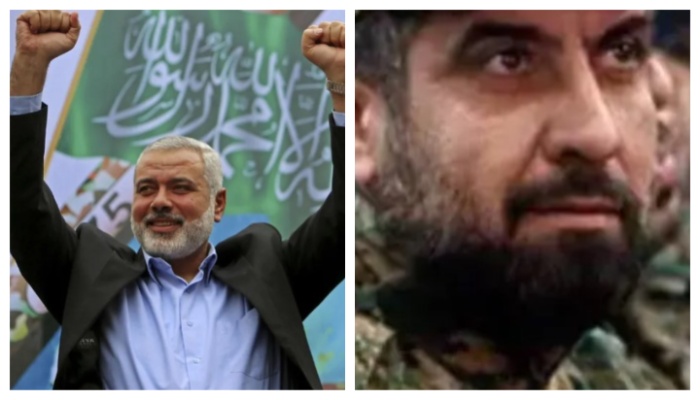
On Wednesday, July 31, the Palestinian terrorist group Hamas confirmed in a statement that their chief Ismail Haniyeh had been assassinated in Iran’s Tehran. The group said that Haniyeh was killed in an Israel air strike on his house in Tehran.
A day prior to this, Israel’s army confirmed that it had “eliminated” Fuad Shukr, a senior Hezbollah commander responsible for carrying out an attack on the annexed Golan Heights where 12 children were killed.
Fuad Shukr was also wanted by the US government for his role in a 1983 bombing attack that killed roughly 300 American and French soldiers in Beirut.
Fuad Shukr: the man who killed 12 children in a soccer field on Saturday and is responsible of 30 years of Hezbollah terrorist attacks. pic.twitter.com/RuHO0W2py6
On Saturday (27th July), around 12 people including children were killed in a rocket strike by Hezbollah in the town of Majdal Shams in Golan Heights.
As per reports, the deadly attack was carried out by the Islamic terror outfit from Lebanon. The rocket fired by Hezbollah landed on a soccer field, leaving children and young teens dead.
Most of the victims were aged 10-20. The victims did not have time to escape the bloody carnage. Several dozen others were injured in the attack. Israeli Prime Minister Benjamin Netanyahu has promised a swift response against the Islamic terror outfit.
Israeli forces had killed Hamas chief Ismail Haniyeh’s children
Notably, three sons of Hamas chief Ismail Haniyeh were killed in an Israeli attack in April this year. In an interview with Al Jazeera Arabic, Haniyeh confirmed the killing of his children Hazem, Amir and Mohammad along with a number of his grandchildren.
“Through the blood of the martyrs and the pain of the injured, we create hope, we create the future, we create independence and freedom for our people and our nation,” he said, adding that around 60 members of his family, including nieces and nephews, have been killed since the start of the war.
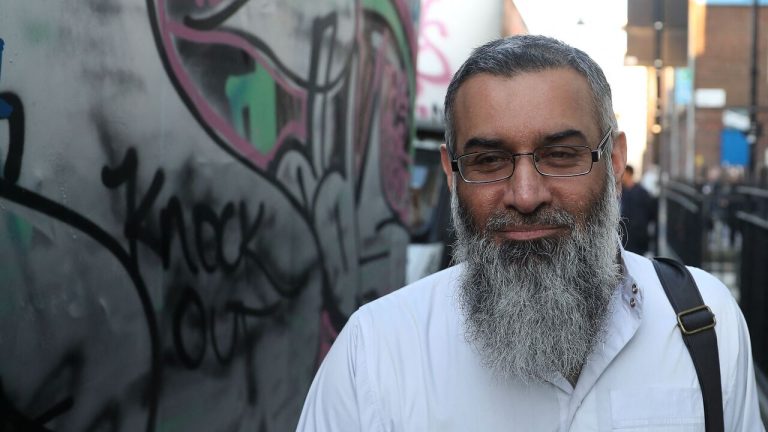
British-Pakistani preacher Anjem Choudary has been sentenced to life in prison for directing a “terrorist organisation,” Al Jazeera reported.
Choudary, 57, was convicted last week of directing al-Muhajiroun (ALM), which was banned as a ‘terrorist organisation’ more than a decade ago.
Judge Mark Wall announced a life sentence for the British-Pakistani preacher, with a minimum term of 28 years before he would be eligible for parole.
Wall told Choudary at London’s Woolwich Crown Court on Tuesday that organisations such as ALM “normalise violence in support of an ideological cause” through online meetings.
“Their existence gives individuals who are members of them the courage to commit acts which otherwise they might not do. They drive wedges between people who otherwise could and would live together in peaceful coexistence,” he said.
According to prosecutor Tom Little, Choudary became “the caretaker emir” of ALM after its leader, Omar Bakri Mohammed, was jailed in Lebanon in 2014.
Choudary’s lawyer, Paul Hynes, argued that the group was “little more than a husk of an organisation” and that almost all attacks linked to it had already occurred.
The police in Britain, the United States and Canada gathered evidence after a joint investigation, that Choudary was running and directing ALM via online lectures with followers based in New York.
Prosecutors said the group has operated under many names, including the New York-based Islamic Thinkers Society, which Choudary has spoken to.
New York Deputy Police Commissioner Rebecca Weiner, termed the case ‘historic’ and said the Islamic Thinkers Society was ALM’s US branch.
Choudary was convicted with one of his followers, Khaled Hussein. According to the prosecutors, he was also a dedicated supporter of the group.
Hussein, 29, of Edmonton, Canada, was convicted of membership in a proscribed organisation and sentenced to five years in prison. The two were arrested a year ago after Hussein landed at Heathrow Airport.
Earlier in 2016, Choudary was imprisoned for encouraging support for ISIL (ISIS). He was released in 2018 after serving half of his five-and-a-half-year sentence.
The group ALM, which emerged in the late 1990s, has been linked to several attacks both at home and abroad, according to Al Jazeera.
(This news report is published from a syndicated feed. Except for the headline, the content has not been written or edited by OpIndia staff)
In India’s national capital, three civil services aspirants lost their lives due to the criminal negligence of the coaching owners, the Municipal Corporation of Delhi and the Delhi government. The UPSC aspirants who chose Delhi as their runway to fly high for success, drowned in the failures of the local government, greed, and lies of coaching mafias.
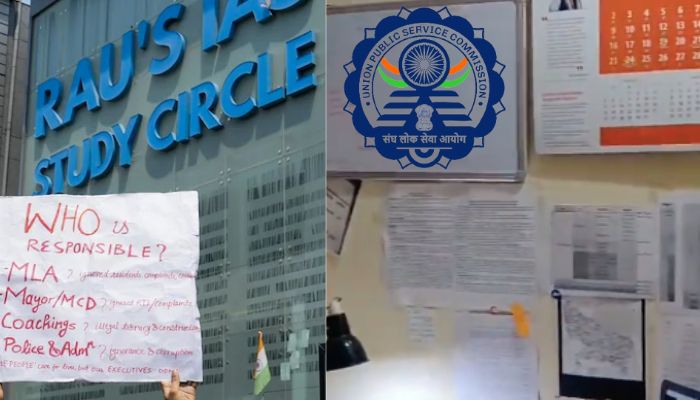
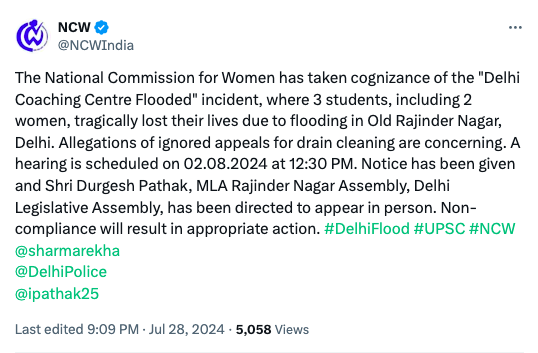
On 27th July 2024, three aspiring civil servants— Shreya Yadav from Uttar Pradesh, Tanya Soni from Telangana, and Navin Dalwin from Kerala—lost their lives after heavy rain in Delhi caused the basement of a building that housed a tutoring centre to flood. The tragic incident transpired at the library basement of Rau’s IAS Study Circle in the Old Rajinder Nagar area.
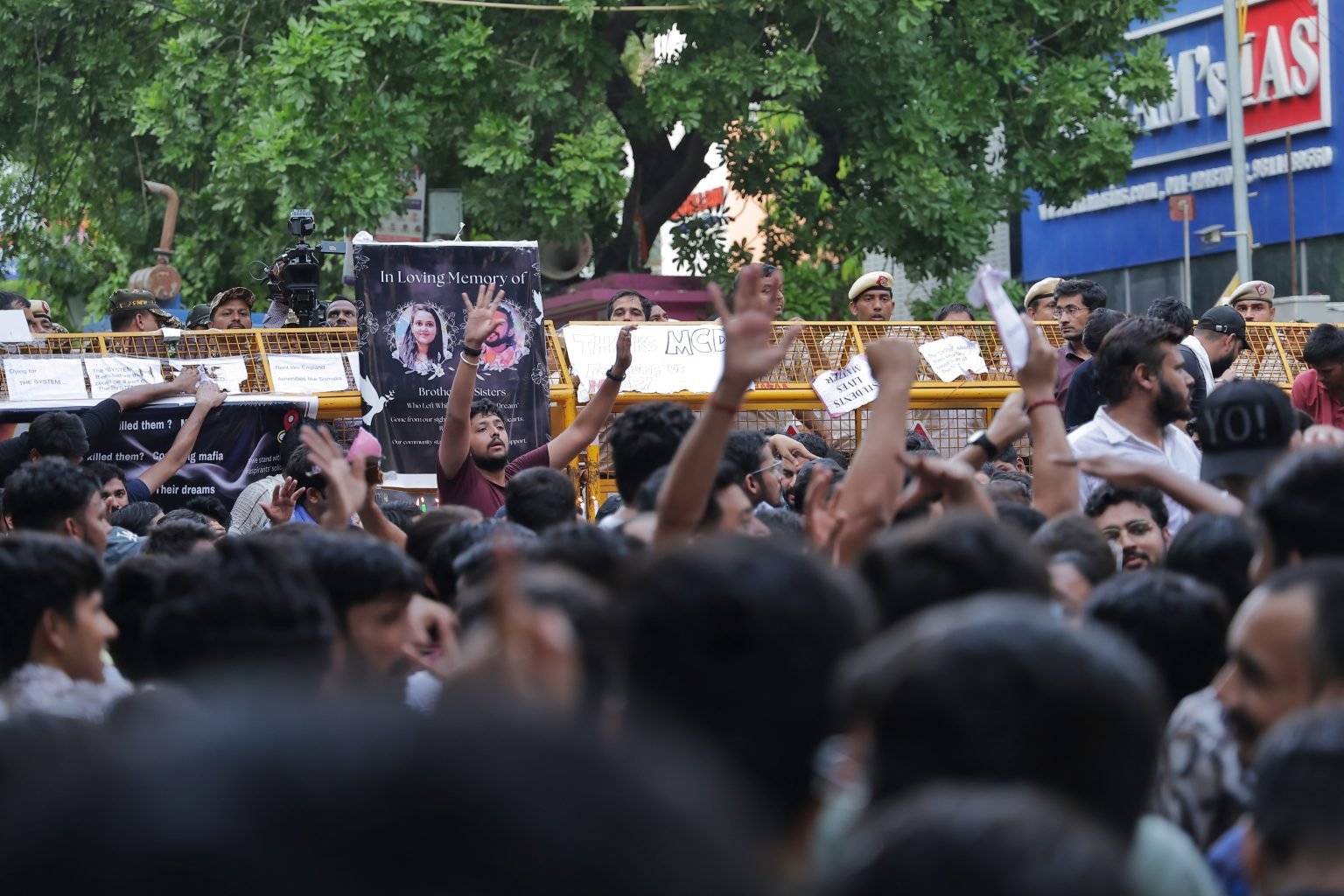
The death of these students, which is no less than a murder, has sparked a nationwide debate and outrage over how and why the students in Delhi’s coaching hubs are being made to live in deplorable conditions. The people want to know how the coaching mafias have been operating in the national capital with impunity and why it took the death of three young students for the Delhi government to wake up from hibernation.
There has been perpetual criminal negligence on the part of the Delhi government and AAP-controlled MCD. Even before the horrifying death of the three UPSC aspirants in Rau’s IAS Study Circle, another UPSC aspirant Neelesh Rai was returning to his room through a waterlogged street where he died from electrocution. The 26-year-old youth was set to write his mains exam. A fire also broke out three months ago in one of Old Rajender Nagar’s hostel buildings.
Ruling AAP plays its usual blame game
Meanwhile, the ruling Aam Aadmi Party (AAP) is busy shirking responsibility and avoiding accountability in the face of such incidents since it has been AAP’s modus operandi. Following its tried and tested tactics, the Aam Aadmi Party has resorted to blaming the Delhi Lieutenant Governor and the Bharatiya Janata Party. The visuals of AAP leaders raising slogans like “L-G ko barkhast karo”, “Chhatron ki maut ke liye BJP zimmedar” etc have triggered outrage. The people are chastising AAP over their audacity to blame the opposition and L-G when Delhi has an AAP Chief Minister, AAP government, AAP Mayor and even the local MLA is from AAP.
Clearly, AAP loves to behave like a government when things are slightly right and behave like opposition when faced with challenges and criticism. Not much time has passed since AAP government ministers sat on ‘Dharna’ when the city was grappling with water crisis caused by tanker mafias.
#WATCH | Delhi: Old Rajinder Nagar incident | AAP leaders protest outside the Parliament over the Old Rajinder Nagar incident pic.twitter.com/tDjkDSnRlP
Amidst the public outrage and on-ground student protests, the authorities are under immense pressure to take action. The Delhi Police has arrested five people including four co-owners of the basement of a four-storeyed building where three civil services aspirants died due to flooding, and one SUV driver. The SUV driver’s arrest triggered backlash as people questioned the misplaced priorities of the authorities as the MCD officials, local AAP MLA Durgesh Pathak, and the local corporator walked free while the SUV driver Manuj Kathuria has been sent into 14 days custody for “fast driving” and “damaging gate” of Rau’s IAS coaching.
3 lost their lives in the #rauias tragedy. Illegal basements turned #libraries flouted safety laws. The system blames the driver driving in that area for floods, yet the Mayor, MLA, and Corporator walk free. By that logic, should Indra Dev be arrested for rain?
— Naimisha (ନୈମିଷା) ?? (@SpeakNaimisha) July 30, 2024
Illegal basements pushing the future of India into the chasm of mental torture and death
In Delhi, several coaching centres operate out of illegally constructed buildings, often modifying basements and other spaces into classrooms without adhering to safety regulations. To no surprise, these spaces are poorly ventilated without proper exits, and are not equipped to handle emergencies like flooding as seen in Rau’s IAS coaching’s case. The tragic incident at Rau’s IAS Study Circle is a glaring example of the dangers posed by such illegal constructions.
You must have come across the Instagram reels or YouTube shorts featuring UPSC educators giving motivational speeches, encouraging students to go all out for their civil services dream. They are often seen on podcasts voicing their opinion on student-related issues and sometimes go overboard in doing so. However, such teachers, including Dristi IAS owner Vikas Divyakirti, have been eerily silent on the incident of the death of three UPSC aspirants in Rau’s IAS coaching basement. However, an apparent reason behind the hypocritical silence can be understood from the fact that the Municipal Corporation of Delhi (MCD) sealed the basement of the Drishti IAS, located in Mukherjee Nagar in North-West Delhi. It has come to light that the UPSC coaching institute, owned by Vikas Divyakirti, had been illegally using the basement of the building as a study centre.
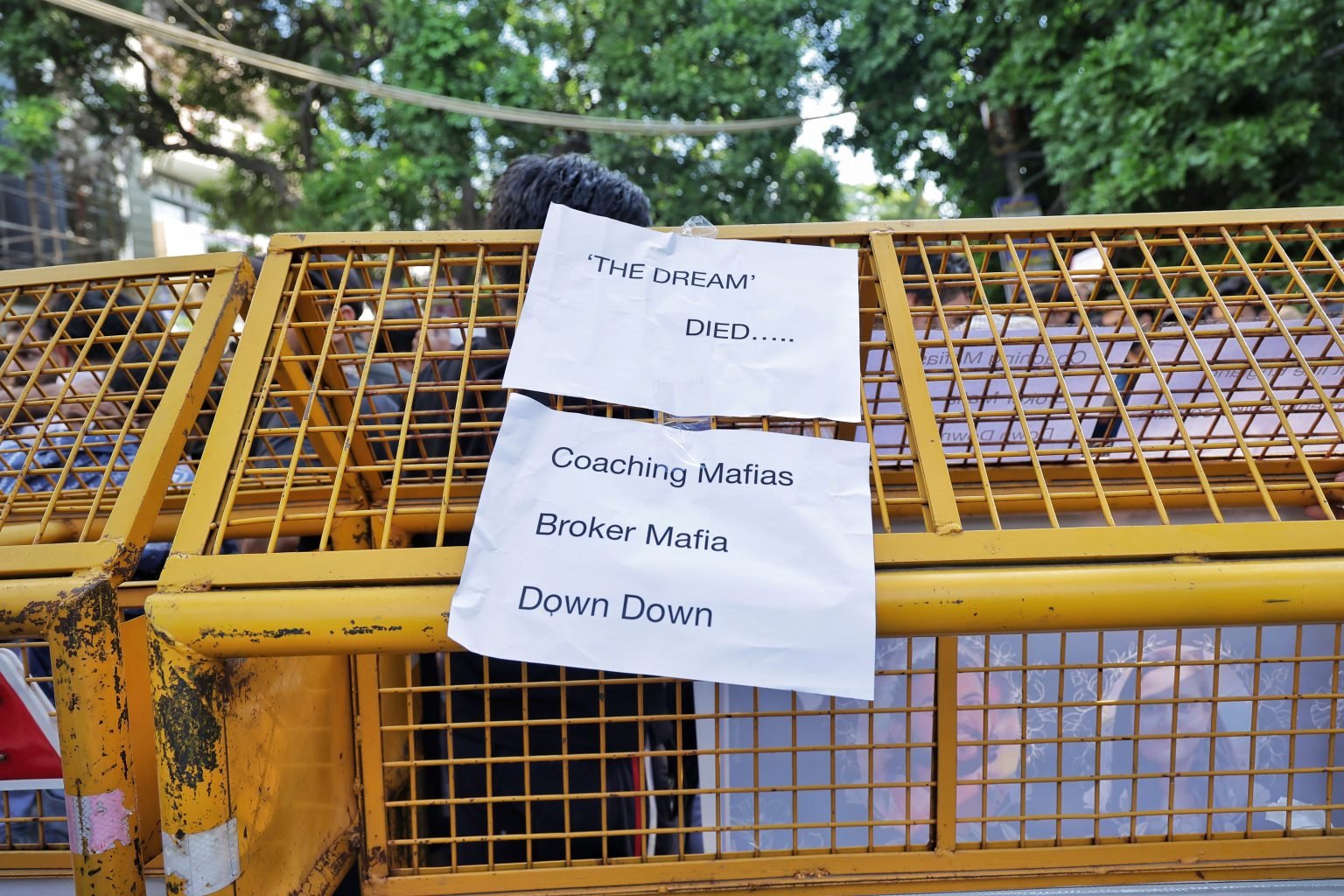
On the 29th of July, UPSC aspirants were seen protesting outside the building of Drishti IAS in Delhi. The enraged students came up with creative and hard-hitting slogans against Divyakirti and even created a “missing” poster taking a swipe at his silence on this issue. Similarly, students are also looking for history teacher Avadh Ojha who used to tell stories of hooliganism in his student life to UPSC aspirants.
अवध ओझा और विकास दिव्यकीर्ती सर के लिए ये दो तस्वीरें सोशल मीडिया पर खूब वायरल है।
— Mukesh Gurjar Sikar (@MukeshGurjarkdl) July 30, 2024
The negligence on the part of MCD authorities was despite a student named Kishor Singh Kushwah’s complaint about the illegal use of basements as study centres and libraries by a dozen coaching centres in South Patel and Old Rajinder Nagar a month before the tragic death of the three students. He had warned of the possibility of a major accident.
Despite being flagged to MCD on 3 different occasions, the AAP-controlled civic body did not act in time. It was only after the death of 3 UPSC aspirants on 27th July that the MCD swung into action and sealed 20 coaching centres for violation of rules.
Lies, exploitation and the stifling of young dreams by the ‘coaching mafias’
The exploitation of UPSC aspirants in Delhi’s Rajender Nagar and other coaching hubs has long been an issue, this however, caught national attention only after the recent tragedy. These students, motivated by the desire to pass one of India’s toughest exams, are frequently exploited by coaching institutes and landlords who prioritise profit over students’ well-being.
Image: NewIndian
The terrible incident in which three aspirants died due to flooding at Rau’s IAS coaching basement highlights the harsh conditions that many students face. While big coaching institutes and popular teachers sell the UPSC dream and claim to offer ‘world-class’ infrastructure and safety to students in their institutes, the reality of their lies has been exposed by the Rau’s IAS incident.
Student protest in Old Rajender Nagar (Image: NewIndian)
To begin with, coaching institutes in these places have minimal regulatory monitoring, resulting in unsafe and illegal infrastructure practices. Many coaching centres operate out of poorly ventilated, congested, and often illegal basements, posing serious health and safety dangers to students. In June last year, Delhi Police in its status report on the Mukherjee Nagar fire incident said that out of 583 coaching institutes, just 67 have fire safety certificates, while 516 institutes do not have a fire safety certificate. These alarming numbers indicate the safety risks students are exposed to.
On top of that, these institutes charge exorbitant fees for their services, which places a substantial financial burden on students and their families. The coaching fees, coupled with high rents in areas like Rajender Nagar, create a scenario where students are forced into exploitative arrangements. Landlords exploit the high demand for accommodation by charging inflated rents for substandard living conditions. These students, full of aspirations, often live in cramped, shared spaces with inadequate facilities, further adding to their stress and discomfort.
A student’s life may be ‘cheap’ but the cost of living is not. This could be better understood from the ground report by AajTak journalist Sudhir Chaudhary, who delved into the exploitative conditions lakhs of students coming to Delhi from Uttar Pradesh, Bihar, MP and other states to pursue their UPSC dream. These students live in small small rooms. These rooms are so small that a person cannot even stretch his hand fully. In a single room, there is a bed, a small cupboard to keep clothes and belongings, and a rack to keep books. Imagine its rent, two thousand? Four thousand? No! The rent of such matchbox-sized rooms is Rs 10,500. In addition, students living in PG are charged 200 to 300 rupees in the name of water bill and 12 rupees per unit is charged for electricity. There are three-seater rooms here as well, where rent is 27 thousand rupees.
A student, who is not essentially earning money or enough money to fund his studies is made to pay 10,000 to 30,000 as rent. The modest savings of these students go into satiating the greed of the coaching mafia nexus. These students are made to pay exorbitant coaching fees, and then pay such unreasonably high rents and additional costs.
These mafia-like nexus of coaching institutes, brokers, and landlords are literally sucking blood out of the bodies of these students. Other than coaching institutes and PG, local eateries also loot the students, media reports showed how just a small cup of noodles was being sold for Rs 50. These eateries were found to be operating in unhygienic and substandard conditions.
In a nutshell, these students pay Rs 2 to 5 lakhs as coaching fees, then Rs 15,000 to Rs 30,000 as rent for cramped and dingy rooms, and then there is food and other costs. In most cases, landlords do not return the security deposit. Besides the regular flats or rooms, these students are also given options like “Barsati” situated on the terrace with a plastic roof wherein landlords place wooden cardboard to create a cabin-like space to fit a bed and sometimes chair, the third option is basement rooms. From coaching institutes, brokers, and landlords to local eateries, students are being exploited at various levels.
Shedding light on the plight of civil service aspirants in Old Rajender Nagar, Deputy Superintendent Of Police, Anjali Kataria said that for a “10×10” room, a student purportedly pays Rs 12,000-15,000 per month, only to live and study in deplorable conditions. In the video shared by the UP cop, a room hardly enough to accommodate a study table, chair and cupboard is seen. There is a makeshift arrangement for drying clothes.
The dire situation of the UPSC aspirants living in Delhi reminds one of these lines from the poem ‘Bhikshuk’ by Suryakant Tripathi ‘Nirala’, “चाट रहे जूठी पत्तल वे सभी सड़क पर खड़े हुए, और झपट लेने को उनसे कुत्ते भी हैं अड़े हुए! [Beggars are licking thrown-away plates, and even dogs are adamant about snatching away those plates from them].
In movies like “12th Fail”, “restart” is given as the mantra of success, however, this “restart” in such exploitative conditions “ruins” the lives of UPSC aspirants. While Delhi is undeniably the hub of UPSC coaching institutes, the aspirants should look for options in other cities like Gurgaon, Lucknow, Hyderabad, Bengaluru etc. In addition to demanding accountability from the government authorities and coaching centres in Delhi, students should also think about breaking the monopoly of coaching mafias, this can only happen when students start exploring other options as well.
The nexus of exploitation has been going on for many years, and it is not possible to prevail without the involvement of the ‘system’ insiders or the local politicians. However, this remains a matter of police investigation. Notably, the National Commission for Women (NCW) has summoned AAP MLA from Rajender Nagar, Durgesh Pathak, in connection with the case of the death of three UPSC aspirants in Rau’s IAS.
Sadly, the coaching mafias in Delhi leverage the high aspirations of students and their families and this creates psychological pressure on students which is exacerbated by the unsafe environments provided by several coaching institutes.
Every year, 50,000 to 1,00,000 UPSC applicants travel to Delhi from all around the country to prepare for the exams. Another unfortunate aspect of this ‘civil game’ is that only about 0.01 percent of the approximately 4,00,000 candidates who take the examinations each year enter the final list. And yet, these students endure all the hardships and exploitation in the hope that maybe they could make it to that 0.01% list, however, their hopes and dreams are being mercilessly crushed by the greedy coaching mafias, and incompetent state government.
As a civil service aspirant Avinash Dubey described in his letter to the Chief Justice of India, the students in Delhi are “living a life of hell”. In the monsoon season, these students are compelled to walk through knee-deep sewage water. What preparation will these students do? What effect do these dire conditions have on the minds of these? Why are they forced to put their lives in danger? Is it not the right of students to have a decent environment to study and pursue their dreams? Do these students don’t have the right to be healthy and safe? The government, the coaching institutes, teachers and the entire nation need to think about it and together bring the desired change alongside punishing those responsible for the tragic condition of the aspirants. Enough of this “sab chalta hai” attitude as in the words of the protesting students “Maut hui hai mazaak nahin”.
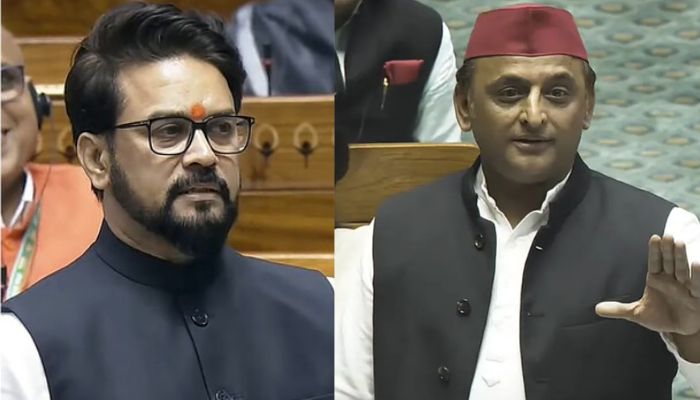
On Tuesday (30th July), Union Minister Anurag Thakur and Samajwadi Party leader Akhilesh Yadav entered into a heated argument inside the Lok Sabha over the Agniveer Scheme. During a Lok Sabha discussion on the Union Budget, Akhilesh Yadav accused the government of orchestrating tweets from key industrialists to promote the Agnipath scheme.
In response to Akhilesh Yadav’s comments on Agniveer scheme, BJP leader Anurag Thakur said, “I come from Himachal Pradesh, which gave the first Param Vir Chakra awardee Somnath Sharma, and had the highest number of martyrs in the Kargil War. Yes, I say that the long-standing demand for ‘One Rank One Pension’ was fulfilled by Narendra Modi’s government. And let me make it clear, Akhilesh ji, that the Agniveer scheme guarantees 100 per cent employment.”
"I am serving as a CAPTAIN in the 124th regiment of Territorial Army. Don't try to teach me"
The Samajwadi Party leader Akhlesh Yadav then said if that was true and the initiative was so effective, why the government saw the need to offer a 10% quota for Agniveers in Uttar Pradesh and other states.
An enraged Anurag Thakur emphasised his active role in the territorial army to counter Yadav’s argument and said: “I am serving as a captain in the 124th regiment of the Territorial Army. Akhilesh ji, don’t just preach. Sitting with Rahul Gandhi has made you accustomed to spreading rumours and lies,” Thakur said.
Congress leader Rahul Gandhi has been making insidious speeches, especially abroad, for a long time. Rahul Gandhi has been specifically malicious when it comes to his speeches and talks in the United States of America (USA).
In 2023, about a year before the General Elections of 2024, Rahul Gandhi was on a tour of the USA for 10 days. During his trip, On the 1st of June 2023, Rahul Gandhi was in conversation at the National Press Club in Washington. During that conversation, he lied about pretty much everything. From the CAA to Delhi anti-Hindu riots that followed the violence. Incidentally, it was his mother – Sonia Gandhi – who had given a call for ‘aar ya paar ki ladai’ weeks before the carnage. It was during the same trip that Rahul Gandhi had called IUML – a Muslim party responsible for genocides and carnage against Hindus – a ‘secular’ party. On the very same trip, he had also participated in a meeting at the Hudson Institute. The meeting was of ‘Think Tanks’ discussing the future of USA-India relations. Sunita Vishwanath, who was seated next to Rahul Gandhi, is the co-founder of a US-based organization called “Hindus for Human Rights” which has spread lies and propaganda mainly against Hindus, allied with Islamists, and has ties to George Soros. OpIndia has done a detailed investigation, which can be read here.
This is, however, not all he did. Intriguingly, a report claimed that Rahul Gandhi had made an unofficial trip to the White House during his 10-day trip to the USA. An article in the Economic Times written by one Seema Sirohi claimed that Rahul Gandhi during his visit made a trip to the White House, which both parties involved – the Biden administration and Rahul Gandhi (Congress) – chose to keep under the wraps. For an opposition leader to visit the White House in ‘secret’, without disclosing it to the government of India and the MEA, is a serious breach of protocol and could potentially undermine India’s interests.
For an opposition leader to visit the White House in ‘secret’, without disclosing it to the government of India and the MEA, is a serious breach of protocol and could potentially undermine India’s interests. Soon, there were widespread speculations about a ‘regime change operation’ that Rahul Gandhi and the Biden Administration may have been involved in. This would not be shocking for anyone, given that in his previous US visits, he had, quite literally, called for the US to get involved in India’s internal matter and essentially help in effecting a regime change.
The speculation of Rahul Gandhi collaborating with the US for a regime change operation resurfaced after his mysterious visit to Uzbekistan in 2023. In an OpIndia article, geopolitics analyst Semu Bhatt wrote about Samantha Power, the Administrator of the United States Agency for International Development (USAID), being there at the same time.
Semu wrote, “In late November 2008, as the Obama administration took shape, Power was in the State Department transition team. She was appointed the Special Assistant to the President and Senior Director for Multilateral Affairs and Human Rights on the National Security Council, serving from January 2009 to February 2013. She spearheaded the creation of a White House task force called the Atrocities Prevention Board – an interagency body to focus on emerging human rights crises before they escalated to the level of genocide. She was its inaugural chairperson. Power’s long-standing association with Obama underscores her involvement in shaping the US foreign policy of the Obama era. She is considered a key figure in persuading President Obama to militarily intervene in Libya; something that Obama considers as the worst decision of his Presidency. Thanks to her unwavering belief in the United States’ responsibility to prevent or alleviate the suffering of civilians in foreign nations, she earned nicknames such as the Ivy League Joan of Arc and Activist-in-Chief”.
Interestingly, In January 2021, Joe Biden nominated Power to head the USAID. Power has worked closely with George Soros and Henry Kissinger. Semu Bhatt speculated that given Power’s rhetoric about India mirrors that of Rahul Gandhi, the coincident of the Uzbekistan trip was a bit too much to ignore. She had also speculated that this could be a part of the larger regime change operation.
Her article put the focus on USAID, the Democrats, and of course, George Soros.
Turns out – the Uzbekistan trip is not the only connection to USAID.
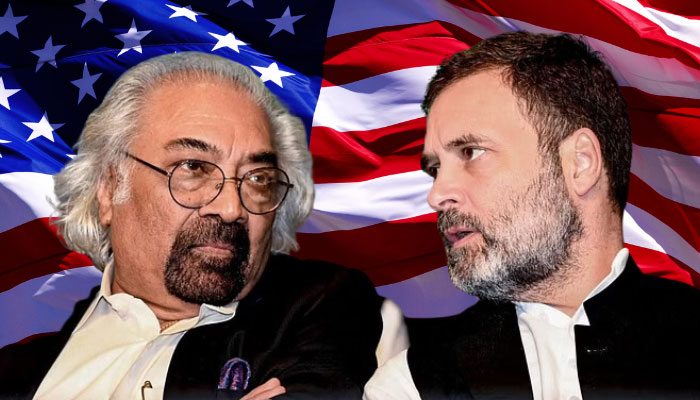
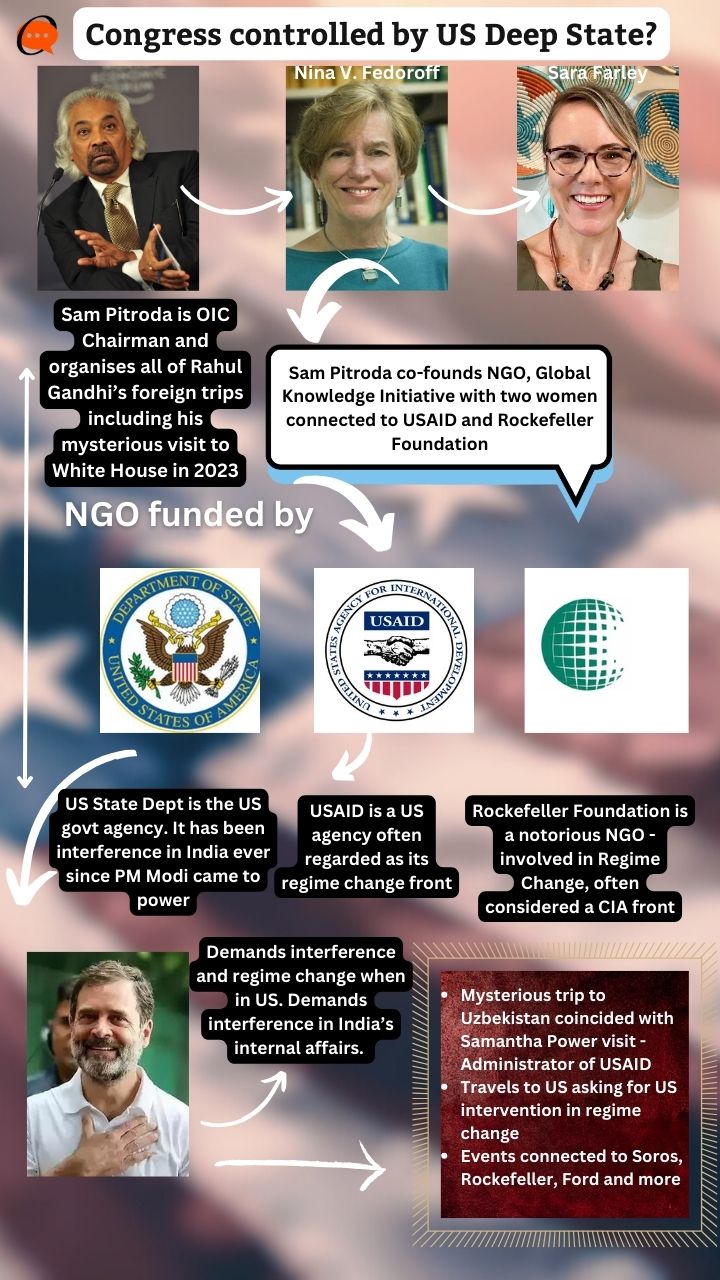
IOC Chairman Sam Pitroda and his NGO
It is no secret that Sam Pitroda has been one of the closest aides of the Gandhi family for several decades. Currently, he serves as the Chairman of the Indian Overseas Congress. Most of the speaking engagements of Rahul Gandhi, where he regularly calls for foreign intervention, have been organized by Sam Pitroda. Pitroda was, many moons ago, a naturalized American citizen. He had, apparently, come back to India and denounced his US citizenship at the insistence of Indira Gandhi.
In October 2009, Pitroda was appointed as advisor to Indian Prime Minister Manmohan Singh on Public Information Infrastructure and Innovations with the rank of Cabinet Minister. Since then, he has been back and forth between Chicago and India.
In October 2009, while Sam Pitroda was appointed as the advisor to the then Prime Minister of India, he was busy on another initiative – he was founding his own NGO in the USA – the Global Knowledge Initiative.
The official website of Global Knowledge Initiative (GKI) says, “In 2009 three people sat down together to ask a question as relevant today as it was then. How might we build new platforms that unite and magnify people’s abilities to solve the challenges that are most meaningful to them, and in the process upend the old models of the social sector to offer something more collaborative, more open, and more innovative?”
Who are the co-founders of Global Knowledge Initiative – Nina V. Fedoroff and Sara Farley
There are two other co-founders of GKI: Nina V. Fedoroff and Sara Farley. Both Federoff and Farley have interesting antecedents. According to the IRS 990 form, both Nina and Sara are still board members of Sam Pitroda’s NGO – GKI.
Nina V. Fedoroff
Nina V. Fedoroff is the former Science and Technology Adviser to the Secretary of State, the US. A molecular biologist, Nina Federoff was born in Ohio and completed her PhD from in 1972 from Rockefeller University. The Rockefeller University was founded in June 1901 as The Rockefeller Institute for Medical Research—often called simply The Rockefeller Institute—by John D. Rockefeller of the infamous Rockefeller family.
In 2001, President Bill Clinton appointed Fedoroff to the National Science Board, which oversees the National Science Foundation which administers the science awards. Fedoroff was the Science and Technology Adviser to U.S. Secretaries of State, Condoleezza Rice and Hillary Clinton.
In 2007, President George W. Bush awarded her the National Medal of Science in the field of Biological Sciences, the highest award for lifetime achievement in scientific research in the United States. Fedoroff was President of the American Association for the Advancement of Science (AAAS) from 2011 to 2012.
From 2007 to 2010, Nina was the advisor to the then administrator Rajiv Shah for the United States Agency for International Development (USAID). He also served in a range of leadership roles including Director of Agricultural Development, Director of Strategic Opportunities, Deputy Director of Policy and Finance, and Chief Economist at the Bill and Melinda Gates Foundation.
Who is Rajiv Shah? He is the President of the Rockefeller Foundation and was the sixteenth administrator of USAID from 2010 to 2015 under the Obama Administration.
Interestingly, Rajiv Shah received the Pravasi Bharatiya Samman Award, the highest official honor for non-resident Indians, awarded by the President of India in 2011 – under the Congress government – when he was the administrator of USAID.
In India, her involvement has been lobbying for Genetically Modified Crops. During Nina’s stint with Hillary Clinton, she was intimately involved with lobbying for US Agri-Business interests in India. There were several visits attempting to sell the Bt Brinjal cultivation in India. It was widely reported at the time that Nina, a strong lobbyist for genetically modified crops was essentially lobbying on behalf of Monsanto – a company that has been regarded as predatory and monstrous.
In July 2005 – under the Congress government – a US-India Knowledge Initiative on Agriculture was set up. It was reported at the time that “Prime Minister Manmohan Singh provided the US-based agri-giants with a readymade vehicle for lobbying with Indian policy-makers during his first term in 2006 when he approved the Indo-US Knowledge Initiative on Agriculture. It was announced with much fanfare during his visit to the USA and evoked a storm of protest at home, mainly from the Left parties and farmers’ bodies. The AKI, as it is known, boasts MNCs (Monsanto, Walmart, Archer Daniels Midland) as official US representatives on its panel. They have set the agenda for the AKI, with the development of transgenic strains of rice and wheat forming a major part of the initiative”.
In 2009, Hillary Clinton visited India to lobby for Bt Brinjal. Along with her, was Nina, who “is a strong votary of genetically modified crops, to the extent of being regarded as a spokesperson for US seed multinationals like Monsanto, Dow and DuPont”.
Clinton at the time “said she favoured a strong intellectual property or patent regime (IPR) to safeguard the ownership of agricultural research, as that would be in ‘everyone’s interest’. A contention rejected by Indian agri-policy analysts who say it would primarily benefit owners of biotechnology research — the MNCs who produce ‘Bt’ seeds, as genetically modified or GM crops have come to be popularly known (patents would ensure that no one else would be allowed to produce or sell these seeds)”.
In 2011, a Wikileaks Cable was released that showed how India had become a battleground between US lobbying and European lobbying for and against GMOs respectively.
The Wikileaks Cable said, “Science and Technology Advisor Dr. Nina Fedoroff met with Montek Ahluwalia, Deputy Chairman of the Planning Commission, immediately prior to Minister Ramesh’s announcement on February 9. Referring to Minister Ramesh’s town hall meetings, Ahluwalia said that a democracy like India needed to hold consultations with the public on such an important issue, but he was concerned that the debate had been rather one-sided. He noted that many of the non-government organizations (NGOs) in India protesting Bt brinjal were in fact closely associated with and funded by European NGOs. He also remarked on the absence of any scientific voices in the “public debate.” Ahluwalia indicated that Minister Ramesh, among other GOI officials, had failed to make the “elementary arguments” about why GM products are safe, and commented that it was not clear if Indian opposition resulted more from process issues and paperwork delays or ideological feelings. Ahluwalia added that he considered the town hall meetings to be okay as a process, but in the end, he felt it would be a major setback if Minister Ramesh were to allow what was essentially a one-sided debate to cause a decision against commercialization of Bt brinjal”.
In 2010, Jairam Ramesh had put an indefinite stop to the commercial sale of Bt Brinjal – for which Nina was lobbying. He had set certain prerequisites for the review of this order and in January 2014, he had expressed disappointment with his own govt for not setting up a regulatory body.
The cable says, “Ahluwalia considered the town hall meetings to be okay as a process, but in the end, he felt it would be a major setback if minister Ramesh were to allow what was essentially a one-sided debate to cause a decision against the commercialization of Bt brinjal”.
It is pertinent to note that earlier cables released by Wikileaks had shown that the US government was acting on behalf of the Monsanto company – the world’s leading producer of GM seeds, in targeting the European Union for its stand on GM crops. It is important to remember that Nina Fedoroff was a part of the US government at that time. In one cable released at the time, it was revealed that the US government had been advised by officials to start a military-style trade war against European countries that opposed the cultivation of GM Crops. Nine was at the heart of the battle.
Monsanto, which had essentially been facilitated by the Congress govt received a blow under the Modi govt. While the GM crop battle is the subject of another article, it suffices to say here that Prime Minister Modi took on Monsanto and was vilified by US media for it.
Throughout this entire battle, Sam Pitroda was working closely with Nina Fedoroff as co-founder of his NGO.
Sara Farley
Sara Farley – the third co-founder of Sam Pitroda’s NGO, is the Vice President, of Food Initiative, at The Rockefeller Foundation.
The website of Sam Pitroda’s NGO says, “As Vice President Sara leads the global portfolio and spearheads integrated operations for The Rockefeller Foundation’s food team, leading such signature initiatives as the Food Systems Vision Prize and the Rockefeller Foundation-Acumen Food Systems Fellowship. In this capacity, she is driving the Foundation’s inaugural regenerative food systems strategy, leading the diet quality portfolio, and expanding the good food purchasing portfolio and true cost accounting work globally with the aim of shifting the diet quality of 500 million underserved people by 2030”.
From her profile at the Rockefeller Foundation, it is clear that she joined the Rockefeller Foundation after she co-founded GKI – while she was working with Sam Pitroda.
It is, therefore, apparent that both Sara Farley and Nina Fedoroff are deeply entrenched with the US government (USAID specifically) and the Rockefeller Foundation.
Who funds Global Knowledge Initiative – the Sam Pitroda NGO
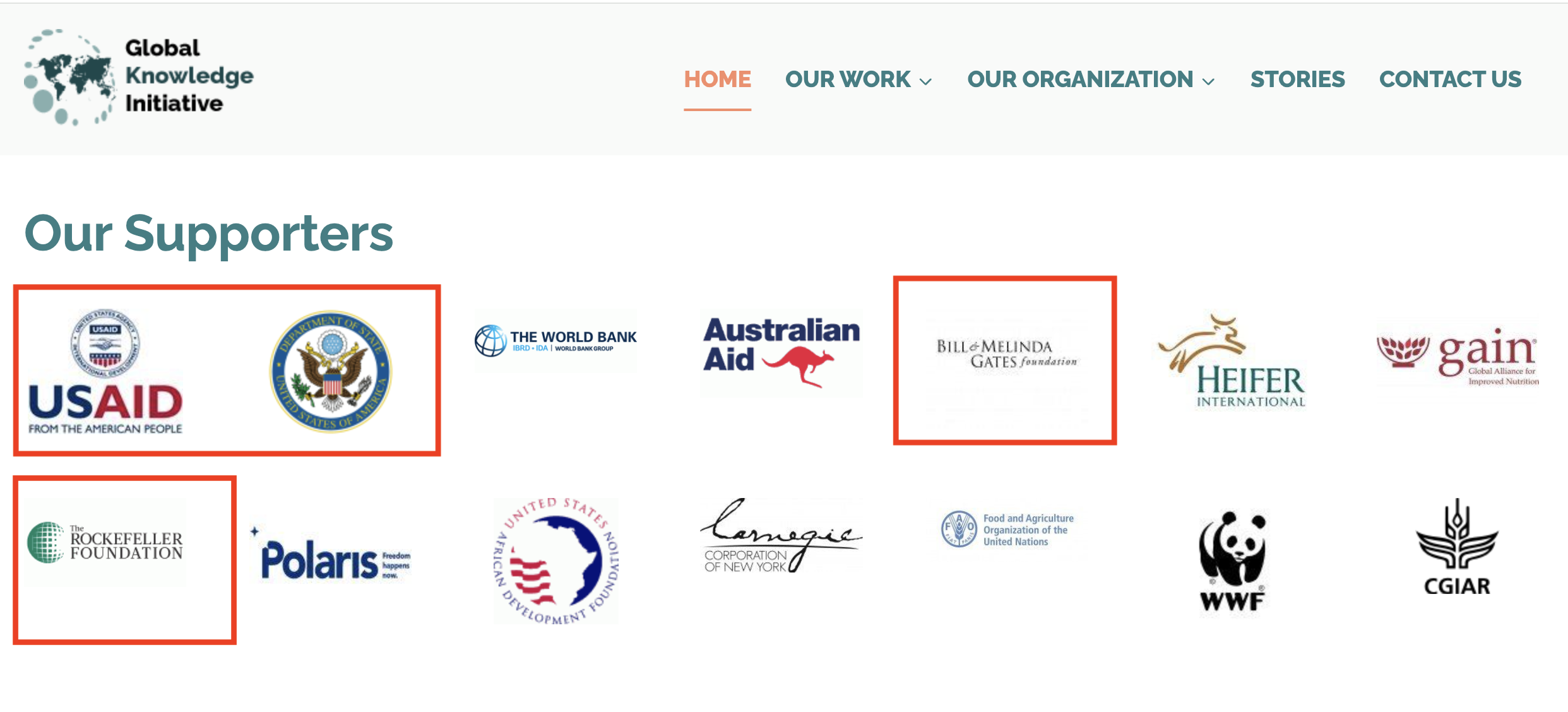
The website of GKI broadly lists the organizations they term “supporters”. In NGO parlance, “Supporters” listed with the NGO are the major donors of the NGO and those who sponsor the NGO and its work almost in totality.
According to the GKI website, Sam Pitroda’s NGO is funded by USAID, The Rockefeller Foundation, the US Department of State, and the Bill and Melinda Gates Foundation – among others.
USAID, the US State Department, its funding, and its shenanigans in India
The U.S. Agency for International Development (USAID) is the principal U.S. agency. According to the USAID website, “The President’s Fiscal Year (FY) 2024 Budget Request for the State Department and the United States Agency for International Development (USAID) is $63.1billion for foreign assistance and diplomatic engagement, which includes $32billion in foreign assistance for USAID fully- and partially-managed accounts, $3 billion (10 percent) above the FY 2023 Adjusted Enacted level… The FY 2024 President’s Budget also requests both mandatory and discretionary resources to out-compete China, strengthen the U.S. role in the Indo-Pacific, and advance American prosperity globally through new investments to respond to these unprecedented and extraordinary times”.
The main objective of USAID is clearly, to further US interests abroad and regime change has been one of the interests of the US.
The USAID website says about their mission, “On behalf of the American people, we promote and demonstrate democratic values abroad, and advance a free, peaceful, and prosperous world. In support of America’s foreign policy, the U.S. Agency for International Development leads the U.S. Government’s international development and disaster assistance through partnerships and investments that save lives, reduce poverty, strengthen democratic governance, and help people emerge from humanitarian crises and progress beyond assistance”.
One knows what it truly means when a US agency says that they want to promote “democracy” in foreign countries. In fact, on its website, USAID also says, “We aspire to lead international and US Government efforts to advance the economic, political, social, and environmental well-being of the world’s most vulnerable people”.
At the top of the food chain, is the administrator of USAID. The current administrator is – Samatha Power. The same Samantha Power who was in Uzbekistan at the same time as Rahul Gandhi in 2023.
The Global Knowledge Initiative – the NGO of Sam Pitroda which is funded by USAID – does a lot of work for the US agency. For example, on the GKI website, there is a White Paper uploaded from the year 2010 that talks about how science and technology can be used by USAID to ‘bring development’ and ‘prosperity’ to the developing world.
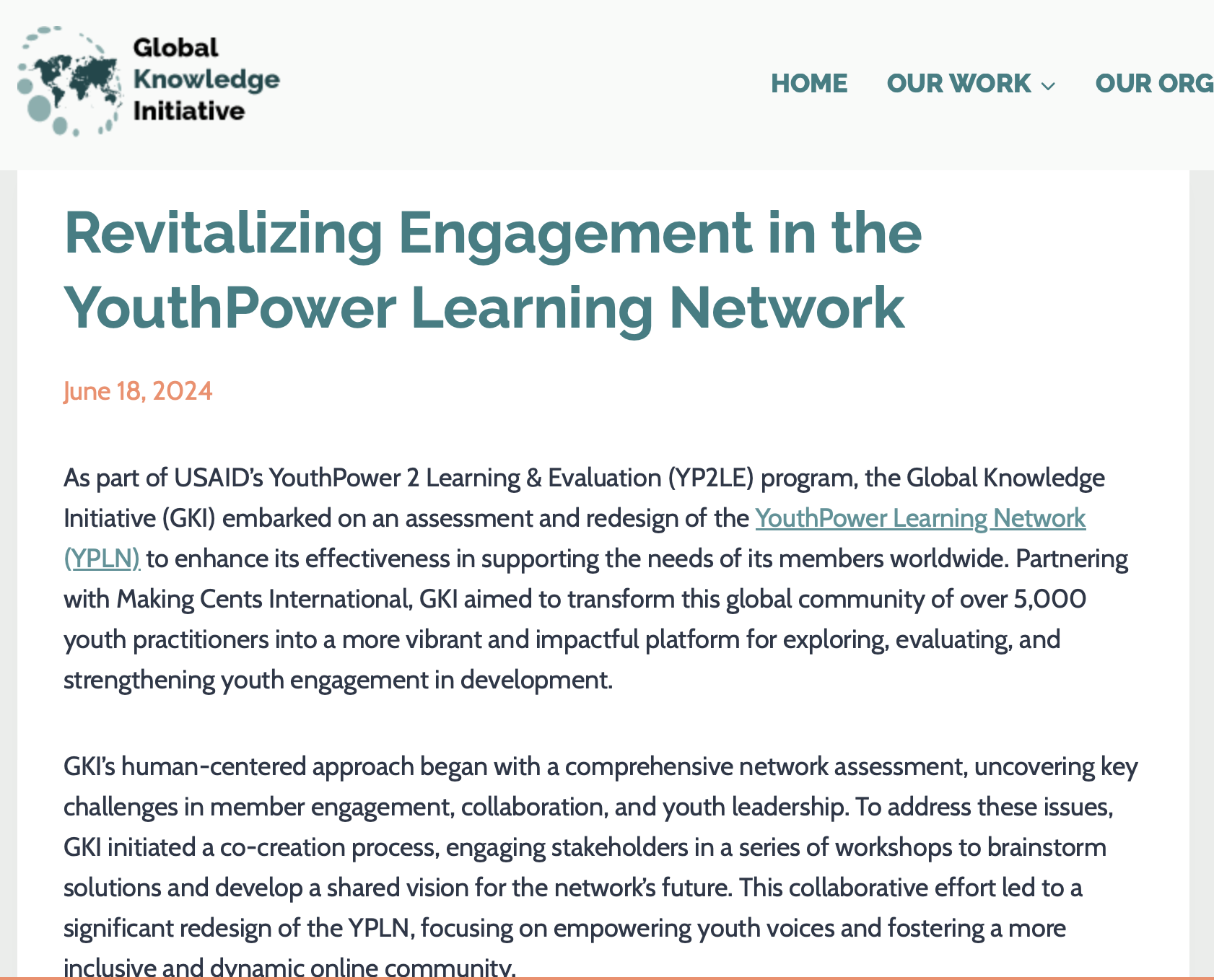
As recently as June 2024, the Global Knowledge Initiative (GKI) was working on USAID-funded projects.
The Global Knowledge Initiative (GKI) is redesigning the YouthPower Learning Network to enhance effectiveness. The website linked in the GKI article about the partnership leads us to the Youth Power 2 webpage. The webpage itself says that it is a USAID-funded project.
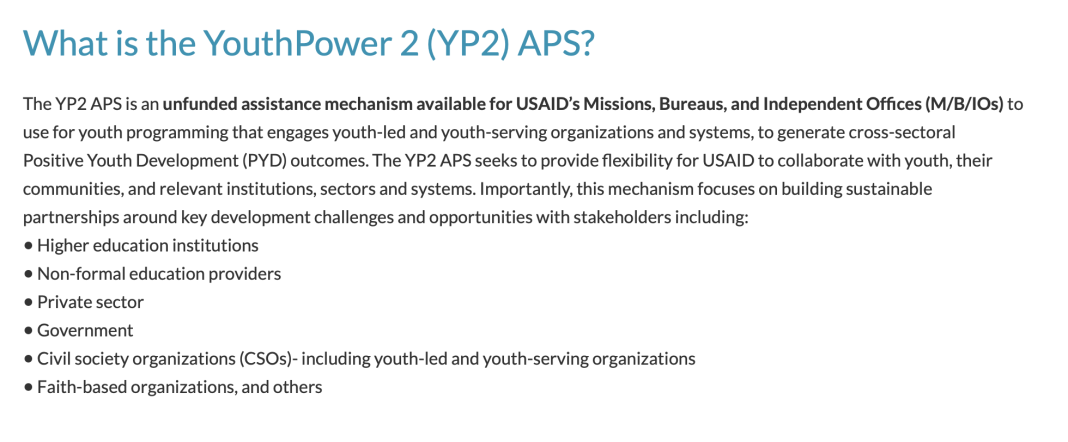
One of the programs of Youth Power 2 – APS – for example – clearly says that it is a program available for USAID’s missions, independent officers, etc to use for youth programming which engages youth organizations. It is meant to provide “flexibility” to USAID to collaborate with youths from different countries.
According to the USAID, one of the key stakeholders with which they can partner are “faith-based organizations” as well.
It would appear that GKI undertakes several programs in official collaboration with the USAID – like this one in Bangladesh as well.
Along with USAID, one of the prime sponsors of the GKI – the NGO of Sam Pitroda – is the US State Department.
The mission of the US State Department is “To protect and promote U.S. security, prosperity, and democratic values and shape an international environment in which all Americans can thrive”.
The US State Department is led by the Secretary of State, who is appointed by the President with the advice and consent of the Senate, and is the President’s chief foreign affairs adviser. The Secretary carries out the President’s foreign policies through the State Department, which includes the Foreign Service, Civil Service, and U.S. Agency for International Development.
USAID and the US State Department are both agencies that are funded directly by the US government and are meant to fulfill USA’s foreign policy agendas.
William Blum has said that in the 1960s and early 1970s, USAID has maintained “a close working relationship with the CIA, and Agency officers often operated abroad under USAID cover.” The 1960s-era Office of Public Safety, a now-disbanded division of USAID, has been mentioned as an example of this, having served as a front for training foreign police in counterinsurgency methods (including torture techniques)
In 2023, an American lawmaker alleged that a US-based NGO in Pakistan has links with designated terrorist organizations. This NGO has been receiving financial aid from US Agency for International Development (USAID). In a letter dated January 24 2023 to USAID administrator Samantha Power, Congressman Michael McCaul, Chairman of the House Foreign Affairs Committee requested suspension of the USAID funding to the NGO pending a full and in-depth review of these accusations.
Reportedly, the in question nonprofit organization, Helping Hand for Relief and Development (HHRD), which is based in Michigan, is affiliated with Jamaat-e-Islami, an Islamist terrorist organization that operates in South Asia. USAID granted HHRD a grant of $110,000 in October 2021 to cover the costs of shipping associated with its humanitarian relief work.
“This award was made despite longstanding, detailed allegations that HHRD is connected to designated terrorist organizations, terror financiers, and extremist groups,” McCaul’s letter read.
Falah-e-Insaniat Foundation (FIF), the charitable arm of Lashkar-e-Taiba, the terrorist organization responsible for the 2008 Mumbai attacks, is one of the sponsors of HHRD events in Pakistan.
It is pertinent to note that FIF has been designated as a terrorist organization by the United States in 2016.
Concerns about the HHRD’s relationship with Al-Khidmat, Jamaat-e-Islami’s official charitable organization, were also expressed in McCaul’s letter.
The US State Department, on the other hand, has been active in interfering in India’s internal affairs after Prime Minister Modi came to power in 2014. Recently, we have seen the regular Q&A drama between a Pakistani journalist and the US State Department spokesperson where the Pakistani journalists asks scripted questions, giving the spokesperson a chance to meddle in India’s internal affairs.
The US State Department’s Human Rights Report released in 2024 extended support to Khalistanis like Nijjar and Islamists like Umar Khalid. Umar Khalid had orchestrated the Delhi anti-Hindu riots 2020 in Delhi – which claimed the lives of several Hindus. He is lodged in jail under UAPA with the courts of India denying him bail after they found prima facie involvement in the conspiracy. In 2023 as well, the US State Department released a report that essentially targeted India and Hindus based on data provided by Christian evangelist organizations and Islamist organizations. In another report, the US State Department claimed that under the leadership of PM Modi, hate speech in India has increased. The findings come a few weeks after Prime Minister Narendra Modi began his third term in office and India and the United States agreed to strengthen cooperation in high technology areas during a visit by White House national security adviser Jake Sullivan to New Delhi. “In India, we see a concerning increase in anti-conversion laws, hate speech, demolitions of homes and places of worship for members of minority faith communities,” US Secretary of State Anthony Blinken told reporters at an event in Washington.
The US State Department has also targeted India over CAA and the laws against forceful religious conversions which deeply impact Hindu women.
The US State Department, continuing its meddling in India’s internal affairs, started a drive to recruit ‘fact-checkers’.
The Public Diplomacy Section (PDS) of the US State Department has set aside a whopping $2,00,000 (~₹1.67 crores) to recruit fact-checkers in India as part of its ‘Empowering Media Savvy Youth.’
Through this project, the Executive Department of the US federal government claims to confront ‘online manipulation’, combat ‘external influences’, secure digital landscape and reinforce regional security.
The US State Department is implementing the project starting 1st September this year in 5 cities of India – Kolkata, Hyderabad, Chennai, Mumbai and Delhi.
“In India, where social media usage is widespread among the youth population, recent research by Indian, European, and American think tanks has highlighted how manipulative content is amplifying societal polarization and erodes institutional trust. This consequently strains U.S.-India bilateral relations, threatening collaborative efforts and diplomatic ties,” the US State Department made its agenda crystal clear.
OpIndia found that through its ‘Empowering Media Savvy Youth’ project, the US State Department is eyeing to train 160 L2D graduates as Youth Master Trainers (YMTs), making them conduct 320 sessions and impacting 32000 individuals.
To add to it, about 60 of the 32K individuals would be further trained to become ‘social media influencers’ to impact another 36000 people.
Another crystal clear objective of the project is to brainwash young and impressionable minds. “By targeting these segments, the project endeavours to actively combat misinformation and shape narratives effectively to address the root causes of disinformation,” the US State Department emphasised. The grant of $1,50,000- $2,00,000 will be given to one eligible organisation in India for the duration of 12-18 months.
The full report on this propaganda initiative of the US State Department can be read here.
It must be mentioned that US Embassies and Consulates in the country are already running projects and training programs such as ‘Learning to Discern (L2D)’ in the name of combating ‘misinformation.’
The Leaning To Discern (L2D) initiative is funded by the same entities that fund the Global Knowledge Initiative NGO of Sam Pitroda – USAID and the US State Department. The L2D initiative is also funded by George Soros and Ford Foundation.
The Rockefeller Foundation – another main sponsor of Sam Pitroda NGO
The Rockefeller Foundation is everywhere – we know that. We now also know that it funds the NGO of Sam Pitroda and given that both the co-founders have close ties with the Rockefeller Foundation it is only reasonable to conclude that Sam Pitroda does as well.
It is important to first understand the background and genesis of the Rockefeller Foundation.
In the early 20th century, the United States legalized endowed foundations. They were the new lifeguards of Imperialism, or call it Capitalism, under threat from Communism. Among the first to be set up was the Carnegie Corporation, endowed in 1911 by profits from the Carnegie Steel Company. The Rockefeller Foundation was endowed in 1914 by JD Rockefeller, founder of Standard Oil Company.
Rockefeller Foundation was the early patron that gave seed money to the United Nations, Central Intelligence Agency (CIA), and the Council on Foreign Relations (CFR). These Foundations had massive resources, all tax-free, with an unrestrained brief: to turn economic muscle into political, cultural and social capital. Massive funds were not there to raise the wages of its workers. It was to turn money into power—to run the world. (So we have Bill Gates controlling health, education and agricultural policies all over the world from the seemingly dull occupation of selling software).
By the 1920s, the US had begun to swoop on overseas markets and its raw materials. In 1924, the Rockefeller and Carnegie Foundations had created the most powerful foreign policy pressure group—the Council on Foreign Relations (CFR), later funded by the Ford Foundation as well. So far CFR has had two dozen US secretaries of state on its roll. No less than 5 CFR members were in the 1943 steering committee that planned the UN. JD Rockefeller bought the land for UN’s New York headquarters at $8.5 million grant.
By the 1950s, the Rockefeller and Ford Foundations were in overdrive in funding NGOs and educational institutions around the world. They were the hidden arm of the US government to topple democratically-elected governments in Latin America, Iran and Indonesia. The Indonesian students, trained in counter-insurgency by the US army, played a critical role in effecting CIA-backed coup in Indonesia in 1965 that brought General Suharto to power. Similarly, eight years later, young Chilean students were trained at the University of Chicago (endowed by JD Rockefeller) to do their bit in the CIA-backed coup that killed Salvador Allende and brought General Pinochet and his reign of murders that lasted 17 years.
Given that the Rockefeller Foundation is essentially an arm of the US deep state to fulfill its political interests in foreign countries and a regime change organization, as is the USAID, it is interesting that both these organizations fund the NGO of Sam Pitroda, who in turn is extremely close to Rahul Gandhi, who then goes abroad and asks the US to affect regime change in India – talks organized by Sam Pitroda.
It is pertinent to remember that the Rockefeller Foundation and the Ford Foundation had intimately infiltrated the Nehru government and ever since the 1950s, has been subverting India.
The Sunday Standard investigation had thrown up the following facts, as reported by the New Indian Express in 2015:
The Ford and Rockefeller foundations had penetrated the Indian establishment without any government oversight.
It gave junkets and scholarships to senior government officials in the Nehru administration without clearance from the Indian government.
These officials were directly selected by the Ford and Rockefeller foundations without the knowledge of the government.
B K Nehru, Indira Gandhi’s cousin and the Commissioner General for Economic Affairs of Indian Embassy in Washington, advised against insistence on clearance of the funds by the Rockefeller Foundation to government employees after a meeting with its President Dean Rusk.
Rusk told the government that only consultations (and not approval) with the Department of Economic Affairs would be necessary before it funded bureaucrats and others.
Appalled at the storm brewing in his government against the foundations’ blatant efforts to woo government officials, Nehru denied he had given the necessary approval. However, he had to backtrack after a note was shown to him, which made it obvious that the opposite was true.
The saga of the Rockefeller Foundation – the foundation that funds Sam Pitroda’s NGO – and its subversion of India’s interest has continued to date.
On July 5, 2021, the MIT Technology Review published an article on the Covid-19 situation in India, titled What went so wrong with covid in India? Everything. The article written by Sonia Falerio claimed that there was a range of “basic mistakes and callous technocratic failures” behind the “catastrophic covid surge” in India. The article was a part of The Pandemic Technology Project on the publication.
The article was riddled with misinformation, fake news and conjectures but that was expected since the MIT Technology Review article was sponsored by Rockefeller Foundation, an ally of the CIA in its ‘cultural war’ in various countries.
In August 2023, OpIndia had predicted that George Soros, Ford Foundation and the Rockefeller Foundation may be planning another onslaught against Indian firms through OCCRP – and that the onslaught was connected to China funding of NewsClick.
At that time, Rahul Gandhi delivered a press conference against Adani based on the OCCRP report that OpIndia had predicted. Interestingly, before the press conference of Rahul Gandhi began, OCCRP posted on X that Rahul Gandhi would be holding a press conference based on its report.
Rahul Gandhi’s attack against Gautam Adani aligned perfectly with the interests of the Rockefeller Foundation, George Soros and the Ford Foundation. In fact, George Soros had even made a public statement about the Adani fiasco saying that PM Modi would have to pay for it politically. In January 2020, the American billionaire committed $1 billion to start a global university to “fight nationalists” – including PM Modi.
The Rockefeller Foundation’s involvement in India is not recent. The India International Centre, Delhi, is an NGO, but has been heavily supported and involved with the Indian Government since its inception in 1958 (Nehruvian-Congress era of politics). The IIC was founded & funded by the Rockefeller Foundation. The Rockefeller Foundation & Rothschild Foundation are partners in many projects. Now, both these organizations have dark sinister secrets and pasts. A look at the ‘About’ section of the India International Centre’s website and one can see quite clearly that its past and present Presidents, Vice Presidents, Life Trustees and Trustees mostly belong to the comfortable coterie of Lutyens’ and Khan Market cabal.
Globally, the Rockefeller Foundation has fuelled unrest. Earlier this year, amid the ongoing pro-Palestinian protests in prominent US universities, it had come to light that the likes of George Soros and Rockefeller Brothers Fund are funding the demonstrators and creating unrest on campuses. In fact, it was even reported that the pro-Hamas protests and violence is funded by the Rockefeller Foundation.
Questions that emerge – Sam Pitroda, Rahul Gandhi, the nexus with USA and regime change operation?
It is not a matter of speculation that Sam Pitroda works closely with two individuals who are directly connected to the Rockefeller Foundation. One, in fact, is the current Vice President of the Rockefeller Foundation. The other was an official of the US government who worked with Hillary Clinton and was lobbying for US Corporate interests in India during the Congress government.
It is also not speculation that the NGO which is co-founded by Sam Pitroda and the two others – connected to the Rockefeller Foundation – is funded by the US State Department, the USAID and the Rockefeller Foundation.
All of these agencies specifically work towards the US’ foreign policy goals, regime change and interfering in the internal matters of foreign nations – to further the interest of the USA.
It is, therefore, not unreasonable to question whether Sam Pitroda, who is directly working with the Rockefeller Foundation, the US State Department and the USAID is working specifically to further the interests of the US Deep State in India.
What makes the speculations gain far more credence is the fact that Rahul Gandhi, whose talks abroad are organized by Sam Pitroda, talks about the very issues which the US State Department rakes up over and over again. He has also demanded, repeatedly, for the intervention of the USA in India’s internal matters.
Every single year, Rahul Gandhi has asked, in fact, begged, the US to affect a regime change operation in India.
In 2021, Rahul Gandhi asked for US interference during an online interaction with Ambassador Nicholas Burns of the Harvard Kennedy School. The Gandhi scion was invited by the Harvard Kennedy School’s Institute of Politics to talk about challenges and opportunities in India and reflections on politics and public service. Nicholas Burns is a former American ambassador to Greece, and currently a Professor of the Practice of Diplomacy and International Politics at Harvard’s John F. Kennedy School of Government. Rahul Gandhi had said, “I don’t hear anything from the US establishment about what is happening in India. If you are saying partnership in democracy is, I mean, what’s your view on what is happening here?” Rahul Gandhi also added, “I fundamentally believe, that America is a profound idea. The idea of freedom, the way it is encapsulated in your constitution is a very powerful idea. But you got to defend that idea. And that’s the real question.” However, Nicholas Burns didn’t respond to this specifically, only saying that when they will hold the next session in two weeks with another guest from India, they will discuss these matters.
In March 2021, during his interview with Brown University professor, Rahul Gandhi had indirectly asked the Western countries not to recognize BJP’s electoral success by comparing the party’s victory to Iraqi dictator Saddam Hussien and Libya’s Gaddafi. Rahul Gandhi had claimed Saddam Hussein and Gaddafi won elections too, just like PM Modi, and hence one should not equate elections with the successful function of democracy. Both Libya and Iraq were destroyed by Western bombings.
Taking a jibe at the Centre, he added that both Saddam Hussein and Gaddafi did not need votes but used the electoral process to capture power. These comments were made during a talk show with leftist professor Ashutosh Varshney of USA’s Brown University, who had asked Rahul for his commentary on the ‘decline in democracy’ in India. However, it is interesting to note that Gaddafi came to power in Libya in September 1969 as the leader through a military coup that overthrew the British-backed King Idris and not through a democratic electoral process.
In 2022, he had again asked for foreign interference while he was in the UK.
In 2023, he was seated with Sam Pitroda and Sunita Vishwanathan in the USA – Hudson University. It is during this visit that he made a secret visit to the White House as well. OpIndia had exposed links to Jihadi organizations and George Soros at the time.
Many may have dismissed Mani Shankar Aiyer’s ‘Unhe hataiye, hemein le ayiye” in Pakistan as a low-level rant, but Rahul Gandhi has been saying the same thing over and over, sending the same message to Western powers for years.
With Rahul Gandhi’s closest aide, who is organizing his foreign trips where Rahul Gandhi asks for foreign interference in India, being in close association with the US Deep State, as evidenced by this article, one has to ask if Congress is now officially functioning as an asset of the US Deep State – driven by dubious organizations which are effectively fronts for the CIA to affect regime change.