Home Blog Page 1525

Ukraine legalises marijuana, says it will help to cope with the trauma of war

0

The Ukraine’s parliament adopted a new law legalising medical marijuana to help treat post-traumatic stress disorder (PTSD) and oncological diseases acquired as a result of war, The Hill reported, quoting the official website of Ukraine’s parliament, the Verkhovna Rada.

It reported on Thursday that the law was adopted with 248 votes in favour, 16 votes against, 33 abstentions and 40 members not voting. The new law will come into effect after six months.

Access to medical marijuana as treatment for war-related conditions has garnered momentum recently, as the country approaches nearly two years since Russia launched its invasion of the country.

The law would regulate “the circulation of hemp plants (Cannabis) for medical, industrial purposes, scientific and scientific-technical activities to create conditions for expanding patient access to the necessary treatment of oncological diseases and post-traumatic stress disorders, received as a result of the war,” according to the final version of the bill.

The parliament’s chair, Ruslan Stefanchuk, said, “The list of conditions and ways of using cannabis medicines will be determined by the Ministry of Health.”

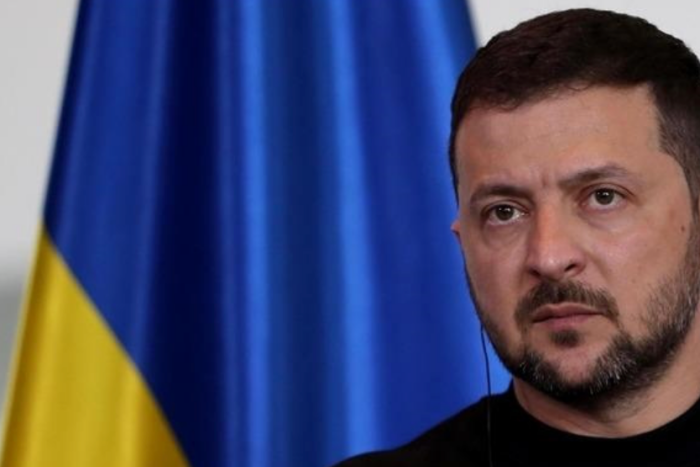
Ukrainian President Volodymyr Zelensky has pushed for greater access to medical marijuana as a treatment for war-related conditions. In June 2023, he addressed his country’s parliament, calling for the drug’s legalisation.

“We must finally fairly legalise cannabis-based medicines for all those who need them, with appropriate scientific research and controlled Ukrainian production,” Zelensky said, according to a translation from the local press, The Hill reported.

“All the world’s best practices, all the most effective policies, all the solutions, no matter how difficult or unusual they may seem to us, must be applied to Ukraine so that Ukrainians, all out citizens, do not have to endure the pain, stress and trauma of war,” Zelensky added.

Meanwhile speaking at the Christmas Breakfast on December 21 Zelenskyy made an impassioned plea to the people to pray for Ukriane’s Victory in the ongoing conflict against Russia.

“I attended the Christmas Prayer Breakfast. I am grateful to everyone whose prayers include the main request: victory. For the triumph of the human spirit over aggression. For the victory of our unity over any self-serving interests that may want to divide us. And for Ukraine’s victory–the victory over the Russian evil that has come to our land and must be expelled” the Ukraine President said. 

(This news report is published from a syndicated feed. Except for the headline, the content has not been written or edited by OpIndia staff)

On Gita Jayanti, know the divine glory of Shrimad Bhagavad Gita that teaches the way to live life

India surpasses all other nations in literary wealth, having produced divine and profound texts that have guided life’s ways for generations worldwide. Among these, the Mahabharata stands out as a prime example.

The Mahabharata’s historical significance is widely recognised, comprising 18 Parvas (sections), one of which is the ‘Bhishmaparva.’ The world-renowned text, the Shrimad Bhagavad Gita, originated from this Parva.

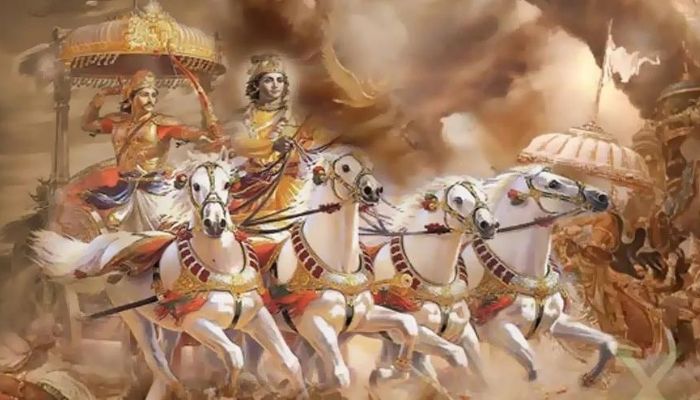
Around 5,500 years ago, on the sacred day of Margashirsha Shuddha Ekadashi, Lord Krishna imparted the teachings of the Gita to Arjuna on the battlefield of Kurukshetra. This day has since been commemorated worldwide as Gita Jayanti.

This year, Gita Jayanti falls on 22nd December. On this auspicious day, it’s an opportune moment to delve into the significance of the Shrimad Bhagavad Gita, a revered scripture in Hinduism.

Background

Arjun – son of Pandu was standing in despair in the middle of the battlefield at Kurukshetra. He said to Lord Krishna, “How can I bear to launch an arrow against my kin, including my brothers? It is unthinkable for me to aim my bow at my grandfather Bhishma.” Upon uttering these words, Arjuna’s bow, Gandiv, slipped from his hand. Overwhelmed by turmoil, Arjuna lost his courage and sat down in a state of distress.

Observing the distraught state of Kunti’putra’s son Arjun, also known as Parth, Lord Krishna bestowed upon him divine wisdom. The sacred teachings that flowed from the divine lips of the Almighty were none other than the Shrimad Bhagavad Gita. Upon hearing the entirety of the Gita, Arjun was reinvigorated with a renewed sense of strength and determination.

Lord Krishna tells him, “तस्मात् उत्तिष्ठ कौन्तेय युद्धाय कृतनिश्चयः” which means “O Son of Kunti, Arjun, get up and make a firm determination to fight.” On hearing this, Arjun got ready for the battle, picked up his bow Gandiv in his hand and the truth triumphed after the fierce battle of Kurukshetra.

The Shrimad Bhagavad Gita, the profound wisdom imparted by Lord Krishna to Arjun, transcends religious boundaries, serving not just Hindus but all of humanity. On the auspicious occasion of Gita Jayanti, let us explore how the Shrimad Bhagavad Gita illuminates the path to living life meaningfully.

Shrimad Bhagavad Gita is the way to live life

The Bhagavad Gita transcends the bounds of a mere scripture, embodying a philosophy for life. It elevates an individual to the essence of true humanity. The teachings of the Gita represent an ‘eternal truth’, timeless and universally applicable. That is, beyond the past, the future and the present.

The ideas expressed in the Gita hold true and remain consistent across all ages. Pandurang Shastri Athavale, the founder of the Swadhyaya Movement, often cited the Gita’s teachings, remarking, “Man may be poor, man may be restless, man may be sick, man may be unclean, but man can never be untouchable.” The Shrimad Bhagavad Gita endows us with the ability to perceive humanity from a human-centric perspective.

Within the vast expanse of Hindu Vedic Sanatan Dharma, numerous texts exist, yet the Gita holds a unique significance. It is revered as the essence of the Vedas and Upanishads. The Gita imparts a comprehensive message on how to live life across all facets of human existence.

In the Gita, Arjun symbolises humanity, posing questions about life to Lord Krishna on behalf of all human beings. The Gita portrays human existence as a battlefield, where each individual must engage in their struggles. Its core message is to advance without retreat in this battle of life.

Unlike many religious texts that dictate specific do’s and don’ts, the holy Gita guides by illuminating the correct path, while granting individuals the liberty to make their own decisions. Comprising 700 verses across 18 chapters, the Shrimad Bhagwad Gita is segmented into three distinct sections: Karmayoga, Gyanayoga, and Bhaktiyoga.

The soul and karma are eternal

The Shrimad Bhagavad Gita delves deep into the essence of the soul, a level of introspection unmatched by any other scripture in the world. In the realm of modern science, the soul is often equated to a form of energy.

This scientific view aligns with the principle that energy can neither be created nor it can be destroyed; but it remains constant, eternal. It can only be converted from one form to another. Electricity is also a form of energy.

We use it by transforming it into many forms. Modern science also considers the soul to be energy. What science is thinking right now, the same thing was proposed by Lord Krishna 5500 years ago.

In the 23rd verse of the second chapter of the Shrimad Bhagavad Gita, Lord Krishna has said,

नैनं छिन्दन्ति शस्त्राणि नैनं दहति पावकः ।
न चैनं क्लेदयन्त्यापो न शोषयति मारुतः ।। 2-23।।

It means that this soul, akin to energy, remains impervious to any weapon’s strike, cannot be scorched by fire, remains unaffected by water, and is not dried by air. It is an entity that is eternally indestructible.

In the 22nd verse of the second chapter of the Bhagavad Gita, Lord Krishna has said,

वासांसि जीर्णानि यथा विहाय
नवानि गृह्णाति नरोऽपराणि ।

तथा शरीराणि विहाय जीर्णा-
न्यन्यानि संयाति नवानि देही ।। 2-22।।

It means that just as a person discards old clothes for new ones, the soul similarly sheds an aged and worn body to adopt a new one.

Modern Science and the Shrimad Bhagavad Gita have similar information about energy! Science asserts that energy cannot be destroyed but merely transformed from one form to another. Remarkably, this same principle was articulated in Hindu scriptures thousands of years ago.

The Gita proclaims that the soul is indestructible and eternal, it cannot be killed, it merely transitions from one body to another. This concept, along with many others found in the Shrimad Bhagavad Gita, has been validated by scientific discoveries much later. Consequently, the world’s eminent and insightful scientists engage in studying and researching the Bhagavad Gita and the Vedas.

Regarding dietary choices, Lord Krishna elucidates in the Gita that while one is free to consume any food, the nature of one’s diet will influence their thoughts. This ties back to the overarching principle of karma. The Gita explicitly advocates for the practice of nishkam karma, which refers to selfless action, performed without attachment to its outcomes.

Lord Krishna has said in the Gita,

कर्मण्येवाधिकारस्ते मा फलेषु कदाचन।

मा कर्मफलहेतुर्भूर्मा ते सङ्गोऽस्त्वकर्मणि॥ 2.47

It means that humans are entitled only to perform their duties (karma), not to claim entitlement over the results of these actions. One should not be preoccupied with the thoughts of the outcomes of their deeds.

Lord Krishna emphasises the significance of nishkam karma (selfless action). He teaches that actions performed with expectations lack purity, whereas selfless deeds are inherently fruitful.

Moreover, the Bhagavad Gita serves as a comprehensive guide in various aspects of human life, ranging from the corporate sphere to the realm of science. The precise and timeless teachings of the Hindu scripture prove invaluable across multiple domains, including personal development and politics.

From figures like Oppenheimer and Steve Jobs to Narendra Modi and Swami Vivekananda, many great minds have been influenced by a singular, profound book: The Shrimad Bhagavad Gita. Our exploration here merely skims the surface of this vast reservoir of wisdom.

Engaging with the Gita wholeheartedly can unveil the mysteries of the world. It is an immense ocean of knowledge, and on this Gita Jayanti, we have only glimpsed a fraction of its depth.


Around 30 Pakistani terrorists suspected to be active in Rajouri-Poonch sector: Defence sources

0

Pakistan is trying to revive terrorism in the Rajouri-Poonch sector of Jammu and Kashmir as around 25-30 Pakistani terrorists are suspected to be hiding in the forest areas of the region, defence sources said on Friday.

The sources said the plan to revive terrorist activities in the area is part of a greater game plan by Pakistan and China to pressurise the Indian Army to remove troops from the Ladakh sector and redeploy forces in this area.

“There is a larger game plan by the Pakistan-China nexus to not allow India to ease out of the Jammu and Kashmir sector and deploy troops on the China border, especially in the Ladakh sector, where the PLA and Indian forces have been in a standoff for the last three years now,” they said.

India moved the Uniform Force of Rashtriya Rifles from the Poonch sector to Ladakh to counter Chinese aggression in 2020 as part of rebalancing and put pressure on the PLA to match Indian strength.

Sources said that around 25-30 Pakistani terrorists have been hiding in the upper reaches of the Poonch Rajouri sector in a forested area to launch attacks on security forces.

Over the last years since the Uniform Force left for Ladakh operations, Pakistan has started sending its own terrorists from Pakistan to the area to carry out attacks against Indian troops in an attempt to force India to redeploy its own troops in the area.

The Indian Army had recently moved in one more brigade to counter terrorist activities and has achieved success in the area.

Earlier on Thursday evening, four Army personnel were killed while three others were injured in the forest area of Dera ki Gali in the Rajouri district after two Army vehicles were ambushed by heavily armed terrorists.

The terrorists ambushed two Army vehicles carrying troops in Thanamandi, Rajouri. (ANI)

(This news report is published from a syndicated feed. Except for the headline, the content has not been written or edited by OpIndia staff)

No democracy, only brutality in Jharkhand: BJP furious after cops resort to lathi-charge on protesting Panchayat Secretariat volunteers leaving many injured

0

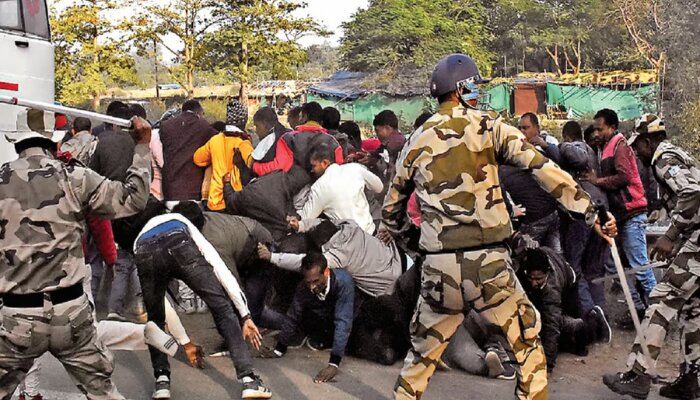
The Jharkhand Police lathi-charged the members of the state Panchayat Secretariat volunteers who were marching to the assembly for their demands on 21st December. Furthermore, water cannons and tear gas shells were used to disperse the protestors. The incident transpired at about 3 pm to 4 pm near Jagannathpur temple in Ranchi. More than thirty individuals associated with the volunteers’ union were injured and at least six persons including a child were critically wounded.

They have been admitted to Ranchi’s Paras HEC Hospital and other institutions for medical treatment. The union declared that in opposition to the oppressive action they are going to hold a show of strength, nude protest and mass self-immolation on the completion of four years of the government on 29th December.

Chandradeep Kumar, state president of the union stated that the members have been protesting in front of the Raj Bhavan for 170 days regarding their five-point demands. In addition, they have been observing a peaceful protest for the last four days by sitting in front of the assembly.

They wanted their services to be placed immediately under the government’s authority as well as granted permanent status. Thousands of volunteers from throughout the state have spent the previous four days demonstrating in front of the assembly. He asserted that they would repeatedly hit the streets to get the administration to listen to their conditions.

The union presented their requests to Minister Alamgir Alam at their meeting with him on 20th December. He gave an assurance that announcements in support of the volunteers for the Panchayat Secretariat will be made very soon. Additionally, around 1 pm on 21st December, a government representative will visit the protest location to issue a statement. However, the administration did not provide any such assurance until 3 pm. Subsequently, the union members resolved to march nonviolently to the assembly.

The agitators hoped that their demands would be acknowledged by the state assembly and representatives of the people. They became upset and began walking towards the assembly while shouting slogans as none of the MLAs came to listen to their woes during this time. When they entered the cordon-off area, the deployed cops unleashed a lathi-charge on them. Police tried to stop them near another barricade, however, they managed to breach the barricade on the other side and started moving forward. The cops employed force which led to shoving and pushing between the two sides and resulted in chaos.

The union had proclaimed earlier that if their requirements were not fulfilled, they would besiege the assembly. The Jharkhand Mukti Morcha-led government, according to the demonstrators made a lot of promises before the elections but merely provided reassurances over time. They wanted to have a meeting with Chief Minister Hemant Soren.

A case has been registered against 400 people, including a dozen named persons, in the Jagannathpur police station on the statement of the police. Sections such as interfering with police operations and impeding government activities have been invoked in the lodged First Information Report.

According to Chandradeep Kumar, everyone was calmly approaching the assembly. They came to a halt close to the barriers placed in front of the Jagannathpur temple. Following this, an argument erupted between the cops and the demonstrators. Meanwhile, the former lathi-charged and swarmed around beating individuals. Tear gas shells were also fired and water cannons were utilized to put water at the protestors. This resulted in the injuries of over thirty persons.

Chandankiyari MLA and the leader of the opposition in the Jharkhand state assembly, Amar Kumar Bouri reached the Paras HEC Hospital and inquired about the condition of the injured. “Those who the government has come to power on their strength are the ones being lathi-charged. The BJP is an inclusive political party and will improve the prospects for volunteers,” he remarked while talking to the media.

He took to X and further charged, “In Jharkhand, there is not ‘democracy’ but ‘brutality.’ Thousands of Panchayat volunteers were protesting peacefully, but the Thugbandha (an alliance of fraudsters) government again displayed its repressive policies by bringing the police forward. This ruthless lathi charge has exposed the hateful thinking of the coalition government towards the youth.”

Notably, the former administration of the Bharatiya Janata Party appointed almost 18,000 volunteers to the Panchayat Secretariat throughout the state who were previously paid an honorarium for carrying out government programs. However, they were released from their duties upon the establishment of the JMM-Congress coalition government. They are constantly protesting against the decision.

Khalistani terrorist Gurpatwant Singh Pannun celebrates Rajouri terror attack, incites Kashmiri separatists to hold referendum

0

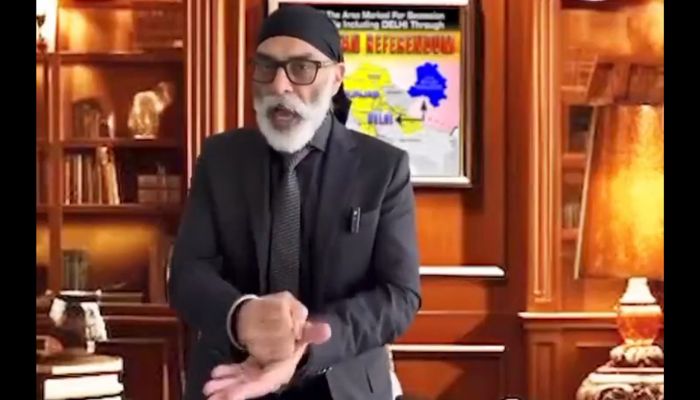
Khalistani terrorist Gurpatwant Singh Pannun sheltered in the United States has mocked the terrorist attack in Rajouri on Friday, 22nd December. Four Army personnel were martyred in the attack and two soldiers have been injured.

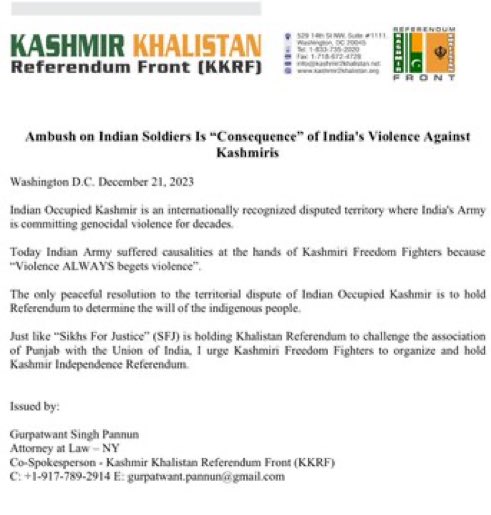
In a press release issued under the banner ‘Kashmir Khalistan Referendum Front (KKRF)’, Pannun justified and even celebrated the ambush on two military vehicles in Rajouri which occured on 21st December. The note has been shared on social media platform X.

The subject line on the press note read, “Ambush on Indian Soldiers Is “Consequence” of India’s Violence Against Kashmiris”. The note is dated same as the date of the terrorist attack.

Referring to Kashmir as “India occupied”, Pannun blamed the presence of the Indian Army and accused it of “genocidal violence”. Speaking the Pakistani ISI’s language, Pannun called for a referendum.

Giving the example of banned terrorist outfit “Sikh For Justice” Khalistan referendum aimed to separate Punjab from India, Pannun called on terrorists to organise a “Kashmiri Independence Referendum”.

As per the note, Pannun is also the co-spokesperson of Kashmir Khalistan Referendum Front (Source: @saket71/x)

Gurpatwant Singh Pannun is mentioned as co-spokesperson of KKRF in the press release.

A record of threats issued by Gurpatwant Singh Pannun against India and Hindus

A day after the Parliament security breach on 13th December, SFJ released a poster showing Pannun standing with a photo of the attack and text annoucing a reward for the accused.

The terrorist announced Rs 10 lakh in legal aid for the four accused in the Parliament security breach incident.

On 18th November, the terrorist issued another threat to shutdown the ICC World Cup final between Indian and Australia in Ahmedabad.

On 4th November, Gurpatwant Singh Pannun released a video issuing threats to the Indian government. He threatened to blow up an Air India flight and appealed to Sikhs in the world not to travel by Air India from 19th November onward, saying that it can be life-threatening.

An FIR was filed against him on 29th September for issuing threats ahead of the 2023 ODI World Cup match between India and Pakistan.

He also threatened Canadian Hindus in September amid the tensions between India and Canada over the killing of Khalistani terrorist Hardeep Singh Nijjar.

How Khalistani Pannun works with ISI to stir the separatist movement in India

On September 23, National Investigation Agency (NIA) confiscated the properties of Khalistani terrorist Gurpatwant Singh Pannun in Sector 15 C Chandigarh.

As per a dossier shared by the NIA with other agencies in the world, Pannun wants to create Khalistan by cutting Punjab and parts of Himachal and other states and divide India into multiple parts.

The dossier noted that Pannun “has challenged the unity and integrity of India by audio messages” and “wants to create a separate country for people of Kashmir… and create a Muslim country”.

It added, “wants to seduce the Muslims (and) create a Muslim country that he wants to name as ‘Democratic Republic of Urdustan’, and that he is radicalising people in Jammu and Kashmir to enable the latter’s separation from the Indian Union.”

Billionaire Len Blavatnik, who has given $270 million so far, pauses donations to Harvard amidst anti-semitism controversy

0

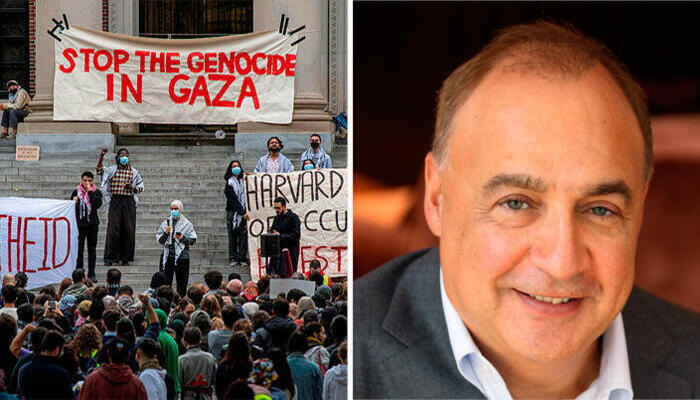
In a major blow to the University of Harvard, its major donor and billionaire philanthropist Leonard V Blavatnik aka Len Blavatnik has paused donations to the varsity amidst the controversy around its handling of anti-semitism on campus.

Citing a source privy to the matter, Bloomberg reported, “His family foundation has given at least $270 million to Harvard, but it’s pausing donations in the wake of university President Claudine Gay’s widely derided congressional testimony on antisemitism.”

Reports say that Blavatnik is the most high-profile donor to date to sever philanthropic ties with Harvard, following severe condemnation of University President Claudine Gay’s response to the Israel-Hamas war and testimony earlier this month at a congressional committee.

Earlier, Blavatnik had donated around $270 million to the University, including a $200 million gift to Harvard Medical School in 2018 – the largest single gift in the history of the institution.

Born to a Jewish family, Blavatnik’s move to halt funding to Harvard is yet another huge setback for the university’s fundraising initiatives, with several major donors already announcing to break their ties with the university following its widely criticised initial response to the violence in Israel and Gaza. The mounting donor backlash threatens to strain Harvard’s finances, which rely heavily on philanthropy. As per a Harvard Crimson report, “philanthropy accounts for 45 per cent of the University’s annual revenue.”

This comes after a massive controversy erupted on 5th December, during the first hearing on “Holding Campus Leaders Accountable and Confronting Antisemitism” in Washington, DC. As reported earlier, Congresswoman Elise Stefanik confronted the Presidents of Harvard, MIT, and UPenn during the hearing over the issue of rising cases of antisemitism on their campuses.

During the hearing, Harvard University President Claudine Gay, MIT University President Sally Kornbluth, and UPenn President Elizabeth Magill refused to condemn the calls for the genocide of Jews on their respective campuses as bullying and harassment. When asked to offer a simple “yes” or “no” answer on whether advocating for the murder of Jews would violate the University’s bullying and harassment policies, Harvard president Claudine Gay was seen giving bizarre excuses of ‘context’.

The refusal to condemn as well as attempts to ‘contextualise’ calls for violence against Jews on campus by the presidents of UPenn, Harvard, and MIT University triggered outrage compelling them to ‘clarify‘ their stand.

As reported earlier Harvard’s Claudine Gay said, “There are some who have confused a right to free expression with the idea that Harvard will condone calls for violence against Jewish students. Let me be clear: Calls for violence or genocide against the Jewish community, or any religious or ethnic group are vile, they have no place at Harvard, and those who threaten our Jewish students will be held to account.”

Later, in an interview with Harvard Crimson, Gay ‘apologised‘ and said that she failed to convey her ‘truth’ that calls for genocide of Jews have no place in the varsity. “I am sorry. Words matter. When words amplify distress and pain, I don’t know how you could feel anything but regret,” Gay said.

Notably, in November this year, more than 1700 Harvard alumni wrote a letter to the University President Claudine Gay and the Dean of Harvard College Rakesh Khurana raising concerns over the rise in antisemitism on campus.

In their letter, open to signature by more alumni, the group has demanded that the management works on stopping antisemitism on campus or they will stop donations to the university. Over 1,700 members of the Harvard College Jewish Alumni Association (HCJAA) signed the open letter that condemned anti-Israel protests at the university campus amid the ongoing Israel-Hamas war.

Other billionaires who have severed ties with Harvard

It is worth recalling in October this year, Israeli billionaire Idan Ofer and the Wexner Foundation severed ties with Harvard over the varsity’s tepid response to the controversial student union coalition letter blaming Israel for the Hamas terrorist attack. Idan Ofer and his wife Batia resigned from a Harvard executive board saying that their “faith in the University’s leadership has been broken” and that they “cannot in good faith continue to support Harvard and its committees.”

As reported earlier, Claudine Gay eventually tried to distance the university from the outrageous statement signed by the student groups, the Ofers asserted that the University administration did not make its support for the people of Israel amidst Hamas terrorist attacks evident.

Other than the Ofers, the Wexner Foundation also ended its 34-year-old partnership with Harvard and the Harvard Kennedy School over Harvard’s “dismal failure” to take a clear and unequivocal stand against Hamas’s barbaric terrorist attacks on 7th October.

Before this, corporate leaders including Bill Ackman, CEO of Pershing Square, announced that their companies would not hire those students who signed the pro-Hamas statement. As many prominent firms announced their decision not to consider hiring the signatories of the said joint statement, several of the signatories withdrew their signatures from the statement.

This was triggered after a student union coalition at Harvard University issued a statement on 7th October blaming Israel for the ongoing Israel-Hamas war. The letter issued by the Harvard Palestine Solidarity Groups was co-signed by 33 student groups.

It is interesting to note that Harvard has been backing Claudine Gay even when she has been at the epicentre of the outrage over the calls for genocide of Jewish people on campus even when the White House directly condemned Gay and the UPenn president for their controversial testimonies. White House spokesperson Andrew Bates rebuked the presidents of both the universities. In a statement on December 6, Bates said that any statements calling for systematic killings of Jews are revolting adding that such calls are antithetical to American values. Notably, Dr Claudine Gay has been accused of plagiarising her 1997 Ph.D. thesis.

‘Forced to bring minor girls to him, police officers brutalised us on his orders’: Rajasthan’s former Congress MLA accused of rape and torture

0

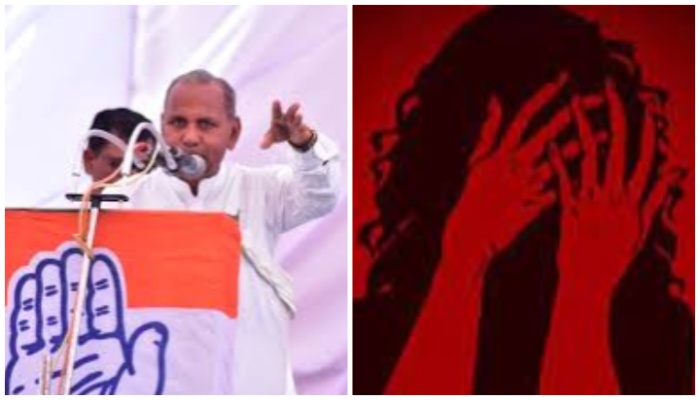
On Wednesday, December 20, a woman in Jodhpur, Rajasthan, filed a case against nine people, including former Congress MLA of Barmer Mevaram Jain and RPS officer Anand Singh Rajpurohit, accusing them of rape, assault and harassment. The accused also include two more police officers – Barmer SHO Gangaram Khawa and Sub Inspector Daud Khan and Pradhan Girdhari Singh Sodha. The high-profile case has been registered at the Rajeev Gandhi Nagar Police Station in Jodhpur.

In the FIR, she alleged that the former Congress MLA Mevaram Jain along with the accused police officers raped her and molested her minor daughter two years ago and also raped a minor friend of hers.

The victim went on to say that the Congress MLA had an affinity for young females and would frequently put pressure on her to bring other young girls to him. When the victim refused to comply with his demands, Mevaram Jain along with the accused police officers visited her house in her absence and molested her minor daughter.

The woman alleged that approximately five years ago, as a result of her father’s illness, she met Ram Swaroop from Barmer, who assured her that he would assist her.

He took advantage of her vulnerability to rape her, record the incident, and then continued to abuse her sexually.

She stated that in 2021, Ram Swaroop introduced her to Mevaram Jain, who was then the MLA of Barmer, at her flat, where the duo raped her and has been continuously raping her since then.

They also molested her minor daughter, raped one of her friends and insisted she bring other women to them.

She also alleged that the police officers and other accused threatened her against revealing the matter and coerced her into signing certain blank documents.

She said that the accused threatened her with Bhanwari Devi’s fate and said they would implicate her and the other victims in bogus cases when she protested against the sexual assault of her minor daughter. In fact, in November 2022, Ram Swaroop had also filed a false case in Barmer against five people, including two women, alleging sextortion and demand of Rs 50 lakh, she said.

The kidnap and murder of 37-year-old auxiliary nurse midwife Bhanwari Devi of Jodhpur in 2011 had created a big political turmoil jeopardising the political careers of two political heavyweight families of the Jodhpur region – the Madernas and the Bishnois and by unsettling the Ashok Gehlot government back in 2011.

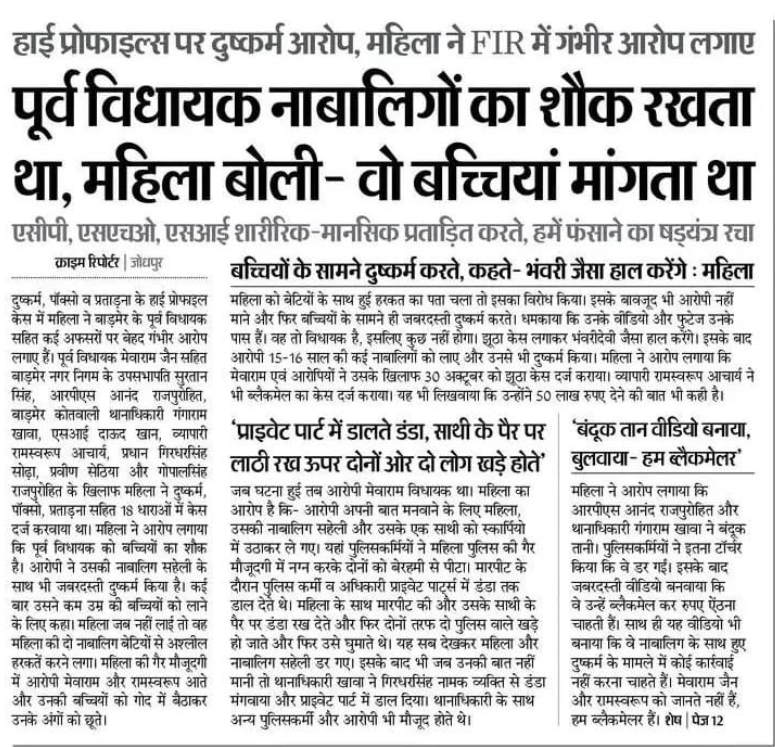
Accused police officers inserted a stick in my private part to force us to comply with the former Congress MLA’s demands: victim states in the FIR

Recalling how she and her minor friend were brutalised on the former Congress MLA’s orders, the victim described how they were once brought to a police station, stripped naked, and beaten by male police officials, further exposing how the state police worked hand in glove with the former Congress MLA.

According to the victim, the police, in their effort to threaten and intimidate them to comply with the demands of the Congress leader, inserted sticks in her private parts. She recalled how the male officers placed a stick between both the legs of her minor friend and had two officers stand on either side to torture her. Even after all of this, when they refused to give in to their demands, Barmer SHO Gangaram Khawa asked Pradhan Girdhari Singh Sodha to get him a stick which he inserted in her private part, she alleged, adding that this happened in the presence of the Congress MLA and other accused officers.

Image credit: X user @MrSinha_

Forced us to lie on camera while holding a gun to our head: Victim makes some other serious allegations against the former Rajasthan Congress MLA and accused police officers

Anand Singh Rajpurohit, the RPS officer, and Barmer SHO Gangaram Khawa, according to the victim, put a gun to her head and demanded that she record a video in which she was made to take full responsibility and clear the Congress MLA of any wrongdoing. She was made to acknowledge on camera that she was a blackmailer and extortionist and was blackmailing the Congress MLA and his aides. She was also asked to admit that she did not know Congress MLA Mevaram Jain or RPS officer Anand Singh Rajpurohit personally. She was asked to acknowledge in front of the camera that she had no desire to pursue any case for the molestation of her minor daughter.

Who is Mevaram Jain?

Mevaram Jain was elected as the MLA from the Barmer constituency on a Congress ticket three times. He, however, lost the last election to BJP rebel Priyanka Choudhary. 

Over a year back, some explicit pictures/CD of Jain had surfaced, which Jain had claimed to be doctored, and he filed a case at the Kotwali Police Station in Barmer. He accused the editor and two reporters of a local newspaper of blackmailing him with a threat to make the CD public. In his complaint, the Congress leader had alleged that the three scribes were demanding Rs 10 from him in exchange for the CD.

The zonal unit of the Enforcement Directorate, Jaipur, has registered a case of the Prevention of Money Laundering Act (PMLA) in connection with this case after it was learnt that an exchange of Rs 5 crore had allegedly taken place in this case.

Mevaram Jain was also involved in a money laundering case. ED had registered a case against him.

Meanwhile, on Friday, December 22, the Rajasthan High Court, in the alleged rape case, granted a stay on the former Congress MLA’s arrest. The hearing, which took place in court number 6 on Friday, concluded with the decision to halt Jain’s arrest in connection with the charges of rape and engaging in obscene acts with a minor girl.

Reuters finds ‘Dara Hua Musalman’ in Ayodhya as city prepares to hold grand consecration event

“Like many other Muslims, Indian tailor Safi Mohammad plans to send his wife and two sons away before thousands of pilgrims arrive at his hometown of Ayodhya next months for the inauguration of one of Hinduism’s most sacred temples,” this is the opening line of an article published by Reuters dated 20th December 2023

It is indeed a talent, nay, an art to be able to victimise Muslims on grounds of imaginary fears, to project the natural existence of Hindus as the problem itself and to hold the faith of Hindus responsible for the imaginary problem, all in one sentence. Reuters has found “Dara Hua Musalman” in Ayodhya a month before the city will witness the much-awaited grand inauguration of Bhavya Ram Mandir.

Albeit, truth is stranger than fiction. Hell, if Reuters can base an article on imaginary fears, I can surely take the liberty to tweak this phrase to say that ‘truth is more inconvenient than fiction’, especially if you look at it from the eyes of the Muslim voices quoted in the Reuters report.

Because the truth is that no such threat to Muslims exists anywhere in India for that matter, let alone in Ayodhya, particularly not from Hindus. The Ram Mandir that Reuters is demonising is coming into existence after a civilisational battle of at least 4 centuries, right from the day the Mandir was demolished by tyrannical Babur to create the Babri mosque in its place.

In order to revive their place of worship of the revered Bhagwan Shri Ram, all that Hindus have resorted to is people-led social movements, political movements and legal battles.

Anyone who can tell right from wrong, irrespective of which religion they belong to, will see that the existence of Babri masjid symbolised the tyranny of Jihadi, Islamist Mughal rule over Hindus. Anyone with an iota of consciousness would agree that such a symbol must be destroyed.

Another sentence from the Reuters report reads, “The temple, built on a site Hindus believe to be the birthplace of Lord Ram and where a Mughal-era mosque once stood, stirs bitter memories for Mohammad.” Then again, this is where truth becomes inconvenient.

Bitter memories why? Because of the destruction of Babri mosque by Kar Sevaks on 6th December 1992, the report implies. The demolition of the symbol of tyranny – a past that haunts and hurts Hindus to this day – saddens the Muslims, as Reuters tries to say in cleverly weaved words.

Of course, why should they mention the brutal, cold-bloodied murder of Hindus (Kar Sevaks) at the same spot by the administration in 1990, just two years ago? And why should they mention that years before the Babri demolition, a mere rumour of the demolition had sparked a violent and savage outrage in Bangladesh leading to the rape and butchering of Hindus there?

For Reuters to mention this in their report, it would perhaps take conversion of Hindus into an abrahamic religion, preferably Islam given by their tone.

The article also says that the demolition of Babri masjid sparked religious riots across the country “that killed nearly 2,000 people, most of them Muslims. The dead included his (Mohammad) uncle.”

Without citing any data, Reuters establishes that most of the victims in these communal riots, which mean both sides were involved, were Muslims. At this point, the article establishes how the Ram Mandir of Hindus is responsible for the death of Muslims.

What is the grounds for Mohammad’s fear as quoted in Reuters? That “anything can happen anytime.” Every year, billions and billions of Hindus celebrate Diwali marking the homecoming of Shri Ram. It is peaceful, it makes headlines and is celebrate by world leaders. Nothing happens to Muslims in Ayodhya, in India.

On 9 November 2019, the Supreme Court announced the verdict handing over the land to Hindus for Ram Mandir, Hindus in their Hindu majority country celebrated peacefully, in fact, with restraint. Nothing happened to Muslims in Ayodhya, in India.

On 5th August 2020, PM Modi performed the Bhoomi Pujan of the land to mark the beginning of the construction of Ram Mandir. Hindus celebrated across the country and beyond. Nothing happened to Muslims in Ayodhya, in India.

It has been four years to the SC verdict, the temple is scheduled to be inaugurated on 22nd January 2024. The event is being discussed in great detail across the nation. Every Hindu in India and beyond is doing their bit to contribute to the divine inauguration. NOTHING has happened to Muslims in Ayodhya, in India.

So let me tell you what exactly has happened to Muslims since the verdict and what will happen to Muslims after the Mandir inauguration in Ayodhya and India at large.

Ayodhya has been thronged with tourists since the construction of the Ram Mandir began. In 2021, 1.57 crore tourists had visited the holy city. This number rose to more than 2.39 crore domestic tourists in 2022 and 1,465 foreign tourists.

This brings numbers of visitors to nearly 4 crore in 2021-22. Reports said this figure is estimated to touch 8 to 10 crores after the temple opens in January 2024. As per reports, the tourist footfall expected in Ayodhya by 2051 is a staggering three lakh people per day.

More pilgrims to Ayodhya Ram Mandir means more tourists to Ayodhya which further means more business for the city. The Ayodhya International Airport is soon to be open to travelers.

Vande Bharat trains will now also connect Ayodhya to the national capital, Varanasi and to Sitamarhi in Bihar. This circuit connecting through the Vande Bharat makes journey for pilgrims to the revered cities easier in terms of time and money too.

Another key highlight is the Ramayana Circuit (or Ram Circuit) which aims to connect major pilgrim sites in India and Nepal linked to the Ramayana.

A Mumbai-based real estate company The House of Abhinandan Lodha has invested nearly ₹300 crore in acquiring a 25-acre land parcel in Ayodhya and has laid out a plan to launch a plotted development project in January 2024.

CP Kukreja Architects and L&T submitted their master blueprint plan for Ayodhya in January 2022. The firms have identified more than 40 tourism spots and development of the same is being done in phases.

Add to that a solar city near the Saryu River, ferries, luxury river cruise, houseboats are only some of the many tourism-boosters to attract visitors and pilgrims alike. All this made possible with one grand Hindu temple.

This is what Muslims in Ayodhya are going to face; large-scale, unprecedented development all because of a temple. Reuters seems to know this too, but that’s not the line it wants to take.

After establishing just how much “fear” the Ram Mandir inauguration and Hindu visitors has created among Muslims, the article hails boost to economy under Modi government, believe it or not.

“Even as some of the residents around the temple expressed apprehension, several Ayodhya Muslims said there had not been any major violence under the government of Prime Minister Narendra Modi’s Bharatiya Janata Party (BJP), which also rules Uttar Pradesh, adding that the boost to the local economy from the pilgrims would help them too,” the Reuters report states.

There is no reading between the lines here. It is typical of the ecosystem to spin a narrative to make Muslims look like the victims at the hands of Hindus and the Hindu faith while they take advantage of the economic prospects brought about by this very faith they are demonising.

Talk about bake the cake and eat it too.

As a Hindu, it does make one wonder how exactly the thousands and lakhs of Hindu families that have been the victims of Islamist Jihad and terrorism are safe living amongst Islamists as the fear still very much looms over them.

The family of Kanhaiya Lal, whose throat was slit open by Islamists in Udaipur, which is still awaiting justice. His sons and wife cannot step out of the house without police security to this date. Kanhaiya Lal was also betrayed by a Muslim neighbour. Life in the area where the bereaved family lives has not been the same for any Hindu ever since Kanhaiya Lal was murdered by two Islamists for posting in support of Nupur Sharma.

Every single Hindu festival, right from Ram Navami to Durga Puja, has been attacked across cities for bigotted reasons like the procession was passing by a mosque, Muslims were being teased. Stones have been pelted at Hindu processions, public property vandalised.

Yet, when you ask Reuters, it is the Muslim in Ayodhya who feels threatened because of an imaginary threat perception in their minds against ‘kafir’ Hindus.

It is clear more than ever that such reportage by the likes of Reuters are attempts at obstructing the rare historic milestone of Ram Mandir that is being celebrate by Hndus. The ‘dara hua musalman’ rhetoric helps the sinister ecosystem

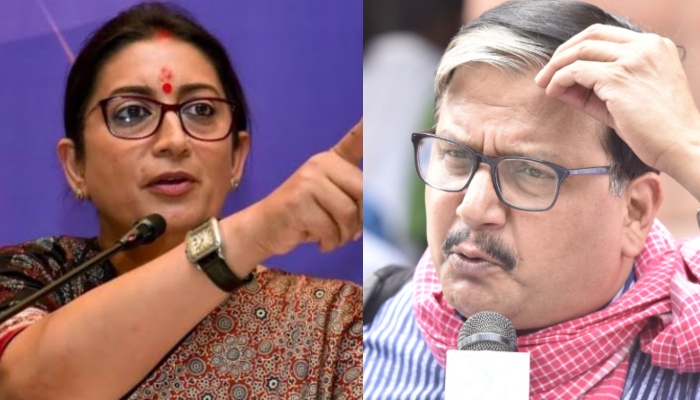
‘Which gay man without a uterus has a menstrual cycle?’ Smriti Irani to RJD MP Manoj Jha’s question on menstrual hygiene for the LGBTQIA community

On Thursday (21st December), Union Minister for Women and Child Development Smriti Irani clarified why she opposed the idea of allowing paid leaves to women during their periods. She said that she opposed the Menstrual Hygiene Policy in the Indian Parliament as she did not want women to face discrimination and harassment in the workplace over it.

Irani stated in Parliament earlier this month that menstruation is not a “handicap” and does not warrant a specific policy for “paid leave.” In an exclusive interview with ANI, Irani on Thursday (21st December) stated that the questions asked by several male ministers did not seek answers. “I could’ve said much more on the issue but I didn’t because the gentleman who asked the question never intended to find a solution for women,” she said while in conversation with ANI Editor Smita Prakash.

The Minister also said that she spoke in Parliament after suffering from personal experiences and didn’t want any other woman to face discrimination or harassment at the place of work. She said that for a woman to have such leaves, she’ll have first to inform her employers and HR that she is on her period. “Why should women be forced to publicize their period?” Irani asked.

“Now imagine a scenario in a private sector, okay, where if somebody has to implement it, your HR guy has to know, your accounts guy has to know. Why should a woman’s menstrual cycle be known to an employer? Imagine if it’s a single woman who chooses not to take those leaves that are so-called proposed to be granted. Can you imagine the harassment that women will have to face, especially on the work floor, right? Can you imagine we are saying more and more women have to come and join the workforce, especially on factory floors, and corporate houses? Imagine a floor with 20,000 women. Yeah, so we are creating new barriers for discrimination,” Irani was quoted as saying in the video.

The issue of providing paid leaves to working women on their periods was discussed in the Indian Parliament last week when the Union Minister for Women and Child Development Smriti Irani opposed the idea saying that being on a period was not a ‘handicap’ situation and that there was no need for women to have paid leaves.

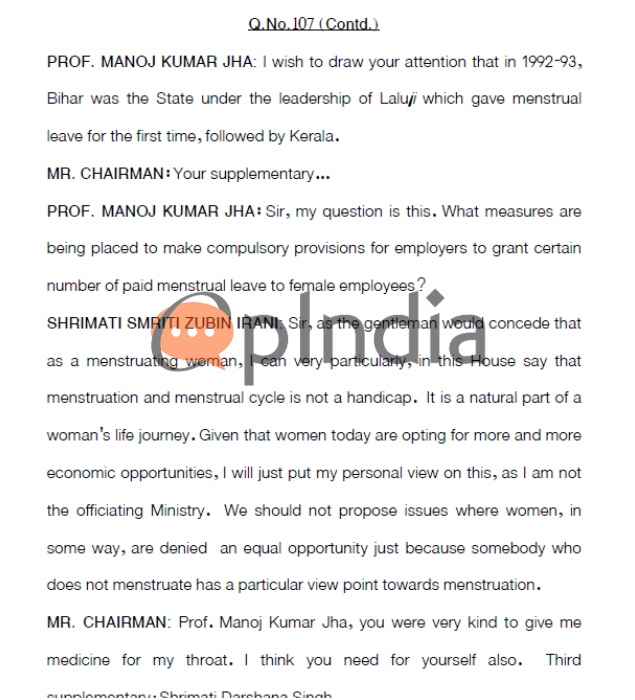
The opinion was then opposed by Minister Manoj Kumar Jha who questioned during the question and answer session asking, “What measures are being placed to make compulsory provisions for employers to grant a certain number of paid menstrual leave to female employees?”

To this, Irani then reiterated her point saying that period was not a ‘handicap’. “I can very particularly, in this House say that menstruation and menstrual cycle is not a handicap. It is a natural part of a woman’s life journey. Given that women today are opting for more and more economic opportunities, I will just put my personal view on this, as I am not the officiating Ministry. We should not propose issues where women, in some way, are denied an equal opportunity just because somebody who does not menstruate has a particular viewpoint towards menstruation,” she had said.

Parliament document obtained by OpIndia

Jha also claimed that in 1992-93, Bihar was the State under the leadership of Laluji which gave menstrual leave for the first time, followed by Kerala. However, during the interview with ANI, Irani said that it was not true and that no private sector had implemented or was asked to implement such a policy.

“The chair can pull him up for lying or insinuating, representing okay. But what measures are in place to make it compulsory for employers to grant leave? So Bihar may have, in 1992, a policy for paid leave for women in government, but does not have it in the private sector,” she said.

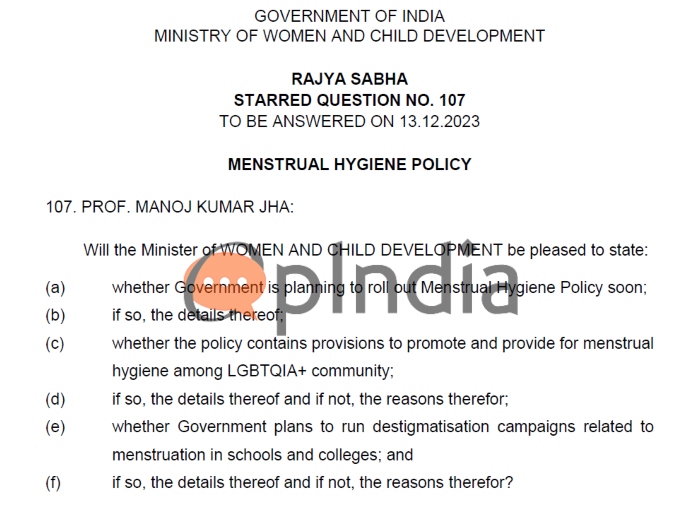
Irani also said that Jha never intended to find a solution for women. “Jha ji as part of the list of questions for oral answers asked me about measures for menstrual hygiene for LGBTQIA plus community. Now tell me, the LGBTQIA community that The Honorable member wanted a response for, which gay man without a uterus has a menstrual cycle?” she pondered.

Minister Manoj Kumar Jha placed the question as part of a list of questions for oral answers to be sought at a Rajya Sabha meeting on 13th December.

Rajyasabha document obtained by OpIndia

Irani emphasized part ‘C’ on the list of questions, saying that the question about promoting or providing a menstrual hygiene plan for gay men was meant to shock, provoke, or attract attention.

In her reply to the question, Irani on 13th December had said that it is imperative to create a congenial ecosystem for not only ensuring menstrual hygiene for all menstruating persons in the country but also to educate and sensitize the men and boys on this issue.

Conclusion

Though the times have changed and the societies in India have become moderate, things don’t seem to have changed for women. Even today, several girls are victims of molestation, sexual harassment, and abuse, especially at their workplaces. Also, they are made to feel different at their workplaces due to their demands for equity in opportunities.

In such a scenario, women additionally asking for paid leave for 4 days a month might hamper their professional growth and also portray a wrong picture in the minds of the professionals and other male employees. Companies might soon start avoiding hiring women on crucial projects or even stop hiring them into jobs due to the leave policy. Then the capabilities of the women employees in question would not matter.

Also, though India is adopting the modern way of life, it is very difficult for women to disclose their daily cycles to society. Ask a woman! Minister Irani has to be praised when she says, “Why should a woman’s menstrual cycle be known to an employer?” Menstruation is purely biological and it gives several indications of the well-being of a woman’s body. If the personal dates of the cycle of women are laid out in the open several judgements can easily be made by the society-leading to sexual harassment or abuse.

Menstruation and its associated activities are shrouded in silence frequently treated with shame, and associated with social taboos that limit menstruating people’s mobility, freedom, and access to normal activities. It becomes even more sensitive when a menstruating person is unaware of the emotional and physical changes she goes through while experiencing her menstrual cycle for the initial time. In these cases, women or young girls might find it more difficult to have access to those leaves even if they are very graciously provided by the government in another parallel world.

Instead of providing leaves, what society (especially men, and boys) can do easily is treat women like normal creatures and understand to the core that period is ‘normal’ and is just a biological process. Making girls, and women feel indifferent, and respecting them throughout is what is going to help women grow more. Period leave or any such policy-making women feel different from others won’t help at all.

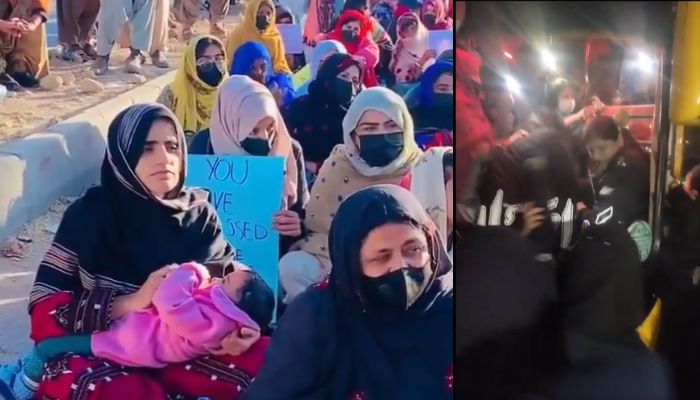
Pakistan: Baloch people storm Islamabad to protest against ongoing genocide and extra-judicial killings, police resort to harassment and torture

The Islamabad Police have released the detained women protesters after enduring 26 hours of alleged humiliation, harassment, and torture on the 28th day of the movement against the Baloch Genocide.

The Baloch Yakjahti Committee took to social media to share the distressing experience faced by the detained women while urging the Baloch nation to persist in their protests against the treatment of protesters in Islamabad.

Despite the release of the female activists, concerns linger as more than 200 male associates remain in custody. Reportedly, 162 of them have been shifted to Adiala Jail, while over 50 others are detained in various police stations across Islamabad.

The Baloch Yakjahti Committee expressed its determination to continue the movement against Baloch Genocide and extra-judicial abductions. “We shall continue our movement against Baloch Genocide and the extra-judicial abductions. The next step would be announced tomorrow through social media, stay tuned,” the Baloch Yakjahti Committee declared in a social media post.

The Long March, organised by the Baloch Yakjahti Committee, initially began as a protest against the Baloch genocide, triggered by the extrajudicial murder of four young Baloch individuals in district Kech. The march traversed various districts of Balochistan and Punjab, encountering severe brutality upon reaching Islamabad.

The Baloch Human Rights Council expressed deep concern over the “inhuman and brutal response” of the Islamabad police and the interim government. The council condemned the actions of the police, accusing them of beating and arresting Baloch activists, as well as targeting elderly men, women, and children participating in the march.

“These individuals seek justice for their loved ones who have been forcibly disappeared from different parts of Pakistan,” the Baloch Human Rights Council stated in a social media post. The council called for a condemnation of the use of brute force and urged the Pakistani authorities to uphold their pledge to respect human rights instruments.

“Instead of resorting to the use of brute force, the authorities in Pakistan should uphold their pledge to respect the human rights instruments they are signatories to, thereby ensuring justice for the victims and holding accountable those responsible for crimes against the Baloch,” the council added on X.

(This news report is published from a syndicated feed. Except for the headline, the content has not been written or edited by OpIndia staff)