Home Blog Page 18

Who is Meera Thakur: Arrested by Ghaziabad police for installing CCTV at sensitive sites, linked to Pakistan spy network, earlier released on humanitarian grounds by Delhi court – Read details

In a major espionage bust, the Kaushambi police in Ghaziabad, Uttar Pradesh, have arrested a woman identified as Meera Thakur, a resident of Mathura, for her role in a Pakistan-linked spy network. Notably, she was earlier arrested by the Special Cell of Delhi Police in an illegal arms and fake currency case, but later released on humanitarian grounds. The present case involved installing CCTV cameras at sensitive locations, sharing critical site data, and links to illegal arms supply, which has raised serious national security concerns.

Ghaziabad police bust espionage network

The Kaushambi police have exposed the espionage network and arrested Meera Thakur along with 17 others, including a minor. According to police, the accused were connected to a Pakistan-based handler identified as Sarfaraz alias Sardar.

Speaking to media, Deputy Commissioner of Police, Trans Hindan, Dhawal Jaiswal, said that the arrests were made following specific intelligence inputs. The arrests have been made across Ghaziabad and nearby districts.

Posed as e-rickshaw driver, key operative in network

Investigations revealed that Meera operated under the guise of an e-rickshaw driver in Mathura. Media reports suggested that this was merely a front, as she played a central role in the espionage network.

Her name reportedly figured at the top of the supply network list, and she acted as a crucial link connecting different operatives. She was part of a core group where the Pakistani handler directly communicated through video calls and secret applications, assigning tasks in return for payments.

CCTV installations, religious sites targeted, use of minors

The network was tasked with collecting and sharing sensitive information, including photographs and location details of major religious sites and key institutions.

The accused were also assigned to install CCTV systems at high-value locations such as railway stations. Sources said that details of places like Khatu Shyam were shared. Women and minors were deliberately used for reconnaissance activities to avoid suspicion.

Linked to illegal arms supply, Delhi case and bail details

Police sources stated that Meera had direct links with illegal arms dealers and supplied weapons to criminals across Delhi NCR. She had contact with multiple dealers and maintained a network ranging from gangsters to local offenders.

She was earlier arrested by the Delhi Police Special Cell in an illegal arms trafficking case. During that operation, multiple accused were held and weapons, cartridges and counterfeit currency were recovered. The cartel used coded social media messages to procure weapons from Madhya Pradesh and distribute them across northern states.

In July 2025, Meera was arrested from her Mathura residence, where five live cartridges were recovered, forming the basis of a separate Arms Act case. Based on the information she provided, another operative, Shamsu Khan, was arrested. Police recovered pistols and fake currency from his possession. Earlier, Kuldeep, Ravi and Yogesh were arrested as part of the cartel.

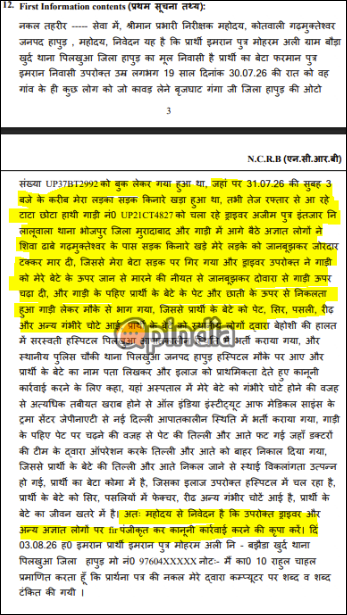
According to court documents accessed by OpIndia, in September 2025, the Patiala House Court, New Delhi, granted her bail on humanitarian grounds, noting that she is the mother of two minor children who depend on her care and that prolonged custody would adversely affect their well-being.

Source: Patiala House Court, Delhi

While she was released on humanitarian grounds, Meera appeared to have continued her activities and used that opportunity to spy for Pakistan.

Digital evidence and reconnaissance across states

According to media reports, over 100 videos and photographs of various locations have been recovered from her mobile phone. These materials are being analysed to assess the extent of surveillance carried out by her. Other accused, including Naushad, were involved in travelling across states to conduct reconnaissance. Communication within the network took place through encrypted or secret apps.

Personal life, isolation and past links

Meera Thakur is originally from Agra and was living in Mathura’s Aurangabad area. She had purchased a house around eight years ago and lived separately from her family. Her husband, Mukesh, a halwai by profession, reportedly separated from her around two years ago.

She has two daughters and was known to keep minimal contact with neighbours, maintaining a low profile. Investigations have also revealed that she was previously associated with Rahul alias Shamsu Khan, an alleged arms and fake currency trafficker, and became involved in illegal activities after coming into contact with him.

Police action and ongoing probe

Meera has been booked under provisions of the Official Secrets Act, Arms Act and relevant sections of law related to sedition and national security.

Health Insurance: How much sum insured is enough for a family in 2026?

0

When discussing health insurance in India, most people still consider ₹5 lakh to be enough. This amount would have been sufficient a few years ago. However, in today’s time, when the costs of medical procedures are skyrocketing, and medical inflation is increasing manifold, a single hospitalisation can result in a medical bill of lakhs, casting doubt on this coverage amount. In a health insurance plan that covers multiple family members, this question becomes even more critical. 

So, the question remains: what sum insured is enough for a family in 2026?

Is ₹5 lakh Health Insurance enough for a family in 2026?

A medical emergency not only impacts a family financially, but it is also emotionally draining. In an emotional situation where your family member is in a lot of physical pain, getting an unexpected bill for an enormous amount is the last thing one wants.

Families often underestimate the costs associated with a hospitalization or medical procedure, which can create a gap between the expected and the actual medical bill. If a person has bought health insurance per the undervalued calculation, their coverage won’t suffice. Without insurance, the family will have to incur the medical bill as out-of-pocket expenses.

For instance, a knee replacement surgery in a metropolitan city can go up to 4 lakh or even 6 lakh. And this is just the surgery cost; there are other hospitalization costs too. If you have coverage of only up to 5 lakh, a single surgery can either exhaust the sum insured or reduce it leaving the remaining balance insufficient for other family members’ coverage.If health insurance coverage falls short, the family can lose all their savings in one go.

Moreover, medical inflation in India is approximately 12-15%, which is 3X the general inflation rate. This implies that the treatment that costs ₹3 lakh today will double to ₹6 lakh in nearly 7 years only, i.e., less than even a decade. 

This implies that in the near future, a coverage of ₹5 lakh will be insufficient to cover the medical expenses of even an individual. Hence, choosing the right sum insured for health insurance for your family is important to protect your hard-earned savings.

How to approach Family Health Insurance?

A family health insurance plan is a floater mediclaim policy that covers multiple members under a single plan. This means that all covered members share the same sum insured and the same common benefits. Usually, these plans cover the proposer, their spouse and children. Some plans also extend coverage to the dependent parents, grandparents or other family members.

If you want to buy a family health insurance plan, the right approach is to evaluate the health risk parameters of each individual you want to insure under the plan. The ideal coverage should be based on family size and individual healthcare requirements. 

Consider coverage benefits, waiting periods, the number of network hospitals, NCB and other additional benefits. Geographical location and preferred hospital type affect treatment costs and should be considered when calculating the ideal coverage amount.

The premium for a family health insurance plan is usually lower than the sum of the premiums for individual policies bought separately for each member. You can compare health insurance plans for family on online portals, like Policybazaar.com, which allows easy comparison of different plans on a single window.

How much sum insured is enough for a family in 2026?

The sum insured for a family health insurance plan depends on various factors. 

  • For a family in a metropolitan city, a minimum of ₹15-30 lakh is recommended, depending on the family size and the health conditions of the members to be insured.
  • If senior citizens are included in a family floater plan, the coverage amount should be anywhere between ₹25-50 lakh.
  • For a family in tier 2/3 cities, at least ₹10-15 lakh coverage is needed.

Disclaimer: These are indicative figures. The reader is advised to assess their health conditions and consider the factors important to them to determine the exact sum insured they should opt for.

It is also important that families review and upgrade their health insurance plans from time to time so that their coverage amount does not fall short. You can also opt for super top-up health insurance plans alongside the base policy to expand your coverage with a slight increase in premium.

In conclusion, a health insurance plan for a family is a practical way to cover more members under a single policy. Considering the rising medical treatment costs and preventive healthcare expenses, families must choose a sum insured that is optimal for medical needs, not just today, but also in the near future.

Akhilesh Yadav and other ‘seculars’ outrage over Atiq Ahmed’s Pakistani link shown in Dhurandhar 2: Read how the Left-Liberal ecosystem hails and hates movies based on their politics

Aditya Dhar’s “Dhurandhar: The Revenge,” in addition to setting box-office on fire, appears to be shattering the meticulously crafted image and dismantling the false narratives peddled by the opposition and its Islamo-leftist ecosystem. As a result, potshots being taken by them to discredit the events depicted in the film, either as fiction or as a calculated endeavour to defame a specific community or a political party.

A controversy has currently arisen concerning the portrayal of late mafia-turned-politician Atiq Ahmed, who has been shown participating in a plot to establish a Pakistan-backed government in Uttar Pradesh with the backing of Lashkar-e-Taiba (LeT) and Inter-Services Intelligence (ISI).

‘Dhurandhar: The Revenge’ has a character named Atif Ahmed who resembles the late mafia turned politician in looks as well as in criminal activities.

Ahmed became a member of All India Majlis-e-Ittehadul Muslimeen (AIMIM) during the later years of his life, having previously held significant influence within the Samajwadi Party for an extended duration, and was even elected to the Lok Sabha on its ticket.

Consequently, his representation in the film has angered the party and its chief Akhilesh Yadav, who asserted that the Bharatiya Janata Party (BJP) is investing in propaganda that tarnish the reputation of other political entities. “I believe they possess substantial financial resources, as they are also allocating funds for movie releases,” he accused during a party event in Lucknow.

“The Bharatiya Janata Party operates a mechanism that generates films based on its invented tales. Through these cinematic works, there is an effort to forge a particular image among the citizens,” argued Rajeev Rai, a member of the parliament from SP. Former MP and another party leader, ST Hasan, stated that no Indian investigation agency reported such a relation between Ahmed and ISI.

The Islamo-leftist rapidly mobilised to contest the plot lines in the spy-thriller. “According to Dhurandhar 2, Atiq Ahmed was a Pakistani agent and a terrorist. Then why tributes were offered to him in the Parliament by the Prime Minister and the Home Minister,” a Rashtriya Janata Dal (RJD) supporter asked.

Another member of this faction alleged the same, adding that only the filmmaker seemed to be cognisant of the links between Ahmed and Pakistan.

The claim was reiterated once more when a Muslim account charged that Dhar does not want to conceal his motives as he openly “slapped the ISI on Ahmed link with dramatic music” for his propaganda.

It is noteworthy that Atiq was named alongside other deceased parliamentarians by Lok Sabha Speaker Om Birla because he was a former member of the house. This is merely a part of the democratic tradition that neither absolved him of his crimes nor disregarded them.

Was there a relationship between the notorious mobster and the Islamic Republic

A First Information Report (FIR) indicated that Ahmed himself confessed to having associations with India’s hostile neighbour. “The ISI, using drones, used to drop weapons in Punjab, and someone linked to the ISI used to collect these arms and send some of them to LeT, some to Khalistan separatist organisations and some weapons like .45 bore pistol, AK-47 and RDX were made available to me and I paid for the same,” he disclosed to the authorities.

He unveiled, “People belonging to these groups came to my place and information gathered from their conversations suggested that they wanted to cause a major incident in the country.” Police expressed that the statement was documented on court orders.

Ahmed further accepted that he was familiar with the locations of some of these people affiliated with LeT and ISI while his brother knew details of others. He even admitted to the killing of Umesh Pal and the two officers with the weapons procured from across the border. “I know the sites where the weapons have been kept. They do not have house numbers. If you take me and my brother together, we can identify these places,” he mentioned.

“There should be no doubt about this. When Atiq Ahmed was alive, his gang was listed as IS-277 (Interstate-277). In his confessional statements, he admitted that weapons, including .45 calibre pistols, AK-47s and RDX, were brought to him via drones from Pakistan and reached Punjab. Through his contacts, he also had connections with Lashkar-e-Taiba and the ISI,” outlined, former Director General of Police (DGP) Uttar Pradesh, Vikram Singh.

“The truth is harsh. When movies were made with Dawood Ibrahim’s money, it was ok, now that movies are being made about him, people are feeling pain, because truth is always bitter. On the question of Atiq Ahmed, he was a gangster. He was an MP but was also a gangster. The whole world knows that he received illegal weapons, and his links with Pakistan are known to the world. What has been shown is based on the truth. Our own leaders were involved in fake currency racket,” former Jammu and Kashmir DGP, Shesh Paul Vaid, provided a similar response.

Atiq Ahmed’s criminal empire and the political patronage

The gangster who was shot dead in 2003 had been instilling fear in the state for many years, even during his incarceration, until the Yogi government eventually terminated his reign of terror and ended the patronage he enjoyed under the previous administrations.

He was the first person in Uttar Pradesh to be charged under the “Gangster Act.” He had an extensive criminal past. He was charged of murder at the age of 17. Afterwards, he rose to such prominence in the underworld that his fame even eclipsed that of Mumbai’s dons. He was booked for 102 offences, including kidnapping, murder and threats. The Gangster Act was brought up three times against.

Ahmed, the primary accused in the Raju Pal and Umesh Pal murder cases, even made an attempt on the life of Kumari Mayawati, the head of the Bahujan Samaj Party and former chief minister of Uttar Pradesh, during the infamous “Guest House” scandal of 1995.

According to OP Singh, the former DGP of the Uttar Pradesh, he had the opportunity to obliterate Ahmed’s tyranny long ago, but political pressure prevented him. The top cop conveyed that as the Superintendent of Police (SP) City of Prayagraj (then Allahabad) he and a group of police officers raided his lair in 1989 and 1990 in response to a formal complaint against him.

Thousands of Ahmed’s supporters had surrounded the police squad. Singh stated that the mob was prepared to open fire had he not warned them that they, alongside their leader, would be gunned down if even one bullet was released from their side. He emphasised that political pressure forced his team to return without making any arrests, despite his desire to nab Ahmed and his group there.

He noted that things would not have escalated to such a mess if the latter had been captured that day. Interestingly, late Mulayam Singh Yadav was the chief minister of the state at the time.

However, the prison bars did not pose a barrier for the mobster, as he managed his criminal empire even while incarcerated as illustrated in the movie, continuing to torment those who dared to oppose him and his atrocities. Ahmed’s criminal empire was finally dismantled under the Yogi rule.

When the actual disinformation was hailed as truth: Article 15

In 2019, Director Anubhav Sinha released “Article 15” featuring Ayushmann Khurrana. The film garnered rave reviews from the liberal cabal for its storyline and its portrait of a “Casteist” Hindu society. However, the Bollywood venture, which was purported to be based on the actual events of the Badaun case, took significant liberties with the truth to paint the upper caste as villains, ignoring the fact that all 5 arrested accused in the case were Yadavs.

The tragedy had received extensive coverage in both domestic and foreign media, which embarrassed the Akhilesh Yadav government and was perceived as an instance of upper-caste brutality against Dalits.

However, Pappu Yadav, Avadhesh Yadav, Urvesh Yadav, Chhatrapal Yadav and Sarvesh Yadav were found to be the accused. Moreover, the police department was slammed for being lenient with the guilty, due to pressure from the ruling party, which backed the Yadavs, leading to demands for a Central Bureau of Investigation (CBI) inquiry. In 2014, the CBI too concluded that the sisters in Badaun had committed suicide and gave a clean chit to the accused. In 2015, a special POCSO court rejected the CBI’s report.

On the other hand, Sinha, rather than adhering to the facts, exploited the case to transform it into a movie that aligns with his political agenda. The unseen Brahmin “Mahantji,” possibly a jab at Yogi Adityanath was described as the all-powerful source of evil in the movie which predominantly stressed that “upper castes,” and the aforementioned community are the exclusive originators of all violent actions.

The opposition and their left-liberal endorsers are only interested in distorting the truth to achieve their aims. The so-called artistic expressions, including the films they have supported, have been delivering misinformation and fabrications to the public under the pretence of “true events.” It is a platform for them to advance their agenda and gloss over the dreadful history of their beloved figures.

Thus, when Dhurandhar exposed the irrefutable reality that they labour so hard to obscure, it is hardly surprising that they choose to reject it. However, unfortunately for them, facts do not care about their offended feelings.

What is Corporate Laws (Amendment) Bill, 2026, and how will it impact startups, MSMEs, and corporate compliance in India

On 23rd March, Finance Minister Nirmala Sitharaman introduced the Corporate Laws (Amendment) Bill, 2026, in the Lok Sabha in a fresh push to simplify business regulations. The House adopted a motion to refer the bill to a Joint Parliamentary Committee (JPC) for detailed examination. The move is part of the government’s ongoing efforts to ease rules governing businesses in India.

According to the media reports, the bill will focus on making corporate rules more practical and less stressful for businesses, especially startups and small firms. The Union Cabinet had already cleared the bill earlier this month on 10th March, paving the way for its introduction in Parliament.

Changes to the Companies Act and LLP Framework

The new bill proposes amendments to two key laws that govern businesses in India, the Companies Act, 2013 and the Limited Liability Partnership Act, 2008. The Companies Act outlines how companies should be formed, run, and closed. The Limited Liability Partnership Act allows businesses to incorporate a new kind of company in which partners have limited liability.

By updating these laws, the government wants to make business operations smoother and reduce unnecessary legal complications. The focus is clearly on making India more business-friendly while also ensuring basic transparency and accountability.

Focus on ease of doing business 

One of the biggest highlights of this bill is that there are plans to decriminalise several minor offences. This means that instead of companies being penalised criminally for minor offences such as procedural errors, they will only have to pay a fine. This will help to reduce the legal risks for entrepreneurs who will be encouraged to do business without fear of severe punishment for minor offences.

The bill will “propose several changes for ease of compliance, including decriminalisation of several provisions, regulatory ease for small firms, startups, and producer companies.” Producer companies are companies that are formed by farmers and people who are engaged in agricultural, fishing, and related industries. These companies are expected to benefit from this bill.

The bill will also try to simplify the compliance process. This could mean that there will be fewer forms to fill out, fewer procedures to be followed for routine processes such as annual compliance, or other such changes. This will help to reduce the amount of paperwork that companies have to go through and make the system more efficient.

Based on expert recommendations 

The proposed changes are largely based on suggestions made by the Company Law Committee (CLC), which was set up by the government to review corporate laws. The committee, formed in 2019, included experts from different fields such as banking, law, and industry.

The CLC had recommended several practical changes, such as allowing companies to communicate with shareholders electronically, making it easier for struggling companies to raise funds, and permitting general meetings in virtual or hybrid formats. It also suggested strengthening regulatory bodies like the National Financial Reporting Authority (NFRA).

For LLPs, the committee focused on easing rules for small producer organisations, including those run by farmers, fishermen, and artisans.

These recommendations were later reviewed by a high-level panel on regulatory reforms, chaired by Rajiv Gauba. In her earlier budget speech, Sitharaman had said the goal was to “strengthen trust-based economic governance” and improve ease of doing business by reducing excessive inspections and compliance requirements.

Link with wider economic reforms

The bill also forms a part of a larger effort to improve the business environment of India. At the same time, the government has also initiated several changes to the Insolvency and Bankruptcy Code with a Parliamentary Committee chaired by Bharatiya Janata Party MP Baijayant Panda. 

Some of the latest recommendations made regarding the bill include:

• Stricter timelines for resolving cases of bankruptcy

• More power for lenders through the Committee of Creditors (CoC)

• The introduction of a system of cross-border insolvency, which will help companies with international operations

Proposed changes to CSR rules 

The government has also planned several important changes to the way Corporate Social Responsibility (CSR) works, which will come through changes made to the Companies Act.

One of the biggest changes that has been proposed includes a lowering of the financial threshold for companies that have to spend money on CSR. Currently, companies with a net profit of more than ₹5 crore have to spend at least 2% of their average profits earned over the last three years on corporate social responsibility activities. This amount may now be reduced to ₹3 crore. This means many more mid-sized companies will now come under the CSR rules for the first time.

Another key change is related to how CSR committees are formed within companies. The proposal says that at least one member of the committee should have proper experience in planning and handling CSR projects. This is being done to make sure that CSR work is taken seriously and not treated as just a formality.

Understanding the existing laws

The Companies Act, 2013, is the main law that governs corporate entities in India. It covers everything from company registration and management to financial reporting and closure. Over the years, this law has been amended multiple times, in 2015, 2017, 2019, and 2020, mainly to simplify compliance and reduce penalties.

On the other hand, the Limited Liability Partnership Act, 2008, offers a more flexible business model. Under the act, partners can run a business without being held liable for its losses up to a certain extent. This model has been more popular among small businesses and professional organisations.

Both laws have already seen reforms in the past, but the 2026 bill aims to further update them based on current business needs.

Key benefits of the Corporate Laws 2026

If passed, the Corporate Laws (Amendment) Bill, 2026, could bring real benefits for businesses across the country. Lower compliance costs, fewer legal hurdles, and simpler processes can make it easier for companies to grow and operate smoothly.

The new amendments can prove to be a boon for startups and small businesses, which might help remove the fear of facing penalties. It can also help boost investor sentiment as the new amendments focus on transparency and governance. And for the overall economy, a more business-friendly environment can attract investment and create jobs.

With the current economic conditions being unpredictable globally, the new bill can be a welcome move towards establishing India as a more reliable business destination.

War, pandemic or disaster: How supply shocks lead to hoarding, black marketing and inflation across the world

The ongoing conflict in West Asia has taken a sharper turn after strong warnings from Donald Trump. In a recent statement, he threatened direct military action against Iran’s power infrastructure if shipping through the strategically important Strait of Hormuz is not restored within 48 hours.

“If Iran doesn’t FULLY OPEN, WITHOUT THREAT, the Strait of Hormuz, within 48 HOURS from this exact point in time, the United States of America will hit and obliterate their various POWER PLANTS, STARTING WITH THE BIGGEST ONE FIRST,” Trump wrote, making it clear that the situation could escalate further. Iran, in response, warned that it would target US energy infrastructure in the region if its own facilities were attacked.

This standoff has begun to affect global markets. Oil prices have surged, stock markets have shown volatility, and shipping through the Strait of Hormuz, a route through which nearly one-fifth of the world’s oil passes, has slowed down significantly. Even before any direct large-scale confrontation, the economic ripple effects are clearly visible.

How the war began and why it matters globally 

The current crisis began on 28th February, when the United States and Israel launched coordinated strikes on Iran after weeks of tension and military buildup. The attacks targeted key military sites and leadership figures, including Iran’s Supreme Leader Ayatollah Ali Khamenei, who was killed in the strikes. His son, Mojtaba Khamenei, was later appointed as his successor.

Iran retaliated immediately, striking the military bases of the United States. At the same time, Israel escalated the attacks in Lebanon when the Lebanese militant group Hezbollah started firing rockets in support of Iran. This military strike started as a retaliatory action, but it seems the crisis is escalating into a full-blown regional crisis.

The crisis is also being felt beyond the military action. The closure of the Strait of Hormuz is affecting the world. This crisis has resulted in the release of oil from the International Energy Agency’s emergency oil reserves. This crisis is being felt even in nations that are far from the crisis area.

LPG shortage concerns and panic buying

In India, one of the most immediate concerns has been the disruption in LPG supplies. Since a large portion of India’s LPG imports passes through the Strait of Hormuz, any instability in the region directly affects domestic availability.

In the last few days, people from cities such as Delhi, Chennai, and Bengaluru have been complaining about the delay in the delivery of LPG cylinders. Long lines of people waiting outside the centres to collect their LPG cylinders and uncertainty over the timing of the refill have become the order of the day. This has led many households to look for alternatives.

One of the greatest changes is the sudden surge in the demand for induction stoves or electric cooktops. “We have seen a four times spike in the average weekly sales of induction cooktops,” said Rajendra Gandhi of Stovekraft. “Sales have increased by 300%… There is clear panic buying,” said another retailer.

Restaurants and small food businesses have also been impacted as they have either closed shop or scaled down their businesses due to the irregular supply of LPG cylinders. As Kumar Rajagopalan from the Retailers Association of India pointed out, a prolonged shortage “could lead to the non-availability of food for millions” who depend on such services daily.

However, it is important to note that this situation is still being managed, and authorities have repeatedly urged people not to panic.

Black marketing and rising prices 

Whenever supply becomes uncertain, the risk of black marketing increases. Recent surveys show that the LPG situation is already showing early signs of this.

In a survey conducted by LocalCircles, it was revealed that 68% of households experienced delays in the supply of LPG. Around 20% of households also confessed to having bought LPG from the black market. Cylinders were being sold at as high as ₹6,500.

The report also highlighted how “supply shortages and panic buying have created opportunities for illegal sellers to charge exorbitant prices.” Problems such as fake booking messages and technical issues also exist, making the situation worse.

Inflation starts creeping in when goods and products start being sold at a premium in the black market. When essential goods and products are sold at a premium, it is bound to create a ripple effect in the market.

What is Hoarding?

In such situations, one key issue that often emerges is hoarding. Simply put, hoarding is when individuals or traders buy large quantities of essential goods and store them, not for immediate use, but to sell later at higher prices when supply becomes scarce.

The Supreme Court, in the Kamla Prasad case, explained hoarding as secretly accumulating goods to create artificial scarcity. This practice not only disrupts supply but also puts ordinary consumers at a disadvantage.

This is an act of creating an illegitimate monopoly over the market and taking undue advantage of people who are helpless and have no other option but to purchase the commodity from the hoarder. Hoarding and Black marketing are interrelated as the persons involved in hoarding purchase large quantity of basic or essential goods and sell it in the black market at extremely high prices when goods are in high demand. 

Lessons from COVID-19 Pandemic

India has already seen how damaging hoarding can be during the COVID-19 pandemic. During the second wave, there was a severe shortage of oxygen cylinders, hospital beds, and essential medicines like Remdesivir.

In many cases, people were forced to buy these life-saving items at extremely high prices. Reports showed that oxygen cylinders were sold at several times their actual cost, and some families paid tens of thousands of rupees just to arrange treatment for their loved ones.

There were also shocking instances of fake medicines being sold. Authorities later uncovered rackets where empty vials were filled with fake substances and sold as genuine drugs.

At the same time, many organisations and volunteers stepped in to help. Groups like Hemkunt Foundation and Khalsa Aid provided free oxygen and medical support, showing that while some exploited the crisis, others worked selflessly to help.

Globally, similar patterns were seen. Panic buying of toilet paper became symbolic of the early pandemic days. Masks and sanitisers disappeared from shelves and reappeared at inflated prices.

Hong Kong during the SARS outbreak

The SARS outbreak of 2003, though more limited geographically, left a deep impact on Hong Kong. The virus infected nearly 2,000 people in the city and caused widespread fear. N95 masks are typically used on construction sites, but they were commonly worn by Hongkongers during the 2003 outbreak of severe acute respiratory syndrome (SARS).

SARS hit Hong Kong hard, killing around 300 in the city out of over 700 deaths worldwide. The crisis also battered the local economy, pushing unemployment to arecord high and sendingproperty prices, some of the most expensive in the world, plummeting.

Even before cases surged during COVID-19, people began stockpiling masks, especially N95 respirators. These became difficult to find and increasingly expensive. Public spaces saw almost everyone wearing masks, reflecting both fear and preparedness.

The situation was shaped by past experience. Residents remembered the impact of SARS and reacted quickly, sometimes even before authorities issued warnings. While this helped in containment, it also led to temporary shortages and increased demand for essential protective gear.

Hoarding during the Russia-Ukraine War

Another recent example comes from the Russia-Ukraine war, which began with the annexation of Crimea in 2014 and the invasion started on 24th February, 2022 as part of a special military operation. Russia has occupied large areas in the east and south of Ukraine since then. The conflict has seen large-scale casualties in both countries and led to the largest refugee crisis on the continent since the Second World War.

As the war disrupted global supply chains, especially for wheat and sunflower oil, people in several European countries began stockpiling food items. In Italy, supermarkets saw a surge in purchases of pasta and flour. Pharmacies in Norway reported running out of iodine due to fears linked to nuclear risks, while supermarkets in several countries saw a spike in panic buying.

Prices of basic food items increased as supply chains were disrupted. Countries dependent on imports from the region faced greater challenges. However, not all regions experienced panic to the same extent, showing that such behaviour often depends on perception and local conditions.

A report by State Bank of India (SBI) economists showed that the conflict between Russia and Ukraine has impacted certain high-frequency indicators like financial markets, exchange rate and crude prices in the short term for India. 

Although the shortages were not uniform everywhere, the fear of disruption was enough to change consumer behaviour and push prices upward.

Profiting from crisis: A recurring pattern

One disturbing trend that repeats across crises is how some individuals try to profit from difficult situations. Whether it is war, a pandemic, or a natural disaster, there are always cases where essential goods are hoarded and sold at inflated prices.

In India, several arrests were made during the COVID-19 crisis for stockpiling oxygen concentrators and selling them illegally. In the national capital alone, Delhi Police registered over 220 cases and arrested more than 140 people for hoarding and black-marketing COVID-19 medicines, including Remdesivir injections, during the outbreak. The Pandemic was seen as a money-minting opportunity in Delhi. Similar cases are now being reported in the context of LPG shortages.

These actions not only worsen the crisis but also increase inflation. When essential goods become expensive, it affects everything from household budgets to business costs, eventually slowing down the overall economy.

Government response and preventive measures 

The Government of India has initiated several measures to control the situation. The Ministry of Petroleum and Natural Gas has strengthened the enforcement of the regulations. 

More than 12,000 raids have been conducted, resulting in the seizure of over 15,000 LPG cylinders. Surprise inspections have also been conducted. The government’s priority is “ensuring uninterrupted LPG supply.” It has also advised people not to panic. , Alternative arrangements like induction cooking and PNG have also been suggested. 

Legal provisions have also been made. The Essential Commodities Act of 1955 provides the government the authority to control the prices of essential commodities. Similarly, the Prevention of Black Marketing and Maintenance of Supplies of Essential Commodities Act of 1980 provides the government with the authority to take stringent action, including detention, against people who indulge in black marketing.

During the COVID-19 pandemic, the same act was used. Similarly, the Drugs and Cosmetics Act of 1940 was enacted with the intention of regulating the import, manufacture, distribution, and sale of drugs and cosmetics. Courts also stepped in, directing authorities to ensure fair pricing and availability of medical supplies.

Conclusion

Crises like wars, pandemics, and natural disasters often expose weaknesses in supply chains and human behaviour. While disruptions are sometimes unavoidable, panic buying, hoarding, and inflation make the situation worse.

The ongoing crisis in West Asia reminds us of the interlinked nature of our economy. Disruptions in one region can impact life in another.

The solution lies in a well-balanced response to the crisis, effective government interventions, supply chain efficiency, and responsible citizen behaviour. Avoiding panic buying and seeking authentic information can help us avert shortages.

While history indicates a higher probability of hoarding and inflation in times of crisis, it also indicates that with timely interventions and cooperation from people, we can keep things under control.

OpIndia Exclusive: A 20-year-old Hindu man stabbed to death by Ashik Khan in Mumbai’s Dharavi, cross FIRs filed; read what the FIRs state

A Hindu man was murdered in cold blood by a Muslim man on March 16, 2026, in the Dharavi area of Mumbai, Maharashtra, after an argument turned violent. The victim, named Ashwin Nadar, was stabbed to death by Ashik Asim Akhtar Khan in the evening, around 5:30 pm, near a public toilet in the Gopinath Colony. As per reports, people on the scene tried to intervene, but the accused kept stabbing Nadar repeatedly, inflicting deep wounds on his body.

The victim, who was bleeding profusely, was taken to a nearby hospital for treatment. But he succumbed to his injuries. An FIR was filed by the mother of the victim at the local police station on the day of the incident, against Ashik Asim Akhtar Khan. Sections 135 and 37(1)(a) of the Maharashtra Police Act, 1951 and Sections 109(1) and 351(3) of BNS were invoked against the accused in the FIR.

Source: Mumbai Police

According to the FIR, the victim’s uncle, Muthappa Nadar, came running to the victim’s mother, Shevanti Shivkumar Nadar, on the evening of March 16, 2026, and informed her that her son was brutally attacked near a public toilet in the Gopinath Colony. They both rushed to the spot where the attack had happened and found Ashwin Nadar lying unconscious on the ground, in a pool of blood. Shevanti stated in the FIR that she saw the accused standing there holding a blood-soaked knife in his hand. The accused threatened that he would kill anyone who tried to intervene. Shevanti said that the throat of her son was slit and he had deep wounds in his chest, waist, abdomen and thighs.

Source: Mumbai Police

The accused was caught after the police arrived at the scene. The victim’s mother said that she came to know from people who were present at the scene that her son and the accused knew each other. They fought on an earlier occasion. The police took Aswhin Nadar to the hospital for treatment, where his condition was described as critical by the doctors.

A counter FIR filed by Ashik Khan against the victim

A counter FIR was filed the next day, on March 17, 2026, by the accused against the victim under Sections 118(1), 351(2) and 352 of the BNS. In the FIR, Ashik Asim Akhtar Khan claimed that he is originally from Dhaka, in the East Champaran district of Bihar. He came to Mumbai to live with his uncle; however, he has been living alone. He works as a daily wage earner and is a drug addict.

Source: Mumbai Police

Khan claimed that he came in contact with Ahwin Nadar, who was allegedly a drug addict, about two months ago. He added that they used to smoke Ganja together in the Dharavi area. According to the information claimed in Khan’s complaint, he had an argument over a cigarette with Ashwin Nadar and his friends on March 15, 2026, a day before the incident in the Juta Gali of Dharavi. However, Khan left after the argument.

Source: Mumbai Police

Khan claimed that the next, on March 16, 2026, when he was sitting and smoking Ganja at the backside of the public toilets in the Gopinath Colony, Ashwin Nadar arrived there to smoke Ganja. He alleged that Nadar kept staring at him angrily because of the argument the day before. Khan further alleged that Nadar got into an argument with him and started hurling abuses at him. He also accused Nadar of giving him a death threat.

Khan further stated that, while Nadar was arguing with him, he pulled out a knife and attacked him. He alleged that Ashwin Nadar attacked him back with his bare hands. He added that when Nadar snatched the knife from him, he pulled out a razor blade from his pocket and attacked Nadar. Khan said that his right hand was injured in the fight, and Nadar sustained injuries on his neck. Both Khan and Nadar were taken for medical treatment.

Notably, at the time of filing the FIR, the victim, Ashwin Nadar, was undergoing treatment. As per reports, he succumbed to his injuries. However, the exact date and time of his death could not be ascertained at the time of the writing of the report.

UNI office sealed in Delhi: Inside the HC order that triggered the action and how left-liberals gave it an ‘attack on press freedom’ spin

A major controversy has broken out in the national capital after police action at the office of United News of India (UNI), one of India’s oldest news agencies. On Friday evening, 20th March, officials from the Delhi Police, along with paramilitary personnel, reached UNI’s office at Rafi Marg and carried out an eviction process following a court order.

According to media reports, around 50 journalists and staff members present at the office were asked to vacate the premises. Reports also claimed that some employees were physically removed from the building during the operation. Deputy Commissioner of Police Sachin Sharma said that the police were present only to assist government authorities. “As per the HC order, we were there to provide security to the L&DO officers and asked all UNI staffers to vacate the premises,” he stated.

The action came just hours after the Delhi High Court dismissed UNI’s plea challenging the cancellation of its land allotment. Soon after, the property was sealed by authorities, triggering a wider debate over press freedom and government action.

Image via TIE

Misleading public by dubbing action against UNI as attack on ‘press freedom’

Following the incident, several left-liberals, activists and so-called journalists took to social media to criticise the government, with many saying that the move reflects shrinking space for free speech in India.

A Congress worker, Srinivas, compared the situation to an authoritarian regime and suggested that media freedom in India is under serious threat. He wrote, “Congratulations, North Korea has been born in India…”

Journalist Mamta Tripathi also expressed concern, alleging that the media industry is being controlled. Sharing a video, she wrote, “Will Lala Ji take control of UNI too?? Today, Delhi Police raided the UNI office!! He has the entire news industry in his fist.”

Similarly, journalist Harsh Vardhan Tripathi criticised the action and called the visuals disturbing. He wrote, “The Delhi Police has raided #UNI. The Statesman newspaper is also part of the same group. Shameful scene.”

Another journalist, Namita Sharma, used strong words to describe the situation, suggesting that the system itself is targeting the media. She wrote, “Some die by bullet, some by hunger… So some will die by the system, all will die, Raid by Delhi Police on UNI News… It’s clear to the media: if you lick, you’ll be cut. Today it’s UNI’s turn, tomorrow it’ll be yours, Sycophantic journalism has made corrupt governments great…”

Political leaders also joined in. CPI MP P Sandosh Kumar condemned the action and termed it an attack on press freedom. 

Meanwhile, another Congress worker from Gujarat, Saral Patel described the move as similar to an “undeclared emergency” and accused authorities of acting harshly. He wrote, “A glimpse of the undeclared emergency of the last 12 years under the Modi BJP government. India’s oldest news agency, UNI’s office, was raided by Delhi Police and sealed as if they were acting against some terror organisation. Employees were not even given time to collect their belongings. A blatant attack on the freedom of the press!”

These reactions have added to the narrative that press freedom is under threat. However, others argue that such statements are creating unnecessary panic and a “fear psychosis,” without fully acknowledging the legal and judicial context behind the action.

What led to the crackdown? The legal background

At the centre of the controversy is a long-standing land dispute involving UNI and the government’s Land and Development Office (L&DO) under the Ministry of Housing and Urban Affairs.

The property in question, located at 9 Rafi Marg in central Delhi, is considered prime public land. UNI was originally allotted this land decades ago with a clear condition that it would construct a composite office building along with the Press Council of India (PCI) within a specified time frame.

However, according to the government and court records, this condition was never fulfilled.

In its recent order, the Delhi High Court made strong observations against UNI. Justice Sachin Datta noted that the organisation had continued to occupy valuable public land despite failing to meet its obligations for years.

“The facts of the present case reveal a situation where valuable public land has effectively been held hostage by a licensee who has failed to perform its obligations for decades,” the court observed.

The court further added that such conduct “strikes at the very foundation of the allotment framework governing public land,” and concluded that “the cancellation of the allotment was, therefore, fully justified and legally inevitable.”

Decades of non-compliance and missed deadlines

The issue is not recent but goes back more than 45 years. UNI was first allotted land at the Rafi Marg location in 1979, with plans to build a shared office complex for multiple media organisations. However, the project never took off.

Over the years, multiple revised allotment letters were issued, in 1986, 1999, and 2000, each time reiterating the requirement to construct the building. Despite this, little to no progress was made. Even when construction approval was granted in 2012, the project remained stalled.

By 2023, after issuing a show-cause notice and receiving unsatisfactory responses, the L&DO cancelled the allotment, citing violation of lease conditions. UNI challenged this decision in court, but its plea was ultimately dismissed.

The High Court also pointed out that “more than 45 years of persistent non-performance” could not be excused simply because the organisation was now willing to act.

UNI’s financial troubles further complicated the situation. The agency underwent insolvency proceedings and was taken over by The Statesman Ltd in 2025. The government argued that this change in ownership altered the nature of the allottee, as the land was originally granted to a not-for-profit entity, not a private commercial organisation.

Court emphasises public interest

Another key point highlighted by the court was the importance of protecting public assets. The land in question is estimated to be worth around ₹409 crore, making it a highly valuable public resource.

The court stressed that public land cannot be treated as private property. “Public land cannot be allowed to be held hostage by a defaulting licensee who has failed to fulfil the very object for which the licence was granted,” it said.

It also directed authorities to ensure stricter enforcement of conditions in future allotments to prevent such long delays and misuse.

Government’s role: Implementing the High Court’s order

One of the central debates in this controversy is whether the government acted independently or was simply following judicial directions.

A closer look at the sequence of events suggests that the action was taken after the Delhi High Court’s order, which clearly directed authorities to “immediately take possession of the land.”

Police officials have also maintained that their role was limited to providing security during the eviction process. The operation was carried out in support of the L&DO, which is responsible for managing government land.

In that sense, the government’s actions appear to be in line with the court’s directive rather than an arbitrary decision.

Conclusion: A case of legal action, not press freedom

The UNI controversy has once again brought the debate on press freedom into the spotlight. While some activists and journalists have portrayed the incident as an attack on media independence, the legal record tells a more complex story.

The eviction was not a sudden move but the result of a long-standing dispute over land use, stretching back decades. The Delhi High Court’s detailed observations point to consistent non-compliance by UNI in fulfilling its obligations.

At the same time, the government, as an implementing authority, is bound to act on court orders. Ignoring such directives would raise serious questions about governance and the rule of law.

While concerns about press freedom are important in any democracy, it is equally important to separate legal enforcement from political narratives. In this case, the available facts suggest that the action against UNI was rooted in a judicial decision rather than an independent crackdown on the media.

The situation, however, has clearly struck a nerve, and the larger debate around media freedom, government action, and accountability is likely to continue in the coming days.

Iran’s Diego Garcia gambit: The missile strike that failed, but still shook America’s illusion of distance

For decades, the United States operated under a comfortable strategic assumption: that distance equals safety. That wars in the Middle East could be fought, escalated, and even prolonged, without ever threatening America’s most prized military sanctuaries far beyond the Gulf.

Iran has just challenged that assumption in one calculated move.

The myth of the untouchable base

The attempted missile strike on Diego Garcia, a remote US-UK military base sitting deep in the Indian Ocean, is not just another escalation. It is a doctrinal disruption. It signals that Tehran is no longer playing by the geographic constraints Washington had quietly built its war calculus around.

And that changes everything.

To understand why this attempted strike matters, one must first understand what Diego Garcia actually is.

This is not just another overseas installation. It is arguably one of the most strategically valuable military assets the United States possesses outside its mainland.

Sitting in the middle of the Indian Ocean, Diego Garcia was chosen during the Cold War precisely because of its geographic centrality and isolation, roughly equidistant from key chokepoints like the Red Sea and the Malacca Strait. This positioning allows the United States to project power across Africa, the Middle East, and Asia simultaneously, while also ensuring that its operations remain insulated from the political volatility of continental bases. The location provides Washington with the ability to operate without dependence on host nations that may shift allegiances or impose operational constraints.

Over the decades, the base has evolved into a full-spectrum war machine. It hosts long-range strategic bombers such as B-52s capable of striking deep into enemy territory, supported by an extensive airfield designed to accommodate heavy aircraft, including tankers, reconnaissance platforms, and transport fleets. 

B-1 accelerates for take off (background), during Operation Enduring Freedom. United States Air Force photograph by: SrA Rebeca M. Luquin.

The island also features deep-water port facilities that allow docking, resupply, and maintenance of major naval assets, including aircraft carriers, destroyers, and submarines. Alongside this, Diego Garcia maintains massive fuel reserves, pre-positioned weapons, and logistics stockpiles that enable rapid deployment during crises, as well as sophisticated radar, surveillance, and communications infrastructure that ties it into the broader US global military network.

From the Gulf War in 1991 to Iraq in 2003, and from operations in Afghanistan to recent strikes against Houthi targets, Diego Garcia has consistently functioned as a silent but decisive launchpad of American military power. In practical terms, it is not merely a base—it is a strategic backbone of US expeditionary warfare.

And that is precisely why Iran chose it.

Iran’s message: “Your safe zone is not safe”

Iran’s attempted strike, two intermediate-range ballistic missiles fired toward a base nearly 4,000 km away, was not about destruction. It was about disruption.

Because even though one missile reportedly failed mid-flight and the other was intercepted by a US SM-3 interceptor, the attempt itself shattered a long-held psychological barrier. Diego Garcia had always been considered comfortably beyond Iran’s reach, lying well outside its publicly declared missile range of around 2,000 km.

That assumption now stands eroded.

If Iran genuinely attempted a strike at that distance, it suggests the possibility that Tehran has been understating its true missile capabilities. Independent assessments have long hinted at extended-range systems, and this episode adds weight to those suspicions. Alternatively, this could represent a live combat test of modified or experimental missile systems, allowing Iran to gather operational data under real-world conditions. The third and perhaps most significant possibility is that Iran is deliberately cultivating ambiguity. By demonstrating even the possibility of such reach, Tehran forces adversaries into a position where they must assume the worst-case scenario.

Source: AFP

In strategic terms, uncertainty itself becomes a weapon.

How this upends American war planning

For Washington, this episode is not a tactical anomaly; it is a structural disruption of its existing military calculus.

Until now, American planning in the region operated on a layered understanding of threat geography. Immediate threats were concentrated in the Gulf and surrounding conflict zones, while distant bases like Diego Garcia functioned as secure logistical hubs insulated from direct attack. Iran’s move collapses that distinction. The battlefield is no longer confined to the Middle East but now extends into the Indian Ocean, forcing the United States to consider a far broader operational theatre. This kind of horizontal escalation complicates deployment strategies and stretches surveillance and defence requirements across a significantly larger area.

The financial and operational cost of defence also increases dramatically. Missile defence systems are not only expensive but limited in number and deployment flexibility. The use of high-end interceptors like the SM-3 in a previously secure zone indicates that the United States may now need to redistribute its defensive assets, deploying additional systems and naval platforms to areas that were never prioritised before. This redistribution inevitably weakens concentration elsewhere, creating new vulnerabilities even as it attempts to plug emerging ones.

Perhaps most importantly, the psychological foundation of American military doctrine takes a hit. The concept of secure rear areas, zones from which operations can be conducted without direct threat, has been central to US expeditionary warfare. Diego Garcia epitomised that concept. By bringing even the perception of threat to such a location, Iran has effectively undermined the idea that any base can remain entirely insulated from conflict.

Britain’s decision and Iran’s response

Timing, in geopolitics, is rarely coincidental.

The attempted strike came shortly after UK Prime Minister Keir Starmer authorised expanded use of British-linked bases, including Diego Garcia, for US operations connected to the Strait of Hormuz. Until then, British policy had maintained a more cautious posture, restricting such bases largely to defensive roles.

Iran’s response appears calibrated to that shift. By targeting Diego Garcia, Tehran signalled that escalation would not remain geographically contained and that coalition participation carries direct strategic consequences. It was a message not just to Washington but also to London: deeper involvement in the conflict invites exposure to retaliation, even in regions previously considered beyond reach.

This transforms the conflict from a bilateral confrontation into a broader strategic contest involving multiple actors and theatres.

The optics game: Why Iran still wins

At a purely tactical level, the strike failed. The missiles did not hit their target, and US defensive systems appear to have functioned as intended.

But strategy is not measured purely in successful hits.

Iran has already extracted value from the attempt. It forced the United States to activate advanced missile defence systems in a zone that was previously considered secure, thereby demonstrating that even distant assets require protection. It introduced ambiguity regarding its true missile capabilities, complicating enemy assessments and planning. It expanded the perceived geographical scope of the conflict, signalling that no region is inherently off-limits. Most importantly, it shifted the psychological balance by challenging the notion of American invulnerability at a distance.

In modern warfare, perception often precedes reality. Iran did not need to destroy Diego Garcia; it only needed to make the United States reconsider its assumptions about safety and reach.

The big picture: Stretching the superpower

This episode fits seamlessly into Iran’s broader asymmetric doctrine, which avoids direct parity with the United States and instead focuses on strategic stretching. Rather than attempting to match American capabilities in conventional terms, Iran seeks to expand the number of variables Washington must manage simultaneously. By enlarging the battlespace and increasing uncertainty, Tehran forces the United States into a position where it must defend more assets, across more regions, at greater cost.

In doing so, Iran effectively dictates the terms of engagement, not by overpowering its adversary, but by complicating its decision-making framework.

Implications beyond the US

The consequences of this development extend well beyond Washington.

Gulf states, already wary of Iran’s regional posture, now face renewed uncertainty about the true range of Tehran’s missile capabilities. This is likely to accelerate defence spending, deepen security alignments, and intensify regional arms dynamics. Israel, which relies on carefully calibrated missile-defence layers, must now account for the possibility of extended-range threats that could alter its strategic calculations.

For India and the broader Indian Ocean region, the implications are equally significant. The Indian Ocean can no longer be viewed as a relatively stable strategic space. Iran’s move introduces a new layer of risk, potentially transforming the region into an active theatre of missile engagement. This could lead to increased military presence, heightened surveillance, and a recalibration of maritime security priorities across regional powers.

A failed strike that changed the game

Iran’s attempted attack on Diego Garcia will not be remembered for its accuracy.

It will be remembered for its intent.

Because in one calculated move, Tehran has challenged America’s reliance on distance, expanded the geography of conflict, injected uncertainty into global military planning, and forced the world’s most powerful military to rethink its foundational assumptions.

The missiles may have failed.

But the strategy did not.

And in the evolving theatre of modern warfare, that distinction matters far more than where a missile lands.

As NIA arrests foreign nationals who came to train Myanmar militants in drone warfare, read how India’s Kuki insurgents used weaponised drones to bomb Manipur villages in 2024

In a breakthrough in anti-terror operations earlier this month, the NIA arrested seven foreign nationals, including six Ukrainians and a US mercenary, Matthew VanDyke under UAPA charges. The Ukrainians were arrested in Delhi and Lucknow, and the US citizen, Matthew Aaron VanDyke, in Kolkata. A Special NIA Court at Patiala House Court remanded them to NIA custody for interrogation. The development was significant as this was the first time that European and US nationals were taken into custody by the central agency as part of the investigation of a terror conspiracy.

According to the NIA, the foreign nationals had arrived in India on tourist visas and reached Mizoram illegally, without obtaining the necessary documents (Restricted Area Permit). From there, they entered Myanmar and contacted the ethnic war groups there. The agency further revealed that these foreign nationals had brought a huge consignment of drones, supplying weapons and hardware from Europe through India.

Notably, the American national Mathew Aaron VanDyke founded the non-profit security contracting company ‘Sons of Liberty International’ (SOLI) in 2014. VanDyke personally fought along the Libyan rebels against the Muammar Gaddafi regime in 2011. His company provides military training to various armed groups. The central agency submitted to the court that foreign nationals had plotted to train the ethnic armed groups in Myanmar in drone warfare, operations, assembly, jamming technology, and more.

The weaponised drone attacks by Kuki militants in 2024

Now, from a plain look at these developments, one might believe that these foreign nationals were aiding insurgent activities in the neighbouring Myanmar and have no connection with India. But before reaching such a conclusion, let’s take a quick recap of the drone bombings that happened in Manipur in September 2024, in the middle of the Kuki-Meitei conflict. On September 1, 2024, the Kuki militant groups used weaponised drones to carry out attacks at Meitei villages.

The incident alarmed the security agencies, as this was the first time that drones were used to drop explosives by domestic terrorist groups. Over 40 explosives were dropped using drones by Kuki militants on Meitei villages like Koutruk and Kadangband in Imphal West. Several civilians were killed and seriously injured in the drone bombings.

The use of weaponised drones to deploy explosives marked a major escalation in the regional ethnic conflict, which had ignited about a year ago, in May 2023. The Manipur Police described the drone bombings amid the ethnic conflict as an “unprecedented” situation. According to the police, the Kuki militants deployed rocket-propelled grenades (RPGs) and fired them at Meitei villages using high-tech drones. Intelligence also confirmed the use of long-range sniper rifles by Kuki militants in the attack on Koutruk village. The use of advanced weapons such as the RPGs by the Kuki militants particularly alarmed the security agencies, as this was an exceptional occurrence in a local conflict. While dropping explosives using drones requires minor modifications in a drone, launching RPGs would require fully military-grade drones and specialised knowledge, which was not possible at the local level.

Security agencies found a foreign hand in the 2024 Manipur drone bombings

The security agencies signalled the involvement of highly trained professionals with expertise in carrying out explosions through drones in the attacks. The involvement and support of a foreign agency in carrying out the drone bombings was also not ruled out by the agencies. In a statement released after the attacks, the Manipur Police said that the use of drones to deploy explosives had never been witnessed before in the regional ethnic conflict, which has a long history.

“In an unprecedented attack in Koutruk, Imphal West, alleged Kuki militants have deployed numerous RPGs using high-tech drones. While drone bombs have commonly been used in general warfare, this recent deployment of drones to deploy explosives against security forces and civilians marks a significant escalation…,” Manipur Police said in the statement.

In the aftermath of the attack, the Assam Rifles (AR) deployed anti-drone systems in Manipur to counter such attacks in the future.

After the investigation, the NIA was able to trace the supply chain through which these drones reached the conflict-ridden state. The agency identified one Khaigoulen Kipgen, alias David, of Gamngai village, Motbung, as the person who collected and brought the drones and accessories into Manipur. The drones and accessories were supplied to him by Mayank Sharma from Ramesh Nagar in New Delhi and Vikram Chaudhary from Haryana’s Rohtak. Kipgen is said to have paid huge amounts of money to Sharma and Chaudhary for supplying the drones. Another individual, Laikangbam Albert Singh, was also found to have purchased drones and batteries from them.

The porous Indo-Myanmar border, a safe passage for drugs and arms

The drones used by the Kuki insurgents in September 2024 were modified to make them capable of carrying and firing grenades. This was similar to the tactics used by ethnic war groups during the 2021 coup in Myanmar, as per reports. The highly porous India-Myanmar border has been used by insurgent groups for the exchange of arms, drugs, ideas and even people. According to the NIA, the ethnic war groups in Myanmar are known to support local insurgent groups in India, particularly those active in the Northeast region.

How the Indo-Myanmar border corridor has been used by the drug mafia for pushing the drug trade in India is a well-known fact. From opium to heroin to industrial-scale methamphetamine, India’s illicit drug networks are fed through this corridor. The United Nations Office on Drugs and Crime (UNODC) identifies Myanmar’s Shan and Chin states as the epicentre of the world’s largest illicit methamphetamine and opium economy. In 2023, Myanmar surpassed Afghanistan as the world’s largest illicit opium producer after the Taliban banned poppy cultivation in the country. As per UNODC data, by 2025, Myanmar’s opium poppy cultivation spiked by 17%, the highest in the last decade, with the sharpest increases in areas bordering India directly.

The impact of Myanmar’s drug cultivation expansion on India was clearly visible. The seizures of amphetamine-type narcotics in India more than doubled from 34 quintals in 2023 to 80 quintals in 2024. The cumulative value of narcotics seized across India in 2024 rose roughly 55 per cent year-on-year. In November 2024, the Indian Coast Guard intercepted a Myanmarese fishing vessel in the Andaman Sea carrying approximately 5,500 kilograms of methamphetamine. As per the official Coast Guard release, this was the single largest drug haul in the service’s history.

In April 2024, India’s Narcotics Control Bureau Deputy Director General Monika Ashish Batra said that investigations revealed that drug proceeds were “increasingly being used to fund terrorism, and to support armed groups”. Union Home Minister Amit Shah had also flagged the threat of drug money being used to fund Naxalism, terrorism and separatism in the country.

However, according to NIA’s submissions before the court in the foreign nationals’ case, the Indo-Myanmar border is also being used by Indian insurgent groups to acquire more advanced drone warfare technology using European supply chains. The agency sought the custody of the foreign nationals to ascertain their source of funding.

Connecting the dots

In light of the facts, the presence of foreign nationals with combat experience training Myanmar’s ethnic insurgent groups and running their operations through Indian soil is a grave concern for regional security. Ethnic militant groups active in India’s North-Eastern border with Myanmar have already been getting weapons and funding through narcotics and suspected foreign organisations on the Myanmar side. The presence of foreign nationals on Indian soil does not look like a benign case of a bunch of foreigner choosing the Indian route to reach their destination in Myanmar. It hints at a larger conspiracy involving foreign powers at work to destabilise India by exploiting the country’s internal fault lines.

Assam Elections 2026: The arithmetic of power and the psychology of victory as BJP-led NDA appears set for a comfortable hat-trick

Assam goes to the polls on April 9, and conventionally, a journalist’s task is to observe, interpret, and analyse, not to predict. Electoral democracy, after all, is famously unpredictable. Yet, there are moments when patterns become so visible, when structural shifts align so clearly with political momentum, that refraining from a forecast feels like an evasion rather than restraint. This is one such moment. Based on more than two decades of closely following Assam’s politics and extensive ground observations over the past few months, the conclusion is difficult to avoid: when results are declared on May 4, the National Democratic Alliance (NDA), led by the Bharatiya Janata Party, is poised to return to power with a comfortable majority.

This is not clairvoyance. It is the outcome of examining a confluence of factors structural, organisational, psychological, and political that together tilt the balance decisively in favour of the ruling alliance.

A Fragmented Battlefield: Alliances and Contradictions

At the outset, the electoral map presents a familiar yet deeply fractured contest. The NDA comprises the BJP, Asom Gana Parishad (AGP), and Bodoland People’s Front (BPF), collectively contesting nearly all of Assam’s 126 seats. The BJP itself fields candidates in the lion’s share, underscoring its dominance within the alliance.

Himanta Biswa Sarma with AGP chief Atul Bora and BPF chief Hagrama Mohilary

Yet beneath this apparent cohesion lies a story of transactional politics. The BJP’s relationship with the BPF and its rival, the United People’s Party Liberal (UPPL), illustrates the fluidity of alliances in Assam. From backing the BPF in 2016 to supporting the UPPL in the 2020 Bodoland Territorial Council elections, and then returning to the BPF after its resurgence in 2025, the BJP has demonstrated a pragmatic, almost clinical approach to coalition-building.

On the opposing side stands a Congress-led alliance featuring the Indian National Congress, the Raijor Dal (RD), the Asom Jatiya Parishad (AJP), and several Left and regional outfits. On paper, this coalition appears broad-based. In practice, it is an untested amalgamation with weak organisational coherence and uncertain vote transferability.

Crucially, the Congress has chosen not to ally with the All India United Democratic Front (AIUDF), a decision that may prove decisive. In 2021, their alliance delivered a combined 45 seats. Today, their separation risks splitting a consolidated minority vote a development that structurally benefits the NDA.

Delimitation: Redrawing the Political Geometry

The most consequential shift in Assam’s electoral landscape is the 2023 delimitation exercise. Constituencies have been redrawn, new seats created, and demographic balances recalibrated. While such exercises are ostensibly administrative, their political consequences are profound.

The number of constituencies where Muslim voters can decisively influence outcomes has dropped significantly from around 35 to approximately 24. Given that Muslim voters have historically consolidated behind the Congress and AIUDF, this contraction directly weakens the opposition’s electoral efficiency.

Assam’s Muslim population, estimated to exceed 40 percent today, remains a critical voting bloc. However, its geographic concentration now translates into diminishing returns in terms of seats. The Congress, which secured nearly 30 percent of the vote in 2021 but only 29 seats, faces the prospect of an even worse vote-to-seat conversion ratio in 2026.

Without an alliance between the Congress and AIUDF, this vote base is further fragmented. Multi-cornered contests in minority-dominated constituencies introduce unpredictability but not necessarily an opportunity for the opposition. Instead, they create openings for the NDA to either win marginally or benefit indirectly from divided adversaries.

Leadership and Governance: The Sarma Factor

If delimitation provides the structural foundation for the NDA’s advantage, leadership supplies its emotional and political energy. Chief Minister Himanta Biswa Sarma has emerged as one of the most formidable political figures in contemporary India.

Sarma’s appeal transcends conventional party lines. His governance model, marked by visible infrastructure development, aggressive welfare delivery, and an assertive administrative style, has resonated with a broad cross-section of voters. Roads, bridges, healthcare facilities, and digitised service delivery have created a perception of efficiency and progress.

Equally important is Sarma’s political communication. Through extensive outreach campaigns such as the Aashirvad Yatra, he has cultivated a direct connection with voters. These are not merely political rallies; they are carefully choreographed demonstrations of mass appeal that reinforce his image as a leader who delivers.

In contrast, the Congress leadership in Assam, led by Gaurav Gogoi, struggles to project a comparable narrative. Organisational weaknesses at the booth level further compound this disadvantage. Elections in India are increasingly won not just through messaging but through meticulous ground-level mobilisation a domain where the BJP and its ideological ecosystem, including the Rashtriya Swayamsevak Sangh (RSS), maintain a decisive edge.

Polarisation and Identity: The Enduring Faultline

No analysis of Assam’s politics is complete without addressing the issue of illegal immigration from Bangladesh. It remains one of the most emotionally charged and politically potent issues in the state.

The BJP has consistently leveraged this concern to consolidate indigenous voters. Sarma’s rhetoric around demographic change and cultural preservation taps into deeply held anxieties. While critics describe this as polarisation, its electoral effectiveness is undeniable.

In previous elections, the BJP found a convenient adversary in AIUDF chief Badruddin Ajmal, whose image was used to symbolise the threat of demographic imbalance. With the AIUDF no longer allied with the Congress and its influence diminished, the BJP has recalibrated its narrative.

Figures like Rakibul Hussain have been positioned as new focal points of political attack, particularly after internal dissent within the Congress exposed factional tensions. The BJP has effectively weaponised these divisions, portraying the Congress as a party unable to reconcile competing interests.

Ironically, Congress often amplifies this narrative through its own missteps. The presence of controversial figures during key campaign moments and public disagreements over candidate selection provide the BJP with ready-made talking points.

The Optics of Defection: Perception as Reality

Elections are as much about perception as they are about numbers. In this regard, recent defections from the Congress to the BJP have had an outsized impact.

Leaders such as Bhupen Kumar Borah and Pradyut Bordoloi may not individually alter electoral arithmetic. Yet their departure reinforces a narrative of instability within the Congress.

The optics have been particularly damaging. Public attempts by Congress leaders to persuade defectors to stay, often after decisions had already been finalised, project an image of desperation. In contrast, the BJP appears confident, even dominant, further strengthening its psychological advantage.

Sarma has skilfully deepened this perception by claiming to have insider influence within the Congress, suggesting that he can anticipate or even orchestrate defections. Whether exaggerated or not, such claims sow distrust within opposition ranks and erode voter confidence.

An Unsteady Opposition: Arithmetic Without Chemistry

The Congress-led alliance faces a fundamental problem: it exists more convincingly on paper than on the ground. While it brings together multiple parties, their combined strength remains limited.

The RD and AJP, led by figures like Akhil Gogoi and Lurinjyoti Gogoi, respectively, have pockets of influence but lack statewide organisational depth. Many of the constituencies they are contesting are either newly delimited or structurally unfavourable. In the current house, the two parties have a grand total of one seat, as only Akhil Gogoi is an MLA. He is expected to retain his Sivasagar seat despite anti-incumbency due to his non-stop drama, but Lurin’s win in the election remains a doubt.

The overhyped 3G alliance: Gaurav Gogoi, Akhil Gogoi and Lurinjyoti Gogoi

Even where arithmetic suggests competitiveness, the absence of proven vote transferability undermines the alliance’s prospects. Elections require not just shared objectives but seamless coordination at the grassroots, a capability the alliance has yet to demonstrate.

There is hope among sections of voters that a consolidation of Ahom support behind leaders like Gaurav Gogoi, Akhil Gogoi, and Lurinjyoti Gogoi could challenge the BJP in upper Assam. However, delimitation has diluted the electoral impact of such community-based swings, further reducing the opposition’s leverage.

Emotion vs Electoral Behaviour: The Zubeen Factor

The death of cultural icon Zubeen Garg has deeply affected Assam’s public consciousness. Few figures have commanded such widespread affection across communities.

Yet history suggests that emotional issues do not always translate into electoral outcomes. The protests against the Citizenship Amendment Act in 2019–20 were intense and widespread, yet they did not prevent the BJP from returning to power in 2021.

Zubeen Garg’s legacy, like the anti-CAA sentiment, reflects cultural and emotional currents that shape public discourse. But voting behaviour often aligns more closely with considerations of governance, identity, and political momentum.

The BJP’s Hidden Vulnerability

Despite its many advantages, the BJP is not without weaknesses. One notable concern is its increasing reliance on “imported” candidates leaders drawn from the Congress, AGP, and other parties.

Out of its declared candidates, a significant proportion are newcomers. This has created murmurs of discontent among long-time party workers who feel sidelined. Internal dissent, if not managed effectively, could lead to localised disruptions.

However, the BJP’s track record suggests a high degree of organisational discipline. Under leaders like Sarma and Sarbananda Sonowal, the party has consistently managed internal contradictions without allowing them to escalate into electoral liabilities.

Conclusion: A Convergence of Advantage

In the final analysis, the NDA’s expected victory in Assam is not the result of a single factor but of a convergence of advantages. Delimitation has altered the electoral map in its favour. The opposition remains fragmented and organisationally weak. Leadership, governance, and political communication provide the BJP with a compelling narrative. Polarisation continues to shape voter behaviour. And the psychological momentum rests firmly with the ruling alliance.

Elections, of course, can still surprise. Local factors, candidate-specific dynamics, and last-minute shifts in voter sentiment always carry the potential to disrupt forecasts. But barring an unforeseen upheaval, the trajectory appears clear.

When Assam’s voters deliver their verdict on May 4, it is likely to reaffirm not just a government but a political order, one defined by the BJP’s ability to combine structural advantage with strategic execution.