The Communist Party of India (Marxist) has yet again exhibited its glaring hypocrisy when it comes to the subject of religion. The ruling party in the State of Kerala has made it crystal clear that it treats adherents of Hinduism and practitioners of Islam distinctly.
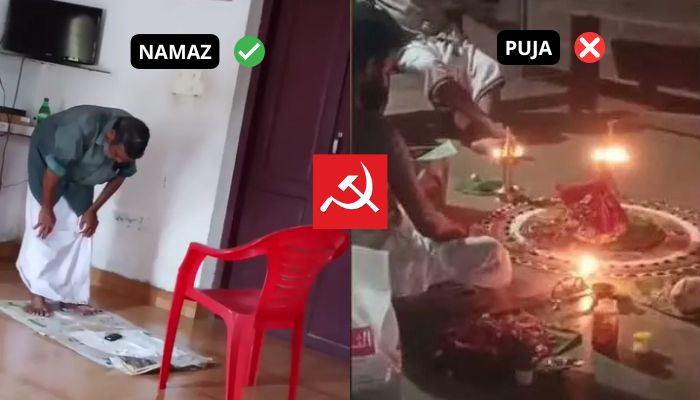
Recently, a video was shared on social media by CPIM member Bineesh Kodiyeri, who happens to the the son of ex-Home Minister of Kerala Kodiyeri Balakrishnan. In the video, a man wearing a skull cap could be seen offering Namaz inside the premises of the CPIM party office.
According to X (formerly Twitter) user Anand, the man is a hawker from Kollam who sells bedsheets for a living. The Muslim man had sought space from the local CPIM workers to offer Namaz as it was raining outside. The party instantly complied with his request and allowed him to pray inside the office.
Here’s the translation of his post:
“Words have no place in front of this sight that binds hearts.
When a man, drenched in rain, asks for a place to pray, holding fast to his faith, a political party office prepares it for him, creating circumstances conducive to that man’s… pic.twitter.com/2pkZBgtxsK
CPIM leader Bineesh Kodiyeri stated in his social media post –
“When a man, drenched in rain, asks for a place to pray, holding fast to his faith, a political party office prepares it for him, creating circumstances conducive to that man’s faith. This is the CPI(M), an organization that protects the faith and goodness of people. This love and brotherhood are the biggest strength of our state.”
The party described the decision to allow a Muslim man to offer Namaz inside its office as an act of ‘love and brotherhood.’ Coinidentally, such a harmonious outlook, tolerance and accommodating attitude are often missing when it comes to Hindus.
CPIM stops Ganapati homam
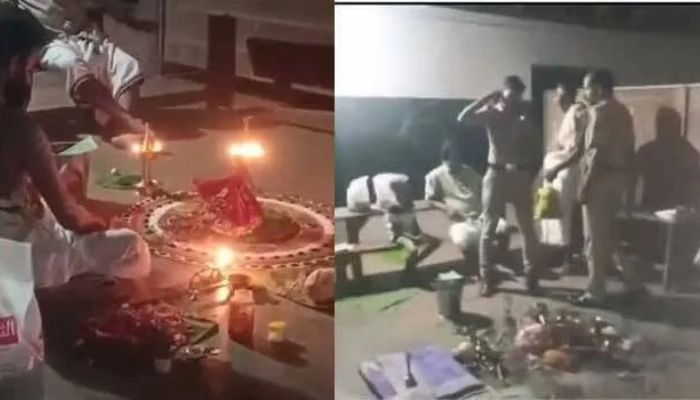
In February 2024, the Communist Party of India (Marxist) objected to the Ganapati homam, which was performed inside the premises of the Nedumannur LP School in the Kozhikode district of Kerala.
The CPIM goons learnt about the Puja from the locals and brought it to a halt. They also attacked the organisers who conducted the rituals.
Later, the police were called in and they arrested the organisers. The CPIM goons then carried out a protest march to the Nedumannur LP School.
Ganapati homam stopped by CPIM goons, oganisers arrested by police
This was despite the fact that the Puja was conducted with the prior permission of the school authorities. As per convention, Puja is conducted on the occasion of Mahanavami each year.
But since the event was cancelled, the school organised a Ganapati homam. But this did not stop intolerant CPIM from stopping Hindus from exercising their right to religion.
CPIM reprimands party leader for praying at temple
In September 2017, the Communist Party of India (Marxist) reprimanded its Minister, Kadakampally Surendran, for visiting the ancient Sree Guruvayur temple in Thrissur and offering pushpanjali on the behest of his family members.
He was draped in a mundu and melmundu, and was seen wearing chandanakuri in pictures that went viral on social media. Surendran’s children were dressed as Lord Krishna. At that time, he was serving as Kerala Devaswom Minister.
The party’s internal committee declared that the conduct of the CPIM leader was ‘not in accordance with’ the principles of the party. An inquiry report was also submitted based solely on the temple visit of Kadakampally Surendran.
The CPIM committee declared that offering prayers at the Sree Guruvayur temple was against the principles of CPIM. It directed Kadakampally Surendran to follow the footsteps of other party leaders.
CPIM leader under scrutiny for meeting astrologer
In August this year, CPIM state secretary M V Govindan came under scrutiny for visiting a Hindu astrologer named Mahava Poduval. He faced the ire of the party for discussing ‘astrology’.
The astrologer had to issue a clarification that the CPIM leader came to meet his family and have tea. “He did not discuss anything about astrology during the visit,” Mahava Poduval clarified.
He further added, “Don’t mix the personal relationship with astrology…It is unbearable for me if anyone says that Govindan master checked his astrology.”
Poduval pointed out that he has a personal connection with CPIM leader and Kerala CM Pinarayi Vijayan.
Objection to everything ‘Hindu’
In July 2022, the Communist Party of India (Marxist) objected to the conduct of Puja during the unveiling of the National emblem.
The party has also been instrumental in dislodging the world’s only Hindu monarchy in Nepal.
Anti-Hindu propaganda on CPIM
In February 2025, OpIndia reported how the CPIM resorted to anti-Hindu propaganda in its 64-page draft political resolution.
On Page 18 of the political draft resolution of the CPIM, the party went on a hysterical rant against the rise of Hindu forces in the erstwhile ‘Hindu rastra’ of Nepal.
As part of its nefarious anti-Hindu agenda, CPIM claimed, “The pro-monarchy forces are trying to utilise the popular discontent to once again gain acceptance among the people and emerge as an alternative political force. Pro-Hindutva, RSS elements are actively supporting these forces and are campaigning against the newly adopted secular constitution and the communist parties.“
The Communist party further labelled the inauguration of the Ram Mandir in Ayodhya as an ‘aggressive continuation of Hindutva drive.’
It also tried to negate demands for the restoration of Hindu religious sites, which are subdued by disputed structures built by Islamic tyrants. (Page 22 of the draft resolution).
“The inauguration of the Ram temple at Ayodhya in January 2024 became a State-sponsored event, with the Prime Minister himself conducting the religious rituals. The next step has been to target the Gyanvapi mosque in Varanasi and the Eidgah in Mathura to establish legal disputes on these two sites by claiming that there were Hindu temples existing there. This was the original VHP slogan that the three sites in Ayodhya, Kashi and Mathura should be handed over to Hindus to build temples,” the CPIM made its anti-Hindu mindset crystal clear. (Page 32 of the draft resolution).
The Communist Party also resorted to reinforcing the idea of Muslim street veto, which makes roads and areas inaccessible to the rest of the population and Hindus in particular. It sought to blame the Hindu community to take puja processiosn through ‘minority areas’ and causing provocations.
“Taking out religious processions during festivals like Ram Navami, Hanuman Jayanti and Ganesh Puja, entering minority areas and causing provocations leading to clashes, have become a regular feature…In all these incidents, it is the members of the minority community who face police repression,” it claimed. (Page 32 of the draft resolution)
CPIM also objected to the enactment of legislations such as those against grooming jihad, which protect Hindu women from being lured by Muslim men into conversions under the pretext of marriages. (Page 33 of the draft resolution). It also objected to the crackdown on predatory religious conversions of Adivasis by evangelist groups.
CPIM further revealed its anti-Hindu antecedents when it claimed, “The new Parliament building was inaugurated by the Prime Minister with Hindu religious rituals and a ‘Sengol’ placed behind the Speaker’s Chair.” (Page 34 of the draft resolution)
The Communist party continued to mock Hindu sentiments and tried to pass off our ithihasa as ‘mythology’. It also objected to the presentation of Hindus in a positive light on TV, media etc.
On Page 41 of the draft resolution, it claimed, “The RSS has increased its hold on cultural and research institutions by infiltrating them with its elements. They seek to rewrite Indian history from a communal standpoint, and to project mythology as real history.”
“The Hindutva communal agenda cannot succeed until it becomes part of the ‘common sense’ of the people at large. For this, propagation via popular culture is crucial. Thus their unrelenting efforts to infiltrate and control the film industry, television channels and OTT platforms, popular music, and even, of late, high art,” CPIM made their anti-Hindu agenda clear. (Page 42 of the draft resolution).
On Page 45, CPIM tried to pit ‘Sanatan Dharma’ against ‘Manuvad’, although its party leaders had supported calls for the eradication of both.
The party also vowed to mobilise forces to counter Hindutva.
The Communist Party put out ‘token condemnation’ of radical Islamic outfits like Jamaat-e-Islami and SDPI but was quick to suggest that their radicalisation was somehow due to rise of Hindutva.
“Muslim fundamentalist and extremist organisations like the Jamaat-e-Islami and the SDPI (political wing of the Popular Front of India) are working to expand their influence among the Muslim masses. They seek to utilise the alienation and fears among the minority community, who are subject to constant attacks by the Hindutva forces...Though minority communalism cannot be equated with the Hindutva communal forces who are in power, it must be understood that extremist minority activities only strengthen the forces of majority communalism,” CPIM claimed (Page 54 of the draft resolution).
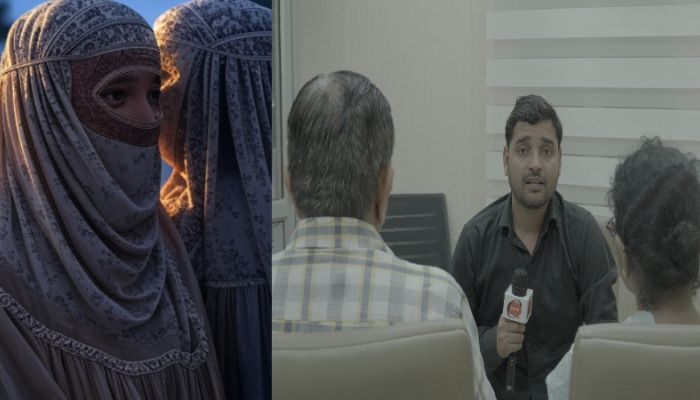
Agra Police recently exposed what they say is the country’s biggest religious conversion racket under Operation Asmita. Police, along with the bust, also rescued two sisters who had gone missing and were eventually traced to Kolkata’s Muslim-dominated neighborhood. The girls have since been reunited with their parents, who emotionally described the ordeal their family had to go through and the influence that led the daughters astray.
Police authorities stated the girls who were rescued are being counseled on a regular basis while investigations continue. The case served to emphasise how young vulnerable women can be manipulated through religious indoctrination and targeted by organized groups.
The mother of the two sisters shared with OpIndia that their ordeal began on 24th March, when both daughters suddenly left home without telling anyone. They carried some clothes, cash, and personal belongings with them.
“That day, we had gone to attend a satsang. They weren’t upset with us or angry, but their minds had already been poisoned. Islam had influenced them badly,” the mother said.
She admitted that the family never wanted their daughters to be exposed to Islamic influence but were powerless once they fell under it. “We didn’t like Islam and we did not want our girls to come under its impact. But it happened. The Agra Police have done a very brave job by bringing our daughters back safely,” she said.
The father also thanked them, appreciating the efforts of Agra Police Commissioner Deepak Kumar and Uttar Pradesh Chief Minister Yogi Adityanath.
How the influence began
The parents told OpIndia that their elder daughter, a PhD aspirant preparing for her NET exams at a coaching centre, came into contact with a muslim girl from Kashmir named Saima. Saima allegedly targeted her by criticising Hindu traditions and gradually influencing her mindset.
“One day, Saima even came home with my daughter. That was the start of it,” the mother recalled.
Saima convinced both the sisters to accompany her from Agra on 26th February, 2021. The younger daughter was just 14 years old at that time. They first went to Jammu, where Saima kept them at her married sister’s home. The next morning, after breakfast, they planned to travel nearly 170 km to Kashmir.
A landslide on the highway halted their journey. The police detained them even before they could travel to Kashmir, and the sisters were rescued.
Parents regret not acting earlier
The father admitted they had underestimated Saima’s intentions and now regret not taking legal action earlier.
“Even when my daughter asked her to let her speak to me, Saima refused. She even destroyed the SIM card to cut off contact. Still, we didn’t file a case against her. That was our mistake. If we had acted then, maybe this wouldn’t have happened again,” he said.
Changed behaviour at home
After being brought back from Jammu and Kashmir, the sisters initially showed clear signs of being influenced. According to their mother, they began praising Islam openly and insisted on reading namaz and observing roza during Ramadan.
“This went on for 8–10 days. We strongly opposed it, and eventually they stopped and behaved normally again,” she said. But the incident had already left a mark. The parents grew stricter and stopped the sisters from leaving home freely, something that apparently troubled Saima.
Even now, the parents believe their daughters are still under the influence of Islamic thought. “They say things like, ‘You people worship idols, but Islam believes in only one God.’ Earlier they would listen to us, but now they argue and get angry. We are very worried about their future,” the mother said.
Despite her fear, she added with hope: “I pray every day that somehow our daughters return to Sanatan Dharma.”
Operation Asmita and the wider racket
Agra police has rescued the two sisters became one of the key breakthroughs that helped them bust the larger conversion racket. Under Operation Asmita, police rescued seven girls in total and arrested 14 accused individuals, who have been sent to jail.
Officials say this racket is the biggest of its kind uncovered so far, but warn that it may not be the only one. Many such groups, they believe, remain active in different parts of the country, working to lure girls away from their families and targeting the Hindu girls. The problem is bigger than one gang.
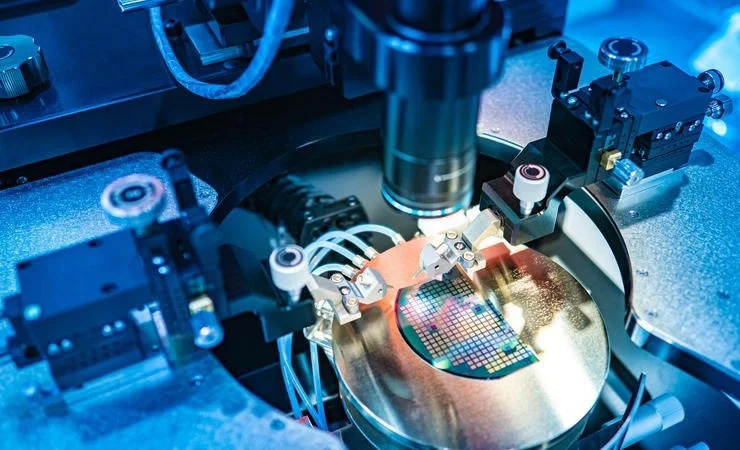
While India is yet to make significant headway in setting up advanced semiconductor fabs, its broader chip-making ambitions are beginning to take shape with a sharp strategic focus on mature-node manufacturing. Targeting the 28nm-65nm range, India aims to cater to the growing demand in sectors such as automotive, telecom, and industrial electronics.
In a detailed analysis, Bastion Research observed that, unlike the global race for cutting-edge nodes, India is positioning itself to fill a critical gap in the global supply chain by producing essential, widely used chips.
“Though today there is not much to share as far as India’s progress in establishing semicinductor fab is concerned, one thing is clear, India’s semiconductor ambitions are taking shape with a strategic focus on mature-node manufacturing, a smart move considering the vast demand for 28nm-65nm chips in sectors like automotive, telecom, industrial electronics, etc. While global giants dominate the cutting-edge node space, India is wisely positioning itself to manufacture mature nodes and filling a big gap,” the report added.
The observation points out that India’s semiconductor ambition today is quite similar to where Taiwan and South Korea were in the 1970s-1990s. The observation highlights that India’s role in system integration within the semiconductor value chain is rapidly evolving, positioning the country at the forefront of global capabilities.
With a deep pool of talent and a robust ecosystem, India excels in integrating semiconductor components into high-tech systems for sectors like automotive electronics, telecommunications, consumer devices, and medical technologies.
India is already delivering world-class, high-quality integration services. What sets India apart is its ability to match global standards, both in capability and talent, and its swift progression towards scaling these operations to meet the growing demand for advanced semiconductor-based solutions, the report added.
The observation highlighted that India is well poised to capture a larger share of the global market, as the China +1 strategy has become a powerful global trend, which is pushing companies to diversify their supply chains and look for alternatives to China.
“China +1 strategy has become a powerful global trend, pushing companies to diversify their supply chains and look for alternatives to China. This has fueled India’s growth in system integration, as the country is increasingly seen as a reliable and cost-effective partner in the global supply chain,” the analysis stated.
In 2021, the Indian government launched the Semicon India Programme (also referred to as Indian Semiconductor Mission (ISM) 1.0) with Rs 76,000 Crore in incentives to attract global manufacturers, build fabs, packaging units (OSAT & ATMP, discussed later in detail), and a local supply chain to reduce reliance on imports. The initial focus is on mature-node fabs (28nm to 65nm), not bleeding-edge nodes like 5nm or 3nm, which are dominated by TSMC and Samsung.
Earlier this month, the Centre cleared four new semiconductor manufacturing projects with a total investment of Rs 4,600 crore under the India Semiconductor Mission (ISM). These semiconductor units will be set up in Odisha, Andhra Pradesh, and Punjab.
The approvals take the total India Semiconductor Mission (ISM) portfolio to 10 projects across six states with cumulative investments of Rs 1.6 lakh crore.
Addressing the nation from the ramparts of the Red Fort on Independence Day, Prime Minister Narendra Modi announced that made-in-India semiconductor chips will be available in the market by the end of this year, marking a major milestone in India’s technological journey.
India has already approved the construction of six semiconductor plants.
In May, the Union Cabinet approved India’s sixth semiconductor manufacturing unit in Jewar in western Uttar Pradesh. It will be established near Jewar Airport through a joint venture between the HCL Group and Taiwanese electronics giant Foxconn.
Among the five semiconductor plants, four are in Gujarat: Tata Electronics-PSMC Semiconductor fab, CG Power-Renesas-Stars Microelectronics ATMP unit, Micron Technology’s ATMP unit, and Kaynes Semicon ATMP unit, while the Tata Semiconductor Assembly and Test (TSAT) Unit is in Assam.
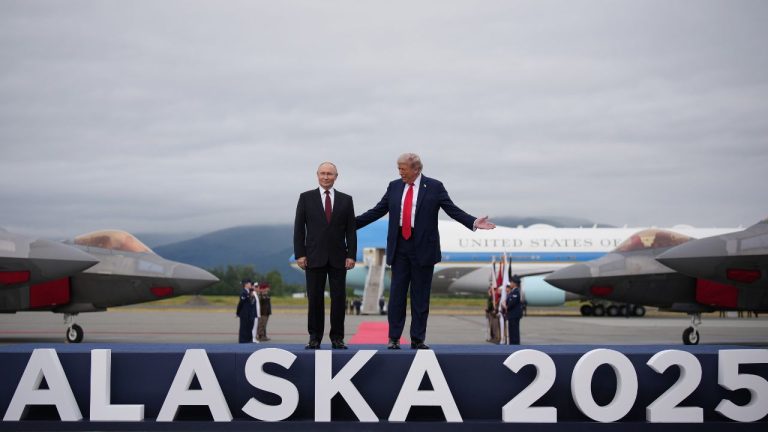
The much-anticipated summit between Russian President Vladimir Putin and US President Donald Trump, which finally took place in Alaska on Friday (August 15th), ended with no agreement on the Russia-Ukraine war. The unusual warmth displayed by the two historical rivals during the meeting stood in contrast with the coldness of Trump’s threats of imposing sanctions on Russia if it did not agree to a ceasefire with Ukraine. Given Trump’s signature aggressive tone towards Russia, the hearty welcome accorded by him to Putin took the world by surprise.
Ever since coming to power the second time, Trump has been emphasising ending the Russia-Ukraine war. One of his first promises after assuming office was to end the Russia-Ukraine war within 24 hours. Recently, ahead of his meeting with Putin, Trump warned that he would impose sanctions on Russia if it did not put an end to its ongoing conflict with Ukraine before Friday. While he did not specify the measures he would take against Russia, he earlier threatened Russia’s trading partners, including India and China, with secondary tariffs.
This came after the White House had already imposed 25% punitive tariffs on India for buying Russian oil. Although the Russia-Ukraine war has not ended even after six months of Trump’s assuming office, the already meek possibilities of a US-brokered ceasefire between Russia and Ukraine definitely seem to have come to an end after the meeting.
Trump describes the meeting as “extremely successful”
Subsequent to the meeting that went on for over 2 hours at Joint Base Elmendorf-Richardson in Anchorage, the two leaders made a joint appearance before the media for what was supposed to be a press conference. However, none of them took questions from the media.
Addressing the media after the meeting, Trump, who often talks in superlatives, described the meeting as “extremely productive” despite the lack of any eagerly-awaited announcements on the Russia-Ukraine war. “We had an extremely productive meeting, and many points were agreed to; there are just a very few that are left. We didn’t get there, but we have a very good chance of getting there,” said the US President, noticeably lacking his aggressive tenor post the meeting.
Putin also made a general statement about the conflict and at the same time warned Ukraine and European nations to “not create any obstacles” and not “make attempts to disrupt this emerging progress through provocation or behind-the-scenes intrigues.”We hope that the understanding we have reached will… pave the way for peace in Ukraine,” said Putin.
Ukraine was absent from the meeting that was supposed to put an end to the Russia-Ukraine conflict
Interestingly, while the Russia-US summit was supposed to yield a peace agreement between Russia and Ukraine, the latter was not included in the meeting despite being a direct party to the conflict. One wonders how a peace ‘agreement’ could have been reached between the parties when one of the parties was not even present for such an agreement.
The concern was raised by the Ukrainian President Volodymyr Zelensky, ahead of the US-Russia meeting, who said that the leaders of all three countries, Ukraine, Russia and the US, needed to sit across the table to reach a peace deal.
Russia must end the war that it itself started and has been dragging out for years. The killings must stop. A meeting of leaders is needed – at the very least, Ukraine, America, and the Russian side – and it is precisely in such a format that effective decisions are possible.…
— Volodymyr Zelenskyy / Володимир Зеленський (@ZelenskyyUa) August 15, 2025
“Russia must end the war that it itself started and has been dragging out for years. The killings must stop. A meeting of leaders is needed – at the very least, Ukraine, America, and the Russian side – and it is precisely in such a format that effective decisions are possible. Security guarantees are needed. Lasting peace is needed. Everyone knows the key objectives. I want to thank everyone who is helping to achieve real results,” Zelensky said.
Trump, who is claiming the Nobel Peace Prize for purportedly brokering peace between several countries across the world, was hoping to add another feather to his hat by brokering a ceasefire between Russia and Ukraine. However, after the meeting failed to bear any fruit, Trump shifted the entire onus of making peace with Russia to Ukraine.
Rating his meeting with Putin “10/10”, Trump said that now it was Ukraine’s responsibility to end the Russia-Ukraine conflict. “Now it’s really up to President Zelensky to get it done. And I would also say the European nations, they have to get involved a little bit, but it’s up to President Zelensky,” Trump said as quoted by Fox News after the summit.
Regardlesss of the fact that the meeting did not result in a breakthrough on the Russia-Ukraine war, it might bring some temporary relief for India. After the meeting, Trump said that he will not be thinking about imposing secondary tariffs on countries buying Russian oil, which include India, “right now” but will think about it in “two or three weeks”. “Now, I may have to think about it in two weeks or three weeks or something, but we don’t have to think about that right now. I think, you know, the meeting went very well,” Trump said.
A shocking case of Love jihad has emerged from the Banjara Hills region of Hyderabad where a man, Fahad, who hails from Pakistan, lured a Hindu woman, Kirti, and married her. According to the police, Fahad kept his Pakistani origins a secret and even produced forged papers to obtain employment in Hyderabad.
Back in 2016, Fahad forced Kirti to convert her religion to Islam and gave her new name “Doha Fatima” before marrying her. Fahad was employed at Sipal, a firm based in Hi-Tech City, Hyderabad.
The duo shared a home for some years, but everything changed when Kirti discovered that Fahad had entrapped another woman in his office in the same manner. Betrayed, Kirti gathered strength and went to the police. Fahad was arrested soon afterwards. The police have initiated an investigation regarding the allegations of forced conversion and marrying women by deceit.
Background of Fahad
Fahad, as per police, arrived in India in 1998 with his mother following his father’s death. His father was from Pakistan. His mother was from Hyderabad. Fahad obtained Indian citizenship later in 2018. Questions have still been raised regarding the identity documents he used prior to this, particularly during the time when he married in 2016. Authorities are now verifying if he abused Aadhaar, PAN, and voter ID, and if other women could have been approached.
Even after going through such emotional trauma, Kirti was brave enough to approach the authorities so that no one else has to go through the same ordeal. Strict action against such people has been promised by the police. The case has yet again opened up issues of fake marriages as well as deceptive practices in the city.
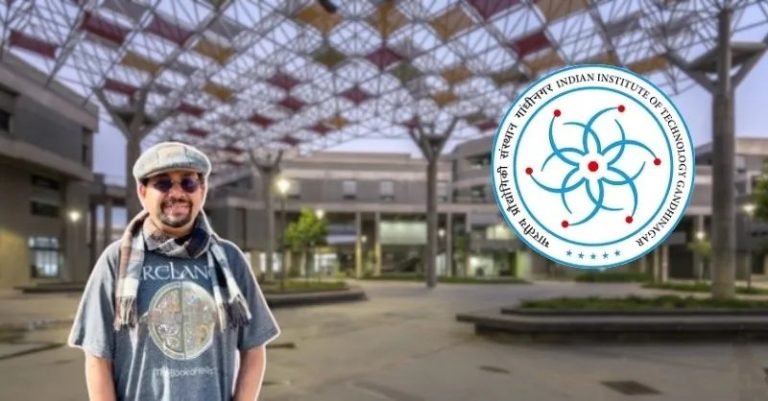
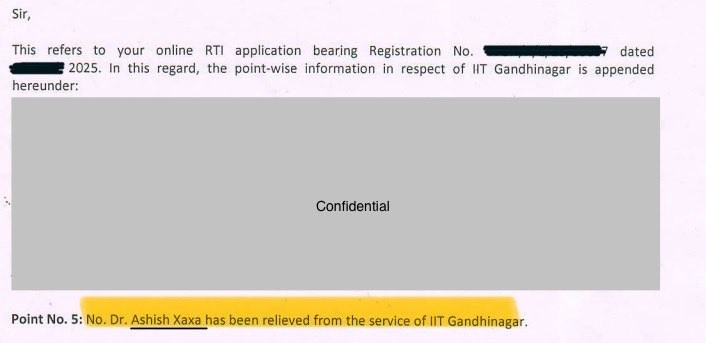
Indian Institute of Technology Gandhinagar, which has been in the news for controversies related to its professors , has dismissed one of the professors Ashish Xaxa. This information has been given by the institute itself through an RTI reply.
Earlier, an RTI was filed asking the IIT about Dr. Ashish Xaxa, in response to which IIT Gandhinagar said that he has been relieved of service.
It is worth mentioning that OpIndia had shed light on the activities of Dr. Ashish Xaxa through a report in May 2025. He has been very active on social media and had made several controversial posts which raised questions about the conduct of IIT professors. After that, he deactivated the account. However, the account was reactivated later.
On social media, he is always seen reposting posts of Congress leaders like Rahul Gandhi, Priyanka Gandhi etc. Pro-Palestine posts were also posted from his handle. He also keeps reposting posts of people like Mohammad Zubair and Dhruv Rathi.
In one post, he tried to instigate the people of India by saying that people need to take to the streets to reclaim democracy.
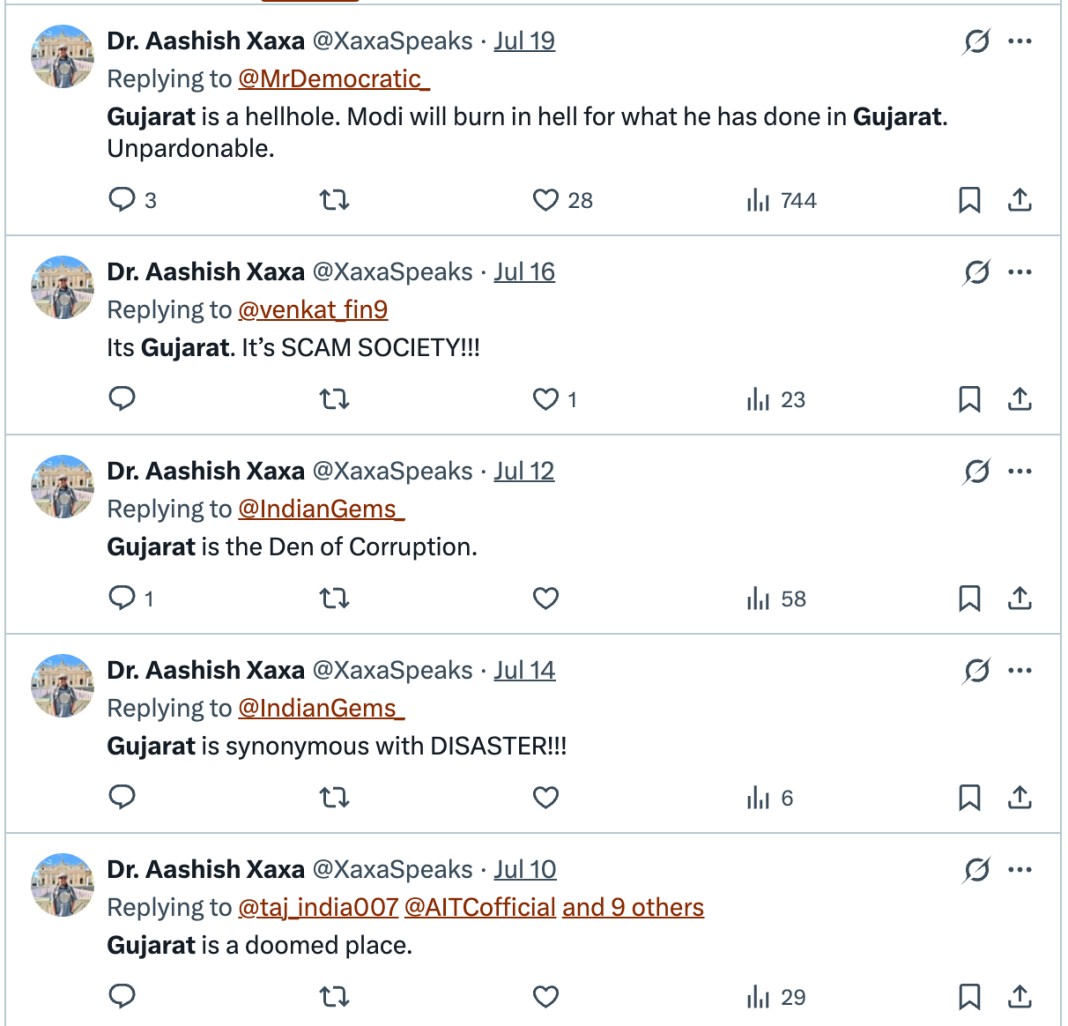
This professor has a special hatred for Gujarat. Recently, he had made some posts in which he had abused the state and its people. At one point, he had called Gujarat a ‘hellhole’ and at another, he had said that Gujarat is a ‘scam society’. At one point, he had said that Gujarat is a mine of corruption. In one post, he had also commented that ‘Gujarat is synonymous with disaster’.
Ashish Xaxa even reposted a post, in which two publications were posted – Colonizing Kashmir and Colonizing Palestine – and urged people to read them. The ex-professor was clearly implying that India has ‘colonized’ Kashmir.
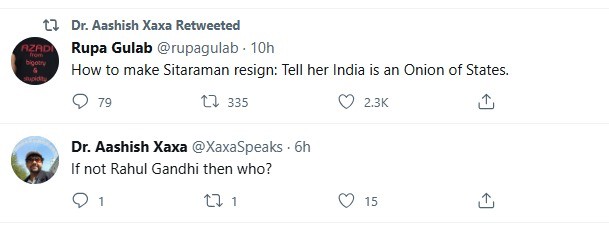
In another one of his X posts, he wrote, “If not Rahul Gandhi, then who else?”, looking at the Congress scion as India’s saviour.
In one post, a user mocked Finance Minister Nirmala Sitharaman and wrote – How can she be asked to resign? Tell her that India is an ‘Onion of States’. This post has also been reposted by the ex-professor.
An internet user also accused the professor of behaving in an inappropriate manner with him and then blocking him. This post has also gone viral.
So this person @XaxaSpeaks whom I have never known in real life nor interacted with online, comes to my account – abuses me and blocks me.
This guy works for @HSSiitgn as a professor in “indigenous and development studies”.
While trying to find out more about him, it was discovered that some of his papers have also been published in other countries. The latest publication is from the year 2025. The article titled ‘Covid-19 and the Indigenous Migrants Question in Urban India’ was published in ‘Governing the Crisis: Narratives of Covid-19 in India’ published from London.
In his article, Ashish Xaxa wrote about the problems faced by workers working in other states due to the sudden outbreak of the pandemic and the subsequent lockdown. Initially in the piece, the death rate was said to be high due to lack of adequate medical facilities, poverty and water problems and lack of enough doctors, but INDI coalition-ruled states like Jharkhand and Chhattisgarh were highly praised. Apart from this, INDI Alliance leaders like Hemant Soren and Bhupesh Baghel were also highly praised for their handling of Covid irresperctive of the situation in the state.
If we look at the facts, at that time all the states were making efforts and all of them had given up all other concerns and focused on the pandemic. But mentioning one or two states creates a narrative, which may not be noticeable at first glance. It has been written, quoting ‘sources’, that Soren personally paid attention to these matters! (So what did the rest of the Chief Ministers do?)
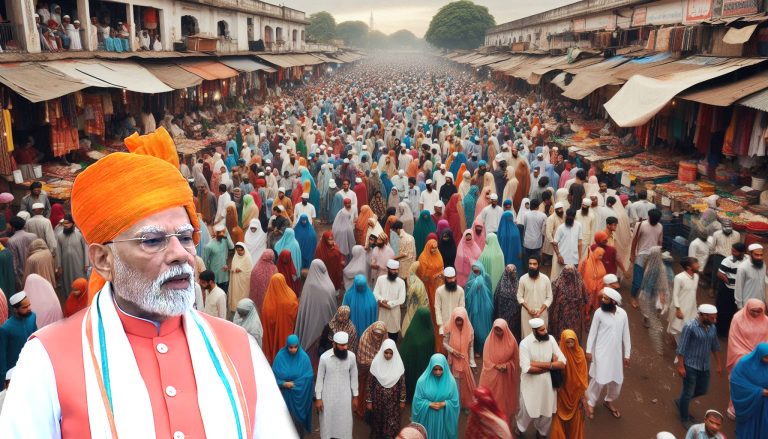
From the ramparts of the Red Fort, Prime Minister Narendra Modi on 15th August, announced the launch of a ‘High-Power Demography Mission. PM Modi raised concerns over demographic changes in border areas and said that it is a threat to national security.
PM Modi minced no words to warn the nation that a well-planned conspiracy is going on in the country to alter India’s demographic composition.
Addressing the nation on the 79th Independence Day, PM Modi warned against infiltrators affecting the livelihoods of Indian youth, targeting the sisters and daughters, and misleading tribal communities to seize land.
#WATCH | Delhi: PM Modi says, "In the next ten years, by 2035, I want to expand, strengthen, and modernise this national security shield. Drawing inspiration from Lord Shri Krishna, we have chosen the path of the Sudarshan Chakra…The nation will be launching the Sudarshan… pic.twitter.com/cQRaYeSLvp
Prime Minister Narendra Modi cautioned the nation about a conspiracy aiming to change India’s demography and said, “I would like to alert the nation about a concern, a challenge. Under a well-thought-out conspiracy, the country’s demography is being changed, and the seeds of a new crisis are being sown. Infiltrators are snatching away the livelihood of the youth of my country. Infiltrators are targeting the sisters and daughters of my country. This will not be tolerated. These infiltrators mislead innocent tribals and capture their land. The country will not tolerate this.
The Prime Minister further noted that changing democracy is a national threat and said, “When demographic change takes place in border areas, it causes a threat to national security…No country can hand it over to infiltrators…So, I would like to say that we have decided to start a ‘High-Power Demography Mission’.”
Prime Minister Modi’s strong remarks on demographic change come at a time when his government is cracking down on illegal Bangladeshi and Rohingya immigrants spread across the country, especially in the border states.
Amidst the Central government’s ongoing Operation Pushback, meant to detect, detain and deport illegal Bangladeshi and Rohingya infiltrators, PM Modi’s announcement of a high-powered demographic mission comes as an apt policy response to the demographic change crisis.
Much like it is in the case of grooming jihad, the Islamo-leftist cabal completely denies the existence of any deliberate scheme at play to alter India’s religious-demographic composition even as cases of Muslims like Chhangur Peer Jamaluddin running Islamic conversion rackets backed by foreign funding, are unearthed frequently and Christian Pentecostal pastors and missionaries running conversion events in the name of ‘prayer meets’.
However, demographic change is real and is taking place at a faster pace than is known. This change, however, is not only driven by illegal Muslim immigrants from Bangladesh and Myanmar but also by local factors, including differential population growth rates among different religious communities.
In Assam, the porous India-Bangladesh border has allowed illegal immigration of Bangladeshi Muslim nationals into India over the years. These Bengali-speaking Bangladeshi Muslim infiltrators obtain counterfeit documents like Aadhaar cards, ration cards, etc. After entering India, they take up menial jobs, become criminals, encroach tribal lands, harass local Indians in many cases, reproduce like there’s no tommorow and have altered the demographic balance in many districts.
The BJP government in Assam has been aggressively detecting, detaining and eventually deporting the identified Bangladeshi Muslim illegals. In 2019, the National Register of Citizens (NRC) exercise in Assam excluded around 1.9 million people from the register. The 2011 census revealed that Muslims constitute about 34% of Assam’s population, up from 30.9% in 2001, with districts like Dhubri, Barpeta, and Goalpara becoming Muslim-majority.
The influx of illegal Bangladeshi Muslim immigrants faces strong opposition from indigenous Assamese communities.
Similarly, in West Bengal, illegal infiltration of Bangladeshi immigrants is a big menace. In districts like North 24 Parganas, Murshidabad, and Malda, among others, the Muslim population has surged exponentially. The Trinamool Congress government in West Bengal is notorious for its leniency towards illegal Muslim immigrants for political gains. Other bordering states like Tripura, Jharkhand, and Jammu and Kashmir have also witnessed the influx of illegal immigrants.
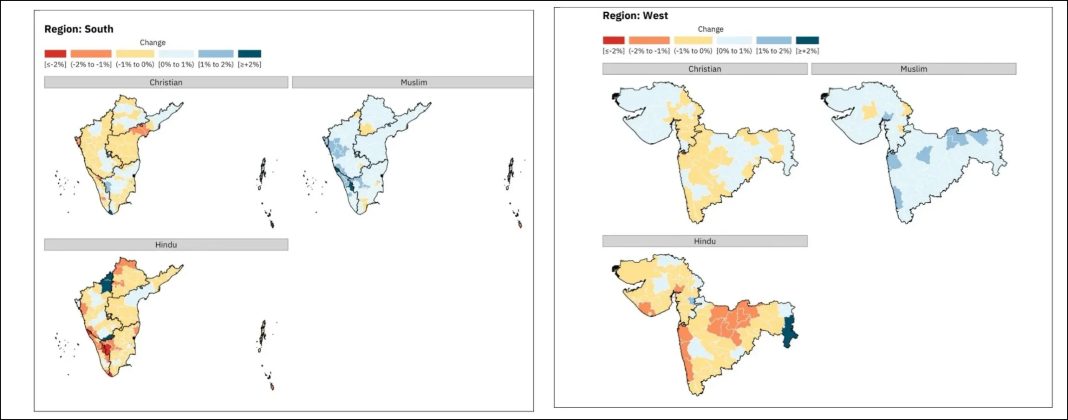
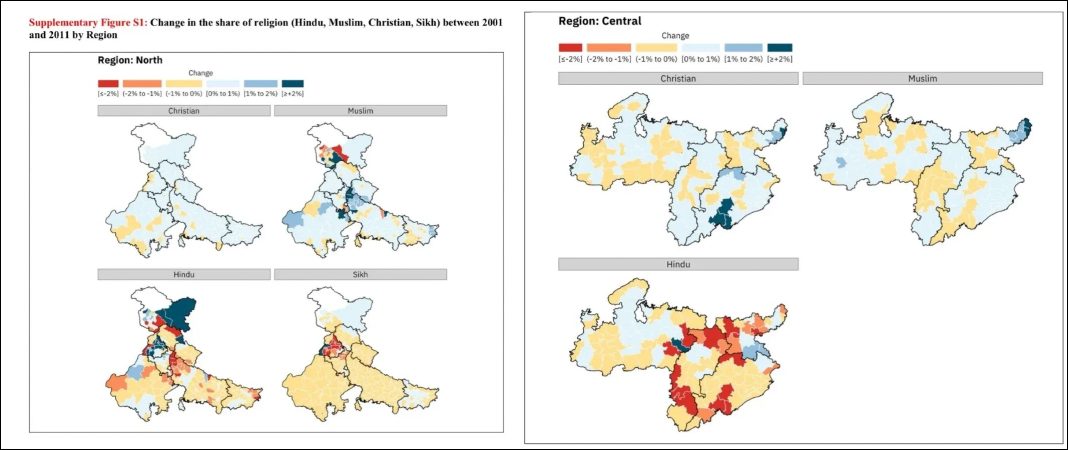
In a research paper published in Economics and Political Weekly, Economist and member of the Ecnomic Advisory Council to the Prime Minister, Professor Shamika Ravi, Economists Mudit Kapoor, Sunil Rajpal and SV Subramanian, revealed that the Hindu population in a Hindu majority India is declining while the Muslim population, which political parlance is called a ‘minority’ but in reality, is second-largest religious majority, is increasing exponentially. The researchers relied on the census data on religion from 2001 to 2011 to describe the changes in religious composition across 640 districts.
The study titled “Change in Religious Composition across Districts in India from 2001 to 2011” stated that at the national level, the Hindu population came down slightly, from 80.46% in 2001 to 79.8% in 2011. But the Muslim population rose from 13.43% to 14.23%. Even Christians saw a marginal rise in their share.
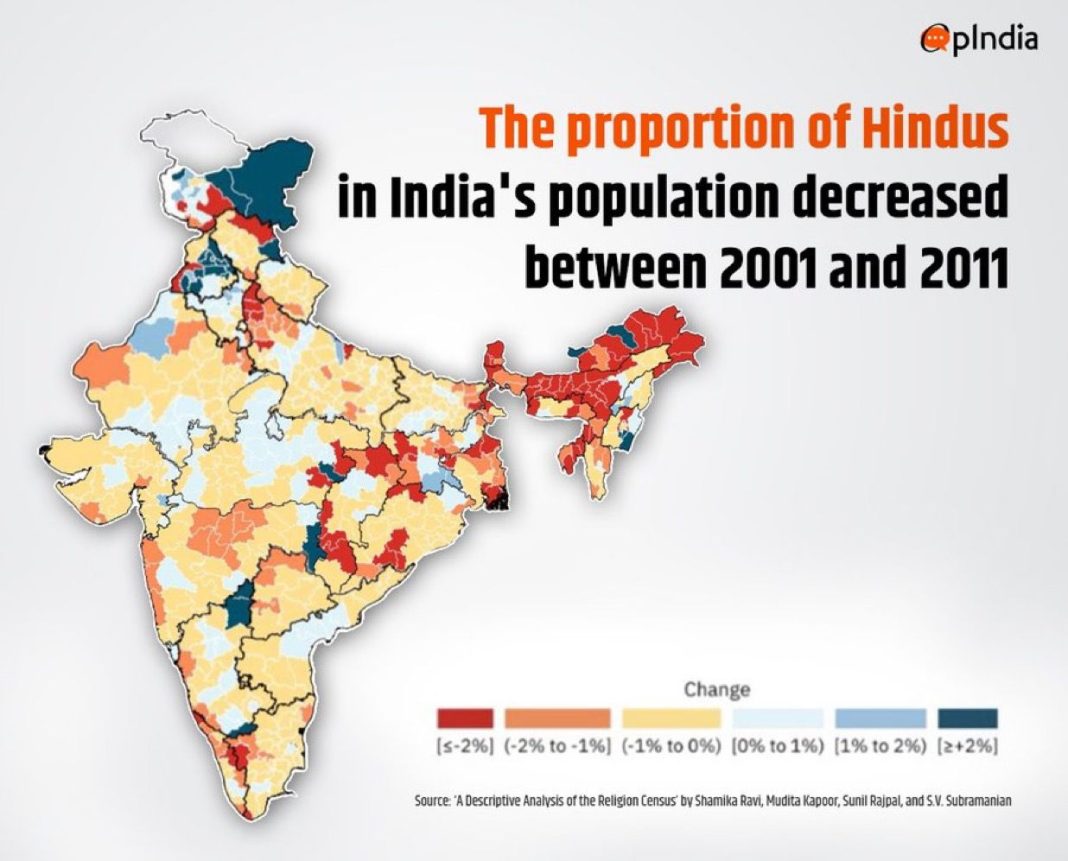
The researchers found that the share of the Hindu population declined in 468 out of 640 districts of India. That is over 70% of the total districts. In 227 districts, the dip was even larger than the national average fall of 0.7%. The Muslim population increased in 513 districts, and the Christian population increased in 439 districts.
“Overall, the population growth in India from 2001 to 2011 was 17.7%. The dominant religion was Hindu in both censuses. The fastest population growth was among Muslims at 24.6%, and the lowest was among Jains at 5.4%. The share of the Hindu population declined from 80.46% in 2001 to 79.8% in 2011, a decline of approximately 0.7%. The percentage of the Muslim population increased from 13.43% in 2001 to 14.23% in 2011, an increase of 0.8%. Notably, the share of people who do not wish to state their religion has increased more than three times from 0.07% to 0.24% from 2001 to 2011,” the paper reads.
In West Bengal, beyond the menace of illegal immigration, the Muslim population has increased. In districts like Murshidabad, Malda, Uttar Dinajpur, and North and South 24 Parganas, the Muslim population grew at a higher rate than the Hindu population. Due to this, the Hindu share in these districts declined by over 1% in some districts, much higher than the national average.
In Assam, the share of Muslims increased in most districts, especially the ones which are adjacent to Bangladesh. Dhubri, Barpeta, Goalpara, and Morigaon districts all witnessed a massive increase in Muslim populations. As discussed above, the influx of illegal Muslim immigrants, especially from Bangladesh, has been a major factor in the surge in the Muslim population here, alongside conversion. This rampant demographic change has sparked outrage among the indigenous population and fear that their lives, livelihoods, and religious and cultural identity are at risk.
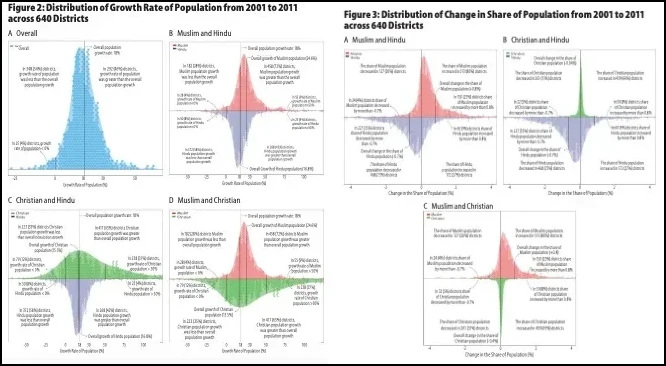
All graphics via EPW
Upon comparing the distristribution of population growth rates across all districts in the country for Christians, Hindus, and Muslims, the researchers found that among the Muslims, there were 458 (72%) districts where the growth rate of the Muslim population was greater than the overall growth rate of 18%.
There were 268 (42%) districts where the Hindu population growth was greater than the overall growth rate of 18%, while for the Christians, there were 417 (65%) districts whose population growth rate was more than the overall population growth rate. It is also interesting to note that in 79 (12%) districts, the Christian population growth rate was less than zero, while the corresponding number of districts for Hindus and Muslims—where their population growth was less than zero—was 50 (8%) and 28 (4%), respectively.
“At the other extreme, we found that there were 238 (37%) districts where the Christian population grew by more than 50%, while the corresponding number for Hindus and Muslims, where their population grew by more than 50%, was 23 (4%) and 55 (9%), respectively,” the analysis published in Economic and Political Weekly (EPW) reads.
While analysing the distribution of the change in the share of the population across the districts for Christians, Hindus, and Muslims, the research found that the share of the Muslim population increased (from 2001 to 2011) in 513 (80%) of the districts.
The share of the Hindu population increased in 172 (27%) districts, and the share of the Christian population increased in 439 (69%) districts. In 150 (23%) districts, the share of the Muslim increased by more than +0.8% (the overall change in the share of the Muslim population); correspondingly for Hindus and Christians, the share of their population increased by more than +0.8% in 60 (9%) and 50 (8%) districts, respectively. In 227 (35%) districts, the share of the Hindu population decreased by more than -0.7%, while the corresponding decline in the number of districts for Muslims and Christians was 24 (4%) and 32 (5%), respectively. Clearly, the Hindu population has consistently been recording a decline, while the population of ‘minorities’, particularly Muslims, is rising.
Here are the demographic changes across districts of West Bengal, Assam and other North Eastern states of India between 2001-2011 (census). The data shows the change in shares of 3 major religions – ranging from dark red (rapid decline in share) to dark blue (rapid increase in… pic.twitter.com/3yuHrtCyd6
In the northeast states of Nagaland, Mizoram, Meghalaya, and Arunachal Pradesh, the Christian population is increasing rapidly. In 238 Indian districts, the Christian population increased by more than 50% between 2001 and 2011. It is pertinent to mention that Christian missionaries have been very active in these regions, luring non-Christian tribal populations into Christianity by offering financial inducements, jobs, education, and health benefits etc.
In West Bengal and Assam in the east, the Hindu population has declined and so is the case in the north-western districts of Uttar Pradesh, coastal districts of Maharashtra, Karnataka, and the Malabar region in Kerala. Similarly, in central districts in Maharashtra, Chhattisgarh, and Odisha has been a substantial decline in the share of the Hindu population.
“The central districts in Maharashtra, the coastal districts in Maharashtra, Karnataka, and the Malabar region, and the eastern districts in West Bengal and Assam experienced a substantial increase in the share of the Muslim population,” the paper reads.
The maps showing the surge and decline in India’s population based on religion present an alarming picture.
The analysis highlighted the diversity of religious changes at district levels in India is often overlooked when looking only at national or state levels. It is also essential to understand that changes in religious composition depend on the differences in growth rates between religions, not only their absolute growth, as well as the initial share of a religion in a district.
In January this year, a report published by think-tank Centre for Policy Studies (CPS), also raised concerns over possible religious-demographic imbalances in the states. The CPS report titled Religious Demography of India: Rising Religious Imbalance in the Declining Fertility Regime of Kerala, revealed that Muslims in Kerala (27% in Kerala, as per the 2011 census) overtook the Hindus, who form 54% of the state’s population in total live births after 2015. In the year 2019, out of the total live births, Muslims had a share of 44% while Hindus had a share of 41%.
Between 2008 and 2021, the share of Muslims in total live births witnessed a significant increase and in specific years, even overtook Hindus, while the Hindu community’s share in total live births dropped significantly, with similar trends recorded in Christian total live births.
The CPS report had found that between the time period of 2008 to 2019, the share of Muslims in live births has increased from 36.3% to 44.4% while the share of Hindus has correspondingly declined from 45.0 %to 41.0% and that of Christians from 17.6 to 14.3%.
In simple terms, Muslims’ share of live births in this time period increased by 8%, while that of Hindus went down by 4% and that of Christians by 3.3%. This means that the Muslim share in live births is much higher than their total share in Kerala’s population. It also found that natural accretion is highest for Muslims, declining for Hindus and Christians in Kerala.
As per a study published by the Economic Advisory Council to the Prime Minister of India, Narendra Modi (EAC-PM) last yaer, between 1950 and 2015, the population share of Hindus in India declined sharply by 7.8% while the Muslim share grew by 43.15%, Christians by 5.38%, and Sikhs by 6.58%. The share of Hindus in India’s population saw a decrease from 84% in 1950 to 78% in 2015, while that of Muslims witnessed an increase from 9.84% to 14.09% in the same period.
All these studies indicate a one-sided increase in the Muslim population while the Hindu population of the Hindu-majority India is consistently declining, with few exceptions, since India attained independence at the cost of relinquishing its territories to Muslims in 1947. India’s total fertility rate (TFR) has fallen below 2, and in several states, the situation is even worse.
These less-discussed alterations in India’s religious composition become even more disturbing when put in context with religious conversions, be it via deceit, financial allurement, Love Jihad, or other forms of coercion, and designs of those working on their sinister agenda of carrying out population jihad to outnumber the Hindu majority.
“Demography is destiny”, but why? The answer lies in history
It sounds cliché, but demography is destiny. History tells us that wherever Hindus became a minority, secularism departed. In fact, Bharat owes its secular character to its Hindu majority. Demographic changes, be it in the border states through influx of illegal Bangladeshi and Rohingya Muslim immigrants, or through rapid increase in population of Muslims compared to other religious groups, essentially threaten national security. OpIndia has reported on many occasions how Rohingyas and Bangladeshi illegals have been involved in cross-border smuggling, violent crimes and even religious conversion. Besides, they have also been capturing the livelihood, jobs, and resources of native Indians, endangering Indians in their own motherland.
Assam stands as a fitting example of how illegal immigrants encroached vast swathes of tribal lands, expelling the locals, often clashing with them. In the recent past, there have been several incidents of Muslims in Muslim-dominated areas desecrating Hindu temples by either vandalising idols of Hindu deities, dumping cow heads and other remains, etc. In June 2025, one such case was reported in Muslim-dominated Dhubri, where the severed head of a cow was found at a local Hanuman Mandir on the following day of Bakri Eid.
In addition, a dramatic alteration in India’s demography also threatens cultural erosion, as seen in Tripura, where the Hindu tribal and non-tribal population is overshadowed by Muslims. These demographic shifts have also resulted in frequent incidents of anti-Hindu violence. OpIndia reported earlier how Muslims have been carrying out temple desecration, mob violence against Hindus, slaughtering cows to incite local Hindus and whatnot, to assert their religious dominance.
Such a change in religious composition has resulted in ‘Muslim areas’ or ‘Muslim-dominated areas’, which these essentially the undeclared no-go zones for Hindus and other non-Muslim communities. There have been countless incidents wherein Muslim mobs pelted stones at Hindu processions passing through a Muslim area or near a mosque. In fact, in many cases, mobs are gathered by giving calls from mosques to pelt stones and attack Hindus celebrating their festivals or even a cricket match victory.
OpIndia has documented numerous such cases of anti-Hindu mob violence by Muslims on Ram Navami, Hanuman Jayanti, Kawad Yatra, India’s cricket world cup victory, or over the release of movies like Chhaava depicting Islamic invaders as what they were—jihadist barbarians.
While the change in religious composition of even a district is gradual, its adverse impacts are radical. There have been many cases where Muslims objected to Hindus celebrating their festivals like Holi, Diwali, Durga Pooja, Durga Visarjan, Ganeshotsav, etc, openly in Muslim-dominated areas, or even in mixed population areas, clashing and harassing Hindus.
This is not a needless villainisation but a fact that wherever the Muslim population has surpassed Hindus, the Hindu community is either forced to move away or live in fear. In Uttar Pradesh’s Sambhal, where a Muslim mob rioted last year over a survey of a disputed mosque, which is claimed to originally be the Harihar Temple, Muslims are in the majority. Here, many Hindu temples were found closed and abandoned for decades. Why? Because the Muslim majority had been illegally occupied by Muslims.
What emboldens Islamists is the political patronage they get from Muslim-appeasing political outfits, as, unlike Hindus and other non-Muslim communities, Muslims largely function as a consolidated votebank. As demographic composition changes, so do the political outcomes in specific constituencies because the dominant group dilutes the representation of the other groups. Change in demography brings change in the electorate, too.
Even in the pre-independence era, demographic changes, especially the concentration of Muslim populations in Bengal and Punjab, fuelled communal tensions, which translated into violence and political demands. History tells us how the Muslim League leveraged these demographics and pushed for separate electorates for Muslims. Being the masters of the art of divide and rule, the British granted separate electorates for Muslims, allowing them to vote only for Muslim candidates, while no such provision was made for Hindus. These separate electorates were formalised in 1909 through the Morley-Minto Reforms and expanded in the 1935 Government of India Act.
While the undercurrent of Muslim separatism was already there since Syed Ahmed Khan had in 1876 itself promulgated the wretched ‘Two-nation theory’, separate electorates essentially emboldened Muslims to pursue their agenda of carving out a country exclusively for Muslims.
Islam does not hold non-Muslims, especially idol-worshipping Hindus, in high regard; in fact, it labels them the worst of the sinners (mushriks), thus the Muslim intolerance of Hindus, Sikhs and other non-Muslim groups is not surprising. However, preferential treatment to Muslims in the form of separate electorates and the Muslim League’s capitalisation of these divisions sowed the seeds of secessionism and gave rise to the demands of Muslim autonomy.
While today, the Islamists and their liberal cheerleaders beat their chest and claim that Indian Muslims “chose” secular India over Islamic Pakistan in 1947, during the provincial elections in 1946, Muslims voted overwhelmingly for the Muslim League, which had stirred up religious passions with its demand for a separate Islamic State at the time. The Muslim League asserted that Hindus and Muslims cannot co-exist in the same country and thus, Muslims should have a country of their own carved out of India itself, post-independence.
In total, 87% seats were won by the Muslim League in India in 1946. The demand for a separate Islamic State bolstered the political demand for a separate state. Eventually, Jinnah gave the call for Direct Action Day, and bloodshed, rapes, chaos, and destruction ensued and on the corpses of countless humans, Pakistan was created.
Discussing this dark episode of history was important. Muslims assert their religious dominance in areas, even small colonies, where their population is higher than Hindus and other non-Muslims. In some states, demand reservations, resort to violence against Hindus in an attempt to force governments to fulfil their demands, as seen in the case of anti-Hindu violence during anti-Waqf Bill protests earlier this year. Partition has left a wound so deep that Indians, especially Hindus, cannot afford to entertain or allow any ideology, conspiracy or issue that endangers India’s territorial integrity. Such Muslim pockets today often have a character of “Mini Pakistan”.
Despite there being incidents of Hindus being attacked by Muslim mobs in ‘Muslim areas’ for celebrating India’s victory in cricket tournaments, Hindu festivals facing opposition from Muslims since Muslims are the majority in certain areas, yet Muslims are described as ‘victims’.
The concerns expressed by Prime Minister Modi over the changing demography are legitimate. It must be recalled that in 2021, Pew Research found that 74 per cent of Indian Muslims already prefer Sharia laws over Indian laws. With the Muslim exclusivist mindset already being mainstream, a Muslim-dominated demography will only worsen things for Hindus, because, be it Bangladeshi Islamists attacking Hindus after Sheikh Hasina’s fall, or Islamists in West Bengal attacking Hindus in Murshidabad during anti-Waqf Bill agitations, Hindus are the first casualty of Muslim dominance.
Even during the years preceding partition, Muslims, despite being driven by their religiously-mandated disdain for Hindus, portrayed themselves as victims all while carrying out atrocities on Hindus, Sikhs and other non-Muslims groups. India was partitioned on Islamic lines because the secular leadership gave in to the intransigence of the Islamic leadership. India is celebrating its 79th year of independence. While the Islamic Republic of Pakistan, which also underwent division in 1971 and Bangladesh came into existence with India’s help, has been a failed state, India has achieved remarkable all-around progress.
A lot has changed; however, this economic growth, military might, and global influence will be futile if India’s demography is altered. The government needs to address the issue of demographic change effectively. Formation of the High-Power Demography Mission is a good step in this direction, alongside fast-tracking the process of expelling illegal immigrants and implementing anti-conversion laws to foil the designs of those seeking to convert Hindus, Sikhs and other non-Muslim communities to either Islam or Christianity. It is only because Bharat is a Hindu majority (yet) that even after a bloodied partition on Islamic lines, constant attacks on the Hindu faith, political suppression and neglect of Hindus for a very long time, the country remains secular. Bharat sans Hindus is just Pakistan-in-the-making.
Prime Minister Narendra Modi has sent a strong warning to Pakistan in response to the neighbour’s relentless nuclear threats especially after “Operation Sindoor” and suspension of the Indus Waters Treaty. “India has decided that it will not tolerate nuclear threats anymore, we won’t fall for any blackmail,” he declared from the ramparts of Red Fort on 15th August.
The prime minister asserted that India will treat terrorists and those who assist them as one and its armed forces would ruthlessly punish any future misadventure. “If the enemy dares to commit any more misadventure, the Indian Armed Forces will give them a befitting reply,” he outlined.
“What our forces achieved has not been witnessed in decades. We have set a new normal in tackling cross-border terrorism. I salute our brave soldiers who delivered a punishment for the Pahalgam attack far beyond the enemy’s imagination,” PM Modi stated while lauding the military action in Pakistan in the aftermath of killing of 26 Hindu tourists by Pakistan-sponsored terrorists.
“Destruction in Pakistan has been so massive that new revelations are made every day and new information comes out daily,” he further highlighted.
#WATCH | PM Narendra Modi says, "….Entire India was outraged, and the entire world was shocked by such a massacre (Pahalgam)…Operation Sindoor is the expression of that outrage….Destruction in Pakistan is so massive that new revelations are being made every day and new… pic.twitter.com/UJyLAHyOOH
The Indus Water Treaty with Pakistan was “unjust and one-sided,” according to PM Modi, who also maintained that India and its farmers had exclusive rights over the nation’s portion of the Indus river waters. He accused that the decades-old pact left Indian land and farmers parched while permitting rivers that originate in India to water “the fields of our enemies.”
“India has now decided, blood and water will not flow together. The people have come to realize that the Indus Waters Treaty is unjust. Water from the Indus River system has been irrigating the lands of the enemy, while our own farmers have suffered. What kind of agreement is this that has caused such immense loss to our farmers for the past seven decades,” he asked.
He reiterated, “The waters that belong to India will be used by India, for India’s farmers alone. We will not tolerate any arrangement that deprives them. This agreement is unacceptable to us.”
"Blood and water will not flow together. We do not accept the Indus Agreement in the national interest. The water of India's rivers is only for the farmers of India."
PM Modi’s warnings came amid nuclear threats from Prime Minsiter Shehbaz Sharif and Field Marshal Asim Munir. The latter vowed to demolish any infrastructure erected on the Indus Water channels that would stop water from reaching Pakistan and boasted that his country has an abundance of missiles, at an event during his recent visit to the United States.
He also threatened to take down “half the world” if Pakistan faced an existential threat in a future war with India. “We are a nuclear nation, if we think we are going down, we’ll take half the world down with us,” Munir tried to blackmail.
On the other hand, Sharif claimed that India will suffer grave consequences if the water is not released. “I want to tell the enemy today that if you threaten to hold our water, then keep this in mind that you cannot snatch even one drop from Pakistan. If you attempt such a move, we will teach you a lesson you will never forget. You will hold your ears and promise never to touch our share of water again,” he threatened.
Sharif insisted that there would be “no compromise” on Pakistan’s rights under international agreements, referring to the Indus waters as the country’s lifeblood. The comments followed an appeal by his foreign office for New Delhi to swiftly reinstate the Indus Waters Agreement to its regular operations.
1993 nuclear crisis between India and Pakistan
“We possess a nuclear arsenal and will strike India.” Pakistan has been blackmailing India and by extension, the global community with threats of a nuclear war to have its own way akin to a a spoiled and entitled brat for decades. Instead of conducting itself as a mature nuclear power, Islamabad takes advantage of its status to threaten New Delhi whenever it is called out for perpetrating terror and is met with a fitting response from the Indian armed forces.
The Islamic Republic cannot engage India on the battlefield, thus it resorts to terrorism and nuclear threats in a desparate attempt save face following its stinging defeats. The same rabidity was exhibited in 1993 when Pakistan had positioned nuclear warheads on F-16 fighter jets to attack India.
India had deployed five brigades of its most advanced attack unit, the Indian Army Strike Corps, fifty miles from the Pakistani border in the south and had gathered two hundred thousand troops, including paramilitary forces in Kashmir over months of rising tension. The larger and much more powerful much India had fought and already won three wars against Pakistan since 1947 till then.
From the Red Fort, PM Modi sends a strong message — Pakistan’s ‘nuclear bluff’ won’t work anymore.
Find out when Pakistan tried to pressure India by threatening nuclear weapons, in our detailed video. Watch the full story now on our YouTube channel. pic.twitter.com/WWkj1JrO3G
In the meantime, Islamabad openly stationed its main armoured tank regiments along the Indian border and secretly put its nuclear weapons stockpile on alert. Islamabad wanted to avoid a recurrence of the catastrophic two-week conflict in December 1971, during which it outmatched in both firepower and strategy and was fragmented by an Indian assault resulting in the formation of Bangladesh along with a humiliating surrender of over 93,000 soliders in Dhaka. This marked the largest surrender of troops since World War II.
“The American intelligence community, also operating in secret, had concluded by late May (1990) that Pakistan had put together at least six and perhaps as many as ten nuclear weapons, and a number of senior analysts were convinced that some of those warheads had been deployed on Pakistan’s American-made F-16 fighter planes,” reported The New Yorker.
It further conveyed, “The analysts also suspected that Benazir Bhutto, the populist Prime Minister of Pakistan, had been cut out of or had chosen to remove herself from the nuclear planning. Her absence meant that the nation’s avowedly pro-nuclear President, Ghulam Ishaq Khan, and the Pakistani military, headed by Army General Mirza Aslam Beg, had their hands, unfettered, on the button. There was little doubt that India, with its far more extensive nuclear arsenal, stood ready to retaliate in kind.”
President George Bush had then asked Robert M. Gates, a long-time Central Intelligence Agency (CIA) official who was then the White House’s deputy national-security adviser to fly to Islamabad and New Delhi on his behalf to mediate a truce between the two adversaries. Afterward, the latter managed to difuse the volatile situation with his intervention. The aforementioned episode clarified two things:
Despite their fake bravado and chest thumping, Pakistan has always understood that it has no possibility of success against India in a conventional confrontation. Thus, terrorism along with the support of separatist movements and the incitement of unrest are its sole strategies to “bleed India by a thousand cuts.”
Pakistan believes that its nuclear assets are the last remaining option available to the country for maintaining some leverage. It is aware that the world cannot bear such a dangerous escalation and hence exploits them impulsively to further its own jihadi agenda.
Islamabad’s fixation on its nuclear weapons to intimidate India
“Humne nuclear weapons Shab-e-Barat main chalane ke liye nahi rakhe,” “Pakistan ke nuclear weapons Eid ke liye nahi hein,” “Humare nuclear weapons dikhane ke liye nahi hein,” (Our nuclear weapons are not merely for our holy days, festivals our display), represent only a fraction of the many declarations made by Pakistan about using its nuclear assets to unsuccessfully instill fear in India.
Notably, certain sections (liberals and leftists) of India also parroted the same lines to thwart and prevent any military action against Pakistan. This absurdity was also mocked by PM Modi in 2019 when he stated, “What do we have then? Have we kept our nuclear bomb for Diwali?”
As India held the Indus Waters Treaty “in abeyance,” Pakistan Minister Hanif Abbasi claimed that their arsenal which has 130 nuclear warheads like Ghori, Shaheen, and Ghaznavi missiles is only for India. He added that India should “prepare for a full-scale war” if it dared to cut off Pakistan’s water supply.
“If they stop the water supply to us, then they should be ready for a war. The military equipment we have, the missiles we have, they’re not for display. Nobody knows where we have placed our nuclear weapons across the country. I say it again, these ballistic missiles, all of them are targeted at you,” he stressed.
Similarly, Pakistan Defence Minister Khawaja Muhammad Asif who made a joke of himself on international media declared that “nobody will survive” if a war broke out, in a veiled nuclear threat during “Operation Sindoor.” The man is a habitual offender and has previously threatened India on multiple occasions, including in 2016 when he stated, “Islamabad is open to using tactical (nuclear) devices against India if it feels its safety is threatened.”
Imran Khan, the former prime minister of Pakistan too threatened to start a nuclear war if the world did not take notice of Islamabad’s conflict with New Delhi over Kashmir. “It is imperative that the international community think beyond trade and business advantages. World War II happened because of appeasement at Munich. A similar threat looms over the world again, but this time under the nuclear shadow,” he wrote in an overwrought opinion piece for the New York Times in 2019.
The act of threatening India with a nuclear strike is rite of passage for the military and civilian leadership of Pakistan and thus far, no one has disappointed. This conduct, is of course, not surprising or shocking from a nation whose primary export to the world is jihad which its leaders like to call “dirty work at the behest of the US and West.” It celebrates terrorists as heroes and martyrs even in its national assembly, protects them like its pampered assets and employ terror as a state policy against other countries, specifically India.
India puts an end to nuclear blackmail after “Operation Sindoor”
India has repeatedly cautioned the terrorist state to limit its nuclear rhetoric including during “Operation Sindoor.” The former made a major shift in its security strategy on 10th May when New Delhi stated that it would now view any act of terrorism against the nation as a “act of war” and would react accordingly.
PM Modi further emphasized this point while addressing the nation on 12th May regarding the success of India’s military operation against Pakistan and its terror hubs. He also stressed that Pakistan’s era of nuclear blackmail has ended as India has embraced a new and more assertive policy towards its enemy.
He mentioned, “First, if there is a terrorist attack on India, a fitting reply will be given. We will give a befitting response on our terms only. We will take strict action at every place from where the roots of terrorism emerge. Secondly, India will not tolerate any nuclear blackmail. India will strike precisely and decisively at the terrorist hideouts developing under the cover of nuclear blackmail.”
The prime minister then conveyed, “Thirdly, we will not differentiate between the government sponsoring terrorism and the masterminds of terrorism. During Operation Sindoor the world has again seen the ugly face of Pakistan, when top Pakistani army officers came to bid farewell to the slain terrorists. This is strong evidence of state-sponsored terrorism. We will continue to take decisive steps to protect India and our citizens from any threat.”
This is not the first occasion that Pakistan has been taught a harsh lesson by the Modi administration. The same approach was evident during the 2019 Balakot airstrikes that occurred after the Uri terror attack. India’s consistent determination to enter enemy territory to hunt down its proxies and dismantle their terror infrastructure had already put Islamabad on the defensive.
However, “Operation Sindoor” illustrated that India not only has the capability to penetrate into Pakistan-occupied Kashmir but also to advance over 100 kilometers deep into its backyard in Bahawalpur, cognizant of Islamabad’s inclination to resort to its nuclear arsenal at the slightest provocation.
The demolition of terror centres and military installations by Indian forces has unsettled Pakistan, prompting the latter to amplify its nuclear threat. However, both India’s statements and actions have clearly established that the pitiful attempts to deter India from punishing those who massacre its people and spread terror on its soil have run their course and fail to affect New Delhi’s resolve to protect its citizens, borders and sovereignty as well as bring the culprits to justice.
The time of submitting dossiers and making repeated appeals to hand over dreaded terrorists without any military action against Pakistan, due to concerns over nuclear retaliation has long passed. “Pakistan should tone down its rhetoric. Any misadventure will have painful consequences, as we have shown recently,” as eloquently remarked by Ministry of External Affairs (MEA) spokesperson Randhir Jaiswal on 14th August.
The same sentiment was expressed by Director-General Military Operations (DGMO) Lieutenant General Rajiv Ghai on 11th May, following India’s successful attainment of the objectives of “Operation Sindoor” which led Islamabad to request a ceasefire. “We have thus far exercised immense restraint and our actions have been focused, measured and non-escalatory. However, any threat to the sovereignty, territorial integrity and safety of our citizens will be met with decisive force,” he had warned.
Pakistan which is unaccustomed to such a tough position from understands that its aggressiveness should only be confined to media and as India has warned, any miscalculation stemming from a false sense of confidence or an attempt to demonstrate nonexistent superiority will be met with significant repercussions that Islamabad would find very hard to bear.
Predictably, Pakistan is unlikely to change its ways and will persist in trying to harm India via terrorism. However, now its actions will be considered “act of war” and the country will be responsible for its long deserved and brutal end.
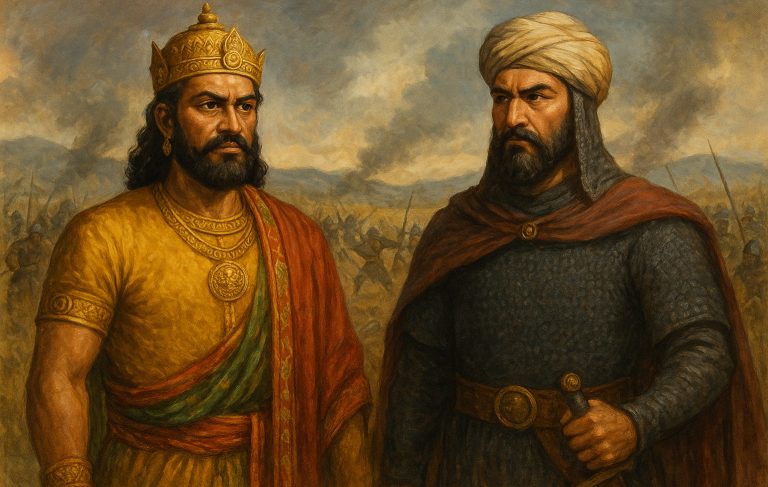
On the occasion of India’s 79th Independence Day, Assam Chief Minister Himanta Biswa Sarma announced that the under-construction Dighalipukhuri–Noonmati flyover in Guwahati, which will be the city’s longest, will be named after Maharaja Prithu. The medieval ruler of Kamarupa is celebrated for his decisive victory over the Turkish invader Bakhtiyar Khalji in 1206 CE.
The chief minister described the move as part of the government’s “sacred duty” to preserve Assam’s cultural heritage and to inspire younger generations by honouring historical figures who defended the region against aggression by Islamic invaders.
Honouring our Heroes ⚔️
This #IndependenceDay, I am happy to share that we will be naming the upcoming Noonmati- Dighalipukhuri Flyover as
Maharaja Prithu Flyover
as a mark of recognition to his heroics and to promote his bravery amongst the next generation. pic.twitter.com/9QqakcaNYo
CM Sarma posted on X that the decision has been taken as a mark of recognition to Mahara Prithu’s heroics and to promote his bravery amongst the next generation.
Maharaja Prithu, also known in chronicles as Raja Prithu or Visvasundara Dev, ruled the ancient kingdom of Kamarupa in the late 12th and early 13th centuries. His reign is most remembered for defeating Bakhtiyar Khalji, a general of the Delhi Sultanate who had devastated renowned centres of learning such as Nalanda and Vikramshila.
After progressing eastwards without much resistance, when Khalji’s forces attempted to march into Kamarupa, they were met with fierce resistance. Historical sources, including the Persian chronicle Tabaqat-i-Nasiri written by Minhaj Siraj-al-Din, record that the invading army was completely annihilated, with many perishing in the inhospitable terrain before they could retreat. Inscriptions at sites such as Kanai Basasi and Kanhai Boroxi Bua Xil mention that the invading army was wiped out and Assam’s sovereignty preserved.
As per chronicles, after burning down the Nalanda University and killing over 10,000 Buddhist monks, Muhammad bin Bakhtiyar Khalji took over Bengal without a fight as the Bengal king fled. He than planned to invade Tibet in 1206, wanting to plunder the treasures of the Buddhist monasteries. He also wanted to control the traditional trade route with South East Asia, which went through Kamarupa and Sikkim.
But Khalji had heard about the bravery of Raja Prithu and his army, and knew that it will be impossible to pass through the kingdom. Therefore, instead of fighting against Kamarupa, he sent a delegation seeking an alliance to invade Tibet. The Kamarupa king said that he also wanted to attack Southern Tibet, to control the Silk Route, and agreed for a joint attack.
But Prithu told Khalji’s representatives that the time was not right, as monsoon season was about the start, and will be very difficult to navigate the mountains during the rains. His advice was to wait for the monsoon to be over.
But by the time Khalji’s men returned with the message, he had already progressed significantly, and was camping near present-day Siliguri. Therefore, he chose to ignore the advice, and found a man to show him a route through Bhutan bypassing Kamarupa. The guide was a man named Mech, who was converted to Islam by Khalji before start of the journey.
But they were intercepted by the Tibetan guerrilla forces, attacking them from all sides on the mountains. By that time, rains started, and their route was cut off, preventing them from returning. Many soldiers died of illness. The situation was so bad that Bakhtiyar Khalji’s man killed their horses for food. Unable to return through the same route, Khalji decided to return through Kamarupa.
Raja Prithu was aware of the developments as his spies were regularly giving updates. He was already furious at Khalji for ignoring his advice, and anticipated that the invaders will loot his kingdom to replenish supplies. Therefore, he was waiting to attack the invaders. After learning that Khalji was planning to return via his kingdom, he decided to lure the invading army to lure to the place where Teesta River meets Brahmaputra. The Kamarupa king also assembled tribal armies of the region to join his forces.
When Khalji and his army entered Kamarupa, Prithu employed a scorched earth strategy to defeat them. He destroyed bridges after they were crossed by the Islamic army, preventing them from retreating. Kamarupi forces also burnt down the entire route, depriving the invaders of food and other supplies. The Kamarupa army then attacked the Bakhtiyar’s army from all sides, and defeated them comprehensively.
As per Tabaqat-i-Nasiri, 12,000 horsemen and 20,000 infantry men of the Muslim force were totally annihilated in the front of flying arrows and bamboo spears.
However, Khalji survived, and narrowly escaped with only a few hundred men. This catastrophic defeat led to the Turkish general’s downfall. He lost the zeal to conquer new regions, and never led another campaign. As he became useless for the Sultanate, he was eventually assassinated by his own general, Ali Mardan Khalji.
Raja Prithu’s later years were marked by further wars with the Delhi Sultanate. In 1228, he confronted Nasir-ud-din Mahmud, the son of Iltutmish. Faced with likely defeat and unwilling to submit, Prithu reportedly took his own life by leaping into a water tank within his fortress.
His victory over Khalji is remembered in Assam as Mahavijay Diwas on 27th March, a day commemorating the state’s resistance and survival against one of medieval India’s most aggressive military campaigns. His victory over Khalji not only defended his kingdom also prevented Assam from becoming the part of Delhi Sultanate.
While Ahom kingdom’s general Lachit Barphukan is well known for defeating the Mughal army, Raja Prithu’s victory over Khalji’s forces is very little known, even in Assam. By naming the Noonmati-Dighalipukhuri Flyover after him, the Assam govt is attempting to spread the tales of his valour.
The decision to name the new flyover after Maharaja Prithu comes after the Himanta Biswa Sarma government named a new flyover in Guwahati after Mahabharata era king Bhagadatta. Son of Asura king Narakasura, Bhagadatta took part in the great battle of Kurukshetra from the side of Kauravas. As per the epic, he had contributed one Akshauhini of the troops, including a big contingent of elephants.
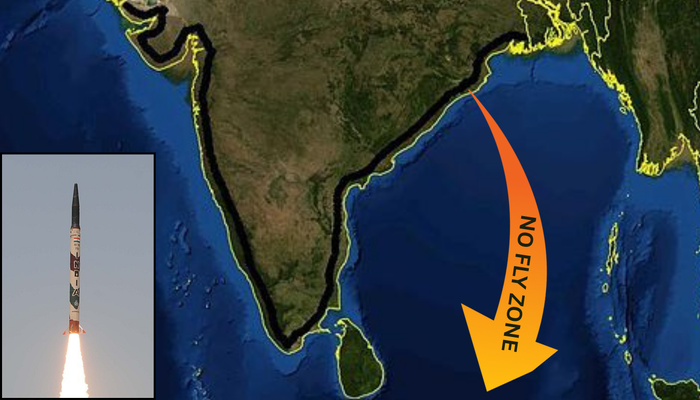
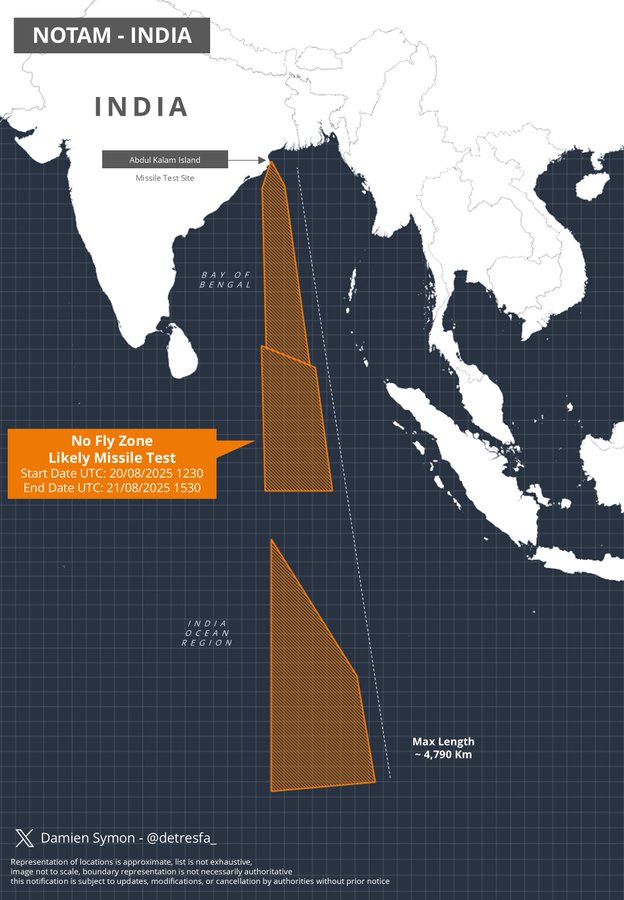
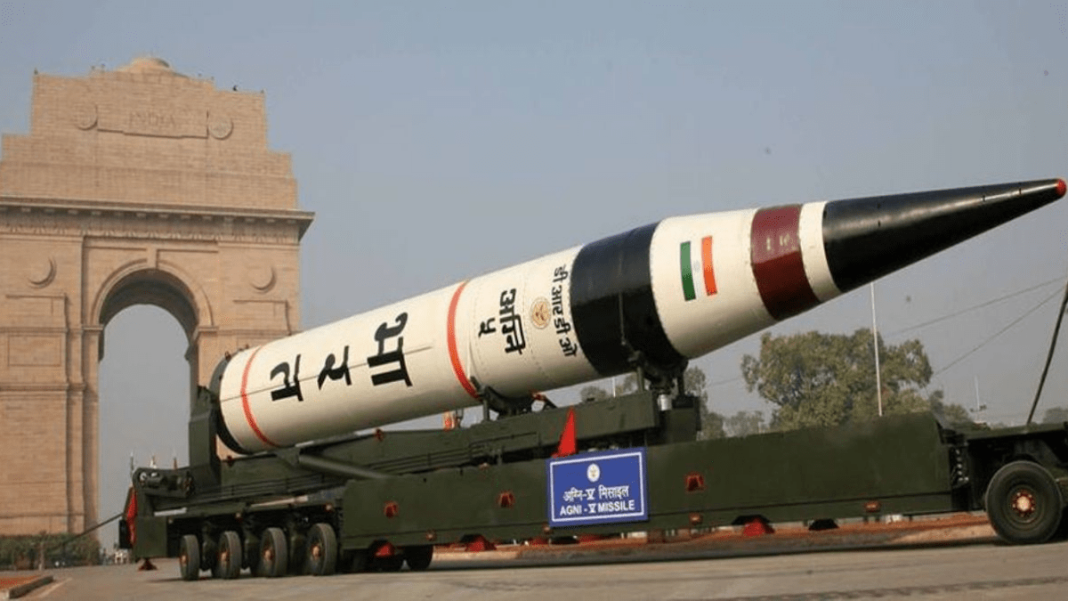
India recently extended the Notice to Airmen (NOTAM) to 4,795 kms into the Indian Ocean for a missile test scheduled for 20-21 August. The NOTAM warning issued by the Ministry of Defence extended the no-fly zone from the earlier 2530 kms range to now 4795 kms
The missile test will take place from the Integrated Test Range (ITR) on Dr APJ Abdul Kalam Island off the Odisha coast, in a major stride towards enhancing India’s strategic missile capabilities.
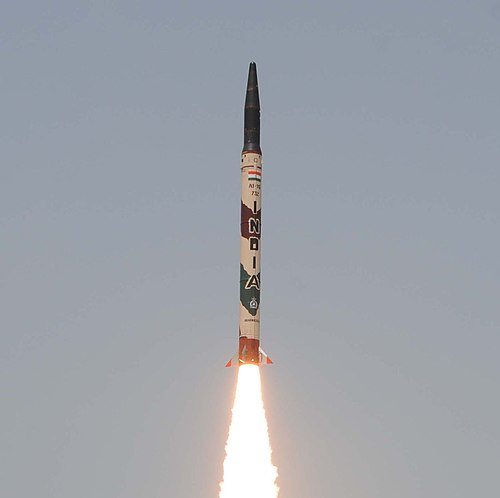
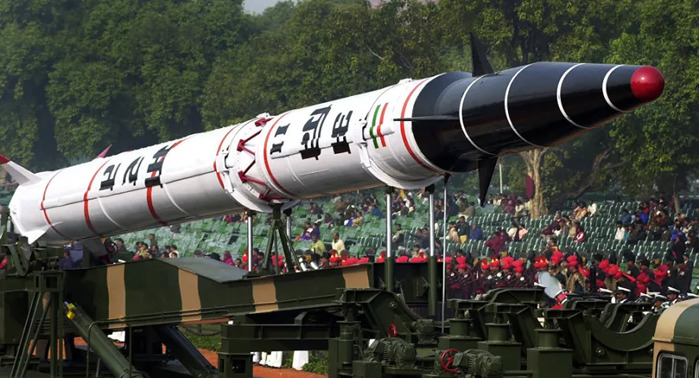
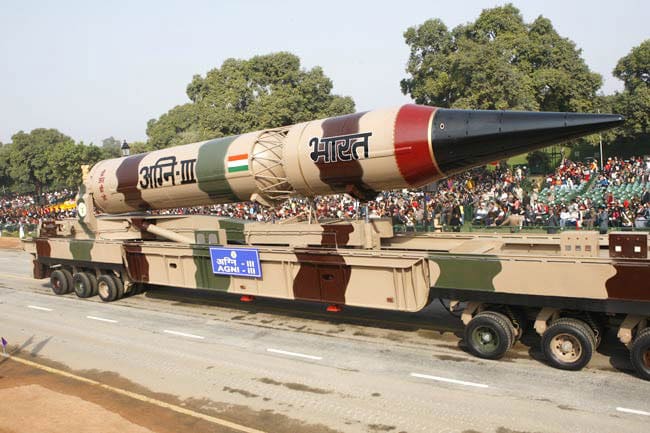
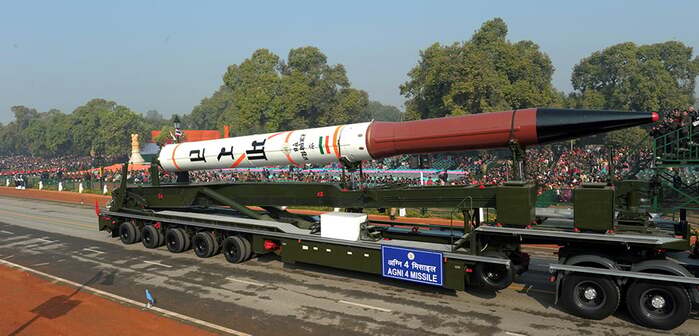
The move has fanned speculations that the test might involve the latest variant of the Agni series ballistic missiles. India has successfully tested five nuclear-capable ballistic missiles in the Agni series. People are guessing that Agni-VI could be test fired in the upcoming missile test later this month.
Notam has been extended up to a range of 4,975 km .
Notice to Airmen, or NOTAM, is an alert issued by an aviation or any other competent authority to aircraft pilots about a potential hazard or a danger zone on a flight route or in a location that could affect a flight. It contains advisories or essential information regarding an aeronautical facility, establishment, or flight route, which is important for aircraft operators to know to ensure the safe journey of a flight.
NOTAMs are issued in many cases, including those involving military conflicts between countries or a warning about a test-firing zone. NOTAM is also issued by a country when it wants to close its airspace for the aircraft of a certain country or countries. During the recent military hostilities between India and Pakistan, the countries issued NOTAMs about closing their airspaces for each other’s aircraft.
Notice to Airmen is generated and transmitted as per the guidelines of Aeronautical Information Services of the Convention on International Civil Aviation (CICA).
How DRDO secured the Dr Abdul Kalam Island for missile tests
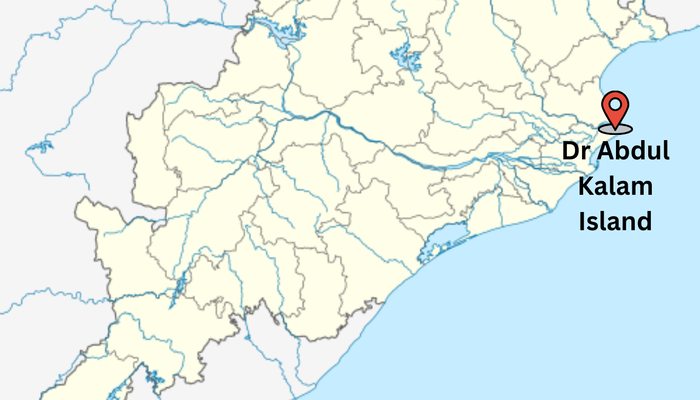
Dr Abdul Kalam Island is located off the coast of Odisha, about 150 km from the state capital of Bhubaneswar. It forms a part of Odisha’s Bhadrak district. The island was earlier called Wheeler Island, after the English commandant Lieutenant Hugh Wheeler. In September 2015, the Odisha government renamed the island to pay tribute to the aerospace scientist and former President of India, Dr APJ Abdul Kalam. Dr Kalam is also known as the ‘Missile Man of India’ for his immense contribution to the development of India’s space and missile development programs.
Image via Wikipedia
It is part of a group of five islands located in the Bay of Bengal, around 10 km from the eastern coast of India. The island has an area of about 390 acres and a length of about 2km. The nearest port to the island is Dhamra Port.
The island houses the Integrated Test Range missile testing facility of the Defence Research and Development Organisation (DRDO). Dr Kalam became its first director after its establishment in 1982. Most of India’s missiles, including Akash, Agni, Astra, BrahMos, Nirbhay, Prahaar, Orithvi, and Shaurya, have been test-fired from this facility. Besides, Advanced Air Defence, Prithvi Air Defence, SMART missiles and ASAT missiles were also tested here.
There is an interesting story about the establishment of the Integrated Test Range on the island. In the early 1980s, the government of India was looking for an appropriate location to build a dedicated military missile test range to start the development of Agni missiles. The DRDO was not able to conduct the tests at its desert range in Rajasthan owing to concerns about range safety and possible geopolitical issues. Andaman and Nicobar Islands were also not considered as a viable option because of their long distance from the mainland. The agency was looking for an uninhabited island closer to the mainland. That’s when Dr Kalam spotted three small islands named Long Wheeler, Coconut Wheeler and Small Wheeler near Dhamra’s coast.
Dr Kalam sent two scientists, Dr V. K. Saraswat and Dr S.K. Salwan, to find out the islands. The scientists set out on their mission to locate the islands. They reached Dhamra, where they hired a boat for ₹250. They entered the waters guided by a directional compass but got lost on their way. Fortunately, they came across some fishing vessels, and the fishermen, who had never heard of the Wheeler islands, guided them to a nearby island they referred to as “Chandrachood”. The scientists reached the “Chandrachood” island and figured out with the help of the map that it was Small Wheeler island. They spotted a Bangladeshi flag on the island, probably put up by Bangladeshi fishermen who visited the island. The scientists quickly removed the flag and, after checking the dimensions of the island, approved it for setting up a missile testing facility. However, they had to spend the night on the island, surviving only on bananas.
Later on, the DRDO received the clearance from the then Defence Minister P.V. Narasimha Rao and the Chief Minister of Odisha, who leased out the land to DRDO for 99 years. On November 30, 1993, the first missile test was conducted on the island, which was a successful test of the Prithvi missile. The missile test was conducted with greater accuracy than expected.
Since the construction of the Integrated Test Range, the entry of the general public has been restricted to the Abdul Kalam Island. Only DRDO personnel and the Defence Ministry officials are allowed to visit the island.
India’s nuclear-capable Agni Missiles
India’s Agni missile series comprises five long-range, nuclear-capable, surface-to-surface ballistic missiles. The missiles have ranges from medium to intercontinental. The first missile of the series, Agni I, was tested in 1989. It was developed under the Integrated Guided Missile Development Programme (IGMDP). After the successful testing of Agni I, it was separated from the IGMDP and designated as a special programme in the defence budget due to its strategic importance. The latest missile of the Agni series is Agni V, which was successfully test-fired in April 2012.
Here is an overview of the Agni family missiles developed so far by India:
Agni-I, Image via Wikipedia
Agni I- It is a short-range ballistic missile with a range of 700-1200 km, which can be launched from a road-mobile launcher. It is equipped with advanced navigation, guidance, and control systems.
Agni-II, Image via The Hindu.
Agni II- It is a medium-range ballistic missile with a range of 2000-3500 km, capable of carrying both conventional and nuclear warheads. It is equipped with a ring laser gyro-based inertial navigation system.
Agni-III, Image via missilethreat.csis.org
Agni III- It is an intermediate-range ballistic missile with a range of 3,000-5,000 km, which can be deployed from a road-mobile launcher. It has advanced on-board computer systems.
Agni-IV, Image via geopoliticalmonitor.
Agni IV- It is an intermediate-range ballistic missile with a range of 3,500-4,000 km. It can be launched using a road-mobile launcher. It carries composite rocket motors and a high-accuracy navigation system.
Agni-V missile (Image via defensexp.com)
Agni V- It is an intercontinental ballistic missile (ICBM) with a range of 5,000-8,000 km. It has a range covering the entire Asia-Pacific region. It is equipped with MIRV (Multiple Independently Targetable Re-entry Vehicle) technology.
Agni VI- It is an intercontinental ballistic missile expected to have a range of 8,000–10,000 km with MIRVed warheads. It is in the early stages of development.
Agni-P (Prime)- It is a newer generation, road-mobile, two-stage solid-fuel missile with a range of 1,000-2,000 km. It is designed to have more agility and a shorter preparation time for launch. It is currently undergoing trials.