Saturday, April 4, 2026
Home Blog Page 295

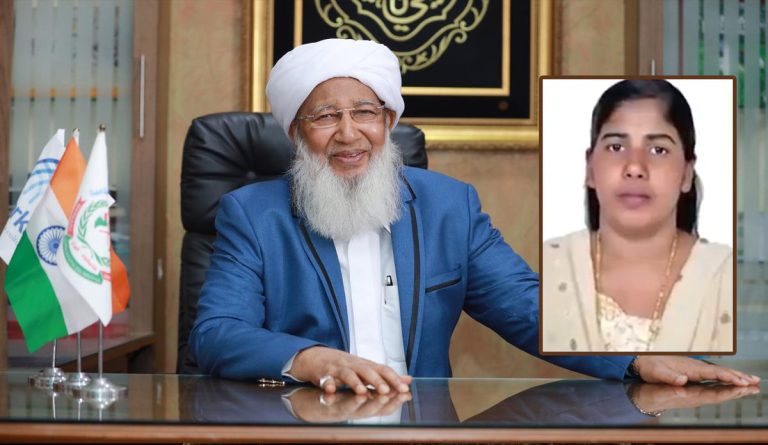
Andhra Pradesh: Angry villagers demolish the house of Rahmatullah who raped and killed a 3-year-old Dalit girl

Angry villagers demolished the house of a rape accused named D Rahmatullah on Saturday (24th May) in Kadapa district of Andhra Pradesh. The 25-year-old accused had allegedly raped and murdered a 3-year-old Dalit girl on Friday (23rd May) inviting the wrath of the villagers.

As per reports, on the day of the incident, Rahmatullah was attending a wedding when he lured the minor victim and took her to an isolated place behind Kalyana Mandapam at Kambaladinne village. He raped the child before brutally smothering her to death.

The incident sparked outrage among the villagers who said the accused had no right to live in the village. They razed to the ground the house of the accused at his native village in Moragudi. The villagers staged protests at Jammalamadugu government hospital on Saturday and demanded death sentence for the accused.

Kadapa District Collector Dr Sridhar Cherukuri and SP EG Ashok Kumar met the family of the victim and assured them all possible assistance. The District Collector announced a financial assistance of ₹5 lakh, a residential piece of land, and a government job to the family of the victim.

Additional Superintendent of Police Prakash Babu confirmed that the minor Dalit girl was raped and murdered by Rahmatullah. The accused has been arrested by the police. A case has been registered under SC/ST (Prevention of Atrocities) Act and the Protection of Children from Sexual Offences (POCSO) Act.

RJD supremo Lalu Yadav’s children support his decision of expelling his eldest son Tej Pratap Yadav from the party and family after his pictures with Anushka Yadav leaked online

RJD supremo Lalu Yadav’s decision to expel his eldest son Tej Pratap Yadav from his political party and family has been welcomed by other members of Yadav family. Lalu Yadav made the swift decision after some pictures of Tej Pratap with a woman named Anushka Yadav, who he apparently married, went viral on social media stirring a political storm.

“Ignoring moral values ​​in personal life weakens our collective struggle for social justice. The activities, public conduct and irresponsible behavior of the eldest son are not in accordance with our family values ​​and traditions. Therefore, due to the above circumstances, I remove him from the party and family. From now on, he will not have any role of any kind in the party and family. He is expelled from the party for 6 years,” Lalu Yadav wrote on X on Sunday (25th May) announcing Tej Pratap’s expulsion.

Lalu’s son and RJD leader Tejashwi Yadav, younger brother of Tej Pratap, supported his father’s decision to expel his elder brother from the party. While Tejashwi acknowledged his brother’s right to make personal decisions relating to his personal life, he said that such behaviour cannot be tolerated in political life.

“We cannot tolerate such things, we are working and are dedicated to the people of Bihar. If it’s about my big brother, political life and personal life are different. He has the right to make his personal decisions. He is an adult and free to make decisions. Our party’s chief has made it clear, and ever since he has said so, it is his feelings. We didn’t question such things… What he is doing in his personal life, nobody asks before doing anything. I have come to know about it via the media only, ” said Tejashwi Yadav speaking to the media.

Lalu Yadav’s daughter Rohini Acharya also welcomed his father decision and said that she and her family will not accept if the reputation of their family or party is tarnished by anyone.

“Those who maintain the dignity of traditions, family and upbringing never face questions. Those who abandon their wisdom and repeatedly commit the mistake of crossing the limits of dignified conduct and family prestige, they make themselves the subject of criticism. For us, our father is like God, family is our temple and pride and the party built by Papa’s tireless efforts and struggles and the concept of social justice are our worship. We will never accept that the reputation of these three is tarnished due to anyone,” she wrote on X.

What happened

The controversay started after Tej Pratap Yadav made a post on Facebook yesterday (24th May), announcing his 12-year-long relationship with Anushka Yadav. He also posted a picture of himself with her. However, hours later, he deleted the Facebook post and posted a clarification on X saying that his Facebook account was hacked and that the photo was AI-generated. But the damage was already done and by that time several more pictures of Tej Pratap and Anushka Yadav had gone viral on social media. In some of the pictures, Anushka Yadav is celebrating Karwa Chauth with Tej Pratap Yadav, wearing sindoor and saree.

As Tej Pratap Yadav claims his photo with Anushka Yadav was AI generated, more photos and videos of the two appear, including visuals of their apparent wedding

Hours after stirring a social media storm on Saturday (24th May) through a Facebook post in which he posted a picture of him with a woman named Anushka Yadav and a confession about their romantic relationship, Tej Pratap Yadav, son of RJD supremo Lalu Prasad Yadav took a U-turn. Dismissing the post, Tej Pratap claimed on X that his Facebook account was hacked and that the image in which he was seen with the woman was AI generated.

“My social media platforms have been hacked and my pictures are being wrongly edited to harass and defame me and my family members. I appeal to my well-wishers and followers to be cautious and not pay heed to any rumours,” Yadav posted on X.

In Facebook post, Tej Pratap Yadav shocked everyone by declaring that he had been in a committed relationship with Anushka Yadav for the last 12 years. He later deleted the post and posted a clarification on X.

However, several more photos and videos of Tej Pratap Yadav and Anushka Yadav have emerged online, including videos apparently showing the couple getting married.

In some of the pictures, Tej Pratap is seen with Anushka who is dressed like a newly-married woman. The happy-looking couple is also seen celebrating Karwa Chauth together.

Some social media users are speculating that the images and videos might have been deliberately leaked by someone.

Yadav under attack from political rivals

The images have created political troubles for Yadav ahead of the Bihar Assembly elections. Yadav’s political rivals are questioning his credibility and accusing him of deceiving the two women, Aishwarya Rai and Anushka Yadav. National General Secretary of BJP OBC Morcha, Dr Nikhil Anand attacked Yadav for setting a wrong example for the society and his followers. He questioned Yadav’s character for his unfair treatment of the two women. “If you did not think about the entire society, you should have thought about the Yadav society or at least about our daughters. If such a low character is publicly displayed by the family of politicians like you, then it is definitely a matter of shame. Now it seems that Aishwarya Rai is really a very big victim in the whole episode, from whom the entire Lalu Prasad Yadav family should apologize publicly and she should also get proper compensation or restitution,” Anand wrote on X.

Seeing a political storm brewing due to Tej Pratap’s leaked images, RJD supremo Lalu Yadav expelled him from the party for a period of six years. Lalu Yadav confirmed in a post on X on Sunday (25th May) that Tej Pratap will not have any role of any kind in the party and family from now on.

Tej Pratap Yadav and his troubled previous marriage

Tej Pratap Yadav got married to Aishwarya Rai, grand-daughter of the former Chief Minister of Bihar Daroga Rai in May 2018 in a lavish ceremony. However, the marriage lasted only a few months. Rai had accused Yadav of drug abuse and cross-dressing. Their divorce case is still going on after six years of marriage.

Multiple fathers syndrome? Lahore-based ‘journalist’ begs China to take revenge from India for suspending Indus Water Treaty with Pakistan, writes about it in US magazine

Pakistanis either live in their own world or they are high on something extremely potent and illegal all the time. Otherwise, there is no sane way to describe how delusional The Diplomat’s Lahore-based correspondent Umair Jamal’s long-winded plea to outsource national sovereignty is. Jamal has penned a classic Pakistani fantasy piece, rather a strategic kink, where he attempted to portray India’s suspension of the Indus Waters Treaty (IWT) as a dangerous move that could invite retaliation not from Pakistan, but from China.

Yes, you read that right. In a world where most countries deal with their disputes bilaterally or through diplomatic means, Pakistan, ever the eternal teenager, needs to call not one but both its daddies when India gives it the cold shoulder. The classic “Tu jaanta nahi mera baap kaun hai” came from Jamal in an ironic manner, as it seems he, just like all the Pakistanis, does not know who their father actually is. No no, not literally. We are just talking about the diplomatic father on an international platform.

Blame India, forget the terrorists, and tell Uncle Sam

Jamal, in his article, conveniently glossed over the fact that 26 innocent Hindus were brutally killed in a terror attack in Pahalgam, and the terrorists who claimed responsibility, The Resistance Front, are linked to Pakistan-based terror outfit Lashkar-e-Taiba. He did not even spare a line to condemn the massacre of civilians by the illegitimate sons of Lashkar-e-Taiba. Rather, he jumped straight into playing the victim, blaming India for “escalating” tensions by suspending the treaty.

Apparently, expecting Pakistan to rein in terrorists is unreasonable. However, blaming India for daring to respond? That is fair game. Classic abuser-victim reversal. And where does Jamal make this case? Not in Pakistan’s Parliament, not in a regional forum, but in The Diplomat, an American publication. Because when it gets rough with India, Pakistan’s first instinct is to write op-eds to mummy and daddy in the West while cosying up with the stepbrother of the Dragon world. Anything for sympathy points and a potential ceasefire bailout.

China to the rescue, again?

The highlight of the article is its sheer audacity to suggest that China might block the Brahmaputra in retaliation to India’s suspension of the Indus Waters Treaty, as if Xi Jinping is just waiting for a Pakistani journalist’s permission to pull the lever.

Mind you, this is not foreign policy analysis but a fan fiction, that too from an amateur who thinks he is a master in his field. The kind where the bullied schoolboy daydreams about his elder brother beating up the bully, without even hitting the gym himself. Yes, I called India a bully, because for the first time, India showed its prowess and baseball-batted the bootlicking hustler what superiority looks like. For some, such aggression sounds like that of a bully, and even if it does, so be it.

Jamal forgot one crucial aspect of the scenario he presented. China is not India’s father. Nor is it Pakistan’s. China is a business partner and a creditor for Pakistan. And as for the Brahmaputra, India has already raised concerns over Chinese damming activities. Trying to use that as a threat now is like warning someone about a burglary, they have already installed cameras for. India is very much capable of handling China’s aggression, something the dragon would not prefer to showcase, because Pakistan is being a cry-baby.

The desperation reeks, and so does the dependency

From warning India of “chaos in Pakistan” to quoting the Pakistani National Security Committee’s chest-thumping on “vital water interests,” Jamal’s piece is full of threats his own country is in no position to carry out. Pakistan depends on the IMF to pay for the electricity bills. Pakistan depends on Chinese loans to build dams. The same Pakistan is threatening war over river waters. The way Pakistan is behaving is the same way defaulters behave when the municipal corporation cuts the water connection due to non-payment of bills.

Not to forget, Pakistan desperately pleaded with the US to broker a ceasefire. While US President Trump claims he had a role to play in the ceasefire, India has stood firm on its stance that no third party was involved in the understanding between India and Pakistan to stop the military operation. It is, anyway, not a ceasefire, as Indian Armed Forces chiefs and Defence Minister Rajnath Singh categorically said in multiple statements. India’s Operation Sindoor is ongoing.

Journalism or diplomatic freeloading?

It is worth asking why Jamal, a Pakistani journalist, felt the need to make this case in an American magazine rather than a Pakistani one. Forget that he is The Diplomat’s correspondent. The question is, who cares on an international platform if Pakistan is crying or feeling bullied? Could it be that the domestic audience is tired of these doomsday narratives? Or is this another attempt to internationalise Kashmir and Indus waters by dragging foreign capitals into regional affairs?

In either case, Jamal’s writing lacks serious journalism and is more inclined towards a pamphlet handed out by a drowning man screaming for help to anyone across the world. Just a reminder, Pakistan recently celebrated getting a $1 billion bailout from the IMF.

India has not shut the taps yet – but the tears are already flowing

Notably, it is a long way for India to completely control the Indus waters flowing into Pakistan. But let it be known, the treaty was a gesture of goodwill, not compulsion. And when that goodwill is met with bullets and bombs, the taps can and will be reconsidered.

If India wants to reduce the water flow, India will do it and will do it boldly. Anyone can take note of it, Pakistan’s West Daddy, the East Daddy, or the Martian Daddy.

Conclusion – When foreign policy is outsourced to columnists

Pakistan’s idea of diplomacy is op-ed outsourcing and tantrum-triggering. Jamal has done his bit for his motherland. He has played the ultimate victim card and invited outside intervention. He has warned India of doomsday, all the while pretending that Pakistan’s own record of exporting terror has nothing to do with why India is done playing nice.

Instead of doing propaganda, if Pakistani leaders had invested the energy in stopping jihad factories, they would not have needed to write complaint letters to Beijing and Washington.

Lalu Prasad Yadav expels Tej Pratap Yadav from party for ‘Ignoring moral values’ after Tej revealed his relationship with Anushka Yadav, says his eldest son will have no role in family

On May 25, 2025, Rashtriya Janata Dal (RJD) supremo Lalu Prasad Yadav announced that he is expelling his eldest son, Tej Pratap Yadav, from the party for a period of six years. He also said that Tej Pratap will not have any role of any kind in the party and family from now on.

This dramatic decision, shared via a post on X, comes in the wake of Tej Pratap’s public announcement on May 24, 2025, where he revealed a 12-year relationship with Anushka Yadav, a disclosure that sparked controversy and later led to claims of his account being hacked.

Lalu Prasad Yadav tweeted, “Ignoring moral values ​​in personal life weakens our collective struggle for social justice. The activities, public conduct and irresponsible behavior of the eldest son are not in accordance with our family values ​​and traditions. Therefore, due to the above circumstances, I remove him from the party and family. From now on, he will not have any role of any kind in the party and family. He is expelled from the party for 6 years.”

The RJD supremo further added, “He is capable of seeing the good and bad and merits and demerits of his personal life. All those who will have relations with him should take their own decisions. I have always been an advocate of public shame in public life. The obedient members of the family have adopted and followed this idea in public life.”

Tej Pratap Yadav, Lalu’s eldest son, has often been in the spotlight for controversial actions. His personal life has drawn particular scrutiny, notably his 2018 marriage to Aishwarya Rai, daughter of RJD legislator Chandrika Rai, which ended in a highly publicized divorce filing later that year due to “compatibility issues.”

On May 24, 2025, Tej Pratap posted on Facebook, declaring a 12-year relationship with Anushka Yadav, stating, “I am Tej Pratap Yadav, and the person seen with me in this photo is Anushka Yadav! We have known each other and loved each other for the past 12 years.” Shortly after, the post was deleted, and Tej Pratap claimed on X that his account was hacked and the photos were edited to defame him and his family, a statement that hardly convinced anyone.

Moreover, more images and videos of Tej Pratap with Anushka have appeared on social media, including visuals of what appears to be their wedding. As the divorce battle between Tej Pratap and Aishwarya yet to be resolved, his relationship with Anushka raises legal questions too.

India views China as its primary adversary, Pakistan as ancillary security problem, Pakistan regards India as existential threat: US Defence Intelligence Report

The military conflict between India and Pakistan following Pahalgam terror attack and India’s Operation Sindoor has not officially ended, it remains on pause. But as per an US intelligent report, India considers Pakistan only as an ancillary security problem. The “2025 Worldwide Threat Assessment” report by the Defence Intelligence Agency states that India views China as its primary adversary.

The report states that Pakistan is considered more an ancillary security problem to be managed by the Indian govt, despite the recent military conflict.

According to the report, India is giving priority to advancing its bilateral defense partnerships in the Indian Ocean region to counter Chinese influence and boost its global leadership role. India is using exercises, training, arms sales, and information sharing for this objective.

The report states that while India and China have reached an agreement to move forces away from the two remaining contested positions along the disputed Line of Actual Control in eastern Ladakh, this has not resolved the longstanding dispute about border demarcation. However, this has reduced some tension that escalated in 2020.

Defence Intelligence Agency report says that India “certainly will continue promoting its “Made in India” initiative this year to build its domestic defense industry, mitigate supply chain concerns, and modernize its military.” It noted testing of nuclear-capable developmental Agni-I Prime MRBM and the Agni-V multiple independently targetable reentry vehicle, apart from commissioning its second nuclear-powered submarine.

The US intelligence report adds that India will maintain its relationship with Russia through 2025 because it views its ties to Russia as important for achieving its economic and defense objectives. It notes that while India has reduced its procurement of Russian-origin military equipment under Modi government, the country still relies on Russian spare parts to maintain and sustain its large inventory of Russian-origin tanks and fighter aircraft.

While the report states that India considers Pakistan as an ancillary security problem, it states that Pakistan regards India as an existential threat. The report predicts that Pakistan will continue to pursue its military modernization effort, including the development of battlefield nuclear weapons, to offset India’s conventional military advantage.

Significantly, the Defence Intelligence Agency says that Pakistan is modernizing its nuclear arsenal and maintaining the security of its nuclear materials and nuclear command and control. The report also says that Pakistan is acquiring weapons of mass destruction.  It states, “Pakistan almost certainly procures WMD applicable goods from foreign suppliers and intermediaries.”

It says that Pakistan is acquiring materials and technology needed to develop WMDs from China, which are sometimes transhipped through Hong Kong, Singapore, Turkey, and the United Arab Emirates. However, the report adds that while China remains Pakistan’s primary military hardware supplier, terrorist attacks on Chinese workers in Pakistan have emerged as a point of friction between the countries.

Congress mocks Modi govt’s united stance against Pakistan-sponsored Pahalgam terror atttack, says BJP could not find enough party MPs to represent India’s policy globally

At a time when the Modi government is making efforts to put up a united front at the global stage and present India’s zero tolerance policy towards terrorism, the Congress party is mocking the government for showing inclusivity.

India sent seven multi-party delegations across various countries to expose Pakistan’s support for terrorism and India stance towards terrorism.

However, All India Mahila Congress President Alka Lamba questioned the Modi government intention behind including members of different political parties in the multi-party delegations.

Addressing the media on Sunday (25th May), Lamba alleged that the BJP did not find enough leaders in their own party that they sought the help of other political parties to send their members for the purpose of forming the multi-part delegations.

“When it comes sending MPs to foreign countries for to put forward your case against terrorism, you do not find enough MPs in your own and therefore you turned to us. In the country’s interest, our MPs are exposing Pakistan and terrorism in foreign countries,” Lamba claimed.

Throughout the media briefing, Lamba kept lashing out at the Modi government accusing it of taking the entire credit for the success of Operation Sindoor.

Ironically, while the goverment took the initiative of sending delegations that included members from various political parties to send out a message that India stands united against terrorism irrespective of internal political differences, the Congress party is accusing the government of not listening to the opinions of other political parties.

India sends multi-party delegations

India has sent 7 multi-party delegations to various countries in an effort to expose Pakistan’s support for terrorism and highlight India’s policy of zero-tolerance on terrorism on the global stage.

These delegations include Member of Parliaments from various political parties which have been divided into seven groups consisting of 8-9 members. A leader has been assigned for each group who will lead the delegation on global level.

‘Only people of one religion were identified and killed’: Shashi Tharoor, part of all-party delegation mission of Modi govt, tells the truth of Pahalgam terror attack to the world

In a powerful recounting of the recent Pahalgam terrorist attack, Congress MP Shashi Tharoor laid bare the chilling religious targeting that defined the assault. Tharoor is part of the all-party delegation dispatched by Modi government to different countries in batches to tell the world about the attack and India’s response.

While speaking at the Indian Consulate in New York, United States, Tharoor did not mince words in calling out the motives of the terrorists, stating that the attackers “identified the religion” of the victims and executed them purely on that basis.

Attack aimed at halting Kashmir’s growth story

Tharoor noted that the timing and brutality of the attack were calculated to damage the rising trajectory of Kashmir as a safe and flourishing tourist destination. He noted, “Last year, more tourists visited Kashmir than Aspen, Colorado. That’s not just normalcy, it is prosperity.” The resurgence in tourism was a visible sign of peace and growth under the Modi government’s developmental push post-Article 370 abrogation, a success story that enemies of peace sought to disrupt.

Tharoor emphasised that the attack was not a random actor of terror, but a deliberate, targeted assault meant to destroy communal harmony. He said, “It was not someone blowing people up indiscriminately — it was a group identifying people by their religion and killing them.”

‘Hindus were singled out, and the message was clear’

Out of the 26 people who lost their lives, 25 were Indian nationals and one was a Nepalese citizen. All of them, Tharoor pointed out, were Hindu and killed for that reason. He recounted the incident where a Hindu professor survived only because he could recite the kalma, the Islamic verse, tricking the terrorists into believing that he was a Muslim.

He recounted, “In some cases, the husband was shot, and the wife was told to go back and tell the world that he was killed for his faith.” Yet he lauded the people of India for not falling prey to the provocation. “I am proud to say there was no backlash,” he said, adding that Indian society stood united in grief and defiance.

Terror outfit claimed responsibility within an hour

The terror group The Resistance Front (TRF) claimed responsibility within an hour of the terrorist attack. “India had no reason to doubt where it came from,” Tharoor said, hinting at Pakistan-backed terrorism without naming it.

The Modi government’s prompt response in sending a united political delegation to different countries around the world, one of which is led by Tharoor himself, sent a strong message of resolve and national solidarity. Though a section of opposition is rattled by the formation of all-party delegation and selection of likes of Tharoor, Centre’s strategy of involving all voices, even those ideologically different, added credibility to India’s narrative and details of Operation Sindoor on global platforms.

From Maoist stronghold to the arrival of first bus, top results in board exam: PM Modi highlights transformation in Gadchiroli, Dantewada in Mann ki Baat

0

From the first-ever bus service in Maharashtra’s Katejhari village to the stellar academic achievements in Chhattisgarh’s Dantewada district, Prime Minister Narendra Modi on Sunday detailed the transformation of once-Maoist-dominated areas into vibrant centres of progress and education and painted a picture of resilience and development, underscoring the government’s relentless fight against Naxalism.

During episode 122 of his monthly radio programme ‘Mann Ki Baat’ on Sunday, PM Modi spoke of a poignant story of change about the Katejhari village in Gadchiroli district of Maharashtra, which was affected by Maoist violence.

He noted that the villagers had waited for years for a bus service, and when the first bus finally arrived, they celebrated its arrival with drumbeats.

PM Modi also mentioned the positive changes in Katejhari were felt throughout the surrounding area, where the situation has quickly returned to normal.

“It is such a common thing to travel by bus. But I want to tell you about a village where a bus arrived for the first time. The people there were waiting for this day for years. And when the bus arrived in the village for the first time, people welcomed it by playing drums. There was a paved road in the village; people needed it, but a bus had never run here before. Why, because this village was affected by Maoist violence,” PM Modi said.

“This place is in Gadchiroli district of Maharashtra, and the name of this village is Katejhari. This change in Katejhari is being felt in the entire surrounding area. Now the situation here is rapidly becoming normal. Due to the collective fight against Maoism, basic facilities have started reaching even such areas. The villagers say that with the arrival of the bus, their lives will become much easier,” he added.

PM Modi also highlighted educational progress in areas once affected by Naxalism, particularly in Chhattisgarh’s Dantewada district, where students have excelled despite the challenges.

He noted that students from the district achieved impressive results in the 10th and 12th board examinations, with around a 95 per cent pass rate; Dantewada topped the 10th-grade results and secured the sixth position in the 12th-grade exams in Chhattisgarh.

“In ‘Mann Ki Baat’ we have already discussed the Bastar Olympics held in Chhattisgarh and the Science Labs in Maoist-affected areas. The children here have a passion for science. They are also doing great in sports. Such efforts show how courageous the people living in these areas are. These people have chosen the path of improving their lives amidst so many challenges.

I am also very happy to know that the results of Dantewada district in the 10th and 12th examinations have been excellent. With about a 95 per cent result, this district topped the 10th results. In the 12th examination, this district secured the sixth position in Chhattisgarh,” the Prime Minister stated.

As Katejhari welcomes new progress and students in Dantewada achieve notable success, Modi’s ‘Mann Ki Baat’ highlights the positive changes happening across the country, showing that improvement is possible even in challenging areas.


(This news report is published from a syndicated feed. Except for the headline, the content has not been written or edited by OpIndia staff)

India has overtaken Japan to become the 4th largest economy, says NITI Aayog CEO citing IMF data

NITI Aayog Chief Executive Officer (CEO) BVR Subrahmanyam said that India has overtaken Japan to become the world’s fourth-largest economy, citing data by the International Monetary Fund.

Addressing a press conference of the 10th NITI Aayog Governing Council Meeting on ‘Viksit Rajya for Viksit Bharat 2047’, Subrahmanyam stated that India’s economy has reached the USD 4 trillion mark.

“We are the fourth largest economy as I speak. We are a USD 4 trillion economy as I speak, and this is not my data. This is IMF data. India today is larger than Japan. It’s only the United States, China, and Germany which are larger, and if we stick to, you know, what is being planned, what is being thought through, it’s a matter of another 2, 2.5 to 3 years; we would become the third largest economy,” said BVR Subrahmanyam, CEO, NITI Aayog.

“It’s only the United States, China, and Germany which are larger, and if we stick to what is being planned, what is being thought through, it’s a matter of another 2, 2.5 to 3 years; we would become the third largest economy,” Subrahmanyam added.

According to the IMF’s April edition of the World Economic Outlook report, the nominal GDP for fiscal 2026 is expected to reach around USD 4,187.017 billion. This is marginally more than the likely GDP of Japan, which is estimated at USD 4,186.431 billion.

India was the fifth largest economy in the world till 2024.

The global financial body projects that India will remain the fastest-growing major economy over the next two years. India’s economy is expected to grow by 6.2 per cent in 2025 and 6.3 per cent in 2026, maintaining a solid lead over global and regional peers, the April 2025 edition of the IMF’s World Economic Outlook added.

India is projected to remain the fastest-growing large economy for 2025 and 2026, reaffirming its dominance in the global economic landscape.

In contrast, the IMF projects global economic growth to be much lower, at 2.8 per cent in 2025 and 3.0 per cent in 2026, highlighting India’s exceptional outperformance.

NITI Aayog CEO further stated that India is at a turning point and at a take-off stage where it can grow very, very rapidly.

Sharing more information on the matters discussed during the Governing Council Meeting, NITI Aayog’s CEO said that the Centre and States discussed the strategies for manufacturing services, rural, non-farm, urban, informal, and the green economy sectors.

“We had sub-themes for manufacturing services, rural, non-farm, urban, informal, and the green economy, as well as the circular economy. These were the broad themes that were there,” Subrahmanyam said, explaining the other details of the meeting that took place in New Delhi on Saturday.


(This news report is published from a syndicated feed. Except for the headline, the content has not been written or edited by OpIndia staff)