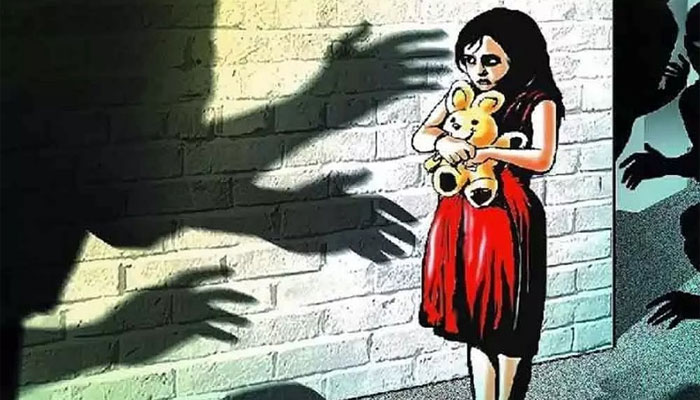
On August 31, a 75-year-old man identified as Akbar Ali from Malda, West Bengal, was sentenced to life imprisonment for the digital rape of a 3-year-old girl. The incident took place in 2019 in the Sector 39 Police Station area of Noida, Uttar Pradesh.
A complaint was filed against Akbar Ali on January 21, 2019, by the girl’s father. Special Public Prosecutor Neetu Bishnoi said in a statement, “The complainant said at 11 am that day, his daughter was playing outside her home. Akbar lured her with toffee and took her to his room.” The Father of the victim said, “My daughter came home crying and revealed her ordeal to her mother.”
As to the Police, Akbar was staying at his son-in-law’s house in the neighbourhood. One day, when no one was home, he committed the crime. The minor victim had testified in court where she told the court that one day she was playing outside when Akbar lured her into his room with toffee and sexually assaulted her.
The medical examination of the girl was done by Dr Pushpalata, who said in her report, “There was no injury mark on the private part… In my medical report, any rape can’t be confirmed with a medical inspection. The internal inspection of the victim was found to be normal.”
Claiming Akbar was innocent, her granddaughter, who was a defence witness, said it was a false case. She said her family had cooked meat two days before the incident and dumped the bones in the neighbourhood, which led to an altercation with the family of the victim. She said, “The complaint registered is a false case against my grandfather.”
However, her testimony in favour of her grandfather did not work in the court that relied on the testimonies of the victim and her parents. The court convicted Akbar of life imprisonment under POCSO Act and imposed a fine of Rs 50,000. The court said, “Out of the amount of fine imposed, 80% shall be paid to the girl for trauma, pain and suffering as she is entitled under Section 357-A of the CrPC.”
Irshad Ali, Akbar’s lawyer, said in a statement that the judgement was not satisfactory. He said, “The medical report did not establish rape or assault. We will challenge this order in the high court.”
What is digital rape?
Though it may sound related to an offence committed digitally or virtually, the term digital rape has nothing to do with the online world. Digital Rape refers to an act of forceful penetration using fingers or toes without any consent. It is notable that in the English Language dictionary, the word ‘digit’ refers to finger, thumb or toe, thus, the act is called ‘digital rape’.
Until December 2012, digital rape fell under molestation and not rape per se. However, following the infamous Nirbhaya gang rape case, new rape laws were introduced in the parliament, and the act was classified as a sexual offence under Section 375 in case the victim is an adult, and it was also added to the Protection of Children from Sexual Offences (POCSO) Act for cases where the victim is a minor. It is notable that Section 375 of the Indian Penal Code (IPC) is also applicable in cases involving minor victims. The accused is tried under both IPC 375 and POCSO Act.
As per the legal definition, rape is an “act of forcing a male genital, any foreign object, or any other part of the body into a woman’s genitals, mouth, anus, or urethra.”
Under POCSO Act, the accused, if convicted, faces five years in prison. However, if the person is charged under Section 376, the punishment can be extended to ten years or life imprisonment with or without a fine.
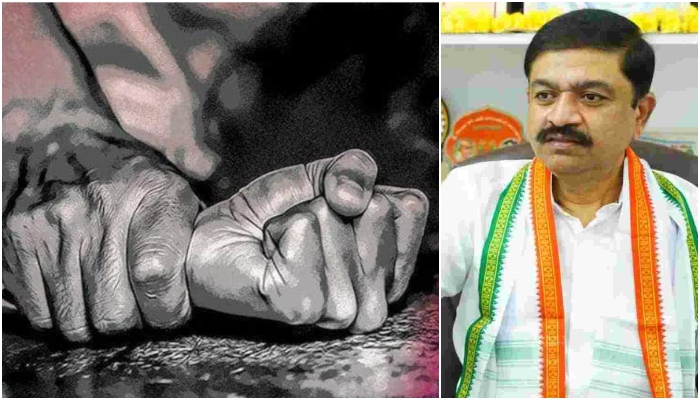
On Thursday, the Hyderabad Police lodged an FIR against Narayanpet District Congress chief K Shivakumar Reddy for rape and blackmail of a woman colleague. The victim woman in her complaint stated that Reddy spiked her drink, physically assaulted her in Banglore and Hyderabad, and also shot incriminating videos of her.
According to the reports, the victim woman was a member of the Indian National Congress (INC) and was deputed to campaign and coordinate the Municipal Elections in 2020. Amid the campaign, she met District Congress Committee President, Khumbam Shivakumar Reddy who tried to get close to her.
The woman in her written complaint said, “I was allotted Narayanpet region for the campaign. There I met Reddy. He often messaged at ungodly hours. Finally, on one occasion, he expressed his intention to marry me”. The woman was aware that Reddy was already married and hence asked him about his wife. The accused then pretended that his wife was critically ill and would not survive for more than 3 years.
He said that he was looking for a woman to marry who would take care of him and his family. According to police, during their stay in Dubbaka district, Shivakumar Reddy arrived at the woman’s room in an inebriated state and forced her to have sex with him. “On refusing to accept his proposal, he physically assaulted her and also thrashed her”, the complaint read.
Reports mention that the accused tied a yellow thread around the neck of the victim signifying that they were married according to the Hindu rituals. Later he called the victim to a reputed hotel for some discussion related to the campaign and allegedly spiked her drink with some pills to rape her.
The victim was not in a conscious state of mind when the incident happened. The accused also clicked obscene pictures of the victim and recorded several incriminating videos of her. He later used these pictures and videos to blackmail her to fulfil his future sexual demands. According to police, a case has been registered under sections 420 (cheating), 376 IPC (rape), and 506 IPC (criminal intimidation) of the Indian Penal Code (IPC), and an investigation is underway.
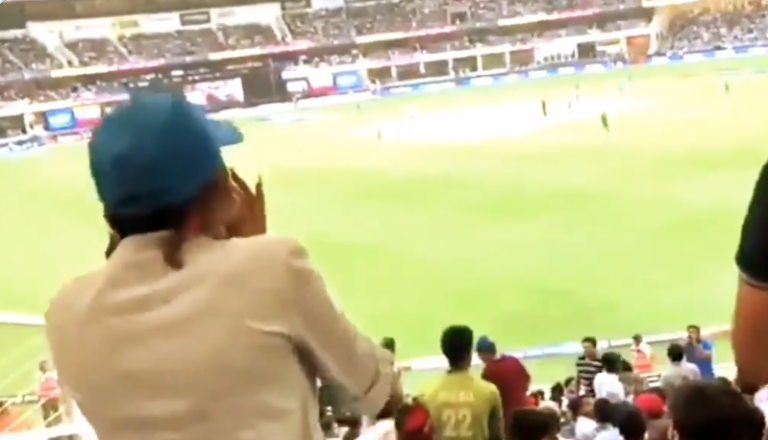
In 2018 Asia Cup match of India and Pakistan, when the Indian and Pakistani cricket fans were chanting ‘zindabad’ chants for their respective countries, the Indian crowd suddenly erupted into ‘Ganpati Bappa Morya’ chants leaving the Pakistani fans silent.
One can see how the crowd is chanting ‘India zindabad’ to which one person in blue cap responds with ‘Pakistan zindabad’. These chants continue for a few seconds till someone from India side breaks into ‘Ganpati Bappa Morya’ chants. Likely not knowing how to react to this, the Pakistani side fell silent.
The above clip is from Asia Cup Super Four match from September 2018 where Indian team led by Rohit Sharma won against Pakistan by nine wickets, paving way to the finals.
This video has again started making rounds on social media especially in the light of Ganesh Chaturthi that was celebrated on 31st August 2022 and the nailbiting India vs Pakistan Asia Cup match on Sunday where Hardik Pandya led India to a victory.
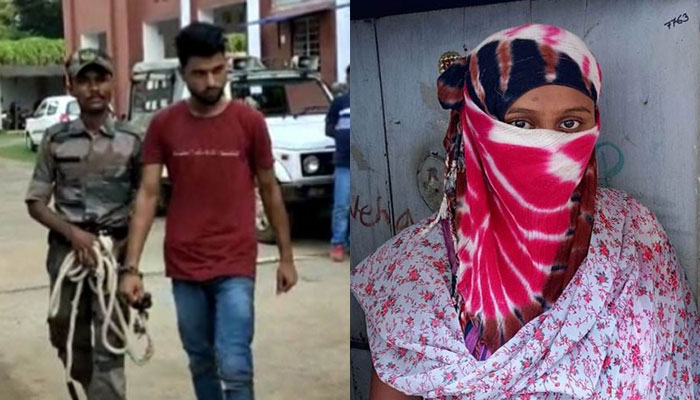
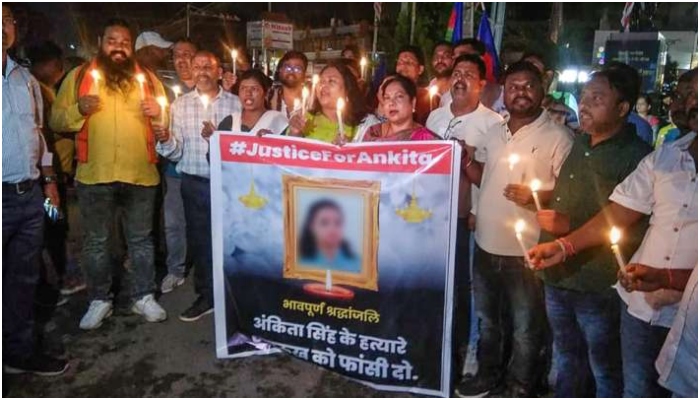
Following the murder of 15-year-old Hindu girl Ankita Kumari by a Muslim man named Shahrukh, new revelations are being made every day. It is now reported that the second accused in the case, identified as Mohammed Naeem, was linked to a group indulged in Grooming Jihad.
Advocate Priya Dutt told Hindi daily Dainik Jagran that there is an organization active in Dumka that is allegedly targeting Hindu girls. The Muslim men linked to the group trap young Hindu girls in love affairs and convert them to Islam on the pretext of marriage and happy life. Advocate Dutt lives in the same area.
A minor Hindu girl who was harassed and stalked by Naeem has come forward to tell her shocking story. The girl is a resident of the Kepatpada area in Dumka. She said when she used to go for coaching in 2021, Naeem not only molested her but also threatened her that if she refused his advances, he would harm her family. She further added that he continued to force her to give him her phone number.
The girl has further stated that she was once forcibly taken by Naeem to an unknown place. He took her to a room and imprisoned her. During that time, he pressured her to convert and marry. When she refused, he threatened to kill her and said he would sell her to his brother, who lives in Dubai.
Later, her family members filed a complaint against Naeem at Dumka Nagar Police station, who rescued the girl and filed a case under the POCSO act. He was sent to jail but was later released on bail. His family members threatened her parents to revoke the complaint filed against Naeem. She said, “Since my family came to know that Naeem was involved in the case, we are all scared.”
It is notable that following the arrest of Naeem, the investigating officer in the case said that Naeem was highly influenced by a banned Islamic Jihadi organization from Bangladesh named Ansar-ul-Bangla.
Reportedly, Naeem was supporting prime accused Shahrukh at every step in his harassment of the now deceased Ankita. During the interrogation of Naeem, he confessed that Shahrukh was his best friend and that they both had met on the evening of August 22 (hours before the attack). He said that Shahrukh was upset as Ankita was not responding positively to his (Shahrukh) friendship.
“Shahrukh told me that he would burn Ankita if she refused to talk to him”, Naeem said during the interrogation. He further confessed that he supported Shahrukh’s idea saying that it was the only punishment she deserved. Ankita was burnt alive on August 23 at 4 am when she was fast asleep in her bedroom. The duo threw petrol in her room through a window and set her on fire.
Ankita Kumari murder case
On August 23, Ankita Kumari was set ablaze by her stalker neighbour identified as Shahrukh Hussain and his friend Naeem in Dumka, Jharkhand. She died in the hospital while receiving treatment for her injuries on August 28.
On Thursday, the Jharkhand Police added the sections of the POCSO Act to the Ankita Singh murder case of Dumka. The girl was set on fire alive while she was asleep at 4 am in her home on August 23. The accused were identified as Shahrukh Hussain and Naeem alias Chotu were booked under the relevant sections of the IPC. Now, POCSO charges have been added to the case.
This is after the Jharkhand Child Welfare Committee took cognizance of the incident and revealed that Ankita who was studying in class 12 was a minor as per her birth documents and certificates. Earlier the Police had claimed that she was 19 years old when she died. However, the CWC brought out the deceased’s class 10 mark sheet which mentioned her date of birth as November 26, 2006.
Jharkhand: Child Welfare Committee (CWC) had recommended SP to add sections under POCSO Act in the matter. The Committee found out that the deceased was 15 years old & not 19 as mentioned by Police in her recorded statement
The CWC maintained that the girl was a minor when the incident happened. It demanded strict action against the accused and said that the Protection of Children from Sexual Offences Act, 2012 would be applied to the case. The Dumka Police launched a further investigation to confirm that Ankita was 15 years old during the incident.
According to the reports, the Protection of Children from Sexual Offences (POCSO) Act provides stringent punishment to those engaging in sexual crimes against children along with the death penalty in cases of aggravated sexual assault. Earlier, the National Commission for Women (NCW) chief had also taken cognizance of the event and had written to the Director General of Police (DGP) asking for a fair probe and time-bound investigation into the case.
To note, 15-year-old Ankita Singh, was a resident of Dumka and was burnt alive by two accused named Shahrukh and Naeem. The accused allegedly poured the inflammable fuel on her from the window of her bedroom when she was fast asleep. She was taken to the hospital shortly after the incident and on August 28, she succumbed to her burn injuries.
Days after Ankita’s death, videos of her last words went viral over social media where she could be heard demanding painful death for the accused who set her on fire. “He should die the way I am dying today,” the Dumka girl had said who breathed her last at 2.30 am on Sunday.
On August 31, Chief Minister of Telangana K Chandrashekhar Rao met Chief Minister of Bihar Nitish Kumar. There were some speculations that KCR might announce Nitish Kumar as the face of opposition parties for the upcoming 2024 Lok Sabha elections, but nothing like that happened. Instead, there was an awkward and embarrassing conversation between the two chief ministers when a reporter asked about the PM candidate for 2024.
Both the leaders were holding a press conference during which a reporter asked KCR who would be the PM candidate for the 2024 Lok Sabha elections. As soon as the question was asked, Nitish Kumar stood up and asked KCR to leave with him. Contrary to what Nitish wanted, KCR held his hand and asked him to sit as he was not in the mood to leave the press conference without answering the question. He said, “Nitish Kumar is the country’s best leader.” He further added that the opposition parties that stand against BJP would come together and decide who would be the PM candidate. KCR was also asked if Congress would join them, but he avoided the question.
‘Baithiye na’ ‘Nahi aap chaliye’
The reporter had asked KCR if he would suggest Nitish Kumar’s name for PM candidate if they form a united front. KCR said, “Whom am I to decide…” While he was speaking, Nitish Kumar asked him to leave the press conference with him and stood up, but KCR continued. “Even if I suggest his name, someone may oppose it. Why are you in so much hurry,” he said.
Watching Nitish ready to leave, it appeared that some of the reporters also stood up. KCR kept sitting and urged Nitish Kumar to sit down and let him answer the questions, but Nitish was not ready to face the “difficult” questions about PM candidate for the Lok Sabha elections.
Nitish finally sat down, but the next question again irked him. The reporter asked if Rahul Gandhi would remain PM candidate as Congress keeps emphasizing the same. Nitish, with visible frustration, asked the reporter not to put up such questions. When KCR tried to answer, he also stopped KCR and sort of instructed him to ignore the question. KCR avoided answering the question and said, “You are clever, but I am cleverer. As I said, we will sit together with all anti-BJP parties. We will try to bring them together.”
While KCR was speaking, Nitish again stood up and kept interrupting him. When a reporter again questioned if Nitish’s name would be up for PM candidate, Nitish told KCR, “Let’s go. Why are you answering them?” But KCR wanted to listen and continued. Nitish said, “Don’t fall into this trap. Leave this.” KCR said, “Please sit down, Nitish Ji, please sit down.”
Lok Sabha elections 2024
The next Lok Sabha elections are scheduled for the first half of 2024. Home Minister Amit Shah has already hinted that Prime Minister Narendra Modi will remain the PM candidate for Bharatiya Janata Party (BJP). However, the situation is tense on the other side. There are a number of leaders among the opposition parties who want to break the shackles of state politics and want to enter national politics, including Nitish Kumar, KCR, Mamata Banerjee, Arvind Kejriwal amongst others. Congress has always been a “strong” candidate to put up its leader as PM face because they are the oldest political party in the country. However, putting up Rahul Gandhi as PM candidate hasn’t quite helped.
On Friday (August 26), the Madras High Court granted permission to a Hindu petitioner to install the idol of Lord Ganesha in her housing unit only after she receives the consent of the local Jamath.
The petitioner, Mahalakshmi, was initially stopped by the local police to bring the idol of the Hindu deity to the Pullakadu Housing Unit in Ukkadum South in Coimbatore district of Tamil Nadu.
In their defence, the cops claimed that the area was “predominantly surrounded by Muslim community” and how the celebration of the Hindu festival could lead to a law and order situation. Aggrieved by the situation, Mahalakshmi was forced to knock the doors of the Madras High Court.
Although Article 25 of the Indian Constitution guarantees the Right to Freedom of Religion, the petitioner felt it necessary to get the consent of the Muslim community to celebrate her festival.
Before the Madras High Court, Mahalakshmi contended that the Jamath Committee has expressed ‘no objection’ to the Hindu festival and even vowed to offer Annadhanam (to distribute food) to the devotees. The case was heard by Justice N Sathish Kumar.
Madras High Court grants permission to install Ganesha’s idol at a housing board colony, where many Muslims reside, after obtaining permission from the local Jamath@SukritiMishra12 reportshttps://t.co/xhtdYziLoR
The Additional Public Prosecutor, appearing for the police, argued that the conduct of Ganesh Chathurthi in the Pullakadu Housing Unit can trigger a law and order problem.
While the Madras High Court could have limited itself to the petitioner’s right to observe her religious festival, it directed Mahalakshmi to file an undertaking at the local police station along with the affidavit of the Jamath Committee.
It is only then that the petitioner can celebrate Ganesh Chathurthi at her housing unit. On top of that, the Court has barred her from taking out any procession with the Ganesha idol.
“…It is made clear that the petitioner shall only install the Vinayakar idol inside their housing unit and celebrate the function and there should not be any procession along with the idol,” Justice N Sathish Kumar said.
By doing so, the Court has played into a long-standing civilisational fear of the Hindu community. With rapid changing demographics, Hindus are worried that their right to freely practice their religion will be curtailed.
Screengrab of the judgment by Madras High Court in 2021
The Madras High Court had then said, “Merely because one religious group is dominating in a particular locality, it cannot be a ground to prohibit from celebrating religious festivals or taking processions of other religious groups through those roads…If religious intolerance is going to be allowed, it is not good for a secular country. Intolerance in any form by any religious group has to be curtailed and prohibited.”
The Judges had then reiterated that the dominance of one religious group in a locality could not be a reason to curtail religious processions of another religious group through the locality. The Court argued that if such a rationale was accepted, then, minority communities would not be able to celebrate their festivals in most parts of India.
This demarcation of Hindu-Muslim areas is exactly what led to the partition in 1947. News reports from 100 years ago talk about the same stone-pelting on Hindu processions for passing through these allegedly Muslim areas, and now Indian liberals want to see that again. Baba Saheb Ambedkar talked about this same violence against Hindu religious processions in the 1920s.
Ambedkar commented on the hate Ms have for Hindu religious processions way back in 1920’s. pic.twitter.com/pMYd7EgMDE
Islamists have targeted Hindu processions during the festivals of Hanuman Jayanti, and Ram Navami. The Madras High Court’s decision to ban the procession of Ganesh Chaturthi is an affirmation of the invisible ‘Muslim veto.’
The situation is so grim that Hindus, for whom India remains a civilisational State, now require the consent of another community to be able to celebrate their festival. And this is simply because they do not form a numerical majority in a particular area.
Courts have been sermonising the Hindu community for long, even blaming BJP spokesperson Nupur Sharma for the gruesome murder of Kanhaiya Lal by Islamists. And each time, the onus has fallen on the Hindus to uphold values of brotherhood and harmony.
It raises an important question in the end: Would the Madras High Court have allowed the installation of the idol of Lord Ganesha in the absence of Jamaat’s consent? Probably not.
Ganesh Chaturthi, the festival commemorating the birth of Lord Ganesh, started today across India. After restricted celebrations in the last two years due to the Covid-19 pandemic, this year has seen the return to full fledged celebrations of the holy festival. While most individual households and puja pandals get clay idols of the elephant-headed God for the occasions, temples and many other places worship permanent idols, many of them centuries old. Among those idols of Lord Ganesha, one in Chhattishgarh is really unique, the Dholkal Ganesha of Dantewada.
This unique idol of Lord Ganesha is located on Mountain Dholkal in Chhattisgarh’s Dantewada at the height of around 3000 feet. The idol, brilliantly carved out of stone, was the victim of the systematic vandalism and destruction of Hindu icons and objects of worship recently, when it was vandalised by Maoists in 2017. But the Maoists could not kill the divinity of the idol and the mountaintop, and devotees complete a difficult trek to climb 3000 feet on foot to reach the idol to have a darshan and worship it.
The idol was carved and installed in the 11th century and was worshipped regularly. But with time it went out of people’s memory and got covered by trees, and remained hidden for many years until it was rediscovered by the British in 1943 before opening the Bailadila mines. The idol is around 3 feet tall and weighs more than 500 kgs. The Ganesh idol, carved from a solid piece of granite, is perched on its beautiful circular perch amid the deep, impenetrable woods of Bastar in Chhattisgarh’s Dantewada region.
However, post-independence, the idol got vanished from public memory again until the year 2012 when a journalist marched on a trek into the dense forest leading to the Dholkal mountain peak. This rediscovery created a sensation, so much so that the Dholkal Ganesh temple became a popular destination for pilgrims, trekkers, and history lovers. The Chhattishgarh state government had also started taking efforts to recognize the travel spot and had begun promoting the same in its travel programs.
Dholkal Ganesh Idol (Image source- Getty Images)
Also, the local tribes began hoping for prosperity as increased tourism would mean increased employment opportunities and increased income. Many also employed themselves as tour guides and tour operators and the dense forest from the base camp named Farsal suddenly was teeming with people who were walking up the way to pay respects to the 1100-year-old Ganesha idol.
Maosists threw the idol from Bastal hilltop
The scene of the Dholkal Ganesh idol bringing prosperity to the local tribal people of Bastar and the Dantewada region was unbearable for the Maoist terrorists who resided in the areas around Bastar. They could not watch the local tribes earning money and hoping for a better life due to state-promoted tourism. In January 2017, the huge Dholkal Ganesh idol was dropped from its lofty position 3,000 feet into the Bastar forests. The idol naturally shattered into smithereens resulting in killing the hopes of local poor residents.
The Bastar Police then launched an investigation to find and gather the idol pieces at the foothill dominated by the Maoists. The Police also stated that the Maoists had executed the destruction to stop the economic development of the region and also to prevent visitors from entering the area. Reports mention that the incident happened after the state government had announced sanctioning Rs 2 crore for developing the area as a tourist spot.
On February 2, the Ekadanta idol was then restored to its original site atop Dholkal hill by the Archaeological Survey of India and was consecrated by local religious rites.
Chhattisgarh: 6-foot Ganesha idol located on a hill in Dantewada’s Dholkal, found damaged last week, has been restored to its original place pic.twitter.com/JeeCgQDlkE
The Ganesha idol exclusively named ‘Ekadanta’ was installed in the 11th century by the kings of the Chhindak Nagvanshi dynasty and holds an axe (farsa) in one hand and a broken tusk in the other hand, to signify the story behind the installation of the idol. The idol located at a peak of Dholkal mountain which is part of the Bailadila hill range was established in memory of the battle between sage Parashurama and Ganesha.
According to a tale that is well known and has been repeated several times in the history of India, Lord Ganesha lost one of his tusks on Dholkal hill during this battle. According to the tale, a fierce battle had occurred between sage Parshuram and Lord Ganesha in which the former attacked the latter with his ‘farsa’ or axe. This battle had resulted in the loss of one tusk of Ganesha when it was hit by Parashuram with his axe, giving Lord Ganesha the unique identity of ‘Ekdanta’.
In the 11th century, the rulers of the Chindak Nagvanshi dynasty erected the stone statue of Lord Ganesha on the mountaintop to commemorate the battle. Reports mention that the 3 ft idol is carved out of stones that are found in the foothills of the Indravati River. The idol of Lord Ganesha is shaped to look like a ‘Dholak’ which is a popular musical instrument, giving the peak its name as ‘Dholkal’.
The idol also exhibits artistic brilliance showing Lord Ganesha seated in his customary ‘lalitasana’, or cheerful and relaxed position. The locals worship Ganesha all year, and a particular fair is conducted at this location in the month of ‘Magha’, between January and February.
Locals worship the idol and commemorate the battle
People also worship the idol during Ganesh Chaturthi which started today. People trek to the mountaintop, walk over a series of rocks to reach the stone where the idol is located, climb over that rock, and offer prayers. Due to its location, only physically fit people can reach the place, and only a small number of people can reach the idol at a time, as there is not much space on the rocks in that place. But the locals still reach the place on the occasion of Ganesh Chaturthi and conduct puja as per rituals.
Trek root leading to the Dholkal mountain (Image source- Getty Images)
The Ganesha idol established at the mountaintop of the Bailadila hill range is unique as it holds some special features. The idol which is around 1100 years old is naturally protected with no roof covering the statue. It features a ‘Sheha Nag’ on the stomach of the idol of Lord Ganesha and also shackles instead of Janeu which is a Hindu sacred thread. According to the experts, these features symbolize the creation of the Chhindak Nagvanshi dynasty and make the idol one of its kind worldwide.
Locals believe that the Bhogami tribals of South Bastar are descended from the female priest of Dholkatta Dholkal, and they worship the Dholkal Ganesha idol every day. According to another legend, the Dholkal Ganesha statue was initially worshiped by a Bhogami tribal lady. Locals claim that the residents of Faraspal village woke when she blew a conch from the top of the mountain. The locals worship the Ganesha statue throughout the year, and a special fair is conducted at this location in the summer.
Even after a difficult trek to the mountaintop, reaching the Dholkal Ganesha idol is not easy. Screenshot from a YouTube video)
During this period, apart from Lord Ganesha, Parashurama and other local deities are worshipped. To reach the peak of the mountain where the historic idol of Lord Ganesha is located, one has to travel through extremely dense forests, mountains, and ravines. Farsapal village which is named after the weapon used by sage Parshuram in the battle forms the base point for the Dholkal trek. Reportedly, the majority of the visitors to the spot hail from neighbouring areas.
Pertinently, the news of damage to the idol in 2017 has travelled far, attracting several visitors to the spot, including YouTubers. The state security forces after the year 2017 have also extended their operations to the location to drive away the Maoists and protect the visitors.
On Wednesday 31st August 2022, Bollywood actor Shah Rukh Khan took to social media to share a picture of an idol of Lord Ganesha on the occasion of Ganesh Chaturthi. Welcoming Ganpati Bappa at his home, Shah Rukh Khan wrote in his post, “Ganpatiji welcomed home by lil one and me….the modaks after were delicious…the learning is, through hard work, perseverance & faith in God, u can live your dreams. Happy Ganesh Chaturthi to all.”
Ganpatiji welcomed home by lil one and me….the modaks after were delicious…the learning is, through hard work, perseverance & faith in God, u can live your dreams. Happy Ganesh Chaturthi to all. pic.twitter.com/mnilEIA1tu
Immediately, Islamists on social media started posting their comments and replies to Shah Rukh Khan’s post attacking him for committing ‘Shirk’ which is the worst sin according to Islam.
A Twitter user Sadique Srd wrote, “Till when will you upset Allah just for the sake of making others happy? You have already earned a lot from them. Giving respect to them is one thing. What you are doing now is called Shirk.”
Duniya ko khush karne ke liye kabtak Allah ko Naraz Karoge? Duniya aapne bohot kama li hai…Respect dena Alag baat hai ..jo Aap kar rhe ho usko Shirk kehte hai ????
Another Twitter user Shimorekato posted, “Have you forgotten that Allah is supreme? Allah will never forgive you. As a true Muslim, I completely boycott Shahrukh Khan.”
Have you forgotten that AIIah is supreme? Allah will never forgive you. As a true Muslim I completely boycott Shahrukh Khan ?
A user by the name of Alishba quoted Jinnah in the tweet and wrote, “Jinnah was right when he said, Muslims who want to stay in India, that they would have to prove their patriotism to India for the rest of their lives?”
Jinnah was right when he said “Muslims who want to stay in India, that they would have to prove their patriotism to India for the rest of their lives? https://t.co/Hz4lWmlRL7
Shah Rukh Khan also shared the same post on his Instagram handle and Facebook account as well. These posts received an equal amount of hate from the Islamists. A Facebook user Mir Najmu Saqib wrote in a comment, “This is what happens when you run after worldly desires, you will start going to any extent to get worldly gains. Let Gauri khan Ji celebrate it, why are you celebrating? Remember SRK it’s shirk and Allah hates this sin the most.. may Allah protect you from the success that makes you commit idolatry.”
Another Facebook user Ahmed Mamdouh wrote in a comment, “indeed, whoever associates others with Allah then surely for him Allah has Forbidden the Garden of Paradise and his shelter is Fire. May Allah guide u to the right path.”
Unfortunately, this is the fifth year in a row that Shah Rukh Khan has been attacked by Islamists for celebrating a Hindu festival. SRK continues to face online trolling and attacks every year for bringing Bappa home on Ganesh Chaturthi.
Ganesh Chaturthi is one of the most widely celebrated festivals across India, but in Maharashtra in particular with people from every religion enthusiastically participating in the celebrations.
On 31st August 1997, a car crash ended the young life of the much loved and popular Diana, the Princess of Wales. Diana Spencer married Prince Charles, the first in line to the British throne on 29 July 1981, and became Princess of Wales. While the problems in their marriage started soon after the wedding and the couple separated, the final blow to their marriage was delivered on 20 November 1995 when BBC aired an interview with Princess Diana.
“AnInterview with HRH The Princess of Wales”, the episode of BBC’s current affairs program Panorama, aired on 20 November 1995. Soon after the controversial interview, Queen Elizabeth wrote to Charles and Diana, advising them to finalise their divorce.
In the 54 minutes long interview, Diana spoke openly about all the problems their marriage had faced over the years and Diana’s own personal issues. Talking about Prince Charles’s affair with Camilla Parker (now wife of Prince Charles), Diana said, “Well, there were three of us in this marriage, so it was a bit crowded.” Diana also questioned the suitability of Prince Charles to be the King after Queen Elizabeth.
During the interview, Diana also admitted her own personal issues, including her battles with depression and bulimia. She also admitted that she had engaged in self-mutilation a number of times during her marriage, hurting her arms and legs. In the years following the interview, a few of her biographers have said that her statements during the interview showed that she had borderline personality disorder.
Diana admitted to her own extra-marital affair with James Hewitt as well during the interview. She also talked about the abusive nature of the media and how she was constantly harassed by them.
The interview got record viewing figures in England and even around the world as public curiosity about the Charles-Diana marriage was at its peak. Nearly 40% of the British population tuned in to watch the interview with around 200 million tuning in from around the world. It turned out to be the last chapter of their marriage as a month later, Buckingham palace announced that the queen has advised both of them to divorce. It took another 8 months to finalise the divorce which was finally granted on 28 August 1996.
BBC obtained the interview with Princess Diana through fraudulent means
It later emerged that the interviewer Martin Bashir and the BBC had used fraudulent means to get the interview with Diana. Forged bank statements were prepared that falsely indicated that people close to her, including her former private secretary Patrick Jephson and another former royal household member, had been paid for spying on her.
Initially, BBC cleared Bashir of any wrongdoing after conducting an internal enquiry in 1996. However, years later, in 2020, BBC Director General apologised to Earl Spencer, brother of Diana, for the use of the forged statements to get the interview. Spencer refused to accept the apology and asked for an independent investigation.
Princess Diana’s death
On 31 August 1997, Princess Diana died in a tragic car crash in the Pont de l’Alma tunnel in Paris while trying to flee the paparazzi. She was accompanied by Dodi Fayed, the driver Henry Paul, and Fayed’s bodyguard who ended up surviving the crash.