Home Blog Page 3306

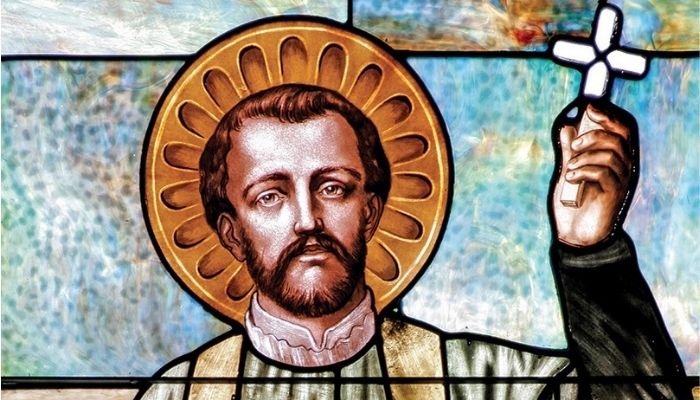
Inside the world of ‘Saint’ Francis Xavier: From spearheading inquisition of Goa to tormenting the lives of local Hindus

On this very day of May 6 in 1542, ‘Saint’ Francis Xavier set his foot in India in the newly established Portuguese colony in Goa. His mission was to enlighten the heathen natives with the light of God and instil in them his fear. While monotheism was not new to India with the arrival of merchant class Arabs to the genocidal Turkish invaders, Xavier was here to spread the message of Jesus Christ. Saint Xavier is a revered name globally, with many a teaching institution named after him across the breadth of India.

Coming to terms with Xavier’s dark legacy of not only justifying practices like Inquisition but orchestrating them, mass conversions of local populations in the Indian Subcontinent thus becomes a contentious issue. However, an assessment of history in India’s civilizational context unlikely makes Xavier look like yet another missionary on a catholic mission. With an aim to propagate Christianity in India and make its foundations even stronger, Xavier instituted the concept of Inquistion – an institution set up within the Catholic Church to root out and punish anti-Christian behaviour laid out by orthodox Christianity. Inquisitions were nothing but 16th-century concentration camps where the Catholic Church’s doctrines and politics were imposed upon native populations by European colonial powers.

Saint Xavier who thought of dark-skinned natives as ‘devils’, hid many such within him. The Modern day ‘Goencho Saib’ (Father of Goa), in the annals of history, comes out of his closet as a leader of many atrocities and harbinger of abuses against the Hindus of Goa. Here is a slice of Francis Xavier as an unapologetic Spanish missionary on Indian soil, well beyond the divine glorifications and reserved relics that behold his legacy.

The Portuguese Inquisition of Goa

The Inquisition started functioning in Portugal in 1541 while subsequent to its rule, it was established in India in 1560. The first demand for the establishment of the Inquisition in Goa was made by St. Francis Xavier who had attained sainthood in Rome by then. In a letter addressed from Amboina (Moluccas) to D. Joao III, the king of Portugal, on May, 16, 1545, he wrote, “The necessity for the Christians (in the Portuguese Indian capital of Goa) is that your majesty establish the Holy Inquisition, because there are many who live according to the Jewish law, and according to the Mahomedan sect, without any fear of God or shame of the world. And since there are many who are spread all over the fortresses, there is a need for the Holy Inquisition and of many preachers. Your majesty should provide such necessary things for your loyal and faithful subjects in India.”
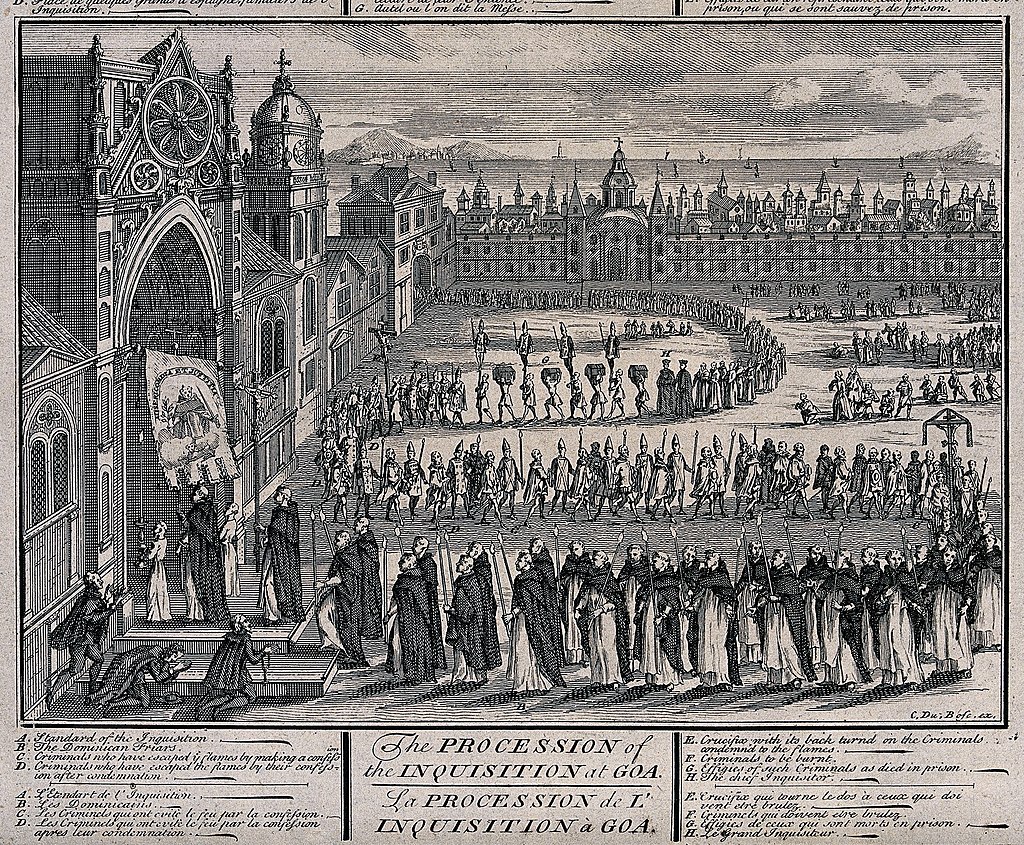
The Auto-de-Fe, an annual event to publicly humiliate and punish the heretics, it shows the Chief Inquisitor, Dominican friars, Portuguese soldiers, as well as religious criminals condemned to be burnt in the procession. Courtesy: Wikipedia

And thus started an era of darkness through which thousands of Hindus underwent enmasse religious conversions to orthodox christanity, by coersion or compulsion. The Inquisition had to be introduced in Portugal mainly for the grooming of the newly converted Christians, who had been forcibly converted from Judaism, to stop them from reverting to the practices of their old faith. “The Inquisition in India, on the other hand, had to play a similar role not only in relation to the new converts from Judaism but also those drawn from Hindu and Muslim religions,” Anant Kakba Priolkar in his book ‘The Goan Inquisition’ notes.

While material rewards and threats to livelihood played a lion’s share in converting the natives to the new religion, conviction to convert voluntarily among the local Hindus played a comparatively minor role in leading such conversions. Priolkar notes that one of the reasons that explain why the neo-converts continued to follow many practices pertaining to their old faiths and local culture in secrecy while being Christian only in name. Following these practices meant indulging in beliefs which were heretical (seditious) to the Christian worldview.

The arrival of Francis Xavier in India

Francis Xavier, in his account of the voyage wrote, “We left Lisbon on the 7th of April 1541, and reached India on the 6th of May of this the following year, having thus spent a year and more in the voyage, which is generally made in about six months.”

Around five months after having arrived at Goa, ‘the capital of Portuguese India’ Xavier toured the countryside, estimated the geography and extent of the Christian mission in India. He vividly describes Goa as a ‘fine-looking city, entirely in the hands of Christians’. Before Xavier arrived in India, missionary work had already started. Xavier was fascinated by institutions of the Christian supremacy including a convent of Franciscans, a ‘magnificent’ cathedral with a large number of canons, and several other churches which were being built across Goa. “There is good reason for thanking God for the Christian religion flourishes so much in this distant land in the midst of heathen,” he exclaimed.

His work in India includes patronage given to building churches across Malabar, the construction of which was volunteered by local neo-converts. The funding for the construction of the new churches was managed by diverting the money raided off while looting the Hindu temples. Xavier was particularly fascinated to see ‘a large and very handsome stone cross’, which was gilt all over. “I cannot express to you what joy I felt in looking at it. It seemed like the might of the cross appeared victorious in the midst of the dominion of the unbelievers,” such mentions in Xavier’s diaries give an insight into how lowly he thought of Indians as a race.
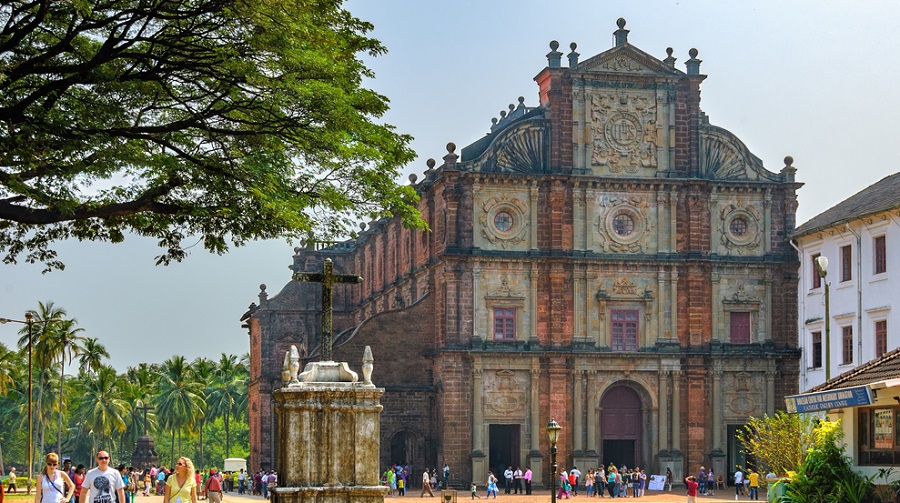
Basilica of Bomb Jesus, which holds mortals of St Francis Xavier to this day. Image: Telegraph

It is interesting to note that Vasco de Gama, when he first rounded the Cape of Good Hope and reached India in 1499, is said to have set up six crosses at different places and laid the practice of the same.

In Goa, Francis Xavier lived in a Hospital, that looked after the sick and often found time to hear confessions from society. Besides the sick, it was the local populace that lined up before the hospital to make their confessions in front of the saint from Spain who attracted much vanity. In the mid-day, he used to go to the prisons, and after giving the prisoners instructions on how they should abide by the tenets and become loyal servants of the God. Xavier paid regular visits to the Church of Our Lady, where he imparted religious education to children — as many as three hundred at a time. He notes of teaching prayers, the Creed, and the Ten Commandments to children who were eventually brought to the Christian fold. Upon this, the Bishop of Goa ordered the same to be done in the other churches.

Thus, Francis Xavier became increasingly popular among the Portuguese administration. He touched every strata of the society to enlighten them with the ‘grace of God’. However, his soft targets were the Brahmins, who often acted as centrifuges in his conversion activity. The influence of Brahmins, who topped the caste heirarchy stopped the so-called lower populations from adopt newer religious paths.

The Muslims in the erstwhile Bijapur Sultnate, and some of the native heathens (Hindus), who were rich and powerful held a considerable influence upon the Portuguese rulers on account of their numbers, influence, and trade. This kept up away from the loopholes of conversions while they made no pretence of hiding their religions in front of the catholic regime. The lower castes, however, were subjected to Xavier’s designs of conversions given their overall misery and stature in the social sphere. However, there are recorded instances of lower castes revolting against missionaries and turning back to their older ways, throughout the history of colonized Goa.
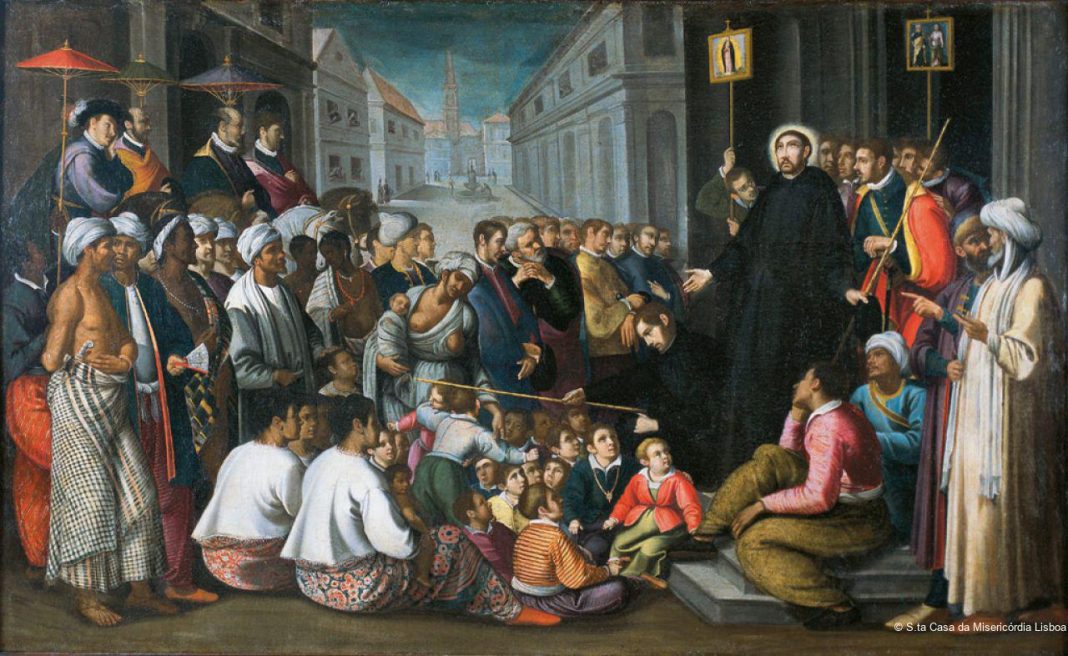
Franci Xavier preaching the heathens in Goa, 1619 Source: [https://baroqueart.museumwnf.org/database_item.php?id=object;BAR;pt;Mus11_A;15;en&cp]

Xavier notes that a certain college had been founded at Goa,in which native boys from all parts of India were ‘educated’ with an intention that they would eventually become Priests for their own countries, or at least interpreters for other missionaries. “The College was endowed with an annual revenue by the Government out of funds which were taken away from the idolatrous priests,” Xavier writes in his memoirs.

Fr. James Brodrick, well-known biographer of St. Xavier too talked about the limited knowedge St. Xavier had of Hinduism and its many sects. He writes, “St. Francis Xavier’s knowledge of Hinduism was, if possible, even less adequate than his few biased notions of Mohammedanism. Though the Portuguese had been in India for over forty years, none of them appears to have made the slightest attempt to understand the venerable civilization, so much more ancient than their own, on which they had violently intruded.

Attrocities against Hindus

When cases of the local population challenging the missionaries, came to the front, the Portuguese governor made sure that the heathen ‘violators’ are deserving of punishments and correction. The era of Inquisition started with an intent to show the Hindu populace its place. It saw a series of evangelical atrocities against the local populace of Goa, especially the Hindus who were converted to Christianity in large numbers by every means possible. Besides baptism, the Portuguese destroyed the temples and broke the Hindu idols into pieces. Traditional cultural practices were discouraged against the imposition of this new religion with which St. Xavier rose as a cult figure.

According to Portoguese researcher António José Saraiva, Hindus were the primary target for persecution who were punished for their faith. He estimated that over 74% of those sentenced were charged for continuing to carry on with their Hindu practices even after being converted by the Jesuits. Filippo Sassetti, an Italian traveller and merchant who was in India from 1578 to 1588, noted that fathers of the Church charged Hindus for referring their sacred texts and exercising their religion. “They destroyed Hindu temples, and so harassed and interfered with the people that they abandoned the city in large numbers, refusing to remain any longer in a place where they had no liberty, and were liable to imprisonment, torture and death if they worshipped after their own fashion the gods of their fathers,” he writes.

From the advent of Goa to the Portuguese in Goa till 1566, 160 Hindu temples were razed to the ground. A coerced campaign started by Franciscan missionaries between 1566 and 1567, destroyed around 300 Hindu temples in Bardez (North Goa). In Salcete, (South Goa), approximately another 300 Hindu temples were destroyed by the Christian officials during the Inquisition. Portuguese letters would often boast of razing or burning all Hindu temples in its colonies.
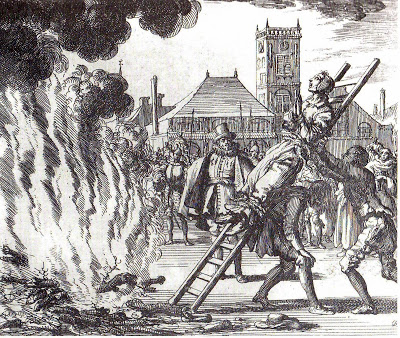
Illustration depicting attrocities during the Inquisition

It was only in the September of 1774, that the minister of Portugal Marquez de Pombal, in order to bring reform, passed a law that made the Inquisition practically defunct while it was finally abolished in 1820. From 1540s to 1782, the ignoble practice convicted 28000 people of violation of heracy to various forms of punishment. A conservative estimate notes the brutal burning of 1454 persons alive in the incarceration. Today, with many claims, there stands no official record of the number of persons who lost their lives as a result of tortures during the trials.

“(Indians) being black themselves, consider their own colour the best, they believe that their gods are black….the great majority of their idols are as black as black can be…and seem to be as dirty as they are ugly and horrible to look at,” Xavier had noted.

Priolkar descrribes the era of inquisition spearheaded by Xavier as the age of “callousness and cruelty, tyranny and injustice, espionage and blackmail, avarice and corruption, repression of thought and culture and promotion of obscurantism.” He notes that whenever an Indian writer who undertakes to tell Goa’s real story, would easily be accused of being ‘inspired by ulterior motives’.

Historians who have attempted to document the horrific exercises in proselytization, charted by Xavier and willingly funded by the empire have single handedly referred to arrival of Xavier in India as a watershed moment in Goa’s Inquisition history. Religious bigotry and conversion, fostered by the Inquisition, strengthened the roots of the empire while it trampled the Hindu populace under its might.
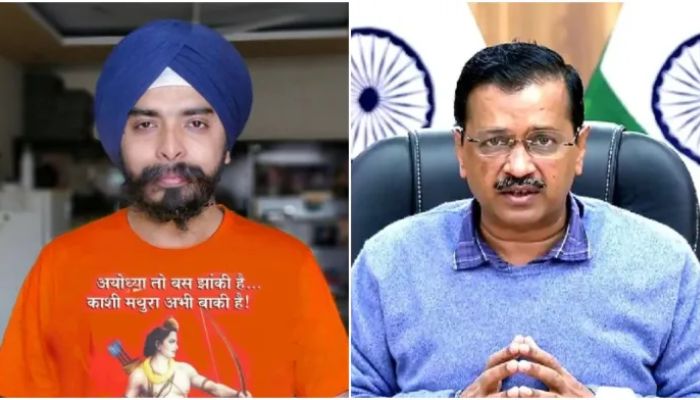
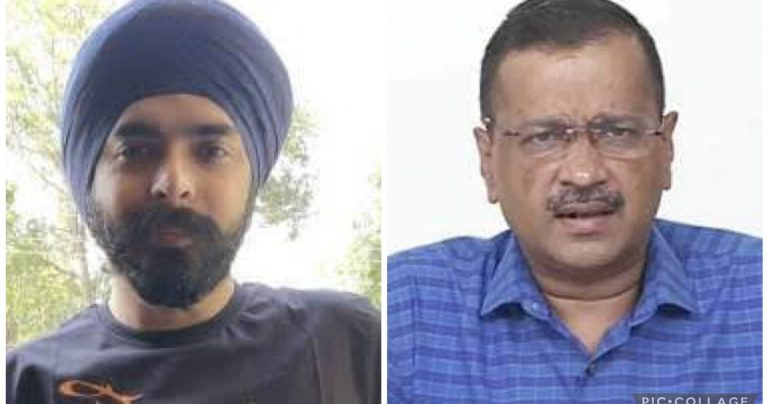
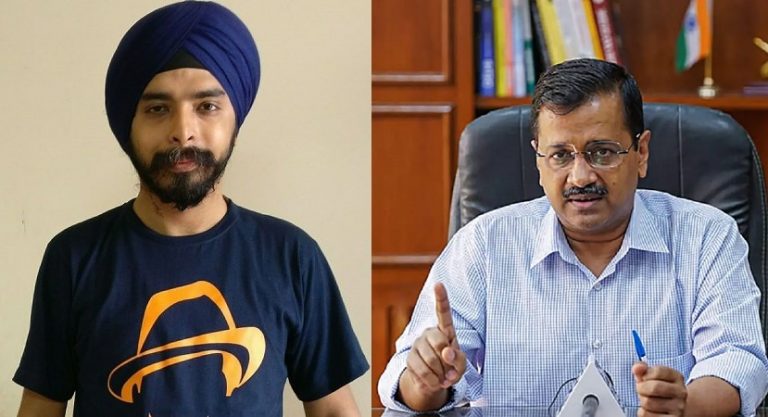
Is Tajinder Bagga being targeted by AAP for being a Sikh leader who is outspoken against Khalistanis: Here is why it is possible

On Friday (May 6), BJP spokesperson Tajinder Bagga was arrested from his residence in Delhi by the Punjab police. OpIndia had reported that a convoy of 10-12 cars, carrying 50 odd police personnel from Punjab forcibly entered the BJP leader’s house and took him away.

The cops also assaulted his aged father and did not inform Bagga about the ‘arrest warrant’. It must be mentioned that Punjab Police had earlier registered an FIR for his criticism of Arvind Kejriwal after the Delhi CM mocked ‘The Kashmir Files’ movie as a ‘jhooti film‘ in the Delhi assembly.

Although the FIR was later withdrawn, it soon surfaced that the Aam Aadmi Party-run-Punjab government had constituted a Special Investigation Team (SIT) to look into the ‘provocative remarks’ of Tajinder Bagga.

While speaking about the development, BJP IT Cell Chief Amit Malviya wrote, “Arvind Kejriwal’s brazen misuse of Punjab police to target political opponents is not unexpected. He had been raging for this. But this won’t go down well. We will fight to secure every single karyakarta of ours and ensure that Kejriwal learns how to handle power the hard way…”

While the AAP has been seeking refuge in the so-called ‘provocative remarks’ of Tajinder Bagga, it is important to note that the Arvind Kejriwal-led party had faced criticism in the past for harbouring Khalistani elements. Bagga, who is a Sikh by Faith and a vocal critic of the separatist movement, has often been at loggerheads with the AAP over the Khalistan issue.

Tajinder Bagga and his open criticism of Khalistan

As early as 2017, Tajinder Bagga had been vocal in his criticism of Khalistanis and its architect, terrorist Jarnail Singh Bhindranwale. In a tweet dating 5 years ago, the BJP leader had said, “Jarnail Singh Bhindrawala died, his dream to make Khalistan died & Pakistan agenda to divide India too died with his death. Hail Indian Army.”

He has often mocked the idea of a ‘separate nation for Sikhs’. This becomes evident from his tweet in May last year when he said that 10 bottles of Toilet cleaners could create Khalistan.

Tajinder Bagga did not shy away from calling Bhindranwale a terrorist. While responding to Khalistani sympathiser Ravinder Singh in March, he tweeted, “Mr Ravi Singh, not a single FIR or Investigation is pending against My beloved Mr Modi but your beloved Bhindrawala is terrorist as per Indian Constitution.”

During the anti-farm law agitation, the BJP leader pointed out how pro-Khalistanis had been masquerading as ‘poor farmers’. “Congress Organised Protesters are Raising Khalistan Jindabad Slogans. I always said they are not Kisans, they are Congress workers, Farmers are Nationalists, they can’t say Khalistan Jindabad,” his tweet dated September 25, 2020, read.

Last year, he pointed out how the farmer protests are in fact a cover for the anti-India agenda. While sharing an ANI video of a Bhindranwale flag on a farmer’s tractor, Bagga had said, “Once again agenda behind the protest is exposed. Khalistan, terrorist Bhindrwala gang should be arrested and sent to Jail.”

He had also sought the intervention of the then Punjab Chief Minister Captain Amarinder Singh over Khalistani posters in the city of Amritsar.

Bagga was harassed for exposing AAP’s connections with Khalistanis

Besides being outspoken against Khalistan, Tajinder Bagga had time and again exposed the connection between Khalistani extremists and the Aam Aadmi Party.

In 2018, he tweeted about an ex-AAP legislator named Jarnail Singh who attended a rally of Khalistani supporters in London in 2011. “You can clearly see Khalistan Printed Flags on both sides of stage & We stand united for Sikh Homeland on Top of Screen,” his tweet read.

In February this year, the BJP spokesperson lambasted Arvind Kejriwal for circulating a fake letter to gain the support of Khalistani Sikhs in Punjab.

“Shame on you Kejriwal. You have joined hands with Khalistanis to grab power,” read another tweet by Bagga.

Bagga did not stop exposing the underlying connections between Khalistanis and the Arvind Kejriwal-led party. He had pointed out how AAP leader Harpreet Singh Bedi had been actively demanding a separate nation for Sikhs.

Given that Tajinder Bagga, a practising Sikh, has been critical of Khalistan and also exposed Arvind Kejriwal in this regard, it was evident that it would draw the ire of AAP leaders sympathetic to the ‘Khalistani cause.’

Aam Aadmi Party and accusations of favouring Khalistanis

Ahead of the Punjab Vidhan Sabha elections this year, former AAP leader Kumar Vishwas had revealed how party supremo Arvind Kejriwal was in cahoots with the anti-India forces to grab power in the Northern State.

According to him, Kejriwal had once claimed, “Either I will become Chief Minister of the state or I will become first Prime Minister of an independent nation (Khalistan).” Vishwas had alleged that deep-rooted separatism had engulfed Kejriwal’s mind in his quest for power.

Instead of clearing the air over the Khalistan controversy, AAP party leader Raghav Chadha tried to intimidate the poet into silence. An FIR was registered against Kumar Vishwas, which was put on hold by the Punjab and Haryana High Court.

In 2018, similar allegations were made by actress Gul Panag 2018. Referring to Khalistani supporters in Punjab as K Gang, she had said, “Poorly calculated flirtation that was. One I warned against. Repeatedly. It’s because they didn’t get or understand Punjab. I thought the K gang had electoral weightage. All of us from Punjab knew better. But alas!”

Again in March this year, the Khalistani outfit ‘Sikhs For Justice’ (SFJ) had stated that AAP won the elections by deceptively bagging the votes of pro-Khalistan Sikhs in Punjab, who support SFJ’s secessionist referendum of Punjab.

In a video, SFJ Chief Gurpatwant Singh Pannu said that the AAP had tried to win the confidence of the pro-Khalistan votes by falsely claiming that the 2022 elections were significant for Punjab as well as for SFJ.

Last month, AAP leader Raghav Chadha attempted to give a clean chit to Khalistani extremists in Punjab after they attacked Hindu shopkeepers and pelted stones at a Kali temple in Patiala. Although the frenzied mob was caught on camera raising ‘Khalistani Zindabad’ slogans and brandishing swords, Chadha claimed it was a clash between workers of two political parties.

While speaking to the media, he remarked, “I want to clarify that this unfortunate violent clash in Patiala today was not between 2 groups but the workers of 2 political parties – on one side, there were people from Shiv Sena & Congress & on the other side, people from Shiromani Akali Dal.”

On May 1 this year, AAP Himachal Pradesh social media President, Harpreet Singh Bedi, came under the scanner over his pro-Khalistan tweets. Netizens pointed out Bedi has been actively advocating for the creation of Khalistan as a ‘constitutional right’ since 2012.

Bedi was also seen justifying separatist Khalistani slogans as non-seditious. “If saying Khalistan is Deshdroha (sedition) then saying Hindustan is also the same according to the constitution,” one of his tweets read.

In a conversation with another Twitter user, he was seen referring to the draftsmen of the Constituent assembly as ‘Your leaders’ suggesting a difference from his own. Following the controversy, the AAP leader deleted his Twitter account and the party expelled him to save its face.

As the evidence suggests, Aam Aadmi Party has been flirting with separatists and violent, terrorist Khalistani elements for a long time. Whether it was during the farmer protest or the run up to elections, AAP has always tried to pander to separatist elements in the hopes to reap benefit electorally in Punjab. To a large extent, it did help them win the state as even the Khalistani terrorist organisation Sikhs For Justice claimed that they had funded AAP’s election campaign in Punjab.

Tajinder Pal Singh Bagga is a Sikh man who wears his Dharmic roots on his sleeve. As evidenced, he has also been extremely vocal not just against AAP but also against the Khalistani terrorist movement and the demands for a separate nation for Sikhs. He has regularly raised his voice against Khalistanis and for The Hindu identity of India. In fact, he had called Bhindranwale a terrorist even during the farmers protest when even Barkha Dutt was being slammed for suggesting the same during her interview with Deep Sidhu.

While AAP has managed to win Punjab, one can theorise that their victory rests on a thin rope. Given that they had espoused widespread support from extremist Khalistani elements, their popularity in the state stands to be dented if nationalist Sikhs like Tajinder Bagga become popular challengers to his political hegemony. Therefore, it is not a stretch to imagine that the AAP government in Punjab is trying to hunt down Bagga not because of some tweets against Kejriwal but actually because he is exactly what threatens AAP in Punjab – A proud Sikh man vocal against Khalistani terrorists and AAP’s divisive politics.

While Khalistani elements seem to have a free hand in Punjab, critics of the AAP government are being intimidated, harassed and arrested without prior imitation. The case of Tajinder Bagga suggests that his disdain for Khalistan has ruffled the feathers of sympathisers of the separatist movement within the Aam Aadmi Party.

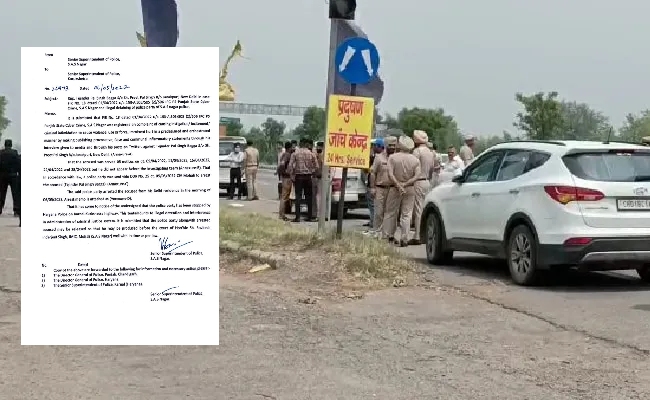
Battle of Kurukshetra: Punjab Police, Haryana Police, and Delhi Police at loggerheads in the historic battleground of Kurukshetra over Tajinder Bagga

The Punjab Police objected to the Haryana Police’s actions when it stopped the Punjab Police team which had arrested BJP leader Tajinder Singh Bagga. This comes after it was reported that the Haryana Police halted the Punjab Police team in Kurukshetra on their route to Punjab after arresting Tajinder Pal Singh Bagga from his Delhi residence.

SSP SAS Nagar (Mohali, Punjab) has written to SSP Kurukshetra (Haryana) complaining that their police party was halted by Haryana Police in Kurukshetra. In his letter, he argued that it amounted to illegal imprisonment and interference with the operation of the criminal justice system, and he requested that his police team should be liberated.

The letter reads, “That It has come to notice of the undersigned that the police party has been stopped by Haryana Police on Karnal-Kurukshetra highway. This tantamounts to illegal detention and interference in the administration of criminal justice system.”

“It is submitted that the police party along with the arrested accused may be released so that he may be produced before the court of Hon’ble Sh. Ravitesh lnderjeet Singh, JMIC, Mohali (S.A.S Nagar) well within time as per law,” it further added.

According to some sources, Bagga was being held in Thanesar Sadar Thana in Haryana, and Haryana Police’s Quick Response Team commandos stopped Punjab police and disarmed them before arresting them. A team of Delhi police arrived later, to escort Bagga back to Delhi. A case of kidnapping has been registered against Punjab police for picking up Bagga from his home without giving any intimation to the local authorities.

Earlier, Haryana cabinet minister Anil Vij informed reporters that the Haryana Police will not hinder the probe of Tajinder Pal Singh Bagga. However, it will only hand over Bagga to the Delhi Police as it has received information that the BJP leader has been kidnapped.

Speaking to India Today, Vij said, “Haryana will hand over Bagga only to Delhi Police. We got information from the Delhi police about his kidnapping. We are not acting as a hurdle. We will produce him at the police station that registered the kidnapping case.”

Tajinder Pal Singh Bagga, a BJP politician, was detained in Delhi by the Punjab Police on Friday morning. According to some accounts, 50 police officers in 10-12 cars from Punjab arrived at Tajinder Bagga’s home to arrest him.

High drama in Kurukshetra: Delhi Police bringing Tajinder Bagga back, Punjab Police team ‘detained’ at Haryana police station

Bharatiya Janata Party (BJP) leader Tajinder Pal Singh Bagga is returning to Delhi with the Delhi police. BJP MLA Kapil Mishra informed in his tweet, “Tajinder Bagga is now returning to Delhi with Delhi Police. Truth always triumphs.”

A video shared by ANI showed Bagga accompanied by Delhi Police officials at Kurukshetra’s Thanesar Sadar police station. The Delhi Police team is on the way back to Delhi.

Journalist Preeti Choudhary tweeted, “Bagga being handed over to Delhi police by Haryana Police …Punjab police detained at Kurukshetra.”

The Punjab police car carrying BJP leader Tajinder Pal Bagga was stopped by Haryana police near Kurukshetra. Reportedly, the Punjab police are ‘detained’ at the Kurukshetra police station and the Delhi police are bringing Bagga back to Delhi.

An FIR accusing the Punjab Police team of kidnapping Bagga has been registered by the Delhi Police.

He was arrested by Punjab Police on 6th May 2022 in the morning for his remarks against Delhi CM Arvind Kejriwal. The reports indicate that 50 policemen in several cars came to arrest Tajinder Bagga from his residence.

Speaking to OpIndia, Tajinder Bagga’s father had said that the officials from Punjab police had assaulted him and had forcefully taken Bagga away.

Earlier, Punjab Police had registered an FIR against Bagga for his criticism of Arvind Kejriwal after the Delhi CM mocked ‘The Kashmir Files’ movie during the budget session of the Delhi assembly, calling it a jhoothi film. The film depicts the sufferings of the Kashmiri Hindus during the genocide they suffered in Kashmir in the late 1980s and early 1990s

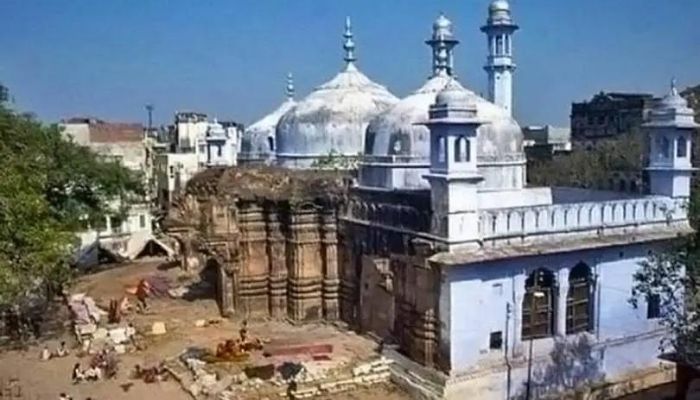
Despite opposition by mosque committee, survey and videography of Gyanvapi Mosque to start today amid tight security

Despite the committee of Gyanvapi Mosque in Varanasi saying that they will not allow videography inside the mosque, as ordered by a court, the videography will go ahead today amid tight security. According to reports, the survey and videography are scheduled to be conducted starting on 6th May 2022 at 3 PM by the Court Commissioner, as part of the commission’s action on behalf of the Civil Judge (Senior Division) of Varanasi. The court had ordered the survey while hearing a plea demanding darshan puja and security at the Kashi Vishwanath Temple and other idols including Shringar Gauri at Gyanvapi Mosque complex.

The issue may turn sensitive as the management committee of the Gyanvapi mosque has already declared to oppose the decision of the local court. Considering this, securities in Varanasi are being tightened.

S M Yasin, joint secretary of Anjuman Intejamiya Masjid Managing Committee, had said that no one will be allowed to enter the mosque. The Muslim side has said that the survey and videography should be restricted to the Kashi Vishwanath temple premises, and no “non-believer” will be allowed to enter the mosque. The committee has said that they will protest in a peaceful manner.

The survey process is expected to take 3 to 4 days, when both the basements of the temple turned mosque will be surveyed.

The Hindu petitioners in this case will be represented by 15 persons in the team of the court commissioner. Besides, 2 associates of the court commissioner and 3 photographers and videographers will also be present at the time of the survey and videography. Respondents from Anjuman Intezamiya Committee will also be present along with five lawyers. Security of the Kashi Vishwanath Temple complex has been increased.

The devotees or anyone going for darshan inside the temple is being allowed to enter only after intensive checking. The security arrangements of the mosque are already in the hands of the paramilitary forces. The time of survey action is fixed at around 3:00 pm. This has already increased the stir.

Shri Kashi Vishwanath, one of the twelve Jyotirlingas, and the Gyanvapi Mosque dispute is pending in Varanasi’s local courts since 1991. After the orders of the high court, that suit is transferred to the Allahabad high court. But the Shringar Gauri case is just seven months old.

On August 18, 2021, five women from Varanasi filed a suit in the Court of Civil Judge (Senior Division) of Varanasi along with other demands, including the demand for daily darshan puja at the Shringar Gauri Temple. The court, while admitting the plea, had not only ordered the setting up of a commission of lawyers to know the situation on the spot but also appointed an advocate commissioner. Not only that, the opposition was issued notices, as well as the next date of hearing, was fixed. But due to the court commissioner going on the backfoot a couple of times, the disputed site could not be inspected.

Varanasi Civil Judge (Senior Division Fast Track) Justice Ravi Kumar Diwakar, while reiterating his earlier order of 18th August 2021, had again allowed the survey and videography proceedings to be taken up by appointing court commissioner Ajay Kumar Mishra on 8th April 2022. After this, the Varanasi district administration and police, among the respondents, objected. To prevent the action, they argued that there need to be better security arrangements, and only Muslims and security persons can go inside a mosque. The court, while rejecting the plea after the hearing, continued with its earlier order and sought a report on taking action of survey and videography after Eid before May 10 and also fixed May 10 as the date of hearing.

According to the reports, the image of the goddess Shringar Gauri is located within the outer wall of the Gyanvapi mosque. Following the demolition of the Babri mosque during the Ram Janambhoomi movement, regular entry of devotees was forbidden, and worshiping this deity was only permitted on the fourth day of Chaitra Navratri.

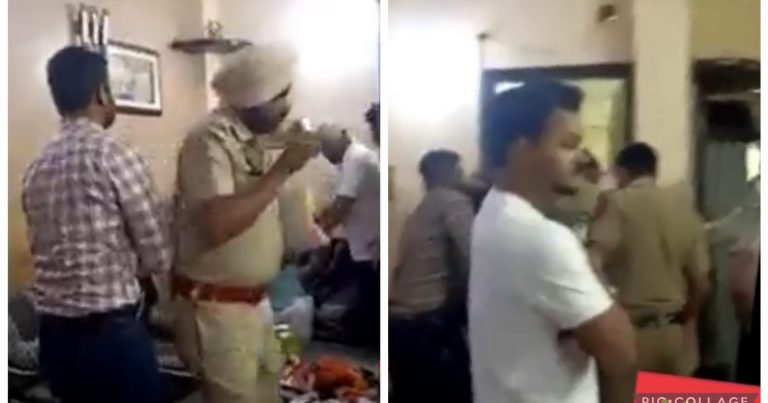
Watch: Visuals of BJP leader Tajinder Pal Singh Bagga’s arrest by Punjab Police from his Delhi residence

Earlier today, BJP leader Tajinder Pal Singh Bagga was arrested by Punjab Police for his remarks against Delhi CM Arvind Kejriwal.

The exact moment of his arrest is captured in a video, which has now gone viral on the internet. In the clip that is doing the rounds on the internet, Bagga is seen being arrested by a team of police officers, presumably of the Punjab Police, seen inside the house of the BJP leader.

The video also shows the police officers taking Tajinder Pal Singh Bagga to their cars parked outside his residence.

Punjab Police arrests BJP leader Tajinder Pal Singh Bagga

BJP leader Tajinder Bagga was arrested earlier today on May 6 by the Punjab Police. As news of Bagga’s alleged illegal arrest spread, a large number of BJP leaders and supporters were seen reaching the Janakpuri Police Station. 

Times Now shared a video where a large number of BJP leaders were seen outside the Janakpuri Police Station. As per reports, there is no update yet on whether the local police were informed regarding Bagga’s arrest, as is required under the protocol. 

The Delhi Police had then filed a kidnapping case following the arrest of BJP leader Tajinder Pal Singh Bagga by the Punjab Police.

Bagga was not even allowed to wear his turban, alleges his father

Bagga’s father has told OpIndia that first, there were two policemen who entered the house and started talking very politely. There was nobody else in the house except him and Bagga at that point. In the meantime, the BJP leader got dressed and came out. After exchanging some pleasantries, several other policemen started entering the house forcefully. When they started entering the house, Tajinder Bagga’s aged father tried to record a video of their high handedness and while he was doing so, one policeman pulled him inside the room and assaulted him.”

Bagga’s father has stated that the BJP leader was not even allowed to wear his turban and even get dressed properly before being taken away forcefully by the Punjab Police team. 

Punjab Police has stated that Bagga has been arrested under the process of law and he is being brought to be produced at court after being arrested by the SIT of SAS Nagar Police.

While Punjab Police is busy arresting Kejriwal’s critics, law and order deteriorates in Punjab: Murders, drugs, communal violence after AAP came to power

It has been nearly 2 months since Aam Aadmi Party (AAP) won a thumping victory in Punjab absolutely destroying Congress and Shiromani Akali Dal. In these 2 months, Punjab has seen a spike in murders in the state, with even famous Kabaddi players not immune to the violence, videos of the open sale of drugs in the state are going viral, and the state even witnessed communal violence after many many years.

Within the first 3 weeks of the AAP government coming to power, the state saw 19 murders, including 3 targeted killings. The rising crime graph in the state drew sharp criticism from all quarters but didn’t matter to Punjab Police. Even ruling Aam Aadmi Party’s supporters are not safe in the state right now as Dharminder Singh, president of the kabaddi club at Daun Kalan village, and an AAP campaigner, found out when he was brazenly killed.

Just yesterday, a couple was brutally murdered in Ludhiana while their daughter could hear their shrieks. These are hardly isolated cases in Punjab over the last 2 months as criminals are getting more and more brazen, and openly executing their activities.

While crime and violence are peaking in Punjab, the local police have other priorities, targeting anyone who speaks against Haryana-born Delhi Chief Minister Arvind Kejriwal. Since coming to power in Punjab, AAP has been using Punjab Police officers as Arvind Kejriwal’s personal henchmen, targeting anyone who dares to speak against the Delhi Chief Minister.

News of murders has become so common in Punjab during the last 2 months that nobody even bats an eyelid when one reads about a murder in the state. There are viral videos of the open sale of drugs in the state, while everyone else knows where to get chitta in the state, only Punjab Police doesn’t know. What happened in Patiala when a temple was attacked is there for everyone to see. ‘Khalistan Zindabad’ slogans were raised in the open by the separatists in the state.

Any sane mind will ask where is Punjab Police when law and order has gone to the dogs in the state. Well, Punjab Police is busy targeting people who speak against Delhi CM Arvind Kejriwal.

Earlier today, Punjab Police sent a team to Delhi to arrest BJP leader Tajinder Pal Singh Bagga over his tweets against Delhi CM Arvind Kejriwal. For a tweet made from Delhi, by a Delhi resident, against the Delhi Chief Minister, Punjab Police decided to arrest him without informing local Delhi Police. They even beat up the old father of Bagga because his son dared to tweet against Punjab’s actual CM.

This was not unexpected, Arvind Kejriwal had always expressed his dictatorial mindset and has always shared how he would like to suppress any dissent. From threatening to jail every journalist to sending people to prison for posting anything ‘offensive’ online, Kejriwal has been very open about his fascist mindset.

Now that he has Punjab Police in his pocket, and is running Punjab directly, we will see more and more of such cases where anyone saying anything against Kejriwal will be arrested from any corner of India. Meanwhile, Punjab sinks into chaos with deteriorating law and order as Punjab Police is busy following the orders of their actual boss, Arvind Kejriwal.

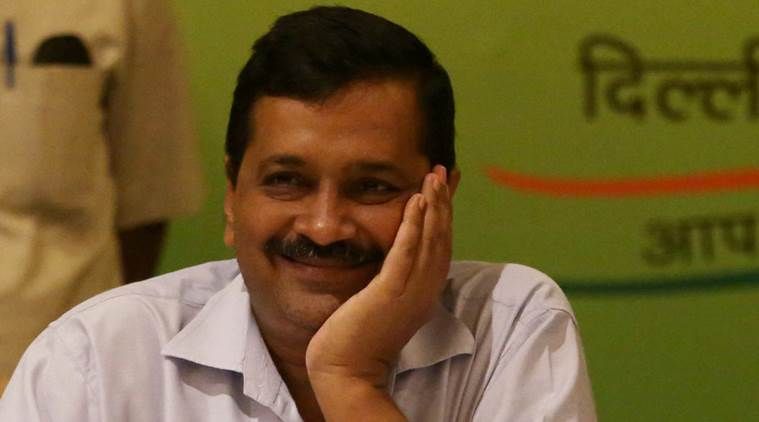
‘Arvind Kejriwal has come like East India company’: BJP slams AAP for illegal arrest of Tajinder Pal Singh Bagga by Punjab Police, assures legal action

The arrest of BJP leader Tajinder Pal Singh Bagga by Punjab Police from Delhi is developing into a major political controversy, as BJP has taken the matter very seriously and said that the party won’t allow misjustice of its leaders by the AAP govt. Addressing a press conference at BJP national headquarters, BJP leaders said that the arrest by Punjab Police was illegal, as the required procedures were not followed.

BJP leader Nupur Sharma said that as per rules, when police arrest a person from a different state, they first need to inform the local police of that state first. While making the arrest, the police also must take cooperation of local police. But Punjab Police didn’t follow these rules, they didn’t inform Delhi police before arresting Bagga, and directly took him away to a local police station. Due to this, Delhi police have already registered a case of kidnapping in the matter.

Senior BJP leader Manjinder Singh Sirsa strongly criticised Arvind Kejriwal for the arrest, and said that even in a 2022 order, the Supreme Court had reiterated that police from other states must inform local police first before arresting anyone in a different state. He said that Delhi CM Arvind Kejriwal is misusing Punjab Police so that the truth about him does not come out in the public.

He also slammed Punjab CM Bhagwant Mann, saying that despite being a Sikh, he allowed his police to arrest a Sikh without the turban, and to abuse his father. He asked if Tajinder Pal Singh Bagga is a terrorist to arrest in such a manner.

He said that people are being murdered in Punjab, drug peddlers are openly roaming around in Punjab, but Bhagwant Mann’s police is sending 50-60 member team to Delhi to arrest a man for criticising Arvind Kejriwal.

Explaining the kidnapping case registered by Delhi police, Sirsa explained that as Punjab Police arrested Bagga without informing Delhi police, it amounts to kidnaping as per law, and therefore the case has been filed. He said that Arvind Kejriwal so dangerous that he is taking the Sikhs in Punjab state towards the situation of 1980s.

Manjinder Singh Sirsa further said that ‘Arvind Kejriwal has come by the East India Company, first he will show you dreams, after that he will loot you, beat you, then he will defame the Sikhs, will call them terrorists, will put them in jails. The same thing Arvind Kejriwal has started to do.’

‘Tajinder Bagga has not committed any crime, he has exposed the crimes of Arvind Kejriwal, and we all stand behind him’, Sirsa said. He added that Bharatiya Janata Party will not allow such misjustice to any of its workers or any Indian citizen. Saying that the Delhi BJP leader is being punished for speaking the truth, the senior BJP leader said that the party will take appropriate legal action against the illegal act by Punjab Police.

BJP spokesperson RP Singh said that the Punjab govt is arresting Sikhs on false cases for criticising Kejriwal, but not arresting those who are indulging in blasphemy against Sikhism in Punjab.

Further explaining the kidnapping case filed by Delhi Police, Nupur Sharma said that it refers to the Sandeep Kumar vs State case from 2018, where Delhi High Court had issued the order in October 2019. She read the relevant parts from the judgement, she said that according to the para 15(6) of the court judgement, “After reaching the destination, first of all, he should inform the concerned police station of the purpose of his visit to seek assistance and co-operation.” Further, the para 15(29) says, “The delinquent Police Officer can be directed to pay compensation under the public law and by way of strict liability.”

Citing this judgement, which has been upheld by the Supreme Court, the BJP leader emphasised that actions can be taken against the police officials for not following the guidelines determined by the court while making arrests from other states.

The case against Tajinder Bagga was filed by Punjab police after he had posted several tweets criticising Arvind Kejriwal, after Kejriwal had made controversial comments in Delhi Assembly claiming that that the genocide of Kashmiri Hindus in Kashmir was fiction. Bagga had also said his party workers will not let Kejriwal live in peace for such blatant lie, but AAP workers have been circulating his comment omitting the words ‘in peace’, and falsely claiming he said he will not let Kejriwal live.

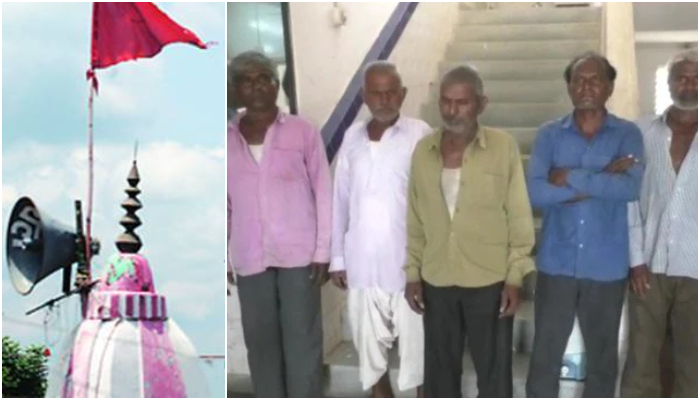
Gujarat: 40-year-old killed for performing Aarti on loudspeaker in Meldi Temple of Mahesana, six arrested

On Friday, a 40-year-old man named Jashwantji Thakor was brutally beaten to death by members of his community for playing Aarti on a loudspeaker in Meldi Mandir of Mahesana, Gujarat. The accused have been identified as Sadaji Thakor, Vishnuji Thakor, Babuji Thakor, Jayantiji Thakor, Javanji Thakor, and Vinuji Thakor.

According to the reports, the incident happened on May 4 in the remote village of Laxmipura, Mahesana. The Police took the cognizance of the incident on May 6 and booked the accused under the relevant sections of the Indian Penal Code.

The deceased was a daily wage worker who used to pray and recite Aarti at the Meldi Mandir near his house. On May 4, Jashwantji along with his brother Ajit arrived at the temple at 7 pm and began performing Aarti on the loudspeaker. After some time one of the accused named Sadaji approached the duo and complained about the loud noise of loudspeakers. He asked the duo to stop performing the religious aarti on the loudspeaker.

He also abused and threatened Jashwantji and Ajit and further called his aides Vishnuji, Babuji, Jayantiji, Javanji, and Vinuji who attacked the duo with sticks. “Five to six men were carrying the sticks. They attacked us. Our 10-year-old nephew called his mother who then informed the Police about the incident”, noted Ajit in the police statement on May 5.

The injured brothers were immediately shifted to the Mahesana civil hospital from where they were suggested to go to the Ahmedabad Civil Hospital for advanced medical treatment. Reportedly, Jashwantji breathed his last during the treatment while Ajit suffered a fracture in his left hand.

Pertinently, this is not the first incident where a Hindu person had to die amid the loudspeaker row in the state of Gujarat. Earlier on May 2, Bharat Rathod from Bavla, Ahmedabad was physically abused for playing loudspeaker at the temple. The attack had come in the background of the loudspeaker row that was started by MNS chief Raj Thackeray in Maharashtra. Reports mention that the accused and the victim in the case belonged to different castes of the Hindu community.

So far the Mahesana Police who is investigating the current case has arrested six persons on charges of assault, rioting and murder. The police have also booked the accused under the relevant sections of the Indian Penal Code. Probe is underway.

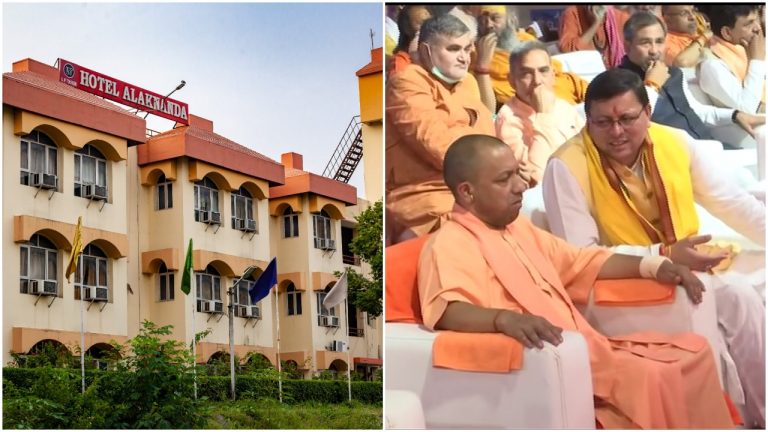
Yogi Adityanath hands over Alaknanda guesthouse in Hardiwar to Uttarakhand in a goodwill gesture, ends two-decade-old dispute between two states

In a goodwill gesture, the Uttar Pradesh government handed over the state-run Alaknanda hotel in the pilgrimage town to the Uttarakhand government.

According to the reports, Chief Minister Yogi Adityanath handed over the Alaknanda hotel in Haridwar on Thursday, which has been under dispute between the two states for the last two decades.

After it was formed as a separate state in 2000, the government of Uttarakhand had staked the claim over the Alaknanda guesthouse. However, Uttar Pradesh had retained the guest house. The matter was pending in the Supreme Court, but both states mutually resolved the issue. 

The Uttar Pradesh government has built a 100-room Bhagirathi Tourist Guest House in Haridwar to accommodate the guests travelling from the state to Uttarakhand. Hence, the UP government has handed over the Alakananda guest house to Uttarakhand to resolve the long-pending issue of distribution of assets between the two neighbouring states.

The two states have resolved most of the property disputes between them, which have been pending for the last 21 years since Uttarakhand was formed as a separate state.

Handing over the guest house, UP CM Yogi Adityanath said, “The issue of the Alaknanda guesthouse was long pending in the court, however, UP and Uttarakhand solved the matter with mutual understanding according to which UP will hand over the Alaknanda hotel to Uttarakhand, and in return, the state will allocate land to UP to built a guesthouse for tourists.”

Uttarakhand CM Pushkar Dhami thanked Uttar Pradesh CM Yogi Adityanath and stated that 95 per cent of the property disputes between Uttar Pradesh and Uttarakhand had been resolved however, there are five per cent disputes, which are still pending in the areas of irrigation land, dams, etc.