Home Blog Page 3469

Karnataka burqa row: The politics of religious identity

0

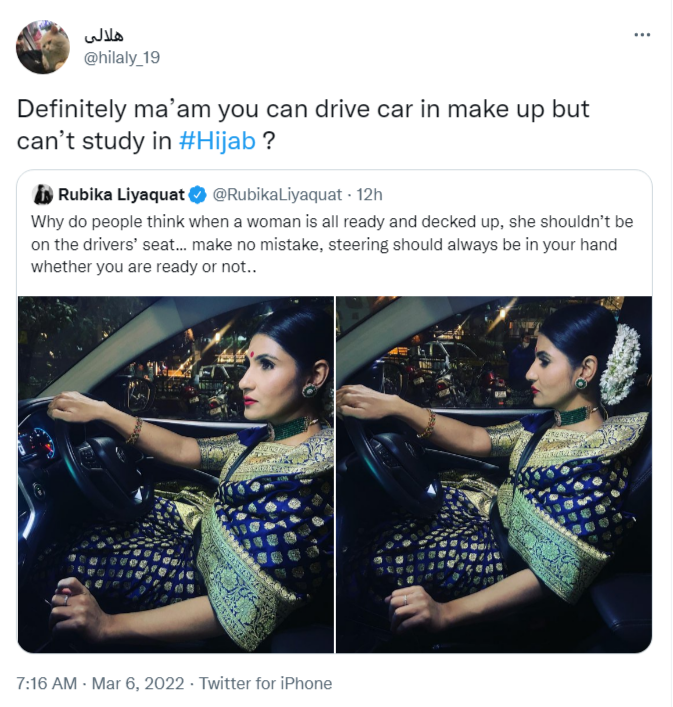
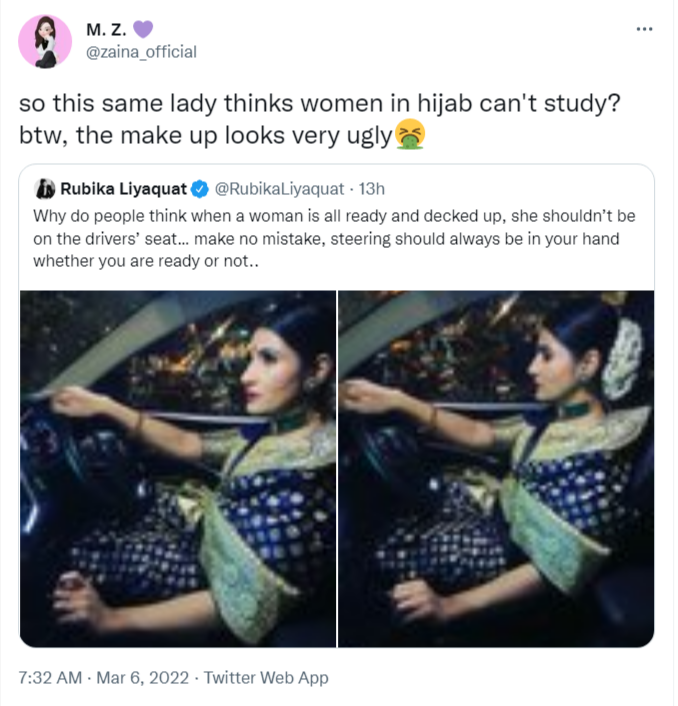
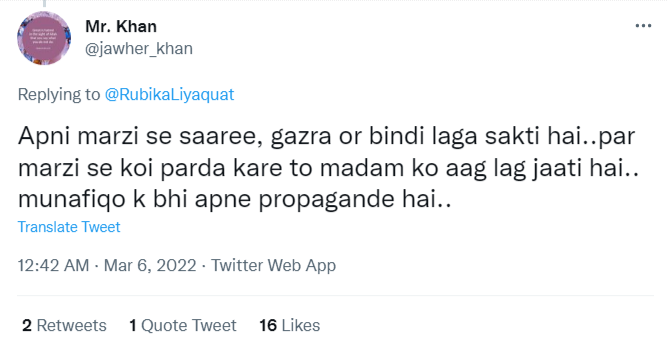
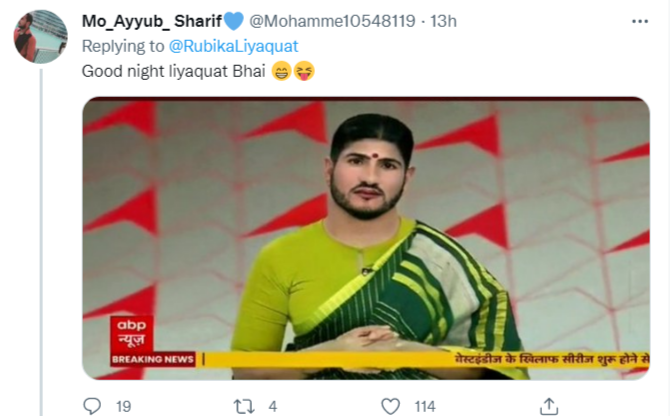
Who would have imagined that a piece of cloth could be used as a cover for pitiful and anti-national politics? So much so that even the ones (the alleged thekedaars of Islam) garnering thousands of likes on pictures in a swimsuit or a short dress instantly drape a so-called ‘pink hijab’ to cover their venomous propaganda. 

Want to oppose a Bill? Don a ‘burqa.’ Want to have a Hindu-free land? Hide a stone under a ‘burqa.’ Want to revive political relevance? Chant religious slogans from within a ‘burqa.’ Such a multi-functional piece of cloth! 

But of course, it is just a piece of cloth. How can anyone have a problem with it? Let’s try and understand this from two perspectives. 

Exposing the politics and not the religious hypocrisy 

Narratives are built not just on emotion, but logic. There is a reason why the left manage to succeed even in their irrational propaganda. Let’s take the Udupi ‘hijab’ row for instance. One day, a handful of girls decide to show up in hijab at their school gate. It takes minutes for the left ecosystem to make it a piece of national and international news with poor Lavanya still awaiting justice. 

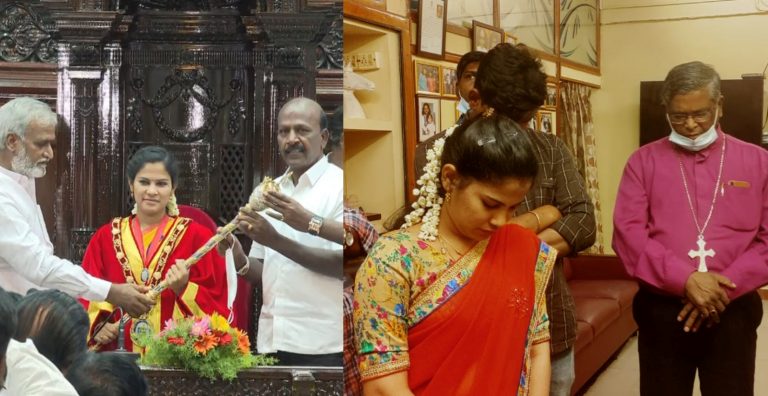
The non-left ecosystem instantly gets into the defensive, trying to prove how Hinduism is more progressive than Islam and debating on ‘bindi vs burqa.’ While they kept busy in this narrative, the Campus Front of India swiftly gathers hundreds of burqa glad girls, hosts talks on ‘Systematic Hindutva Manipulation in Education System,’ and the ‘leader of tukde tukde gang as labeled by Modiji’- Congress hires their loyal to quote Quran in court to justify the need for non-uniformity in schools. 

Image Source: Twitter’

Campus Front of India (CFI) is the students wing of the Islamist group Popular Front of India (PFI) which is banned in several states for its radicalised activities.

Image Source: OpIndia

Now, look at how seamlessly their ecosystem works. Malala – a Pakistan-origin girl shot in the head by Islamic terrorists for seeking education tweets, “Refusing to let girls go to school in their hijabs is horrifying. Objectification of women persists — for wearing less or more. Indian leaders must stop the marginalisation of Muslim women.”

Image Source: Twitter

Don’t know about Malala, but the heads of anyone reading this piece of irony will surely explode. College was definitely not asking the girls to choose between education and hijab. In fact, the girls have made it clear that education is secondary, hijab is their priority. The girls are choosing hijab over education. But look at how the machinery is working.

Sadly, the right ecosystem is still preaching how Islam should embrace progressiveness. What stops us from tagging Congress repeatedly to the incident and holding them responsible for it? Why can’t we continue to make it a political issue rather than allowing them to pivot this into a religious issue only to hold us responsible for it? Why are we not hosting talks on ‘Religion and Politics’ to ensure nobody can play the victim?

The real oppressors

Now let’s talk about the real oppressors and the sad reality. Looking at the pictures uploaded by the ‘thekedaars’ one might think, ‘aren’t they progressive already?’

Sadly, it is but only for a privileged few. And these privileged ones are those who in reality oppress their own women to continue to use them as ‘victim fodder.’ 

Here’s one article by The Times Of India quoting seven women who say ‘My hijab is none of your business.’ 

Image Source: The Times of India

However, the irony is, where is the choice in the verse quoted by Mr Kamat?

Image Source: Twitter

And here is an article about an Iranian woman who risked her life to start the ‘free hijab movement.’ So if ‘hijab is really a personal choice’, why is it being enforced upon a certain section of women? And why are these ‘hijab is my personal choice’ gangs not moving to countries where ‘hijab is a compulsion’ suiting their liking? 

It is a ‘choice’ for the privileged who will not get killed should they choose not to wear one. For others, it remains a symbol of oppression.

After writing 550 odd words and thinking about the women forced into this piece of cloth either by force or brainwashing, I only feel pity for their ‘guinea pig’ like situation. Yes, religion and religious identity are a matter of choice and privacy, but it is also a matter of politics. 

Politics of violence, division, inequality and hatred. Hope the young Muslim women realize this and break through the shackles of ‘burqa politics.’ 

Karnataka: Jamiat Ulama-i-Hind announces Rs.5 lakh reward for Burqa-clad protestor who shouted provocative “Allahu Akbar” at Hindu students

Amidst the ongoing violent protests against the hijab ban in colleges in Karnataka, the radical Islamic outfit Jamiat Ulama-i-Hind has stoked a controversy by announcing a reward to a Burqa-wearing protestor who shouted provocative “Allahu Akbar” slogans against a group of Hindu students.

A video of Bibi Muskan Khan had gone viral on Tuesday after she was seen shouting “Allahu Akbar” at a group of students inside PES College in Mandya, Karnataka. The students, who were protesting against the Muslim students in Hijab and Burqa, was seen at the receiving end of Muskan Khan’s theatrics on Tuesday. The Hindu students chanted “Jai Shree Ram” in response to Islamic slogans raised inside the PES college campus.

Bibi Muskan Khan later claimed that “outsiders” troubled her and added that her classmates and authorities at the PES College in Mandya supported her. 

Now a day later, Jamiat Ulama-i-Hind has stepped in to add more fuel to the fire by announcing a cash reward of Rs 5 lakh for Muskan Khan for chanting “Allahu-Akbar” while wearing the burqa during the protests.

In a tweet, the Deoband based Islamic organisation claimed that Bibi Muskan Khan had stood up amid heated protests for her constitutional and religious rights.

Hijab controversy turns violent, Muslims caught pelting stones at Hindu students

The uniform regulations in educational institutions have now taken a dangerous turn in Karnataka after a few Muslim students refused to follow the guidelines and insisted that they would be wearing Hijab inside educational institutions. In response, Hindu students also started wearing the Saffron shawls prompting the authorities to ban both outfits.

However, the Muslim students have brazened it out to protest against the authorities outside, risking the future of several other students studying in the school. On Tuesday, the burqa row took an ugly turn after stone-pelting and violence were reported from various parts of the state. It is notable that while the media is using the term ‘Hijab’, which is a headscarf, most Muslim students are seen in Burqas, a full body veil.

Yashpal Suvarna, the Vice President of the College Development Committee, said that even though 150 Muslim students are studying in the college, none of them has made this demand. According to him, eight girls, allegedly belonging to CFI, wanted to create a controversy.

Meanwhile, Karnataka’s Primary & Secondary Education Minister BC Nagesh also said that they suspect that the Social Democratic Party of India (SDPI), the political arm of the PFI, is instigating the Muslim students in the ongoing Hijab controversy.

According to the videos that have gone viral on social media platforms, stone-pelting was reported in Shivamogga, Bagalkot, Udupi, and other parts of Karnataka. In one video, it was seen that a Muslim mob was allegedly throwing stones at the protesting Hindu students, leaving many injured. Anticipating more violence in the state, Karnataka Chief Minister Basavaraj Bommai ordered the closure of all high schools and colleges in the state for the next three days.

Earlier, a report revealed how the notorious radical Islamic outfit Campus Front of India (CFI) – the student wing of Popular Front of India and banned radical terror outfit Jamaat-e-Islam Hind counselled Muslim students to orchestrate the Hijab controversy in Karnataka.

Former Lok Sabha Speaker Sumitra Mahajan opens her personal library to people, invites book lovers to read the books for free

0

Former Loksabha Speaker and BJP Parliamentarian Sumitra Mahajan’s love for books is well known. As an avid reader and collector of books, her personal collection includes a wide range of books on many topics concerning her political, historical and spiritual interests in many languages. Sumitra Mahajan has now decided to convert her personal collection of books into a free-for-all public library.

Letter released by Sumitra Mahajan announcing her library in Indore

On February 04, Friday, Sumitra Mahajan inaugurated a newly curated library at her residence built from her collection of books she collected over the years. In a letter she wrote for Indoreans, she has invited book lovers to visit the library built at her residence in Manishpuri, Indore. Those interested can visit the library every day between 4-6 PM and can borrow a book for reading after due registration for free. This initiative of the eight-time MP and Padma Bhushan awardee from the city is sure to help the citizens with resources in literature and would also give a glimpse into the life of Sumitra Mahajan as a reader.

Talking about her flair for reading, Mahajan in her letter said, “Owing to my interest in reading, my friends, relatives started giving me books as gifts. As an orator, my practice of buying and lending books continued. Over the years, my personal collection of books has developed into a library in itself,” In the library, people can access many books from spirituality, fiction novels to political non-fictions in different languages including her native Marathi, Hindi and English.

PM Narendra Modi releasing Sumitra Mahajan’s book in 2017

Sumitra Mahajan has also authored a book on Devi Ahilyabai Holkar titled ‘Matoshree’, based on the life of the eighteenth-century queen of Malwa who also happens to be her role model. As the Loksabha head, she often used to urge the MPs to visit the Assembly library and cultivate a habit of reading books. However, this gesture of her not only talks much about her love for books but also highlights her persona of a humane public leader with a difference.

Read: Shashi Tharoor spreads fake news about death of former Lok Sabha Speaker Sumitra Mahajan, Hindustan Times apologises too: Details

Priyanka Gandhi supports burqa and bikini, she should tell that to her brother and party leaders as charity begins at home

It is a matter of choice, Priyanka Gandhi Vadra said, and rightly so.

Amid the burqa row in Karnataka, a group of girls, in consultation with students wing of Islamist group Popular Front of India PFI), Campus Front of India (CFI) have been protesting for their ‘right to wear a hijab (headscarf)’ to college. They are protesting by wearing full covered burqa (entire body covering veil).

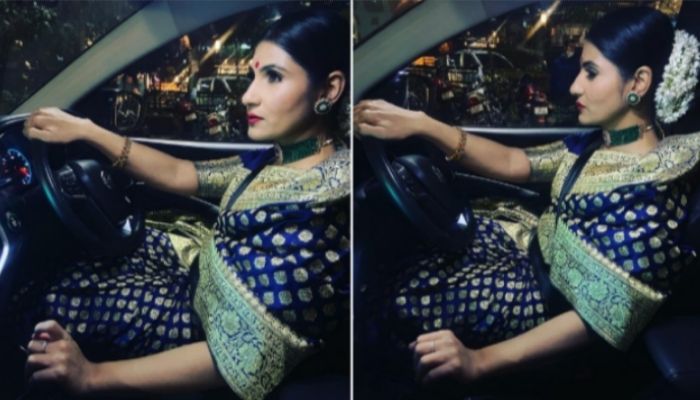
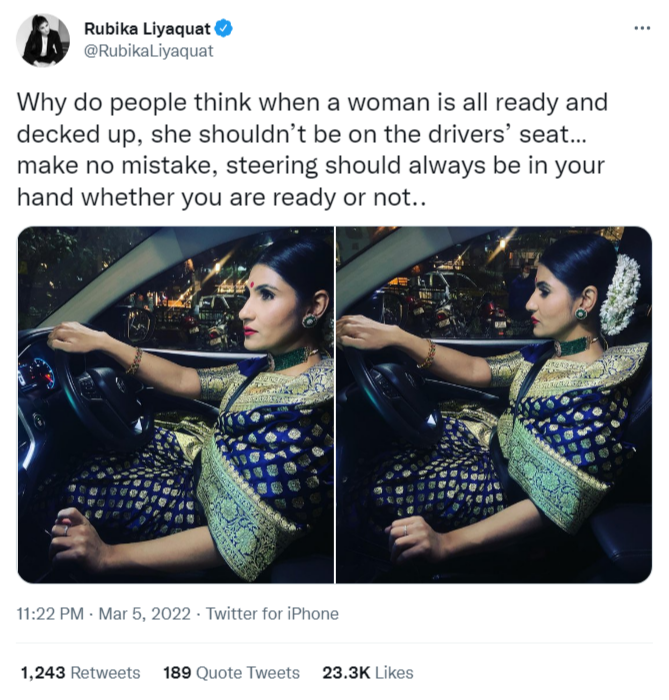
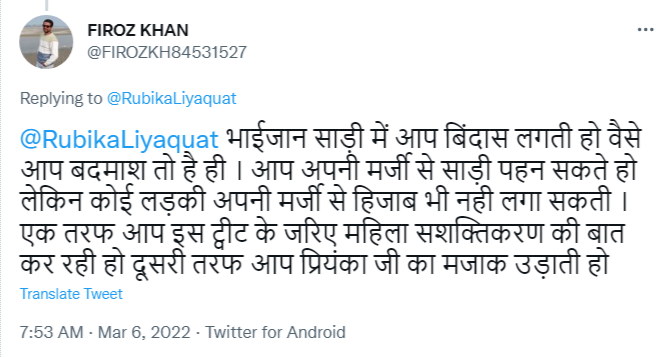
Priyanka Gandhi Vadra took to Twitter to extend her support to women to exercise their right to choose to wear whatever they want to – from ghoonghat to jeans to burqa to bikini.

She tweeted that whether it is bikini, a ghoonghat, a pair of jeans or hijab, a woman decides what to wear. She added that this right is GUARANTEED (all caps) by the Indian constitution and added that one should stop harassing women. She ended her tweet with her ‘Ladki Hoon Lad Sakti Hoon’ UP election slogan.

Her brother, Rahul Gandhi, former Congress President and currently MP from Wayanad, replied with a ‘thumbs up’ emoji to his sister.

Stop harassing women, indeed

Let us not get into the whole debate of how hijab, burqa is hardly a choice since there are parts of the world where women are killed for refusing to wear one. If the women who wear it claim it is their choice, it comes from a place of privilege because should they choose not to wear it, they will not be killed, unlike their counterpart in countries like Afghanistan. No, I am not comparing secular India with Islamic Afghanistan, but since the judiciary in secular India is now citing Quran and Sharia rules for hijab, burqa and what women could and should wear, it is only fair to compare the fate of women who swear by the holy book.

So, let us not get there as a lot has been said and done about it.

But let us all talk about Congress leaders and their comments on women and the choice of clothes they wear.

Because I’m quite certain some of Priyanka Gandhi Vadra’s colleagues, including her own brother, could do with some of her gyaan.

Casual sexism thrown in by Congress leaders including Rahul Gandhi

Back in 2017, Rahul Gandhi was addressing a rally in poll-bound Gujarat. Rahul Gandhi was, as usual, taking a dig on the RSS. Suddenly he decided to comment whether women go to the Shakha wearing shorts.

So, women can be ‘progressive’ only if they wear shorts? As a woman, this feels extremely demeaning that a leader would say such a thing. How is this any different from the Islamists who compare women with lollipops and say that candies must be kept in wrapper otherwise they’ll get ants on them?

And then there is the ‘tunch maal’ fame Digvijaya Singh. In December last year, he quoted Priyanka Gandhi herself and claimed that she told him that women who keep mobile phones and wear jeans do not support Prime Minister Modi. Digvijaya Singh said that Priyanka Gandhi Vadra had told him that only older among aged 40-50 years and above are influenced by PM Modi, and the women who wear jeans and use mobile phones are not influenced by the PM. Therefore, Congress should work on approaching these younger women, she had advised him.

If Priyanka Gandhi Vadra really did say this, then it is obvious that her platitudes on ‘choice’ are nothing but political rhetorics. And if she didn’t say it and Singh made it all up and attributed figment of his imagination to her, it shows the degeneracy of his own mind.

Oh, and if ghoonghat is also a choice, how about her own party leader and Rajasthan Chief Minister Ashok Gehlot, who wants to get rid of ghoonghat?

In November 2019 he had said how the society has no right to encage women in ghoonghat. What made them feel that the women in ghoonghat were not wearing it out of choice? Gehlot just decided that the women in ghoonghat were encaged and that it is up to him to give them freedom. Quite contrary to what Priyanka is saying, right?

And then Priyanka Gandhi talks about harassment of women. Let’s talk about the casual sexist slurs thrown on women, especially BJP leaders by her party leaders.

In 2019, while addressing a rally in Rajasthan ahead of general elections, Rahul Gandhi very casually displayed his toxic masculinity while taking a dig at PM Modi. He said that the prime minister who boasted of a 56-inch chest did not attend the court of the public, that is the Parliament. “We demolished the Defence Minister’s speech. The prime minister, who has 56-inch-chest, asked a woman to defend him,” he said. He was speaking about the so-called Rafale scam.

The Raksha Mantri whom he had reduced to a woman is a Jawaharlal Nehru University (JNU) graduate, holds an MA in Economics and served as an assistant to Economist in the Agricultural Engineers Association in the UK. She also worked Price Waterhouse during her stay in the UK. As Raksha Mantri, she has led from the front, whether it is interacting with the MiG 29k pilots and sailors or greeting the Chinese soldiers at the India-China border at Nathu La. But for Rahul Gandhi, Priyanka’s brother, she was just a woman.

Congress leader Sanjay Nirupam had also raised strife by bad-mouthing BJP MP Smriti Irani in December 2012, when assembly election results of Gujarat was announced saying, “It’s only four days of your entry into politics and you have become a political analyst. Aap toh TV pe thumke lagati thi, Aaj chunavi vishleshak ban gayi.” (You used to dance on TV screen, now you are a political analyst?)

You see, behind the garb of being progressive, feminist men, these leaders are ordinary sexist men one comes across on streets. So while Priyanka Gandhi has taken it upon herself to fight for women’s right to wear bikini, burqa, ghoonghat and jeans, she should first tell her party leaders, especially her brother, not to judge women for their clothes.

Just let us be. And don’t kill us for choosing not to wear burqas or hijabs.

Religious Leaders ask Meta chief Mark Zuckerberg to drop Instagram Kids quoting verses from Bible, Quran and other scriptures

A group of religious leaders including rabbis, reverends, pastors and others have written to Meta CEO Mark Zuckerberg to scrap the company’s plan to launch an Instagram platform for kids. A letter sent by the advocacy group Fairplay and its Children’s Screen Time Action Network emphasized the adverse effects of social media platforms on young minds.

Signed by over 70 religious leaders, the letter read, “After much meditation and prayer, we assert that social media platforms that target immature brains, practice unethical data mining, and are inspired by profit motives are not a tool for the greater good of children.” According to a report by Reuters, the letter contained references from the Bible, Quran and thoughts of Pope Francis and Buddhist monk Thích Nhất Hạnh.

In the past, Zuckerberg had admitted that religion is ‘very important’ to recognize spiritual as well as secular concerns about the project. However, the company has refused to comment on the letter.

What is Instagram Kids?

The image-sharing social media platform Instagram’s parent company Meta had announced plans to roll out a ‘safe and supervised’ Instagram version for kids. The company said that it wanted to provide an Instagram experience for people under the age of 13. “We started this project to address an important problem seen across our industry: kids are getting phones younger and younger, misrepresenting their age, and downloading apps that are meant for those 13 or older,” Instagram had said.

However, after a massive backlash from parents, policymakers, US senate members, Instagram head Adam Mosseri had announced to temporarily pause the launching of the app and devise better parental controls instead.

Instagram’s intent to launch the kids’ version was to provide an alternative for children who are already online with fake identities. The company had also come under intense scrutiny last year after whistleblower Frances Haugen leaked internal documents about the company’s approach towards young users. The leaked report contained internal research done by the company which documented the potential impact of their services on the mental health, body image and safety of young users.

Adam Mosseri was grilled by a US Senate panel on the security of children in December last year for promoting Instagram Kids despite its potential risks. Now religious leaders have also climbed upon the criticism of Instagrams plans for its young users.

‘Education is secondary, hijab is the first priority’: Muslim girls in Karnataka college

The hijab-donning Muslim girl students from Karnataka consider the Hijab as their first priority and education as secondary. The revelation came when some of the girl students were talking to a reporter of Times Now on February 8. The reporter was covering the protests from both sides.

When he approached a group of girls wearing a Hijab and asked them their views on the statement made by the Hindu students that they would continue to protest by wearing saffron scarves, one of the Muslim girls said, “They can wear the saffron scarf. We do not have a problem with that. We respect their religion. They should respect us.”

The reporter further questioned if Karnataka High Court ruled against Hijab in educational institutes, one of the girls replied, “This [Hijab] is our first priority. Education is secondary. This is our first priority.” They said the High Court had to allow them to wear Hijab as “High Court cannot go against the constitution.”

The Karnataka Burqa Row

The Burqa row in Karnataka has turned into a major controversy. The ‘left-liberals’, ironically, and the Islamic fundamentalists have been supporting and instigating the Muslim girls that are adamant about attending colleges and schools in burqas in violation of established rules on uniform dress code. The college authorities in Udupi had made clear that students will have to follow the uniform dress codes and hijabs won’t be allowed inside the campus.

Amidst the ongoing controversy in Karnataka, the educational institutes have been shut down for three days. The Karnataka High Court is hearing the petition filed by a Muslim student seeking the right to wear hijab/burqa in college. Meanwhile, the state education ministry has said they would not change their stand against Hijab in schools and colleges. If the High Court give directions in the matter, they will act accordingly.

Nepal govt report says Chinese encroachment along border areas, civil society group approaches UN over the issue

0

On February 7, a memorandum was handed over by the Rastriya Ekata Abhiyan to the United Nations, informing them about the land encroachment in Humla, Nepal, by China. The Nepali civil society group has urged the international community to intervene in the issue pertaining to land grabbing by China in neighbouring countries.

According to a report in Khabarhub, Binay Yadav, chairperson Rastriya Ekata Abhiyan, approached the UN office in Kathmandu and handed over the memorandum to Richard Howard, Resident Coordinator, United Nations, via Rajendra Man Banepali, Information Officer at UN office.

memorandum submitted by Rastriya Ekata Abhiyan. Source: Khabarhub

The Rashtiya Ekata Abhiyan has been launching campaigns against the Chinese encroachments. In the memorandum submitted to the UN, the group has called for China to withdraw the encroached land. It has urged the Nepali and Chinese governments to initiate border inspection under the supervision of the international community and urged all stakeholders to keep GPS records of all border posts.

Reports suggest China has encroached on land not only in Humla but also in Gorkha, Darchula, Dolakha and Sindhupalchowk. The group has submitted copies of the memorandum to the US Embassy European Union Representative. Russian Embassy, Indian Embassy and Chinese Embassy in Kathmandu.

A panel was formed to study the Nepal-China border dispute

In September 2021, the Nepalese government had formed a panel to study the border dispute between Nepal and China in Humla. Earlier, under Jaya Narayan Acharya, Joint Secretary, Home Ministry, a committee was formed to study the dispute. The study found the area between pillar number 5(2) and the middle of the Kit Khola was marked as the border between the two countries according to the Boundary Protocol of 1963. However, China had erected fences and wired on the Nepali land.

The report is still pending with the Foreign Affairs Ministry. The report added the border encroachment by the Chinese intensified in Humla during the KP Oli government. Notably, Pradeep Kumar Gyawali, then-Foreign Minister, had claimed the structures were built on Chinese soil in reference to a 2016 study.

China had also claimed via the Chinese Embassy in Kathmandu that the structures were on Chinese land, and there was no dispute between Nepal and China. However, Nepali Congress, the main opposition party, accused the then-govt of covering up the border dispute though there was evidence China had crossed the line.

In October 2020, NC’s Jeevan Bahadur Shahi issued a statement that eight pillars in Humla’s northeastern border were damaged. He confirmed that the Chinese side had replaced Pillar 12 so that a large chunk of Nepal’s land is now under the control of China. According to Shahi, when the Armed Police Force of Nepal went to inspect Pillars 6(1) and 5(1), the Chinese security personnel pelted stones on them. He further added, “Chinese security forces have a heavy presence on the northern border, but our security forces are nowhere to be seen in those remote areas.”

The encroachments were first reported in September 2020. It is noteworthy NC-led government has not published the report that was submitted by the committee formed during its regime.

The leaked report suggests encroachment by China

According to a report in BBC, the report submitted by the panel that was formed in September 2021 got leaked. The report suggested China has been limiting grazing by Nepalese farmers. The report also noted that the surveillance activities by the Chinese security forces led to restrictions on religious activities in Lalungjong that falls on the Nepalese side of the border. This area is in close proximity to Mount Kailash, which is sacred to both Hindus and Buddhists.

On February 8, The Abhiyan issued a statement and thanked the Nepalese government for its decision to form a government official position on Chinese encroachment of Nepali territory along the northern border.

Statement issued by Rastriya Ekata Abhiyan. Source: Khabarhub

The statement read, “it is the common responsibility of ordinary citizens to raise voice against ongoing encroachment of Nepali land by the Chinese side. The Abhiyan, recalling that it has always been advocating Nepal’s territorial independence and sovereignty, reminded that it appealed to the international community on Monday to side with Nepal in relation to Chinese encroachment of Nepali territory.”

Cities in Canada may impose curfew amid ‘Freedom Convoy’ protests: Indian High Commission in Ottawa issues advisory

0

On Tuesday, the Indian High Commission in Ottawa issued an advisory for the Indian citizens in Canada and for those Indians planning to visit Canada to avoid areas where protests are taking place, such as downtown Ottawa. The cities in Canada including Ottawa, Toronto and others are witnessing truckers protests who have organized large gatherings and blocked roads.

In an appeal, the High Commission said that the blockade has severely disrupted the public services and has caused heavy traffic jams, a shortage of essential items. “Owing to the prevailing situation, a state of emergency has been declared for the city of Ottawa. The impact on traffic and services is likely to continue”, the official statement read.

The High Commission stated that the local authorities in major cities of Canada are planning to impose curfews amid the protests. It asked the Indian citizens to remain alert and follow the instructions by local authorities.

The High Commission has also set up a special emergency helpline viz (+1) 6137443751 to provide assistance and guidance to Indian citizens in distress. “The Indian citizens are advised to monitor local media for the evolving situation”, the advisory read.

Truckers in Canada have been protesting against the COVID-19 measures. They are opposing the vaccine mandates imposed by the Trudeau government. On February 8, the Mayor of Ottawa declared a state of emergency over the ‘Freedom Convoy’ protests in Ottawa.

Also, Canadian Prime Minister Justin Trudeau claimed that protesters cannot stall the economy under the garb of democratic rights. “Canadians have the right to protest, to disagree with their government, and to make their voices heard. We’ll always protect that right. But let’s be clear: They don’t have the right to blockade our economy, or our democracy, or our fellow citizens’ daily lives. It has to stop”, he tweeted.

However, Trudeau has vowed that the Canadian government will do everything necessary to bring the situation under control.

How Nehru and Congress had betrayed Goa: Declined to send armed forces, denied support to liberation efforts

When Prime Minister Narendra Modi was extending his motion of thanks for the President’s speech in Rajya Sabha on Tuesday, he touched upon the often neglected episode of Liberation of Goa from the Portuguese in 1961. While addressing the chair on the occasion of completion of sixty years of Goan Independence and its accession to India, PM Modi made glaring remarks on why the then PM Nehru hesitated to use armed forces for helping the revolutionaries in Goa with their struggle.

Speaking about the armed revolutionary struggle which finally led to the liberation of Goa in 1961, Modi minced no words while criticising the Congress for its derailed decision-making capabilities which resulted in huge losses of a large number of Goan civilians who wanted to accede to India. He said, “This year as we celebrate sixty years of Independent Goa, I want to say, had Sardar Patel been allowed to frame a policy for Goa like Hyderabad or Junagarh, Goa would not have to wait after fifteen years of the Indian independence to liberate itself.”

PM Modi quoted from Nehru’s speech, highlighting how he had alienated his own countrymen and had tried to shame the Satyagrahis struggling for the liberation of Goa.

Further quoting the media reports of the time, he said that then PM Nehru was worried more about his personal image in the world and hence didn’t use force to liberate Goa from Portuguese colonial rule. He said, “Even when bullet shots were fired at Satyagrahis in Goa when Indian people were being fired at for fighting for India, Prime Minister Nehru had the audacity to not send the army for Goa.” According to Modi, Nehru had declined to help even the peaceful protestors for which freedom fighters in Goa had faced the colonial brunt for an additional fifteen years.

While quoting Nehru from his 1955 speech from Red Fort, PM Modi said, “There should be no fear that we will do a military operation in Goa. There is no force in and around Goa. The people think by disrupting the situation, they can convince us to send our forces there, but we won’t budge,” Insinuating the Satyagrahis who were joining the struggle in Goa from all corners of the country, are lawless elements who are disrupting the peace. Perplexed at the language used against his own countrymen, PM Modi asserted that the people of Goa would never forget what Nehru and Congress did to them.

Nehru’s lethargy in taking action for Goa

There are many speculations as to why Goa had to wait for so long to get itself liberated from the colonial rule of Portuguese alongside Dadra and Nagar Haveli and French rule in Pondicherry. What remains a fact is Nehru’s reluctance to use armed forces in operations against the foreign rulers. Initially, Nehru was in favour of using diplomatic channels to further the cause, in order to keep his identity as a ‘peace-loving’ global leader. When the diplomatic battle of gaining support from allies continued to fail, Nehru’s close aide VK Krishna Menon, the defence minister finally decided to send the army to Goa on December 11, 1961.

The Indian Government’s sudden decision to employ force owed to Menon’s election candidature against JB Kriplani in the 1962 Lok Sabha elections from North Bombay. The annexation Goa worked in favour of Menon while he won the elections defeating Kriplani. But it was Menon and not Nehru who sent the armies to help the revolutionaries of Goa.

Even while assessing Nehru’s efforts objectively, one would conclude that his over-dependence on diplomacy and perpetual seeking of validation from international platforms did not work in his favour ever. On February 27, 1950, when the Nehru Government asked the Portuguese to open negotiations about the future of Portuguese colonies in India, Portugal asserted that its territory on the Indian subcontinent was not a colony but part of metropolitan Portugal and hence its transfer was ‘non-negotiable’. The Portuguese claimed that India had no rights to this territory because the Republic of India did not exist at the time when Goa came under Portuguese rule.

A newspaper clipping reporting about the timid approach of the Indian Government to solve the Goan problem.

The Portuguese had captured Goa in the Adil Shahi period and continued to rule the territories of Goa, South Konkan and Daman and Diu for around 450 years, even after the British left the Indian Subcontinent. While PM Narendra Modi in his address opined about the role Sardar Patel could have played had he been given the responsibility of Goa, it is time to explore what role he had played before his death in 1950. Rajmohan Gandhi, the grandson of MK Gandhi has described in his book ‘Patel: A life’ a meeting that took place between top leaders concerning Goa’s situation in 1950. With tightly closed eyes, Patel was hearing all the points which were being made. He rose up to interject suddenly and said, “Want to enter Goa, it’s a matter of mere two hours”. However, Nehru was to decline this proposition and Patel did not interject thence.

Besides not letting the army perform its task to liberate fellow Indians from foreign rule, Nehru had also opposed other revolutionaries from India who wanted to join the struggle at Goa. A newspaper clipping from the late 1960s has reported the All India Congress Committee approving a resolution to call back Satyagrahis (peaceful protestors) to Indian soil. It read, “any entry into Goan soil by Indian Nationals will be inappropriate and even individual Satyagrahas should be avoided”. This was happening when the Goan inquisition was again showing its colours while political prisoners were being beaten up in jails.

Shefali Vaidya, author and researcher on the Goan inquisition, whose father was a revolutionary in the struggle for the liberation of Goa has recounted how Azad Gomantak Dal members were prevented from getting arms and ammunition from India and the Indian Government eventually rendered them helpless.

While going by the diplomatic means to secure the interests of Goa did make sense at a certain time, the call given by Nehru to snub Indian revolutionaries to weaken them does not add up to the puzzle. The Indian Air Force bombed Dabolim airport on December 18 and on the next day the Indian army entered Goa from the south. Facing no resistance whatsoever, by the next evening Goa had been liberated after 5,000 Portuguese armies had surrendered. Even after the episode unfolded, the diplomatic exercises did not bear fruits as many countries in Europe, America, France, China and Great Britain targeted India in the United Nations to stop the Indian army’s operations in Goa.

Nehru and the Congress collectively failed the nation and the people of Goa, resulting in its delayed accession and had actively worked against Indians who were struggling to liberate a chunk of India that was still under foreign rule long after 1947.

Hyderabad: 101 goats sacrificed for AIMIM chief Owaisi’s long life

0

On February 6, a businessman in Hyderabad sacrificed 101 goats at Bagh-e-Jahanara to pray for the long life of All India Majlis-e-Ittehadul Muslimeen’s chief Asaduddin Owaisi. Owaisi was present at the event. This came days after the car Owaisi was riding in was shot at by two men.

The alleged attack on Owaisi

On February 3, Owaisi was travelling to Delhi from Meerut after attending a political event. He was allegedly fired upon near Chhajarsi toll plaza. He escaped without any injuries. Since the attack, his supporters have been praying for his safety and long life.

Reports suggest that two people identified as Sachin Pandit and Shubham were arrested by Hapur police in the case. A 9mm pistol was recovered from Sachin. After the incident, Union Home Ministry approved Z-security for Owaisi, which the AIMIM leader rejected while speaking in Lok Sabha.

Prashant Kumar, ADG (Law and Order), informed that an illegal 9 mm pistol, which was used in the crime, was recovered. Five teams were formed to probe the case. Two accused were nabbed by the cops. Superintendent of Police (Hapur), Deepak Bhuker, stated that the assailants attacked Asaduddin Owaisi because they were offended by his “anti-Hindu” statements.

Owaisi refused to accept security by central govt.

While addressing Rajya Sabha over the matter, Home Minister Amit Shah informed the house, “Two unidentified people had fired on the carcade. He came out safe, but there were three bullet marks on the lower portion of his vehicle. The incident was witnessed by three witnesses. An FIR has been registered.”

HM Shah added Owaisi’s event in Hapur districted was not pre-planned and local authorities were not informed about his visit. He said, “Taking quick action, two accused were arrested, two unauthorised pistols and an Alto car were recovered from them. The forensic team is doing a minute investigation of the car and the incident site, evidence being collected,”

He further told the house that the government would reassess the security threat to the Lok Sabha MP Owaisi. He also pointed out Owaisi had refused to accept security provided by the Central government. He urged Owaisi to accept the security and said, “Home Ministry took a report from State Govt immediately. On the basis of earlier inputs from central security agencies, the Centre had ordered to provide him security. But due to his unwillingness to avail security, Delhi and Telangana Police’s efforts to provide him security didn’t succeed.”

While addressing a rally in Chhaprauli, district Bhagpat, on February 5, Owaisi compared himself with MK Gandhi and said, “Those who attacked me are the ones who killed Gandhi.”

Uttar Pradesh Assembly elections

Assembly elections in Uttar Pradesh will be held in seven phases starting from February 7. The last phase will be held on March 7. The results will be announced on March 10. AIMIM is contesting UP Assembly elections for the first time.