Home Blog Page 3521

Taliban Delegation reaches Norway for talks with the western world on ‘Human Rights’ and ‘International assistance’

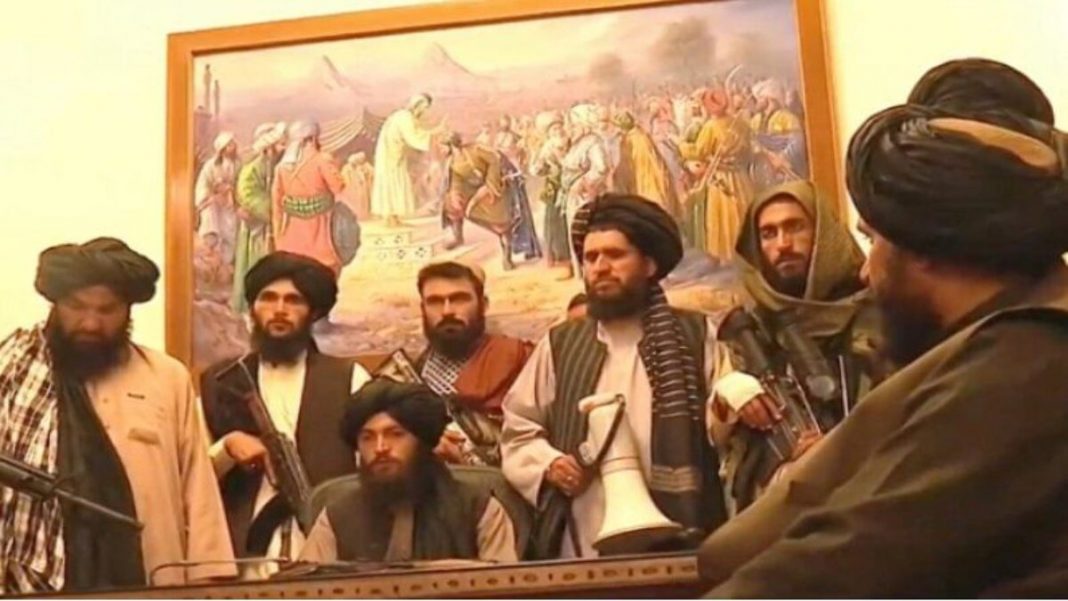
In the midst of Afghanistan’s deteriorating humanitarian crisis, a Taliban delegation led by acting Foreign Minister Amir Khan Muttaqi began three days of discussions with Western government officials and Afghan civil society groups in Oslo in Norway on Sunday. The Taliban delegation was invited by the Norwegian govt to hold talks on various issues.

The Norwegian Foreign Ministry said on Friday that it has invited representatives of the Taliban to Oslo for a visit from January 23 to 25. However, the govt clarified that it does not imply recognition of the Taliban govt in Afghanistan. The Minister of Foreign Affairs Anniken Huitfeldt said, “It does not in any way imply any recognition of the coup that took place. We will make strong demands on the Taliban, but we do not know if they will implement them afterwards.”

According to the Norwegian Foreign Ministry, “the Taliban will meet representatives of Norwegian authorities and officials from a number of Ally nations” for dialogue on the humanitarian situation in Afghanistan and human rights. The ministry did not confirm who would be there, but Norwegian daily VG said that Britain, the European Union, France, Germany, Italy, and the United States would be among the allies.

Reportedly, discussions on girls’ education and women’s rights will be top of the agenda in the discussions. Taliban has greatly curtailed the rights of women in Afghanistan, and Norwegian govt will demand to restore them.

Taliban government spokesman Zabihullah Mujahid has said they are making moves to meet the requests of western nations. He said, “The Islamic Emirate has taken steps to meet the demands of the Western world and we hope to strengthen our relations through diplomatic ways with all countries, including the European countries and the West in general, and to transform the atmosphere of war, which we had previously, into a peaceful situation.”

The Taliban delegation arrived in Oslo on a private jet reportedly paid for by the govt of Norway. They were also joined by Anas Haqqani, the leader of the Sunni Islamist terrorist organization Haqqani Network. However, citizens in Osolo protested against the visit, and questioned why their govt invited an organisation that is blacklisted by the USA.

Following a stalemate on the battlefront, the Taliban reclaimed control of Afghanistan in August as the US and foreign troops initiated their final departure from the country. The trip marks the first time that Taliban leaders are meeting other governments in Europe since the group took control of the nation in August. They had already visited Russia, Iran, Qatar, Pakistan, China, and Turkmenistan.

The humanitarian situation in Afghanistan has deteriorated considerably since August. International assistance has come to a halt, and the US has blocked the Afghan central bank’s assets worth $9.5 billion (£7 billion). Muttaqi is anticipated to emphasize the Taliban’s demand that the US and other Western countries release the frozen funds during the talks.

According to a statement released by the US State Department, a US delegation led by Special Representative for Afghanistan Tom West will discuss the formation of a representative political system, responses to urgent humanitarian and economic crises, security and counterterrorism concerns, and human rights, particularly education for girls and women.

According to the United Nations, starvation presently scares 23 million Afghans, or 55 percent of the population, and the government needs $4.4 billion from donor countries this year to solve the food crisis.

This year’s Navy tableau for Republic Day parade to depict the Naval Uprising of 1946

This year, The Indian Navy’s tableau is all set to depict the 1946 Naval revolt which rocked the shackles of the British Empire, a year before the Independence. The tableau which will feature one of the unsung episodes in the history of India’s freedom struggle will be led by Lieutenant Commander Aanchal Sharma with a marching contingent.

The presentation by the Indian Navy will be part of the 25 tableaux presented by various states, ministries and government departments at the Republic Day Parade on January 26. The tableau is based on the navy’s theme of ‘Combat Ready, Credible and Cohesive’. Talking about the specifics, Lieutenant Mayank Bhagour said the forward part of the tableau depicts “The naval uprising of 1946, an event which contributed in India’s struggle for Independence while The rear section of the tableau illustrates the ‘Make in India’ initiatives of the Indian Navy, particularly for the period 1983 to 2021.” According to the statement released by the Navy, The theme of the tableau resonance with the ongoing ‘Aazadi ka Amrit Mahotsav’ celebrations and highlights the Navy’s contribution to the Indian freedom struggle.

Apart from the tableau, a naval contingent comprising of 96 men, three platoon commanders led by Lieutenant Commander Aanchal Sharma, an observer officer posted at the Indian Naval Air Squadron (INAS) 314 will be part of the Republic Day celebrations. Interestingly, The 72-men band, whose rehearsal videos are adding to the buzz on social media for tuning popular songs also makes a presence at the Parade.

The Naval Revolt of 1946 which shook the base of the British Empire

The Royal Indian Naval Revolt was triggered in Bombay over the quality of food being served to the soldiers in February 1946. However, in no time it quickly escalated into a concerted mutiny with sailors taking full control of ships and shore establishments. The sailors of the Royal Indian Navy, with a nationalistic uproar, stopped obeying the demands of their British officers. News of the coordinated effort spread across the city of Bombay and students, industrial workers including many government employees went on a strike to support the Naval mutineers.

Following the development, February 20, 1946, the unrest spread across the major harbour hotspots in the country. The sailors in Calcutta and Karachi also joined the revolt. At its peak, the Naval revolt involved, 78 ships, twenty shore establishments and around 20,000 sailors in the Royal Indian Navy. However, while the naval revolt got no support from the erstwhile political leadership of the Indian National Congress and the Muslim League, it also lacked serious leadership from within. The episode ended peacefully with their mutineers finally surrendering to the British Administration. However, it soon sent shock waves all over that loyalty of the Indian Soldier could no longer be banked, upon which the British Raj had rested. Soon after this, the realization within the Raj to unwind its powers from the Indian subcontinent happened. The episode is thus said to have contributed much into what culminated a year after, the complete Independence of India in August 1947.

Arunachal Pradesh’s missing teenager in possession of Chinese Army, Rahul Gandhi attacks government even after return process initiated

0

The missing teenager from Arunachal Pradesh has been traced. China’s People’s Liberation Army (PLA) said on Sunday that an Indian boy who went missing by crossing the Line of Actual Control in Arunachal Pradesh has been found. The Chinese PLA has informed the Indian Army about this. It has also been said that the missing boy will be sent back to India after proper formalities. According to ANI, PRO Defence, Tezpur Lt Col Harshvardhan Pandey has informed this.

The Indian Army is verifying the Chinese claim and trying to find out if the boy is the same one who was reported missing. The army had on Thursday 20th January 2022 sought the help of the PLA to locate the missing boy identified as Miram Taron and return him as per established protocol.

Chinese army accused of abduction

The Indian Army had stated earlier that when they received information about Taron, they immediately contacted the PLA through an established hotline system and informed that a man, who was collecting herbs and hunting, has lost his way and could not return. It was alleged that the boy was kidnapped by the Chinese PLA.

Arunachal Pradesh MP Tapir Gao alleged in a tweet on Wednesday that the Chinese PLA has abducted 17-year-old Miram Touren of Jido village. Taron’s friend Johnny Yaying managed to escape and informed the authorities about the kidnapping by the PLA. Gao said the incident happened near the point from where the Tsangpo river enters India in Arunachal Pradesh. Tsangpo is called Siang in Arunachal Pradesh and Brahmaputra in Assam.

Tapir Gao had requested Prime Minister Narendra Modi, Home Minister Amit Shah, Defense Minister Rajnath Singh, and others to ensure the early release of the kidnapped boy. Accordingly, the process to bring him back is initiated. The Indian Army will first confirm his identity for the same.

Rahul Gandhi attacks government

Meanwhile, Rahul Gandhi has attacked the government even after the army has initiated the process to bring the teenager back. Rahul Gandhi has posted in a tweet ‘Sarkar ho to farz nibhao, Miram Taron ko wapas laao’ which means ‘if you are the government, then you abide by your duty and bring back Miram Taron’.

Congress party demands to ban the movie ‘Why I killed Gandhi’ in Maharashtra, Cine Workers Association seek nationwide ban

Days after NCP MP Amol Kolhe was slammed by his own party leaders for playing the role of Nathuram Godse in the upcoming movie ‘Why I killed Gandhi’, now the Congress party has demanded a ban on the movie. Maharashtra State Congress President Nana Patole has said that the Congress party will not allow the movie to be released in Maharashtra. On Sunday, he also said that the Maharashtra Congress will request the CM Uddhav Thackeray not to allow this movie’s release in Maharashtra.

The film is set to release on Limelight OTT on 30th January which happens to be the death anniversary of Mohandas Gandhi and is also observed as Martyr’s day. Former SHiv Sena leader and NCP MP Amol Kolhe has played the role of Nathuram Godse in the film.

The Congress leader Nana Patole has said, “If you portray Gandhiji’s murderer as a hero, it is not acceptable. Our country is known for Gandhiji and his ideology. He is celebrated worldwide. Congress will oppose it. We will request Chief Minister Uddhav Thackeray not to allow the film to be released in Maharashtra.”

AICWA write to PM Modi demanding complete ban on the film

In the meanwhile, the All India Cine Workers Association (AICWA) has demanded a complete ban on the movie ‘Why I killed Gandhi’, and have asked PM Modi to ban it. In a letter to the PM, AICWA has said that “the film glorifies Nathuram Godse the traitor and killer of the Father of the Nation.”

In the letter to PM Modi, the All India Cine Workers Association (AICWA) wrote, “All Indian Cine Workers Association demands a complete ban on the movie Why I Killed Gandhi which is to be released on OTT Platform in India on January 30, 2022, as this movie glorifies Nathuram Godse the traitor and killer of the father of nation Mahatma Gandhiji. Gandhiji is someone who is admired by the entire INDIA and the world, Gandhiji’s Ideology is a symbol of Love and Sacrifice for each and every Indian.”

The letter further mentions that the actor playing Nathuram Godse in the film is a member of the parliament and has taken the oath of the constitution. It says, “Nathuram Godse is (the Traitor and Assassin of Gandhiji) doesn’t deserve an inch of respect by anyone in this country, the actor who played the role of Nathuram Godse (the traitor and the killer of Gandhiji) is a sitting MP in Lok Sabha and is under the oath of Indian Constitution, if this movie releases the entire nation will be shocked and devastated by the display of the heinous crime which occurred on January 30, 1948.”

The association in its letter has added that “On behalf of the entire nation and all the movie associations, we are demanding that ‘Why I Killed Gandhi’ has to be Banned from the release on the OTT platform.”

NCP MP Amol Kolhe playing Nathuram Godse’s role in the film

Earlier, NCP MP Amol Kolhe was slammed by his party colleagues for playing the role of Godse in the movie. The controversy arose when the trailer of the film was released and Amol Kolhe was criticized by senior members of his party for enacting this role. Amol Kolhe has made it clear that he does not support Nathuram Godse’s thought or act but he had taken this role as a challenge for the actor within him. However, party leader Sharad Pawar had supported him in this case.

Gujarat: Father sexually abuses his own 12-year-old daughter in Devbhoomi Dwarka, forces her to do nikah

One Fakirmamad Hussain Sumbhaliya of Vadinagar village in Devbhoomi Dwarka is accused of sexually abusing his own daughter and even forcing her to do nikah (Islamic marriage ceremony) with her. A report by News18 in an inebriated condition, Sumbhaliya molested his own 12-year-old daughter and even insisted that he does nikah with her.

As per the report, the man had spoken about doing marriage to his minor daughter in the past too. He had reportedly also molested her on occasions. His wife and mother of his daughter has filed a police complaint at Vadinar police station. A case has been registered under sections 8, 12 and 18 of the POCSO Act and section 354 (k) (1), 506 (2) of the IPC. Fakirmamad has since been arrested by the police and further investigation is on.

According the Neelam Goswami, Khambhaliya DYSP, as quoted by News18, the incident has sent shockwaves in the entire Dwarka Devbhoomi region. She said that the further investigation is on in the case.

Madras HC directs police to focus on probing suicide of M Lavanya and not harass the man who recorded her dying declaration

On Saturday (January 22), the Madras High Court directed the police to investigate the circumstances that led to the suicide of 17-year-old girl M Lavanya in Thanjavur and stop harassing the man, who had recorded the victim’s dying declaration. The girl had committed suicide alleging that she was being harassed by her missionary school for not converting to Christianity.

As per reports, the matter came up before a Bench of Justice GR Swaminathan. During the hearing, the girl’s father S Muruganantham informed the court that the cops were trying to implicate the man, who had recorded the dying declaration of the class 12 student, for revealing the identity of the minor girl. He also demanded a CB-CID investigation into the death of his daughter.

S Muruganantham pointed out that the Thanjavur police was trying to protect the perpetrators who had tortured his daughter to convert to Christianity. In his petition, he highlighted how the minor girl was made to clean toilets, utensils and cook food by hostel warden Sagayamary for refusing to give in to their demands.

The Madras High Court passed an interim order restraining the police from harassing the man. The court directed the cops to ‘conduct themselves appropriately’ after the girl’s father approached had submitted before it. The Court had also asked the Thanjavur principal district judge to record the statement of the girl’s father and mother on Sunday (January 23) under Section 164 of the CRPC. It directed the judge to submit a sealed copy of their statement to the High Court in a sealed cover.

It must be mentioned that the court had directed officials on Friday (January 21) to conduct a post-mortem and videotape the medical procedure. The Bench of Justice GR Swaminathan noted that the autopsy was performed by 2 doctors at Thanjavur Medical College Hospital. Given that there was no indication of ‘foul play’, the Madras High Court directed that the victim’s body be handed over to the family for performing the last rights.

The Background of the Thanjavur suicide case

OpIndia had earlier reported how a student of standard 12th in Sacred Heart Higher Secondary School in Thirukattupali in Thanjavur in Tamilnadu was coerced into converting to Christianity. As she had refused to accept Christianity, the school authorities had prevented her from leaving the hostel during the Pongal holidays, and instead forced her to clean the entire premises including toilets. Due to the constant harassment, the 17-year-old took her life by consuming pesticides used in the school garden.

A video of the victim’s call for help was published on social media where she was seen in an unconscious situation talking about her torture. The video, originally in Tamil (translated by The Commune) said, “They (school) had asked my parents in my presence if they can convert me to Christianity and help her for further studies. Since I didn’t accept, they kept scolding me.” She had named one Rachael Mary, who allegedly tortured her.

While taking cognisance of the incident, Hindu organisations like Vishwa Hindu Parishad, Hindu Munnani and political outfit Indu Makkal Katchi had raised voices demanding justice for the girl and preventing predatory proselytization of Hindus.

Punjab: FIR filed against former DGP and Sidhu’s aide Mohammad Mustafa after video of his hate speech went viral

On Sunday, Punjab police filed an FIR against Mohammad Mustafa, former DGP and advisor to Punjab Congress head Navjot Singh Sidhu, after a video surfaced online in which he can be heard threatening Hindus with severe consequences if they organize their events near his events. Mustafa had issued the threat to Hindus on January 20, Thursday.

Inspector Karamveer Singh, SHO city, Malerkotla, has filed a complaint in this instance. Mustafa has been charged for fostering community hostility under Section 153-A of the IPC and also under section 125 of the Representation of People Act. According to reports, the EC has taken note of the incident and has requested police to take action.

“After getting information about viral video, our SHO has registered the FIR. We would ask Mohammad Mustafa also to submit his reply during our investigations” Malerkotla SSP Ravjot Grewal said.

Mustafa, on the other hand, denied targeting any particular group, claiming that the issue was with the AAP members who attempted to interrupt his event in Malerkotla town. Jamil Ur Rehman, the AAP candidate, denied the charges, saying Mustafa had a tendency of using the communal cards. He claimed the AAP public meeting was set for late Thursday evening at Baghwala Mohalla near Sirhindi gate in Malerkotla, and Mustafa intended to assemble a gathering nearby and tried to disrupt the AAP event.

Mustafa took to Twitter and wrote, “THERE WAS ABSOLUTELY NO HINDU-MUSLIM CONTEXT TO WHAT HAPPENED IN MALERKOTLA TO WHICH THE QUOTED VIDEO CLIP RELATES. IT WAS A VERBAL OUTBURST UNILATERALLY MISCHIEVOUSLY PROVOKED BY JHADUWALAS, ALL MUSLIMS.”

The hate speech controversy

Mohammad Mustafa, the former Punjab DG Police, delivered the hate speech in the aftermath of a verbal confrontation between supporters of Congress candidate Razia Sultana and AAP candidate Jamil-ur-Rehman. Tensions arose when AAP and Congress stages were put up in the same lane within 20-25 feet at Baghwala Mohalla, near Sirhindi Gate, and both programs were planned to take place at the same time on January 20 (Thursday) evening. Mustafa had threatened AAP workers and announced that he would not allow them to organize any meeting near his meetings.

Razia Sultana, the Congress candidate for the Malerkotla seat in the Punjab Legislative Assembly, is married to Mohammad Mustafa. Mustafa is also a former DGP of Punjab. Punjab Congress chairman Navjot Singh Sidhu had selected retired IPS officer Mohammad Mustafa as his primary strategic adviser in August of last year.

BJP national spokeswoman Shazia Ilmi, who shared the video, accused Sidhu’s aide of attempting to encourage violence and disrupt communal peace by making offensive statements before the Punjab assembly elections.

The 2022 Punjab Legislative Assembly elections will be held in a single phase in Punjab on 20 February 2022, with the results released on March 10.

West Bengal: TMC workers attack BJP MP Arjun Singh in North 24 Pargana

There has been another clash between TMC workers and BJP workers in Manikpur near Bhatpara of the North 24 Pragana district of West Bengal. TMC workers allegedly attacked BJP MP Arjun Singh’s vehicle and vandalized it when he was distributing masks and sanitisers among BJP workers.

Arjun Singh represents Barrackpore Lok Sabha constituency in the parliament. He had arrived there to pay tributes to Netaji Subhash Chandra Bose on his 125th birth anniversary. He has alleged that when he arrived at the place, TMC workers started creating a ruckus, following which a clash emerged between BJP workers and TMC workers. During this heated fight, TMC workers have allegedly attacked the MP and vandalized his vehicle. Goons vandalizing the vehicles are seen in the videos that went viral. Reportedly, Arjun Singh is safe. This incident happened on 22nd January 2022 in the evening.

On 23rd January 2022 in the morning, a video of another similar incident has also appeared on social media in which a few political party workers are seen making a ruckus. The situation was so heated up that police and other security personnel present on the spot were seen pointing guns towards them. However, TMC has not yet come up with its take on any of both incidents.

Local supporters and cadre of both parties were involved in the fight. As soon as the clash escalated local police and officers from the local administration rushed to the spot. A rapid action force was employed from West Bengal police.

This is not the first time when the BJP MP Arjun Singh has been attacked by TMC workers. He has been the target ever since the BJP has increased its presence in West Bengal in the last few years. Before the 2019 general elections, amidst the campaigning for and even after the 2021 West Bengal assembly elections, Arjun Singh and BJPJ workers were attacked by the TMC workers. Incidences of pelting stones on the vehicles and vandalizing them have been a common thing. In one of the attacks on Arjun Singh, 3 bombs were hurled near his house.

Taiwan invites Indian researchers to its National Archives to rediscover the legacy of Netaji Subhas Chandra Bose

The Taipei Economic and Cultural Center in Delhi, also known as the Taiwanese Embassy, has announced that the Taiwan govt has decided to open up its National archives to study and rediscover the legacy of Netaji Subash Chandra Bose. While speaking at the 125th Birthday Celebration of Netaji Subash Chandra Bose organised by FICCI on Saturday, deputy representative Mumin Chen urged Indian researchers and historians to study information about Netaji and also his legacy which has had a huge influence over Taiwan in the 1930s and 40s.

While speaking at the event, Chen elaborated on the link of the Indian Independence struggle and its attempts in Taiwan which was then under Japanese occupation. Speaking about the Indo-Taiwan historical connections, he mentioned, “With India and Netaji, we have historical connections” that Taiwanese did not know…In the 1940s, Chiang Kai-shek (Former President of the Republic of China) wrote about Netaji in his diary. He felt sympathy…decision to cooperate with Japanese fight for independence, is understandable.” Chiang Kai-shek who ruled Taiwan until 1975 is known for his strong resistance to Japanese forces during World War II. While it is also known that Netaji had asked Japanese help to overthrow British rule in India with the Indian National Army. Chen, while narrating incidences of Netaji on the Taiwanese soil said, “Taiwan before 1945 was a Japanese colony, that is why Netaji stepped on Taiwan in 1943, and then in 1945, he came to Taiwan for the second time.”   

The Taiwanese diplomat in Delhi then urged that the National Archives and other databases of information are open for Indian scholars and historians to study. He asserted that a lot of young historians interested in studying South-East Asia and India are in Taiwan. “A lot of historical documents and evidence on Netaji, and the Indian Independence movement are in Taiwan. Right now, very few Indian scholars know about it,” he added. Mumin Chen also elaborated on the bilateral need for India and Taiwan to “re-examine and re-discover the common history of Indo-Pacific” through shared common connections.

The controversy over the suspense of Netaji’s death refuses to die down. It is known that Netaji, after the plane crash in August 1945 was taken to Army Hospital in Taipei where he breathed his last. The interesting development comes when the Prime Minister of India, Narendra Modi is all set to unveil the hologramic statue of Netaji Subhas Chandra Bose at the India Gate on the occasion of his 125th Birth Anniversary.

Delhi anti-Hindu riots and analysis of the conviction of Dinesh Yadav: No evidence to tie him to violence, intention assumed based on him being Hindu

The Delhi anti-Hindu riots that shook the capital city of India, Delhi, just as the then USA President Donald Trump was visiting, was a stark reminder of just how fragile India’s internal security is, with bloodthirsty mobs, protected by a deeply entrenched ecosystem, looking for a reason to unleash violence against Hindus. The first murder during the violence that erupted on the 23rd of February with Muslim mobs running rampage was that of Ratan Lal. Soon after him, Dilbar Negi, a young daily wager, was brutally murdered. His hands and legs were chopped off before he was burnt to death.

With the cases in the Delhi Riots being heard in several Delhi Courts, the riots have again come under the scanner. Recently, a Delhi Court convicted one Dinesh Yadav in one of the riot cases. On the other hand, on January 18th, the Delhi High Court granted bail to six persons named Mohd Tahir, Shahrukh, Mohd Faizal, Mohd Shoaib, Rashid and Parvez in the Gokulpuri murder case related to the Delhi Riots of February 2020. The bail was granted by Justice Subramonium Prasad. The six were accused of vandalism and setting Anil Sweet Corner on fire “resulting in the death of 22-year-old Dilbar Negi”.

The conviction of Dinesh Yadav, coupled with the bail granted to the murderers of Dilbar Negi, expectedly, created flutters. While the Muslim organisations and the sympathisers of the rioters were rejoicing the conviction of a Hindu man, those who truly wanted to talk about the truth of the riots rued the inconsistencies in the two judgements passed days apart.

Indian American Muslim Council, that often spreads hate against Hindus and whitewashes the crimes of Muslims, took to Twitter to almost drum up a tweet of vindication. The international campaign to paint the Delhi anti-Hindu riots as an anti-Muslim pogrom was almost complete, per them. A Hindu man had been convicted and that gave wind to their theory that it was actually the Hindus who had conspired to murder the Muslims of Delhi.

The chargesheets filed in the Delhi Riots very clearly point towards a larger conspiracy that started to take shape as far back as 5th December 2019. The chronology of the violence makes it clear that the Muslim mobs, emboldened and well-funded, went on a rampage almost on a daily basis and per the conspiracy hatched, violence was unleashed on the 23rd of February against Hindus. However, that is now how the international propaganda played out and the conviction of Dinesh Yadav has widely been considered a vindication of that theory.

To understand why and how Dinesh Yadav was convicted and sentenced to 5 years in prison, the judgement by the court must be dissected.

The case in which Dinesh Yadav has been convicted pertains to a case of alleged violence from the 25th of February 2020 where a mob of Hindus had allegedly barged into the house of an old Muslim woman called Manori, stole and vandalised the house. According to the prosecutors, the woman had jumped to the adjacent building to save her life, along with a child, and was rescued by the police who had then escorted her to her relative’s house. An FIR in the case was registered on 3rd March 2020 and witnesses were examined.

The name of Dinesh Yadav had cropped up while the witnesses were being examined and he was named by not only the Muslim witnesses but also police officers who had given their eye witness testimony. On 03.08.2020, charges u/s 143/147/148/457/392/436/ 506 r/w section 149 IPC were framed against the accused to which he pleaded not guilty. Accordingly, a trial was held against him. 13 witnesses were examined. Dinesh Yadav had pleaded not guilty to all the charges and had said that he was being falsely implicated. It is pertinent to mention here that in a ground report by OpIndia after the sentencing of Dinesh, the family had claimed that Dinesh was being falsely implicated because they had refused to pay bribes to the Delhi police officials falsely implicating him.

In the judgement, it is specifically mentioned that Dinesh had not provided any evidence to defend himself in the court of law.

Here is the first interesting aspect of the judgement convicting Dinesh.

In the judgement, it is clearly mentioned that Manori and her family members were not present in the house when the house was vandalised and burnt.

Manori, along with her family members and witnesses based on whose testimony Dinesh has been convicted, Ashiq and Arif, all denied telling the police that their house was vandalised in their presence and asserted that since they were not present in the house, they cannot identify any of the rioters. In fact, they were declared hostile by the public prosecutor during cross-examination because the prosecutor needed to disprove the assertion that they were not present in the house when the vandalisation took place.

Court judgement that convicted Dinesh Yadav

Just based on this, one can understand how the Muslim family has been changing their statement and making insinuations that don’t hold water. In an Indian Express report after the conviction of Dinesh Yadav, the statements of Manori, Ashiq and Asif almost sound as if they are saying they were present when the vandalisation took place but could not identify the rioters because they ran out in a hurry to save their lives. This is further evidenced by the fact that Manori tells Indian Express that she cannot identify the rioters because “they wore helmets”.

Indian Express report

However, in the court document, it is evident that none of the family members was there when the vandalisation took place. So how can Manori now claim that they were wearing helmets and how did Indian Express not cross-question her while speaking to her?

The court, in its wisdom, said that even though none of the witnesses had identified the rioters, it was established by their statements that their house had indeed been vandalised.

The court examined two other key witnesses – Vipin and Sanoj – both police officers. One would think that these two had at least seen Dinesh giving a threat, entering the house, vandalising, setting fire or doing something illegal at the time. If not, at least that he was in possession of some incrementing material, the buffalo or the calf that was stolen from Manori’s house or any of the articles stolen to establish his role in the crime. That, however, is not the case.

The testimony of Vipin is that he saw the mob gathered at about 11 PM on 25th February (keep in mind that Manori said that they had left their house at 4 PM itself) and identified Dinesh as a part of the mob because he knew him from before, given that he is a beat officer in the area. However, in his testimony, he admitted that there is no incriminating evidence against Dinesh. He says that he and Sanoj, the other witness, were in the area on riot control duty.

Court judgement that convicted Dinesh Yadav

Let’s break this down.

Vipin and Sanoj, who were on riot control duty in the area, have deposed saying that they have zero evidence against Dinesh except for the fact that they simply saw him in the area. He did not issue threats, he did not vandalise, he was not in possession of any danda or the buffalo stolen from Manori’s house – nothing. He was just there.

The lawyer defending Dinesh Yadav argued that the testimony of Vipin and Sanoj prove the innocence of Dinesh.

The judgement says:

It was vehemently argued by the Ld. Counsel for the accused that no active role has been attributed to the accused in the incident in question by these two witnesses which clearly indicates that the accused was only a bystander and did not share the object of the unlawful assembly. It is argued that the accused resides in the vicinity of the spot of incident and therefore, his presence on the road in the area during the riots was natural. According to the Ld. Counsel, the deposition of these two witnesses establishes the innocence of the accused and is liable to be acquitted.

The court, in its judgement convicting Dinesh Yadav admits that there is no evidence to suggest that Dinesh Yadav was involved in vandalising the house. The court says:

It is true that the perusal of the testimony of PW­6 and PW­7, the two eyewitnesses to the incident in question, reveals that the accused had not taken any active part in vandalizing, looting or putting on fire the house of the complainant.

However, they say that from the testimony of Vipin and Sanoj, it is “clear” that he was a part of the mob that looted, vandalised and were identifying Muslims to beat them up. Further, it says that from the testimony of the complainant, it is clear that there was indeed large scale violence and the mob was carrying lathis, therefore, the mob was an illegal one.

To break this down, the court has admitted that from all the testimonies in front of it in the case, there was no proof that Dinesh Yadav was actually involved in the violence directly but the two police officers have claimed that they saw him in the area where the mob was, and therefore, he should be held liable.

The court has therefore based its judgement on section 149 and certain other judgements of the past.

The court said:

Once it is established that the unlawful assembly had some common object, it is not necessary that a person constituting unlawful assembly must be shown to have committed some overt act. For the purpose of incurring vicarious liability under Section 149 IPC, liability of the other members of the unlawful assembly for the offence committed during the continuance of the occurrence, rests upon the fact that whether the other members knew before hand that offence actually committed, was likely to be committed in prosecution of the common object. (see. Daya Kishan Vs. State of Haryana (2010) 5 SCC 81).

It further stated section 149 of the IPC.

Court judgement that convicted Dinesh Yadav

Essentially, the basis of the judgement convicting Dinesh Yadav was that he was seemingly a part of the mob and that he had prior knowledge that the common objective was to carry illegal activity and was a part of the mob nonetheless.

Interestingly, there is nothing in the judgement to prove that Dinesh had any knowledge of the crimes being committed or was a part of the mob per se. The police officers said they were carrying a danda but no such danda was recovered from Yadav. The lawyers had argued that he was simply in the vicinity because he lives in the same area and was a bystander.

The court has clearly “inferred” Dinesh Yadav’s motives and intentions without any direct evidence. It says that it is not impossible to collect information that proves what the motive of the individual was, but then goes on to say that the intention of the accused can be “inferred” from the circumstances.

Court judgement that convicted Dinesh Yadav

The obvious question to be asked here is how the court “inferred” that Dinesh Yadav shared the common objective of the mob. In the judgement, the court makes it clear that he is being assumed guilty because he is a Hindu.

Court judgement that convicted Dinesh Yadav

According to this, what has the court based the conviction on?

  1. The mob of rioters compromised of Hindus and Dinesh Yadav was also a Hindu, therefore, he must have shared the common objective of the mob.
  2. He was a part of the mob with a wooden rod and therefore he shared the common objective, however, the wooden rod was never recovered as the police officers testified.
  3. He did nothing to disassociate himself with the mob – nobody knows how the court reached this conclusion and how does one disassociate with a mob of 200 people. Further, who is supposed to testify that he did indeed try to disassociate or that he was a mere bystander.
  4. The court made a conjecture saying that it does not “appear” that he was merely a bystander.
  5. The court has convicted Dinesh Yadav because there is a testimony that he carried a wooden rod (which was never recovered) and because Muslims were singled out and their property was burnt by the crowd in the vicinity of which he was seen.

The court said:

Therefore, even though the evidence on record does not indicate that the accused had directly committed the offences involved in this case yet he is to be held guilty of all those offences which have been committed by the members of unlawful assembly for the reason that he shared the common object of other members of the assembly and knew that these offences are likely to be committed in prosecution of the common object of the assembly.

In the sentencing judgement, the court goes a step further and admits that the unlawful assembly was not a part of any conspiracy and that Dinesh has clean antecedents and was not involved in the violence at all.

Sentencing judgement for Dinesh Yadav

It is therefore evident that Dinesh Yadav has been convicted with paltry evidence against him, to serve a 5 year term for violence he did not commit. In fact, the most tragic part of the judgement is that guilt has been assumed on Dinesh’s part simply because he was a Hindu part of the mob that consisted of Hindu people, indulging in violence after the Muslim community had gone on a rampage unleashing violence against the Hindu community prior to this incident.

Interestingly, while giving bail to the accused in the Dilbar Negi murder case, the court had made very different observations with regards to 149 IPC based on which Dinesh Yadav has been convicted.

What the court said while granting bail to murderers of Dilbar Negi

Justice Subramonium Prasad, while granting bail to those accused in the Dilbar Negi murder case had said that the court needs to hesitate before arriving at the conclusion that every member of the unlawful assembly inhabits a common intention and that there cannot be umbrella assumption of guilty. This logic was extended to give bail to the accused in the Negi murder case, however, the same provisions were used, guilt assumed, to convict Dinesh Yadav.

It would not be a stretch of logic to say that the conviction of Dinesh Yadav appears to be a gross miscarriage of justice. In a ground report by OpIndia, the family of Yadav had said that he was being framed because they had refused to bribe officials of the Delhi Police.

Dinesh’s mother said, “The Muslim woman who made the allegation was already having a fight with the Muslim people. Those people had already taken the buffalo away. All of them have accused the Hindus, just to save themselves. News spread in our area that Muslim people are coming here to kill. Then all the people of this colony had gathered. Everyone went there to stop those Muslims so that they should not come here. Nobody even came. My son also went to see the same. My son was told that this is a fight for the community. The people of the colony called it a fight for the community. Some of them ran away and some others stood back. The names of those who stood back were taken into the case. 22 people from my colony were named in this case.”

Budha Devi further added, “We did not take help from any relative. This fight was for the society. The people of this society are not getting up. What can you do now? The behavior of the policemen was very bad. They have done all this by taking bribe from others. 4-5 lakh rupees were being demanded from our family. From where do we poor people give so much money? We could not give money.”

Coupled with the allegations mounted by the family and the loop-hole ridden judgement that convicted and sentenced Dinesh Yadav, it becomes evident that a further probe is needed in the case that has now taken away 5 years off a young Hindu man’s life.