Home Blog Page 3720

Dalit activist joins White Supremacists in targeting Twitter CEO over caste, former CEO Jack Dorsey had earlier promoted her anti-Brahmin poster

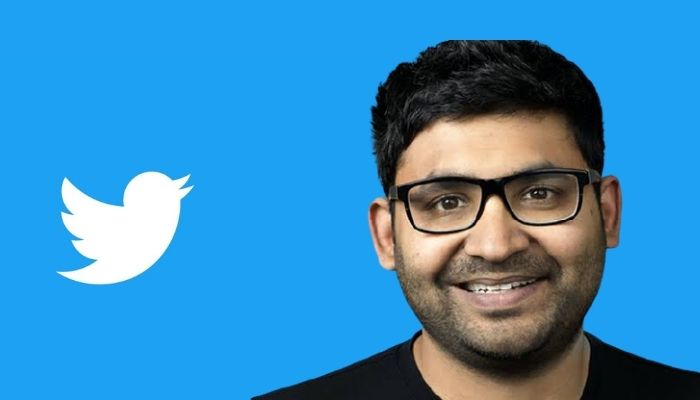
Dalit activist Thenmozhi Soundarajan joined White Supremacists in targeting newly appointed Twitter CEO Parag Agrawal over caste. They falsely assumed him to be Brahmin and targeted him over the same. Thenmozhi went to the extent of claiming that it is a tradition for “White cismen” to transfer power to “Brahmin cismen” in the Silicon Valley.

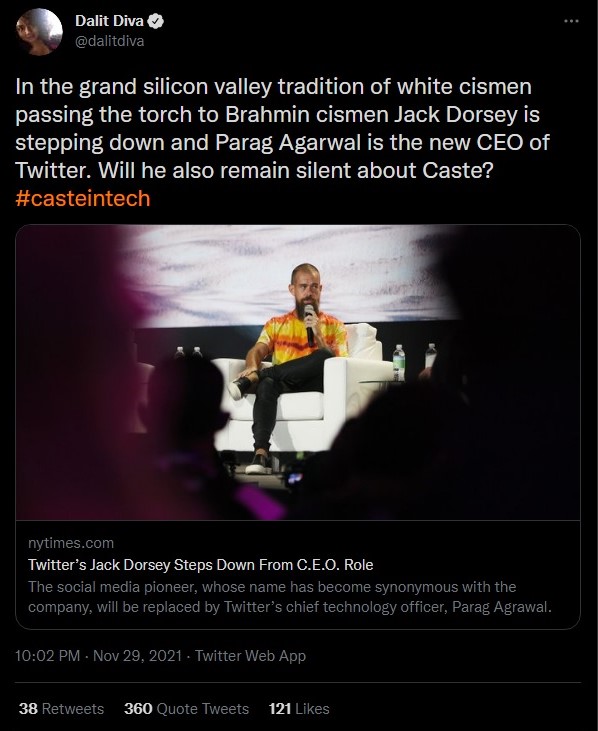
She said on Twitter, “In the grand silicon valley tradition of white cismen passing the torch to Brahmin cismen Jack Dorsey is stepping down and Parag Agarwal is the new CEO of Twitter. Will he also remain silent about Caste?”

Source: Twitter

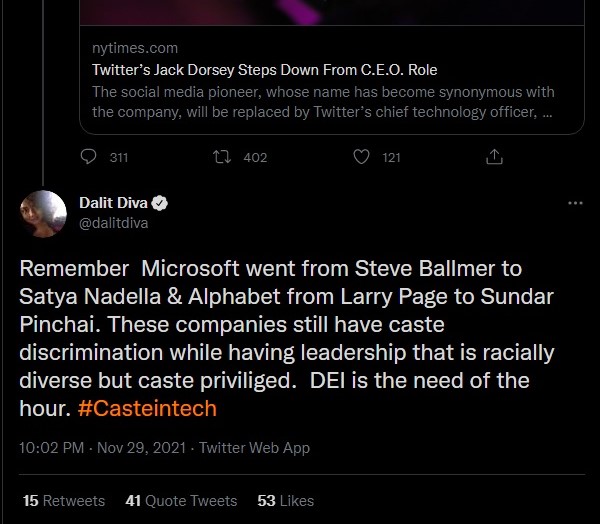
She went on to add, “Remember Microsoft went from Steve Ballmer to Satya Nadella & Alphabet from Larry Page to Sundar Pinchai. These companies still have caste discrimination while having leadership that is racially diverse but caste priviliged.”

Her allegations reek of caste hatred as Parag Agrawal was chosen solely based on his credentials. He has been a long time employee at Twitter and had very good relations with Jack Dorsey himself. Even so, Thenmozhi Soundarajan made it appear as if caste had a major role to play in the decision.

Source: Twitter

That the person behind the username @dalitdiva is Thenmozhi Soundarajan is confirmed by the past tweets of several media outlets.

The Dalit Activist got Agrawal’s caste entirely wrong, just like White Supremacists. Parag Agrawal actually belongs to the Baniya caste. But facts do not matter when the objective is solely to peddle hatred against the Brahmin community.

We had reported earlier how Parag Agrawal had suffered racial abuses on social media soon after he was appointed the CEO of Twitter.

Thenmozhi Soundarajan makes common cause with White Supremacists

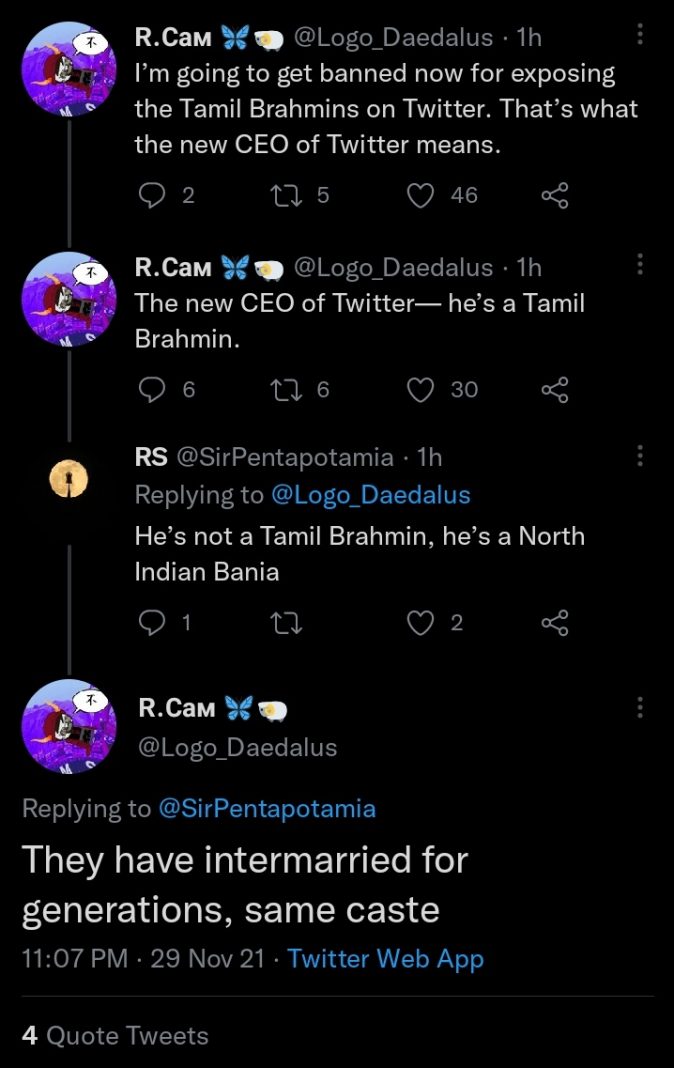
A section of the western Alt-Right believes that Indian ‘Brahmins’ are responsible for everything that is wrong with their country and choose to blame Brahmins for all of their problems. Therefore, when Parag Agrawal was appointed CEO, they assumed that he is Brahmin and targeted him over his caste.

Source: Twitter

The Dalit activist demonstrated the same kind of bigotry, even though one would assume that a person of Indian origin would be aware that Agrawal is not a Brahmin surname. But that does not appear to be the case here.

Former Twitter CEO Jack Dorsey had once promoted the Dalit activist’s anti-Brahmin poster

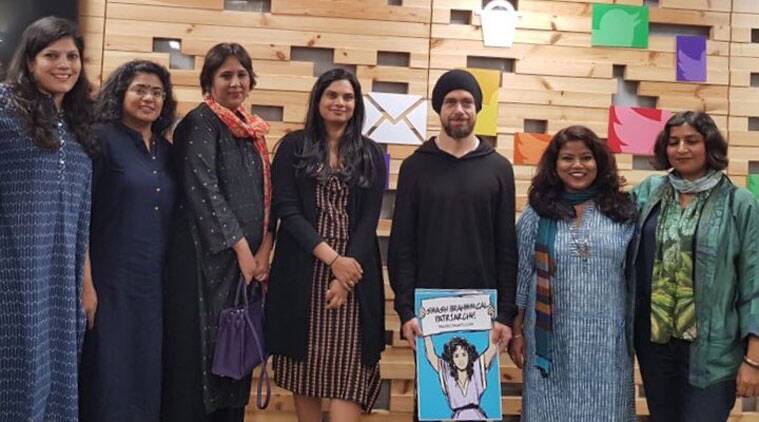
Thenmozhi had once designed a ‘Smash Brahminical Patriarchy’ poster for Equality Labs, where she is the Director. During his visit to India, Jack Dorsey had held the poster, which caused a storm on social media. After severe backlash, the legal head of Twitter was forced to apologise over the same.

In a weird twist of fate, the creator of the same poster is now attacking the new Twitter CEO on the presumption that he is Brahmin, even when he is not. The incident also highlights the fact that while liberals accuse ‘Sanghis’ of being fascists and Nazis, it is they who ally with White Supremacists to achieve their objective.

It also highlights the fact that Ambedkarites often serve as useful idiots for White Supremacists, giving racists the moral justification for peddling hatred against one segment of people of colour. Intriguingly enough, Equality Labs is an extremely prominent anti-Brahmin group in the USA which has worked extensive with Democrats to peddle its anti-India anti-Brahmin agenda.

Gujarat: Hussain Vohra disguises as Hindu man, accused of raping a 14-year-old Hindu girl

0

Another case of grooming jihad has come to light in Gujarat. As per the Desh Gujarat report, Hussain Vohra presented himself as ‘Lalu’ and befriended a 14-year-old Hindu girl in Khergam, Gujarat.

According to a report in Zee Gujarati, Hussain Vohra came in contact with the girl at a garage near her house and befriended her. At that time, he introduced himself as Lalu. They later shared the mobile numbers and continued talking to each other. Slowly, their friendship turned into a relationship.

Later the girl found out that he was a Muslim from his Instagram ID and told him that she could not continue contacting him. However, the accused arrived at her house and threatened her with a knife. Reports suggest that he raped the girl repeatedly at her home in the absence of her parents between January 2020 and November 2021.

On November 20, he came to her house in the evening and threatened the family and said he was willing to marry their daughter and if they refused, he would kill them.

The victim’s father filed a complaint at Khergam Police station, after which the Police swung into action and arrested the accused. A case has been registered against the accused under the POCSO Act and other relevant sections of the Indian Penal Code.

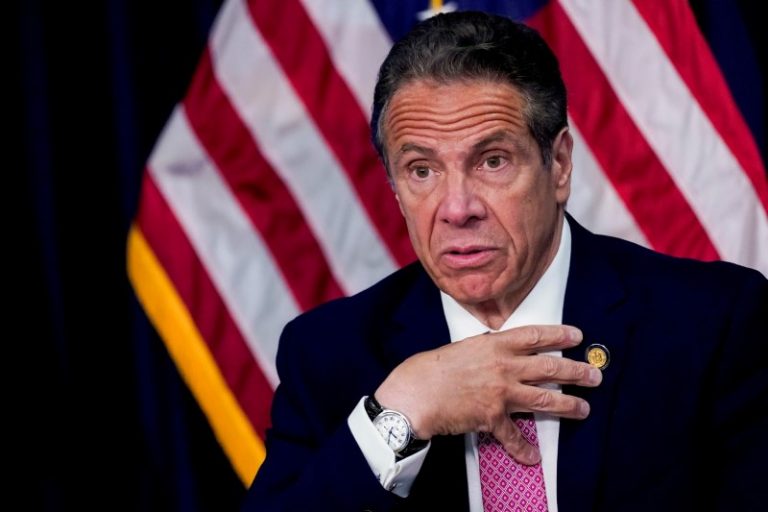
CNN host Chris Cuomo used sources to help former NY governor Andrew Cuomo in sexual harassment case, documents reveal

0

Documents released on Monday from the New York Attorney General’s Office has revealed that CNN host Chris Cuomo coordinated with various ‘sources’ in order to deflect the allegations of sexual harassment made against former New York governor Andrew Cuomo, according to CNBC report.

Records of Chris Cuomo’s interview during the state investigation including Attorney General’s probe showed that Chris Cuomo was in contact with his brother Andrew Cuomo’s former aide Melissa DeRosa and strategized the statements of the former New York governor to deal with the accusations.

In one of the statements to DeRosa from March, Cuomo had said, “Please let me help with the prep,”. While in another statement from March, days after Andrew Cuomo was accused of making an unwanted advance towards a woman named Anna Ruch at a wedding, Chris Cuomo said, “I have a lead on the wedding girl.”

Meanwhile, CNN has stated that it would review the documents released by the New York Attorney General. Matt Dornic, CNN spokesperson said, “The thousands of pages of additional transcripts and exhibits that were released today by the NY Attorney General deserve a thorough review and consideration,” adding, “We will be having conversations and seeking additional clarity about their significance as they relate to CNN over the next several days.” 

As per reports, on March 12, Chris Cuomo had texted a full written text for the governor to DeRosa. It said, “I will not resign, I cannot resign,” adding, “I understand the political pressure I understand the stakes of political warfare, and that’s what this is… And I understand the conformity that can be forced by cancel culture.”

Notably, Democrat Andrew Cuomo resigned from his post in August amidst allegations of misconduct. The former New York governor had also denied the allegations made against him.

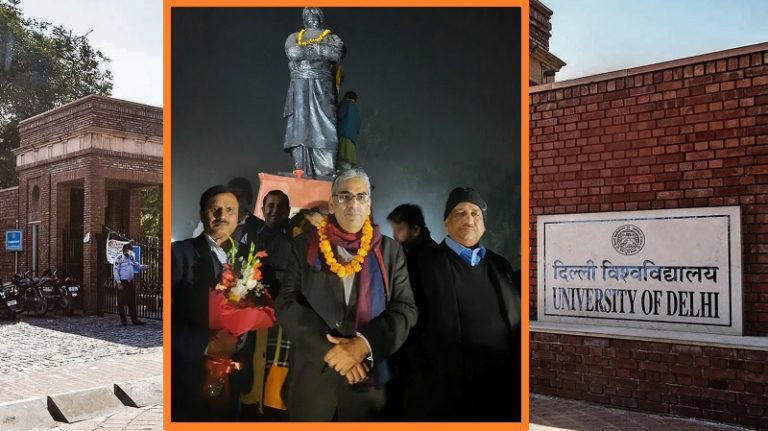
RSS-supported group wins DUTA polls after 24 years, new president outlines some of the key areas that DUTA will focus on

The Delhi University Teachers’ Association (DUTA) elections were held on November 26, Friday and the results were declared on November 27, Saturday. This time, the university’s teachers have set a new precedent by electing AK Bhagi as the president.

Dr AK Bhagi is a professor at Dyal Singh College, University of Delhi, and is a member of the right-wing teachers’ group- National Democratic Teachers Front (NDTF). Bhagi won defeating the Left-aligned Democratic Teachers’ Front (DTF) candidate, Abha Dev Habib, by over 1,000 votes for the president’s post. 

After almost 24 years, a candidate of the RSS-affiliated National Democratic Teachers’ Front has been elected to the post of president of the Delhi University Teachers’ Association. The DUTA president post was last won by the NDTF in 1997 and then Shri Ram Oberoi was its candidate, and after that, till this latest election, the post was either held by the Left affiliated Democratic Teachers’ Front (DTF) or the Congress-backed Academics for Action and Development (AAD). 

So why is the victory of NDTF associated with the Rashtriya Swayamsevak Sangh significant? What message has this victory sent to college teachers and students? What is the NDTF’s vision for ensuring simple access to undergraduate and postgraduates? OpIndia spoke to Professor Ajay Kumar Bhagi, the new Chairman of DUTA, to find out answers to these simple questions. In the course of the conversation, some interesting facts were shared by the professor which shed light on how the Congress-Left, as well as the Aam Admi Party, have been using the education sector to play petty politics.

Below is the conversation OpIndia had with professor AK Bhagi. ‘Q’ denotes the questions we asked the professor while ‘A’ denotes his responses.

Q: NDTF has won the Delhi University Teachers’ Association (DUTA) elections after 24 years, how do you perceive it?

A: We were elected president of the DUTA in 1997. There are numerous other elections in Delhi University, in addition to the election of the President of DUTA. Between 1997 and 2021, the NDTF has won the election for the post of Executive Council five times. In the last four of these five elections, all of the candidates put forth by the NDTF have won.

Apart from the DUTA Executive Council, we have also nominated victorious candidates in the Academic Council elections for the last four years. Whether it’s the Delhi University Executive Council or the Academic Council, both are essential statutory bodies.

In the Delhi University Court Executive Council election held in March this year, NDTF’s Monica Arora had a landslide victory. Besides, Rajesh Gogna, Naresh Beniwal, and Suryaprakash Khatri have all won the Delhi University Court Executive Council elections in the past. No one has ever lost.

Overall, the National Democratic Teachers Front has always been a key pillar in Delhi University’s system of teacher representation. The candidates of the NDTF or their supporters have won every election to the Executive Council held through the Court or Court membership.

In terms of numbers, the NDTF has also missed the presidential election on multiple occasions by a razor-thin margin. The politics underlying it, on the other hand, are fascinating. The other factions have occupied the office through coalition/support politics, however, the NDTF has always run for the president alone, with the exception of one time.

Coalition politics against NDTF

Q: When the rest of the factions engage in coalition politics even at the university-level elections, who is their biggest threat?

A: The NDTF has always been a one-man show when it comes to elections. In contrast, practically every party has the same goal: to defeat the NDTF. In fact, the 2019 DUTA presidential election exemplifies this.

Both the Congress-backed INTEC (Indian National Teachers Congress) and the AAD (Academics for Action and Development), which supported the Congress’ ideology, did not field a candidate in the 2019 DUTA elections. Everyone voted for the same left-wing candidate. They all knew that they couldn’t win if they went up against NDTF solo. In 2017, Congress used the same strategy.

One should understand the dynamics that have led to the Left or Congress trying to gain control of DUTA’s presidential position by indulging in alliance politics. The Executive Council is an important statutory body at the University of Delhi. The NDTF earned the largest margin of victory in the DUTA Executive Council election in February 2021. This isn’t only about the year 2021. NDTF has won four consecutive DUTA Executive Council elections: in 2015, 2017, 2019, and 2021. What’s more striking is that the Left party has lost thrice and the Congress lost once.

The win of the NDTF for the position of DUTA President is unquestionably significant. The real news is that the Left, which had been defeated in the Executive Council elections three times (in 2017, 2019, and 2021), also lost the presidential election this time. It’s also worth noting that the Left had won the DUTA Presidentship in 2019 with the support of all the parties’ backed factions, including the Congress. They have never won on their own merits, and this is what is interesting.

Leftists are orthodox and fascists

Q: The presidential victory is being interpreted by DUTA, an organisation of the so-called left-leaning liberals, as a victory for the ‘nationalist’ NDTF. They play with words to create a fascist image without saying it in so many words. What is your take on this?

A: They seek to label us as fascists or orthodox by using the term “right-winger” to characterise us. The truth is that the Left is orthodox, fascist, and undemocratic in its own right. On the ground, the Left is anti-democratic, contrary to popular perceptions of Western ideology. Democracy is being suppressed anywhere they are in power. They advocate one-party administration. In fact, those they try to dismiss as right-wing, nationalist, or orthodox are, in truth, democracy’s true watchdogs.

According to our eastern ideology, which is in stark contrast to the western ideology, what is obvious is that the Left is not at all tolerant. The Left lacks the ability to research, comprehend, or debate any issue openly. They demonstrate in society that leftists follow Western ideology while claiming to be tolerant. What, on the other hand, is the truth? Their truth is that what lies beyond their comprehension is unique… Fascists, it’s all a waste of time.

The left-wing extremist mentality can be understood simply by analysing how willingly they protest against their own country in order to make their point. On the contrary, we hold dharna/demonstrations for our demands (that too in conjunction with the issue) but that too is limited. We never go overboard, and we never go against our country.

New Education Policy 1986 Vs National Education Policy 2020

Q: Every district of the country should have a centrally funded college affiliated with a central university. This is how you see things. What’s your rationale behind it?

A: The New Education Policy (not the law, but the guidelines) was introduced in 1986. It went into effect in 1992. The possibility of spending up to 6 per cent of GDP was indicated in such policy. However, it has only reached 4.3 per cent so far. The vision of the central government establishing universities was likewise mentioned. The central government envisioned that there would be two types of colleges under these universities. Firstly, affiliated colleges- which are affiliated with either any state or central university and secondly, autonomous colleges, which meant that the colleges would be pushed to progressively convert into autonomous colleges. As a result, the total number of autonomous colleges in the country climbed to 600 from 20 at the time.

DUTA, as well as certain other teacher groups, were opposed to the expanding number of self-governing institutions. This demonstration had a purpose. The cause for this was the shift toward a self-funded, self-governing college paradigm. But, in a country like India, is the self-funded model for higher education appropriate? Will this concept prove to be beneficial in a country where mostly first-generation students attend higher education? This was the whole point of the protest.

The idea of an affiliated college, which originated with the 1986 New Education Policy, resulted in the establishment of thousands of private colleges across the country. Many private colleges ranging from engineering to professional and medical colleges have opened up since then. Many private universities have also opened. Many universities have stayed affiliated for the sole purpose of distributing degrees. The concept of research and education has come to an end in such universities.

Basically, the 1986 New Education Policy has pushed for affiliated college/affiliated university/self-funded models. Before, there used to be only constituent colleges. These were affiliated with and supported by the government’s central universities. All such Constituent Colleges that existed prior to 1986 are still operational, however, none have opened after that.

Apart from that, if the state government wants to set up a college at its level or link it with a university, it will have to fund it itself.

The policy also stated that it was not the job of the central government to open or finance graduate level colleges. It was said in that policy to limit the central government to opening and funding only universities (postgraduate, PhD, MPhil, research centres etc.).

This is the reason why all undergraduate institutions (liberal arts, general science, commerce, and so on) established in any state after 1986 are either state-supported or privately sponsored. After 1986, Delhi University opened up 12 such colleges, all of which are fully sponsored by the Delhi government. It, however, opened no new universities after 1998. The reason for this was that the state government was hesitant to fund the universities that came under the purview of central universities.

The concept of Constituent College was reintroduced in the National Education Policy of 2020. Under this new policy, all the single-subject institutions (distributing B.Ed. and LLB degrees) will be phased out and replaced with multi-disciplinary colleges. 

The country will have a better alternative if the central government works on the concept of Constituent College as part of the National Education Policy 2020. Universities are strewn across the city. Students will not need to rush to Delhi if 4-5 centrally sponsored colleges (undergraduate level – for liberal arts, general science, commerce, etc.) are established within each central university.

This is the model used by all of the country’s publicly funded colleges. The state government also opened its own sponsored colleges based on the same idea. The central government started and the state govt followed suit and like this, the numbers grew with time. The goal, however, is to establish such institutions in each of the country’s districts. My goal is to make higher education more widely available.

The definition of AAP: creating false promises, turning education into a business

Q: This question is political rather than an academic one. Every Aam Aadmi Party-backed teacher candidate lost in the DUTA election. Why is that?

A: In terms of higher education, the Aam Aadmi Party’s position is unclear. The Delhi government promised to open 20 new government institutions, meaning colleges with low tuition prices, but not a single one has been built.

Secondly, the Aam Aadmi Party attempted to alter the funding paradigm for Delhi University’s currently operational colleges. These colleges were told that they needed to move to a self-financing model. These colleges’ budgets have been reduced numerous times. The AAP has a plan to link the salary to the students’ fees. Delhi University’s professors are extremely aware of these issues.

Thirdly, the AAP government is attempting to split Delhi University. It intends to separate the Delhi University’s College of Arts and link it to Ambedkar University. The teachers at Delhi University have rejected this coup to break the university because this isn’t his first time doing something like this. NSIT had previously been converted to NSUT, snatching away the DU’s engineering college. They’ve now turned their attention to the College of Arts. People’s suspicions have grown stronger as a result of this.

This mistrust is so profound that professors believe they should not even try to separate the 12 Delhi University colleges that are fully funded by the Delhi government. Since these are Constituent institutions, the AAP administration will not be allowed to do the same thing with them as they did with the NSIT.

Fourthly, the AAP government had promised to build new buildings for two female colleges (Sister Nivedita College and Aditi College) in Delhi. It had also said that the facilities within the colleges would be improved. The AAP government has, however, forgotten about these pledges. Even before the Delhi government came to power in 2014, the buildings of 12 fully-funded Delhi government colleges that are part of DU were the same, and they are still the same now. All of these are housed in an ancient building that hasn’t been updated in any way.

Furthermore, the AAP government has reduced the salaries, funds and grants of these colleges drastically. Not only this but there are delays in the disbursement of the salaries of the professors teaching here. All these issues have enraged the Delhi University professors. This is why the AAP-backed teachers’ union was overwhelmingly defeated in the DUTA elections.

DUTA Chairman and NDTF Objectives

Q: The last question is about NDTF’s ideology. Some of the objectives mentioned on the NDTF website are, (i) creating an intellectual environment (ii) free discussion on subjects of national importance (iii) promoting the spirit of nationalism, democracy and patriotism in the university community. What are your plans for achieving these goals as President of DUTA?

A: All of these topics are vital to every Indian person. When we go out among the people as educators, we see that acceptance of these points is growing in every region. NDTF is an organisation of educationists that works not only for the interests of teachers but also at the level of ideology and contesting the election of DUTA is one of them.

As a president of DUTA, it will be my responsibility to fight for all sections of teachers irrespective of their political persuasions or ideologies. I will work on the concerns of Delhi University teachers, protect their interests and promote the welfare of education. These will be the goals and objectives of DUTA.

Along with this, it will be ensured that DUTA’s platform is not misused as it was by the previous leadership of the Left that had created a negative environment by sidelining the issues of teachers and focusing on issues of national politics. The Delhi University teachers were well aware of the Left’s exploitation of the DUTA forum and the victory of NDTF is proof of this. This platform will henceforth only be utilised in accordance with DUTA’s constitution, thus there is no possibility of it being abused. This is going to be a major shift. This platform will purely be used to discuss problems concerning education and teachers. It will also focus on payment of regular salaries, pension, allowances and arrears to the teachers and employees of 12 fully-funded Delhi government colleges that are part of DU.

Education is and always will be a national subject. We will discuss its expansion in addition to the issue of saving government-funded institutions. The reason for this is that more than half of the students in higher education from the first generation come from an economically deprived background. As a result, efforts to create self-supporting institutions will be resisted.

Other than education, the issue of teachers will be linked to civic interests and their rights. There should be no infringement of the teacher’s interests, and justice should be served.


RS chairman Venkaiah Naidu turns down appeal to revoke suspension, says MPs are unapologetic about their behaviour

0

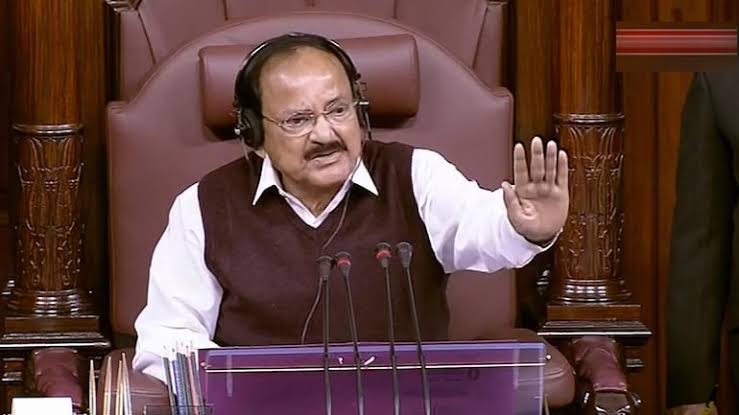
M. Venkaiah Naidu, the Chairman of Rajya Sabha, on Tuesday rejected the opposition’s appeal for revocation of suspension of 12 MPs. 

“I am not considering the appeal of Leader of Opposition Mallikarjun Kharge to revoke suspension of 12 MPs as the suspended MPs have not apologised and are justifying their behaviour,” he noted.

Following Naidu’s denial, the opposition members staged a walk-out from the Rajya Sabha assembly. 

Leader of Opposition Mallikarjun Kharge had raised the issue of revocation of suspension under rule 256 stating that the decision to bar the legislators for the rest of the winter session ran counter to the rules of the procedure of rules. 

“The Members have been suspended over a conduct which occurred in the previous session and is against the rules of the House,” the LoP said, adding that the question of apologising does not arise.

However, the RS chairman pointed out that the House has adopted the motion and on the day of occurrence, the MPs were named by the Chair. 

With the exception of TMC, other opposition parties met at Kharge’s office to cobble up a strategy to make the RS chairman rescind on the decision. However, they were left red-faced after Naidu turned down their appeal to revoke the suspension. 

Even as the Opposition parties were seeking to invalidate the suspension order, Derek O’Brien of TMC justified the unparliamentary conduct of the MPs, alleging that they were compelled to resort to such a behaviour in Monsoon session as certain issues were not being brought up for discussion despite repeated requests. “Not the 12 Opposition MPs but the 80 MPs of treasury should be suspended,” he asserted.

12 MPs suspended over unruly behaviour, manhandling security personnel in last session

The Rajya Sabha on the first day of its business in the Winter Session suspended12 MPs, including Shiv Sena MP Priyanka Chaturvedi and Trinamool MP Dola Sen, for the remaining part of the current session. The MPs have been suspended for misconduct and unruly behaviour in the house.

These suspended MPs include six from the Congress party, two members from the Shiv Sena, two from the Trinamool Congress and the other two from the CPM and CPI respectively. They will not be allowed in Rajya Sabha in the Winter Session. 

The names include Priyanka Chaturvedi (Shiv Sena), Dola Sen (TMC), Elamaram Kareem (CPM), Phulo Devi Netam (INC), Chhaya Verma (INC), Ripun Bora (INC), Binoy Viswam (CPI), Rajamani Patel (INC), Shanta Chhetri (TMC), Syed Nasir Hussain (INC), Anil Desai (Shiv Sena), Akhilesh Prasad Singh (INC).

Indian-origin entrepreneurs own a big share of US-based unicorns, negating perceptions that they can only become CEOs: Details

On Monday (November 30), Twitter founder Jack Dorsey stepped down as the Chief Executive Officer (CEO) of the micro-blogging platform, making way for Parag Agarwal, an IIT Bombay alumnus. Twitter was co-founded by Jack Dorsey with Ev Williams, Biz Stone and Noah Glass in 2006. He served as the CEO of the platform until 2008 before returning as CEO for the second time in 2015.

This has kicked off discussions on social media about Indians occupying the post of the Chief Executive Officer (CEO) of major companies including Microsoft, Twitter, Adobe, Google and so on. A few social media users claimed that although many such tech companies are now headed by Indians, they were not founded by any one of Indian origin.

There were some discussions saying that Indians can become only CEOs, and not founders of successful businesses. However, the data says that Indians have been quite successful in the USA as founders of tech companies too.

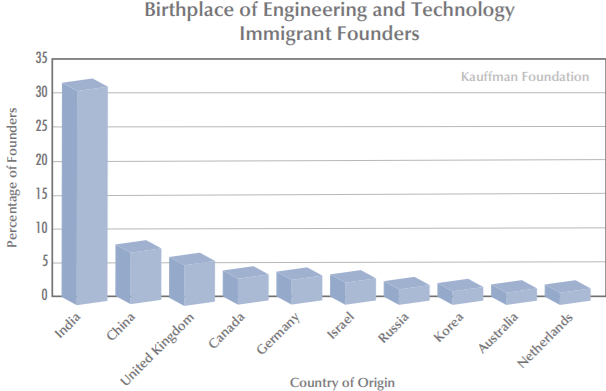
According to a report [pdf] published by Kauffman Foundation in 2017, about 33% of immigrant-founded companies in the United States are founded by immigrants from India. Between 1995 to 2005, Indians founded 25.8% of immigrant-founded companies. As per the graph shown below, the Indian community was at the helm of 33.2% immigrant-founded engineering/tech companies between 2006 and 2012.

“Indians have founded more such companies than immigrants born in the next top seven immigrant founder sending countries combined. While the mix of immigrants varies by state, Indians tend to dominate the immigrant-founding groups of the top six states (California, Massachusetts, Texas, Florida, New York, and New Jersey) with the greatest representation of immigrant founders,” it read.

A report published by Kauffman Foundation

“Indian founders continued to favour California and New Jersey as locations to start businesses, founding 35% of their companies in these two states alone…The percentage of Indian founders in California has increased from 20% to 26% since 2005. Indians are the dominant founders of immigrant companies in all seven industries: biosciences (35%), computers/communications (28%), innovation/manufacturing-related services (29%), semiconductors (32%), software (33%), environmental (39%), and defense/aerospace(23%),” the report emphasised.

YourStory reported that 25 US companies, which were founded by Indian immigrants, were the subject of incredible acquisitions. For instance, Sandisk, founded by Sanjay Mehrotra, was acquired in October 2015 by Western Digital at $19 billion. “Since 2012, more than 25 Indian-founded companies have seen M&As worth more than $500 million,” it stated.

Screengrab of the successful acquisitions of Indian founded companies

India has the third-largest start-up Unicorn ecosystem

Earlier on September 2 this year, Hurun India accorded India the third position in the list of largest Unicorn systems in the world.  As per the Hurun India Future Unicorn List 2021, India has 51 Unicorns, 32 Gazelles and 54 Cheetahs. The Unicorns are those start-ups, which are founded after the year 2000 and have a valuation of US$1bn. Gazelles are the start-ups expected to reach Unicorn status in 2 years while Cheetahs are expected to reach Unicorn status in 4 years.

According to Times Now, Hurun India report said, “Although the Indian start-up ecosystem is growing, some of the start-ups, who reach a certain scale migrate from India, in search for better regulatory incentives and risk capital availability. For instance, some of the best Enterprise SaaS companies are born in India but “flipped” to the USA. This is a lost opportunity for India and it is important that these start-ups are incentivized to stay back in the country.”

Riots, rapes, murders and loss of over Rs 60,000 crores: What farmers’ protests will take with itself if it ends tomorrow

The months-long farmers’ protests that were started in November 2020 is drawing close to an end after the bill to cancel the three farm laws was passed in both houses of the parliament on Monday.

As per reports, a majority of the 32 farmers groups of Punjab that had partaken in the stir along the borders of the national capital are in favour of calling off the protests following the fulfilment of PM Modi’s promise of withdrawing the farm bills. 

A meeting of the 32 farm groups took place at the Singhu border on Monday. After the meeting, BKU Ekta Dakaunda president Buta Singh Burjgill and BKU Kadian president Harmeet Singh Kadian said an emergency meeting of 42 representatives from Punjab and other states will be held on December 1 to formally discuss the issue of protests at Delhi borders. While they did not comment on how long the protest is slated to continue but they did hint at lifting it after December 1. 

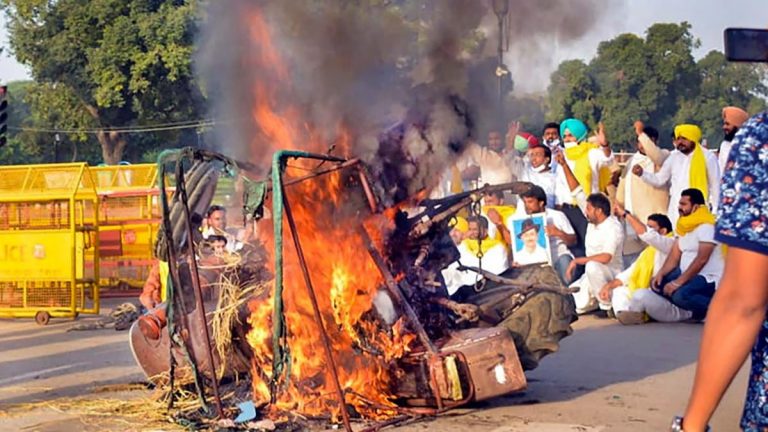
With the farmers’ agitation almost on the verge of its completion, it is germane to dwell upon what it leaves behind in its wake. From business losses to the tunes of Rs 60,000 crores to the egregious subversion of the elected government, to the insidious resurgence and manifestation of Khalistani sentiments and to a host of criminal activities such as rapes, murders, riots etc., the farmers’ agitation has been a grave assault on the national security, public exchequer and our fundamental values that are enshrined in the Indian Constitution. 

Business losses to the tunes of Rs 60,000 crores

While it is practically impossible to estimate the materialistic losses the country had to bear because of the ongoing farmers’ protests, the Confederation of All India Traders(CAIT) pegs the losses endured by the country during 12 months of farmers’ protest at Rs 60,000 crores. The trade body says the losses were predominantly incurred in the initial phase of the protests—November, December 2020 and January 2021. 

Initially, there was a substantial impact on supplies from Punjab, Haryana, Rajasthan, Uttar Pradesh, J&K, Himachal Pradesh to Delhi. Transportation of goods from other states was also affected due to the blockage of highways leading to Delhi by the farmers. There was an acute shortage of items, including foodgrain, FMCG products, Electrical items, Builders Hardware, consumer electronics, Auto Spare parts, Machinery articles, Sanitarywares & Sanitary Fittings, Pipes & Pipe Fittings, Agricultural implements, Tools, Furnishing Fabric, Cosmetics, Iron & Steel, Wood & Plywood, Edible Oil, Packed general items etc.

In later months, however, due to the combined effort of CAIT and All India Transport Welfare Association (AITWA), the transportation of goods from the month of February to July 2021 and the supply chain was restored to a great extent. Truckers carrying material from other States to Delhi and from Delhi to other States avoided using highways and used alternate routes to the national capital to circumvent the protest sites and transport essential commodities to their respective destinations. 

Mr Bhartia said that about 50 thousand trucks come to Delhi every day carrying goods from different states across the country and about 30 thousand trucks carry goods from Delhi to other states. Since Delhi is neither an agricultural nor an industrial state, it has to depend upon buying and selling of goods for maintaining its centuries-old distributive character of trade and therefore Delhi stands the major sufferer of farmers agitation.

CAIT National President Mr BC Bhartia had stern words for the protesters and the agent provocateurs who are egging on the farmers to continue their agitation despite the government acceding to their primary demands. 

One can not make demands one after another and if the demands are accepted, it will be presumed by the Country that democracy ha succumbed to mob pressure, Bhartia said. Political parties who are supporting additional demands, he warned, must take note that the country is watching their activities and they will have to suffer political losses in near future for encouraging the farmers to continue their agitation even though their demands had been fulfilled. 

Resurgence of Khalistani sentiments through farmers’ protests

Perhaps, the biggest fallout of the ongoing farmers’ protest had been the resurgence and manifestation of Khalistani sentiments. The protests were, to a great extent, hijacked by proponents of Khalistani extremism and supporters of Jarnail Singh Bhindranwale. At various instances during the protests, the demonstrators were seen chanting Khalistani slogans and carrying posters of Khalistani terrorists Jarnail Singh Bhindranwale.

Reports published by various dailies shed light on how Khalistani supporters had hijacked the so-called farmers’ protests. On January 12, 2021, the central government had told the Supreme Court that they have credible input from the Intelligence Bureau that there is a presence of Khalistani supporters in the farmers’ protest.

Khalistan sympathizer Deep Sidhu, who was seen among the mob who attacked the Red Fort and hoisted different flags in place of the Tricolour on the 72nd Republic Day, has reportedly been named by the police in an FIR lodged in connection with the violent protests of the Republic Day.

Various Khalistani organisations such as Poetic Justice Foundation, Khalsa Aid and others actively partook in the protests, providing monetary and emotional support to the protesters in their demands against the Centre. It cannot be discounted that the central aim of these organisations was to stoke Khalistani sentiments among the people and characterise the Centre as against the interests of Sikhs. Even banned foreign-based organisations such as Sikhs For Justice, a Khalistani outpost based out of the United States, voiced their support to the farmers, spurring them to continue stirring anarchy under the pretext of carrying out peaceful protests against the three farm laws.

As recently as 8 days back, SFJ announced a reward of $125,000 for unfurling the Khalistani flag at Parliament on the first day of the winter session. During the span of these so-called protests, the hardline pro-Khalistan group has made several attempts to infiltrate the ongoing protests in the capital and has made shocking proposals in the form of incentives in order to promote their Khalistani agenda.

In January, it announced a reward of $350,000 to the protestors who hoisted a Khalistani flag at the Red Fort on Republic Day. Ahead of Republic Day, the SFJ had announced a cash reward of USD 2,50,000 for hoisting the Khalistan flag on January 26 at the India Gate on Republic Day. The SFJ had also called for a siege of Parliament on Budget Day, February 1, in an attempt to push protesters into engaging in anti-national activities.

Subversion of democracy and the undermining of the elected government

On November 19, 2021, PM Modi announced that his government would take back the three farms after failing in their endeavour to convince a section of protesting farmers about its benefits. The announcement should have led farmer unions to call off the protests. Instead, they came up with a fresh set of demands, warning the government that if they don’t fulfil it, the protests would continue unabated. 

Even after PM Modi’s announcement to withdraw the farm laws, BKU leader Rakesh Tikait said protests would continue with yet another tractor rally, alleging that if additional demands made by farmers’ are not met, then 60 tractors will march towards the Parliament on November 29, the day when the winter session of the Parliament is to commence. He demanded the centre to pass legislation on MSP guarantee, withdrawal of criminal cases against lumpen farmer protesters, Seed Bill, Pesticides Bill, among other things. 

The instance provides a window into the mentality of the protesters who had squatted on the national highways leading to Delhi. Their primary aim, it seems, was not to get the government to repeal the farm laws, but to hold the Centre to the ransom and blackmail them into acquiescence on as many demands as possible. 

PM Modi’s government was re-elected to power in May 2019 with a thumping majority. They passed the farm laws in the parliament through the democratic procedures enlisted in the Constitution. Yet, the protesters felt no compunction in undermining the elected government of the day and blackmailing them into submission. Protests are legitimate means to express one’s disapproval with the Centre’s policies, but that does not give the protesting parties with a carte blanche to threaten the government with intimidation and adverse consequences should their demands are not met. 

Anarchy, riots, murder and rapes—The sordid legacy of the farmers’ protests

The farmers’ protest, along the border of the national capital, which was started under the guise of peaceful demonstration against the three farm laws, took no time to devolve into a breeding ground of sorts for all kinds of criminal activities. The 12-months long protests were overwhelmingly punctuated by incidents of chaos, rapes, murders, riots, vandalism and arson, as restless protesters unleashed their criminal tendencies. 

Recently, the gruesome murder of a man at the Singhu-Kundli border protest site had shaken the conscience of the country, raising questions on the participation of criminal elements in the farmers’ protests. On October 15, a badly mutilated corpse of a man, whose hands were chopped and legs cut, was suspended over a police barricade, reportedly by Nihang Sikhs for allegedly committing blasphemy. The victim was identified as 35-year-old Lakhbir Singh. 

The grotesque incident instantly called to mind the horrifying fate of another man who was set off on fire by protesters in the Kasar village of Bahadurgarh near the Tikri border. In June 2021, the 42-year-old Mukesh was burnt alive by the protesters demonstrating against the three farm laws, the locals of the village told OpIndia.

The farmer protests were also plagued with cases of gangrapes and sexual harassment against women. It was reported that on April 12, a woman who travelled all the way from West Bengal to participate in the anti-farm law protests was sexually assaulted while travelling in the train to the venue. She was later raped at the protest venue as well. The woman, unfortunately, contracted COVID-19 lter, and died on April 30 at a private hospital in Bahadurgarh. 

Yogendra Yadav, a professional protestor who is now protesting on behalf of “farmers,” had admitted on May 10 that he was aware of the woman’s sexual harassment as well as the potential kidnapping of the West Bengal girl by the perpetrators. This revelation drew tremendous condemnation for Yadav who chose to remain silent despite knowing about the incident.

It was also reported by OpIndia how the organisers of the farmers’ protesters themselves had cases of sexual harassment levelled against them. The allegations started with a post accusing one Mohammad Zuber (_emmzedd on Instagram) of sexual harassment, which opened a Pandora’s Box of many such allegations on other alleged activists. Other prominent activists who have been named so far are Varun Chouhan (member of Trolly Times), Antarpreet Singh (leader of Students For Society) and Manish Kumar (President, Swaraj For Youth).

While the farmers’ protests were afflicted by a range of menaces, but nothing came close to the siege of the Red Fort by protesters during the tractor rally on January 26, 2021 and the attendant riots that erupted in the national capital. It was not only vandalism and rioting of epic proportions but it was also an egregious assault on the sovereignty of the country as rampaging protesters ran amok along the streets of Delhi, causing mayhem, vandalising public properties and setting on fire cars and other private vehicles. 

Kisan Unions had called for a tractor rally on January 26, 2021. Though initially, Police had denied permission for the rally, it was permitted with several conditions. One of the main conditions was that the rally would be commenced only on the permitted route. The leaders of Kisan Unions agreed to the conditions.

However, on January 26, a large group of alleged farmers entered Delhi from unpermitted routes and started rioting when Delhi Police tried to stop them. A group among them managed to reach Red Fort and hoisted two flags with the Sikh holy symbol Nishan Sahib. One of the flags was hoisted on the flag pole designated for Indian National Flag that is hoisted on August 15 every year to mark Independence Day.

There were visuals of protestors throwing away Tricolour while trying to hoist the alien flag on the ramparts of the Red Fort. The protestors at several places tried to mow down the police personnel with tractors. Police personnel were attacked with lathis, stones, swords and other sharp weapons by the protestors. An RTI filed into the case revealed that around 299 police personnel were injured. 

Semi-naked man appears before Karnataka HC during sex CD case hearing, advocate Indira Jaising to file sexual harassment complaint

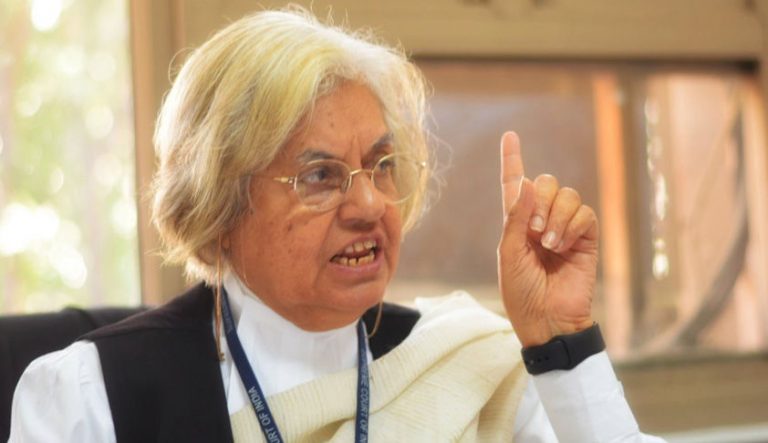
A semi-naked man appeared during a hearing at the Karnataka High Court when advocate Indira Jaising was arguing a case. The hearing was being conducted via virtual conference. Consequently, a notice has been issued to the man over the matter.

Indira Jaising revealed that the semi-naked man was visible on screen for 20 minutes despite her objection. She said that she will be filing a complaint of sexual harassment and contempt of court against the man, who has not been named.

According to LiveLaw, Indira Jaising told the Court that “a person is appearing on Video Conference without a vest, he is visible in this courtroom. Please take judicial notice of this. Let there be some decorum in the court. Milord, I am a woman lawyer.”

She added, “It is very offensive for a woman to see a man without clothes in a courtroom. We have a man without clothes when a woman is arguing in the court? What is going on? Milords”. The advocate was appearing for the victim in the sex CD scandal.

“One final request milord’s, a personal request. Milords I have been deeply disturbed by the fact that I was exposed to a semi-naked man in this courtroom for over 20 minutes whose name was also visible. This should never happen again. It is very disturbing for women to see something like this. I have reason to believe that this is mischievously done and deliberately done. It is gross contempt of court,” she stated further.

There have been bizarre incidents in the past as well. During a hearing of a plea filed by Juhi Chawla, one of her fans had entered the scene and began singing songs. Later it was discovered that the link to the hearing was shared by the actress herself.

Viral: Jacqueline Fernandez seen in photo kissing conman Sukesh Chandrasekhar

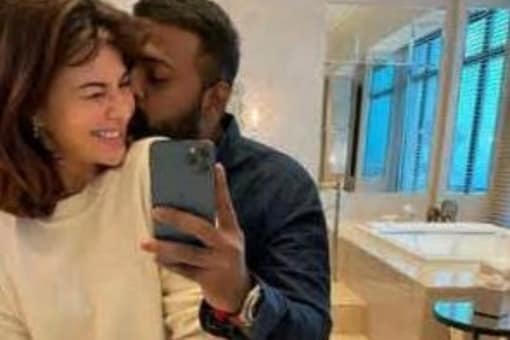
A picture of Bollywood actress Jacqueline Fernandez kissing multi-millionaire conman Sukesh Chandrasekhar in a mirror selfie has been accessed by Bollywood Hungama. This happens to be the second picture of Jacqueline and conman Chandrasekhar that have appeared online recently.

The photos of the Bollywood actress with the conman have raised eyebrows as Jacqueline has been under the scanner of ED (Enforcement Directorate) in connection to the 200 crore extortion case. Last month, Jacqueline’s spokesperson had denied claims of Jacqueline being in a relationship with the conman.

Actress Jacqueline Fernandez with Sukesh Chandrasekhar. Source: Bollywood Hungama

Notably, last month, Jacqueline was questioned for several hours by the ED in connection to the 200 crore extortion case where Sukesh Chandrasekhar and his wife Leena had been accused of duping the wife former promoter of Ranbaxy to the tunes of Rs 200 crores.

Jacqueline’s spokesperson had said, “Jacqueline Fernandez is being called to testify as a witness by the ED. She has duly recorded her statements and in future will also be completely cooperating with the agency in the investigations. Jacqueline also categorically denies alleged slanderous statements made about the relationship with the involved couple”.

However, Sukesh Chandrasekhar’s lawyer Anant Malik had alleged that Jacqueline was in a relationship with Sukesh. He said, “Jacqueline and Sukesh were dating, these are my instructions, this is straight from the horse’s mouth.”

A similar picture of Jacqueline with Chandrasekhar had appeared last week which sparked a controversy. According to India Today. the picture had been taken in the month of April-June when Sukesh was out on interim bail. In that image, Chandrasekhar was seen kissing the actress in an intimate mirror selfie.

Jacqueline

Reports had stated that the conman had wanted to launch his wife Malayalam actress Leena Paul in Bollywood and was ready to pay huge sums of money for the same. He had also reportedly arranged for chartered planes for actress Jacqueline Fernandes to meet her in Chennai while he was out on bail in April-June this year. Chandrasekhar had met the actress 4 times.

The iPhone used to take the selfie is reportedly the same iPhone 12 Pro with which Sukesh had carried out the fraud with the help of an Israeli sim card, as per reports.

Furthermore, Chandrashekhar was also charged with bribery and accused in the Election Commission (EC) bribery case of 2017 where it was alleged that he paid money to obtain the AIADMK ‘two leaves’ symbol for the Sasikala faction in a by-election in Tamil Nadu.

Mumbai: BMC okays Rs 15 crore tender to upkeep penguins brought in by Aaditya Thackeray

On Monday, November 29, the Brihanmumbai Municipal Corporation (BMC) standing committee approved a Rs 15-crore proposal for three years of maintenance of the penguin habitat at Byculla zoo, as per a report by TOI. The penguins, owned by the Mumbai Zoo, were brought in from Seoul, South Korea, in July 2016 by the current Cabinet Minister of Tourism and Environment for the Government of Maharashtra, Aaditya Thackeray for Rs. 2.5 crores. 

The proposal, according to the media outlet, was approved by a Shiv Sena-led panel, despite the BJP’s opposition to the spending, claiming that the cost of upkeep was too expensive and alleged irregularities in giving the contract to tainted companies. Interestingly, the proposal to spend the whopping sum to recreate a natural habitat from the penguins was not only opposed by BJP but Shiv Sena’s ally Congress too. Congress had criticised BMC over the tender worth Rs.15 crores+, terming the project a waste of money.

Meanwhile, justifying its decision to sanction the hefty sum for the habitat maintenance of the penguins, BMC claimed that after the penguins were brought in 2017, revenue from the zoo was jumped by Rs 12.26 crores. The number of visitors climbed by roughly 30% after the penguin exhibit opened in March 2017, while revenue soared by nearly 500% after the BMC raised the price of entry tickets drastically that same year.

BJP Corporator Vinod Mishra claimed that the “tenders were rigged to favour only one company, which had been penalised in the past. The penguins have adjusted to Mumbai but our BMC staff still don’t know how to take care of them and the zoo has been forced to appoint a private company for their care. The per-day cost is Rs1,06,613 now which will go up to Rs 1,39,282 per day. This is a 30% increase in present rates. Only Rs3.16 crore was allocated in the budget but now they are spending 63% per year more. We will move the court on this,” said Mishra.

New controversy erupts surrounding the penguins bought by BMC

Recently, the Mumbai Zoo has issued a tender worth Rs. 15.15 crores to recreate the natural habitat of the penguins in an enclosure. As per reports, the new habitat would spread over 35,000 square feet of area and will be a two-storey structure. To ensure the health and well-being of the birds, the temperature of the whole enclosure should be maintained between 16 degrees Celsius to 18 degrees Celsius. The water temperature in the pond would remain between 11 degrees Celsius and 16 degrees Celsius. Such conditions require huge costs and have attracted yet another controversy.

BMC justifies the tender cost for the upkeep of penguins

BMC, on the other hand, have been trying to justify the cost since the controversy erupted. They said that it would include the cost of veterinary charges, fodder cost, air conditioning and ventilation system, exhibit maintenance and quarantine area. It further added that the new enclosure is essential to ensure the birds live. Otherwise, according to BMC, their lives would be at risk.

Why Aditya Thackeray was nicknamed ‘baby penguin’

As most are aware that the bringing in of penguins to the Mumbai zoo was the idea of Shiv Sena chief Uddhav Thackeray’s son Aditya Thackeray. Thanks to the controversies these penguins have generated in recent years, Aaditya Thackeray has been nicknamed “Baby Penguin”. Interestingly, every now and then, the hashtag keeps surfacing on social media platforms.

Last year, a man named Sameet Thakkar was detained after a complaint was lodged against him for calling Aaditya Baby Penguin on social media. After several weeks of controversy, he was freed from prison in November.