Home Blog Page 3905

How Narendra Modi and Yogi Adityanath have rejuvenated the sugar economy in Uttar Pradesh

0

Sugarcane farmers and Sugar industry are the backbone of the economy of Uttar Pradesh. In pre-2014 times, the sugar industry was suffering from a huge liquidity problem and sugarcane arrears were in excess of Rs 15000 crore, which was more than 50% of the total sugarcane payment. During 2012-2014, some of the arrears extended for more than two years as well.

In the past, most governments have pitched farmers and the industry against each other irrespective of the fact that both are rather complementary to one another. Sugar industry makes sure that they crush each and every ton of available sugarcane regardless of sugar demand and farmers also back industry for sowing newer sugarcane varieties.

With the collective efforts of farmers, industry, agricultural scientist, state and central government, the sugar industry has had a turnaround from being a vulnerable Industry to a strong cash flow generating sector. Except for a handful of sugar mills, all others have paid 100% of dues for the season. Moreover, sugarcane dues of earlier years have also been fully paid.

Newer sugarcane varieties propelled growth

The enormous efforts of agricultural scientists resulted in introduction of the magical sugarcane variety Co-0238, which changed the entire dynamics of sugarcane economics with a 40% improvement in sugarcane yields and a 20% increase in sugar recovery (extraction of sugar from sugarcane). Though the variety was available even before 2015, it only gained prominence in 2017-18 improving the farmer’s income by 40-50%, largely by productivity improvement. Given the 20% improvement in sugar recovery, cost of production for sugar mills also declined by 20%, which gave them confidence to promote new sugarcane seeds for superior output.

Active government measures revived sugar economy

Though productivity improvement enhanced income of farmers and reduced the cost of production for sugar mills, it also led to the sweeter problem of excess sugar production and significant decline in domestic sugar prices in 2018. At that time, central and state government intervened to make a long term plan to utilize the excess sugar production. The central government came up with the certain short term measure in June 2018 to bring immediate relief to the industry and farmers.

These were (1) declaration of MSP (Minimal Selling Price) for sugar (2) start of monthly quota mechanism (3) buffer subsidy (4) export incentives for sugar companies. These measures ensured stable sugar prices and cash-flows for sugar mills, which in turn helped the millers to continue their timely payment to the farmers. With more than 15 million tonnes of exports, sugar inventories came down from the peak of 14.5 million tons (60% of consumption) in September 2019 to the reasonable levels of 8.3 million tonnes in September 2021. Central government export related support has made the industry self-sufficient to the extent that it may not require buffer and export subsidy in future.

One of the landmark step, after Yogi government came to power, was asking sugar mills to compulsorily open an escrow account. Sugar mills allocate 85% of the money received from the sale of sugar to the bank account of sugarcane farmers for bill payment. It protects sugar mills to divert money for the purpose other than payment of farmers. The state government also provided interest free loans to millers in 2018-19 season for timely payment to the farmers. The aggressive promotions and programs of UP government towards drip irrigation would also ensure that water is utilized appropriately for the high water intensive crops in the state.

EBP is giving wings of growth

Many of the measures taken during 2018-2019 were for safeguarding the industry from the immediate decline in sugar prices. However, with the collaboration of state and central governments, the pace of Ethanol Blending Program (EBP) has been accelerated. OMCs would be producing ~330 crore liters in the current year, which is closer to 8.5% ethanol blending with petrol. Modi government has kept an aggressive target of 10% and 20% ethanol blending by 2022 & 2025 respectively. In this regard investment worth Rs 40,000 crore has been initiated across India. UP, being the largest sugarcane producing state, would benefit the most with the implementation of EBP.

This program would not only ensure that excess 6-7 million tonnes of sugar is diverted towards producing ethanol but it would also push the depressed sugar prices in an upward trend. Notably, sugar prices have remained around Rs 30-35 / kg since 2010. Further, as much as 16 million tonnes of excess grain would also be utilized for ethanol blending program. With the 20% ethanol blending, the government would reduce its crude import bill by Rs 38,000 crore and vehicle emission (Carbon Monoxide, Hydrocarbons) reduces by 20-40%. Hence, the program is a win-win for all stakeholders.

Given the collaborating efforts of farmers, sugar industry, agricultural scientist, State and central government, the sugar industry has come out of the shackles of gloom and doom. Sugarcane payment to UP farmers in past five years has increased to Rs 1.42 lakh crore as against Rs 0.95 lakh crore between 2012-2017. Moreover, all due payments of the previous years to the farmers has also been paid during five years of Yogi Government.

The sea change in the industry was only possible due to the government’s right intent and commitment of increasing the farmer’s income. The productivity enhancement, emergence of ethanol and increase in sugarcane prices is likely to increase the farmer’s payment to more than two lakh crore in next five years along with a profitable sugar industry, which would also contribute to the exchequer. No doubt this old economy sector has been enabled with wings of growth.

The author is an equity research analyst with fifteen years of experience in tracking consumer & Sugar Sector.

FIR lodged against ‘The Kapil Sharma Show’ for allegedly disrespecting courts by portraying actors drinking alcohol in a courtroom set-up

An FIR has been filed against the makers of the popular TV show ‘The Kapil Sharma Show’ over an episode in which actors performing a courtroom scene were seen drinking alcohol. The complaint against the show accuses producers of disrespecting the court.

As per the complaint, an episode that was allegedly aired in January 2020 and was repeat telecasted in April 2021, showed a scene where the cast of the show was seen consuming alcohol during a court hearing. This did not sit well with Suresh Dhakad, a Madhya Pradesh-based lawyer, who has filed an FIR against the producers of the show in the district court of Shivpuri, Madhya Pradesh.

After registering the complaint, the lawyer reportedly said, “The Kapil Sharma Show that is being aired on Sony TV is sloppy. They also make lewd comments on women. In one of the episodes, a court was set up on the stage and the actors were seen drinking alcohol in public. This is contempt of court. That’s why I have demanded registration of FIR against the culprits under Section 356/3 in the court. Such display of sloppiness should be stopped.”

“In the courtroom scene, the co-star comes onstage with a bottle of liquor and urges other people to taste it,” the lawyer said while interacting with reporters. “This scene outrages the dignity of the court. It should have also featured a statutory warning, which it did not.”

The case has been registered against the show’s anchor Kapil Sharma and Sony TV Director MP Singh under the IT Act and Excise Act, according to Dhakad. The case will be reportedly heard on October 1, 2021. However, Kapil Sharma has not reacted to these allegations as yet.

It was just recently that the Kapil Sharma Show returned with its new season. Kapil was seemingly on a break for months after he was blessed with his second child with his wife Ginni Chatrath. According to sources, Kapil wanted to spend quality time with his family and not get taxed with work at a time when a new member was added to his family.

However, Kapil and his team are back with a new season, trying to tickle the funny bones of their viewers with their slapstick comedy and on some occasions with ribald humour. Besides Kapil, the show also features Krushna Abhishek, Bharti Singh, Sumona Chakraborty, Sudesh Lehri in the lead characters, with Archana Puran Singh as the show’s judge.

USA: Women accuse White students of ‘racism’ over ‘Police lives matter’ sticker, people call for Arizona State University to take action

0

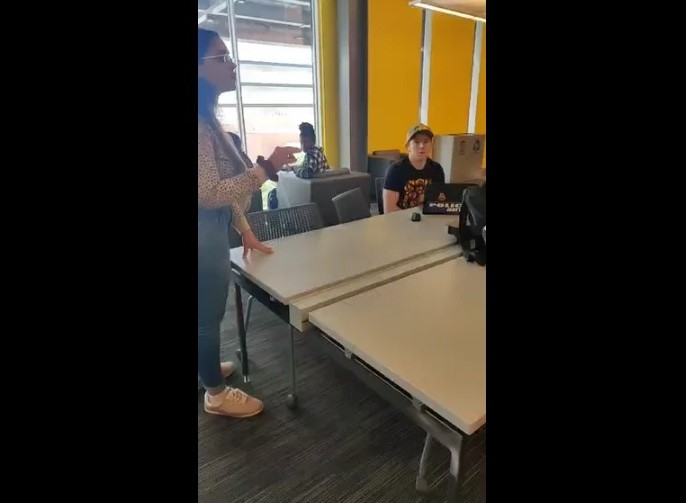
A video has gone viral on the internet where two women can be heard accusing a couple a White men of being ‘White nationalists’ and ‘fascists’ for sitting in a University room supposedly meant for ‘people of colour’. One of the two men also had a sticker on his laptop that said ‘Police Lives Matter’, which appeared to anger the women a great deal.

A woman can be heard saying in the video, “This is our space.” “You are white. Do you know what a multicultural space is? It means you are not being centered,” she says.

The woman goes on to add, “This is the violence that ASU (Arizona State University) does and this is the type of people that they protect. This white man thinks he can take up our space and this is why we need a multicultural space. Because they think they can get away with this sh*t.”

An extended 7 minutes 40 seconds recording of the incident is available on Reddit. In the video, a woman says, “You are racist, your sticker is racist.” “You can choose to be a cop, you can choose to kill people with a badge and you are protecting that sh*t, which means you are a racist,” she says.

The women also accuses the white students of making people feel uncomfortable with his sticker. Ultimately, the men decided to get up and leave the scene of confrontation.

The video has sparked sharp reactions on social media, with people overwhelmingly criticising the ‘woke’ women in the video.

Republican Congresswoman Marjorie Taylor Greene has called for the University to punish the female students.

Richard Grenell, acting Director of the US National Intelligence under the Trump administration, also criticised the conduct of the women observed in the video.

The comments on the video are overwhelmingly against the ‘woke’ women who appeared to labour under the impression that they had done something heroic.

While the actions of the women have received strong criticism online, the sentiments that spurred them into action is harboured by a great many people in USA. The anti-Police sentiment has gained great momentum following the death of George Floyd last year, which sparked an endless cycle of violence and riots.

The protests led to calls for defunding the Police, which have been unsuccessful thus far. Simultaneously, ‘POC (people of colour) only spaces’ have mushroomed across the country with many Universities reserving spaces for non-White people only.

PETA resorts to sex: Shares cringe sexual videos making dubious claims to promote veganism

Sex sells. Since nobody is buying PETA’s ideas anyway, they have now decided to use sex to propagate their claims. PETA (People for the Ethical Treatment of Animals) has shared extremely sexual videos on social media to claim that people who are vegan enjoy a better sex life than meat-eaters.

“Can’t put your finger on what’s not working in the bedroom?” claimed one of the videos. The video was about a human hand doing very ‘sexual’ and unspeakable things to different fruits. The idea was to suggest PETA has a solution for people who are experiencing a ‘not so good’ sex life.

And PETA’s so-called “solution” to sexual issues is apparently veganism. The organisation is claiming that vegans enjoy great sex life and they are superior in terms of sexual performance to non-vegans, especially meat-eaters.

The video comes with a barrage of pseudo-scientific claims. “Want to spice up things in the bedroom? Chilli peppers can have you hot and heavy in no time. A squit of OJ increases blood flow to important organs. Get a load of zinc to increase your libido. Avocados will give you the stamina to keep going on for hours. Go vegan. Your partner will thank you,” the video says.

The cringe video was called out on social media by many.

The video generated sharp reactions all over the world. The extremely sexually suggestive nature of the things being done to fruits made thousands of people comment and question PETA over the dubious claims.

PETA, however, maintains that vegans are better performers when it comes to sexual activities. So much so that, in reply to a social media user, they shared another video showing some explicit imagery of two different couples busy in sex.

In that video, while the ‘meat eater’ man tires after a short time, leaving his partner high and dry, the ‘vegan’ man keeps going for hours, trying different sexual positions and giving his partner ultimate sexual pleasure. Viewer discretion advised.

PETA’s go vegan campaign

The videos are a part of PETA’s Go Vegan campaign. In a recent article, PETA has told about the benefits of going vegan. They have stated that veganism is good for animals, meat is not green, and veganism is good for health.

All the claims about veganism boosting sex life, are, however, just claims. There are hundreds of articles and claims shared every year saying what is good for a better sex life and what is not. PETA’s claims about fruits boosting sexual prowess may have some basis on fruits being a good source of vitamins and minerals. But for good overall health, individuals need a balanced diet.

PETA kills thousands of animals every year

Though PETA loves to shame meat eaters and even milk consumers, telling everyone that they are committing an act of animal atrocity through their food, the organisation itself is one of the biggest killers of animals. Every year, PETA euthanises thousands of animals it claims to ‘rescue’.

A 2012 article in The Atlantic had described how PETA’s adoption rate for dogs is just 2.5%. They were found to have killed an overwhelming majority of cats, dogs and other animals they claimed to ‘rescue’. Year after year, many articles have exposed their claims, sharing how they kill most animals in their shelters and use pseudoscientific claims, and an elaborate celebrity marketing strategy to get millions of dollars in donations.

PETA Vs Amul

In India, PETA is best known for its hypocrisy. They target every single Hindu festival, trying to shame the majority population into renouncing their culture and traditions and follow PETA’s commands.

Recently, PETA has even started targeting Amul, India’s largest dairy products co-operative that provides livelihoods to thousands of rural women. They had tried to sermonise Amul, asking them to sell ‘vegan milk’. When questioned about their selective targeting of the Hindu community and total silence over slaughterhouses, PETA made bizarre claims, saying that cow slaughter happens because of the dairy industry.

Though it claims to care for animals, PETA has never bothered to explain why it doesn’t help the hundreds of Gaushalas run in India to shelter and protect cows, often rescued from the hands of cattle smugglers who take them to slaughter. PETA just continues to preach, endorsing highly expensive ‘vegan’ products and shaming people over their food choices.

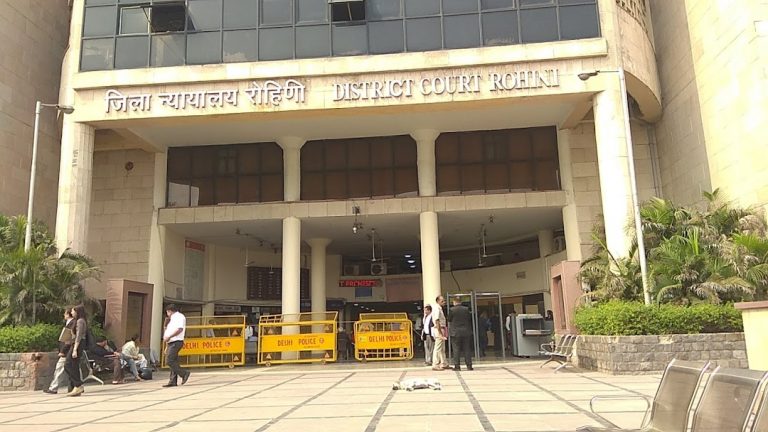
Delhi: Shootout at Rohini Court leaves at least 4 dead, including gangster Jitendra Gogi

0

Gangster Jitendra Gogi was among the four killed in a shootout at the Rohini Court in Delhi on Friday. Earlier, it was reported that shots had been fired at the Rohini Court, injuring at least 3.

The identity of the four deceased individuals is not yet clear. But Jitendra Gogi is believed to be among the dead.

Two attackers came dressed in the attire of advocates and have been shot dead, Delhi Police Special Cell have said.

Journalist Aishwarya Kapoor shared a video where it can be clearly heard that multiple shots were fired.

It is currently being suspected that the shootout was executed by a rival gang. The two attackers who have been shot dead are believed to be from a rival gang.

BSE Sensex reaches 60,000 for the first time, surges 134 per cent in the last 18 months

The BSE Sensex on Friday touched an important milestone, breaching the 60,000-mark for the first time ever as the 30-stock benchmark index continues to rally on the back of expanding Covid-19 vaccination coverage, eased restrictions on business activity and the government’s measures to boost the economy.

Besides, NIFTY, another benchmark Indian stock market index that represents the weighted average of 50 of the largest Indian companies listed on the National Stock Exchange, was also up by about 100 points to touch the new highs of 17,900 levels.

As per the CEO of Motilal Oswal Financial Services, “Equity market today had a historical day with Sensex touching 60,000 for the first time driven by large caps with many index heavyweights touching new highs.”

“Given rich valuations, one cannot ignore intermittent volatility. However, we expect the positive momentum to continue on the back of improving economic activity and recovery in corporate earnings,” Oswal said.

COVID-19 vaccination coverage, positive global sentiments and favourablep govt policies power the Sensex surge

The significant milestone testifies the resilience of the Indian Inc. that came under strain in the wake of uncertainty wrought by the coronavirus pandemic in early 2020. But a deluge of global liquidity and faster-than-expected earnings recovery from the pandemic lows boosted public sentiments that have driven the markets to scale unprecedented heights.

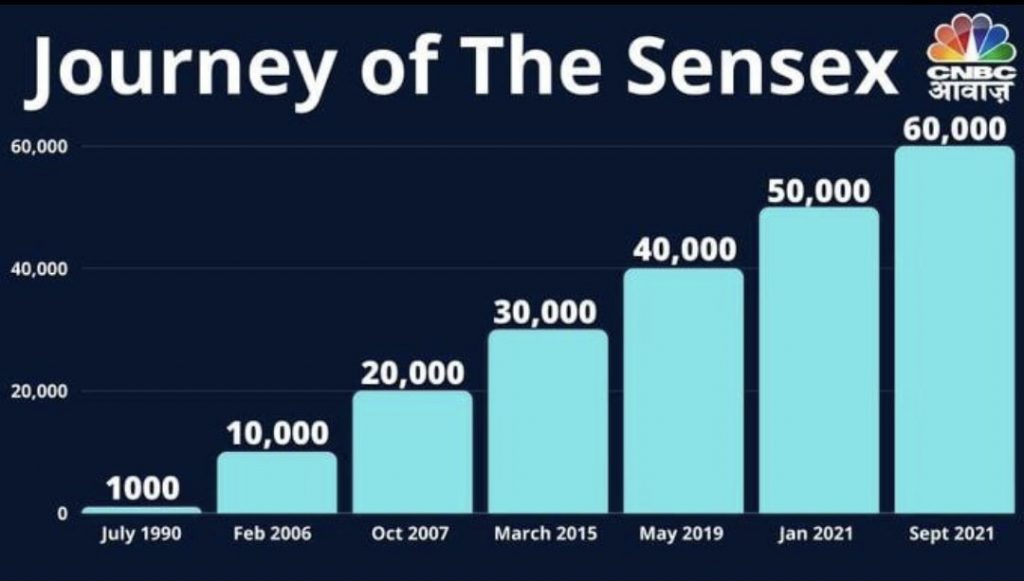
The Sensex was languishing at the low of 25,638 on March 24, 2020, days after PM Modi had announced a rigorous lockdown to stop the spread of the virus. Since then, the S&P BSE Sensex has surged approximately 134% in a matter of just 18 months, with the last 10,000-point rally coming in just over eight months.

This was the fastest pace at which the Sensex had completed its 10,000-point rally. It took only 167 trading sessions for the stock index to blaze through from 50,000 to 60,000 points. Before this, the index had taken on an average of 931 sessions for a 10,000-point move.

Sensex charts a fastest ever 10,000-point rally, completed its journey from 50k to 60k mark in just over 8 months

To put the gains made by the stock markets in perspective, it is worth noting that it took four and half years for Sensex to touch the 1,000 mark after it was launched in 1986. The Sensex touched the 10,000 mark for the first time in February 2006. It took another 18 months for the next 10,000-point move. The subsequent 10,000-point rally to reach 30,000-mark came after eight years, in March 2015.

An inevitable correction came and the stock markets wavered around for the 30,000 mark for a while before reaching the milestone of 40,000 points in March 2019. The market steadily grew since then but the onset of COVID-19 in early 2020 threw spanner in the works, eroding the hard-earned growth achieved in the last several years.

Source: CNBC

The Sensex was at 30,000 levels in January 2020 and it touched low levels of 25,000 in March 2020, around the time when India was girding for a pandemic that had first emerged in the central Chinese city of Wuhan in December 2019. However, it took just one and half years for the Sensex to completely shake off the slump induced by COVID-19 restrictions and shutdown, with the 50,000-mark breached in January 2021 and another 10,000 points added in the next eight months.

Stock analysts and pundits predict that if the momentum is sustained, Sensex might touch the 1,00,000-mark by the end of 2022-2023 financial year or roughly eighteen months from now. But they are also wary that the parabolic move in the last few days could lead to short-term correction, driven by investors’s tendency to book profits. Additionally, caution is also advised in the eventuality of a subsequent wave of coronavirus pandemic that could once again disrupt businesses and the country’s overall economic growth.

Stopped seeing herself in the mirror: Model awarded Rs 2 cr by Consumer Court after ITC Maurya salon gives her a bad haircut

0

In a bizarre judgement, the consumer court in Delhi has awarded a Rs 2 crore compensation to a model for the mental trauma she allegedly underwent because of a bad haircut given to her by the hairstylist at Delhi’s ITC Maurya.

For the mental harassment caused to the woman, the National Consumer Disputes Redressal Commission (NCDRC) has in its order dated Tuesday, September 21 asked the five-star hotel in Delhi to pay a whopping Rs 2 crore compensation to the woman.

A two-member bench comprising of President Justice RK Agrawal and member S M Kantikar said: “There is no doubt that the women are very cautious and careful with regard to their hair. They spend a handsome amount on keeping the hair in good condition. They are also emotionally attached with their hair”.

The court has asked ITC to pay the compensation to the complainant Aashna Roy within 8 weeks for deficiency in service under the Consumer Protection Act.

“The Opposite Party No 2 is also guilty of medical negligence in hair treatment. Her scalp was burnt and still, there is allergy and itching due to fault of the staff of Opposite Party No 2,” noted the commission.

‘Has stopped seeing herself in the mirror’, the court noted while ordering ITC Maurya to pay the compensation

Roy reportedly told the court that she has undergone severe mental breakdown and has stopped seeing herself in the mirror and refrained from all social activities because of the “shoddy haircut and thereafter the torturous hair treatment”.

“She stopped seeing herself in the mirror… and her social activities. She is a communication professional and is required to be involved in meetings and interactive sessions. But she lost her self-confidence due to her little hair. She has also suffered a loss of income due to a mental breakdown after the shoddy haircut and thereafter the torturous hair treatment. She left her job also,” noted the bench.

The consumer court bench added that the complainant, because of her long hair has been a model for hair products and has done modelling for big brands like Pantene and VLCC. “But due to hair cutting against her instructions… she lost her expected assignments and suffered a huge loss which completely changed her lifestyle and shattered her dream to be a top model,” it added.

The respondents in the case, on the other hand, had submitted that the “compensation claimed by the complainant is ex-facie exaggerated and without any basis”.

Maulana Kaleem Siddiqui wanted to target Brahmin and Kshatriya girls for religious conversion to Islam: Listen to viral audio

0

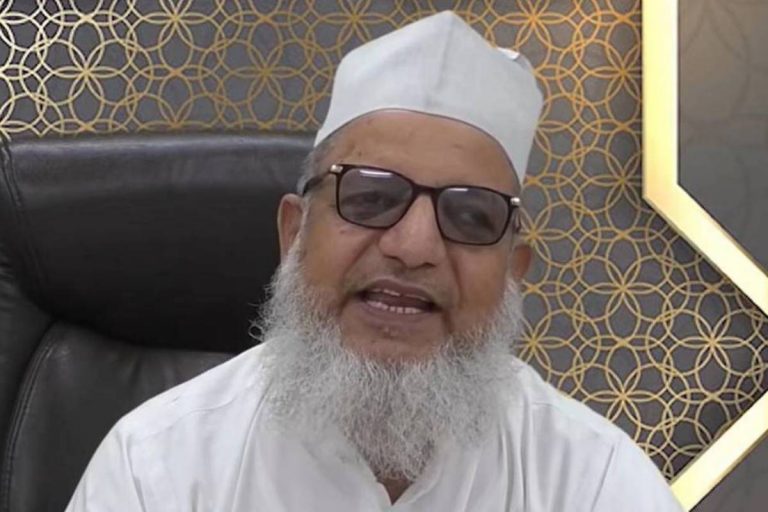
An audio clip of the Islamic scholar Maulana Kaleem Siddiqui, who was arrested on charges of religious conversions by the Uttar Pradesh Anti-Terrorist Squad on Tuesday, September 21, has gone viral. In the audio clip, the Maulana admits that upper caste girls like the Brahmins or the Kshatriyas were the targets for the mass conversion syndicate he had been operating.

In the audio clip shared by Zee News, Maulana Kaleem said: “…isse pehle aaye the toh who bole ki choti jaat ke hain, agar ladki Brahmin ya Kshatriya ya phir koi badi jaat ki ho toh woh jam jaata hain” (…the ones who came before, belonged to the lower caste, its better if the girl is a Brahmin, Kshatriya or from any other upper caste). The Maulana added that he will do something once the lockdown opens.

Maulana Kaleem Siddiqui received funds from Islamic countries including Pakistan

Prior to this, it was also revealed that the cleric was receiving funding from Pakistan for running his illegal conversion racket. Apart from that, Pakistan had also been providing technical assistance to Maulana Kaleem Siddiqui.

Earlier, the police had revealed that the 64-year-old Islamic scholar runs Jamia Imam Waliullah trust that funds several madrassas for which he received huge foreign funding. Uttar Pradesh ADG (Law and Order) Prashant Kumar informed, “Investigation shows Maulana Kaleem Siddiqui’s trust received Rs 3 crores in foreign funding including Rs 1.5 from Bahrain.”

The Islamic scholar arrested by Uttar Pradesh ATS

Siddiqui was on the radar of security agencies and was nabbed from Meerut late on Tuesday (September 21) night. The police official further said that six teams have been formed to investigate the matter further. The Islamic scholar was interrogated along with his three associates throughout the night by UP police. 

During the interrogation of ATS, Maulana Kalim also said that after the arrest of Umar Gautam, he too was afraid of being arrested. He confessed to changing his mobile number twice to avoid being caught by the ATS. 

Faridabad youth lodges FIR against Maulana Kaleem Siddiqui alleging forced conversion to Islam when he was a minor

0

A fresh case of forced conversion has been lodged in the Faridabad district of Haryana against Islamic scholar Maulana Kaleem Siddiqui by one Vinod Kumar alias Noor Mohammad. The complainant said that he was a minor when Maulana Kaleem Siddiqui had forced him to accept Islam.

Maulana Kaleem Siddiqui and five others have been booked for the forced conversion. The Public Relations Officer (PRO) of Faridabad Police, Sube Singh, has confirmed the FIR has been lodged.

64 years old Maulana Kaleem Siddiqui, one of the top clerics from western Uttar Pradesh, was arrested by the Anti-Terrorist Squad of Uttar Pradesh Police for being involved in the biggest conversion racket. So far the investigation is concerned with the cleric who runs Jamia Imam Waliullah trust and Global Peace Center, which is alleged to have received foreign funding worth Rs 3 crores.

In the fresh case, the complainant who is the resident of Premnagar, sector 17 of Faridabad district, said that he was a minor in 2013 when Maulana Kaleem Siddiqui and his associates forcefully converted him to Islam. The complainant further alleged that a person name Dilshad whom he identified as a close aide of Maulana Kaleem Siddiqui often pressurized him to undergo terror training in Pakistan.

Explaining how he became a victim of the conversion racket, Binod Kumar said that in 2011-2012 he was a student of class nine at New Vidya Mandir School. Some of the Muslims, including Shahzad and his relatives Anish Khan, Rahish Khan, Ashfaq Siddique and Mohammd Ali stayed in the same locality. They regularly used to poison his mind about Hindu religion and enticed him to change his religion to Islam.

These Muslims regularly took him to a local mosque “Sitara Masjid’ where he was brainwashed that if he accepts Islam it will save him from hell.

In 2013 they took him to the Global Peace Center of Maulana Kaleem Siddiqui located at Shaheen Bagh. Maulana Kaleem Siddiqui coaxed him to recite the kalima stating that Islam will save him from the fire of hell. Vinod Kumar was named Noor Mohammad soon after that.

After that Vinod Kumar turned Noor Mohammad was sent to Uttar Pradesh and Gujarat to study Islam which mostly focused on hate for Hinduism. But the situation had left him terrified as Dilshad often pressured him to visit Pakistan to receive terror training.

The victim has also explained why he lodged the FIR so late. He said that in 2018 he somehow managed to escape from their clutches and remained underground for two years in Faridabad. In 2020 he visited his family after he came to know that his sister had been married.

He narrated the whole episode to the family members who convinced him to lodge an FIR.

Court sends Maulana Kaleem Siddiqui on 10 days police remand in UP conversion racket case

In the Uttar Pradesh conversion racket, the Special Judge NIA/ATS YR Gupta sent Maulana Kaleem Siddiqui on 10 days police remand for his questioning by the ATS. The custody period starts from 10 AM of September 24 till 10 AM of October 4. In the remand plea, ATS said that a mobile phone and seven local and foreign SIM cards were recovered from the possession of the accused. ATS claimed that he runs many Muslim institutions and through them, he used to convert non-Muslim into Islam. He has been booked under relevant sections of the Uttar Pradesh Prohibition of Unlawful Conversion of Religion Act, 2020 and IPC.   

ATS G.K. Goswami the IG of ATS informed that Maulana Kaleem Siddiqui will be taken to the offices Global Peace Center, which will be raided to gather digital and documentary evidences. Besides, he will be taken to Meerut and Muzaffarnagar after the raid in his Delhi institution is completed.

‘Political analyst’ Masood Hashmi says Hindu parents deliberately ask daughters to marry Muslim men: Watch him get kicked out of the show

0

On Thursday (September 23), a political analyst by the name of Masood Hashmi courted controversy after he claimed that Hindu parents teach their daughters to lure Muslim men to avoid dowry during marriages.

He made the contentious remarks during the ‘Shankhnaad’ show that was aired on Thursday on Zee Hindustan. At about 37 minutes and 40 seconds into the show, Hashmi alleged, “Hindu parents get their daughters hitched to Muslim men. Because Hindus take dowry while Muslims don’t. So, they tell their daughters to marry Muslim men over Hindus.” His comments were preceded by claims of attaining ‘Jannat (paradise)’ if one converted to Islam.

(Video Credits: Youtube/Zee Hindustan)

A furious Rohit Ranjan interrupted Hashmi and asked him to get out of the show. “People with such crooked thoughts are not welcome anywhere. Who are you to question the Hindu religion? Do you have any proof of what you just said? Sitting on a debate and making baseless claims,” he stated. At that point, Hashmi claimed that the anchor was furious only because he had said ‘truth’ to his face. Rohit Rajan kicked him out of the programme and made it crystal clear to his audience that mockery of the Hindu Faith will not be tolerated on his show.

In a tweet, he wrote, “Make fun of Sanatan Dharma, speak against Hindu daughters and still expect us to remain silent? Have removed you out of show now. Hold your tongue. We neither speak ill of anyone nor tolerate anyone speaking ill (of our religion).”

The show was based on the recent conversion racket that was unearthed in Uttar Pradesh. On Wednesday (September 22), the Anti-Terrorist Squad (ATS) had arrested one Islamic scholar Maulana Kaleem Siddiqui from Western UP on charges of forced conversions. The 64-year-old Islamic scholar runs Jamia Imam Waliullah trust that funds several madrassas for which he received huge foreign funding, the police had said.

The UP ATS initiated a massive investigative operation after the arrest of one Umar Gautam and his aide in June. Reportedly, the duo ran an organisation named Islamic Dawah Centre (IDC), along with their other associates, to mass convert people into Islam through inducements such as marriage, job and money and mental pressure. They were accused of targeting differently-abled children to convert and use them as human bombs. Moreover, the investigation has also revealed the illegal foreign funding received by Gautam and his accomplices.