Home Blog Page 4319

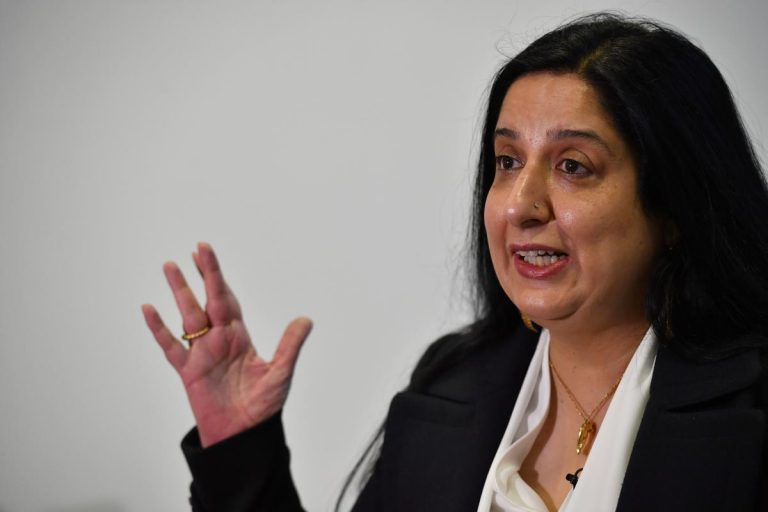
US, Europe withholding critical raw material needed for COVID-19 vaccine production: SII CEO Adar Poonawalla

0

Adar Poonawalla, the CEO of the Serum Institute of India today revealed that the production of COVID-19 vaccines in the country had taken a hit because of the restrictions imposed by the United States and the European countries on the export of critical raw material.

Speaking in an interview with India Today, Poonawalla spilt the beans on the problems faced by his organisation in ramping up the COVID-19 vaccine production even as the country is in the grips of a resurgent coronavirus outbreak.

“I wish I could go there and protest in the US myself to say that you are holding back critical raw material that are required for Covaxin and so many vaccine manufacturers in India and other parts of the world,” Poonawalla said while expressing his anguish over the unavailability of key raw materials needed to scale up COVID-19 vaccine production.

He added that the shortage and and struggling for raw material is for short term because in a few months, they will be able to develop other suppliers.

Poonawalla also added that SII is not looking to import raw material from China because of its quality issues and other supply constraints.

SII trying to double production capacity

To address the dire need for the coronavirus vaccine in the country, the Serum Institute of India is planning to double the monthly production of its COVID-19 vaccine Covishield. Poonawalla said that right now the SII is producing 6 to 6.5 crore doses of Covishield every month and the company is adding capacities to ramp up its production to 10-11 crores by June this year.

The Pune-based Serum Institute of India is the world’s largest manufacturer of vaccines. It is currently manufacturing the University of Oxford and AstraZeneca’s Covid-19 vaccine. This vaccine is being marketed in India under the name ‘Covishield’.

Besides Covishield, the Drugs Controller General in India has approved emergency usage of indigenously developed Bharat Biotech’s Covaxin. At present, people above 45 are eligible to receive the COVID-19 vaccines in India.

When asked about his organisation’s strategy to cope up with the increasing demand for vaccines in India, the drug mogul responded that his organisation is prioritising the needs of India first. He said the Serum Institute of India is working with the central government at this stage at this price point to take care of Indians first.

While opposition leaders claim credit for Sputnik-V vaccine approval, here’s how it is the latest step in a process that began in Sep 2020

Russia’s Sputnik-V vaccine has received emergency use approval from the Subject Expert Committee of the Central Drugs Standard Control Organisation and now it awaits the final approval from the Drugs Controller General of India. Calls were being made to grant approval for the same citing the second wave in India.

The approval today has suddenly given some people cause to fall prey to their own false notions about the whole process. Some have decided it is a moment to pay tribute to the renowned intellect of Rahul Gandhi.

Others believe the approval has come forth due to the voices raised by the opposition.

In reality, the emergency use approval for Sputnik-V today is another step in a process that began as early as September 2020 when Dr. Reddy’s said that they were looking to begin late-stage Indian clinical trials for the vaccine within the next few weeks. This has been pointed out by users on social media.

“We want to get to the first step – which is the commencement of the clinical trials by getting the necessary approvals from the Indian regulators – within the next few weeks,” Deepal Sapra, CEO for API and pharmaceutical services at Dr. Reddy’s (DRL), had told Reuters in September.

It was reported that the trials were part of a deal between Russian Direct Investment Fund (RDIF) and Dr. Reddy’s which involved the Indian firm conducting the Phase 3 trials in India and pursue local regulatory approvals. “I think it’s going to be several months before we accomplish all the steps in the process,” Sapra had said back then.

Dr. Reddy’s received the approval to conduct the Phase 3 trials from the Drugs Control General of India (DCGI) in January 2021. It was after the Data and Safety Monitoring Board (DSMB) reviewed the safety data of the Phase 2 clinical trials and recommended the next phase of trials.

G V Prasad, Co-chairman and Managing Director, Dr. Reddy’s Laboratories had said, “This is an important milestone in the progress of this pivotal clinical trial of the vaccine. We expect to commence the phase 3 study within this month and will continue to fast-track our efforts to bringing in a safe and efficacious vaccine for the Indian population”.

On the 19th of February, Dr. Reddy’s sought emergency use approval for the Sputnik-V vaccine with Phase 3 trials due to be completed on the 21st of February. It had said then that the safety profile of the phase 2 study and the interim data of the ongoing Phase 3 trials would be presented.

It was reported on the 16th of March that the Phase 3 trials had been completed and results were due in April. The phase involved 1500 participants and was randomised, double-blind, parallel-group, and placebo-controlled study in India.

On the 2nd of April, the authorities sought more data for emergency use approval. A source said, “No approval was given to Sputnik V on Thursday. Some queries have been asked on safety, efficacy, and logistics, which the firm will have answers to at the next meeting.” “Current storage temperature requirement is at minus 18 degrees Celsius. We are working on other storage conditions as well,” a spokesperson for DRL had said.

Ten days later, on the 12th of April, the SEC met today to discuss the emergency use approval for the Sputnik-V Vaccine and the clarifications that were provided. Following the meeting, approval for the same was granted. And now, it awaits the DGCI’s final approval.

Therefore, while politically motivated individuals may be inclined to credit their favoured opposition leaders for the development, the fact of the matter is that it is only the logical step of a process that began September last year.

Mosque loudspeakers used to instigate the mob to attack SHO Ashwini Kumar in West Bengal: Reports

On Saturday, 10th April, Ashwini Kumar, a police officer from Bihar, who was conducting a raid in neighbouring West Bengal, was lynched to death by a frenzied mob. It is now being reported that the main accused in the case, Mohammed Israel, had used the public address system of a neighbourhood mosque to instigate people into attacking the police officer.

Ashwini Kumar, station in charge of the Kishanganj police station, had gone to carry out a raid in connection with a bike theft case in a neighbouring village of Pantapura that falls under West Bengal. A mob led by Mohammad Israel and his son Mohammad Abdul lynched the police officer to death. The incident took place at 3:30 am on Saturday morning.

According to the reports, as the team led by Ashwini Kumar entered the village, Mohammad Israel used the loudspeaker of a mosque in the neighbourhood to mobilise people against the police. He urged people to stop police from advancing. In the ensuing scuffle, the frenzied mob surrounded Ashwini Kumar and brutally thrashed him.

Kumar was rescued by a team of police officers from the Panjipura outpost and rushed to the Islampur Sadar Hospital, but by then, it was already too late. The doctors at the hospital declared him brought dead.

Later, the West Bengal police apprehended three accused in connection with the case. Firoze Alam, Abuzar Alam and Sahinur Khan were arrested for lynching the Bihar cop, while Mohammad Israel and his son Mohammad Abdul were on the run. Israel and Abdul were arrested on Sunday. The father-son duo had been involved in running a gang of vehicle lifters.

Two more people have been arrested in the case when they were trying to escape with a looted bike on Saturday after the incident. Incidentally, it was the same stolen bike from Kishanganj for which Ashwini and his team had carried out the raid. Kishanganj SP Kumar Ashish said that a total of 21 named and 500 unnamed people have been made accused in the lynching case.

VHP calls the region where SHO Ashwini Kumar was lynched a den of ‘jihadis’

Meanwhile, the Vishwa Hindu Parishad had called the area a den of ‘jihadis’ and where attacks against police officials are par for course. It also added that the region is notorious for Bangladeshi infiltrators, liquor and smuggling, and has seen attacks on security forces many times before.

Expressing alarm over the mob lynching of Kishanganj SHO Ashwini Kumar, VHP demanded strict action against the culprits. VHP general secretary Milind Parande alleged that due to the apathy of the police administration and political patronage, the area has become a hotbed for criminals. “The area, by becoming the sleeper cell of Jihadi terrorists, also poses threat to India’s internal security,” Parande added.

SHO Ashwini Kumar’s mother dies of shock hours after her son’s lynching

Hours after the lynching of Kishanganj SHO Ashwini Kumar in the neighbouring West Bengal village, his septuagenarian mother Urmila Devi died of shock. The cremation of both mother and son was held together on Sunday even as all the members of police team that accompanied the officer during the raid to the Bengal village were placed under suspension for failing to protect him.

Kumar’s mother died of a heart attack around 5:30 am on Sunday. She was suffering from several age-related ailments. Initially, she was not told about the incident, but her condition started deteriorating after her son’s body reached home on Saturday.

SEC gives emergency use approval to Russia’s Sputnik-V to combat Covid-19 in India: All you need to know about the vaccine

The Sputnik-V vaccine has been recommended for use in India by the Subject Expert Committee of the Central Drugs Standard Control Organisation. Sputnik-V will become the third approved Covid-19 vaccine in India if the Drugs Controller General of India approves the recommendation.

The vaccine will be manufactured in India by Dr. Reddy’s. Dr. Reddy’s is a multinational pharmaceutical company based in Hyderabad, Telangana. It has shown an efficacy of 91.6% efficacy in its Phase 3 trials. The Sputnik-V vaccine became the first vaccine to be approved in the world after Russian president Vladimir Putin announced that his government had approved the same to combat Covid-19.

The Covidshield and Covaxin, the two vaccines approved thus far in India, had been recommended by the SEC as well following which the DGCI had approved them for usage. Sputnik-V is named after the world’s first satellite sent by the Soviet Union. It was developed by the Gamaleya Research Institute of Epidemiology and Microbiology along with the Russian Direct Investment Fund (RDIF).

The vaccine can be stored at a temperature of +2 to +8°C. It is also said to be equally effective across all age groups. “Sputnik V demonstrated the same level of efficacy in all age groups. At first there were doubts that the efficacy in people aged 60 and over would be lower… but it was absolutely not,” Alexander Gintsburg, the head of the Gamaleya research institute, said.

Sputnik-V is an adenoviral-based vaccine against Covid-19. It is also called the Gam-COVID-Vac. There was some controversy initially regarding the apparent haste with which approval for the same was granted by Vladimir Putin but since then, data has confirmed that it is effective against Covid-19. Esteemed medical journal The Lancet had confirmed the same. Calls were being made to approve the usage of the vaccine given the second wave of the Coronavirus in India.

Top government sources have told ANI that more vaccines will be approved in the near future. A source was quoted as saying, “India currently has 2 Covid-19 vaccines being manufactured locally: Covishield and Covaxin, and we can expect five more vaccines by Q3 2021. These vaccines are Sputnik V vaccine (in collaboration with Dr. Reddy’s), Johnson & Johnson vaccine (in collaboration with Biological E), Novavax vaccine (in collaboration with Serum India), Zydus Cadila’s vaccine, and Bharat Biotech’s Intranasal Vaccine. Safety and efficacy are the Union government’s primary concerns while granting emergency use authorisation (EUA) to any Covid-19 vaccine in the country.”

On when the vaccines will be available for use, a source said, “Sputnik is expected to be available latest by June, if all goes well Johnson and Johnson ( Bio E) will be available by August, Cadilla Zydus will also be available by August, Novavex (Serum) by September and Nasal Vaccine (Bharat) by October.” Since Sputnik-V has received approval from the SEC today, the timeline for its availability is likely to change.

Muslim children raising ‘sar tan se juda’ slogans against Yati Narsinghanand for his remarks against Muhammad: Watch

Last week, Aam Aadmi Party MLA Amanatullah Khan had called for the beheading of a Hindu priest through his verified Twitter account. Ever since lakhs of Muslims have called for the beheading of Dasna Devi Temple head priest Yati Narsinghanand Saraswati for his statements against Muhammad. Now, videos have surfaced where young children can be seen calling for the beheading of the priest, for committing the alleged ‘blasphemy’.

In a video that surfaced on Twitter, scores of children were seen calling for the beheading of Swami Yati. The children, who do not look a year older than 7 or 8, are seen carrying a poster of Swami Yati garlanded with footwears and raising “Gustakh-e-Nabi ki ek saza, sar tan se juda, sar tan se juda” (There is only one punishment for speaking against the Prophet and that is beheading),” slogans in the undated video.

It is pertinent to note here that Amanatullah Khan’s tweet calling for the beheading of Yati Narsinghanand Saraswati was taken down by Twitter. Subsequently, the Delhi police filed a first information report (FIR) against Khan for fostering enmity and criminal intimidation. Despite these actions, Amanatullah Khan’s post has put the Hindu priest’s life at a huge risk. Ever since, Khan’s viral tweet, thousands of Muslims have been advocating his call.

Open slogans for beheading after Friday prayers

On April 9, after the Friday prayers, a larger number of Muslims gathered at the Islamia Ground in Bareilly, demanding action against Yati Narsinghanand. Amid the slogans to behead the priest, clerics gave a speech asking for his arrest.

Several Muslims shared videos of the incident on Twitter, where they referred to Yati Narsinghanand as a ‘Bhagwa Terrorist’.

On the same day, Balaghat Police in Madhya Pradesh arrested four men of the Muslim community identified as Mateen Ajhari, Kasim Khan, Sohaib Khan and Raza Khan for pasting posters against Yati Narsinghanand Saraswati on Jama Masjid Road in the city. 

Muslims have been demanding action against Yati Narsinghanand after a video had emerged where he was heard criticising Islam’s Prophet Muhammad. Yati Narsinghanand Saraswati was speaking at an event held at the Press Club of India where he had urged Hindus to be fearless in highlighting the characteristics of Prophet Muhammad.

In 2020, French schoolteacher Samuel Paty was beheaded by a Muslim man for sharing the Charlie Hebdo cartoons that had mocked Muhammad. In India, Kamlesh Tiwari, the former Hindu Mahasabha leader was brutally murdered in 2019 in his own house by a group of radical Islamists for his 2015 statements criticising Muhammad. Back in 2015 and early 2016, lakhs of Muslims had taken to streets in several cities of India, openly calling for the public beheading and murder of Kamlesh Tiwari. The slogans calling for murder were actively encouraged by Islamic leaders, politicians and Imams.

Kerala Lokayukta finds Education Minister KT Jaleel guilty of nepotism and abuse of power, asks CM Pinarayi Vijayan to take action: What had happened

Kerala Lokayukta on Friday last week found Higher Education and Minority Affairs Minister KT Jaleel guilty of nepotism and abuse of power in connection with the appointment of his second cousin KT Adeeb as general manager of Kerala State Minorities Development Finance Corporation Limited.

The state Lokayukta noted that Jaleel cannot continue in his post as the Education Minister and suggested the chief minister take appropriate action against him.

“The action by Jaleel to change the qualifications for the post of general manager in the corporation to add ‘BTech with PGDBA’ also as a qualification for the post of general manager was to make his second cousin eligible for the post,” said the order. It also noted that the change in qualification was effected without the recommendation of the corporation and, without it, Adeeb could not have become eligible to apply for the post.  

Lokayukta Cyriac Joseph and Upa Lokayukta Harun-Ul-Rasheed found that the minister had abused his position to get his relative appointed to the post, although the man did not have the required qualifications. The Lokayukta also observed that Adeeb’s appointment was made without inviting applications or providing an opportunity to other eligible candidates.

“It amounted to an abuse of position by Jaleel as a public servant to obtain a favour to his near relative,” the order said.

Even though the Minister’s relative resigned from his new position and returned to his previous post as the senior manager in the regional office of the South Indian Bank following the controversy, the Lokayukta, nevertheless, did not find enough ground to drop the proceedings against the said minister.

Following the revelations made by Lokayukta, the Opposition leaders demanded the chief minister to sack the minister. “If an iota of morality is left in the chief minister, he should sack Jaleel from the cabinet or seek his resignation in the wake of the Lokayukta order,” said Opposition leader Ramesh Chennithala.

Union Minister V Muraleedharan also demanded Jaleel be sacked. “The government should expel the minister who has violated his oath of office,” he said.

On the other hand, Jaleel said he would take necessary legal measures after getting the full order of the Lokayukta. Taking to Facebook, Jaleel tried to discredit the findings of the Lokayukta, stating that the case in which they had passed a verdict now was dismissed by the High Court and former Kerala Governor P Sathasivam, who is a former Chief Justice of India.

Allegations of nepotism against KT Jaleel first surfaced in 2018

The allegations of nepotism and abuse of power against KT Jaleel first surfaced in 2018 when the Muslim Youth League had accused him of bypassing established procedures to favour his relatives. The allegations had sparked a political furore in the state, prompting Opposition parties to carry out rallies demanding his ouster.

However, the minister and the LDF rubbished the allegations saying there was no merit in the case and that it was politically motivated. However, following the controversy, Adeeb resigned from his post, stating that the accusations have “hurt his dignity”. Later in February 2019, a probe was ordered into the case by the Lokayukta based on a complaint filed by V K Muhammed Shafi, a native of Edappal.

Wife of former MLA and convict Kuldeep Sengar not to contest Uttar Pradesh Panchayat polls after BJP cancels ticket

Ahead of the Uttar Pradesh 4-phase panchayat polls scheduled to begin on April 15, the Bharatiya Janata Party (BJP) has cancelled the ticket of Sangeeta Sengar, the wife of the party’s suspended MLA Kuldeep Sengar. After withdrawing her ticket, the party has now asked the local party’s chief to send in fresh names for the new candidate. 

In a video statement issued on Sunday, UP BJP Chief Swatantra Dev Singh said: “The panchayat elections are going on in Uttar Pradesh and we will win all the elections due to hard work done by our workers. At the same time review is also being done at various stages. In Unnao, ward number 22, Sangeeta Sengar was given the ticket, but now her ticket is being cancelled. She will not be the official candidate of the BJP anymore. The district chief has been asked to send three names to the panel now.”

Who is Kuldeep Sengar

Sangeeta Sengar, the wife of former MLA Kuldeep Singh Sengar, convicted of rape, had been earlier fielded from Ward No. 22 of the Fatehpur Chaurasi seat.

Kuldeep Sengar had become the Zila Panchayat chairman from Unnao district in 2016. As a BJP candidate, Kuldeep Sengar had won the state Assembly polls from Bangarmau Assembly seat of Unnao in 2017. However, the seat fell vacant after he was convicted in the rape case in December 2019 and was expelled from the party.

The Uttar Pradesh Panchayat polls will begin on April 15 and will be held in 4 phases. The elections were due in December 2020 but had to be postponed due to the pandemic. The results will be announced on May 2.

Mumbai Police suspends API Riyazuddin Qazi, close aide of Sachin Vaze, after his arrest by NIA: Details

0

Mumbai Police has suspended API Riyazuddin Qazi, close aide of Sachin Vaze, after he was arrested by the NIA in connection with the investigation into the Antilia Bomb Scare case.

The suspension was reportedly issued by DCP (Local Arms) on Monday. Qazi has been questioned multiple times due to his alleged involvement in the matter. “He was not only part of the entire conspiracy but there is strong evidence to suggest how he destroyed evidence on Waze’s instructions,” an NIA officer told Mid-Day.

Special Public Prosecutor Sunil Gonsalves told the Special NIA Holiday Court on Sunday that Riyazuddin Qazi is a co-conspirator in the matter. “He knows the structure and design of the conspiracy,” Gonsalves said.

“The duo started to destroy the evidence after the case was handed over to NIA on March 8. Qazi was well aware of the entire matter because the Scorpio, which was used to plant the gelatin sticks outside Antilia and regarding which a theft case had been registered at Vikhroli police station, was parked at Waze’s apartment in Thane but he did not raise an alarm,” he told the Court.

On Sunday, it was reported that Sachin Vaze had extorted Rs 30 lakh from TRP-measuring authority BARC. There have been numerous explosive developments in connection with the matter. The case also led to the resignation of NCP’s Anil Deshmukh as the Home Minister of Maharashtra.

Former Mumbai top cop Param Bir Singh has leveled serious allegations against Deshmukh. Sachin Vaze himself is accused of involvement in the Mansukh Hiren death case.

Indigenous Muslims in Assam to conduct their own ‘NRC’, object to being identified with immigrant ‘Miya’ Muslims: Report

The indigenous Assamese Muslims have demanded theyr own version of ‘NRC’ so the indigenous communities of Muslims ae not confused as immigrants from neighbouring nations.

The Janagosthiya Samannay Parishad (JSP) which represents Goriya, Moriya and Deshi “khilonjiya” or indigenous Muslim population, has decided to conduct its own mini-‘NRC’ to segregate themselves from the migratory Muslim population- the Miyan (Bengali-speaking migrant Muslims from East Bengal) and re-establish their identity. 

Janagosthiya Samannay Parishad calls it an ‘identity crisis’

Justifying the need for conducting a customized NRC, the Janagosthiya Samannay Parishad (JSP) said that this step was necessary to “overcome an identity crisis” that the indigenous Assamese Muslims have been facing because of being bracketed with migrant Muslims, as reported by The Hindu.

JSP’s chief convener Syed Mominul Aowal said, “We are undertaking the exercise from April 15 on the Assamese New Year day. Applicants will be required to apply online for the inclusion of their names in the list of indigenous Muslims. The draft will be published following verification of documents.”

The decision to conduct this exercise was taken after some migrant Muslims initiated a program to bring all Muslims living in Assam under one umbrella. “Our religion and names may be the same but the indigenous Muslims have a distinct identity, given by the Ahom and Koch kings,” Aowal said in a press conference.

Aowal further added, “It is unfortunate that in the name of Islam, the Goriya, Moriya and Deshi communities are being merged with the Miyas (Bengali-speaking migrant Muslims). We have to keep our identity distinct.”

Aowal added that together with Ahoms, the indigenous Muslim communities in Assam had also fought against Mughals and had also participated in the freedom struggle.

The Muslim-NRC process

The organization has created a portal with a three-month window frame starting April 15, for 40 lakh Assamese Muslims to submit all relevant documents required for identification given by the organization and competent government authority. A draft will be published by the organization upon the completion of the verification process. 

“We are receiving donations from indigenous Muslims for the exercise that will be wound up by the year-end,” Syed Aowal informed.

Assam’s indigenous Muslims

With a history that dates back several centuries, it is said that the Goriya Muslims were converted from various indigenous groups and tribes, the Moriya’s ancestors were brought by the Ahom kings to make weapons and utensils for the dynasty, and the Deshi converted specifically from the Koch-Rajbongshi community.

The indigenous Mulsim population, though small in numbers have been very particular about maintaining their distinct identity. Moreover, the lands of many indigenous Muslim communities are under encroachment by immigrant Muslims for being small in number.

In October last year, the indigenous Muslims of Assam had opposed the proposal of setting up a Miya Museum in Srimanta Sankaradeva Kalakshetra in Guwahati. 

Various organizations representing different indigenous Muslim communities of Assam had appealed to the government to conduct a survey of the indigenous Muslims to separate them from the immigrants. However, the inaction from the government forced them to start the process by themselves. 

Attempts to draw false equivalence between the Kumbh Mela and Tablighi Jamaat congregation do not make sense: Here’s why

The Kumbh Mela has been underway since the 1st of April in Haridwar, Uttarakhand. Visuals of the Mela have begun attracting criticism from people online. Some with malicious intentions have drawn comparisons between the Kumbh Mela and the Tablighi Jamaat congregation at Markaz Nizamuddin last year.

There are fundamental differences between the two incidents despite the desperation in certain circles to draw false equivalences in order to maintain the ‘secular fabric’ of the country. It is also being suggested that the congregation is in violation of Covid-19 rules, again a clear case of misinformation.

The Uttarakhand Government has permitted the Kumbh Mela to proceed with strict rules and regulations. There are rules in place to ensure the safety of citizens. A Covid-19 negative RT-PCR report, not more than 72 hours prior to arrival, has been mandatory for attending the festival. As a consequence, the crowd this year is much lower than previous years.

In addition, all entry-points to Uttarakhand have Covid-19 testing points. At Haridwar Railway Station, passengers either have to produce a negative RT-PCR test or go through the same by the health department. Sanitizer dispensers have been set up at Har ki Paudi and special Covid-19 isolation centers have been set up as well.

Masks and social distancing are also being enforced to the extent that it is possible. Therefore, clearly, rules have been enforced in order to mitigate the possible spread of the novel Coronavirus. Contrast all such precautions with the Tablighi Jamaat congregation at Markaz Nizamuddin last year.

It was still the early days of the pandemic and the virus was not widespread as it is now. Thousands were confined within a single structure in extremely confined places without any adequate arrangement for Covid restrictions.

To make matters worse, attempts were made to hide the extent of infection and attendees of the Markaz Nizamuddin carried the virus far and wide across the lengths and breadths of the country with them. When authorities pleaded them to come forward on their own, they refused to do so.

When authorities managed to track them down, in some instances, there was violence because the Jamaatis were not willing to subject themselves to isolation voluntarily. Even among those who were transferred to hospitals and isolation units, there were many who engaged in deplorable conduct that included sexual harassment and spitting on purpose on doctors and nurses.

All of this contributed to the negative coverage the Tablighi Jamaat received. If the matter was restricted to infection at Markaz Nizamuddin alone, then most people would have been sympathetic to them. However, the matter immediately escalated into uncooperative conduct, sexual harassment of medical stuff, defecating in inappropriate places and deliberate attempts to flout law and order. It was such horrifying behaviour that led to the negative coverage.

For instance, there were the occasions in Delhi when Jamaatis spat on healthcare workers. In Uttar Pradesh, those lodged at the Ghaziabad Hospital made lewd remarks, roamed around the hospital naked and made obscene gestures at the female healthcare staff. In Kanpur, some of them again misbehaved with the hospital staff. Some at another location even demanded that they be served beef. These are only a few specific incidents but the list is endless.

Such behaviour is entirely absent at the Kumbh Mela. There are devotees participating in auspicious events observing due religious norms. For people to even attempt to draw an equivalence between the event and the Tablighi Jamaat congregation reeks of desperation and the fervent desire to sweep the atrocious conduct of the Jamaatis under the rug.

Furthermore, there is evidence to indicate that transmission of the virus is comparatively much lower in fully open spaces than indoors. Needless to say, the crowds at the Kumbh Mela are outdoors while the Markaz Nizamuddin congregation was held indoors.

In light of all this information, the attempts to draw false equivalence between the two falls flat.