With the nation already dealing with a strong double mutant variant of the Covid-19 virus, reports now suggest that the southern states of the country could have been affected by a more lethal variant of the virus named N440K.
Also known as AP variant referring to the Indian state of Andhra Pradesh where it was first detected, the strain is said to be at least 15 times more virulent than the previous strains. It has a shorter incubation period and the virus is said to spread much more rapidly within the human body. It is also said that a short exposure is enough to get infected by the virus.
It was the Centre for Cellular and Molecular Biology that had discovered the new coronavirus variant N440K and said it may even be stronger than the Indian variants of B1.617 and B1.618.
The new N440K strain was found in almost 20 to 30 percent of the samples in Karnataka, Maharashtra, Tamil Nadu and Telangana and found to be more dominant than previous variants during cell culture.
N440K not responsible for the second wave
However, experts say that there is no need to panic over the new strain and that it was traced in last June itself. Centre for Cellular and Molecular Biology (CCMB) Advisor Rakesh Mishra in an interview to the New Indian Express remarked that the strain will fade away in a few weeks.
Anil Kumar Singhal, Principal Secretary (Health) informed, “In fact, the samples in which the N440K variant was traced were given in last June and July itself and it is not the new variant that has caused the surge in Covid cases. Scientists are doing their best to study the new variants and come up with solutions. On our side, we should not become panic-stricken by reports circulating on social media, instead adhere to Covid Appropriate Behaviour and help in curtailing the spread of the virus.”
While more research is being done to confirm the findings, the experts are simultaneously focusing on the Double Mutant to identify patterns that led to a surge in new Covid-19 cases responsible for the second wave.
India is currently facing the worst health crisis in the form of the Covid-19 pandemic. As per the stats provided by the Ministry of Health and Family Welfare, the country has reported 3,82,847 new cases of Covid-19 infection on May 4. 3786 people have lost their lives due to Covid-19 related complications in the last 24 hours across the country. India has a case fatality rate (CFR) or death rate of close to 1.1%, which is lower than the other worst-hit countries, but there are some alarming numbers that are raising serious concerns in some parts of the nation. One of the biggest concerns right now is the higher CFR in Punjab, especially in rural areas.
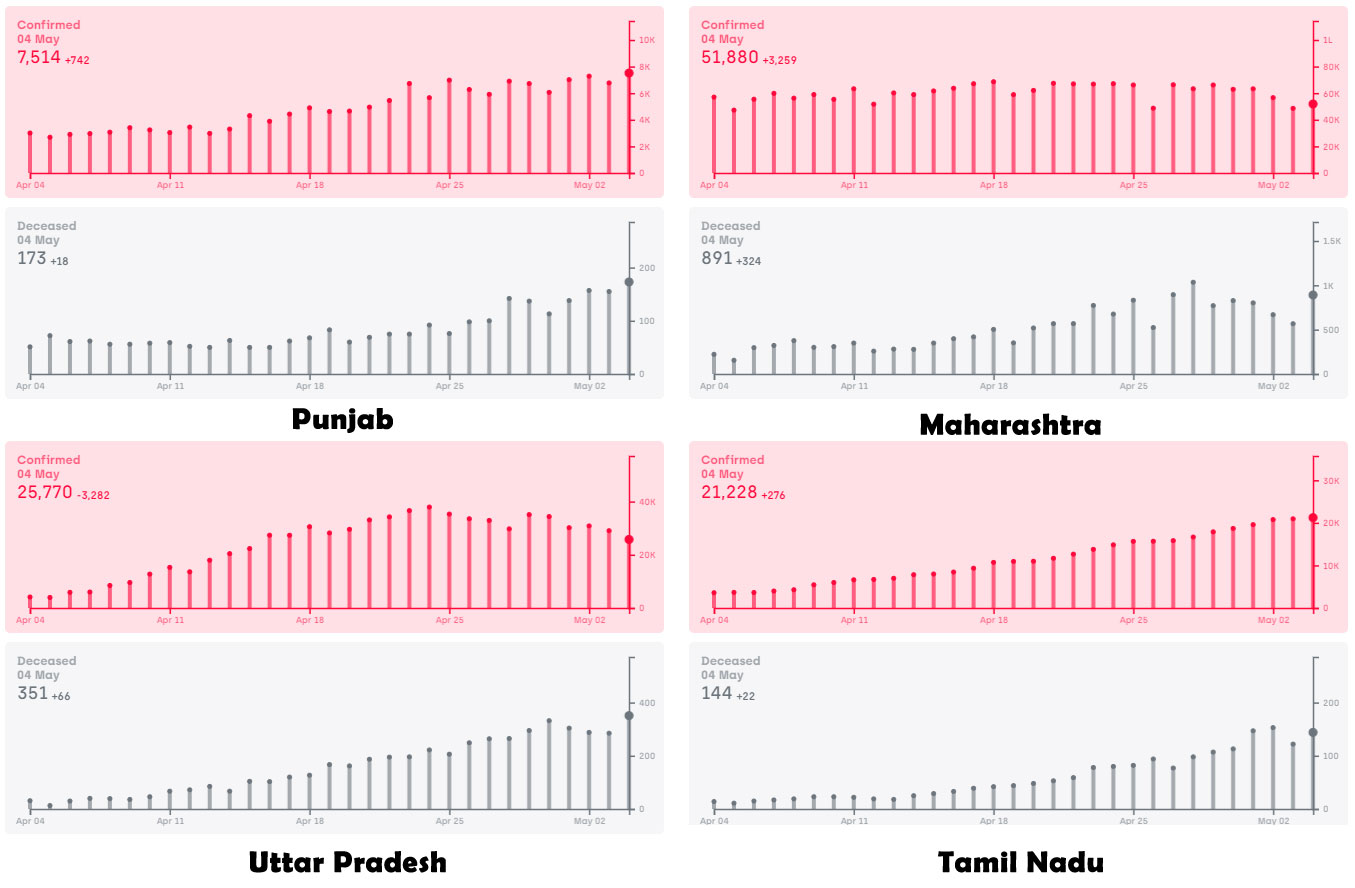
As per the government data, Punjab has reported 7,514 cases on May 4. 173 people have lost their lives in just 24 hours, making it a CFR of 2.3%, which is the highest in the country. It is not about just one day on which Punjab had the highest CFR. The state is consistently reporting more deaths from the past several weeks since cases started to explode.
If we compare the data of Punjab with the worst-hit states like Maharashtra, Uttar Pradesh, Tamil Nadu and others, the numbers coming from Punjab raises even more serious alarms. For example, the average CFR in Maharashtra, the worst-hit state, is 1.7%. In the case of the most populous state, i.e. Uttar Pradesh, the average CFR is even lesser at 1.3%. While Gujarat has an average CFR of 1%, Tamil Nadu stands at 0.70%, and Karnataka stands at 0.6% on average. The only state that has a higher than 2% CFR other than Punjab is Jharkhand.
CFR in Punjab is higher than worst hit states including Maharashtra, Uttar Pradesh and Tamil Nadu. Source: Covid19india.org
The higher death rate in the rural areas
As per reports, the death rate is comparatively higher in rural areas of Punjab compared to urban areas. The situation is baffling the experts as in most places, the caseload in urban areas is much higher due to the dense population. The case is, however, different in Punjab. Reports suggest that 58% of the deaths reported in Punjab are from Rural areas.
Self-treatment at home deemed as a major reason
According to government officials, a large number of deaths in rural area are because of the fact that the people are not going to the hospital and getting self-treated at homes. In an official communication sent to the medical officers, the Punjab government has asked them to prepare a list of the elderly and comorbid patients in their area and call them to take feedback on their health. The order said, “Report any breach of home isolation or refusal to get referred to higher facilities as soon as possible to the SMOs and keep contacts of SHOs of the police stations concerned to involve them for the hospitalization.”
As per a report in Hindustan Times, Dr KK Talwar, Former director of Post Graduate Institute of Medical Education and Research (PGIMER), Chandigarh, and head of an expert group of Punjab government on Covid management, said that they are adopting a new strategy for the patients in home isolation that is more focused on the surveillance. “Reluctance in getting tested and late reporting has been the reasons behind high CFR in rural areas, but with the new system, we are hopeful of bringing down,” he added.
The second wave found deadlier for the rural areas
According to the HT report, CFR in rural areas is around 2.8% compared to 0.7% in urban areas. The health department data revealed that people are visiting hospitals only after their conditions have deteriorated. While 83.92% of patients visited the hospitals in the worst condition, only 0.11% came with moderate symptoms and 7% with mild symptoms.
Alarming CFR of Patiala Rural area
The villages in Patiala have reported 35% of the total deaths due to Covid-19 in the district. Between March and May 3, 268 deaths were reported in total, 94 were from rural areas. In the last two months, the positive rate in the rural region remained high at 21%, with 3,453 cases reported in villages of the district.
Dr Satinder Singh, Civil Surgeon, said that in the first wave of Covid-19, the death rate in villages was negligible. He said, “Such trends were not witnessed during the first wave of the Covid-19 last year, as the deaths reported in villages then were negligible,” he said. A doctor serving at a rural dispensary said that the patients are coming to the health centres at an advanced stage at which they can only refer them to Rajindra Hospital.
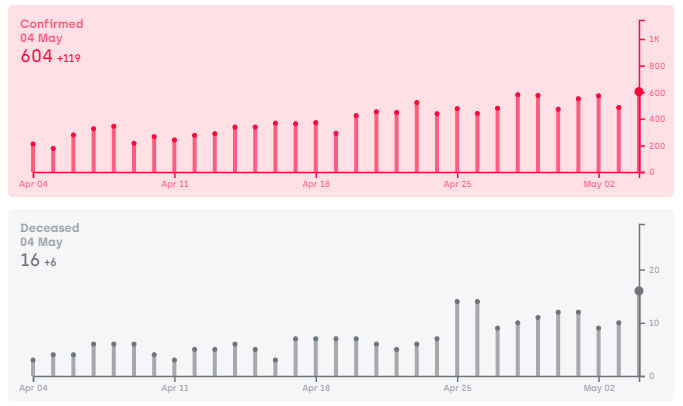
Patiala reported 16 deaths on May 4. Reports suggest that Rajindra hospital reported 38 deaths on the same day, out of which 12 were from Patiala district. Out of those 12, seven were from rural areas.
Patiala district reported 604 new cases on Covid-19 and 15 deaths of May 4. Source: Covid19india.org
Sangrur reported close to 100 deaths in rural areas
Sangrur district has reported 372 deaths in total. Out of these, 152 were from the villages, and 97 were reported this year itself. The district health department said that three patients lost their lives while being in home isolation in Sangrur’s rural areas.
Cases and deaths have dramatically increased in the last 90 days in Sangrur district. Source: Covid19india.org
UK strain causing major trouble in Punjab
During the first week of April, the health department in Punjab had reported that the 80% of the cases sent for genome sequence in March were found to have UK strain. The particular virus strain spread at a 70% higher rate in the state, causing a major health crisis in Congress-ruled state. Earlier in March, reports suggested 81% of 401 samples from Punjab had UK strain.
Doaba, which is often called the NRI belt, has reported around 60% of the total Covid deaths from rural areas since February. Health officials said that the UK strain that was found in Nurmahal and Phillaur is one of the major reasons for the higher death rate.
Doctors have warned against self-medication and taking medicines from local practitioners, which is increasing the chances of death by Covid. Dr Ranjit Singh, Civil Surgeon, Hoshiarpur and Dr Gurdeep Singh Kapoor, Civil Surgeon, Shaheed Bhagat Singh Nagar have attributed the habit of self-medication and a late visit to hospitals to the higher death rate. Dr Kapoor said, “We have increased contact tracing of Covid patients. People in rural go for self-medication resulting in more fatalities.”
The curious case of the harvest season and increased caseload in Punjab
If we see the graph of cases in the last 90 days in Punjab, it is easily noticeable that the cases started to rise in March. This was the time when farmers were preparing for the harvest season. It has to be noted that farmers of Punjab are protesting at Delhi borders since November 2020. According to reports, while they were protesting at the borders, the villagers were taking care of the crops. However, most of the farmers returned to Punjab to attend to their crops close to harvesting season and started preparations for the harvest.
Harvesting season begins close Baisakhi festival that falls on April 13. Data shows that the number of cases exploded during and after that period. For example, the state reported 1,510 cases on March 13, a month before Baisakhi. The cases doubled just 13 days before the festival, and the state reported 3,161 cases of Covid-19.
In the next few days, the farmers who allegedly came back from the protesting sites to attend their crops and went back to the protesting sites on Delhi borders. During that period, the cases kept on rising, and the state reported over 6,000 cases for the first time on April 23.
Since then, the trend continues for the state of Punjab, and it is consistently reporting over 6,500 cases on average. In the first four days of May, the state has reported over 7.000 cases on average.
Farmers marching back to the border adding to the problem?
On April 14, Kisan Union leaders announce that farmers will march towards Delhi on April 21. Thousands of farmers did so, and even Delhi saw a spike in the cases during that period adding to the fact that there is a possibility that ongoing farmer protests are adding to the problem. Sukhdev Singh, general secretary of the BKU (U), said, “On April 21, a contingent of around 18,000 farmers had left for Delhi. Now again, we are preparing to send a large number of people to Delhi ‘morchas’.”
Amidst all the worrisome data coming from Punjab, another lot of 15,000+ farmers is heading towards Delhi borders from Punjab starting May 5 from Amritsar district, which has reported over 600 cases in the last 24 hours. Bharatiya Kisan Union (Ugrahan) is planning to send large batches of farmers to Delhi borders after May 10.
Sarvan Singh Pandher, general secretary, Kisan Mazdoor Sangharsh Committee (KMSC), claimed that they would not let the number of protesting farmers fall at the Delhi borders. While talking to The Hindu, he said, “On May 5, at least one thousand tractor-trolleys and other vehicles will start their march from Amritsar district alone to Delhi. We are expecting 10,000-15,000 people to part of our latest batch, which will go to the Singhu-Kundli border. Since the agitation started on Delhi borders, this is our twelfth big batch that would be going. Small batches of farmers keep continuously going and come back from Delhi borders on a routine basis from many villages as well.”
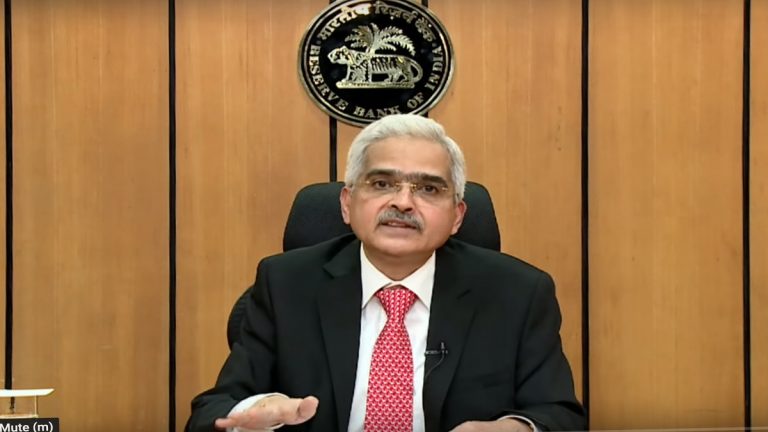
RBI governor Shaktikanta Das on Wednesday made an unscheduled announcement in the wake of the second bout of the COVID-19 outbreak, forcing states and local authorities to impose lockdown and restrictions to stop the spread of the virus. While the central government has refrained from imposing a nationwide lockdown, the economic costs of the second coronavirus outbreak are growing exponentially.
Keeping in view the economic difficulties wrought upon by the second wave of the COVID-19 crisis, RBI governor Shaktikanta Das announced a slew of measures aimed at alleviating the hardships endured by the people.
“RBI stand in battle readiness to ensure finance condition remain congenial and market function efficiently, we will work in close coordination with the government to ameliorate the impact,” Das said.
Rs 50,000 crores of liquidity facility announced by the RBI
The RBI governor announced that on-tap liquidity of Rs 50,000 crores at repo rate is being opened till March 31, 2022. Under this scheme, banks can support entities, including vaccine manufacturers, medical facilities, hospitals and also patients. The apex bank has also prioritised such lending till repayment or maturity.
Banks have been asked to create a COVID loan book under the said scheme. The governor said that banks can park liquidity equal to the COVID loan book at 40 basis points above the reverse repo rate. The RBI has announced a targeted long term repo operation for small finance banks of up to Rs 10,000 crore. The funds can be used for lending of up to Rs 10 lakh per borrower.
The Reserve Bank has also granted permission to the Small Finance Banks to on-lend to smaller microfinance institutions of asset size up to Rs 500 crore.
The RBI has also advanced the next G-SAP auction, adding that the second purchase of government securities for Rs 35,000 crore under G-SAP 1.0 will be conducted on May 20.
Assistance for the small firms and borrowers to tide over the adverse impact of the COVID-19 outbreak
With the pandemic taking a devastating toll on the country’s economy, the RBI has eased the burden on individuals and MSMEs by allowing one-time restructuring till September 30, 2021. This facility will be available for those having an aggregate exposure of Rs 25 crore. These borrowers should have been standard as of March 31, 2021, Das said, adding that under restructuring 1.0, the period of moratorium can be extended upto a total of 2 years.
The RBI governor also stated that banks have been permitted to use counter-cyclical provisions for making provisions for bad loans. Separately, the RBI has permitted limited KYC to be used till December 1, 2021.
In order to provide relief to state governments, the RBI has allowed them to remain in overdraft for a maximum of 50 days as compared to 36 days earlier. Furthermore, the number of consecutive overdraft days have been increased from 14 days to 21 days. This overdraft facility is related to funds that states may avail via the RBI’s ‘Ways and Means Advances’ facility.
A heavy 21-ton part of a Chinese rocket is tumbling back to Earth uncontrollably, but it is unclear exactly where or when the debris will hit our planet.
Last week. on April 29, China’s Long March 5B launched the Tianhe module of the Chinese Space Station(CSS), which is expected to be fully functional by 2022. However, the rocket that sent up the model up into low earth orbit also entered a temporary orbit, which means it will soon make one of the largest ever uncontrolled re-entries of a space machine into Earth’s atmosphere, SpaceNews reported.
“It will be one of the largest instances of uncontrolled reentry of a spacecraft and could potentially land on an inhabited area,” SpaceNews said. However, agencies believe that the likelihood of the core stage falling in an uninhabited place like Earth’s oceans is more probable.
As of yesterday, i.e May 4, the rocket was circling the Earth approximately once every 90 minutes and was traveling at around 17,149 mph (27,600km/h), at an altitude of more than 186 miles (300 kilometers).
According to the European Space Agency, the rocket is likely to hurtle back towards the Earth on May 9 at approximately 17:23 UTC, though they have added that there could be a margin of error of approximately one day.
The fears surrounding the rocket that it could crash on an inhabited land are not totally unfounded. If the rocket debris landed over an inhabited area, it would be similar to a small plane crash.
It is noteworthy to mention that China’s Long March 5B had a history of space mishaps. The last time when China launched the Long March 5B rocket in space, they ended up with big long rods of metal flying through the sky and damaging the buildings in the Ivory Coast.
Chinese commission shares photos of rocket liftoff to mock India’s COVID-19 outbreak
Apparently, the rocket which is uncontrollably falling back to Earth is the same space module whose launch was gloated upon by a Chinese Communist Party body to mock India’s handling of the coronavirus outbreak. Last week, the Communist Party’s Central Political and Legal Affairs Commission on its official Sina Weibo account posted photos of the Tianhe module launch and its fuel burn-off with what appeared to be a picture of a cremation ground in India, and captioned “China lighting a fire versus India lighting a fire”. The post also included a hashtag denoting the new COVID-19 cases in India which touched the 4 lakh mark on Saturday last week.
However, the callous post by the CCP Commission sparked a massive online furore following which it was removed from the social media website. A number of Chinese citizens responded to the post, criticising the Commission for uploading an insensitive post amid the rising number of COVID-19 cases in India.
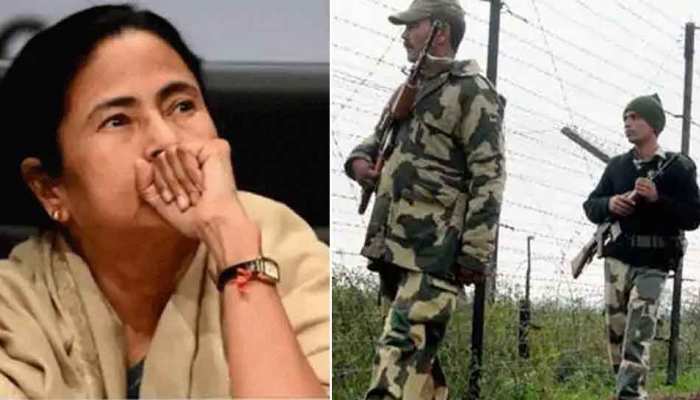
The post-poll violence in West Bengal has shaken the consciousness of the entire nation. In a shocking revelation, it is not just the workers of the opposition party who are under attack, but even the BSF jawans are facing the heat of the violence.
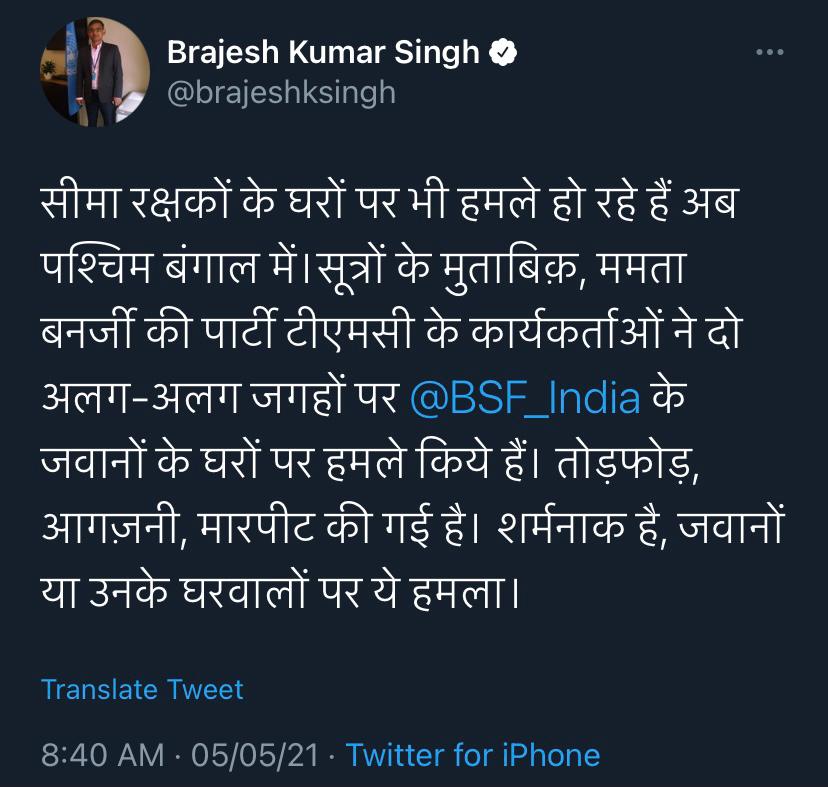
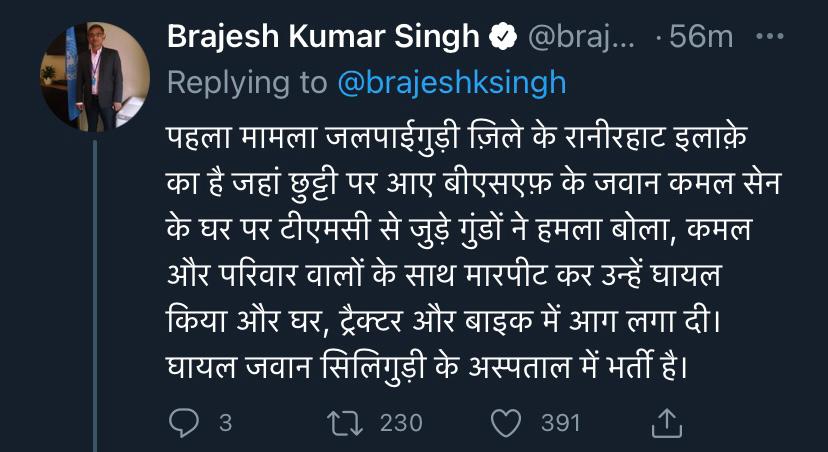
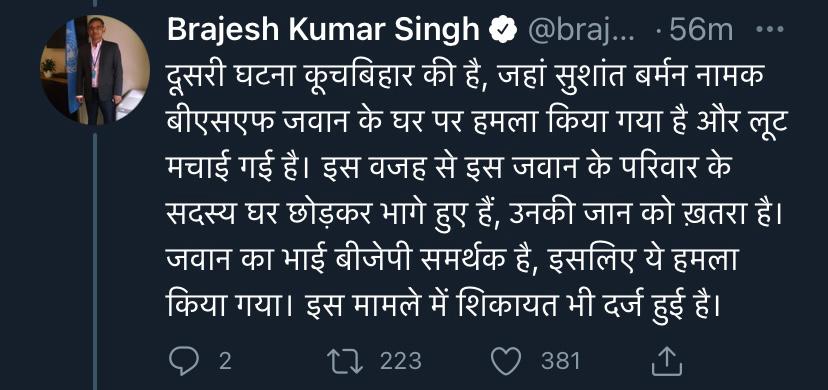
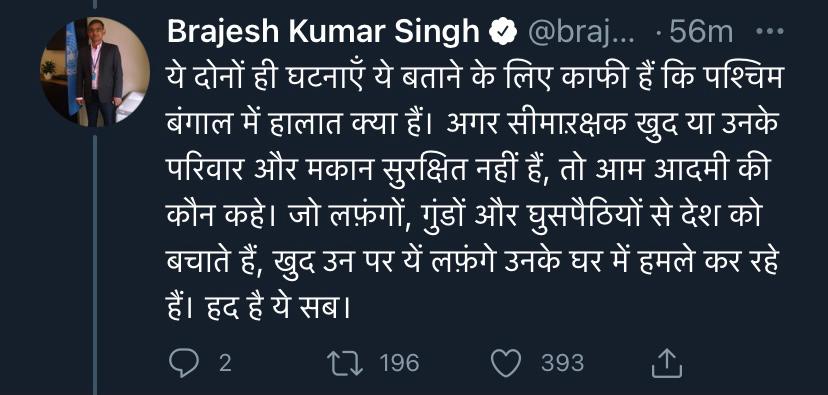
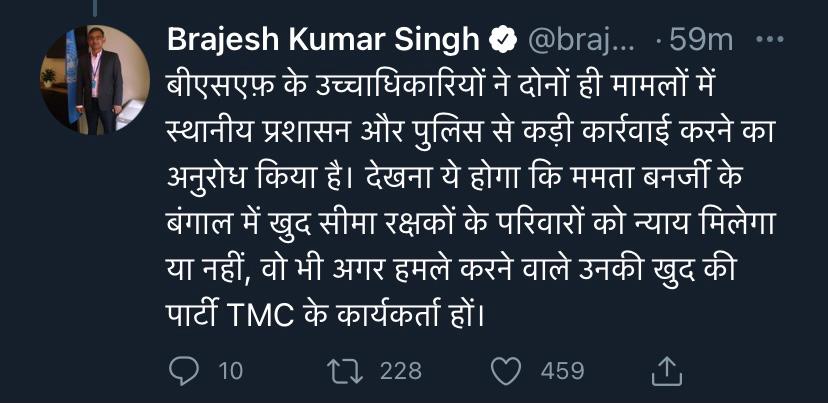
In a Twitter thread, the Managing Editor of the Network18 group Brajesh Kumar Singh has revealed that in a shameful act the houses of BSF jawans have been attacked, plundered and ransacked allegedly by the TMC goons.
Brajesh Kumar Singh’s tweet
The first incident is from Raniparhat in Jalpaiguri district where TMC goons allegedly attacked the house of a BSF jawan Kamal Sen who was said to be on leave. The jawan and his family were assaulted and his house, tractor and bike were set on fire. The injured jawan is currently undergoing treatment at a hospital in Siliguri.
Brajesh Kumar Singh’s tweet
The second incident is from Cooch Behar where the house of a BSF jawan named Sushant Burman was allegedly attacked and looted simply because his brother was a BJP supporter. His family members had to flee home to save their life. A complaint has been filed in this case.
Brajesh Kumar Singh’s tweet
Brajesh Singh highlighted the plight of the common man in West Bengal. He remarked that when the security forces are under attack, how can the public of the state be or feel safe.
Brajesh Kumar Singh’s tweet
As per Singh, the BSF officials have requested the local administration and police to take strict action in both the cases.
Brajesh Kumar Singh’s tweet
Earlier, TMC Chief and West Bengal Chief Minister Mamata Banerjee had demonised the central paramilitary forces. She had even urged the party supporters to ‘gherao’ them during elections.
Brutal post-poll violence in West Bengal
After TMC’s thumping victory in West Bengal, its party workers have unleashed terror on the workers and supporters of BJP and other opposition parties
As per some social media reports, at least ten BJP karyakartas are said to have been killed brutally in the apparent victory celebration by the TMC. BJP’s Avijit Sarkar was lynched to death along with his puppies allegedly by the TMC’s bloodthirsty cadre.
The party offices of the BJP were burnt down to ashes at various locations.
After horrifying videos of women being attacked and assaulted by the TMC goons surfaced on social media, the Chairperson of NCW Rekha Sharma reached the state of West Bengal to take stock of the situation and provide relief to the affected.
I myself have Reached Kolkata and will start meeting victims soon. Women of #WestBengal or anyone wants to share the grievances related to women of state can reach me here, email me [email protected] or whats app at +91 98118 99927
A CRPF unit was sent to BJP’s Purbasthali Uttar candidate Dr Gobardhan Das’s village after he was trapped inside his home along with his family members including the elderly as TMC hoodlums hurled bombs.
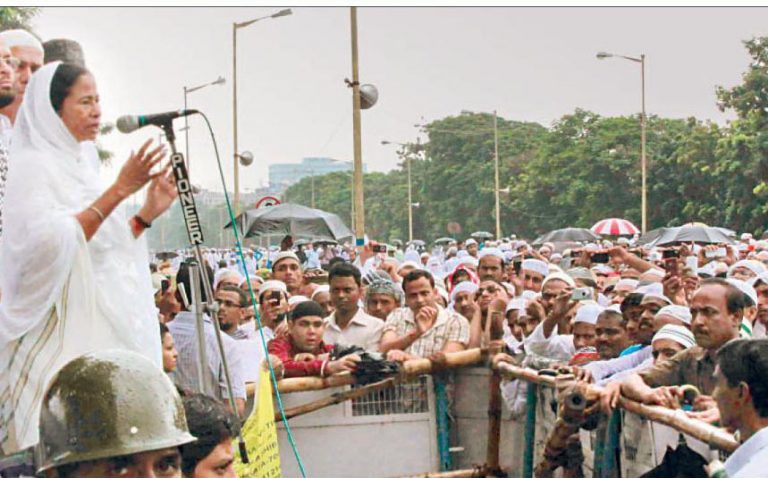
The Calcutta Khilafat Committee (CKC) in Kolkata, which is responsible for arranging Eid-ul-Fitr Namaz in the city every year, is awaiting the state government’s nod for conducting the same on Red Road this year. The occasion records a gathering of over two lakh every year.
“We have already sent a letter to Eastern Command last week. We are waiting for permission from the state government. If the state government allows, then Qari Fazlur Rahman will lead the namaz on Red Road maintaining COVID-19 protocols,” said Mullick Mohammad Ishaque, a member of CKC as per a report in Millenium Post.
Permissions to conduct open prayer sessions were denied last year due to the lockdown imposed in the wake of the Covid-19 pandemic.
The Red Road gathering is said to be the biggest congregation in the nation to offer special prayers on the occasion of Eid-ul- Fitr.
The CKC has been organising the prayer at Shahid Minar ground since 1920 but shifted to the Red Road 26 years ago.
Eid-ul-Fitr will be celebrated either on either May 13 or May 14 depending upon the lunar sighting.
Second wave of the coronavirus
This comes amidst the ongoing second wave of the coronavirus pandemic with the nation clocking over 3,00,000 new coronavirus cases daily.
The state of West Bengal on Tuesday registered its highest single-day deaths and new coronavirus cases at 107 and 17,639 respectively, as per the health department data.
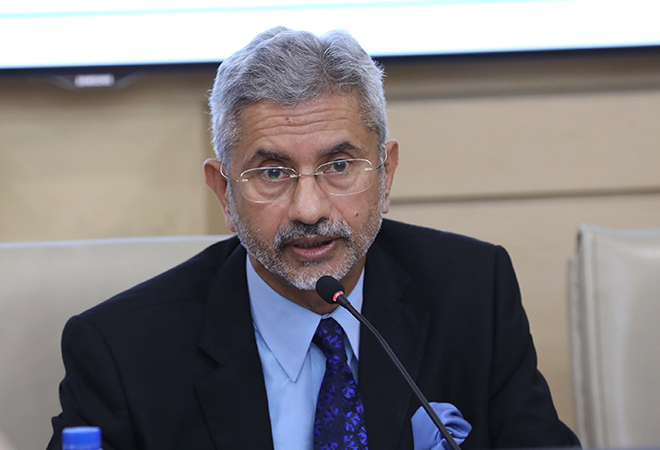
External Affairs Minister S Jaishankar on Wednesday rubbished the criticism surrounding India’s reported shift in policy of receiving aid from foreign countries to boost the country’s fight against the pandemic. In a conversation with ANI, he characterised the COVID-19 outbreak as a shared global crisis, adding that receiving help from the country’s allies could be considered as aid by many, but for him it is friendship.
I think this kind of aid…these kind of arguments are sort of point-scoring. I think people aren’t connecting conceptually with the problem…When I look at the situation in Delhi, I will do everything in my power to help people: External Affairs Minister Dr Jaishankar in to ANI
“COVID is a shared problem for the world. When it came to medicines, we gave HCQ to the US, Singapore, European countries. We gave vaccines to some countries. What you describe as aid, we call friendship,” he said.
S Jaishankar also slammed the critics, stating that arguments describing the help that India is receiving from the world as aid are made for scoring political brownie points. “I think people are not connecting with the problem conceptually…When I look at the situation in Delhi, I will do everything in my power to help people,” he added.
The Union Minister was speaking in an interview with the ANI when he stated that he would draw on the accumulated years of experience and everything in his power to do what he could in alleviating the problems faced by Indians due to the coronavirus outbreak in the country.
“For me, I have one objective, my people are going through a very difficult phase in this second wave of COVID19, and as a foreign minister I will do everything which I have accumulated over the years to help my people,” S Jaishankar said.
Elections can’t be stopped in a democratic country: S Jaishankar on conducting elections amid pandemic
Speaking on the politics surrounding the COVID-19 situation in India, S Jaishankar said, “I wish it wasn’t so. When a pandemic hits hard there are arguments and questions. People have spoken about elections, we’re a democratic country, we don’t stop elections in a democracy.”
“When I go abroad, I try to make people understand my challenges, this is where international partnerships come into being. Yesterday most of my meeting with Antony Blinken was on solutions in India and abroad, and the heart of the matter was vaccines,” he elaborated.
Filter out the noise and keep working to ensure key supplies to India: S Jaishankar to Indian missions across the world
The External Affairs Minister also had a key message for Indian Missions across the world. He asked them to filter the noise and buckle down on what needs to be done as a mission, adding that their focus should be on fulfilling key requirements—Oxygen, pharmaceuticals/ Remdesivir vaccine, supply chain and logistics to ensure their delivery to India.
My message is that keep your focus on this, don’t get distracted by the rest of the debate. Just like the government is focused on addressing the pandemic at home, you also please do that at the moment: EAM Dr S Jaishankar in an interview to ANI
“My message is that keep your focus on this, don’t get distracted by the rest of the debate. Just like the government is focused on addressing the pandemic at home, you also please do that at the moment,” he said.
Jaishankar, who is in London for the G7 meeting, said that his message going into the meeting is: “COVID a global challenge, and we’re going through it right now, there are various factors and reasons why it as severe as it is, and a global pandemic requires a global effort. In the past, we have contributed to that global effort.”
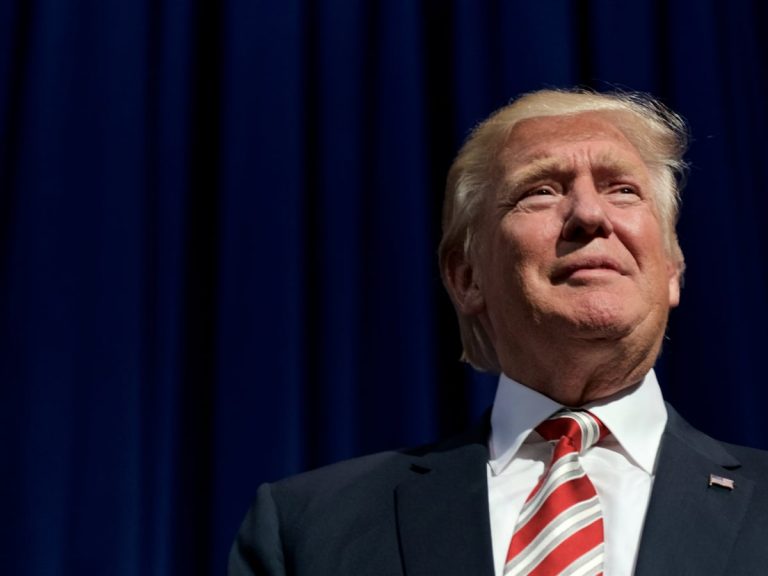
Shortly after the US Capitol riots in January, leading social media platforms like Twitter, YouTube and Facebook had removed the then US President Donald Trump’s account for allegedly inciting violence and spreading misinformation.
In just four months, the ex-US President has now launched his own communications platform, ‘From the Desk of Donald J Trump’ a one-way communication platform.
Screenshot of ‘From The Desk Of Donald J. Trump’
The platform is to relay Trump’s messages which can be shared further on Twitter and Facebook.
The former President can post pictures, videos, comments, and articles on the new platform built by Campaign Nucleus, created by Trump’s former campaign manager Brad Parscale.
The launch announcement comes just ahead of Facebook’s independent oversight board’s decision on whether or not to indefinitely suspend Trump from the platform.
Trump’s senior advisor, Jason Miller, had previously informed that Trump was all set to launch a new social media platform. “This new platform is going to be big,” he said in March. Confirming that the plan for the same is intact, Miller added “We’ll have additional information coming on that front in the very near future.”
?President Trump’s website is a great resource to find his latest statements and highlights from his first term in office, but this is not a new social media platform. We’ll have additional information coming on that front in the very near future.? https://t.co/m9ymmHofmI
Donald Trump and former first lady Melania Trump had also launched a website named The Office of Donald Trump (45office.com) early in March. As per reports, the website allows Trump supporters to request their participation in the events, submit letters and ask for personalised greetings. The website includes a page highlighting Trump’s time in the White House and a space dedicated to the former First Lady which outlines the work done by her during Donald Trump’s tenure as the president.
Capitol Hill violence
Washington DC had erupted in chaos on Wednesday, January 6 after supporters of Donald Trump stormed Capitol Hill and breached its premises. Capitol Hill is the seat of the US Senate and the House of Representatives. Protesters had entered House Speaker Nancy Pelosi’s office as well.
Moreover, one woman was shot by law enforcement authorities during the chaos and later lost her life. Also, pipe bombs were found at the Republican National Committee’s headquarters. They were detonated after the staff was evacuated.
Donald Trump had addressed his supporters and asked them to go home. However, he continued to maintain that the presidential elections of 2020 were “fraudulent” and “stolen” even as he urged his supporters to “go home in peace”. He emphasized peace and law and order in his message. Twitter had limited the reach of the appeal and Facebook had removed it citing the risk of violence.
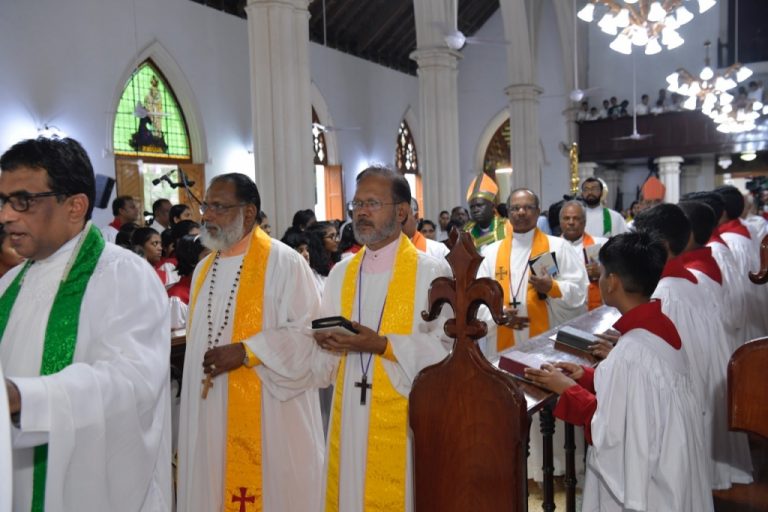
More than 100 priests of the Church of South India (CSI) tested positive for Chinese coronavirus after attending a retreat in Munnar last month. Of these, two have lost their lives and five are in serious condition. Amongst those who are infected are CSI moderator and bishop of South Kerala diocese Rev A Dharmaraj Rasalam. He is currently quarantining at home. As reported by TNIE, the COVID protocols were broken at the retreat.
The annual retreat, a conference of priests and community members, was held at the CSI Christ Church in Munnar from April 13 to 17 amid the second wave of coronavirus pandemic. As many as 350 priests from various churches had attended the congregation. Quoting sources, TNIE reported that despite repeated requests to postpone the meet, the organisers went ahead with the same. Further, priests were warned of disciplinary action if they failed to attend the event.
The priests had travelled to Munnar from LMS Church in Thiruvananthapuram in a bus. Rev Bijumon, 52, the vicar of CSI church, Kazhukode, near Vattappara passed away due to COVID last Thursday and Rev Shine B Raj, 43, the vicar of CSI church, Punnakkamugal, near Thirumala, lost his battle to COVID on Tuesday. Many infected priests are currently undergoing treatment at Dr Somervell CSI Medical College Hospital at Karakonam while some are home quarantined.
As per the report, Jacob Mathew, secretary of Church of South India Trust Association and member of the Joint Christian Council, alleged that the directions of the government and council were ignored for organising the retreat. Annual retreats of Central Kerala diocese and Kochi diocese were also postponed due to increase in COVID cases. But the CSI South Kerala held the retreat without informing state government, he alleged.
The CSI, however, is refuting the allegations. T T Praveen, secretary of South Kerala diocese of CSI, claimed that the infection was not spread from retreat and blamed ‘vested interest’ for spreading ‘negative campaign’. He claimed that the retreat was organised as per COVID protocol and also had state government permission. While he admitted that some priests had tested positive for COVID, he maintained that the infection did not spread from the retreat. He claimed that the two priests died because of other illness they were suffering from.
However, one priest, who attended the retreat and subsequently tested positive for COVID, said that at least 30 priests had been hospitalised. No action has been taken against the organisers of the retreat as it was already held last month.
Kerala is currently second worst affected state in terms of total coronavirus cases. Over 17 lakh people have tested positive for COVID in Kerala, of which 3.57 lakh are active cases.
In a press release today, the Government of India announced that it will allow mobile carriers to conduct 5G trials with original equipment manufacturers like Ericsson, Nokia, Samsung, and C-DOT. However, there was a notable exclusion from the list, the Chinese company Huawei.
Major mobile carriers like Bharti Airtel, Reliance JioInfocomm , Vodafone Idea will conduct trials along with the government-owned MTNL in urban, rural, and semi-urban areas, according to the statement from the Ministry of Communications.
Chinese companies like Huawei and its smaller rival ZTE have not been named in these six-month long trials. These trials aim to test 5G technology and gear in varying environments.
Back in March, two government officials told Reuters about the national security implications that come with approving Chinese technology in sensitive sectors. “We cannot prioritize economic gains if an investment poses a national security risk,” said one of the officials.
Huawei and ZTE are under scrutiny for allegedly installing “backdoor” vulnerabilities to spy for the Chinese government, according to the Reuters report.
India is the world’s second-largest market by number of phone users. The Government is wary of awarding new technology business to Chinese companies mainly because of two reasons, the security concerns, and a desire to help local telecoms equipment manufacturers.
Huawei has already been banned in many Western countries like, Australia, U.K., and U.S.A because of security concerns in relation to spying.