Home Blog Page 4337

Suvendu Adhikari appointed leader of opposition in Bengal Assembly: What it means for the future of BJP in the state

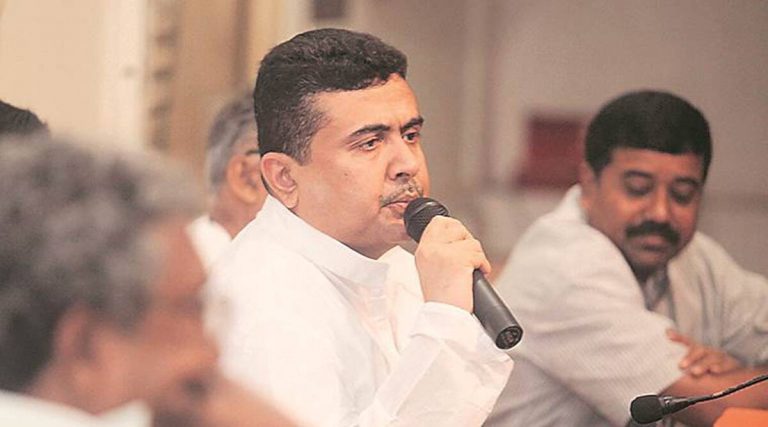
Suvendu Adhikari has been appointed the leader of the opposition in West Bengal. The BJP MLA from Bengal defeated Chief Minister Mamata Banerjee from Nandigram in the hotly contested assembly elections in the state. He had only recently joined the BJP from the Trinamool Congress in December last year.

The appointment of Suvendu Adhikari as the leader of the opposition in the West Bengal Assembly will have deep ramifications for the future of the party in the state. It will significantly strengthen the BJP in areas where they have been lacking so far.

Local Face

One of the most prominent factors believed to have affected BJP’s fortunes in the state is the lack of local leaders who could match Banerjee’s stature in Bengal politics. While the BJP did have popular leaders, it did not have any that came close to matching Banerjee’s stature.

With the elevation of Suvendu Adhikari to the position, that is set to change. He defeated Mamata Banerjee in his bastion and managed to hold his ground in an election that saw the Trinamool Congress sweep the entire state.

Furthermore, with Adhikari, the BJP has someone that understands the street politics of Bengal and how the game is played. His victory from Nandigram was also significant for the party as the party now had a strong base outside of North Bengal going forward.

In a time of deep crisis, it was one of the few bright spots for the party and Adhikari could serve as a leader the party workers could rally around.

Reduced influence of Central BJP leaders

A prominent grouse that has surfaced in the aftermath of the BJP’s defeat is the fact that the party’s campaign had too much of an influence from the central leadership of the party. Observers appointed by the central leadership of the party have come under criticism for not enough awareness about the realities of Bengal politics.

Tathagata Roy, former Governor of Tripura and Meghalaya, had directly blamed Kailash Vijarvargiya and Dilip Ghosh among others for sullying the reputation of the central leadership of the party. He had hurled the choicest insults at them and held them responsible for the party’s insipid performance.

With Adhikari at the helm, that is set to change. While it is likely that Dilip Ghosh will continue to remain as the state party president, the Ghosh-Adhikari duo could function as the ‘double-engine’ of the party in Bengal.

Giantslayer

Suvendu Adhikari has significantly augmented his stature in Bengal politics after defeating Mamata Banerjee in Nandigram. The tag of ‘Giantslayer’ will stick with him going forward. His work for the next five years is cut out.

Adhikari must expand his base from Medinipur and develop a pan-Bengal appeal through extensive campaigning. He has many thing working for him. He is a mass leader, has a strong base and now has a larger than life image.

But that means that certain things will change within the BJP as well. There was the impression that too many people within the party were trying too many things and too many cooks spoilt the broth. Adhikari, an iron fisted leader, will look to straighten things out.

While it is far far too early to say whether Adhikari will prove to be another Himanta Biswa Sarma for the BJP, it has to be conceded that he has all the right credentials to emerge as one.

BJP has taken the right inputs

The decision shows that the central leadership of the party has taken the right inputs. It was a bold decision to appoint Adhikari the leader of the opposition in the Assembly considering other leaders who have been in the BJP much longer.

But it also has to be admitted that the BJP did not really have a choice in the matter. Suvendu Adhikari is the most prominent leader among its elected representatives and has to be given his due. Going forward, the Bengal unit of the party will see a much reduced influence from observers appointed by the center and the state party unit will have much greater leeway to pursue avenues it deems fit.
Bengal Governor gives sanction to CBI for the prosecution of 4 former TMC ministers in Narada sting operation case

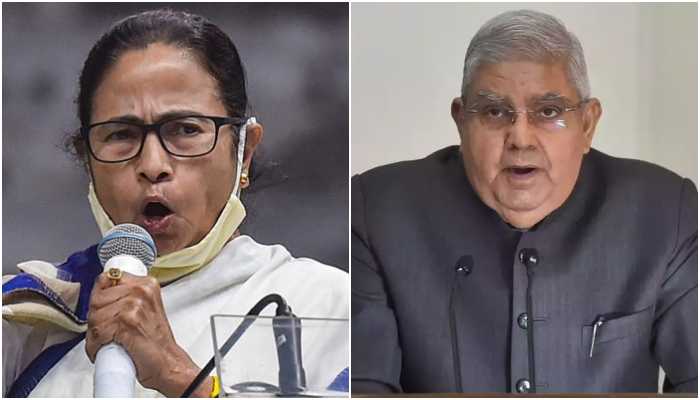
West Bengal governor Jagdeep Dhankar has on Sunday accorded sanction to the CBI, for the prosecution of West Bengal politicians Firhad Hakim, Subrata Mukherjee, Madan Mitra and Sovan Chatterjee (who had left the Trinamool and joined the BJP but has dissociated himself from the BJP too) in the Narada sting operation case.

Interestingly, all four ministers were a part of Mamata Banerjee’s cabinet when their name appeared in the Narada sting tapes scandal in 2014.

A statement issued by the officer on special duty (communication), Raj Bhavan said that the sanction for prosecution of the four leaders was accorded by the WB Governor after the CBI had made a request for the same. The central agency also made available entire documentation relevant to the case to Dhankar, who then invoked his powers under Article 163 and 164 of the Constitution, being the competent authority to accord such sanction.

Speaking about the decision, a Raj Bhavan official said on Sunday: “Honourable governor is the competent authority to accord sanction in terms of law as he happens to be the appointing authority for such ministers in terms of Article 164 of the Constitution.” 

Dhankar’s decision comes hours after Subrata Mukherjee, Madan Mitra, and Firhad Hakim have been re-elected as MLAs in the recently concluded state Assembly elections. Hakim and Subrata Mukherjee are to be sworn in Mamata Banerjee’s cabinet on Monday as their names feature in the list of 43 names of ministers released by TMC.

What was the Narada sting operation case

The Narada sting operation case, as the name suggests, was a series of sting operations conducted by Narada news portal chief Mathew Samuel in West Bengal to expose the corrupt practices of ministers in the Mamata Banerjee government.

The tapes of the sting operation were shot over a period of two years beginning in the year 2014. The sting was earlier to be published in Tehelka magazine. It was carried out by Matthew Samuel who later quit Tehelka and launched his own TV channel in West Bengal.

The tapes of the sting operation was made public before the 2016 assembly elections in West Bengal.

In the tapes, a host of top Trinamool leaders were seen accepting bribes for helping the company.

Besides these four leaders, there was a host of other Trinamool Congress leaders, namely, former Kolkata Municipal Corporation deputy mayor Iqbal Ahmed, Trinamool MPs Aparupa Poddar, Saugata Roy, Kakoli Ghosh Dastidar, Prasun Banerjee and Sultan Ahmed (he passed away in 2017), former minister Madan Mitra, and Sujay Bhadra and Karan Sharma (close aides of Mamata Banerjee’s nephew Abhishek), Mukul Roy and Suvendu Adhikari (both with the BJP now), who were named in the scam.

The accused initially had disputed the contents of the tapes but when the Central Forensic Laboratory confirmed the authenticity of the tape, the Trinamool leaders said that they had taken the money for charitable purposes and for the party’s coffers.

The Calcutta High Court had ordered a CBI probe into the sting operation in March, 2017.

Gujarat: Extensive campaign launched to test, trace and isolate people in villages to arrest spread of coronavirus pandemic

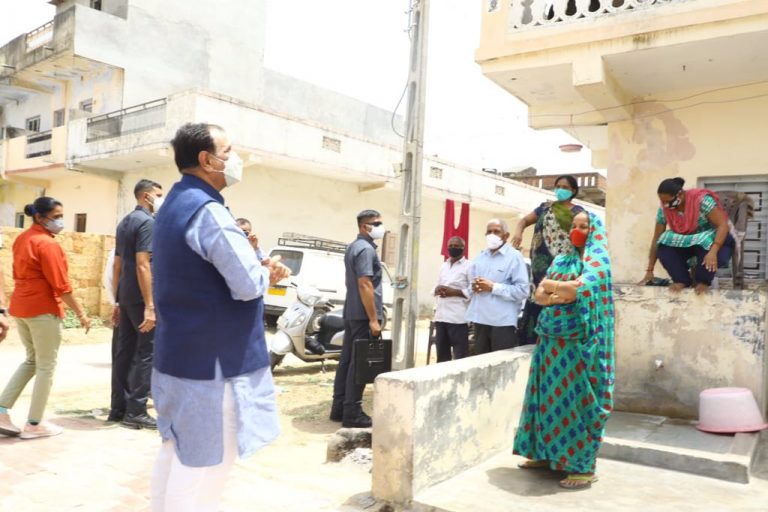
The Gujarat state government has recently launched the ‘Maru Gaam Corona Mukt Gaam‘ (My village, Corona free village) campaign in a bid to check the Chinese coronavirus pandemic in villages. Speaking at Chekhla village in Sanand Taluka in Ahmedabad district, Gujarat CM Vijay Rupani said that the second wave of the coronavirus pandemic much more severe, fast spreading and fatal and often affecting the entire family. “There is need to be all the more alert,” he said.

He urged people to follow all protocol to combat the pandemic but also appealed to people at large not to panic. He informed that the state government has formed ‘Gram Yoddha Committee’ in over 16,000 villages across Gujarat and undertaken individual surveillance of about 50 lakh people. This led to identifying 5,000 people with COVID-like symptoms who are currently in isolation.

As of now, 1.4 lakh tests are being conducted in the state and requires about 1,000 MT of medical oxygen. The number of beds in the state has been increased from 45,000 on March 15 to one lakh now. As per Rupani, the state government has ordered all necessary medicines and injections for Mucormycosis at Ahmedabad, Vadodara, Surat and Rajkot for which separate wards have been created. 

He informed that adequate assistance is being given by the Centre to fight the pandemic. He reiterated that adequate arrangement for oxygen and bed requirement is in place and people need not panic. He urged people to get themselves tested if they notice symptoms and get themselves admitted to community COVID facilities in case of need.

Coronavirus cases in Gujarat

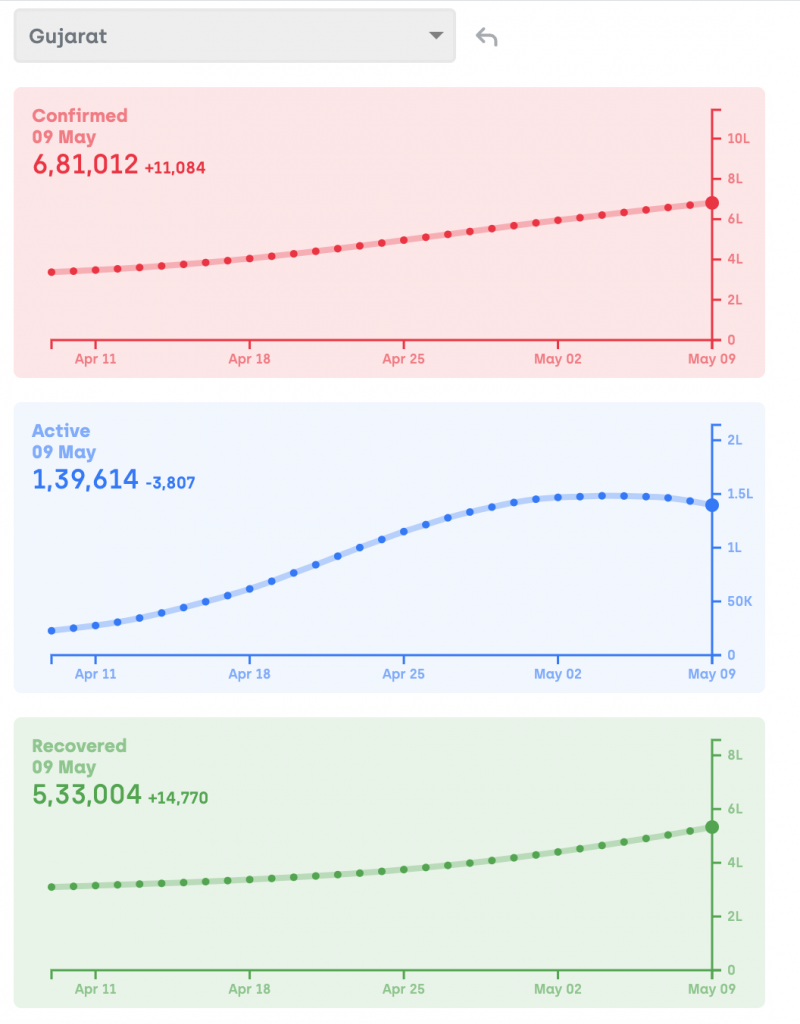
Gujarat is currently 11th worst affected state in India in terms of total Coronavirus cases. As of now, the state has registered 6,81,012 cases of which 1,39,614 are active cases. 8,394 people have lost their lives in Gujarat due to the pandemic. Gujarat is currently one of the few states in India which has not gone for a full lockdown. There are strict restrictions and non-essential shops have been closed since a few days which has let do a decrease in active cases in past few days.

Coronavirus cases in Gujarat, latest trends

As can be seen, the number of active cases have been on a slight bend and things are looking promising and hopefully the worst is behind us.

YouTuber Rahul Vohra’s wife shares video recorded before his death, alleges medical negligence at Rajiv Gandhi Hospital

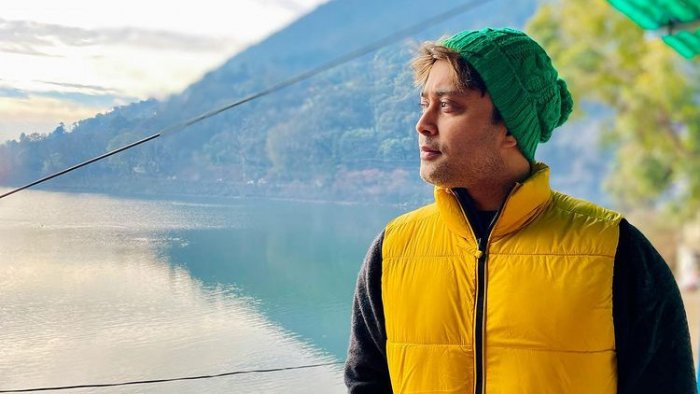
On Sunday (May 9), popular YouTuber and content creator Rahul Vohra passed away after succumbing to Covid-19 related complications. Now, his wife has shared a video on Instagram, presumably of Rahul’s final moments, depicting a crestfallen Rahul Vohra appealing for medical attention. She blamed the Rajiv Gandhi Super Speciality Hospital, the hospital where Rahul was admitted, for Rahul’s death and sought ‘justice’.

The Instagram post read, “Justice for every Rahul. Mera Rahul chala gaya ye sabko pata hai par kaise gaya ye kisi ko nahi pata (Everyone knows that my Rahul left us but no one knows how he died). Rajeev Gandhi super speciality hospital Tahirpur Delhi. Is tarah se ilaaj kia jata h vahan. Ummeed karti hun mere pati ko insaaf milega. Ek aur Rahul is duniya se nhi Jana chahiye (This is the kind of treatment he got. I hope my husband will get justice. Another Rahul should not die in this manner) #justiceforirahulvohra.”

In the video, Rahul could be seen with an oxygen mask saying, “Iski bohot keemat hai aaj ke time pe. Bina iske mareez na chhatpata jaata hai. Kuch nahi aata isme, kuch bhi nahi aa raha (This is very valuable in today’s time. Without this, patients suffer. But nothing is coming through this one, nothing at all).” He added that whenever he called an attendant for assistance with something, they would tell him that they will come back in a minute, and then disappear.

The hospital that Rahul was admitted to, the Rajiv Gandhi Super Speciality Hospital in Tahirpur, was inaugurated by Delhi CM Arvind Kejriwal in October 2019 along with Delhi Health Minister Satyendra Jain. It is a government-run hospital under the Delhi Government.

In a Facebook post on May 4, Rahul Vohra had informed his followers that he was Coronavirus positive. He said that he had been admitted to a hospital but showed no recovery signs, even after 4 days. “Is there any hospital, where oxygen beds are available? My oxygen levels are decreasing gradually. There is none to look after me? I am posting this in a very helpless state. My family members are unable to handle the situation,” he had lamented.

A day prior to his death, Rahul Vohra wrote his last message. “If I had received proper treatment, then, I possibly would have survived.” For the last time, he had shared his name, age, hospital name, bed, and floor number in hopes of a last-minute miracle. “I will be reborn again and do great work. I have lost all courage now,” he had concluded his message.

Reliance Group among the top donors in India Inc’s COVID relief response: Read the details

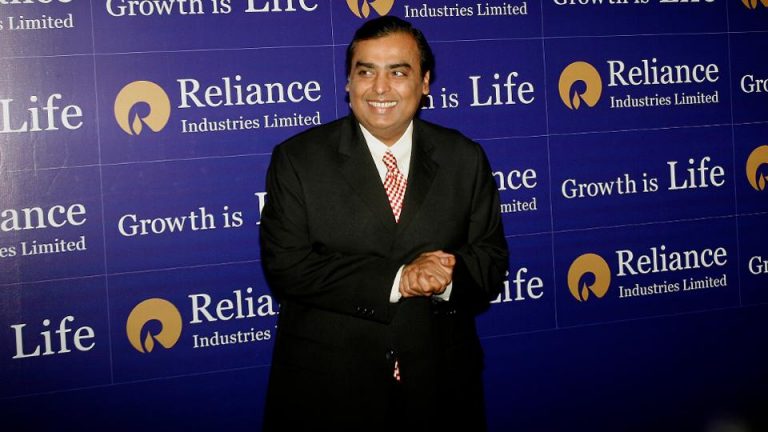
While Congress, specifically its former president Rahul Gandhi, have a habit of vilifying the Ambanis, Mukesh Ambani’s Reliance Industries Ltd (RIL) and Reliance Foundation has emerged as one of the largest donors as India Inc expands its relief efforts in blunting the second wave of the coronavirus outbreak.

A report published by the IANS says that Reliance Industries Ltd (RIL) and Reliance Foundation are at the forefront of the efforts taken by India Inc to tackle the resurgent wave of the coronavirus outbreak. RIL has so far set up 1,875 hospital beds for free treatment of COVID-19 patients in Jamnagar and Mumbai. India’s first dedicated COVID treatment facility with 100-beds was set up in April 2020 at Seven Hills by Mukesh Ambani’s Reliance group.

Besides, RIL has also set up various quarantine and isolation facilities across Mumbai, Surat, Lodhivali and other places. The Reliance Foundation also established an exclusive 10-bed dialysis centre at the Hindu Hriday Samrat Balasaheb Thackeray Trauma Care Hospital, Mumbai.

In addition, RIL is also manufacturing and providing over 1,000 MT of oxygen free of cost, and catering to nearly 11 per cent of India’s medical oxygen needs. Nearly one in 10 ICU patients in India are getting oxygen from Reliance.

RIL has also transformed its facilities at Alok Inds to manufacture 1 lakh affordable PPE kits and masks per day to reduce dependence on imports.

The organisation has so far donated Rs 556 crores to the PM Cares Fund and other funds in the fight against the pandemic.

With its Mission Anna Seva, Reliance Group has provided over 5.5 crore meals—which include cooked meals, ready-to-eat food packets, food coupons, dry ration kits—across 80 districts, 18 states and one UT, and is slated to supply an additional 2 crore plus meals in May/June 2021.

RIL has also donated more than 81 lakh masks to frontline workers and communities across 19 states and two UTs. In addition to this, small multilingual booklets were published and distributed to create awareness about the pandemic and measures that need to be taken to stave off the infection.

About 5.5 lakh+ litres of free fuel was provided by the Reliance Foundation to over 14,000 notified ambulances and vehicles registered in COVID-19 services across 249 districts in 18 states. The Foundation operates nine MMUs in Shahdol, Nagothane, Dahanu, Jhajjar and Ghazipur providing medical services.

Other corporate groups join in to support India’s fight against the COVID-19 pandemic

Besides Reliance, other organisations have also stepped up efforts to support India’s battle against the coronavirus outbreak. Wipro and Azim Premji Foundation committed Rs 1,125 crore, converted an IT Facility in Pune into a 450-bed intermediary care Covid Hospital and have provided food support to 32 crores so far.

IT behemoth Infosys announced Rs 200 crores, 2.4 million meals to around 1 million people, mostly the poor and the migrant labourers and distributed millions of masks, sanitisers for police, medical professionals and other frontline workers.

Vedanta donated Rs 201 crore, with Rs 101 crore to PM Cares Fund, and remaining for the welfare of frontline workers, daily wage earners, and employees of business partners. They launched the ‘Meals for All’ scheme, distributing free meals to lakhs of daily wage workers, while dry ration kits were given to thousands of daily wage workers, marginalised poor.

Pharma company Cipla committed Rs 25 crore, including Rs 9 crore to PM Cares Fund, supplied essentials, ration kits and meals to migrant workers. They served 1,44,000 meals to migrant workers and 1,32,700 masks, gloves etc distributed to more than 10,000 doctors and thousands of paramedical staff.

SC puts Prashant Kishor’s appointment as advisor to Punjab CM under the scanner, seeks response from Congress-ruled state govt

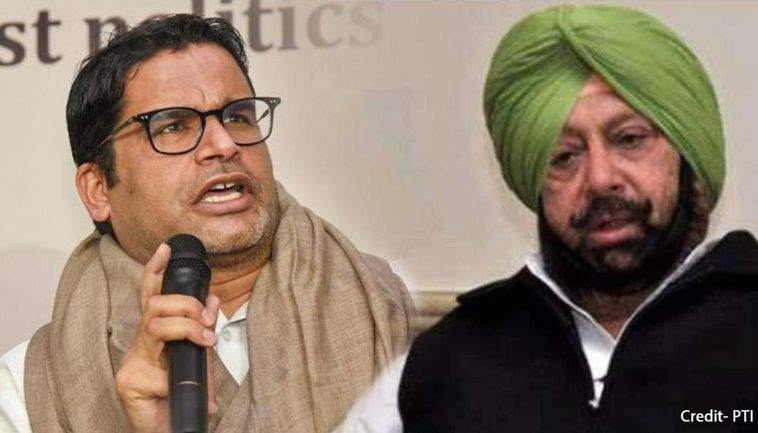
The Supreme Court has sought a response from the State Congress government in Punjab in connection with a petition challenging the appointment of poll strategist Prashant Kishor as principal adviser (cabinet rank) to chief minister Captain Amarinder Singh. 

The two-judge bench of justices Sanjay Kishan Kaul and Hemant Gupta on Thursday directed the matter to be listed after summer vacations. The bench was hearing the plea filed by Labh Singh, a retired boxing coach and Satinder Singh, a Chandigarh-based advocate.

Labh Singh had filed an appeal in the apex court challenging the Punjab & Haryana High Court order, dismissing his and another petitioner’s petition in which they submitted that the appointment of Kishor as Principal Advisor to the Chief Minister, that too in the rank and status of a Cabinet minister at the cost of public money, is not permissible.

Capt Amarinder had appointed Prashant Kishor as his principal adviser in March this year.

Advocate Baltej Singh Sidhu, representing Labh Singh, a retired boxing coach and the other petitioner, Satinder Singh, an advocate, contended before the top court that government may have any advisor with any particular expertise for governance purposes and questioned the validity of the order by the state government.

The petitioners submitted that Kishor’s appointment in the rank and status of a cabinet minister was a clear violation of Articles 14 and 16 of the Constitution. Advocate Baltej Singh Sidhu alleged that in Kishor’s appointment, no advertisement was issued, no interviews were conducted and no criteria was adopted.

“Kishor will be enjoying pay, perks and all facilities from the state exchequer. His appointment is contrary to the provisions in the Constitution,” the petitioners said.

“Had proper procedure been followed, more qualified and suitable persons could have been available. The appointment has been made in a clandestine and cloistered manner causing loss to millions of aspirants,” the petitioner added, furthering that article 16(1) of the Constitution provides that there shall be equal opportunity to all citizens in employment or appointment to any office under the state.

After hearing the argument, the SC two-judge bench ordered: “Issue notice returnable after the summer recess”.

For the uninitiated, on March 16 (Tuesday), the Punjab and Haryana High Court had dismissed a plea challenging Prashant Kishor’s appointment noting that it was for the public to decide if the former’s appointment was a burden to the exchequer.

Punjab CM appoints Prashant Kishor as Principal Advisor ahead of Punjab Assembly polls

The HC decision came after Punjab CM Amarinder Singh declared on March 1 that poll strategist Prashant Kishor had been appointed as his principal advisor.

The Chief Minister’s Office said the cabinet had cleared the appointment and Kishor had been designated in the rank and status of a cabinet minister, adding that he would be paid Rs 1 as token honorarium.

Sharing the information of the same the CMO had then Tweeted that Prashant Kishor will also be given free fully-furnished government residence and camp office as admissible to a cabinet minister.

Attaching a copy of the order, the CMO furthered that besides being provided staff, including one private secretary and a personal assistant, Kishor will be entitled to medical facilities and reimbursement of medical expenses as admissible to a cabinet minister. His term of appointment will be co-terminus with the tenure of the present Punjab chief minister, as per the terms and conditions of his appointment.

Kishor had handled the Congress poll campaign in the 2017 Punjab assembly election when the party had come to power by bagging 77 seats in the 117-member house.

Kishor announces he is quitting his career as political strategist

Recently, after Mamata Banerjee’s Assembly poll victory, Kishor, who had been working as TMC’s political and poll strategist, declared that he is quitting I-PAC, his political advocacy company for pursuing another career.

Following the announcement, reports emerged that Kishor had decided to fire more than 85% of the almost 900 employees who were part of their campaigning team in the recently held West Bengal assembly elections. The IPAC-led by election strategist Prashant Kishor had devised the election campaigning for the incumbent Trinamool Congress in West Bengal and led to the third successive poll victory for the Mamata Banerjee-led party.

In another related significant development, IPAC has already started the process of recruiting people for “campaign management” in Bihar. 

Though there was no clarity on his future endeavours, speculations are rife that Prashant Kishor is eyeing at restructuring his organisation to make a come back in Bihar.

Israel under attack from rockets fired from Gaza Strip, fires set using balloon-borne devices

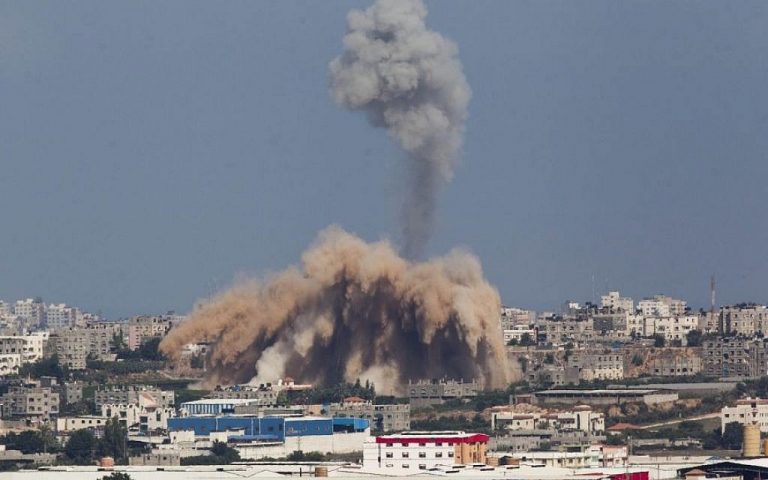
Israel has been reeling under violence since a week due to constant clashes and confrontations with Palestinian protestors.

After a violent clash at Al-Aqsa mosque in Jerusalem that left around 200 injured, rockets from the Gaza Strip were launched towards the city of Ashkelon and surrounding communities of Israel on Saturday as well as Sunday night.

The Israel military in a report informed that one of the first pairs of rockets was successfully intercepted by the Iron Dome missile defense system while the second landed in an open, unpopulated area. No damage or injuries have been reported.

In a retaliatory response, the Israel Defense Forces on Monday said that its tanks had fired shells at a number of Hamas military posts in “a response to the rocket fire and arson balloons.”

The rockets were fired an hour after Israel announced the closure of the Gaza Strip’s fishing zone after it came under incessant attack of balloon-borne incendiary devices which caused dozens of fires and burned large areas of southern Israel, as well as a mortar attack on Sunday morning.

The incendiary balloon-attack

Gaza’s so-called “independent balloon unit” has been constantly attacking the Gaza border areas causing over a dozen fires with the message “this is just the beginning.” 

Another smaller unit associated with the Gaza-based Mujahideen Brigades terror group announced on Saturday morning that they had begun mobilizing their members to initiate balloon attacks.

The strategy of launching balloon-borne incendiary and explosive devices from the Gaza Strip toward Israel has been used inconsistently over the past two years.

Al Aqsa attack

Around 250 Palestinians and 17 Israeli police officers are said to be reportedly injured in a violent clash that erupted between the Israeli riot police and Palestinians on Friday at Jerusalem’s Al-Aqsa mosque.

Stones, bottles and fireworks were hurled at Israeli police officers who fired rubber bullets at the crowds gathered at the Al-Aqsa mosque which is of prime importance for both sects. The clash erupted as police officers tried to restore order after reports of “rioting of thousands of worshippers” following the evening prayers were received. 

Sheikh Jarrah clashes

At the beginning of this year, a district court ruled four Palestinian homes in Sheikh Jarrah legally belong to Jewish families and should be handed over.

The Jewish plaintiffs claimed that their families lost the land during the war that accompanied Israel’s creation in 1948 while the Sheikh Jarrah families have provided evidence that their homes were acquired from Jordanian authorities.

Hundreds of Palestinians carried out rallies on Friday in Jordan chanting, “We will die for Sheikh Jarrah.”

Global response

As the international observers urged calm, the UN Special Coordinator for the Middle East Peace Process Tor Vennesland has expressed deep concerns over the clash and asked both parties to uphold the status quo. 

BMC chief explains why it is not the Modi govt but the states that need to be blamed for the oxygen crisis

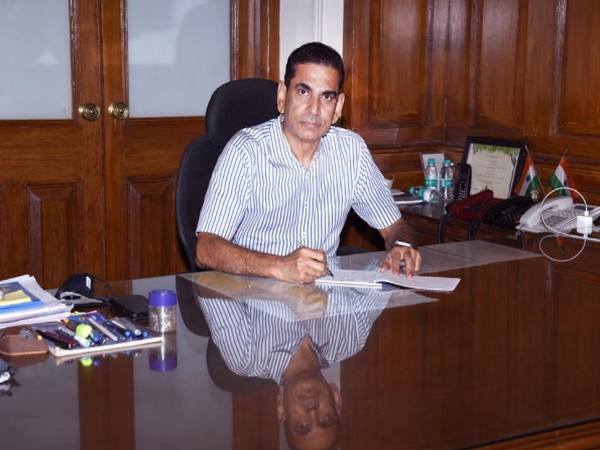
As India grapples with the second wave of the coronavirus outbreak, with the supply of oxygen proving to be crucial in the fight against the pandemic, the Mumbai BMC commissioner made no bones about who is to be held responsible for the oxygen scarcity witnessed in some parts of the country. In an interview with the Indian Express, BMC chief Iqbal Singh Chahal said the government of India can’t be held responsible for the oxygen crisis in the country. He said states are to be blamed for the inadequate allocation of oxygen to them.

“The Government of India should not be blamed at all. If anybody has to be blamed, it is the states,” said Chahal, adding, “many states of India were not even ready to admit how many cases they have. How does Centre allocate to them?”

Chahal argued that how could the centre allocate the same amount of oxygen to states with a vast difference in the number of COVID-19 cases reported. He averred that the Centre could not allocate the same amount of oxygen to a state with 6,000 daily cases vis-a-vis Maharashtra, which was reporting upwards of 60,000 daily new cases.

Essentially, he said that if the states tested properly, the number of COVID-19 cases would be much higher and therefore, the centre would allocate oxygen accordingly. But if they don’t test properly and report lower cases, then their oxygen allocation will be according to the number of cases they are reporting to the centre and therefore, they can’t blame the centre later if the oxygen allocation is less compared to what they actually need.

Chahal’s admission on states being responsible for the oxygen crisis comes in sharp contrast to protestations raised by Maharashtra chief minister Uddhav Thackeray, who had earlier last month railed against the central government over the oxygen scarcity in the state. Following his gimmicks on oxygen, union minister Piyush Goyal took to Twitter and posted a string of tweets exposing the Maharashtra government’s propaganda on the oxygen supply.

Hospitals being pressurised to increase bed capacity spawned the oxygen shortages in big cities: BMC chief

On being asked what could be the reason behind the sustained oxygen crisis in Delhi, Chahal pointed out that in many big cities, including Mumbai and Delhi, when the COVID caseloads increase, hospitals are pressurised to increase their bed capacity. However, what is ignored is that oxygen supply to the hospitals is limited and therefore many SOS calls emerge from such facilities where more beds are put up but oxygen supply and other key drugs are not commensurate, he said. In such a situation when cases are rising sharply, Chahal asserted, beds should be increased at jumbo COVID facility centres where the oxygen supply could be expanded and not at the hospitals.

BMC chief bats centre’s decision of not imposing a nationwide lockdown to combat the resurgent coronavirus outbreak

Chahal also seemed to agree with the central government’s decision of not imposing a blanket lockdown across the country. He contended why should a state with a significantly lower positivity rate bear the brunt of a nationwide lockdown. He also lauded the centre’s decision to decentralise and accord greater power to the local governments to tackle the resurgent wave of the coronavirus outbreak.

“I am a very firm believer of decentralisation… If Mumbai achieves a 6-7% positivity rate, then why should it suffer a national lockdown? Lockdown has to be left to states… A decentralised lockdown, varying from state to state, would be a better option,” he said.

BMC chief claims he is prepared for the third and fourth wave of the pandemic

Once bitten, twice shy, the BMC chief said that they are prepared for the third and the fourth wave of the pandemic after the second wave of the coronavirus outbreak took a devastating toll on the financial capital of the country, both in terms of the number of deaths and the economic hardships caused by the temporary lockdown.

“I have no doubt in my mind that a third wave is going to hit us sometime in June and July, maybe later. We are already preparing for that. That’s why we started building four brand new jumbos in Mumbai 15 days ago. It will take our dashboard from 22,000 beds to more than 30,000 in a month’s time. Our ICU beds have been ramped up from 1,500 to almost 3,000. We are trying to bring that up to 4,000 by June,” he said.

Did the Modi govt approve Covaxin for 12-year-olds? Here is the truth

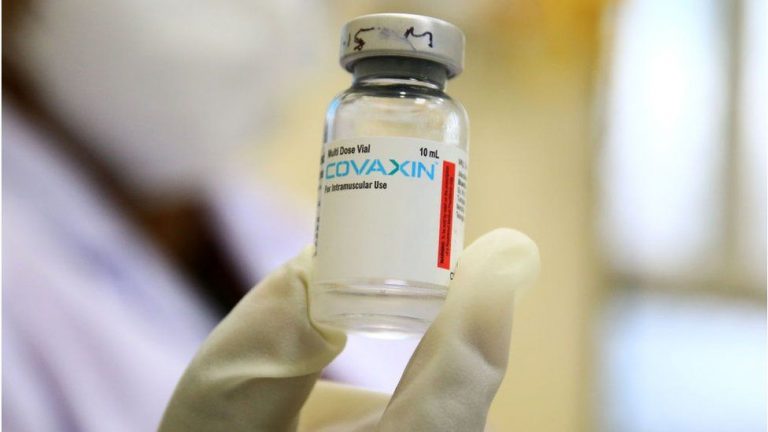
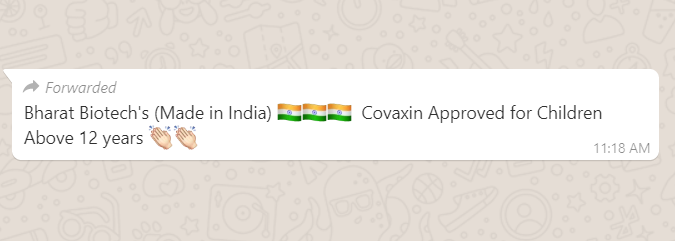
Amidst the ongoing vaccination drive against the Coronavirus infection in India, several tweets and Whatsapp forwards have been doing rounds on the internet. One of the claims center around the supposed ‘approval’ of indigenous Covaxin vaccine for children above the age of 12 years. “Bharat Biotech’s (Made in India) Covaxin Approved for Children above 12 years,” read a Whatsapp message.

Screengrab of the Whatsapp message.

It must be mentioned that last month, the government gave a nod to the 3rd phase of the vaccination programme wherein individuals between the age of 18 and 44 became eligible to take jabs from May 1 onwards. In a tweet by the Press Information Bureau (PIB), it clarified, “This claim is #Fake. No such approval has been given by the Government of India. Currently, citizens above the age of 18 are eligible for COVID19Vaccination.”

As of now, children and pregnant women are not included in India’s vaccination drive as trial data is awaited for vaccines among those groups. The m-RNA vaccines in the US have been made open to children under 12. The same is yet to be permitted for vaccines that are being used in India, that is, Covaxin and Covishield.

Coronavirus vaccination drive in India

The vaccination programme kickstarted in India on January 16, after the government approved Covishield (developed by Oxford-Astrazeneca) and the emergency use of Covaxin. The vaccination drive was conducted in several phases, starting with the inoculation of Healthcare workers, frontline workers, people above the age of 60, individuals above 45 with co-morbidities, individuals above 45 without co-morbidities, and now individuals between 18 and 44 years. As of May 10, a total of 17,01,76,603 vaccine doses have administered according to the Ministry of Health and Family Welfare.

In a recent innovative move, the Civil Aviation Ministry has given a nod to the Telangana government to use drones for experimental delivery of vaccines using drone flights. “This exemption will remain valid for a period of one year from the date of approval of the said SOPs or until further orders, whichever is earlier,” said the letter of approval. In a press release from the office of Telangana IT and Industries Minister KT Rama Rao, the airspace in Vikarabad has been identified for the project and is currently being reviewed by the Ministry of Home Affairs.

Delhi Police issue lookout notice for Navneet Kalra, last location was his Chattarpur farmhouse: All we know so far

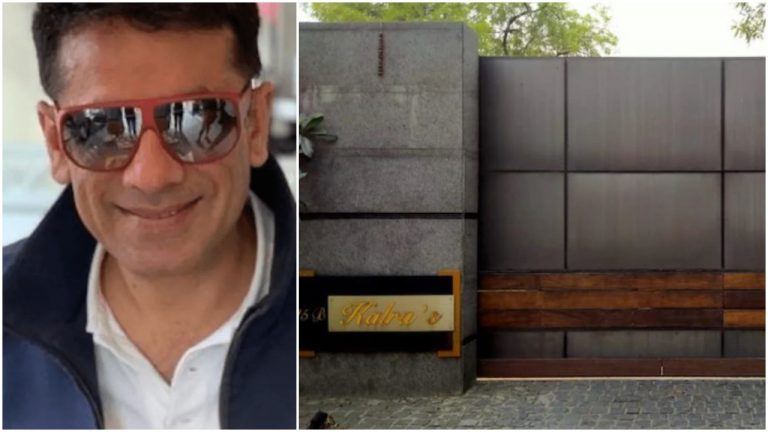
The Delhi police on Monday has issued a lookout notice for absconding Delhi restaurateur Navneet Kalra. Kalra, who is accused in the Khan market oxygen concentrators black-marketing racket, has been on the run ever since Delhi police raided his chain of upscale restaurants in posh localities of Delhi and farmhouse and recovered over 500 oxygen concentrators.

Navneet Kalra had switched off his mobile phone as soon as the raids on his Delhi restaurants were conducted. However, in order to get information about Navneet Kalra and track his location, the Delhi police have put his mobile number on surveillance.

According to the latest information, Navneet Kalra has filed an anticipatory bail plea at a Saket court in Delhi. As per the latest reports, the court has refused to grant any interim relief to Kalra.

Navneet Kalra fled his Chattarpur farmhouse before Delhi police reached there

Based on the information on his last location, Delhi police had raided Kalra’s Chattarpur farmhouse on Saturday night to nab him. But reports have it that the Delhi restaurateur left the farmhouse with family on Saturday night minutes before Delhi Police conducted the raid. The guard of the guesthouse was quoted by India Today as saying: “10 to 12 teams of Delhi Police had arrived, Sahab (Navneet Kalra) had left the farmhouse late night along with his family in his car, without the driver.”

As per reports, the police have searched for him in several areas of UP, and Uttarakhand, without success.

Kalra ‘imported’ 7500 oxygen concentrators worth Rs 13 crores

The initial probe has revealed that Navneet Kalra and his aide from Matrix Cellular Services Ltd, which is one of the companies involved in the racket, had procured as many as 7500 oxygen concentrators worth Rs 13 crores, between April 17 and May 3, 2021.

A report by TOI says that around 5,200 units of the concentrators were apparently delivered by Kalra and his team whereas 1,858 units were sold in the first three-four days of May.

“We are still going through the documents, but most of these concentrators, it seems clear, were bought at a rate of Rs 14,000-18,000. There are three consignments that were bought for around Rs 23,000 to Rs 24,000 each, said a senior police officer to TOI. According to DCP (South) Anil Thakur the invoices recovered showed that the accused sold the concentrators at an exorbitant cost of Rs 70,000.

Navneet Kalra’s purported audio clip goes viral

On May 8 (Saturday), a day after Delhi Police carried out raids on three restaurants and recovered 524 oxygen concentrators, they accessed an audio clip where businessman Navneet Kalra, the owner of all three restaurants, could be allegedly heard marketing and discussing the allotment of the oxygen concentrators.

Delhi Police raids Navneet Kalra’s restaurant in Khan Market

It is pertinent to note that Delhi Police on May 7 (Friday), recovered 105 oxygen concentrators during the raids at two restaurants – Khan Chacha and Town Hall, situated in Delhi’s Khan Market. On May 6, Delhi Police had also recovered 419 oxygen concentrators from a restaurant-cum-bar in south Delhi’s Lodhi Colony area.

Navneet Kalra is the owner of all three restaurants. Following the raids, Kalra switched off his mobile phone and believed to have fled the city. It is important to note that Navneet Kalra was felicitated by the Arvind Kejriwal-led Delhi government in 2020. He was among the 48 personalities honoured as ‘Delhi ke Nirmata’ by the AAP government after returning to power.

According to the police, Kalra took orders for oxygen concentrators via an online portal as well as through WhatsApp groups. The accused has been importing the oxygen concentrators since October last year. As demands for Oxygen concentrators increased in February this year, he imported more such machines and stored them at different restaurants.

Delhi police had also arrested four men, Gaurav Khanna, Satish Sethi, Vikrant and Hitesh for hoarding and black-marketing the equipment. Khanna is the CEO of Matrix Cellular Services Ltd which is one of the companies involved in importing the equipment.