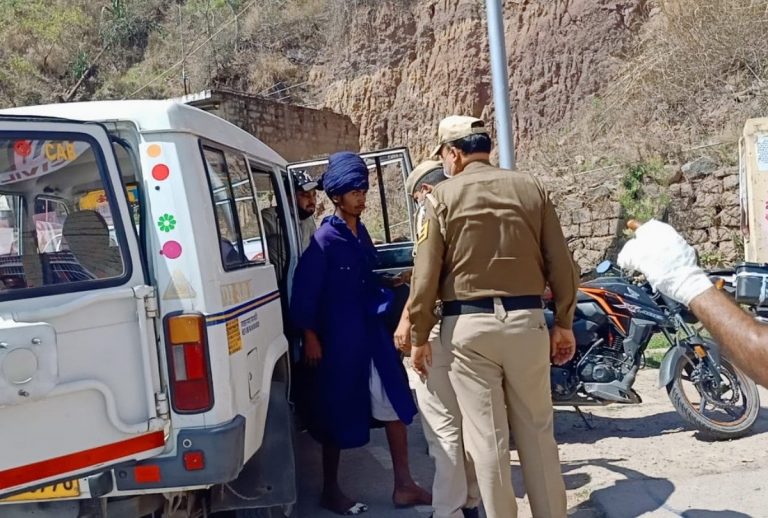
It’s been merely two weeks since it was reported how a clash between Punjab police and Nihang Sikhs, cost a policeman both his hands in Patiala, Punjab. Now, a similar shocking incident has come to the fore from Himachal Pradesh. According to Hindi daily Dainik Bhaskar, a Nihang Sikh identified as Tej Singh allegedly attacked two locals in Mandayali village in Bilaspur district of Himachal Pradesh over a small argument. While one victim’s four fingers were chopped off, the other received severe injuries on the head.
The incident occurred late on Wednesday evening. Infuriated for being refused a lift on the bike, the accused brutally attacked the bike owner Balveer (40) with his Kirpan (sword), chopping off four fingers of his left hand. The accused also attacked another local named Dhaniram who tried to intervene, leaving his head injured severely.
After the attack, Tej Singh allegedly ran into a nearby forest. The locals who were present at the spot ran behind the accused and caught him. After beating him up they handed him over to the police. Bilaspur police have registered a case against him under section 307 of the IPC and began investigating the case.
Meanwhile, the victims namely Balveer and Dhaniram were rushed to the Civil Hospital, in Naina Devi, Ghawandal, Himachal Pradesh. After giving them first aid, the doctors at Ghawandal Hospital referred the two to Anandpur Sahib, where Balveer’s severed fingers were fixed. Dhaniram’s also received stitches on his head. The two victims were sent back home.
Narrating what transpired that evening, Balveer said that he was on his way home when a Nihang Sikh stopped him. Without saying anything, the Nihang hopped onto Blaveer’s bike and demanded that he be dropped to Shri Anandpur Sahib. “I told him that I have to go only till Mandayali and that Anandpur Sahib is far away from my house, but he insisted that I take him to Anandpur Sahib”, recalled Balveer, adding that when Balveer refused to give in to his demand, the angered accused got off the bike and suddenly attacked him with the sword.
“It happened all so suddenly that I could not understand anything. The Nihang all of a sudden mounted an attack on me with his sword (kirpan). In an attempt to save my life, I lost four fingers of my left hand”, rued the victim.
After attacking Balveer, when the accused was trying to flee, Dhaniram, the other victim who was standing there, tried to grab the accused. The Nihang then hit Dhaniram on his head with the sword. Wounding both, Nihang ran towards the forest. The other locals gathered there, ran behind the accused, held him and handed him over to the police.
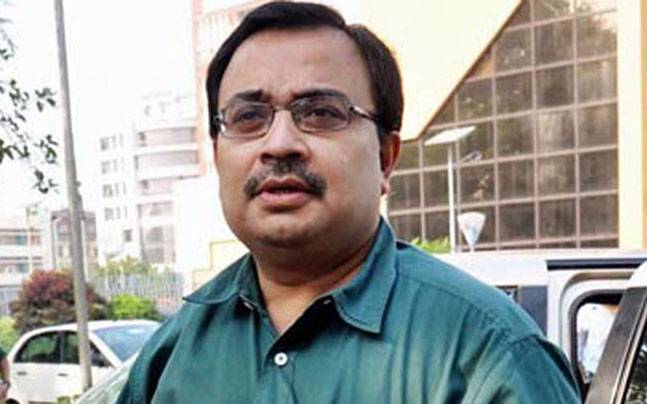
On Saturday (April 3), the Enforcement Directorate (ED) cracked down on two TMC leaders in connection to the Saradha chit fund money laundering case. As per reports, the central agency has attached properties amounting to ₹3 crores belonging to former Rajya Sabha MP and current TMC spokesperson Kunal Ghosh, Lok Sabha MP Satabdi Roy and one Debjani Mukherjee.
While Ghosh was the CEO, Roy was the brand ambassador of the Saradha Media Group. On the other hand, Mukherjee was the Director of the Saradha Group of Companies.
ED has attached properties worth Rs. 3Cr pertaining to Kunal Ghosh Ex-Rajya Sabha MP from TMC (CEO Media Group Saradha), Satabdi Roy Lok Sabha MP from TMC (Brand Ambassador Saradha) and also of Debjani Mukhejree who is director Saradha Group of companies in Saradha Chit Fund case
The ED informed that it had a provisional order to attach both movable and immovable properties of the said individuals. The order was issued to the central agency under the Prevention of Money Laundering Act (PMLA). So far, the Enforcement Directorate has attached ₹600 crores worth of assets in the case. The investigation has been ongoing for over half a decade, starting in April 2013.
Interestingly, Kunal Ghosh headed a TV channel, which was funded by the Saradha group. After the allegations surfaced against him, Ghosh was suspended in 2013 for his ‘anti-party activities.’ He was later inducted in the party and made the spokesperson. He is out on bail and has been interrogated by the Enforcement Directorate on several occasions.
Saradha chit-fund scam case
The Saradha scam broke out into the open in 2013 when a Ponzi scheme run by the Saradha Group, a consortium of over 200 private companies, collapsed after collecting hundreds and thousands of crores from over 15 lakh investors.
When ED questioned Ghosh as a witness in October 2013, it was revealed that Kumar was in contact with ED during the arrests of Sudipta Sen, Debjani Mukherjee, or witnesses Ghosh and others during September to November 2013. CBI said, “It was ensured by the officials that grave facts narrated by these accused persons or witnesses must not be taken on record as part of the investigation with a purpose to shield the influential persons.”
CBI said, “It is submitted that the same establishes that the Chief Minister used to talk to Sudipta Sen using the phone of Kunal Kumar Ghosh,” said the application. During the investigation, when CBI checked the call details of two numbers of Sen for one year, the agency found that he and Ghosh talked 298 times on one number and nine times on the second number, as per a report by Business Standard.
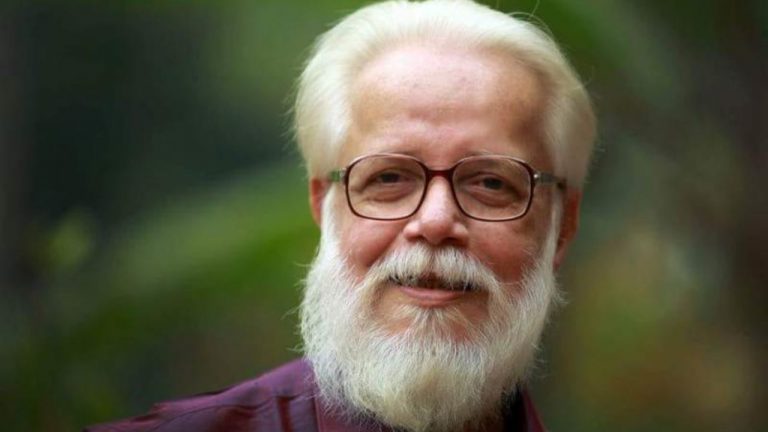
The Supreme Court-appointed panel to probe the role of erring cops for causing “tremendous harassment” and “immeasurable anguish” to ISRO scientist Dr Nambi Narayanan in the 1994 espionage case has reportedly submitted its report to the top court.
The apex court had given a clean chit to Nambi Narayanan in 2018, stating that the former ISRO was arrested unnecessarily, harassed and subjected to mental cruelty in a 1994 espionage case. The court had then ordered a probe into the role of Kerala police officers in the case.
For over two and half years, the panel examined the circumstances leading to the arrest of the distinguished scientist.
On 14 September 2018, the top court appointed a three-member panel headed by its former judge D K Jain while ordering the Kerala government to provide Rs 50 lakhs as compensation for compelling Narayanan to face “immense humiliation”. In addition, the National Human Rights Commission had recommended paying a compensation of Rs 10 lakh. However, the Kerala government had decided to pay a total of Rs 1.30 crore to the scientist to finally settle the case, and the amount was paid in August last year.
Congress governments in Kerala hounded and persecuted Nambi Narayanan in fake espionage case in 1994
The case pertains to espionage charges levelled by Kerala police officials against Nambi Narayanan and his associates in 1994. The police had then alleged that Nambi and his colleagues had transferred confidential documents on India’s space programme to foreign countries, particularly to Pakistan.
It is pertinent to note that scientist Nambi Narayan was a victim of persecution by the Congress party. The political rivalry between the two factions of the Kerala Congress party led to the arrest of Narayanan, along with two other scientists D Sasikumaran and K Chandrasekhar in November 1994. The Kerala police had levelled charges of espionage under sections 3,4 and 5 of the Official Secrets Act against the scientists.
However, the CBI, in its probe, found that the allegations against him were false. In 1998, the Supreme Court upheld the findings by the CBI and had asked the Kerala government to pay Rs 1 lakh in compensation to Narayanan and others. However, Dr Narayanan had approached the National Human Rights Commission (NHRC)seeking justice for the harassment and agony meted out to him. In 2001, the NHRC had awarded a compensation of Rs 10 lakhs to him.
While absolving Narayanan of any wrongdoing, the CBI had said that Siby Mathews had left “the entire investigation to IB surrendering his duties” and ordered the indiscriminate arrest of the scientist and others without adequate evidence”.
SC gives a clean chit to Nambi Narayanan, orders Rs 50 lakh compensation for his wrongful arrest
The Supreme Court gave a clean chit to the former ISRO scientist Nambi Narayanan and awarded a compensation of Rs 50 lakhs in September 2018, for his wrongful arrest and harassment by the Kerala Police in the 1994 ISRO spy case. The apex court had also ordered a probe into the role of the police officers involved in Narayanan’s arrest and alleged harassment in custody.
The space scientist had moved the apex court after the Kerala High Court ordered that “no action needed to be taken” against former DGP Siby Mathews, who was then heading the SIT probe team, two retired superintendents of police, K K Joshua and S Vijayan, and the then Deputy Director, Intelligence Bureau, R B Shreekumar, who were later held responsible by the CBI for the scientist’s illegal arrest.
Chief Justice of India Dipak Mishra had then observed that “the criminal law was set in motion without any basis. It was initiated, if one is allowed to say, on some kind of fancy or notion”.
The bench stated that the “entire prosecution” initiated by the state police was “malicious and it has caused tremendous harassment and immeasurable anguish” to Narayanan. The court said that the fundamental right of life and personal liberty of Narayanan was “gravely affected”. It called the police action against the ex-scientist of the Indian Space Research Organisation (ISRO) a “psycho-pathological treatment”.
The Supreme Court said that his “liberty and dignity”, basic to his human rights, were jeopardised as he was taken into custody and, eventually, despite all the glory of the past, was compelled to face “cynical abhorrence”.
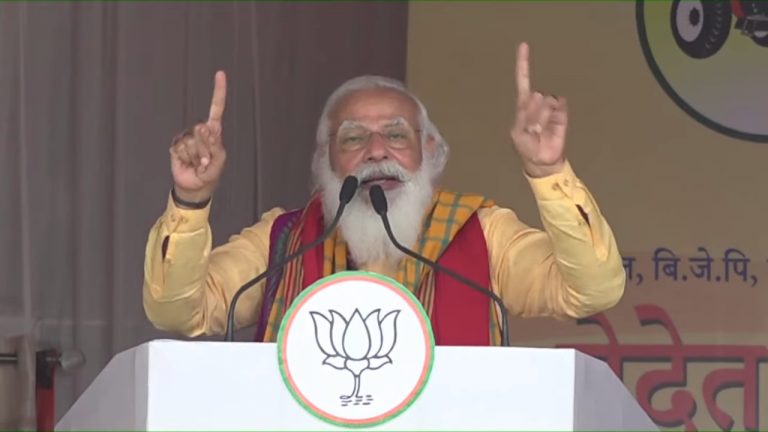
On Saturday (April 3), Prime Minister Narendra Modi slammed the vicious lobby that has misguided the people of India into believing that working for one group/community amounted to secularism.
While addressing an election rally in Tamulpur in the Baksa district of Assam, PM Modi said, “We formulate policies for everyone. This includes all sections of society. We work hard to ensure that everyone can reap the benefits of government legislation without being subjected to discrimination. Unfortunately, the current narrative surrounding this is problematic.”
PM Modi pointed out the flaws in the notion surrounding secularism and communalism. He emphasised, “If we create divisions in the society and make policies exclusively for one group/community, then, it is unfortunately called secularism in India. But, if we make policies for everyone and ensure that every deserving individual is benefitted, then, they call it communalism.”
सेक्यूलरिज्म-कम्यूनिज्म के खेल ने देश का बहुत नुकसान किया है।
हम परिश्रम करने वाले लोग हैं, समाज की सेवा के लिए दिन-रात एक करने वाले लोग हैं।
असम के लोग आज देख रहे हैं कि सबका साथ, सबका विकास, सबका विश्वास हमारी नीति में भी है और नीयत में भी है।
PM Modi opined that the misleading narrative has inflicted great harm on India. “Our mantra is Sabka saath, sabka vikas, sabka vishwas. The rhetorics around secularism and communalism has caused serious damage to the country. We are hard-working people. We put in days and nights to serve society. We work with utmost honesty for the cause of the nation’s development. The people of Assam are now witnessing that our mantra of Sabka saath, sabka vikas, sabka vishwas is not just in our policy but also in our party’s intention,” he concluded.
The campaigning for the 3rd and the last phase of elections in Assam will end on Sunday. The electorates will vote for a total of 40 seats on April 6. The results of the State Legislative polls will be declared on May 2.
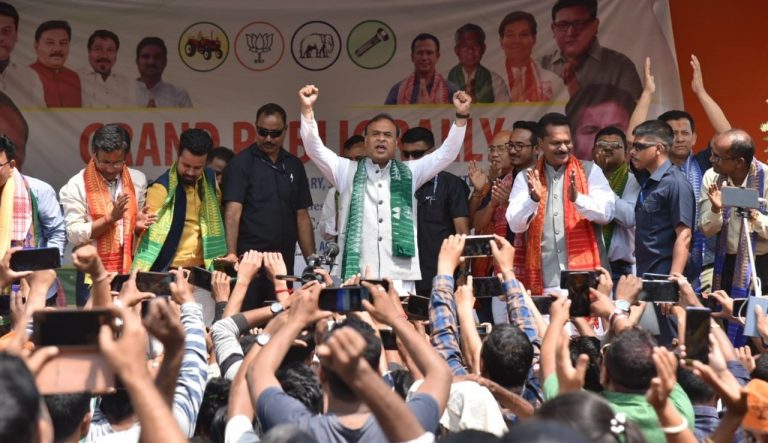
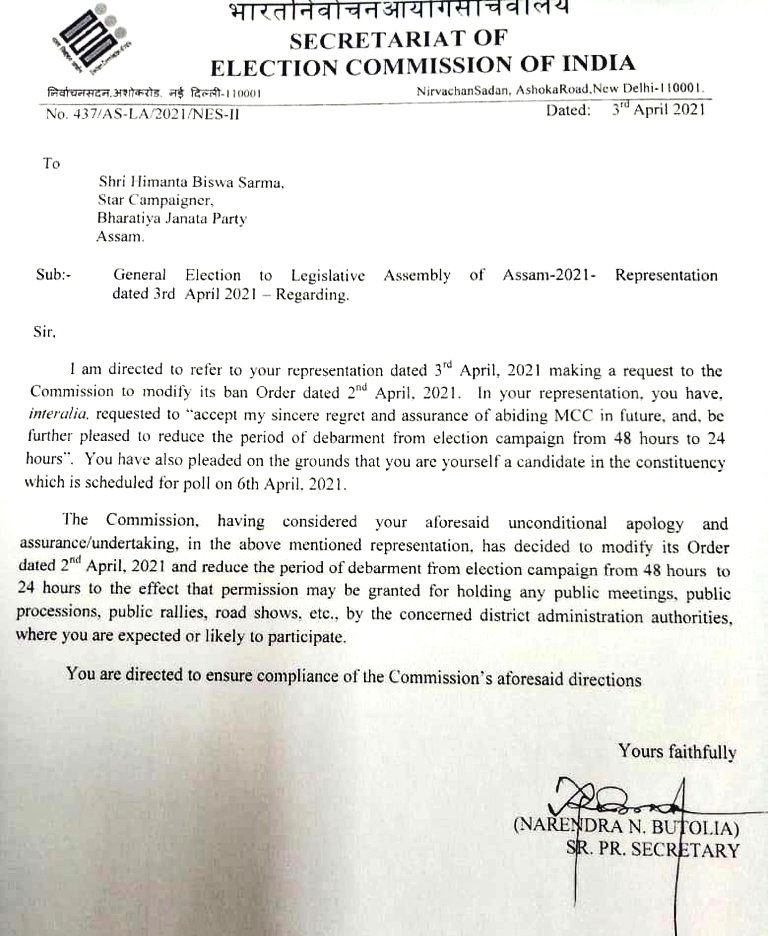
A day after the Election Commission had banned BJP leader Himanta Biswa Sarma from campaigning for 48 hours, today the period has been reduced to 24 hours. The decision to relax the ban came after Dr Sarma tendered an unconditional apology for his comments on BPF chief Hagrama Mohilary that had led to the ban.
A letter issued to Himanta Biswa Sarma by the Election Commission informed him about the decision. The letter said, “In your representation, you have, interalia, requested to “accept my sincere regret and assurance of abiding MCC in future, and. be further pleased to reduce the period of debarment from election campaign from 48 hours to 24 hours”.
In response to the request, the EC said, “The Commission, having considered your aforesaid unconditional apology and assurance/undertaking, in the above mentioned representation, has decided to modify its Order dated 2n April, 2021 and reduce the period of debarment from election campaign from 48 hours to 24 hours to the effect that permission may be granted for holding any public meetings, public processions, public rallies, road shows, etc., by the concerned district administration authorities, where you are expected or likely to participate.”
EC added that Himanta Biswa Sarma had also pleaded for reduction on the ban period on the ground that he himself is a candidate in the constituency which is scheduled for poll on 6th April, 2021. The EC added, “You are directed to ensure compliance of the Commission’s aforesaid directions.”
Earlier in the day, some media reports had claimed that Sarma has approached the Gauhati High Court challenging the EC order. But later he said that it is not correct, and he has not approached any court against the ban on him from campaigning.
I have not challenged the order of the Election Commission of India before any Court of Law.
Immediately after obtaining the relaxation from the EC, Himanta Biswa Sarma announced that he will be resuming campaigning from today evening itself, after the expiry of 24 hours period.
He tweeted that he will be attending a road show today evening Sonaram field to Lal Ganesh in Guwahati, in support of West Guwahati candidate Ramendra Narayan Kalita.
Join us in our Road Show today evening from Sonaram field to Lal Ganesh which will cover 6 km distance in support of Sri Ramendra Narayan Kalita, Our candidate from west Guwahati Constituency
It may be noted that Himanta Biswa Sarma is yet to campaign for himself in the nearber Jalukbari constituency. It is expected that he will attend a rally or road show there tomorrow, the last day of the campaigning for the third and last phase of the Assam assembly elections.
Yesterday the election commission had banned Dr Himanta Biswa Sarma from campaigning in the elections for 48 hours, on a petition by the Congress party. Congress leaders had approached the poll panel seeking an FIR and a ban on Sarma for his comments allegedly threatening to arrest Hagrama Mohilary, the chief of Bodoland Peoples Front (BPF).
During an interaction with media on 30th March, Himanta Biswa Sarma had said that if Hagrama Mohilary is found to be collaborating with extremist M Batha for return of extremism in the Bodoland area, he will be sent to jail. Sarma had also said that a recent case of recovery of arms from a vehicle in the Bodoland region will be handed over to NIA after the elections. Saying that he is “not afraid” of either Batha or Hagrama, Sarma had said that violence will not be encouraged in the Bodoland region again.
After receiving the petition, on 1st April the EC had asked Sarma to submit explanation within 2nd April. Himanta Biswa Sarma submitted his response yesterday accordingly, but EC was not satisfied with it, and imposed the ban.
In late 2019, several social media users were saying that certain student groups at Aligarh Muslim University had raised highly objectionable slogans pledging to dig the graves of Hindus. As with any number of things these days, the “fact-checkers” came in to whitewash the situation. No, they argued, the students at AMU had said nothing of that sort. The fact-checkers sifted through the actual video and discovered that the slogan raised was about digging the grave of “Hindutva.” Apparently, that makes it all better.
This supposed distinction between “Hinduism” and “Hindutva” is now a flagship propaganda item for the Indian and global left. You can use any dehumanizing language you want, as long as you are careful to specify that it is against “Hindutva.” You are free to call them Nazi, Taliban, ISIS, anything and nobody will say that you are bigoted or racist. In fact, saying these things will probably enhance your liberal and progressive image.
Hindutva is the BJP ideology. And PM Modi, as the leader of the BJP, represents this ideology. And as long as you dehumanize PM Modi and the 23 crore people who voted for him, you are a humanitarian.
But this distinction between Hinduism and Hindutva, how real is it? One way to find out is whether this distinction is rigidly enforced by liberals outside India, where Hindus have no power at all. For instance, when PM Modi visited Bangladesh last week, violent riots broke out. The minority Hindu community was attacked and a number of temples were targeted.
In other words, the majority community in Bangladesh made no distinction between Hindutva and Hinduism. Interesting. A number of editors in India as well as some international media outlets have tried to spin these incidents as “anti-Modi protests.”
Article by Al Jazeera
In fact, some editors in India used this occasion to further reprimand PM Modi. Mend your neighbourhood policy and your “Hindutva” ways. Or else, they say, Hindus won’t be safe anywhere in the world.
But why? I thought Hindus and Hinduism, in general, have nothing to do with “Hindutva.” Why would anyone attack a temple in Bangladesh as part of “anti-Modi protests”? We were told that you don’t hate ordinary Hindus. You said you have nothing against temples. Then, how come?
It isn’t just the rioters who failed to make the distinction. First of all, the world was mostly silent on anti-Hindu riots in Bangladesh. And when they spoke, they conspicuously tried to blur the line between protesting against Modi and attacking innocent Hindus and their places of worship. You can see that clearly in this headline from Al Jazeera. So who was trying to make “Hinduism” seem like the same thing as “Hindutva”?
I was told that “Hindutva” is the same as Nazi ideology. What kind of responsible news organization would forget to distinguish between Nazis and common people?
It is obvious what is happening here. The “Hindutva vs Hinduism” thing was invented in order to fool Hindus inside India. Outside India, where Hindus have no power, you can do anything you want to Hindus. Inside India, you have to be savvier. So you direct your punches at this thing called “Hindutva” that you insist is totally different. It is a weak cover story, but with most Hindus in India just wishing to get on with their lives, it somehow works.
Anyone who wears a Hanuman shirt is a terrorist, the liberals tell the world. Also, sarees, Diya, rasam, kids playing Holi, anything that can be associated with Hindus is a scourge on humanity. Slightly alarmed, the Indian Hindu sometimes stops to ask: you guys are not defaming my culture, are you?
No way, the liberals reply. We are just blaming “Hindutva.” Hearing this, the Indian Hindu feels reassured, nods and leaves the scene. Once the Indian Hindu is a safe distance away, the liberals burst out laughing.
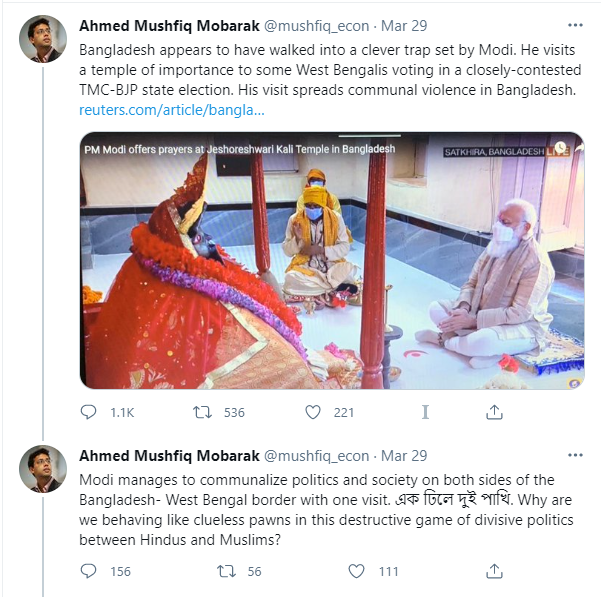
How bad have things become for Hindus now? Regarding the anti-Hindu riots in Bangladesh, Ahmed Mobarak, a professor of economics at Yale, tweeted this.
Tweet by Ahmed Mushfiq Mobarak
Can you believe this? The picture shows PM Modi offering prayers at an old Kali Temple in Jessore in Bangladesh. But somehow, it is Modi’s visit which is blamed for spreading violence. The innocent rioters apparently had no choice. They were simple souls who walked into a trap set by Modi.
A rioter attacks a Hindu temple in Bangladesh. Who is to blame? Modi! How dare he visit a temple? Now every Hindu in Bangladesh must pay the price. Look who forgot that Hinduism and Hindutva are two different things. Remember that Hindutva is so different and so evil that AMU students are allowed to raise slogans about burying it alive. And yet, Yale professors and global news organizations like Al Jazeera routinely manage to mix up Hinduism and Hindutva.
Why? Because that Yale professor and his friends cater to a global audience. They have no incentive to pretend. Hindus at Yale don’t have the power to take his job away. So he can laugh in their faces and say that Hindus have only themselves to blame for existing in Bangladesh.
Who else knows that Hindutva is just a code word used to bash Hindus? Other than the average Indian Hindu, pretty much everyone else. Let me show you this recent interview given to Christianity Today by Dr Johnrose Austin Jayalal, the President of the Indian Medical Association about all the silver linings that his religion has found due to Covid. As you can probably tell, this individual is not very bright. He ended up saying a number of things, for which he had to make up excuses later. But here is an interesting slip from him that few people noticed:
“Most of the people are soft-minded. There are fewer hardcore people, apart from excluding the people who are in power. Often people are more understanding; people are more tolerant; people are more able to go along with them. One of the things we must always remember is that Hinduism or Hindutva is different from other religions because of polytheism.”
Wait! What do you mean by “Hinduism or Hindutva?” Did he just indicate that the two are roughly the same? Along with attributes like “soft-minded,” “more understanding” and “tolerant”? I thought Hindutva is the same as Nazism. Is he saying that Nazis are soft minded?
Yes, I think even he can see through this trick of pretending that Hindutva and Hinduism are different. And if an absolute clown-like Dr Johnrose Austin Jayalal can figure this out, can’t you?
One final lesson here. Due to elections in West Bengal, there is a lot of talk about Bengali cultural identity, about who worships Ram and who worships Durga or Kali. Those who fall for such politics might want to see what happened across the border in Bangladesh. Same Bengali language. Same Bengali culture. Then, why did cultural identity not save the Hindus of Bangladesh? Are the Hindus of Bangladesh also “outsiders” from Rajasthan and Gujarat?
The reality is that all this talk of cultural sub-nationalism is relevant only as long as we Hindus have ground beneath our feet. The world is not with us. We Indian Hindus only have each other. So why not fight each other over language and caste until what is left of India disintegrates completely? Who wants a bright future like that of the Hindus of Bangladesh?
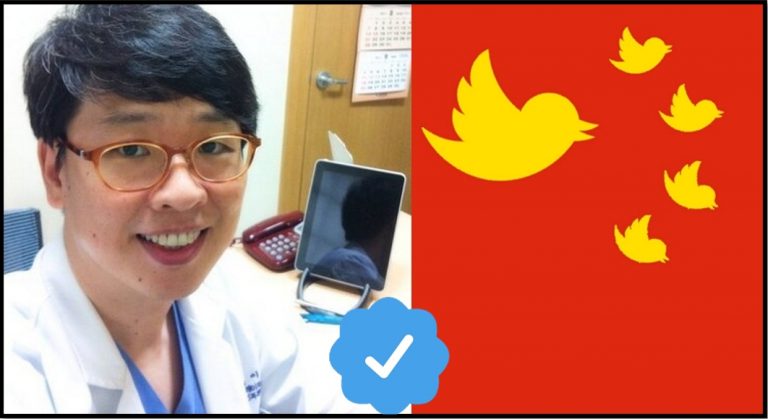
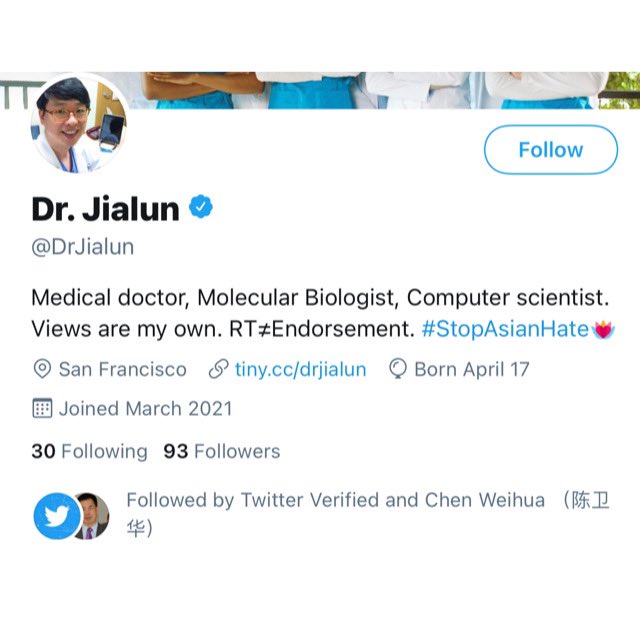
Social media companies like Twitter and Facebook are well known for their political bias. In such an incident a newly created account that was spreading anti-Trump and pro-China propaganda on social media was promptly verified by Twitter, raising questions about its verification policy.
The Twitter account with the user ID @DrJialun and was created sometime in the last month, and the first tweet on the timeline of the account was posted on 11th March. At present, it has over 350 followers. But strangely, the account was given the blue tick, the symbol of verification, by Twitter when it had less than 100 followers.
How does a CCP propagandist account with 63 followers get a blue check? https://t.co/jeHoGwgnyD
The account has posted several tweets praising the Communist Party government in China, spreading false information on persecution of Uyghur Muslims in the country.
China has invested in Xinjiang, modernizing the cities, building 21 airports, $1.2 billion in the last five years on upgrading and building new schools for children, linking the region with bullet trains etc.https://t.co/Vecz5vP6LC
Dr Jialun shared a propaganda article denying the Chinese govt atrocities on minorities in Xinjiang, which claimed that all the media reports about the same are false, and actually the Chinese govt is providing preferential treatment for Uyghurs. The article claimed that Uyghur Muslims are prospering under the Chinese government, and all the reports of their persecution by the govt are fake and western propaganda.
Dr Jialun also claimed that the attacker at US Capitol yesterday, where one cop was killed and another was injured, was a Trump supporter. But when it emerged that the attacker was actually a black radical Muslim, he tweeted saying that it was his misjudgement.
Trump insurrectionists are attacking our Capitol again. Multiple reports that 2 Capitol police have been shot. https://t.co/gkGad08mou
But still he blamed Trump for the incident, saying that if the Capitol hill attack on 6th January would not have happened, this attack yesterday also would have never happened. Therefore “Trump is responsible. Republicans are responsible”, he declared.
If Trump supporters didn't storm the Capitol on January 6th, today's attack would have never happened. Trump is responsible. Republicans are responsible.
It is a mystery how Twitter verified this account which has tweeted barely a dozen tweets, has less than 500 followers, was created less than a month ago, and who is not a known public figure. Twitter verification means an account really belongs to a person or organisation that it claims to be. It is an assurance that it is the genuine Twitter account, and a blue sign with a tick in it appears with the user names of verified accounts.
At present, the provision for verifying accounts of ordinary users is not available, as the same has kept on hold by Twitter. When this facility was available, users could apply for verifying their accounts. However, Twitter still verifies accounts of publicly known persons or entities on their own.
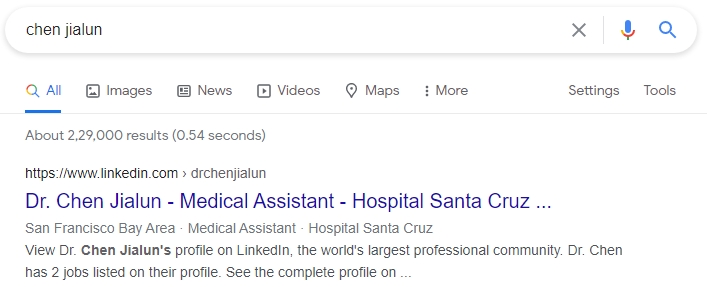
A search for Dr Jialum does not return much information, other than the Twitter and LinkedIn accounts, and other persons with the same name nu different photographs. Therefore, the person behind the Twitter account named Dr Jialum is not a celebrity or otherwise known person, therefore it raises the question of how and Twitter verified the account. More interestingly, when people started to point out the unusual verification of the Twitter account, some of the details were removed from the account. Both the display image and the bio of the account were removed. Originally, the bio had said “Medical doctor, Molecular Biologist, Computer Scientist. Views are my own. RT ≠ Endorsement. #StopAsianHate”. However, now there is no bio with the account.
There was also a LinkedIn account with the name Dr Juliam, which had the same display image which was there in the Twitter account earlier. The link to the profile was also mentioned in the Twitter bio. But now the profile has been deleted from LinkedIn, and the link removed from Twitter. The profiled had mentioned the full name as Dr Chen Jialum, and had said that he is a Medical Hospital at Hospital Santa Cruz in San Francisco Bay Area.
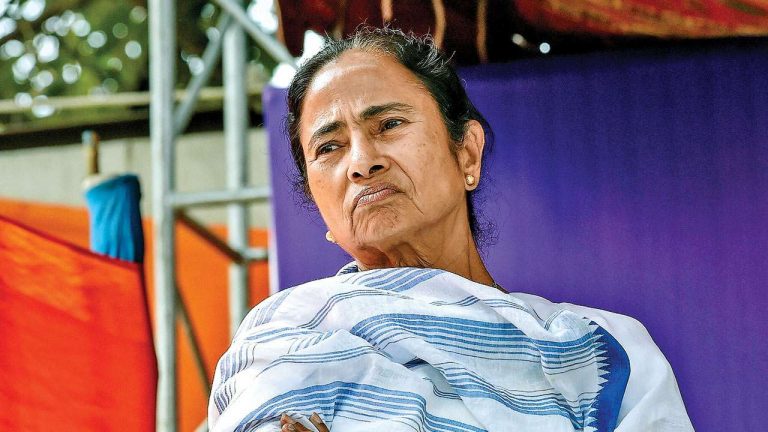
The third phase of West Bengal elections 2021 is all set to be held on April 6th (Tuesday). As constituencies get ready to cast their votes, Mamata Banerjee, who has been playing on a weak wicket this election cycle, has given a call to action to her Muslim ‘brothers and sisters’.
ANI reported that Mamata Banerjee during an election rally in North 24 Parganas, has urged her Muslim brothers and sisters to not allow division of votes.
I request to all the minority brothers and sisters not to allow their vote division: West Bengal CM & TMC chief Mamata Banerjee in North 24 Parganas pic.twitter.com/58O7KqAbu7
Mamata Banerjee, who has spent the entire election cycle blaming the BJP of playing ‘divisive politics’ merely for chanting ‘Jai Shree Ram’, has now displayed the pinnacle of secularism by giving a call to Muslims to vote as a united faction.
It would seem like Mamata Banerjee, who might be facing the prospect of defeat, is now scared of her Muslim vote bank getting divided. In the Bengal Assembly Elections, though the battle to rule the state is between TMC and BJP, there are two other factions that are vying for Muslim votes in the state.
The first party is that of Asaduddin Owaisi. AIMIM, while unable to garner sweeping support from the Muslim population in West Bengal, stands to make gains in the state at the cost of TMC Muslim votes. The other faction that is posing a threat to Muslim consolidation behind Mamata Banerjee is the CPIM, Congress and Abbas Siddiqui alliance. Abbas Siddiqui is said to have a significant sway over at least 30-35 seats in Bengal.
With these two factions at play, Mamata Banerjee may have a hard time consolidating her Muslim vote bank. With more and more polls giving BJP the edge in the state, a jittery Mamata has now resorted to openly calling for Muslim vote consolidation, essentially asking them to vote for TMC and not get swayed by Abbas Siddiqui or Asaduddin Owaisi.
Only a few days ago, West Bengal Chief Minister Mamata Banerjee seemed to have conceded that she can’t defeat BJP on her own, and therefore sought help from all the opposition parties in combating BJP. Mamata Banerjee sent a letter to all the major opposition parties asking them to come together to defeat BJP. The letter had come just after the first phase of polling in the state, indicating Mamata’s worry and lack of confidence in retaining power in West Bengal.
The letter was sent to 15 non-BJP leaders including Congress chief Sonia Gandhi, NCP chief Sharad Pawar, DMK chief MK Stalin, Jharkhand CM Hemant Soren, Delhi CM Arvind Kejriwal, Odisha CM Naveen Patnaik, Andhra CM Jagan Mohan Reddy, RJD chief Tejashwi Yadav, SP chief Akhilesh Yadav as well as NC chief Farooq Abdullah and PDP chief Mehbooba Mufti. Mamata Banerjee in the letter states, “I am writing this letter to you, and to several leaders of non-BJP parties, to convey my serious concerns over a series of assaults by the BJP and its government at the Centre on democracy and Constitutional Federalism in India.”
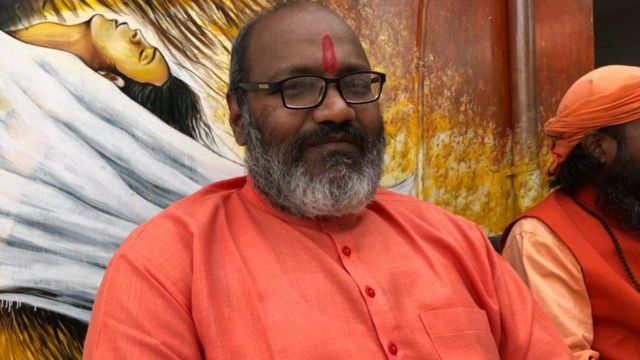
AAP MLA Amantullah Khan called for the beheading of Yati Narsinghanand Saraswati on Twitter due to alleged critical remarks the latter made against prophet Muhammad. At the time of writing this, the tweet had still not been deleted despite the platform’s pompous boasts of stern action against incitement to violence.
At the same time, there’s a conspicuous silence among journalists in the mainstream media regarding the violent threat that was issued. Whether we agree with Yati’s comments or not is irrelevant, incitement to violence is not acceptable under any circumstances. When it is an elected representative engaging in the same, it is even more troubling.
The episode, once again, brings to the fore the troubling aspects of Indian liberalism. Liberalism in India, unlike in the West, has been the strongest advocate for censorship, not free expression. Liberal icon Jawaharlal Nehru was the one who was responsible for enacting a law that all but ended free speech rights in India.
Thus, India is in a unique situation where free speech icons traditionally have been non-liberals. Yati Narsinghanand Saraswati may not endorse absolute free speech rights himself but the concerted incitement of violence against him for exercising his free speech rights has, nonetheless, turned him into an icon for the same.
Something similar had happened with Kamlesh Tiwari as well. Tragically, he had to pay with his life for his comments critical of Prophet Muhammad. On that occasion as well, liberals were hesitant to condemn the murder unequivocally and instead chose to downplay the threat of violent Islamic extremism.
Even when Kamlesh Tiwari was alive, he was jailed for the same comments. And he was imprisoned by a party that has complete support from liberals.
All of this just reveals that advocates for free speech rights are a microscopic minority in the political spectrum of India. There is an unspoken agreement across the political spectrum that absolute free speech rights is not conducive to the cultural realities of the country.
Liberals in India swear to have a commitment towards free speech rights but their conduct leaves little room for doubt that by free speech rights, they mean only the freedom to denigrate and insult Hindu Gods and Goddesses while censoring criticism of minority religions.
Hindutvavadis, on the other hand, have only now begun to have a say in the corridors of power but they recognise that absolute free speech has no major support in the country. But even so, they never advocate violence against people for speech alone.
In India, we have constitutional safeguards and limits to freedom of expression and it is these tools that Hindutvavadis use to combat speech they do not agree with. Liberals demonise Hindus for utilising the constitutional tools made available to them by liberals themselves while they justify the use of mob violence and terrorism by Islamic extremists to oppose speech they do not like. It is quite the spectacle indeed.
Thus, it has always been the case that icons of free speech in India have traditionally come from the Hindu spectrum of politics. Even prior to the advent of Narendra Modi and Amit Shah in national politics, it was the likes of Arun Shourie and Sita Ram Goel who led the fight for free speech rights.
Sita Ram Goel had trouble finding publishers for his book where he documented extensively the threats of Islamic extremist and the atrocities committed against Hindu Samaj. ‘The Calcutta Quran Petition’ remains one of the greatest contribution towards free speech in India. Until his last day, he remained strong in his commitment towards his ideals and yet, never did he receive an ounce of support from liberals in the matter.
Arun Shourie, too, was sidelined and demonised for his commitment towards the same. He wrote blistering critiques of liberal heroes and remained at the forefront of Hindutva discourse. But it was only after he jumped ship politically did he receive recognition for his contribution to public discourse.
It is truly a testament of the nature of Indian liberalism that there has truly never been an occasion where they have unequivocally supported free speech for anyone. When the Charlie Hebdo massacre happened, when the world united to condemn the violence against cartoonists, Indian liberals were at the forefront of victim blaming because the cartoons mocked the prophet of Islam.
Again, more recently, when Samuel Paty was beheaded in France, Indian liberals only paid lip service to prevalent sentiments but were extremely quick to return to the familiar trope of Muslim victimhood.
It is undeniable that Hindutvavadis may use caustic words to oppose speech they do not like, and use constitutional tools for the same purpose, but there has never been an instance where they have advocated the use of violence to achieve their end.
It is for this reason that those who have become the symbol for free speech rights in India have never been from the liberal end of the political spectrum. There is shrewd political reasoning behind the same as well.
Liberals truly believe that ‘Hindu majoritarianism’ is a bigger threat to liberalism in India than Islamic extremism. Rahul Gandhi captured it perfectly when he said that ‘Hindu extremists’ are a bigger threat than Jihadists. Therefore, in order to oppose Hindu centric politics, liberals made a deal with the devil.
Thus, we have a situation where liberals remain silent on Islamist atrocities on free speech while being careful not to offend Islamic sensibilities. At the same time, they use every opportunity they can to insult Hindu sentiments.
When the plank was abandoned by liberals wholesale, it was only natural that it would fall upon the Hindutva faction to carry it afloat. And thus, after all these years, we have Kamlesh Tiwari and Yati Narsinghanand who have becomes symbols of free speech rights in the country.
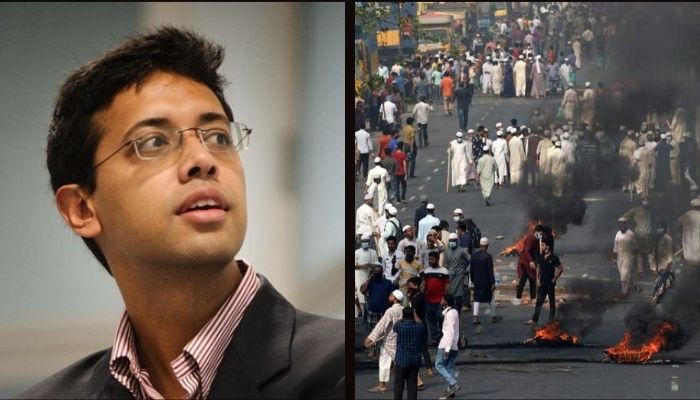
An Economics Professor at Yale University named Ahmed Mushfiq Mobarak has sparked controversy with his social media post, wherein he blamed Prime Minister Narendra Modi’s visit to Bangladesh to justify the violence committed by Islamist outfit Hefazat-e-Islam against Hindus.
On Thursday (March 29), Mobarak tweeted, “Bangladesh appears to have walked into a clever trap set by Modi. He visits a temple of importance to some West Bengalis voting in a closely-contested TMC-BJP State election. His visit spreads communal violence in Bangladesh.” The Economics Professor tried to put the onus of the riots perpetuated by Islamists on the Indian Prime Minister.
Furthermore, he said, “Modi manages to communalise politics and society on both sides of the Bangladesh -West Bengal border on one visit. Ek Dhila dui pakhi (Killing two birds with one stone). Why are we behaving like clueless pawns in the destructive game of divisive politics between Hindus and Muslims?” The Yale Professor suggested that a supposedly polarising figure like PM Modi was responsible for communal violence against Hindus in Bangladesh.
Screengrab of the tweets by Yale Professor
After reports emerged on social media about how Hefazat-e-Islam targetted Hindu temples, the Professor turned ‘activist’ went silent on the micro-blogging platform. Following outrage by the Hindu community over the inhumane atrocities committed against them under the pretext of PM Modi’s visit, Ahmed Mushfiq Mobarak desperately tried to prove his ‘secular’ credentials.
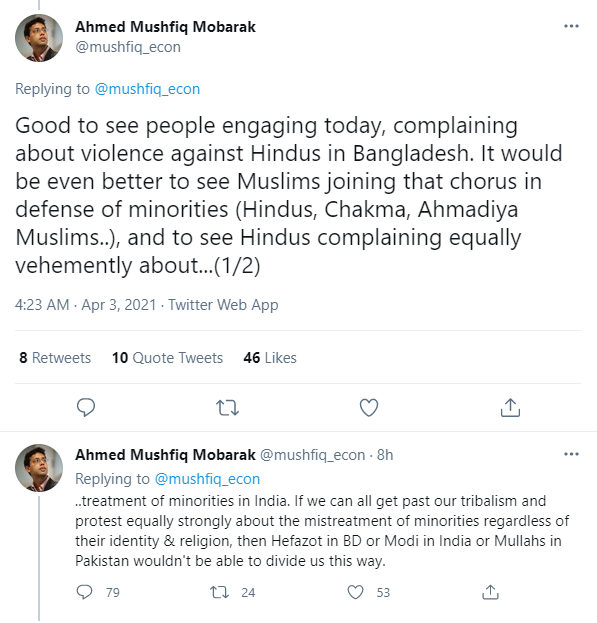
Without giving weightage to the matter at hand, the Yale Professor resorted to whataboutery and tried to draw false equivalence between Bangladesh, India and Pakistan. He wrote, “Good to see people engaging today, complaining about violence against Hindus in Bangladesh. It would be even better to see Muslims joining that chorus in defense of minorities (Hindus, Chakma, Ahmadiya Muslims..), and to see Hindus complaining equally vehemently about treatment of minorities in India.”
He further claimed, “If we can all get past our tribalism and protest equally strongly about the mistreatment of minorities regardless of their identity & religion, then Hefazat in BD or Modi in India or Mullahs in Pakistan wouldn’t be able to divide us this way.”
Screengrab of the tweets by Yale Professor
Netizens slam Yale Professor for his Islamist tendencies
Netizens, however, were quick to see through his desperate act of monkey balancing. They called him out on Twitter for displaying Islamist tendencies, maintaining a stoic silence on the ill-treatment of Hindus in Bangladesh and attempts to draw false equivalences.
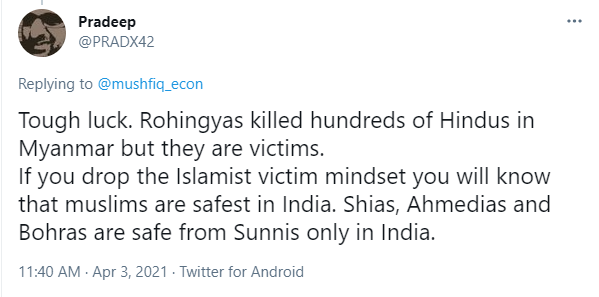
Twitter user Pradeep wrote, “Tough luck. Rohingyas killed hundreds of Hindus in Myanmar but they are victims. If you drop the Islamist victim mindset, you will know that Muslims are safest in India. Shias, Ahmedias and Bohras are safe from Sunnis only in India.”
Screengrab of the tweets
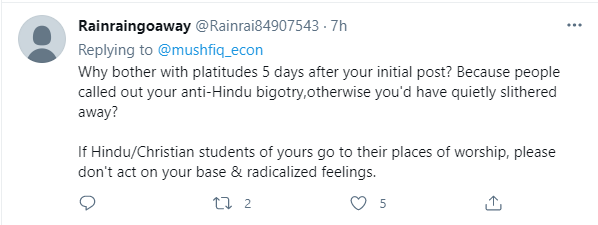
Another user pointed out the Yale Professor’s silence over 5 days. “Why bother with platitudes 5 days after your initial post? Because people called out your anti-Hindu bigotry, otherwise you’d have quietly slithered away? If Hindu/Christian students of yours go to their places of worship, please don’t act on your base and radicalised feelings,” wrote another user.
Screengrab of the tweets
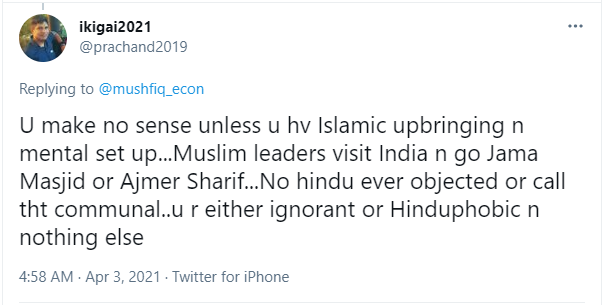
“You make no sense unless you have an Islamic upbringing and mental set up. Muslim leaders visit India and go to Jama Masjid or Ajmer Sharif. No Hindu ever objected or call that communal. You are either ignorant or Hinduphobic and nothing else,” a user pointed out the hypocrisy of the Economics Professor.
Screengrab of the tweets
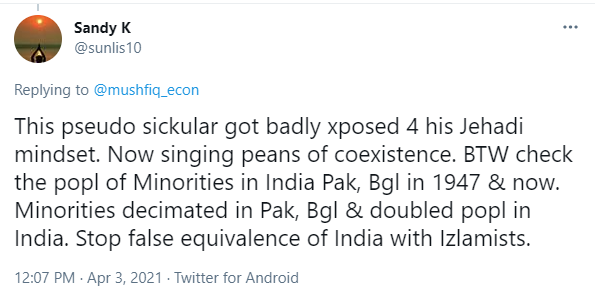
Sandy tweeted, “This pseudo sickular got badly exposed for his jihadi mindset. Now singing peans of coexistence. Btw, check the people of minorities in India, Pakistan, Bangladesh in 1947 and now. Minorites decimated in Pakistan, Bangladesh and doubled people in India. Stop false equivalence with Islamists.”
Screengrab of the tweets
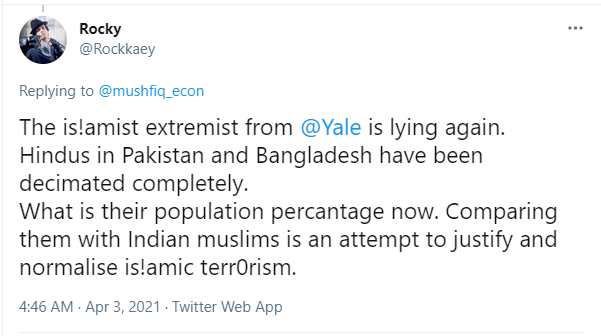
Another user wrote, “The Islamist extremist from Yale is lying again. Hindus in Pakistan and Bangladesh have been decimated completely. What is their population percentage now. Comparing them with Indian Muslims is an attempt to justify and normalise Islamic terrorism.”
Screengrab of the tweets
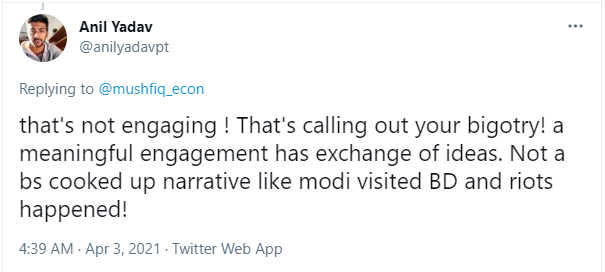
Twitter user Anil Yadav pointed out, “That’s not engaging! That’s calling out your bigotry! A meaningful engagement has an exchange of ideas. Not a BS cooked up narrative like Modi visited Bangladesh and riots happened!”
Screengrab of the tweets
Islamists attack Hindu temples, crematorium
During the official 2-day visit on PM Modi to Bangladesh, Islamists attacked Hindu Temples to protest against him. Violent protests have been underway in Bangladesh over the visit by the Indian Prime Minister and some protesters have died during attempts by the police to enforce law and order.
At the same time, three rooms of the 400-year-old Paruarkul Ashtagram Maha crematorium and Radhagobind Ashram were burnt down by unidentified miscreants in Mohammadpur Upazila of Bangladesh’s Magura district. Parts of three houses, chariots and idols were also reduced to ashes in the fire which was later brought under control.
Earlier, it was reported that Facebook services were down in Bangladesh in light of the violent protests. Border Guards have been deployed to enforce law and order on the streets. The Hefazat-e-Islami is a hardline Islamist organisation, whose members have been accused of persecuting Hindus in the past.