Home Blog Page 510

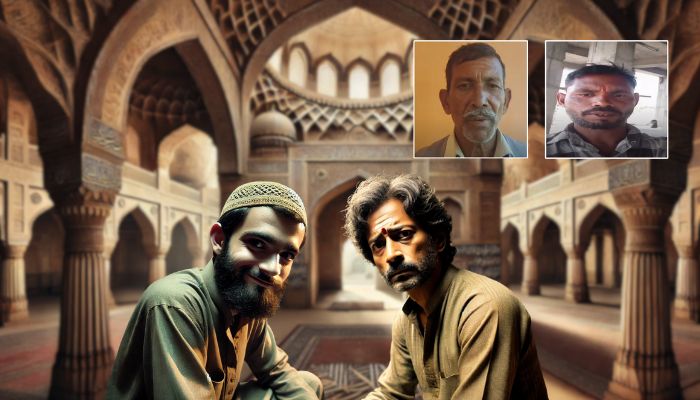
NIA arrests terrorists Kabeer Ahmed and Bava Bahrudeen in Tamil Nadu Hizb-ut-Tahrir case

The National Investigation Agency (NIA) on Monday (3rd February) arrested two key accused Jihadis in the Tamil Nadu Hizb-ut-Tahrir (HuT) case. NIA said that the accused, identified as Kabeer Ahmed Aliyar and Bava Bahrudeen alias Mannai Bava, were allegedly involved and had conspired with others to propagate the HuT ideologies by conducting secret Bayaans.

“Both the accused were also involved in organising an exhibition to showcase the military might of Islamic nations that would be invited (Nussrah) to overthrow the Indian government, established by law, by waging violent jihad and war,” said the anti-terror agency.

NIA, which had registered the case against six accused persons, had further found during investigations that the accused were influenced by the extremist, radical and fundamental ideology of HuT. Notably, HuT is an international pan-Islamist and fundamentalist organisation that is working to re-establish an Islamic caliphate and enforce the constitution written by the outfit’s founder Taqiuddin al-Nabhan as per NIA investigations.

In October last year, the Ministry of Home Affairs (MHA) issued a notification banning HuT and all its manifestations and front organisations under the UA(P)Act 1967. NIA is continuing its investigation to unearth the role of the co-conspirators, international network and funding of HuT.

As reported earlier, on 10th October 2024, the National Investigation Agency (NIA) conducted searches at the home of the accused in the Tamil Nadu Hizb-ut-Tahrir (HuT) anti-India conspiracy case. Extensive searches were performed within the home of accused Faizul Rahman in Chennai, resulting in the recovery of various incriminating items, including digital gadgets and documents.

The officials also discovered that the accused was actively engaged with other arrested accused individuals in the case to advocate secessionism and seek military support from Pakistan to liberate Kashmir. The conspiracy attempted to establish Khilafat/Islamic rule by overthrowing the Indian government through violent jihad.

What is Hizb-ut-Tahrir

Hizb-ut-Tahrir, established in Jerusalem in 1953 by Taqiuddin al-Nabhan, is a global pan-Islamic terrorist organization. Over the decades, the terrorist organization evolved from its initial non-violent methods that were chosen to gain influence within Muslim communities, to a more complex approach that involves gathering support from military factions and influential leaders that have the capacity to stage coups.

The group is headquartered in Lebanon and operates in at least 30 countries, including the United Kingdom, the United States, Canada, and Australia.

It advocates for the formation of a universal Islamic caliphate under Sharia rule.

The HuT has a history of encouraging and glorifying attacks on Israel and Jews more broadly. Notably, HuT has been banned in several countries including Bangladesh, China, Russia, Pakistan, Germany, Turkey, Indonesia, and others. Among Arab countries, it is banned in all except Lebanon, Yemen, and the UAE. In recent times, HuT had started expanding its feet in India as well. 

Who is Victoria Nuland: The notorious regime change operator of CIA who worked for the controversial organisation USAID

USAID (United States Agency for International Development), principally in charge of implementing regime changes globally under the guise of financial assistance and foreign aid is currently under fire from President Donald Trump and Billionaire Elon Musk who also heads Department of Government Efficiency (DOGE) in the present US administration. Musk referred to USAID as a “criminal organization” and declared “time for it to die” has arrived, in a series of critical tweets on X, a platform he owns.

Elon Musk also added that the organisation was involved in “rogue CIA (Central Intelligence Agency) work” and “internet censorship.” Interestingly, USAID’s official website went offline yesterday, contributing to rumors about its uncertain future.

“It’s been run by a bunch of radical lunatics and we’re getting them out,” Trump expressed earlier, publicly slamming the agency. According to media reports, its head of security, John Voorhees and his deputy, Brian McGill were placed on leave after refusing DOGE employees access to secure areas due to alleged lack of security clearances.

Meanwhile, the major developments have brought Victoria “Toria” Nuland, former member of the US Foreign Service, who had the highest rank of career ambassador and served as Under Secretary of State for Political Affairs from 2021 to 2024, into the limelight. She was also CEO of the Washington DC (District of Columbia)-based Center for a New American Security (CNAS), a prominent think-tank founded in 2007 by the Democrartic Party, from January 2018 until early 2019.

Nuland frequently held key positions and managed diplomatic relations with fifty countries in Europe and Eurasia along with NATO, the European Union and the Organization for Security and Cooperation in Europe, as assistant secretary of state for European and Eurasian affairs. The standout feature of her illustrious career, though, has been her involvement in multiple US-backed operations, including in Bangladesh and Ukraine. 

Architect of colour revolution in Ukraine

According to the official account of events in Kiev, Ukraine, in late 2013 and early 2014, the ‘peaceful and spontaneous’ Euromaidan “revolution” by Ukrainians threw out corrupt President Viktor Yanukovych who was elected in 2010 and forced him to flee. However, the truth was always stranger than fiction and pointed to fascinating facts regarding geopolitics, secret regime-change operations and 70 years of US interference in the country.

Oddly, both US Senator John McCain and US Assistant Secretary of State Victoria Nuland regularly appeared in political demonstrations. Yanukovych, despite his shortcomings as a leader and as a person, had been legitimately elected in a vote that was deemed to be reasonably free and fair by foreign observers. Washington and its friends in the European Union, however, did not accept that and nor did the domestic opposition.

Western officials, instead, made it apparent that they endorsed the attempts to pressure Yanukovych to change his mind and accept the EU deal or, if he refused, to oust him before the end of his term. The Senate Armed Services Committee’s leading Republican Senator John McCain, traveled to Kiev to express support for the Euromaidan activists. After dining with opposition leaders, including members of the ultra-right Svoboda Party, he appeared on stage at a large-scale demonstration in Maidan Square and stood with Oleg Tyagnibok (leader of Svoboda Party) there.

However, in contrast to the conduct of Victoria Nuland, McCain’s actions were a model of diplomatic moderation. Even those who tried to ignore the facts witnessed the glaring craftiness of the Obama administration’s Ukraine policy, what one could call “the mess that Victoria Nuland made.”

Nuland and her colleagues grew increasingly blatant in their support of the anti-Yanukovych rallies as Ukraine’s political situation deteriorated. On 13th December 2013, she told the US-Ukraine Foundation that she had been to the nation three times in the weeks after the protests commenced. On 5th December, she visited Maidan and gave cookies to protesters while showing solidarity with their cause.

Victoria Nuland was the “mastermind” behind the 22nd February 2014, “regime change” in Ukraine. She planned to topple Yanukovych’s democratically elected government while claiming that the coup was rather a victory for “freedom.” She was a driving force behind the uprising and assisted in selecting the post-revolution authorities. The hideous nature of the events, especially the crucial role played by neo-Nazis and other ultra-nationalists from the Right Sector was methodically sanitized to sell the neocon(servatism)-driven operation to domestic and world audiences. They had to don white hats, not brown shirts, for the US-sponsored propaganda campaign to succeed.

On the other hand, the pliant mainstream media in the West, particularly “The New York Times” and “The Washington Post,” distorted their reporting in an array of ways to keep from informing their readers that the new government in Kiev was influenced by and reliant on neo-Nazi fighters and Ukrainian ultra-nationalists who desired a pure-blood Ukraine free of ethnic Russians. Anyone who voiced this unpleasant truth was considered a “stooge of Moscow,” and any reference to that vile fact was considered “Russian propaganda.”

However, the media later acknowledged the intrinsic part played by neo-Nazis and other ultra-nationalists in fighting ethnic Russian insurgents in the east. They also admitted that Islamic extremists joined these far-right factions. Notably, Nuland was unable to resist the need to implement a “regime change” that she could assert as her own.

US conspiracy in Ukraine and a shocking phone conversation

The Obama administration’s level of political meddling in Ukraine was astounding. A phone conversation between Nuland and US ambassador to Ukraine Geoffey Pyatt, in which they detailed their choices for particular persons in a post-Yanukovych government, was intercepted by Russian intelligence and presented to the world media. Arseniy Yatsenyuk, who was elected prime minister after Yanukovych was overthrown, was one of the US-favored alternatives. Nuland passionately declared over the phone that “Yats is the guy” who will perform the best work.

Yanukovych was still the legitimate president of Ukraine when Nuland and Pyatt were involved in such preparation. The diplomatic representatives of a foreign nation, one that frequently highlights the need of respecting democratic procedures and sovereignty of other states, was plotting to remove an elected government and install leaders who would be acceptable to the United States. Washington’s actions amounted to micromanagement.

Pyatt also referred to the complicated relationship between Vitali Klitschko, Oleh Tyahnybok and Yatsenyuk, the three main opposition leaders. He and Nuland shared the desire to exclude Klitschko and Tyahnybok from an interim administration. They wanted him to wait and run for office on a longer-term basis in the latter case, while in the former they were concerned about his radical affiliations. “I don’t think Klitsch should go into the government. I don’t think it’s necessary,” she conveyed and stated that he needed “Klitsch and Tyanhybok on the outside.”

The two diplomats were also prepared to intensify the already substantial engagement of the super power in the political unrest in Ukraine. “We want to try to get somebody with an international personality to come out here and help to midwife this thing (the political transition),” Pyatt stated. Vice President Joe Biden was Nuland’s preferred choice for the position. According to Nuland, who was in close communication with his national security adviser, she informed him that “probably tomorrow for an atta-boy and to get the details to stick. So, Biden’s willing.”

The mission for the New American Century was co-founded in 1998 by her husband, Robert Kagan, an arch-neocon, to advocate for “regime change” in Iraq. President George W. Bush’s invasion of the country in 2003 accomplished the mission. Similar to Nuland in Ukraine, Kagan and his fellow neocons believed they could easily invade Iraq, overthrow Saddam Hussein, and install a client of their liking. Ahmed Chalabi was supposed to be “the guy” there. However, they overlooked the hard realities, including the divisions between Sunnis and Shiites brought to light by the invasion and occupation by the United States.

Nuland and her liberal-interventionist and neocon colleagues saw an opportunity to challenge Russian President Vladmir Putin in Ukraine by promoting violent protests to topple President Yanukovych, who was favorable to Russia, and install a new government that was antagonistic to Moscow. The conspiracy was described in a 26th September 2013, Post op-ed by Carl Gershman, the neocon head of the National Endowment for Democracy, which is supported by US taxpayers. Putin “may find himself on the losing end not just in the near abroad but within Russia itself,” according to Gershman, who termed Ukraine as “the biggest prize” and a crucial first step in overthrowing him.

Nuland, for her part, handed out cookies (or sandwiches) to anti-Yanukovych protesters in Maidan Square, reminded Ukrainian business leaders that the United States had spent $5 billion on their “European aspirations,” yelled “f**k the EU” for its less assertive stance and her wish to involve United Nations instead, and spoke with US Ambassador Geoffrey Pyatt about the names of Ukraine’s future leaders. On 20th February 2014, Nuland received her big break when a mysterious sniper, who appeared to be operating from a building under the control of the Right Sector, shot and killed demonstrators and police, aggravating the situation.

Yanukovych agreed to a European-guaranteed plan on 21st February in a last-ditch effort to prevent more turmoil. The proposal called for early elections to remove him from office and accepted diminished powers. That was insufficient, however, as on 22nd February, neo-Nazi militias and the Right Sector led anti-Yanukovych forces to take control of government buildings, forcing him and several of his staff to escape for their lives. The last route to “regime change” was obvious, with armed thugs roving the halls of authority.

Nuland and European officials orchestrated an unlawful process to remove Yanukovych from office and proclaimed the new regime “legitimate,” rather than attempting to preserve the deal from 21st February as Yatsenyuk, Nuland’s “guy” was appointed prime minister. The upheaval that her “regime change” triggered turned Ukraine into a financial black hole, even if she succeeded in imposing her hand-picked client and he did supervise a US-demanded “neo-liberal” economic plan that cut pensions, heating assistance and other social programs.

US Ambassador to Russia Michael McFaul, who served from 2012 to 2014, posed the question, “Did Americans meddle in the internal affairs of Ukraine?” in a 2004 WaPo opinion piece and then replied “Yes” is response. In its 2015 annual report, the infamous billionaire Geroger Soros and his International Renaissance Foundation (IRF) acknowledged that since 1990, they have invested over $180 million in Ukraine. The US taxpayer-funded National Endowment of Democracy (NED) is an organization that specializes in “regime change.”

Soros and other non-governmental organizations sparked the “Orange Revolution” in Ukraine in 2004. The election was essentially won by a pro-Russian individual. As a result, protesters called for a new election. A month later, the pro-US candidate received 52% of the vote and won the fresh election in a typical America-style democracy. Yanukovych, the 2004 election loser won handily when he ran again in 2010 which ended in “Euromaiden.”

Soros, his NED and other NGOs enraged several common citizens in Kyiv in 2013. Subsequently, Neo-Nazi thugs used metal, chains, firebombs, firearms, and grenades to attack the police in an act of provocation. History revealed that the CIA collaborated with ultra-nationalists and Neo-Nazis in Ukraine for decades, beginning immediately following World War II.

Victoria Nuland laid the ground for Russia-Ukraine War

Nuland has been one of the principal architects of the Biden administration’s Russia policy. She made no secret of her support for Ukraine in its conflict with Russia and had been one of the strongest edorses for NATO’s (North Atlantic Treaty Organization) expansion and US support for Ukraine. She was the US NATO ambassador in Brussels during George W Bush’s second term after she was selected as Vice President Dick Cheney’s Principal Deputy National Security Advisor during the first two years of the Iraq War.

According to reports, Nuland supported the invasion and occupation of Iraq during her two years as Vice President Dick Cheney’s adviser from 2003 to 2005. She favored Ukraine’s inclusion in the alliance. At the time, she suggested that the Ukrainian government start an information campaign to “dispel the image of NATO as a four-letter word.” She is reportedly a lobbyist for the nation’s top gun manufacturers as well. During her tenure at NATO from 2005 to 2008, she organized international backing for the American role in Afghanistan.

She pushed partners to give Ukraine and Georgia Membership Action Plans (MAPs) during the 2008 Bucharest summit while acting as the US representative at NATO. When the French and German governments objected to that notion, she was part of the blunder wherein the alliance pledged that Georgia and Ukraine would eventually join NATO.

The commitment made at Bucharest set the stage for the subsequent hostilities between Russia and Ukraine and played a role in the war that broke out between Russia and Georgia in August of that year. According to observers, Nuland’s participation in the Washington-Moscow talks has further hampered efforts to find a diplomatic solution to the ongoing Russia-Ukraine conflict because of her anti-Russian views and her outspoken condemnation of Russian President Vladimir Putin.

Robert M Gates, the former secretary of defense under both Bush and Obama, indicated in his 2014 memoir, “Duty,” that “trying to bring Georgia and Ukraine into NATO was truly overreaching.” He came to the conclusion that the proposal was an instance of “carelessly disregarding what the Russians regarded as their own vital national interests.” Russia considered the Ukraine situation to be an unacceptable provocation.

The United States and its NATO allies then placed economic sanctions on Russia when President Putin retaliated by annexing the strategically important Crimea peninsula. Washington, however, was unwilling to back down. The Biden and Trump administrations, on the other hand, encouraged the allies to include Ukraine in NATO war games, authorized joint military drills between Ukrainian and American soldiers, and poured weaponry into the country.

Moscow’s restrain came to an end in 2021 as it demanded security assurances, including a reduction in the number of military personnel now stationed in NATO’s eastern countries. The demands were unambiguous and unyielding in regards to Ukraine: NATO troops and weaponry would never be stationed on Ukrainian territory and Kyiv would never be invited to join the group. President Putin began his catastrophic, full-scale war when the West failed to deliver those assurances. Seeds sowed by Nuland eventually sprouted into the destruction brought about by the war.

In 2023, Russia warned that the United States was encouraging Ukraine to renew the dispute by supporting attacks on Crimea. It added that Washington was now directly involved in the battle because “crazy people (some US officials)” had aspirations of defeating the former. Moscow was reacting to remarks made by Nuland, who stated that Washington supports Ukrainian attacks on military targets on the peninsula and that the United States believes that Crimea, which Russia took from Ukraine in 2014, should be demilitarized at the very least.

Maria Zakharova, spokeswoman for the Russian foreign ministry, stated, “Now the American warmongers have gone even further: They incite the Kyiv regime to further escalate the war. They supply weapons in huge quantities, provide intelligence and participate directly in the planning of combat operations.”

Victoria Nuland and recent chaos in Bangladesh

Imran Khan, the former prime minister of Pakistan, made derogatory comments about Victoria Nuland, back in 2021. She charged her of playing a crucial part in a plot by the Biden administration to overthrow his government. He lost a no-confidence motion in the parliament within weeks afterward, ending his tenure as prime minister. He has since been making desperate attempts to regain power by working directly with Pakistan’s powerful military establishment and by leveraging his close ties to terrorist groups like the Tehreek-e-Taliban Pakistan (TTP).

More importantly, Bangladesh Prime Minister Sheikh Hasina in 2022 accused the United States of bringing her down. She highlighted that the US ousted her from office specifically because she refused to provide the country with military facilities in an area that is strategically important to its “Indo-Pacific Strategy” to contain China. She has been making the same statements in past years. 

Months before to her departure, she reported a “white man’s” conspiracy to create a new “Christian country” out of Bangladesh and Myanmar and indicated that “conspiracies” were being hatched to overthrow her administration. “If I allowed a certain country to build an airbase in Bangladesh, then I would have had no problem,” she voiced.

Her allegations were further supported by the fact that Bangladesh had postponed signing two military pacts that the Western nation had pushed hard since 2022, through none other than Victoria Nuland. The General Security of Military Information Agreement (GSOMIA), one of the draft agreements, would obligate Bangladesh to work more closely with Washington on military-to-military matters. It was obvious that Hasina’s administration was not eager to sign it. She did not allow the US to establish military installations on Saint Martin Island. She even desired to be a member of BRICS (Brazil, Russia, India, China, and South Africa).

Following a one-year break due to the Corona pandemic, Dhaka hosted the 8th US-Bangladesh Partnership Dialogue on 20th March 2022. On 19th March, Victoria Nuland, landed in Dhaka and took part in the discussion. Masud Bin Momen, the Foreign Secretary, led the Bangladeshi team. The main reason the delegates convened was to build a “robust relationship.” The inclusion of Bangladesh in the current strategic calculations of US was unexpected. Previously, it did not, instead designating Bangladesh as an undeveloped nation like Niger.

There were two phases to the conversation. Bangladesh criticized the United States for its “unjustified” sanctions against the Rapid Action Battalion (RAB) as Bangladesh was asked to help the US in the war between Russia and Ukraine. The second stage of the dialogue began with the main discussion aimed at bridging the gaps in the two-way relationship. Earlier, US President Joe Biden remarked he believed the relationship between Dhaka and Washington would last for the next 50 years and beyond.

“Our defense cooperation is stronger than ever,” the US president wrote in a letter to Bangladeshi Prime Minister Sheikh Hasina, adding that the Bangladesh Coast Guard and Navy are important partners in maintaining an open and free Indo-Pacific region and helping to combat human and illegal drug trafficking in the region. “Bangladesh and the US will work together to protect democracy and human rights at a time when Russia is invading Ukraine in the changed world situation and international law and human rights are under threat,” Victoria Nuland conveyed.

The question of why the US was acting now and for what reasons had been brought up by the recent increase in US attention to democracy and human rights in Bangladesh. However, the true purpose of their actions was soon exposed by the startling instability that began as quota protests promptly morphed into a regime change operation and subsequent anti-Hindu violence in Bangladesh.

Interestingly, the Chief Advisor of the Interim Government of Bangladesh, Muhammad Yunus, since August 2024 after the collapse of Hasina’s government received the Congressional Gold Medal in 2010 in addition to the United States Presidential Medal of Freedom in 2009. He also has profound connections to the Biden administration. An explosive article in “The Sunday Guardian” later confirmed that the United States was involved in Sheikh Hasina’s removal.

Victoria Nuland’s policy of sanctions against India

It was almost impossible for an Indian national to get a visa to enter the United States during the Biden administration. An Indian citizen had to wait two or three years to obtain a visa to enter the country, whereas a Communist Chinese citizen can do so in two or three days. According to Secretary of State Antony Blinken, this was the result of staff cutbacks brought on by the Covid-19 pandemic. According to those familiar with the actions in Foggy Bottom, however, Victoria Nuland accelerated the policy of denying visas to Indian individuals following her early-year visit to Delhi in 2022.

Unaccustomed to having nations outside the Atlanticist group reject her orders, she resented privately when South Block declined to abandon the S-400 contract and join the anti-Russian campaign she had long supported. The insiders disclosed that the commerce and investment between the two nations would have increased significantly more than it did if she had not proposed the chokehold on granting US visas to Indian nationals. Her retaliation turned into a kind of collective punishment for India’s failure to follow the Nuland way on the S-400 or Ukraine, a route that caused trade disruptions, starvation, unrest and the imminence of the 1930s Great Depression-like recurrence.

It became a hard challenge for friends and family to attend weddings and visitors who wished to visit the United States were prevented. People-to-people interaction between the two world’s major democracies was being dismantled in a number of ways, despite the fact that US visas were as easy to obtain in Beijing or Shanghai as purchasing an ice cream cone. Attempting to deceive the Indian populace with extravagant displays of “utterly butterly” adulation had long been a diplomatic mainstay on the international scene.

Antony Blinken employed the same tactic a few days prior to conceal the truth about his department’s harsh visa policy against India, which was intended to penalize the Indian populace for their government’s refusal to follow Nuland’s directive in the manner that non-Atlanticist nations were expected to. As a result, loved ones had become ill and passed away in the United States without having the opportunity to bid goodbye to their Indian friends and relatives.

President Biden in 2022 also charged that, in contrast to other Quad members Japan and Australia, India was “somewhat shaky” in its support for sanctions against Russia. Ironically, he sought backing from New Delhi, yet it was he who made it feasible for the Pakistani military, which has long been planning to join the People’s Liberation Army (PLA) in a joint operation against India, to receive replacement parts worth about $500 million.

In simple terms, despite being revered as a recognized foreign policy voice, Victoria Nuland has increasingly been perceived as a deep state asset of the United States and its agencies to plant favorable administrations in the nation under the pretense of revolution and democracy. Her dubious role and previous controversies have once again come to the public’s attention as USAID has been thrust into the spotlight for its abominable past, which include attempts to start a color revolution in India to dispose off Prime Minister Narendra Modi, together with allies including George Soros.

‘We have been forced into silence, Bishops and Church protect predators’: Victims of abuse by Christian priests speak up at a summit in the Philippines

On January 31, 2025, a group of leading experts gathered for the first time for a groundbreaking three-day public summit to address child sexual abuse pervasive among churches and Christian priests’ role in covering up such crimes.

Top specialists on the Catholic abuse crisis alongside internationally recognised experts from Canada, Australia, New Zealand, and the United States attended the summit in the Phillippines, which sought to trigger a much-needed conversation on the long-neglected issue while also exposing the institutional failures in developing nations that have allowed abuse to persist unchecked.

Survivors like Gemma Hickey, president of ECA Global, an international coalition of survivors and human rights advocates from over twenty-five countries, have been forced into silence by both abusers and the system that protected them. Church leaders have shielded predators while sweeping under the rug the sufferings of the victims. Accountability and responsibility for the Church’s role in this global crisis are urgently needed.

In several countries across the world, clergies accused of horrendous crimes have enjoyed the protection of the powerful churches, prioritising the institution’s reputation over justice. High-ranking officials have covered up misconduct by transferring abusive priests and silencing victims. This culture of protection has perpetuated abuse, leaving lasting scars on survivors, their families, and communities.

The summit, thus, accorded a platform for survivors to share their ordeal and demand accountability from bishops and religious institutions that have enabled abuse through secrecy and negligence. Featured speakers examined the systemic nature of clergy sexual abuse, the complicity of church leadership, and the urgent need for reform, especially in developing nations where cultural norms and institutional power suppress victims’ voices.

“We must create spaces where survivors are heard and empowered to seek justice and healing,” said Dr. Murray Peter Heasley, a summit organizer. “In developing countries where reverence for the Church often protects abusers, this summit aims to drive meaningful change. These regions are vulnerable due to limited resources for supporting victims amid widespread institutional cover-ups.”

The event emphasised the need to strengthen safeguarding policies and provide religious institutions with tools to prevent abuse and support survivors. Discussions focused on ensuring legal systems, governments, and the Church take responsibility for past failures and rebuild trust with survivors and communities.

Jail term up to 10 years for forced religious conversions, curbing love jihad, and more: All you need to know about the anti-conversion bill tabled in Rajasthan assembly

On Monday, 3rd February, the Bhajan Lal Sharma-led Rajasthan Government tabled the ‘Rajasthan Prohibition of Unlawful Conversion of Religion Bill 2025’ during the budget session in the state assembly. The bill tabled today mandates that any person willing to convert one religion into another must apply to the district magistrate at least 60 days in advance. The magistrate will then assess whether the conversion is forced or voluntary. If the authorities find that no coercion is applied during the religious conversion, the change of religion might be approved.

The bill in the state assembly was presented by Health Minister Gajendra Singh Khimsar. As per the bill, any person who is found guilty of practising forceful religious conversion shall be punished with a jail term of 2 to 10 years. Also, a monetary fine of Rs 25,000 will be imposed upon the guilty forcefully trying to convert women, minors, and those from Scheduled Castes and Scheduled Tribes. In the case of large-scale conversion, a fine of Rs 50,000 and imprisonment of 3 to 10 years will be imposed.

Rajasthan Minister KK Vishnoi commented on the bill and said that the bill was introduced against Love Jihad so that the cajoling of innocent girls could be stopped. He indicated that any marriage practised to convert the religion of the other person deceitfully shall be considered invalid. He said that the strict provisions against love jihad have been included in the bill.

Bill approved in November 2024

Notably, in November last year, the cabinet approved the draft of the bill aiming to curb the forceful religious conversion. At that time, the Chief Minister of Rajasthan, Bhajan Lal Sharma had noted that the state would take stringent steps to stop illegal conversion.

“Rajasthan government committed to stop illegal conversion. In the cabinet meeting held in the Chief Minister’s Office today, it was decided to introduce ‘The Rajasthan Prohibition of Unlawful Conversion of Religion Bill-2024’ in the Assembly to stop attempts of conversion by inducement or fraud. The proposed bill will prohibit any person or institution from converting a person’s religion through misleading information, fraud, use of force, or undue influence. If a person marries for illegal conversion, the family court will have the right to declare such marriage invalid,” he posted on X.

Opposition opposes the bill

Meanwhile, Congress opposed the bill saying that the ruling government was showing off by tabling the bill that was already tabled during the Congress rule. “Anti-conversion bill was already present and previous Congress government had already responded upon this. Now this bill is being brought as a show.. Those who came into power saying ‘Rajasthan won’t tolerate women’s insult’ don’t talk about this very topic,” Congress leader Rafeek Khan said.

Leader of the Opposition Tikaram Julie also stated that the bill presented by the BJP government should be studied. Questioning the provisions and rationale of the bill, he suggested that if the government believes that any organization, group, or individual is forcibly converting people, action should be taken against them. He also said that the government was furthering propaganda in the guise of introducing the bill.

What does the bill say

As per the bill, anyone found guilty of illegal or forceful religious conversion shall be jailed for a period of up to 10 years. The guilty persons found practising conversion of minors, women, or people from Scheduled Castes (SC) and Scheduled Tribes (ST) will also be imposed with a fine of Rs 25000.

The imprisonment could extend between three to 10 years and a ₹50,000 fine in case of large-scale conversions, the bill tabled today reads. Apart from this, the victims of forceful religious conversion will be provided with a compensation of Rs 5 lakh.

The bill also has strict measures undertaken to curb the incidents of love jihad. As per the bill, any marriage performed to forcefully convert the woman to another religion will be cancelled.

In addition to this, anyone who wishes to convert one religion to another shall apply to the district magistrate at least 60 days in advance. A notice of 30 days will also have to be given for any ceremony for the conversion. Further, post-conversion, the concerned individual must inform the district magistrate within the next 60 days.

Past incidents of forceful religious conversion from Rajasthan

The state of Rajasthan has seen several dreadful incidents of forceful religious conversion in which the accused individuals use deceit or coercive practices to force the victims to convert their religion to another. The BJP government seems to have taken steps to stop this.

In February 2024, the Rajasthan government suspended two teachers from a government school in the Kota district for their alleged involvement in religious conversion and ties to banned terror outfits. The suspension orders of the teachers identified as Mirza Mujahid and Firoz Khan, posted at a school in Kota’s Sangod block, were issued after the Sarva Hindu Samaj, Sangod, sent a memorandum to the Education Minister, alleging that activities of religious conversion and love jihad have been going on in the school since 2019.

In March 2024, the accused person identified as Imran abducted a Hindu girl from the Mandrella police station area of Jhunjhunu and took her to Haryana’s Hisar. Imran posed as a Hindu and befriended the girl, harassing her to send nudes, raping her, and forcing her to convert her religion to Islam.

In May 2024, the Rajasthan police arrested a man named Salman Khan for raping a 25-year-old Hindu woman under the pretext of love. Khan, who operated a mobile repair shop in Jaipur, pretended to be a Hindu to entrap the victim in his love trap. As per reports, he raped the 25-year-old woman, shot obscene videos, and then blackmailed the victim into soliciting 2-4 lakhs of rupees.

As per the reports, the Rajasthan government had sought to pass an anti-conversion bill in 2006 during the rule of Vasundhara Raje. However, the bill failed to become law due to a lack of assent from the then-state governor and the president. The Rajasthan High Court then in the year 2017 issued guidelines allowing scrutiny to check aspects of forcible conversions for marriage, if any.

Notably, the earlier bill required the approval of the district collectors before conversion and announced 5 years of maximum punishment for those found guilty of forcefully converting minors, women, and sc/st persons. The previous bill also stated that the registration of any organization found to be guilty of abetting conversions would be cancelled.

The state of Rajasthan is the latest BJP-ruled state that has undertaken measures to stop forceful religious conversion. Earlier to this, several states like Uttar Pradesh, Karnataka, Gujarat, Madhya Pradesh, Chhattisgarh, etc have passed anti-conversion laws to curb the forceful religious conversion.

After SP MP, Congress’ Mallikarjun Kharge peddles ‘thousand deaths’ lie: A well-coordinated attack to malign Maha Kumbh?

Congress president and Leader of the Opposition in Rajya Sabha, Mallikarjun Kharge, on Monday, claimed “thousands” died at the ongoing Maha Kumbh without providing evidence to back his claim and days after the Uttar Pradesh government confirmed 30 deaths in an unfortunate incident last month.

Kharge’s outlandish claims attracted protests from treasury benches and VP Dhankar, who asked him to authenticate his claim of a thousand deaths at the Maha Kumbh.

Kharge clarified that his statement was an estimate and invited the government to provide the actual figures if his numbers were incorrect.

He expressed willingness to be corrected, stating, “I did not say ‘thousands’ to accuse anyone. But at least disclose how many people lost their lives. If I am wrong, I will apologise. The government should provide data on the number of deceased and missing persons.”

The stampede occurred during the Amrit Snan on Mauni Amavasya, on January 29. According to Uttar Pradesh government data, 30 people died, and 60 were injured.

Kharge’s disinformation on Maha Kumbh intriguingly coincides with bizarre remarks made by another opposition leader, giving an impression of a well-coordinated attack to malign the UP government and muddle facts about the largest congregation in the world, Maha Kumbh.

Alleging a massive administrative failure, Samajwadi Party (SP) MP Ram Gopal Yadav claimed that “thousands had died,” with some bodies “thrown into the Ganga” and others “buried.”

Yadav accused the state government of suppressing the actual death toll, alleging that officials were instructed not to report numbers exceeding 30. However, he did not present any evidence to substantiate his claims, relying instead on accounts from “eyewitnesses.”

The Samajwadi leader further claimed that families were being bribed with Rs 15,000 to Rs 20,000 to remain silent and avoid post-mortem procedures. Again, he did not provide any evidence for this claim and made a sweeping comment while talking to media persons outside Parliament. Despite the serious accusations, no formal complaints or credible eyewitness accounts corroborating such widespread fatalities were presented by Ram Gopal Yadav or any other opposition leader.

Despite the UP government confirming 30 deaths due to a stampede-like situation that occurred last week, two opposition MPs have reiterated the exaggerated claim of “a thousand deaths.” This seems to indicate an alleged attempt to discredit the Maha Kumbh and, by extension, the Yogi Adityanath government, regarding the organization of one of the largest and most unique gatherings of Hindus in the world.

After 144 years, the Maha Kumbh is taking place in Prayagraj at the confluence of the Ganga, Yamuna, and Saraswati rivers. The Sangam has been blessed by the auspicious presence of various sadhus and seers. Hindu scriptures highlight the grandeur of the Maha Kumbh, making it a once-in-a-lifetime aspiration for every Sanatani to take a holy dip in the Prayagraj Kumbh. According to Hindu beliefs, completing the Maha Kumbh pilgrimage requires not only bathing at the Triveni Sangam but also seeking darshan of the sacred Akshayvat.

Kumbh Mela is the world’s largest religious and cultural gathering, deeply rooted in scientific principles. Astronomically, Ardha Kumbh, Purna Kumbh, and Maha Kumbh occur when celestial bodies align in specific formations. The earliest written records of the Kumbh appear in the travel accounts of Chinese explorer Huen Tsang, though religious texts trace its origins to the beginning of the universe.

The Atharva Veda references the Kumbh Mela, mentioning phrases like Chaturtha Dadami and Poorna: Kumbhoshadhikaal Aahitastam. However, 14th-15th century scholar Sayana and 17th-century scholar Udgeethas clarify that the first phrase praises the Vishtari Yajna, while the second refers to ‘divine time.’ In this context, ‘Kumbh’ signifies a ‘water pot’ rather than the festival itself.

The Yogi Adityanath government finds itself in a unique position to organise such an auspicious and august gathering. Large-scale arrangements and unprecedented budget overlays have been sanctioned to ensure pilgrims coming from different parts of the country have a comfortable, pious, and effortless yatra to the Sangam. While the unfortunate tragedy has cast a pall over the Maha Kumbh and exposed administrative lapses, the government has been nimble in addressing the issues and prioritising the safety of the pilgrims. 

The opposition parties have already grown restless, first with the return of Yogi Adityanath in Uttar Pradesh in 2022, and then with the return of PM Modi at the Centre in the 2024 general elections. It didn’t help matters that opposition parties lost key states in Maharashtra and Haryana shortly after the Lok Sabha elections, adding to their ongoing predicament, even as chinks in their so-called “unity” stands exposed, most glaring in the campaigning during the Delhi elections, with Rahul Gandhi pulling no punches against Aam Aadmi Party, a member of INDI alliance.

With Uttar Pradesh gearing up for elections in just about two years, the opposition parties perhaps realise the enormity of Maha Kumbh and what its successful organisation could spell for Yogi Adityanath, a dynamic saffron-clad chief minister whose zero tolerance for mafias and bulldozer justice has already had the votaries enthralled. Therefore, the recent attacks in the parliament and the readiness to fear-monger over Maha Kumbh betrays the desperation among the opposition leaders, who find no qualms in exploiting one of the holiest congregations of Hindus.

“Kumbh water contaminated with dead bodies”: Samajwadi Party MP Jaya Bachchan makes absurd claims following Mahakumbh stampede

The tragic stampede in Mahakumbh on 29th January, that claimed 30 lives and left around 60 injured, has now become an opportunity for political point scoring among the anti-BJP parties, particularly the Samajwadi Party, to do ‘vulture politics’ and peddle lies.

Meanwhile, Samajwadi Party MP Jaya Bachchan dismissed the government figures of the number of devotees visiting Mahakumbh and also claimed that the water in Prayagraj is contaminated as dead bodies of stampede victims have been thrown in the holy Ganga river.

During a media interaction on 3rd February, Jaya Bachchan said, “Where is the water most contaminated right now? It’s in Kumbh. Bodies (of those who died in the stampede) have been thrown in the river because of which the water has been contaminated… The real issues are not being addressed. The common people visiting Kumbh are not receiving any special treatment, there is no arrangement for them. They are lying that crores of people have visited the place, how can such a large number of people gather in that place at any given point?”

The Samajwadi Party leader, however, failed to provide any evidence or source for her sensational claim and her statement is being widely criticised on social media.

Jaya Bachchan is not the only Samajwadi Party leader making absurd allegations about Mahakumbh, Party MP Ram Gopal Yadav earlier claimed that contrary to official numbers given by the administration, thousands of people died in the stampede. “The incident took place because of the mismanagement of the administration. The eyewitnesses say that thousands were killed in the stampede…Families are not getting bodies, no action has been taken against the officials…We have given notices here but they have been rejected”, Yadav said.

Meanwhile, Congress leader Gaurav Gogoi said, “Today the opposition demanded only one thing, that the government answer on the atrocities committed with the tourists and death of people at Maha Kumbh… The government is trying to hide the answers… The topic of Maha Kumbh is very serious and should be subjected to investigation and lapses by the Uttar Pradesh government should be revealed… We gave motion in urgent, but the speaker negated it…”

While Jaya Bachchan, along with other Samajwadi Party leaders, is spreading disinformation about the Mahakumbh stampede, it must be recalled how SP supremo Akhilesh Yadav was the Uttar Pradesh CM during the 2013 Kumbh Mela. Akhilesh Yadav had entrusted the Mela management to SP leader Azam Khan at that time. OpIndia published a detailed report on the SP government’s sheer mismanagement that year, their under-use of Centre-allocated funds and rampant irregularities.

Notably, the opposition is making vague claims about the number of deceased and the reason behind the stampede to blame the Uttar Pradesh government for the unfortunate incident in an apparent bid to establish their narrative that the BJP government’s organisation and management of Mahakumbh has been a failure.

The anti-BJP ecosystem has been blaming the VIP culture for the stampede on Mauni Amavasya. OpIndia, however, explained earlier how despite the VIP movement causing significant distress to ordinary people at Mahakumbh, it was not the reason behind the stampede.

What caused the stampede at Mahakumbh

Notably, the 29th of January was Mauni Amavasya, the new moon night of the Krishna Paksh of the Hindu month of Magh. The day holds special astrological significance since the Sun and Moon are in the same raashi of Makar or Capricorn. Taking a ritual bath on this occasion, especially at the Triveni Sangam, washes away one’s sins. Due to the spiritual significance of the Amrit Snan on Mauni Amavasya, there was a huge crowd on the day the stampede took place. Reports say that about 10 crore people were heading to the Mela Kshetra to take a holy dip at that time.

The stampede took place at around 1-2 am when a massive crowd of devotees broke barricades and trampled on those sleeping on the ground waiting for the Brahma Muhurat at the festival. It must be noted that the crowd behind the barricade, who had just arrived, did not know that there were people already sleeping on the ground and ended up trampling on them unintentionally. These barricades, according to Vaibhav Krishna, Deputy Inspector General, Mahakumbh, were put up around the ghats and they gave way due to the sea of humanity trying to get through.  

“Before Brahma Muhurta, between 1 am to 2 am, a huge crowd gathered on the Akhara Marg. Due to this crowd, the barricades on the other side broke and the crowd ran over the devotees waiting to take a holy dip of Brahma Muhurta on the other side. About 90 people were taken to the hospital through ambulances but unfortunately, 30 devotees have died,”  DIG Vaibhav Krishna said.

DIG Vaibhav Krishna further said that on the day of Mauni Amavasya, neither any VIP protocol was in place nor special passes were issued to any VIP.

Jaya Bachchan and controversies go hand in hand

Samajwadi Party MP and Bollywood actress Jaya Bachchan has been more in the news in the recent past for her rude behaviour, angry outbursts, and controversial statements rather than for her constructive opinions or politics.

In August 2024, Jaya Bachchan was schooled by Rajya Sabha chairman Jagdeep Dhankar after she mindlessly accused him of disrespecting her. “I, Jaya Amitabh Bachchan, would like to highlight that as an artist, I understand body language and expressions. But your tone is not right. You may be sitting on the Chair and we are your colleagues, but your tone is unacceptable,” Bachchan said.

Dhankhar responded by telling Bachchan that she should understand the necessity of maintaining decorum, even if she is an actress and a celebrity.

In 2023, Jaya Bachchan was criticized when she lost her cool at fans and paparazzi when she arrived at the Indore airport with her husband, Amitabh Bachchan. “Aise logo ko naukri se nikal deni chahiye” (such people should be thrown out of their jobs), the actress-turned-politician said as she walked away after lambasting fans for clicking her.

In 2021, Jaya Bachchan ‘cursed’ the Rajya Sabha chair over asking her to participate in the ongoing discussion on the ‘Narcotic Drugs and Psychotropic Substances (Amendment) Bill, 2021. “Aapke bure din jaldi aane wale hain…I curse you”. (Your bad days will be here soon…I curse you,” Bachchan harangued.  The Samajwadi Party leader was apparently triggered when someone among the RS members questioned her about the summon sent to her daughter-in-law Aishwarya Rai Bachchan in the Panama Papers leak case by the Enforcement Directorate.  

Notably, Samajwadi Party MP Jaya Bachchan never condemned Mulayam Singh Yadav’s outrageous comment during the Shakti Mills rape case where he said ‘ladke hai, ladko se galtiyan ho jaati hai’. Jaya Bachchan continues to be a member of a party wherein her co-actor Jaya Prada was badgered with sexist and misogynistic comments by her own party leader Azam Khan. Jaya Bachchan also remained silent when Azam Khan recited a sexist ‘poem’ for BJP MP Rama Devi. 

Delhi Elections: 55% unhappy with functioning of AAP govt, reveals survey – Know which 5 factors will decide the final results and what role will Congress play

Voting for the Delhi Assembly elections is to be held on February 5, 2025. The results are set to be declared on February 8. Before the election, all the parties have put in their full effort to sway the voters in their favour. BJP and AAP are putting in their maximum efforts with all their major leaders campaigning. Congress, which drew a blank in the last 2 elections, is also putting in serious efforts this time.

While BJP wants to end the drought of two and a half decades in Delhi Assembly, AAP wants to score a hat-trick of wins. Congress is also trying to regain its lost ground.

The survey ahead of elections has increased AAP’s concerns

Meanwhile, a survey by C Voter agency has come out ahead of the elections, which may increase AAP’s concerns. C Voter has published this survey on the basis of data collected till February 1. According to the survey of C Voter, 43.9% of the people of Delhi are angry with the work of the current AAP government. These people have said that they want a change in the government.

At the same time, 38.3% people say that they are not angry with the work of the government and do not want to change it. There is also 10.9% population that is angry with the work of the government but does not want a change in the government. As per the survey, overall, around 55% people are angry with the incumbent AAP Government.

In the same survey of C Voter, 46.9% people said that they are not angry with the government and do not want any change. The number of people who do not want change has now decreased. This can become a cause of concern for AAP. Because if those people, who are angry, are in the mood to change, then AAP will have problems.

5 big factors will decide the election

5 major factors will decide whether AAP will remain in power or there will be a change after the Delhi elections. The first factor in this will be the division of Muslim votes. There are about 13% Muslim votes in Delhi. This vote was with the Congress before AAP entered Delhi politics. In the 2015 and 2020 elections, this vote went to AAP.

If Congress makes a dent in this and regains some of its lost ground, then AAP is sure to lose both seats and vote share. This time. Congress is directly attacking its national ally Arvind Kejriwal during campaigning, in such a situation AAP may suffer losses. The second major factor is the Dalit vote.

This vote also used to be with the Congress earlier. Apart from AAP, BJP has also made a dent in this votebank. BJP is working on the Dalit vote at the local level in Delhi like they did in Haryana and Maharashtra. BJP has assured the Dalits that it will continue the already running schemes and will also bring new schemes for their upliftment.

BJP has promised to provide permanent houses in slums where majority of Dalit population is currently living. It is expected that this scheme will make a major difference. At the same time, Kejriwal’s image has taken a hit in the national capital compared to the last election.

Due to the allegations in the liquor scam case and Kejriwal’s time in jail, his personal brand has not been that strong, while Atishi, who was made CM for a few months, has also not been able to garner that kind of popularity. On the other hand, Narendra Modi’s popularity remains intact. There is no change in the voters’ mind about the Prime Minister.

This time BJP is countering Kejriwal’s politics of ‘free promises’ by countering them with their own announcements. BJP has promised the highest amount of ₹2500 under the Mahila Yojana in Delhi. BJP has also promised to continue the existing old schemes.

Congress vote can also change the government

Congress’s performance in the Delhi Assembly elections can change the course of the election. Congress’s performance has been continuously declining in Delhi. AAP has directly benefited from this. Congress’s vote has completely shifted to AAP in last 2 elections. While BJP may not have won the last 2 elections, it has consistently maintained 35%-40% votes in the state, but Congress vote share saw a steep decline.

While Congress got 35% votes in 2008, it decreased to 24% in 2013. In the 2015 elections, Congress came down to 9.7% and in 2020 it got stuck at 4%.

Congress’s lost vote bank is directly benefiting AAP. Congress has worked with a ‘do or die’ strategy in the 2025 elections. It wants to take back its vote bank from Kejriwal.

Even Congress leader Rahul Gandhi is directly attacking Kejriwal. Kejriwal is being cornered on the issues of Sheeshmahal, liquor scam and Yamuna. Congress wants to hurt AAP at the local level t. If the vote share of Congress crosses 10% again, Kejriwal will face a lot of problems.

As Donald Trump cracks down on USAID, read how the US agency with ties to George Soros tried to undermine Modi govt, bring about ‘colour revolution’ in India through its affiliates

The Donald Trump administration has cracked down on the controversial United States Agency for International Development (USAID). It has sent senior officials on leave, fired contractors and, most importantly, imposed a sweeping freeze on foreign assistance.

This put an immediate halt to several projects run by USAID in Pakistan, Bangladesh, Ukraine and other countries. The website of the ‘independent government agency’ also went offline.

Elon Musk, tasked to head DOGE (Department of Government Efficiency), has dubbed USAID a ‘criminal organisation’. “Time for it to die,” he said in a tweet on Sunday (2nd February).

Donald Trump did not hold back and declared, “(USAID) had been run by a bunch of radical lunatics and we are getting them out.”

The incumbent US President has made his plans clear to put USAID under the control of the State Department. This is being done to ensure that foreign assistance henceforth is aligned with the Trump administration’s ‘America First’ goals.

USAID, links to CIA and regime change operations in foreign countries

Robert F. Kennedy Jr., who was recently appointed the Health and Human Services secretary by the Trump administration, made several revelations about USAID in an interview with journalist Tucker Carlson in November 2024.

He informed that the United States Agency for International Development financed the 2014 Maidan Revolution, which led to the removal of Ukrainian President Viktor Yanukovych.

“There were riots, and it is called the Maidan Rebellion in Ukraine, and we are not told that we are financing those riots. The newspapers never told us, and our government never told us. USAID, which is a CIA front, put 5 billion dollars into funding those riots,” he was heard saying.

“Those riots lead to a coup d’etat against the first elected, democratically elected government of the Ukraine. It was a government that refused to choose sides and to say we were going to be on the side of the West. So we wanted them out,” RFK Jr added.

He pointed out how Victoria Nuland, who was the then spokesperson for the US State Department, was picking the cabinet members of the new Ukranian government.

“USAID doesn’t really do and the CIA doesn’t do democracy. You know, the CIA has overthrown, I think, 83 governments between 1947 and 1997. That’s a third of the governments on Earth and most of them were democracies. It doesn’t do, it doesn’t do democracy,” he had pointed out.

This becomes evident from the recent role played by USAID in fomenting trouble in Bangladesh and orchestrating the undemocratic ouster of the elected Sheikh Hasina-led-government in Bangladesh.

In September 2024, The Sunday Guardian published an explosive piece wherein it revealed that the US administration and its agencies had been conspiring against the Sheikh Hasina-led-government in Bangladesh since March 2019.

Based on its access to classified documents, the weekly newspaper stated that the US government-funded non-profit organisation named International Republican Institute (IRI) is at the helm of the regime change operation.

Screengrab of the article in The Sunday Guardian

“The IRI…was implementing the broader objectives of the National Endowment for Democracy (NED) and the United States Agency for International Development (USAID). The documents also show how the project was necessary to counter-balance India’s “interference”,” the report stated.

The Sunday Guardian noted that IRI is tasked to implement projects, funded by USAID, including a sinister programme named PARIS (Promoting Accountability, Inclusivity, and Resiliency Support Program.”

It ran from March 2019 to January 2021 during which it ‘enhanced political participation’ of Bangladeshis and amplified ‘anti-authoritarianism voices.

The International Republican Institute issued 11 advocacy grants, created 225 ‘art products’ to address social issues, supporters 3 civil society organisations, trained 77 activists, engaged 326 citizens to develop 43 specific policy demands, which were later proposed before 65 Bangladeshi govt officials.

It ran another PARIS campaign between February 2021 and September 2022 on a grant of $900,000 to influence public opinion against Sheikh Hasina.

The controversial United States Agency for International Development (USAID) has signed an agreement to provide $202 million (~2414 crore Taka) to the interim government in Bangladesh, led by ‘American asset‘ Muhammad Yunus.

The objective ‘on paper’ behind the financial aid is supposedly to empower youth, strengthen democracy and governance and bring about development in Bangladesh.

Screengrab of the report by the Council of Hemispheric Studies

According to a research report published by the Council of Hemispheric Affairs, USAID interference led to the 2018 uprising in Nicaragua. An extraordinary leaked document revealed the US government’s plan to interfere with the internal affairs in Nicaragua before and after the 2021 presidential election.

The 14-page extract of a much longer document outlined a contract of USAID to create “the environment for Nicaragua’s transition to democracy.” William Grigsby from Radio La Primerisima revealed the plan in the document that described how USAID worked with various NGOs, think tanks, media organisations and human rights bodies to support opposition to the Ortega government.

To support and justify the interference by the US body, the document misrepresented historical events such as claims that the Sandinista party manipulated the elections even though the Organization of American States (OAS) acknowledged there were only minor irregularities. Furthermore, it also rewrote the 2018 uprising narrative ignoring the fact that the opposition indulged in violence and economic disruption.

The US has a long history of interventions in Nicaragua dating back to 1856. The existence of such documents that revealed the plan of the US’s intervention was not surprising. Notably, Ben Waddell’s article in Global Americans points out that “US support has helped play a role in nurturing the current uprisings,” highlighting the role of US-funded groups in fostering opposition.

USAID has a long history of meddling with Venezuela’s internal affairs as well. According to a 2019 report in People’s World, USAID aligned closely with the National Endowment of Democracy in “Transition Initiatives” to promote the foreign policy goals of the US. The organisation has been an integral part of US efforts to organise humanitarian aid convoys to Venezuela which aligned with the political agenda of the US administration and then-interim president Guaido.

USAID’s Venezuela program supports civil society and democratic governance, echoing the principles of the UN Human Rights Convention. Wikileaks revealed a five-point strategy by the U.S. embassy in Caracas to undermine Chávez. USAID and NED funded opposition groups extensively and the former’s operations often blended humanitarian aid with political motives. The State Department’s Bureau of Energy Resources also works to reduce Latin American reliance on Venezuelan energy.

USAID, George Soros and ‘colour revolution’ in India

In March 2017, the Heritage Foundation published a report detailing how USAID worked in close association with far-left billionaire George Soros during the Obama administration to promote its ‘radical agendas’ in several countries.

The report stated, “…Evidence is emerging that during the past eight years, Soros, his Open Societies Foundations (OSF), and their many smaller affiliates have received U.S. taxpayer money through USAID and that USAID has made the OSF the main implementer of its aid.

Screengrab of the Google cache of the now-deleted USAID website

It may be recalled that George Soros, who worked with USAID, had been eyeing a colour revolution in India.

In February 2023, the far-left billionaire exploited the Adani-Hindenburg controversy and launched a scathing attack on the Indian government.

He claimed, “Modi and business tycoon Adani are close allies. Their fate is intertwined…Adani Enterprises tried to raise funds in the stock market, but it failed. Adani is accused of stock manipulation and his stock collapsed like a house of cards.”

Soros accused Prime Minister Narendra Modi of crony capitalism. “Modi is silent on the subject, but he will have to answer questions from foreign investors and in parliament,” he added.

The Hungarian-American billionaire also said that the ‘shakedown’ caused to the Indian markets due to the Hindenburg Research report will result in ‘much needed institutional reforms’ and ‘democratic revival’. 

George Soros and his vicious ecosystem of NGOs, activists and journalists had been trying to prove PM Modi as an ‘electoral autocrat’ who needed to be ousted for the ‘greater good’ of this country. And it has been a work in progress for a long time.

In January 2020, the American billionaire committed $1 billion to start a global university to “fight nationalists” and climate change, calling them twin challenges that threaten the survival of our civilization.

While speaking at the World Economic Forum in Davos, Soros pledged to fund a university project to battle the erosion of civil society in a world increasingly ruled by “would-be and actual dictators” and climate change.

Soros also claimed that the “biggest and most frightening setback” was in India, as he accused Prime Minister Narendra Modi of “creating a Hindu nationalist state.”

The Hungarian-American billionaire has several intellectuals on his payroll, including the former PM Manmohan Singh’s daughter Amrita Singh. Not to forget the curious case of ‘author’ and ‘social activist’ Harsh Mander who had been at the forefront of creating civil unrest during the Anti-CAA protests.

He and his NGO Karwan-e-Mohabbat had been very active in the demonstrations held at Shaheen Bagh. “From now on, the decision will not come from the Supreme Court or Parliament. We saw what the Supreme Court did in Ayodhya, NRC and Kashmir matters,” he was heard saying in a viral video.

Harsh Mander had threatened, “The SC has failed to honour secularism, equality and humanity. We will try fighting there too, but, the decision will not happen in the Supreme court nor Parliament, it has to be made in the streets.”

At one point, he had even vowed to register himself as a Muslim if the Citizenship Amendment Act was passed. Harsh Mander had also sought the arrest of BJP leader Kapil Mishra.

It may be recalled Shaheen Bagh was masterminded by Sharjeel Imam, an Islamist who urged Indian Muslims to cut off North East India from the rest of the country.

In 2018, George Soros-funded NGO, Sherpa attempted to thwart India’s defence deal with France and stall the delivery of Rafale fighter jets.

Moreover, Open Society Foundations (OSF) run by the billionaire had funded the Socio-Legal Information Centre (SLIC), which had been active in seeking the repeal of the sedition law currently used against anti-India elements.

In September 2019, George Soros also met Pakistani Prime Minister Imran Khan shortly after US President Donald Trump attended Narendra Modi’s ‘Howdy Modi’ event in Houston, Texas.

George Soros had been unabashed in his attempt to fuel a dangerous anti-India narrative through media and ‘civil society. Organisations funded by him played a key role in creating chaos and unrest under the pretext of anti-farm law protests.

In 1999, the Open Society Foundation began activities in India by providing scholarships and fellowships to pursue studies and research at Indian colleges. Through the OSF, George Soros made significant contributions towards the spread of instability in India.

The Hungarian-American billionaire has also tried to use international institutions, which are funded by him, including Freedom House and  V-Dem (Varieties of Democracy) Institute to tarnish the image of India at a global level.

Coincidentally, Freedom Home is a ‘prime partner‘ of the United States Agency for International Development (USAID).

Link between Freedom House and USAID

USAID and links with the Congress party

George Soros, who has worked with USAID to propagate its goals, is ‘friends’ with Congress leader Shashi Tharoor. This becomes evident from the latter’s tweet in 2009.

The Congress leader had claimed, “Met old friend George Soros, upbeat abt India and curious about our neighbourhood.”

Screengrab of the tweet by Shashi Tharoor

“He’s far more than an investor: a concerned world citizen,” Shashi Tharoor further added.

OpIndia had previously reported about George Soros and his connection to Fori Gandhi, a close relative of former Prime Minister Indira Gandhi.

Sam Pitroda, the Chairman of the Indian Overseas Congress and a loyalist of Sonia Gandhi, had received funding for his NGO Global Knowledge Initiative (GKI) from USAID.

Congress leader Rahul Gandhi had met former administrator of the USAID, Samantha Power, during his trip to Uzbekistan in 2023.

He had also met Sunita Vishwanathan of Hindus for Human Rights (HfHR), a controversial outfit with ties to George Soros and Islamist ‘Indian American Muslim Council’ (IAMC).

USAID, OCCRP and targeting of India’s financial markets

The Organised Crime and Corruption Reporting Project (OCCRP), which published hit pieces on India and the Adani Group, recently came under the scanner.

French newspaper Mediapart, in an explosive report, revealed that  OCCRP, which poses as an independent, non-partisan organisation, is funded by USAID.

In May 2008, the Organised Crime and Corruption Reporting Project received $1.7 million from the US agency. Its founder Drew Sullivan did not land USAID funding out of thin air.

7 years prior to establishing OCCRP, he had visited Sarajevo to train Bosnian journalists as part of a programme funded by the US government agency.

Mediapart noted that OCCRP withholds/ conceals the extent of funding by the USAID and State Department from the public, media partners and journalists.

Screengrab of the report by OCCRP

In order to keep the illusion of its ‘independence and non-partisanship’ alive, it removed the phrase ‘OCCRP is made possible by’ and the logo of USAID from the homepage.

According to Mediapart, it is essential for all organisations to prominently acknowledge financial support from USAID. However, OCCRP has been allowed a ‘partial branding waiver’ that allows it to not follow the usual process of acknowledgement.

The US State Department and USAID exerts influence on the Organised Crime and Corruption Reporting Project through its financing.

USAID can veto the appoinment of ‘key personnel’ in OCCRP. It also has a ‘cooperative agreement’ and a ‘substantial involvement clause’ with the NGO, which claims to be ‘independent.’

According to Mediapart, USAID uses OCCRP reports to trigger judicial probes and sanction procedures. OCCRP cannot investigate the US government and is directed to probe foreign governments hostile to American interests. These unfortunate countries include Russia, Venezuela, Malta and Cyprus.

In August 2023, OpIndia had predicted that the OCCRP was planning a hitjob along the lines of now-defunct US-based short seller ‘Hindenburg Research’.

The ‘network of journalists’ published two hit pieces so far – one in August 2023 and another in May 2024 in the hopes of shaking the Indian financial markets

Links between USAID and USCIRF

Although the United States Commission on International Religious Freedom (USCIRF) and the USAID are different entities, they have collaborated on different occasions.

A case in point was when Donald Trump signed an Executive Order to advance international religious freedom across the federal government. At that time, USCIRF and USAID collaborated to ensure implementation of the order.

The United States Commission on International Religious Freedom (USCIRF) has a notorious history of spreading canards about India and its internal affairs.

In its 2024 report, it cited the International Religious Freedom Act (IRFA) and demanded the inclusion of India in the list of Countries of Particular Concern (CPCs) alongside Afghanistan, Azerbaijan, Nigeria, and Vietnam.

The rationale floated by USCIRF for such a drastic measure was alleged ‘systematic, ongoing, (and) egregious violations’ of religious freedom by the Indian government.

This is despite the fact that throughout its 96-page long report, the US federal government commission failed to provide a single instance of the incumbent Modi government’s direct involvement in any violation of religious freedom of any individual.

2024 USCIRF report on India, Page 30

OpIndia found that USCIRF dedicated two pages of its report (Pages 30 and 31) to portray a falsified image of India to the rest of the world.

It lamented that India has been upfront in enforcing the humanitarian Citizenship Amendment Act (CAA), stringent Unlawful Activities (Prevention) Act against domestic terrorists and the cracking down on foreign funding of dubious NGOs through the cancellation of Foreign Contribution Regulation Act (FCRA) licences, and preventing forced conversions and illegal cow slaughter in line with constitutional principles.

USCIRF then went on to make sweeping claims about the use of anti-conversion, anti-cow slaughter laws, UAPA and FCRA cancellation to arbitrarily detain, monitor and target ‘religious minorities’ and those advocating for them.

It came to the rescue of the Delhi-based Centre for Policy Research (CPR), a think tank whose FCRA licence was cancelled for violating foreign funding norms. The Union Ministry of Home Affairs cited reports published by CPR on “current affairs programs” as one of the reasons for the cancellation.

2024 USCIRF report on India, Page 31

The US Federal Government Commission also defended NewsClick, even though it reportedly used funds received from China to procure weapons during the anti-Citizenship Amendment Act (CAA) violence in the National Capital. It also attempted to whitewash the sins of ‘activist’ Teesta Setalvad.

USCIRF also sobbed over the detention of evangelists for the deceitful conversion of vulnerable and unsuspecting indigenous people (Adivasis) to Christianity. It also attempted to falsely impart a communal colour to the Kuki-Meitei ethnic clash in the Indian state of Manipur.

The United States Commission on International Religious Freedom (USCIRF) threw its weight behind Wall Street Journal (WSJ) ‘journalist’ Sabrina Sidiqqui, infamous for her anti-India rants, and ended up exposing the hypocrisy of the White House.

The United States Commission on International Religious Freedom extended support to journalist turned-terror financer Irfan Mehraj and cried foul over the Supreme Court’s validation of the revocation of Article 370 in Jammu and Kashmir.

Thousands died, dead bodies either thrown in Ganga or buried quietly : Samajwadi Party MP Ram Gopal Yadav makes outlandish claims about Mahakumbh stampede

On 3rd February, opposition parties launched a bizarre attack on the Uttar Pradesh government over the Mahakumbh stampede in Prayagraj. Claiming massive administrative failure, Samajwadi Party (SP) MP Ram Gopal Yadav stated that “thousands were killed,” some “were thrown in Ganga,” and others “buried.”

Ram Gopal Yadav accused the state government of concealing the true death toll and claimed that officials were ordered not to report figures exceeding 30. However, he did not provide any evidence to support his claims and cited “eyewitnesses” as his source.

The Samajwadi leader further claimed that families were being bribed with Rs 15,000 to Rs 20,000 to remain silent and avoid post-mortem procedures. Again, he did not provide any evidence for this claim and made the sweeping comment while talking to media persons outside Parliament. Despite the serious accusations, no formal complaints or credible eyewitness accounts corroborating such widespread fatalities were presented by Ram Gopal Yadav or any other opposition leader.

Opposition MPs disrupt Parliament proceedings with unverified claims

SP MP Jaya Bachchan echoed Yadav’s bizarre claims. She also declared that “thousands have died” and demanded the government disclose the “real numbers.” Bachchan accused the state of lying and prioritising VIP arrangements over common pilgrims. She claimed that the water of Ganga has been “polluted” and “dead bodies were thrown” in the river. She also did not provide any data, credible reports, or evidence to back her claims.

Jaya Bachchan said, “Where is the water most contaminated right now? It’s in Kumbh. Bodies (of those who died in the stampede) have been thrown in the river because of which the water has been contaminated… The real issues are not being addressed. The common people visiting Kumbh are not receiving any special treatment, there is no arrangement for them. They are lying that crores of people have visited the place, how can such a large number of people gather in that place at any given point?”

Congress MP Gaurav Gogoi also joined the chorus. He called for a special discussion in Lok Sabha and accused the government of bulldozing the opposition’s demands. He claimed that the government has been avoiding accountability. Once again, Gogoi failed to provide any evidence to back his colleagues’ claims of large-scale deaths.

Speculative narrative fueled by vague reports

RJD MP Manoj Jha also joined in by citing “unconfirmed reports” that truckloads of abandoned mobile phones were found after the stampede. He indirectly asserted that the discovery of a large number of abandoned mobile phones indicated missing persons. He asked, “Where are the owners of these phones?”

Opposition walks out of Parliament

The controversy spilled over into the Rajya Sabha, where members from Congress, Trinamool Congress, Samajwadi Party, and other opposition parties staged a walkout after their demands for a discussion on the Mahakumbh were denied. Rajya Sabha Chairman Jagdeep Dhankhar clarified that notices submitted under Rule 267 by leaders like Congress’s Pramod Tiwari and Digvijay Singh, TMC’s Sagarika Ghose, and SP’s Javed Khan were rejected as they did not meet procedural requirements.

Despite these clarifications, opposition leaders continued their protests and walked out of the House.

Rs 25,000 crore Maritime Development Fund, ‘infrastructure’ status for large ships: Modi govt plans big on shipbuilding

In a massive boost to India’s shipbuilding industry, the Modi government has accorded the coveted ‘infrastructure’ status for large ships. Finance Minister Nirmala Sitharaman announced in her speech for budget 2025-26 on 1st February that the ships above a specified size would be included in the harmonised master list (HML) for infrastructure. The Modi government also allocated a much-needed Maritime Development Fund (MDF) to the tune of Rs 25,000 crore to unlock India’s huge potential in the maritime sector.

Prime Minister Narendra Modi hailed the Union Budget 2025 as “Janata Janardan Ka Budget” and lauded the employment-driven initiatives proposed. Highlighting the significance of giving infrastructure status to shipbuilding, PM Modi said, “With this status, large-scale ship construction in India will be encouraged, providing a fresh impetus to the ‘Atmanirbhar Bharat’ campaign. Shipbuilding is a sector that generates extensive employment.”

Why Modi government’s boost to the shipbuilding industry is the right step at the right time?

The global shipbuilding market was estimated at $207.15 billion in 2023, rising at a 6.5% CAGR to $220.52 billion by 2024. India’s market was valued at $90 million in 2022 and is expected to grow to $8,120 million by 2033, representing a staggering 60% CAGR.

While India currently ranks 22nd in the global shipbuilding industry, India aims to enter the top 10 global rank by 2030 and become one of the top 5 countries by 2047. This ambition is a part of the Modi government’s broader visions including the Maritime India Vision 2030 and Amrit Kaal Vision 2047, intended to capture a massive share of the global shipbuilding and ship repair markets.

However, navigating its way into the list of top 5 countries in the global shipbuilding industry is not easy. The global shipbuilding industry is currently dominated by China and South Korea. In the year 2023, China built more than half of all the world’s merchant ships by gross tonnage (33 million GT) implying that the country built 51% of the world’s merchant ships that year. China is reported to dominate 62% of the world’s shipbuilding orders.

It requires a systematic and cautious approach to tackle the China challenge and in this direction, India has been exploring partnerships with South Korea and Japan. India is also working towards expanding its domestic shipbuilding capacity to curb dependence on foreign ships. It must be noted that India spends around $75 billion annually on leasing ships but controls only 2 per cent of the world’s total tonnage in shipping.

Notably, financing has been a major challenge the shipbuilding industry in India. A ship’s average life is about 25 to 30 years and yielding profits is a long-term game. The shipbuilding industry needed finance at long-term interest rates, however, the shipbuilders faced a cost disadvantage since ships were not included in the harmonised master list (HML) for infrastructure. Since ships lacked the infrastructure status, Indian shipbuilders could not secure long-term financing either from domestic or foreign sources. 

Moreover, while non-banking financial companies were allowed to obtain raise funds from external commercial borrowings in infrastructure, since ships were not recognised as infrastructure, this option was also not open to shipbuilders. Notably, while shipyards were granted infrastructure status by the Modi government in 2016, ships were not granted the same status although a recommendation for the same was made way back in 2001 by the Rangarajan Commission. Besides, ships have also been excluded from the Securitisation and Reconstruction of Financial Assets and Enforcement of Security Interest (SARFAESI) Act, 2002 due to which banks have been reluctant to give loans to shipbuilders.

The Modi government, however, noticed the challenges the Indian shipbuilding industry has been facing and decided to make the much-needed policy intervention.  As India already has decent infrastructure and resources to enhance its shipbuilding, the government’s renewed steps in the budget come across as a slew of the right decisions at the right time. The special focus on ships in the budget is no less than a defining moment for the Indian shipbuilding industry.

Modi government’s budget 2025-26 comes as a monumental leap forward, propelling India into global shipbuilding arena

In the budget 2025-26, Union Finance Minister Nirmala Sitharaman announced that ships of specified size would be inducted in the harmonised master list of infrastructure making them eligible for financial incentives. This will attract private investment in the shipbuilding industry and enhance fleet modernisation.

Notably, in its report submitted in February 2024, the Standing Committee on Transport, Tourism and Culture chaired by V. Vijayasai Reddy, the committee had recommended that the infrastructure status as given to shipyards should be extended to all ships and vessels. It also recommended incentivising domestic production of specialised steels and, establishing a Maritime Development Fund for access to working capital and long-term finance.

Maritime Development Fund

The Modi government announced the allocation of a Maritime Development Fund (MDF) with a corpus of Rs 25,000 crore. This fund would be utilised for long-term financing to support the country’s maritime industry, particularly ship acquisition. Up to 49% of the corpus will be contributed by the Central government while the rest of it will be mobilised from port authorities, other government entities, Central PSEs, Financial Institutions and private sector.

“For long term financing of the maritime industry, a Maritime Development Fund with a corpus of Rs 25,000 crore will be set up,” Finance Minister Nirmala Sitharaman said.

 “It aims at boosting Indian flagged ships’ share in the global cargo volume up to 20% by 2047. Further, an indigenous fleet will reduce the dependability of foreign ships, improve the Balance of Payment and secure the Strategic interests of the country. By 2030, MDF is aiming at generating up to ₹1.5 lakh crore investment in the shipping sector,” the Ministry of Ports, Shipping and Waterways said.

The budget also announced new mega shipbuilding clusters in the country. The shipbuilders will be provided direct capital support in the form of creating the breakwater along with capital dredging. Besides, this scheme also proposes a 10-year rent holiday for the land, if not provided at a nominal rate.

The Central government also informed that investment is also designed to support the creation of trunk infra like roads, utilities, and sewage treatment among others. “The proposed allocation of ₹6,100 crore aims to support India’s existing shipyards in upgrading, modernising, and automating their operations, enhancing efficiency, utilisation, and overall output,” the Ministry of Ports, Shipping and Waterways said.

In addition, a revamped shipbuilding financial assistance policy, credit note for shipbreaking in Indian yards also came as much-awaited policy decisions by the Central government.

The budget 2025-26 extended the Shipbuilding Financial Assistance Policy (SBFAP) 2.0, aimed at providing direct financial subsidies to Indian shipyards. The SBFAP initiative will help in securing orders by offsetting operational cost disadvantages, thereby strengthening the domestic shipbuilding industry. The total outlay of this scheme is Rs 18,090 crores and will offer subsidies on the contracted price or fair value for vessels built in India from 2024 to 2034.

The Shipbreaking Credit Note scheme will incentivise Ship Scrapping by issuing a Credit Note of 40% of the scrap value which can be reimbursed to buy new Made in India ships. This means that on one hand, the Shipbuilding Financial Assistance Policy (SBFAP) will provide financial incentives to Indian shipyards, the Ship-breaking Credit Note further will strengthen the domestic industry by encouraging investment and expansion.

This credit-note mechanism will facilitate the purchase of replacement vessels from Indian shipyards by ship owners which have scrapped their ships in India.

Highlighting the impact of these schemes in elevating India’s shipbuilding game, Union Minister of Ports, Shipping & Waterways Sarbananda Sonowal said, “These measures are expected to drive capital inflows, create employment opportunities, and enhance sectoral competitiveness. A renewed focus on training and human capital development will ensure a skilled workforce, equipping professionals with expertise in modern shipbuilding technologies, automation, and sustainable maritime practices. This holistic approach will not only support industry growth but also position India as a global leader in shipbuilding and maritime innovation.”

Developing human capital

Besides the infrastructure status, SBFAB and Shipbreaking Credit Note scheme, the Central government also focussed on developing trained professionals in the shipbuilding sector. In this direction, the budget allocated specific funds for training and development of human resources in order to leverage India’s position as a global leader in maritime human capital. The budget provided for Shipbuilding Capability Development Centres (SCDC) is aimed propping up platform for development of innovative ship design and engineering solutions as well as testing & evaluation of Shipping projects. An outlay of  Rs 1200 crores have been earmarked for this.

Moreover, Rs 1040 crores have been allocated or providing capital and operational assistance to the existing and upcoming shipbuilding design and training centres from the private sector. To fund a scheme for Research and Development (R&D) and innovation in ship technology, the budget allocated Rs6 610 crores. These incentives are likely to generate a massive 11 lakhs of direct and indirect employment.

As the infrastructure status and the MDF will give a massive boost to shipbuilding domestically since the doors for long-term financing have finally been opened, shipbuilding and related sectors will generate lakhs of employment opportunities for Indians. Moreover, this sector is expected to witness a massive inflow of domestic and foreign investments in shipbuilding clusters which will further encourage new projects and help enhance the range, categories and capacity of ships manufactured in India. By the year 2030, the MDF is projected to generate a whopping Rs 1.3-1.5 trillion of direct and indirect investment.

With encouragement towards domestic shipbuilding, the Indian government intends to curb its dependency on foreign ship leasing which costs the country billions of dollars annually. India also aims to increase its minuscule share in the global tonnage to significantly higher numbers in line with the country’s ambition to enter the top 10 global ranks by 2030 taking a massive leap from the current 22nd rank and become one of the top countries by 2047. If the massive demand stemming from the needs of the Indian shipping market is adequately targeted by Indian shipyards, it may result in an opportunity to the extent of over USD 237 billion (INR 20 lakh crores) by 2047.

The inclusion of large ships in the infrastructure list would facilitate easier long-term and low-cost financing for shipbuilders thus adding to the Indian shipbuilding sector’s growth. Alongside an increase in the domestic manufacturing of ships, this will also support the development of port infrastructure, and modernising facilities, as well as creating new shipbuilding clusters and enhanced technology and skill development.

India is carefully working towards improving its global standing in the shipbuilding arena, by making sure that domestic shipbuilding becomes hugely lucrative for India by attracting international orders and providing massive employment opportunities to Indian youths. The country also has untapped potential in not only shipbuilding but also ship repairing and recycling industry.

As OpIndia reported earlier, the Modi government is not only focussing on improving domestic production of ships but is also collaborating with global leaders in the shipbuilding arena, particularly South Korea and Japan. The high-level delegations of India and South Korea have visited each other’s nations in recent months to explore opportunities for collaboration to help India maximise its shipbuilding capacity. South Korea’s technological advancements in the shipbuilding industry can help India bridge this gap through training, technology transfer as well as shipyard modernisation.

With the global shipbuilding slots booked in countries like China, South Korea and Japan until 2028, the Indian government sees an opportunity to emerge as a reliable alternative destination for shipbuilding. India’s strategy is not confined to constructing new ships but also expanding into ship repair and recycling given the country already has decent infrastructure.

It also important to note that even though China,  South Korea and Japan are dominant players in the global shipbuilding industry with China also being a dominant player in container manufacturing, these countries are grappling with declining demographics. The situation in these countries is such that the Total Fertility Rate (TFR) has slumped below replacement levels. Despite its own challenges, India is in a better position compared to these countries, there is much scope for India’s young workforce for jobs in maritime services, construction and engineering among others.

The measures proposed in the Union Budget will enhance India’s maritime capabilities, reducing the country’s reliance on foreign shipping for energy and trade helping India mitigate geo-strategical risks and boost the country’s economy.