The United Kingdom’s Prime Minister Boris Johnson has revealed that he has tested positive for the Wuhan Coronavirus. The Prime Minister is in self-isolation in Downing street after being tested for the disease. He had begun showing “mild” symptoms yesterday, he revealed.
Downing Street in a statement said: “He was tested for coronavirus on the personal advice of England’s chief medical officer, Professor Chris Whitty,” a statement said.
He will still be in charge of the government’s handling of the crisis, the statement added.
The Prime Minister has taken to Twitter to inform the same. He also gave a message to his citizens advising them to stay home and fight the deadly disease. “Over the last 24 hours I have developed mild symptoms and tested positive for coronavirus. I am now self-isolating, but I will continue to lead the government’s response via video-conference as we fight this virus. Together we will beat this. #StayHomeSaveLives”, Tweeted the UK Prime Minister.
Over the last 24 hours I have developed mild symptoms and tested positive for coronavirus.
I am now self-isolating, but I will continue to lead the government’s response via video-conference as we fight this virus.
— Boris Johnson #StayHomeSaveLives (@BorisJohnson) March 27, 2020
Boris Johnson also informed that he will continue in the post of prime minister although he will be in isolation till he recovers from the disease. He said that now technology allows people to work from home and he will continue to lead the government’s response to the pandemic via video-conferencing.
Boris Johnson in a press conference held on March 4 had said that he had visited a hospital where there were a few coronavirus patients and he shook hands with everybody. After the press conference, people on social media started calling out the Conservative leader for being irresponsible and being a danger to public safety.
“I was at a hospital the other night where I think there were actually a few coronavirus patients and I shook hands with everyone.”
Boris Johnson says he has not refused to shake hands with people during the #COVID19 outbreak.
Though his statement then, the PM probably intended to make people aware of the importance of washing hands between the Coronavirus outbreak, his admission was not received well by the people. He was criticised on social media for being irresponsible and being a danger to public safety after he admitted that he intentionally shook hands with Coronavirus-affected patients during his visit to a hospital.
Meanwhile, on March 25, it was reported that Britains Prince Charles, the next-in-line to the British throne, had tested positive for coronavirus. Reports in British media have stated that the 71-year-old Prince of Wales has ‘mild symptoms’ but is in otherwise good health.
Charles’ wife Camilla, the Duchess of Cornwall, had been tested negative. As per reports, Prince Charles had decided to move to Birkhall, Scotland and ‘work from home’.
The UK, like many western nations, has also seen many cases of the COVID-19. The death toll has reached 578 as 11,658 confirmed cases have been reported. Over 82,000 people have already been tested for the disease.
Four policemen were admitted to a local hospital in Kasargod district of Kerala after suffering injuries at the hand of a violent mob in the Kalladukku colony. The police personnel had gone to rescue a team of health department officials trying to conduct an awareness programme in the colony.
As per a report in Swarajya, the health department staffers who were organizing a coronavirus awareness campaign were barred by the locals when they tried to enter the Kalladukku colony near Delampady. Afterwards, a team of policemen were sent to the colony by the collector’s order to rescue those health officials. However, the mob did not spare the policemen too.
The policemen including a sub-inspector have been admitted to a local hospital while two accused have been detained in the connection of the incident.
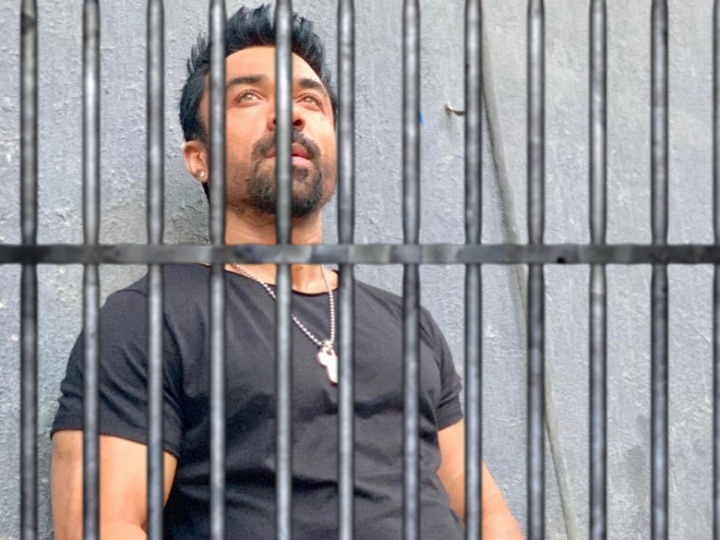
The incident has occurred when Kasargod District officials trying their best to spread awareness among locals to attain hygienic behaviour while Kerala is the worst-hit state by the COVID-19 novel coronavirus. Ameer B, a Kasargod resident who reportedly returned from Gulf earlier this month and tested positive for COVID-19, had fled quarantine and had visited several places in the district.
Ameer B, who is allegedly a gold smuggler is alleged by the District authorities to have met at least 3,000 people keeping them at risk. He also attended two weddings, a Child-naming ceremony, a funeral, and a football match.
48 people from the Kasargod district of Kerala have been tested positive of COVID-19, almost one-third of the 137 cases in the State.
The State of Kerala tops the nation in coronavirus reported cases with 137 COVID-19 patients under isolation. The Northern districts of Kerala- Kasargod, Kannur, Kozhikode, Wayanad, and Malappuram account for a total of 87 cases in the state.
As the number of coronavirus cases in the country continues to rise, the Cabinet Secretary Rajiv Gauba has told the state governments that 15 lakh international travellers came to India over the last two month but there appears to be a discrepancy between the actual monitoring for COVID-19 and the total arrivals.
Mr. Gauba says there is a gap between actual no of passengers and those being monitored by the States which could seriously jeopardise the efforts to contain #COVID19.
Gauba wrote a letter to all the state governments highlighting the discrepancy in the numbers of those being observed for COVID-19 and the number of international travellers who came to India between the period of January 18 to March 23. He also added that a list of arrivals compiled by the Bureau of Immigration was already shared with the States and Union Territories.
Gauba cautioned the state heads that such a gap in the monitoring of international passengers may seriously jeopardise the efforts to contain the spread of the novel coronavirus, given that a large number of those who have tested positive for the virus so far in India had a history of international travel. Other patients also contracted the infection after coming into close contact with such persons.
In the wake of the coronavirus outbreak in India, Prime Minister Modi swiftly reacted and imposed sweeping restrictions to keep India from descending into a disaster that could potentially dwarf the catastrophe endured by China, Italy, Spain, and the United States. He had called upon a total lockdown of the country for 21 days till April 15 to curtail the spread of the contagion and prevent it from overburdening the country’s public health system. India has so far registered about 700 positive coronavirus cases with 17 fatalities. But the number could surge as the country may enter the crucial third stage of the coronavirus outbreak which is normally characterised by the community and large-scale transmission. In the view of such a scenario, an all-encompassing lockdown except for essential services such as healthcare, banking and grocery stores for daily needs was ordered by the Indian PM on March 24, 2020.
The Wuhan Coronavirus pandemic has the world struggling to grapple with the crisis. But even with a threat of such gigantic proportions, political partisanship still continues to affect the manner in which the efforts made by the respective countries are covered. Thus it is in the USA, and naturally, so shall it be in India as well. Writing for The Print, Shivam Vij, who has a history of furthering fake news, claimed that Prime Minister Modi’s ‘poorly planned lockdown’ will not save the country from Wuhan Coronavirus but will kill the economy.
The headline of article by Shivam Vij for The Print
The article, as is usual for Vij, is littered with inaccuracies which we shall now discuss. The article was published on the 25th of March, before the economic package was declared by the government, and we need to be mindful of the fact. Shivam Vij mentions Singapore, Taiwan, Germany and Turkey as countries that have ‘relatively’ managed the crisis ell without enforcing a lockdown in their countries. Singapore and Taiwan are valid examples but one wonders why does Germany and Turkey deserve such a mention.
While it is true that Germany has managed to keep its death rate down, as of the time of writing this report, it had over 40,000 active cases with only 23 of them in critical condition. It has recorded 281 deaths and for the past five successive days, its death count has been going up significantly. Even if we ignore the allegations that it has been fudging its data regarding its death toll, its number of active cases do not reflect a ‘relatively’ better performance in this regard.
Turkey is even worse. Initially, ‘experts’ on television claimed that the Turks were ‘naturally immune’ to the virus due to their genetic make-up. It’s akin to the rabid Islamists in Iran, Pakistan and India who have been going around claiming that Allah and Islam will protect them from the Wuhan Coronavirus. Ultimately, Turkey’s Health Minister Fahrettin Koca, in a televised speech to the nation March 23, conceded that the pandemic had now spread all over the country. On Thursday, its death toll increased by 16 to 75 and the number of confirmed cases by 1,196 to 3,629. A total of around 40,000 tests have been conducted in the country thus far. One journalist said, “Unless the government takes drastic measures, including a complete lockdown, Turkey could be heading to the brink of a catastrophe.”
Thus, quite clearly, when Shivam Vij mentions Germany and Turkey as countries that have managed the crisis ‘relatively’ well despite a lockdown, he is again inventing facts to suit his particular narrative. It also needs to be remembered that the deadliest aspect of the Wuhan Coronavirus is that it could overwhelm the healthcare system of a country very quickly and thereby, leave countries without adequate resources to treat their patients. It is precisely what happened to Italy. Therefore, we will have to wait and see what happens with the death rate of Germany in order to conclude if it has indeed managed the crisis ‘relatively’ well.
Shivam Vij also writes, “Like these other countries, India could also have avoided the need for a national lockdown had it done what those countries are doing: testing, testing, testing.” At the same time, while it is true that South Korea and Taiwan and even Singapore has relied on ‘testing, testing, testing’ to combat the crisis, it is not the only way to approach the menace. Japan, for example, has only 1,387 cases and 47 deaths and as of the 26th of March, it had conducted only 25,000 tests, which is similar to India’s numbers although it does have a vastly lesser population. Japan stands out with respect to South Korea, Singapore and Taiwan because neither did it employ surveillance technology like Singapore or Taiwan, nor did it resort to wholesale testing like South Korea. It did not even put entire cities on lockdown.
Japan has consciously chosen to opt for limited testing, it has the capacity to test 7,500 people a day bit it averages about 1,200 to 1,300 per day. It is based on the premise that draining the health care resources with less severe cases ought to be avoided because its current policy mandates that those who test positive be admitted to a hospital. Quite clearly, Japan has made the conscious decision of ensuring that its health care resources are not overwhelmed, the consequences of which would be devastating as we have seen in Italy. India appears to be treading a similar path while it ramps up the production of medical supplies to treat far more patients. Like India, ‘experts’ have also questioned Japan’s approach but we need to remember that a lot of these ‘experts’ were and are more concerned about the racist nature of the term ‘Chinese Virus’ than actual policy.
Shivam Vij says, “Sadly, Narendra Modi’s two national addresses have done little to address this concern about India not taking the mass-testing approach.” As stated earlier, it might be a conscious decision to avoid the mass-testing option. The lack of widespread testing, as well as the lack of PPEs (personal protective equipment) for doctors, is a scandal,” he says. The lack of widespread testing is not a scandal, as evidenced by Japan, and as for the lack of PPEs, there are sufficient quantities of it available as of now and more are being produced as we speak.
The article also states, “The deliverable is not how many people clanged pots and pans or how many obediently followed Modi’s advice of staying indoors. The deliverable is how many people got tested, how many doctors have protective gear, how many ventilators the government managed to manufacture or buy overnight. Another deliverable is isolation centres, temporary hospitals in indoor stadia and quarantine facilities that are fit for human beings.” Again, Shivam Vij is placing far too much importance on mass-testing, which as we have demonstrated, is not the only way to approach the crisis.
As for other matters mentioned, no country has adequate numbers in their inventory if it fails to curb the spread of the virus. The virus will overwhelm any system should it be allowed to run its course. That is precisely the reason why India has ramped up its medical supplies production and various private enterprises have jumped in to contribute to the procurement of the same. The United States has done the same. Countries that do not have them in adequate supplies are buying them from those that do. Even China, which is the manufacturing hub of the country, practically robbed countries of their medical supplies which, of course, could also be a well-planned tactic to put these countries in jeopardy.
The fact of the matter is, no country has medical supplies stored in the quantities that the battle against the Wuhan Coronavirus demands. It is also important to consider that this is an unprecedented situation. And by its very definition, countries and people are not well equipped to deal with such. They have to rise to the occasion in order to effectively to conquer the nemesis. Before long, it becomes evident that the objective of the article is not to raise valid concerns regarding India’s approach but to merely engage in political partisanship even as an apocalypse is knocking at the door.
Shivam Vij says at one point, “Modi does not have the patience or the interest to deliver on these nitty-gritty details, he’s probably working on his next grandiose ‘address to the nation’ to be applauded for his oratory. He will leave the tough things to state governments and focus on the right optics to sustain his political ratings through a tough period.” At another point, he declares, “You have to be really naive to believe India’s official numbers of coronavirus patients — and then there are those who have died of sudden pneumonia without being tested or counted as coronavirus deaths.” These are not objective criticisms but the ramblings of a mind plagued by the Prime Minister’s popularity. As for India’s official numbers, there is no reason to doubt them as even with a naked eye, it is quite visible that Indian hospitals are not being overrun by diseased patients.
The article also waxes eloquence on the economy, which is indeed a matter of grave concern. However, India is not an exception. The USA’s economy has taken a grave hit as well. The unemployment numbers in the United States reached a record high of 3.28 million, which shattered the Great Recession peak of 665,000 in March 2009 and the all-time mark of 695,000 in October 1982. Indeed, many fear that the world might be on the verge of a global recession. Therefore, under these circumstances, it is preposterous to assume that India will escape the consequences of the Wuhan Coronavirus.
Furthermore, Shivam Vij’s claim that “If we survive the pandemic, we won’t survive the impending economic collapse” has little to do with reality itself. It is much too early to paint such doomsday scenarios but it is perfectly consistent with his erstwhile track record. Furthermore, his claim that “more Indians might die of hunger than of coronavirus” appears to be directed towards inducing panic among the citizenry as emergency measures are being undertaken at short notice by various governments and charities to ensure that people do not go hungry in these troubled times.
Shivam Vij also insinuates that the lockdown was not necessary. According to him, the lockdown could have been prevented if India had gone for ‘testing, testing, testing’. Like much of what he says, there’s no evidence to back that claim. What worked for South Korea will not necessarily work for us. And the Wuhan Coronavirus is far too great a threat for any government to take chances. It is indeed better to be safe than sorry.
Having said all of this, there is really no sugarcoat reality. India faces a grave crisis and vast sections of the populace will suffer. There is very little any government could do to prevent it. The best anyone could do is try and minimize the misery as much as possible. To that effect, apart from some glaring errors, the government has done far better than most countries around the world, developed countries included. People who blame the government for tragedies brought upon by the virus are doing so to serve their own personal agenda. Narendra Modi could not have prevented the immeasurable damage caused by the Wuhan Coronavirus, it is ludicrous to assume such a thing.
India is a country of close to 1.3 billion people. As such, a few random instances of police brutality, although every occasion is one too many, is not cause enough to blame the ruling disposition itself. Despite the monumental scale of the lockdown, it has gone down virtually without much chaos. People have suffered, yes, but others have also reached out to ease their pain. It is the best anyone could do given the circumstances. Engaging in political partisanship based on such demonstrations of poor personal conduct only reveals the motivations of those making the allegations.
After leaving the whole world to battle the deadly Chinese virus, China has allegedly supplied faulty Covid-19 test kits to Spain and the Czech Republic. Spain, which is one of the worst-hit countries across the globe by the Wuhan Coronavirus with the total number of deaths surpassing 4000, had bought rapid test kits worth 5.5 million from China recently, which turned out to be faulty.
As per a report in ANI, Spanish health authorities have warned that the rapid coronavirus test kits that the country purchased from China are faulty as they are not consistently detecting positive cases. It said that the accuracy levels of these kits are below 30 per cent, making them unusable. In view of the incredibly high error rate of these kits, Spain has announced that it is sending back the first batch of Covid-19 testing kits that it received from China.
Spain sends back China’s coronavirus testing kits after they fail to work
As per El Pais, the widely circulated Madrid-based Spanish daily, several microbiology laboratories of large hospitals in the country have confirmed that they do not work as they should. “They do not detect the positive cases as expected,” a source working at a Spanish microbiology lab told El Pais, a Madrid-based Spanish daily. a source who participated in the tests said on the condition of anonymity. One of the microbiologists who has analyzed the Chinese test stated, “With that value, it does not make sense to use these tests.”
The experts who have evaluated these detection kits are of the view that they will have to continue using the current test, the PCR (polymerase chain reaction) that detects the RNA of the virus in an exudate nasopharyngeal sample(a stick is inserted through the nose or through the mouth to collect it). However, this process is long and cumbersome.
The report states that the Chinese Embassy in Spain was, however, quick to defend China. It said that the batch of faulty kits was not part of the 423-million Euro deal that the two countries recently signed, which includes 5.5 million testing kits, but had come from an unlicensed provider.
Similar results have emerged from the Czech Republic. It was reported by Czech news site Expats.cz that as much as 80 per cent of the Wuhan Covid-19 rapid test kits “donated” by China were faulty, forcing healthcare workers in the country to rely on conventional laboratory tests. While China tried to give the impression that it had ‘donated’ the test kits, in reality, it was bought and paid for by the Czech government.
Czech health ministry reportedly paid about USD 568,000 for 100,000 of the kits while the country’s interior ministry paid for the rest.
According to Pavla Svrcinova, hygienist for the Moravian-Silesian Region, the region will continue to rely on conventional laboratory testing. “We checked them at the University Hospital in Ostrava, but unfortunately the error rate was quite high. So now we are waiting for the results of further testing across the country, and we are considering using them only with people reach the end of their quarantine and have never tested positive, because it works with antibodies,” she said. “We tested those who searched for a sampling point. Fortunately, we were so farsighted that samples were immediately compared with traditional tests, and that just proved the error rate of the Chinese tests,” she added.
The state of Rajasthan has witnessed its first death due to the Wuhan coronavirus, pushing the national tally of the deceased people from the enigmatic virus to 17. An elderly individual, exhibiting symptoms of COVID-19 was admitted to a hospital in Bhilwara. However, he succumbed to the virus during his treatment. Later, it was revealed in his report that he was tested positive for the novel coronavirus. Two more people who came into his contact have now reported positive for COVID-19.
According to the administration of the Medical College of Bhilwara, a 73-year-old Narayan Singh, who lives in Sabji Mandi, was admitted on Wednesday as a Corona suspect. Narayan Singh had earlier gone to Brajesh Bangad Hospital for getting his kidney dialysis done. The administration claimed that when he was brought to the Medical College, his condition was critical. He subsequently slipped off in coma and later died.
Regarding the death of the coronavirus patient in Bhilwara, the Additional Chief Secretary Health Rohit Kumar Singh said that the patient was suffering from co-morbid conditions such as diabetes, brain stroke and kidney and therefore it would be inappropriate to say that he died from coronavirus. Besides the deceased, his two relatives who have turned positive for the coronavirus are kept in the isolation ward, he said.
Singh, who died of coronavirus was admitted to Brajesh Bangad Hospital on 11 March. A day later, on March 12, 2 doctors of the hospital were found ill and were admitted to the hospital in Jaipur. Both were found infected for COVID-19. Following this incident, all the doctors, nurses and other healthcare workers of the hospital were tested for the virus. So far 16 of them have them tested positive. However, it is unclear whether all of them have contracted the virus from the same elderly individual.
Realising the gravity of the situation, the Rajasthan government has decided to screen the entire Bhilwara town for the novel coronavirus. Bhilwara was one of the first towns in the country where a total lockdown was imposed. Out of the 13.3 lakh people in the town, 6 lakhs have been already screened. All the routes leading to and from Bhilwara have been sealed to stem the spread of the virus.
The total tally of coronavirus patients in India has steadily climbed to 700. Maharashtra is leading the country in the total number of coronavirus cases as its count reaches 135-mark. With the virus already ravaging many of the advanced countries in the west, PM Modi had preemptively announced a total lockdown of the country till April 15 to blunt the spread of the virus and prevent the overburdening of the nation’s public healthcare system.
Concerns pertaining to the Wuhan Coronavirus seizes to fade away. After affecting lakhs of people across the globe, the deadly virus has started showing up in animals too. Hong Kong has reported two cases of suspected human-to-animal transmission of the Coronavirus, but there is no evidence that pet animals can get ill from the virus or transmit it to people.
According to reports, a 2-year-old German Shepherd and a 17-year-old Pomeranian in Hong Kong have been suspected of contracting the coronavirus from their infected owners.
The Hong Kong Agriculture, Fisheries and Conservation Department (AFCD) said that a German shepherd tested positive for the virus in Pok Fu Lam, a residential area on the west coast of Hong Kong Island. It’s the second dog in Hong Kong to test Coronavirus positive.
“No positive results were obtained from the mixed-breed dog and neither dog has shown any signs of disease,” it said. “The department will continue to closely monitor both dogs and conduct repeated tests on the animals.”
Officials sent both the German shepherd and another dog from the same residence to a quarantine facility at the Hong Kong Port of the Hong Kong-Zhuhai-Macao Bridge.
This came after an elderly 17-year-old Pomeranian, which had tested “weak positive” during repeated tests for the virus, died two days after it was released from quarantine disease-free.
Some animal-welfare experts had suggested the Pomeranian’s death could have been caused by the stress of being quarantined and separated from its owner, while others had said that it might have been due to its age. “The dog likely died from causes other than Covid-19 as it had never displayed any clinical signs of illness,” the College for Veterinary Medicine at the University of Illinois at Urbana-Champaign said in a post on its website.
The AFCD, however, maintained that the true cause of the death could not be ascertained as the dog’s owner, who recently recovered from a coronavirus infection, wasn’t willing to allow an autopsy.
The World Organisation for Animal Health has warned owners that though there is no evidence of pets transmitting the virus to humans, however, because, animals and people can sometimes share diseases, it is still recommended that people who are sick with Covid-19, limit their contact with the pet and other animals until more information is known about the virus.
In case a pet owner is asked to go into quarantine or becomes ill due to the Wuhan coronavirus, the Center for Disease Control and Prevention recommends:
Maintain separation and avoid direct contact with pets and other animals, including petting, snuggling, being kissed or licked, and sharing food. Try to make alternative arrangements for someone to look after pets in case you become ill.
If you must care for your pet or be around animals while you are sick, wash your hands before and after you interact with pets and wear a face mask.
Meanwhile, the AFCD said it “strongly advises” that mammalian pets including dogs and cats from households where people are infected with Covid-19 or those who have had close contact with others infected persons, should be quarantined in government facilities.
12 members of a single-family in Sangli district’s Islampur village in Maharashtra have tested positive for the novel COVID-19. Initially, 4 members of the family, who had returned from Haj in Saudi Arabia, were tested positive for the virus on March 23 after they were admitted to the isolation ward in Miraj on March 19.
However, by March 25, five more members of the family had tested positive for the contagion. A day later, on Thursday, another 3 in the family were confirmed to have acquired the infection, taking the total tally of the family to 12.
While the 11 infected from the coronavirus are resident of Sangli’s Islampur village, the 12th one who confirmed to have contracted the infection hails from Pethwadgaon village of Kolhapur district. She had visited her relatives in Sangli after their return from Haj.
With 12 cases of COVID-19 emerging from the same family, Islampur has been put on strict monitoring. Sangli district collector Abhijeet Chaudhary confirmed 3 new cases of coronavirus from the family of Haj returnees on Thursday. He said that their throat swab samples which were sent to the Pune’s The National Institute of Virology(NIV) on March 25, were tested positive for the Chinese virus.
According to Sangli district civil surgeon Sanjay Salunkhe, 11 more swab samples of close contacts and relatives suspicious of carrying the virus have also been sent to the NIV whose results are likely to be recieved on Friday. He also said that a team has been sent to Islampur to collect 23 more swab samples of close contacts of the family, who are still quarantined at home.
Soon after 4 members of the family who had returned from their Haj pilgrimage in Saudi Arabia tested positive for the deadly contagion, 27 of their relatives were sent into quarantine. “Swab samples of seven people were collected on Monday(March 23). Out of those 7, 5 turned positive while the remaining two were negative. All the positive cases are being treated at Miraj Civil Hospital and every required precaution is being taken,” Salunkhe said.
On Thursday night, a group of people comprising mostly of students coming from Telangana pelted stones at the cops after being denied entry into Andhra Pradesh near the Vadapalli checkpoint. During the incident, one police constable sustained head injuries.
“We have even arranged special buses for them and made facilities for quarantine. Ignoring all this, they tried to cross the border and also resorted to a mob attack on police personnel. In the night, they attacked the police and caused injuries. We strongly condemn this”, State Director General of Police (Andhra Pradesh) D G Sawang was quoted as saying.
Following the nationwide lockdown, the Governments of Telangana and Andhra Pradesh had agreed to allow students to cross the border after necessary medical examinations. Only 44 people agreed to be quarantined for 14 days in writing. The remaining people were not permitted and was forced to return to their respective places at Telangana.
Earlier, the Telangana police had handed out No Objection Certificates (NOCs) to a few students, staying in Hyderabad, to return to their villages in Andhra Pradesh. This prompted the sudden rush of people at the Andhra Pradesh -Telangana border.
Around 2000 students with NOCs flocked near Garikapadu check-post in Jaggaiahpeta in Krishna district. Only those who agreed to be in quarantine at IIIT-Nuzvid were permitted to cross the border. Mohammed Imitiaz, Krishna District Collector, informed that on the directions of Andra Pradesh Chief Minister YS Jagan Mohan Reddy, the NOCs issued were withdrawn.
At the Pullur border in Kurnool district, the cops did not allow people from Telangana to cross into Andhra Pradesh and vice-versa. A few people evaded the police and entered Andhra Pradesh. Five of them have now been apprehended. Around 200 students who wanted to cross the border were asked to go back to Telangana.
“They tried to cross the border in violation of the lockdown orders. In the night, they attacked the police and caused injuries. We strongly condemn this,” the DGP said. He said cases would be registered and stern action taken against the guilty.
Sawang said the two state governments entered into an agreement to allow the passengers, mostly students, after necessary medical examination. “We have even arranged special buses for them and made facilities for quarantine. Ignoring all this, they tried to cross the border and also resorted to mob attack on police personnel,” the DGP said
Earlier, Prime Minister Narendra Modi had asked his ministers to come forward and take charge of their states and play a vital role in defeating the Wuhan Coronavirus epidemic. As per reports, a letter from the PMO had been sent to all the ministers telling them to play an effective role in stemming the growing disease. The Ministers have been asked to maintain a constant touch with the local administration and keep themselves updated on the status of COVID-19 in their respective constituencies as well.
A 70-year-old man who was infected by the Wuhan coronavirus and died on March 18 is said to have infected the 23 patients out of the total 33 cases in the state of Punjab.
The senior citizen, who was a Gurudwara priest, had returned from a two-week tour of Germany and Italy with two friends from neighbouring villages and had dodged self-quarantine norms to socialize widely earlier this month.
Reportedly, He arrived in Delhi on March 6 and then drove to Punjab. Officials, who are tracking his movement learned that he had attended an event in Anandpur Sahib on or around 8-10 March and later returned to his village in Shahid Bhagat Singh Nagar district.
As per reports, he met close to a hundred people before being tested positive of the novel coronavirus. He and his two companions are believed to have visited 15 villages across the state.
It is notable that 14 people in his own family are tested positive of COVID-19 and his grand-daughter and grandson have socialised with many people.
Due to the reckless socializing activity of the man and the family, it is now reported that officials the three alone, (the man, his grandson and granddaughter) caused coronavirus positive cases in Nawanshahr, Mohali, Amritsar, Hoshiarpur, and Jalandhar. 15 villages have now been sealed due to the activities of the one person.
In a similar case, Delhi’s Patient-10, a woman who had returned from Saudi Arabia is believed to have caused several contact transmissions. The woman had visited a mohalla clinic where the doctor contracted the disease from her, eventually passing it to his wife and daughter. The woman’s brother was one of the organisers of an anti-CAA protest in Jehangirpuri and is believed to have infected many others. The woman’s mother and two daughters have also been tested positive.
India has reported near 719 positive cases of novel coronavirus and 17 deaths.