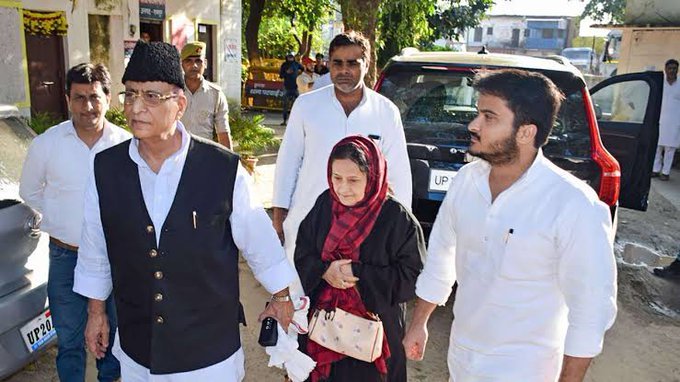
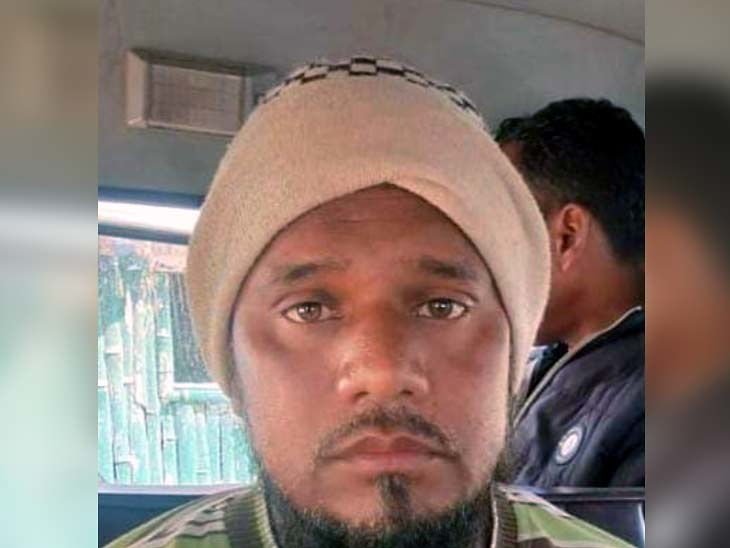
The senior leader of Samajwadi Party and Member of Parliament Azam khan is sent to seven days of judicial custody along with his wife Tanzeen Fatima and son Abdullah Azam after they surrendered in the District Court on Wednesday.
As per reports, Azam Khan and his family had been ignoring summons by the courts in various cases lodged against them after which warrants had been issued. The next hearing will be on March 2.
They are sent to custody in the fake affidavit case.
Samajwadi Party stalwart and MP from Rampur #AzamKhan sent to 7 days judicial custody in fake affidavit case. His wife Tanjeen Fatima and son Abdulla Azam also sent to jail for forging documents. pic.twitter.com/SX29sS8oB4
On Tuesday, The local MP-MLA court in Rampur had ordered attachment of the properties of Azam Khan, his wife Tanzeen Fatima and Abdullah Azam after non-bailable warrants were issued against them in one of the cases but they still refused to appear in court. The family has been ignoring court summon for months.
MP Azam Khan made several attempts earlier to get anticipatory bail but was denied by the court. The MP and his family have several non-bailable warrants issued against them.
Several cases are lodged against Rampur MP Azam Khan. In September last year, Rampur Police in Uttar Pradesh had booked Azam Khan on allegations of ‘stealing goats’ following the complaint which was filed in October 2016.
It was first land-grabbing, then lion statues, followed by books and valuable manuscripts. He has also been booked for ‘stealing buffaloes’ and later the Rampur MP was also booked for electricity theft. The power supply to Azam Khan’s resort ‘Humsafar’ in Uttar Pradesh was cut after raids were conducted in the resort by the Uttar Pradesh electricity department.
Khan had landed in a major land grabbing case after irregularities and allegations against his family’s Mohammad Ali Jauhar University surfaced last year. The University was raided by Rampur police following a complaint by the principal of Madrasa Aliya, wherein he stated that 9000 books and rare manuscripts from the Madrasa have been stolen.
His son Abdullah Azam was booked for forgery in birth date documents. Suar MLA Abdullah Azam Khan had to lose his membership of the state assembly after he was found guilty of forgery.
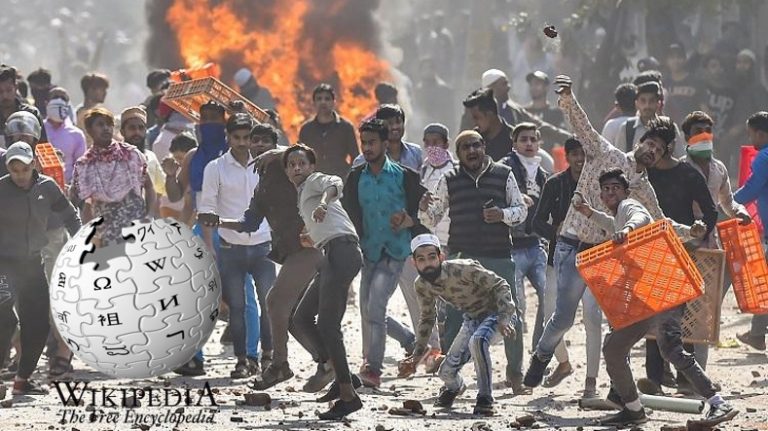
As the North East Delhi continues to be under the grip of violence on the issue of Citizenship Amendment Act, a concerted effort has been taken by a section of media and left-liberal users on social media to portray the pro-CAA protestors and Hindus as the perpetrators of the riots. While both sides have indulged in violence and there is ample evidence of violence by Muslims and anti-CCA protesters, they are sought to be brushed aside and highlight only the violence by pro-CAA crowd. One of the most prominent examples of the same is a page on Wikipedia dedicated to the riots in North East Delhi this week, which is very obviously biased, where the moderators are actively removing content that shows the involvement of anti-CAA crowd in the riots.
The Wikipedia article titled North East Delhi riots was created on Tuesday by a senior Wikipedia editor that hoes by the username DBigXray. When one visits the page, the first image one sees is the photo of BJP leader Kapil Mishra, not an image of the riots. Kapil Mishra gets a separate section titled ‘incitement’ in the article, where he has been blamed for starting the riots.
On February 23, Kapil Mishra had asked the police to remove the road blockades imposed by anti-CAA protesters in Delhi. He had given the police 3 days time to open the roads, and had said that after 3 days, he would not listen to the police. Kapil Mishra had said that if police fail to remove anti-CAA crowd from blocking the roads, the pro-CAA crowd will have to hit the streets.
The BJP leader had only talked about hitting the streets, he didn’t issue any threat of violence. Hitting the streets usually means marching on the roads demanding or protesting against something, it does not automatically imply a threat for violence. Several editors on Wikipedia had asked to remove the Kapil Mishra’s photo from the article as he is not directly involved in the riots, and not proven guilty of any violence. But the senior editors, who have more rights then normal editors like preventing normal users from making edits in specific articles, overruled them, saying that he is the central figure in the riots. Being regular active users, senior users also develop personal coordination with Wikipedia administrators, who can block users from making edits in the website.
Interestingly, some people had reference to AAP leader Amanatullah Khan for his provocative speeches during anti-CAA riots earlier in Delhi and UP. But this was also removed by the moderators, claiming that although cases have been filed against Khan, those are not related to the North East Delhi riots.
On 24th, one anti-CAA protester had brandished a pistol and fired 8 shots towards pro-CAA protesters, who was identified as Mohammad Shahrukh. The Wiki page merely mentions him as a shooter, and does not even mention that he is from anti-CAA mob.
After the image of the Shahrukh firing had gone viral, anti-CAA activists had claimed he is pro-CAA, despite on the ground journalists who had posted the videos and images saying he was anti-CAA. Later high-resolution images had shown he was part of a mob which had several persons in skull caps. When other users wanted to include this information in the Wikipedia article, they were shot down by the moderator. The senior editor, who is supposed to be politically neutral while editing and moderating content on Wikipedia, commented that if the man was a Hindu, media would not have focused on him, and there is no need to include more detail on the incident.
The article mentions the attack on a mosque in Ashok Nagar and shouting of “Jai Shri Ram” and “Hinduon ka Hindustan” slogans by the mobs, but have absolutely no reference to any attack by Muslims and anti-CAA mobs. On the other hand, while there are videos showing mob shouting “Nara e Taqbeer” and “Allahu Akbar”, but they find no place on the page.
Moderator refuses to include violence by Muslims
The Wikipedia page mentions journalists heckled by Hindu Sena, right-wing protesters and other Pro-CAA mobs, but does not mention a single incident of journalists attacked by Muslims and anti-CAA mobs. Reports of attacks on journalists by sides of the rioters have emerged, but the Wiki page, which is being actively moderated by the user DBigXray portrays only Hindus and pro-CAA crowd as violent. Anti-CAA mob had thrown acid on paramilitary forces, but that is not mentioned in the article, despite other users messaging the moderator to include it with media report link.
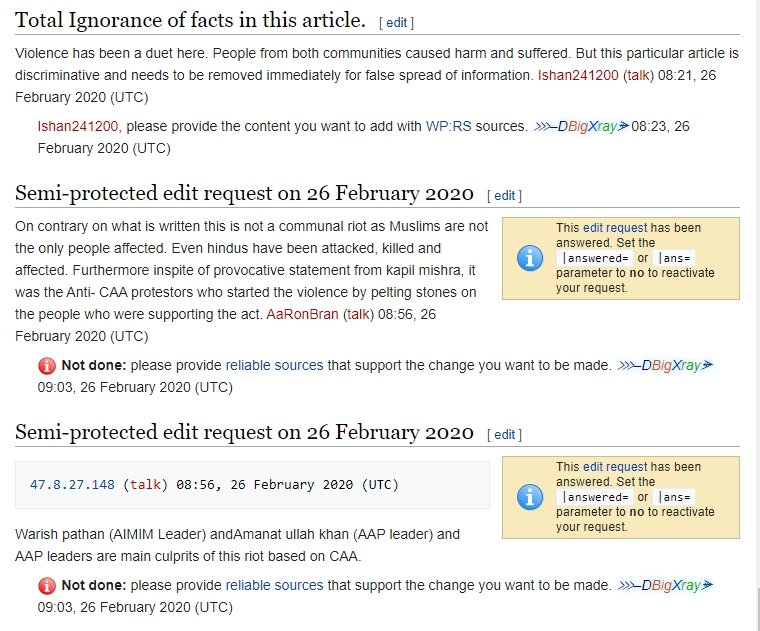
Although Wikipedia articles can be edited by anybody, the online encyclopaedia has provision for locking down specific articles to check vandalism etc. The article on North East Delhi riots has been made semi-protected, which means only confirmed registered users can make edits to it. As a result, ordinary users are having to request user DBigXray for making changes, and user DBigXray, who has special privileges as a Master Editor III, decides which contents are included and which are not in the page.
Moderator refuses to include violence by Muslims
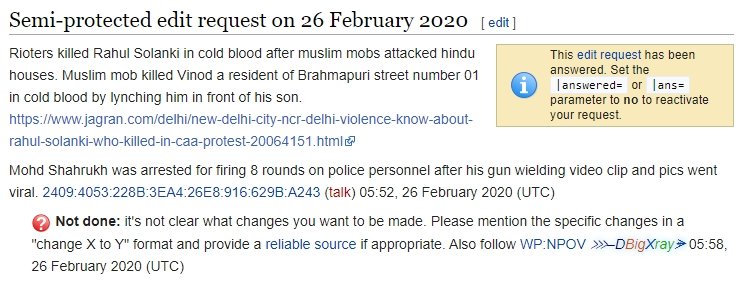
For example, when one user requested the moderator to include the news of murder of a Hindu activist by Muslims, the moderator declined the request, saying the request is not clear. When another use pointed out that the violence is happening from both the sides and not only from Hindu and pro-CAA side, the moderator refused to agree, asking to provide reliable sources for the claiming, despite the fact that users had already posted media report links on riots by Muslims and anti-CAA mobs. The moderator even refused to include the provocative comments by AIMIM leader Waris Pathan, again asking for ‘reliable source’, for a comment that has been in the headline for a week now.
It is always known that History shows the biased view of the writer. And as Historians tend to be from left-wing ideology, History also reflects that. The current Wikipedia article on the Delhi riots is a living example of the same. Despite evidence of riots from both sides, the article mentions only violence by pro-CAA and Hindus, while for violence by anti-CAA and Muslims, nobody responsible is mentioned, thereby presenting a completely biased view of the riots.
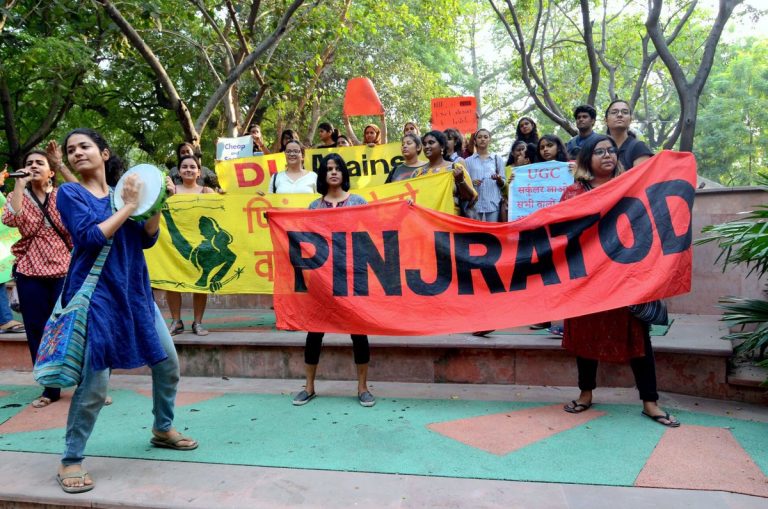
“Concerned citizens of Seelampur, Jafrabad and Trans-Yamuna” have accused Pinjra Tod, a far-left women rights initiative, and other ‘elite civil society’ groups of inciting riots at the national capital. The appeal was conveyed through a Facebook post published by anti-CAA ‘activist’ and Editor of blogs ‘Muslims of India’ Ovais Sultan Khan.
The post published on the social media platform at midnight on Sunday, the 23rd of February. It said that it was ‘very very irresponsible behaviour’ and the appeal was made on late Saturday night, the day the anti-CAA protesters blocked road No. 66, which connects Seelampur to Maujpur and Yamuna Vihar.
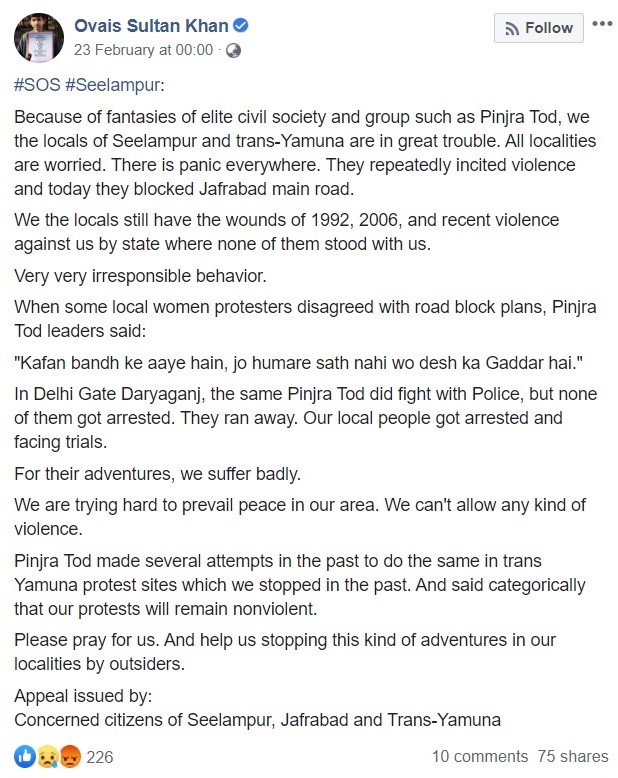
The appeal said, “Because of fantasies of elite civil society and group such as Pinjra Tod, we the locals of Seelampur and trans-Yamuna are in great trouble. All localities are worried. There is panic everywhere. They repeatedly incited violence and today they blocked Jafrabad main road.”
Ovais Sultan Khan’s Facebook post
The appeal also said that when some local women protesters disagreed with the plans to block the road, the Pinjra Tod activists said, “Kafan bandh ke aaye hain, jo humare sath nahi wo desh ka Gaddar hai (We have come wearing our shroud, those who are not with us, they are traitors to their country).” It also said that Pinjra Tod activists fought with the Police in Delhi Gate Daryaganj but none of them were arrested as they ran away. “For their adventures, we suffer badly,” Khan said.
The appeal said further, “Pinjra Tod made several attempts in the past to do the same in trans Yamuna protest sites which we stopped in the past. And said categorically that our protests will remain nonviolent.” Another individual on Facebook, Ayesha Mualla, agreed with the assertions made in the appeal.
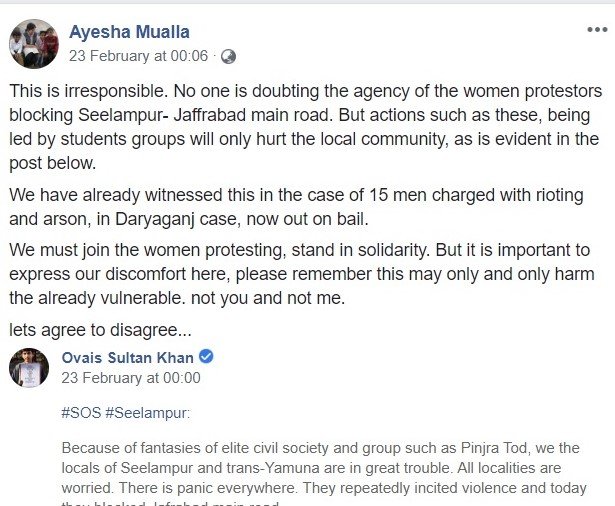
Sharing Khan’s post, Mualla said, “This is irresponsible. No one is doubting the agency of the women protestors blocking Seelampur- Jaffrabad main road. But actions such as these, being led by students groups will only hurt the local community, as is evident in the post below.” “We must join the women protesting, stand in solidarity. But it is important to express our discomfort here, please remember this may only and only harm the already vulnerable. not you and not me,” she added.
Ayesha Mualla’s Facebook Post
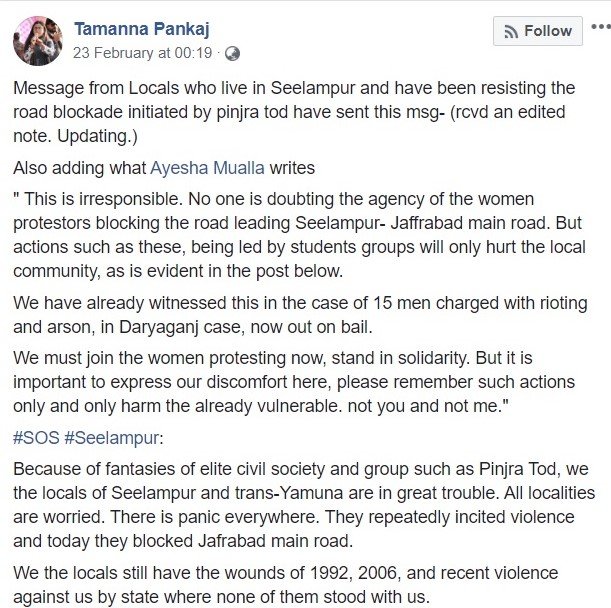
The appeal was also shared by Tamanna Pankaj, who works at Indian Civil Liberties Union and United Against Hate, which has been running an anti-CAA campaign of its own. In her Facebook post sharing the appeal, Tamanna claimed that the roadblock was initiated by Pinjra Tod.
A portion of Tamanna Pankaj’s Facebook post
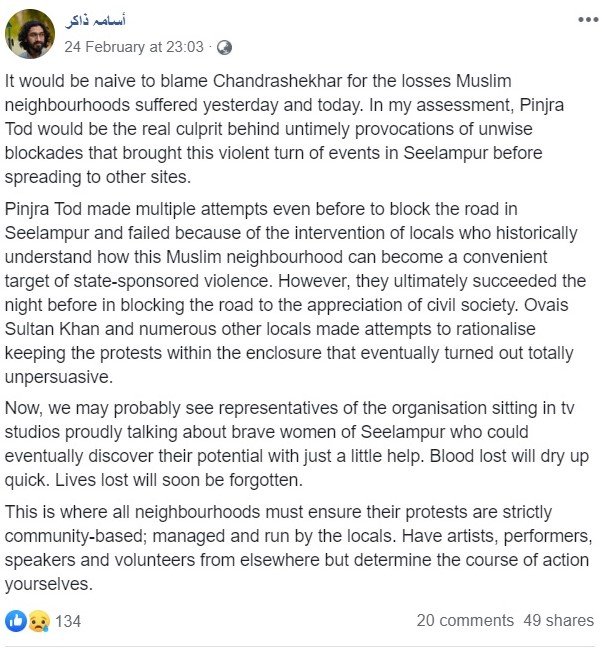
The allegations against Pinjra Tod were also made by an individual on Facebook who claims to have graduated from Jamia Milia Islamia University. He said on the 24th of February, “It would be naive to blame Chandrashekhar for the losses Muslim neighbourhoods suffered yesterday and today. In my assessment, Pinjra Tod would be the real culprit behind untimely provocations of unwise blockades that brought this violent turn of events in Seelampur before spreading to other sites.”
The Facebook post by the Jamia Alumni
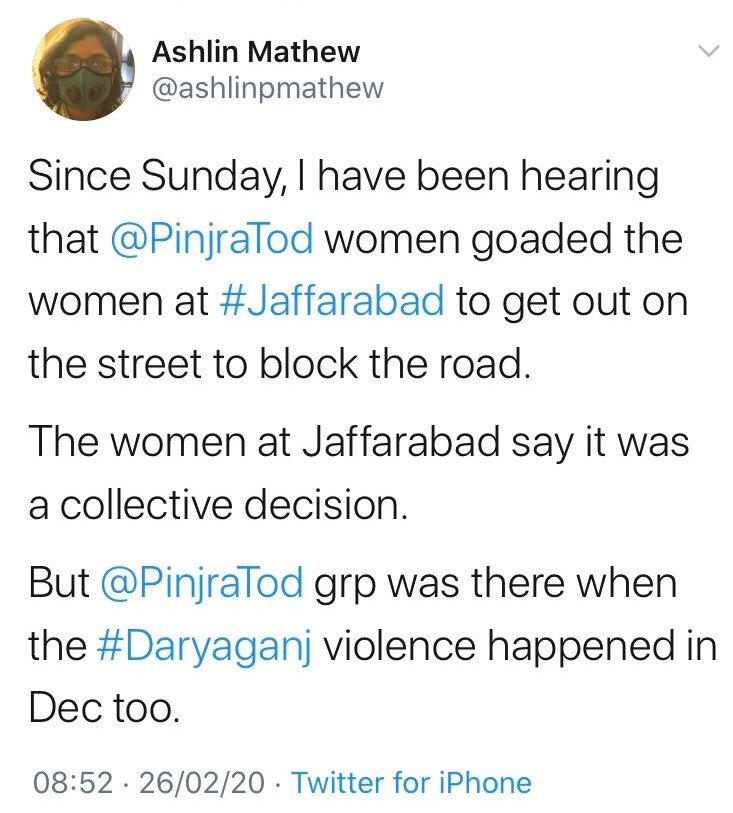
The news editor at the Congress mouthpiece National Herald, Ashlin Mathew, also said that she has been hearing that Pinjra Tod activists ‘goaded’ the women at Jaffrabad to block the road. She also said that the women themselves say it was a collective decision. Furthermore, she said that Pinjra Tod activists were present when violence broke out at Daryaganj in December.
Ashlin Mathew’s tweet
Pinjra Tod claims to be an “autonomous collective of women students fighting for a just, accessible, non discriminatory University and affordable accommodation” and has been involved in numerous protests and campaigns of a far-left nature.
Massive riots erupted in Delhi on Monday and continued on Tuesday. The death toll has reached 20, countless more have been injured and the damage to property has been enormous. An Intelligence Bureau Constable has died in the riots along with a Head Constable of the Delhi Police.
In a shocking incident, one Maulana Shahid Ansari who ran a madrasa in Mandar area of the capital Ranchi was arrested by the police on the charges of raping a 13-year-old girl studying in his madarsa.
The matter came to light when the victim became pregnant as a result of prolonged sexual exploitation. According to the police, accused Maulana Shahid Ansari forced the victim to abort when he came to know about the victim’s pregnancy. He also tried to make overtures to the victim’s family members with the aim of striking a deal with them to hush the matter. However, when police got wind of the matter, they swiftly arrested the accused Maulana.
An FIR has been lodged in this case at Mandar police station. The Maulana is accused of sexually exploiting the 13-year-old girl in his madarsa for last 6 months. While the accused has been lodged in jail, the victim has been sent to Sadar Hospital Ranchi for her medical examination.
As per the girl’s account, after offering namaz on the day of Bakrid, Maulana took her to a room and raped her. He also threatened her to not inform about the incident to anyone. Then onwards, he kept raping her while issuing threats to her if she revealed about her sexual exploitation to anyone.
Meanwhile, the girl got pregnant. When Maulana came to know about her pregnancy, he allegedly took her to Sanjeevani Hospital in Ratu area, where she was fed several medicines for two days. However, when her health started deteriorating, the girl finally decided to narrate her plight to her family.
It is notable to mention that this is not the first time that Maulana Shahid is facing allegations of sexual abuse. According to the villagers, he was accused of sexual abuse twice a few months ago, but the case was then suppressed. The villagers claim that this time too, the Maulana had tried to settle the matter by bribing the family members of the victim. It was decided that the family members will be given Rs 85000 while Rs 15000 would go to the brokers, villagers said.
Prime Minister Narendra Modi today took to Twitter to appeal for peace and calm in the Delhi riots.
Peace and harmony are central to our ethos. I appeal to my sisters and brothers of Delhi to maintain peace and brotherhood at all times. It is important that there is calm and normalcy is restored at the earliest.
PM Modi said he had an extensive review on the situation prevailing in various parts of Delhi and said that the Police and other agencies are working on the ground to ensure peace and normalcy. “Peace and harmony are central to our ethos. I appeal to my sisters and brothers of Delhi to maintain peace and brotherhood at all times. It is important that there is calm and normalcy is restored at the earliest,” PM Modi appealed.
Large-scale riots broke out in Delhi’s North-East district after anti-CAA protests turned violent. The riots have till now claimed lives of over 20 people.
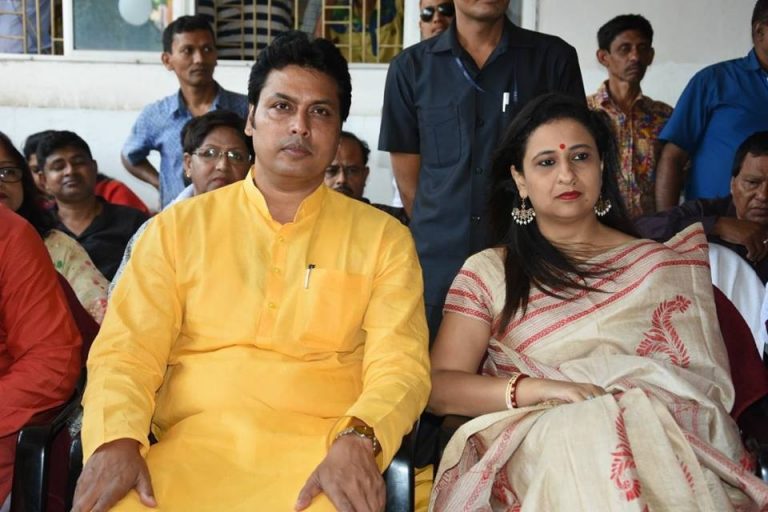
On Tuesday, Tripura Chief Minister Biplab Kumar Deb was found travelling on a flight from Indore to New Delhi. What surprised the co-passengers was that the Tripura Chief Minister and his family were seated in the economy class of the aeroplane.
A social media user named Ranjeet (@Iranjeetgaur) on Wednesday tweeted an image of Tripura CM Biplab Kumar Deb travelling in an Indigo airways flight that departed from Indore to New Delhi. According to the Twitter user, the Tripura CM and his wife were seated in the 18th row of the economy class.
I was in Indore-Delhi indigo flight when I saw a person looking like Tripura CM @BjpBiplab, I wasn’t convinced becoz it’s economy that too 18th row. I was shocked to realise he was CM himself. So humble to travel in economy class which @ShashiTharoor called ‘cattle class’.???? pic.twitter.com/mTAzbnhFQK
“I was in Indore-Delhi indigo flight when I saw a person looking like Tripura CM Biplap Deb, I wasn’t convinced because it’s economy that too 18th row. I was shocked to realise he was CM himself. So humble to travel in economy class which Shashi Tharoor called ‘cattle class’,” tweeted Ranjeet.
Netizens were pretty much impressed with austerity measures of the Tripura CM and hailed his simplicity.
These leader set examples for others… A true leadership starts from people like @BjpBiplab ji
Another user shared a similar story of Biplab Dev’s simplistic lifestyle and the connect he shares with the common citizens.
I also had a similar experience with the same gr8 soul..he had just become the CM few months back..had gone to trade fair…visited Tripura stall..saw the CM roaming just like common man like me…no staff no security..I confused he could not be the CM..but it was he
Biplab Deb had shared in a Facebook post that he had attended the wedding ceremony of Sankalp Singh, the son of Satna MP Ganesh Singh at Indore.
In a country where former Prime Ministers are known to use Indian Navy’s aircraft careers for their personal holiday car with family and friends, politicians ordering entire aeroplanes just to pick up their shoes, or bring cigarettes from abroad, the simplistic lifestyle of politicians in power usually comes a pleasant surprise.
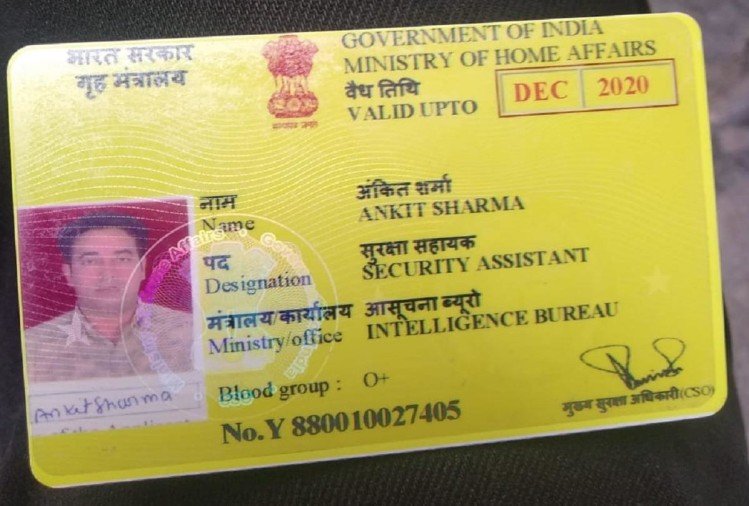
The dead body of an Intelligence Bureau Constable has been recovered from a drain in North East Delhi amidst communal riots in the national capital. The deceased constable has been identified as Ankit Sharma. His body was recovered from a drain in Chand Bagh. It is believed that he was beaten to death and later, the mob disposed of his body by dumping it in the drain.
The family of Ankit Sharma had been looking for him since Tuesday. His father, Ravinder Sharma, is also a head constable in the Intelligence Bureau. Ankit Sharma had joined the IB in 2017. As per reports, his rank was ‘security assistant’. His father has alleged that in addition to being beaten up, Ankit Sharma was also shot at. The body has been sent to GTB Hospital for a post mortem. An individual from Bihar, Deepak Kumar, has also been beaten to death by the rioters. He is originally from Salempur village in Bihar’s Bhojpur district and lived at Mandoli in Delhi.
A head constable of Delhi Police has also died in the violence that ensued. Another was injured. The deceased policeman fell prey to a bullet wound. Massive riots erupted in Delhi on Monday and continued on Tuesday. The death toll has reached 20, countless more have been injured and the damage to property has been enormous.
I have read the view of Shri Dhananjay Mahapatra on the issue of transfer of High Court judges “not justiciable except for the improper consultation by Chief Justice of India”. The author of the article was of the view that as per Article 222 of Constitution of India no consent is required from the judge under transfer. He relied upon the “First judges, Second judges and the Third judges” case for supporting his view.
Surprisingly no reference was seen in the article to the popularly known as “NJAC” case reported in “2016 (5) SCC 1. Why the said datum was missing is curious? The 5 Judges Constitution Bench without mincing the words held that Article 222 is necessary for the Independence of Judiciary and therefore they held the amendment of Article 124-A is against the basic fabric of the Constitution. Knowing Mr Mahapatra from his past articles, I am certain that he is nobody’s adherent and has a voice of his own.
Unfortunately he has doubted the knowledge of lawyers on the compensatory allowance, which a Judge receives on his transfer from the parent High Court. A successful lawyer never accepts the Bench for the sake of compensatory allowance. No doubt it’s an honour for any lawyer who is considered for elevation but reputation and integrity for some is paramount than receiving compensatory allowance.
A judge cannot be merely transferred because of dissonance. Certainly Justice Murlidhar was transferred without taking any prior consent. No reason for any public interest is ostensibly seen in his transfer when he could have been Acting Chief Justice of Delhi High Court. The other reason for the transfer, which is in circulation, is that Justice Murlidhar gave certain decisions, which were contrary to the “Bolshevism”.
For such transfers only Article 222 is still maintained in the Constitution. Its purpose is to maintain the independence and salvation of judiciary. No doubt that under Article 222 the express provision of obtaining a previous consent is missing but the same is vogue since 1977 else why the transfer of judges is not a routine than exception?
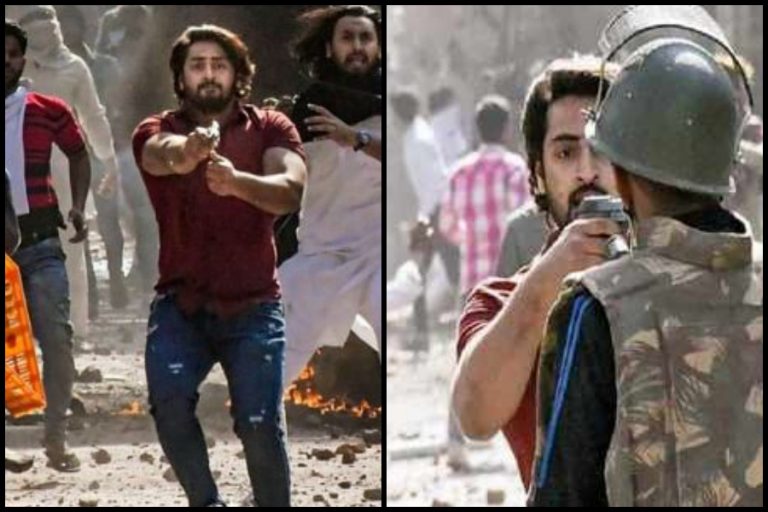
Massive riots erupted in Delhi on Monday and continued on Tuesday. The death toll has reached 20, countless more have been injured and the damage to property has been enormous. Amidst all of this, one gun-wielding man was spotted brandishing his gun at the Police and firing shots. In what has emerged as one of the most iconic photographs from the violence, the Policeman refused to budge even as the man pointed his gun straight at him. The rioter was identified as Shahrukh and he has now been arrested.
The Policeman confronted by Shahrukh has been identified as Head Constable of Delhi Police Deepak Dahiya. He confronted the gun-wielding rioter with just a lathi in his hand. Dahiya told Times of India, “I was deployed at Maujpur Chowk. Things suddenly took an extremely violent turn and people started pelting stones at each other. As I moved towards the scene of violence, I heard a gunshot. I saw a man wearing a red sweatshirt… he was wielding a pistol. I immediately jumped to the other carriageway to divert his attention.”
“He was charging ahead… I walked up to him to divert his attention.. I could not have allowed anyone else to come in his way. My priority was to ensure that there was no casualty,” Dahiya added. He further said that it was his duty and he had to do it, “Kaam hain mera, karna hi hai…”
As a testament to his adherence towards the virtues of honour and duty, Dahiya told TOI, “Agar mere saamne koi mar jaata, toh bahut dukh hota hamesha… (had anyone died in front of me, it would have hurt me forever).” Dahiya’s wife and two daughters live in Sonepat, Haryana. His family was unaware of his actions until Tuesday morning. His wife recognized him from his photograph that went viral on social media.
“I did not tell them anything, but my photograph went viral on social media. My wife called me up all worried. I tried to dodge her questions, but even though my face wasn’t visible in the photographs, she recognised me from the blue stripes on the jacket… I kept quiet as I know that she has full confidence in me,” Dahiya said.
One Policeman has lost his life in the riots that have ensued in the national capital. The deceased cop Head Constable Ratan Lal fell prey to a bullet injury. Another cop was also critically injured in the violence.
Pakistan’s move to enforce new restrictions on social media platforms drew a sharp criticism from the United States which expressed deep concerns over the Pakistani action. The State Department said the move “could be a setback to freedom of expression & development of the digital economy.”
New restrictions on social media platforms in #Pakistan could be setback to freedom of expression & development of digital econ. Unfortunate if Pakistan discourages foreign investors & stifles domestic innovation in such a dynamic sector. Encourage discussion w/ stakeholders. AGW
“New restrictions on social media platforms in #Pakistan could be a setback to freedom of expression & development of digital econ. Unfortunate if Pakistan discourages foreign investors & stifles domestic innovation in such a dynamic sector. Encourage discussion w/ stakeholders. AGW” read a tweet from the US State Department.
The statement from the US State Department came weeks after Pakistan approved new rules for regulating cyberspace which many claimed could be used to stifle dissent and free speech.
The contentious regulations that were approved by the Pakistani cabinet last month but were not made immediately public mandate social media organisations to help law enforcement agencies access data and to remove online content deemed unlawful.
The regulations also stated that those companies who do not abide by the rules would run the risk of being blocked online.
According to the new rules, the social media behemoths such as Facebook, Twitter, YouTube, TikTok and others are required to build data servers in Pakistan, get officially registered and assign a representative who will be a point of contact for the government-constituted authority in Pakistan.
The rules mandate social media giants to set up data servers in Pakistan within a year and be liable to provide data of users found guilty of various crimes which includes targeting state institutions, disseminating fake news and hate speech, involving in online harassment, making statements that imperil national security or publishing blasphemous matter — to intelligence and law enforcement agencies (LEAs).
The Pakistani government authority has the sanction to flag objectionable content on the social media platforms to be taken down. If social media companies fail to comply within 15 days, the authority will have the imprimatur to suspend digital media companies’ services or levy a fine worth up to PKR 500 million.
However, on the other hand, undeterred by US criticism, Federal Minister for Science and Technology, Fawad Chaudhry on Tuesday responded back to the recent statement by American State Department representative Alice Wells over Pakistan’s social media regulation, saying Wells’ concerns were nonsensical.
Furthermore, Chaudhry further questioned why Well did not raise similar concerns when the United Kingdom and Singapore had enforced regulatory laws on social media websites.