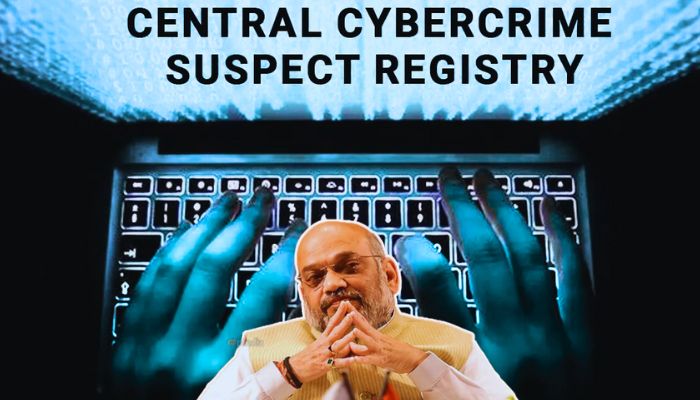
In a major step towards combating cyber fraud, the Ministry of Home Affairs had launched a national cybercrime ‘Suspect Registry’ in September 2024. The Suspect Registry was launched as a part of a broader imperative to enhance cybersecurity and prevent online scams. Since its official launch, the Registry has helped save thousands of crores of rupees by declining lakhs of fraudulent transactions.
National Cybercrime Suspect Registry and how it works
The Suspect Registry was launched on 10th September 2024 by Union Home Minister Amit Shah. This registry was formed to bolster cybersecurity and prevent online scams by aggregating and sharing data on known cybercriminals. The initiative is managed by the Home Ministry’s Indian Cyber Crime Coordination Centre (I4C). The Suspect Registry was developed based on inputs from the National Cybercrime Reporting Portal (NCRP), where citizens report cybercrimes.
States have boundaries, but criminals do not. The new national 'Suspect Registry' linked with the states will help prevent cybercrimes. pic.twitter.com/6J1vJJtw7g
The Suspect Registry is aimed at creating a cyber shield by identifying and flagging suspected cybercriminals. The Registry addresses the surging tide of online scams in the country, where cyber fraudsters use myriad tactics, including phishing links, fake applications, and mule accounts to siphon money.
Pertinently, the cybercrime Suspect Registry aids in real-time prevention of online scams rather than just the conventional post-incident investigation. Reports say that the Registry launched by the Central government contains data on over 1.4 million cybercriminals linked to fiscal fraud and other forms of cyber offences. This data comprises phone numbers, email addresses, and bank details, in addition to other identifiers connected with suspicious activities.
However, this Registry is not related to GST fraud detection, and specifically targets cyber-enabled financial crimes like phishing, fraudulent transactions, and identity theft, etc. For GST-related fraud detection, there are separate mechanisms in place.
In addition to aggregating data from the NCRP, the Suspect Registry gathers inputs from various law enforcement agencies, intelligence units, and police departments in states and union territories. The goal has been to create a database of suspects, be it individuals or entities, flagged for suspected role in cybercrimes.
The Suspect Registry is accessible to federal probe agencies like the Enforcement Directorate, and Central Bureau of Investigation (CBI), etc, and state and UT police forces, alongside financial institutions like banks and payment gateways. To ensure widespread adoption, the Reserve Bank of India (RBI) has mandated all banks to integrate with the Suspect Registry.
The I4C-managed Suspect Registry has a robust fraud detection mechanism in place. When a transaction is initiated through UPI, net banking, or other apps, banks and financial platforms cross-reference the relevant details, including phone numbers or account numbers, against the Suspect Registry.
If a match is found indicating a connection to a known cybercriminal, the transaction is flagged and declined in real-time. By preventing the money from being transferred to fraudulent accounts, online scams are stopped at the source.
The Suspect Registry has integrated AI-driven tools for data analysis and pattern recognition. To make the registry dynamic, it is continuously updated with new reports and data.
Notably, the Suspect Registry operates under the Information Technology Act, 2000, and in alignment with the Personal Data Protection Act for handling sensitive data, to ensure privacy while prioritising national security.
Suspect Registry and its massive impact
Within months of its launch in September 2024, the Suspect Registry proved to be a game-changer in combating cybercrimes. In the first 90 days after its launch, the registry helped decline over 6.10 lakh fraudulent transactions. The Suspect Registry prevented victim losses estimated at Rs 1,800 crore. Beyond financial savings, it led to quicker arrests and probes.
By mid-2025, the cybercrime Suspect Registry had its impact expanded, with the blocking of over 13 lakh fraudulent transactions. With this, the Registry helped save victim losses up to Rs 5,100 crore.
As per a December 2025 press release issued by the Ministry of Home Affairs, more than 18.43 lakh suspect identifier data received from Banks and 24.67 lakh Layer 1 mule accounts were shared with the participating entities of Suspect Registry and declined transactions worth Rs. 8031.56 crores.
Interestingly, the Suspect Registry is also being used by the I4C for proactive prevention against cyber fraud. Recently, a massive job scam was unearthed in Cambodia. Eight fraudsters have been arrested for operating an interstate investment fraud conspiracy. These fraudsters embezzled around Rs 4 crore through mule bank accounts in just 14 days. This cybercrime ring had connections to handlers in Cambodia.
Further investigation by the Indian probe agencies traced a Pakistani link to the fraud network. Over 5,000 Indians have been found to be stranded in Cambodia after they were duped into engaging in cybercrime through phoney job opportunities.
Some of the victims saved and brought back have revealed to central agencies that they were recruited by Pakistani agents. Digital footprints, including IP logs from recruitment calls and chats, were used in forensic analysis, and they outlined the presence of operatives in Pakistan. These Pakistani handlers were running a coordinated network that preyed on vulnerable jobseekers from places like Uttar Pradesh, Punjab, Mumbai, Telangana and Kerala.” While the central probe agencies, including the CBI and NIA, continue investigation into the syndicate, all the IP addresses traced to Pakistan in this case, have been entered in the Suspect Registry. The flagged IPs would now trigger real-time alerts or blocks during suspected fraudulent transactions or communications, disrupting cybercrime in real-time.
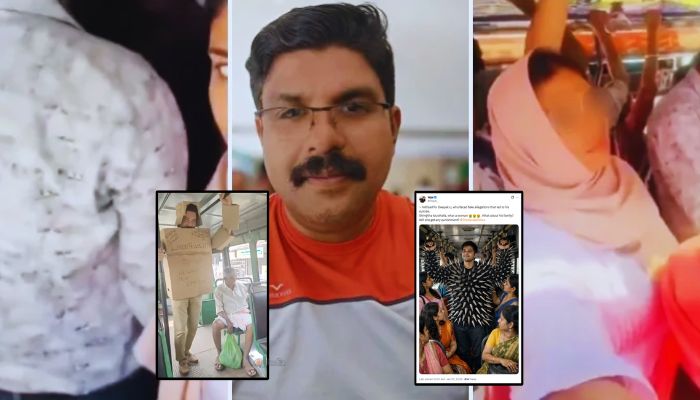
The suicide of a 40-year-old man named Deepak U has sparked a national debate over whether it was a case of real sexual harassment by the man or the woman, Shimjitha Musthafa, filming the incident, stooped too low for view farming. Amidst the outrage, the woman who accused Deepak of sexually harassing her during a bus ride in Kerala’s Kozhikode has been booked by the police on 20th January, over the allegations of abetment to suicide.
This comes after the deceased man’s mother, Kanyaka, filed a complaint against Shimjitha Musthafa. The case has been registered under Section 108 of the Bharatiya Nyaya Sanhita (BNS), 2023.
The Kozhikode Medical College Police have already recorded the statement of the accused, Shimjitha Musthafa, and further action will be taken in the matter after preliminary investigation.
Meanwhile, the Kerala Human Rights Commission has ordered an investigation, and the incident has sparked discussion on mental health, false accusations, and the detrimental outcomes of desperation for followers and views farming by content creators.
Deepak U committed suicide after a sexual harassment claim triggered trolling and backlash against him
On 16th January, Deepak U, a resident of Kozhikode’s Govindapuram area, had taken a KSRTC bus, where Shimjitha Musthafa was also travelling. During the crowded bus journey, Shimjitha Musthafa recorded and shared a video claiming that Deepak inappropriately touched her.
The viral video shows Deepak standing away from the woman, trying to balance himself by holding the upper part of a seat as the bus shook and rolled on. For the first few seconds, the video was shot with the woman showing Deepak, who was standing a couple of feet away from her. The next part of the video shows the woman from another angle, where she is standing closer to Deepak, and pointing the camera at how his elbow is moving. Deepak, apparently unaware that a video is being made, continues his position. At one instance, his elbow touches the woman’s chest, who was then standing very close to him.
The video went viral and sparked sharp reactions. Soon after, Shimjitha published another video doubling down on her allegations against Deepak, saying that he deliberately touched her without consent and violated her sexual boundaries. She further claimed that it was a deliberate act stemming from the belief that he would not have to face any consequences for it.
“Yesterday, I shared a video from a public bus where a man deliberately touched me without my consent. This was not an accident or a misunderstanding. It was a clear violation of my sexual boundaries. I began recording after noticing a woman in front of me was uncomfortable. Despite knowing he was being recorded, the man still went ahead and touched me. This shows a deliberate act, a lack of empathy and the belief that he would face no consequences,” Shimjitha Musthafa said.
After the video went viral, Deepak was reportedly distressed and told his family and relatives that he had no wrong intentions and that his hand touched the woman inadvertently. On the morning of Sunday (18th January), Deepak’s parents tried to knock on his door. After there was no response, the family called neighbours to gain entry into the room. Deepak was found hanging.
Deepak’s devastated mother said that the deceased man was deeply stressed after the video Shimjitha shared on social media and levelled grave accusations against him, which went viral. Deepak’s mother said, “My child could not bear it. He has not been accused of anything wrong ever.”
In no time, social media pivoted from criticising, trolling, and rushing to judge Deepak to pointing out that Deepak was innocent and the woman intentionally set him up, to gain social media attention.
Memes showing men using cardboard boxes to avoid getting falsely accused of sexual harassment
The disturbing incident has triggered a wave of memes and satirical content on social media, particularly centred on the men’s apprehensions of false accusations in public spaces like buses.
Several videos and memes show men employing exaggerated protective measures, including cardboard boxes, to avoid any accidental contact with women, which may spark any baseless claim of harassment. Call it dark humour or a unique protest, such content is gaining widespread support on social media.
In one of the viral videos, a man in a crowded Kerala bus is seen wearing an oversized cardboard box covering his upper body, arms outstretched, holding the overhead bar. The box features text in Malayalam, which roughly translates to “Protection from false allegations”.
Are these unavoidable for male passengers and male conductors?
In the backdrop of an incident where a man died by suicide after being humiliated through a video recorded against him for a mistake he did not commit, visuals of men using cardboard shields while travelling on buses… pic.twitter.com/eBou78BrV6
Sharing video of some men wearing cardboard boxes and saying that they are wearing them to save themselves from getting falsely accused of touching women in public spaces inappropriately, an X user wrote, “From now on, the new tactic that men have come up with to save their lives from those reel-obsessed girls who travel together in buses.”
இனி பஸ்ஸில் உடன் பயணிக்கும் ரீல்ஸ் வெறி பெண்களிடமிருந்து ஆண்கள் தங்கள் உயிரை காப்பாற்றி கொள்ள ஆண்கள் எடுத்த புதுவிதமான யுக்தி😳 pic.twitter.com/H4eLm8EMI6
Sharing another such video, an X user wrote, “After this incident in Kerala, many men are feeling scared & insecure. Now, some men are getting on the bus with ‘sharp sticks’ or rods on their shoulders so that no woman can use the excuse of a push to record a video of them.
After this incident in Kerala, many men are feeling scared & insecure. Now some men's are getting on the bus with “sharp sticks” or rods on their shoulders so that no woman can use the excuse of a push to record a video of them. https://t.co/ICfQPUTsx5pic.twitter.com/9S7TScM18U
In another video, a man is seen placing a cardboard as a partition on a bus seat before sitting next to a female passenger. Sharing the video, an X user wrote, “Men can travel by bus in Kerala from today.”
Another X user shared an AI-generated picture, showing a man wearing multiple bodycams while travelling in a crowded bus. Sharing the image, an X user wrote, “How to travel by bus in India if you’re a male.”
A key takeaway of the entire episode is that social media could be a double-edged sword. While it is a tool that can bring social change, it can also devastate lives. Deepak could not bear the mental toll of the social media trial based on the claim Shimjitha Musthafa associated with the video she uploaded.
While Musthafa justified her actions, many questioned whether she was so sure that Deepak inappropriately touched her and violated her sexual boundaries; why did she not file a police complaint against him instead of uploading the video on social media and leaving it at that?
This question lends credence to the allegations that Shimjitha may have recorded and wrongly passed off the inadvertent touching as deliberate harassment, for follower and views farming, not realising that Deepak would take the extreme step.
IUML leader to YouTuber: Who is Shimjitha Musthafa?
Shimjitha Musthafa is originally from Vatakara (also spelt Vadakara) in Kerala’s Kozhikode district. She shifted to Velleri after her marriage 16 years ago. While married Muslim women pursuing higher education is relatively rare, Shimjitha completed her graduation and post-graduation in commerce. She obtained a BEd degree.
Media reports confirm that Shimjitha Musthafa has been affiliated with the Islamist political party, Indian Union Muslim League (IUML).
In the year 2020, Shimjitha Musthafa contested panchayat elections from Velleri ward of Areekode Grama Panchayat on the ticket of IUML. Shimjitha won the election with a margin of 588 votes.
So, Shimjitha Musthafa is/was also a member of the Indian Union Muslim League in Kerala.
The suicide case of Deepak must be thoroughly investigated. The video itself clearly shows that she was initially standing parallel to him and later changed her position on a crowded bus.… pic.twitter.com/ydYRzs6mIM
Notably, IUML is an offshoot of Pakistan’s founder and Islamist Mohammad Ali Jinnah’s All India Muslim League (AIML). The birth of the Indian Union Muslim League (IUML) in December 1947 was a part of the intention to keep the spirit of the All-India Muslim League. The IUML advocated Sharia law for Indian Muslims in the Constituent Assembly after India’s independence. The party was found involved in the planning as well as the execution of the brutal Marad massacre in Kerala in 2003.
Its leaders, P.P. Moideen Koya and Moyeen Haji, have previously been accused of funding, conspiring and executing the riots. In 2023, the IUML had declared support to Palestinian Islamic terror outfit Hamas even as the latter was killing and raping Israeli people. In 2023, the IUML leaders raised anti-Hindu slogans, including those threatening to hang them (Hindus) in front of Temples and burn them alive, during Kerala’s Kasargod during a protest over Manipur unrest.
A Manoramareport says that Musthafa’s family has been sympathetic to the IUML. She remained active as a panchayat member, but later, she travelled to Dubai with her husband, and eventually began working as an accountant. During her time in Dubai, Shimjitha developed an interest in vlogging.
Ummer Velleri, IUML secretary of Areekode Grama Panchayat, said, “Shimjitha was not very well known among local people then. But we decided to field her because she is well-educated. We wanted to groom a woman leader for the party. As a postgraduate, she was an apt candidate, with the potential to rise even to the post of panchayat president. Her victory by a huge margin surprised even party cadres. Her manners and attitude attracted voters.”
Shimjitha, who during her college days was overtly religious, faced criticism with her party, IUML, after she began uploading social media content without a hijab and wearing a Bindi. The IUML soon asked her to resign from her position as the panchayat leader, and the rift since then only widened.
For the last six months, Shimjitha Musthafa has been residing in Kozhikode’s Vatakara and has taken social media influencing as a career. Currently, her whereabouts remain undisclosed, with some reports claiming that she is absconding.
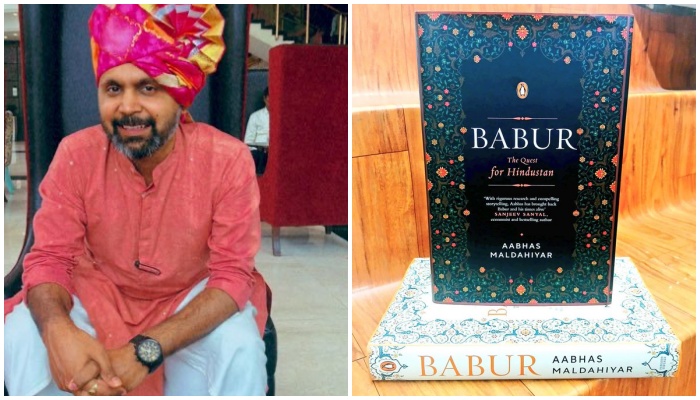
This piece is written as a direct response to the recent Op-Ed written by the Vice-Chancellor of Makhanlal Chaturvedi National University of Journalism and Communication (MCNUJC) on OpIndia and a public letter issued by him, in which he chose to condemn my proposed session on Babur. While the tone of his intervention was framed as concern for “positivity” and cultural harmony, its substance reveals something far more troubling: a naïve; indeed dangerous, insistence that a civilisation can be strengthened by refusing to speak of its invaders.
Such a position is not merely historically untenable; it stands in direct contradiction to the very ethos of Bharat. A civilisation that survives does not do so by selective silence, nor by outsourcing its memory to administrative convenience. It survives by remembering; clearly, honestly, and without fear.
The pride in the word Bharat does not rest merely on civilisational continuity stretching back to the Battle of the Ten Kings. Its deeper source lies in something far more formidable: this civilisation did not fracture despite over a thousand years of continuous invasion.
Many came, those who shattered Rome, extinguished Greece, humbled Persia, and erased entire worlds like Egypt. They broke civilisations elsewhere. They failed here. Bharat stood, bloodied, but unbroken. That endurance itself reflects the sacredness of this geography and the resilience of its civilisational soul.
Dharma endured every test of time, perhaps because Charioteer Shri Krishna himself is our Bhagyavidhata. His words were not poetic musings. They strategic doctrines for the endurance of a civilisation when he uttered:
यदा यदा हि धर्मस्य ग्लानिर्भवति भारत।
अभ्युत्थानमधर्मस्य तदात्मानं सृजाम्यहम् ॥४-७॥
परित्राणाय साधूनां विनाशाय च दुष्कृताम् ।
धर्मसंस्थापनार्थाय सम्भवामि युगे युगे ॥४-८॥
The world, Krishna reminds us, is a perpetual battlefield against Adharma. He does not promise peace. Rather he promises return. Again and again. And he commands Arjuna not to retreat into moral paralysis, but to rise and fight for Dharma.
I firmly believe the brave-hearts of Bharat took this command with absolute seriousness. They did not just believe in it. They acted upon it. They bore arms and waged war not for the sanctity of Krishna, Ram, Devi, and Mahadeva.
Women chose jauhar over dishonour. Men fought until life itself was exhausted. Our ballads describe warriors whose bodies continued to battle even after being beheaded. One can be free to call it exaggeration, but it was no less than reverence for courage that transcended mortality.
This bloodshed and self-immolation were not random acts of fanaticism. They were conscious sacrifices; for Dharma, for Bharat Mata, and for their Ishta.
Against this backdrop, it is not merely ironic but deeply tragic when the Vice Chancellor, Shri Vinay Manohar Tiwari, says:
“Instead of these, bringing a discussion on an invader like Babur to Bhopal is beyond comprehension, especially when Ayodhya is being illuminated on a path of faith and development. Under the New Education Policy, Babur and Aurangzeb are also being removed from history curricula. Then why do we wish to keep these ghosts of history alive in our discourse? This is the time to tell India’s own great epics, from the Ramayana to a national renaissance. The Prime Minister himself reiterates this again and again.
In my view, at such a sensitive and energetically positive moment, placing an invader like Babur at the centre of discourse is not only foolish, but also entirely contrary to the current flow of India’s soul. At the very least, ideological rituals conducted with the support of the administration should have been kept free of this. Yet, regrettably, a shrill controversy has once again become associated with Bharat Bhavan. BLF used an author and his book as a shield to play this game within the sacred परिसर of Bharat Bhavan. This is intolerable.“
I am taken aback by the words of the Vice-Chancellor; not merely because they are historically shallow, but because they misrepresent the Prime Minister himself.
Only days ago, the Prime Minister led the commemoration marking one thousand years since the first destruction of Somnath. On multiple occasions, including while speaking on Guru Parab, the Prime Minister has openly referred to the barbarity of Babur, to invasions, and to civilizational trauma. Very recently, even the National Security Advisor reaffirmed the importance of telling the stories of our gory past. These words are uttered by them as they care for the ethos of Bharat.
A civilisation cannot be asked to celebrate itself while being instructed to forget its wounds. The calamities brought by invaders, forced conversions, sex slavery, mass slaughter, and cultural erasure are not rhetorical exaggerations; they are historical facts. K.S. Lal was not a naïve provocateur when he documented that nearly 80 million people were lost between 1000 and 1500 CE during Islamic invasions.
The celebration of Bharat is incomplete, indeed dishonest, without remembering those who sacrificed so that I may still wear the Raksha Sutra and the Tilak. One cannot speak of Shri Ram while sanitising the ferocity of Ravan. To do so is intellectual fraud.
This selective amnesia is precisely the legacy of Nehruvian historiography, which chose to suppress historical wrongs in the name of a contrived positivity and a manufactured idea of Hindu–Muslim unity. The result has been a prolonged civilizational Stockholm syndrome, where the victim is trained to apologise for remembering.
I write this on the day we commemorate thirty-six years since the exodus of Kashmiri Hindus. Even today, there are voices claiming that “nothing really happened” in Kashmir. That denial exists because the past was sanitised, its horrors pushed under the carpet.
How does one stand at Martand Mandir, one of the most sacred sites of Kashmir, and not acknowledge that every surviving Muslim demographic there is a reminder of a Hindu civilisation that was systematically erased? This is not rhetoric. It is a historical truth. Kashmir was a Hindu land, home to multiple sampradayas, including Buddhist traditions. Under the guidance of figures like Sufi Hamdani, forced conversions transformed that landscape, leading to the near-vanishing of Kashmiri Hindus.
If we cannot speak this truth aloud, then what exactly are we preserving?
There are countless such histories that must be spoken; from mandirs and from every sacred geography of Bharat, to honour the promise made by generations of Kshatriyas who sacrificed themselves for the motherland.
What is even more disturbing is that the Vice-Chancellor today sounds less like an academic and more like a spokesperson for those who were intellectually dishonest from the very beginning; those who falsely reported that the Bhopal Literature Festival was hosting a session to “glorify Babur.” They did not bother to read even a single page of my book.
The protest was staged on a false premise. Threats were issued, of burning books, of disrupting the event, of physical harm. Faced with legitimate security concerns, the organisers cancelled my session. Let us call it what it was: a de facto ban.
Does the Vice-Chancellor understand that I had security concerns? Does he understand that I came to Bhopal to discuss my own book, not to provoke anyone? And yet he makes statements suggesting that the festival was merely “using” me; as though my cancellation were a political tactic rather than an act of intimidation.
Politics can wait. Intellectual honesty cannot.
To compound this farce, Swadesh published a piece boasting that it had ensured the “triumph of culture and dharma” by preventing my session. One must ask: what kind of world are we inhabiting? In the process, they have turned Hindutva itself into a laughing stock.
Today, media portals openly speak of the Right devouring itself. Headlines mock, “Babur haunts…”. The damage is done.
The irony is brutal: for generations to come, it will be remembered that those draped in saffron could not even stand by one of their own, someone was vilified without being read, was silenced without being heard.
Why does he believe that merely stating he has authored a book on “Islamic Rule in Hindustan” somehow legitimises his stance in condemning my session?
I am certain this is not jealousy. Yet by invoking his authorship as a moral shield, he leaves precisely that aftertaste, of an author unsettled by another scholar working on the same civilisational fault line. A reality check, however, is necessary.
His work is largely derivative, grounded in the magnum opus of Elliot and Dowson, which itself relies on selective translations of Muslim chroniclers. My approach has been fundamentally different; and deliberately so. I followed the methodological path recommended by Sir Jadunath Sarkar in his 1953 retirement address: to engage original sources in the language of authority.
Across Babur–I and Babur–II, I have produced nearly one thousand pages based on direct engagement with Persian manuscripts. I have pointed out inaccuracies and interpretative distortions in the translations of Annette Susannah Beveridge, and others. One may state that this was an act of polemics, but the truth is, I was reading the original manuscripts alongside the translations and fallacies (inconsistencies) were easy to find.
By stating so, I’m not making any claim of superiority. Rather I’m just elaborating the statement of method adopted by me which was suggested as the “way” to deal with history by veteran, Sarkar.
When the national debate on Babur resurfaced following NCERT changes, I was among the very few historians, apart from RC Majumdar and Sir Jadunath Sarkar, who were publicly referenced as part of the so-called “Nationalist-wing” scholarly tradition. When people now claim that the Right produces no scholars, it is precisely because individuals occupying decorated offices lend credibility to such lazy generalisations. Perhaps you wish to gatekeep words of Nationalists on invaders only to give more opportunity to distortion creators like Audrey Truschkey.
If he believes I had no reason to protest, if he feels my letter to the Prime Minister was unnecessary, then I can only pity the intellectual poverty of that position. Perhaps only among all politicians, Narendra Modi understands at best how grotesque it is to censor discussion on invaders, because he himself spoke openly about Islamic invasions while commemorating one thousand years of the destruction of Somnath, and he did so from the sacred precincts of Somnath itself.
To invoke the Prime Minister as a shield for silencing discourse on Babur is therefore intellectually dishonest and outright absurd.
I regard Bharat Bhavan as one of the most significant cultural institutions of Bharat. For me, it is no less than a temple. I studied that complex closely during my undergraduate training in architecture. Designed by Charles Correa, it is a sacred spatial expression of Indian civilisational memory. I can state with confidence that I have treated Bharat Bhavan with greater reverence since the age of seventeen than many office bearers who now posture as its custodians.
And precisely because of that sanctity, there could have been no better place to speak about the forged “Bhopal Wasiyatnama”, the so-called Will of Babur, used repeatedly to paint him as a paragon of tolerance. That was the core subject of my session.
There could have been no better place to discuss a book that is perhaps the only one in the world dedicated to the brave women of Chanderi (Madhya Pradesh), who committed jauhar five centuries ago; after which Babur declared the region Dar-ul-Harb cleared and Dar-ul-Islam established.
There could have been no better place to speak of the valour symbolised by bangles, of Shakti, because without recognising that valour, all hollow invocations of “culture and tradition” are meaningless. These women did not leap into fire for some pointless posturing. They did so for the Dharma.
But such truths are inconvenient when politics colonises the mind; when culture becomes a fashionable slipper one drags around while loudly proclaiming, “I walk culture.”
And what did Swadesh do when I protested? It stooped to character assassination. It dredged up my Marxist phase, which actually existed from 2008–2012, a four-year period, constituting barely nine percent of my life; and used it to allege opportunism. What it concealed was that for the last thirteen years, over thirty percent of my lived life, I have worked consistently as a Hindutva ideologue, almost my entire adult life.
Only a wilfully ignorant analyst; or a propagandist would employ such dishonest arithmetic.
I continue to practise as an architect, working twelve hours a day. In parallel, I taught myself Persian to access original manuscripts. Writing detailed historical works grounded in primary sources is not how one becomes a “poster boy.” It is how one attempts to become a scholar.
Then came his letter (of the VC); sanctimonious, evasive, soaked in “Ishwar–Allah Tero Naam” sentimentality, while cloaking itself in concern for the Ramayana. Mahatma Gandhi too invoked Ram Rajya with pacifism. That is precisely the tone this letter carried.
But how does one speak of the Ramayana and omit the Ram–Ravan Yuddha? Will Ravan be erased as well in the name of “positivity”?
In conclusion, I can only add that Bharat Bhavan is not merely an arts centre. It is a civilisational space that must echo the spirit articulated by Shri Krishna and Bhagwan Ram, the centrality of Kshatriya Dharma. And Kshatriya Dharma is meaningless without Shatrubodh, the clarity to recognise the enemy.
The Vice-Chancellor could have taken a principled stand. Instead, he has chosen politics over truth. History will remember that choice.
And regrettably, it will remember him among those who feared Babur.
On 19th January, Iran’s police chief announced a limited surrender window for those involved in “riots”. It was not just a law and order message. It was Tehran’s way of signalling that the Islamic Republic believes it has weathered the most dangerous phase of the unrest.
In his statement, police chief Ahmad Reza Radan promised leniency for “deceived” youth while issuing a warning to organised hostile elements. He framed the protests as a contained security challenge rather than an existential threat to the regime.
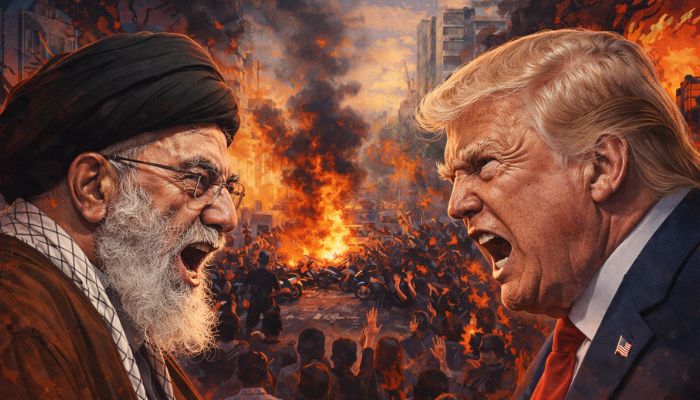
This framing is central to how Iran is presenting events, especially in response to aggressive rhetoric from the President of the United States, Donald Trump, whose public calls for Iranians to remain on the streets have been dismissed in Tehran as reckless provocation rather than support for genuine dissent.
From surrender call to claim of restored control
Radan’s announcement came after several days of relative calm in the country. Iran had witnessed violent unrest for weeks. Armed patrols, checkpoints, and a visible security presence across major cities, including sensitive locations such as Tehran’s Grand Bazaar, showed the state had gone on full throttle to reassert control. According to Iranian officials, thousands were arrested and the streets are no longer witnessing mass mobilisation.
This sense of control is being projected deliberately by Tehran to counter international narratives portraying the protests as an unstoppable uprising against clerical rule.
How economic anger turned into nationwide unrest
The protests in Iran initially erupted after a sharp fall in the Iranian rial. This triggered anger among shopkeepers and traders in commercial districts. Rising prices, unemployment, and economic hardship further pushed the protests to flare up. However, within days, slogans moved beyond economic grievances to direct calls for regime change. Demonstrations were reported in major Iranian cities including Tehran, Mashhad, Isfahan, and Shiraz.
On the nights of 8th and 9th January, the most violent phase of the protests unfolded. In a statement, the head of Iran’s forensic medicine authority, Abbas Masjedi Arani, said that many victims were shot in the head or chest at close range or stabbed. His statement indicated intent to kill rather than crowd control gone wrong. State media reported that most of the dead were young Iranians, many in their twenties.
Internet blackout and information war
As violence escalated, Tehran imposed a near total internet and mobile communication shutdown. The blackout severely restricted coordination among protesters. It also prevented images and videos of the protests from reaching the outside world.
Amid the chaos, Elon Musk’s satellite powered internet service, Starlink, provided some hope to protesters, as Musk has repeatedly claimed his service cannot be blocked. However, Iran reportedly did the “unimaginable” and blocked almost 80% access to Starlink services, allegedly with the help of Russian tech and Chinese research.
While some services have since been restored in the country, the episode showed how tightly the state controls information during crises. For Tehran, the blackout was not merely about internal security but also about countering the narrative war playing out in international media.
Tehran’s accusation, Trump and foreign backing
Iranian leaders have been blunt in assigning blame for the protests. Supreme Leader Ali Khamenei publicly described Trump as a criminal and held him responsible for casualties and destruction caused by “foreign linked armed elements”.
In an op ed for Russia’s TASS news agency, Iran’s ambassador to Moscow, Kazem Jalali, accused Trump of being the architect of the “maximum pressure” sanctions regime while simultaneously issuing contradictory messages about protecting the Iranian people. According to him, provocative statements from Washington encouraged violence and enabled groups seeking to turn protests into riots.
Trump’s own remarks fuelled this perception. At the height of the unrest, he warned Iranian authorities against using force and claimed that “help is on the way”, language Tehran interpreted as open encouragement of regime change.
Competing narratives on casualties
Khamenei has acknowledged that “thousands” were killed during the unrest, which is an unusually direct admission. US based Human Rights Activists News Agency claimed more than 3,300 were killed and tens of thousands were arrested. Reuters cited regional sources suggesting an even higher toll, particularly in Kurdish majority areas.
Iranian authorities reject claims that security forces carried out mass killings or coerced families over burials. They insist that armed groups backed by hostile foreign powers were responsible for much of the bloodshed.
Why this matters for India
Beyond Iran’s internal politics, the unrest has wider regional implications that are not necessarily in India’s interests. Trump backed destabilisation in Iran is not a moral crusade but a strategic gamble that risks reshaping the region to India’s disadvantage.
Iran is central to India’s access to Afghanistan and Central Asia through the Chabahar port, a project designed explicitly to bypass Pakistan. Any shift towards a US aligned or unstable Iran could restrict India’s use of Chabahar under American pressure. This would weaken India’s already diminished footprint in Afghanistan after the Taliban’s return in 2021.
There is also historical context that informs India’s caution. A Western backed Iran under the Shah was not friendly to Indian interests. Tehran openly supported Pakistan during the 1965 and 1971 wars, supplying arms, oil, and military equipment. The idea that a pro Western Iran would automatically align with India ignores this record.
Pakistan’s leverage and Afghanistan’s fault lines
A weakened or US aligned Iran could indirectly strengthen Pakistan’s hand in Afghanistan. Iran and Pakistan share a long border, and closer coordination under Western influence could further isolate regions where India once had influence. For New Delhi, this would compound an already unfavourable strategic environment in the region.
Trade corridors are also at stake. India’s ambitions through the International North South Transport Corridor, which runs via Iran to Central Asia and Russia, could be affected if Iran is pressured to prioritise alternative routes aligned with US or Pakistan backed interests.
Has the regime dealt with the protests?
By issuing a surrender ultimatum rather than escalating threats, Tehran’s leadership is projecting confidence that it has contained the unrest. Street protests have largely died down, and the security apparatus is mostly in place.
However, the deeper question is not just whether Tehran has restored order, but at what cost. What will be the regional consequences of the recent protests in the longer run? For India, the lesson remains unchanged. US driven regime change narratives in West Asia do not automatically serve Indian interests. Even if stability in Iran is imperfect, it is strategically preferable to chaos encouraged by external powers whose priorities do not align with India.
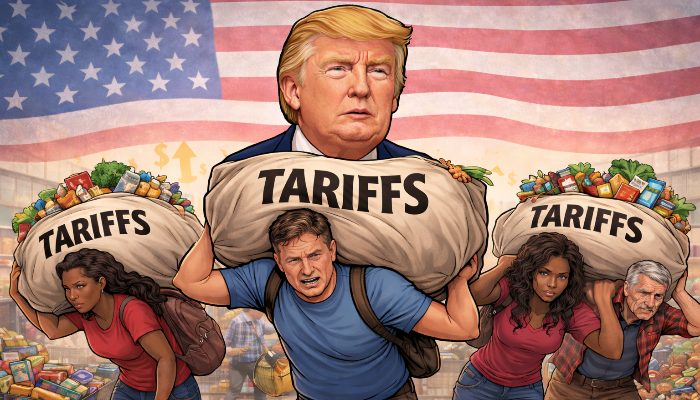
The United States President Donald Trump’s favourite foreign policy tool to dominate both allies and adversaries alike appears to have more profound effects on his own citizens than on the respective nations. On 19th January (Monday), a report released by the Kiel Institute for the World Economy found that Americans are paying nearly all of the costs associated with US tariffs. “America’s own goal: Americans are largely responsible for funding Trump’s tariffs” highlighted the tangible effects of this policy.
The sweeping tariffs slapped by the Trump administration have been determined to empty the pockets of his country’s citizens in stark contrast to the bold declarations of “tens of billions of dollars flowing into America.” The strategy in reality hurts the US economy, despite the administration’s intention for the tariffs to go after foreign companies, the study suggest.
Julian Hinz, who co-authored the report, stated, “The tariffs are an own goal. The claim that foreign countries pay these tariffs is a myth. The data show the opposite: Americans are footing the bill.” He is an economics professor at Germany’s Bielefeld University and research director at the institute. The tariffs function similarly to a consumption tax for imported items and simultaneously leave fewer options in terms of both variety and quantity.
A lot has been said about the Greenland tariffs in the past couple of days. We've been looking at the broader picture: who actually pays the tariffs?
We analyzed 25 million shipments worth nearly $4 trillion.
The answer: Americans pay 96%. Foreign exporters absorb just 4%.
The research team examined over 25 million shipment records totalling nearly $4 trillion in US imports between January 2024 and November 2025. It uncovered that the customs income of the country rose by almost $200 billion in the last year “paid almost exclusively by Americans in additional tariff revenue.” According to Hinz, this will eventually lead to stronger inflation in the United States.
Likewise, just 4% of the tariff burden was borne by foreign exporters as the remaining 96% was shifted to US consumers. Moreover, the export prices did not decline while trade volumes plummeted. “There is no such thing as foreigners transferring wealth to the US in the form of tariffs,” he reiterated.
India reduced import volumes without any alteration in prices
The analysis also looked into the unanticipated tariff spikes that were applied to Brazil and India in August of last year. The tariffs on Brazilian imports were unexpectedly hiked to 50%, while those on Indian imports reached 50% from 25% under the guise of trade imbalances and domestic manufacturing priorities. It also included the so-called penalty for ‘failing to halt the purchase of Russian oil’ and “aiding” the war in Ukraine.
However, the information demonstrated that overseas exporters did not cut their prices to compensate for the higher duties. If exporters had absorbed the taxes, the rates in the US would have fallen in comparison to other markets but this did not happen.
“We compared Indian exports to the US with shipments to Europe and Canada and identified a clear pattern. Both export value and volume to the US dropped sharply, by up to 24 per cent. But unit prices, the prices Indian exporters charged, remained unchanged. They shipped less, not cheaper,” Hinz outlined.
These results indicated that US businesses have to deal with declining profit margins and eventually higher charges for consumers. There is going to be pressure on nations that export to the US to find other markets as their sales would shrink. “Tariffs ultimately disadvantage everyone,” Hinz noted.
The findings are consistent with the latest results from economists at Harvard Business School and Yale’s Budget Lab. Furthermore, the tariffs represented as a leverage mechanism to cease hostilities in the name of trade deals to boost Trump’s self-proclaimed image as a “global peacemaker” or yield to US interests have left the Western power in a compromised position.
It also raised the possibility that the US might be at a disadvantage in a potential trade war with Europe. The US has imposed 10% tariffs on eight European and NATO (North Atlantic Treaty Organisation) allies for opposing its control of Greenland. US Treasury Secretary Scott Bessent has warned against any retaliatory measures, calling them “very unwise.”
What came out of Trump’s tariffs
Trump repeatedly insisted that outsiders would pay the bill for his historic tariffs, which have been aggressively implemented over the past year as an instrument for both international policy and revenue-raising. These assertions even pushed some countries to enter into agreements with the United States.
However, sovereign nations like India resisted the pressure and now another report has shattered the illusion of the inflated effect of the tariffs. On the other hand, India’s growth persisted at an unprecedented scale, even in the face of tariffs. India’s real GDP (Gross Domestic Product) climbed at the fastest pace in six quarters during the second quarter of FY (Fiscal Year) 2025-2026, attaining an outstanding high of 8.2%, greatly outpacing predictions of 7.3% growth.
The nation keeps retaining the title of major economy with the fastest rate of growth in the world which surged from 5.6% in the same time last year and 7.8% in the last quarter, highlighting its resilience despite encountering challenging circumstances.
China, which was also at the receiving end of the tariffs leading to a series of retaliatory moves and trade war also announced that it has achieved the highest trade surplus in history.
Beijing declared on 14th January that it had the largest trade surplus in history, with $1.19 trillion in goods and services sent outside compared to its imports which is a 20% increase from 2024 even after accounting for inflation. The country’s monthly export surpluses surpassed $100 billion seven times in 2025. It meant that its overall trade with the rest of the world was hardly hurt by Trump’s tariff push.
Trump has reduced foreign policy to weaponised tariffs, utilising them as devices of both punishment and reward. Any country that refuses to comply with his unreasonable and outrageous demands is subjected to them, while those that do comply receive reductions. However, the aforementioned research has established that Trump has seemingly harmed his own country while attempting to punish others, including New Delhi. Similarly, the tariffs did not significantly impact the trade or growth of its targets as they progressed beyond expectations.
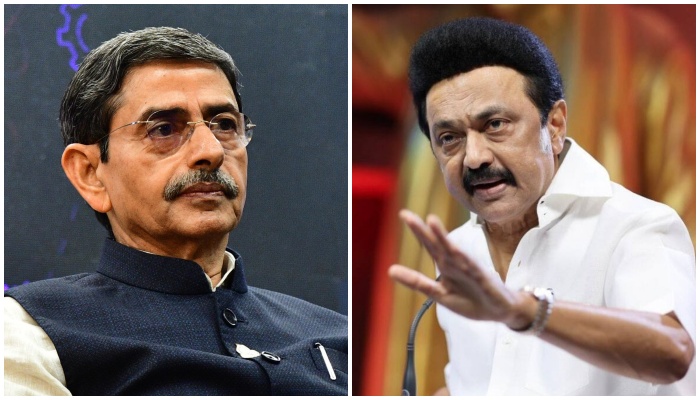
A ceremonial custom has once again sparked a controversy in the hallowed halls of the Tamil Nadu Legislative Assembly. Governor RN Ravi left the House without giving his customary address on January 20, 2026, for the third year in a row. What’s the trigger?
The Lok Bhavan’s stinging 13 point statement of response, which turned the protocol of debate into a harsh critique of the state administration, intensified the situation just minutes after the Governor’s departure. The statement explained that in addition to the anthem dispute, Governor Ravi’s unwillingness to read the message was due to the text’s numerous unsubstantiated claims. The governor said that in an act of ‘Emergency era censorship,’ his microphone was turned off, making it impossible for him to voice his disapproval on the floor.
Beyond protocol, the statement criticised the government’s performance, disputing the claimed ₹12 lakh crore in investments by pointing to a decline in FDI rankings from fourth to sixth place and denouncing the speech for ignoring serious shortcomings like a reported 55% increase in POCSO cases, widespread drug abuse, and an increase in atrocities against Dalits.
The governor’s abrupt departure has exposed a growing fault line in the name of federalism, despite the ruling DMK administration framing this as adherence to a decades old Dravidian tradition in which the Tamil Thai Valthu (Invocation to Mother Tamil) takes precedence at the beginning. It is now a symbolic struggle that many observers worry is planting the subtle, perilous seeds of division, undermining the Indian Union’s basic unity and integrity. It is no more merely a conflict of egos or formalities.
The incident unfolds
As the year’s first session got underway, the controversy broke out. The Governor is required to address the Assembly in accordance with Article 176 of the Constitution. Governor Ravi, however, insisted that the National Anthem be played at the start of the proceedings, either right before or after the Tamil Thai Valthu, in order to give the national anthem the respect it deserves.
When the Speaker of the Assembly, M. Appavu, and the state administration followed their tradition of playing only the state invocation at the opening and the National Anthem at the end, the Governor declined to read his prepared address. He walked out of the chamber, allowing the government to declare the address as, ‘read’ via a resolution, a procedural band-aid over a major political wound.
Governor Ravi’s position was straightforward, it is disrespectful to begin a constitutional function without playing the National Anthem. The Governor could not participate in an event where the National Anthem is insulted and a basic constitutional obligation is ignored, according to a statement later released by Raj Bhavan.
Historical context: The roots of protocol
One must delve into the history of the Dravidian movement and its intricate connection to Indian nationalism in order to comprehend why a song might spark a constitutional crisis.
Playing the Tamil Thai Valthu at the start and Jana Gana Mana at the end is a new political invention rather than an old custom. In 1970, then Chief Minister M. Karunanidhi designated the song Tamil Thai Valthu, written by Manonmaniam Sundaram Pillai, the state song (prayer song). The DMK’s ideology, which highlighted Tamil identity, language, and culture as unique and occasionally crucial, was symbolised by this action. But later on, the Assembly’s particular protocol became clear. The current model was strictly formalised in 1991 under J.Jayalalithaa’s term (AIADMK in alliance with Cong). The reasoning was that the state song opens the assembly and the National Anthem closes it, serving as a vote of thanks or last seal of national sovereignty.
Critics point to the optics, while the state government claims this shows respect for both. The ritual quietly perpetuates a Tamil Nadu First, India Second mentality by prioritising the regional invocation and delaying the National Anthem until the very end, when members are eager to depart. In a country founded on the idea of Unity in Diversity, constitutionalists view this reversal of hierarchy as a concerning indication of regional nationalism.
The constitutional and judicial perspective
The controversy is both legal as well as emotional. The Governor’s demand is based on how Fundamental Duties are interpreted and how important national symbols are.
Article 51A (a): The fundamental duty
Article 51A (a) of the Indian Constitution, which declares that each citizen has an obligation to abide by the Constitution and respect its ideals and institutions, the National Flag and the National Anthem, is the strongest argument in the Governor’s toolbox. Although respect is a broad phrase, the Governor’s office contends that it is against the spirit of this article to deny the Anthem its proper position at the start of a solemn constitutional function, such as the Governor’s Address. The Governor represents the President of India in the Assembly, which is a constitutional assembly rather than a private club.
The Bijoe Emmanuel precedent
On this matter, the judiciary has exercised caution. Bijoe Emmanuel v. State of Kerala (1986) is a landmark case concerning the National Anthem. The Supreme Court decided that it was illegal to expel Jehovah’s Witness students for declining to sing the anthem because of their religious convictions as long as they stood up respectfully.
The current dispute in Tamil Nadu, however, is different. This is about a state institution’s reluctance to play the anthem, not about an individual’s right to remain silent. The courts have consistently maintained that the Anthem deserves the highest level of protocol, even though they have stated that singing is not required. Despite the Governor’s request, the Anthem was purposefully left out at the beginning, which might be seen as a institutional violation of the principles outlined in Article 51A.
Ministry of Home affairs (MHA) guidelines
The MHA published directives pertaining to the National Anthem, outlining when it should be played (such as when the President or Governor arrives at official state functions). In a legislative calendar, the governor’s speech is possibly the most formal governmental event. The state government may be avoiding the spirit of federal protocol by treating the Assembly proceeding as a state-only affair until the very last minute.
The seeds of separation: A dangerous precedent
This persistent conflict suggests a problem that goes beyond procedural disagreement. It poses unsettling queries regarding Tamil Nadu’s future in federalism. A state government sends a message that goes beyond procedure when it adamantly demands that its regional anthem take precedence over the national one and refuses to make accommodations for the governor, the Indian Union’s representative, on the subject of national pride. One interpretation of this behaviour is that it is sowing the seeds of the state first and the nation second.
The normalisation of othering the Centre poses a subtle threat. The political narrative implies that the state’s identity is the fundamental loyalty, while the Indian identity is a formality, by presenting the National Anthem as an imposition or a secondary ritual to be recited only at the exit. Regional pride is essential in a diverse democracy. However, India’s unity and integrity are undermined when regional pride is used as a weapon to marginalise national symbols. The Constitution’s preamble pledges to protect the unity and integrity of the nation. A psychological gap between the citizen and the country is created by acts that symbolically diminish the National Anthem’s importance in a constitutional house.
India would cease to resemble a Union and begin to resemble a loose confederation of conflicting identities if every state adopted this State First model, refusing to play the National Anthem at the beginning of legislative sessions in favour of regional tunes. Therefore, the governor’s exit serves as a warning against this tendency. It emphasises that the National Anthem’s sacredness cannot be compromised and that the ‘Union of India’ rather than the ‘United States of India’ is the constitutional reality.
Conclusion
The Tamil Nadu Assembly standoff serves as a sobering reminder that symbols are important. They are the unseen strands that unite a billion disparate individuals into a single country. The governor is defending constitutional hierarchy by declining to take part in a session that ignores the national anthem. While the state administration hides behind tradition and federal rights, one must wonder who benefits from rigorous devotion to a practice that devalues the National Anthem? It contributes to a story of divide. It fosters a mentality in which the parts are larger than the whole.
The unification of India’s states is crucial as the country moves closer to becoming a global giant. The Tamil Nadu government’s refusal to play Jana Gana Mana at the beginning of the Governor’s address is a test of Indian unity, not a victory for Tamil pride. This modest but powerful act of resistance runs the risk of transforming the intricate fabric of Indian federalism into a patchwork of separatist beliefs. Instead of being an afterthought, the National Anthem should come first.
The University Grants Commission’s Promotion of Equity in Higher Education Institutions Regulations, 2026, notified on January 13, arrives at a moment when the global experiment with Diversity, Equity and Inclusion (DEI) is visibly collapsing. These regulations mandate Equal Opportunity Centres, Equity Committees chaired by vice-chancellors with reserved representation, 24/7 helplines, mobile Equity Squads patrolling campuses, demographic audits, and Equity Ambassadors in every department and hostel.
Framed as a decisive intervention against caste discrimination faced by SCs, STs and OBCs, while loosely gesturing at gender, religion and disability, the intent appears noble. The design, however, is deeply troubling.
What the UGC has proposed is not a modest reform but a sweeping bureaucratic architecture that closely resembles Western DEI frameworks, models that promised inclusion but instead delivered polarisation, litigation, and institutional paralysis. India is at risk of importing a failed ideological export at precisely the wrong moment.
Globally, DEI is in retreat. In the United States, the Department of Justice’s Civil Rights Fraud Initiative, launched in May 2025, has begun probing race-based preferences in federally funded institutions under the False Claims Act. More than 35 major corporations, including Walmart, Ford, Meta and McDonald’s, have rolled back DEI programmes amid shareholder lawsuits, declining productivity, and internal unrest. High-profile scandals involving financial improprieties in DEI offices have further eroded credibility. Even Europe and parts of Asia have quietly moderated DEI rhetoric to avoid regulatory and commercial fallout, recognising that rigid identity frameworks often fracture diverse societies rather than heal them.
The UGC’s regulations mirror precisely this flawed logic. By instituting enforcement squads, anonymous complaint mechanisms, punitive audits and grant-linked penalties, the Commission has moved far beyond its statutory remit under the UGC Act, 1956, which limits it to maintaining academic standards and coordination. These rules verge on executive and quasi-judicial overreach, particularly for state universities that require legislative adoption under India’s federal structure. Legal challenges are inevitable, and uneven enforcement across States could fracture the higher education system itself.
More worrying is the asymmetry built into the framework. The regulations explicitly protect only certain categories, with no equivalent safeguards against false or malicious complaints. India has already witnessed the consequences of such imbalance under the SC/ST (Prevention of Atrocities) Act, where courts have repeatedly intervened to curb misuse and restore due process. Anonymous complaints, “vulnerable area” patrols, and committee structures weighted by reservation invite grievance weaponisation. In a university setting, even unsubstantiated allegations can irreparably damage academic careers, reputations and mental health.
The social consequences could be corrosive. Campuses thrive on trust, debate and informal interaction. A regime of constant monitoring risks converting universities into grievance factories, chilling speech, encouraging self-censorship, and hardening identity boundaries. Rather than reducing caste consciousness, institutionalising it through audits and reporting mechanisms may entrench precisely what constitutional jurisprudence has sought to dismantle. Articles 14 and 15 emphasise equality before law, while Indra Sawhney warned against permanent group entitlements disconnected from present disadvantage.
The economic implications are no less serious. India’s demographic dividend depends on a globally competitive higher education ecosystem. Any perception, real or imagined, that merit is being diluted will accelerate brain drain, weaken flagship institutions, and deter research investment. Bureaucratised equity does not produce inclusion; it produces mediocrity.
Equity cannot be enforced through permanent suspicion. It must be built through fair opportunity, due process, and universal capability-building. The UGC should pause implementation, pilot reforms transparently, restore symmetry in safeguards, and shift focus to needs-based assistance, academic mentoring, and institutional accountability, rather than identity policing.
The world is already learning from DEI’s collapse. India would be wise not to repeat the experiment on its campuses. The UGC’s 2026 regulations risk not ending discrimination, but institutionalising distrust, at a time when the nation can least afford it.
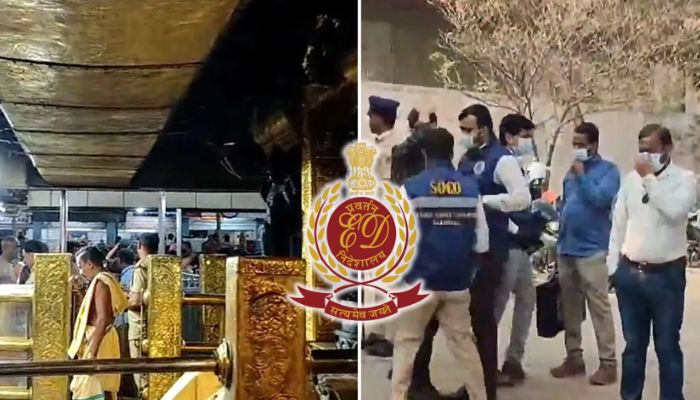
On 20th January, the Enforcement Directorate (ED) launched extensive raids across Kerala, Karnataka, and Tamil Nadu as a part of the investigation into the alleged money laundering in the Sabarimala gold theft case. The raids are underway at 21 locations linked to the accused persons, including their residences and institutions linked to them.
The ED sleuths are raiding the premises linked to Unnikrishnan Potti, former Travancore Devaswom Board President and CPIM leader A Padmakumar, N Vasu, Murari Babu, and gold traders Govardhan and Pankaj Bhandari. The raids are being conducted under the provisions of the Prevention of Money Laundering Act (PMLA).
VIDEO | Ballari: The Enforcement Directorate (ED) conducts raids at multiple locations in connection with the Sabarimala gold theft case.
Meanwhile, raids are also being conducted at Smart Creations in Chennai and at the residence of Bellary-based gold trader Govardhan.
Reports say that an ED team has arrived at the Devaswom Board headquarters in Thiruvananthapuram. Searches are being carried out at Murari Babu’s residence in Kottayam, Unnikrishnan Potti’s house at Pulimath near Kilimanoor, N Vasu’s residence at Pettah, and A Padmakumar’s house in Aranmula.
The ED is also searching the house of Unnikrishnan Potti’s sister in Valiyakattakkal, Venganoor, in addition, the Thiruvananthapuram residences of K P Shankaradas, N Vijayakumar and S Baiju, are also being raided.
Based on the outcome of the multi-state raids, the Enforcement Directorate may proceed to attach assets.
It must be recalled that in December 2025, the court allowed the ED to conduct its own investigation into the Sabarimala gold theft and the linked money laundering, while the SIT would conduct its own probe. Initially, the SIT has opposed ED’s involvement in the case. However, the court overrode their opposition.
Meanwhile, the SIT is set to visit the Sabarimala shrine today to conduct on-site evidence collection. This comes after a report by the Vikram Sarabhai Space Centre (VSSC) showed that the high-quality original gold cladding from the year 1998 was replaced during a 2019 ‘renovation’ with copper and low-quality plating containing nickel and acrylic polymers.
Kerala High Court notes “organised and systematic” pilferage of Sabarimala gold
On the 19th of January, the Kerala High Court observed that an organised and systematic process went into the theft of gold from the Dwarapalaka idols and door frames of the Sabarimala temple. The court’s observation came after the SIT submitted its progress report coupled with the Vikram Sarabhai Space Centre’s chemical analysis report.
The division bench comprising justices Raja Vijayaraghavan V. and K.V. Jayakumar noted that the original high-quality gold-clad plates were replaced with low-quality copper plates, and platting containing nickel and acrylic polymers. In illegally replaced plates, the VSSC chemical analysis report showed an absence of Mercury.
Taking note of this, the court said, “”On examining the summary of the chemical analysis, we find that the apprehensions earlier expressed by this Court stand prima facie reinforced…These analysis reports not only disclose the manner and modus operandi of the alleged tampering and substitution, but also provide critical evidentiary pointers for correlating past transactions with subsequent activities.”
Amidst the separate investigations by the SIT and the ED, Akhila Tanthri Pracharak Sabha chairman M S Sreerajasekharan recently moved a plea before the Kerala High Court, seeking a CBI investigation into the Sabarimala gold theft case.
The plea argues that the investigation into the matter is surround with ‘political clouds’, with some media reports suggesting that top political leaders from the ruling LDF may be involved in the gold heist. In addition, the petition cites media reports to allege that the local authorities are not arresting influential persons in the case.
The petition further highlighted that despite the court’s previous observation that the SIT’s investigation was proper so far, the SIT inducted two additional officers. The Thanthri Sabha alleges that the SIT is shielding real culprits due to the political influence of the ruling front. The petitioner further alleges that there is a conspiracy to make Thanthris and Pujaris the scapegoats.
“According to the petitioner the said investigation is not conducting in a proper manner and the team is not identifying the real culprit, instead they are trying to shoulder upon the blame on the Thantris and Poojaris of the famous Temple, whereby the devoteeís religious feelings are seriously been hurt and creating a black mark for Thantris and Poojaries. The petitioners are not saying that if they are the real culprits they should not been arrayed as accused or arrested but the way in which the investigation is being conducted, putting charge upon the Thantri and Poojaris are really shameful…,” the petition reads.
It further mentioned the case of Thanthri Kandararu Rajeevaru, who was arrested by the SIT in this case. However, despite the SIT’s alleged failure to furnish any direct evidence against the arrested Thanthri, the SIT named him as an accused based on the allegation that Rajeevaru had allowed the removal of gold-clad copper coverings without obtaining the ‘anunja’ or permission of Lord Ayyappa.
The petitioners argue that the SIT is causing a deliberate delay in filing chargesheet in the case, to expand the scope of the investigation into the gold plating of the flag post in the Sabarimala Temple as the SIT understood that the arrest and arraignment of Thantri Kandararu Rajeevaru in the case will not “sustain in a court of law”.
According to the Akhila Tanthri Pracharak Sabha, there is no connection in the misappropriation of Dwarapalaka idols and the door frames, and thus, another probe agency should separately investigate the same.
They are now trying to investigate another pilferage of gold allegedly taken place in the gold plating of Dwajam (Flag Post) of Sabarimala Temple, which is carried out in the year 2017, whereby the enquiry could be extended to other political leaders of the opposition and delay in submitting the Charge Report in the present case. They now seized the Vaji Vahanamí (idol of horse), from Thantri’s residence, which was removed from the top of the ‘Dwajam’ before the gold plating and trying to connect the same to the present case,” the petition states.
The petition moved by the Thanthri Sabha also pointed out that aside from a few arrests made, the SIT has not been able to trace the stolen gold that belongs to the deity of the Sabarimala Temple even as it has been four months since the investigation began.
However, the Kerala High Court division bench of Justice Raja Vijayaraghavan V. and Justice K.V. Jayakumar questioned the motives of the petitioners behind seeking a CBI probe at this stage.
The court orally remarked, “Without even understanding what is transpiring, you have raised certain allegations trying to protect the accused from the crimes. There is no reason why you should file a writ petition saying, at this particular point of time after we have passed 10 orders, that the gold plating of Dwarapalaka idols…You are saying that all these persons who have been arrayed as accused are innocent people. You are saying that the Dwarapalakas were not gold-cladded, it was gold plated. We have the analysis report here…”
However, the court decided to consider the Thanthri Sabha’s plea along with similar petitions seeking a CBI investigation into the matter, on 6th February.
Sabarimala gold theft case
The SIT, formed after the directions of the Kerala High Court, has been probing two cases relating to the theft of gold from the Dwarapalaka idols and the loss of gold from the Sreekovil door frames at Sabarimala temple.
Several Travancore Devaswom Board (TDB) members and officials have been indicted in the cases arising from the handing over of gold-clad copper plates from the Dwarapalaka idols and Sreekovil door frames to Potty for electroplating in 2019. Potty has been named as the main accused in the case.
In September 2025, the Kerala High Court pulled up the Travancore Devaswom Board (TDB) for removing the gold-plated copper coverings of deities in the Sabarimala temple in Kerala. While examining the records relating to the gold plating of temple items, the High Court observed several inconsistencies in the decision-making process. The court noted that the Thiruvabharanam Commissioner initially recommended the traditional method for gold coating using 303 grams of gold (costing around ₹31 lakhs), but later reversed his stance after discussions with the sponsor and recommended that the items be sent to Chennai for electroplating.
The court pointed out that this violated the TDB Sub Group Manual, which requires such works to be carried out at Sannidhanam itself. It ordered the seizure of all records relating to the gold-plating and cladding of the idols, including details of a former pair of Dwarapalaka idols reportedly kept in the strong room for possible gold extraction. Besides, the court impleaded Unnikrishnan Potty and Smart Creations (where the coverings were sent to be repaired) as additional respondents, requiring them to furnish all financial and communication records linked to the repairs and sponsorships.
The caste politics in the country know no bounds. The denigration of the upper castes (savarna) concerning the adverse situations of those from scheduled castes, scheduled tribes and other backward classes is a grim truth, as those who perpetuate this victimhood narrative leave no stone unturned in disseminating falsehoods.
All things are depicted as tools of oppression devised by the upper castes to dominate those they regard as beneath them. Now, after proclaiming that everything from education to bureaucracy and the complete democratic framework, including institutional bodies, has a caste bias, the focus has shifted to technology. ChatGPT is painted as the perceived foe of the caste warriors, as it is asserted to be partial towards their all-time preferred targets, the upper castes.
Vijender Singh Chauhan, an Associate Professor at Delhi University, known for conducting mock Union Public Service Commission (UPSC) interviews for Drishti IAS, used artificial intelligence to direct his malice against the upper castes in front of a cheering audience during the recent launch of a book.
He stated, “Provide a brief prompt to ChatGPT and examine the data it generates. There is a higher likelihood that the information will lean towards the upper castes due to the individuals who have trained it. ChatGPT stands for Generative Pre-trained Transformer. It is trained on existing content that favours the upper castes and the people in power. It is trained by excessively represented individuals from this group.”
“Consequently, if there is a machine with a flawed foundation, how can it be anticipated to deliver justice? Therefore, the battle is not only with the vice chancellors of universities, chief ministers, prime ministers, or bureaucrats, but also with an algorithm. In fact, the challenge is more pronounced with the algorithm because it strips away your ability to discern right from wrong,” he further alleged.
While the remarks might initially seem amusing and only worthy of ridicule on the surface, they uncover a significant and worrying trend of consistent denunciation of the upper castes without any fear of repercussions. These statements are made to further divide Hindu society along caste lines, consistently pitting two communities against each other, vilifying one and portraying the other as a perpetual victim.
This also illustrates how fault lines are exploited for political or personal gain, as has been done repeatedly by colonisers, imperialists and invaders to establish their control over the indigenous people of India and later by “secular parties” for electoral advantage.
Netizens slam the comments with a comedic flair.
The video has been widely disseminated, attracting criticism from netizens. A UPSC aspirant inquired about the benefits of introducing “caste angles into something as neutral as AI.” He also expressed concern over the persistence of these narratives being circulated in 2026. He outlined how shocking it is to be still confronted with such persons peddling this propaganda to divide communities.
He pointed out, “As someone prepping for UPSC myself, I expect educators to unite us, not spread hate under the guise of observations. This kind of talk is harmful and sets a bad example for aspirants. We need better from our mentors.”
Hey everyone, I just came across this ridiculous statement from Vijender Chauhan, that UPSC teacher who's always popping up in interviews and talks. He basically said that ChatGPT is biased towards "savarns" like, what? Claiming an AI tool is somehow made for upper castes? That's… pic.twitter.com/pSKHWBX29r
“The Skin Doctor” opted for a hilariously sarcastic approach, writing that Chauhan was indeed right, as the family of Sam Altman (CEO of OpenAI) was actually from the Maithil Brahmin lineage in Bihar’s Samastipur. He added that they relocated to the United States at the time of India’s independence because they “would no longer be able to exploit Dalits” and altered their surname.
He then wryly remarked that Altman continues to wear janeu (sacred thread), practice Brahminism and has trained ChatGPT based on the principles of the Manusmriti, leading to ChatGPT’s inclinations towards the upper castes. “Sam thought he was too smart and wouldn’t be caught, but the eagle-eyed watchfulness of our UPSC coach Vijender Singh Chauhan exposed him,” the doctor humorously mentioned.
He is right.
ChatGPT’s founder Sam Altman’s family was actually Maithil Brahmins from Samastipur, Bihar.
When they realised the country was about to get independence and they would no longer be able to exploit Dalits, they moved to America and changed their surname to blend in… pic.twitter.com/xU29xB8mlT
A person labelled Chauhan a “clown” as well as questioned his knowledge and common sense. The user insinuated, “Anyone can understand how he would have got his degrees. This country is becoming a place of clowns because of these social justice schemes.”
He is Vijender Singh Chauhan, Associate Professor, Delhi University.
He holds degrees in BA, MA, B.Ed, M.Phill, PhD.
Now look at his knowledge and common sense. Anyone can understand how he would have got his degrees. This country is becoming place of clowns because of these… pic.twitter.com/CECuO4jVzp
Another individual described the statements as “outlandish” and asked, “Should there be reservations in ChatGPT teams?”
Vijender Chauhan, UPSC educator, makes outlandish claims about how ChatGPT produces answers coloured by caste.
He asserts, due to lesser representation of people of lower castes among teams for these apps, ‘savarna’ people, i.e., upper caste people determine somehow, how apps… pic.twitter.com/sB5jLFoSWS
On the other hand, the professor invoked the “intrinsic bias” of AI and ascribed his statement to “several studies” in a following video after observing the increasing backlash.
If the world were genuinely tilted in favour of the upper castes, as is often suggested, these remarks would at least result in some legal action for the profound impact on society and the unjust targeting of a community. However, these issues do not garner a response beyond social media outrage from certain sections, as hostility towards the upper castes is often disregarded.
Meanwhile, the attention of the entire country and online discourse is primarily focused on generalising discrimination against lower castes based on sporadic incidents, with some instances where the SC/ST Act is weaponised to settle personal scores.
Anti-upper caste hate is a norm, not an exception
The characterisation of upper castes as the ultimate adversaries is not an exception but a widespread norm, present not only in the political fabric of the country but also in the coaching centres that are tasked with cultivating bureaucrats in the country.
Vision IAS Academy faced flak in 2022 when its faculty member, Smriti Shah, referred to the Bhakti movement as a “cult” and insisted that it was founded in response to the emergence of “Liberal Islam,” absorbing its concepts of speaking out against discrimination and promoting universal brotherhood.
She claimed, “It was nothing but Islam arriving in India in the seventh century. It was very liberal and talked about equality. There was no caste system either.” Notably, the institution not only defended her but also doubled down on her preposterous statements in the name of clarification.
Shah also made generalisations, casting women as commodities on the subject of polyandry and dragged Draupadi into her argument in another video.
“In the agricultural communities from Punjab and Haryana, the livelihood depends on land. If you have five sons, you have to purchase a wife. You must have that much money to take a bride for each of your sons. Once you get her, the chances of property division are also high, since now there would be five different families. To avoid the fragmentation of land-holding, you instead buy one bride for all your sons,” she stated.
She then stressed, “Polyandry solves two purposes, one, you have to purchase one woman instead of five and second, your economic assets would be retained. When you question if this is illegal, the reference is then made to Draupadi, your culture.”
“We never had this culture of giving gifts during Diwali. It was always about lighting diyas and cleaning your homes because Goddess Laxmi arrives. Nowadays, that Sonpapdi (sweet) Box travels from one household to another until the expiry date doesn’t come,” Shah even imparted the quintessential Diwali sermon to her Hindu students.
Moreover, Vikas Divyakirti, the founder of Drishti IAS, came under fire in the same year for his controversial comparison of Goddess Sita to “ghee contaminated by a dog.” He indicated that Lord Ram told his wife, “that just as food licked by a dog becomes unfit for consumption, you are no longer acceptable to be my wife,” blatantly distorting the Valmiki Ramayana.
Afterwards, netizens uncovered clips from his other lectures and charged that he has been gradually brainwashing and instilling Hinduphobia under the pretence of coaching. Divyakirti was shown openly misrepresenting the Ramayana and disparaging Lord Ram by calling him a casteist in another video. He contended that Tulsidas left out the alleged occurrence related to Dalit Shambuk only to protect Ram. However, the instance is not referenced in the original Sanskrit epic.
Conclusion
It is undeniable that these UPSC coaching centres have transformed into hubs of Hindutva as both their founders and the staff they hire to produce the future leaders of the nation harbour a similar resentment towards the religion and the upper caste community, which is only escalating with time.
Hence, it is hardly surprising that these people have recently discovered a new enemy in ChatGPT. However, it is crucial to recognise that their comments closely resemble the anti-Hindu sentiments promoted by the Islamo-leftist cabal under the pretext of opposition to Brahminical patriarchy, as they try not to straightaway attack Hinduism to uphold a facade of neutrality.
The motivation for Chauhan’s recent outburst could also have stemmed from the declining interest in the mock interviews that previously garnered him millions of views, or it could be an outcome of his increasing irrelevance on social media platforms, as provoking Hindus and upper castes is the easiest way to remain in the news without any apprehension of “sar tan se juda.” Nonetheless, it is a fact that these remarks have tangible effects on the ground.
The slogan “Bhura Baal Saaf Karo” (eliminate upper castes) by Lalu Prasad Yadav exemplified the same and prompted very real and deadly effects on the community, especially during the Rashtriya Janata Dal’s (RJD) Jungle Raj. However, the aversion towards the upper castes is extremely normalised and permeates the consciousness of these people to such an extent that the implications of their rhetoric never affect them.
As Wikipedia marks 25 years, The Times of India has published an interview with Wikimedia Foundation’s outgoing CEO, Maryana Iskander on 18th January. In the interview, Iskander positioned the platform as a neutral, volunteer-driven encyclopaedia committed to factual accuracy and diversity of views.
While responding to criticism from India over anti-Hindu bias, Iskander leaned heavily on familiar defences such as the claim that the platform takes information from “reliable sources”, has a neutral point of view policy, and follows consensus-driven editing.
However, a closer examination of Wikipedia’s own practices, editing histories, and documented interventions shows a very different picture. Wikipedia’s claims of neutrality are constrained by ideological source filtering, marginalisation of dissenting editors, and the exclusion of inconvenient facts, particularly on India-related issues. Wikipedia manages to get away with its ideological tilt through policy, privilege, and power.
‘Reliable sources’, as claimed by Wikipedia, versus how the system actually works
In the interview, Iskander repeatedly claimed that Wikipedia relies on “reliable sources”. According to her, sourcing information from such sources is the cornerstone of the platform’s credibility. She presented this framework as a neutral safeguard and argued that Wikipedia’s content is “fact-based, neutral, and based on reliable sources”. She further claimed that the content is moderated transparently by volunteers who correct errors through open debate and consensus.
However, the interviewer failed to interrogate the platform’s fundamental flaw, which lies at the heart of this claim. Wikipedia’s own definition of a “reliable source” is not ideologically neutral. It is a closed, self-referential system that disproportionately privileges a narrow set of publications, most of which lean in one ideological direction.
In practice, Wikipedia mostly considers left-liberal or “progressive” sources as reliable. On the other hand, sources that challenge the left-liberal narrative, especially those emerging from India or representing non-left perspectives, are either downgraded or rejected outright. Wikipedia, on its “Reliable Sources” page, says, “Wikipedia articles should be based on reliable, published sources, making sure that all majority and significant minority views that have appeared in those sources are covered”.
Source: Wikipedia
This means that whatever the source that Wikipedia considers “reliable” becomes the truth, not the actual truth. It further says that if the information is not found in “reliable sources”, Wikipedia “should not have an article on it”. This is not a theoretical concern, but a documented pattern observed across politically sensitive pages.
Wikipedia’s sourcing policy is not based on whether a source presents factual or evidence-based information. It is based on the sources it recognises and approves within its ecosystem. Once a publication is labelled “unreliable” or “generally unreliable”, its reporting is excluded irrespective of the underlying facts. This creates a circular authority loop, that is, sources are reliable because Wikipedia says they are, and Wikipedia is neutral because it relies on those same sources.
Interestingly, The Times of India interview framed this system as a defence against misinformation. However, it completely avoided acknowledging that this framework allows ideological filtering to be presented as “editorial caution”. When entire categories of sources are excluded at the policy level, neutrality becomes impossible, not because editors are careless, but because the rules themselves narrow the range of acceptable facts.
Neutral point of view, as claimed by Wikipedia, versus neutrality as enforced through sources
During the interview, Iskander invoked Wikipedia’s “neutral point of view” policy as a central defence against allegations of bias. She claimed that Wikipedia is “written to inform, not persuade”, and that it does not promote any specific ideology but instead reflects consensus built around facts, policies, and reliable sourcing.
However, neutrality on Wikipedia does not mean presenting all sides of a story. It means summarising what Wikipedia-approved “reliable sources” have already published. This distinction is not semantic, it is structural.
The page on “neutral point of view” on Wikipedia reads, “All encyclopedic content on Wikipedia must be written from a neutral point of view (NPOV), which means representing fairly, proportionately, and, as far as possible, without editorial bias, all the significant views that have been published by reliable sources on a topic.”
Source: Wikipedia
Had the phrase “that have been published by reliable sources on a topic” not been included in the definition, it could have been a neutral platform. However, when Wikipedia’s reliable sources are mostly left-leaning, how can one expect it to be neutral? In effect, if a perspective is absent from or marginalised within this narrow pool of approved publications, it is deemed unworthy of inclusion, regardless of its factual relevance or importance.
This is where the claim of neutrality begins to unravel. When the same ideological ecosystem determines which sources are reliable, what they publish, and how much weight their narratives receive, neutrality becomes derivative rather than independent. Wikipedia does not evaluate events directly. It reproduces the worldview of its preferred sources, while presenting the outcome as neutral encyclopaedic knowledge.
While The Times of India presented this system as an objective safeguard, in reality, it functions as an exclusionary filter. Facts, rebuttals, and alternative interpretations that do not pass through the approved source pipeline are not debated on merit, they are excluded at the threshold. Editors are not asked whether a claim is accurate or relevant, but whether it originates from a source Wikipedia has already deemed acceptable. This has direct consequences for politically and communally sensitive topics in India.
Events are framed through the lens of a limited set of publications, many of which share similar ideological leanings. When Indian institutions, subject matter experts, or first-hand participants attempt to correct or contextualise narratives, their inputs are often rejected not because they are false, but because they do not meet Wikipedia’s restrictive sourcing criteria.
Indian editors and the myth of local balance on Wikipedia
Further, Iskander highlighted Wikipedia’s large contributor base in India. She presented it as evidence that diverse participation naturally leads to balanced and representative content. India, she noted, is among the top contributors in terms of page views and editor participation. By making this point, she sought to reassure readers that India-related topics are not shaped from afar, but by local voices themselves.
However, what was ignored in the answer is a far more uncomfortable reality. The presence of Indian editors does not automatically translate into fair or nationally representative coverage. In fact, in several politically and communally sensitive areas, it has had the opposite effect.
When editing patterns, administrator actions, and long-running disputes are examined, it becomes clear that a section of India-based Wikipedia editors hold adversarial views towards the Indian state, its institutions, and Hindu civilisational perspectives. This is evident in the discussions that take place in the “Talk” sections on the platform. These views directly shape what information is included, excluded, emphasised, or dismissed.
Wikipedia operates on reputation, longevity, and policy familiarity. Editors who spend years navigating its complex rules gain disproportionate influence, particularly on contentious pages. In India-related articles, this has resulted in a small but entrenched group of editors exercising outsized control over narratives on topics such as communal violence, national security, media credibility, and political developments.
In many cases, their personal ideological leanings may not be explicitly stated in articles, but they are reflected in sourcing choices, framing, and selective omissions.
While TOI treated editor diversity as a statistical measure, it failed to address editorial power concentration. Not all editors are equal. New contributors, especially those attempting to introduce alternative viewpoints or challenge dominant narratives, often find themselves outmatched by experienced editors who are adept at invoking policy language to block, revert, or discredit edits. Far from correcting bias, local participation has, in several cases, entrenched it.
Editors who align with prevailing ideological currents within Wikipedia’s global community find it easier to build consensus, while dissenting Indian voices are isolated, discouraged, or eventually pushed out. Over time, this leads to self-selection. Only those willing to operate within a narrow ideological corridor remain active.
Consensus, page locking, and how dissent is structurally filtered out
During the interview, Iskander emphasised the ideal of “consensus” as a safeguard against bias. She suggested that Wikipedia articles evolve only when editors reach agreement, and that this collaborative process ensures fairness, accuracy, and balance. According to her, if there is no consensus about a change in the text, it does not pass and is not published on the platform, thus protecting the content from manipulation.
However, this is not how the consensus mechanism functions on Wikipedia. OpIndia’s dossier on Wikipedia detailed the process and showed how bias is deeply rooted in the system. Rather than facilitating open debate, consensus often becomes a tool for exclusion, enforced through policy familiarity, administrative privilege, and selective enforcement of rules.
Editors who attempt to introduce sources outside Wikipedia’s approved “reliable sources” ecosystem are frequently warned, reverted, or blocked. This happens not because the information is demonstrably false, but because it violates internal sourcing hierarchies, which, as explained, are left-liberal leaning.
This pattern has been repeatedly observed in coverage related to the Delhi riots, where editors attempting to add material from non-approved publications or official rebuttals found themselves facing sanctions.
Consensus, in such cases, is not formed through discussion on the merits of evidence. It is pre-determined by who is allowed to participate meaningfully in that discussion. When one side is systematically disqualified at the source level, consensus becomes procedural rather than deliberative.
Furthermore, page locking is a major issue on Wikipedia and is used to cement this imbalance. When editors object to the inclusion of certain facts or perspectives, particularly those that challenge dominant narratives, articles are often locked under the pretext of preventing edit wars or the inclusion of unreliable, unverifiable, or manipulative information.
The OpIndia dossier documented how page locking has become a tool for Wikipedia’s left-liberal leaning editors. For instance, the 2020 Delhi riots page is also locked, which means that thousands of editors across the world have no access to edit the page. As noted in OpIndia’s dossier, “Articles under extended confirmed protection (ECP) can be edited only by extended-confirmed accounts, accounts that have been registered for at least 30 days and have made at least 500 edits, or have been manually granted extended-confirmed rights by an administrator, usually because the account is a legitimate alternative account of a user who has extended-confirmed rights on another account. Extended confirmed (30/500) protection is therefore a stronger form of protection than semi-protection.”
This has a chilling effect. New editors and dissenting contributors are effectively shut out, while a small group of experienced editors gains complete control over how the article is framed and maintained.
One of the most striking examples highlighted in OpIndia’s documentation is the repeated resistance to including the role of Tahir Hussain in the Delhi riots. Despite court proceedings, investigative developments, and extensive coverage, attempts to incorporate this aspect into Wikipedia articles were either delayed, diluted, or rejected altogether. Editors citing alternative sources faced reversions and policy-based objections, while the article’s core framing remained intact.
The level of bias can be seen in the first line of the Wikipedia article on the Delhi riots itself, which reads, “The 2020 Delhi riots, or North East Delhi riots, were multiple waves of bloodshed, property destruction, and rioting in North East Delhi, India, beginning on 23 February 2020 and brought about chiefly by Hindu mobs attacking Muslims.” Even the court has categorically noted that the riots were anti-Hindu.
Source: Wikipedia
OpIndia’s dossier on Wikipedia talked about how the platform cunningly presented Hindus behind Delhi Riots when it was the opposite. According to the OpIndia dossier, Wikipedia’s presentation of the 2020 Delhi riots systematically framed Hindus as the primary aggressors, despite investigative findings, court observations, and eyewitness accounts indicating the opposite. The very first line of the Wikipedia article declared that the riots were “chiefly brought about by Hindu mobs attacking Muslims”, setting a narrative tone that persisted throughout the page.
Source: Dossier on Wikipedia by OpIndia
The dossier documented how this framing selectively amplified Muslim victimhood while minimising or diluting violence against Hindus. Brutal killings of Hindus, including IB officer Ankit Sharma and labourer Dilbar Negi, were omitted, delayed, or reduced to vague references, while claims such as “corpses found in open drains” were cited using foreign media reports, even though the only documented case involved a Hindu victim.
Court records and police investigations had noted that stone pelting by Muslim mobs began on 23rd February 2020, with the first fatality being police constable Ratan Lal. These findings were repeatedly rejected or removed from Wikipedia on the grounds that the Delhi Police was an “unreliable source”, even as left-leaning media narratives were retained without similar scrutiny.
Source: Dossier on Wikipedia by OpIndia
The dossier further showed that when editors attempted to correct the narrative or add evidence pointing to targeted anti-Hindu violence, their edits were reverted, discussions were shut down, and the page was placed under extended confirmed protection, effectively freezing a distorted version of events as “consensus” and preventing meaningful correction.
Similarly, the dossier recorded the outright rejection of references to the Tek Fog investigation, even as it gained prominence in public discourse. Editors opposing its inclusion did not merely question its credibility; they invoked Wikipedia’s sourcing rules to exclude it entirely, preventing readers from even being informed that such allegations or investigations existed. When there was a dispute among Wikipedia editors in the Talk section of The Wire article, OpIndia tracked how Wikipedia’s left-leaning editors intervened to defend The Wire, which can be checked here.
Perhaps most revealing is the case of a rebuttal issued by a senior Indian Navy Commodore in response to an article published by The Wire. As detailed in the OpIndia dossier, Wikipedia editors refused to accept the rebuttal on the grounds that it constituted a first-person source and therefore did not meet reliability standards. The paradox is evident.
Source: Dossier on Wikipedia by OpIndia
An institutionally authoritative response from the individual concerned was rejected, while the original media report remained unchallenged within the article. It exposes the limits of Wikipedia’s consensus model. First-person authority, even when coming from a senior military official, is subordinated to media narratives produced by publications already accepted within Wikipedia’s reliability framework. In this context, consensus is not about truth or completeness, but about adherence to a closed source hierarchy.
Grants, codified sources, and how bias is institutionalised
Another aspect that went missing in the interview was the role of funding and formal projects in shaping how Wikipedia defines and enforces “reliable sources”. While Iskander framed Wikipedia as a volunteer-driven platform guided by community consensus, this portrayal leaves out how editorial hierarchies and source preferences are increasingly being codified, standardised, and technologically enforced.
One such case, as documented in OpIndia’s dossier on Wikipedia, is that of Newslinger, an Indian Wikipedia editor. He reportedly received a Wikimedia-linked grant for a project aimed at codifying sources and developing a Chrome extension to assist editors in identifying which publications are considered reliable or unreliable. On the surface, this may appear to be a technical aid designed to improve consistency. In reality, it formalises an already skewed sourcing ecosystem. Details on how Newslinger recieved money and created an ecosystem of “reliable sources” can be chacked in OpIndia’s dossier on Wikipedia.
Source: Dossier on Wikipedia by OpIndia
By translating subjective editorial judgements into coded tools, Wikipedia moves from informal bias to structural bias. Editors no longer need to debate whether a source should be trusted; the decision is pre-loaded into systems and guidelines. This reduces editorial discretion and further entrenches the dominance of a fixed set of publications, many of which share similar ideological leanings.
Such decisions have a significant impact on content. When reliability is no longer contested on a case-by-case basis, but embedded into extensions, documentation, and training material, dissenting editors face an even higher barrier. Challenging a narrative becomes not just a disagreement with fellow editors, but a challenge to the platform’s formalised infrastructure. This makes meaningful correction increasingly difficult, especially on politically sensitive topics.
Anti-Hindu bias, minimised as criticism, documented as pattern
In the Times of India interview, concerns about bias are mentioned briefly and cautiously. They are described as criticism from “some commentators in India” who allege an “anti-Hindu bias”. This wording creates distance and downplays the issue. The concern is acknowledged only to be deflected, followed by assurances about neutrality, volunteer moderation, and openness to feedback.
What is missing is any serious engagement with the substance of the criticism. The issue is not that Wikipedia has faced allegations, but that these allegations point to clear and recurring patterns across many articles and over several years.
For instance, in the page related to the exodus of Kashmiri Hindus from the valley, Wikipedia downright refuses to call it a genocide based on scholars like Mohita Bhatia and Alexander Evans have said. OpIndia checked the sources mentioned quoting both scholars and interestingly, they only vaguely mentioned “genocide” in their book and article respectively. Evans claimed he interviewed Kashmiri Pandits in Jammu who held Pakistan responsible “suggest suspicions of ethnic cleansing or even genocide are wide of the mark”.
Source: Wikipedia
On the other hand, Bhatia wrote, “The dominant politics of Jammu representing ‘Hindus’ as a homogeneous block includes Pandits in the wider ‘Hindu’ category. It often uses extremely aggressive terms such as ‘genocide’ or ‘ethnic cleansing’ to explain their migration and places them in opposition to Kashmiri Muslims.The BJP has appropriated the miseries of Pandits to expand their ‘Hindu’ constituency and projects them as victims who have been driven out from their homeland by militants and Kashmiri Muslims.”
Another example is the Gujarat riots of 2002, which have been marked as an “anti-Muslim pogrom” based on what “scholars” have stated. Interestingly, one of the scholars cited is Harsh Mander via an article on The Wire. The article also claimed that the train burning, in which 58 Hindus were killed, was “actually a staged trigger”.
Source: Wikipedia
This is not about isolated wording problems or the actions of a few editors. The pattern appears in how articles are framed, what is emphasised, and what is questioned. Hindu religious practices, organisations, and civilisational history are often discussed through the lens of caste, extremism, or majoritarianism. Similar scrutiny is often missing or softened elsewhere. Violence against Hindus is frequently downplayed or reframed, while allegations against Hindu groups are highlighted with strong language and wide sourcing.
This bias is not accidental. It follows directly from the system already described, a narrow definition of reliable sources, rejection of first-person or institutional rebuttals, page locking on sensitive topics, and editorial control concentrated among a small group of ideologically aligned editors. Once these mechanisms are in place, the outcomes are predictable.
The OpIndia dossier on Wikipedia has recorded several instances where Hindu perspectives, factual corrections, or clarifications were resisted or excluded, not because they were incorrect, but because they challenged narratives supported by Wikipedia’s preferred sources. Instead of prompting correction or review, such attempts were often met with procedural objections, policy citations, or outright dismissal.
Conclusion
The Times of India interview presented Wikipedia as a transparent, self-correcting platform guided by neutral policies and volunteer consensus. In practice, however, its outcomes are shaped by narrow ideological boundaries. Wikipedia’s sourcing rules, neutrality doctrine, and editorial hierarchies reveal a systemic failure, not isolated bias. When reliability is defined by a closed set of publications and dissent is constrained through policy and page locks, consensus becomes enforced conformity. Until these structural issues are addressed, claims of neutrality will remain rhetorical, not real.
OpIndia’s dossier on Wikipedia can be checked here.