Home Blog Page 140

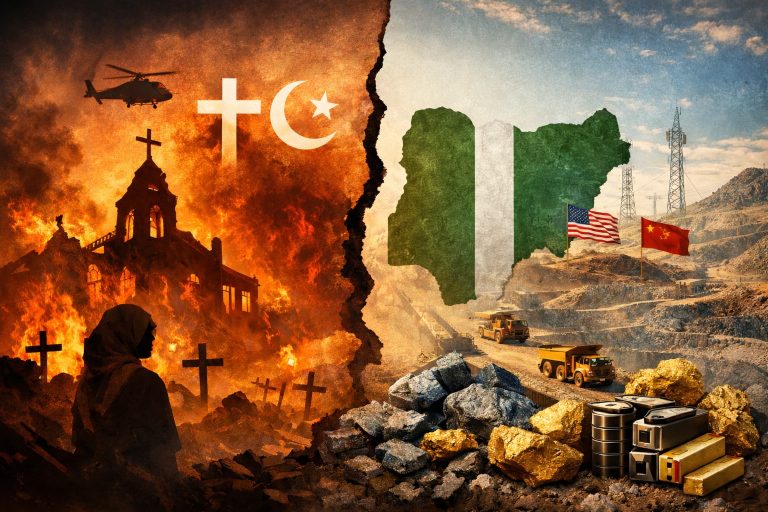
Is it just Muslims Vs Christians in Nigeria? Beyond the rhetoric, there is a quiet resource war reshaping Africa

The story everyone thinks they know

When the first bullets were fired on a Sunday morning in central Nigeria, the church was already packed. The worshippers arrived early. There were still several people standing in the aisles. Men were lowering their heads in prayer, ladies were fixing headscarves, and children were fidgeting. Hymns, scripture, and the well-known beat of a community that had endured far worse than a long sermon were all expected to be part of the ordinary service.

Then gunfire broke through the song. By the time it was all over, the pews were broken, the floor was stained, and families were screaming names into the smoke as they ran outside. 

Tragically, many people are aware of the violence in Nigerian churches, both domestically and through numerous media outlets, and it is nearly always depicted in terms of religion.

The story was written for the whole world in a matter of hours. ‘Islamist militants attack Christian church’, ‘Religious violence escalates in Nigeria’, ‘Christian communities under siege’. The script is familiar. The violence in Nigeria is nearly always presented as a conflict between Islam and Christianity, an alleged long running conflict that takes place in both megacities and African villages. According to this perspective, the nation’s misfortunes are straightforward yet tragic, believers vs unbelievers.

If you stop there, the story appears to make sense. 

However, a much more nuanced picture starts to take shape if you look a bit closer at the locations of the attacks, what lies beneath those bloodied villages, and which foreign players have recently been hovering. Because Nigeria is more than just the most populated country in Africa. It is more than a religiously divided nation. It is becoming one of the planet’s most strategically important locations.

Where there is oil..

Oil, which has long been recognised and exploited, is found beneath its soil. Apart from oil, however, are enormous, undeveloped reserves of lithium, gold, nickel, cobalt, rare earth elements, and other vital minerals that are essential to the technologies altering the world economy. Nigeria is directly in the sights of international rivals vying for influence and access due to its location in this larger resource landscape.

These rocks are not your usual ones. They are the fundamental components of power in the twenty first century. Satellites, renewable energy grids, electric cars, defence systems, and the digital infrastructure that supports contemporary life. Additionally, there are less and fewer places to obtain them worldwide.

China has become a major player in West Africa’s resource frontier, investing billions in mining infrastructure throughout Nigeria, including more than $1.3 billion in lithium processing alone.   

The US has been changing its priorities at the same time. Washington announced a policy shift in late 2025 with the announcement of a new national strategy that prioritises Africa and its vital minerals over the Middle East’s century-old conflict zones.

At the same time, traditional moral language has been restored in American political commentary, particularly in relation to religion. US President Donald Trump openly said that Nigeria poses an existential threat to Christianity, designated the nation as a ‘Country of Particular Concern’ due to alleged religious persecution, and even alluded to possible military actions that would be justified as defending Christians.

Violence exists in Nigeria. There is no denying its suffering. However, the narrative that is most frequently given about it can be critically lacking. What if the conflict that everyone refers to as religious has nothing to do with religion? 

The simple story

The narrative of violence in Nigeria appears to the majority of the world as Christians being attacked by Islamists in a long standing religious conflict that has been passed down through the centuries. It is an easy to understand story that can be easily adapted to the actual world.

However, part of the issue is that simplicity. The data gathered by researchers and analysts, along with the realities on the ground, reveal a far more nuanced picture. There is more than just religious violence in Nigeria. There is no simple way to limit it to Islam vs. Christianity. To begin with, Islamist rebels such as Boko Haram and the Islamic State West Africa Province (ISWAP) have killed Muslims and attacked mosques in addition to targeting Christian communities. 

In addition to militant organisations, Fulani herders and nearby farming communities are frequently involved in violent conflicts, particularly in Nigeria’s Middle Belt. Scarce resources such as grazing pasture, water, food, and livelihood are the source of these disputes. The main conflicts are economic and environmental rather than religious, even though they occasionally overlap with religious identities (farmers are frequently Christian, and herders are frequently Muslim).

What’s under the soil

The ground beneath Nigeria’s feet reveals a different picture, one of enormous economic and strategic significance, despite headlines portraying the country as divided along religious lines. Beyond oil and gas, Nigeria has a richness of minerals. The land was recognised for a variety of solid minerals even before hydrocarbons were found. Today, industry analysts, foreign governments, and even global powers are paying attention to unexplored deposits of critical minerals, such as those that power batteries, advanced electronics, renewable infrastructure, and defence systems. 

A wealth of minerals not just oil

Nigeria has an abundance of natural resources, many of which are still underutilised in comparison to their potential. Widely dispersed throughout several states are gold, lead, zinc, coal, limestone, iron ore, barite, bitumen, and marble. Due to its use in energy storage and electric vehicle (EV) batteries, lithium, which was discovered more recently, has been found in a number of locations and has garnered international attention. Coltan, which is made up of columbite, tantalite, wolframite, and similar ores, contains elements like tantalum and niobium that are essential to the electronics and aerospace industries. Copper, nickel, manganese, cobalt, tin, and rare earth elements (REEs) are essential for advanced manufacturing, telecommunications, and clean technology. Rare earth elements may even be retrieved from industrial leftovers like coal fly ash, according to emerging studies, suggesting a wider potential than traditional mining data indicates. 

These resources can be found in several different areas. For instance, there are signs of rare earth minerals in Bauchi and Plateau States, gold and columbite in Osun State, gold, nickel, and tin in Kaduna State, and lithium potential in Nasarawa and Kwara. Over 40 different solid mineral kinds have been found in Nigeria overall, according to different geological surveys. Scientists think this number may increase as more research is done. 

Why these minerals matter

The importance of this hidden wealth is strategic rather than scientific. Critical minerals are a class of materials that are essential to many modern technologies, including electric cars, jet engines, wind turbines, and cellphones. These consist of tantalum, niobium, nickel, cobalt, lithium, and rare earth elements.

Lithium, for instance, is essential to battery technology. In defence systems, lasers, and permanent magnets, rare earths are essential. Precision electronics and superalloys both use tantalum and niobium. However, the majority of the world’s supply is concentrated in a small number of nations, particularly China, which also controls the majority of rare earth processing capacity. Western capitals are now gravely concerned about their reliance on overseas supply chains. 

Untapped and underdeveloped

Nigeria’s mining industry has typically generated less than 1% of GDP, despite its potential. The majority of resources are exported unprocessed, with very little value addition and processing taking place at home. This underdevelopment is caused by policy gaps, regulatory ambiguity, infrastructure constraints, and inadequate geological mapping systems rather than a lack of resources. Nigerian analysts contend that changes to legal frameworks, investment incentives, and mineral policy might make the industry a major player on the world stage.

In an effort to retain more value domestically rather than exporting raw resources, the government also proposed new plans in 2025 to increase mining development and beneficiation. 

This is the secret strategic significance of Nigeria. As the world moves towards cleaner energy, more sophisticated electronics, and faster computing technologies, it is racing for vital mineral supply chains. Nigeria has the potential to become a significant hub in this new global environment due to its size, population, geographic variety, and resource potential. Before we look at how international powers, from China to the United States, are changing their foreign policy towards Africa and Nigeria in particular, it is crucial to understand this hidden fortune. 

From colonial extraction to corporate control

European colonisation established the economic underpinnings that continue to influence Nigeria’s resource landscape today, long before world powers started focussing their strategic attention on the country’s minerals.

Nigeria was not a single political entity at all. During the Scramble for Africa, which took place in the late 19th century as European powers divided the continent in an attempt to seize territory and raw riches, what would eventually become today’s borders were drawn. Between the 1880s and 1914, Britain formally took control of the area that would become Nigeria. Through treaties, wars, and the management of trading firms like the Royal Niger Company, it gradually consolidated its dominance. 

Nigeria’s economy was restructured during British control in order to support the industrial engine of the empire. In order to feed British manufacturing and international markets, the colonial state gave priority to the extraction and export of minerals and agricultural products. Cash crops like palm oil, cocoa, groundnuts, and rubber goods that could be transported to Europe at a low cost replaced local subsistence farming and indigenous industry. Local food self-sufficiency was undermined by this system, which also reoriented the economy to meet metropole demands.

As a result, Nigeria’s mineral resources, such as the coal and tin mines on the Jos Plateau, were incorporated into the colonial economic system in a way that benefited foreign interests far more than domestic growth.

Even the discovery of oil, which is arguably the resource most closely linked to Nigeria today, has its roots in colonial economic practices. Multinational corporations were granted special access to Nigerian oil fields both before and after independence, and commercial oil drilling started during colonial rule in the 1930s. From Shell to BP, these businesses rose to prominence in the industry, influencing its economics, contracts, and infrastructure in ways that frequently favoured foreign corporate interests over those of Nigerian communities.

After independence in 1960, this pattern of foreign companies exploiting resources, reinvesting earnings abroad, and retaining operational control persisted. Rather, it changed.

Nigeria inherited resource-export-focused economic systems after gaining independence. Political flags were changed during early autonomy, but many economic incentives and dependencies persisted. After commercial production surged in the late 1950s and early 1960s, oil swiftly became a key component of the national economy. The export-oriented pattern of resource exploitation persisted, but the emphasis shifted away from other minerals. 

Meanwhile, global companies, many of which were Western-based, continued to operate on a large scale. In Nigeria’s oil regions, their impact went beyond economics to include politics, government, and even social aspects. The colonial era resource extraction model had developed into a neocolonial corporate paradigm in which foreign capital, knowledge, and control extracted Nigeria’s wealth while local communities frequently paid the social and environmental costs.

These factors influenced political as well as economic outcomes throughout a large portion of the 20th century, laying the groundwork for ongoing conflicts over regional inequality, environmental degradation, and revenue distribution. 

In other words, colonialism’s extractive logic never really left Nigeria. It just took on a different form. Multinational corporations and foreign governments use contracts, joint ventures, and strategic alliances to exert influence rather than empires deploying soldiers and officials. Although the objectives may differ, profit and geopolitical influence rather than empire, the outcome is quite similar, foreign control over Nigeria’s wealth with little benefit returning to the areas where those resources came from.

It is crucial to comprehend this historical continuity in order to understand why stories of religious conflict frequently mask more fundamental economic factors, which are currently being reengaged with fresh urgency by world powers. 

Why Africa suddenly matters again?

Africa was acknowledged, talked about, and occasionally courted for decades, but it was rarely considered a key component of great power strategy.

That is no longer the case. Africa has quietly and purposefully transitioned from being a development issue to a strategic requirement. There is no humanitarian motivation. It lacks morality. It is material. The world is facing an issue that talks cannot resolve: it is running out of safe access to the minerals that are essential to contemporary economies. Data centres, wind turbines, satellites, missile guidance systems, electric cars, and artificial intelligence technology all rely on a small set of compounds called key minerals. These consist of nickel, tantalum, niobium, cobalt, lithium, and rare earth elements. 

Additionally, these elements’ worldwide supply chains are dangerously concentrated. Rare earth processing is dominated by China. Important energy corridors are under Russian control. The political climate in the Middle East is still unstable. There is political and environmental opposition to the extraction of lithium in South America. Policy planners increasingly publicly refer to this as a significant materials security crisis. Africa, and Nigeria in particular, has been subtly thrust back into the forefront of global policy due to this catastrophe.

The US pivot that barely made headlines

Washington’s new National Strategy, which was published in late November, signalled a little but significant change in American foreign policy. The new doctrine put Africa’s resource wealth, supply routes, and geopolitical placement into the category of national security priorities, whereas the Middle East had dominated U.S. strategic thinking for decades.

Africa was no longer aid territory, to put it simply. It was now considered strategically important.

Securing access to vital minerals, lowering reliance on Chinese supply chains, extending American influence throughout African resource corridors, and reestablishing security and economic ties throughout West and Central Africa were all highlighted in the document.

Nigeria, the most populous country on the continent, the largest economy in West Africa, and a geological giant perched atop undeveloped mineral riches, presents in our calculation as a keystone nation rather than a precarious one. Nigeria is no longer a challenge for strategy planners. Securing it is beneficial.

China’s head start

The pivot did not occur in a vacuum. By funding infrastructure, obtaining mining concessions, constructing processing facilities, and securing long term supply agreements, China has been establishing the foundation for mineral dominance throughout Africa for more than ten years. Chinese businesses have made significant investments in solid mineral development, gold mining, and lithium discovery and processing in Nigeria alone, gaining early control over future supply streams.

China was already years ahead on the ground when Western leaders started discussing mineral security in public. Western strategy has to be adjusted because of this fact rather than humanitarian concerns. 

Why Nigeria is the prize

Nigeria holds a special place in this new competition for resources. It has a population of more than 220 million. Geographically, it connects West and Central Africa. Its unexplored mineral belts are significant worldwide. Compared to more consolidated states, it has governance gaps that facilitate strategic entry.

Nigeria is Africa’s biggest mineral wildcard from a geopolitical standpoint. It is future leverage from a strategic standpoint. From a business standpoint, it symbolises future earnings.

The map that changes everything

If religious hatred were the primary cause of Nigeria’s violence, you would anticipate that its bloodiest areas would be dispersed at random, erupting wherever different belief systems collide. However, the map does not depict that.

Rather, an uneasy pattern starts to show when you overlay Nigeria’s resource belts over its conflict hotspots. In addition to experiencing some of the bloodiest banditry and widespread displacement in the nation, Zamfara also possesses rich gold reserves. Situated on one of the oldest and most productive tin and columbite resources in West Africa, Plateau State has historically been one of Nigeria’s most violent hotspots. There has been an increase in communal violence and displacement in Nasarawa, which is currently gaining attention due to lithium prospects that are vital to electric vehicle batteries. Zones found by geological surveys to contain gold, rare earth elements, and industrial minerals closely overlap with parts of Kaduna, Niger, and Kebbi states that are frequently the target of kidnappings and rural violence.

Nigeria is more than just a country that faces insecurity. This nation is on the brink of a worldwide resource realignment that will shape the course of the next fifty years. By developing domestic industry, processing its own minerals, and using its resources to bolster regional influence, it has the potential to become a continental economic engine. Alternatively, it can turn into a permanently controlled extraction zone that is trapped in unstable cycles that maintain low land prices, shoddy governance, and outside value flow.

Will Nigeria eventually be recognised as the epicentre of a low key, high stakes resource fight that altered Africa’s position in the world, or will it continue to be characterised as a country mired in never ending religious strife? Because if you look past the cross and crescent, the headlines and hashtags, a different picture emerges.
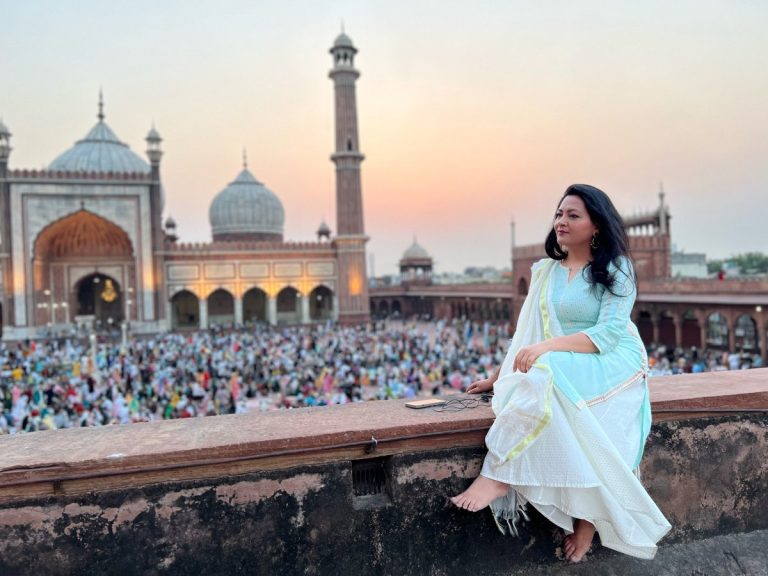

Silent on Muslim perpetrators in Delhi Red Fort terror attack, ashamed over Christmas vandalism: Arfa Khanum Sherwani’s selective outrage exposed

0

One of the most effective weapons in the arsenal of India’s left-liberal ecosystem is not data manipulation, nor selective outrage alone, but intellectual dishonesty presented as moral superiority. It is a carefully engineered strategy that relies on misleading followers, laundering narratives, and suppressing inconvenient truths, all while claiming the high ground of “constitutional values” and “human rights.”

At its core, this dishonesty performs a crucial function: it sanitises and whitewashes Islamist criminality by reframing violence as context, grievance, or misunderstanding.

A recent episode of ‘The Buck Stops Here’, hosted by Padmaja Joshi, offered a textbook demonstration of this pathology when Arfa Khanum Sherwani, a ‘journalist’ with propaganda rag The Wire, was confronted with a question that disrupted the ideological comfort zone of the left-liberal narrative machine.

The debate itself was merely the setting. The real story was the exposure of how so-called liberals manipulate public opinion by applying moral standards selectively, depending entirely on the identity of the perpetrator and the political usefulness of the outrage.

Isolated incidents of vandalism against Christmas decorations were framed as evidence of “Christians under attack in Modi’s India.” This is familiar territory for India’s self-appointed conscience keepers. Fringe acts by anonymous miscreants are deliberately projected as ideologically sanctioned, inflated into sweeping civilisational indictments, and used to place the entire Hindu society in the dock of collective moral guilt, after which the usual suspects rush in to declare secularism dead.

Selective morality as a political strategy

The left-liberal ecosystem thrives on a rigid binary: Hindus are framed as structural oppressors, Muslims as perpetual victims. Every incident, regardless of scale or intent, is filtered through this lens. Facts are secondary; ideological alignment is everything.

Thus, vandalism of Christmas decorations by fringe elements, criminal acts that deserve unequivocal condemnation, is instantly elevated into proof of “majoritarian fascism” and “genocide.” No investigation is awaited. No proportionality is exercised. Collective Hindu guilt is declared as a moral axiom.

However, when confronted with Islamist terror, especially when it involves educated professionals and ideological motivation, the same ecosystem suddenly discovers nuance, procedural caution, and legal restraint.

This contradiction is not accidental. It is deliberate. And this is what happened when Arfa was asked, in no uncertain terms, to condemn the involvement of educated Muslim professionals in the recent November Delhi Red Fort attack.

Question on Delhi Red Fort attack that Arfa found “funny”

Lawyer and activist Subuhi Khan punctured this hypocrisy by asking a question that exposed the scam at the heart of left-liberal discourse. Referring to the involvement of Muslim doctors in the Delhi Red Fort attack, she asked whether Arfa Khanum Sherwani felt the same collective shame for this act of jihad-inspired violence that she demands from Hindus over vandalism.

Posing a piercing question, Khan pointed out that an educated doctor had executed a fidayeen (suicide) attack operation, calling it “martyrdom.” Khan’s query to Sherwani was simple yet devastating: Did her head “hang in shame” as an Indian Muslim for this act of terror by a community member, just as she expected the majority community to hang their heads in shame for the vandalism of Christmas decorations?

Sherwani’s response was not a condemnation. It was not a moment of introspection. It was a dismissal. “This is a really funny question,” she smirked, repeating the phrase multiple times.

This was not flippancy. It was ideological conditioning on display.

For the left-liberal mind, Islamist terror is not morally central; it is politically inconvenient. It disrupts the victimhood economy. It complicates the narrative fed to followers. Therefore, it must be minimised, proceduralised, or ridiculed.

‘Sub-judice’ for some, summary verdicts for others

When pressed, Sherwani retreated to the familiar refuge of “the matter is under investigation.” This sudden reverence for due process would be admirable if it were not so blatantly selective.

When Hindu activists are accused, the same voices dispense instant moral verdicts. Courts are irrelevant. Investigations are unnecessary. The crime is assumed, expanded, and collectivised.

But when jihad enters the conversation, moral judgment is indefinitely postponed.

This is not legal prudence. It is narrative management.

The left-liberal ecosystem does not oppose violence. It categorises it. Violence committed by the “wrong” side is ideological; violence committed by the “right” side is contextual, accidental, or funny.

Bangladesh: The mask fully off

The intellectual dishonesty becomes grotesque when viewed through Sherwani’s commentary on Bangladesh. When Islamist mobs ousted Sheikh Hasina, Sherwani celebrated the upheaval as a “democratic takeover.”

What followed was predictable: Hindu homes torched, temples desecrated, men lynched. The most horrific example was the recent lyching of Dipu Chandra Das, beaten to death by an Islamist mob over alleged blasphemy.

And yet, the self-styled champions of minority rights were silent.

No outrage. No international campaigns. No lectures on safety of minorities.

Because Hindus, in this ideological framework, do not qualify as victims. Their suffering disrupts the narrative, so it is erased.

Gaslighting the nation and attempting to manipulate public opinion

This is how the left-liberal ecosystem sustains itself and misleads its followers and public at large, not through overt falsehoods alone, but through a steady conditioning of moral instincts. Morality is no longer anchored in actions or consequences; it is redefined around identity. Violence is condemned or excused not based on its brutality, but on who commits it. The act itself becomes secondary to the political profile of the perpetrator.

Collective guilt is imposed selectively. Entire Hindu society is expected to internalise shame for the actions of fringe elements, while collective introspection is aggressively rejected when Islamist violence is discussed. In fact, dissenting voices are suppressed into silence by hurling accusations of ‘Islamophobia’, ‘rising religious hate’, so on and so forth at the mere call of asking Muslims to introspect within over the weaponisation of their faith by terrorists. The same people who sermonise about “societal responsibility” suddenly retreat into hyper-individualism the moment accountability threatens their preferred community.

Extremism, when inconvenient, is hidden behind procedural alibis. The phrase “sub-judice” is deployed not as a legal principle but as a rhetorical shield meant to shut down moral discussion, delay condemnation indefinitely, and exhaust public attention. Due process becomes a tool of deflection rather than justice.

Uncomfortable questions are not answered; they are ridiculed. By branding legitimate concerns about jihad, radicalisation, and terror as “funny,” the ecosystem trains its audience to laugh away dangers rather than confront them. This mockery is not accidental, it is pedagogical. It signals to followers what is permissible to question and what must remain taboo.

Above all, empathy is weaponised. Victimhood is rationed, distributed only where it produces ideological dividends. Suffering that reinforces the narrative is amplified and internationalised; suffering that disrupts it is minimised, contextualised, or erased altogether. Compassion, in this framework, is not human; it is transactional.

Followers are not encouraged to think. They are conditioned to respond. Outrage is pre-scripted, silence is strategic, and moral confusion is sold as sophistication.

The selective outrage that exposes the pattern

This selective morality is not episodic; it is consistent and Arfa Khanum Sherwani’s own record illustrates it starkly. While Sherwani passionately defends the slogan “I love Muhammad” as a benign expression of faith, she has remained conspicuously silent when Hindus were violently targeted for saying “I love Mahadev.”

In September 2025, in Bahiyal village of Gujarat’s Gandhinagar district, a Hindu youth’s social media post declaring devotion to Lord Shiva triggered a brutal, one-sided communal attack. His shop was vandalised and set ablaze, Hindu vehicles were torched, Garba celebrations were attacked, police personnel were assaulted, and a Hindu neighbourhood, comprising barely 80 households, was terrorised by a mob reportedly running into thousands. CCTV footage captured Muslim mobs pelting stones, wielding rods, and selectively destroying Hindu property, while eyewitness videos recorded a Hindu mother crying out in panic for her missing son.

Yet, there was no outrage from Sherwani. No sermons on minority safety. No lectures on constitutional values. Her silence was deafening.

This omission becomes even more telling when contrasted with her defence of Islamist slogans that have repeatedly been accompanied by riots, arson, stone pelting, attacks on police, and open “Sar tan se juda” threats across multiple states. While Sherwani insists these chants are merely expressions of faith, she has never publicly questioned why they are so frequently paired with violence or why posters invoking “war” in the name of religion echo the language once used by groups like PFI, which openly fantasised about annihilating Hindus. From mocking Hindu faith in the past to dismissing documented cases of Love Jihad and defending coverage that shielded Islamist perpetrators of forced conversions, Sherwani’s trajectory reveals not journalistic balance but ideological loyalty.

Taken together, these episodes expose a pattern that cannot be explained away as oversight. They reveal a worldview in which Hindu expression is treated as provocation, Islamist aggression as context, and accountability as optional so long as it threatens the preferred narrative.

Intellectual dishonesty is not a flaw but the foundation of the Islamo-leftist ecosystem

What unfolded on that debate was not a failure of articulation; it was a failure of honesty. The laughter at a question on terror was not arrogance; it was exposure.

Left-liberalism in India today does not operate on universal principles. It operates on exemptions. It does not seek justice; it seeks narrative dominance. And intellectual dishonesty is not a flaw in this system, it is its foundation.

When morality is conditional, credibility collapses. When terror is trivialised, journalism dies. And when followers are misled repeatedly, trust eventually runs out.

The mask did not slip accidentally. It slipped because truth has a way of forcing itself into the conversation, whether the ecosystem likes it or not.

Murder of Tripura student Anjel Chakma in Dehradun, his brother Michael’s statement, police action and the arrest of the accused: All you need to know about the case

The tragic death of Anjel Chakma, a 24-year-old student from Tripura, after an alleged racial attack has sparked widespread outrage. Protests erupted in different parts of the country, including Dehradun and Tripura, after the news of Chakma’s death broke out. CMs of Assam and Meghalaya, including many prominent voices from North Eastern states have condemned the incident, and sought strictest possible action against the criminals.

On 29 December, Uttarakhand CM Pushkar Dhami spoke to Anjel’s father Tarun Prasad Chakma, expressing his deepest condolences and assured the family of strictest possible action against the criminals responsible for the murder.

How the attack happened

Chakma, an MBA student, was critically injured in an alleged racial attack in Dehradun on 9th December. The incident reportedly happened near a canteen where Anjel Chakma and his younger brother, Michael Chakma, had gone to buy groceries. According to Michael Chakma, as he was returning with his brother on a bike, a group of intoxicated men standing near the canteen hurled racial slurs at them, calling them“Chinese and chinky.” Michael got off the bike and objected to the racial remarks. An altercation ensued between him and the group, and they started attacking him. Seeing this, his brother Anjel Chakma came to his defence, but the group of men attacked him too. They hit Michael on the head with a kada (metal bangle) and stabbed Anjel with a knife, leaving him with grievous injuries. Anjel Chakma was rushed to the hospital in a critical condition, where he received medical treatment for around 17 days before passing away on 26th December.

Five accused, including two juveniles nabbed, one accused fled to Nepal

On 10th December, the family of Anjel Chakma filed a complaint with the police. Based on the complaint, an FIR was lodged by the police against unknown persons. Subsequently, on 14th December, the police caught five accused, including two juveniles. Accused Suraj Khwas (22), from Manipur, Avinash Negi (25), and Sumit (25) were arrested, while the two juveniles were sent to a correctional home. A sixth accused reportedly fled to Nepal, and the police are on a lookout for him. A reward of Rs 25,000 has been announced by the police for information leading to his arrest.

According to Pramod Kumar, SP City Dehradun, a non-bailable warrant has been issued against the absconding accused. He said that a murder charge was added in the FIR after the death of Chakma during treatment.

The victim’s family demands justice and punishment for the culprits

Devasated by the unfortunate death of his son, Tarun Prasad Chakma demanded capital punishment for the accused. Tarun Prasad Chakma, a Border Security Force (BSF) personnel, said that no parent should lose a child like this. “I want justice. If my child had survived, I would have forgiven the accused. But now, all of them should be given the death penalty. They should be hanged,” he demanded. Condemning the incident, Tarun Prasad Chakma said that such racial incidents should not happen in a country like India. “Children from every corner of India live across the country. Such things should not happen. This issue of racial comments is completely wrong. It should never happen to anyone,” he said.

Protests erupt after Chakma’s death, Tripura CM Saha spoke to Uttarakhand CM Dhami

Protests broke out in Dehradun, Tripura and other parts of the country following Chakma’s death. Students from the Northeast and several student organisations conducted candlelight marches demanding justice for Anjel Chakma. On 23rd December, the National Commission for Scheduled Tribes wrote to the Uttarakhand Director General of Police, alleging police negligence in the case.

Assam CM Himanta Biswa Sarma expressed grief over the incident and urged Uttarakhand CM Pushkar Singh Dhami to take strict action against the culprits. Meghalaya Chief Minister Conrad K Sangma also condemned the racial attack on Chakma and offered condolences to the victim’s family. Speaking about the incident, Tripura CM Manik Saha said that CM Dhami assured him of complete action in the case and justice to the family of the deceased.

People question the racism angle in the case

The incident has sparked massive outrage on social media, with people condemning the alleged racist attack. At the same time, some people are questioning the allegation that the attack was motivated by racism. They claim that one of the accused is from the Northeast (Manipur) and the remaining accused are natives of Uttarakhand so there might be some reason other than ‘racism’. People on social media pointed out that since the victim and the accused are both from the Himalayan region, where people have similar facial features, the allegations of racism do not seem to add up.

%

Moreover, incidents of racism in the mountain cities like Dehradun, which accommodate a sizeable Tibetan population, are not very usual. The hilly cities have allowed people from different parts of the country as well as from outside the country to live, earn a living, and even set up places of worship.

The involvement of an accused from Nepal, which was also mentioned by CM Dhami, has also been cited by many. However, the fact remains that a student of Tripura studying in Dehradun was brutally assaulted by multiple accused in Dehradun, resulting in his tragic death. This calls for a strict clampdown on street crimes and general lawlessness that is plaguing many cities across the country.

The anatomy of Unnao rape case: Kuldeep Sengar’s bail, allegations, questions and contradictions in a story that began in 2017

0

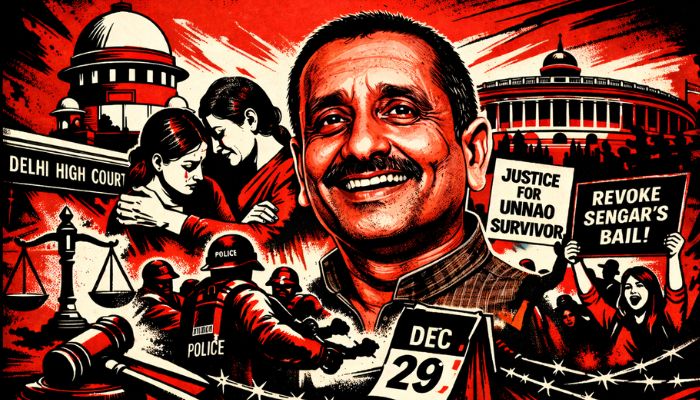
On 29th December, the Supreme Court of India stayed the Delhi High Court’s decision to grant bail to former Uttar Pradesh MLA Kuldeep Singh Sengar in the 2017 Unnao rape case. A Bench comprising Chief Justice of India Surya Kant, Justice JK Maheshwari and Justice Augustine George Masih issued the stay while hearing an appeal filed by the Central Bureau of Investigation (CBI) against the High Court’s decision.

During the hearing, the apex court noted that there were serious questions of law involved in the matter. The court observed that the Delhi High Court’s interpretation of the term “public servant” under Section 5 of the Protection of Children from Sexual Offences (POCSO) Act may be flawed. The court stated such interpretation could result in exclusion of legislators from liability under aggravated sexual assault provisions. The Bench remarked, “We are worried that a constable shall be a public servant under the Act but a Member of Legislative Assembly will be excluded.”

While staying the Delhi High Court’s bail order, the apex court issued notice to Sengar and directed he should not be released from jail. The Bench said, “We are conscious of the fact that when a convict has been released, such orders are not ordinarily stayed. But given the peculiar facts, we stay the High Court order dated 23rd December.” Notably, while Sengar was granted bail, he remained in jail due to his involvement in other cases.

Appearing for the CBI, Solicitor General Tushar Mehta argued that the High Court had erred in holding that the offence under Section 5(c) of the POCSO Act was not made out since Sengar was not a public servant. He pointed out that Sengar held a position of public trust as an MLA and had already been convicted for the custodial death of the victim’s father. SG Mehta also cited Section 42A of the POCSO Act, which gives it overriding effect over other laws.

Senior advocates Siddhartha Dave and N Hariharan, representing Sengar, defended the High Court’s order, stating that the sentence was imposed only because the trial court classified him as a public servant, and such classification was legally questionable.

Sengar’s family expressed dismay over court order

Speaking to the media, Sengar’s daughter Aishwarya Sengar expressed dismay, stating they could not “even start arguing on the merits of the case”. She pointed out that the victim in the case had changed her statement several times and altered the timing of the alleged crime on three occasions.

She said, “We couldn’t even start arguing on the merits of the case today, that she has changed her statement several times, changed the timing thrice, starting from 2 pm, 6 pm and then finally 8 pm. There’s a finding of the AIIMS medical board that she was more than 18… I’ve been fighting for justice for the past 8 years, but maybe the sorrows of me and my family mean nothing. We have been stripped of our dignity, our peace, and even our fundamental right to be heard. Still hope for justice. I request that the media not spread any misinformation.”

Sengar’s other daughter, Ishita, also released a public statement expressing her distress and disillusionment with the judicial and public response to the case over the past eight years. In her statement, she said that her family had remained silent, trusting institutions and due process, but had faced persistent social hostility and threats, including death and rape threats on social media.

She described the emotional, financial and reputational toll on her family and criticised what she called an atmosphere of fear and public pressure that, in her view, had overshadowed evidence and legal procedure. She concluded by urging authorities to allow the law to operate free from influence and reiterated her faith in the justice system while appealing for fairness and dignity.

High Court grants bail citing absence of aggravated offence

Earlier, on 23rd December, the Delhi High Court had suspended Sengar’s life sentence and granted him conditional bail pending appeal. The Division Bench of Justice Subramonium Prasad and Justice Harish Vaidyanathan Shankar ruled that Sengar did not fall within the definition of “public servant” under Section 5(c) of the POCSO Act that aggravated the offence of penetrative sexual assault. The court further held that he also did not qualify as being in a “position of trust or authority” under Section 5(p) of the said Act.

In its order, the Delhi High Court noted that as per Section 2(2) of the POCSO Act, definitions must be taken from the Indian Penal Code (IPC), CrPC, Juvenile Justice Act or IT Act, and under Section 21 of IPC, an MLA is not classified as a public servant.

Based on these findings, the court held that the aggravated offence under Section 5 did not apply, and since Kuldeep Singh Sengar had already spent over 7 years and 5 months in custody, more than the 7-year minimum for the base offence under Section 4 POCSO, bail was justified pending appeal. It is noteworthy that the Delhi High Court granted him bail but did not acquit him of any of the offences. He was granted bail on a technicality of the case and not on the merit.

Claims of false implication and inconsistencies cited by social media users

Several social media users and commentators have raised concerns regarding alleged inconsistencies in the Unnao rape case, claiming that Kuldeep Singh Sengar may have been falsely implicated. These claims cite multiple points drawn from court records and media reports.

One point raised involves discrepancies in the alleged time of the incident. According to a summary referenced in court documents, the survivor mentioned three different times for when the incident occurred, 2:00 pm in a letter to the Chief Minister dated 17th August 2017, 6:00 pm in a media interview on 12th September 2017, and between 8:00 pm to 8:30 pm in the prosecution’s theory.

Another frequently cited issue is the conflicting records regarding the survivor’s age. Documents submitted from different sources, including school admission registers and medical opinions, record her date of birth variously as 17th August 2001, 5th July 1998, and August 2002. Medical assessments from RML Hospital, CMO Unnao, and AIIMS suggest she was over 18 years old at the time of the alleged offence, while school records and court testimony indicate she was a minor.

Users have also questioned the credibility of the accusations based on the survivor’s timeline of reporting. It has been noted that she did not report the alleged incident immediately and added new names to her complaint at later stages, some of which were later dropped with the explanation that she was “misguided” by lawyers.

A separate viral claim suggests that the name of one female accused was inserted into the statement at a later stage, using a caret mark to include the word “barabar” (equally), implying that her role was revised to match that of the main accused. Critics argue that such editing raises questions about the manner in which charges were framed.

Protests against bail order

Following the Delhi High Court’s decision to grant Kuldeep Sengar bail on 23rd December 2025, protests erupted across New Delhi. On 26th December, around 30 activists, including the Unnao survivor’s mother and members of the All-India Democratic Women’s Association (AIDWA), demonstrated outside the High Court, holding placards and chanting slogans such as “stop protecting rapists.”

Later that evening, the Indian Youth Congress (IYC) organised a candlelight march condemning the bail order as “deeply disturbing and shameful.” On 27th December, activist Yogita Bhayana and Congress leader Mumtaz Patel led a sit-in protest near Parliament, which ended in police detentions after officers declared the area a non-permitted protest zone.

On 28th December, several women’s rights organisations, including the Centre for Struggling Women, Pragatisheel Mahila Sangathan, and All India Mahila Sanskritik Sangathan, along with student groups, staged a demonstration at Jantar Mantar. The Unnao survivor and her mother also joined, demanding cancellation of Sengar’s bail and reinstatement of his life sentence.

Timeline of Unnao rape case

2017 – Initial allegation and FIRs

On 4th June 2017, a 17-year-old girl from Makhi village claimed that Sengar raped her after luring her to his residence under the pretext of providing employment. She claimed that Sengar threatened her not to speak out. Between 11th and 20th June 2017, the survivor was allegedly abducted and gang-raped by local men. On 20th June, an FIR was registered against them under IPC Sections 363, 366 and 376. Sengar was not named in the FIR.

In August 2017, upon her return, the survivor attempted to register a complaint against Sengar. Police allegedly refused to include his name. In February 2018, she moved to the court to include Sengar’s name in the case.

2018 – Custodial death and CBI probe

On 3rd April 2018, the survivor’s father was beaten up by Sengar’s brother Atul and others. On 5th April, the father was jailed on fabricated Arms Act charges. During investigation, it was revealed that the country-made pistol found on survivor’s father was planted. On 8th April, the survivor attempted self-immolation outside Chief Minister’s residence in protest.

On 9th April, her father died in judicial custody. The post-mortem revealed 14 injury marks. On 10th April, Atul Sengar was arrested and the case drew national attention. On 12th April, the case was handed over to the CBI, which registered an FIR against Kuldeep Sengar.

The Allahabad High Court criticised the delay and ordered his arrest. On 13th April, Sengar was arrested by the CBI. On 15th April, Shashi Singh, accused of taking the girl to Sengar’s house, was arrested. On 18th April, the survivor recorded her statement before a magistrate; the age of the victim became a point of contention.

2018 – Chargesheets and trials

On 11th July 2018, the CBI filed a chargesheet against Sengar and Shashi Singh for rape and kidnapping. On 13th July, a second chargesheet was filed in the custodial death of the survivor’s father, naming Atul Sengar and others.

2019 – Supreme Court intervention and convictions

On 28th July 2019, the survivor and her family were involved in a fatal car crash. Two relatives were killed; she and her lawyer were critically injured. On 29th July, an FIR was filed for murder and conspiracy against Sengar and others.

On 31st July, the Supreme Court transferred all related cases to Delhi and ordered CRPF protection for the survivor and her family. On 5th August 2019, the rape trial began in Delhi’s Tis Hazari court. On 11th September, the survivor testified in a special in-camera hearing at AIIMS hospital. On 16th December 2019, Sengar was convicted of raping the minor under IPC and POCSO. On 20th December 2019, he was sentenced to life imprisonment for the remainder of his natural life and fined Rs 25 lakh.

2020 – Custodial death conviction

On 4th March 2020, Sengar and others were convicted in the custodial death case for culpable homicide not amounting to murder. On 13th March 2020, he was sentenced to 10 years in prison in this case.

2021-2024 – Appeals and security

During this period, Sengar remained in jail. Multiple bail pleas were denied. The survivor continued living under CRPF protection with her family. On 23rd May 2025, the Supreme Court permitted scaling back of security for the survivor’s relatives but directed that protection for the survivor herself must continue.

2025 – High Court bail and Supreme Court stay

On 23rd December 2025, the Delhi High Court suspended Sengar’s life sentence and granted him bail, holding that he is not a public servant under the POCSO Act and had served sufficient time for the base offence. The court reasoned that the aggravated offence provisions did not apply to him, and since he had already spent over seven years in custody, exceeding the minimum sentence under Section 4 of the Act, bail was justified pending appeal.

On 29th December 2025, the Supreme Court stayed the High Court’s order and barred his release from prison. The Bench expressed serious concerns about the legal implications of excluding legislators from “public servant” status under POCSO. The court observed that such an interpretation could exempt lawmakers from aggravated assault provisions and agreed to examine the matter in detail.

Conclusion

The Unnao case continues to receive national attention as legal proceedings remain ongoing. The Delhi High Court granted Kuldeep Sengar bail, but the Supreme Court has stayed the order and will hear the matter in detail. Protests have taken place in several cities following the bail order. The case has raised legal and procedural questions that are now before the courts for further consideration.

Modi govt’s mega shipbuilding push: Guidelines notified for two schemes worth Rs 44,700 crore. Here’s all you need to know

The Modi government has been taking decisions in mission mode to bolster India’s shipbuilding capacity. In a major step towards enhancing domestic shipbuilding capacity and advancing global competitiveness, the Ministry of Ports, Shipping & Waterways has notified the operational guidelines for two major shipbuilding initiatives, the Shipbuilding Financial Assistance Scheme (SBFAS) and the Shipbuilding Development Scheme (SbDS), with a budget of Rs 44,700 Crore.

The new framework, published on 27th December 2025, details the procedures for funding, oversight, and implementation.

Shipbuilding Financial Assistance Scheme (SBFAS)

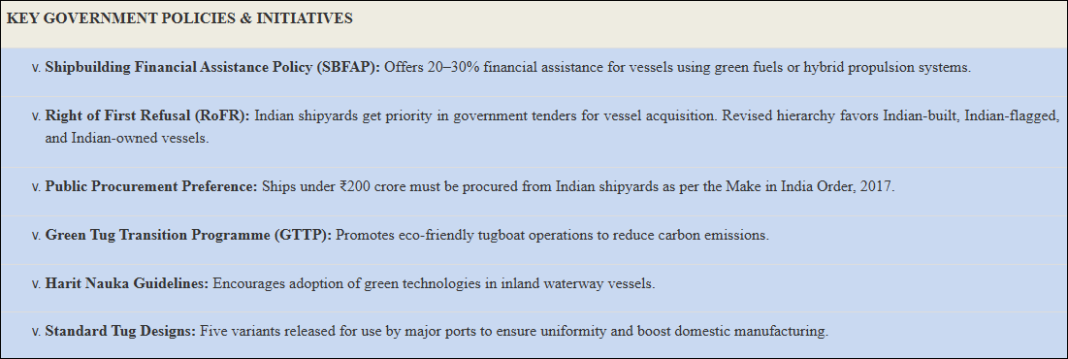
The SBFAS has a budget of Rs 24,736 crore. Under this scheme, the Central government will offer fiscal assistance ranging from 15% to 25% per vessel, depending on the vessel category.

In addition, the scheme will offer graded support for small normal, large normal and specialised vessels, with stage-wise disbursement linked to defined milestones and backed by security instruments. The scheme also includes incentives for series orders.

The SBFAS also includes setting up a National Shipbuilding Mission (NSM). The NSM will be established to ensure coordinated planning and execution of shipbuilding initiatives.

The Ministry of Ports, Shipping and Waterways says that the Shipbreaking Credit Note will be introduced, under which ship owners scrapping vessels at Indian yards will receive a credit equivalent to 40% of the scrap value. This will link ship recycling with new ship construction and support a circular economy approach.

The SBFAS is set to support shipbuilding projects worth about Rs 96,000 crore. The scheme will stimulate domestic manufacturing while also generating employment across the maritime value chain.

Shipbuilding Development Scheme

The Modi government has also launched the Shipbuilding Development Scheme (SbDS) to strengthen long-term capacity and capability creation. The scheme worth Rs 19,989 crore will cover the development of greenfield shipbuilding clusters, expansion and modernisation of existing brownfield shipyards. In addition, the SbDS provides for the establishment of an India Ship Technology Centre under the Indian Maritime University to support research, design, innovation and skills development.

Under this initiative, greenfield shipbuilding clusters will receive 100% capital support for common maritime and internal infrastructure through a 50:50 Centre–State special purpose vehicle. In addition, existing shipyards will be eligible for 25% capital assistance for brownfield expansion of critical infrastructure, including dry docks, ship-lifts, fabrication facilities and automation systems. The Ministry of Ports, Shipping and Waterways says that disbursements will be milestone-based and monitored by independent evaluation agencies.

Besides, the SbDS also provides for a Credit Risk Coverage Framework. The CRC framework will offer government-backed insurance for pre-shipment, post-shipment and vendor-default risks to improve project bankability and financial resilience.

The government estimates that with modern infrastructure and skilled workforce development, India’s commercial shipbuilding capacity will potentially surge to 4.5 million gross tonnage per annum by 2047.

Notably, both SBFAS and SbDS will be valid until 31st March 2036, with an in-principle extension up to the year 2047/

Speaking about the two new initiatives, the Union Minister of Ports, Shipping & Waterways (MoPSW), Sarbananda Sonowal, said, “Prime Minister Narendra Modi Ji’s leadership has given India’s shipbuilding sector a decisive policy reset. These guidelines create a stable and transparent framework that will revive domestic shipbuilding, boosting forward and backward linkage, amping ‘Make in India’ initiative, enabling large-scale investment and building world-class capacity, positioning India as a major maritime nation on the path to Viksit Bharat and Aatmanirbhar Bharat.

Modi government in action mode to make India ‘Atmanirbhar’ in shipbuilding

The newly launched SBFAS and SbDS initiatives are the latest in a string of policy initiatives launched by the Modi government in recent years to revive and bolster domestic shipbuilding under the Make in India initiative and its vision for ‘Atmanirbhar Bharat’. The Central government has launched numerous schemes and entered into agreements with foreign industry leaders to attract investments, strengthen the maritime ecosystem through forward and backward linkages, and build world-class capacity to propel India to the position of a major global maritime player.

While India currently ranks 22nd in the global shipbuilding industry, India aims to enter the top 10 global rank by 2030 and become one of the top 5 countries by 2047. This ambition is a part of the Modi government’s broader visions, including the Maritime India Vision 2030 and Amrit Kaal Vision 2047, intended to capture a massive share of the global shipbuilding and ship repair markets.

At present, China, South Korea and Japan are the leaders of the shipbuilding sector globally. However, with the global shipbuilding slots booked in countries like China, South Korea and Japan until 2028, the Indian government eyes an opportunity to emerge as a reliable alternative destination for shipbuilding. India’s strategy is not confined to constructing new ships but also expanding into ship repair and recycling, given that the country already has decent infrastructure.

Notably, the global shipbuilding market was estimated at $207.15 billion in 2023, rising at a 6.5% CAGR to $220.52 billion by 2024. India’s market was valued at $90 million in 2022 and is expected to grow to $8,120 million by 2033, representing a staggering 60% CAGR. 

Source: PIB

Earlier this year, the Central government proposed a Maritime Development Fund to the tune of Rs 30,000 crore to supplement the Rs 1.5 lakh crore upgrade plan, which includes the development of 6 deep draft ports, and 2 trans-shipment hubs in addition to green and smart ports.

India’s shipbuilding policy reset was seen when the Modi government accorded the coveted ‘infrastructure’ status for large ships. Finance Minister Nirmala Sitharaman announced in her speech for the budget 2025-26 on 1st February that ships above a specified size would be included in the harmonised master list (HML) for infrastructure, making them eligible for financial incentives. This will attract private investment in the shipbuilding industry and enhance fleet modernisation.

The Modi government announced the allocation of a Maritime Development Fund (MDF) with a corpus of Rs 25,000 crore. 

In September this year, it was reported that the Central government is considering investing ₹75,000 crore in the three new shipyards that are expected to be built along its east and west coasts.

On 17th December, the Ministry of Ports, Shipping and Waterways announced that it has approved a comprehensive package of Rs. 69,725 crores featuring a four-pillar approach to strengthen domestic capacity, maritime financing, shipyard development, skilling, and reforms. The government estimated that this move could stimulate the creation of over 22 lakh direct and indirect jobs.

In addition to domestic policy reforms and the launching of financial aid initiatives, India is also working towards partnering up with countries like South Korea and Japan to expand shipbuilding capacity and unlock India’s maritime development. Key Japanese and South Korean shipbuilding giants are in talks with Indian companies for joint ventures.

It is estimated that India has an opportunity to the extent of over USD 237 billion (INR 20 lakh crores) by 2047, if the massive demand stemming from the needs of the Indian shipping market is adequately targeted by Indian shipyards.

SBFAS and SbDS could prove to be a game-changer for India’s maritime ambitions

Historically, India’s shipbuilding sector has lagged behind global leaders like China, South Korea, and Japan, due to high costs, policy gaps, and limited infrastructure. However, the Modi government is working to fix these issues even though there is no overnight solution.

By subsidising construction costs and linking recycling to new builds, the Shipbuilding Financial Assistance Scheme (SBFAS) will address cost competitiveness, possibly contributing to increasing India’s share in global shipbuilding over the next decade. In addition, the Rs 96,000 crore initiative would lead to the generation of direct and indirect jobs for locals in coastal regions.

Similarly, the focus of the Shipbuilding Development Scheme (SbDS) on infrastructure upgrades and risk mitigation is a strategically significant move. The government has essentially declared that it will effectively tackle bottlenecks such as financial crunch and outdated facilities, and make Indian yards magnets for private and foreign investments.

With effective execution coupled with transparent milestone tracking and state collaboration, these initiatives could help India significantly reduce reliance on imported ships, which is currently 90%, improve export potential, boost the economy, while also bolster national security via a stronger than ever before maritime supply chain.

Uttar Pradesh: Fatehpur police arrest pastor and his son for luring poor Hindus to convert to Christianity – Read what the FIR says

0

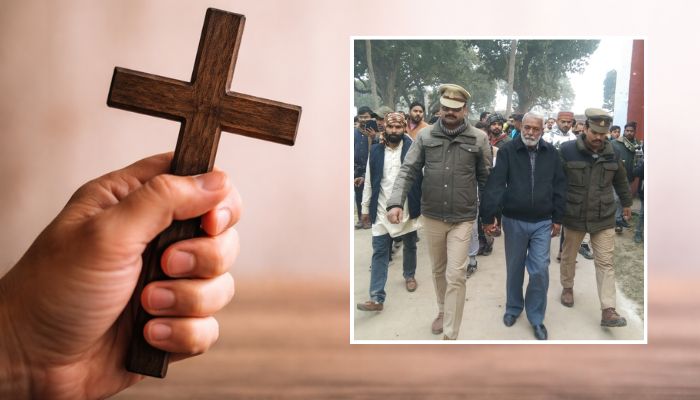
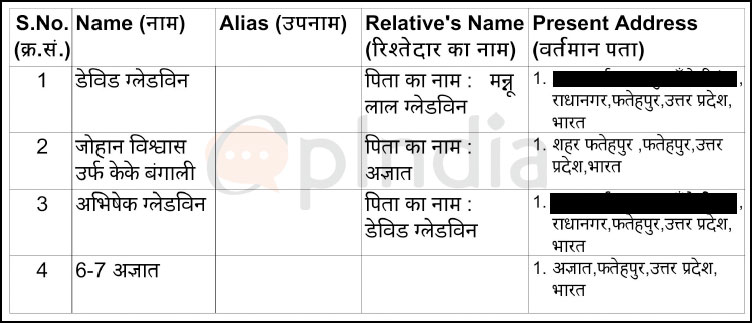
On 28th December, Fatehpur police arrested a pastor named David Gladwin and his son Abhishek Gladwin for luring poor Hindus to convert to Christianity through inducements and intimidation.

The arrests came after activists of Bajrang Dal and Vishva Hindu Parishad staged a protest, accusing the pastor and others of forceful conversions. The conversions were reportedly happening at the India Presbyterian Church in Deviganj in the Radhanagar police station area of Fatehpur district in Uttar Pradesh. OpIndia accessed the FIR registered in the matter.

What the FIR says

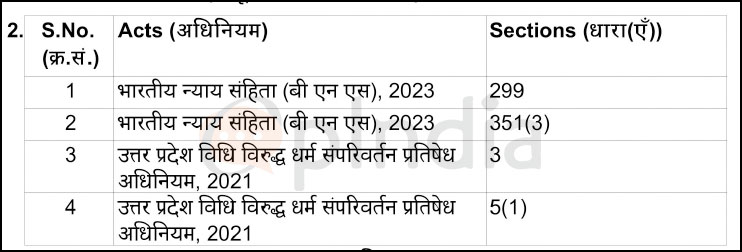
The FIR has been registered on the complaint of Devprakash Paswan under Sections 299 and 351(3) of the Bharatiya Nyaya Sanhita, 2023, along with Sections 3 and 5(1) of the Uttar Pradesh Prohibition of Unlawful Conversion of Religion Act, 2021, against pastor David Gladwin, his son Abhishek Gladwin, and Johan Vishwas alias KK Bengali, along with 5-6 unknown persons.

Source: UP Police

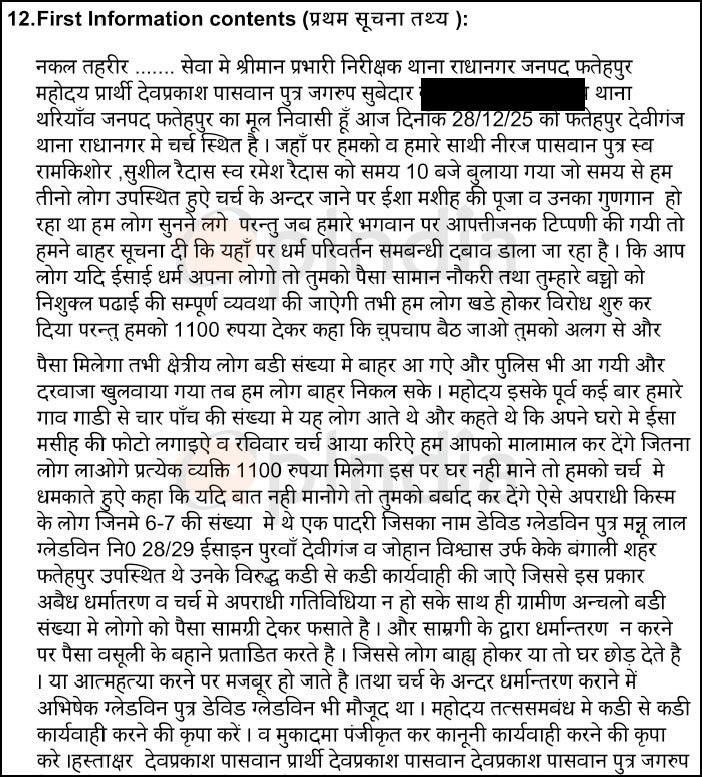
In his complaint, Devprakash said that on 28th December, he and his associates Neeraj Paswan and Sushil Raidas were called to the church at Deviganj at around 10 am. When they entered the church, they found a prayer session underway, with hymns and worship of Jesus Christ taking place.

Source: UP Police

During the prayer meeting, objectionable remarks were made against Hindu deities. Those who were present in the church were being pressured to convert to Christianity. He stated that assurances were given that anyone who accepted Christianity would be provided money, household items, employment and free education for children.

Source: UP Police

When Devprakash and his associates objected and tried to protest, they were given Rs 1,100 and told to remain silent. The pastor and his associates reportedly offered more money if they kept quiet.

He added that the accused had been visiting his village repeatedly, urging residents to place images of Jesus Christ in their homes and attend church every Sunday. The pastor and his associates promised the villagers financial rewards for every new person brought along. If villagers refused, they were threatened with consequences.

Paswan stated that such activities had created fear in rural areas, with people being mentally harassed, forced to abandon their homes, or pushed towards extreme distress, leading to attempts of suicide.

Protest erupts outside church

As reports of a conversion event happening at the church reached Hindu organisations, activists from Bajrang Dal and VHP reached the premises and began protesting. Speaking to the media, they said a large number of Hindu women were present inside the church and were being targeted through promises of employment, faith-based healing, money and education for children.

The activists blocked the exits of the church and demanded immediate police intervention. They urged the police to question everyone present inside the church before allowing them to leave.

Police intervention and arrests

Upon receiving the complaint, Thariyaon DSP Veer Singh reached the spot along with police personnel from several police stations. Police officials intervened to alleviate the situation and assured the protesters that appropriate legal action would be taken based on evidence. During the operation, pastor David Gladwin was taken into custody for questioning.

Police later confirmed that two accused, including the pastor, had been arrested, while efforts were underway to trace the remaining named and unnamed accused mentioned in the FIR.

Statements from police and Hindu organisations

Speaking to the media, DSP Veer Singh stated that some Hindu women had visited the church. He said that the circumstances under which they came to the church were being investigated. He added that the pastor was being questioned and further action would depend on the outcome of the probe.

Radhanagar Inspector Vinod Maurya said that statements of women present inside the church were being recorded and that the investigation was focused on determining whether inducement or coercion was involved.

Leaders of the Hindu organisations said that the incident was not isolated. They said that there was a pattern of repeated targeting of poor and marginalised Hindus. They added that conversion activities were being conducted under the guise of prayer meetings, also known as ‘changai sabha’. They said villagers were being pressured to convert using inducements and threats.

Further investigation in the matter is underway.

Kerala: 12 years on, court to finally deliver verdict in ABVP activist Vishal Kumar murder – Full case timeline

0

Over 12 years have passed since Akhil Bhartiya Vidyarthi Parishad activist Vishal Kumar was brutally murdered by goons of the Campus Front of India (CFI). For those who are unaware, CFI was the student wing of the banned Islamist organisation Popular Front of India (PFI). The Ministry of Home Affairs had banned PFI and its linked organisations, including CFI, in September 2022.

A single judge bench presided over by Judge PP Pooja of the Additional Sessions Court, Mavelikkara, will pronounce the judgment on 30th December. The court reserved the judgment after the final hearing held on 17th December.

Vishal was brutally murdered in July 2012. He was only 19-year-old at that time. Initially, the case was investigated by the local police. However, due to delays in the investigation, it was transferred to the Crime Branch. Twenty individuals were made accused in the case, including a minor.

OpIndia accessed several bail orders of Kerala High Court for details about the case.

Who Vishal Kumar was and why he mattered

Vishal Kumar was a 19-year-old ABVP activist and the Chengannur Nagar Samiti president of the organisation. He was born in Saudi Arabia and completed his early schooling in the United Kingdom. Despite the comfortable life his parents had built abroad, he insisted on returning to India to continue his education and work for the Sangh.

Initially, his parents opposed his decision. However, Vishal remained firm and stated that he wished to serve the nation through organisational work. Over a short span of time, he became actively involved in ABVP activities in and around Chengannur and helped in strengthening the organisation’s network. He played a vital role in starting new shakhas at a very young age.

Apart from political and organisational work, Vishal was also supporting the education of four students from economically weaker backgrounds. His ideological commitment stood out even within his own family. His father later stated that it was Vishal who altered his own understanding of the Sangh and its work.

Events leading up to the attack at Chengannur Christian College

On 16th July 2012, a programme was organised by student organisations to welcome first year undergraduate students. ABVP was one of the organisations welcoming the students. Vishal, being part of the organisation, reached Chengannur Christian College in Alappuzha district for the event.

According to court documents, the programme was running smoothly. However, soon a group of men arrived at the college gate from outside. They began abusing ABVP members and made derogatory remarks about Goddess Saraswati. Vishal was among those who tried to intervene and alleviate the situation.

However, the group of men suddenly, but in a pre planned manner, started assaulting Vishal and other ABVP activists. According to the prosecution, they used knives, daggers, and other deadly weapons to attack Vishal, Vishnuprasad and Sreejith. Around seven other ABVP members were abused and threatened when they tried to stop the assault.

Vishal Kumar’s dying declaration and medical struggle

Vishal sustained serious injuries in the attack. He was first rushed to Chengannur Government Hospital. When his condition deteriorated, he was shifted to Kottayam Medical College Hospital for advanced treatment.

Despite efforts by doctors, Vishal succumbed to his injuries on the night of 17th July 2012. The prosecution placed on record that while being taken to the medical college, Vishal informed his friend that he was stabbed by PFI members. This statement was presented in court as an important piece of evidence, as it reflected Vishal’s awareness of his attackers even in his final moments.

Nature of the attack and prosecution’s version

According to the prosecution, the attack was not spontaneous. It was the result of a criminal conspiracy. As per the chargesheet, the accused formed an unlawful assembly armed with deadly weapons with the common object of murdering Vishal Kumar and attacking other ABVP members.

The incident took place at around 10:45 am in a public educational institution, showcasing the brazenness of the assault. Vishal was specifically targeted and repeatedly stabbed, while others present were attacked to prevent resistance and rescue.

Initial police probe and transfer to Crime Branch

The case was initially registered and investigated by the local police. However, the investigation faced delays, particularly in tracing and arresting the accused. Given the seriousness of the crime and allegations of organised involvement, the probe was later transferred to the Crime Branch. A fresh case was registered, and further investigation was carried out. Eventually, a chargesheet against 20 individuals, including a minor, was submitted in court.

The prosecution stated that several accused had gone into hiding after the crime, taking shelter at various locations, including a Popular Front office in Kayamkulam.

Recovery of weapons and evidence cited by prosecution

During the investigation, the Crime Branch recovered weapons allegedly used in the crime from near Karakkad in Chengannur. These recoveries were based on confessional statements made by the accused.

The prosecution relied heavily on eyewitness testimonies, recovery of weapons, and documentary evidence. The identity card of accused Shefik was also cited as a crucial link connecting the accused to the scene of the crime.

Special Prosecutor Pratap G Padikkal argued that the cumulative evidence established that the accused acted out of ideological hostility towards ABVP activities and in retaliation against what they described as opposition to Popular Front operations in the region.

Campus Front of India, Popular Front of India and ideological context

The prosecution maintained that the attackers were members of the Campus Front of India, the student wing of the Popular Front of India. Campus Front later functioned under the banner of the Confederation of Indian Muslims, which was part of the broader Popular Front ecosystem.

The Popular Front of India was banned by the Union government on 28th September 2022 for its involvement in extremist and terrorist activities across the country.

Charges framed against the accused

The accused in the case were charged under Sections 120B, 143, 144, 147, 148, 212, 302, 307, 324, 323 and 342 read with Section 149 of the Indian Penal Code.

The prosecution said that all accused shared a common object and were liable for the acts committed by members of the unlawful assembly, including the murder of Vishal Kumar and the attempted murder and grievous injury of other ABVP activists.

Bail proceedings, accused roles, subsequent crimes and how the case reached judgment stage

In the immediate aftermath of the murder, several accused approached the Kerala High Court seeking bail. Among the earliest applications were those filed by Ansar Faizal and Shafeek. In an order dated 24th September 2012, the High Court declined to grant bail, noting the gravity of the offences and the fact that the investigation was still in progress.

The court recorded the prosecution’s contention that the attack was carried out under the leadership of Nassim and Ashiq and that the accused had formed an unlawful assembly armed with deadly weapons with the common object of committing culpable homicide. At that stage, the court held that releasing the accused would adversely affect the investigation, given the seriousness of the allegations and the political rivalry underlying the crime.

Shift in judicial approach as investigation progressed

A noticeable shift occurred less than a month later. By 16th October 2012, the Kerala High Court, presided over by Justice P Bhavadasan, granted bail to Ansar Faizal and Shafeek. The court observed that a substantial portion of the investigation had already been completed and that the prosecution had not expressed apprehension that the accused would abscond if released.

While allowing bail, the court imposed stringent conditions, including regular appearance before the investigating officer, surrender of passports, restrictions on entering Chengannur Police Station limits, and a clear warning against influencing witnesses or tampering with evidence. This marked the beginning of a phase where multiple accused were enlarged on bail on grounds of parity and prolonged custody.

Bail granted to other accused on grounds of parity

Following the grant of bail to Ansar Faizal and Shafeek, other accused began securing relief from the High Court on similar grounds. Althaj alias Tha was granted bail on 30th October 2012. The court noted that he had been in custody since 20th August 2012 and that a good part of the investigation had already been completed. The order specifically recorded that the prosecution had not raised any apprehension regarding absconding.

Subsequently, on 6th November 2012, Sabooj and Shameer Ravuthar were granted bail. The principle of parity weighed heavily in the court’s decision, with identical conditions imposed to ensure continued cooperation with the investigation.

Safeer, another accused, was granted bail on 13th December 2012, again on parity with co accused who had already been released. By the end of 2012, a significant number of the accused had secured bail, even as the investigation continued.

The case of Afsal and the High Court’s strong observations

A distinct and legally significant chapter in the bail history of the case relates to Afsal. Unlike several others, Afsal was arrested much later, on 29th June 2013, after the investigation had been taken over by the Crime Branch.

In its order dated 20th September 2013, the Kerala High Court recorded the prosecution’s submission that Afsal was not merely a peripheral participant but the brain behind the entire incident. The Public Prosecutor argued that releasing him would seriously affect the investigation, even though his name did not figure in the original FIR.

The court acknowledged the gravity of the allegations and made strong observations on the misuse of religion for committing crimes. It noted with concern that religion had been turned into a weapon, contrary to its foundational purpose. At the same time, the court also weighed the length of pre trial detention, Afsal’s age, as he was 19 years old, and the fact that he was a student.

Balancing these factors, the court granted bail with stringent conditions. The court made it clear that the offence alleged was serious and ideologically driven.

Sanuj and involvement in a subsequent criminal case

Sanuj presented a particularly important aspect of the case’s later developments. He was originally granted bail on 18th November 2012 in the Vishal Kumar murder case. However, in 2022, Sanuj was implicated in another criminal case involving allegations of assault on public servants and damage to public property.

Following his involvement in the 2022 case, the prosecution moved for cancellation of his bail in the Vishal Kumar murder case, arguing that he had violated the conditions of his earlier release. The bail was subsequently cancelled, and Sanuj was taken into custody on 3rd December 2022.

In an order dated 16th December 2022, the Kerala High Court granted him fresh bail, while noting both his earlier involvement in the 2012 murder case and the subsequent criminal allegations. The court imposed stringent conditions and warned that any further violation would invite cancellation of bail.

Prosecution’s final arguments before judgment

In the final phase of the trial, the prosecution highlighted Vishal’s dying declaration, eyewitness accounts, recovery of weapons, and the conduct of the accused before and after the incident, including attempts to hide in Popular Front locations.

Case reaching its final legal moment

With arguments concluded and judgment reserved on 17th December, the case has now reached its final legal moment. On 30th December, the Additional Sessions Court at Mavelikkara will decide the fate of the accused and determine whether the prosecution has succeeded in establishing guilt beyond reasonable doubt.

For Vishal Kumar’s family and supporters, the verdict will mark the end of a twelve year wait for judicial closure. However, as this will be a judgment by the Sessions Court, the accused will have judicial remedies available to contest the verdict in higher courts.

The lynching of Dipu Chandra Das and how radical Islam in Bangladesh and Pakistan is posing security challenges for India

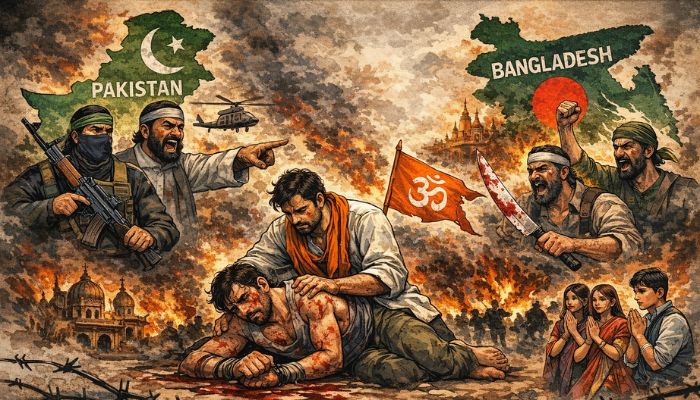
The images of Dipu Chandra Das’s inhumane torture in Bangladesh are heartbreaking. These images of his torture have sparked outrage across India, especially among Hindus. In 1971, India played its role in establishing the existence of Bangladesh separate from Pakistan and today in 2025, this country has finally followed the path of Pakistan. The situation now is such that religious fundamentalists and jihadis from Pakistan and Bangladesh have come together to oppose India. In Pakistan, democracy has never been able to stand up to the alliance of the military, religious fundamentalist and Jihadis. Together, these two neighbouring countries are posing serious religious-fanatic challenges to India.

What is this India-Pakistan-Bangladesh conflict all about? To understand this, we need to understand the demography as well as the background of the partition and creation of these three countries. The worst nightmare of the establishment of Pakistan was that only half of the Muslims living on Indian side went to this new country created to realise the idea of a Muslim nation, while the rest remained in India. There were 7.44 crore Muslims in undivided India and at the time of India-Pakistan partition in 1947, 3.90 crore Muslims remained in Pakistan while 3.54 crore remained in India. The interesting thing is that after partition, out of 4.25 crore Muslims present in the Indian territory, only 72 lakh Muslims went to Pakistan, whereas 83 lakh Hindus and Sikhs came to India from Pakistan. According to a data, in 1947, the Hindu population in West Pakistan i.e. present Pakistan was 20 percent, whereas in East Pakistan i.e. present Bangladesh, the Hindu population was 28-30 percent. In 1947, the population of India was around 33-34 crore, of which about 9.8 percent were Muslims.

Now according to the 1951 census, the population of India was 36 crore in which Hindus were 84.1 percent and Muslims were 9.8 percent. In 1951, the total population of Pakistan was 7.5 crore, of which West Pakistan had a population of 3.37 crore and East Pakistan (present-day Bangladesh) had a population of 4.2 crore. In this, apart from 98.4 percent Muslims in West Pakistan, there were a total of 2.9 percent non-Muslims in which 1.6 percent was Hindu population. Similarly, in East Pakistan (present Bangladesh), apart from 78 percent Muslims, there were 23.2 percent non-Muslims, in which 22 percent was Hindu population.

If we look at the present population of India-Pakistan-Bangladesh then according to the data released by the Pakistan government in 2023, out of the total 24 crore population of the country, 23.12 crore i.e. 96.35 percent were Muslims. Apart from this, the Hindu population was 38 lakh i.e. 1.61 percent, Christian population was 26 lakh i.e. 1.37 percent, Sikh population was 15,998 and Parsis only 2348.

According to the data released in 2022, the total population of Bangladesh was 16.5 crore, of which 15.03 crore i.e. 91 percent were Muslims. Apart from this, 1.31 crore i.e. 7.95 percent Hindus, 10 lakh i.e. 0.61 percent Buddhists, 4.95 lakh i.e. 0.30 percent Christians lived in Bangladesh. At the same time, according to the estimated figures of 2024, the population of India is 145 crore, in which Hindus are likely to be 115.71 crore i.e. 79.8 percent. Whereas Muslims are estimated to be 20.59 crore i.e. 14.2 percent, Christians 3.33 crore i.e. 2.3 percent, Sikhs 2.46 crore i.e. 1.7 percent, Buddhists 1.01 crore i.e. 0.7 percent, Jains 0.58 crore i.e. 0.4 percent and Parsis are estimated to be around 50 thousand.

From the above data, the change in the Hindu and Muslim demography in India-Pakistan-Bangladesh from 1947 can be easily understood. In India, the Hindu population decreased from 84.1 percent to 79.8 percent, while the Muslim population increased from 9.8 percent to 14.2 percent. The Hindu population in Pakistan decreased from 20 percent to 1.61 percent, while the Hindu population in Bangladesh decreased from 28-30 percent to 7.95 percent. Interestingly, in West Pakistan (present-day Pakistan) the Hindu population declined from 9.8 per cent to 1.61 per cent between 1947 and 1951, and in East Pakistan (present-day Bangladesh) the Hindu population declined from 28-30 per cent to 22 per cent during the same period.

Although Pakistan’s statistics have always been shrouded in suspicion, the released figures must be trusted. It is also important to know that at the time of the birth of Bangladesh in 1971, the total population of Bangladesh was approximately 7.10 crore, in which the estimated Hindu population was 1.7 crore i.e. approximately 20-22 percent.

Religion has definitely been at the backdrop of the India-Pakistan-Bangladesh conflict because the main reason and basis for the partition of the nation has been religious. It is no less interesting that among these countries divided on the basis of religion, Pakistan and Bangladesh are declared Islamic countries whereas India was made secular. The worst situation was that even after the creation of Pakistan on the basis of religious discrimination between Hindus and Muslims, more than 3.50 crore Muslims remained in India.

The question is that if Jinnah accepted the partition of India completely on religious grounds and created Pakistan, then why did Gandhi-Nehru not fully implement it in India? The reality is that despite the partition on religious grounds, both these leaders were busy preventing Muslims from going to Pakistan. India openly gave Muslims the option to stay in India, due to which a large number of Muslims stayed in India. Is it not less unfortunate that the country was divided on religious grounds but only 18 percent of the total Muslim population living in the Indian part shifted its base to Pakistan?

Not only this, after the partition, a large number of Muslims who returned to India disappointed with the bad conditions in Pakistan, were again granted Indian citizenship by the then Indian Government by taking a policy decision. Surprisingly, Gandhi- Nehru also gave open call to Muslims to return to Indian side. The biggest argument for the partition of India by imperialist Britain was that people of two different religious communities, Hindus and Muslims, could not live together. But leaders like Gandhi and Nehru not only got India divided, but also by thwarting the reasons for the partition, they added a permanent feeling of Muslim appeasement to the society and politics of India.

Over a period of time, the politics of so-called secularism, which has been successful for a long time in India under the leadership of Congress, has left no stone unturned in hollowing out the country socially, politically, economically and psychologically. It is obvious that Pakistan, which had a Muslim population of about 4 crore in 1947, has not been able to become democratic till date and in 1971, Bangladesh became Independent, with Muslim population of about 5.5 crore, failed to follow the path of democracy. Then it can easily be understood, the serious challenge of maintaining democracy in the society & politics of India with its Muslim population of about 21 crore.

In Pakistan and Bangladesh, Islamic religious fanaticism is synonymous with nationalism. But in the India from which these two countries originated after partition, there have been social and political attempts to cast doubt and question on the Sanatan Hindu religious consciousness since independence. All this has had such a bad psychological impact that even a common Sanatani Hindu, who feels proud in wearing the Maulana cap, has started avoiding applying the tilak and using religious symbols.

It should not be an exaggeration to say that the Shri Ram Janmabhoomi movement has played a major role in reviving the Sanatan Hindu religious consciousness in India. Due to the foundation of liberal soft democracy laid by Gandhi and Nehru in India, Muslim appeasement in Indian politics was given the name of secularism. But at the same time, those who expressed India’s cultural heritage, Sanatan Hindu religious consciousness and nationalist ideology were declared communal.

In recent times, the entire world including America, Britain, France, Italy, Japan and almost all the countries of Europe are falling prey to increasing Islamic fundamentalist and jihadi mentality. The grooming gangs in western countries are the lowest level of this mentality which is spreading its roots in a country like India in the form of burqa niqab, love jihad, land jihad, religious conversion and terrorism. Islam is expanding with a complete strategy and the apartment societies, streets, neighborhoods, villages, cities, states and countries are coming under its grip.

Due to approximately 1 crore Rohingya, Bangladeshi and other infiltrators in India, there has been a major change in the local demography in many states, which has affected society, politics and economy. Now, countless mini Pakistan and mini Bangladesh have been created within India itself, which are busy hollowing out the country by eating it away like termites. These elements present within India are getting strength from foreign forces as well as leftist, moderate, extremist, secular, anti- Sanatan Hindu and anti-national, anti- India forces.

At present, the blood of every nationalist and Sanatani Hindus of India is boiling over the incident in Bangladesh. The way Islamic fundamentalist tendencies are increasing in South Asia, especially in Pakistan and Bangladesh has shaken the global democratic forces. The massacre of Hindus in Bangladesh has exposed the global community including the United Nations, United Nations Human Rights, America, United Kingdom, which has remained silent like a mute spectator.

The time has come to not only be alert and aware of the Islamic religious fundamentalist and jihadi challenges present within India and the neighbourhood. There is a serious need to give befitting reply to the designs of anti-Hindu and anti-India forces present inside and outside the country with every possible strategy.

(Dr. Nikhil Anand is a BJP leader from Bihar and is currently the National General Secretary of the BJP OBC Morcha.)

2026: When the Western-dominated world order begins to crumble under India’s leadership

When countries on the periphery begin to speak the language of the centre, the global balance of power shifts. 2026 is the year when India will assume the presidency of BRICS (an intergovernmental organisation comprising ten countries: Brazil, China, Egypt, Ethiopia, India, Indonesia, Iran, Russia, South Africa and the United Arab Emirates) from 1st January.

Formally, India will hold this responsibility for one year, that is, until December 31, 2026. However, it would be reductionist to see this as a mere calendar-based responsibility. India’s presidency is not just a routine diplomatic exercise; it marks a civilizational and geopolitical leadership shift. India is assuming this responsibility at a time when it is no longer a bystander in the global power game, but is in a position to write the rules.

The time is gone when the Western media derided BRICS as a “loose club.” It is no longer limited to Brazil, Russia, India, China, and South Africa. The entry of countries like Saudi Arabia, the UAE, Iran, and Egypt has positioned it as an alternative to the petro-dollar system. The group produced approximately 42 per cent of the world’s oil in 2024.

Today, BRICS contributes nearly 40 per cent to global GDP, which is significantly more than the Western elite club, the G-7. The BRICS group accommodates more than half the world’s population. It plays a decisive role on four fronts: energy, raw materials, manufacturing, and consumer markets. In addition to that, the BRICS countries hold 20 per cent of the world’s gold reserves.

India: The Pivot Between the Poles

At this historic juncture, India, which is set to assume leadership of BRICS, represents no single faction. This is the greatest strength of the country. India is a trusted strategic partner of Russia. It has deep economic and technological ties with the United States. It is both a competitor to China and a force to be reckoned with. Above all, India in present times is the natural voice of the Global South.

Source: OpIndia Hindi

For a long time, the West viewed India as a ‘soft state,’ a poor country, disorganised, and dependent on global aid. But over the past decade, under Prime Minister Narendra Modi’s leadership, India has completely shattered this myth.

Today’s India is self-reliant. It has a world-class digital public infrastructure. It has earned global trust through vaccine diplomacy. At the G20, it placed the Global South at the centre, and now that vision is extending to BRICS.

This is, in effect, the global expansion of Indian nationalism. India’s nationalism is no longer confined to borders. It is an assertion of civilizational leadership.

The biggest blow to Western dominance

This isn’t just India’s story. Countries outside the centre of the global order are now asking: why should Washington dictate their policies? Why should their culture be labelled regressive? Why should their sovereignty remain confined to IMF files?

Under the leadership of PM Narendra Modi, India stands as the answer to these questions – without bowing down, without asking for Western certification.

The West knows that without India, BRICS can neither expand nor gain credibility. China’s global image is aggressive. It is accused of trapping many countries in debt through the Belt and Road Initiative (BRI). It is viewed with suspicion in South Asia and the Indo-Pacific.

Source: OpIndia Hindi

The dollar is inevitably crumbling

The West doesn’t fear any military force. It fears the emergence of alternatives to the dollar. Trade in local currencies, alternative payment mechanisms, and a shift away from the dollar in energy transactions – all of these are weakening the very system on which American power rests.

Remember, America’s strength comes not from its military, but from the necessity of the dollar. BRICS, under India’s leadership, will accelerate the process of eliminating that necessity. In August of this year, India took a historic step toward challenging the dominance of the US dollar (USD) by issuing an official circular allowing BRICS countries to conduct 100% of their trade in Indian rupees.

Source: OpIndia Hindi

2026: Not just India’s BRICS chairmanship, but also a year of direction-setting

2026 is not just the year of India’s BRICS presidency. It is a time when the US will be grappling with internal polarisation, Europe will be facing energy and demographic crises, and the Global South will have decisively questioned the Western model.

Against this backdrop, if India establishes BRICS as a common platform for development, sovereignty, and multipolarity, America’s “we make the rules” monopoly will automatically weaken. This is not anti-Americanism, but rather the process of dismantling the US-centric world order.

Today, India neither offers explanations, nor demands certifications, nor relies on the narrative of borrowing. The BRICS presidency will provide India with the opportunity to demonstrate to developing nations that the path to modernity lies not in imitating the West, but in advancing on its own terms.

India is no longer an emerging power, but is moving towards becoming a determining power

India will chair BRICS in 2026, but the real question isn’t how many summits it will host. The real question is: will India guide global discourse? Will it legitimise alternatives to the dollar? Will it be able to balance China’s aggression and Western arrogance?

The answer lies in India’s global rise under the leadership of Narendra Modi. It suggests that India is no longer a rising power, but a determining power. This fact is making the world’s old rulers uneasy.

After 2026, the question will no longer be whether the West will fall; it will be whether the West can rise. The question will be: how gracefully will it accept this decline? India stands at a turning point in history, where nationalism appears to stand alongside humanity for the first time. This is India’s rise. This is the meaning of BRICS.

This truth may seem uncomfortable to the narrative of Western dominance created by left-liberal discourse, but this is the truth of 2026.

(This article is the translation of the original article published on OpIndia Hindi.)

Gujarat: Saddam Khan, along with a minor, arrested for killing a pregnant cow in Valsad; also accused of attacking gau rakshaks with sword

A shocking incident has come to light from Sarigam in Umargam, Valsad, Gujarat, where a pregnant cow was brutally killed. Police said two Muslim men from the village were involved in the killing. One of them was caught at the spot, while the other fled but was later arrested after the police launched a probe.

According to the police, one of the accused is a minor, and the other is an adult. A case has been registered, and further legal action is underway.

The incident took place on the night of 24th December behind an industrial unit near Rohitwas in Sarigam. Gau rakshaks informed the police that two people had slaughtered a cow at the spot and were still present there. Acting on this information, a team from Bhilad Police Station reached the location and carried out a night raid.

During the investigation at the spot, police found the severed head of a pregnant cow and the remains of beef. The scene clearly showed signs of a brutal killing. Gau rakshaks caught a minor who was present there and handed him over to the police. Sources said that during this time, the second accused, identified as Saddam Shahbuddin Khan, tried to attack the gau rakshaks with a sword and then escaped from the spot.

Police sources said that initial questioning revealed that the two had taken the cow on the pretext of feeding it fodder and later killed it. The meat was meant to be sold to local butchers. Bhilad police seized beef remains, pellets and other materials from the scene, and further legal and forensic procedures are ongoing.

Speaking to OpIndia, PI Pawar of Bhilad police station confirmed that the second accused, who had absconded earlier, has also been arrested. Both accused are currently being questioned, and the investigation is continuing.

A leader of a local Hindu organisation told OpIndia that police have taken the matter seriously, especially since one of the accused is a minor. Due to the sensitive nature of the case, police have not shared many details publicly. The police themselves have become the complainant in the case and are proceeding with further action as per the law.

After the incident, a meeting was held at the Sarigam Gram Panchayat office. Leaders from Hindu and Muslim communities, office bearers of Vishwa Hindu Parishad, local residents, police officials and Ramanbhai Patkar were present at the meeting. Gau rakshaks expressed anger and concern over the killing of a pregnant cow, while police appealed to both communities to maintain peace.

Police said the situation in the area is under control and further action will be taken based on the findings of the investigation.