Home Blog Page 214

Indore: 27 madrasas, schools suspected of embezzling lakhs in name of minority scholarship, FIR against Rafiq, Shahnaz, and 3 others

A major scholarship scam had been uncovered in Indore of Madhya Pradesh concerning scholarships allocated to Muslim students. 27 madrasas and schools are suspected of involvement in the at least Rs 57 lakh scam and an FIR (First Information Report) has been filed against 5 individuals identified as Mohammad Rafiq Khan, Shabnam Shah, Shahnaz Khanam, Aftab Khan and Aftab.

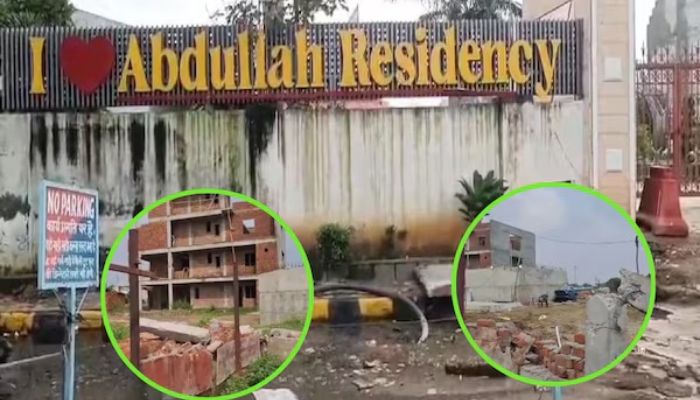
The Crime Branch’s investigation has disclosed that the operators of these madrasas and schools were fraudulently obtaining scholarships amounting to lakhs of rupees by falsely representing dilapidated and vacant land as educational institutions.

According to Nai Dunia report, the Crime Branch has initiated a search for the perpetrators responsible for the fraud and a report regarding the case has been forwarded to the government.

The report cited DCP (Crime) Rajesh Kumar Tripathi who stated that during the police operation at the hideout of the suspect Aftab Khan, he managed to escape by turning off his mobile phone. He owned a school in Sabzi Mandi Khajrana called St. Xavier’s Convent and had received a scholarship exceeding Rs 7 lakhs. However, the team found nothing at the location upon their arrival to probe the school.

After a complaint, Inspector Madhav Singh Bhadoria conducted an inquiry and submitted a case against the director of Care Well School Mohammad Rafiq Khan, the director of Madrasa Safia named Shabnam Shah, the director of Madrasa Usmania named Shahnaz Khanam, the director of St. Xavier’s Convent named Aftab Khan and the director of JR DRD Memorial School, also named Aftab.

Madhav Singh Bhadoria stated that fake students were first registered on the portal for the 9th and 10th grades and subsequently, the alleged institutions further took forward the bogus registration of the latter through their own login access. A total of 27 such institutions have been marked as suspicious in this investigation. The fraud is being examined, and measures will be implemented against these institutions if they are determined to be guilty.

Notably, the authorities had registered a case on 17th June, following a complaint from Anil Kumar Soni, Assistant Director of the Backward Classes and Minority Welfare Department and have been actively investigating the matter.

‘No complaints, zero appeals’: Chief Electoral Officers of various states slam Rahul Gandhi for ‘vote chori’ allegations, demand oath

In a dramatic turn of events following Congress leader Rahul Gandhi’s press conference earlier today, Chief Electoral Officers (CEOs) from multiple states have categorically dismissed his allegations of large-scale electoral fraud in the 2024 Lok Sabha elections.

Gandhi, who accused the Election Commission of complicity in “vote chori” (vote theft), now finds himself cornered by official rebuttals that not only discredit his claims but also challenge him to submit a sworn declaration under oath, as mandated by law.

State Chief Electoral Officers expose the hollow core of ‘vote chori’ claims

Senior electoral officials from Haryana, Maharashtra, and Karnataka have publicly released detailed letters addressed to Rahul Gandhi, outlining the transparent procedures followed in preparing the electoral rolls and pointing out the complete lack of any formal complaint or appeal from the Congress party regarding voter inclusion/exclusion at any level.

In all three states, the sequence is strikingly similar: The electoral rolls were shared transparently with Congress representatives, with the draft and final versions made available to them in 2024 and early 2025. However, the Congress party did not file any first-level appeals with the concerned District Magistrates, nor did it submit any second-level appeals to the Chief Electoral Officers. Despite making sweeping public allegations, the party has failed to present any list of allegedly fraudulent or excluded voters to substantiate its claims.

Haryana CEO’s Response: “Not a single appeal from INC”

The CEO of Haryana, in a letter dated August 7, flatly stated that the INC failed to file even a single first or second-level appeal regarding the electoral rolls. The officer noted that the rolls were shared with the INC in August and September 2024, and reminded Gandhi that questioning election results is a matter for the courts, not press conferences. Gandhi has now been asked to fill out a statutory Declaration/Oath identifying specific ineligible voters if he stands by his accusation.

Karnataka CEO: “Zero complaints from Congress”

In a similar letter, Karnataka’s Chief Electoral Officer confirmed that both draft and final rolls were shared in November 2024 and January 2025. Despite this, the Congress party did not raise any official objections. The letter categorically refutes the claim of electoral manipulation and calls on Gandhi to substantiate his accusations with sworn statements as required under Rule 20(3)(b) of the Registration of Electors Rules, 1960.

Maharashtra CEO: “Transparent rolls, no evidence”

The Maharashtra Election Office echoed these sentiments, stating that the rolls were transparently shared with the INC and no complaints were received post-publication. The CEO has demanded a formal affidavit under oath from Gandhi, identifying names, serial numbers, and parts of the electoral roll to proceed with any legal action.

Legal consequences loom for false claims

All three CEOs have attached the same official Declaration/Oath form, a legal document that Rahul Gandhi must fill out under penalty of law if he wishes to pursue his claims. The form warns that false declarations are punishable under Section 31 of the Representation of the People Act, 1950 and Section 227 of the Bharatiya Nyaya Sanhita, 2023.

This puts Rahul Gandhi in a tight spot: either produce concrete evidence under oath, risking criminal prosecution if proven false or accept that his claims were baseless political rhetoric.

Rahul Gandhi claims same voter is listed in 4 places in 3 states, a search of the number on voter’s portal shows something else

Rahul Gandhi on 7th August yet against levelled allegations of ‘vote theft’ against the Election Commission of India. In a press conference, he gave some examples of same voter appearing in voter list of multiple places, claiming it to be a big scam. However, his claims are not supported by publicly available data on Election Commission’s Voter’s Services Portal.

Rahul Gandhi had claimed that there is a voter named Aditya Srivastava who appears in as many as four polling booths. He had showed purported screenshots of the Voter’s Service Portal, which apparently shows that the voter with EPIC number FPP6437040 is listed in Uttar Pradesh, Maharashtra and two polling stations in the same constituency in Karnataka.

According the purported screenshot from the ECI’s website taken on 16th March, the name appears in Jogeshwari assembly constituency in Maharashtra, Lucknow East in Uttar Pradesh, and twice in Mahadevapura assembly constituency in Karnataka.

However, when searched with the number FPP6437040 on the portal, it appears only once under Karnataka, and does not appear under Maharashtra and Uttar Pradesh.

The name appears only once in Karnataka

When searched the number for Maharashtra and Uttar Pradesh, the portal shows “No Result Found”. It also shows that the entry only once under Karnataka, not twice.

The name does not appear in Maharashtra and Uttar Pradesh

The Chief Electoral Officers of Uttar Pradesh and Maharashtra have also confirmed the same, that the voter with that EPIC number is not listed in these two states.

The CEO of Uttar Pradesh issued a statement on X confirming that the number is only present under Mahadevapura assembly constituency in Karnataka, and it is not present in Lucknow East in Uttar Pradesh, as claimed by Rahul Gandhi.

This makes it clear that Congress used either fake or outdated data to make the false claim. Notably, it is possible for same voter with the same EPIC number to be listed in multiple places for some time. This happens when a voter migrates to a different constituency, and the name remains in the voter list in the earlier place till it is updated.

However, as electoral rolls are updated regularly, and specifically before elections, such duplicate entries are resolves. This is one of the reasons why the ECI is conducted the Special Intensive Revision in Bihar, with proposal the conduct the same all over India. While the Congress is alleging discrepancies in the voter list, the party is also opposing the SIR, a move to eliminate such issues.

5 times Congress leaders got exposed for undermining the voting system of India by creating fake Voter IDs and rigging elections

On the 7th of August 2025, Rahul Gandhi, the crowned prince of Congress, went on an unhinged rant yet again – blaming everything but himself for the abysmal electoral condition of his party. He claimed that the Election Commission of India (ECI) was colluding with the BJP to ensure BJP wins elections and Congress loses.

His arguments, based on the “research” done by his team, had no basis. His flight was imagination has been summarily debunked by OpIndia in this article.

There is, however, another important aspect of this story. While Rahul Gandhi has gone all guns blazing, and not for the first time, claiming that ECI and BJP are colluding to defeat him (despite his stellar politics that focuses mostly on incoherent rants and forging alliances with forces that are verifiably anti-India), there are several times when Congress workers have themselves been exposed for undermining the voting system in India and abusing the democratic process.

Following is an indicative list (which is in no way exhaustive) of some of the times Congress workers did what Rahul Gandhi is now blaming BJP for.

1. Congress created fake voter-IDs

In December 2024, former PCC General Secretary Bakka Judson revealed that Congress had created 8.5 lakh fake voter ID cards in Telangana in an attempt to win the local body elections.

Bakka had further said that such fake voter ID cards were not just created in Telangana but also in Kerala, saying that it was an act of sedition. In his statement, he said that Chief Minister A Revanth Reddy should be held responsible for undermining democracy.

He had said that he had filed a complaint with the Election Commission. He said that Congress first deleted 8.5 lakh voters aged between 18 and 35 from the voter list. Then, original voters’ photos were morphed and their phone numbers were also altered. Interestingly, the voter ID numbers would remain same, he alleged.

“This is not confined to Telangana, it is happening in Kerala, Karnataka and other places. Yet, the BJP is remaining calm over the issue,” Judson said, alleging that Deputy Chief Minister Mallu Bhatti Vikramarka’s wife Nandini was also involved in the issue. When a case was registered against a few individuals, she managed to get the accused released, he alleged.

2. Kirti Azad reveals that in Bihar, poll booths were looted for Congress leaders

In February 2019, Congress leader Kirti Azad made a startling revelation. He said that in Bihar, booth capturing was par for the course and several Congress leaders had benefitted.

He said: “Congeress party ke workers booth loota karte the Nagendra ji ke liye… us samay to booth loote jate the (Congress party workers used to loot booths for party leader Nagendra ji and others…this was prevalent in those days).”

“In those days booths were looted…Congress workers used to loot polling booths for Nagendra ji (former Congress leader),” Azad said.

He also accepted that his father and he also benefited from booth capturing. “Mere pitaji ke liye bhi booth loota jata tha.1999 main hamare liye bhi lootaus samay to electronic machine nahi thi (Booths were looted for my father as well. In 1999, for me also. EVMs had not been introduced back then,” he said.

3. Youth Congress leaders even rigged their organisational elections

In November 2023, Kerala Police summoned Youth Congress state president Rahul Mamkootathil regarding a case about the use of fake voter ID cards during the Youth Congress organizational elections. The issue arose after complaints were made to the Chief Electoral Officer, Sanjay M. Kaul, who asked the state police to investigate.

A special investigation team was formed, which led to the arrest of four Youth Congress workers—Abhi Vikram, Feny Ninan, Binil Binu, and Vikas Krishnan—from Pathanamthitta, who were close aides of Mamkootathil. The police took laptops, mobile phones, and 24 fake voter ID cards, claiming these were used to influence the election results.

The case was filed under sections of the Indian Penal Code for forgery and using forged documents. Political parties, including the BJP and CPI(M), voiced concerns about the possible misuse of fake IDs in general elections, leading to calls for a thorough probe and a petition for a CBI investigation. Mamkootathil denied the allegations, and the Congress party launched an internal inquiry.

4. Lokayukta finds Congress workers responsible for making fake Voter IDs

In August 2022, the Lokayukta found that former Congress MLA from Sultanpur, Majra Jai Kishan, had created fake voter IDs and recommended criminal proceedings.

The order was based on findings that Kishan had used his residential address to create fake voter identity cards for non-residents, some of whom he claimed were relatives. The Vigilance Department, with support from the Chief Secretary, pointed out that these actions harmed the integrity of the electoral process.

Delhi LG had then instructed the Delhi Police Commissioner to register an FIR against former Congress MLA Majra Jai Kishan. This issue first arose in 2013-14.

5. Congress leaders booked for thousands of fake Voter IDs

In 2018, right before the Karnataka elections, RR Nagar Congress MLA and 13 others were booked in a fake voter ID case. The Election Commission had ordered an inquiry after 10,000 fake voter IDs were found during a raid in an apartment located in the Raja Rajeshwari Nagar constituency of Bengaluru.

Karnataka’s Chief Electoral Officer Sanjiv Kumar said two trunk-loads of counterfoil strips, which appeared to be the acknowledgement slips of the form used to add names of voters, were also found. But the forms were not the same colour as those used by the Election Commission, he said. “After a surprise visit was paid to a flat in Jalahalli locality, nearly 9,746 voter ID cards were found. Five laptops and one printer was also found in the flat,” Kumar had said.

While the Congress blamed BJP for this scam, 2 days later, the Election Commission registered an FIR against the Congress MLA and 13 others in the case.

Rahul Gandhi in his press conference today spun fantastical tales through, what was in his mind, results of a “research” conducted by a group of Congress workers who arguably pretend to have lower IQ than Rahul Gandhi himself just to make him feel better about himself. However, history proves that rigging elections, creating fake Voter IDs, undermining the democratic process (remember Indira Gandhi?) and being dictatorial is what Congress does best.

Rahul Gandhi alleges electoral fraud in Karnataka: 10 points that thoroughly debunk his ‘vote chori’ claims

On Thursday, August 7, Congress leader Rahul Gandhi intensified his attacks on the Election Commission of India (ECI), levelling serious allegations of electoral malpractice and accusing the Commission of colluding with the ruling BJP to manipulate the 2024 Lok Sabha election results.

Speaking at a press conference in Delhi’s Indira Bhawan, Gandhi declared that a “criminal fraud” had been perpetrated against the Indian Constitution. Citing what he described as “clear evidence” of voter list tampering in Maharashtra and Karnataka, he alleged the EC had refused to provide machine-readable voter data to cover up large-scale manipulation.

Among his most pointed allegations was that the Maharashtra Assembly elections had been “stolen”. He also cited Bengaluru’s Mahadevapura Assembly segment as a hub of “vote chori,” claiming that over one lakh fake votes were cast there alone.

But a closer examination of these assertions reveals a patchwork of flawed logic, unverified assumptions, and stunning extrapolations. Below is a detailed point-by-point rebuttal of the key claims made by Gandhi, particularly around Karnataka’s Mahadevapura constituency.

1. Internal polls vs actual results: A misguided benchmark

Rahul Gandhi claimed that internal surveys conducted by the Congress party had projected wins in 16 of Karnataka’s 28 Lok Sabha seats, but the party ended up winning only 9. He used this discrepancy to allege “definite voter fraud,” once again pointing fingers at the Election Commission.

But this line of reasoning is deeply flawed. Internal polls are neither transparent nor independently verified, and often reflect the optimism of campaign teams more than ground realities. They are not binding predictors of public sentiment and cannot be held up as a benchmark for electoral legitimacy. In any democracy, it’s actual votes, not internal projections, that determine outcomes.

If internal polls were a foolproof benchmark for electoral outcomes, then by that logic, the BJP should have cried foul for not crossing the 400-seat mark it once projected. But it didn’t, because unlike the Congress, the BJP understands that internal surveys are not incontrovertible facts and respects the democratic mandate instead of insulting voters by floating absurd conspiracy theories.

If internal poll mismatches are grounds for alleging fraud, then any political loss becomes suspect, a precedent that undermines democratic principles.

2. The myth of “missing” anti-incumbency

Gandhi also questioned how the BJP, despite completing two terms at the Centre, managed to secure a third consecutive win. “Anti-incumbency hits every party in every democracy,” he said, suggesting that the absence of such sentiment pointed to manipulation.

This claim again rests on shaky logic. The absence of anti-incumbency is not proof of fraud. Voters re-elect governments when they perceive stability, delivery, and leadership, particularly in the absence of a compelling alternative. India has seen this before under leaders like Nehru and Indira Gandhi, just as Germany did under Angela Merkel.

What stood out most was Rahul Gandhi’s insinuation that every time anti-incumbency sentiment rises against the Modi government, a new ‘script’ is enacted. He cited Operation Sindoor, insinuating that the Pahalgam terror attack may have been a false-flag operation by the Indian state, eerily echoing the very narrative Pakistan uses to deflect from its role in harbouring Islamist terrorists.

Suggesting that consistent voter support is inherently suspicious only highlights the Congress’s struggle to regain public trust, something no conspiracy theory can fix.

3. Opinion polls and exit polls: Not the ultimate truth

Another argument Gandhi advanced was that the deviation between opinion polls, exit polls, and actual results indicated foul play. He cited the 2024 results in states like Haryana and Madhya Pradesh as evidence.

But opinion and exit polls are statistical projections based on limited samples, prone to error due to methodological differences and unpredictable voter behaviour. They are not final vote counts.

From Brexit to Trump’s 2016 win to multiple elections in Israel, global democracies have seen polls miss the mark, without descending into accusations of fraud. In fact, the exit polls have also been completely off the mark from actual reality when it concerns the BJP. In 2015 Bihar elections, almost all exit polls suggested a close contest, but eventually, the RJD-JDU-Congress alliance winning it comfortably, with the RJD emerging as the largest party. This outcome was a stark contrast to the intense tussle predicted by exit polls.

Even exit polls during the 2024 Lok Sabha elections predicted a lanslide victory for the BJP. As we know it, the polls were spectacularly wrong as the BJP manage to win only 240, a far cry from 330+ most exit polls were suggesting.

Therefore, to argue that discrepancies between polls and results constitute rigging is both alarmist and unfounded. Worse, it sets a dangerous precedent that undermines public trust in the very idea of elections.

4. Alleged voter fraud in Mahadevapura: Mistaking possible administrative overlaps for election manipulation

Gandhi zeroed in on Mahadevapura, one of eight Assembly segments under Bangalore Central Lok Sabha constituency, claiming that over 1 lakh votes out of 6.5 lakh were either duplicated or linked to fake addresses.

Rahul Gandhi voter fraud
Rahul Gandhi alleged voter fraud during his press conference

As an example, Rahul Gandhi cited the case of one Gurkirat Singh Dang, whose name allegedly appeared on voter rolls at four different booths. From this single instance, he extrapolated a sweeping claim of “thousands” of such cases, without presenting any independently verified evidence. What Gandhi fails to acknowledge, however, is the very real and common phenomenon of intra-city and inter-state migration, particularly in urban hubs like Bengaluru, where people frequently shift residences for work, education, or housing constraints.

In such cases, it’s not unusual for individuals to be enrolled at their new address without having formally applied for the removal of their names from earlier rolls. This administrative overlap can result in multiple entries, but it does not automatically mean that the person voted more than once, let alone that they were part of any coordinated fraud. To conflate registration anomalies with actual voting malpractice is not just misleading; it grossly misrepresents how electoral rolls evolve in dynamic urban settings.

Moreover, Gandhi also conveniently overlooked the fact that parties receive voter rolls well in advance and are free to raise objections during the verification phase. If such large-scale discrepancies truly existed, why weren’t they flagged before polling day?

5. Voter duplication: Systemic flaws, not partisan conspiracy

If Rahul Gandhi alleges that certain voters cast their votes twice, the critical question remains unanswered: whom did they vote for? There is absolutely no evidence to suggest that such voters exclusively supported the BJP. In fact, in a secret ballot system, it is impossible to determine the direction of any individual’s vote without breaching the very foundation of electoral privacy. For all we know, duplicate voters could have voted for the Congress or any other party. Yet, Gandhi conveniently assumes, without proof, that any such irregularity must have benefited the BJP, exposing the deeply partisan nature of his accusation.

Moreover, highlighting instances of individual malpractice does not automatically implicate the entire democratic process or justify branding an entire election as “fraudulent.” If some people have gamed the system, and that has happened across decades, under multiple governments, including those led by the Congress, it reflects a systemic loophole, not a partisan conspiracy. By projecting isolated cases as proof of a grand BJP-led conspiracy, Rahul Gandhi not only undermines institutions but also insults the intelligence of Indian voters who did not vote for his party.

6. Addresses missing point to clerical errors and bureaucratic flaws, not election rigging

Gandhi also claimed that many addresses in voter rolls were missing, unverifiable, or outright fake, labelling thousands of such entries as fraudulent.

This oversimplifies a more nuanced administrative reality. In urban constituencies like Mahadevapura, rapid migration, outdated address records, or digitisation errors are common. Incomplete fields showing “0” or “#” could be due to data formatting issues, manual input errors, or legacy record-keeping problems, not evidence of a voter fraud conspiracy.

Without physical verification of each individual case, such claims remain speculative at best. Mistaking clerical inconsistency for criminal intent is reckless and unfair to legitimate voters.

6. Missing Photos on electoral rolls: A flimsy foundation

Among Gandhi’s more startling assertions was the claim that around 4,000 voters were “fake” because their electoral roll entries lacked photographs.

Missing photos, while not ideal, are often the result of administrative lapses, not fraud. Voter databases in India are vast and periodically updated. Delays in image syncing or glitches during digitisation can result in such anomalies. Importantly, the absence of a photo on a public list doesn’t confirm that the individual voted, let alone that they were fake. In fact, Gandhi himself highlighted how some of the pictures in the electoral roll were too small to be clearly visible. It only underscores the technical glitch and clerical errors the electoral system faces, not a coordinated conspiracy to steal votes.

To equate missing photos with fake voting displays a fundamental misunderstanding of how the electoral database functions.

7. Misuse of Form 6: Misunderstood and misrepresented

Gandhi further alleged that Form 6, the application for voter registration, was misused by middle-aged and elderly voters, implying that only 18- to 22-year-olds should be using it. He pointed to a 70-year-old woman who applied twice and suggested she may have voted twice.

This betrays a misunderstanding of electoral procedure. Form 6 is for first-time registration, regardless of age. People may register later in life for numerous legitimate reasons: returning from abroad, acquiring new documents, or simply developing political awareness. Many middle-aged and senior citizens proudly voted for the first time in 2024, a sign of democratic inclusion, not fraud.

Claiming misuse based solely on age is not just factually incorrect but it betrays shocking level of ignorance, unbecoming of India’s Leader of Opposition.

8. ‘I’m a politician’: Rahul Gandhi when asked to take oath for ‘vote chori’ claim

A revealing moment unfolded during Rahul Gandhi’s press conference. When an attendee asked whether he was willing to take a formal oath to back his explosive ‘vote chori’ allegation, Gandhi skillfully dodged the question. Instead, he said,” I am a politician. every word I speak in public is under oath.” He then meandered into a vague defence, asserting that his claims were based on Election Commission data, and conveniently noted that the poll body hadn’t explicitly denied it.

Rahul Gandhi may insist he never lies to the people, but the Supreme Court’s verdict on the Rafale controversy tells a different story, one that exposes the Congress leader’s claims as misleading and devoid of truth. In fact, he was also called out for his lies on Maharashtra elections, something which he repeated earlier today. So his claim that he doesn’t lie to people don’t hold water.

Notably, the Karnataka Election Commission came down hard against the Congress leader for making unfounded claims of voter theft in his press conference. The poll body formally asked Rahul Gandhi to submit a signed declaration and furnish names of voters he alleges were fraudulently included in the electoral rolls as part of his “vote chori” (vote theft) claims.

The Commission emphasised that electoral rolls were prepared transparently and warned that any false declaration could attract legal consequences under both the BNS and the Representation of the People Act, 1950. The declaration, mandated under Rule 20(3)(b) of the Registration of Electors Rules, would be necessary to initiate any official proceedings.

9. Rahul Gandhi highlights duplication of voters but opposes SIR in Bihar

While Rahul Gandhi highlighted duplication and discrepancies in voter rolls during the press conference, particularly in constituencies like Mahadevapura, his track record reveals a contradictory stance. In Bihar, when the Election Commission launched the Systematic Investigation of the Electoral Roll (SIR) to weed out exactly such irregularities, it was Rahul Gandhi, his Congress party, and many other opposition parties had cried foul. Instead of welcoming a long-overdue clean-up of bloated and error-ridden rolls, the Congress accused the Election Commission of colluding with the BJP and manipulating the process, going so far as to challenge the initiative in court.

This duplicity exposes the political convenience behind Gandhi’s rhetoric. Voter list discrepancies are not new; they’ve been a systemic issue that likely persisted during Congress regimes as well. However, the current Election Commission has taken unprecedented steps to ensure transparency and accountability through processes like SIR. Ironically, Gandhi now opposes the very effort that seeks to solve the problem he claims to highlight.

As the BJP, along with several political commentators noted, Rahul Gandhi’s recent press conference was a roaring endorsement of the revision exercise underway in Bihar. But more importantly, his shifting stance raises a fundamental question: is the issue the duplication, or the fact that his narrative no longer controls the debate?

10. Conspiracy or convenient cover?

Rahul Gandhi’s sweeping claims of electoral fraud are built not on verified evidence but on unsubstantiated projections, anecdotal irregularities, and speculative logic. They rely on conflating administrative imperfections with malicious intent and on dismissing legitimate outcomes simply because they didn’t favour his party.

Rather than engaging in introspection about the Congress party’s electoral shortcomings, be it ineffective messaging, weak grassroots mobilisation, or a lack of public connect, Gandhi appears intent on discrediting institutions his own party once helped build. He repeated the same debunked claim that Maharashtra polls were rigged. There is a pattern to disinformation and propaganda that Rahul is disseminating, one that seeks to systematically undermine the legitimacy of the Modi government’s electoral victories against Congress.

Allegations of fraud in any democracy must be taken seriously. But they must also be backed by credible evidence, presented through appropriate legal and electoral channels, not post-facto press conferences laced with conjectures, suppositions, and unverified guesswork.

In the absence of such evidence, what remains is a troubling attempt to undermine public faith in India’s democratic process. And that, more than any Form 6 or voter roll discrepancy, is the real threat to the legitimacy of elections.

Congress’ past attempts at undermining EC’s credibility

In its repeated attempts to discredit the BJP’s electoral victories, the Congress party has actively tried to undermine the credibility of the Election Commission, most notably through baseless EVM hacking conspiracy theories. One such farcical episode occurred in 2019, when Congress backed a so-called “EVM hackathon” in London featuring an alleged ‘EVM expert’ Syed Shuja, who claimed via Skype, with his face covered, that BJP had hacked the 2014 general elections and multiple state polls. He even alleged that BJP leader Gopinath Munde was murdered for uncovering the tampering. No proof was offered, only sensational claims.

Senior Congress leader Kapil Sibal’s presence at the event raised eyebrows, especially as Shuja’s claims grew more absurd such as BJP’s IT cell allegedly using military frequencies to “ping” EVMs. Ironically, Shuja claimed the same EVMs delivered a fair outcome when Congress won in Rajasthan, MP, and Chhattisgarh. The Election Commission firmly rejected the allegations, stating that Indian EVMs are standalone devices with no communication capabilities and are produced under strict security.

This episode exposed Congress’s willingness to propagate wild conspiracy theories and cast aspersions on constitutional institutions when elections don’t go their way. Rather than accepting public verdicts, the party has shown a pattern of attempting to delegitimise the process itself, a dangerous precedent in any democracy.

Rahul Gandhi’s latest claims of “voter fraud” in Mahadevapura follow the same tired playbook: dramatic allegations, zero evidence, and a clear attempt to sow doubt in democratic institutions. Just like the EVM hacking drama, Gandhi’s insinuations rest on political convenience rather than verifiable facts. While he demands accountability from the Election Commission, he has also opposed genuine electoral reform efforts like the SIR process in Bihar, which seeks to clean up duplicate and erroneous voter entries. This selective outrage reveals the underlying strategy: if the Congress loses, the system must be broken.

Chapters on Field Marshal Sam Manekshaw, Brigadier Mohammad Usman and Major Somnath Sharma added to NCERT Urdu and English syllabus

Chapters on the lives and sacrifices of Field Marshal Sam Manekshaw, Brigadier Mohammad Usman, and Major Somnath Sharma have been added to the NCERT syllabus in this academic year, in Class VIII (Urdu), Class VII (Urdu), and Class VIII (English), respectively.

The newly introduced chapters aim to provide students with inspirational narratives of courage and duty. Field Marshal Sam Manekshaw, India’s first officer to be conferred the rank of Field Marshal, is remembered for his exceptional leadership and strategic acumen. Brigadier Mohammad Usman and Major Somnath Sharma, both recipients of the Mahavir Chakra and Param Vir Chakra respectively (posthumously), laid down their lives in service of the nation and remain symbols of supreme sacrifice.

As part of efforts to establish National War Memorial (NWM) as a prominent national landmark, Ministry of Defence has partnered with Ministry of Education and National Council of Educational Research and Training (NCERT) to integrate NWM and related references into the school curriculum.

Through these stories and their inclusion in the curriculum, students will not only gain insights into India’s military history but also absorb important life lessons on resilience, empathy, emotional intelligence, and the importance of contributing to nation-building.

Prime Minister Shri Narendra Modi dedicated the National War Memorial to the nation on 25 February 2019, located in the iconic Central Vista ‘C’ Hexagon, India Gate, New Delhi. The Memorial was established to inculcate a sense of patriotism, high moral values, sacrifice, national spirit, and belongingness among all citizens, while serving as a befitting tribute to our brave soldiers who made the supreme sacrifice for the nation.

As Rahul Gandhi goes on an ignorant rant about ‘fake votes’, a reminder of when Youth Congress workers were arrested by Kerala Police for using fake voter IDs

Congress leader Rahul Gandhi has been attacking the Election Commission of India (ECI), casting aspersions on the integrity of the poll body. However, on 7th August, the Gandhi scion crossed all limits and openly threatened the ECI officials with “consequences” if his party comes to power.

“Now, the Election Commission must provide us and the people of India with that information. Because if they don’t, there will be consequences. There will be consequences for every single polling officer involved in this, regardless of how senior or junior you are. One day, the opposition will come to power and then you’ll see what we do,” said Rahul Gandhi on Thursday, August 7.

This is not the first and possibly not the last time that Rahul Gandhi is raising suspicions about the ECI or the election process in state or general elections. He and his party often level such allegations after his party loses elections. In June 2025, Rahul Gandhi spread lies about the 2024 Maharashtra assembly elections after his party’s alliance lost, saying that the elections were rigged and were a “match fixing”.

However, before attacking the Election Commission and alleging EVM hacking, VVPAT tampering, illegally including additional votes in favour of the BJP, and what not, Rahul Gandhi should look within his own party.

Back in November 2023, three Youth Congress workers were arrested by Kerala Police for use of fake voter ID cards during the organisational polls. In this election, Youth Congress leader Rahul Mamkottathil won. He was later interrogated by the police. The police had seized laptops, mobile phones and fake election photo identification cards from the possession of the accused Youth Congress workers.

On the direction of Chief Electoral Officer of the state, a case was registered against Youth Congress workers identified as Abhi Vikram, Feny and Binil Binu. They were booked under multiple sections of the Indian Penal Code, including 468 (forgery for the purpose of cheating) and 471 (Using a forged document as genuine). The police had said that the accused had allegedly used a mobile application developed by Youth Congress leader Jaison, for creating the fake IDs.

In January 2024, Jaison, who served as a vice-president of the Youth Congress in East Eleri Mandalam in the northernmost district of Kasaragod, surrendered before the police. He was later granted bail by the court. The Youth Congress worker is a B. tech graduate in electronics.

“He is the one who developed the app with the support of a staff at the computer centre. The fake ID cards were made using this application,” the police said back then.

The police had recovered 24 fake voter ID cards during the raids, with some being in the name of Tamil film star Ajith. Back then, the Kerala BJP had said that top leadership of Congress’s Kerala unit, including KC Venugopal and V.D. Satheesan was aware of the fraud being committed by its workers.

OpIndia Exclusive: Rohini Ghavari, who accused MP Chandrashekhar Azad of ruining lives of multiple girls, narrates how he duped her in the name of marriage, family also narrates ordeal

Rohini Ghavari Valmiki, a PhD student in Switzerland has consistently made serious allegations against Bhim Army chief and Lok Sabha MP Chandrashekhar Azad, earlier known as Chandrashekhar Azad Ravan. She also initiated an FIR against him and documented her statement with the authorities. On 6th August, she gave an exclusive interview to OpIndia amid her efforts to launch a legal inquiry into the politician.

She stated that her ordeal began in 2021 and added, “Chandrashekhar is portrayed as a new messiah, a champion of social justice by his supporters and devotees. However, I have yet to encounter a true messiah in my life who fails to honor women and the allegation on this individual is one of harassment. Therefore, it is contradictory to assert that a person who mistreats women can genuinely respect them as this notion is basically flawed.”

Rohini highlighted that there was a complete lack of honesty from Ravan who exploited the favourable situation. “He thought that if nothing materializes here and his political career comes to an end or if he fails to do good in the field then Switzerland serves as a fallback option. He believed that he can secure residency by relocating there. Now, I understand this entire scheme. I also sensed it as he repeatedly mentioned his intention to come there. He sent numerous messages indicating that once we are married, it would facilitate him to join me there as he could stay with me as a legal partner.”

Ravan has a wife and a child, however, the victim conveyed that she was unaware of his marriage initially. “Had I been aware, an educated woman like myself residing in Switzerland would never have engaged in such a relationship,” she stressed. “It is essential for society to recognize truth and honesty. Blind allegiance is fundamentally wrong. The truth is apparent to the people. Our leader should be the one who directs us along the proper path, the right course,” Rohini voiced in a message to the Dalit community.

“A leader who is himself caught in cases women’s exploitation, how can he hold a mirror to society? One who lacks the resolve to fight, who is unwilling to sacrifice and who does not understand struggle, how can he become our leader? Where is the quality of leadership in him? Thus, society must comprehend this. If that man had not been incarcerated once, he might not have been able to share any bogus tales of his struggle for society. In reality, he has not contributed anything to the community. He has not delivered justice in cases of oppression. On the contrary, he has compromised the futures of thousands of our youth today. So, how did he come to be regarded as a leader,” she questioned.

Rohini pointed out, “The Dalit community in India has a significantly large population, and a considerable portion of the youth within this group remains illiterate. At times, they are swayed by misleading narratives and choose leaders whom they regard as their saviors. However, they are the ones who endure the greatest suffering. They face imprisonments and lose their futures. The consequences of these actions fall upon them. Hence, I would like to tell them not to ruin thir lives for such leaders.”

She emphasised that the Dalit community needs to look beyond Ravan. “It is evident that only a sincere leader can contribute positively to society, and I currently do not observe any genuine leadership in Chandrashekhar.” Rohini then shed light on her complaint and informed, ” The legal proceedings have commenced. My statement has been recorded, and there are several additional matters pending for which I have been requested to remain here until 5:00 pm with the anticipation that an FIR will be filed today.”

What did Rohini’s parents say

She was accompanied by her Nutan Ghavari who expressed, “I have come from Madhya Pradesh and I want justice for my daughter. He (Ravan) treated her unjustly, played with her mind and took advantage of her physically.”

Rohini’s father disclosed that he learnt about the matter only 6-8 months earlier. “She wrote about it on X but did not tell me anything. My daughter would occasionally reveal that she was supporting the Dalits by working with Chandrashekhar Ravan and assisting the Bhim Army as she was also a social and Dalit activist.” He quoted her and mentioned, “I adhere to the teachings of Dr Ambedkar and they also follow him. Furthermore, the Valmiki community is also part of the Dalit society which is how I became connected with them.”

The concerned man outlined, “Subsequently, it was discovered that he (Ravan) was enticing her with promises of marriage along with making false assurances and coerced her mentally in the beginning. For several years, he claimed to be single and declared that a significant movement for the Dalit community could be formed if they unite (via marriage). It then came to the fore that he had also exploited her physically. Later, it was revealed that he was married and had a child, in 2023-24. He seduced and manipulated my daughter, ultimately leading to her being physically exploited.”

“We were caught in all this, my daughter got trapped because she thought that the upliftment of the Dalits can happen through Chandrashekhar Azad. He also became an MP. Now, he has been exposed,” he added charging that how could a Dalit leader do this to a woman from the community.

The father cautioned Dalit youths against compromising their future for Ravan. “The Bhim Army has set its sights on the youth in Uttar Pradesh. They believe that he is acting in their best interest but the leader does not even acknowledge those who have forsaken their education to follow him like loyal pets. If he can manipulate an educated, highly qualified woman, why would he not do the same to you? He is already taking advantage of you by transforming you into a crowd to bolster his reputation, only to later hide behind the facade of politics. In the meantime, you are caught up in false charges. The police lodges complaints against you for acts of vandalism and similar offenses.”

He indicated that Ravan is also seeking to intimidate them in both direct and indirect ways as a result of Rohini’s legal actions and unveiled, “Previously, he told me that I was like his father. He visited my home. He requested that I send my daughter with him and referred to her as his younger sister, under the pretext of advancing the Dalit movement alongside her. We even provided him with food. He asserted that he would turn her into a greater leader than Mayawati as she was educated.”

He praised Mayawati and then stressed, “Today, he (Ravan) has solely misled the younger generation. The youth must not be deceived and should align themselves with genuine well-wishers of Dalits, avoiding the deceptive exploiters such as Chandrashekhar.”

Rohini’s lawyer conveys faith in the legal system, questions Ravan

Rohini’s attorney expressed her confidence in the legal system and stated that the truth will eventually be revealed. “I am also on government panel. From a legal standpoint, we have been guaranteed that action will be initiated regarding any complaint they have submitted at the earliest opportunity. The law will stand by us and I possess complete trust in the judicial system that any decision made will occur only after the truth is established.”

“The complaint that has been submitted will soon be transformed into a First Information Report (FIR) and once that happens, it will clarify for all of you the specific allegations contained within it as well as the sections that have been applied,” she added.

She also attacked Ravan and stated, “If he is indeed the foremost leader of the Dalits, why does he make such disgraceful remarks about the sisters and daughters of Dalits? Dr BR Ambedkar emphasized that women deserve to be treated with respect. Moreover, we convened a meeting in Chandigarh and appealed to the Valmiki community alongside the chairman of the Shobha Yatra Committee, Samdat Joseph. Should Rohini be denied respect or justice, the Valmiki community of Chandigarh will unite, make a decision, and stage a protest.”

The lawyer also underscored Ravan’s dramatic lifestyle change. “He is not a leader of the Dalit community. He is merely profiting by exploiting the name of the Dalit community. See his residence. Consider his past and compare it to his present. Previously, he was a DJ at weddings and now look at his situation. He now travels in luxurious vehicles such as Fortuners. He is accompanied by a security guards.”

She further explained and stated, “For instance, let us imagine we are at the police station. If one of our community members has passed away, what will he do? He will arrive there and cause a disturbance. He will engage in violent acts, such as stone pelting and then flee. This is his modus operandi. And who suffers? The victim and their families, as they face legal repercussions.”

Rohini has previously accused him of destroying the lives of several girls, including herself and taking money from them under the guise of the Dalit movement. While speaking to OpIndia in June, she disclosed how various strategies were utilized to tarnish her reputation and depict her as dishonest in the eyes of the Valmiki society as well as pressurize her.

Rahul Gandhi threatens Election Commission officials and polling officers, says they won’t be spared when the Congress comes to power

Congress scion Rahul Gandhi, who has been going on with his never-ending tirade against the Election Commission of India (ECI), has now openly threatened the ECI officials with “consequences” when his party comes to power.

“Now, the Election Commission must provide us and the people of India with that information. Because if they don’t, there will be consequences. There will be consequences for every single polling officer involved in this, regardless of how senior or junior you are. One day, the opposition will come to power and then you’ll see what we do,” said Rahul Gandhi on Thursday, August 7.

Rahul Gandhi made the threatening remarks during a live-streamed presentation in Delhi on Thursday. Lashing out at the ECI, Gandhi alleged that the election body colluded with the BJP to “steal elections and added fake voters to the voter list”.

Rahul Gandhi accuses the ECI of massive theft of votes

To try and support his allegations, Gandhi presented lengthy documents, which he claimed were the electoral roll of Karnataka. He alleged that there was a ‘Bhayankar Chori’ (massive theft) of votes in the Mahadevapura assembly segment of the Bangalore Central Lok Sabha seat, which his party lost to the BJP.

The Congress scion claimed that out of 6.5 lakh votes in the Mahadevapura assembly segment, over 1 lakh votes were stolen. He said that the “theft of votes” was exposed during an “internal survey” of his party. He made similar allegations of crores of fake voters being added to the voter lists in Maharashtra and Haryana.

Responding to Gandhi’s massive allegations, the ECI asked him to submit his claims along with a signed declaration under Rule 20(3)(b) of the Registration of Electors Rules, 1960, so that necessary proceedings can be initiated based on his allegations.

Interestingly, Gandhi refused to submit his claims under an oath with his signature during the presentation saying that since he is a politician, his words should be taken as an oath.

“What I say to the people is my word. Take it as an oath. This is their (EC) data, and we are displaying their data,” Gandhi responded to a journalist during his presentation, who asked her why he did not submit his claims to the ECI under oath.

One wonders if Rahul Gandhi is so sure about the authenticity of his allegations that he went public with them, what stops him from submitting his claims under an oath and letting the necessary proceedings be initiated to ascertain their veracity? Notably, making a false declaration about the electoral rolls is a punishable offence under Section 31 of the Representation of the People Act, 1950. Besides, submitting false evidence attracts the offence under Section 227 of the BNS.

Last month, the ECI busted the lies of the Congress and Rahu Gandhi regarding the Karnataka electoral rolls and said that the Congress party did not file a single appeal before the District Magistrates (DM) or Chief Electoral Officer (CEO) of Karnataka under Section 24 of the Representation of People Act 1950 regarding the voter list for 2024 Lok Sabha Election in Karnataka, even though it was a valid legal remedy available for the party.

The commission added that out of a total of 10 election petitions filed regarding the Lok Sabha Election 2024 process, not a single election petition was filed by any of the losing Congress candidates, adding that it was a legal remedy available under Section 80 of the RP Act 1951.

This is not the first and possibly not the last time that Rahul Gandhi is raising suspicions about the ECI or the election process. He and his party often level such allegations after his party loses elections. In June 2025, Gandhi spread lies about the 2024 Maharashtra Vidhan Sabha elections after his party’s alliance lost, saying that the elections were rigged and were a “match fixing”.

The fact that Gandhi and his party raise no official complaints with the concerned authorities every time they lose elections and allege election rigging raises suspicion about the truthfulness of their allegations. While on one hand, king of paradoxes, Rahul Gandhi makes such lofty claims about the entire election machinery being rigged, at the same time, he also goes on to say with enviable confidence that when his party comes to power (despite such massive rigging and the ECI being in collusion with the BJP), the election officials no matter high senior or junior will face the consequences.

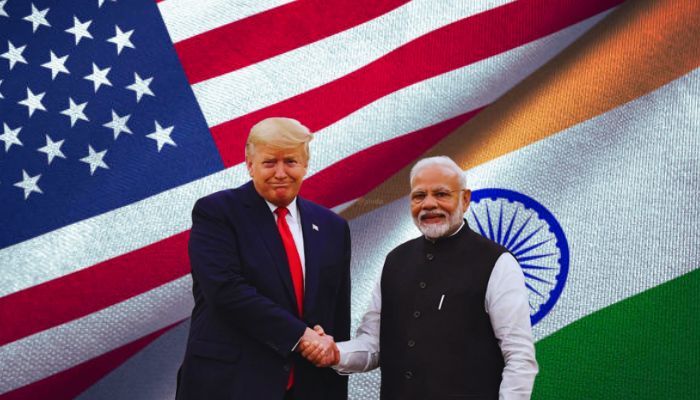
Is Trump imposing tariffs to bully India into accepting a US-favouring trade deal? Read why PM Modi said he won’t compromise with interests of Indian farmers and fisherfolks

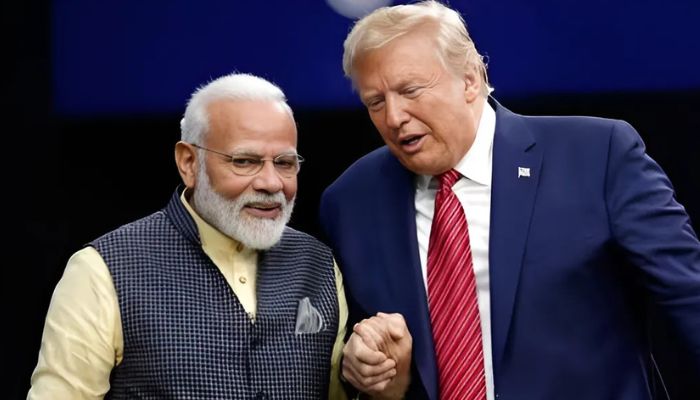
What was a speculation till now has now been confirmed by Prime Minister Narendra Modi about the thorn in the India-US trade deal. In a strong message against the arm twisting strategy the United States, Prime Minister Narendra Modi on Thursday (7th August) asserted that farmers remain India’s top priority and that the country would never compromise on their interests.

“For us, the interest of our farmers is our top priority. India will never compromise on the interests of farmers, fishermen and dairy farmers. I know we will have to pay a heavy price for it, and I am ready for it. India is ready for it,” PM Modi said while addressing the MS Swaminathan Centenary Conference.

Prime Minister Modi’s remarks that India will never compromise on the interests of farmers, fishermen and dairy farmers came at a crucial time and at an occasion at emphasises India’s commitment to becoming self-reliant in the face of tariffs and sanctions threats.

Swadeshi is Modi’s mantra against Trump tariffs

Professor MS Swaminathan was a towering figure in agricultural science and a pioneer of food security in India. His revolutionary leadership in agriculture reshaped the country’s economy. The driving force of India’s Green Revolution, also known as the ‘Father of Economic Ecology’, was instrumental in developing high-yielding varieties of paddy that helped ensure India’s low-income farmers produce more yield.

No matter which party is in power in the US or who is the President, America takes delight in giving sanctimonious sermons to countries that do not function as its vassal and leaders who do not simply behave like submissive sycophants. MS Swaminathan led India’s quest to become self-reliant in food production. Now, PM Modi has given a call to the nation to go for ‘Swadeshi’.

On 2nd August, PM Modi, while addressing a public event in Varanasi, said that Swadeshi or made-in-India products are the need of the hour. PM Modi said that Indians should choose local products over foreign ones to build a self-reliant economy.

“We will buy only those things that are made by Indians. We need to become vocal for local,” he said passionately. He also appealed to all political parties, irrespective of their political ideologies, to join this cause of encouraging Indian-made products and transforming India into an economic powerhouse.

Are tariffs and ‘dead economy’ rhetoric Trump’s pressure tactic to force India into signing a favourable trade deal that comes at the cost of Indian interests in the agriculture and dairy sector?

Prime Minister Modi’s remarks come amid chaos over the Trump administration doubling the tariff imposition to 50% on goods from India. During trade negotiations, the United States was pushing for greater access to India’s agricultural market, especially corn, soybeans, and cotton.

However, India has so far resisted opening the agricultural sector and dairy products, due to concerns about domestic livelihoods and potential impacts on farmers.

Earlier on Wednesday, US President Donald Trump signed an Executive Order imposing an additional 25 per cent tariff on imports from India for buying Russian oil. The Indian Ministry of External Affairs issued a strong statement making it clear that no tariffs, additional tariffs, substantial tariffs and penalties can deter India from upholding its national interests.

MEA statement on US tariffs

The MEA spokesperson said, “We have already made clear our position on these issues, including the fact that our imports are based on market factors and done with the overall objective of ensuring the energy security of 1.4 billion people of India. It is therefore extremely unfortunate that the US should choose to impose additional tariffs on India for actions that several other countries are also taking in their own national interest.”

The MEA statement added that India will take all actions necessary to protect its national interests.

Before this, India had called out America and the European Union’s hypocrisy, saying that they continue to have trade ties with Russia even for non-essential items and yet have the audacity to target India, which has only ensured global energy stability by purchasing Russian oil. This came in response to Trump’s initial 25 per cent tariffs, which came into effect on 1st August.

It is reported that the Modi government is not ready to heed America’s pressure to allow the import of genetically modified (GM) crops. India has also made it clear that no compromise will be made with regard to India’s agriculture and dairy sectors.

A senior official earlier this week told IndiaToday, the government will not allow any relaxation on matters pertaining to religious sensitivities, including non-vegetarian milk and beef products. The Modi government has drawn a firm line against opening Indian agriculture and dairy markets for US, and refused to reduce tariffs on these sensitive sectors, give agriculture is the backbone of India.

While India has asserted that opening Indian agriculture and dairy markets for US will harm millions of Indian farmers, directly impacting their livelihood. It is for this reason, India has historically excluded agriculture from trade deals. However, the US, focusing only on extracting maximum gains from one of the world’s largest markets, is adamant about its demand to access Indian markets in these sectors.

Perhaps, this has derailed the trade deal talks between the Indian and American authorities. Due to concerns over subsidised U.S. agricultural imports, Indian officials have decided not to lower tariffs on corn, soybeans, wheat, and ethanol. However, India has shown willingness to allow access for U.S. dry fruits and apples. Fearing disruption from U.S. imports, domestic automakers, pharmaceutical companies, and minor sectors have also pushed for a gradual opening.

America is advocating for improved access to India’s markets for pharmaceuticals, medical devices, dairy products, ethanol, alcoholic drinks, automobiles, and agriculture. Additionally, it calls for India to lower non-tariff trade barriers and reform laws pertaining to data flows, digital trade, and patents. Although India has demonstrated adaptability, it cannot blindly welcome America and undermine local ambitions and livelihoods.

While Trump may satisfy his ego by calling the Indian economy ‘dead’ even as in reality, the Indian economy is thriving, levying tariffs and penalties, receiving indirect support from a section of India’s political opposition, the Indian economy continues to grow. This is New India, which upholds its national interests, maintains ties with its allies, and does not submit to the whims of a hypocrite and full-of-himself bully.

Interestingly, even China is buying Russian oil, in fact, much more than India does, yet China is not subjected by Trump to attacks of the same intensity. It seems like India’s buying of Russian oil is not the only bone of contention.

Is it Trump’s bruised ego talking?

India did not give credit to Donald Trump for the India-Pakistan ceasefire understanding in May, and unlike Pakistan, India did not heap praises on Trump, write social media eulogies in the US President’s name. The Modi government also did not nominate Trump for the Nobel Peace Prize, an award he has been eyeing, and perhaps, it is for that reason, been boasting about his supposed roles in brokering peace between several warring nations through trade.

Trump boasted about having used a leverage trade deal offer to persuade India to halt Operation Sindoor against Pakistan. However, the absence of such a deal, Trump’s tariff imposition and charged rhetoric against India confirm that neither Trump nor his trade deal offer convinced India to stop destroying Pakistan’s terror and military establishments.

Though India did not issue dramatic sentences and boastful claims on social media like Trump. India’s Ministry of External Affairs, through multiple statements fact-checking Trump’s claims, openly called out his lies.

India, not giving Trump credit for the ceasefire, not showing interest in buying American weapons, not ditching its traditional ally Russia, not cutting down purchase of Russian oil, has anguished and frustrated Donald Trump. What added to his chagrin was India standing its ground firm even after Trump imposed tariffs, made offensive remarks against India, and doubled the tariffs.

It’s high time, Trump understands that India is no Pakistan. India does not decide or change its domestic or foreign policy to appease a foreign leader. India does not genuflect before any country to stay in their good books. India does not open the gates of its market open for other countries at the cost of muzzling the interests of local players.

The recent India-UK free trade agreement is a testament to India’s readiness to open its market for its trading partner when the terms are agreeable, respectful and mutually beneficial. Trump cannot just claim that India is too rigid, does not lower tariffs, and does not open its markets for foreign nations. If the United Kingdom can respect India’s decision to safeguard its agriculture and dairy sectors, why can’t the US?

It’s not that India’s agriculture market is completely closed for foreign companies, but, given India’s large farming population and concerns of food security, New Delhi cannot just open up the market. A flood of cheaper U.S. agricultural and dairy imports would bring down local prices. Thus, integrating with global trade cannot come at the cost of harming the domestic sector.

It is for these reasons, it seems, that Prime Minister Modi said that India will never compromise on the interests of farmers, fishermen and dairy farmers, and that he would pay any price to safeguard them.

Perhaps, Donald Trump thought that if he could make the European Union capitulate to his tariff threats, why not India? However, under PM Modi’s leadership, India has not changed its policies due to a foreign leader’s power play.

The EU capitulated before Trump in the US-EU trade deal, compromising EU nations’ interests. Was Trump expecting the same from India?

The EU signed a trade deal with the US on 27 July 2025, reflecting its capitulation before Trump’s tariff threats. Down from 27.5 per cent, the European Union agreed to a 15 per cent tariff on most of its exports to the US, while US exports to the EU face zero tariffs.

In addition, the EU committed to approximately $750 billion in U.S. energy purchases and $600 billion in investments, and increased purchases of U.S. military equipment. Trump’s aggressive negotiation tactics, including threats of levying higher tariffs and leveraging the EU’s reliance on US markets and security, pressured EU Commission President Ursula von der Leyen to agree to the one-sided terms. This, however, came at the cost of leaving European industries, especially automotive and pharmaceuticals, at a massive disadvantage.

Observer Research Foundation’s analysis shows that German automobile manufacturers like Volkswagen and Mercedes-Benz, which export over 10 per cent of their vehicles to the US, will witness an annual profit cut of US$1.5–2 billion.

Just as it was seen in the case of India in April this year, Trump had put a deadline for the EU as well, threatening to impose a 30 per cent tariff on European products in the absence of a trade deal by 1st August 2025. Trump had also threatened a massive 200 per cent tariff on European pharma products in the absence of a trade deal by 1st August. However, unlike the EU, which sabotaged its own interests to escape the ‘wrath’ of Trump, India stands its ground firm and its top leader has issued an open declaration to brave any challenge and pay any cost to ensure India’s sovereignty, strategic autonomy, and national interests remain unbesmirched.

Modi government has been resisting Western pressure tactics since 2014

This, however, is not the first time that the Western world has attempted to pressure India into complying with its whims. However, the Modi government has dealt with such pressure tactics in the past and successfully safeguarded Indian interests.

Right from the beginning of his first term in the Centre, Prime Minister Modi has adopted an approach of resisting foreign pressure tactics, often employed to bend India into agreeing to their terms. In August 2014, PM Modi called off a deal agreed to by the previous Congress-led UPA government with the World Trade Organisation (WTO), to protect poor Indian farmers.

Even back then, the question of food security arose. The Modi government contended that after the trade facilitation agreement is signed, there is no guarantee that the same urgency will be displayed to food security. India had pointed out that the deal offered no leverage to India to secure its interests on food security, the 10% limit on support to agriculture was based on 1986-88 prices; however, inflation during the years preceding 2013-14 rose exponentially. It was only after certain modifications were made to the FTA that India signed the deal.

India has refused to liberalise trade in ways that could have harmed domestic industries. India has also opposed plurilateral agreements and maintained high agricultural subsidies, since they are essential for food security.

Last year, the US, Ukraine and several other countries criticised India’s market price support for rice and wheat; however, India held firm and upheld the interests of its farmers.

It must be recalled that in 2022, when a war broke out between Russia and Ukraine, Western nations pressured India to reduce its reliance on Russian oil. However, India not only continued to import but also increased the volume of Russian discounted crude oil. India became the second-largest buyer of Russian oil after China. While the US and its cheerleaders-cum-vassals are now vilifying India for buying Russian oil, it was India which ensured stability in global energy prices and also met its domestic energy demands despite criticism and threats of penalties.

India has also continuously rejected foreign pressure over the issue of Kashmir and India-Pakistan relations, making it clear on multiple occasions that no third party will be allowed to have a say. Even during Operation Sindoor in May this year, India categorically denied US involvement, asserting that a ceasefire understanding was arrived at between India and Pakistan only after the Pakistani DGMO dialled up to his Indian counterpart. Just to please Trump or bolster his Nobel Peace Prize claim by lending credence to his lies, India did not compromise its strategic autonomy and dismissed Western interference in India’s regional disputes, even if that meant upsetting a narcissist Trump.

Not only Western pressure, but India has also resisted regional pressure in the past. It must be recalled that back in 2019, India pulled out of the Regional Comprehensive Economic Partnership (RCEP), a China-led trade agreement involving ASEAN countries, as well as Japan, South Korea, Australia, and New Zealand. The Modi government prioritised protecting Indian industries from cheap Chinese imports, a flood of which into Indian markets would have devastated local manufacturers, and trade imbalances. Not to forget, India has also opposed China’s Belt and Road Initiative (BRI), since its China-Pakistan Economic Corridor (CPEC) violates India’s territorial integrity and sovereignty.

Conclusion

Under Prime Minister Modi’s leadership, India has resisted regional and Western pressure and arm-twisting measures effectively. The West, especially Donald Trump, needs to understand that today’s world is a multipolar world and India should not be expected to toil to strengthen American or European economies. India is a sovereign nation, and its priority has been, is, and shall remain its own national interests and commitment to upholding relations with its traditional allies. No country should expect India to have exclusive relations with certain countries and antagonise others simply because the US and EU are against them. Trump cannot blame his own failure to end the Russia-Ukraine war “within 24 hours of assuming office” on India. No tariffs, no threats, no penalties and no divorced-from-reality ‘dead economy’ jibes can compel India into a Faustian bargain.