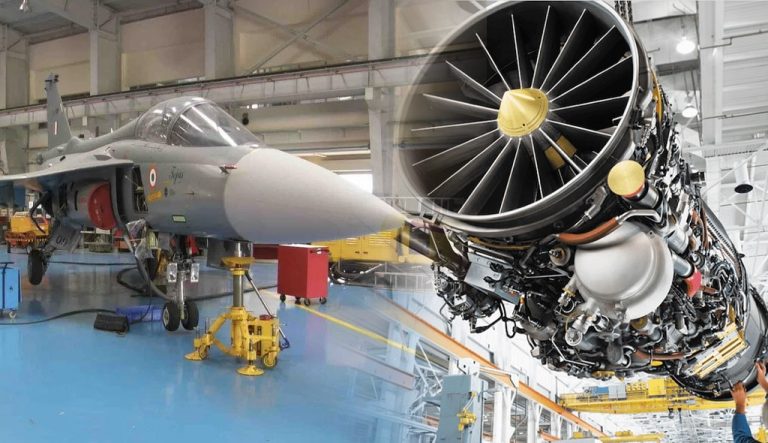
The production of India’s indigenous Tejas Mk-1A fighter jet has hit a setback after US-based General Electric (GE) failed to deliver any F404-IN20 engines to Hindustan Aeronautics Limited (HAL) in August, despite committing to supply two engines every month. The lapse has slowed the pace of assembly at HAL, which is under pressure to ramp up production to meet Indian Air Force requirements.
In July this year, Defence Secretary RK Singh had said that GE had assured a steady supply schedule beginning in August, with two engines each month till March. However, with no engines dispatched in August, the timeline has already slipped. GE has now promised to make up for the missed schedule by delivering three to five engines in October, as per reports.
HAL, meanwhile, is expected to formally request the American manufacturer to increase its production rate to ensure timely deliveries for the Tejas programme.
The disruption is significant because the F404 engine line had only recently been restarted by GE after a five-year pause. HAL received the first engine in March and the second in July, which gave confidence that deliveries were back on track. The August delay has revived concerns about whether GE can sustain the promised supply rate.
As per reports, HAL has readied two LCA Tejas Mk-1A jets with the two engines received so far, and weapon trials are going on with them.
HAL’s long-term production targets of the Tejas Mk1A depend heavily on engine availability. With plans to produce between 16 and 24 Tejas Mk-1A aircraft annually, consistent supply of engines is critical. Indian government has already placed an order for 83 Mk-1A jets and has approved an additional order for 97 more. Ensuring uninterrupted engine flow is therefore vital to meeting the Indian Air Force’s urgent squadron needs.
India has also selected the more powerful F-414 engine from GE for the Tejas Mk2 and initial versions of the fifth generation AMCA fighter jet. While a MoU was signed with GE in June 2023 for joint production of the engines in India, the deal has not progressed much so far. However, recent reports suggest that a deal for 113 engines will be signed soon, and a HAL team will visit US in this month for the same. GE has already delivered ten F414 engines to be used in the Tejas Mk2 jets being developed.
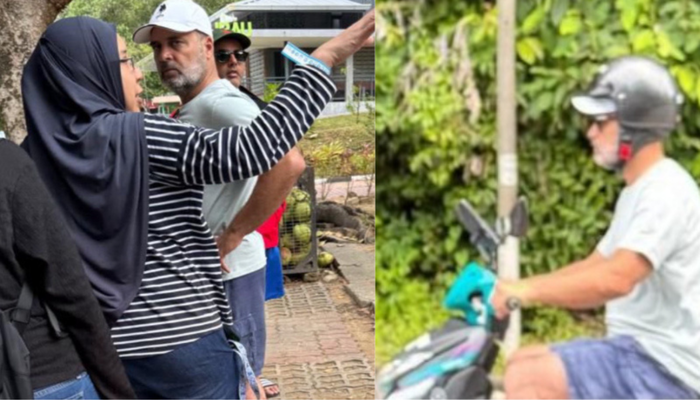
Congress leader Rahul Gandhi’s Voter Rights Yatra in Bihar has ended. This yatra was more in the news because of the controversies caused by Rahul Gandhi rather than the issues raised by him. At one point during his yatra, PM Modi’s mother was abused, and as the yatra reached its end, it got further embroiled in controversies, leading to the cancellation of the concluding meeting. As soon as the yatra ended, Rahul Gandhi, as usual, left for a vacation. Gandhi’s pictures from Malaysia surfaced on the internet, attracting criticism from the BJP and people on social media.
Gandhi’s pictures have once again sparked the old allegations of Gandhi being a ‘part-time politician’. The pictures raise questions as to whether Gandhi’s trip to Bihar or other political trips are a mere ‘assignment’ for him, which he mechanically gets done with, so that he can enjoy a vacation abroad. His Malaysia trip seems to fit this pattern.
Some people are describing Rahul Gandhi’s Malaysia trip as a display of irresponsible attitude, while others suspect a deep-rooted conspiracy. Notably, this is not the first time that a foreign trip by Rahul Gandhi has stirred controversy. His trips to the US, Italy and Bangkok had attracted similar suspicions.
Commenting on Gandhi’s Malaysia trip, BJP IT cell chief Amit Malviya wrote on X, “Rahul Gandhi has once again secretly gone abroad. This time he is holidaying in Langkawi, Malaysia. Seems like he is not able to bear the heat and dust of Bihar politics. Or is this part of some secret meeting which the public should not know about? Well, while people are grappling with real issues, Rahul Gandhi has mastered the art of disappearing and holidaying.”
Rahul Gandhi has slipped away yet again—this time on a clandestine vacation in Langkawi, Malaysia.
Looks like the heat and dust of Bihar’s politics was too much for the Congress Yuvraj, who had to rush off for a break. Or is it another one of those secret meetings that no one is… pic.twitter.com/NdiA4TP2bT
Similarly, people on social media are also raising questions about Rahul Gandhi. People pointed out that while North India is submerged in floods, Rahul Gandhi has left people to fend for themselves and gone to Malaysia for vacation. People are questioning whether it is appropriate for a public leader to go on a vacation at a time when he needs to be on the ground among people.
Congress has put Rahul's pic on relief materials to show Rahul cares for flood victims.
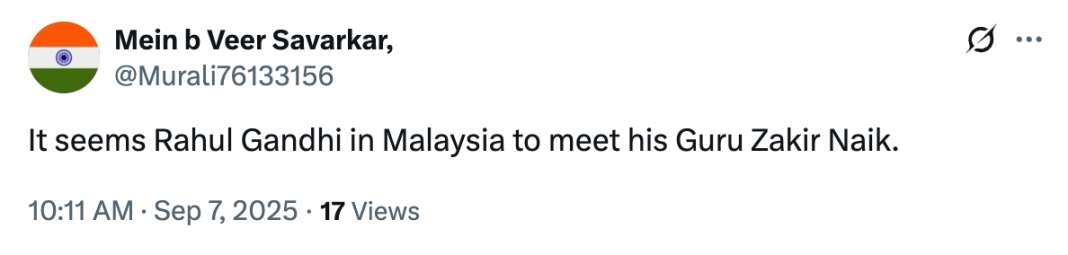
Besides, Gandhi’s Malaysia trip is surrounded by controversy because Islamic fundamentalist Zakir Naik took Malaysian citizenship after leaving India. This had led to speculations that Gandhi might have gone to Malaysia for a ‘special meeting’. An X user wrote, “He has gone to Malaysia to meet his guru, Zakir Naik”.
The Congress prince has a history of going abroad during elections
Rahul Gandhi has a track record of going on holidays without informing the public, either during election season or at a time when his party needs him the most. Gandhi is famous for his foreign travels during a crisis in his party, and also for promoting foreign interference in India’s internal affairs.
His Bangkok trip in 2019 was equally controversial. At that time, too, he left in the middle of the elections and went on a trip. The questions raised on his foreign trips are not without ground, as many times during his foreign trips, he has met anti-India elements. For example, in 2023, during his visit to the US, he met Sunita Vishwanath, co-founder of Hindu for Human Rights (HfHR). HfHR is an Islamist advocacy group which accuses Hindus of indulging in discrimination in India.
Prominent Indian politician Shri Rahul Gandhi, during his proposed #RahulInUSA tour,would attend several public events. He may not know, but some ‘coordinators’ who are claiming to be associated with events are Pak Jamaat-e-Islami & Muslim Brotherhood-linked fronts
In April 2022, when the Congress party needed leadership and there were rumours of including Prashant Kishor in the Congress, Gandhi went abroad, showing a lack of concern. And, soon after Prashant Kishor refused to join the party, Rahul Gandhi again suddenly disappeared for about 10 days, without giving any information. During that time, despite being in a deep crisis, the Congress party had to work without any leadership.
Earlier, in December 2021, when the Congress party suffered a crushing defeat in the assembly elections in five states, Rahul Gandhi was on a personal visit to Italy. Because of his visit, election preparations in Punjab suffered a major setback as many rallies were postponed till his return. This visit of his became the reason behind the victory of the Aam Aadmi Party and the defeat of his own party.
In September 2021, when the Congress was in crisis due to the resignation of Captain Amarinder Singh in Punjab, the Gandhi family was holidaying in Shimla. In December 2020, when the 136th foundation day of the Congress Party was being celebrated, Rahul Gandhi again went to Italy. Similarly, in October 2019, just 15 days before the elections in Haryana and Maharashtra, he went to Bangkok.
Similarly, immediately after the 2019 Lok Sabha elections, he left for London and started vacationing, without waiting for the results. He did not even attend an important meeting called by his mother, Sonia Gandhi. Apart from this, Rahul Gandhi often did not take SPG security (Special Protection Group) during his foreign trips and kept violating security rules. Due to this, the government withdrew his SPG security. Defence Minister Rajnath Singh also raised questions on this in Parliament.
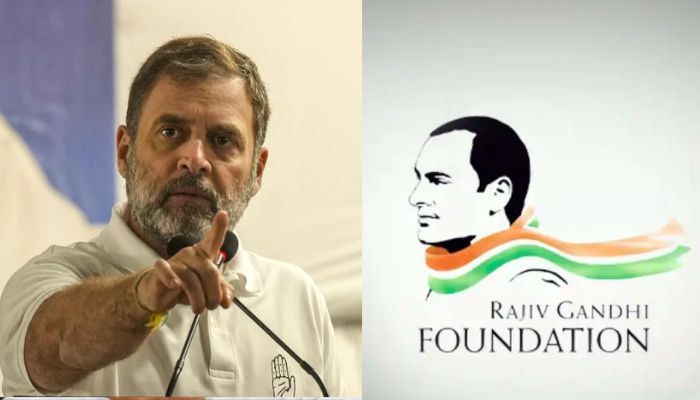
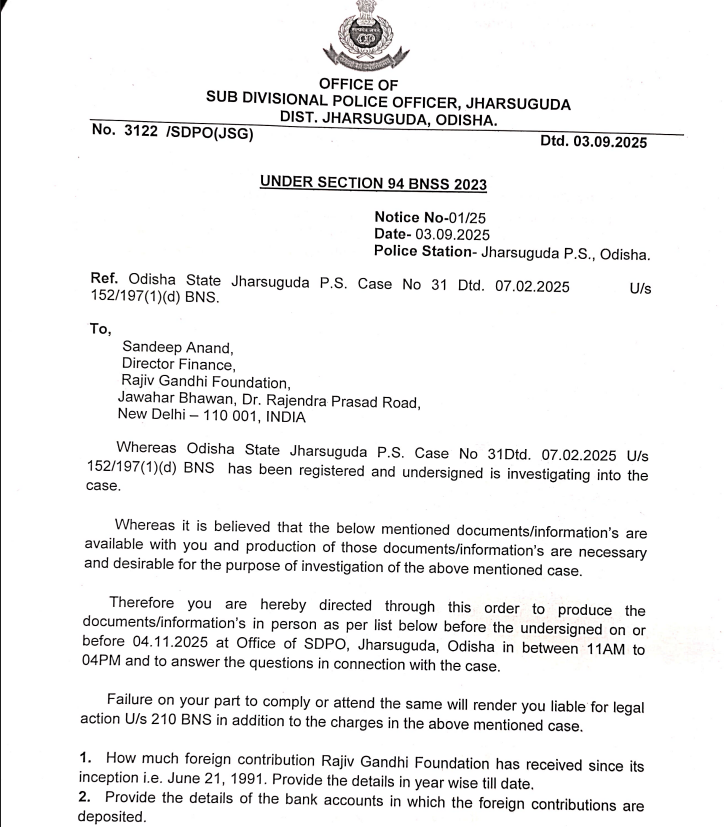
The Jharsuguda police in Odisha have issued a formal notice to the Rajiv Gandhi Foundation (RGF) seeking some information. The notice has been sent in connection with an FIR lodged against Congress MP Rahul Gandhi earlier this year for allegedly making anti-India remarks.
The notice, issued on 3rd September, directs the foundation to furnish detailed records related to foreign contributions, bank accounts, auditors, and donations allegedly received from controversial sources.
According to the order, the documents must be produced in person before the Sub-Divisional Police Officer (SDPO) at Jharsuguda by 4th November, 2025. The notice makes it clear that non-compliance could invite legal action under Section 210 of the Bharatiya Nyaya Sanhita (BNS), in addition to the charges already listed in the case.
Screenshot of 1st page of the notice
Notably, Rahul Gandhi is one of the board members of the Rajiv Gandhi Foundation. Its other members are Sonia Gandhi who is the charperson, Priyanka Gandhi Vadra, P. Chidambaram, Suman Dubey, Ashok Ganguly, Montek Singh Ahluwalia and Vijay Mahajan.
Notice also mentions the allegations of donations from Zakir Naik
The notice is addressed to Sandeep Anand, Director of Finance at the Rajiv Gandhi Foundation. Among other details, it seeks year-wise records of all foreign contributions received by the foundation since its inception in June 1991.
The notice also ask the information about the bank accounts where the money was deposited. It also asks for the personal details of the authorised signatories of these accounts and the contact details of the organisation’s auditors. The police have specifically asked for copies of the foundation’s licenses under the Foreign Contribution Regulation Act (FCRA).
The notice further mentions allegations that the Rajiv Gandhi Foundation received donations from controversial Islamic preacher Zakir Naik in 2011 and $300,000 from the Chinese government during 2005–06.
It also raises the charge that funds from the Prime Minister’s Relief Fund and Ministry of Finance were allegedly diverted to the foundation during the UPA government. The police have demanded explanations regarding the purpose and utilisation of these donations.
FIR against Rahul Gandhi
This notice is linked to a case filed against Rahul Gandhi in January 2025, when Hindu organisations and BJP leaders lodged a complaint with the Jharsuguda police, accusing the Congress leader of making statements that threatened India’s unity and integrity.
The FIR, filed by a person named Ram Hari Pujari, states that Gandhi’s remarks threatened the unity and integrity of the nation. It further states that he incited rebellion against the country by declaring war against the Indian state.
Following a preliminary investigation, Inspector General of Police (IG) Sambalpur Range, Himanshu Lal, found the allegations prima facie true and directed the registration of an FIR. The case was registered at the Jharsuguda town police station under Sections 152 and 197(1)(d) of the BNS.
Section 152 of the BNS criminalises attempts to incite secession, armed rebellion, or subversive activities that endanger India’s sovereignty and unity. Section 197(1)(d) deals with publishing or spreading false or misleading information that could threaten the integrity or security of the country.
Rahul Gandhi anti-National remarks
The row is over a speech Rahul Gandhi delivered on 15th January, 2025, while inaugurating the new Congress headquarters at Kotla Road in Delhi. While delivering his speech, Gandhi asserted that BJP and RSS had “captured every single institution of the country” and claimed the Congress was “fighting the BJP, the RSS, and the Indian state itself.”
His exact statement were: “Our ideology, like the RSS ideology, is thousands of years old and it has been fighting the RSS ideology for thousands of years. Do not think that we are fighting a fair fight. There is no fairness in this. If you believe we are fighting a political organisation, called the BJP or the RSS, you have not understood what is going on. The BJP and the RSS have captured every single institution of our country. We are now fighting, the BJP, the RSS and the Indian state itself.”
The comment was sharply criticized by Hindu organizations and the BJP, who attributed to Gandhi publicly speaking against the Indian state and subverting national unity.
Police officials have confirmed that the case is being investigated in detail. IG Himanshu Lal earlier told Opindia that Rahul Gandhi’s side will also be taken into account during the inquiry and that a notice would be sent to him as part of the legal process.
With the latest notice, investigators are widening the scope of the probe by examining the finances of the Rajiv Gandhi Foundation.
The allegations of foreign and controversial funding, if proven, could have significant political and legal implications. For now, the Jharsuguda police are waiting for the foundation to submit the required documents by November.
The matter, which began with a fiery political speech in January, has now snowballed into a deeper investigation that links both Rahul Gandhi’s statements and the functioning of a foundation closely tied to the Gandhi family.
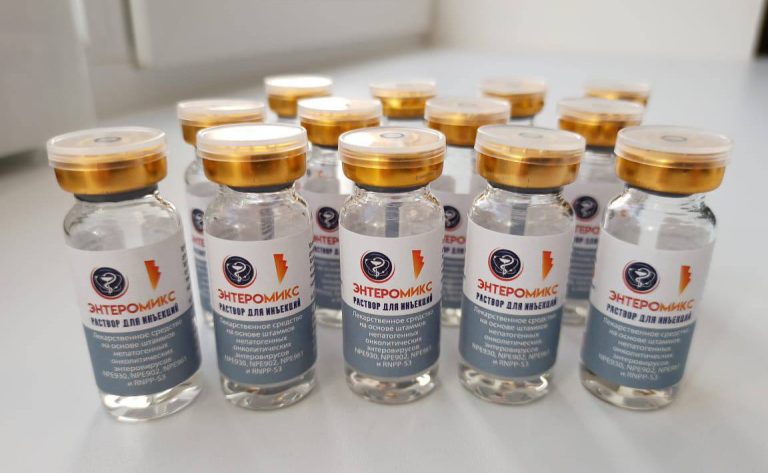
In a groundbreaking announcement that could revolutionize cancer treatment worldwide, Russian health officials have declared that the Enteromix mRNA-based cancer vaccine is ready for clinical use following successful preclinical trials. The vaccine, developed by the Federal Medical and Biological Agency (FMBA) in collaboration with leading Russian research institutes, promises personalised immunotherapy tailored to individual patients’ genetic profiles.
This development marks a significant milestone in oncology, leveraging mRNA technology similar to that used in COVID-19 vaccines, but optimised for combating tumours. The revelation came during the Eastern Economic Forum (EEF) in Vladivostok on September 6, where FMBA head Veronika Skvortsova detailed the vaccine’s progress.
Skvortsova said that over the past three years, regulated preclinical studies have confirmed Enteromix’s high safety and efficacy, even with repeated administrations. “The vaccine has demonstrated significant results in shrinking tumors and slowing their growth,” she stated, highlighting its potential to extend patient survival rates.
Enteromix represents an innovative approach to cancer immunotherapy, utilising messenger RNA (mRNA) to instruct the body’s immune system to target and destroy malignant cells. Unlike traditional vaccines, it is personalized, each dose is customised based on the patient’s unique tumour RNA profile, employing artificial intelligence (AI) to identify neoantigens, which are specific mutations in cancer cells that can be exploited for immune recognition.
This precision allows the vaccine to activate antitumour immunity, effectively training T-cells to attack tumours while minimizing damage to healthy tissue. The technology draws from platforms proven in COVID-19 vaccines but adapts them for oncology. Preclinical trials, conducted on animal models, focused on colorectal cancer as the primary target, with variants in development for aggressive forms like glioblastoma (a type of brain cancer) and certain melanomas (skin cancer).
Collaboration among institutions, including the National Medical Research Radiological Centre, the Engelhardt Institute of Molecular Biology, and the Gamaleya Research Institute (known for the Sputnik V COVID-19 vaccine), has accelerated development.
The project builds on earlier Russian advancements in oncology vaccines, with preclinical data from late 2024 showing promising results against melanomas and metastases.
Preclinical results have been overwhelmingly positive. In trials involving models of colorectal cancer, Enteromix achieved tumour reduction rates of 60-80%, with some sources reporting up to 100% success in eliminating tumours and activating innate immunity.
he vaccine’s safety profile is equally impressive, showing no adverse effects even after multiple doses, a critical factor for long-term cancer management. Documents for clinical approval have been submitted to Russia’s Ministry of Health, with Phase I human trials set to begin imminently, involving up to 48 participants.
If approved, Enteromix will be provided free of charge to Russian citizens, a move announced by Health Minister Mikhail Murashko and oncology chief Andrey Kaprin earlier this year.
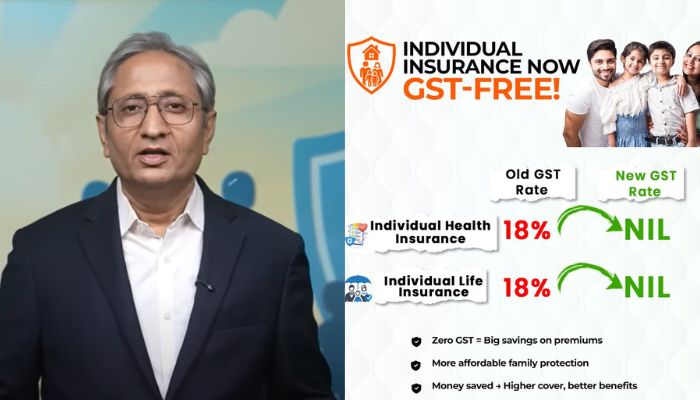
YouTuber Ravish Kumar, who once criticised the imposition of GST on life and health insurance, has resorted to doublespeak after the Modi government decided to remove it completely.
In his latest video, the ‘journalist’ downplayed the relief that people are expected to get, claiming that premiums still depend on multiple factors.
On Friday, 5th September, Ravish Kumar uploaded a video on his YouTube channel ‘Ravish Kumar Official’. In it, he spoke about the government’s decision to scrap GST on life and health insurance under the revised tax regime.
However, instead of welcoming the move as a big relief for policyholders, he argued that this will not have as much impact as is being projected.
According to him, “Health and life insurance now fall under the zero GST category, but does that really make premiums cheaper? How much cheaper will they actually get? Premiums are based on various factors, not just GST.”
He later gave an example and said, “if hospital bills go up due to medical inflation, insurance companies will raise their charges as well. Similarly, if someone takes a claim of five lakh rupees in a year, their premium may increase next year because the company will charge more from those who claim. So, while premiums may look cheaper on paper, the recovery of their charges can happen in other ways.”
What he said earlier when GST was imposed
This statement stands in sharp contrast to what Ravish Kumar used to say earlier, when life and health insurance fell under the 18% tax slab.
Back then, he had argued that insurance was becoming too costly for the common man, and that high GST was discouraging people from buying or renewing policies.
At the time, he said, “If insurance keeps getting expensive like this, the common man will not be able to arrange for his own safety. Removing or reducing GST on health insurance could give relief to people. This could also encourage more people to renew their policies. Because of this inflation, the insurance sector is not able to grow, as only a few people can afford to buy multiple policies.”
The difference in Ravish Kumar’s stand is striking. When GST was imposed, he called it a big financial burden. But now, when the Modi government has scrapped it entirely, he insists that GST alone does not matter much and that premiums depend on other factors. This clear shift in position has drawn attention, with many pointing out the inconsistency in his arguments.
The remarks came after the recent announcement of GST 2.0
The decision was taken in the 56th meeting of the Goods and Services Tax (GST) Council held on Wednesday, 3rd September.
In its 10-hour-long meeting chaired by Union Finance Minister Nirmala Sitharaman, the GST Council unanimously revised the existing four-tier tax structure of 5%, 12%, 18% and 28% and removed the tax categories of 12% and 28%.
This new system, effective from 22nd September, the first day of Navaratri, is expected to benefit the middle class the most. With lower indirect taxes, households will have more disposable income, boosting consumption and giving a push to domestic demand.
The government says the aim of the reform is simple: reduce tax burden on essential items, encourage spending, and make life easier for people.
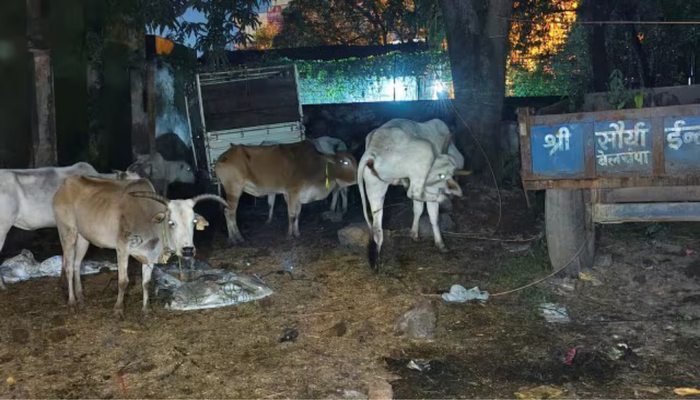
In a major cattle rescue operation, Jharkhand Police rescued around 200 cattle in Garhwa on Thursday (4th September) on the tip-off received from the members of Vishwa Hindu Parishad (VHP) and Bajrang Dal. The cattle were rescued in the wee hours of Thursday and were kept in the police station compound, as the police could not find a place immediately. Later on, the police found a cow shelter about 55 km away in Palamu, where the cattle were shifted on Friday night (5th September).
As per reports, the cattle were being smuggled from Uttar Pradesh to Jharkhand in a container truck. Some members of the VHP and Bajrang Dal received the information about this and alerted the police. Cattle smugglers reportedly transport the cattle in large container trucks from Uttar Pradesh to Nawada village in the Garhwa district in Jharkhand. In Nawada village, the cattle are deboarded from the container and sent out of the district through a side route along the railway line. The VHP and Bajrang Dal members caught the cattle in the village when they were being taken out of the district via the side route.
Cattle smugglers attacked the Gaurakshaks and the police
According to the members of the VHP and the Bajrang Dal, three people riding a motorbike confronted them in the village as they were taking the cattle from the village to the Garhwa police station after rescuing them. The police arrived just in time and nabbed two out of the three people, as claimed by some reports. But, Garhwa SP Garhwa Aman Kumar, as quoted by The Indian Express, said that no evidence of cattle smuggling was found and no arrests were made in the case. The SP reportedly said that the police were verifying the claims of cattle smuggling. He added that there is a traditional animal market in the area, for which hundreds of animals are transported for trading. “Around 170 cattle were brought here as part of the weekly market. This is a traditional animal market. Some members of the Bajrang Dal and the Vishwa Hindu Parishad alleged that the animals were being taken for slaughter, but we have not found any such evidence so far,” said the Garhwa SP.
“Traders usually bring cattle from nearby areas, including the UP border, and sell them here. Buying and selling of cattle is not prohibited under law unless there is proof that the animals are being taken specifically for slaughter. So far, no such proof has come up,” he said.
Cattle were injured and could not stand: Bajrang Dal member
However, the District Head of Bajrang Dal, Sonu Singh, said that the cattle were being taken for slaughtering. “The cattle were being smuggled in small groups, even pushed on foot, from Uttar Pradesh and Chhattisgarh. Around 250 animals were rescued. The smugglers were using darkness to escape, but three people were caught,” Singh was quoted as saying by the Indian Express. He said that the cattle smugglers tried to attack the police and the Gaurakshaks. “Three men were caught as they came to attack from behind. Many others managed to escape due to a lack of adequate police force at the station. Imagine a district headquarters police station had only six personnel on duty during such a big incident,” he added.
According to Singh, the cattle rescued were in a “deplorable condition” as many of them were severly injured and were unable to stand. He said that the animals were stuffed inside the container truck in numbers exceeding the truck’s capacity. “As many as 17-20 animals were stuffed into trucks that could carry only a dozen. It was inhuman,” said Singh. Bajrang Dal workers reportedly arranged fodder and water for the rescued cattle.
Singh alleged that some big names were involved in the smuggling of cattle. He said that there was pressure on the police not to register the FIR and instead frame the cow protectors. “There is pressure not to register FIRs, to release the cattle, and even to file fake cases against those who protect cows. But we will take this fight to the High Court and demand a CBI inquiry,” Singh said.
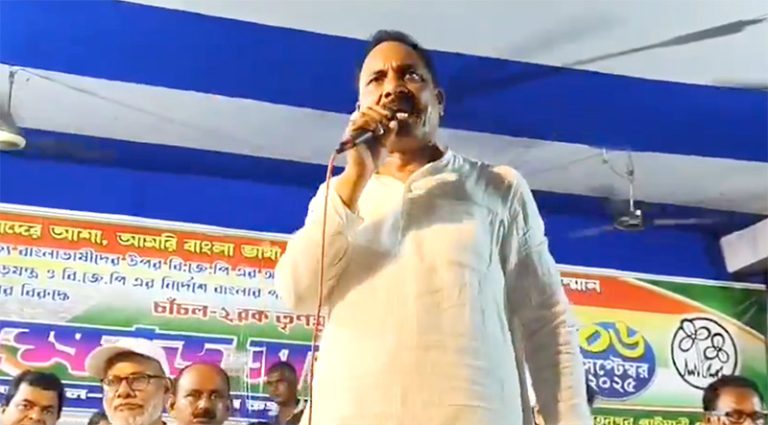
In a shocking threat, Trinamool Congress (TMC) district president and MLA Abdur Rahim Bakshi from Malda district has threatened to pour acid in the mouth of a BJP leader. He made the comments against BJP MLA Shankar Ghosh while speaking at a protest rally on Saturday against alleged “atrocities” faced by Bengali-speaking migrant workers.
Without naming the BJP legislator directly, Bakshi delivered a chilling warning, if he heard disparaging remarks about Bengali migrant workers again, “I will burn your voice to ashes with acid inside your mouth.” He was referring to Shankar Ghosh’s comments describing migrant workers as “Rohingyas” or “Bangladeshis.”
Abdur Rahim Bakshi said, “The one who shamelessly says that the 30 lakh migrant workers of Bengal who work outside are not Bengalis, that they are Rohingyas, they are Bangladeshis. He shouted this. I said it then and I am saying it today, if I hear this from you again, I will burn your voice to ashes with acid inside your mouth.”
Listen to what TMC’s terrorist leader from Malda, Abdur Rahim, is saying! He’s openly threatening @cid attacks on BJP MLAs.
He further threatened, “You should know that this is West Bengal. We Bengalis will not give you a place to speak. I will burn your face with acid.”
Bakshi’s vitriolic speech didn’t end there. He escalated the rhetoric, exhorting supporters to rip down BJP flags and socially ostracize the party in the district. He even went as far as threatening physical violence, suggesting that those who maintained ties to the BJP might not be permitted to speak or continue their activities in the area.
The BJP was swift to condemn the language as emblematic of an “intimidation culture” fostered by TMC leaders. Khagen Murmu, BJP Member of Parliament from Malda Uttar, labelled such remarks as signs of desperation by a party concerned about the upcoming state assembly elections. He asserted that Bakshi often makes controversial statements to stay in the headlines.
A few years earlier, Bakshi had made similarly inflammatory threats, implying that he would dismember leaders and workers from opposition parties if provoked.
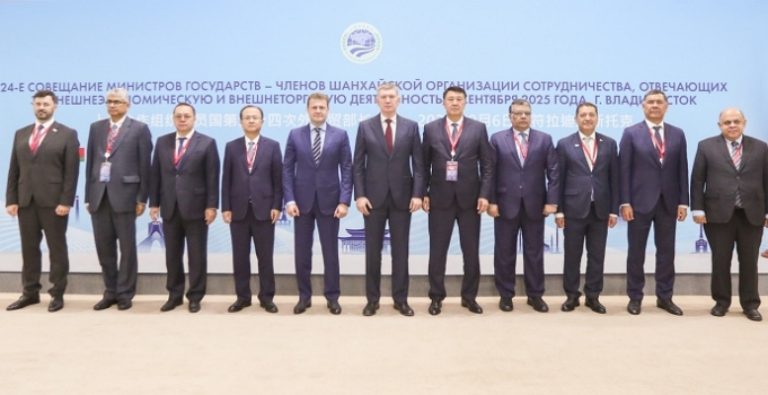
India stressed the scope to leverage the Shanghai Cooperation Organisation’s (SCO) collective strengths for shared prosperity at the SCO Trade Ministers’ Meeting held in Vladivostok in Russia on 6 September 2025. The Indian delegation also highlighted the need for export diversification, reducing dependency, and building resilient supply chains.
With the SCO accounting for 42% of the world’s population and 17.2% of global trade, India emphasised the importance of coordinated action to enhance trade flows, address vulnerabilities, and support inclusive growth across the region.
Representing the Union Minister of Commerce & Industry, Amitabh Kumar, Additional Secretary, Department of Commerce, underlined the need for an open, fair, inclusive and non-discriminatory multilateral trading system with the WTO at its core. He highlighted the importance of a development-centred agenda that includes a permanent solution on Public Stockholding (PSH) for food security purposes, effective Special & Differential Treatment (S&DT) for developing countries, and restoration of a fully functional two-tier WTO dispute settlement system.
He also underlined the role of services trade and the temporary movement of skilled professionals, in line with national laws and transparency, to strengthen economic growth and support greater participation of MSMEs in global value chains.
India stressed the importance of diversifying and de-risking supply and production chains through geographical spread, interoperable logistics, predictable market access, and enhanced connectivity, while upholding principles of national sovereignty and territorial integrity.
It noted that persistent trade imbalances must be addressed through better market access, cooperation on standards, and streamlined trade facilitation. India cautioned that export-related measures should not be weaponised or misused to create artificial scarcity, distort markets, or disrupt supply chains, and emphasised that their calibrated and transparent use is essential to maintain trust in international commerce.
On the digital economy, India proposed SCO workstreams focused on fair, transparent and predictable regulatory frameworks, voluntary cooperation on best practices, and capacity-building for secure, innovation-led digitalisation. India also showcased its achievements in Digital Public Infrastructure (DPI), including UPI for real-time payments, India Stack for identity and consent management, and ONDC for unbundled digital commerce. These initiatives were presented as low-cost, standards-based and replicable models to reduce MSME costs, expand access to markets, and enable real-time settlements, including through pilot projects among trusted partners.
On sustainable development, India emphasised equity and the principle of Common but Differentiated Responsibilities and Respective Capabilities (CBDR-RC). It highlighted the Mission LiFE (Lifestyle for Environment) initiative and underscored that climate action must be supported by finance and affordable technology flows. India also cautioned that trade-linked climate measures should not result in arbitrary or unjustified discrimination.
India spotlighted the AVGC sector (Animation, Visual Effects, Gaming and Comics) as an engine of employment, exports and inclusive growth. It recalled its successful hosting of the first-ever World Audio Visual and Entertainment Summit (WAVES 2025) earlier this year, which attracted participants from over 100 countries. The Summit catalysed multiple initiatives, including Waves Bazaar for global media collaboration, WaveX for creative start-up funding, and Creatosphere for talent development through the Create in India Challenge. Through the India Cine Hub, supported by simplified regulatory frameworks and 17 co-production agreements already in place, India is positioning itself as a global film production hub.
India thanked the Russian Presidency of the SCO Council of Heads of Government (Prime Ministers) for steering a substantive trade and economic agenda and advancing practical cooperation. It reaffirmed its commitment to collaborate under Tajikistan’s Chairmanship of the SCO CHG in 2026–27 to promote sustainable and inclusive economic growth across the region.
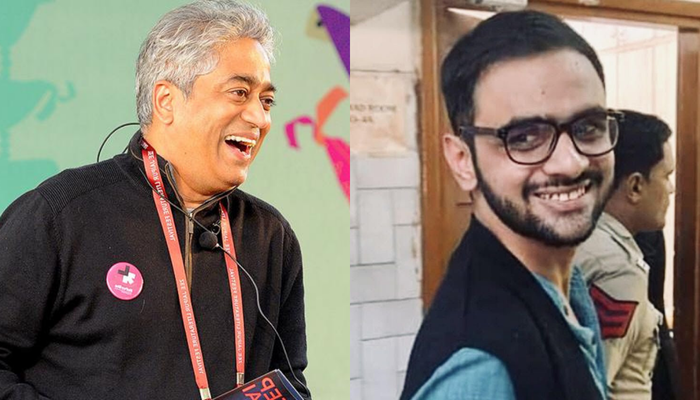
The rejection of bail to 2020 Delhi anti-Hindu riots accused Umar Khalid and others, by the Delhi High Court earlier this month, has, quite expectedly, rattled the left liberal gang.
The High Court rejected the bail plea of the accused after observing that the accusations against Khalid and other co-accused in the case were prima facie true. But, ‘journalist’ Rajdeep Sardesai, who is perturbed by the rejection of Umar Khal’d ‘s bail plea.
According to him, a ‘narrative’ is being spread across social media that Khalid has been languishing in jail for years, not because of the judicial delay but because his advocates have been seeking repeated adjournments during the hearing of his bail plea.
Now even Rajdeep Sardesai, one of the most compromised journalists of our times, has admitted that Umar Khalid and his counsel Kapil Sibal were actively engaged in “bench hunting” and “forum shopping”.
While Rajdeep Sardesai does not deny that Khalid’s lawyer has been seeking adjournments, he goes on to justify their delaying tactics and forum shopping, which were seen through by the High Court, by saying that his lawyers were right in seeking the adjourments and withdrawing his Special Leave Petition (SLP) from the Supreme Court, as it was listed before a judge, who has a track-record of not granting bail in such cases.
How Khalid wanted to use his prolonged inacrceration as a ground for bail
Notably, during the hearing of the bail plea of Khalid, the prosecution apprised the court about the delaying tactics of Khalid’s lawyers. Special Public Prosecutor Amit Prasad pointed out that between 2023 and 2024, seven out of fourteen adjournments were sought by Khalid’s lawyers. Thus, the so-called delays in the hearing of the bail plea of Khalid were not caused by a slow-paced judicial procedure but were engineered by his lawyers to use his long incarceration period as a ground for bail.
The prosecution also highlighted that after Khalid’s bail plea was rejected by the High Court in 2022, he inexplicably waited for almost 6 months to file an SLP before the Supreme Court in April 2023, and later on, withdrew the SLP citing “change in circumstances”. The so-called change in circumstances coincided with two developments. Firstly, a change in the Bench after Justice Aniruddha Bose stepped down, and cases were listed before Justice Bela Trivedi. Khalid’s lawyers resisted this and sought repeated de-tagging and relisting.
Interestingly, during Khalid’s bail hearing in the trial court and the Delhi High Court, his lawyer, Kapil Sibal, cleverly tried to pin the delays in Khalid’s bail hearing on the Supreme Court, claiming that repeated adjournments and the eventual withdrawal of the SLP in February 2023 were forced by the slow pace of the proceedings and changes in circumstances. Sibal tried to misportray Khalid as a victim of the judicial system, while, in fact, he was misusing the very system to secure Khalid’s freedom. It is important to note here that Khalid’s case does not qualify for the ‘bail is the norm and jail is the exception’ principle, as a 2024 Supreme Court ruling clarified that in cases under the UAPA “jail is the norm and bail is the exception”.
Former CJI Chandrachud called out Khalid for his delaying tactics
The forum shopping and delaying tactics of Khalid’s lawyers were also called out by the former Chief Justice of India DY Chandrachud. The former CJI also pointed out the same facts as presented by the prosecution before the Delhi High Court during the hearing of Khalid’s bail plea. He said that Khalid’s lawyers repeatedly sought adjournments before the court and withdrew his bail application from the Supreme Court, while making it seem like the entire judicial system was acting against him.
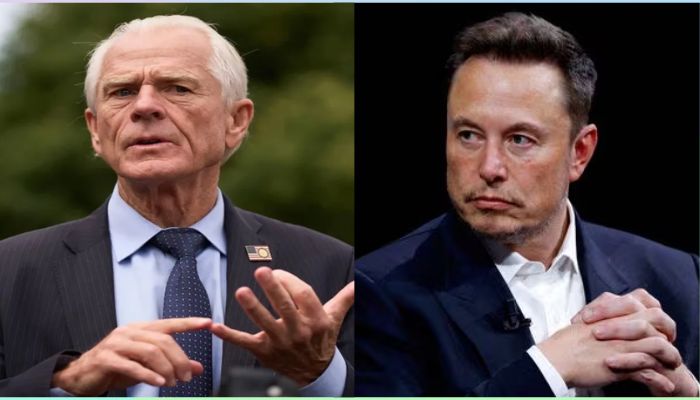
Peter Navarro, former trade adviser to US President Donald Trump, slammed Elon Musk on social media platform X. The response came after one of his posts about India’s Russian oil imports was fact-checked by a community post of X on Saturday, 6th September.
Navarro accused Musk of allowing “propaganda” to appear on the platform, but soon found himself at the receiving end of a community note that corrected his claims.
In his post, Navarro wrote, “Wow. @elonmusk is letting propaganda into people’s posts. That crap note below is just that. Crap. India buys Russian oil solely to profiteer. It didn’t buy any before Russia invaded Ukraine. Indian government’s spin machine is moving at high tilt. Stop killing Ukrainians. Stop taking American jobs.”
Navarro’s flagged post was the latest in a series of such allegations he has made against India over Russian oil trade.
“FACTS: India highest tariffs costs U.S. jobs. India buys Russian oil purely to profit/Revenues feed Russia war machine. Ukrainians/Russians die. U.S. taxpayers shell out more. India can’t handle truth/spins @washpo Leftist American fake news,” Navarro’s latest post read.
He was referring to a news piece by The Washington Post, which said that the kind of language being used for India from Washington was worsening diplomatic ties.
Community post of X fact-checked Navarro
A community of X users flagged Navarro’s post, particularly debunking the “profiteer” accusation against India. Here’s what the note read:
Wow. @elonmusk is letting propaganda into people's posts. That crap note below is just that. Crap. India buys Russia oil solely to profiteer. It didn't buy any before Russia invaded Ukraine. Indian govt spin machine moving high tilt. Stop killing Ukranians. Stop taking… https://t.co/Uj1NMUrVOM
“Navarro’s claims are hypocritical. India’s legal, sovereign purchases of Russian oil for energy security do not violate international law. The US, while pressuring India, continues to import billions in Russian goods, like uranium, exposing a clear double standard.”
Not only did the note fact-check Navarro, but it also accused the US of having a “double standard”, citing its good trade with Russia.
An earlier version of the community note had defended India’s intent behind the oil trade, saying the purchase was “for energy security, not just profit”.
Navarro’s long-running attacks on India
This is not the first time Navarro has targeted India over its energy trade. He has repeatedly accused New Delhi of “feeding Russia’s war machine” and recently claimed that India’s tariffs were costing “American jobs.” His latest post was a response to a Washington Post article discussing tensions inside Trump’s administration over how to handle India.
Last week, in an interview with Bloomberg Television, Navarro doubled down on his accusations, saying, “India is helping feed the Russian war machine. I mean Modi’s war, because the road to peace runs, in part, through New Delhi.”
India, however, strongly rejected his statements. Ministry of External Affairs spokesperson Randhir Jaiswal dismissed Navarro’s comments as “inaccurate and misleading.”
Navarro earlier claimed that India’s oil trade with Russia is purely profiteering
The senior counsellor for trade and manufacturing to US President Donald Trump has earlier claimed that India’s import of Russian oil is not driven by ‘domestic demand’ but illicit profiteering.
There is no evidence for this claim. India has to fend for its 1.4 billion people and mitigate domestic demand. After the outbreak of the Russia-Ukraine war, there was a massive jump in crude oil prices.
Oil Public Service Undertakings (PSUs) in India purchased Russian oil and incurred cumulative losses of $2.5 billion between April 2022 and January 2023, to ensure that domestic fuel prices remained stable.
The Modi government framed rules that mandated private refineries to sell at least 50% of their exported petrol volume back into the domestic market. A similar 30% cap was levied on the export of diesel.
At the same time, an export tax was imposed to prevent massive profiteering. These strategic decisions helped in stabilising fuel prices not just in India but in the world.
It must be mentioned that around that time, OPEC+ countries had cut down on crude oil production by 5.86 million barrels per day. Without India’s timely intervention and key decisions, fuel prices could have spiralled out of control.