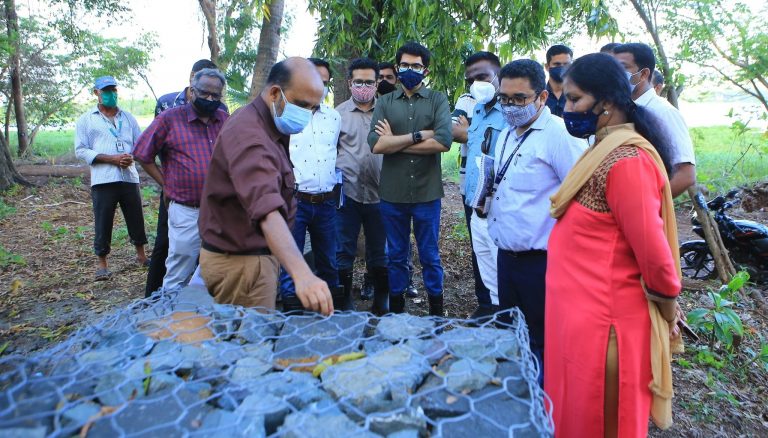
In a major setback to Brihanmumbai Municipal Corporation election (BMC) and Maharashtra Tourism minister Aaditya Thackeray, the Bombay High Court has ruled that the Powai Cycling and Jogging Track being constructed by BMC is illegal. The court has ordered the civic body to stop works in the project, and also directed to restore land already reclaimed for the project.
The High Court had earlier stayed the work in the Cycling and Jogging Track project while the matter was being heard, and today delivered its verdict saying that the project is illegal as it violates rules. The court agreed with the petitions filed against the project saying that it violates the Wetlands (Conservation and Management) Rules, as the Powai Lake is classified as a wetland.
The division bench of Chief Justice Dipankar Datta and Justice VG Bisht of the Bombay High Court ruled that the project is illegal, and ordered BMC to remove all construction work done until now and restore the ground to its original position.
Two petitions were filed in the court against the project, by IIT Bombay student Omkar Supekar and NGO Vanashakti. Another intervention petition was also filed by green activist Zoru Bhathena, who had argued that around 40% of the Powai lake is already surrounded by a road used by IIT Bombay, and the same can be declared a public property and used as a cycling track.
Another environment group Sahyadri Rights Forum had also petitioned with the National Green Tribunal alleging exploitation of Powai Lake due to the project. The group had written to NGT after receiving complaints against the project from IIT-B students, saying that the constructions were being carried out in a clandestine manner without due environmental clearances and in violation of judicial orders.
Apart from violation of the Wetlands (Conservation and Management) Rules, the petitioners had also argued that the project also violated evelopment Control Regulation 2034, [34 3.3 clause 7], which said that no construction can take place withing 100 meters from the periphery of the lake.
The BMC advocate had requested the court to stay its earlier order staying work in the project, but the court rejected by saying, “If the court stays its own order then that shows that the court is not sure of its order. We don’t pass order like that.”
The High Court then stressed that the project is illegal and it is being stopped. The bench said, “We are sure it is illegal and so it has been stopped.”
BMC had tried to claim that there is ecological impact of the project by claiming that Powai Lake is not a natural water body. They said that it is a man-made reservoir and not a designated wetland, therefore no rules were breached. They also clamed to have used ‘gabion technology’ which is porous and doesn’t prevent the flow of water’ during the monsoon.
However, the High Court bench rejected BMC’s arguments and declared the project as illegal.
This evening I visited the Powai Lake where along on my humble request, the @mybmc and @HelloMTDC are working on creating a 10.2 km walking/ cycling eco friendly track with the natural contours and all flora fauna being maintained as is. (1/n) pic.twitter.com/T6Y4YV0sUm
The Powai Cycling and Jogging Track is a part of cycling tracks the BMC plans to build in entire Mumbai. It is a pet project of Aaditya Thackeray, who had visited the Powai lake site several times to take stock of the progress of the project. Last year, he had tweeted that BMC and the state tourism department were working together to create a 10.2 km walking/ cycling eco friendly track around the Powai lake.
“It not just open up a natural urban space to citizens and tourists alike, but also help us interact with nature better. The Powai lake is a gem of our city with its beautiful surroundings. Every aspect of this track will be eco friendly,” the minister had claimed.
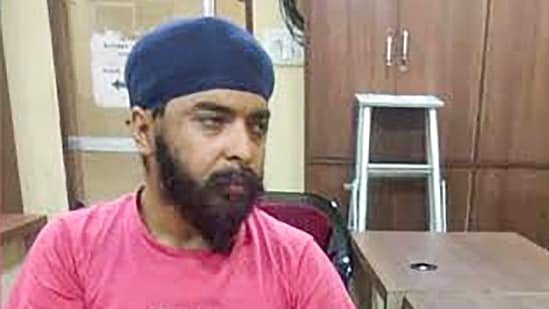
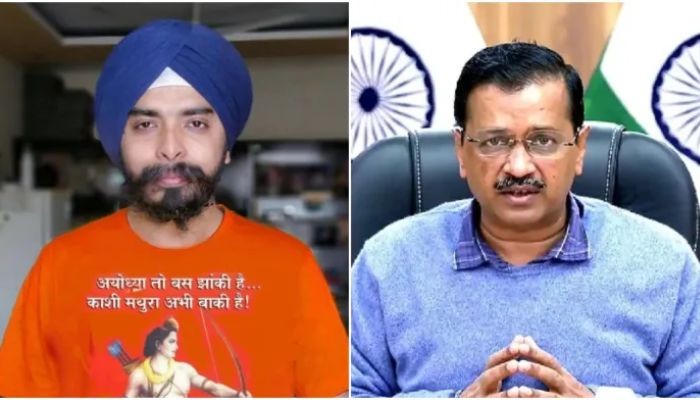
The arrest of BJP leader Tajinder Pal Singh Bagga by Punjab Police has touched off a massive controversy, with critics slamming the Aam Aadmi Party for launching a political witch-hunt against opponents who are courageous enough to voice criticism of their supreme leader Arvind Kejriwal.
Bagga, who was picked up on Friday morning by a team of Punjab Police, was arrested on the charges of threatening Delhi CM Arvind Kejriwal. The Punjab Police furtively reached the BJP leader’s residence on Friday—with the intent of detaining him and transporting him to Punjab—the state where AAP emerged victorious in the assembly elections that granted them the agency to use the state’s police force at their will.
In response to Bagga’s arrest, Delhi Police filed a kidnapping case against Punjab Police under sections 452, 365, 342, 392, 295/34 of the Indian Penal Code. While the Delhi Police is bringing Bagga back to the national capital, it is worth examining the charges slapped against the Punjab Police for the arrest of the BJP leader.
दिल्ली पुलिस ने बग्गा के अपहरण के लिए पंजाब पुलिस के खिलाफ मामला दर्ज किया
IPC की धारा 452, 365, 342, 392, 295 / 34 के तहत मामला दर्ज
Section 452 of the IPC deals with trespass to the house with the motive to hurt someone or assault any person or restrain someone wrongfully, or put someone in fear of hurt or of assault or wrongful restraint. For the offence committed under this Section, the trespasser is punishable with a minimum sentence of 7 years and with a fine.
Besides, the said offence is categorised as a cognizable, bailable offence and triable by any magistrate. This section provides higher punishment where trespassing to a house causes harm, assault, or restraint on someone.
Another charge slapped by Delhi Police against Punjab Police is Section 365, which concerns kidnapping or abduction with the intent of secretly and wrongfully confining a person. The Section says whoever kidnaps or abducts any person with the intent to cause that person to be secretly and wrongfully confined, shall be punished with imprisonment of either description for a term which may extend to seven years, and shall also be liable to a fine.
The Punjab Police is also slapped with Section 342 that pertains to wrongful confinement and recommends punishment with imprisonment of a term which may extend to one year, or with a fine which may extend to one thousand rupees, or both.
Still another charge that is levelled against Punjab Police is Section 392—punishment for robbery—which states committing offences under the Section shall be punished with rigorous imprisonment for a term which may extend to ten years, and shall also be liable to a fine; and, if the robbery is committed on the highway between sunset and sunrise, the imprisonment may be extended to fourteen years.
Furthermore, the Delhi Police have also included Section 295 in the charges pressed against the Punjab Police for arresting BJP leader Tajinder Pal Singh Bagga from his Delhi residence. The section pertains to injuring or defiling a place of worship with the intent to insult the religion of any class.
The Section categorically states whoever destroys, damages or defiles any place of worship or any object held sacred by any class of persons with the intention of thereby insulting the religion of any class of persons or with the knowledge that any class of persons is likely to consider such destruction, damage or defilement as an insult to their religion, shall be punishable with imprisonment of either description for a term which may extend to two years, or with fine, or with both.
The rationale behind slapping Punjab Police with kidnapping charges
While it may appear bizarre that Delhi Police has filed charges against Punjab Police, they are, however, on strong legal grounds for the action they have initiated against the police force of another state. In October 2021, the Delhi HC pulled up UP Police for arresting citizens in the national capital without informing the Delhi Police.
“You can’t take away anyone as per your will without following the due process,” the Delhi HC had sharply observed.
The UP police had arrested the brother and father of a boy who got married to a girl against her family’s wishes without informing the Delhi Police. The HC came down hard on the UP police saying that such illegal acts are not permissible and will not be tolerated in the national capital.
Since the Delhi Police was not taken into confidence and informed about the arrest of Tajinder Pal Singh Bagga, it, therefore, became a case of the Punjab Police abducting an individual in defiance of the due process of law, and thus, the kidnapping charge against the Punjab Police is justified.
An influencer from Russia might face a £55,000 fine and jail for up to six years after posing naked under a holy tree on the Indonesian island of Bali.
Alina, a yoga influencer with over 17,000 followers, posted the naked photo on Instagram, but entrepreneur Niluh Djelantik swiftly reported her to local authorities. He snarled at her and demanded that the police intervene. According to Djelantik, the Russian beauty stood naked in front of the 700-year-old weeping paperbark tree known locally as Kayu Putih.
If proven guilty under local porn laws, the influencer, who has over 17,000 Instagram followers, could face up to six years in prison. The photographs show her positioned on the trunk, her gazing over her side.
The tree is located at Babakan Temple in Tabanan in Bali, Indonesia. Because the massive tree is revered by the people, the naked photographs provoked outrage. Immigration officers are now on the lookout for the Russian.
Alina deleted the naked images off her account and made a U-turn apologetic video on May 4 in response to the uproar. In an apologetic post, Alina stated that she was “embarrassed” and had no prior awareness of the significance of the tree.
The latest video, which showed her fully dressed and worshipping at the base of the sacred tree, came with the message: “I apologise to all Balinese and Indonesian people, I regret my actions.”
The post.
In another Instagram post, she wrote, “I unknowingly made a big mistake for which I regret and I want to tell you so that you don’t repeat it. There are a lot of sacred places in Bali and not all of them have information signs about it, as in my case…”
“I love Bali with all my heart and once again I apologize to all residents of Bali and ask for forgiveness,” it further added.
The Punjab and Haryana High Court on Friday rejected the Punjab government’s request to keep the Bharatiya Janata Party leader Tajinder Pal Singh Bagga in Haryana. After the Delhi police took custody of Tajinder Pal Singh Bagga, the Punjab police reached the high court trying to stop the Delhi police from taking him back to Delhi.
Advocate General (AG) Anmol Rattan Sidhu said that the intervention by Haryana Police is ‘a violation of law’. He also argued that everything was going as per procedure but the Haryana police delayed the process. The Punjab government also urged the court to not let the Delhi Police cross the Haryana border with Bagga.
The Punjab Police objected to the Haryana Police’s actions when it stopped the Punjab Police team which had arrested BJP leader Tajinder Pal Singh Bagga. The Haryana Police halted the Punjab Police team in Kurukshetra on their route to Punjab after arresting Tajinder Pal Singh Bagga from his Delhi residence.
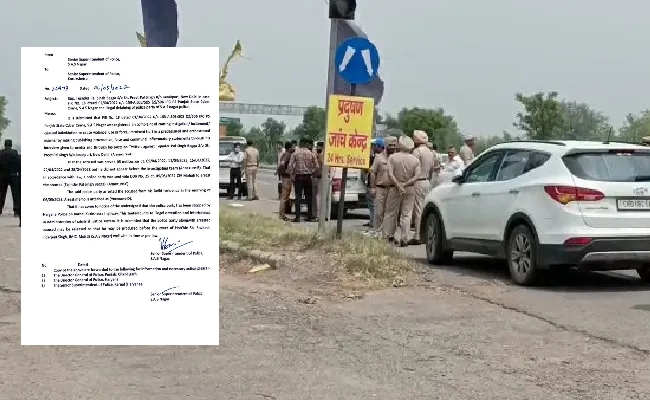
SSP SAS Nagar (Mohali, Punjab) wrote to SSP Kurukshetra (Haryana) complaining that their police party was halted by Haryana Police in Kurukshetra. In his letter, he argued that it amounted to illegal imprisonment and interference with the operation of the criminal justice system, and he requested that his police team should be liberated.
The letter reads, “That It has come to notice of the undersigned that the police party has been stopped by Haryana Police on Karnal-Kurukshetra highway. This tantamounts to illegal detention and interference in the administration of the criminal justice system.”
“It is submitted that the police party along with the arrested accused may be released so that he may be produced before the court of Hon’ble Sh. Ravitesh lnderjeet Singh, JMIC, Mohali (S.A.S Nagar) well within time as per law,” it further added.
In a high-voltage drama, Delhi police brought Tajinder Pal Singh Bagga back to Delhi after the intervention by Haryana Police. An FIR accusing the Punjab Police team of kidnapping Tajinder Pal Singh Bagga has been registered by the Delhi Police. He was arrested by Punjab Police on 6th May 2022 in the morning for his remarks against Delhi CM Arvind Kejriwal. The reports indicate that 50 policemen in several cars came to arrest Tajinder Bagga from his residence.
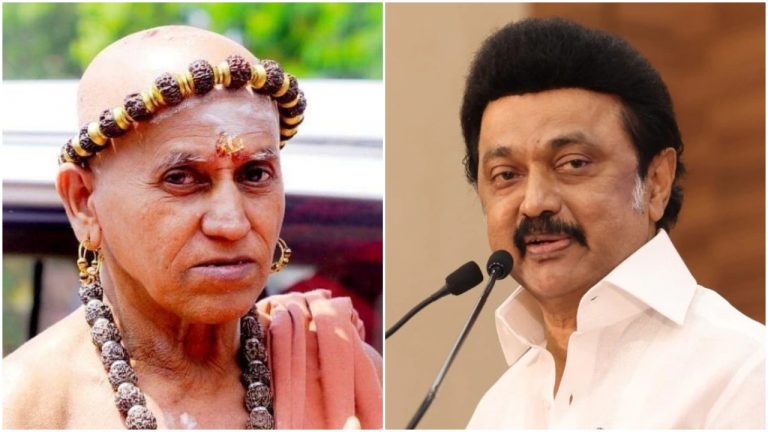
Days after the Tamil Nadu government courted controversy by banning the ‘Pattina Pravesam’ ritual at the Dharmapuram mutt in Tamil Nadu, the chief of Madurai Adheenam Sri Harihara Sri Gnanasambanda Desika Swamigal has stated that there is a threat to his life for speaking out against the DMK-led Tamil Nadu government’s order.
According to the reports, Sri Harihara Sri Gnanasambanda Desika Swamigal of Madurai Aadheenam alleged that he was being threatened for posting questions to the MK Stalin-led government over their encroachment on the rights of Hindu temples.
The Hindu seer said he would meet PM Modi and Home Minister Amit Shah to convey to them the threat to his life. He added that he would meet PM Modi and Home Minister Amit Shah to convey to them the concerns regarding danger to his life.
“Since I am posting more questions to them, I am being threatened. They constructed houses in the temple property area but are not giving any rent. They are in control of the temple land and threatened me, saying that I cannot enter the town and do my ritual to God,” he said.
Speaking to reporters in Kalimedu near Thanjavur on Wednesday, Sri Harihara Sri Gnanasambanda Desika Swamigal of Madurai Aadheenam said that members of the ruling Dravida Munnetra Kazhagam (DMK) are busy enjoying temple properties that belong to the Adheenam.
The Hindu seer also condemned the Mayiladuthurai district administration’s decision to ban the ‘Pattina Pravesam’ ritual saying that the ritual is a 500-year-old tradition and that the country which claims to be secular should not target and harass customs of a particular religion in this manner.
“The Hindu religion is targetted. Are they trying to destroy the Hindu religion? Even the British were not successful in doing that, what can these people do? God will take care of everything,” he said.
TN | Dharmapuram Adheenam is 500 yrs old&for past 500 yrs this (Pattina Pravesam) was going on. But this yr suddenly it’s not happening, I’m pained. Even the British had permitted Pattina Pravesam: Sri Harihara Sri Gnanasambanda Desika Swamigal, Madurai Adheenam Chief (03.05.22) pic.twitter.com/81N2rqnsZZ
DMK govt over bans ‘Pattina Pravesam’ of Dharmapuram Adheenam
A huge controversy erupted in Tamil Nadu after the Mayiladuthurai collectorate refused permission to conduct the traditional ritual of ‘Pattina Pravesam’, a tradition of devotees paying reverence to the seer of the Dharmapuram Adheenam by carrying him on a palanquin.
The Mayiladuthurai Collectorate in Tamil Nadu had refused permission to ‘Pattina Pravesham’, claiming that it would create law and order problems. The Revenue Divisional Officer of Mayiladuthurai J Balaji had issued the ban order and had also claimed that the practice was a “violation of human rights”.
The order was issued after the Dravidar Kazhagam, and other far-left outfits had objected to the traditional ritual. The Dravida Kazhagam and different outfits had cautioned the district authorities against permitting the event.
Following the order issued by the Mayiladuthurai Collectorate, Hindu organisations and devotees have reacted strongly, demanding the withdrawal of the order. Tamil Nadu BJP chief K Annamalai had responded strongly against the order and had challenged the MK Stalin-led Tamil Nadu government, saying he will personally carry the pontiff on the palanquin on his shoulders.
The former IPS officer-turned-politician also hit out at the MK Stalin-led DMK government, saying that the DMK party is built on sheer sycophancy.
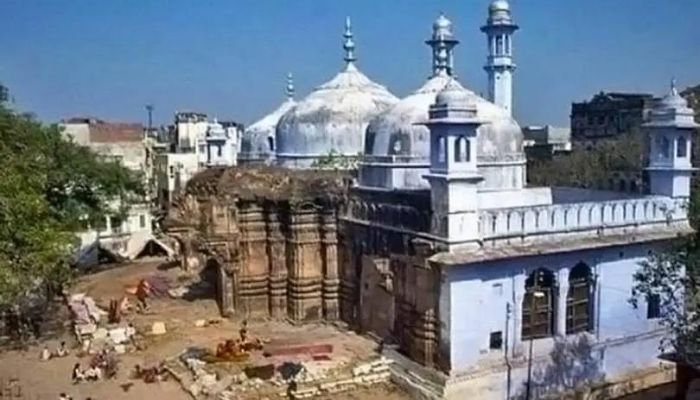
A mob of Muslims gathered near the Gyanvapi mosque in Varanasi and raised religious slogans as the advocate commissioner reached the site for surveying the mosque and doing the videography as per the court orders. The security persons were able to contain the agitating mob and things became normal within a while. However, as the police personnel step back and settle, every time a group of Muslims is coming back from the adjoining lanes to raise slogans.
ज्ञानवापी मस्जिद का वीडियो ग्राफी सर्वे करने टीम पहुंची तो ऐसे में बड़ी संख्या में मुस्लिम लोग वहां नमाज पढ़ने पहुंच गए pic.twitter.com/pNkbATFbhL
The Muslims initially pretended that they have come there to offer their Friday Namaz. It is notable that Gyanvapi mosque is a place not known for offering Namaz on a regular basis. Muslims gather there once in a while, mostly on Fridays. It is being said that a mob of around 600 to 700 Muslims is standing in those lanes. Anjuman Intezamiya Committee of Gyanvapi mosque is opposing the survey being carried out as per the court orders saying that no non-Muslim can enter a mosque. The survey started at 3 PM on 6th May 2022 and it is expected to last till 6 PM. If the task is not completed on the 6th of May, it will continue on the next day.
The points to be covered in the survey and videography include the Shringar Gouri idol, the things related to Shringar Gouri in the Gyanvapi mosque premises in the basement, and the other structural details like the pillars and the decorative inscriptions there. Hindu petitioners have already stated that the mosque was originally a very important part of the temple complex of Kashi Vishwanath and Mata Shringar Gouri. The survey process is expected to take 3 to 4 days, when both the basements of the temple-turned-mosque will be surveyed.
The Hindu petitioners in this case will be represented by 15 persons in the team of the court commissioner. Besides, 2 associates of the court commissioner and 3 photographers and videographers will also be present at the time of the survey and videography. Respondents from Anjuman Intezamiya Committee will also be present along with five lawyers. Security of the Kashi Vishwanath Temple complex has been increased.
Shri Kashi Vishwanath, one of the twelve Jyotirlingas, and the Gyanvapi Mosque dispute is pending in Varanasi’s local courts since 1991. After the orders of the high court, that suit is transferred to the Allahabad high court. But the Shringar Gauri case is just seven months old.
On August 18, 2021, five women from Varanasi filed a suit in the Court of Civil Judge (Senior Division) of Varanasi along with other demands, including the demand for daily darshan puja at the Shringar Gauri Temple. The court, while admitting the plea, had not only ordered the setting up of a commission of lawyers to know the situation on the spot but also appointed an advocate commissioner. Not only that, the opposition was issued notices, as well as the next date of hearing, was fixed. But due to the court commissioner going on the back foot a couple of times, the disputed site could not be inspected.
Varanasi Civil Judge (Senior Division Fast Track) Justice Ravi Kumar Diwakar, while reiterating his earlier order of 18th August 2021, had again allowed the survey and videography proceedings to be taken up by appointing court commissioner Ajay Kumar Mishra on 8th April 2022. After this, the Varanasi district administration and police, among the respondents, objected. To prevent the action, they argued that there need to be better security arrangements, and only Muslims and security persons can go inside a mosque. The court, while rejecting the plea after the hearing, continued with its earlier order and sought a report on taking action of survey and videography after Eid before May 10 and also fixed May 10 as the date of hearing.
According to the reports, the image of the goddess Shringar Gauri is located within the outer wall of the Gyanvapi mosque. Following the demolition of the Babri mosque during the Ram Janambhoomi movement, regular entry of devotees was forbidden, and worshiping this deity was only permitted on the fourth day of Chaitra Navratri.
A day after a Hindu man was brutally murdered on the streets of Hyderabad for marrying a Muslim woman by the woman’s family, the ‘liberal-secular’ media has started using all its cards to understate the religious angle into the gruesome murder. While it was clear that the Hindu man was killed by the Muslims for marrying a Muslim girl, the liberals are insisting that there is no religious angle to the crime.
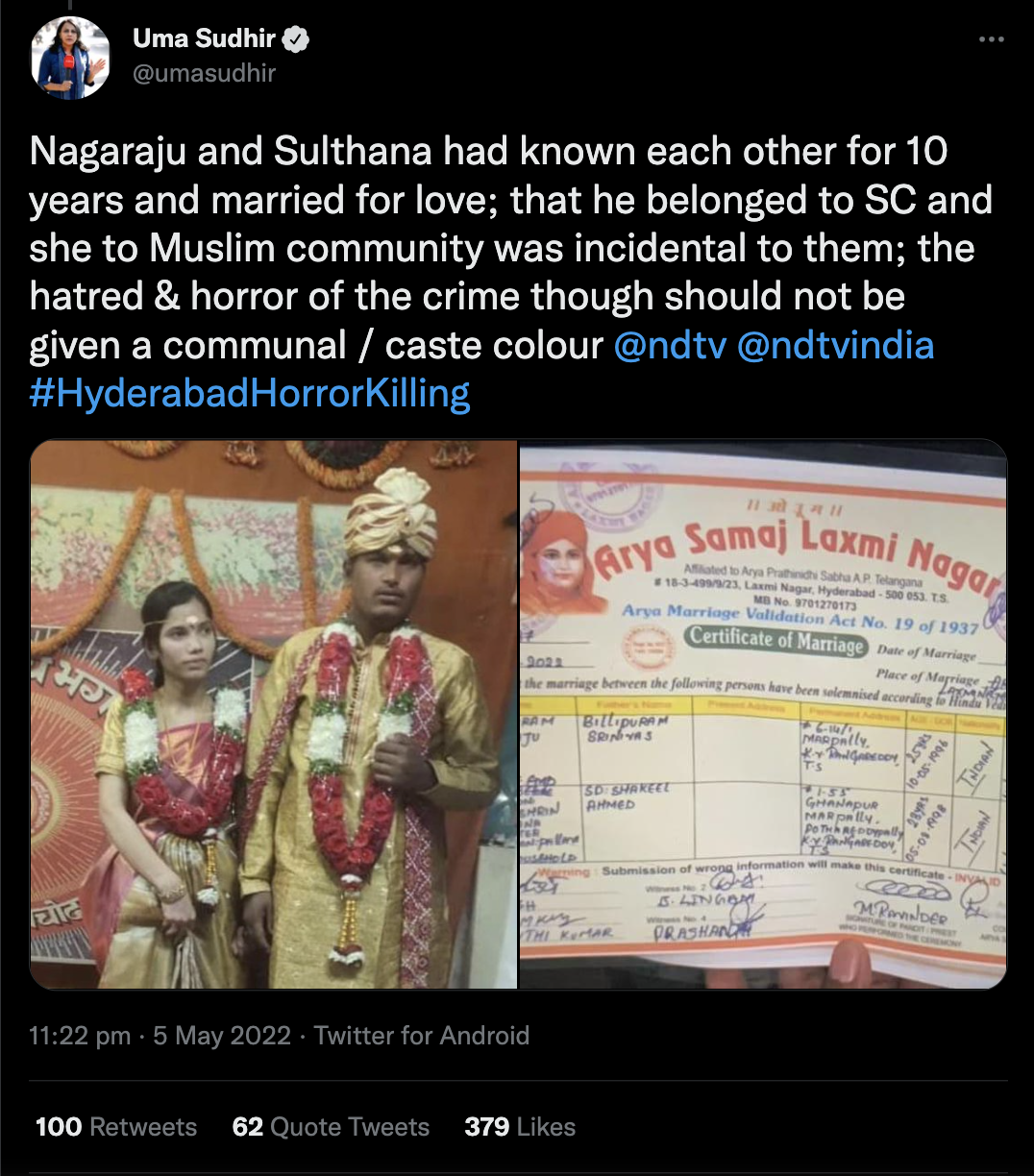
On Thursday, Uma Sudhir, executive editor at controversial news network NDTV, attempted to gloss over the religious overtones of the murder of 25-year-old Nagaraju, who was stabbed to death by two Muslim men for marrying a woman from their community. One of the accused has been identified as the brother of the woman.
In a tweet, Uma Sudhir claimed that the deceased Nagaraju and his Muslim wife Sulthana had known each other for ten years and married for love. She continued by saying that the caste and religious identity of the couple was just incidental to them, and one should not give a communal or caste colour to the incident.
Screenshot of Tweet by NDTV journalist
Amidst massive outrage over the brutal killing of Nagaraju, the likes of Uma Sudhir jumped to ‘secularise’ the crime as it was Muslims who are accused in the case. The ‘secular-liberals’ like Uma Sudhir not only want people to ignore the religious nature of the murder but also attempt to whitewash the crimes committed by the Muslim community.
A Hindu man has been killed simply over his religious identity. Still, Uma Sudhir wants people to discount the communal angle and not name the Muslims who are accused of murdering their own brother-in-law. This is nothing but an attempt to trivialise a hate crime and soft-pedal the existing communal hatred towards Hindus in the country.
Nagaraju was murdered by his own Muslim brother-in-law for marrying a Muslim girl. The motive of the accused to commit the crime only brewed because a Hindu had married a woman from a Muslim community. There is no other known reason so far. The extent of hatred against Hindus is such that one of the two accused was even ready to destroy his own sister’s life to protect the religious sanctity of Islam. However, Uma Sudhir wants people to believe that there is no religious angle to the incident.
Perhaps, Nagaraju would have been alive today if he was not a Hindu or married a non-Muslim. Or maybe not, as Sulthana, the wife of the deceased Nagaraju, revealed that the 25-year-old marketing manager was willing to convert to Muslim for his beloved wife. However, the family of Sulthana were in no mood to let go of Nagaraju despite his promise to convert to Islam.
On Wednesday, Nagaraju was brutally attacked by Sulthana’s brother Syed Mobin Ahmed and Mohammad Masood Ahmed, who attacked him with an iron rod. He stabbed Nagaraju in public, who suffered serious injuries and died on the spot, while Pallavi was injured. The heartbreaking visuals have gone viral on social media platforms. The truth is out in the open, but liberals and secular intends to hide the communal overtones of the incident so that they do not want to speak about the inherent hatred within Islam that could anger Muslims.
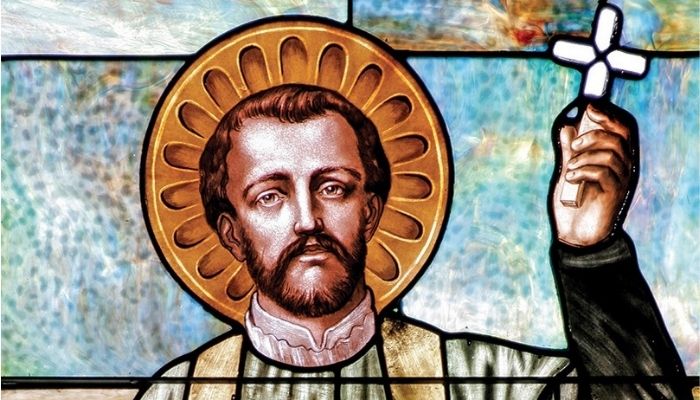
On this very day of May 6 in 1542, ‘Saint’ Francis Xavier set his foot in India in the newly established Portuguese colony in Goa. His mission was to enlighten the heathen natives with the light of God and instil in them his fear. While monotheism was not new to India with the arrival of merchant class Arabs to the genocidal Turkish invaders, Xavier was here to spread the message of Jesus Christ. Saint Xavier is a revered name globally, with many a teaching institution named after him across the breadth of India.
Coming to terms with Xavier’s dark legacy of not only justifying practices like Inquisition but orchestrating them, mass conversions of local populations in the Indian Subcontinent thus becomes a contentious issue. However, an assessment of history in India’s civilizational context unlikely makes Xavier look like yet another missionary on a catholic mission. With an aim to propagate Christianity in India and make its foundations even stronger, Xavier instituted the concept of Inquistion – an institution set up within the Catholic Church to root out and punish anti-Christian behaviour laid out by orthodox Christianity. Inquisitions were nothing but 16th-century concentration camps where the Catholic Church’s doctrines and politics were imposed upon native populations by European colonial powers.
Saint Xavier who thought of dark-skinned natives as ‘devils’, hid many such within him. The Modern day ‘Goencho Saib’ (Father of Goa), in the annals of history, comes out of his closet as a leader of many atrocities and harbinger of abuses against the Hindus of Goa. Here is a slice of Francis Xavier as an unapologetic Spanish missionary on Indian soil, well beyond the divine glorifications and reserved relics that behold his legacy.
The Portuguese Inquisition of Goa
The Inquisition started functioning in Portugal in 1541 while subsequent to its rule, it was established in India in 1560. The first demand for the establishment of the Inquisition in Goa was made by St. Francis Xavier who had attained sainthood in Rome by then. In a letter addressed from Amboina (Moluccas) to D. Joao III, the king of Portugal, on May, 16, 1545, he wrote, “The necessity for the Christians (in the Portuguese Indian capital of Goa) is that your majesty establish the Holy Inquisition, because there are many who live according to the Jewish law, and according to the Mahomedan sect, without any fear of God or shame of the world. And since there are many who are spread all over the fortresses, there is a need for the Holy Inquisition and of many preachers. Your majesty should provide such necessary things for your loyal and faithful subjects in India.”
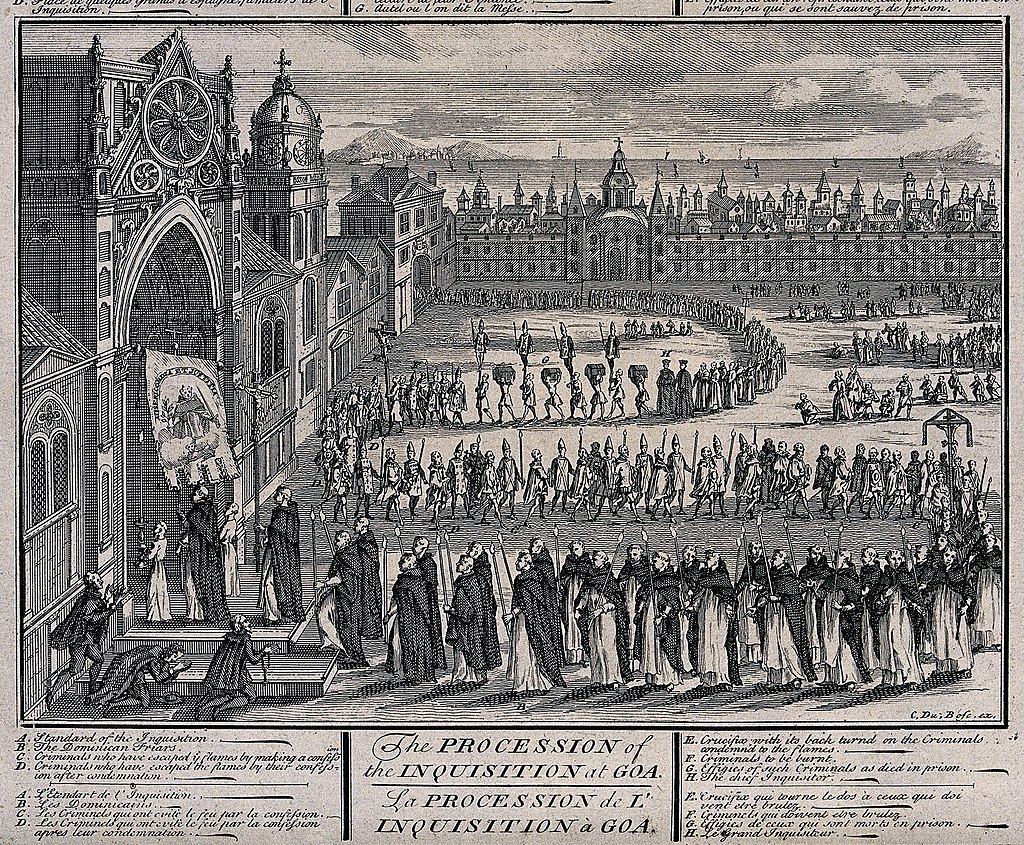
The Auto-de-Fe, an annual event to publicly humiliate and punish the heretics, it shows the Chief Inquisitor, Dominican friars, Portuguese soldiers, as well as religious criminals condemned to be burnt in the procession. Courtesy: Wikipedia
And thus started an era of darkness through which thousands of Hindus underwent enmasse religious conversions to orthodox christanity, by coersion or compulsion. The Inquisition had to be introduced in Portugal mainly for the grooming of the newly converted Christians, who had been forcibly converted from Judaism, to stop them from reverting to the practices of their old faith. “The Inquisition in India, on the other hand, had to play a similar role not only in relation to the new converts from Judaism but also those drawn from Hindu and Muslim religions,” Anant Kakba Priolkar in his book ‘The Goan Inquisition’ notes.
While material rewards and threats to livelihood played a lion’s share in converting the natives to the new religion, conviction to convert voluntarily among the local Hindus played a comparatively minor role in leading such conversions. Priolkar notes that one of the reasons that explain why the neo-converts continued to follow many practices pertaining to their old faiths and local culture in secrecy while being Christian only in name. Following these practices meant indulging in beliefs which were heretical (seditious) to the Christian worldview.
The arrival of Francis Xavier in India
Francis Xavier, in his account of the voyage wrote, “We left Lisbon on the 7th of April 1541, and reached India on the 6th of May of this the following year, having thus spent a year and more in the voyage, which is generally made in about six months.”
Around five months after having arrived at Goa, ‘the capital of Portuguese India’ Xavier toured the countryside, estimated the geography and extent of the Christian mission in India. He vividly describes Goa as a ‘fine-looking city, entirely in the hands of Christians’. Before Xavier arrived in India, missionary work had already started. Xavier was fascinated by institutions of the Christian supremacy including a convent of Franciscans, a ‘magnificent’ cathedral with a large number of canons, and several other churches which were being built across Goa. “There is good reason for thanking God for the Christian religion flourishes so much in this distant land in the midst of heathen,” he exclaimed.
His work in India includes patronage given to building churches across Malabar, the construction of which was volunteered by local neo-converts. The funding for the construction of the new churches was managed by diverting the money raided off while looting the Hindu temples. Xavier was particularly fascinated to see ‘a large and very handsome stone cross’, which was gilt all over. “I cannot express to you what joy I felt in looking at it. It seemed like the might of the cross appeared victorious in the midst of the dominion of the unbelievers,” such mentions in Xavier’s diaries give an insight into how lowly he thought of Indians as a race.
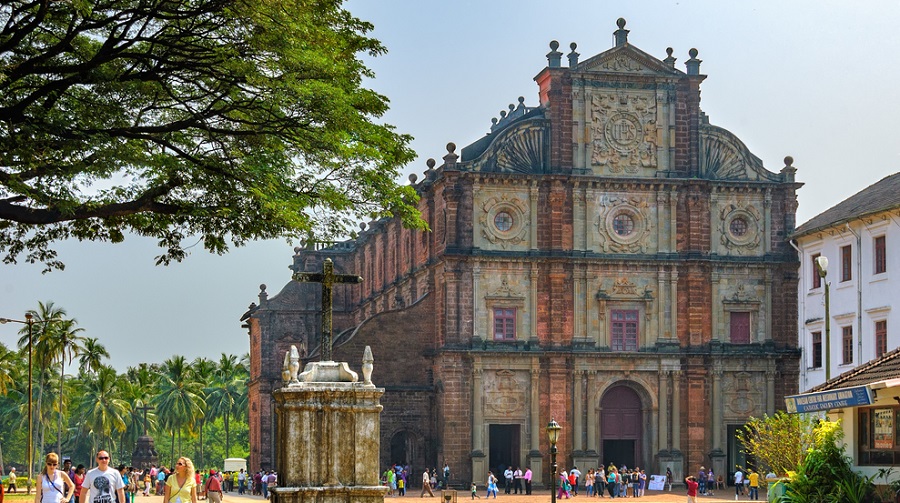
Basilica of Bomb Jesus, which holds mortals of St Francis Xavier to this day. Image: Telegraph
It is interesting to note that Vasco de Gama, when he first rounded the Cape of Good Hope and reached India in 1499, is said to have set up six crosses at different places and laid the practice of the same.
In Goa, Francis Xavier lived in a Hospital, that looked after the sick and often found time to hear confessions from society. Besides the sick, it was the local populace that lined up before the hospital to make their confessions in front of the saint from Spain who attracted much vanity. In the mid-day, he used to go to the prisons, and after giving the prisoners instructions on how they should abide by the tenets and become loyal servants of the God. Xavier paid regular visits to the Church of Our Lady, where he imparted religious education to children — as many as three hundred at a time. He notes of teaching prayers, the Creed, and the Ten Commandments to children who were eventually brought to the Christian fold. Upon this, the Bishop of Goa ordered the same to be done in the other churches.
Thus, Francis Xavier became increasingly popular among the Portuguese administration. He touched every strata of the society to enlighten them with the ‘grace of God’. However, his soft targets were the Brahmins, who often acted as centrifuges in his conversion activity. The influence of Brahmins, who topped the caste heirarchy stopped the so-called lower populations from adopt newer religious paths.
The Muslims in the erstwhile Bijapur Sultnate, and some of the native heathens (Hindus), who were rich and powerful held a considerable influence upon the Portuguese rulers on account of their numbers, influence, and trade. This kept up away from the loopholes of conversions while they made no pretence of hiding their religions in front of the catholic regime. The lower castes, however, were subjected to Xavier’s designs of conversions given their overall misery and stature in the social sphere. However, there are recorded instances of lower castes revolting against missionaries and turning back to their older ways, throughout the history of colonized Goa.
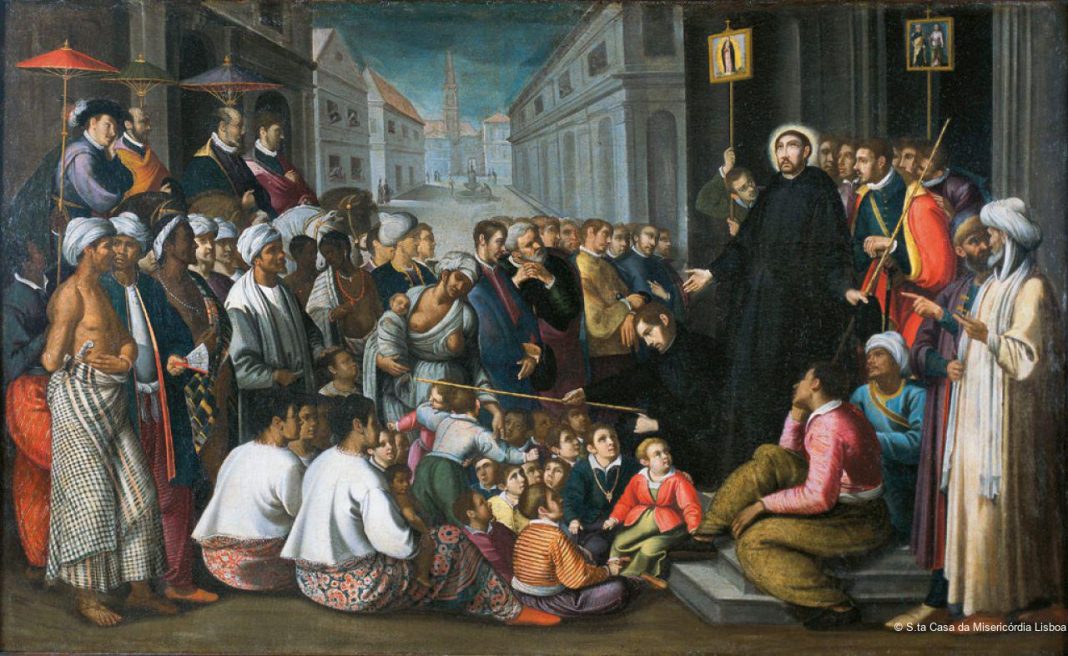
Franci Xavier preaching the heathens in Goa, 1619 Source: [https://baroqueart.museumwnf.org/database_item.php?id=object;BAR;pt;Mus11_A;15;en&cp]
Xavier notes that a certain college had been founded at Goa,in which native boys from all parts of India were ‘educated’ with an intention that they would eventually become Priests for their own countries, or at least interpreters for other missionaries. “The College was endowed with an annual revenue by the Government out of funds which were taken away from the idolatrous priests,” Xavier writes in his memoirs.
Fr. James Brodrick, well-known biographer of St. Xavier too talked about the limited knowedge St. Xavier had of Hinduism and its many sects. He writes, “St. Francis Xavier’s knowledge of Hinduism was, if possible, even less adequate than his few biased notions of Mohammedanism. Though the Portuguese had been in India for over forty years, none of them appears to have made the slightest attempt to understand the venerable civilization, so much more ancient than their own, on which they had violently intruded.
Attrocities against Hindus
When cases of the local population challenging the missionaries, came to the front, the Portuguese governor made sure that the heathen ‘violators’ are deserving of punishments and correction. The era of Inquisition started with an intent to show the Hindu populace its place. It saw a series of evangelical atrocities against the local populace of Goa, especially the Hindus who were converted to Christianity in large numbers by every means possible. Besides baptism, the Portuguese destroyed the temples and broke the Hindu idols into pieces. Traditional cultural practices were discouraged against the imposition of this new religion with which St. Xavier rose as a cult figure.
According to Portoguese researcher António José Saraiva, Hindus were the primary target for persecution who were punished for their faith. He estimated that over 74% of those sentenced were charged for continuing to carry on with their Hindu practices even after being converted by the Jesuits. Filippo Sassetti, an Italian traveller and merchant who was in India from 1578 to 1588, noted that fathers of the Church charged Hindus for referring their sacred texts and exercising their religion. “They destroyed Hindu temples, and so harassed and interfered with the people that they abandoned the city in large numbers, refusing to remain any longer in a place where they had no liberty, and were liable to imprisonment, torture and death if they worshipped after their own fashion the gods of their fathers,” he writes.
From the advent of Goa to the Portuguese in Goa till 1566, 160 Hindu temples were razed to the ground. A coerced campaign started by Franciscan missionaries between 1566 and 1567, destroyed around 300 Hindu temples in Bardez (North Goa).In Salcete, (South Goa), approximately another 300 Hindu temples were destroyed by the Christian officials during the Inquisition.Portuguese letters would often boast of razing or burning all Hindu temples in its colonies.
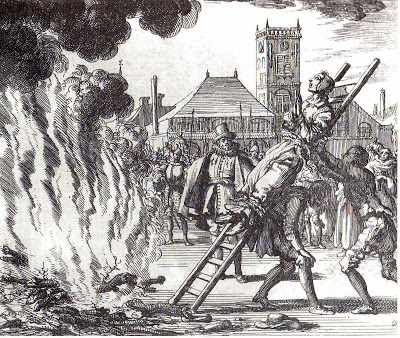
Illustration depicting attrocities during the Inquisition
It was only in the September of 1774, that the minister of Portugal Marquez de Pombal, in order to bring reform, passed a law that made the Inquisition practically defunct while it was finally abolished in 1820. From 1540s to 1782, the ignoble practice convicted 28000 people of violation of heracy to various forms of punishment. A conservative estimate notes the brutal burning of 1454 persons alive in the incarceration. Today, with many claims, there stands no official record of the number of persons who lost their lives as a result of tortures during the trials.
“(Indians) being black themselves, consider their own colour the best, they believe that their gods are black….the great majority of their idols are as black as black can be…and seem to be as dirty as they are ugly and horrible to look at,” Xavier had noted.
Priolkar descrribes the era of inquisition spearheaded by Xavier as the age of “callousness and cruelty, tyranny and injustice, espionage and blackmail, avarice and corruption, repression of thought and culture and promotion of obscurantism.” He notes that whenever an Indian writer who undertakes to tell Goa’s real story, would easily be accused of being ‘inspired by ulterior motives’.
Historians who have attempted to document the horrific exercises in proselytization, charted by Xavier and willingly funded by the empire have single handedly referred to arrival of Xavier in India as a watershed moment in Goa’s Inquisition history. Religious bigotry and conversion, fostered by the Inquisition, strengthened the roots of the empire while it trampled the Hindu populace under its might.
On Friday (May 6), BJP spokesperson Tajinder Bagga was arrested from his residence in Delhi by the Punjab police. OpIndia had reported that a convoy of 10-12 cars, carrying 50 odd police personnel from Punjab forcibly entered the BJP leader’s house and took him away.
The cops also assaulted his aged father and did not inform Bagga about the ‘arrest warrant’. It must be mentioned that Punjab Police had earlier registered an FIR for his criticism of Arvind Kejriwal after the Delhi CM mocked ‘The Kashmir Files’ movie as a ‘jhooti film‘ in the Delhi assembly.
Although the FIR was later withdrawn, it soon surfaced that the Aam Aadmi Party-run-Punjab government had constituted a Special Investigation Team (SIT) to look into the ‘provocative remarks’ of Tajinder Bagga.
Arvind Kejriwal’s brazen misuse of Punjab police to target political opponents is not unexpected. He had been raging for this. But this won’t go down well. We will fight to secure every single karyakarta of ours and ensure that Kejriwal learns how to handle power the hard way…
While speaking about the development, BJP IT Cell Chief Amit Malviya wrote, “Arvind Kejriwal’s brazen misuse of Punjab police to target political opponents is not unexpected. He had been raging for this. But this won’t go down well. We will fight to secure every single karyakarta of ours and ensure that Kejriwal learns how to handle power the hard way…”
While the AAP has been seeking refuge in the so-called ‘provocative remarks’ of Tajinder Bagga, it is important to note that the Arvind Kejriwal-led party had faced criticism in the past for harbouring Khalistani elements. Bagga, who is a Sikh by Faith and a vocal critic of the separatist movement, has often been at loggerheads with the AAP over the Khalistan issue.
Tajinder Bagga and his open criticism of Khalistan
As early as 2017, Tajinder Bagga had been vocal in his criticism of Khalistanis and its architect, terrorist Jarnail Singh Bhindranwale. In a tweet dating 5 years ago, the BJP leader had said, “Jarnail Singh Bhindrawala died, his dream to make Khalistan died & Pakistan agenda to divide India too died with his death. Hail Indian Army.”
Jarnail Singh Bhindrawala died,his dream to make Khalistan died & Pakistan agenda to divide India too died with his death. Hail Indian Army
— Tajinder Pal Singh Bagga (@TajinderBagga) June 5, 2017
He has often mocked the idea of a ‘separate nation for Sikhs’. This becomes evident from his tweet in May last year when he said that 10 bottles of Toilet cleaners could create Khalistan.
10 Toilet cleaners will make Khalistan ???
— Tajinder Pal Singh Bagga (@TajinderBagga) March 12, 2021
Tajinder Bagga did not shy away from calling Bhindranwale a terrorist. While responding to Khalistani sympathiser Ravinder Singh in March, he tweeted, “Mr Ravi Singh, not a single FIR or Investigation is pending against My beloved Mr Modi but your beloved Bhindrawala is terrorist as per Indian Constitution.”
Mr Ravi Singh, not a single FIR or Investigation is pending against My beloved Mr Modi. but your beloved Bhindrawala is terrorist as per Indian Constitution
Now tell me Why Bhindrawala demanded Khalistan ? Why Bhindrawala campaigned for Congress party ? https://t.co/lPXUZltalk
— Tajinder Pal Singh Bagga (@TajinderBagga) March 25, 2022
During the anti-farm law agitation, the BJP leader pointed out how pro-Khalistanis had been masquerading as ‘poor farmers’. “Congress Organised Protesters are Raising Khalistan Jindabad Slogans. I always said they are not Kisans, they are Congress workers, Farmers are Nationalists, they can’t say Khalistan Jindabad,” his tweet dated September 25, 2020, read.
Congress Organised Protesters are Raising Khalistan Jindabad Slogans. I always said they are not Kisans, they are Congress workers, Farmers are Nationalists, they can’t say Khalistan Jindabad pic.twitter.com/8TpVErS9yO
Last year, he pointed out how the farmer protests are in fact a cover for the anti-India agenda. While sharing an ANI video of a Bhindranwale flag on a farmer’s tractor, Bagga had said, “Once again agenda behind the protest is exposed. Khalistan, terrorist Bhindrwala gang should be arrested and sent to Jail.”
Once again agenda behind protest is Exposed. Khalistan, Terrorist Bhindrwala gang should be arrested and sent to Jail https://t.co/vI5cy6risF
He had also sought the intervention of the then Punjab Chief Minister Captain Amarinder Singh over Khalistani posters in the city of Amritsar.
. @capt_amarinder ji, I clicked this pics in Amritsar today. Khalistanis are putting posters in Whole city and your Police is doing Nothing. You were very Vocal when Canadian PM came to Punjab but now doing nothing against Khalistanis who are Celebrating Khalistan day openly pic.twitter.com/AlMO82Nqb4
— Tajinder Pal Singh Bagga (@TajinderBagga) June 6, 2021
Bagga was harassed for exposing AAP’s connections with Khalistanis
Besides being outspoken against Khalistan, Tajinder Bagga had time and again exposed the connection between Khalistani extremists and the Aam Aadmi Party.
In 2018, he tweeted about an ex-AAP legislator named Jarnail Singh who attended a rally of Khalistani supporters in London in 2011. “You can clearly see Khalistan Printed Flags on both sides of stage & We stand united for Sikh Homeland on Top of Screen,” his tweet read.
Jarnail Singh, EX AAP MLA attended this Khalistan supporters Rally in London in 2011. You can clearly see Khalistan Printed Flags on both sides of stage & We stand united for sikh Homeland on Top of Screen @republic@ANIpic.twitter.com/fKDuIXTUD7
Bagga did not stop exposing the underlying connections between Khalistanis and the Arvind Kejriwal-led party. He had pointed out how AAP leader Harpreet Singh Bedi had been actively demanding a separate nation for Sikhs.
— Tajinder Pal Singh Bagga (@TajinderBagga) May 1, 2022
Given that Tajinder Bagga, a practising Sikh, has been critical of Khalistan and also exposed Arvind Kejriwal in this regard, it was evident that it would draw the ire of AAP leaders sympathetic to the ‘Khalistani cause.’
Aam Aadmi Party and accusations of favouring Khalistanis
Ahead of the Punjab Vidhan Sabha elections this year, former AAP leader Kumar Vishwas had revealed how party supremo Arvind Kejriwal was in cahoots with the anti-India forces to grab power in the Northern State.
According to him, Kejriwal had once claimed, “Either I will become Chief Minister of the state or I will become first Prime Minister of an independent nation (Khalistan).” Vishwas had alleged that deep-rooted separatism had engulfed Kejriwal’s mind in his quest for power.
#WATCH | Poet & former AAP leader Kumar Vishwas alleges AAP chief Arvind Kejriwal was supportive of separatists in Punjab
“One day, he told me he would either become CM (of Punjab) or first PM of an independent nation (Khalistan),” Vishwas says. pic.twitter.com/5ccGs9jNn3
Instead of clearing the air over the Khalistan controversy, AAP party leader Raghav Chadha tried to intimidate the poet into silence. An FIR was registered against Kumar Vishwas, which was put on hold by the Punjab and Haryana High Court.
In 2018, similar allegations were made by actress Gul Panag 2018. Referring to Khalistani supporters in Punjab as K Gang, she had said, “Poorly calculated flirtation that was. One I warned against. Repeatedly. It’s because they didn’t get or understand Punjab. I thought the K gang had electoral weightage. All of us from Punjab knew better. But alas!”
Again in March this year, the Khalistani outfit ‘Sikhs For Justice’ (SFJ) had stated that AAP won the elections by deceptively bagging the votes of pro-Khalistan Sikhs in Punjab, who support SFJ’s secessionist referendum of Punjab.
In a video, SFJ Chief Gurpatwant Singh Pannu said that the AAP had tried to win the confidence of the pro-Khalistan votes by falsely claiming that the 2022 elections were significant for Punjab as well as for SFJ.
Last month, AAP leader Raghav Chadha attempted to give a clean chit to Khalistani extremists in Punjab after they attacked Hindu shopkeepers and pelted stones at a Kali temple in Patiala. Although the frenzied mob was caught on camera raising ‘Khalistani Zindabad’ slogans and brandishing swords, Chadha claimed it was a clash between workers of two political parties.
While speaking to the media, he remarked, “I want to clarify that this unfortunate violent clash in Patiala today was not between 2 groups but the workers of 2 political parties – on one side, there were people from Shiv Sena & Congress & on the other side, people from Shiromani Akali Dal.”
On May 1 this year, AAP Himachal Pradesh social media President, Harpreet Singh Bedi, came under the scanner over his pro-Khalistan tweets. Netizens pointed out Bedi has been actively advocating for the creation of Khalistan as a ‘constitutional right’ since 2012.
Meet Aam Aadmi Party Himanchal Social Media president Harpreet Singh Bedi, he believes “demand for Khalistan is constitutional right”. He has been supporting Khalistan for movement for atleast 10 years.@ArvindKejriwalpic.twitter.com/f9Lg98hS02
Bedi was also seen justifying separatist Khalistani slogans as non-seditious. “If saying Khalistan is Deshdroha (sedition) then saying Hindustan is also the same according to the constitution,” one of his tweets read.
In a conversation with another Twitter user, he was seen referring to the draftsmen of the Constituent assembly as ‘Your leaders’ suggesting a difference from his own. Following the controversy, the AAP leader deleted his Twitter account and the party expelled him to save its face.
As the evidence suggests, Aam Aadmi Party has been flirting with separatists and violent, terrorist Khalistani elements for a long time. Whether it was during the farmer protest or the run up to elections, AAP has always tried to pander to separatist elements in the hopes to reap benefit electorally in Punjab. To a large extent, it did help them win the state as even the Khalistani terrorist organisation Sikhs For Justice claimed that they had funded AAP’s election campaign in Punjab.
Tajinder Pal Singh Bagga is a Sikh man who wears his Dharmic roots on his sleeve. As evidenced, he has also been extremely vocal not just against AAP but also against the Khalistani terrorist movement and the demands for a separate nation for Sikhs. He has regularly raised his voice against Khalistanis and for The Hindu identity of India. In fact, he had called Bhindranwale a terrorist even during the farmers protest when even Barkha Dutt was being slammed for suggesting the same during her interview with Deep Sidhu.
While AAP has managed to win Punjab, one can theorise that their victory rests on a thin rope. Given that they had espoused widespread support from extremist Khalistani elements, their popularity in the state stands to be dented if nationalist Sikhs like Tajinder Bagga become popular challengers to his political hegemony. Therefore, it is not a stretch to imagine that the AAP government in Punjab is trying to hunt down Bagga not because of some tweets against Kejriwal but actually because he is exactly what threatens AAP in Punjab – A proud Sikh man vocal against Khalistani terrorists and AAP’s divisive politics.
While Khalistani elements seem to have a free hand in Punjab, critics of the AAP government are being intimidated, harassed and arrested without prior imitation. The case of Tajinder Bagga suggests that his disdain for Khalistan has ruffled the feathers of sympathisers of the separatist movement within the Aam Aadmi Party.
The Punjab Police objected to the Haryana Police’s actions when it stopped the Punjab Police team which had arrested BJP leader Tajinder Singh Bagga. This comes after it was reported that the Haryana Police halted the Punjab Police team in Kurukshetra on their route to Punjab after arresting Tajinder Pal Singh Bagga from his Delhi residence.
SSP SAS Nagar (Mohali, Punjab) has written to SSP Kurukshetra (Haryana) complaining that their police party was halted by Haryana Police in Kurukshetra. In his letter, he argued that it amounted to illegal imprisonment and interference with the operation of the criminal justice system, and he requested that his police team should be liberated.
The letter reads, “That It has come to notice of the undersigned that the police party has been stopped by Haryana Police on Karnal-Kurukshetra highway. This tantamounts to illegal detention and interference in the administration of criminal justice system.”
“It is submitted that the police party along with the arrested accused may be released so that he may be produced before the court of Hon’ble Sh. Ravitesh lnderjeet Singh, JMIC, Mohali (S.A.S Nagar) well within time as per law,” it further added.
Tajinder Bagga arrest | SSP SAS Nagar (Punjab) writes to SSP Kurukshetra (Haryana) that “police party stopped by Haryana Police”. He, in his letter, states that it “tantamounts to illegal detention & interference in admn of criminal justice system” & asks that they be released. pic.twitter.com/DZt1rOBllt
According to some sources, Bagga was being held in Thanesar Sadar Thana in Haryana, and Haryana Police’s Quick Response Team commandos stopped Punjab police and disarmed them before arresting them. A team of Delhi police arrived later, to escort Bagga back to Delhi. A case of kidnapping has been registered against Punjab police for picking up Bagga from his home without giving any intimation to the local authorities.
Earlier, Haryana cabinet minister Anil Vij informed reporters that the Haryana Police will not hinder the probe of Tajinder Pal Singh Bagga. However, it will only hand over Bagga to the Delhi Police as it has received information that the BJP leader has been kidnapped.
Speaking to India Today, Vij said, “Haryana will hand over Bagga only to Delhi Police. We got information from the Delhi police about his kidnapping. We are not acting as a hurdle. We will produce him at the police station that registered the kidnapping case.”
Tajinder Pal Singh Bagga, a BJP politician, was detained in Delhi by the Punjab Police on Friday morning. According to some accounts, 50 police officers in 10-12 cars from Punjab arrived at Tajinder Bagga’s home to arrest him.