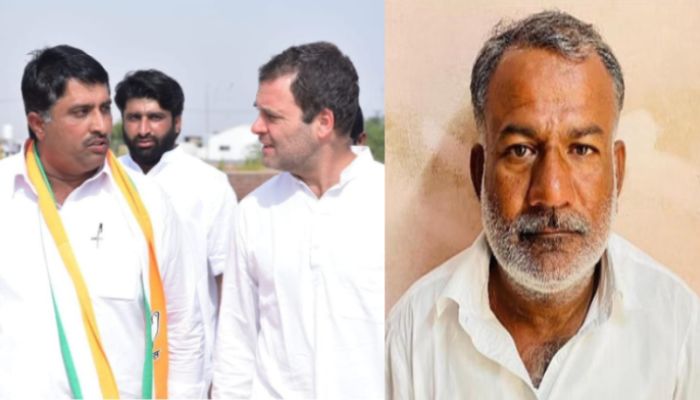
In the case involving a Pakistani spy named Shakur Khan, the police is facing difficulties in investigating Khan, meanwhile, new details have emerged in the matter. It has come to light that former Rajasthan cabinet minister Saleh Mohammad always used to talk about Shakur Khan going to Pakistan. Also, Shakur had brought gift for Saleh from Pakistan.
Former Congress minister Saleh Mohammad’s personal assistant Shakur Khan was arrested by the police on 28th May 2025 on charges of spying for Pakistan’s intelligence agency ISI. He was a government employee in the employment office of Jaisalmer. Saleh Mohammad was a cabinet minister in the Ashok Gehlot government of Rajasthan.
According to media reports, during police interrogation, Shakur Khan often makes excuses of high blood pressure or some other issue or sometimes he claims that he fell asleep during the interrogation.
The police investigation has also revealed that some other people from Jaisalmer had also gone to Pakistan along with Shakur Khan. The investigating agencies are trying to find out about those people.
Saleh Mohammed knew about Shakur Khan’s Pakistan visit
Shakur Khan is a resident of Dhani in Jaisalmer. Congress leader Saleh Mohammad is also from the same village. During interrogation, Shakur Khan told the police that Congress leader and former cabinet minister Saleh Mohammad always knew about his visit to Pakistan. On one such occasion, Shakur was even given financial help from Saleh’s office to go to Pakistan.
The investigating agencies have found multiple important evidences against Shakur Khan for spying on the country. Despite being a government employee, Shakoor had visited Pakistan several times without informing the government. Apart from this, Shakur used to share confidential information with Pakistan’s ISI agents in the areas adjoining the border.
Shakur was friends with Pakistan High Commission official Danish-ur-Rahim
Some media reports say that Shakur Khan confessed to being friends with Danish ur Rahim, who was an officer in the Pakistani High Commission and was also spying on India for ISI. After this, the Indian government declared him ‘persona non grata’ i.e. person unwanted for the country and sent him back to Pakistan.
Shakur’s mobile phone data was also recovered. When the investigating agencies questioned him about the chats and other records included in this data, Shakur remained silent.
As reported earlier, Shakur Khan was arrested from Jaisalmer. After confirmation of his spying for Pakistan, the security agencies arrested him and presented him in the court on 3rd June 2025. The court has given permission to the investigating agencies to take Shakoor on 7-day remand.
The Central government on Wednesday announced that the Population Census-2027 will be conducted in two phases, and will also include enumeration of castes.
Ministry of Home Affairs made the announcement in a statememt mentioning that the census will follow different reference dates depending on the region, in accordance with logistical and climatic factors.
“It has been decided to conduct Population Census-2027 in two phases along with enumeration of castes,” the statement said.
According to the MHA statement, the reference date for the “Population Census-2027 will be 00:00 hours on March 1, 2027, for most parts of the country.”
However, for the Union Territory of “Ladakh, and the non-synchronous snow-bound areas of Jammu and Kashmir, Himachal Pradesh, and Uttarakhand, the reference date will be 00:00 hours on October 1, 2026.”
The government has also indicated that a notification of intent to conduct the census, adhering to the above-mentioned timelines, will be published in the Official Gazette on June 16, 2025. This will be done under Section 3 of the Census Act, 1948, which governs the legal framework for the decennial census exercise in India.
The census, due in 2021, was delayed due to the COVID-19 pandemic. Census 2027 is slated to be one of the most comprehensive data-gathering exercises undertaken by the Indian government.
Census of India is conducted under the provisions of the Census Act, 1948 and the Census Rules, 1990.
The last Census of India was conducted in 2011 in two phases, namely i) Phase I – House Listing (HLO) (1 April to 30 September 2010) and (ii) Phase II – Population Enumeration (PE) (February 9 to February 28, 2011) with reference date – 00:00 hours of the first day of March 2011, except for snow-bound non-synchronous areas of Jammu and Kashmir, Uttarakhand and Himachal Pradesh for which it was conducted during September 11 to 30, 2010 with reference date as 00.00 hours of the first day of October 2010.
Census 2021 was also proposed to be conducted in two phases in a similar manner with phase I during April-September 2020 and second phase in February 2021. All the preparations for the first phase of the Census to be conducted in 2021 were completed and field work was scheduled to begin in some States/UTs from April 1, 2020. However, due to the outbreak of COVID-19 pandemic across the country, the census work was postponed.
(This news report is published from a syndicated feed. Except for the headline, the content has not been written or edited by OpIndia staff)
A video of Canada’s York Regional Police officials dancing to Punjabi songs has sparked criticism on social media. Several Canadian X users are trolling the York Police for prioritising dancing and merrymaking even as incidents of shooting and carjackings have skyrocketed in the area.
Sharing an undated video of York Regional Police officials dancing to a Punjabi song at a public event, an X user wrote, “York Region saw a 92% rise in shootings and 106% increase in carjackings. Meanwhile York Regional Police: .”
York Region saw a 92% rise in shootings and 106% increase in carjackings.
Canadian journalist Daniel Bordman said, “In India it would be very strange for the municipal police to dance to Bollywood songs, but in Canada public humiliation of people sworn to serve and protect us is the norm.”
In India it would be very strange for the municipal police to dance to Bollywood songs, but in Canada public humiliation of people sworn to serve and protect us is the norm. https://t.co/8N3duwENnv
Notably, as per local media reports from last year, York Region was recorded 106 per cent increase in carjackings, 92 per cent increase in shootings. Till August 2024, 15 homicides, 46 shootings and 64 reported carjacking incidents were reported.
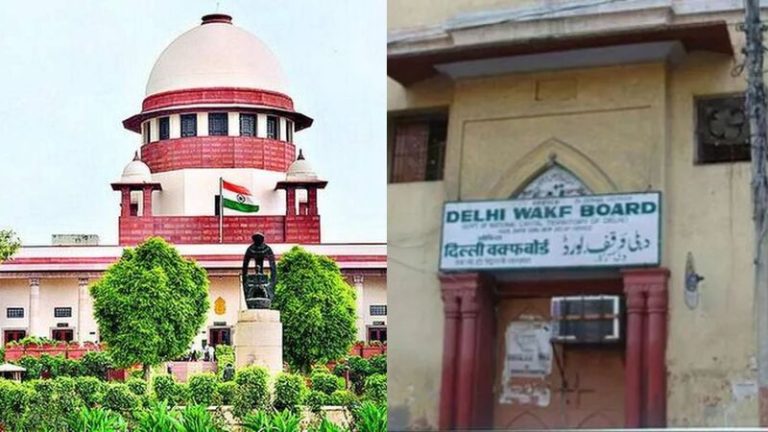
The Apex Court on Wednesday (4th June) dismissed an appeal filed by Delhi Waqf Board claiming possession of a Gurudwara. The Waqf Board had appealed to the Supreme Court against an order of Delhi High Court which rejected its plea in 2010.
A bench of Justices Sanjay Karol and Satish Chandra Sharma, dismissed the Waqf Board’s appeal and said that the Waqf Board should voluntarily renounce its claim over the Gurudwara. Arguing for the Waqf Board, Senior Advocate Sanjoy Ghose, submitted before the Supreme Court that the lower courts had held that the premises were a mosque but “now some kind of Gurudwara is there”.
“Not some kind of. A proper functioning Gurudwara. Once there is a Gurudwara let it be. A religious structure is already functioning there. You should yourself relinquish that claim you see,” said the Supreme Court dismissing the appeal.
The Waqf Board contended that the premises in question was actually a mosque in Shahadara named “Masjid Takia Babbar Shah” which existed since time immemorial. The defendant, on the other hand, argued that the property was not a Waqf property and that he bought it from one Mohd Ahsaan in 1953.
Earlier, the Delhi High Court had passed an order in favour of the Gurudwara saying, “Defendant was admittedly in occupation of this property since 1947-48. It is also true that the defendant was not able to adduce any document of title to evidence the purchase of this property, yet this does not in any manner benefit the plaintiff who has to establish his own case and prove it to enable him to obtain a decree of possession.”
In a disturbing incident in Srinivasapura town in the Kola district of Karnataka, an 80-year-old woman was found raped and murdered on Monday (2nd June). Police have arrested a 37-year-old man named Baba Jaan, a resident of Gaffar Khan Mohalla in Srinivasapura, in connection with the crime. He also robbed ₹15,000 from the victim. The accused has been remanded to judicial custody, as per reports.
Victim had gone to visit a church
Police found the dumped body of the octagenarian at a garage near an open field on Mulbagal Road in Srinivasapura. A preliminary investigation revealed that she was raped before being killed.
The victim had reportedly left home a couple of days ago. She had told her family that she was going to visit the church at Srinivasapura. After staying in Srinivasapura for two days, she was leaving for home on Monday. The accused met her when she was waiting for a bus.
Accused confessed to committing the crime
Before targeting her, the accused first ensured that she was alone by talking to her. He then lifted her and took her to an isolated place where he raped her before strangling her to death. He also robbed Rs 15,000 from her bag.
The accused was identified by the police after examining the CCTV footage from a nearby shop in which he was seen lifting the victim and rushing away with her. The accused was reportedly nabbed when he visited the crime scene after the committing the crime. He later confessed that he committed the crime to rob the victim’s money and jewellery.
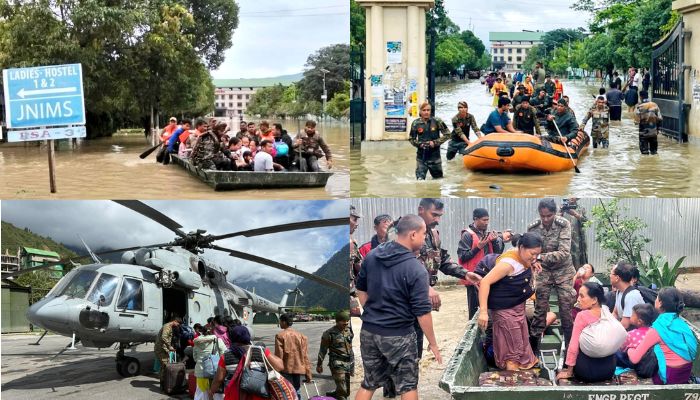
As floodwaters rise and landslides cut off entire communities, the Indian Armed Forces have launched an all-out humanitarian operation across the Northeast. Under the banner of Operation Jal Rahat-II, troops from the Army, Air Force, Assam Rifles, NDRF, SDRF and local administration are carrying out intense rescue and relief missions in multiple states including Manipur, Assam, Sikkim and Arunachal Pradesh.
On 1st June, Indian Army and Assam Rifles troops under Spear Corps carried out relief operations in Tripura, South Assam and Jiribam, Manipur rescuing 100 civilians.
Troops of #IndianArmy and #AssamRifles under #SpearCorps carried out flood relief operations in #Tripura, South #Assam and Jiribam, #Manipur in coordination with the civil administration and rescued over 100 civilians from inundated areas.
— SpearCorps.IndianArmy (@Spearcorps) May 31, 2025
From Imphal to Itanagar, the forces are in action
Reportedly, over 1.6 lakh people have been affected in Manipur’s Imphal Valley alone. 944 civilians were rescued on just the third day of the operation. In Assam and Sikkim, similar efforts are underway in flood-hit zones where waterlogging and road blockades have left thousands stranded.
On Day-2 of Operation JalRahat-2, the #IndianArmy and Assam Rifles continued extensive rescue efforts across #Imphal East and West, evacuating over 500 civilians, from severely waterlogged areas of Wangkhei, Heingang, Lamlong, Khurai, JNIMS, and… https://t.co/1yOpR1huQepic.twitter.com/rIVBbkTl8k
In a post on X on 2nd June, Indian Army informed that on Day 2 of Operation Jal Rahat-II, Indian Army and Assam Rifles continued extensive rescue efforts across Imphal East and West. The armed forces evacuated over 500 civilians from severely waterlogged areas of Wangkhei, Heingang, Lamlong, Khurai, JNIMS, and Ahallup.
FUrthermore, at JNIMS Hospital, Army boats ferried stranded patients to safety. Nearly 800 bottles of drinking water and other essential supplies were distributed to displaced families across affected zones.
Indian Air Force also extended support in the operation. In a post on X, the Air Force wrote, “In response to the devastating landslides in Sikkim, #IndianAirForce Mi-17 helicopters rapidly launched HADR Ops—airdropping relief supplies, inserting NDRF teams, and evacuating 33 stranded individuals, including two US nationals, from the remote Chaten region. IAF remains committed to saving lives.”
In response to the devastating landslides in Sikkim, #IndianAirForce Mi-17 helicopters rapidly launched #HADR Ops—airdropping relief supplies, inserting NDRF teams, and evacuating 33 stranded individuals, including two US nationals, from the remote Chaten region. #IAF remains… pic.twitter.com/WGmHbKQTph
Medical camps, food and water supply across states
Dedicated medical camps have been established in multiple relief centres, including one at Wangkhei Angom Leikai, treating over 250 people. Food packets and over 4,000 water bottles have been distributed across camps in different states.
The Indian Air Force has been air-dropping emergency supplies to inaccessible areas. Special attention is being paid to children, the elderly, and chronically ill patients across all states.
On 2nd June, Eastern Command of Indian Army informed on X that 1000 civilians were rescued from the flood affected areas. They said, “Braving the calamitous weather and relentless rains, troops employed plant machinery to open highways blocked due to landslides. Food, water, medicine and shelter is being provided to all affected people as the operations continue.”
According to PRO Defence, Manipur, Nagaland & South Arunachal, 1560 people have been rescued. 584 from Wangkhei, 569 from JNIMS Hospital, 110 from Khaitai Chingangbam Leikai, 115 from Laishram Leikai, 65 from Lamlong and 75 from Heijang.
Amidst relentless rains and widespread flooding in Imphal Valley, the #IndianArmy has launched a massive relief and rescue mission across the region since 31 May 2025. Operating under extremely challenging conditions, Army columns have evacuated… pic.twitter.com/7gBrivmwte
— PRO Defence, Manipur, Nagaland & South Arunachal (@prodefkohima) June 3, 2025
As the rains continue, Operation Jal Rahat-II stands as a testament to the Indian forces’ resolve, bringing relief, hope, and healing to a region in crisis.
India has vehemently opposed any Asian Development Bank financing support to Pakistan, raising serious concerns about potential misuse of development funds for military expenditure and questioning Pakistan’s commitment to economic reforms.
According to sources, India expressed deep reservations to the ADB about Pakistan’s deteriorating fiscal performance, declining tax collection, and suspected diversion of international development funds toward defence spending rather than development priorities.
India highlighted Pakistan’s alarming fiscal trends as evidence of misplaced priorities. Pakistan’s tax collection as a share of GDP plummeted from 13.0% in FY2018 to just 9.2% in FY2023 – far below the Asia-Pacific average of 19.0%. Despite this revenue decline, Pakistan significantly increased defence expenditure during the same period.
“The linkage between Pakistan’s increase in expenditure on its military, as opposed to development, cannot be fully explained solely in terms of its domestic resource mobilisation,” sources told ANI. India warned that this pattern suggests possible diversion of funds from international financial institutions, particularly through fungible debt financing instruments like Policy-Based Loans.
India urged ADB management to adequately ring-fence financing to prevent such misuse of development resources.
India questioned the effectiveness of previous ADB and IMF programs, noting that Pakistan has approached the International Monetary Fund for its 24th bailout program despite years of institutional support. This track record, India argued, calls into question both program design and implementation by Pakistani authorities.
Sources pointed to Pakistan’s military’s entrenched interference in economic affairs as a fundamental obstacle to sustainable reforms. “Even when a civilian government is in power now, the army continues to play an outsized role in domestic politics and extends its tentacles deep into the economy,” India noted, highlighting the military’s leading role in Pakistan’s Special Investment Facilitation Council.
India expressed strong reservations about Pakistan’s governance system, describing it as “a continuing severe threat to regional peace and security.” The country’s policy of cross-border terrorism has worsened regional security and significantly escalated Pakistan’s macroeconomic risks, thereby heightening enterprise risks for the ADB.
India criticised Pakistan’s unsatisfactory progress on critical Financial Action Task Force (FATF) action items, particularly regarding terrorist financing investigations, prosecution of UN-designated terrorist group leaders, and freezing of criminal assets.
India argued that Pakistan’s heavy reliance on external support for policy reforms undermines local ownership and creates a dangerous dependency cycle. “Policy reforms in Pakistan have been largely driven by external support from IFIs, including ADB, in recent years,” sources said, warning this approach lacks sustainability.
Beyond development effectiveness, India raised concerns that Pakistan’s creditworthiness poses risks to ADB’s own financial health. Pakistan’s continued reliance on external debt, combined with its high debt-to-GDP ratio and poor credit rating, raises questions about the long-term sustainability of future exposures.
“India urged ADB to be vigilant to safeguard the bank’s financial health and long-term prospects,” sources said, emphasising the need for careful risk assessment given Pakistan’s economic fragility.
India’s comprehensive opposition comes as the ADB evaluates potential financing programs for Pakistan. The bank has not yet responded to India’s concerns, but the objections could complicate Pakistan’s efforts to secure additional development funding at a time when the country faces severe economic challenges.
India expects the ADB to closely monitor the implementation of any policy matrix to achieve intended outcomes and prevent misuse of development resources for non-development purposes.
(This news report is published from a syndicated feed. Except for the headline, the content has not been written or edited by OpIndia staff)
The Gandhi scion and his party has once more supplied Pakistan with ammunition to target India through their statements in order to gain some brownie points. Rahul Gandhi supported President Donald Trump’s assertion of mediating between New Delhi and Islamabad, which was categorically dismissed by India and subsequently exposed when his tariffs were annulled by a United States court.
Meanwhile, Congress also backed the same through a humiliating meme depicting Prime Minister Narendra Modi as receiving instructions from Trump to declare a ceasefire which was depicted as “surrender.”
The media in Pakistan quickly seized upon the opportunity provided by India’s largest opposition party and utilized them to advance their malicious narrative. A journalist on popular Geo.tv stated, “Congress was already criticing PM Modi’s silence over Trump’s claims of mediating ceasefire between India and Pakistan. Now, they have also started poking fun at him.” He then described the derogatory meme posted by official Congress handle and also showed the video in which Rahul Gandhi mocked PM Modi.
And it has happened yet again.
Pakistani Media is playing Rahul Gandhi's and Congress's narrative of "Surrender"
— Politics Pe Charcha (@politicscharcha) June 4, 2025
“India’s opposition is raising questions about whether the ceasefire was initiated at Pakistan’s request rather than as a result of Trump’s proposal. If that is the case, why did the government agree to it, especially since we were winning the war? If this is not accurate, then the claims made by the centre are misleading,” the anchor added throwing light on the petty politics of opposition leaders even in critical times.
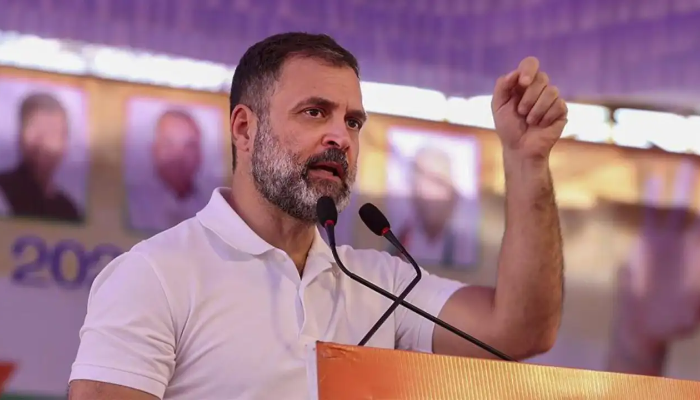
“A call came from Trump and Narendraji immediately surrendered. History is witness to this. This is the character of the BJP (Bharatiya Janata Party) and RSS (Rashtriya Swayamsevak Sangh). I am well aware of the BJP and RSS people. Apply a little pressure and they run away in fear,” Leader of the Opposition of Lok Sabha claimed at an event in Bhopal on 3rd June.
ट्रंप का एक फोन आया और नरेंद्र जी तुरंत surrender हो गए – इतिहास गवाह है, यही BJP-RSS का character है, ये हमेशा झुकते हैं।
भारत ने 1971 में अमेरिका की धमकी के बावजूद पाकिस्तान को तोड़ा था। कांग्रेस के बब्बर शेर और शेरनियां Superpowers से लड़ते हैं, कभी झुकते नहीं। pic.twitter.com/RhdQWdRBtV
“Narendraji followed Trump who directed ‘Narender, surrender’ and he replied ‘yes, sir’,” the Raebareli MP jibed. “India broke Pakistan in 1971 despite threat of America. Lions and lionesses of Congress fight against superpowers and never bow down,” he added while drawing parallels with Bangladesh liberation war.
Notably, OpIndia already reported how Rahul Gandhi’s dangerous remarks will offer more fodder to the Islamic Republic for propaganda. His fallacious accusations against foreign minister S Jaishankar and his remarks that called into question the outcome of “Operation Sindoor,” were also reported by Pakistan.
“EAM (External Affairs Minister) Jaishankar’s silence isn’t just telling, it’s damning. So I’ll ask again: How many Indian aircraft did we lose because Pakistan knew? This wasn’t a lapse. It was a crime. And the nation deserves the truth,” he claimed on social media. “Informing Pakistan at the start of our attack was a crime. EAM has publicly admitted that GOI (Government of India) did it. Who authorised it,” he alleged in another post.
Jaishankar had conveyed, “At the start of the operation, we had sent a message to Pakistan saying we are striking at terrorist infrastructure. We are not striking at the military. So, the military has an option of standing out and not interfere in this process. They chose not to take this good advice.”
However, his statement was twisted by Congress and its stalwart. The Pakistani media promptly latched onto Rahul Gandhi’s post, declaring a false victory and attempted to portray “Operation Sindoor” as a defeat for India.
In the popular imagination, the Indian Institutes of Technology (IITs) have long stood as temples of technical excellence—producing engineers, scientists, and innovators who have powered India’s progress and made their mark globally. But behind the gleaming façade of STEM success, a silent ideological takeover is underway—particularly within the humanities and social sciences departments that have taken root in these institutions. What began as a noble attempt to integrate liberal arts into technical education has devolved into a machinery of ideological indoctrination, often at odds with India’s civilisational ethos and national interest.
An X thread by a social media user provides a glimpse into what’s ailing India’s premier technical institutes, where STEM education is increasingly being sidelined in favour of humanities and political activism.
Professor of Humanities (Policy Studies) at IIT Bombay. Our IITs have become trash due to humanities departments.
Case study: Anupam Guha — AI researcher or political activist?
One of the most glaring examples of this phenomenon is Anupam Guha, an Assistant Professor at the Ashank Desai Centre for Policy Studies at IIT Bombay. While Guha’s academic focus is on Artificial Intelligence, AI policy, and the future of labour as the official website of IIT Bombay describes him, his public statements on social media reveal a deep-seated ideological commitment to Marxist and far-left politics—often manifesting in open hostility towards Indian sovereignty, capitalism, and democratic processes.
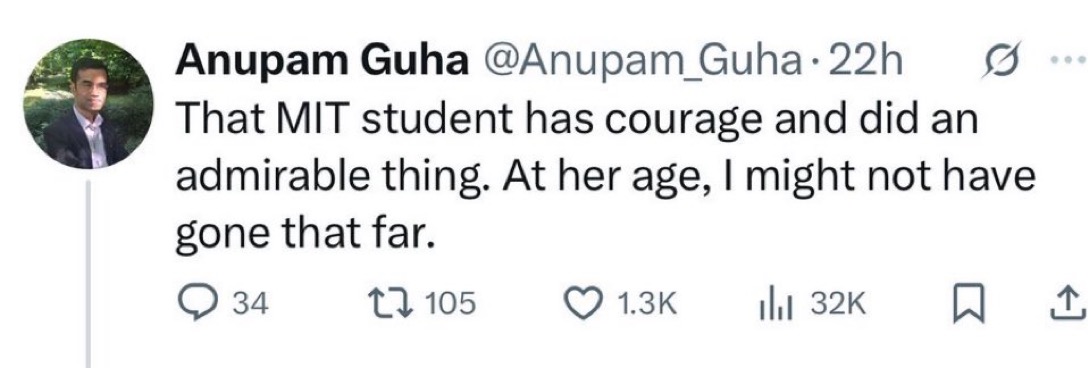
In a recent tweet, Guha heaped praise on MIT student Megha Vemuri for using her graduation ceremony to launch a vitriolic anti-Israel tirade. Rather than maintaining the intellectual neutrality expected of a taxpayer-funded educator, Guha lionized her act as brave and exemplary, admitting he lacked the “courage” to do something similar in his youth.
Source: X
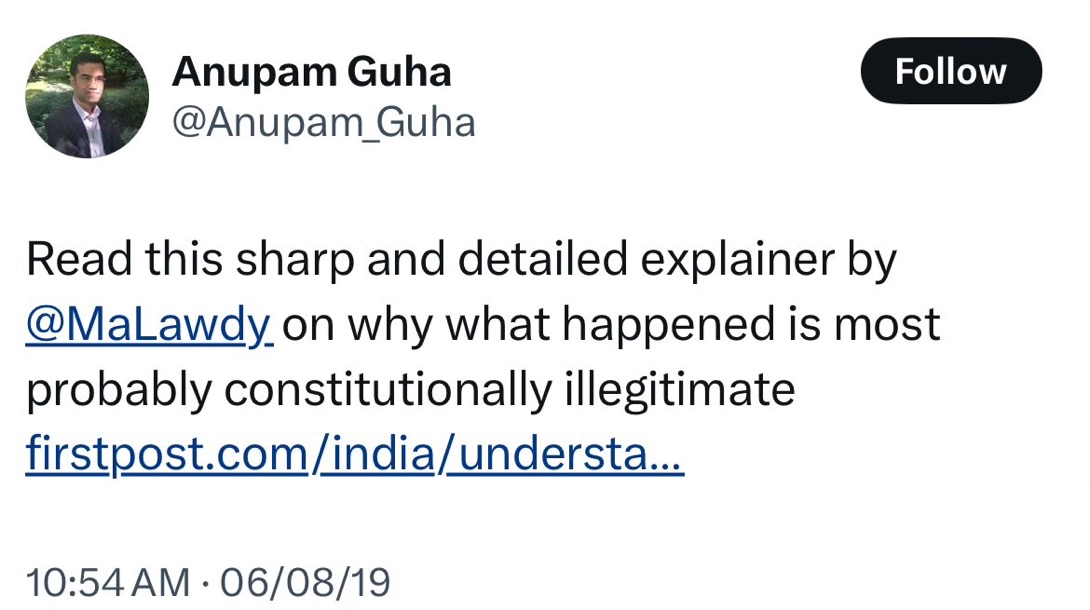
This wasn’t an isolated incident. Guha has also publicly endorsed an article branding the abrogation of Article 370—an act passed by the Indian Parliament and upheld by the Supreme Court—as “constitutionally illegitimate”.
Source: X
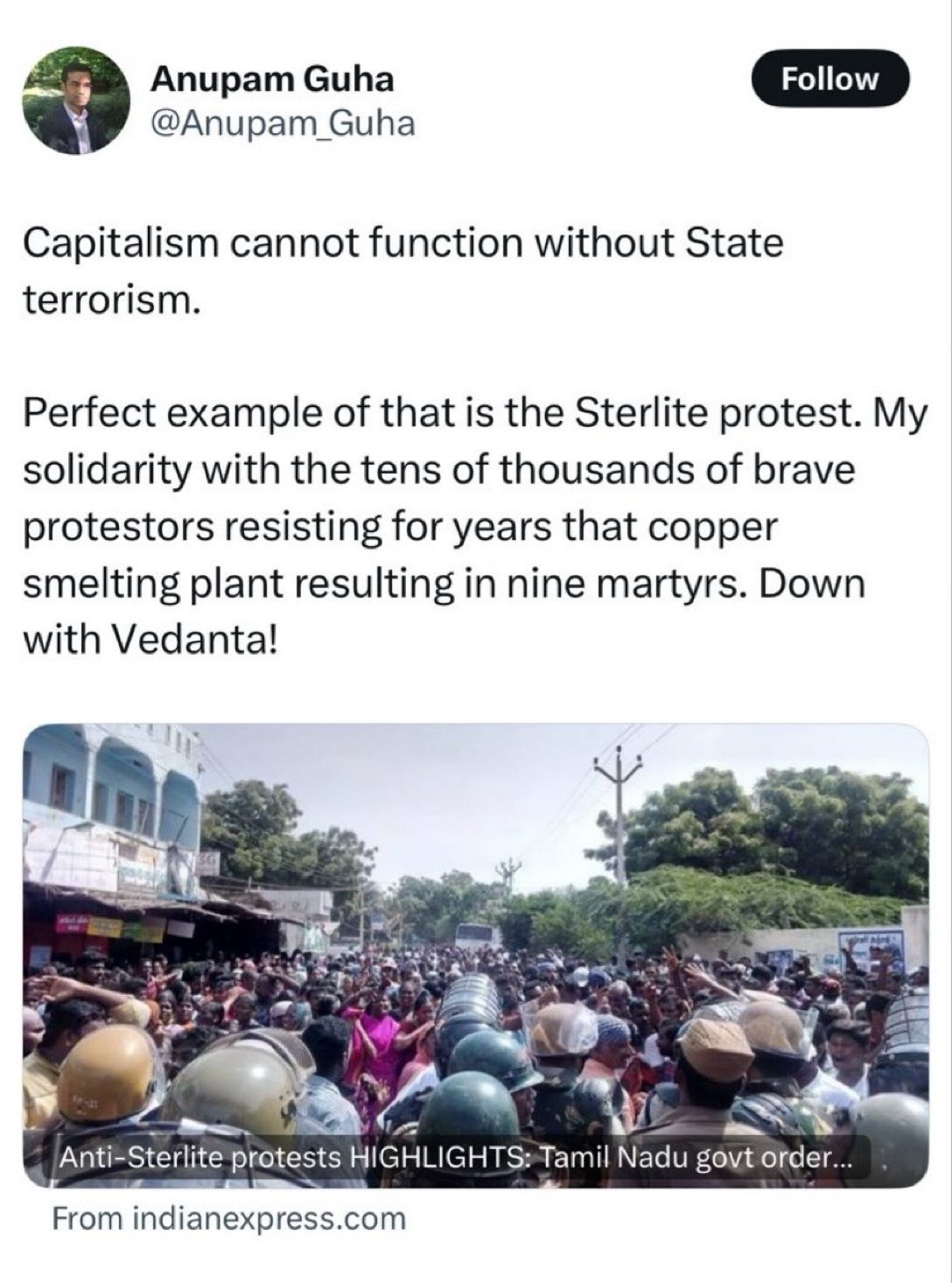
His views on capitalism are no less radical. During the violent Sterlite Copper Plant protests, which left nine people dead, Guha tweeted that “capitalism cannot function without state terrorism,” and referred to the deceased as “martyrs.”
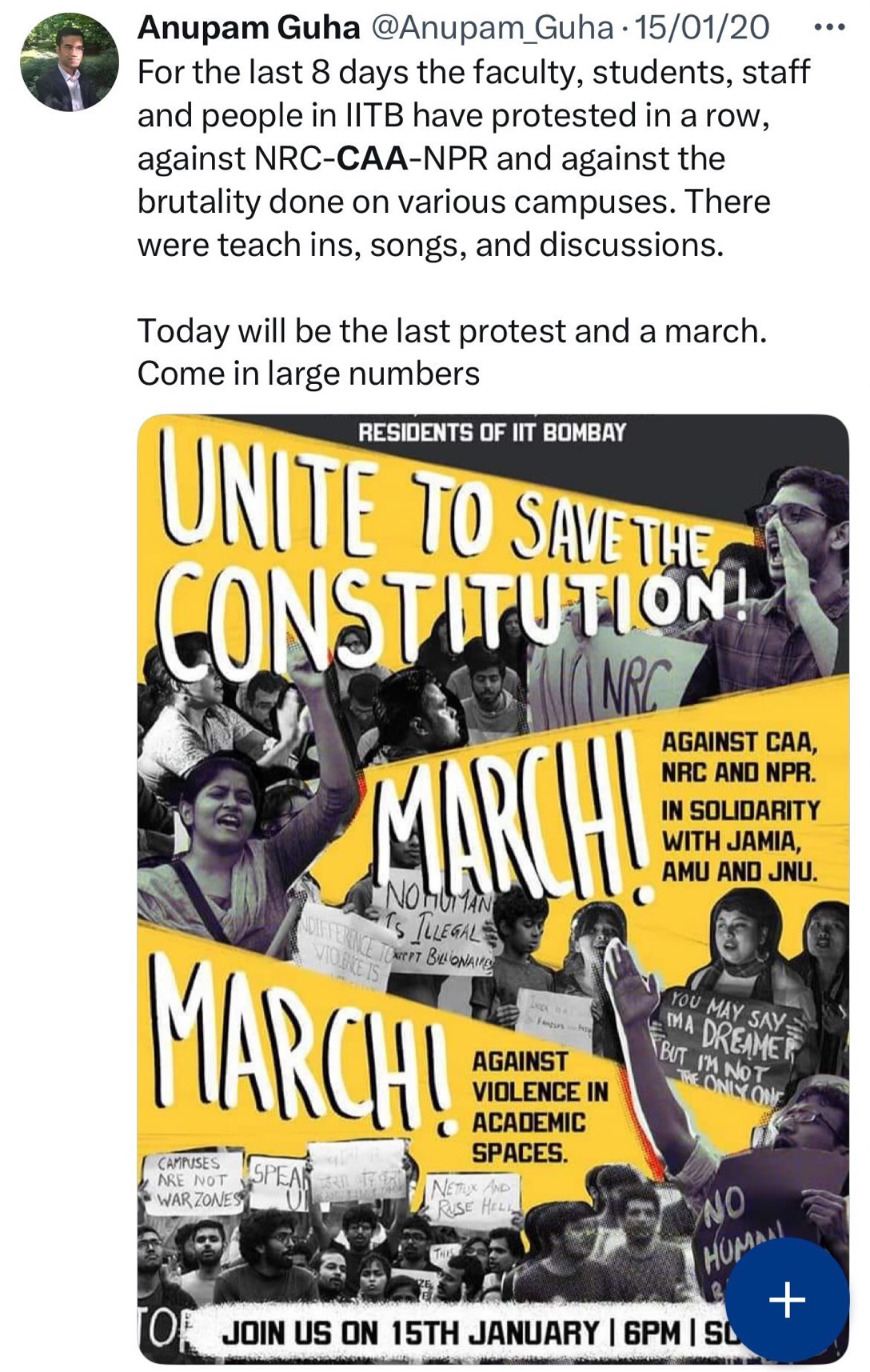
His activism extended into the anti-CAA protests, where he actively urged people to hit the streets against a law that had been passed in Parliament, offering expedited citizenship to persecuted minorities from neighbouring Islamic countries. Despite being on a government payroll, Guha used his platform to fan unrest, often amplifying separatist voices and questioning India’s sovereignty over Kashmir.
Source:X
In one particularly telling tweet, he denounced the term “Tukde Tukde Gang”—a colloquial phrase used to describe secessionist and anti-national elements—as an act of “stochastic terrorism,” and suggested that those using the phrase should face prosecution. This is not the language of an academic, but of a political ideologue engaged in narrative warfare against the Indian state.
IIT Bombay’s humanities professor wants to persecute those who use the term ‘tukde tukde gang’.
In yet another striking incident, Guha haughtily projected himself as an unabashed communist, barely concealing his contempt for those who don’t subscribe to his worldview.
Source: X
An email has been sent to Anupam Guha from IIT Bombay seeking his comments on the above mentioned viral thread on X (formerly Twitter). In the interest of fairness, OpIndia has asked Guha to clarify whether the account and its opinions are indeed his—or if someone has impersonated him to malign him as a communist and supporter of anti-national elements. At of the time of publishing, OpIndia has not received any response from him.
Weaponising Academia: IIT Bombay’s centre targets OpIndia, employs dubious individuals to suppress voices of Hindus
In a glaring example of how taxpayer-funded institutions are being used to push ideologically driven narratives, the Ashank Desai Centre for Policy Studies at IIT Bombay commissioned a research paper titled “Delving deeper into OpIndia.com’s representation of Hindus and Muslims.” The paper analysed 54,580 articles published by OpIndia from 12 December 2014 to 15 May 2023, and unsurprisingly concluded that the portal “fosters anti-Muslim narratives” while positively portraying Hindus.
But what truly raises eyebrows is the authorship of this so-called academic research. Among the authors is Shinjinee Majumder, a staff member at the controversial and far-left portal Alt News, which has itself come under fire for peddling fake narratives, shielding radical Islamists, and selectively “fact-checking” based on political convenience.
The use of Indian government resources—funded by the taxpayer—by a technical institute like IIT Bombay for commissioning partisan political hit jobs disguised as ‘research’ is not just inappropriate; it is indicative of a deeper institutional rot. When political shills masquerading as researchers are empowered to carry out studies with pre-decided conclusions, it fundamentally undermines the academic neutrality expected of premier institutions like the IITs.
Rather than fostering critical inquiry, centres like Ashank Desai’s are now increasingly seen as echo chambers for political activism, producing output designed to delegitimise dissenting views while advancing a narrow ideological agenda. This development raises serious concerns over the integrity of academic research and the weaponisation of public institutions against non-left political voices.
Institutional rot: Humanities Depts as ideological weapons
Guha or the farcical ‘research’ against OpIndia are not outliers but a symptom of a deeper malaise. The humanities departments within IITs—originally introduced to provide well-rounded education to engineering students—have become bastions of far-left activism, often under the guise of academic inquiry. These departments, which are supposed to study history, culture, ethics, and society with balance and objectivity, are now increasingly promoting a worldview that undermines the very foundations of the Indian state.
Consider the case of IIT Gandhinagar, where the Humanities and Social Sciences (HSS) department has recently come under the scanner for seemingly promoting Islamic theology under academic pretenses. PhD topics included titles such as:
“Fishing With Faith: Islam, Indigenous Knowledge, and Ecological Sustainability in Lakshadweep”
“Robes of Authority: Sunni Ulama, Sartorial Tradition, and Embodied Piety in Malabar”
“From Gods to Jinn: Ontological Rewriting and the Islamization of Spirits in Kerala”
“Beyond Cultural Brokers: Speech Mediation and Ritual Efficacy in Mosque Speeches in Kozhikode”
These research subjects, far from offering a critical or comparative lens, appear to romanticize and propagate Islamic dogmas, often devoid of critical inquiry into their socio-political implications. It is a matter of grave concern that a premier government-funded technical institute is serving as a platform for theological glorification under the garb of social science research.
While the outrage over these thesis topics is yet to subside, a fresh controversy had emerged. Screenshots of purported WhatsApp chats of IIT Gandhinagar students had surfaced, suggesting that Hindu students are being threatened against leaking internal communications and discouraged from condemning terror attacks targeting Hindus. One such conversation, allegedly involving a Hindu student, indicated that after the Pahalgam terror attack—where Hindus were singled out and killed by Pakistan-backed Islamic terrorists—students were pressured not to speak publicly about the incident.
The chats further suggests that condemning Islamist violence against Hindus is suppressed, even as the institution appears to permit, and even encourage, political expression in support of global Islamic causes. Alarmingly, just seven days after Hamas—a designated Palestinian terrorist outfit—massacred civilians in Israel on 7th October 2023, IIT Gandhinagar reportedly held a “Sham-e-Azadi” candlelight march to express solidarity with Palestine.
This stark double standard—where Hindus killed in India are erased from public discourse, while Islamist extremists in other parts of the world are glorified—reflects not only ideological bias but also a growing atmosphere of hostility toward Hindu identity within these institutes.
To make matters worse, Associate Professor Nishaant Choksi of IIT Gandhinagar has allegedly threatened disciplinary action against students who questioned this ideological shift—using the ‘honour code’ as a weapon to silence dissent. The very students who should be encouraged to question and debate are being muzzled in the name of political correctness and academic decorum.
A dangerous convergence: Activism, ideology, and academia
This transformation of IITs into ideological factories mirrors similar patterns seen in Western institutions, particularly in the Ivy League, where critical theory, identity politics, and Marxist discourse have overtaken classical liberal education. In India, however, the stakes are higher. Unlike in the West, where private endowments and alumni donations fund universities, Indian institutions are funded by taxpayers—most of whom do not subscribe to these divisive ideologies.
The convergence of taxpayer-funded academia with anti-state activism creates a paradox: citizens are unwittingly financing intellectual subversion that seeks to delegitimise their nationhood, culture, and governance. Professors like Anupam Guha are not merely expressing dissent—they are embedding a political worldview into impressionable young minds under the sanctified halo of academic freedom.
Time for course correction
There is a pressing need to re-evaluate the structure, curriculum, and hiring practices in the humanities departments of technical institutes. While academic freedom must be preserved, it cannot be a license to promote ideological indoctrination, separatism, or religious glorification at the cost of national cohesion.
Some concrete steps could include:
Mandatory review of humanities syllabi by neutral academic panels.
Transparency in research funding and publication sources.
Accountability mechanisms for faculty promoting political activism under academic pretense.
Integration of Indian civilisational studies and comparative religion from a critical and balanced perspective.
India’s IITs should remain beacons of innovation, logic, and excellence—not echo chambers for imported ideologies or political theatre masquerading as scholarship.
Ideological corrosion of India’s premier institutes a reality
The ideological corrosion within India’s premier technical institutions is not a conspiracy theory but an observable reality. When a professor at a leading IIT praises anti-India activism, questions parliamentary decisions, and amplifies separatist views—all while being paid by the Indian taxpayer—it’s time to ask: are our institutions truly serving the nation’s interests, or have they been hijacked by those who fundamentally oppose it? The answer may well define the future of India’s intellectual sovereignty.
What makes this trend especially concerning is that IITs are globally respected for their excellence in science, technology, engineering, and mathematics (STEM). These institutes were established to fuel India’s technological advancement and innovation ecosystem. However, the increasing focus on political activism—particularly from ideologically driven faculty within humanities departments—dilutes the academic environment, distracts from core STEM priorities, and shifts the institutional culture away from scientific inquiry toward political agitation.
By allowing these institutes to become cradles of left-wing activism, we risk eroding the very foundation that earned them their international reputation. The infiltration of ideological agendas not only compromises the objectivity and focus essential to technical education but also deters serious students and researchers from pursuing excellence in a space that is increasingly politicised. Over time, this ideological creep threatens to undermine the quality of education, research output, and the global stature that IITs have worked decades to build.
A case involving love jihad has surfaced in the Mahakal police station area of Ujjain in Madhya Pradesh where Kurban Shah posed as Rohit and befriended a Hindu girl. He subsequently trapped her in a romantic relationship, leading to her estrangement from her family. During this time, he continuously deceived her in the name of marriage and sexually exploited her regularly for eight years.
On 2nd June, the Mahakal police station initiated legal proceedings against the young man, following her complaint. Neelu Chauhan, a leader of Hindu Jagran Manch provided details about the matter and disclosed that the Muslim youth met the victim who sold flowers near the Mahakal temple, in 2016. He proposed marriage to her.
She was so deeply deceived by him that she forsook her entire family and started living with him. He housed her in different rented places at Agar Naka, Mohan Nagar and Jaisinghpura. He constantly sexually exploited her by enticing her with the prospect of marriage. The accused eventually brought the girl to his place in Jaisinghpura when she asked him for marriage, in 2021.
Subsequently, they began staying with his parents and brothers. When she inquired about the presence of Muslim individuals at his home, he initially refrained from providing an explanation. However, on 20th November 2021 he revealed his name as Kurban Shah. Afterward, he exerted pressure on her and insisted that in order to marry him, she must convert to Islam and perform Namaz.
Furthermore, he ordered her to wear burqa and threatened to take her life if she did not adhere to this demand. He then assaulted her when she refused to comply. She had been residing at his residence since 2021, however, at first, she was unaware that the entire family practiced Islam and was concealing their faith from her.
She informed the authorities that his mother and grandmother acted like Hindu women. They donned sarees and used kajal and tikka, which led her to never suspect anything unusual. The girl mentioned that he abused her, forced himself on her and also thrashed her. When the issue escalated on 28th May, she managed to escape from there and made her way to the Mahakal police station to file a complaint.
A case has now been launched against the offender under Sections 296, 115(2) and 351(2) Bharatiya Nyaya Sanhita (BNS) and 3/5 of the Madhya Pradesh Freedom of Religion Act. It has come to light that the girl was so ensnared in his trap that she accepted everything he stated as truth. It is reported that she also has a four-year-old daughter born out of wedlock. According to other reports, the couple did Nikah (Islamic wedding ceremony).