Home Blog Page 4297

Himanta Biswa Sarma flags Twitter’s manipulative labels, but platform’s conduct should concern one and all: Here’s why

Assam Chief Minister Himanta Biswa Sarma has called out Twitter over its recent conduct where the platform labeled tweets by BJP politicians as ‘manipulated media’ without any evidence. He said that it was disconcerting that the platform was effectively taking sides in Indian politics.

Source: Twitter

Himanta Biswa Sarma said, “SM platforms must be transparent on who conducts these so-called fact checks & how they are done. Recently, Twitter applying policies selectively to take sides in India’s politics is disconcerting. Calls into question if they can seek refuge under provision of safe harbour.”

While the Assam Chief Minister is the first to take a strong stand along such lines against Twitter amidst the current conflict with the Indian Government, it is an extremely critical issue that ought to concern every Indian citizen who cares about the sovereignty of our nation.

It is pertinent to mention here that the Indian Government had written to Twitter requesting that the platform remove its ‘manipulated media’ label against a tweet on the Congress toolkit made by BJP spokesperson Sambit Patra. Since then, the tag has surfaced on more tweets by BJP leaders on the toolkit controversy.

The Indian Government accused Twitter of attempting to influence investigations into the matter. However, the platform appears to have paid no heed as the label continues to exist in the said tweets. There was a clash between the government and the social media giant during the ‘farmer protests’ as well when the platform refused to take down tweets peddling dangerous fake news that could jeopardise the law and order situation in the country.

It is a matter of grave concern given the platform’s conduct in recent times. During the campaign for the US Presidential Elections in 2020, Twitter deliberately blocked a news report that portrayed Joe Biden in poor light. The news report was legitimate and reported accurate facts and yet, Twitter banned it anyway because it undermined the chances of their preferred political candidate.

CEO Jack Dorsey has already admitted that Twitter has a left-wing bias. After unfair meddling into the democratic process in the United States, it appears to be doing the same in India. For our country, the concerns are even more serious as it is a foreign-based company and there are enough indications that it is working in concert with the US Government.

In the absence of strong action, it is almost certain that the platform will intensify its efforts against the ruling dispensation. Historically, it has been observed that western businesses use their corporate might to influence domestic policies abroad but of late, with the conduct of social media and other fronts, it has come out into the open.

By 2023, it is only to be expected that Twitter will massively escalate its efforts to topple the NDA Government at the center. Given the manner in which they worked in tandem to throw out Donald Trump from the platform using flimsy excuses, a decision that has irked leaders around the world, the Indian Government should take it for granted that the platform has made up its mind to interfere in the internal politics of India and destabilize our country in the process.

Incidentally, the platform’s overtures towards the Congress party comes only weeks after former Congress president Rahul Gandhi solicited help from the United States in his efforts to defeat the BJP. Joe Biden’s refusal to lift the embargo on the export of vaccine raw materials, the international media’s biased coverage of the crisis in India and its attempt to pinpoint the entire blame on Narendra Modi is further confirmation of a deeper plot against the current ruling dispensation.

Thus, only complaining about the platform’s biased conduct will not help the BJP here. It has to compensated by concrete action. It is the duty of the Indian Government to prevent malicious foreign actors from interfering in the internal matters of India. And while the Prime Minister is embattled from all fronts, it is one avenue that he cannot afford to neglect.

The issue is not merely that of labels here. The primary cause for concern is that a foreign actor is openly choosing sides in Indian politics and is acting in ways that could be construed as attempts to subvert the will of the Indian people. The primary cause for concern is that a western company is attempting to undermine India’s national sovereignty. The Government has to act while it still has time, lest it be too late.

Madhya Pradesh: Honeytrapped by Pakistani agents under promise of marriage, two women, Kauser and Hina, arrested

On May 22, Indore Police and military intelligence arrested two sisters identified as Kauser and Hina in Lakshmi Vihar colony, Gawli Palasia near Mhow, Indore district, Madhya Pradesh for suspected links with Inter Services Intelligence (ISI), Pakistan. One sister is 32 years old, and the other is 28 years old. They have been on Police and military intelligence’s radar following inputs that they were in regular touch with contacts in Pakistan. Different intelligence agencies, including local Police, ATS, IB and military intelligence, are investigating different levels.

They were in contact with ISI and ex-army officer

It was suspected that they were in contact with agents from the other side of the border. It is believed that these contacts were ISI operatives. Some sources told Hindi Daily Patrika that one of the contacts was an ex-army officer. Investigating agencies have recovered electronic devices, including laptop and mobile phones, from the sisters. They were reportedly getting funding from Mauritius.

Fake IDs were used to communicate with ISI

There is an army installation in Mhow. It is one of the largest army establishments in Madhya Pradesh. The sisters were providing sensitive information about army installations in the region to ISI in Pakistan. Some days ago, they were walking on the road while talking to their contacts in Pakistan when Indian intelligence heard their chatter. Since then, they were under intelligence’s radar. News Nation reported that the women were also seen photographing army installations at Mhow. The intelligence agencies targeted them using a fake ID.

Daughters of ex-serviceman, one of the sisters are working as a school teacher while the other has worked with an electricity company in the past. Their father had worked as a security guard at an SBI branch in Mhow. They were using fake IDs on social media platforms to stay in touch with the contacts in Pakistan for over a year.

As per reports, one of the agents in Pakistan had said he would marry the elder sister. The girl also said she wanted to marry the man she came in touch with through social media.

Man from J&K was involved

The Police said that the sisters were employed at different locations over time. They preferred to change jobs after a certain time. They were also in contact with a man hailing from Jammu and Kashmir’s Kupwara district. Reports suggest that the Police and military intelligence also picked him up for interrogation.

Harinarayanchari Mishra, Inspector General of Indore Zone, told The New Indian Express that local Police and Intelligence agencies jointly investigate the case. The investigations agencies have not revealed any information about their contacts in Pakistan.

Lithuania labels China’s treatment of Uyghur Muslims a ‘genocide’ and demands UN probe, quits China’s “17+1” group

After the US, Canada and Britain, Lithuania’s parliament on Thursday described China’s treatment meted out to its Uyghur Muslims as “genocide”. Additionally, Lithuania recommended voting to call for a U.N. investigation of forceful detention camps set up by China imprisoning Uyghurs and to ask the European Commission to review relations with Beijing.

Beijing however continues to be in denial of abusing its minorities and has condemned the countries for using the term.

The non-binding resolution which was supported by three-fifths of Lithuanian parliament members called on China to abolish a national security law in Hong Kong. It also demanded to let observers into Tibet and begin talks with its spiritual leader, the Dalai Lama.

However, Lithuanian Prime Minister Ingrida Simonyte and Foreign Minister Gabrielius Landsbergis did not cast their votes despite being present in the Parliament. 

Dovile Sakaliene, a lawmaker blacklisted by China, said, “We support democracy, as we will never forget the cruel lesson of living under occupation by a Communist regime for 50 years.”

China’s Foreign Ministry spokesperson Zhao Lijian in a briefing on Friday firmly opposed the move. He also warned Lithuania to correct its mistakes to avoid harming relations between Lithuania and China.

Lithuania leaves China’s 17+1 cooperation

Along with passing the resolution, Lithuania also left China’s 17+1 cooperation forum with central and eastern European states, calling the group ‘divisive’. The also asked the other European Union members to also leave the group of 27 nations. “Lithuania no longer considers itself a 17+1 format member and does not participate in this initiative,” Foreign Minister Gabrielius Landsbergis told Agence France-Presse.

“From our perspective, it is high time for the EU to move from a dividing 16+1 format to a more uniting and therefore much more efficient 27+1. The EU is strongest when all 27 member states act together along with EU institutions,” the foreign minister added.

These are part of several steps that the country has taken in recent months that signify deterioration of its relations with China. Earlier, the country had blocked Chinese investment and announced that it would open a trade office in Taiwan.

Lithuania under Soviet rule

Lithuania suffered repression under the Soviet rule from 1940-1991. The country is now a member of the EU and NATO, and consistently plays a prominent role in advocating tougher Western diplomatic lines towards Russia and Communist countries such as China.

Uyghur detention camps

The Xinjiang autonomous region in China is facing the worst kind of cultural and ethnic genocide. There is a long history of dissonance between the indigenous ethnic Uyghur and Chinese authorities. The Chinese government refuses to categorize Uyghurs as an indigenous population and describe Uyghurs as a regional minority.

China is facing criticism and worldwide condemnation over its unkind and harsh treatment towards the Uyghur Muslims. A Uyghur-Kazakh citizen, Gulbahar Jelilova reported that she was ruthlessly beaten and raped while in custody. Stew Chao, a journalist working with Aljazeera reported that Abduveli Ayup-prominent Uighur writer, activist and Uyghur language defender was put in a detention centre and later brutally tortured.

There is also ample evidence that suggests China is systematically targeting Uyghur Muslims through a state-planned birth control process. Zumrat Dawut and Kalbinur Sidik who survived from Chinese detention camps narrated that Uyghur women who conceive more than three children are forcefully sterilized. Women survivors from these camps narrated that they were beaten, raped, and given mystery injections.

Uyghur Muslim minorities confined in camps were forced to criticize their faith and basic Islamic values. They are forced to recite communist party propaganda and criticize Islam as part of the indoctrination process.

Unfortunately, the Uyghurs of China have found no support from other Islamic and Muslim nations.

Pinarayi Vijayan’s decision to keep minority welfare portfolio with himself to appease Christians angers IUML: Report

Kerala Chief Minister Pinarayi Vijayan has decided to keep the minority welfare portfolio with himself, a decision which was likely taken to reach out to the Christian community in the state, The New Indian Express has reported. Christian organisations in the state have been demanding that Vijayan handle the ministry himself.

“It was a long-pending demand of a major section among the minority communities that the chief minister should handle the minority welfare portfolio. We welcome the new decision and express our gratitude to the chief minister,” Kerala Catholics’ Bishops Council (KCBC) spokesperson Fr Jacob Palackapilly said.

Christian groups were not happy with the disbursal of minority welfare funds under KT Jaleel, the previous minority welfare minister in the state. However, Jaleel denied that there was any discrimination in fund allocation under his watch.

“The 80:20 ratio is followed only in state scholarships instituted on the basis of the Paloli committee recommendations to alleviate backwardness of the Muslim community. This is not applicable for any other schemes of the ministry or in the disbursal of Central funds meant for minority welfare,” he told TNIE.

It is also speculated that Vijayan’s move is to thwart BJP’s outreach towards the Christian community. State BJP President P S Sreedharan Pillai had helped organise a meeting between Prime Minister Modi and the head of three prominent Church groups ahead of the elections.

That does not appear to have had any significant impact as the BJP failed to win any seat in the state. However, it appears to have been enough for Pinarayi Vijayan to take effective measures to ward off any threat.

BJP General Secretary in the state, George Kurian, has said, “A mere change of guard does not mean the LDF’s policy towards minorities, especially Christians, has changed. The 80:20 ratio in distribution of welfare funds among Muslim and Christian communities should first be amended.”

Meanwhile, the Indian Union Muslim League (IUML) has claimed that Vijayan’s decision has insulted the Muslim community. Earlier, it was believed that the portfolio would go to V Abdurahiman.

In a first, Uttar Pradesh tests 3 lakh people for Covid in a single day, 4.65 crore tests conducted in total

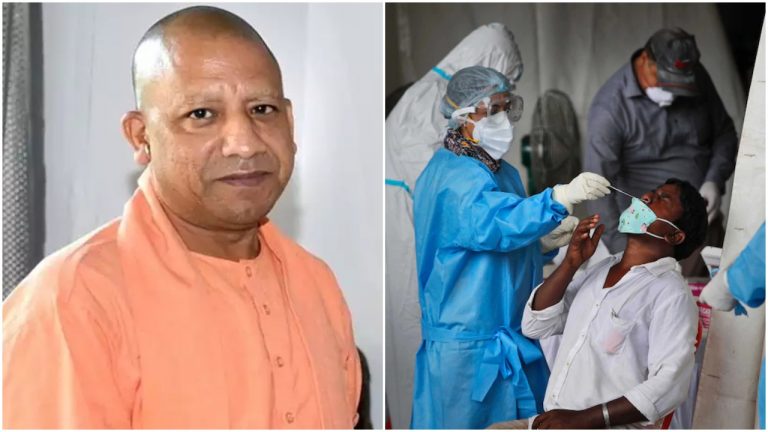
The Uttar Pradesh Chief Minister Yogi Adityanath seems to be determined to fight the Covid-19 pandemic in the state and the dedicated, multi-pronged approach of the Uttar Pradesh government to tackle the epidemic has yielded exemplary results in the state.

Chief Minister Yogi Adityanath, who is himself is on the front lines, have ensured that the government has created enough medical facilities to overcome the crisis. Yogi Aditayanath, who recently recovered from Covid-19, is personally visiting hospitals and villages to review the healthcare facilities and passing necessary orders.

The Uttar Pradesh government has followed the ‘3T’ formula of tracing, testing and treatment aggressively to tackle the rise in cases in both urban and rural areas. As a result, Uttar Pradesh has become the first state in the country to carry out as many as 3 lakhs Covid tests in a single day. The Uttar Pradesh government has conducted more than 4.65 crore tests since the start of the pandemic, which is the highest in the country. 

The data suggests that nearly 45% of the total tests being done in the state are RT PCR, while 2% are through TruNat method. The remaining are undertaken through rapid antigen kits.

Total number of tests carried out in Uttar Pradesh/ Image Source: Covid19.org

Aggressive testing has been the mainstay of UP’s Covid-19 combat strategy. According to the officials in UP, the state has now created a capacity for undertaking more than 1.5 lakh RT PCR tests per day. More than 65% of the samples collected in the state are from rural areas.

As per data from the Indian Council of Medical Research (ICMR), Uttar Pradesh accounts for almost 14% of the total tests done in the country. In addition, more than 1 crore Covid-19 tests have been conducted in the UP since April 1 this year.

Uttar Pradesh govt anticipated the second wave, created infrastructure to tackle the pandemic

In anticipation of the second wave, the Chief Minister has instructed officials to be prepared, and arrangements were made to continue aggressive testing to identify hotspots at the earliest. Based on tracing and testing, micro-containment zones were set up to nip the problem in the bud.

Interestingly, despite aggressive testing, Uttar Pradesh has recorded a low number of fresh cases compared to any other states.

Uttar Pradesh has seen only a marginal increase in the cases in the second wave. On Saturday, Uttar Pradesh has recorded as many as 5,964 new cases took the overall tally to 16,65,176 cases. It is important to note that UP is the country’s most populous state, with more than 24 crore people living in 75 districts.

Total number of confirmed cases in Uttar Pradesh/ Image Source: Covid19.org

Considering its huge population, the fresh cases recorded in the state is one of the lowest in the country. Of the total cases, 15,51,716 have recovered, with 17,540 recoveries in the past 24 hours.

Recoveries in UP

The state is now left with under a lakh active cases. Only 94,000 active cases in Uttar Pradesh till Saturday, of which nearly 80,000 are under home isolation. The active case ratio in the state is less than 5.5 per cent, almost half the national average which is at 10 per cent. The active case ratio is the total active cases in the state compared to the total cases recorded.

Total number of active cases in Uttar Pradesh/ Image Source: Covid19.org

The higher active case ratio indicates a well-functioning health care system, particularly the treatment provided to the Covid-19 patients in a particular state. Despite having a larger population, the Uttar Pradesh government has managed to keep its positivity rate low, at the same keeping its active case ratio in check.

According to the state government’s data, the active cases in the state have come down by over 62 per cent since hitting a peak on April 30. The intervention by the state government has led to faster recoveries, outnumbering fresh cases in the last nearly three weeks, and the case positivity rate has dropped to 2.4 per cent. The positivity rate was around 19 per cent during the peak.

Low death rate, faster vaccination in Uttar Pradesh

The number of deaths has recorded a decline after several days with 218 losing lives in the past 24 hours, taking the total to 18,978.

Uttar Pradesh is also at the forefront in terms of vaccinating its people. Till Saturday, the state has vaccinated more than 1.62 crore people across the state. On Saturday alone, Uttar Pradesh vaccinated nearly 2,13,028 people with the two available Indian-made vaccines, which is yet again the highest in the country.

Total number of vaccinated doses in Uttar Pradesh/ Image Source: Covid19.org

The successful strategy of Uttar Pradesh to trace, test and treat, followed by efficient lockdown, have helped in flattening the Covid curve in the state. The government is also providing free ration to nearly 15 crore people of the state and Rs 1,000 as financial aid to lakhs of daily wage earners whose livelihoods have been hit by the pandemic. Besides, the government is also providing free Covid vaccines to all.

UP CM Yogi Adityanath has been the most active CM on ground, and the results are visible

Uttar Pradesh Chief Minister Yogi Adityanath has intensified efforts to contain the Coronavirus pandemic in the State. He has been hitting the ground and visiting rural areas in the state to take stock of the situation.

On Saturday (May 22), journalist Shlipi Sen tweeted that Yogi Adityanath visited a Covid-19 containment zone in Etawah to take stock of the situation.

In a video uploaded by the journalist, the UP CM was seen interacting with people and directing the police officials to ensure that the Coronavirus patients are informed about the post-Covid care. He also inquired whether the supply of medicines is uninterrupted in the containment zone.

On Saturday, the Uttar Pradesh Chief Minister also visited the Covid Command and Control centre in Kanpur to ensure its smooth functioning.

Yogi Adityanath was also spotted visiting the Covid Command and Control centres in Lucknow and Muzaffarpur on May 21 and May 17 respectively.

The Uttar Pradesh CM had also paid a visit to the Integrated Command and Control Centre in Janpad Aligarh on May 13. He informed that the government is tirelessly working towards the goal of eradicating the deadly virus from the country.

Earlier, the UP CMO had also shared pictures of Yogi Adityanath visiting the Manohar village in Moradabad on May 8. He had also taken stock of the medical kits that were being provided to Coronavirus patients.

While India has been battling the second wave of the pandemic, the Yogi Adityanath government has remained steadfast in its pursuit of containing the deadly virus from the very onset. In a recent order, the UP government directed that oxygen cylinders would be provided to all Covid-19 patients who were undergoing treatment at their homes. This was done to prevent fatalities caused due to the unavailability of oxygen cylinders for critical Coronavirus patients.

After learning that the main hurdle that stood in the way of uninterrupted oxygen supply in the state was the crippling oxygen delivery system, Yogi Adityanath decided to set up oxygen generation plants for the availability of oxygen in all the districts keeping in mind the future needs. The Uttar Pradesh CM has also been stepped up the ante in anticipation of the third wave of the Coronavirus pandemic. Given that the rural areas in the State are susceptible to Covid-19 spread, health workers have been directed to conduct door-to-door testing for early detection.

The Monitoring committees, constituted by Yogi Adityanath govt, are conducting more than one lakh tests in the rural areas of the state everyday. The monitoring committees, comprising of Asha, Anganwadi and ANM had been following the Yogi Adityanath Government’s mantra of ‘test, trace and treat’ against the novel coronavirus religiously. The UP government has recently launched ‘Mera gaon, Corona mukt gaon’ campaign to declare villages free from coronavirus infection.

Uttar Pradesh witnesses decline in active cases, recovery rate shoots high

As of May 23, Uttar Pradesh has recorded 94,482 active cases and a total of 18,978 fatalities. According to covid19india.org, the State is witnessing a decline in confirmed and active cases on a daily basis. While the recovery rate from Covid-19 stands at 93.2%, the case fatality ratio has been around 1.1%.

Screengrab of the linear graph of daily Covid-19 cases

It is due to the mammoth task of mass testing, followed by rampant vaccination that the UP government has been able to trace and isolate Coronavirus-positive patients. The steps taken by Yogi Adityanth in containing the virus is now paying dividends as the second wave eases in the State and the number of active cases declines.

Yogi had recently said that he has instructed the administration to be prepared for third wave as the second wave continues to ease.

Six research scholars from Jamia Millia Islamia University selected under Modi govt’s ‘Prime Minister’s Research Fellowship’ scheme

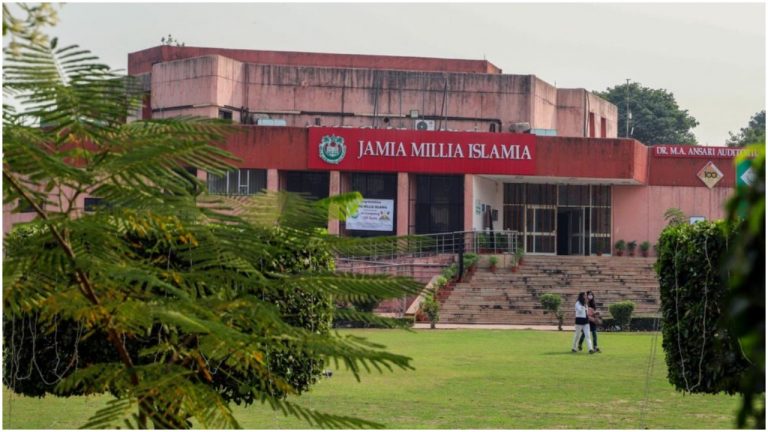
Six research scholars from the controversial university Jamia Millia Islamia (JMI) have been selected by the Modi government for the coveted Prime Minister Research Fellowship (PMRF) under the lateral entry scheme of the December 2020 drive.

In a statement, the Jamia Millia Islamia (JMI) University said that the Modi government has selected six students – Fozia Tabasum, Momina, Azra Malik, Firoz Khan, Aaliya Taiyab and Ashi Saif under the PMRF scheme. These students come from different departments, including Civil Engineering, Electrical Engineering, Centre for Nanoscience and Nanotechnology and Centre for Interdisciplinary Research in Basic Sciences, the varsity said.

Expressing happiness over the selection of six students, JMI Vice Chancellor Najma Akhtar said that five out of the six research scholars are girl students. He said the selection shows how well they are doing in research.

“I hope this would inspire other students, particularly girl students of the university, to do well in science and research. JMI stands for excellence and strives hard to provide its students with every possible support to achieve great heights,” the Vice-Chancellor said. He also appreciated the efforts of the coordinator PMRF, JMI professor Abdul Quaiyum Ansari for the “great achievement”.

Under the PMRF scheme, the six researchers from JMI will be individually getting a per month fellowship of Rs.70,000 for the first two years, Rs.75,000 for the third year, Rs.80,000 for the fourth and fifth year, respectively.

In addition to the monthly fellowship, each fellow will also get a research grant of Rs.2 lakh per year, i.e., a total of Rs.10 lakh for five years under the PMRF.

Earlier in May 2020, two students from JMI – Marya Khan and Abgeena Shabir, both from the Centre for Nanoscience and Nanotechnology (CNN), were selected for the fellowship.

Prime Minister’s Research Fellows (PMRF) Scheme

In order to attract meritorious students into research, the Government of India, in 2018, launched Prime Minister’s Research Fellows (PMRF) Scheme, which offers direct admission to such students in the PhD programmes in IITs, IISERs and IISc.

The scheme aims to attract the talent pool of the country to doctoral (PhD) programmes for carrying out research in cutting-edge science and technology domains, focusing on national priorities.

The institutes which can offer PMRF include all the IITs, all the IISERs, the Indian Institute of Science, Bengaluru and some of the top Central Universities/NITs that offer science and/or technology degrees.

Delhi records the highest Covid death rate in May at 2.5%

Delhi has reported the highest percentage of Covid-19 related deaths in May. The case fatality ratio (CFR) during the first three weeks of the month until May 22 stands at 2.58%. As of Saturday, the state has reported 2,65,886 cases and 6,866 have lost their lives to Covid-19 related complications.

It has to be noted that the CFR in May is more than double the fatality rate in the previous three weeks. Delhi’s overall CFR is 1.63% that makes May 2021 the deadliest month for the National Capital. Notably, the national CFR has also increased in May and stands at 1.17%, which is significantly higher than the previous three weeks from April 10 to April 30.

Delhi reported maximum deaths on May 3 (448). Source: covid19india.org

In May, India has reported 87,460 deaths so far. Compared to the previous three weeks, it is a 92% rise as there were 43,258 deaths between April 10 and April 30. The cases during that period also saw an increase of around 20%. Between April 10 to April 30, around 59.5 lakh cases were reported in India, while till May 22, India has already reported 7368650 cases.

Punjab and Uttarakhand, following Delhi’s lead

Punjab is standing at the second position in terms of the fatality rate with 2.46%. During the previous three weeks, the death rate stood at 1.56% in Punjab.

Punjab reported maximum deaths on May 18 (231). Source: covid19india.org

Uttarakhand has recorded the third highest CFR till May 22 that stands at 2.34%. In the previous three weeks, the death rate was 1.18%. The overall death rate of Uttarakhand stands at 1.85%. After Uttarakhand, Jharkhand has reported 2.24%, Goa stands at 2.17%, and Maharashtra reported a 1.85% death rate.

Though the state of Maharashtra has reported the highest number of deaths in May at 17,779 deaths till Saturday, due to its higher positive ratio, the CFR is lower than other states. Maharashtra had reported a CFR of 0.87% on April 10-30 period. The overall CFR of the state is 1.57%. After Maharashtra, the highest number of deaths were reported by Karnataka in May at 9200 fatalities till May 22. However, the CFR of the state stands at 1.04%.

CFR in some smaller contributing states is higher

The CFR rate in states and UTs including Andaman and Nicobar Islands, Nagaland, Manipur and Meghalaya were 3.3%, 2.8%, 2.3% and 2.2% but the total number of deaths were less than 500 in these states since the beginning of the pandemic, making them smaller contributors to the national tally of CFR.

Odisha has the lowest CFR in May

The lowest CFR Rate of states with overall more than 1,000 deaths includes Odisha that last the lowest CFR in May at 0.17%. Kerala, though being hit hard by the second wave, the CFR stands low at 0.23%. Andhra Pradesh is at 0.43%, West Bengal 0.68%, Telangana 0.73%, Bihar 0.84% and Madhya Pradesh and Tamil Nadu at 0.92% CFR in May.

Covid-19 in India

According to the data provided by the Ministry of Health and Family Welfare, India reported 2,40,897 cases on May 22. 3,55,138 people recovered, and 3,739 patients lost their lives to Covid-19 related complications. The fatality rate is considerably higher though the number of cases reported per day and recovery rate is higher than before. Experts suggest that there is a lag of two weeks that is normally seen between trends in death compared to the number of cases. Thus, it may take another two weeks for the national fatality rate to come down.

Rajasthan: 442 patients on ventilator admitted in RUHS Jaipur die in just 20 days as machines not regularly cleaned, maintained

Jaipur’s largest state-run Covid-10 facility RUHS CMS Hospital recorded 442 deaths of patients on ventilator support in just 20 days as per a Dainik Bhaskar report. The main reason cited for these deaths is not cleaning the endotracheal tube by the hospital staff which resulted in infections. 

The endotracheal tube (a flexible plastic tube that is placed through the mouth into the windpipe to help a patient breathe) attached to critically ill patients on a ventilator needs to be cleaned 5-6 times a day. However, the tube was being cleaned only thrice in two days by the hospital staff which resulted in Black Fungus and other bacterial infections to already critical patients. 

As per the report, the cleaning of the tube takes not more than 2-3 minutes yet the process was not being conducted by the hospital putting at risk the lives of several patients. 

Patients reveal the mismanagement by the hospital staff

Rohitash Jat whose relative has been admitted to the hospital informed that his relative has been on respiratory support since two days. However, he said that the doctors come for a visit only in the morning and not once has the pipe been cleaned by the hospital staff in two days.

A Sumant Singh whose brother-in-law has been on a ventilator since 48 hours also informed the same. 

Satyaprakash whose father has been admitted in the ICU and on ventilator said that the hospital staff have asked the family members to call them when needed since they are preoccupied with work.

Experts emphasize on regular monitoring

Dr Nagendra Sharma, RUHS’s board member informed that it is imperative to check patients on ventilators every half an hour. Fear of anaerobic bacterial infection, black fungus, multi-drug resistant bacterial infection lingers if the tube is not cleaned regularly, Dr Sharma informed. 

What do the studies suggest?

As per a study, dirt in the tube can result in chest infections which can prove fatal. The mucus has to be cleaned from the tracheostomy tube through suctioning every 3-4 hours. 

Jaipur hospitals facing unprecedented load

As per a May 05 report of The Hindu, the RUHS Hospital was full with patients which forced the hospital administration to install beds in corridors from the ground to the eighth floors of the ward buildings. The 442 oxygen beds and 153 ICU beds with ventilators of the hospital were fully occupied.

The Medical & Health Department had asked the hospital to shift the less critical patients to the Sawai Man Singh (SMS) Government Hospital, where the beds were being reserved, however, the latter refused to admit new patients citing the absence of sufficient medical oxygen. 

Earlier, multiple staff members at RUHS hospital were arrested for taking bribes in exchange of providing beds.

Working ventilators dumped as ‘faulty’

We had earlier reported on how in Congress-ruled Rajasthan, 1,500 ventilators received under the PM CARES Fund are lying unused and unopened. These ventilators were received over ten months back. 

Another Dainik Bhaskar report revealed that of these 1,500 ventilators, 230 are faulty but even amid the raging Chinese coronavirus pandemic, these ventilators have not been repaired and put to use.

The report suggested that in Jodhpur, of the 100 ventilators received under PM CARES Fund, not a single one was put to use.

After similar incidents were reported from Punjab and Jharkhand, the Central Government in a letter had highlighted how some states have been mismanaging the ventilators allocated to them.

The Union Government said that while the manufactures will supply the ventilators and demonstrate their proper usage, hospitals also need to take some measures that include “training of the user staff of hospitals, provide them with manuals and audio-visual/online training for guarding against any information gaps in the use of ventilators” and “ensure robust and prompt follow-up of complaints received from hospitals/States in the WhatsApp groups, email, telephonic calls and through toll-free numbers already communicated to the States/UTs.”

‘Heat of the moment’: Chhattisgarh bureaucrat claims after video of him misbehaving with a youth over lockdown violations goes viral

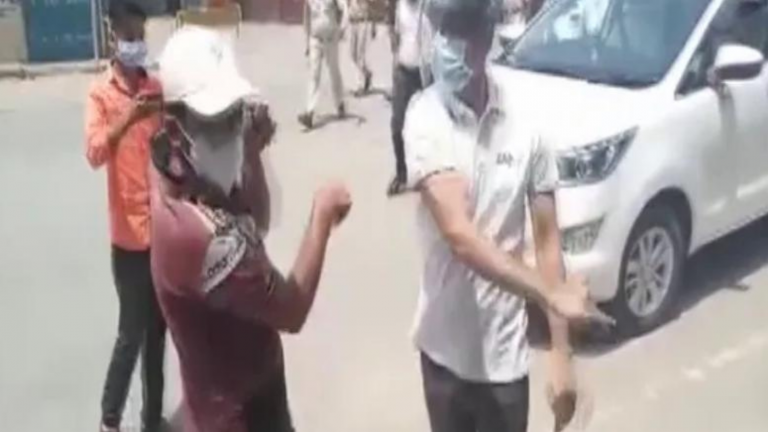
The Chhattisgarh IAS officer Ranbir Sharma of Surajpur district apologized on Saturday for slapping a man and smashing his phone on the ground for violating Covid-19 protocols. The officer released a video apologizing for his behavior and citing the reason upon receiving a backlash from netizens after his video misbehaving with the man went viral.

Collector Ranbir Sharma in his video statement claimed that the boy misbehaved with the police. He said, “The boy first said he is going for vaccination, however, he showed a receipt which wasn’t related to vaccination. He then said he is going to meet his grandmother. I slapped him in the heat of the moment.”

In another statement that is being circulated by the Chhattisgarh government to media personnel as damage control, Sharma apologizing for his behavior said, “I never had any intention to disrespect or belittle the person in the video.”

Further justifying his act, he said, “In this pandemic situation, district Surajpur along with the entire Chhattisgarh state has been facing the irreparable loss of lives. We all employees of the state government are striving hard to tackle this problem.”

Statement being circulated. Image Source: Twitter

The netizens enraged by his irresponsible behavior demanded his suspension. NCPCR Chairperson Priyank Kanoongo has also taken cognisance of the matter as the boy was claimed to be just 13-years-old.

However, Sharma denying this allegation informed that the boy is 23-years-old and alleged, “He was riding a bike and was overspeeding. The man also misbehaved with officials.”

IAS officer Ranbir Sharma misbehaved with the boy

In the video that has now gone viral on social media, the boy can be seen showing some paper to the officer and something on his mobile phone. Soon after the officer snatched the phone from the boy’s hand and smashed it on the ground. 

He then slapped the boy and instructed the police personnel posted at the site to hit him with sticks. Sharma was heard instructing, “maaro ise (hit him).”

Bribe case against IAS Ranbir Sharma

Ranbir Sharma, a 2012 batch Indian Administrative Service officer was arrested for taking a bribe of Rs 10,000 from a revenue officer in 2015.

District Collector Ranbir Sharma removed

Chhattisgarh Chief Minister Bhupesh Baghel on Sunday took to Twitter to inform that he has instructed Ranbir Sharma be removed from his post.

He said that such an act of misbehaving with someone is unacceptable and instructions have been given to remove him with immediate effect.

Note: The report has been updated to reflect latest changes.