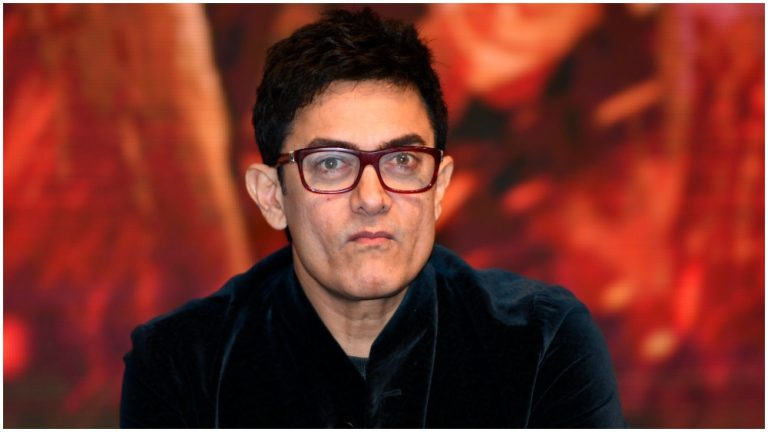
The Aamir Khan of today is a celebrated actor, but back in the day, Aamir Khan had quite a notorious reputation of being a ‘prankster’ and spitting on his female co-stars. One famous incident is when Aamir Khan spat in the hands of Madhuri Dixit under the guise of reading her fortune through palm reading. This happened on the sets of the 1990 movie Dil. This “prank” infuriated Madhuri Dixit, who reportedly chased after Aamir with a hockey stick.
This is just one of many times Aamir Khan has performed this prank. In 2016, at the Jio MAMI Mumbai Film Festival on a reunion panel for the 1992 movie Jo Jeeta Wohi Sikander, Director Farah Khan revealed that “Aamir used to do this to everyone and he still doing this …he is like ‘Let me read your hand’. And then he would spit on it…”
In response, Aamir Khan, who was part of the same panel, replied, “Maine jis heroine ke haath par thukha hai wo number one ban gayi,” loosely translating to, “Whichever heroine I spat in the palm of, became a number one heroine.”
Bollywood actress Pooja Bedi, who was also in attendance, said, “I’ll tell my daughter Aalia that you have to go and meet Aamir uncle he needs to spit on your hand.”
However, not all actresses have taken lightly to Aamir Khan’s spitting prank. On the sets of the 1997 movie Ishq, Aamir Khan asked for Juhi Chawla’s hand in front of many crew members. When Juhi did so, Aamir Khan spat in her hand and ran away, in full view of the crew members.
This infuriated Juhi Chawla to the degree that she did not attend the shoot the next day. Aamir Khan and Juhi Chawla stopped talking for years over the spitting incident but eventually made up many years later.
The Suez Canal, one of the most important shipping routes in the world, is currently closed after a massive container ran aground, blocking the canal completely. The gigantic container ship that goes by the name Ever Given, owned by shipping company Evergreen, got stuck on March 23 after it faced massive wind which diverted it from its route in the narrow canal.
Tug boats of the Suez canal have not been able to move the ship at all, as both its bow and the stern are stuck in the sand on both banks of the canal. The vessel may take weeks to clear, and during that time, the vessels that got stuck in the route will face the worst traffic jam of their lifetime. Even though the Suez Canal system has dual canals on the northern side and large lakes in the middle portion, the incident happened on the southern end, where there is only one canal.
Container Ship Ever Given stuck at Suez Canal. Image: QZ
But this is not the first time ships got stuck in a “traffic jam” at Suez Canal. Once the canal was blocked for as much as eight long years, starting from 1967. To understand the situation, one needs to understand the geography of the Suez Canal. On the map, the narrow canal can be seen that that passes between two landmasses.
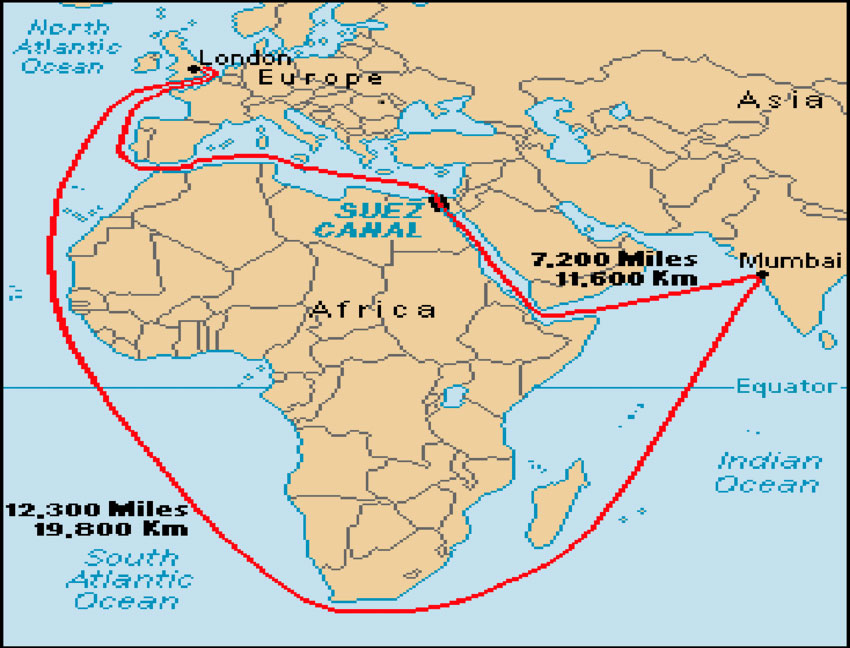
The Canal passageway was opened in 1869. It is an artificial sea-level waterway in Egypt that connects the Mediterranean Sea to the Read Sea en-route to the Indian Ocean. Before the Canal was operational, the ships had to cross the African continent to reach the Indian Ocean for trade which would take weeks. After the Canal opened, the distance got reduced as it opened a direct route for the ships between Europe, Asia and the lands around the Indian and Western Pacific Oceans.
Sanghro, Rafi & Chandio, Jalil & Soomro, Siraj. (2018). The Special Relationship: The US, Great Britain and Egypt over the Suez Canal. Journal of History Culture and Art Research. 7. 127. 10.7596/taksad.v7i3.1614.
With the Canal, the distance between the Arabian Sea to London was reduced by approximately 8900 Km. Since it’s opening, it has been at the centre of the conflict due to rivalry between the nations around it. The Canal holds utmost importance in the marine traffic since its opening as it is used by the ships involved in international trade.
The war of 1967 that led to the 8-year-long traffic Jam
In 1967, the six-day war broke between Israel and the Arab countries that turned the Canal into a war zone. At that time, 14 cargo ships were crossing through the Canal. The Egyptian authorities instructed the crew members of the ships to anchor in the widest part of the Canal known as the Great Bitter Lake. The war ended in six days, but the geographical condition around the Canal was changed in a way they did not find any route to get out of the Canal.
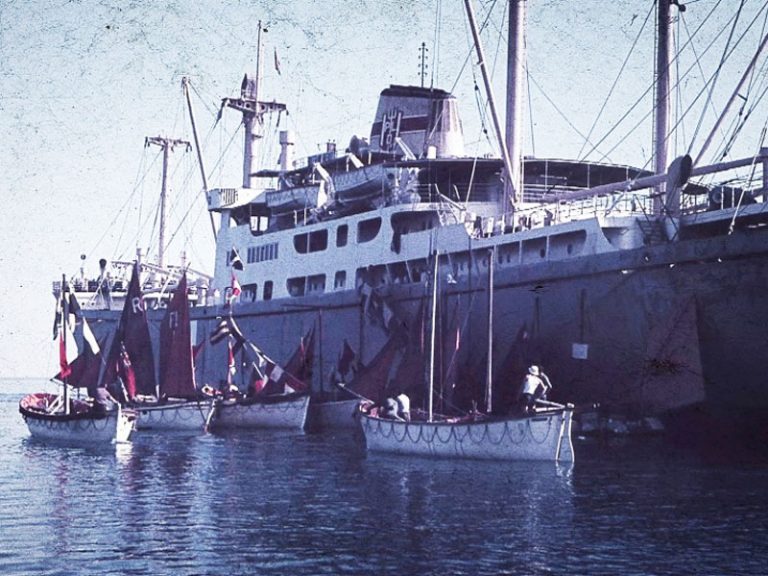
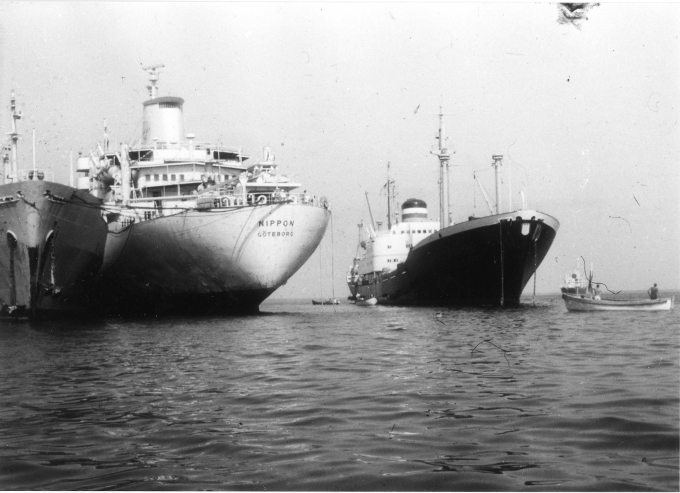
The 14 ships that got stuck in the Suez Canal belonged to Bulgaria, Czechoslovakia, France, Poland, Sweden, West Germany, the UK, and the US. Codenamed as the Yellow Fleet, the group of ships acquired the name because of the desert sand that eventually covered the ships as they had to sit at one place in the Canal for years.
After the six-day war, Israel won control of the east bank of the Canal. Egypt managed to retain the west bank. To ensure Israel could not use the Canal, Egypt blocked the Canal on both ends using debris, old vessels and landmines. The fleet of 14 ships was stuck just because they were in the wrong place at the wrong time. For the international trade, it turned out to be catastrophic as they had to resume the old pathway around Africa increasing the shipping cost by several folds.
Companies rotated crew members to protect the ships
Three months after staying in the Canal, the original crew members were allowed to head home, but they had to leave the ships behind. However, the companies that owned the ships were not comfortable with leaving ships alone and unmanned. According to Cath Senker, author of the book Stranded in the Six-Day War, the logical thing for the companies to do was to keep people there to protect the valuable cargo on the ships. Thus the companies sent relief crews that cycled in and out to protect the ships. During their stay, these crew members formed their own international community, which was named the Great Bitter Lake Association.
14 ships were caught up in a proxy war of the larger political conflict. Image: hapag-lloyd
The crew members of the ships divided the duties for smooth management of their “country”. The Polish crew members served at the post office. The British hosted soccer matches. One Ship served as a movie theatre. Another ship served as a hospital. On Sundays, The German Ship served as Church. Though it was called a Church, according to Captain Paul, one of the crew members, “it was more of a beer party.”
The Olympics and the handmade stamps
It was essential for the members of the Great Bitter Lake Association to keep themselves busy. So what they do other than having parties, dance events and soccer games?
The soccer players of Yellow Fleet Image: express.co.uk
Well, they had their own version of the 1968 Olympics. The Polish crew members won the games. They even created their own handmade postage stamps!
Olympics at Yellow Fleet. Image: express.co.uk
The re-opening of the Suez Canal
Slowly, the shipping companies reduced the number of crew members for the ships. As per the records, a total of 3,000 crew members toured on board at one point or another.
In 1973, another war broke between Israel and Egypt. This time, it was Egypt that launched a surprise attack on Israel. The war caused severe damage on both ends by the end of the week. Finally, the conflict came to an end with the cease-fire agreement. They started to withdraw the troops as per the treaty across the Suez Canal borders.
The prominent nations worldwide started to build external pressure on the Egyptian government to re-open the Canal. Finally, Egypt started to clear the heaps of debris, landmines and old vessels to open the Canal, but it took them two years to clear it. On June 5, 1975, the Canal was re-opened.
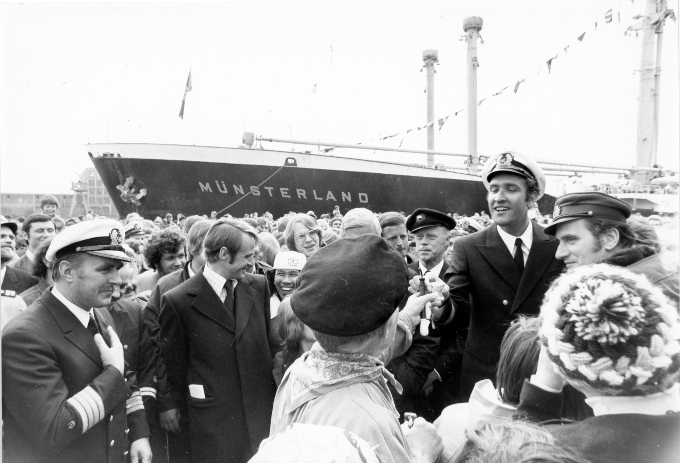
The “Münsterland” after her arrival from the longest known journey in shipping history. Image: hapag-lloyd
The majority of the stranded ships, however, could not get out on their own. They had to be towed. Only German Ships Münsterland and Nordwind were able to get out of the Canal on their own.
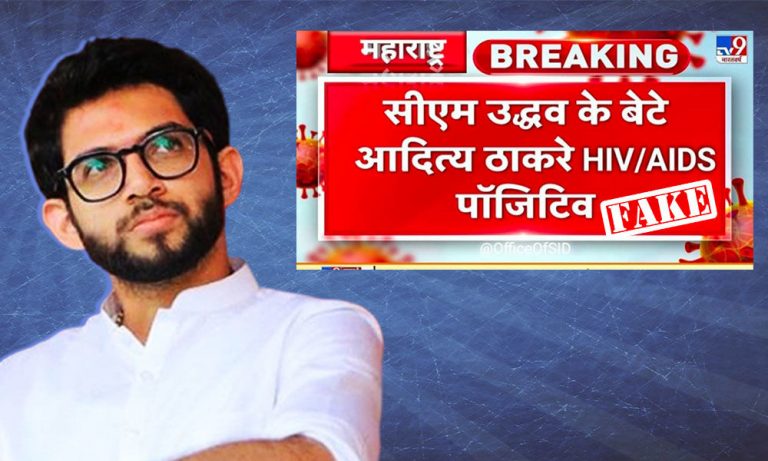
Today, social media was rife with pictures of a news clip of TV9 Bharatvarsh claiming that Maharashtra cabinet minister and CM Uddhav Thackeray’s son Aaditya Thackeray has been tested positive for ‘HIV/AIDS’.
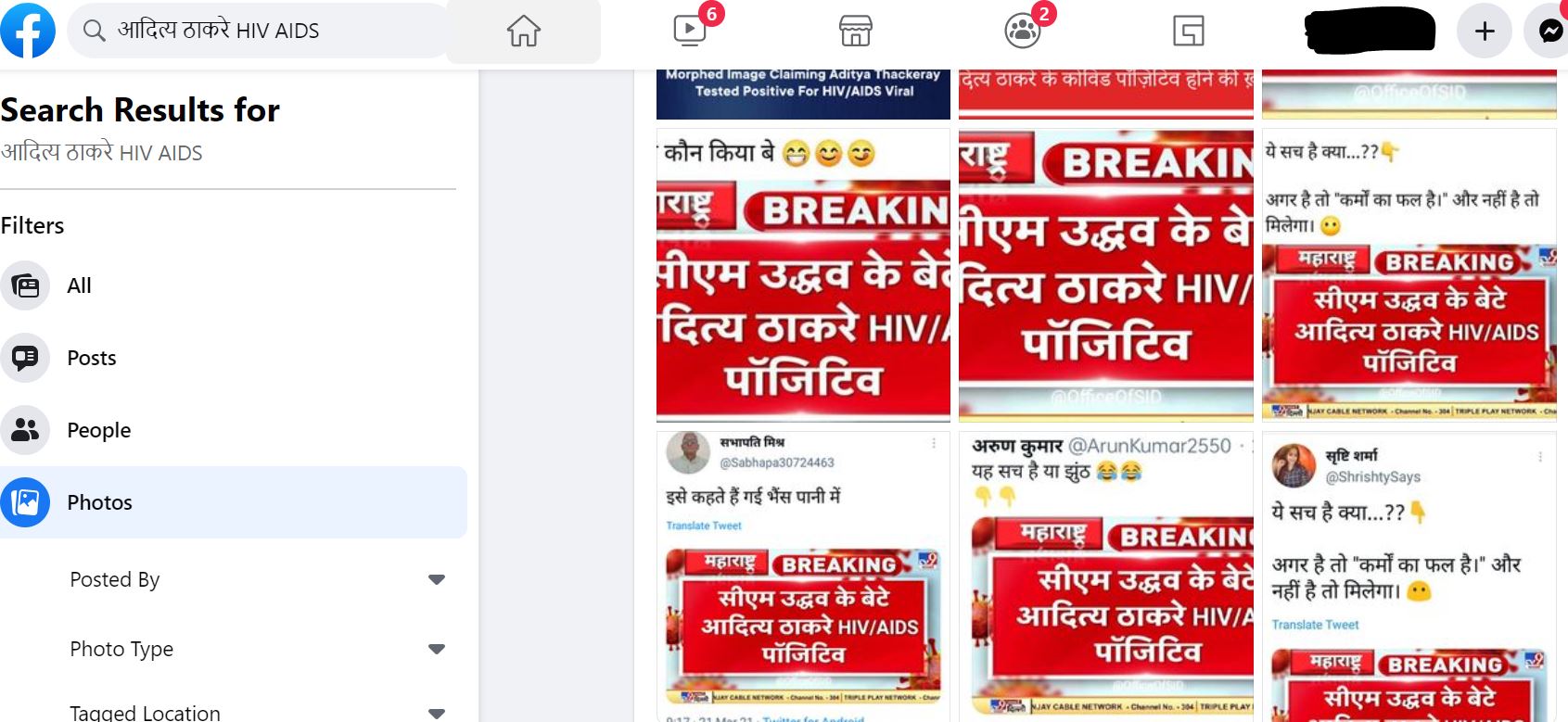
The screengrab went viral on Facebook, leaving social media users to speculate whether actually the Maharashtra cabinet minister has been infected with the sexually transmitted disease.
The same screenshot of a Hindi news channel TV9 Bharatvarsh’s news graphic was widely shared on Twitter.
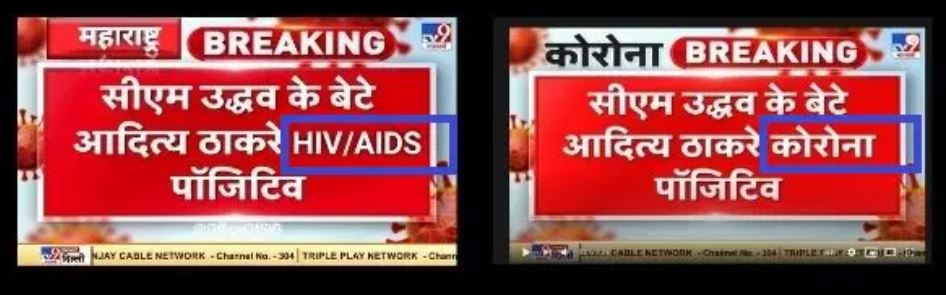
This news, however, panned out to be untrue. The fact-checking website Fact Hunt reported that the viral screenshot of TV9 Bharatvarsh that is being widely shared on social media platforms was morphed. The news bulletin was edited to claim that the Maharastra cabinet minister is HIV positive.
Actually, the original news graphic reports on Aaditya Thackeray testing positive for COVID-19 after he had announced in a tweet. Thackeray had tweeted on March 20, 2021, stating that he had tested positive for COVID-19.
Following this news, TV9 Bharatvarsh uploaded a video on its YouTube channel, in which it reported that Aaditya Thackeray had been tested positive for ‘Corona’.
Some social media user, however, carefully edited the original screenshot, and replaced the word ‘corona’ in Hindi with ‘HIV/AIDS’ in English.
According to Fact Hunt, the viral screengrab shows the watermark of ‘@OfficeofSid’. This Twitter handle has been temporarily taken down by Twitter for violating its media policy.
This news of Aaditya Thackeray being HIV positive sent social media users in a tizzy, especially due to the stigma and the misconceptions that surround the sexually transmitted infection. More than the disease-related complications, the big problem for these HIV-positive people is the stigma attached to the disease. People living with HIV often face discrimination, violent attacks, harassment, rejection by families, spouses and communities. They are often refused medical treatment and in some cases even denied the last rites before they die. As a result, many keep their status secret.
If HIV infection advances to AIDS, the body becomes prone to opportunistic infections. This puts people at an increased risk of many infections, including a herpes virus called cytomegalovirus. It can cause problems with eyes, lungs, and digestive tract.
Unlike the common perception, HIV is not transmitted by touch or through the air. HIV can only be transmitted through specific bodily fluids so you can’t get HIV from touching someone, hugging them or for that matter shaking their hand. Until now, there is no cure for HIV, although antiretroviral treatment can control the virus, meaning that people with HIV can live long and healthy lives.
The National AIDS Control Organisation (NACO) has been successfully running the National Helpline to help HIV/AIDS patients or to answer any sort of query regarding the disease since 1st December 2014. The helpline caters to all the population of India and is reachable from any mobile/landline number through a short code toll-free number 1097.
Aaditya Thackeray tests Coronavirus positive
On March 20, Aaditya Thackeray had taken to Twitter to inform that he had been tested positive for the coronavirus and urged people who came in contact with him to get themselves tested.
“On having mild symptoms of COVID, I had myself tested and I am COVID positive. I request everyone who came in contact with me to get themselves tested. I urge everyone to realise that it is extremely important to not let your guard down. Please follow COVID protocols & stay safe”, tweeted the Maharashtra cabinet minister.
Yesterday it was reported that Aaditya Thackeray’s mother and chief minister Uddhav Thackeray’s wife Rashmi Thackeray too tested positive for coronavirus. “Her COVID-19 test came out positive on Monday night. She has been quarantined at `Varsha”, the official residence of the chief minister,” said an official.
Sadly, the coronavirus cases in India, which were on a decline until January 2021, has been rising again sharply with Maharashtra, Punjab and Kerala contributing a little over 76% of the new cases.
Maharashtra reported as many as 31,855 new coronavirus cases on Wednesday, its highest ever single-day spike since the outbreak of the pandemic last year. This took the state’s overall caseload to 25,64,881.
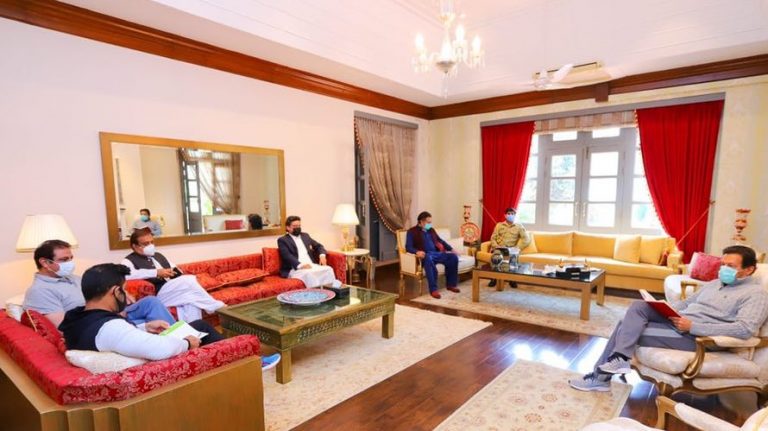
Pakistan Prime Minister Imran Khan on Thursday held an in-person meeting in a closed room with a bunch of people from Pakistani media. This was informed by Pakistan’s Federal Minister of Information & Broadcasting Shibli Faraz. Pakistan PM Imran Khan was recently tested positive for Chinese coronavirus and is currently undergoing treatment.
Khan and his wife, Bushra Bibi have both tested positive for the Chinese virus and are supposed to be in quarantine. Which means, they are not supposed to be meeting people in order to arrest the spread of virus. However, Khan, without any concern for health of others, held an indoor meeting with others, thereby increasing their risk to getting infected.
Khan was trolled by Netizens, mostly Pakistani individuals, who believed Khan’s act was irresponsible.
Meeting kr bhy li hai tu why release the images?
Horrible horrible messaging in a country where people already refuse to wear a mask and take covid seriously
Some were even upset that even though they flouted the norms of avoiding people when infected, they could have at least avoided sharing image. Since Pakistani citizens also do not normally wear masks and take precautionary measures.
Meeting kr bhy li hai tu why release the images?
Horrible horrible messaging in a country where people already refuse to wear a mask and take covid seriously
One Twitter user explained how responsible leaders behave at the time of pandemic. She shared image of British PM Boris Johnson holding a virtual meeting. While it was not clear whether the meeting was recent, but Johnson had tested positive for Chinese virus last year and has since recovered. But as precautionary measure, most leaders are still continuing to hold meeting virtually.
sir video link paar aacha pose nahi ayata for social media youthias moral boosting
When one Twitter user pointed out this is bad optics, other joked how Khan’s pose does not come nicely in online meetings and hence such physical meeting was necessary.
Information minister ka yeh haal hai is aik tasweer sey kitni bad PR miley gi. Information ministry Allah k hawalay hai hamari.
Of course, there were others in Pakistan who thought such in-person meetings are important because information security is apparently more important than lives of people.
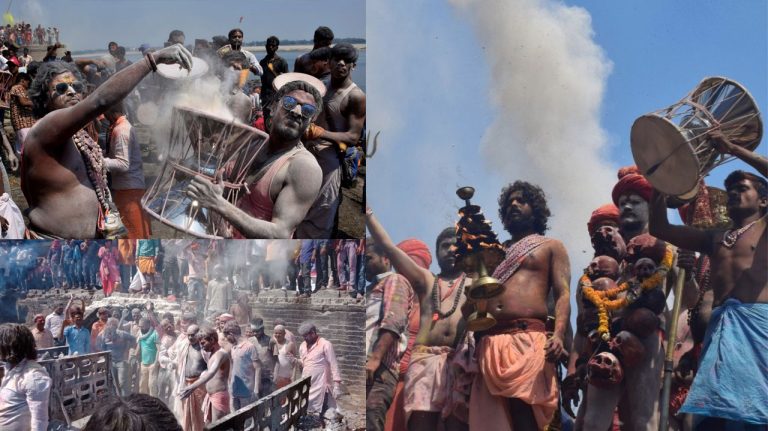
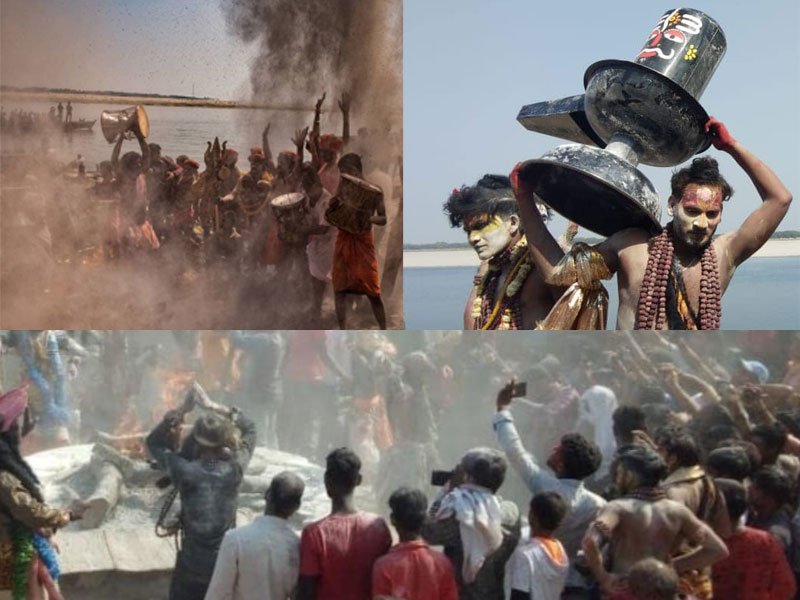
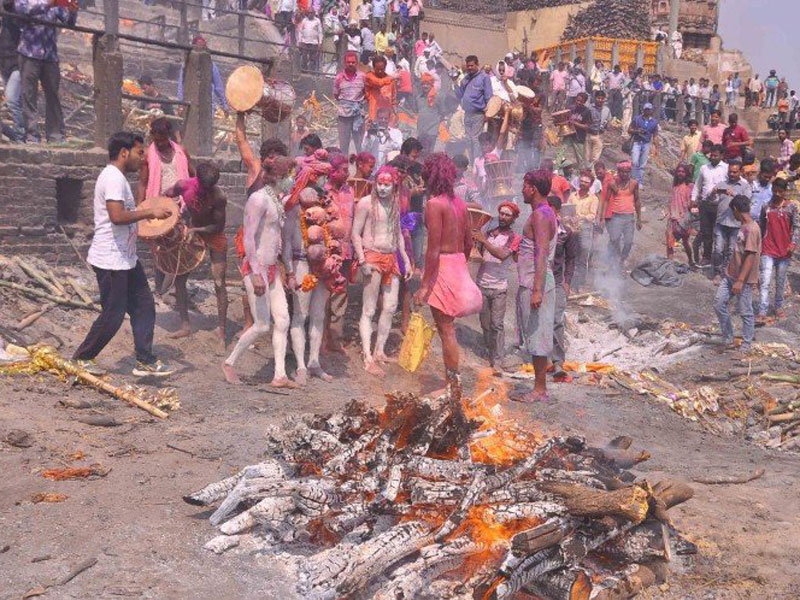
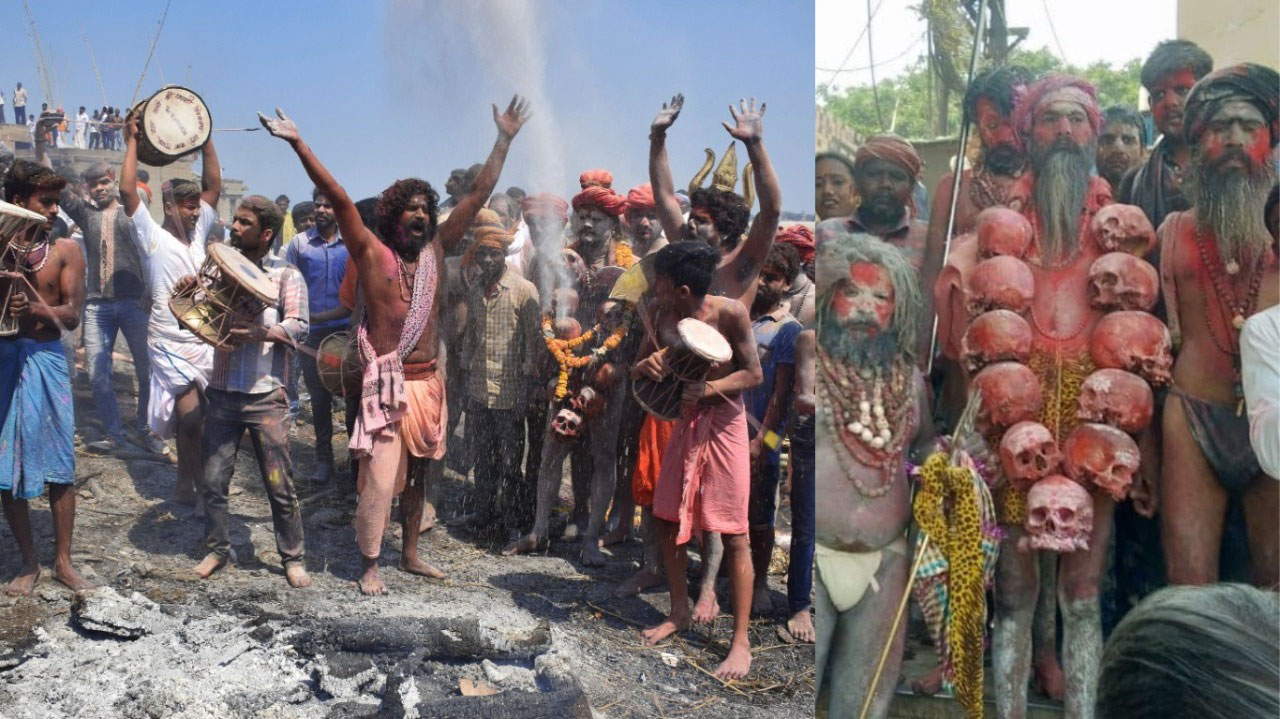
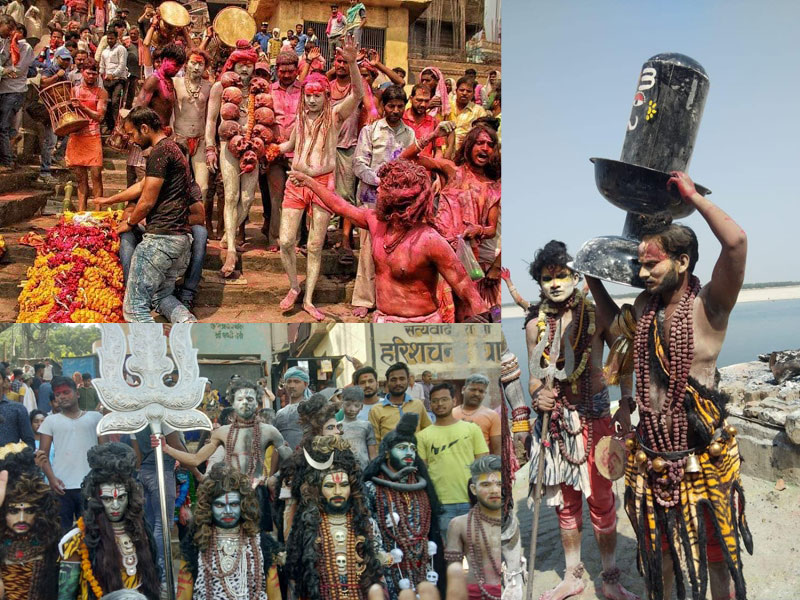
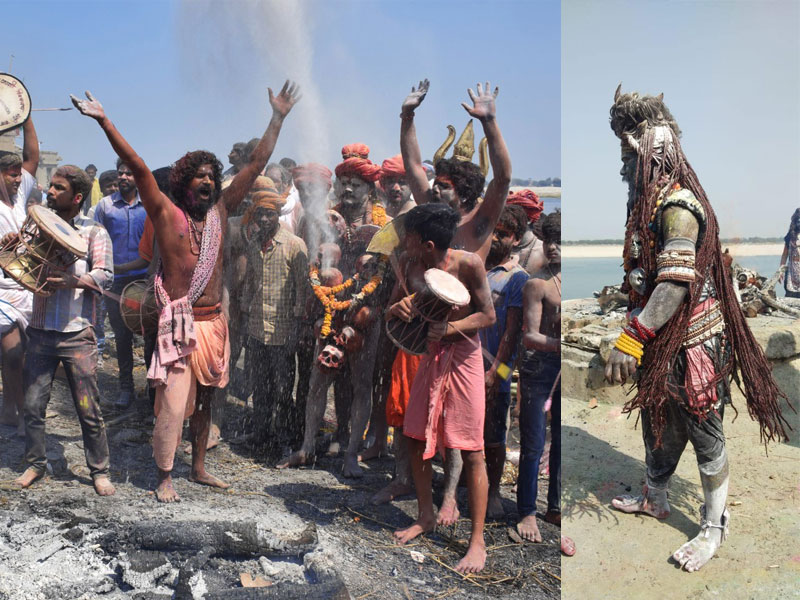
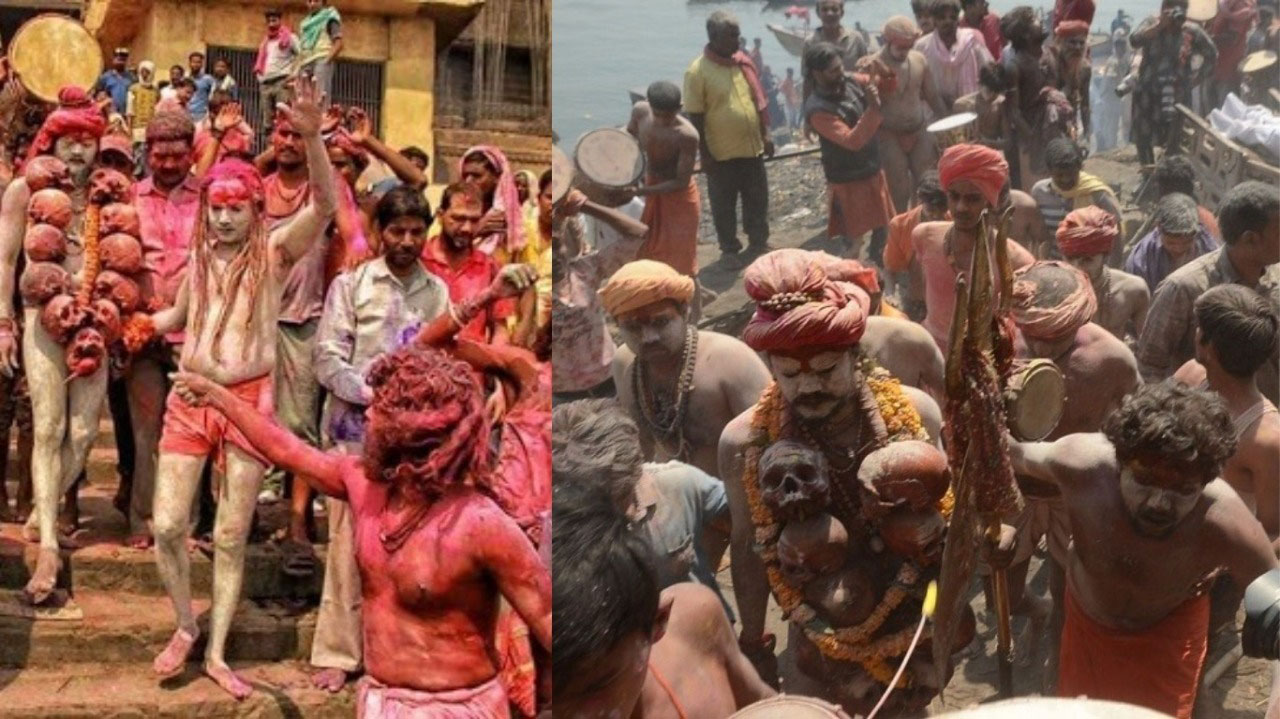
India is full of ancient rituals that can make anyone wonder how spiritual our history was. Bhagwan Shiva’s land Kashi, the oldest city in the world, can take you on a whole new journey every single day. There are so many events in Varanasi that you will not find anywhere else in the world. One such event is Chita-Bhasm Holi, in which the participants, often called “Bholenath ke Gan”, play Holi with the ashes collected from human crematory grounds at Manikarnika Ghat. Strange it may sound, but the festival creates an aura in the city that can take you on a divine journey.
Shiva, the God of Destruction, teaches to celebrate death as a festival. When people play with colours and ashes together, it creates a mesmerising scene at the Ghat.
Chita-Bhasm Holi is celebrated on the second day of Ranghbhari Ekadashi, the eleventh day of the lunar month. It falls on the waxing moon period of Falgun Month as per the Hindu calendar. In 2021, it was celebrated on March 25. The event marks the beginning of Holi celebrations in Kashi. It is believed that Bhagwan Shiv himself participate in the festivities. Hence, the followers of Bhagwan Shiva, Shaiva, Shakta, and Avghad visit Kashi to celebrate this unique festival.
According to legends on this day, Bhagwan Shiva came to Kashi with Mata Parvati and Bhagwan Ganesh after performing the Gauna ceremony. On this day, everyone except Bhoot Pishach and Visible-Invisible spirits, who are Bhagwan Shankar’s followers, welcome them to Kashi.
On the second day of Rangbhari Ekadashi, Bhagwan Shiva plays Bhasm Holi with his devotees. The ashes from the burning dead bodies on Manikarnika Ghat is mixed in the Bhasm.
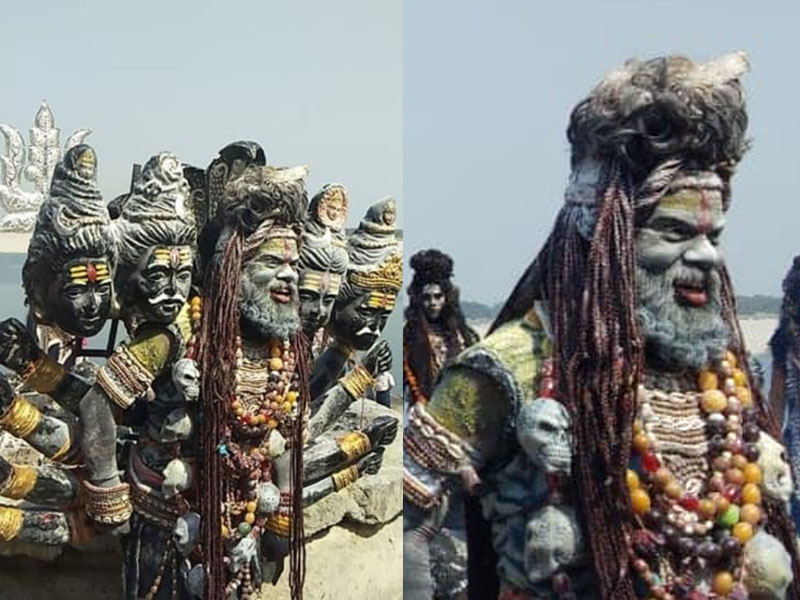
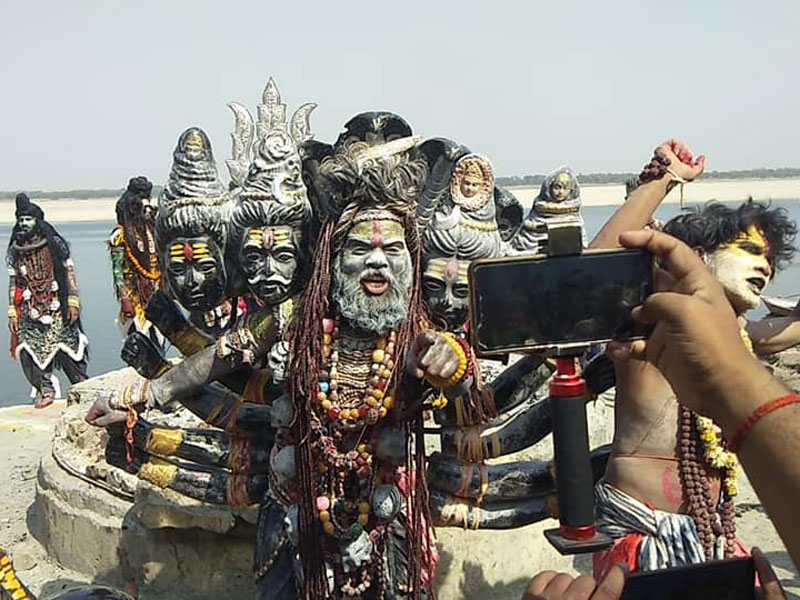
The Ganas of Bhagwan Shiva, who look scary, also participates in the festivities. These are the same Ganas who participated in Bhagwan Shiva and Mata Parvati’s wedding. According to the legends, Mata Parvati’s mother fainted on seeing these Ganas and Aughar form of Shiva. Those Ganas come to Kashi and celebrate Bhasma Holi with Shiva and other devotees.
Some legends say that on this day, Shiva takes the form of Mahashamshan Nath and Mata Parvati takes the form of Mata Mashan Kali. They both celebrate Bhasm Holi with the devotees. Before the festivities can commence, the Shringar ceremony takes place in which Baba Mahashamshan Nath gets ready for the festivities.
According to Padam Vibhushan Pandit Channulal Mishra, the Bhasma Holi of Varanasi has its own importance. While talking about the celebrations, he sung, “खेले मसाने में होरी दिगंबर, खेले मसाने में होरी, भूत पिशाच बटोरी दिगंबर खेले मसाने में होरी…। वह कहते हैं कि लखि सुंदर फागुनी छटा के, मन से रंग-गुलाल हटा के चिता भस्म भर झोरी… दिगंबर खेले मसाने में होरी….।“
During Bhasma Holi, the devotees experience the divine moments filled with ‘raag’ and ‘viraag’. Legends say Bhagwan Shiva comes with a pouch full of ashes and play Holi with his devotees. Shiva feels the satisfaction of being with his devotees and forgets about everything. The presence of the divine powers in Kashi on Bhasma Holi brings peace to everyone’s mind.
When Bhagwan Shiva lands in Kashi and play Holi, it can be described with these beautiful lines. “भूतनाथ की मंगल-होरी, देखि सिहाएं बिरिज के गोरी, धन-धन नाथ अघोरी… दिगंबर खेलैं मसाने में होरी।“
Kashi is the land of Moksha. It is believed that Bhagwan Shiva gives Tarak Manta to his devotees in Kashi.
Thus, death is also celebrated in the city. The devotees play Holi with the ashes of the dead mixed with colours and a wish of happiness and prosperity for everyone.
It may look strange, one may see it as a scary event, but when you join the festivities, when you feel the presence of the divine power, the presence of Bhagwan Shiva right next to you, the fear will go away.
Regular reports on rape cases in Rajasthan have sent shockwaves in the country, questioning the state government’s inactivity to curb crimes against women. Rajasthan is currently plagued with cases of brutal rape including gang rape and cases of sexual violence against women and the eerie silence of the government has made the matter worse. As per a report, Rajasthan recorded a frightening 81% rise in rape cases in 2019 as compared to the previous two years.
The horrifying rape cases in 2021 so far suggest that minors are the biggest victims of sexual violence in the state. Jaskaur Meena, BJP leader from Rajasthan made some shocking revelations in the Parliament proceedings recently. Jaskaur Meena alleged that there are currently 6.14 lakhs cases of violence against women in Rajasthan and 23 such cases are in her own constituency. She added that “There are 12,000 rape cases alone in the State and the government has been silent on the issue”.
Sensing the silence of the government on the issues, some social media users have taken it upon themselves to raise awareness on the increased cases of crime against women. A Twitter user has started to compile all the reports pertaining to sexual abuse and rape cases in Rajasthan, and the trend seems to be catching on. The thread which is just 5 days old has already shared 22 cases of rape and sexual violence, sourced from local media reports.
????????? ???? ???????
I’ll update every new Rape case in Rajasthan here so that people can see how worse the situation is.
More users have taken to social media to raise their voices, but no level of noise is enough to wake the government from their deep slumber. Certainly, while more cases are being reported and investigated to deliver justice, there seems to be no solution to bring about a change in the mindset to curb crime against women, especially minors.
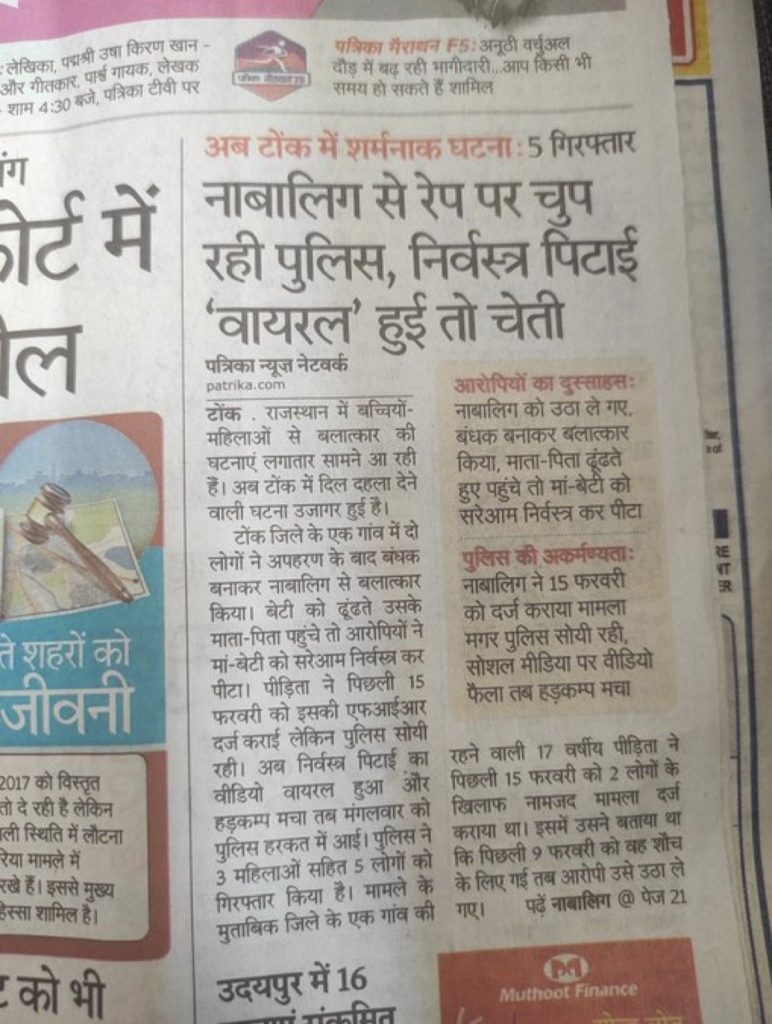
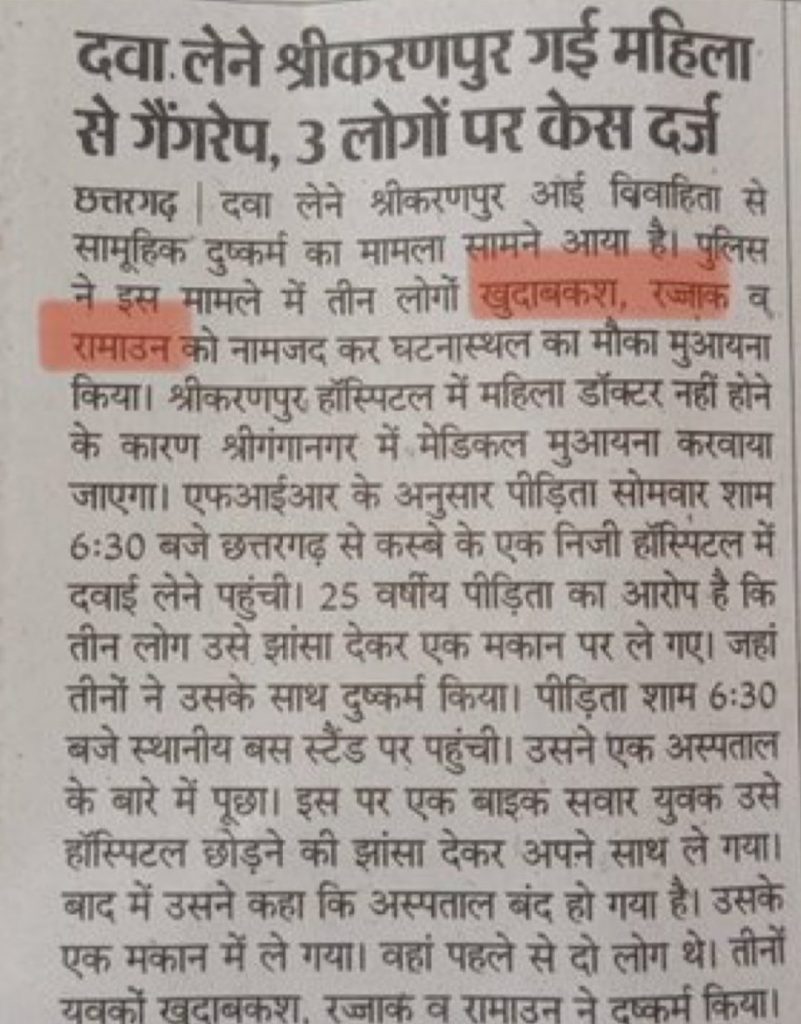
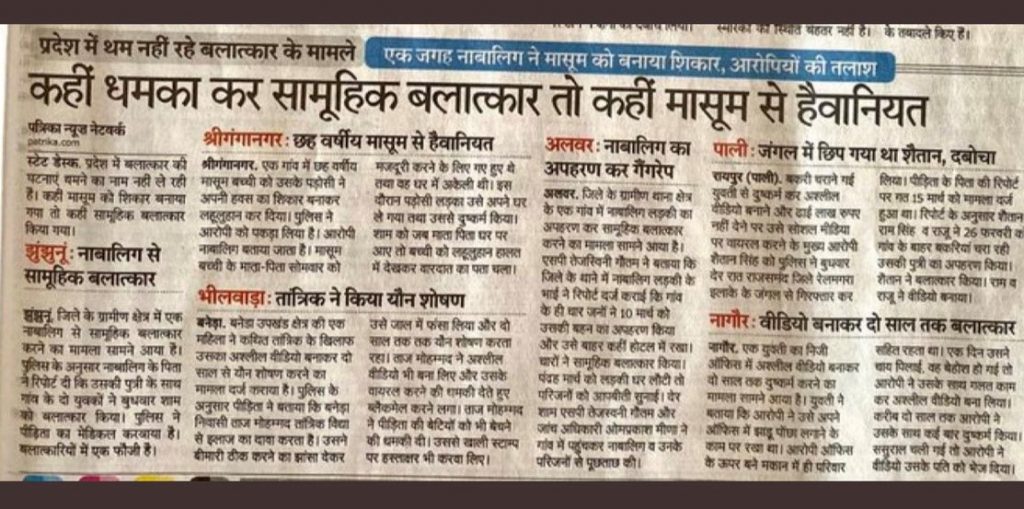
A Patrika report shared by the user on TwitterAnother print media report shared by a Twitter user
Another Patrika report shared by a user raised alarms as it compiled some of the most brutal instances of gang rape and sexual violence against minors in the state. Gang-rape of a minor in Jhunjhunu, sexual abuse of a 6-year old in Sri Ganganagar, kidnapping and gang-rape of a minor in Alwar, Nagaur’s rape case where the perpetrator filmed the act for two years, are all crimes reported that reflect the grim situation in the state.
Patrika report on several cases of sexual violence against women
Rajasthan DGP, when asked by the media about the increased cases of rape in Rajasthan, said that the availability of smartphones for online classes during lockdown might have encouraged the kids to watch sexual content such as porn, and hence parents need to keep an eye on the content consumed by their children using smartphones. This comment did not go down well with the netizens.
Incidents of crime against women are rising.Police is taking action…In Jhunjhunu case,it emerged that accused use to see porn&consume drugs.Due to online classes due to COVID,children now use smartphones,it may be that after classes they indulge in such things: Rajasthan DGP pic.twitter.com/z5elxm28Nr
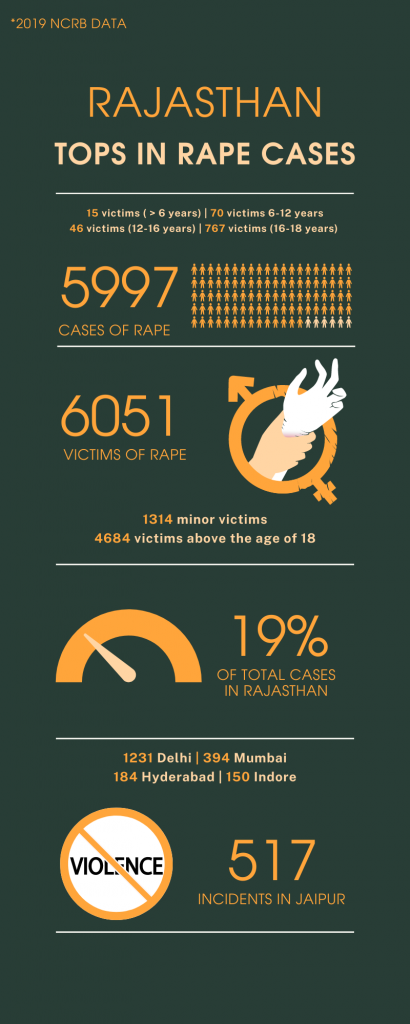
The NCRB 2019 report revealed that Rajasthan tops in rape cases with 19% of country-wide cases reported from the state and 10% of cases coming from just 12 districts.
While there has been constant pressure from the opposition on the current government, there seems to be no formal communication coming from the ruling party regarding the lawlessness in the state.
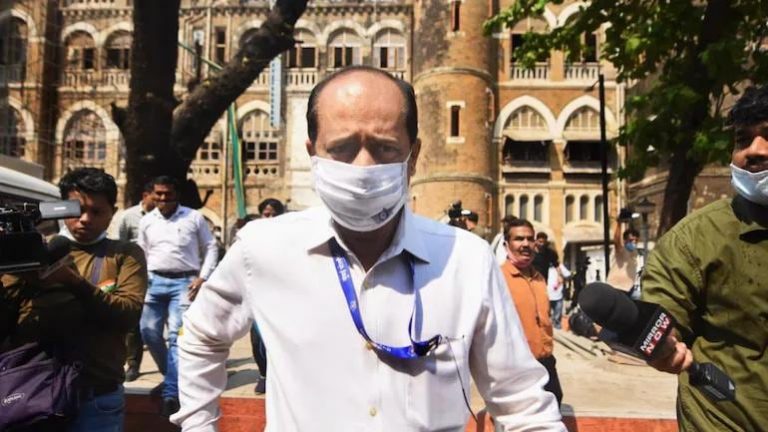
As per a Times Now report, Maharashtra ATS sources have revealed that Mansukh Hiren was administered chloroform and then thrown in the creek from where his body was recovered. The report also says that Hiren was murdered in the presence of Sachin Vaze.
An India Today report suggested that the technical mobile tower and IP evaluation suggested that Sachin Vaze was present in the vehicle when Mansukh Hiren was killed. A post mortem report had revealed that Mansukh Hiren had sustained bruises before he was killed.
Maharashtra ATS: Mansukh Hiren was murdered in a car after being administered chloroform. Sachin Vaze was present in the same car.
Further, the Times Now report claims that soon after the murder of Mansukh Hiren, Sachin Vaze raided a bar in Dongri to evade suspicion. The owner of the bar confirmed that Sachin Vaze raided the bar with the assistance of Dongri police. The team arrived around 11:30 am and left at around 2:00 pm after conducting regular checks. It is also being said that the raid was bogus as no irregularity was found at the bar and the bar was not operational during those hours.
#Exclusive#Breaking | Mansukh Hiren death probe: According to Maharashtra ATS, after the death of Mansukh Hiren, Sachin Vaze raided a bar.
In another explosive CCTV footage accessed by media houses, Mansukh Hiren can be seen meeting Sachin Vaze on February 17 at 08:45 pm on a busy road outside the CST railway station. Hiren can be seen entering the black luxury car which was seized later by the NIA for its alleged connection with Sachin Vaze. Investigating agencies believe that the keys of the Scorpio owned by Mansukh Hiren was handed over to Vaze during this meeting. It is imperative to note that this is the same day when Mansukh Hiren had filed a stolen car complaint with the Vikhroli police station.
#Exclusive | WATCH: CCTV footage accessed by TIMES NOW’s Aruneel Sadadekar where Sachin Vaze can be seen meeting Mansukh Hiren on February 17 at 8:25 PM outside CST railway station. Agencies believe that the Scorpio keys were handed over to Vaze during the meeting. pic.twitter.com/RVH40MQQmg
In what seems to be an essential evidence to establish Sachin Vaze’s link to Ambani bomb-scare, the CCTV footage of his car entering the 5-star hotel and the scans of bags carried by him are out in the media. As per a Republic TV report, the scans confirm that the five bags carried by Vaze had gelatin sticks as well as cash in them.
In a recent update, NIA has been granted extended custody of Sachin Vaze and it is being said that the NIA might initiate a fresh probe in Mansukh Hiren’s death case.
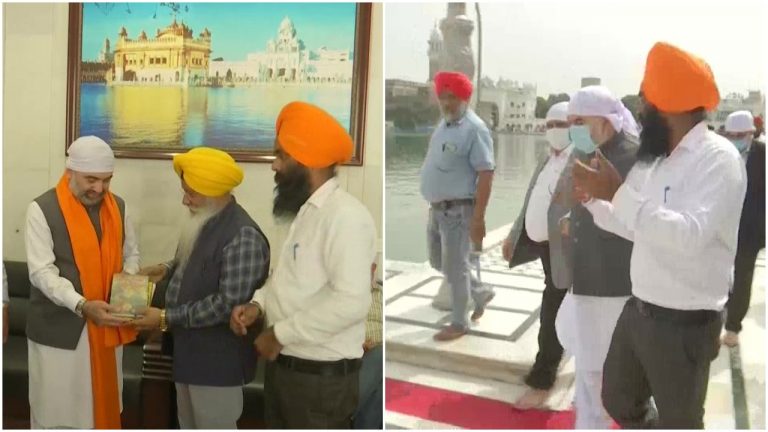
The Pakistan delegation that had arrived in New Delhi on March 22 made a surprise visit to Amritsar’s Golden Temple on Thursday. According to reports, the Pakistan diplomatic team that had arrived in India this week for the annual Indus Water Treaty talks visited Amritsar’s Golden temple.
Pakistan delegation in India for Indus water talks visited Amritsar’s Golden Temple today
“We are hopeful that our dialogue will also continue in the future. It was a wonderful experience to visit the Golden Temple,” said Pakistan’s Indus water commissioner pic.twitter.com/1LjkWn2ODa
On Wednesday, the Permanent Indus Commission’s (PIC) annual meeting of Indus Commissioners from India and Pakistan concluded in New Delhi. The annual PIC had seen officials from both sides present to negotiate the Indus Water Treaty’s (IWT) management goals as mediated by the World Bank.
The two Commissioners meet annually alternately in India and Pakistan, under the terms of the Indus Waters Treaty signed between the two countries in 1960. Last year, the scheduled meeting was called off due to the Covid-19 pandemic. In 2018, the PIC meeting was held in Lahore, Pakistan. PK Saxena, the Indian Commissioner for Indus Waters, headed the delegation.
The main purpose of PIC is to address technical issues related to the implementation of IWT while also implementing a system for information exchange on river use between India and Pakistan.
Interestingly, the visit of Pakistani delegations comes a day after the father of Jugraj Singh, the 21-year-old rioter who hoisted the Khalistani flag on the Red Fort during Republic Day riots, was honoured at an event held inside the Golden Temple.
Republic Day rioter honoured at Amritsar’s Golden Temple
Jugraj Singh hails from Vaan Tara Singh village of Punjab’s Tarn Taran district. He has been booked for rioting and sedition by Delhi Police for Republic Day riots and has since been on the run.
The Golden Temple event organisers included Sanyukt Kisan Morcha representative like BKU (Krantikari) president Surjit Singh Phul, Dal Khalsa president Harpal Singh Cheema, former leader of the Aam Aadmi Party Sukhpal Singh Khaira, Shiromani Akali Dal (Amritsar) general secretary Prof Mohinder Pal Singh, amongst others. They also expressed support for absconding gangster Lakha Sidhana who is wanted by police in the Republic Day riots case. He also carries a bounty of Rs 1 lakh on his head.
The Golden Temple event was organised in memory of the rioter Navreet Singh who was killed when his tractor turned turtle while he was trying to break barricades during Republic Day riots.
Ahead of the 2021 assembly election, the Congress party has fielded a party leader who had organised controversial anti-Hindu ‘Beef festivals’ across Kerala in 2017.
The Congress party has fielded one of their party leaders – Bindhu Krishna, from the Kollam constituency as the joint UDF candidate.
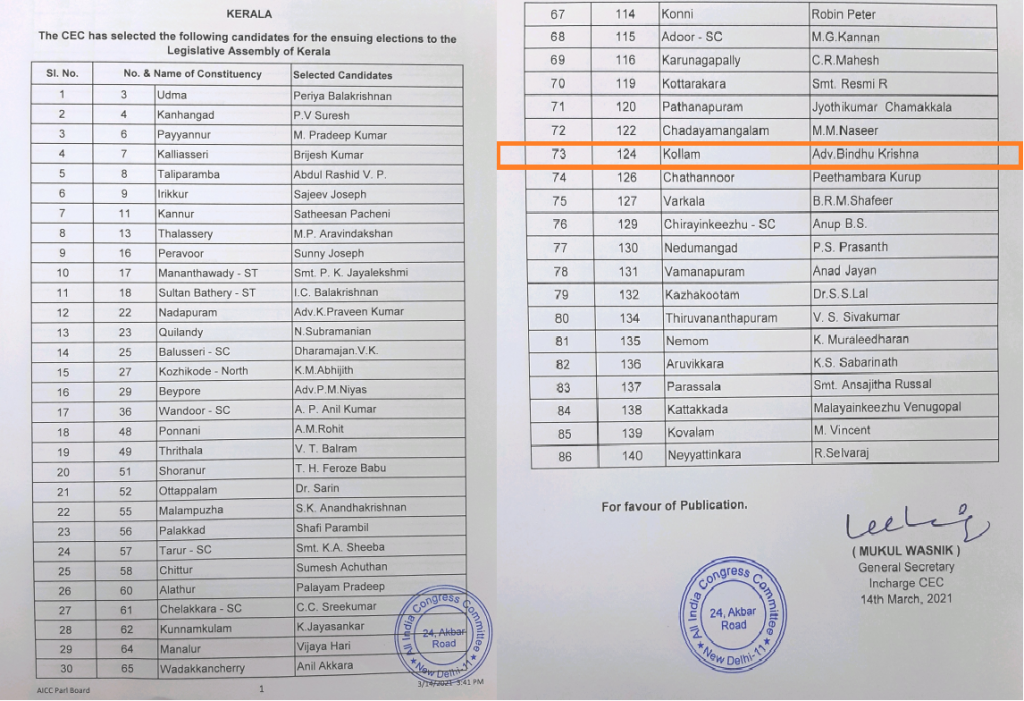
In the list of 86 candidates that was released by the Congress party ahead of the Kerala Assembly elections, Bindhu Krishna, who was instrumental in organising anti-Hindu beef festivals in Kerala to provoke Hindus, was named as the party candidate from Kollam in the 2021 Kerala elections.
Candidate List of Congress for Kerala Assembly Elections 2021
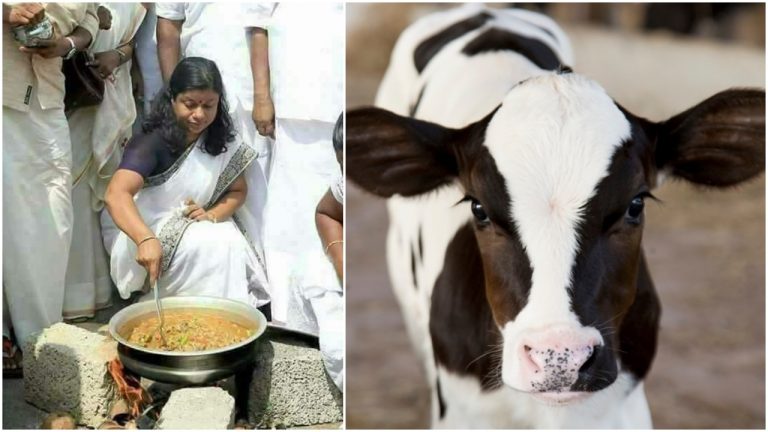
It is worth mentioning that Congress leader Bindhu Krishna, who is also the District unit chief of Congress party in Kollam was the face of Beef festivals that were organised across Kerala to protest the Centre’s ban on the sale and slaughter of cattle. Led by Bindhu Krishna, the Congress party workers cooked beef in front of the DCC office.
Indulging in the shameful act, the Congress leader Bindhu Krishna had claimed that the Modi government had no right to interfere with people’s livelihood. “This is nothing but an intrusion into the fundamental rights of the citizens of this country,” she had said.
Not just that, the Congress leader from Kollam had organised a similar protest against the centre and indulged in the provocative act yet again in 2018. Brazening it out, Bindu Krishna had claimed that the “beef delicacy would be packed and sent to head post office for delivery to Modi Ji.”
Not just Bindhu Krishna for 2021 Kerala Assembly elections, Congress party has a penchant for anti-Hindu politics
It is no surprise that the Congress party has openly fielded candidates who have often shared anti-Hindu hatred in the past. It is pertinent to note that the Congress party is in alliance with Indian Union Muslim League (IUML) for the 2021 Kerala assembly elections. Indian Union Muslim League (IUML), which claims to be born after Indian Independence in 1948, is actually an off-shoot of Pakistan founder and Islamist Mohammad Ali Jinnah’s All India Muslim League (AIML).
The Indian Union Muslim League has been notoriously known for flaring up communal incidents in the state of Kerala. The party was found involved in the planning as well as the execution of the brutal Marad massacre in Kerala in 2003 as per the report of Justice Thomas P Joseph Commission which was set up to investigate the incident. The report had declared the massacre as “a clear communal conspiracy, with Muslim fundamentalist and terrorist organisations involved”.
Further, in 2017, the Central Bureau of Investigation (CBI) had registered a fresh First Information Report (FIR) in connection with the probe and had named Indian Union Muslim League leaders P.P. Moideen Koya and Moyeen Haji as an accused of funding, conspiring and executing the riots.
The victory of Rahul Gandhi in the 2019 Lok Sabha elections in Wayanad Lok Sabha constituency is largely attributed to the alliance of Congress party with the IUML, who consolidated Muslim votes in favour of the Gandhi-scion.
According to a new scientific study of material found at a Harappan site, 4MSR Bijnore, in Rajasthan, the Harappan people used to consume high-protein multigrain “laddoos” around 4,000 years ago. The study was jointly conducted by the Birbal Sahni Institute of Palaeosciences (BSIP), Lucknow, and Archaeological Survey of India (ASI), New Delhi, and published in the ‘Journal of Archaeological Science: Reports’ by Elsevier, a world-renowned publisher of science information. The study also points to these “laddoos” being a part of some sort of ritual on the banks of the now-extinct River Saraswati.
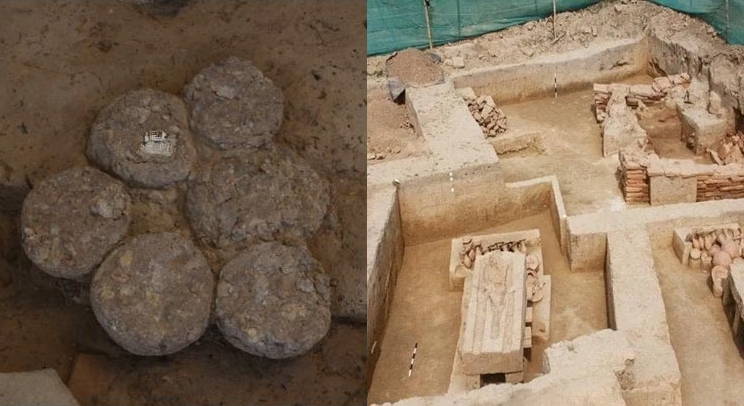
A scientist working for BSIP, Rajesh Agnihotri, said, “Seven similar big-size brown ‘laddoos’, two figurines of bulls and a hand-held copper adze (a tool similar to an axe, used for cutting or shaping wood) were excavated by the ASI at the Harappan site in Anupgarh district of Rajasthan.”
“These laddoos, dating back to around 2600 BCE, were found well preserved since a hard structure had fallen in such a manner that it acted as a roof over them and prevented them from getting crushed. Had they been broken, the ‘laddoos’ would have decayed entirely but since these were in contact with the mud, some of the internal organic matter and other green constituents remained protected.” the scientist added.
According to the scientist, the most peculiar aspect about the “laddoos” was the purple slurry it formed through coming in contact with water.
The “laddoo” samples were excavated by the ASI in 2017 and were given to the BSIP for scientific analysis. The BSIP scientist Rajesh Agnihotri explains further, “At first, we thought that these laddoos, excavated near the banks of Ghaggar (erstwhile Saraswati), had some connection with occult activities since figurines and adze were also found in close proximity. We were intrigued by their shape and size as they were clearly man-made. This curiosity led us to explore their composition. We initially presumed it could be a non-vegetarian food.”
However, an analysis by senior BSIP scientist Anjum Farooqui revealed that the “laddoos” were composed of barley, wheat, chickpea, and a few other oilseeds. “These laddoos had cereal and pulses, and moong dal dominated the ingredients,” added Anjum Farooqui. As the Harappans were agriculturists, the high-protein multigrain composition of these “laddoos” makes sense.
A team of consisting of nine scientists from both the BSIP and the ASI concluded that the presence of seven laddoos along with typical Harappan tools/items hinted that Harappan people made offerings, performed rituals and consumed multi-nutritive compact ‘laddoos’ as a food supplement for instant nutrition.
The scientist team further concludes that the presence of bull figurines, adze and a Harappan seal in the vicinity of these seven food balls signifies that humans revered all these items due to their utility and importance to them.
Use of the “laddoos” in rituals on the banks of the River Saraswati
The archaeological discovery of the “laddoos” in concert with figurines of bulls and copper adze gives rise to the suggestion that the Harappan people used these instruments for the purpose of performing rituals.
According to the Director (Excavations) of the ASI, Sanjay Mujul, these “laddoos” are a milestone discovery. “After the scientific study, we can say that this is the first evidence to show that Harappan people performed some rituals on the banks of river Saraswati (now extinct). Though the nature of the ritual is not clear, it could be akin to ‘pind daan’ (offering of homage and food to ancestors).”
“When we found the food balls at 4MSR Bijnor, it appeared to be a site where rituals were performed. We found terracotta bulls, painted pots, bones, and adze from there,” Manjul added.