Home Blog Page 5661

Delhi Election Results: Congress can never regain what it has lost between 2014 and 2019, it is now the last option even for Muslims

The Delhi Assembly Election results are pouring in and from what we know thus far, one thing is pretty clear – the Congress party is never recovering certain spaces it lost to other parties between 2014 and 2019. Delhi is a Union Territory where the Congress had ruled comfortably for years and yet, in this year’s Assembly Election, they are nowhere to be found. The Aam Aadmi Party has eaten into their voter base for good and it is extremely unlikely that the Congress party will be able to gain them back in the years to come.

For a great many years, the Delhi Assembly Elections had been a bipolar contest between the BJP and the Congress party. While the BJP still remains a credible opposition in terms of vote share, the Congress has been obliterated. The AAP has swallowed into its voter base lock, stock, and barrel. In 2020, they are nowhere near to being a valid alternative to the AAP or the BJP. Delhi still remains a bipolar contest and unfortunately for the Congress party, they are not one of the two credible alternatives.

Worryingly for the Congress party, there are a lot of other regions where it is extremely unlikely that the Congress party will be competitive again in the near future. The losses it suffered between 2013 and 2019 seem permanent in many regions of the country. The Northeastern region of the country is one of those.

Read: Delhi Elections 2020: Muslim consolidation has won, here’s why Hindus should be concerned

In Uttar Pradesh, where it has enjoyed great results in the past, Congress can only piggyback on the success of the Samajwadi Party and the BSP. In Maharashtra, where it has dominated in the past, the Congress party is at the mercy of the Shiv Sena and the Nationalist Congress Party. In Andhra Pradesh and Telangana, the Congress is nowhere to be found. In Odisha, the fight is between the BJP and the BJD.

There are a number of states where the Congress party remains a tough competitor or the single largest opposition or even in power. Haryana, Chhattisgarh, Madhya Pradesh, Rajasthan, Gujarat, Punjab, Himachal Pradesh, Goa, and many other states but it is undeniable that in the larger scheme of things, the regions of the country where the party was competitive on its own has declined significantly and it has not been able to recover all the losses it has suffered since Narendra Modi’s rise to national politics.

Ever since independence, the Congress has dominated national politics and at its worst, has been competitive in areas where it couldn’t win. Even when they were out of power in the centre, the Congress was the nucleus around which the Opposition revolved. It can no longer be said that it is the case. And what is worse for the Congress party is that it is extremely unlikely that they will be able to become competitive again in the near future in certain areas they have lost. The Delhi results are only a further confirmation of this fact.

Another aspect of the Delhi results that needs special mention is the fact that the party has lost support among some of its core vote banks. The Muslim vote bank which has supported the party for a long time in Delhi has abandoned it completely for the Aam Aadmi Party. It was the same vote-shift that helped the Aam Aadmi Party win 67 seats in Delhi in 2015. With the political developments since then, the shift appears to have become permanent, at least for the near future. During the Exit polls, for example, the Axis polls analysed that the Muslim voters had summarily shifted from the Congress to AAP because they thought AAP was better positioned to defeat BJP.

In desperation, the Congress party appears to be allying itself more and more with the radical elements within the Muslim community in its bid to win over the vote bank.

In Kerala for example, Congress even allied with Jinnah’s off-shoot party IUML.

Read: Hindu massacres and a demand for Sharia: The story of Rahul Gandhi’s ally IUML, an offshoot of Jinnah’s Muslim league

The Indian Union Muslim League has been notoriously known for flaring up communal incidents in the state of Kerala. The party was found involved in the planning as well as the execution of the brutal Marad massacre in Kerala in 2003 as per the report of Justice Thomas P Joseph Commission which was set up to investigate the incident. The report had declared the massacre as “a clear communal conspiracy, with Muslim fundamentalist and terrorist organisations involved”.

Further, in 2017, the Central Bureau of Investigation (CBI) had registered a fresh First Information Report (FIR) in connection with the probe and had named Indian Union Muslim League leaders P.P. Moideen Koya and Moyeen Haji as an accused of funding, conspiring and executing the riots.

Simultaneously, the radical factions, in turn, are demanding more and more from the Congress party. In Kerala, Chief Minister Pinarayi Vijayan targeted the SDPI over its role in the anti-CAA protests. However, it led to a spat between the Opposition and the CPIM in the Assembly which prompted even Vijayan to ask “Why is the opposition getting agitated when I mention the name of SDPI? Are they saying that I should not talk about SDPI and extremism?”

Read: Shaheen Bagh anti-CAA protests funded by Islamist PFI, chief Mohammad Parvez Ahmed’s links to AAP’s Sanjay Singh and Congress’ Udit Raj emerge

Even during the anti-CAA protests in Delhi, while the AAP sensed the public mood and said that the Shaheen Bagh protesters should consider retreating from their protests and Kejriwal could even be spotted singing the Hanuman Chalisa, a Congress candidate declared that he was helping the anti-CAA protesters and that they were in touch with him. It was because the Muslim vote had shifted to the AAP and the Congress was trying hard to win them back. Going forward, one can expect the Congress party relying more and more on its Muslim vote bank and the secular parties try to make a hard bargain for the Muslim vote.

While AAP has overtly tried to appease Hindus in the last leg of campaigning, one has to remember that AAP has tried its best to help the Muslim rioters during anti-CAA riots as has Congress, however, the electoral benefits of aiding the mobs accrued to AAP.

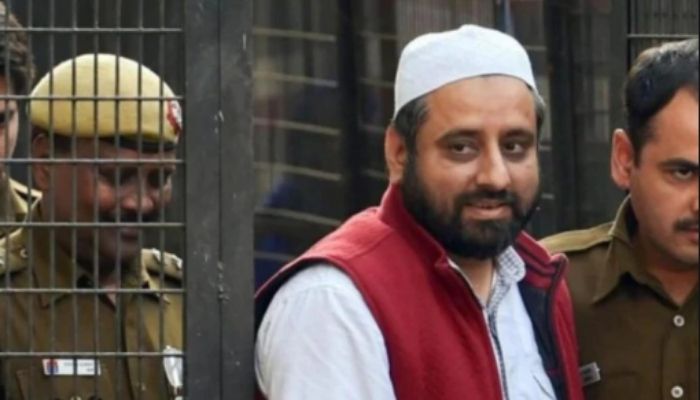
While AAP’s Amanatullah Khan was booked for inciting riots and Kapiil Gujjar, the Jamia shooter, who pretended to be a ‘Hindutvawadi’ turned out to be an AAP leader, and AAP’s links with PFI emerged, it is pertinent to note that several Congress leaders have been booked for the anti-CAA riots by Muslim mobs that have gripped the nation.

While investigating the incidents of statewide violence which occurred on December 21, the Patna Police recently got their hands on Congress leader Ashutosh Sharma who has been accused of attacking media people during the Bihar bandh and has been on the run since then. Congress leader Ashutosh Sharma was caught on camera assaulting journalists at the Dak Bungalow Chowk in Patna. The Congress leader was reportedly on the run after the case was registered against him.

Read: Take revenge, don’t spare any cop: Congress Corporator Shehzad Khan Pathan instigated anti-CAA riots in Ahmedabad

The crime branch of Ahmedabad police had nabbed a Congress leader for posting a fake and misleading video on social media which incited a Muslim mob during a protest march at Shah-e-Alam, Gujarat, where several police officials were brutally attacked by Muslim mobs.

Congress party’s minority cell member Umar Khan Pathan had shared a video on social media in which a police action against rioters from Lucknow was passed on as an incident in Ahmedabad stoking violence in the Shah-e-Alam. The fake news had unleashed a violent Muslim mob, who attacked and injured more than 25 policemen on duty.

Read: Khilafat 2.0: How Useful Idiots in the media and political parties were fooled by Jamia students associated with the ‘blood brother’ of a banned Radical Islamic outfit

The Ahmedabad Police had arrested Congress Corporator Shehzad Khan Pathan along with 32 others for carrying out the deadly attack during anti-CAA riots on police personnel. They have been booked for attempt to murder, rioting and assaulting police.

Additionally, Six people including four local politicians and the former Congress MLA were named as suspects in the Delhi Police FIR related to Jamia violence. The Delhi Police had named former Congress MLA Asif Khan as one of the accused in its FIR.

While AAP and Congress both indulged in competitive communalism against Hindus, AAP managed to accrue the benefits while Congress is now left as an option that not even Muslims trust.

The fact that Congress has stopped being the first option for Muslims was prominent even during the Lok Sabha elections. The disregard with which the Mahagathbandhan between the Samajwadi Party and the BSP treated the Congress was symbolic of this fact.

The single biggest takeaway from the Delhi election might well be the fact that the Congress party might never be able to regain its place as the nucleus around which the secular parties revolved around.

Delhi Elections 2020: Muslim consolidation has won, here’s why Hindus should be concerned

Amanatullah Khan, the most prominent Muslim leader from the Aam Aadmi Party, has won a resounding victory from his own seat at Okhla. He has won the constituency where Shaheen Bagh and Jamia are located by over ninety-one thousand votes. His victory is not surprising given the fact that Okhla is a Muslim dominated constituency and has never been won by a non-Muslim candidate.


Even so, the margin of victory is significant as in 2015, Amanatullah Khan won with a margin of sixty-five thousand votes. By the 16th round of counting, Amanatullah Khan had already secured more votes than he did the last time around. This shows that the Muslim vote has consolidated massively in favour of the Aam Aadmi Party.


In Seelampur, AAP candidate Abdul Rehman triumphed over BJP’s Kaushal Mishra. This was the first result to be declared. Last time around, the AAP candidate had secured 51.25% of the votes and the Congress candidate had won 21.28% of votes. This time around, the AAP’s vote share is likely to increase by multiple percentage points while that of the Congress party will fall as per current trends. Seelampur is another constituency dominated by Muslims, which once again shows that the Muslims have consolidated massive in favour of the Aam Aadmi Party.

Read: Shaheen Bagh: Children campaigning for AAP candidate Amanatullah Khan amidst Biryani feast

Thus, while the minority community has consolidated massively in favour of Arvind Kejriwal, the polarization of Hindus did not occur to the extent where it would have been enough to counter the Muslim consolidation. Going forward, it is one thing that the BJP will have to take into account. The Hindus, too, will have to suffer the consequences of their inability to consolidate themselves effectively under one banner.

Slogans are also being raised that “Yeh Shaheen Bagh ki jeet hai (This is Shaheen Bagh’s victory)” and if it is indeed Shaheen Bagh’s victory, then Hindus will have to realize the implications of it. The protests against the Citizenship Amendment Act in Shaheen Bagh is essentially a demonstration by Radical Muslims against citizenship being awarded to persecuted minorities from Pakistan, Afghanistan and Bangladesh.

Shaheen Bagh is the place where slogans of ‘Jinnah Wali Azadi’ were raised. It is the same place where a baby died due to the negligence of its parents and other children were made to hold posters of the baby while the protesters said that it was a ‘Qurbani’ for their movement. Hinduphobic posters have been regularly spotted at these protests as well.

Read: As AAP grandstands and dares BJP to arrest Sharjeel Imam, video surfaces where AAP MLA Amanatullah Khan is seen with Imam

If this is Shaheen Bagh’s victory, then it is also the victory of the mastermind of these protests, Sharjeel Imam. Now, this person is a Radical Muslim who eulogizes Muhammad Ali Jinnah and wants to cut off North East India from the rest of the country. Sharjeel Imam has only contempt and hatred in his heart for Hindus. So if it is Sharjeel Imam’s victory, then Hindus certainly have a lot to worry about for the future.

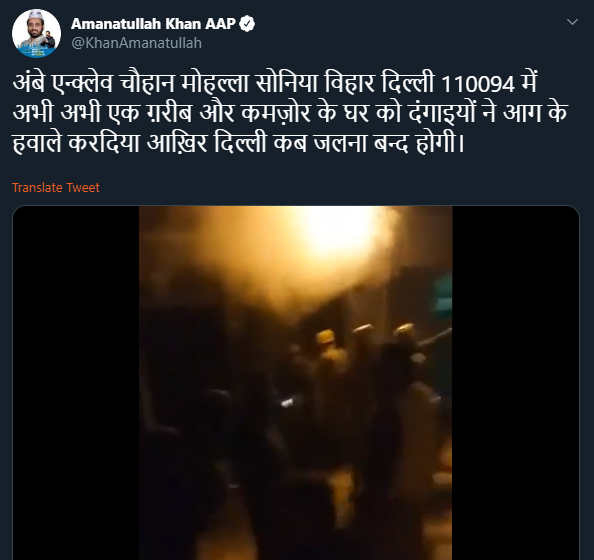
Amanatullah Khan’s massive victory itself is another cause for concern. This is the same man who was spotted leading violent riots against the Citizenship Amendment Act at the national capital. He was also seen with Sharjeel Imam as the latter made provocative statements right while standing right beside him. Thus, his massive victory will only embolden the more toxic elements within the Muslim community and also provides an incentive for engaging in more polarizing rhetoric in order to prevent a split in the Muslim vote.

Thus, while the results in themselves are unlikely to impact the national narrative as such, Hindus will have to bear the consequences of the fallout of the success of Muslim consolidation in Delhi. While this has been effectively countered at the national level, in state elections, it doesn’t appear to be the case. Thus, while the minority veto will not work at the national level, it will certainly continue to hold sway at the state level. At the end of the day, minority communalism has won while Hindu consolidation was nowhere near to those levels and the effects of that will become evident in the near future.

Watch: Eyewitness narrates how leftist goons trampled Bhagavad Gita under their feet while attacking VHP stall at Kolkata Book Fair

The last day of the 44th Kolkata International Book Fair on Sunday 9 February, saw a tensed situation after leftist goons, claiming to be students from Kolkata University, ransacked stall number 370 belonging to Viswa Hindu Parishad (VHP), named ‘Janabaarta’.

Now a video has emerged in which an eyewitness asserts how during the scuffle, leftist goons attacked the stall of Vishwa Hindu Parishad and trampled the copies of Srimad Bhagavad Gita under their feet.


The eyewitness, who identifies herself as Ranjana Mukherjee in the video while recalling the Sunday scuffle at the Kolkata Book Fair says that she reached the book fair around 4 pm. She was roaming around when suddenly she heard some noises from a nearby stall. On approaching the lady reportedly saw many boys and girls “chanting ‘Azaadi’ slogans outside one bookstall”.

She recalls how this protest suddenly broke into a severe fight. The leftist goons sloganeering outside VHP’s stall suddenly started creating a ruckus, entered stall number 370 and started throwing out the books. They also stepped on the Bhagavad Gita, recalled Ranajna Mukherjee.

She says that the crowd gathered there objected and tried to intervene but fearing the rage everyone backed off. Soon police intervened and dispersed the goons, but they returned again. Finally, a heavy police contingent arrived and took control of the situation, asserted the lady.

According to reports, students from Kolkata University were chanting anti-CAA, anti-NRC slogans outside stall number 370 of the VHP at the Kolkata Book Fair since Sunday morning, causing huge inconvenience to visitors at the venue which was packed to capacity as it was the last day and a holiday.

Read: Police stop VHP from distributing Hanuman Chalisa at Kolkata Book Fair and close the stall while allowing Quran and Bible distribution

In the afternoon when the stall named ‘Janabaarta’ started distributing Hanuman Chalisa, it triggered an altercation between left-wing activists and VHP workers. Following this the police stopped VHP from distributing the book, saying that it may cause the situation to deteriorate and may trigger communal tension. This caused an argument between VHP workers and police officials, after which police closed the stall.

But after that VHP activists confronted the police by asking why can’t they distribute Hanuman Chalisa when other stalls were distributing Quran and Bible in the book fair, the police had no reply and they allowed to reopen the stall. After that VHP resumed distribution of the book amid heavy police presence.

Police also stopped anti-CAA anti-NRC protests held by activists in the book fair and arrested 5 activists. The book fair had seen tension on Saturday also when BJP leader Rahul Sinha had visited it. Left-wing students had reportedly gheraoed him and chanted go-back slogans against him. This had caused a scuffle between the BJP and Left-wing workers before the police brought the situation under control.

Delhi Elections: Anti-CAA riots accused Amanatullah Khan wins from Okhla

Anti-CAA riots accused Amanatullah Khan, who was allegedly at the forefront of the mob-violence in the Delhi has won the 2020 Delhi assembly elections from Muslim-dominated Okhla constituency.

Reportedly, AAP candidate Amanatullah Khan won Okhla seat by securing 1,07,647 votes while BJP candidate Braham Singh got only 15,698 votes. Khan won the Muslim-dominated seat by a whopping margin of over 91,000 votes.

Delhi’s Jamia Nagar, which comes under the Okhla constituency in East Delhi parliamentary segment, was one of the epicentres of the anti-CAA riots.

Similarly, AAP candidate Abdul Rehman secured his victory from Muslim dominated Seelampur constituency. Rehman defeated BJP candidate Kaushal Kumar Mishra. In the run-up to the Delhi Assembly polls, Muslim-dominated areas of Seelampur had seen unprecedented violence led by Muslim mobs to protest against the Citizenship Amendment Act.

Earlier on the eve of Delhi elections, mosques across the Muslim-dominated areas in Delhi had urged Muslims to vote in large numbers. Following the diktat, residents across localities in Okhla had claimed that they too would vote in large numbers.

Okhla AAP candidate Amanatullah Khan is accused of instigating riots in Delhi during the anti-CAA protests. He had openly stood with Jamia Nagar protestors which turned violent in December. Later, an FIR was also filed against him for instigating violence through social media.

Read: Delhi’s AAPradhi: AAP MLA Amanatullah Khan’s history sheet

In an inflammatory speech on December 15 at Delhi’s Shaheen Bagh, Khan had attacked the BJP government for enacting the Citizenship Amendment Act by claiming that it was discriminatory for Muslims of the country. Khan had also alleged that the silence of Muslims on the Triple Talaq Act was taken as their weakness by the central government.

The speech which was attended by thousands of impassioned people gathered to protest against the CAA was allegedly delivered just minutes before the violence broke out on the streets of Delhi. Later videos also emerged in which AAP leader Amanatullah Khan was seen standing alongside Shaheen Bagh mastermind Sharjeel Imam who is accused of pushing secessionist agenda.

Shaheen Bagh protest site seen empty as AAP all set to return in Delhi

As the Delhi assembly elections draw to an end, Shaheen Bagh protesters seem to have vacated the protest site that they had occupied for almost 2 months now, blocking one of the busiest thoroughfares of the national capital in opposition to the enactment of the Citizenship Amendment Act that intends to grant citizenship to persecuted minorities from Pakistan, Afghanistan and Bangladesh.

On Tuesday morning, incidentally, when the Delhi Assembly election results were to be announced, the protest site of Shaheen Bagh appeared empty with scarce number of demonstrators at the site, says a report published in Amar Ujala.

In the run up to the Delhi elections, there were speculations galore that the protest that had continued for more than 55 days, causing grave inconvenience to the lakhs of daily commuters will vanish just after the elections concluded. The speculations now appear to have turned true as a large number of regular protesters at Shaheen Bagh have deserted the protest site on Tuesday morning and did not turn up for what they claimed their democratic right to protest against the government’s move to bring in the CAA.

Since December 15, 2019, protesters gathered at Shaheen Bagh and blocked one of the arterial roads in Delhi against the Citizenship Amendment Act. The protest site was accused of being an independent enclave where participation of people was regulated based on their political inclinations and past predispositions. It also witnessed anti-India and pro-Azaadi slogans being chanted by the demonstrators.

It is noteworthy to mention that Shaheen Bagh comes under Okhla constituency where controversial Aam Aadmi Party member Amanatullah Khan has registered a victory. The Aam Admi Party is well poised to secure a thumping majority in the 70-seats Delhi assembly to stake a claim at the government while the BJP is expected to win 15-20 seats. The Congress party, on the other hand, seems to be on its way to acquire another duck.

As the Delhi Election results trickle in, here is how the Delhi campaign only resulted in a win for Hindutva

The Delhi Assembly Election results are trickling in and by the looks of it, it appears that Arvind Kejriwal is all set to retain his position as the Chief Minister of the national capital. While it is only natural that the secular camp is in a celebratory mood and the BJP will have to engage in significant introspection, there are certain truths about the whole affair that the secular camp will have to make peace with.

While it is only to be expected that the secular camp will trot around and call the results the rejection of BJP’s ‘divisive politics’, they would be coming to an extremely wrong conclusion. First and foremost, it is unlikely that the Delhi electorate rejected the BJP for fulfilling the promises it made in its manifesto for the Lok Sabha elections. Secondly, ‘Modi for PM, Kejriwal for CM’ was a popular theme among a significant section of the electorate. And thirdly, the Delhi results are a further indication of the fact that the electorate votes differently in national and assembly elections.

Most importantly, however, the campaigns by the two main parties in the elections, the BJP and the Aam Aadmi Party, only served as a resounding victory for Hindutva. The campaigns served as a further indication of the fact that the Overton Window of the country has shifted firmly on the side of Hindutva. It is a conclusion that can be drawn safely from the conduct of the incumbent Delhi Chief Minister Arvind Kejriwal himself.

Ahead of the elections, Arvind Kejriwal went out of its way to establish his Hindu credentials. He could be seen chanting the Hanuman Chalisa on national television and telling everyone about his devotion towards RamBhakt Hanuman. It is a distant cry from the days when parties would run helter-skelter to establish their secular credo. At the same time, the AAP supremo made sure to stay clear from the Shaheen Bagh protests himself. Although Manish Sisodia himself did say that the party was with the anti-CAA protesters and Sanjay Singh’s links with the PFI emerged, Kejriwal made sure that the Delhiites saw him chanting the Hanuman Chalisa instead of hobnobbing with the Radical Muslims of Shaheen Bagh.

Read: Delhi Elections: A day before polling, Arvind Kejriwal invokes the Hindu card but misquotes Gita

It is a far cry from 2016 when Rahul Gandhi himself rushed to JNU to lend his support to the now infamous ‘Tukde Tukde Gang’ of the University. It is for a reason that it is said, “Fools rush in where angels fear to tread.” Now, Arvind Kejriwal is certainly no angel but he is smart enough to recognize the sentiments of the electorate who he represents. One thing is clear, the politicians are now no longer trying to earn brownie points from the leftwing echo chambers but from the Hindu masses and that can only be a good thing.

In the past, when political parties feared to lose the support of the minority community, they are now scared of a backlash from Hindus. Kejriwal may not mean it but there’s a line that he recognizes he cannot cross. And with the passage of more and more time, the lines will be drawn in the sand quite clearly.

The AAP, by the end of its election campaign, was begging the Shaheen Bagh protesters to end their protests as it was benefitting the BJP. Sanjay Singh could be found in press conferences telling the anti-CAA protesters through the media that they should introspect upon their own protests and whether they were inadvertently helping the BJP electorally through their protests. Before long, the AAP was blaming the BJP for the Shaheen Bagh protests and blaming them for the inconvenience caused to the Delhi electorate.

Read: Shaheen Bagh: Children campaigning for AAP candidate Amanatullah Khan amidst Biryani feast

From the perspective of the BJP as well, it ran the most unapologetic and overtly Hindutvavadi campaign in a generation perhaps. One of the videos that it released for the polls, which caused a significant amount of angst among the secular camp, was Hindutva in a distilled capsule. Through its campaign for the Delhi elections, the BJP was able to raise issues and make significant arguments and further narratives in the domain of Hindutva that will certainly have a significant impact on the results of the Bengal elections in 2021 and the Uttar Pradesh elections a year after. That is, going forward, it can build upon the framework it has laid down in this election.

Furthermore, the results of the Delhi elections will have no impact on the direction the country is headed in. The campaigning and everything that has transpired in Delhi in the past few months has only further cemented the dominance of Hindutva discourse in the country. Hindutva has become so dominant that even the organizers of a Queer Pride Parade in Mumbai was forced to disassociate themselves from the slogans that were chanted in favour of Sharjeel Imam, the Shaheen Bagh mastermind. It’s the first time that something like this has happened. The results of the Delhi elections will not impact any of this at all.

Also, it is unlikely that the NDA government in the center will abandon its national agenda merely because of a defeat in a Union Territory with seven Lok Sabha seats. Thus, in terms of national policy, Hindutva will march on full steam ahead. Thus, the secular camp would like to believe that the Delhi results are a light at the end of a tunnel but it is more of a wish rather than objective reality.

Delhi assembly elections results: Congress leaders call for introspection as the party appears to draw a blank in Delhi

While India may not have been completely Congress-mukt yet, at least the national capital of the country appears to be on its path of Congress-free if the latest trends of the assembly elections result are to be believed. Congress’ lackadaisical elections strategy has once again reduced it to a mere spectator as it watches over the fiercely contested electoral battle between the BJP and the AAP.

Congress’ abject surrender and an impending ignominious defeat in the recently concluded Delhi assembly elections has caused many party office-bearers and senior post holders to openly come out and express their disappointment with the party’s anaemic poll strategy. If the trends hold, this would be the second consecutive term Congress would have zero representatives in the state assembly.

Read: Minutes before counting of votes, Congress veteran leader Digvijaya Singh raises the ‘EVMs are hacked’ bogey. Here is how he’s wrong

Delhi Mahila Congress President Sharmistha Mukherjee took to Twitter to concede party’s defeat in the Delhi assembly polls. A despondent Mukherjee tweeted that inordinate delay in decision making at the top, lack of a coherent strategy and unity at the state level, demotivated workers and no grassroots connect were among the many factors for party’s disappointing performance. Acknowledging defeat, Mukherjee called out for action now, saying that they had had enough of introspection.


Even as the counting is underway, senior Congress leaders seem to have resigned to the fact that their party has not fared well in the assembly elections in the national capital. Senior Congress leader Dr AM Singhvi too took to Twitter to suggest that Congress should home in on an alternative Sheila face and support him/her for the next 4 years to have any chances in the next assembly elections.


The party’s abysmal defeat comes on the heels of the major debacle the party witnessed last year in the General Lok Sabha elections, following which the then party president Rahul Gandhi assumed the responsibility of the poll drubbing and tendered his resignation. In his absence, Sonia Gandhi was elected as the interim party president but there are speculations rife that the leadership is mulling to reinstate Rahul Gandhi again as the party president.

Posters supporting radical Islamist Sharjeel Imam arrested under sedition charges appear at Jamia protest

Posters reading ‘Stop Vilification’ and ‘Solidarity with Sharjeel Imam’ appear in support of the Shaheen Bagh mastermind Sharjeel Imam, who is currently in police custody under sedition charges, at the anti-CAA protest by students of Jamia Millia Islamia in New Delhi on February 10, Monday.

It may be recalled the former JNU student and a columnist with leftist propaganda website The Wire, Sharjeel Imam had been arrested by Delhi Police from Bihar’s Jehanabad, for his seditious statements inciting Muslims for a war against India.

“If we can organise 5 lakh people, it would be possible to permanently cut off Assam with rest of India…if not permanently, then at least for a few months… only then will the government hear our voice”, Imam had made a clarion call for Muslims to cut-off Assam from the rest of India.

The Delhi police interrogating radical Islamist Sharjeel Imam had made some shocking revelations. The police had said that investigations revealed that Sharjeel Imam had visited Shaheen Bagh on December 13 and 15 that is two days before and the day when the protest started at Delhi’s Shaheen Bagh area.

OpIndia in an exclusive expose on December 31st revealed that Sharjeel Imam was the mastermind of the Shaheen Bagh protests and had severely nefarious designs and Islamist bent of mind.

Earlier, reports had emerged that the police are looking into ShaheenBagh mastermind Sharjeel Imam’s links with radical Islamist outfit PFI and the Islamic Youth Federation. The PFI is suspected of funding violence in the recent spate of violence during the ongoing protests against the Citizenship Amendment Act. The Enforcement Directorate has claimed that the PFI has spent around Rs. 120 crores to fuel riots across the country.

In another major revelation, the Delhi Police has said that they have found evidence of foreign funding in the bank account of Shaheen Bagh mastermind Sharjeel Imam. However, the Delhi police are yet not clear on who was funding it.

The crime branch has found several objectionable items in the laptop and mobile phone recovered from Sharjeel. Reportedly, his laptop had contained controversial posters pertaining to anti-CAA protests, written in Urdu and English. The same posters were distributed among students and mosques ahead of the anti-CAA riots that had occurred in Delhi in December.

Crime Branch officials had said that Sharjeel Imam is highly radicalized and wants to turn India into an Islamic state and had said that he was not remorseful.

Delhi elections: AAP candidate Abdul Rehman wins Muslim dominated Seelampur seat which saw unprecedented violence during anti-CAA riots

The first result of Delhi assembly elections 2020 is out with AAP candidate Abdul Rehman securing his victory from Muslim dominated Seelampur constituency. Rehman defeated BJP candidate Kaushal Kumar Mishra. 

In the run-up to the Delhi Assembly polls, Muslim-dominated areas of Seelampur had seen unprecedented violence led by Muslim mobs to protest against the Citizenship Amendment Act.

Delhi was the epicentre of the anti-CAA riots, which later spread to different parts of the country. The Muslim mob in Delhi’s Seelampur had unleashed the violence against public infrastructure and pelted stones at the police injuring many of them. The violent protestors had even attacked school buses in Delhi’s Seelampur area.

On the eve of the Delhi assembly elections, the mosques in the riot-hit Seelampur and Okhla have urged Muslims to vote in large numbers on Saturday, reported Hindustan Times. These are the very areas where Muslim mobs had gone on a rampage and caused riots as a result of their opposition to CAA. It is also worthy to note that Congress and AAP leaders were booked for the anti-CAA riots in these areas by Muslim mobs.

As per the trends, the Aam Aadmi Party is currently leading in 55 seats, while BJP is leading in 15 seats in the 70-seat Delhi assembly elections. The majority mark is at 36.

Delhi Elections 2020: Voters have been voting differently in state and general elections, for quite some time, and in many states

The Delhi Assembly Election results are pouring in and trends suggest that the Aam Aadmi Party is well on its way to forming a government in Delhi for the third consecutive time. The secular camp is treating these results as some sort of a national referendum on the BJP’s ‘divisive politics’ but in reality, it is a little more complicated than that and calls for a certain bit of nuance.

Only nine months ago, Delhi had voted overwhelmingly in favour of the BJP in the Lok Sabha elections. The party had managed to secure a monstrous 56.58% of the votes. Thus, to conclude that vast sections of the electorate had a drastic change of heart in a matter of nine months is a bit too simplistic. It also needs to be remembered that this is not the first time that it has happened.

In 2015 as well, the Aam Aadmi Party had stormed to power winning 67 of the 70 seats, merely months after Delhi had given 7 out of 7 seats to the BJP in the Lok Sabha elections. The AAP secured a vote-share of 54.3% in the Assembly Elections in 2015 while the BJP had managed to win 46.40% of the votes in 2014 general elections. In the 2019 Lok Sabha elections, the AAP had secured only 18% of the votes, coming in third place behind the Congress. And yet, less than a year later, the AAP is again sweeping the assembly polls.

Thus, if anyone tries to interpret the Delhi results of 2020 as a rejection of BJP’s ‘divisive politics’, then they are making a massive mistake. Quite clearly, the marked difference here is not of ideology but of the nature of elections. At the national level, the Delhi electorate prefers Narendra Modi while as Chief Minister, Kejriwal is more popular among the people of Delhi. It is quite clear that Delhi is voting differently in Assembly and General Elections. Thus, to interpret the results as a rejection of Hindutva is just wrong and way off target.

More importantly, Delhi is not the only place where people have voted differently. Rajasthan, Madhya Pradesh, Jharkhand, Chhattisgarh, Haryana, in all these states, people have voted differently than in Lok Sabha Elections. In Rajasthan, the Congress party formed its government in the state after winning a hundred seats on its own with a vote share of 39.3%. Six months later, the BJP won 25 of the 26 states in Rajasthan with the one remaining seat won by its alliance partner. The vote share of BJP which was 38.8% in the Assembly Elections six months prior jumped to 58.47% in the Lok Sabha Elections.

In the Madhya Pradesh Assembly elections of 2018, the BJP managed to secure 41% of the votes, a higher vote share than the Congress, but it wasn’t enough for them to win reelection. The Congress with its 40.9% vote share managed to win 114 seats, five more than the BJP and consequently formed the government. Six months later, the BJP managed to increase its vote share by 17% and won 27 of the 28 Lok Sabha seats in the state. The vote share of the Congress was far behind at 34.5%.

The difference was even starker in Chhattisgarh. In the Assembly elections in 2018, the BJP’s vote share was reduced to 33% while the Congress managed to win 43% of the votes and 68 of the 90 seats. In the General Elections six months later, the BJP won 50.70% of the votes and 9 out of the 11 seats while the Congress with its 40.91% vote share could win only 2.

In Jharkhand, while the BJP managed to win 11 of the 14 seats in the 2019 Lok Sabha elections, it failed to retain power in Assembly Elections later in the year. In Haryana, while the BJP managed to form its government in the state, it won only 40 of the 90 seats with its vote share of 36.49%. In the General Elections earlier in the year, the BJP had secured a vote share of 58.02% of the votes and had won all the 10 seats.

Read: Diary of a Delhi Liberal: Do not underestimate us, comrades will make sure Modi and Shah lose their deposits in next elections

Thus, quite clearly, the electorate voting differently in national and state elections is a recurrent theme. Even in Narendra Modi’s home turf, Gujarat, this theme was prevalent. In the 2017 Assembly Elections in the state, although the party managed to win 49.1% of the votes, it had secured only 99 seats while the Congress won 81. However, in the General Elections one and a half years later, the BJP secured 62.2% of the vote share and repeated a whitewash of the state, just as in 2014, winning all 26 seats. A similar trend was observed in Odisha and Andhra Pradesh as well.

Thus, if anyone infers that the Delhi election results are a rejection of the BJP’s Hindutva agenda at the centre, then it is simply wrong and the inference goes against observable data. If people interpret the results as a rejection of BJP’s ‘divisive agenda’, then it is just wishful thinking. It should also be remembered that even in 2013 when the Modi Wave was gaining steam, the BJP had not managed to secure a majority on its own in Delhi even though it did emerge as the single largest party with 31 seats.