A marine insurance policy renewal might seem a routine task, but it provides an opportunity to review whether the existing coverage matches the current risks of shipping. Changes in cargo value, trading routes, and business operations might impact insurance requirements over time. Businesses dependent ontransit insurance should note these changes during policy renewal to prevent gaps in coverage.
Keeping an eye on what is often missed during renewal makes the renewal process more effective. Continue reading to explore the main points that every business should not miss.
What are the common marine insurance renewal mistakes businesses often make?
Renewingmarine cargo insurance is essential. Below are common mistakes businesses often overlook during renewal:
Continuing with outdated cargo values
Cargo values may change due to inflation, increased raw material costs or changes in product prices. However, businesses often mistakenly opt to renew with an outdated cargo value, leading to underinsurance (the insured amount is below the actual value of the shipment).
This affects claim settlement in the event of loss during transit. Businesses should therefore assess the worth of goods before each renewal to avail comprehensive financial protection.
Not noticing changes in modes of transport
Businesses switch from a single mode of transport to road, rail, air or multimodal transport. The policy may not adequately reflect the transit risks if these changes are not addressed during renewal.
Businesses should therefore share the latest transportation details to ensure comprehensive coverage for every shipment.
Not reviewing policy terms and exclusions
Policy terms include specific inclusions, exclusions and claim criteria. During policy renewal, reviewing these will help businesses understand what is covered and determine whether they need more coverage for shipping operations.
Delaying renewal
If policy renewal is delayed until the end of the term, make sure to review policy coverages and requirements. On-time renewals confirm businesses with shipping details, evaluate possible risks, and ensure no disruption of transit insurance.
Why does marine insurance renewal matter?
Marine insurance renewal allows businesses to keep their goods and products protected. Cargo values, routes and transportation options can vary over time. To match these changes, reviewing the policy during renewal is a must. It also lets businesses adjust the insured value, review policy terms, and confirm which assets are covered or excluded.
On-time policy renewal prevents gaps in coverage and supports seamless claims processing by keeping policy data up to date and accurate. Regular policy reviews enable businesses to manage changing risks with confidence.
Conclusion
Marine insurance can help businesses manage the financial risks associated with transporting goods through domestic and international routes. Features such as digital policy management, certificate issuance, claims tracking, and risk assessment support can simplify policy administration and help businesses identify potential transit risks.
During marine insurance policy renewal, take time to review your coverage and ensure it aligns with current business needs. Timely updates to cargo values, transport details, and policy terms confirms ongoing protection of your shipments. A timely renewal also minimises the likelihood of coverage gaps and supports smooth business operations.
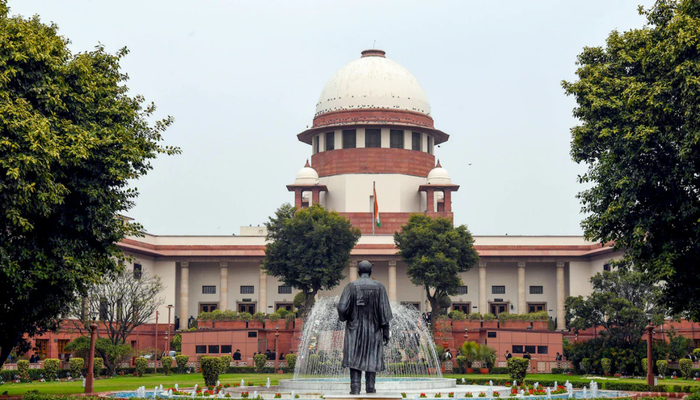
The Supreme Court recently emphasised the need for more robust technological and regulatory measures to identify and remove child sexual exploitation and abuse material (CSEAM) from the internet. A Bench of Justices JB Pardiwala and KV Chandran directed the Centre to set up a comprehensive national database to detect and get rid of such content across all social media platforms.
Taking a serious note of the problem, the Court directed the Centre, through the Ministry of Electronics and Information Technology and the Ministry of Law and Justice, to frame necessary guidelines, standard operating procedures, and IT rule amendments. The government is required to file an affidavit detailing its implementation progress by December 10, 2026, when the next hearing takes place.
The Apex Court expressed concern that the material continues to be available on the internet despite its 2024 directions issued in Just Rights for Children Alliance & Anr. v. S. Harish & Ors. The Court observed that child sexual abuse material continues to circulate on the internet.
Fragmented approach affecting efficiency
The Bench said that the lack of coordination between platforms and a fragmented approach of the regulatory authorities under the existing mechanism are responsible for failing to ensure that such material is detected and removed from across the internet. They said that when one platform detects and removes such abusive content, it does not automatically get flagged and removed from other platforms. The Court said that the current mechanism relies on individual instances where such content is reported and removed. This leads to delays in removing the content, which is not completely eradicated from the internet.
A national database for effective regulation
The Court said that the national database may be set up within the existing Sahyog Portal or as a standalone repository. Emphasising the significance of a national database, the Court said that social media intermediaries would be able to cross-check problematic content on it without having to rely on their individual platforms.
The database will contain hash identifiers and URLs of confirmed CSEAM. The Bench cautioned that the national database must only contain the hash identifiers and URLs of confirmed CSEAM, and not the harmful material itself. Hash identifiers are unique fingerprints of digital images or videos, which enable platforms to identify content even if it is uploaded from different sources. The URL listing will help in the detection of internet addresses hosting CSEAM by platforms, which can then block access to such addresses.
The Court said that all the entries in the national database should be subjected to multiple levels of verification, including technological as well as human intervention. It added that specialised software may be used for preliminary screening, but the final assessment must be conducted by at least three trained human analysts. Each analyst would independently determine whether the material constitutes CSEAM or not.
The Court emphasised that appropriate safeguards must be put in place to prevent erroneous entries and the removal of lawful content. These include maintaining records of assessments, logging access to the database, conducting periodic independent audits and promptly removing incorrect entries.
Intermediaries must report to the police
The Supreme Court directed all social media intermediaries to ensure that no CSEAM is hosted or monetised on their platforms. “Every intermediary must ensure that no CSEAM (Child Sexual Exploitation and Abuse Material), or any other material having the propensity or likelihood to harm children, is offered, hosted, uploaded, promoted or circulated through such paywall or subscription, either directly or indirectly,” the Court said.
The Court asserted that social media intermediaries must be answerable to local law enforcement under Indian law and should not merely remove such content or report it to foreign organisations. It stated that intermediaries must report harmful content to the Special Juvenile Police Unit, local police or the cybercrime portal, as applicable under Rule 11 of the Protection of Children from Sexual Offences (POCSO) Rules, 2020, within a prescribed timeline.
The Bench said that in cases where an intermediary removes CSEAM of unknown origin based on its own due diligence, it must report the removal within two hours. On the other hand, where such removal follows a complaint, the report must be made forthwith after the complaint is resolved and, in any event, within two hours of such resolution, the Court said.
A removal action must be followed by the submission of consolidated reports by intermediaries regarding the removal on a weekly basis to the authority maintaining the national database. To ensure transparency in the entire mechanism, the Court directed intermediaries to display the details of their grievance officers and complaint mechanisms on their websites or applications.
The Court further directed that there must be a distinct reporting category for complaints concerning CSEAM and that it should be easily accessible to users. The complaints raised must be acknowledged within 24 hours with a reference number, and the complainant must be informed of the decision and the reasons for it. The complaint will be reviewed by trained grievance officers at the preliminary stage of screening using automated tools.
The Bench directed the Centre to implement the directions, including accountability requirements through appropriate amendments to the IT Rules. It added that the upgraded framework must have provisions for imposing exemplary monetary penalties on intermediaries that breach their obligations under the Information Technology Act and the IT Rules. The penalties to be imposed on defaulting intermediaries should be imposed after taking into consideration the gravity, duration and recurrence of the default, and turnover of the intermediary.
The Court also called for paywalled and subscription-based content to be subjected to rigorous scrutiny to ensure that CSEAM or other prohibited material is not hosted, promoted or circulated through such services. It directed the Centre to frame guidelines for the examination of such content. The Court also directed the government to consider whether the framework should provide for the forfeiture of the money made by intermediaries from the circulation of CSEAM through paywalls or subscriptions.
Digital safety awareness for children
In addition to the technological safeguards, the top court asserted that children need to be made aware to recognise danger, report abuse, and adopt safe practices on the internet. It said that children should be imparted age-appropriate education on consent, safe and unsafe touch, healthy relationships, protection of personal data, online exploitation, and the mechanisms available for reporting abusive conduct.
The Court added that children should be taught safe internet practices and that digital safety and age-appropriate education should be included in the core curriculum. The National Council of Educational Research and Training (NCERT) and the State Councils will develop the curriculum in consultation with child psychologists, educators, and parenting experts.
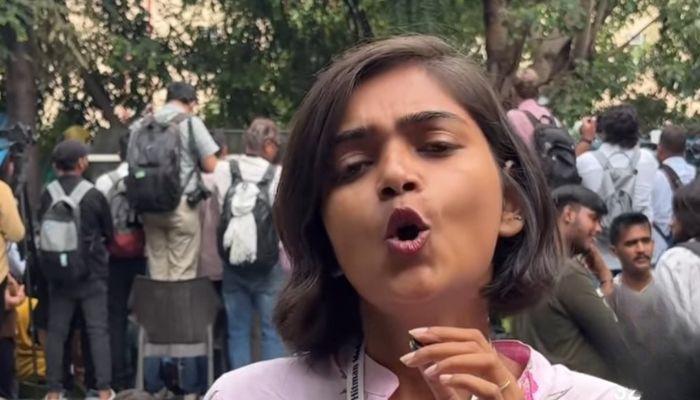
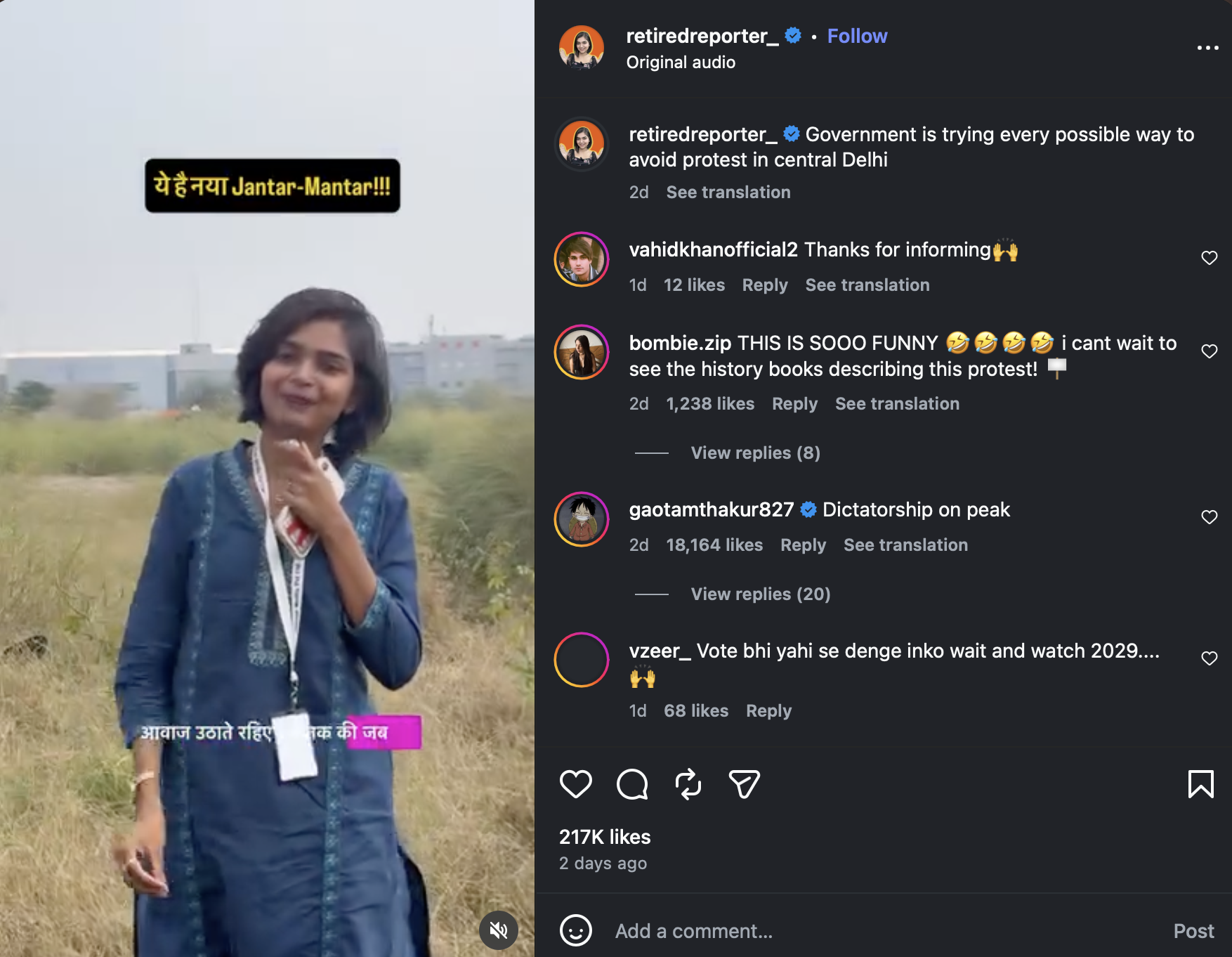
There is a curious case of Shivani Gautam, an Instagram-based reporter who presents herself as an ‘independent journalist’, and who has been covering the latest protests organised by the Cockroach Janta Party (CJP) against Chief Election Commissioner Gyanesh Kumar with a press card issued by a media company that was barely six days old.
Gautam, who operates the Instagram handle @retiredreporter_, had mostly been reporting about social causes related to women empowerment. However, something snapped overnight and her Instagram profile underwent a notable change just a few weeks ago: while her earlier protest coverage reportedly showed her reporting without a press card visibly hanging around her neck, her latest posts show her wearing one.
The change coincides with reports that Delhi Police made press accreditation mandatory for journalists covering the latest CJP demonstrations against Gyanesh Kumar. The card displayed by Gautam bears the name of Hitman Media Private Limited, a company incorporated on October 10, 2026.
By October 16, the company was just six days old.
The timing raises questions about how the company began issuing press credentials so soon after its establishment, and whether newly formed media outfits can provide a route for reporters to secure access to politically sensitive protests while presenting themselves as independent journalists.
From women’s empowerment reporting to CJP protests
Before the CJP agitation against Dharmendra Pradhan gained traction earlier this year, Gautam reportedly focused largely on women’s empowerment and social issues. Her Instagram account began attracting greater attention a few months ago, coinciding with her coverage of the CJP demonstrations.
As the protests gained visibility, her reporting increasingly revolved around the demonstrators’ grievances and their opposition to the Central government and the BJP. Now that the CJP is organising the protest in Delhi to target Chief Election Commissioner Gyanesh Kumar, Gautam is reporting from the ground.
Her coverage has been notably sympathetic to the protesters and critical of the government. There is nothing inherently wrong with questioning the Centre or giving extensive coverage to a protest movement. But there is a difference between independently investigating a movement and consistently advancing its preferred narrative. One of the reasons could be she has started getting traction on her stories only after reporting on CJP protests.
Although it doesn’t establish that Gautam is formally affiliated with the CJP or receives instructions from the organisation, her reporting history raises questions about how she approaches the movement’s claims and whether audiences can clearly distinguish independent reporting from advocacy.
Instagram reveals a change in her press credentials
Gautam’s own Instagram profile provides an important chronological detail.
Her earlier posts covering the CJP protests against Dharmendra Pradhan in July showed her reporting without a press card visibly displayed around her neck. Her latest posts from the demonstrations against Gyanesh Kumar, by contrast, show her wearing one.
This change coincides with the reported requirement introduced by Delhi Police for press credentials at the latest protest sites.
The sequence is worth examining. Gautam had already been covering the CJP agitation before the latest demonstrations. Yet the press card became visible in her coverage during the protests against Gyanesh Kumar, when press credentials reportedly became mandatory.
The card bears the name of Hitman Media Private Limited, incorporated on October 10, 2026. That makes the company just six days old as of October 16.
A newly incorporated media company is not automatically illegitimate. However, the timing invites scrutiny: what media operations did Hitman Media have in place when it began issuing press cards, and what standards did it apply before identifying reporters as journalists?
It is also important to distinguish a company-issued press card from official government accreditation. The available information establishes that Gautam displayed a card bearing Hitman Media’s name; it does not establish that she held accreditation issued by the Press Information Bureau or another government authority.
Was Hitman Media established to obtain press credentials?
The most consequential question concerns the purpose and timing of Hitman Media’s establishment.
Given its recent incorporation and the appearance of its press card in Gautam’s latest protest coverage, one possibility worth investigating is whether the company was set up primarily to obtain press accreditation for reporters seeking to cover the CJP demonstrations.
The available evidence does not establish that this was the company’s actual purpose. There is no direct evidence demonstrating that Hitman Media was created specifically to secure credentials for Gautam or other individuals.
Nevertheless, the possibility raises legitimate questions about the verification process. If a newly established outlet can issue credentials that help reporters cover demonstrations, what checks establish that it has a functioning editorial operation? Do the relevant authorities examine the outlet’s journalistic work and the professional standing of those reporting under its name?
The issue is not that a new company should be barred from journalism. It is whether the process adequately distinguishes an operating news organisation from an entity established primarily to obtain credentials for particular individuals.
If the timing reflects an attempt to meet new access requirements, that should be established through verifiable evidence rather than assumed. The company’s incorporation date and Gautam’s latest posts are grounds for asking questions, not proof of improper conduct.
When the reporter decides the story before reaching the protest
The deeper issue is the meaning of independent journalism.
A journalist can criticise the Centre, sympathise with protesters or challenge the BJP while still practising independent journalism. Independence does not require artificial neutrality, nor does it prevent a reporter from exposing misconduct or questioning official narratives.
But independence requires a willingness to follow the evidence even when it contradicts one’s existing assumptions.
When a reporter approaches a protest site having already settled on the political interpretation of the event, coverage risks becoming an exercise in reinforcing a predetermined narrative rather than investigating what is happening. Protesters’ allegations may be repeated without adequate scrutiny, inconvenient facts may receive less attention, and the government’s response may be presented without testing the evidence behind either side’s claims.
That is the distinction between reporting on the CJP and producing coverage that consistently advances the CJP’s perspective.
There is nothing inherently wrong with specialising in a movement or adopting an openly stated editorial position. The problem arises when advocacy-driven coverage is presented as independent journalism without sufficient transparency about the reporter’s approach and affiliations.
In Gautam’s case, the question is not whether criticism of the government makes her an activist. It is whether her reporting demonstrates the independence she claims. A press card cannot answer that question; the quality, sourcing and fairness of her journalism must.
Questions that deserve answers
The circumstances surrounding Gautam’s press card raise several concrete questions. When was it issued? What editorial operations did Hitman Media have in place at the time? Did the company seek credentials in response to the reported new requirements at the CJP protests? What verification process was applied? And how does Gautam distinguish independent reporting from coverage that advances the CJP’s political narrative?
These questions should be addressed through verifiable records and responses from the people concerned.
The central issue is not simply that a six-day-old company issued a press card. It is whether the organisation’s history and operations support the professional standing implied by that card, and whether the journalist using it is willing to subject her own reporting to the same scrutiny she applies to the government.
For someone who presents herself as independent, the ultimate test is not the card hanging around her neck. It is whether she remains willing to investigate facts that challenge the narrative she appears sympathetic to, rather than deciding what the story should be before reaching the protest site.
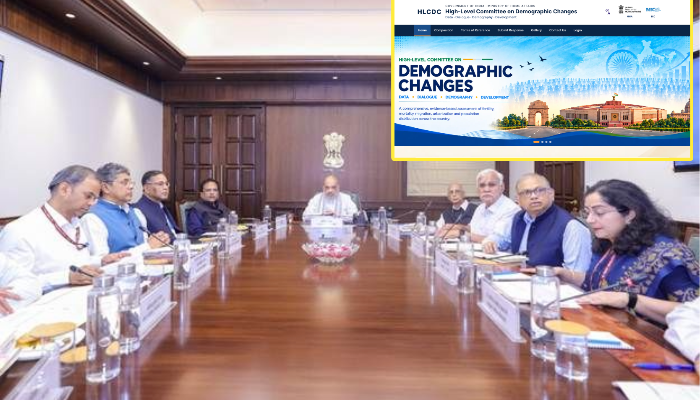
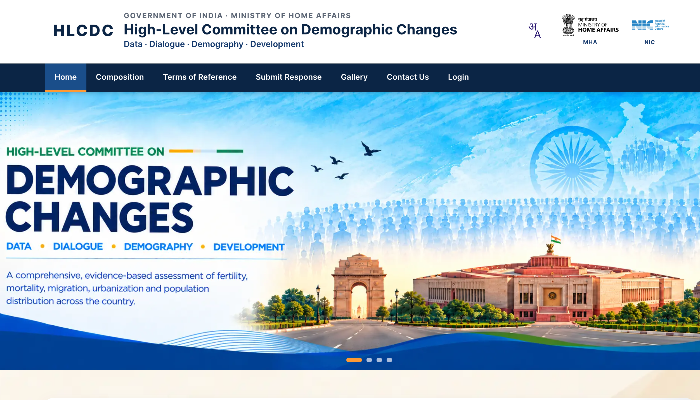
On 14th October (Wednesday), Justice Prakash Prabhakar Naolekar (Retired), the chairman of the High-Level Committee on Demographic Changes (HLCDC), inaugurated a dedicated online platform in New Delhi. The web portal is fully functional and available for data engagement, stakeholder inputs and public access.
The platform makes it easier for central government ministries and departments, state and union territory governments, NGOs (non-government organisations) and institutions alongside individuals to provide input, data and information about peculiar settlement patterns, unnatural demographic changes, their causes and underlying factors.
These contributions will assist the panel in analysing and determining the reasons behind demographic shifts as well as in recommending a permanent, well-organised system for the lawful, just and timely identification, detention, and expulsion of illegal immigrants living in the nation. The committee was set up by the Union Ministry of Home Affairs (MHA) on 26th May.
The eight terms of the committee are also defined on the portal.
To undertake an extensive consideration of the challenges arising from demographic changes, including those due to illegal immigration.
To study the possible causes of such demographic changes, such as variations in fertility, cross-border movement (including illegal immigration), economic opportunities and other socio-environmental factors.
To identify the underlying factors behind these changes, including illegal immigration, abnormal settlement patterns, and planned migration.
To analyse structural population changes at the level of religious or social communities, especially those diverging from uniform trends.
To recommend a well-organised and permanent operational system for the legal, fair and time-bound identification, detention, and deportation of illegal immigrants already residing in the country.
To recommend an appropriate institutional mechanism to strengthen border management, population stabilisation, and identification systems for sustained monitoring of such trends.
To propose a comprehensive policy framework to enhance coordination between central and state governments in matters related to illegal immigration and resultant demographic imbalance.
The committee may recommend any other measure it deems appropriate to address the challenges arising from demographic changes, including those due to illegal immigration.
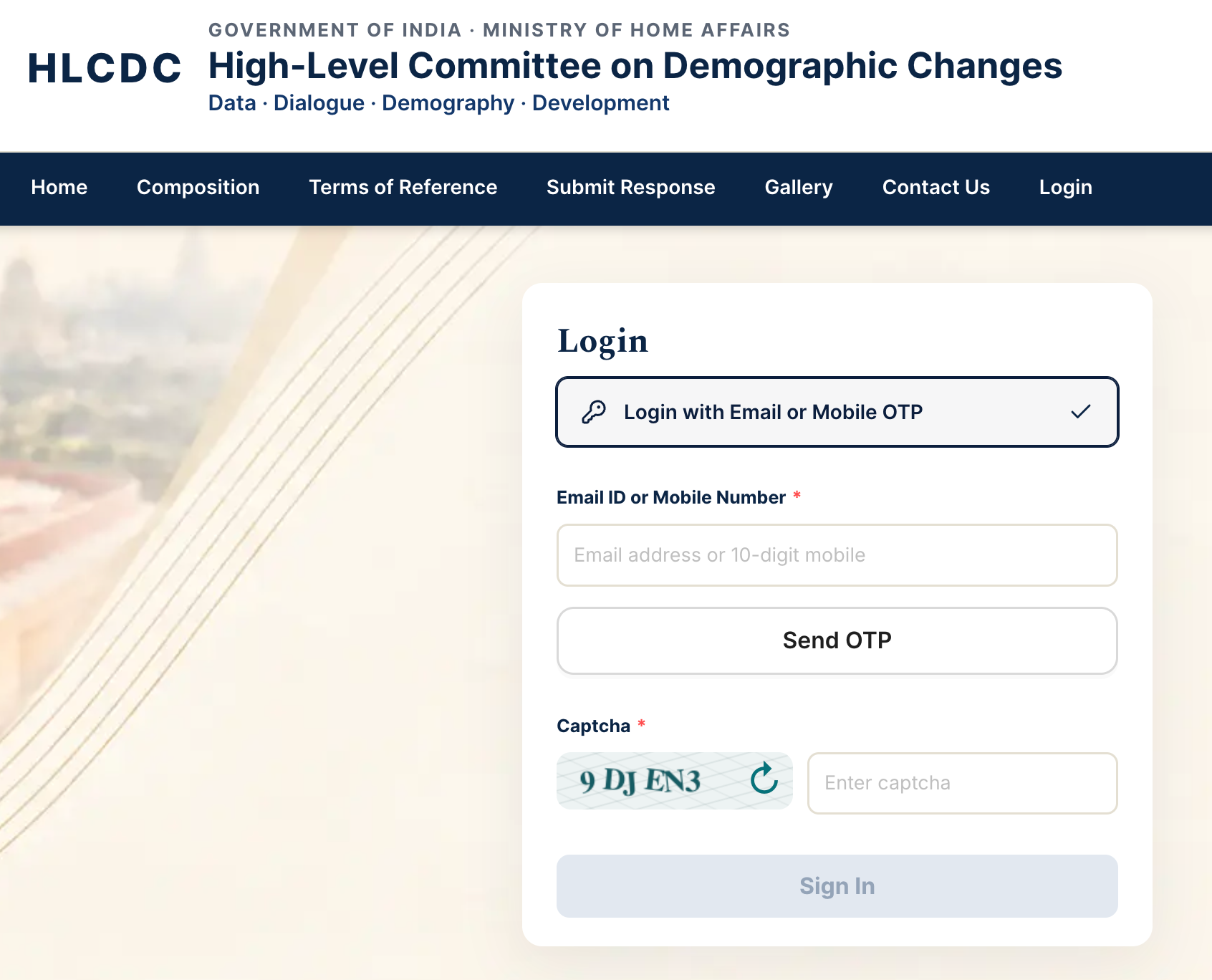
As aforementioned, the website maintains a specialised section enabling individuals to register by providing their email address or phone number, thereby facilitating access via one-time password (OTP) authentication. Users must complete a CAPTCHA verification prior to advancing further, and subsequently submit concerns, feedback, details, or information.
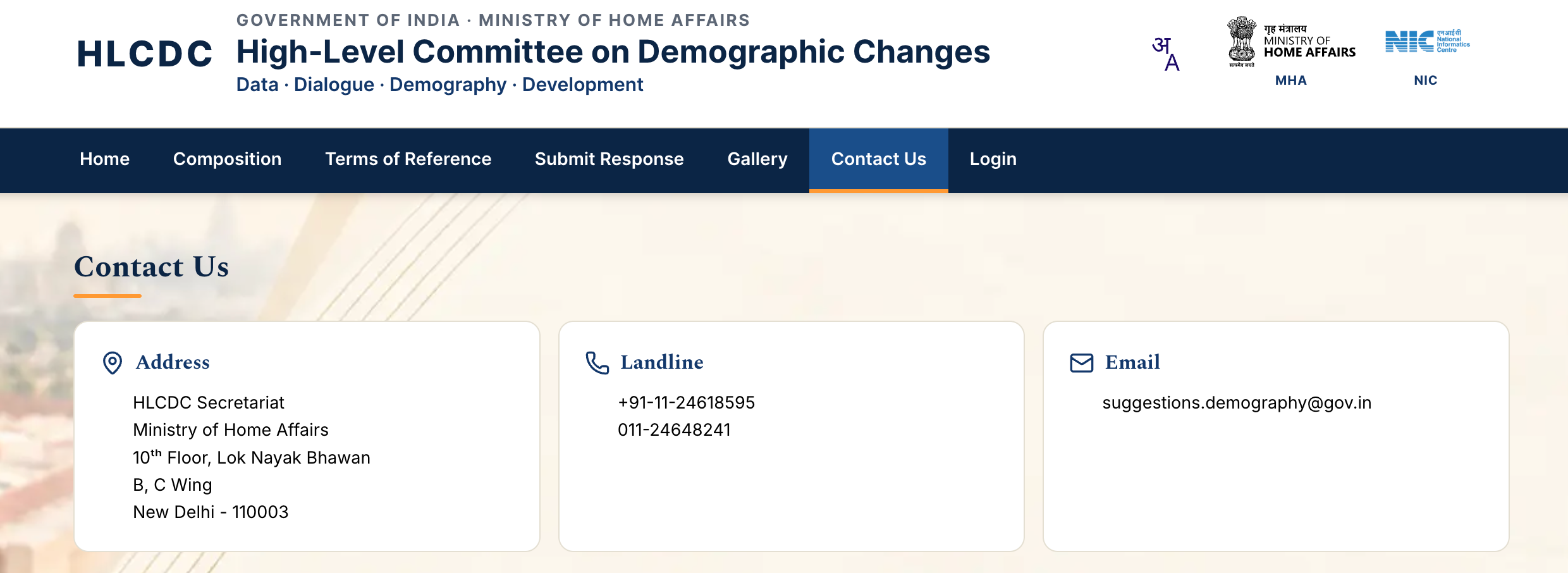
The website additionally provides an address, telephone number, and email address to facilitate easier communication for individuals seeking to contact.
The alarming reality of demographic change
Demographic change is real and is taking place at a faster pace than is known. This change, however, is not only driven by illegal Muslim immigrants from Bangladesh and Myanmar but also by local factors, including differential population growth rates among different religious communities.
In Assam, the porous India-Bangladesh border has allowed illegal immigration of Bangladeshi Muslim nationals into India over the years. These Bengali-speaking Bangladeshi Muslim infiltrators obtain counterfeit documents like Aadhaar cards, ration cards, etc. After entering India, they take up menial jobs, become criminals, encroach on tribal lands, harass local Indians in many cases, reproduce like there’s no tomorrow, and have altered the demographic balance in many districts.
In 2019, the National Register of Citizens (NRC) exercise in Assam excluded around 1.9 million people from the register. The 2011 census revealed that Muslims constitute about 34% of Assam’s population, up from 30.9% in 2001, with districts like Dhubri, Barpeta, and Goalpara becoming Muslim-majority. The influx of illegal Bangladeshi Muslim immigrants faces strong opposition from indigenous Assamese communities.
Similarly, in West Bengal, illegal infiltration of Bangladeshi immigrants is a big menace. In districts like North 24 Parganas, Murshidabad, and Malda, among others, the Muslim population has surged exponentially. The Trinamool Congress government in West Bengal is notorious for its leniency towards illegal Muslim immigrants for political gains. Other bordering states like Tripura, Jharkhand, and Jammu and Kashmir have also witnessed the influx of illegal immigrants.
In a research paper published in Economics and Political Weekly, Economist and member of the Economic Advisory Council to the Prime Minister, Professor Shamika Ravi, and economists Mudit Kapoor, Sunil Rajpal and SV Subramanian revealed that the Hindu population in a Hindu-majority India is declining while the Muslim population, which in political parlance is called a ‘minority’ but in reality is the second-largest religious majority, is increasing exponentially. The researchers relied on the census data on religion from 2001 to 2011 to describe the changes in religious composition across 640 districts.
The researchers found that the share of the Hindu population declined in 468 out of 640 districts of India. That is over 70% of the total districts. In 227 districts, the dip was even larger than the national average fall of 0.7%. The Muslim population increased in 513 districts, and the Christian population increased in 439 districts.
In the northeast states of Nagaland, Mizoram, Meghalaya, and Arunachal Pradesh, the Christian population is increasing rapidly. In 238 Indian districts, the Christian population increased by more than 50% between 2001 and 2011. It is pertinent to mention that Christian missionaries have been very active in these regions, luring non-Christian tribal populations into Christianity by offering financial inducements, jobs, education, and health benefits, etc.
In West Bengal and Assam in the east, the Hindu population has declined, and so is the case in the northwestern districts of Uttar Pradesh, coastal districts of Maharashtra, Karnataka, and the Malabar region in Kerala. Similarly, in central districts in Maharashtra, Chhattisgarh, and Odisha has been a substantial decline in the share of the Hindu population.
A report published by the think tank Centre for Policy Studies (CPS) also raised similar concerns over possible religious-demographic imbalances in the states. The CPS report titled Religious Demography of India: Rising Religious Imbalance in the Declining Fertility Regime of Kerala revealed that Muslims in Kerala (27% in Kerala, as per the 2011 census) overtook the Hindus, who form 54% of the state’s population, in total live births after 2015. In the year 2019, out of the total live births, Muslims had a share of 44% while Hindus had a share of 41%.
Between 2008 and 2021, the share of Muslims in total live births witnessed a significant increase and, in specific years, even overtook Hindus, while the Hindu community’s share in total live births dropped significantly, with similar trends recorded in Christian total live births.
The CPS report found that between the time period of 2008 and 2019, the share of Muslims in live births increased from 36.3% to 44.4%, while the share of Hindus correspondingly declined from 45.0% to 41.0% and that of Christians from 17.6 to 14.3%.
Conclusion
In India, concerns surrounding infiltration extend beyond border security to the preservation of indigenous cultures, local traditions and historical identities. The renaming of places with deep-rooted cultural significance, the gradual erosion of local customs and the alteration of a region’s demographic composition have become a part and parcel of this predicament, leading to tensions and unrest with the natives.
The effects also reach across law and order, public resources, and the economy. A substantial and unmanaged population increase places additional pressure on the country’s economy and resources, especially one with a massive population like India and that too in areas already struggling with limited resources. Illegal infiltration not only places an undue burden on the country’s resources but also comes at the expense of the rights and legitimate interests of Indian citizens.
This also poses a serious threat to peace and social harmony, with several incidents of criminal activities and unrest linked to illegal immigrants, including attacks on officials trying to carry out their duties. Moreover, members of the Hindu community have also been forced to leave their localities due to this problem.
The consequences also spill over into the environmental sphere as well, as evident in Assam, where a targeted campaign had to be initiated to reclaim public land, forests and national parks from encroachment, including by the infiltrators.
BJP-led governments, from Assam to West Bengal, have undertaken targeted campaigns against illegal infiltration to protect the states, which has been identified as a massive challenge, particularly in border regions. Now, alongside these state-level efforts, the centre has also launched a dedicated initiative to address the pressing issue of demographic change, an issue that has repeatedly featured in observations by Indian courts, including the Supreme Court, about the risks associated with this menace.
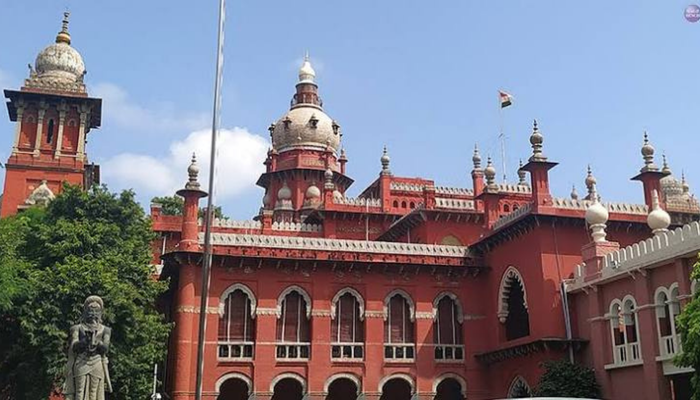
The Madras High Court on Thursday (October 25, 2026) pulled up the Tamil Nadu Police for refusing to allow a Rashtriya Swayamsevak Sangh (RSS) march to pass through a route with a mosque and an Eidgah. A Single Bench of Justice V. Lakshminarayanan made strong remarks against the state police for denying permission for the march during the hearing of a plea filed by the State Secretary of the Rashtriya Swayamsevak Sangh (RSS), North Tamil Nadu, against the decision.
Marches cannot be denied for “lame” reasons
Justice V. Lakshminarayanan cited the High Court’s guidelines on route marches and said peaceful marches cannot be denied permission for “lame” reasons such as the presence of mosques and churches, the possibility of traffic congestion, or the presence of an organisation with a different ideology. The High Court reprimanded the state police for not complying with the guidelines, which were issued so that the court’s time is not wasted on deciding litigation arising from such matters.
“Before framing guidelines, the judge had concluded that the reasons that there are mosques and churches, possibility of traffic congestion, presence of organisations with different ideologies, should not be taken as a reason for rejection. In fact, he had termed these reasons as lame. It was the fervent hope of the Supreme Court and this court that after the guidelines, such unnecessary and frivolous litigation would be avoided. Alas, it was not to be,” the High Court sternly remarked.
“The reasons which this court had found lame had been yet again given by the police…The purpose for which the guidelines have been framed has been breached by the petitioner and the State. It was expected that the parties would cooperate. This faith has been entirely misplaced. This matter has been heard at length and time has been spent on a litigation that should not have arisen at all,” the court added.
Citizens can’t surrender their rights to the “whims” of the police
Furthermore, the High Court asserted that citizens cannot be made to surrender their rights to the “whims and fancies of the police”. “The problem is you (State) are surrendering everything to the police. Citizens’ rights cannot be surrendered to the whims and fancies of the police…God forbid I surrender the rights of the citizens to the Director General of Police,” the court remarked.
During the hearing of the petition yesterday, the High Court had questioned the Tamil Nadu police for denying permission for a route march in the state while the organisation was permitted to hold marches even in Jammu and Kashmir, which is a terrorist infested area. The court had told the RSS counsel and the State Public Prosecutor John Sathyan to find a solution, but it could not happen.
The High Court issued directions to the petitioner and the Advocate General. It sought from the petitioner details of the person in charge, and details of participants, etc in the form of an affidavit, along with an undertaking to the effect that the organisation would abide by the conditions given by the court. The court directed the Advocate General to get instructions from the Director General of Police with respect to granting permission upon filing of such affidavit.
The High Court’s previous stance on religious exclusivism
This is not the first time that such an issue relating to passing of processions or marches through some specific areas has come up before the court. In 2021, a similar matter came up before the court where the Muslim community in V. Kalathur village, Veppanthattai Taluk, Perambalur District opposed Hindu religious celebrations and processions. As a result of the opposition from the Muslim minority, the local administration had imposed certain conditions on Hindu religious festivities not to offend the Muslims’ sentiments.
A Division Bench of Justices N Kirubakarn and P Velmurugan upheld the Hindu community’s right to take out religious processions and stated that a religious procession passing through a public street cannot be prohibited merely for the reason that another community living in the area is opposing it.
The High Court noted that the villages had several Hindu temples, which had existed there for decades. It also pointed out that the Hindu religious processions had been passing through the streets of the villages as part of an old custom and that the local Muslims started opposing them since 2012.
“The temples have been there for decades together. Merely because a religious group got settled in a locality and has become vociferous, they cannot object to the custom of taking the temple’s procession through all the streets in the village, and consequent upon their objections, the customary and traditional practices cannot be prevented or prohibited,” the High Court stated.
The High Court made it clear that the presence of a place of worship cannot be a reason to prohibit other religious groups from exercising their religious rights. “The presence of religious structures/places of worship cannot take away the right of other religious groups who have been enjoying all the rights, including the conduct of religious processions for the past many years,” the High Court noted in its judgment.
The court cautioned that if the unfair resistance displayed by one community towards the religious celebrations of the other community is reciprocated, there would be “chaos, riots, religious fights causing loss of lives and destruction of properties” and the secular fabric of the country would be destroyed.
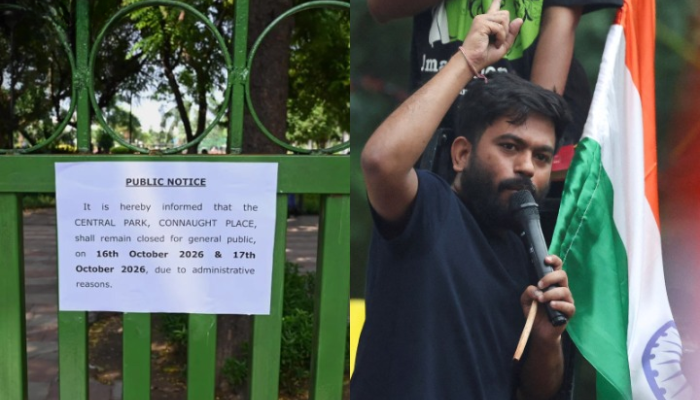
Abhijeet Dipke, founder of the Cockroach Janta Party (CJP), has announced an unauthorised program against the arrests of its co-convenors Saurav Das and Ashutosh Ranka for breaking into the denotified protest site at Jantar Mantar. The “Lehra Do Tiranga” march will be held at Connaught Place’s Central Park on 16th October (Friday).
Another Shaheen Bagh in the making: Intelligence agencies raise alarm
However, intelligence agencies have cautioned that the event could turn into an unending sit-in agitation for the release of the two leaders, reported News18. According to the sources, the participants might refuse to vacate the location after 5:00 pm, as they referred to 20th June, when permission was similarly granted until the same time, but the demonstration persisted for more than a month.
Additionally, agencies anticipate that the attendees will not travel directly to Central Park and instead congregate in small groups at different places, resulting in simultaneous assemblies throughout Central and New Delhi Districts.
It has been highlighted that extensive use of social media for livestreaming and mobilisation, along with last-minute venue or route modifications, could make crowd management and traffic control harder, especially during evening peak hours.
The insiders also mentioned that restrictions on Central Park could lead to attempts to move in the direction of Parliament House, India Gate, Rashtrapati Bhavan, the PMO, the Supreme Court, political party offices, and the homes of high-ranking public officials. Security has been identified as a top priority in the vicinity of these venues.
The evaluation also issued a warning regarding disorder. It stated that anti-social individuals could take advantage of the occasion to engage in unlawful activities, including overcrowding, rumour-mongering, or instigation, which might culminate in pushing, altercations, or damage to public property in and around the area.
The current apprehension stems from past CJP campaigns. Two police officers were hurt in an attack and stone pelting that took place during the 10th October protest close to Akashvani Bhawan. The next day was followed by reports of confrontational incidents.
On 20th July, organisers in the New Delhi district violated prohibitory orders under Section 163 of the Bharatiya Nagarik Suraksha Sanhita (BNSS) when demonstrators tried to depart the designated protest area in defiance of regulations on unapproved processions and assemblies.
The sources stated that the number of people was significantly more than communicated. They also broke through police barricades, which could be repeated this time with another unanticipated surge. An eye is being kept out for mobilisation calls, gathering spots, and last-minute modifications on social media platforms.
Furthermore, preventive measures have been recommended at bus terminals, train stations, and metro stations, where sufficient force and crowd control measures are kept on hand. Police will remain on duty until the throng has entirely dispersed, and security around important installations and VIP zones in the national capital will be strengthened.
A familiar playbook in action
CJP regularly references democracy, the Constitution, the tricolour and other national symbols to portray its “movement” as a struggle for the better future of the country and its people. To the uninitiated, the rhetoric might seem to reflect a genuine commitment to democratic rights. However, a closer look at the party’s past conduct reveals how such revered symbols are routinely used to lend legitimacy to its actions.
It was not long ago that a CJP protest descended into violence and vandalism, leaving hundreds of police personnel attacked and injured over the demanded of the resignation of then Union Education Minister Dharmendra Pradhan.
The group’s supporters were again caught trying to urge others, particularly members of “Gen Z,” to indulge in problematic antics and foment unrest ahead of the 10th October agitation against Chief Election Commissioner Gyanesh Kumar. Their plan, however, was thwarted by stringent measures taken by the authorities.
Hence, the invocation of national symbols, figures and constitutional ideals sits uneasily with its own conduct. The disconnect between its statements and its actions is difficult to ignore, as the appeals evidently serve not as a guiding force but as a convenient cloak to disguise its real objectives.
However, this is not an isolated matter but part of another part of a repetitive script that has often played out on the streets of India, ending up in violence, widespread disruption and chaos. Many agitations, including the anti-CAA (Citizenship Amendment Act) propaganda and the rallies against the three Farm Laws, which were later repealed, driven by unfounded assertions or political and ideological bias, descended into riots and turmoil against Hindus and the state.
The concentrated effort against the CAA, presented as a crusade to defend the Constitution and the rights of Indian citizens, issues entirely unrelated to the legislation, was unveiled to be a profound conspiracy against the nation. The pathway to citizenship for persecuted religious minorities from Pakistan, Afghanistan and Bangladesh was framed as a great discrimination, while the national flag and the Constitution were brandished at the demonstrations, including the infamous Shaheen Bagh.
However, the drama finally exploded into the anti-Hindu riots in Delhi, which claimed at least 53 lives. Intelligence Bureau officer Ankit Sharma was killed during the violence, and former Aam Aadmi Party councillor Tahir Hussain has been convicted in connection with the murder and the rampage. Head Constable Ratan Lal met a similarly tragic fate at the hands of rabid Muslim fanatics.
Shahrukh Pathan, whose pistol-wielding image came to define this dark chapter, was arrested for pointing the weapon and firing at unarmed Head Constable Vivek Dahiya.
Notably, the primary names linked to the protests, including Umar Khalid and Sharjeel Imam, who have been booked under the Unlawful Activities Prevention Act (UAPA), dragged national symbols even as allegations of their involvement in orchestrating violence came to the fore. Khalid has alleged that Kashmir is illegally occupied by India, while Imam wanted to sever the “Siliguri Corridor” (Chicken’s Neck) from the rest of the nation.
Moreover, the incident happened during United States President Donald Trump’s visit, a period when the country’s international standing was under the spotlight. This cabal wanted to trigger disturbances across the country, target the Hindu community and tarnish India’s global reputation in the name of justice and the Constitution.
Similarly, the national flag and the Constitution featured heavily throughout the farmer protests, which were rife with charges of violence. Their most horrifying episode transpired on Republic Day 2021, when shocking scenes erupted at the Red Fort with assaults on police personnel, vandalism and destruction unfolding at a monument of immense national significance. The unruly mob even desecrated the tricolour in a further display of their contempt.
Afterwards, it was found that 299 police officials had been wounded, 236 iron barricades were damaged, and 11 Delhi Transport Corporation (DTC) buses were vandalised. The year-long agitation also caused losses of nearly Rs 50,000 crore in only the Delhi-NCR (National Capital Region). The national symbols were essentially brandished to obscure the trail of carnage that accompanied the demonstration.
The very flag repeatedly invoked to lend the agitation a veneer of patriotism thus became part of a deeply disturbing episode that raised serious questions about the gap between the movement’s public symbolism and the conduct witnessed on the ground.
Furthermore, even the banned Popular Front of India (PFI) sought to project itself as a national and secular entity by exploiting these core values to attract Scheduled Castes, Scheduled Tribes and Other Backward Classes to its jihadi agenda. The Islamist outfit considered them potential instruments of political mobilisation to cultivate support while hiding its extremist goals.
PFI’s “India Vision 2047” clearly mentioned, “The party should utilise concepts such as the National Flag, the Constitution and BR Ambedkar to shield the real intention of establishing an Islamic rule and to reach out to SCs/STs/OBCs.” The symbols were appropriated to stand in direct opposition to the very principles they represent, to do away with the Constitution and to replace the entire system with the rule of Sharia.
Conclusion
It is not surprising to co-opt national symbols for their interests, and the CJP is also following suit. The tricolour and the Constitution are capitalised on as powerful instruments for swaying public opinion, with their symbolism conjuring a veneer of authenticity to narratives that might otherwise fail to win public support.
Neha Bora, national president of the All India Students Association (AISA), who has already aligned herself with the CJP, previously hailed Bangladesh’s regime change and expressed her desire to replicate it in India. Ironically, the national symbols are being harnessed to oust a democratically elected government to save democracy in India.
More troubling, Khalistani and other anti-national groups are also known to join such demonstrations, misusing the national symbols for their propaganda. The tricolour and the Constitution are transformed into tools of deception rather than expressions of genuine patriotism.
This tried-and-tested formula has been adopted by the AAP front CJP as well, with national symbols once again placed at the forefront of a politically motivated exercise. The party has also chosen to resort to age-old yet perilous tactics for short-term political gains, at a far greater cost to the nation and the people it consistently claims to champion.
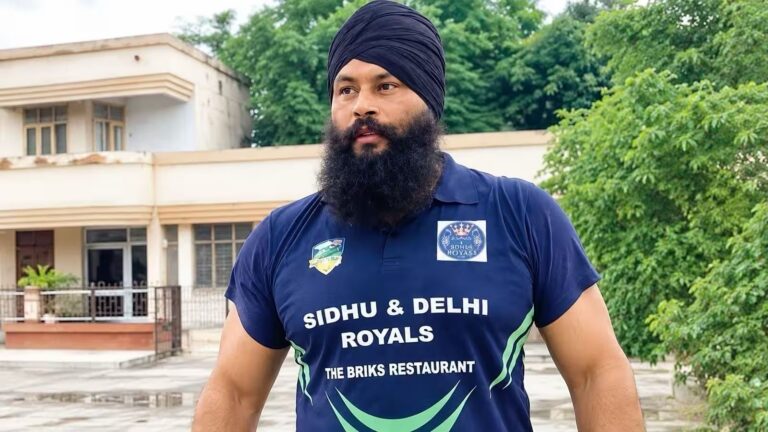
Parvinder Singh Jhota was fighting what he saw as Punjab’s drug menace. He confronted medical-store owners, challenged the alleged illegal sale of addictive medicines and built a following by publicly exposing what he believed was a criminal network destroying the state’s youth. On October 13, 2026, his campaign came to a tragic end when he was shot dead in Mansa during a confrontation with a medical-store owner.
His murder has triggered outrage, protests and accusations against the Aam Aadmi Party (AAP) government. But beyond the immediate questions surrounding his killing lies a wider political story: Jhota had reportedly grown disillusioned with the Bhagwant Mann government’s handling of drugs and had moved closer to Amritpal Singh’s Waris Punjab De, an organisation led by a man who openly advocates Khalistan.
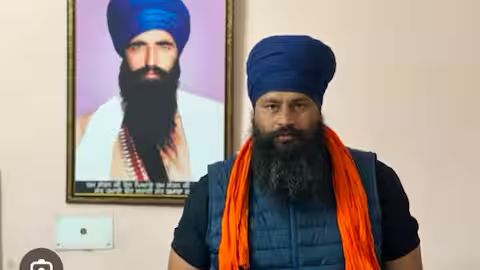
The photograph of Jhota standing in front of Bhindranwale adds another dimension to this story. Bhindranwale, whose legacy continues to inspire sections of the Khalistani movement, also rose to prominence amid a campaign against tobacco in 1981. He subsequently became a central figure in the Khalistani terrorism that engulfed Punjab.
Parvinder Singh Jhota (Image Source: India Today)
The parallel is worth examining, not because Jhota’s photograph or reported association proves that he was a Khalistani, but because Punjab’s history demonstrates how campaigns built around legitimate social and religious concerns can become intertwined with a much larger political project.
Jarnail Singh Bhindranwale: The anti-tobacco campaign of 1981
In May 1981, Amritsar became the centre of a bitter confrontation over tobacco. Sikh organisations demanded restrictions on tobacco sales and sought recognition of the city’s religious character. The agitation escalated when opposing groups staged a procession in support of smoking, inflaming tensions between Sikh and Hindu organisations.
Bhindranwale, then emerging as an influential religious preacher, mobilised supporters around the anti-tobacco campaign. The agitation brought him greater public visibility at a time when Sikh identity, religious authority and political representation were becoming increasingly contentious issues.
The anti-tobacco campaign was not, in itself, a separatist movement. Opposition to tobacco has a basis in Sikh religious norms, and people could support restrictions on smoking without endorsing Khalistan. Yet the events of 1981 helped bring religious mobilisation and the politics of Sikh identity into sharper confrontation.
Historical accounts identify the tobacco controversy as an important episode in the escalation of tensions that would subsequently shape Punjab’s politics. The issue became entangled with competing political agendas, militant assertions and the broader question of Sikh political identity.
Bhindranwale’s subsequent trajectory went far beyond campaigning against tobacco. He emerged as a central figure in Khalistani terrorism, a movement seeking a separate Sikh homeland. His growing confrontation with the Indian state culminated in Operation Blue Star in June 1984, during which he was killed.
Amritpal Singh: From anti-drug preacher to Khalistani politics
Four decades later, Punjab witnessed another figure whose rise to prominence was closely associated with a campaign against intoxicants.
Amritpal Singh returned to Punjab from Dubai in August 2022 and began mobilising young people around religious revival and the drug problem. His message resonated with sections of the youth in a state where addiction, unemployment and the social consequences of substance abuse have become persistent concerns.
His father, Tarsem Singh, spoke about the impact of the campaign in an interview with The Times of India. According to him, young people responded to Amritpal’s appeal, with some abandoning drugs and returning to religious observance.
The anti-drug campaign helped Amritpal establish a public profile. But his political messaging soon extended well beyond addiction and rehabilitation.
Amritpal openly invoked Bhindranwale’s legacy, adopted a similar appearance and began advocating Khalistan. His turban-tying ceremony as the head of Waris Punjab De was held in September 2022 in Rode, Bhindranwale’s native village. Some of his supporters began referring to him as “Bhindranwale 2.0”.
In February 2023, Amritpal and a large group of supporters stormed the Ajnala police station over the arrest of an associate. Six police personnel were injured during the confrontation, according to contemporary reports. The incident brought national attention to his confrontational methods and political influence.
After a 37-day manhunt, Amritpal was arrested on April 23, 2023, and detained under the National Security Act. In the 2024 Lok Sabha election, he contested from Khadoor Sahib while in detention and won by a margin of nearly two lakh votes.
His electoral victory demonstrated that his appeal extended well beyond a small circle of followers. It also underscored the political reach he had acquired through religious mobilisation and his messaging on Punjab’s social and political grievances.
Amritpal’s trajectory therefore presents an important distinction: his anti-drug campaign was one aspect of his public profile, while his advocacy of Khalistan represented a separate political objective. The existence of the former does not erase the latter.
Jhota’s reported proximity to Waris Punjab De
This brings us back to Jhota.
His campaign against the alleged illegal sale of addictive medicines addressed a serious problem. Reports following his death indicated that he had become increasingly disillusioned with the AAP government’s handling of the drug menace and had grown closer to Waris Punjab De.
That association is relevant because of the organisation’s leadership and political outlook. But the available reporting does not conclusively establish that Jhota was a formal member of Waris Punjab De, had adopted Amritpal’s separatist ideology or intended to pursue a Khalistani political agenda.
The photograph showing Jhota in front of Bhindranwale cannot establish any of those things either. It is a reason to examine the context of his reported associations, not proof of his personal beliefs.
Nevertheless, the broader political question remains. When a campaigner fighting a genuine social problem moves closer to an organisation led by an unabashed separatist advocate, it is legitimate to ask whether the social cause is becoming intertwined with a wider political mobilisation and separatist ambitions.
This is particularly relevant in Punjab, where the memory of terrorism and Khalistani separatism remains politically consequential and where public anger over governance failures can create opportunities for alternative political actors.
The danger is not that every anti-drug activist is secretly a separatist. Such a claim would be both unfair and unsupported. The danger is that a legitimate public grievance can be used to build political influence that eventually serves objectives extending beyond the original cause and promotes a radical ideology that calls for the secession of Punjab, thereby offering ammo to Pakistan-based terrorists and intelligence agencies to foment trouble in India.
Jhota’s murder becomes a political flashpoint
The reaction to Jhota’s killing has demonstrated how quickly the tragedy has become a political confrontation.
Balwinder Kaur, mother of Amritpal Singh, accused the Punjab government of killing Jhota and demanded Bhagwant Mann’s resignation, underscoring the close association of Jhota with Singh’s group.
“Parvinder Singh Jhota, who used to raise his voice against drugs, was killed by the Govt. Why are you killing those who are trying to stop the drug menace?” she said, alleging that people had been detained and prevented from travelling to Mansa for a protest.
#WATCH | Tarn Taran, Punjab | Balwinder Kaur, mother of Waris Punjab De chief Amritpal Singh, says, "Parvinder Singh Jhota, who used to raise his voice against drugs, was killed by the Govt. Why are you killing those who are trying to stop the drug menace? People have been detained and taken to Police station. This is shameful. I would like to tell the Govt., if you fear God then mend your ways…We have been stopped from heading to Mansa for a ‘dharna’. The Govt is acting shamelessly…Bhagwant Mann should resign and leave."
The political significance of the episode lies in how Jhota’s death is now being invoked to challenge the AAP government and mobilise public anger. Such mobilisation is not inherently illegitimate. Demanding justice for a murdered activist is entirely reasonable. But the wider political objectives of those participating in that mobilisation must remain open to scrutiny.
The photograph of Jhota with Bhindranwale has added to the controversy because the latter remains an icon for sections of the Khalistani movement.
The more substantial question is whether the drug crisis is becoming a platform through which organisations with separatist objectives garner sympathy among the public and strengthen their influence.
The lesson Punjab cannot afford to ignore
Punjab’s drug crisis is real. Families have lost children to addiction, criminal networks have profited from the illegal supply of intoxicating substances, and successive governments have faced questions over their ability to dismantle these networks.
The AAP government must be judged on its record: whether illegal supply chains are being broken, traffickers are being prosecuted, rehabilitation services are accessible, and people who expose criminal activity are adequately protected.
But the legitimacy of the anti-drug cause must not become a shield against examining the political objectives of those who claim to champion it.
Bhindranwale’s rise amid the anti-tobacco agitation of 1981 and Amritpal Singh’s emergence through an anti-drug campaign offer two historical reference points for understanding the relationship between social grievances and political mobilisation. Their subsequent trajectories demonstrate why the stated objective of a campaign cannot be the only factor in assessing the movement surrounding it.
Jhota’s story is not yet evidence of a similar trajectory. But his proximity to Waris Punjab De and the picture of him with Bhindranwale’s portrait reveals a clear pattern of how an anti-drug campaign is used to fuel Khalistani politics.
Yet his death presents Punjab with two urgent challenges. The first is to establish the truth about his murder and hold those responsible accountable. The second is to ensure that the state’s drug crisis is addressed through effective governance rather than being reduced to a political contest.
The fight against drugs must remain focused on saving lives, dismantling criminal networks and restoring families. Governments must answer for their failures, while political organisations must answer questions about their ideology and objectives.
A genuine social cause deserves public support. It does not confer immunity from scrutiny on every person or organisation that invokes it. And it also presents the government with the challenge of scrutinising the anti-drug crusade as a platform to further the Khalistani movement.
That is the lesson Punjab’s history offers, and one the state cannot afford to ignore.
India’s electricity sector is undergoing a remarkable transformation, but there exists a contradiction. Renewable energy capacity is expanding at an unprecedented rate, with non-fossil sources now accounting for more than 54% of the country’s installed power capacity. Yet coal remains the backbone of electricity generation, particularly during periods of peak demand.
This contradiction reveals one of India’s most pressing energy challenges: installing clean energy capacity is not the same as ensuring a reliable electricity supply around the clock.
On September 10, 2026, India’s peak electricity demand reached 269.2 gigawatts (GW), an exceptionally high level for the monsoon season. Humid conditions, uneven rainfall and increased agricultural pumping contributed to the surge. The figure offered a glimpse of India’s rapidly growing electricity requirements. According to Central Electricity Authority projections, peak demand could rise from 243.3 GW in 2023–24 to 334.3 GW by 2029–30 and 366.4 GW by 2031–32.
These projections are crucial because India’s energy transition is occurring alongside rapid industrialisation, urbanisation and rising household consumption. Air conditioning, electric vehicles, data centres and expanding manufacturing facilities are adding substantial demand. India must therefore achieve two objectives simultaneously: produce significantly more electricity while progressively reducing dependence on fossil fuels.
The fundamental difficulty lies in the difference between installed capacity and actual generation. Solar plants produce electricity when sunlight is available, while wind generation depends on weather conditions. Neither can independently guarantee continuous supply. Solar output falls sharply in the evening, precisely when household electricity consumption increases. This creates the electricity-grid challenge commonly called the duck curve, requiring other sources to rapidly compensate for declining solar generation.
The September demand surge demonstrated why coal remains indispensable. Coal and lignite reportedly supplied approximately 188.8 GW, or 70.1% of peak demand. Wind contributed 18.2 GW, large hydropower 24.5 GW and nuclear energy approximately 6.2 GW. Solar generation was unavailable at the reported evening peak.
Consequently, despite expanding renewable capacity, India is planning to add approximately 80–97 GW of coal-based generation capacity, including more efficient ultra-supercritical plants. This reflects the need for dependable electricity during periods when renewable generation cannot meet demand.
Hydropower provides another important source of flexibility. Hydro turbines can increase output within minutes, helping balance fluctuations in electricity consumption. However, hydropower depends on adequate reservoir storage. Uneven monsoon rainfall and reported regional water-storage deficits of 8–15% during 2026 constrained its contribution, increasing reliance on thermal generation.
This exposes the interconnected nature of India’s water and energy security. Reservoirs must support irrigation, drinking water and electricity generation. Climate variability can therefore affect agricultural production and power availability simultaneously.
Energy storage is emerging as the critical missing component of India’s renewable transition. Grid-scale batteries can store surplus daytime solar electricity for evening consumption, while pumped-storage hydropower can shift energy between periods of low and high demand. Without sufficient storage infrastructure, adding renewable capacity alone cannot eliminate the need for conventional power stations.
Nuclear energy offers another potential solution. India’s installed nuclear capacity stands at approximately 8.78 GW, with ambitions to reach 14.8 GW by 2028, around 20 GW by 2031–32 and eventually 100 GW by 2047. Unlike solar and wind, nuclear reactors can provide continuous low-carbon electricity. However, substantial investment, regulatory requirements and long construction periods mean there is a long wait before we reach there.
India’s energy future will therefore depend on combining multiple technologies rather than relying on any single source. Solar and wind can provide increasingly affordable clean electricity, batteries and pumped storage can address intermittency, hydropower can balance sudden fluctuations, and nuclear energy can strengthen dependable low-carbon supply. Coal will remain necessary during the transition, but its contribution can decline as these alternatives mature.
Ultimately, the success of India’s energy transition cannot be measured merely by the number of solar panels installed or the percentage of renewable capacity added. What matters is how much clean electricity actually reaches consumers, how reliably the grid handles peak demand, and how effectively storage and transmission infrastructure reduce fossil-fuel dependence.
On July 13, 2026, Saudi-backed forces fundamentally altered the regional security architecture by bombing the runway of Sanaa International Airport. While ostensibly executed to intercept an Iranian civilian aircraft carrying a returning delegation, the strike officially terminated a fragile, multi-year de-escalation protocol. Consequently, the Houthi militia initiated a calculated campaign of strategic strikes against Saudi aviation and energy infrastructure. Despite possessing an annual defence budget exceeding $83 billion and advanced American hardware, Saudi Arabia remains fundamentally vulnerable to this impoverished insurgency. This persistent vulnerability exposes a systemic mismatch between conventional military doctrine and unconventional asymmetric reality.
The tactical engagements across the border are defined by extreme financial disparity. The Houthi arsenal heavily relies on mass-produced kamikaze drones, such as the Qasef and Sammad variants, costing merely ₹12 lakhs to ₹15 lakhs to manufacture using smuggled commercial components. To intercept these rudimentary systems, the Royal Saudi Air Defense Forces must routinely fire sophisticated Patriot PAC-3 missiles, which cost upwards of ₹33 crores per launch. Consequently, this unsustainable dynamic weaponises the kingdom’s own high-tech defence budget against itself, granting the Houthis a massive economic victory even when aerial interceptions are completely successful.
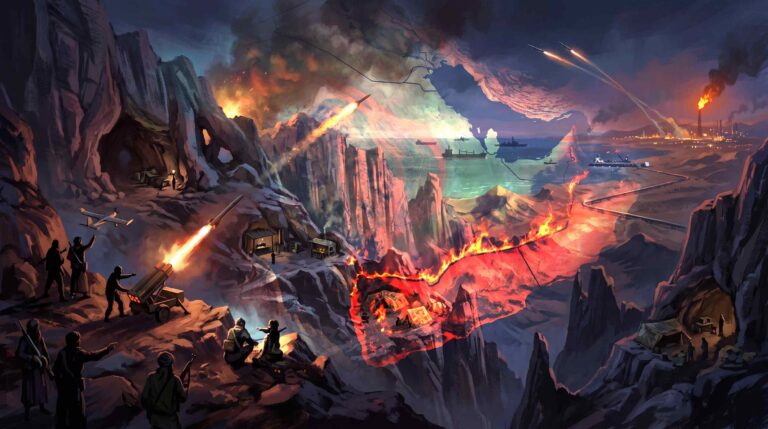
Furthermore, the physical geography of northern Yemen severely handicaps conventional mechanised military operations. The Houthi heartland comprises rugged, serrated mountain ranges riddled with labyrinthine cave systems, rendering heavy Saudi armour virtually useless. Lacking the capacity for effective ground combat, Riyadh relies almost entirely on high-altitude aerial bombardment, which historically fails to uproot entrenched guerrilla infantry. Importantly, this operational failure is compounded by the deliberate institutional fragmentation of the Saudi armed forces. Engineered around a doctrine of “coup-proofing” since an aborted 1969 overthrow attempt, the military apparatus is intentionally divided into competing fiefdoms, severely undermining modern joint-force coordination.
Beyond military attrition, the Houthis have successfully weaponised regional geography to execute strategic economic blackmail against the Saudi state. For decades, Riyadh invested heavily in the 740-mile East-West Petroline to transport crude oil to the Red Sea port of Yanbu, specifically designed to bypass the Iranian-controlled Strait of Hormuz. However, by establishing a physical blockade at the southern Bab el-Mandeb Strait, the Yemen-based militia has effectively nullified this strategic bypass. Therefore, maritime tankers must still navigate heavily contested waters, allowing the Houthis to directly threaten the sovereign revenue streams required to fund the Saudi administration.
Ultimately, the current framework of localised airstrikes and reactive naval patrols has comprehensively failed to restore credible deterrence against the Iran-aligned proxy network. The Saudi administration finds itself trapped in a profound strategic dilemma, caught between the absolute necessity of securing its borders for its Vision 2030 economic transition and its inability to militarily defeat a hardened militia. Until the broader architectural flaws of Middle Eastern security are decisively addressed, the asymmetric conflict will continue to bleed conventional state powers, fundamentally altering how modern wars are fought, funded, and ultimately lost.
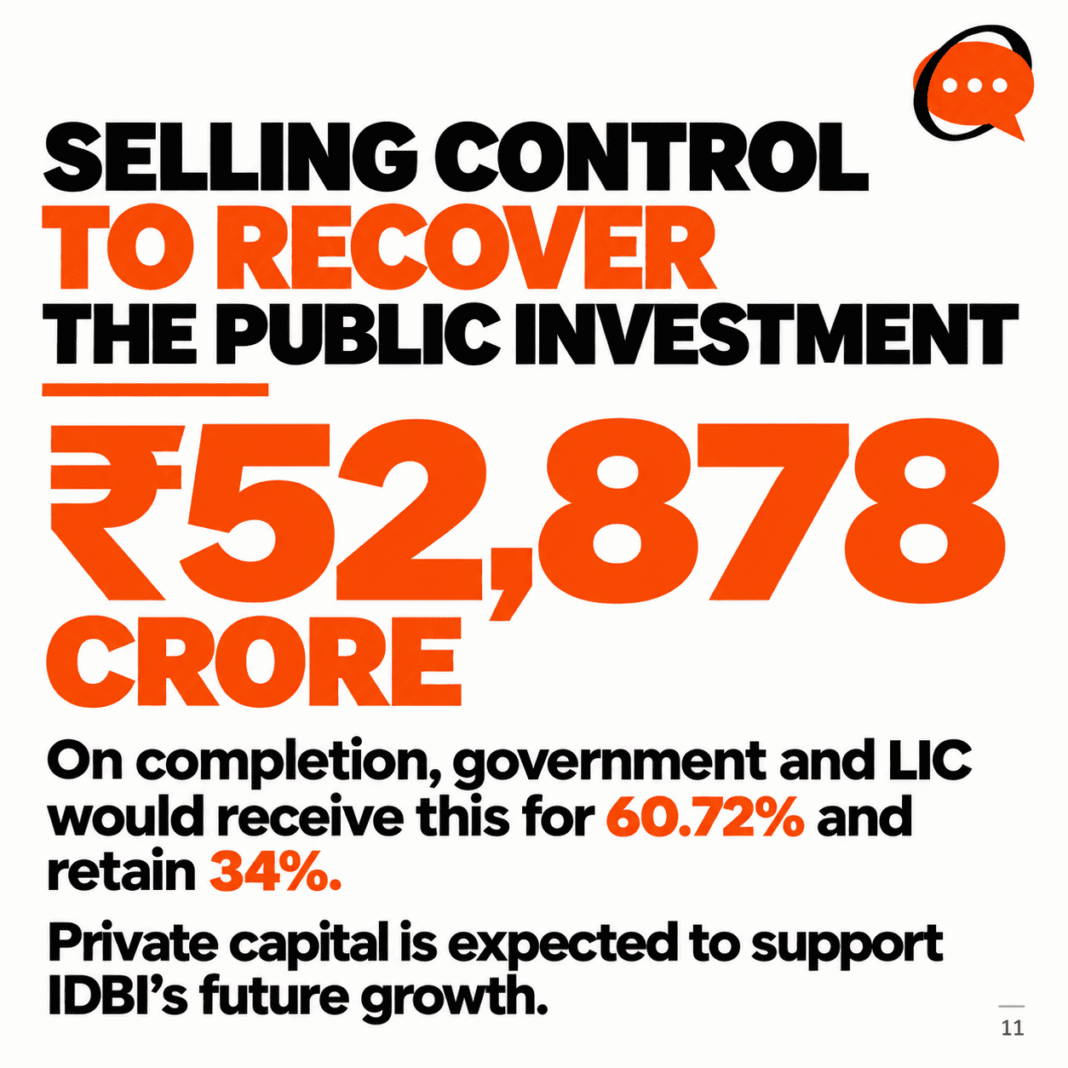
The Modi government’s formal approval of the sale of a 60.72% controlling stake in IDBI Bank for ₹52,878 crore marks a defining moment in India’s modern economic history. This one move will dismantle years of fiscal drag and create a blueprint for strategic restructuring.
While the Opposition and the left-liberal cabal are fearmongering about the Modi government selling off the country’s assets, a thorough examination of the balance sheet data and key metrics demonstrates that the transaction is an economic masterstroke.
The Modi government has acknowledged the inherited debt from the Congress-led UPA, turned around the fortunes of the bank, and is now monetising it to fully recover public money while retaining substantial equity.
Between 2014 and 2026, IDBI transitioned from a lender crippled by crony capitalism into a high-earning institution. By securing ₹52,878 crore through this strategic restructuring, the Narendra Modi government has reversed the cycle of endless taxpayer bailouts.
It has further insulated the public from systemic banking liabilities and proven that strategic governmental intervention can be of public good.
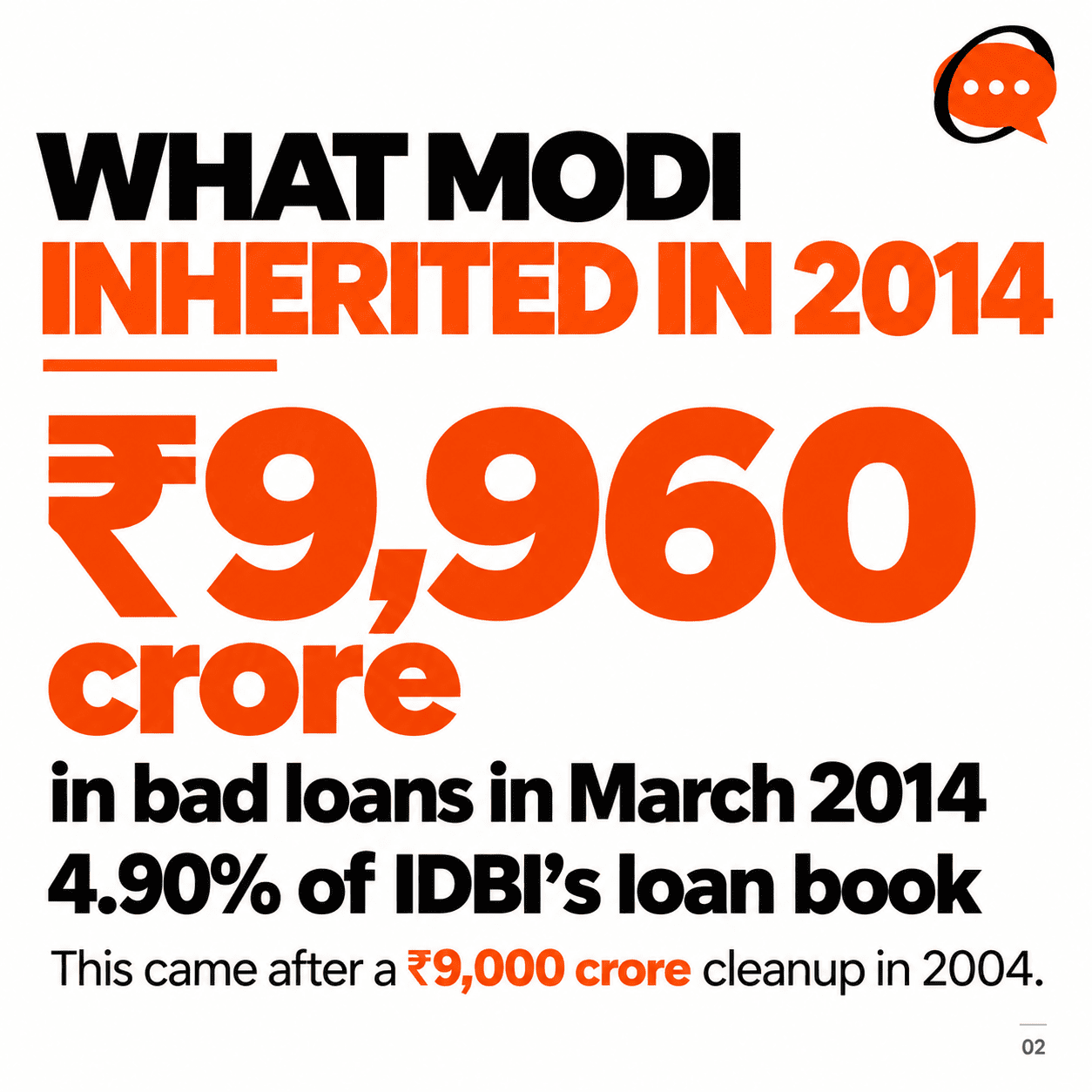
To understand why the sale of IDBI Bank is an economic masterstroke, we need to first understand the institutional wreckage inherited by the Modi government in May 2014. IDBI was transformed into a full-service commercial bank in 2004, although it was originally established in 1964.
The bank required a ₹9,000 crore government cleanup package in 2004 to absorb industrial debt and enable its commercial conversion. During the Congress era, IDBI witnessed aggressive, politically connected balance-sheet expansion.
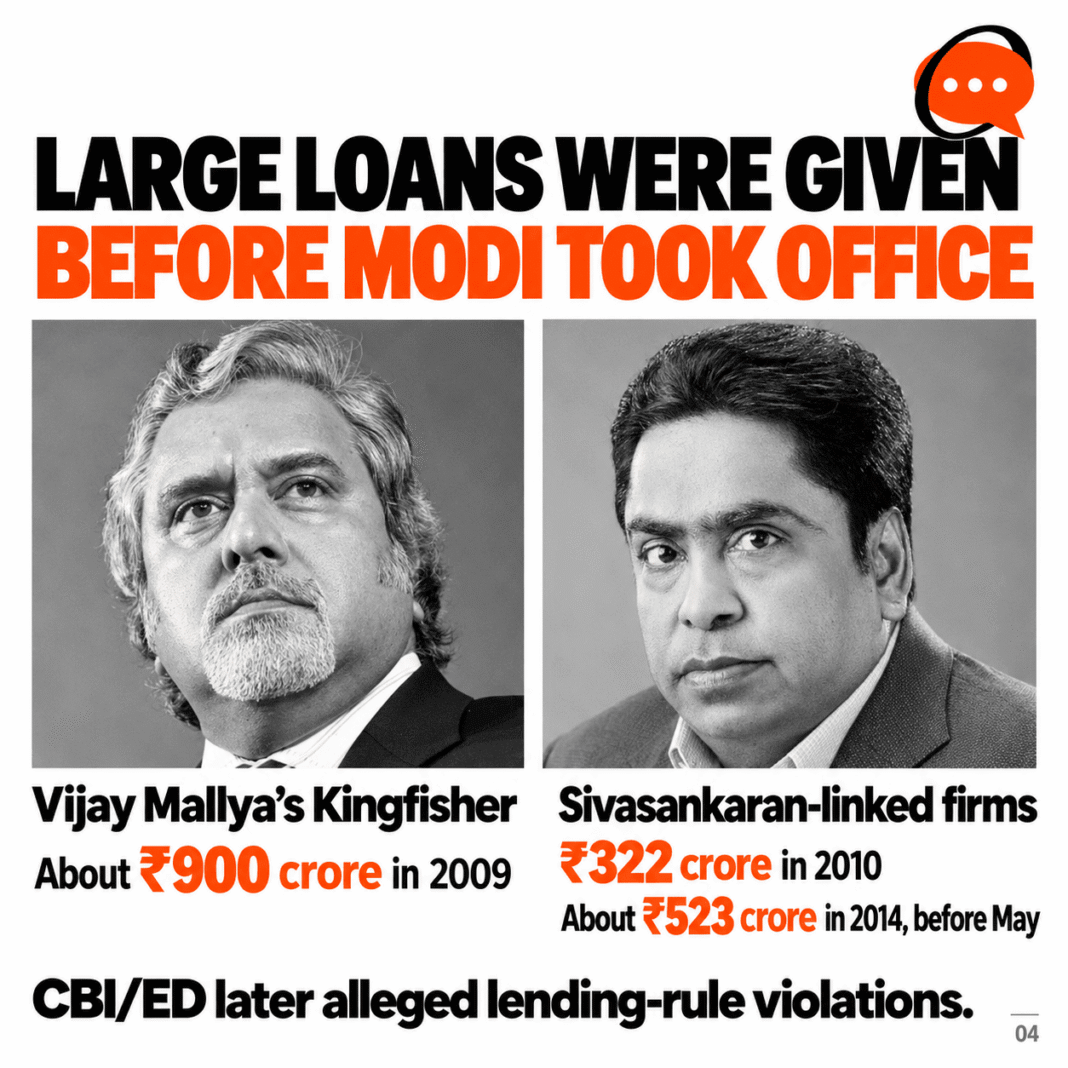
By March 2014, the bank carried ₹9,960 crore in gross bad loans, officially constituting 4.90% of its total loan book. IDBI extended roughly ₹900 crore to Vijay Mallya’s Kingfisher Airlines in 2009, despite internal cautionary red flags.
Loans linked to serial defaulter C. Sivasankaran totalled ₹322 crore in 2010 and approximately ₹523 crore in early 2014 prior to the May general election.
Subsequent investigations by the Central Bureau of Investigation (CBI) and the Enforcement Directorate (ED) revealed systemic violations of central credit appraisal guidelines, including top-tier management collusion and bypassed credit committees.
Under the Congress-led regime, standard banking practice relied heavily on loan restructuring schemes and issuing new debt to repay maturing interest, which artificially disguised the depth of bad loans.
When the Modi government assumed office in 2014, it confronted a choice. Either continue to conceal non-performing debt or choose transparency. The government and the Reserve Bank of India (RBI) chose the latter.
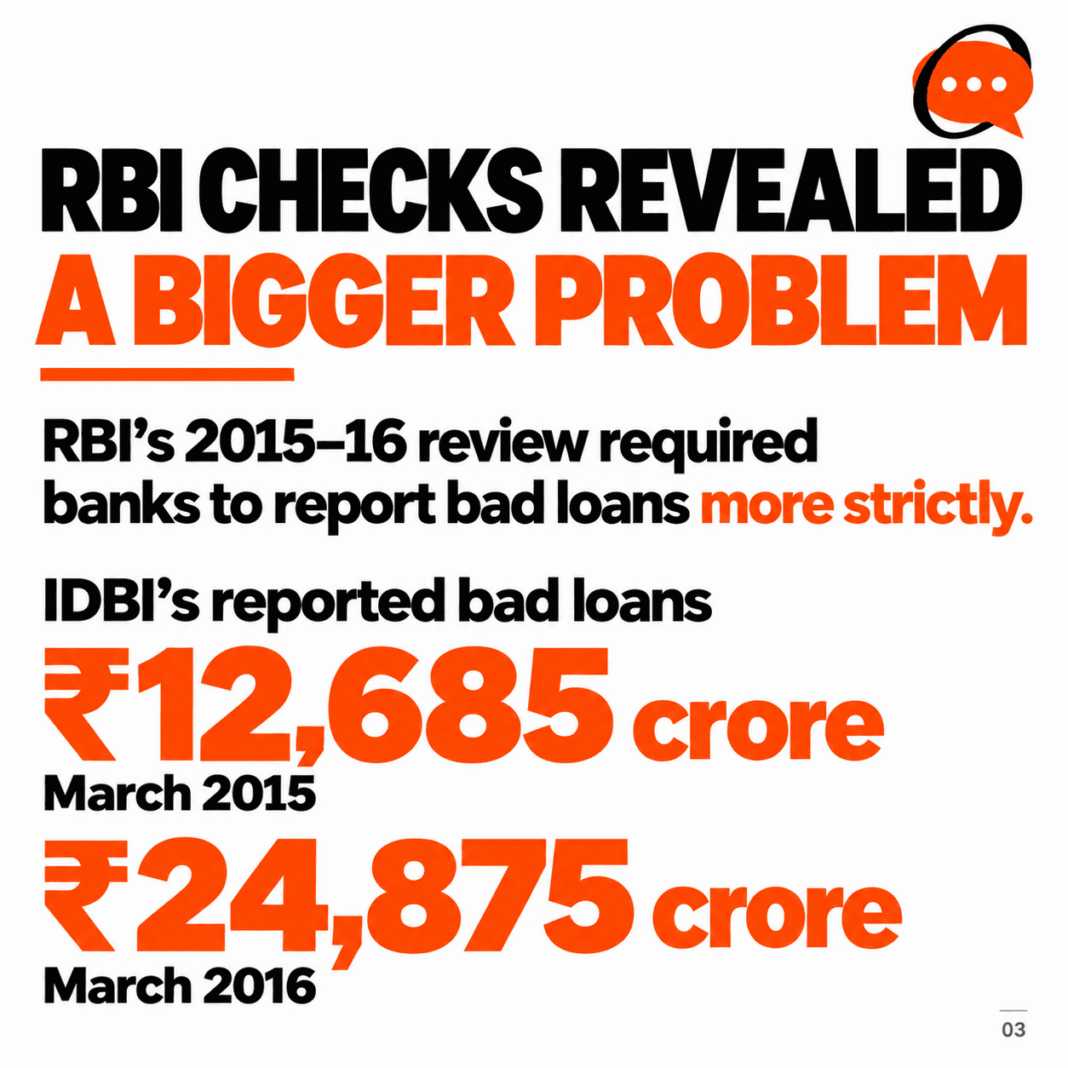
In late 2015, the RBI launched the Asset Quality Review (AQR), mandating that all commercial lenders uniformly classify stressed assets and set aside cash provisions against deteriorating accounts. The impact on IDBI was catastrophic:
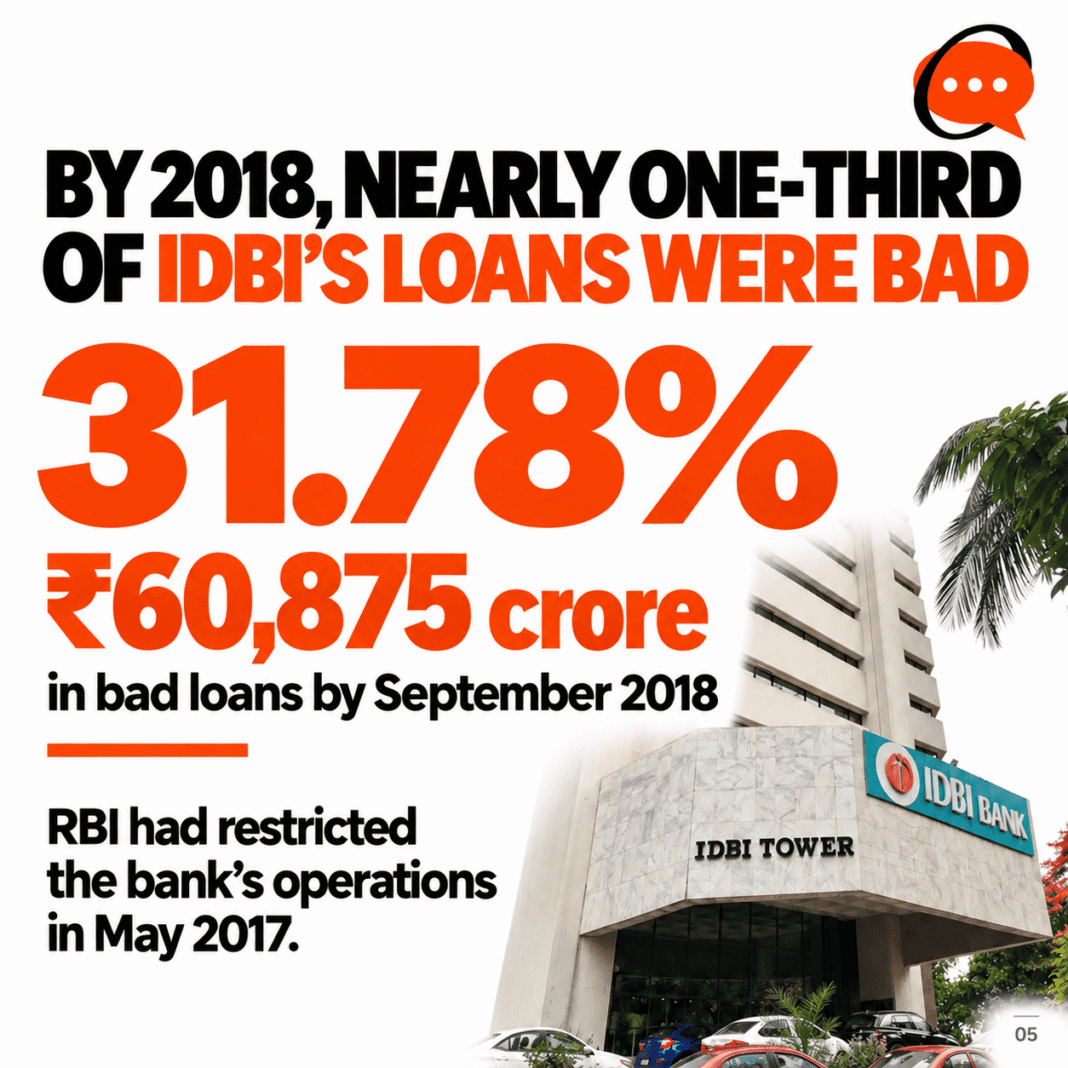
In March 2015, IDBI reported ₹12,685 crore in bad loans as initial scrutiny began. Within 12 months of strict reporting rules, reported bad loans doubled to ₹24,875 crore. As legacy infrastructure, steel, and power loans unraveled, IDBI’s gross bad loans reached an unprecedented ₹60,875 crore by September 2018.
At its peak in September 2018, bad loans swallowed 31.78% of IDBI’s entire loan book. Nearly one out of every three rupees lent was non-performing. The bank was technically insolvent.
In response, the RBI placed IDBI Bank under the Prompt Corrective Action (PCA) framework in May 2017. Under PCA sanctions, IDBI was barred from opening new branches, issuing large-ticket corporate loans, or paying staff bonuses.
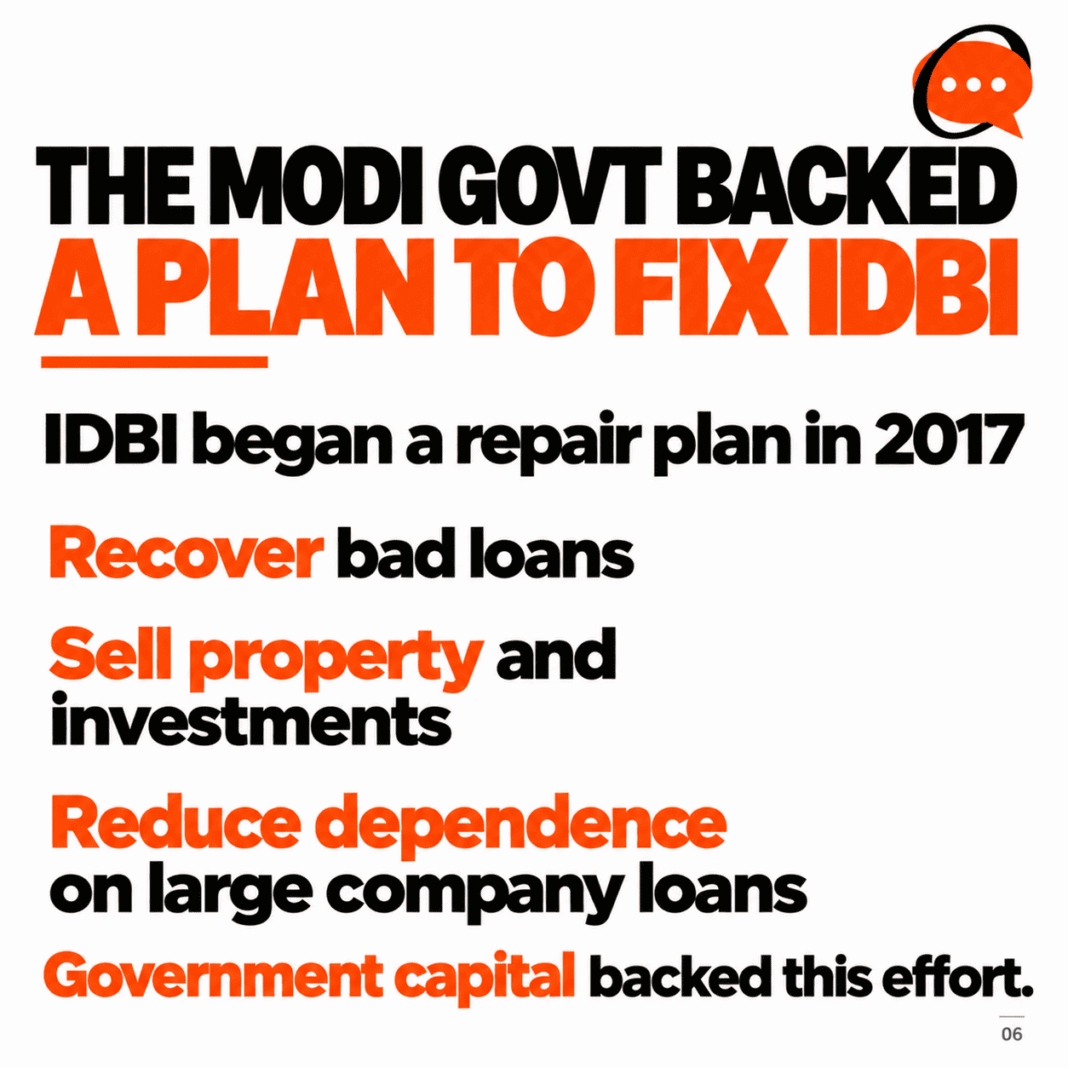
Stripped of its core commercial function, the institution faced liquidation or permanent subsidisation at direct taxpayer expense. Faced with a collapse that could trigger a tsunami across India’s financial sector, the Modi government devised an aggressive turnaround strategy.
The bank refocused on personal loans, auto finance, home mortgages, and small enterprise lending. Simultaneously, the Insolvency and Bankruptcy Code (IBC) allowed IDBI’s recovery teams to take chronic industrial defaulters directly to the National Company Law Tribunal (NCLT). In this way, the banks recovered tens of thousands of crores in previously write-off-bound debt.
Liquidating the bank would have devastated millions of retail depositors and erased public trust. The Modi government structured a phased recapitalisation model combining direct exchequer support with institutional equity from the Life Insurance Corporation of India (LIC).
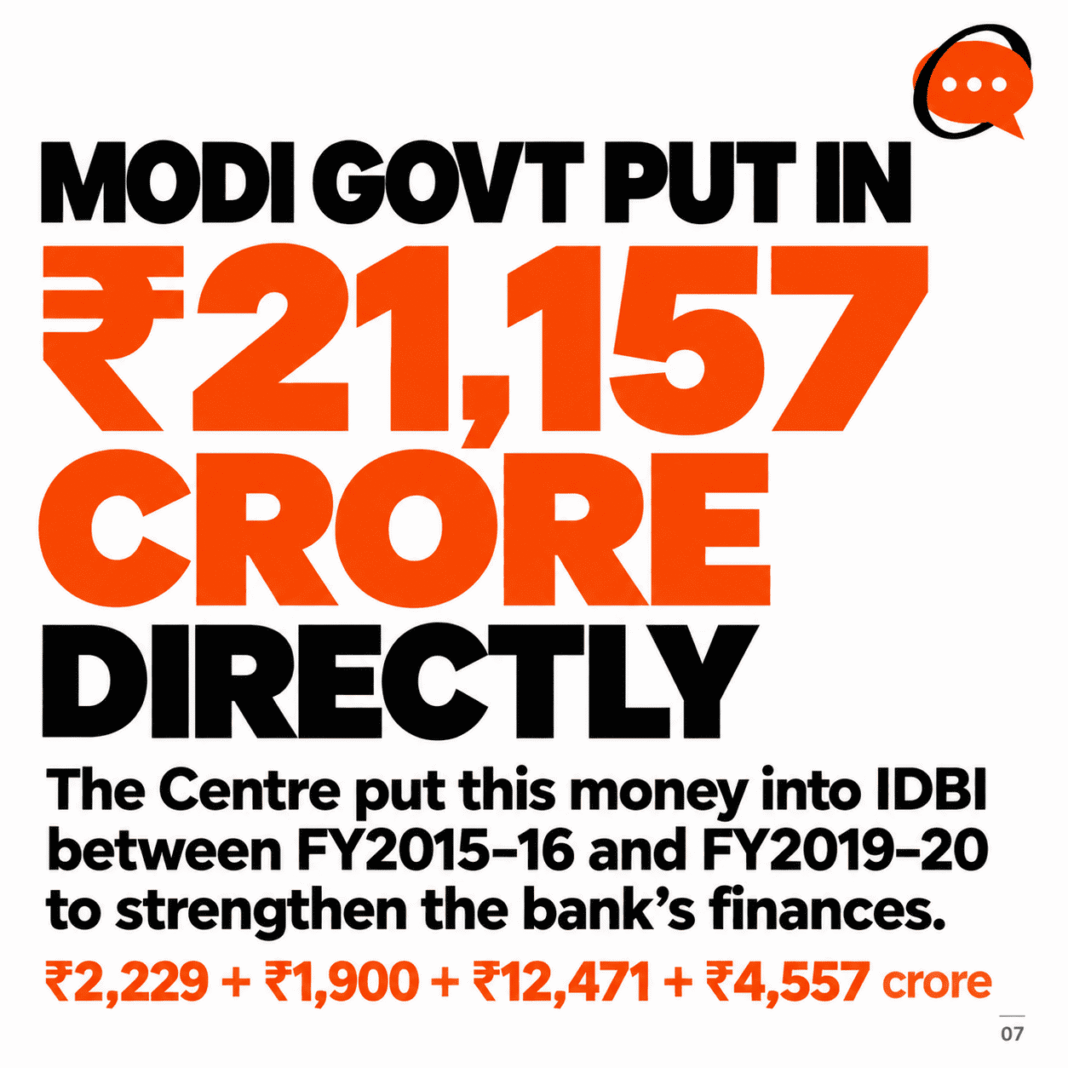
Between FY2015-16 and FY2019-20, the Centre injected ₹21,157 crore of direct equity into IDBI Bank across four separate tranches.
FY 2015–16: ₹2,229 crore
FY 2016–17: ₹1,900 crore
FY 2017–18: ₹12,471 crore
FY 2019–20: ₹4,557 crore
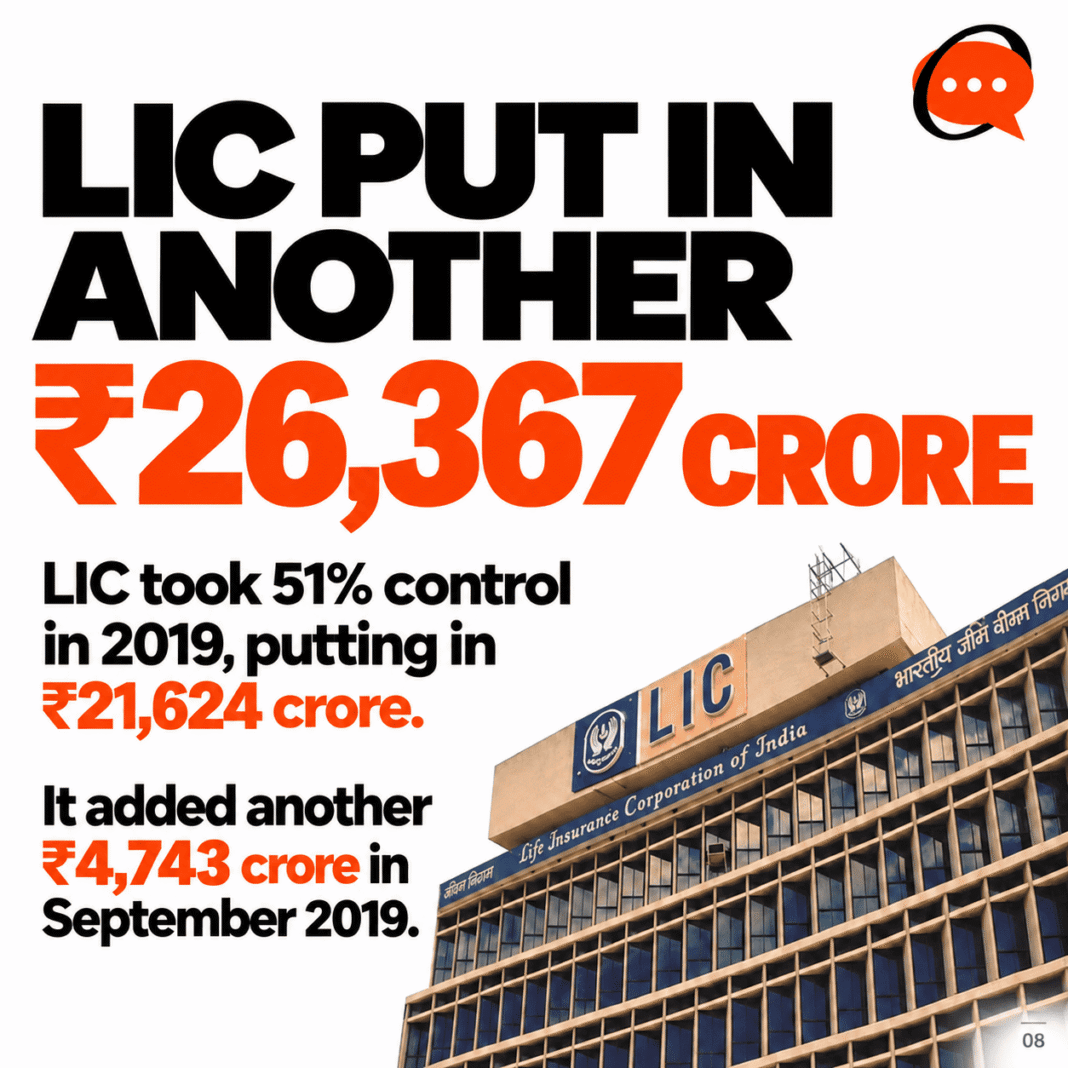
To lift the bank out of the PCA framework without breaching sovereign fiscal deficit targets, the government brought in LIC as a strategic co-promoter. In January 2019, LIC acquired a controlling 51% stake in the lender:
Follow-on Rights Capital (September 2019): LIC infused an additional ₹4,743 crore.
Total LIC Investment:₹26,367 crore.
Across both state institutions, total capital deployed to rescue IDBI Bank amounted to ₹47,524 crore. While it was dubbed a “backdoor state bailout,” the strategic rationale was clear.
It was to protect retail deposits, recapitalise the lender’s eroded net worth, purge legacy NPAs, and wait for the asset to appreciate before executing an organised exit.
The restructuring turned IDBI Bank from one of India’s most distressed state lenders into a competitive, profitable commercial bank.
By cleaning up provisions, reining in high-cost bulk deposits, leveraging LIC’s nationwide network for retail bancassurance, and adhering to strict risk-weight filters, IDBI steadily restored its operating ratios.
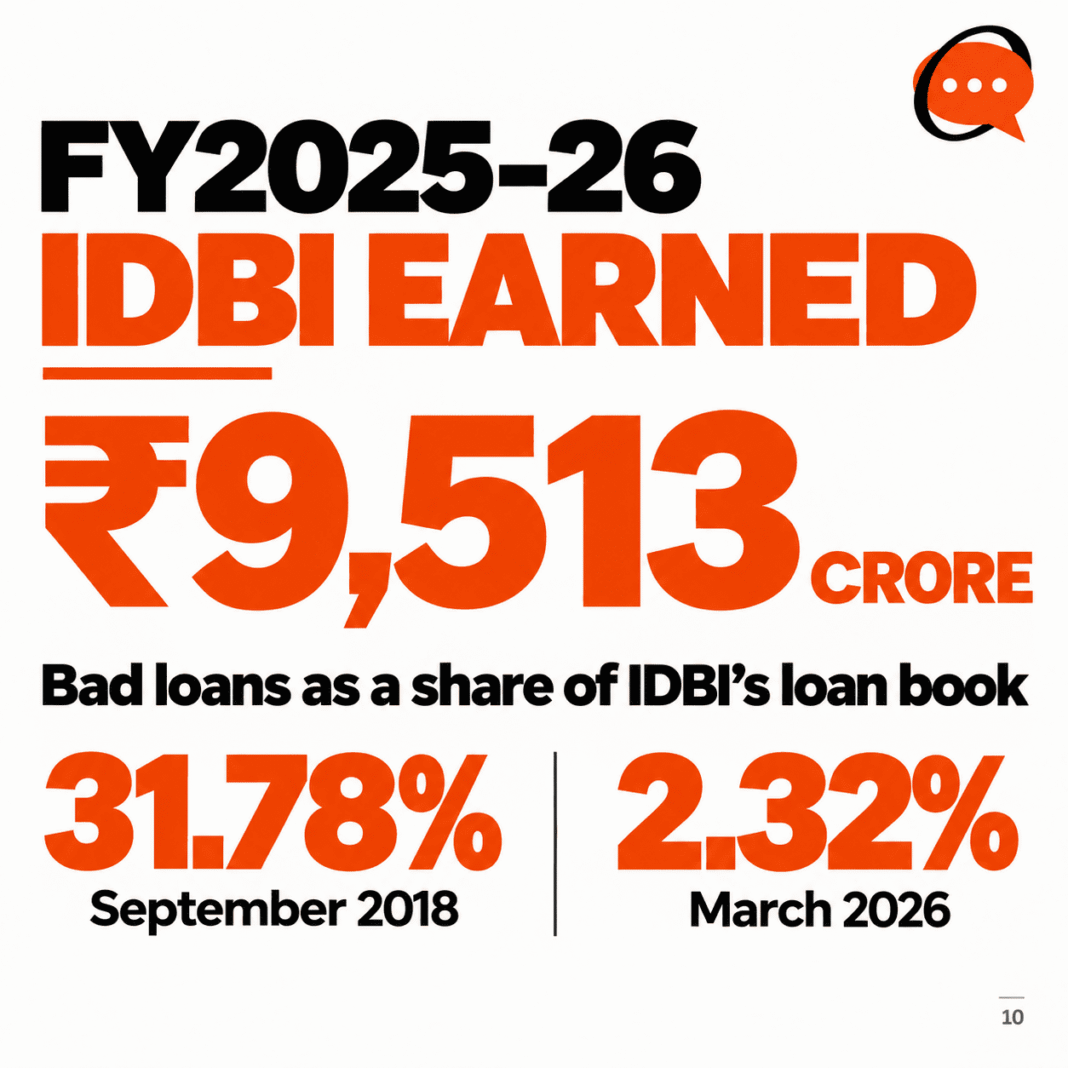
Gross NPAs plummeted from an alarming 31.78% in September 2018 to just 2.32% by March 2026. This drop of over 2,900 basis points was achieved through cash recoveries via the IBC, write-offs of uncollectible corporate loans, and a shift toward low-default retail lending.
After enduring heavy losses from 2016 through 2020, IDBI achieved a historic turnaround, generating ₹9,513 crore in consolidated net earnings in FY2025-26. Satisfied with the bank’s sustained capital adequacy ratio (CAR > 14%) and declining net NPA levels, the RBI formally lifted all PCA restrictions in March 2021, restoring full commercial operational autonomy.
The bank shifted away from volatile, high-cost wholesale deposits toward low-cost Current Account Savings Account (CASA) deposits, fortifying its net interest margins (NIM) against rate volatility. By early 2026, IDBI was no longer an impaired public liability.
It had become an efficient, well-capitalized commercial lender with strong return on assets (RoA).
With the balance sheet restored, the Cabinet Committee on Economic Affairs (CCEA) approved the strategic sale of IDBI Bank to global investment giant Fairfax Financial Holdings, founded by Prem Watsa. The approved transaction parameters confirm that this sale is an economic masterstroke.
The Modi government and LIC together retain a 34% equity stake (Government 15%; LIC 19%). The government has not only recovered 100% of every rupee injected by both it and LIC during the crisis, but has extracted an immediate net cash profit of ₹5,354 crore.
Under private management led by Fairfax, IDBI will gain access to private global equity markets, streamlined credit risk systems and advanced digital banking architecture without needing sovereign recapitalization bonds.
With the bank generating ₹9,513 crore in profit and non-performing loans down to 2.32%, the Modi government executed a planned strategic restructuring for ₹52,878 crore.