Home Blog Page 127

Mumbai Metro Line 3: Read how the engineering marvel, which was delayed by MVA govt and woke activists, is set make life easier for public

Mumbai, one of the most inhabited cities in the most populous nation in the world, suffers significant environmental and transit issues. Hence, the launch of Mumbai Metro Line 3, referred to as the Aqua Line, marks a significant advancement for the area’s urban mobility. Prime Minister Narendra Modi is scheduled to inaugurate it on 8th October. This represents a critical turning point in the development of the transit system.

The initial phase of the Aqua Line connecting Aarey and BKC was inaugurated in October 2024. Subsequently, it was extended to Acharya Atre Chowk in May 2025. Now, this final segment which runs from Science Museum Station to Cuffe Parade Station includes 11 major underground stations. The line has been gradually opened over the years to allow commuters to begin travelling at least half the distance.

Image via The Times of India

Mumbai Central, Grant Road, Girgaon, Kalbadevi, CSMT, Hutatma Chowk, Churchgate, Vidhan Bhavan, Cuffe Parade and Science Centre fall on the third and final section of Mumbai Metro-3. The metro corridor measures 33.5 kilometers from Aarey in the north to Cuffe Parade in the south and consists of 27 stations. It is constructed by the Mumbai Metro Rail Corporation Limited (MMRCL). The Aarey Depot is the only part of the line that is not underground.

This phase which cost Rs 9,785 crore, concluded the Metro 3 corridor. Originally envisioned in 2011, the project started in January 2017 under Devendra Fadnavis government. The initial estimate of Rs 23,136 crore rose to Rs 37,276 crore over this time. 60% of the finance was provided by the Japan International Cooperation Agency (JICA) with the remaining from a 50:50 joint venture between both central and state governments.

Engineers had to negotiate historic buildings, constrained streets and delicate soil in South Mumbai. They used techniques like controlled microblasting and keyhole tunnelling in places like Kalbadevi, Girgaon and Fort to prevent damage to structures that were 100 years old. Notably, there was no permanent eviction of residents in spite of these difficulties, instead, over 730 families received in-situ rehabilitation by the MMRCL.

A revolution in transportation

Aqua Line is estimated to carry up to 17 lakh passengers each day, greatly relieving the strain on Mumbai’s current transportation system. This entirely subterranean route is expected to revolutionise commuting by providing a faster and more effective substitute for the city’s conventional transportation options.

Metro Line 3 provides service to some of the most important business, residential and commercial areas in Mumbai. Additionally, it offers airport access to the domestic and international terminals of the Chhatrapati Shivaji Maharaj International Airport, as well as commercial and corporate centres such as Cuffe Parade, Nariman Point, Fort and Bandra Kurla Complex (BKC) alongside transportation hubs like Mumbai Central, Chhatrapati Shivaji Maharaj Terminus (CSMT) and Churchgate.

Image via The Times of India

Likewise, the city’s central regions would be more easily accessible from residential and industrial zones like Aarey and SEEPZ (Santacruz Electronics Export Processing Zone). The heavily populated regions of Dharavi and Sitaladevi would also gain from better public transport options which would reduce the need for crammed local buses and trains.

The metro line is expected to drastically cut down on commuting time, taking only 54 minutes to travel from Cuffe Parade to Aarey (JVLR) during peak hours. It is predicted to reduce traffic by 35% and fuel consumption by about 3.54 lakh gallons per day by lowering the number of cars on the road.

The metro line is also going to improve connectivity throughout the city by integrating with current and planned metro lines, leading to a thorough and effective network of public transport.

It will join Line 1 (Blue Line) at Marol Naka, Line 6 (Pink Line) at Aarey JVLR (Jogeshwari-Vikhroli Link Road), Line 7A (Red Line) and Line 8 (Gold Line) at CSMT, Line 2B (Yellow Line) at BKC as well as Western Line at Dadar, Mahalaxmi, Mumbai Central, Grant Road and Churchgate.

“The Aqua Line is not just about speed, but about accessibility, safety, and dignity in commuting. Once fully operational, the Aqua Line will transform Mumbai’s public transportation, ease road congestion, and offer a more sustainable alternative for Mumbaikars,” an MMRCL official expressed, reported The Free Press Journal.

Dedicated women-only cars, preferential seating for the elderly and disabled, along with a strong monitoring system at all stops and trains to improve passenger safety are just a few of the commuter-friendly features that Metro Line 3 offers in addition to better connectivity.

Pocket-friendly fare

The fare structure is intended to be reasonably priced, with rates ranging from Rs 10 to Rs 60 (or 70). The tariff chart stated that Rs 10 is the charge up to 3 kilometre and Rs 20 between 3 to 12 kilometre. 12 to 18 kilometre on a medium-distance trip would cost Rs 30 and Rs 40 between 18 to 24 kilometre. Fares have been set at Rs 50 for 24 to 30 kilometre and Rs 60 for 30 to 36 kilometre for longer trips.

The maximum rate for trips longer than 42 kilometre has been set at Rs 80. However, it is not applicable to the existing section of Metro 3. The National Common Mobility Card (NCMC), Paper QR and WhatsApp e-tickets are additional options for commuters seeking a smooth transit experience.

This makes it far less expensive than taxis, which charge more than Rs 700 for the same journey. The new system avoids surface-level traffic and offers a dependable, air-conditioned high-frequency alternative.

The MMRC announced a Transit-Oriented Development (TOD) strategy to use non-fare revenue to stimulate economic development around the metro line. It has already paid Rs 3,472 crore to the Reserve Bank of India for a 4.16-acre land at Nariman Point which is near the metro line and has since made use of the area.

A remarkable achievement despite multiple challenges

On 7th October of last year the 12.69 kilometer section between Aarey Colony and Bandra-Kurla Complex (BKC) was opened to public. On 9th May, the 9.8 kilometer from BKC to Worli was inaugurated. The 10 kilometer stretch between Worli (Acharya Atre Chowk) and Cuffe Parade will now be available from 8th October.

Hence, the 33.5 kilometer corridor took 8 years and 9 months to complete. Meanwhile, more than 15,000 workers, engineers, architects, and tunnelling specialists have contributed to it.

Land acquisition is very challenging in Mumbai, one of the world’s most densely populated cities. Due to its complete underground design, Metro-3 required excavation, tunnelling and reliance on ground conditions as well as utility relocations. As a result, the procedure took a long time.

Managing a variety of geology, including water-logged soils, reclaimed land and basalt rock while tunnelling in Mumbai posed a critical hurdle.

The time needed for safety approvals, trials and inspections was another issue. The same was only increased by unforeseen ground conditions, utility relocation, site acquisition, legal and environmental approvals, supply chain delays and contractor coordination.

The monsoon is an additional problem for a metropolis like Mumbai. Water intrusion is a serious challenge in the city particularly during the monsoon season and close to the coast.

Moreover, the alignments for the Mumbai Metro 3 went under or beneath slums, busy marketplaces and historic structures, requiring more attention and time. The possibility of structural damage from any underground development near historic structures could lead to public or legal opposition. Hence, the hassle is spiked by litigation from locals, activists or other opponents.

Sources revealed, “Relocating underground utilities, acquiring land, and securing environmental and legal clearances added to the time taken. The process also required coordination with multiple agencies and utility providers making execution more tedious. In many sections, the metro line passed beneath or near heritage buildings, crowded markets, and densely populated slums which demanded extra caution to prevent structural damage. This sensitivity around old and important structures often led to public opposition.”

MMRCL also informed that the project overcame a number of logistical and engineering obstacles, especially when it came to tunnelling through intricate geological formations beneath crowded and historically significant areas. An official voiced, “Working beneath structures in congested areas like Girgaon, Kalbadevi, and D.N. Road required meticulous planning to avoid any impact on existing buildings and utilities.”

Notably, the construction of the metro line employed caution and sensitive techniques to ensure that no heritage sites, including the CSMT station, were harmed. Furthermore, it accomplished a number of milestones in spite of these hindrances. An MMRCL official conveyed that 54.5 kilometre of tunnelling were completed in compliance with international safety regulations.

“At one stage, 17 tunnel boring machines (TBMs) were operated simultaneously marking the largest such deployment in India for an underground metro. Additionally, heritage-sensitive construction techniques were employed near iconic landmarks such as Hutatma Chowk and Chhatrapati Shivaji Maharaj Terminus (CSMT), ensuring minimal impact on the city’s architectural legacy,” the person added.

It was also time-consuming to coordinate with multiple authorities, including MMRCL, Mumbai Metropolitan Region Development Authority (MMRDA), Brihanmumbai Municipal Corporation (BMC), railroads, traffic police, utilities and others.

Therefore, the metro line’s completion was prolonged as a result of technical and environmental complexities in addition to administrative challenges.

Political reasons for the metro line’s delay

There were indeed some authentic reasons for the delay, however, it cannot be overlooked that politics also influenced the extension of the vital project and even raise its costs. It was also pointed out by Prime Minister Narendra Modi in October of last year.

“Metro line 3 began under leadership of Devendra Fadnavis as chief minister and 60% of work was completed during his tenure. However, when Maha Vikas Aghadi (MVA) came to power, they stopped the project out of arrogance, which led to a cost overrun of Rs 14,000 crore. Whose money is that? Is it their money? No, it is the hard-earned money of Maharashtra’s taxpayers,” he charged in a rally in Thane.

Similarly, an intense campaign titled “Save Aarey” was initiated by various channels, social media influencers, activists, actors and NGOs (non-governmental organizations) to halt the construction of the Metro shed in Aarey, in the name of saving trees and environment as common folk carried on suffering through claustrophobic means to facilitate their everyday travel. Aditya Thackeray was made it his pet campaign, trying to stall the Metro shed project in the name of environmental activism.

Predictably, the Maha Vikas Aghadi, led by Uddhav Thackeray, added to the propaganda and made its first decision to move the Metro car shed from Aarey to Kanjurmarg in 2019. “I have ordered to stop the work of Aarey metro car shed project today. Metro work will not stop but till next decision, not a single leaf of Aarey will be cut. I am the first Chief Minister who was born in Mumbai. It is going on in my mind, what I can do for the city,” Thackeray declared shortly after he took over the position.

However, the Bombay High Court had rebuked the government and called the decision fraudulent. The remarks were made because the land was subject to a pending title action and could not be utilised or transferred to another person until the matter was resolved. It was then disclosed that the government was aware that the Kanjurmarg property was under litigation.

Later, the Advocate General of Maharashtra was instructed to submit an application to the Bombay High Court asserting that the government would relocate the shed from Kanjurmarg back to Aarey during the first cabinet meeting of Chief Minister Eknath Shinde and Deputy Chief Minister Devendra Fadnavis in 2022.

Suzuki Satoshi, the Japanese ambassador to India even intimated his concerns about the anticipated “cash crunch” and “significant delay in project timelines” in a letter to Chief Minister Uddhav Thackeray dated 17th February 2021.

He outlined, “During JICA’s detailed fact-finding mission with MMRC, conducted from December 2020 to January 2021, it was recognized that there is a real possibility for MMRC to face fund shortage within the next fiscal year (FY2021) if an additional loan cannot be provided by end of fiscal (FY2020).”

“As a financer of this project, the government of Japan and JICA are strongly concerned that the project would potentially face serious difficulties such as significant delays or stagnation unless the loan is extended in a timely manner,” Santoshi stressed.

The propaganda continued even after the MVA was ousted from power. Aditya Thackeray joined several protests and even lied that the metro network can function without the car shed. According to the former minister, cars only require maintenance every three to four months, thus its is not an essential part of the Mumbai metro.

His antics escalated to the point where the National Commission for Protection of Child Rights (NCPCR) had to intervene due to accusations of his involvement in using children to promote the bogus narrative. Interestingly, the Supreme Court had already rejected the claims yet the propaganda continued unabated.

Conclusion

Despite facing numerous challenges and delays, both political as well as otherwise, this engineering marvel has finally materialized, benefiting not just the residents of Mumbai but also showcasing the technological capabilities of the country.

Congress and Left, now shedding crocodile tears over the shoe attack on CJI Gavai, had refused to trust him when he ruled out foul play in Judge Loya’s death: Details

0

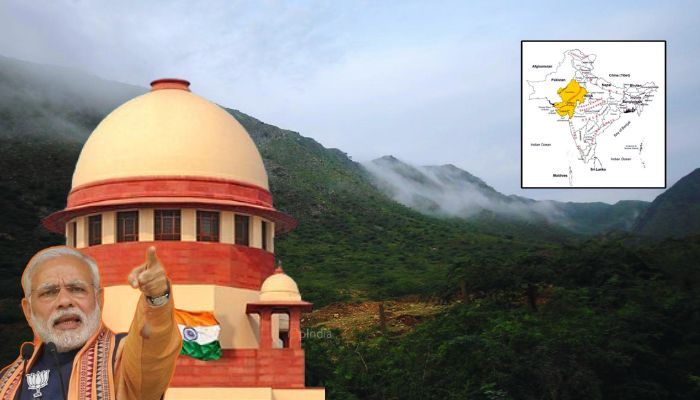
An attempt was made to hurl a shoe at the Chief Justice of India, BR Gavai, during court proceedings in the Supreme Court by an advocate on Monday (6th October). According to the reports, the incident occurred when a bench headed by CJI Gavai was hearing cases mentioned before it. The advocate, identified as 71-year-old Rakesh Kishor, approached the dais, removed his shoe and attempted to hurl it at the CJI. However, he was prevented by the security personnel present there and was taken out of the court premises.

The advocate reportedly shouted, “Sanatan ka apman nahi sahenge (We will not tolerate any insult to Sanatan)”. He was handed over to the police and was later released after the Supreme Court Registry refused to press charges against him. However, the Bar Council of India has suspended the license of the advocate. The proceedings inside the Supreme Court proceeded unaffected as CJI Gavai asked the court to continue the hearing. He told the lawyers present in the room not to get distracted by the incident.

The Advocate who attempted to hurl the shoe was hurt by the CJI’s Hinduphobic remarks

CJI Gavai’s Hinduphobic remarks mocking a Hindu devotee of Lord Vishu during a hearing last month apparently hurt the religious sentiments of the septagenarian advocate.

Speaking to the media about the incident, Advocate Rakesh Kishore said that he was “deeply hurt” by the Hinduphobic remarks of the CJI and his act of mocking the faith of a Hindu petitioner who approached the Apex Court seeking directions for the restoration of the Lord Vishnu idol at the Javari temple in Khajuraho, Madhya Pradesh. Notably, while hearing the petition, CJI Gavai had dismissed the petitioner, sarcastically remarking, “This is purely publicity interest litigation. Go and ask the deity itself to do something now. You say you are a staunch devotee of Lord Vishnu. So go and pray now”.

While the petition could have been dismissed by CJI Gavai on technical grounds, his sarcastic remarks mocking the faith of the petitioner attracted criticism for being entirely unnecessary.

Congress and the Left-liberal ecosystem drag the CJI’s caste into the incident

While the act of attempting to hurl a shoe at the CJI for his Hinduphobic remarks cannot be justified, the Congress and the Left-liberal ecosystem have jumped on the opportunity to peddle their narrative by making the entire incident about CJI Gavai’s caste. Condemning the incident, Karnataka Chief Minister Siddaramaiah said that the incident was a reminder that “caste-based prejudice and Manuvaadi mindsets continue to persist”. Anti-Brahmin Senior Advocate Indira Jaising also joined the chorus to drag CJI Gavai’s caste into it. According to Jaising, the incident is “a casteist remark against the Chief Justice” and an act of “singling him out from within the institution”. Jaising added that the attack should not just be seen as an attack on the CJI but on the institution itself.

One might find it difficult to wrap one’s head around what CJI’s caste has to do with an individual trying to hurl a shoe at the CJI after being hurt by his Hindiphobic remarks, but this makes perfect sense within the Congress and the Left narrative. For them, it is neither the individual nor any purported caste discrimination. For them, it is always the narrative that comes before everything else.

How the Left-liberal ecosystem conveniently ignored CJI Gavai’s statement on Judge Loya’s death

CJI Gavai, or his words, did not matter to the leftist cabal, including Jaising, when he said that there was no foul play in the death of the late CBI judge BH Loya in 2014. CJI Gavai spoke to NDTV in 2017, when he was serving at the Bombay High Court, about Judge Loya’s death and dismissed all the conspiracies. CJI Gavai visited Judge Loya in the hospital when he was being treated by the doctors after a cardiac arrest.

Gavi said that he saw Judge Loya’s body in the ICU, where the doctors tried to resuscitate him. He stated that he did not see any blood on Judge Loya’s clothes and did not see any foul play. But the entire Congress and the Left-liberal ecosystem conveniently ignored CJI’s statements back then, and continued to hound the BJP by weaving and peddling conspiracies about Judge Loya’s death, merely because he happened to preside over the Sohrabuddin murder trial, where then BJP President and present Union Home Minister Amit Shah was the main accused.

When Indira Jaising and her cabal tried to malign the judiciary, including CJI Gavai

Jaising, who does not have a very bright record of respecting the highest judicial institution, has taken the incident as an attack on the institution of the judiciary. Notably, Jaising, a known Congress loyalist, was part of the elite lobby which cast aspersions on the judiciary to insinuate that Amit Shah and the BJP were somehow linked to Judge Loya’s death, which was declared a natural death by the Supreme Court in 2018. Indira Jaising, along with senior advocates Dushyant Dave and Prashant Bhushan, were reprimanded by the Apex Court for their “attempts to scandalise the court and obstruct the course of justice”.

A bench comprising then Chief Justice of India Dipak Misra, Justices A.M. Khanwilkar and D.Y. Chandrachud, said that the petitioners, who were represented by the three senior advocates, were trying to create prejudice and malign the dignity of the judges, particularly Justice BR Gavai of the Bombay High Court. For a hypocrite, Jaising, the clear attempts of her and her cabal to malign CJI Gavai, who was then a Bombay High Court Judge, did not amount to an attack on his caste or the institution of the judiciary.

In fact, to date, conspiracy peddlers keep peddling foul-play claims in Justice Loya’s death to insinuate the central government was behind his demise and strengthen their propaganda that institutions as powerful as the judiciary are also compromised. Without a shed of evidence, these conspiracy theories of foul play in Justice Loya’s death keep getting shared on social media, and Justice Loya’s deposition in the matter is conveniently sidelined because it doesn’t help the Left’s narrative against the Centre.

Back then, several opinion-makers from the Left persuasion even insinuated that Justice Gavai was going to bypass several senior judges to become the Chief Justice of India because he had given a statement that dismissed any foul play in Justice Loya’s death.

The same Justice has now become the new darling of the liberal Left, most probably after his sarcastic remarks during the Lord Vishnu idol restoration plea, and the very people who once painted him as a “government stooge” are today projecting him as a victim of “caste prejudice” to suit their latest narrative.

The reaction of Congress and the Left-liberal ecosystem to the shoe-hurling incident exposes their characteristic hypocrisy. They stand for nothing except for their own wicked, toxic ideology, which survives and thrives on the country’s faultlines. For them, there is no difference between CJI Gavai and the former Chief Justice of India, DY Chandrachud, who was once the blue-eyed prince of the leftist cabal until he delivered the Ram Mandir judgment. Everyone is disposable to the cabal after they cease to serve their interests, which invariably go against those of the nation.

Congress and Rahul Gandhi find caste angle where none exists: Here’s the truth about Hariom Valmiki murder case and how opposition is spinning it

On 1st October, a man named Hariom Valmiki was brutally murdered in Ishwardadpur village of Raebareli district, Uttar Pradesh, on suspicion of being part of a so-called ‘drone thief gang’. Hariom, who was reportedly mentally unstable, was on his way to attend funeral-related rituals with a few fellow villagers when he lost his way and took a different route. Around 10 PM in the Gadaganj police station area, some villagers alerted the police about a “suspicious man”, who turned out to be Hariom.

The police questioned him but found nothing incriminating and allowed him to go. However, he was stopped again by villagers in Ishwardadpur, who accused him of being part of the rumoured ‘drone thief gang’. In several parts of the country, baseless rumours have circulated that thieves use drones to steal valuables from houses, and Hariom became the unfortunate victim of such hysteria. When he failed to respond to their questions, the mob began beating him mercilessly for nearly two hours, leading to his death.

Congress and Rahul Gandhi cooked up caste angle

As the reports of the tragic murder went viral, Congress jumped the wagon as Hariom belonged to the Dalit community. In a post on X, Karnataka Congress wrote, “A young Dalit man, Hari Om, was lynched in Rae Bareli; beaten, tied, and tortured to death. His last words were ‘Rahul Gandhi ji, help me!’ His killers mocked him saying, ‘We are Baba’s men.’ That one line says it all. Under Adityanath, Uttar Pradesh isn’t a state, it’s a warning. And yet, BJP’s Troll-in-Chief who was lecturing us on Dalit rights with fake news is now silent when Dalits under BJP rule are humiliated, brutalised, and killed. This is BJP’s idea of Sabka Saath: silence when Dalits bleed, slogans when elections near.”

Congress MP from Raebareli and LoP Lok Sabha, Rahul Gandhi, said in a post on X in Hindi, “The brutal murder of Dalit youth Hariom Valmiki in Raebareli is not merely the killing of a man, it is the murder of humanity, the Constitution, and justice itself. Today in India, Dalits, Adivasis, Muslims, backward communities, and the poor, every person whose voice is weak, whose share is being snatched away, and whose life is considered cheap, is being targeted. Hatred, violence, and mob rule have found shelter under those in power, where bulldozers have replaced the Constitution, and fear has taken the place of justice. I stand with Hariom’s family, they will get justice. The future of India rests on equality and humanity, and this nation will be governed by the Constitution, not by the madness of mobs.”

Congress MP for Rajya Sabha, Syed Naseer Hussain, condemned the murder and wrote, “The number of such cases is rising steeply. Backward classes, especially Dalits, Muslims and Christians, are repeatedly becoming victims of mob violence as the government remains a silent spectator.” He added, “We must demand an end to state support of hate crimes targeted against Dalits, minorities and backward classes.”

National Spokesperson of Congress, Shama Mohamed, wrote, “This is what the double engine of Yogi and Modi has done in Uttar Pradesh. Their politics of hate is taking the lives of Dalits and the marginalised. Muslims are under attack, women are unsafe, and Dalits and OBCs are being targeted, no one is safe under the BJP government anywhere.”

Police dismissed caste angle

While Congress and its leaders claimed a caste angle in the matter, Raebareli Police have dismissed it. In a press release dated 4th October, police said, “On 2nd October 2025, police received information that a man’s body was found near the railway track close to Ishwardaspur Halt in the Unchahar area of Raebareli district. The deceased was identified as Shishupal, son of Gangacharan, aged around 38 years, a resident of Raebareli. The body was sent for post-mortem, and reports confirmed that the death occurred due to severe assault.”

Police further added, “During investigation, it emerged that the victim had been beaten to death by villagers who mistook him for a thief. Based on the findings, a case was registered under Section 105 of the Bharatiya Nyaya Sanhita for culpable homicide. Acting swiftly, the Unchahar police traced and arrested five individuals from Ishwardaspur village involved in the incident. They were presented before the local court and remanded to judicial custody.”

When the caste angle was raised by Congress leaders and supporters, Raebareli Police clarified that Hariom’s murder was not motivated by caste but was a tragic case of mistaken identity, where the victim was beaten to death after being wrongly suspected of theft. Police further emphasised that individuals from various communities, including Dalits and backward classes, are among the accused, dismissing any caste-based motive. The police have urged people not to spread caste-related misinformation and assured that strict action is being taken against those responsible, including the suspension of five police personnel pending inquiry.

Police is using screenshots from the viral videos of the incident to identify the culprits.

Conclusion

Rahul Gandhi and the Congress’s attempt to communalise and politicise a tragic case of mob hysteria exposes their habitual pattern of exploiting human suffering for electoral mileage. Instead of waiting for verified facts, they rushed to frame the incident as a caste atrocity, disregarding the police’s findings and the truth that individuals from multiple communities were involved. This deliberate narrative-building not only disrespects the victim but also deepens social divisions for political convenience, a strategy Congress seems unwilling to abandon even at the cost of public harmony.

Kerala: As Left govt tries to reach out to Hindu devotees with Ayyappa Summit for votes, read CPI(M)’s history of bigotry and massacres against the community

There appears to be an ideological churn occurring within the Communist Party of India (Marxist) regarding Hinduism. The party, which has historically opposed the majority religion and its followers, has surprisingly been showing a softer stance towards it.

It was illustrated recently when Kerala Temple Affairs Minister V N Vasavan commenced the inaugural session of Ayyappa Summit. He perused a message from Uttar Pradesh Chief Minister Yogi Adityanath which was received after an invitation was extended to him, reported The Indian Express.

“Dear V N Vasavanji, I am thankful for the invitation to attend the agola (global) Ayyappa Sangamam on 20th September at Pampa in commemoration of the platinum jubilee of the Travancore Devaswom Board (TDB). Lord Ayyappa is the divine protector of Dharma. His worship illuminates the path of righteous living and inspires devotees to promote and preserve sattvic values and strengthen harmony and inclusivity. It is necessary to spread ancient Indian wisdom and traditions. In this perspective, the Sangamam assumes much significance and this conclave will successfully achieve its objectives,” the CPI(M) leader read.

Although there are a number of reasons, many believe it to be an electoral ploy. “There is no doubt that this means the normalisation and hegemony of Hindutva as an ideology. All may not be singing the same song as the Bharatiya Janata Party, but they are trying to sing different versions of the party’s song,” voiced a senior Left activist from the state.

He seems to have struck at the heart of one of the main explanations, considering the anti-Hindu track record of the Leftists and their historical ties to Islamists.

However, two CPI(M) leaders, one of whom was a member of the Politburo and the other of the Central Committee insisted that the event’s goal was to promote Pamba as a destination for religious tourists. According to one of them, Lord Ayyappa has been a “symbol of secularism” because of the legend of Vavar Swami, a Muslim warrior and his friend that is connected to his worship.

Certainly, it is evident that having followers across various religions does not diminish the religious significance of a deity nor does it render them secular. However, it is a common tactic among this group to undermine the religious aspect particularly in relation to Sanatan Dharma.

Opposition to the event

On the other hand, the Sangh Parivar and the saffron party had acknowledged the motivation behind the decision and denounced the event. They questioned the political purposes of the government and demanded that it first drop criminal cases against the devotees. Notably, the Kerala authorities had attempted to enforce the Supreme Court’s ruling allowing women of menstruating age to worship at the sacred site, leading to severe protests in multiple parts of the country, in 2018.

Chief Minister Pinarayi Vijayan attempted to refute the criticism and even emphasised his counter by quoting from the Bhagavad Gita as well. “Only true devotees can do this. Those who feign devotion may have a special agenda and have tried to prevent the gathering of devotees. It is a relief for all of us that such attempts have been prevented by the Supreme Court,” he alleged.

He conveyed that it was a “sangamam” or gathering of people who support the holy scripture’s concept of devotion. However, a CPI(M) leader exposed the truth and disclosed that the party sensed that its Muslim vote had taken a significant hit and planned to make up for it by reaching out to the state’s small but well-organised Hindutva constituency.

A calibrated political strategy

The CPI(M) which is the leader of Kerala’s Left Democratic Front (LDF) coalition, vehemently opposed the Citizenship (Amendment) Act (CAA). It was their primary agenda for the Lok Sabha elections to win over Muslim voters. Nevertheless, the party only won one of the 20 seats in the state, compared to the 18 seats held by the Congress-led United Democratic Front (UDF). Meanwhile, BJP also secured a victory in Thrissur, party’s first-ever victory in the general elections, in Kerala.

Afterward, the CPI(M) shifted its position and charged that the UDF’s triumph was the result of collaboration between the Congress and the Indian Union Muslim League (IUML) as well as the Social Democratic Party of India (SDPI), the political branch of the outlawed Popular Front of India (PFI) along with Jamaat-e-Islami.

“The league is being criticised for having joined hands with communal forces. The approach of the IUML towards the CPI(M) is the same as that of the SDPI and Jamaat-e-Islami. IUML has the voice of extreme communal outfits,” CPI(M) Politburo member A Vijayaraghavan declared. “The Congress and IUML joined hands with communal forces for votes. During the elections, IUML had turned into the face of the SDPI,” he further slammed.

CPI(M)’s troubles were far from over. In the June by-election, the grand old party defeated the Left candidate by over 11,000 votes in the Nilambur Assembly constituency which is part of the Wayanad Lok Sabha seat, held by All India Congress Committee (AICC) general secretary Priyanka Gandhi Vadra.

PV Anvar, a two-time CPI(M)-backed Independent lawmaker who had become a harsh critic of Vijayan and ran as an Independent. He obtained almost 20,000 votes, which ensured the triumph of Congress.

The CPI(M) was persuaded that Muslim votes could no longer be relied upon because of this, according to a party insider. According to another source, there is a conviction within the party that certain Ezhavas and Nairs have started to switch to the BJP. The loss of Muslim and Hindu voters could affect the former. Hence, the Hindutva push is to appeal to the devout particularly the Ezhavas.

CPI(M) tried to gain the favor of pro-Hamas, Hinduphobic IUML

The CPI(M) might lament about Congress-IUML alliance akin to a jilted partner, but the fact remains that the party spared no effort in trying to win them over to its side, without success. The IUML which is a key part of the UDF possessed equal importance for the Left front.

The Congress party was attacked by the LDF convenor E P Jayarajan in 2023 for barring P K Kunhalikutty, the IUML’s national general secretary, from participating in the M V Raghavan memorial meeting in Kannur.

Jayarajan outlined, “Kunhalikutty maintained close ties with Raghavan. When the latter’s son Nikesh invited him for the meet, Kunhalikutty agreed. But the Congress was insecure and uncomfortable. It does not trust the League.” He then stressed, “We moved from 91 to 99 seats. The people of Kerala wish to maintain this government. It is only natural that the Muslim League also wishes the same.”

Jayarajan also lambasted Congress for its position on the Israel-Palestine dispute and underscored how the IULMI would not agree with it. “When Aryadan Shoukath held a pro-Palestine rally in Malappuram, the Congress opposed it. The Congress stance has generated a dissent within the IUML,” he pointed out.

It is no secret that the CPI(M), Congress and other opposition parties have a well-known affinity for Islamists and jihadi factions, while simultaneously targeting Hindus over trivial matters.

The same affection was displayed during a debate on India Today presented by Rajdeep Sardesai when IUML leader MK Muneer, Congress spokesperson Lavanya Ballal Jain, CPI(M) leader MA Baby and other speakers unanimously declined to call Hamas a terrorist group. They also debated the matter interminably without denouncing the Hamas leader who addressed at a rally in Kerala.

IUML’s Hindumisia has been highlighted during a march in Kasargode after which the Kerala police arrested over 300 persons, including five members of the youth wing of the Indian Union Muslim League, for shouting anti-Hindu slogans in the name of protesting against Manipur violence. They chanted “Pachakkittu Kathikkum (We will burn you alive)” and “Ambalathil Ketti Thooki (We will hang you in the temple).”

According to the full slogan, “Without reciting the Ramayana, will be hanged in temple, will be burnt unto death,” Hindus will be burned to death and hanged in front of the Sanctum Santorum without being permitted to recite the Ramayana. Furthermore, “Youth League Zindabad” and “Muslim League Zindabad” were also raised at the rally.

More importantly, the parent organisation of the Indian Union Muslim League (IUML), which insists that it was born with India’s independence in 1948, is the All India Muslim League (AIML) that was formed by Pakistani ideologue and founder Muhammad Ali Jinnah.

CPI(M) and the Sabrimala saga

Massive protests followed the apex court’s verdict to permit women of all ages to enter Kerala’s Sabarimala temple. However, rather than dealing with the sensitive matter pertaining to the religious sentiments of millions with the required sensitivity, the CPI(M) government initiated a brutal crackdown on devotees who were protesting against the judgment.

The government declined to file a review petition as the devotees had requested, instead choosing to carry out the decision, inviting their fury. It sent out two battalions of female combat troops along with approximately 1,000 police. However, the police brutally attacked the agitators and even assaulted them in the pretence of maintaining law and order.

Vijayan referred to the beliefs of Lord Ayyappa devotees and announced that some customs are designed to be broken, applying salt to the injury. Meanwhile, at least 2000 persons were taken into custody by the authorities and 450 cases were filed against them. According to reports, the government intended to slap between Rs 10,000 and Rs 13 lakh on the accused to obtain bail.

The Kerala High Court had condemned the government for its brutal treatment of devotees and took notice of the arrests. It pronounced that the latter would have to bear a “heavy price” if any innocent individual was apprehended, in response to a plea. The petitioners also asserted that police had even harassed devotees who were only taking part in Lord Ayyappa’s Nama Japa Yajnam.

The high court even asked for information about the government’s use of excessive force in relation to the abuses committed by the police against the devotees. Additionally, it mandated that those police personnel who behaved violently be subject to the appropriate repercussions.

The government even forcibly evicted the worshippers from temple on several occasions in addition to enforcing harsh restrictions.

Furthermore, highlighting his Hinduphobia, Kerala minister G Sudhakaran disrespected the Sabarimala temple Tantri (head priest) by stating that the donkeys in the temple town possess more grace and later called him a “Brahmin Monster,” following the lead of the chief minister.

Many people had to sacrifice their lives, endure wounds and face arrests due to the nefarious actions of CPI(M) workers and the Left government as they spared no effort in violating the religious sentiments of Hindus, from assaulting the devotees to assisting women from their cabal in undermining the time-honored traditions at the holy place.

Unfortunately, the controversies surrounding the temple only intensified due to the CPI(M) and its leaders. The party has perpetuated its legacy of offending the sentiments of Hindu devotees and breaching the sanctity of the temple, from serving unhygienic food to the devotees to manhandling them.

CPI(M) leader attacks NIA to support Hadiya

Akhila Ashokan, a woman hailing from Kerala converted to Islam and adopted the name Hadiya under the influence of a roommate. She entered into marriage with Shafin Jahan, affiliated with the PFI. However, this union was unknown to anyone, including her parents. Moreover, she maintained contact with other PFI Islamists while her husband was reportedly in communication with ISIS (Islamic State of Iraq and the Levant) operatives.

This case should have raised alarms in a state with the highest number of ISIS recruits and mounting instances of love jihad, also repeatedly emphasized by the church. Nevertheless, a CPI(M) leader opted to denounce the National Investigation Agency (NIA) for investigating the matter.

“The NIA is on a fishing expedition having already interrogated 89 such couples in Kerala,” Brinda Karat wrote in a letter. “An agency whose proclaimed mandate is to investigate offences related to terrorism has now expanded its mandate by order of the Supreme Court to unearth so-called conspiracies of Muslim men luring Hindu women into marriage and forcibly converting them with the aim of joining the Islamic State,” she added.

Karat stated, “Her (Hadiya’s) case reveals how deeply the current climate created by sectarian ideologies based on a narrow reading of religious identity has pushed back women’s rights to autonomy as equal citizens. From the government to the courts, to the strengthening of conservative and regressive thinking and practice, it’s all out there in Hadiya’s case.”

She even hailed Hadiya and declared, “It was the courage of her conviction that stood out. She wanted to be treated as a human being. She wanted her faith to be respected. She wanted to study. She wanted to be with her husband. And, most importantly, she wanted her freedom.”

She accused the NIA lawyers, who were assisted by the centre’s legal team, of presenting it as an instance of “indoctrination and brainwashing in a conspiracy of love jehad, which they claimed rendered Hadiya incapacitated and invalidated her consent.”

While the CPI(M) has been preoccupied with denying a horrifying reality, similar to how Vijayan ridiculed the plight of the Hindu girls portrayed in “The Kerala Files,” numerous non-Muslim women were discovered to have converted and traveled to ISIS-controlled territories with their Muslim husbands.

The most notable occurrence involved four girls, including Fathima Isa alias Nimisha, who were located in an Afghanistan jail and her mother is continually appealing to the government to bring her back to the country.

Furthermore, the Hadiya case also established a disturbing precedent for girls, particularly underage girls. It ignored the real and concerning risks of terror recruitments and brainwashing, and instead highlighted the targeted conversions as some romantic ideal.

CPI(M) and its anti-Hindu legacy

The Left is notorious for harboring an unbridled animosity towards Sanatan Dharma and its followers. This sentiment has guided their actions not just in the present but for decades, especially during times when they wield authority.

16 monks and a nun from the Hindu group Ananda Marga were killed and burned alive in broad daylight on 30th April 1982, close to Ballygunge in Kolkata. They were pulled from the cabs that were supposed to transport them to their headquarters in Tiljala in Kolkata for an educational seminar.

It was reported that thousands of people witnessed the killings which took place at three distinct sites at the same time. no one was arrested. The CPI(M) government persisted in hiding the truth about the lynchings for multiple years.

Sher Singh who was serving as Additional District Magistrate at 24 Paraganas offered to provide pertinent documents and the facts of the case. His plea held that the victims were killed because of a land dispute with the Communists. The CPI(M) was afraid that the Marga would overtake them in the then-communist stronghold of the Kasba area.

The Marga’s public relations secretary, Acharya Trambakeshwarananda Avadoot, told The Indian Express that the Left government’s “only success has been the concealment of its involvement in the state’s biggest case of lynching.” He stated that the communists intended to destroy the Ananda Marga’s senior leadership, but its thugs unintentionally killed regular monks who were connected to the group.

A one-member judicial panel was set up by the state government to look into the lynchings only in 2012, after Mamata Banerjee was elected as West Bengal’s chief minister. The communists were angry with the Ananda Margis because they disagreed with their ideology.

The Ananda Margis were first attacked in 1967 in its Purulia Global Headquarters where five of them were slain by CPI(M) cadres. The Coochbehar congregation of the Ananda Marga was attacked just a few years later. Five Ananda Marga members were slaughtered by the party’s cadres in April 1990, even after the Bijon Setu Massacre.

In the meantime, chief minister Jyoti Basu had infamously declared, “What can be done? Such things do happen,” as no justices was ever served during the extensive CPI(M) rule.

Similarly, a few years ago, an alarming incident unfolded under his government, showcasing the Left’s bewildering hostility towards Hindus. The island of Marichjhapi in West Bengal’s Sunderbans became a precarious sanctuary for over 40,000 famished, indigent and desperate Bengalis at the beginning of 1979.

They were Hindu refugees who had fled East Pakistan which had just became Bangladesh to save themselves from persecution. However, they were unaware that a more dreadful fate awaited them in their original homeland. They were forced to escape into the thick Sunderbans jungle since the West Bengal government refused to accept any responsibility for them.

The Hooghly river delta’s waterways were taken over by the state police, who arrived on launch boats. The island was totally encircled and there was no way for the people to access food or medicine. The cops then indiscriminately opened fire on the Hindu refugees on the morning of 31st January. The island was evacuated. The West Bengal government never released an official death toll and therefore the scale of the slaughter remained unknown.

The red color in the party’s flag seems to symbolize the blood that its members and governments have shed of innocent Hindus.

CPI(M)’s anti-Hindu rhetoric and antics

The party, which purports to be secular and anti-religion has consistently opposed Hindus while pandering to Islamists. This was also pointed out when CPI(M) requested prominent Bangladeshi writer Taslima Nasreen to leave West Bengal in 2007 to cater to the radicals.

Nonetheless, CPI(M) has shown a consistent pattern of glaring hypocrisy concerning religion. The party, which claims to despise all religions as unscientific and superstition, accommodates a prayer space for followers of Islam while regularly displaying its aversion to Sanatan Dharma.

M V Govindan, the state secretary of CPI(M) was under fire in August for visiting Mahava Poduval, a Hindu astrologer. The party became enraged with him for talking about “astrology.” The astrologer had to clarify that the leader was there for tea and meet his family.

Saffron flags and other decorations installed at the temple for the Attukal Pongala festival were taken down by the communist workers, who then covered some of the saffron flags with a billboard that extolled the chief minister, triggering agitation by Hindu protesters, in February.

The Ganapati homam was held within the Nedumannur LP School in the Kozhikode region of Kerala in February 2024 to the displeasure of the CPI(M), in February 2024. Its thugs stopped the pooja after learning about it from the residents.

Additionally, they assaulted the organisers who performed the ceremony. The latter were later arrested by the police as the CPI(M) men marched in protest to the Nedumannur LP School. This outlined the state of justice for Hindus under the Left’s governance.

The party protested as pooja was conducted during the introduction of the national emblem in July 2022. CPI(M) lambasted its minister, Kadakampally Surendran, in September 2017 for going to the historic Sree Guruvayur temple in Thrissur and performing pushpanjali at his family’s request.

The party also played a key role in overthrowing Nepal’s Hindu monarchy.

Conclusion

The aforementioned incidents are just a glimpse into the larger issue, showcasing the profound hatred that CPI(M) has harbored against Hindus over the years. The ongoing strategy of the Left government to appease Hindus is primarily motivated by their need to secure votes from this demographic as their preferred vote bank seems to have abandoned them in favor of Congress.

The government, which has not hesitated to violate the sanctity of the deity is organizing a summit in his name. This should be enough to elicit scepticism from any rational mind. Interestingly, the image of the Ayyappa was also missing from the summit’s posters. Perhaps iconography is “haram” for the Leftists.

The Streisand effect, not largesse of heart: Why CJI Gavai did not press charges against the lawyer who tried to hurl a shoe at him for his anti-Hindu statement

On the 6th of October 2025, a 71-year-old lawyer, Rakesh Kishor, attempted to hurl a shoe at the Chief Justice of India, BR Gavai, while the court was in session. Kishor was distressed after a few days ago, BR Gavai had mocked a Hindu petitioner who had approached the court to facilitate the restoration of a beheaded Lord Vishnu idol. Dismissing the petition and asking the petitioner to approach the ASI instead, Justice Gavai exceeded his brief and mocked the petitioner, asking him to pray to Lord Vishnu instead of approaching the court.

The Delhi Police questioned 71-year-old advocate Rakesh Kishore for nearly three hours after he allegedly attempted to hurl a shoe at Chief Justice of India (CJI) B.R. Gavai inside the Supreme Court. Kishore was later allowed to leave after the Supreme Court’s Registrar General refused to file a formal complaint in the matter.

Reportedly, the Supreme Court at the behest of CJI Gavai refused to press charges against the advocate.

Of course, this was charted by many as the largesse of the heart on the part of CJI Gavai. His statement right after the attack also framed the issue as such. After the advocate attempted to hurl a shoe at Gavai, he reportedly said in court, “Don’t get distracted by all this. We are not distracted. These things do not affect me.”

The aim was to, obviously, impress upon the country that Gavai was only interested in dispensing justice and was above the outrage of the earthlings he presides upon. The aim was also to communicate how he was a man with a large heart who had the capacity to forgive even those who trespass against him.

But was it the largesse of his heart that drove him to forgive the “sinner”? Or was it something else? Something deeper?

To understand the possible motivation, we have to first understand how this case would play out had CJI Gavai pressed charges against Advocate Rakesh Kishor.

Once the FIR would have been filed, the police would have arrested Kishor and he would have been produced before the court. He would have then been sent to either police or judicial custody. His lawyers would have applied for bail and during the hearing, the lawyer would have argued that he was hurt by the comments of CJI Gavai and his religious sentiments drove him to take this retaliatory action. Thereafter, the case would have proceeded to higher courts where the lawyer would have cited how the Supreme Court itself had cautioned judges against making untoward statements during court hearings and in one of those instances, CJI Gavai was a part of the bench.

The hearing of this case itself would have opened a Pandora’s box where not only the double standards displayed by CJI Gavai, but the judicial system when it comes to whimsical interpretation of their own orders would have been discussed threadbare.

The Supreme Court has in the past taken judicial notice of ‘off the cuff’ remarks in a petition filed by the Election Commission against some oral observations made by a Judge of the Madras High Court in Election Commission of India v. M.R. Vijayabhaskar, (2021) 9 SCC 770. The Court clarified that oral remarks are not a part of the official record and do not express any formal opinion and hence, cannot be expunged. The Court has highlighted that mostly such oral observations are elicitation-oriented. 

However, the Court relayed some apprehension about an increasing trend of Judges making caustic observations against litigants during hearings. The Supreme Court highlighted that “We must emphasize the need for Judges to exercise caution in off-the-cuff remarks in open court, which may be susceptible to misrepresentation”. The case of the Election Commission was that in the context of the Covid-19 pandemic, the oral observations of the Judge of the Madras High Court of a “murder charge” was incorrect. The Supreme Court observed, in this context, that the remarks of the High Court were “harsh” and that the metaphor was “inappropriate”. 

Further, Almost exactly a year ago, on the 25th of September 2024, a Supreme Court bench passed a seminal order. The Bench said, “Casual observations may well reflect a certain degree of individual bias, particularly when they are likely to be perceived as being directed against a particular gender or community. Courts therefore have to be careful not to make comments in the course of judicial proceedings which may be construed as being misogynistic or prejudicial to any segment of our society.” The bench made these observations because a judge of the Karnataka High Court had called a Muslim dominant area of Bangalore, Pakistan. Interestingly, Justice BR Gavai was a part of the 5 judge bench which delivered this order.

Had advocate Rakesh Kishor’s case been argued in the court, all of this, and far more would have been discussed on an open forum. CJI Gavai would have been questioned as to why he chose to ignore precedent set by the Supreme Court itself which cautions judges not to make off the cuff remarks during hearings. CJI Gavai would have been questioned that what were the circumstances which made him defy his own order in the 2024 case, where he had asked judges to ensure their statements don’t hurt communities? The judicial system would have been questioned about what gives them the right to be whimsical, even if they have the right to be discretionary.

CJI Gavai did not forgive the ‘sinner’ because of the largesse of his heart. He forgave him because it would lead to the Streisand effect. Simply put, The Streisand effect describes a situation where an attempt to hide, remove, or censor information results in the unintended consequence of the effort instead increasing public awareness of the information.

In this case, an attempt to shut down the angst displayed by advocate Rakesh Kishor would only lead to more awareness not only about how whimsical the judiciary can be but also the double standards adopted by CJI Gavai himself when dealing with Muslim petitioners in the 2024 case and a Hindu petitioner now.

The Streisand effect is also the very reason why, presumably, no commentator was hauled up for contempt after the infamous observations made by Justice Suryakant and Justice Pardiwala in the Nupur Sharma case. It would drive a larger conversation in the country about how some Judges often deal harshly with Hindu petitioners and shield the misadventures of non-Hindus, often putting disproportionate responsibility of tolerance on the Hindu community, even when they are the ones being victimised.

In the daily news cycle of tweets and reactions, it is incumbent upon the Court to function as an institution in a fearless and fair manner. While the Court does function in a discretionary manner on the writ side, it cannot function in a whimsical manner. The criminal justice system can appropriately deal with the loose tongues of the common people, politicians or media personalities. However, some other loose tongues remain immune. 

James Watson, the American national arrested for converting Hindus in Maharashtra, turns out to be a US Army personnel: Details

An American national, identified as 58-year-old James Watson was arrested on Friday, 3rd October, in Bhiwandi, in the Thane district of Maharashtra, for converting local Hindus to Christianity. 

He was arrested along with the two residents of Maharashtra. Watson, who was staying in Thane’s Hiranandani Estate on a business visa, was found organising a religious gathering.

The case came to light after a resident, Ravindra Bhurkut (27), filed a complaint at the Bhiwandi Taluka Police Station. He witnessed a group of people preaching Christianity to about 30–35 villagers outside a house. 

James reportedly was making derogatory remarks about Hinduism, describing it as a religion based on blind faith, and saying that happiness and success could only be achieved by converting to Christianity. 

Furthermore, the complaint details that the accused claimed that illnesses could be cured through prayers to Jesus Christ. 

The police caught Watson and recovered books related to Christianity, in the video of the raid, he was seen attempting to protect the books from the police before his arrest.

Watson and his two associates Ganpati Sarpe (42) and Manoj Govind Kolha (35) have been booked under section 299 and 302 of the Bharatiya Nyay Sanhita.

American national identified as active US Military personnel

In a major development following the arrest, it has turned out that James Watson is not just an American citizen but a US Military personnel. OpIndia has found his multiple links with the US Army, identifying him as a Major.

Screengrab from the DVIDS website

Multiple sources have now reported that MAJ James Watson, who is the executive officer of the 2nd Battalion, 44th Air Defence Artillery (ADA), stationed at Fort Campbell, Kentucky. The 2-44th ADA is an operational unit that, according to the information given in his article, was preparing for an upcoming deployment in support of Operation Freedom’s Sentinel.

Image via DVIDS

Further evidence of Watson’s active military role includes an article [pdf] he penned in 2020 titled “Owning the skies, winning the fight.” In this article, Watson discusses the emerging threat of unmanned aerial systems (UAS), commonly known as drones, and the challenges they pose to Air Defenders.

James Watson named in third from left in this image (Source: DVIDS)

In his article, Watson highlights the paradox of advanced technology and the rudimentary tactics used by adversaries who employ commercial, off-the-shelf drones modified with explosive payloads. He emphasises the grave threat posed by the increasing proliferation and weaponisation of UAS platforms, especially the “low and slow” or Group 1 UAS like quadcopters. He argues that lengthy battle drills, developed as part of risk mitigation efforts for ground commanders, often prevent timely kinetic engagement and allow the threat to operate uncontested.

His core argument, which serves as the conclusion to his article, is that the Air Defence Artillery must truly own the UAS engagement process. 

Visual evidence on the official defence website of USA

The links to his military career are not limited to his writing only. There are also multiple photos and a video of Major James Watson available on the official site of the Defence Visual Information Defence Service (DVIDS), where he is seen wearing his official US Army uniform. In one video clip, he can be heard clearly stating, “This is Major James Watson from HURLBURT field, Florida. Wanted to wish the Army a Happy 246th birthday.”

The arrest of an active US Army Major on a business visa for illegal religious conversion activities in India, particularly given the seriousness of the charges, raises significant questions about the misuse of his visa and the nature of his activities while serving in the US Army.

Shoe hurled at CJI Gavai during SC proceedings: How protest for Sanatan Dharma became a ‘casteist attack’ in the Left’s imagination

When a 71-year-old lawyer flung his shoe towards Chief Justice of India B.R. Gavai in open court, shouting “Sanatan ka apmaan nahi sahenge!”, it was an act of raw outrage. Rash, highly condemnable, but unmistakably rooted in faith. Within minutes, however, India’s liberal echo chamber decided to read something entirely different: caste.

The shoe, they said, wasn’t hurled in defence of Sanatan Dharma; it was an attack on a “Dalit Chief Justice.”

This is the perverse alchemy of India’s left-liberal intelligentsia, where every almost everything must be twisted into a social fault line, every protest of faith turned into a caste war. One of the seniormost Opposition leaders, Rahul Gandhi, has long championed himself as a caste crusader, positioning himself as the self-appointed messiah of Dalits, OBCs, and tribals, all while reducing their identity to mere electoral arithmetic. From his choreographed temple visits to his recent calls for a nationwide caste census, Rahul’s politics has been less about empowerment and more about engineering divisions. Similarly, other regional parties too, have leveraged caste to sow divisions and further their politics.

But the facts in this case are clear. The lawyer didn’t invoke caste. He didn’t utter a slur. His only words were, “We will not tolerate the insult of Sanatan Dharma.” The outrage stemmed from what many perceived as CJI Gavai’s sarcastic remark during a plea about the restoration of a mutilated Lord Vishnu idol at Khajuraho: “Go and ask the deity itself to do something now. You say you’re a staunch devotee, so go and pray.”

To a devout Hindu, such words, even if unintended, sound dismissive of faith, especially when they come from the head of the judiciary. The lawyer’s reaction, while disproportionate and unacceptable, was emotional, not casteist.

Yet, within hours, the caste machinery was activated. “Casteist attack on Dalit CJI,” screamed social media activists and ‘secular’ journalists who seem allergic to any expression of Hindu faith that doesn’t fit their pre-approved templates.

The politics behind the caste spin

The reason for this spin is simple: faith unites Hindus; caste divides them.

Since 2014, when Narendra Modi’s rise disrupted decades of vote-bank arithmetic, the Opposition and its ecosystem have been trying to fracture Hindu unity by resurrecting caste divisions. Every election cycle brings the same playbook: fake narratives about reservation rollback, “Brahminical Hindutva,” and now, the “Dalit CJI under attack” trope.

Remember the doctored video of Amit Shah circulated before the 2024 elections, falsely suggesting the BJP wanted to end caste-based reservation? The same ecosystem is now at work again, exploiting an act of protest to gaslight Dalit voters and drive a wedge within Hindu society.

Because for them, a united Hindu identity rooted in Sanatan Dharma is politically fatal. 

When Islamists take to the streets chanting “Sar Tan Se Juda” over perceived “blasphemy,” neither the Left ecosystem nor the Supreme Court dares to hold Islamic theology accountable. The blame, somehow, always lands on Hindus who merely choose to speak up.

During the Nupur Sharma controversy, the hypocrisy was laid bare. Even as mobs threatened beheadings, burned effigies, and called for her death, the Supreme Court’s own oral observation outrageously declared that “Nupur Sharma was single-handedly responsible for what’s happening in the country.”

So while Islamist radicals bayed for blood, the national conversation shifted to blaming a woman who quoted directly from their own scriptures. And the same Left-liberal chorus that now weeps for “free speech” over every anti-Hindu film went completely silent when “Sar Tan Se Juda” mobs took over the streets.

Back then, not one among the so-called conscience-keepers of secular India found the courage to condemn the rioters. Instead, they found it convenient, even fashionable, to hold Nupur Sharma responsible for “setting the country on fire.” But today they want an emotional outburst, although reprehensible, be treated as a casteist attack on the CJI.

The usual suspects: Indira Jaising to Saba Naqvi, and countless online trolls

True to form, activist-lawyer Indira Jaising was quick to declare the shoe incident “a casteist attack.” 

On what basis? None. Not a word uttered, not a slur spoken, not a reference made. But why let facts ruin a good narrative?

Saba Naqvi, the same ‘journalist’ who once mocked the Shivling found in the Gyanvapi mosque with a meme comparing it to an atomic model, added her signature secular wisdom, claiming the incident had “clear social dimensions.”

In the liberal lexicon, “social dimensions” means: we don’t have evidence, but we’ll invent context.

Several social media trolls aligned with furthering Congress and opposition parties’ talking points joined the bandwagon to allege it was a “casteist attack” against a Dalit CJI.

The dangerous consequences of identity politics

What’s tragic here is how the genuine question of how those in constitutional offices speak more sensitively about faith has been buried under the identity-politics avalanche.

Instead of debating whether CJI Gavai’s earlier comment reflected a growing insensitivity toward Hindu sentiments in elite institutions, the conversation was derailed into another “Dalit victimhood” narrative.

This is not just intellectually dishonest; it’s corrosive. It sends a message that even legitimate religious hurt expressed by a Hindu must be vilified, unless, of course, it fits the Left’s caste calculus.

Faith is not a caste privilege

It’s worth reminding the self-styled moral custodians that Sanatan Dharma is not the monopoly of one caste. The faith that the lawyer invoked belongs equally to Dalits, Brahmins, OBCs, and tribals. Temples across India, from Ayodhya to Tirupati, are frequented by Dalits. Many Dalit saints, from Ravidas to Chokhamela, have been central figures in Hindu spirituality.

When someone says, “Sanatan ka apmaan nahi sahenge,” he speaks for a civilizational identity, not a caste identity. To reduce that to casteism is not just lazy analysis; it is an insult to the very spirit of Sanatan Dharma, which transcends caste and creed.

The Left’s double standards on shoe protests and judicial independence

Ironically, the same Left ecosystem now howling over a shoe hurled at CJI Gavai had, for years, celebrated similar acts as “legitimate forms of dissent.” When shoes were thrown at politicians, journalists, and public figures from the Right, they were hailed as symbols of resistance. Memes were made, tweets were cheered, and shoe-throwers were glorified as brave protestors standing up to “fascism.”

In 2009, journalist Jarnail Singh made headlines when he hurled a shoe at then Home Minister P. Chidambaram during a press briefing. His act was a protest against the CBI’s decision to absolve two Congress leaders accused in the 1984 anti-Sikh riots. Singh was hailed in many liberal circles as a symbol of defiance against political injustice for his act of flinging shoe at the then Home Minister. Similarly, when Iraqi journalist Muntadhar al-Zaidi hurled his shoes at former US president George Bush in 2008, it was celebrated by the Left as an act of resistance against America’s occupation of Iraq.

But the moment the target happened to be a Dalit Chief Justice and the protester a man defending Sanatan Dharma, the moral compass of the Left spun wildly out of control. Suddenly, the very act once hailed as dissent became an assault on “Dalit dignity.” Their selective outrage only exposes how ideology, not principle, dictates what qualifies as acceptable protest.

It is also worth noting that the Left has never shown reverence for the judiciary when it refused to echo their worldview. Former CJI D.Y. Chandrachud, once celebrated as a “progressive icon,” was viciously attacked by the same intellectual class after his interview with Sreenivasan Jain, where he made the now-famous remark that “the very erection of the Babri mosque was the fundamental act of desecration.”

That one line was enough to turn the darling of liberal drawing rooms into a target of relentless criticism. Countless opinion pieces in left-leaning portals questioned his “secular credentials,” some even calling his remarks “dangerous” and “regressive.”

So when the same cabal suddenly sheds tears over an attempted shoe attack on CJI Gavai, it’s not out of concern for judicial dignity or institutional respect. It’s simply political opportunism, a convenient moment to inject caste into public discourse and reinforce the tired “Dalit victimhood” narrative.

The Left doesn’t care about the Chief Justice being attacked; it cares only about how the incident can be spun to divide Hindus and keep the caste pot boiling.

Was it really casteist attack or the Left’s desperation to undermine Hindu unity?

Yes, the lawyer’s act was highly inappropriate and may even deserves punishment, as per the law of the land. But the reaction it triggered tells us something more unsettling about India’s intellectual class: that their first instinct is not to understand, but to divide.

Not a single left-wing intellectual even attempted to examine the issue with nuance or seek a balanced perspective. None thought it worthwhile to ask the most basic questions: Why did the lawyer do what he did? What provoked him? What was his state of mind? A simple inquiry into his motivation would have cleared the air.

But introspection has never been the Left’s strength. Instead of probing facts, they rushed headlong into manufacturing outrage, branding the incident as a “casteist attack” on the CJI. The motive didn’t matter, the context didn’t matter; only the narrative did.

To them, faith expressed by a Hindu is fundamentalism, but hurt expressed by a Muslim is righteous anger.

A 71-year-old lawyer may have overreacted in court, but the far greater crime is the intellectual dishonesty of those who weaponised his act to fracture Hindu society yet again.

Mohammed Zubair passes off Dr Sumaiya Shaikh, Alt News Science’s founding editor as a mere ‘contributor’: Thakur Family Foundation, alleged FCRA violations and more

In an ironic turn of events, alleged ‘fact-checker’ Mohammed Zubair of Islamo-leftist propaganda outlet Alt News has been caught lying about the association of Dr. Sumaiya Shaikh, a neuroscientist and “expert in violence, extremism & trauma”.

On 27th September 2025, Mohammed Zubair, notorious for passing off Pakistan Zindabad slogans by his co-religionists as ‘Nasir Saab Zindabad’, shared a screenshot of journalist Aditya Raj Kaul’s July 2022 X post wherein the latter mentioned the allegations of Zubair and Alt News receiving foreign funding. The Islamist ‘fact-checker’ who dog-whistled his co-religionists against ex-BJP leader Nupur Sharma wrote, “Foreign funding se yaad aaya… They are yet to prove…”

However, Vijay Gajera, the founder of fact-checking portal, Only Fact, alleged that while Mohammed Zubair claims that the allegations of Alt News or people linked to it, receiving foreign funding are false, Dr Sumaiya Shaikh and Sharfaroz Satani received foreign grants to the tune of Rs 50 lakh from the US-based Thakur Family Foundation.

In no time, ‘fact-checker’ Mohammed Zubair jumped in to offer misleading claims in his defence. Zubair responded to Vijay Gajera’s post with abuse, and claimed that Dr Sumaiya Shaikh and Sharfaroz Satani were “contributor”, not Alt News employees.

“Abey Saste Desi Bhand, thoda aur research karle. They were contributor not Alt News employees,” Mohammed Zubair retorted.

However, as per the author page of Dr Shaikh on Alt News’s website, she was not a mere contributor but the Founding-Editor for Alt News Science, from the year 2017 to 2021. “Alt News Science is no longer edited by Dr. Sumaiya Shaikh. From 2017 to 2021, Dr. Shaikh was the Founding Editor for Alt News Science. Her main role is as a neuroscientist researching violent extremism and psychiatry,” Shaikh’s Alt News author page reads.

Meanwhile, Dr Sharfaroz Satani’s Alt News author page reads, “Dr Sharfaroz Satani is a science writer for Alt News Science and a drug safety physician. He advocates for evidence-based medicine, freethought, and social equality. He also writes satire, poetry and fiction.”

Neither of them has written any article for Alt News since 2021, as per the information available of Alt News’s website.

When called out for falsely claiming that Dr Sumaiya Shaikh was a contributor and not an employee at Alt News, the Islamo-leftist propaganda outlet’s co-founder, Mohammed Zubair, doubled down and said, “Read again. She was not employed by Alt News. Was a contributor.”

There is nothing to ‘read again’, the author page in question nowhere mentions the “C” word, Mohammed Zubair is trying to drum into everyone’s mind that somehow, they should ignore the evident facts, and believe his misleading claims.

Source: X

However, media reports, Alt News’s own author page of Dr Sumaiya Shaikh and her own old X posts confirm that her role at Alt News was not confined to being a ‘contributor’ but she was indeed the founder of Alt News Science segment. There are many social media posts wherein Alt News and Shaikh herself mentioned that she is associated with Alt News as its science editor.

Source: X

Back in August 2020, the India chapter of the United Nations also platformed Dr Sumaiya Shaikh, describing her as a “Neuroscientist and Founding Editor at Alt News Science who is using real science to unpack rumours and ‘miracle cures’ spreading on WhatsApp.”

Dr Shaikh has also featured in a few podcasts back in 2020 to discuss about Alt News Science and why she founded it.

Unless some Madarsa logic is applied, it does not make sense that Dr Sumaiya Shaikh was the founding editor of Alt News Science but not an employee. Netizens are rightly calling out Zubair’s conflicting statements.

Dr Sumaiya Shaikh and Sharfaroz Satani received funds from Thakur Family Foundation in 2020 based on their work at Alt News

As per the records of past grants available on the Thakur Family Foundation’s website, Sharfaroz Satani received funds from the outfit in 2021 under the “Public Health” grant area, and the “Project Impact” was mentioned as Alt News. There is a pdf attached to Satani’s profile page on TFF’s website, which contains his claims regarding the alleged spread of COVID-era misinformation and how he, along with Dr Sumaiya Shaikh, ‘debunked’ these falsehoods.

As per the documentation from Thakur Family Foundation, they made a grant to Dr Sumaiya Shaikh, stating that “WE MADE AN AWARD TO NEUROSCIENTIST AND AUTHOR, DR. SUMAIYA SHAIKH, TO SUPPORT HER FACT-CHECKING CLAIMS RELATED TO EVIDENCE-BASED MEDICINE.”

The description contains links of Shaikh’s Alt News articles, which involved fact-checking COVID-related misinformation, ‘exaggerated’ effects of Janta Curfew, countering claims of alleged genetic superiority of Indians in tackling COVID-19, it further lists her Alt News articles targeting Ayush Ministry.

It is evident that both Dr Sumaiya Shaikh and Sharfaroz Satani received funding from the Thakur Family Foundation based on their work at Alt News and not for their other academic or journalistic works unrelated to the Islamo-leftist ‘fact-checking’ portal. Even if we keep the legality of receiving foreign funds for writing articles at an Indian fact-checking website aside, a claim, Mohammed Zubair denies, the scale of the grant and its eventual usage do not align well. Dr Sumaiya Shaikh hardly wrote 15 to 16 articles after receiving the TFF grant in 2020, which means approximately Rs 5 lakh per article. Even though Dr Sumaiya Shaikh is from Sweden, Alt News is an Indian registered entity, and this fuels suspicion of potential Foreign Contribution (Regulation) Act (FCRA) violations. As per Shaikh’s X profile, she is a “Swedish-Australian-Gujarati”.

Thakur Family Foundation, a US-based organisation funding leftist propagandists in India

Notably, the Thakur Family Foundation Inc., is a United States 501 (c)(3) organisation founded by Dinesh Thakur. It claims to work in the areas of public health and civil liberties. Based in St. Petersburg, Florida, the Foundation invests in capacity building for an empowered society through participative, socially-just governance. The so-called public health activist, Dinesh Thakur, has been allegedly targeting the Indian pharmaceutical sector for years, spreading and amplifying negative news about the industry.

Interestingly, the Thakur Family Foundation also funds the Association for Democratic Reforms (ADR), a so-called electoral reform NGO that also received funding from known Modi detractor and regime change specialist George Soros. The Thakur Family Foundation also funds The Wire, the propaganda portal that has been forced to remove fake stories against the BJP and the Modi government after they were exposed. It also backs Caravan, the ultra-left portal. The Foundation further funds several journalists, who have written multiple negative stories on India, particularly on the handling of COVID-19.

Back in 2022, when Mohammed Zubair was arrested for hurting religious sentiments, during a hearing before the Patiala High Court, Senior Public Prosecutor (SPP) Atul Srivastava told the court that  Zubair violated the Foreign Contribution (Regulation) Act by receiving donations from people in foreign nations, even as Alt News did not have the FCRA license. Now this Shaikh, Satani, and Thakur Family Foundation episode adds to the unfolding drama, likely to get more intense in the coming times if the authorities contemplate probing this angle.

Central govt has allocated Rs 748 crore for National Rabies Control Programme in states and UTs in 5 years: RTI

0

In a reply to an RTI filed by OpIndia, the National Centre for Disease Control (NCDC), Directorate General of Health Services, Government of India, informed that in the past five financial years, the government has allocated a total of Rs 748.05 crore to States and Union Territories under the National Rabies Control Programme (NRCP). The programme is implemented by the Ministry of Health and Family Welfare (MoHFW) through the National Health Mission.

Source: National Centre for Disease Control (NCDC), Directorate General of Health Services, Government of India

In its reply, NCDC stated that NRCP funds are allocated annually through NHM’s financial mechanisms, with expenditure details of individual States and UTs maintained by the NHM finance division.

Details provided by NCDC

OpIndia, in its RTI application, had requested information on the year-wise budget allocation and expenditure under the National Rabies Control Programme (NRCP) from 2010 to 2025. However, NCDC informed that under NHM, all States and UTs are being supported from FY 2020–21 onwards and provided data for the same. In its reply, NCDC said, “To implement the National Rabies Control Programme in the States and UTs, the budget is being provided by MoHFW under the National Health Mission through PIP mechanism for every financial year. Under the NHM, all States and UTs are being supported from FY 2020–21 onwards.”

According to the RTI response, Rs 68.87 crore was allocated in FY 2020–21, followed by Rs 73.30 crore in FY 2021–22. The allocation rose to Rs 172.21 crore in FY 2022–23, Rs 74.09 crore in FY 2023–24, Rs 193.84 crore in FY 2024–25, and Rs 165.74 crore in FY 2025–26.

Source: National Centre for Disease Control (NCDC), Directorate General of Health Services, Government of India

The total five-year allocation for FY 2020–21 to FY 2025–26 stands at Rs 748.05 crore, all routed through NHM to State and UT health departments for activities such as human rabies prevention, post-exposure prophylaxis, training, and awareness drives.

Please note that this information only contains the funds allocated by the Central Government. State Governments and UTs have their own budget as well for rabies prevention programmes.

Understanding the difference between NRCP and ASCAD

While both programmes, the National Rabies Control Programme (NRCP) and the Assistance to States for Control of Animal Diseases (ASCAD), contribute to India’s efforts to eliminate rabies, they operate under different ministries and focus on distinct aspects of control.

The NRCP, implemented by the Ministry of Health and Family Welfare through the National Health Mission, addresses the human health component by funding post-exposure treatment, surveillance, and awareness activities.

In contrast, ASCAD, administered by the Department of Animal Husbandry and Dairying under the Ministry of Fisheries, Animal Husbandry and Dairying, focuses on the animal health component, providing funds for procurement of anti-rabies vaccines for animals, including stray dogs, under the Livestock Health and Disease Control Programme. Together, the two form complementary pillars of India’s “One Health” strategy against rabies.

ASCAD funding under animal husbandry ministry

In a written reply in Lok Sabha on 22 July 2025, Minister of State for Fisheries, Animal Husbandry and Dairying Prof SP Singh Baghel informed the House about the allocations under the Assistance to States for Control of Animal Diseases (ASCAD) scheme.

According to the information available, the funds under ASCAD are meant for procurement of anti-rabies vaccines for animals, including stray dogs, under the Department of Animal Husbandry and Dairying (DAHD).

Dr Baghel informed the House that Rs 2.75 crore was approved in FY 2020–21, Rs 2.82 crore in FY 2021–22, Rs 4.75 crore in FY 2022–23, Rs 10.81 crore in FY 2023–24, and Rs 14.23 crore in FY 2024–25, taking the total approved funding under the scheme to Rs 35.35 crore over five years. Of this, the Central Government’s share amounted to Rs 24.69 crore, while the remaining Rs 10.66 crore was contributed by the State Governments as their share.

Source: Ministry of State for Fisheries, Animal Husbandry and Dairying

While NRCP operates under the MoHFW to address the human side of rabies prevention, ASCAD functions under the DAHD to support States in animal vaccination and disease control efforts as part of the Livestock Health and Disease Control Programme.

This reply is part of broader RTI applications submitted by OpIndia at Central and State levels. More information will follow as replies are received.

OpIndia’s previous RTI-based report on dog-bite data can be checked here.

OpIndia is doing a series on Stray Dog Menace that can be checked here.

As India is set to procure additional batches of S-400, read how the Russian air defence system was a game changer during Operation Sindoor

India is considering to procure further batches of S-400 surface-to-air missile systems from Russia, months after their success during “Operation Sindoor” which destroyed Pakistan’s terror facilities and killed over a hundred terrorists.

According to reports, senior defence ministry representatives will soon meet with their Russian counterparts to discuss the possibility of purchasing or jointly manufacturing five additional S-400 air defence systems from Moscow to improve India’s long-range defensive capabilities.

It is anticipated that the agreement would be approved before to Russian President Vladimir Putin’s 5th December arrival in India for the yearly summit with Prime Minister Narendra Modi. Two of the five S-400 systems included in the $5.43 billion deal which transpired on 5th October 2018 will be delivered by the end of 2026. Three squadrons of the system have already been delivered, based on other reports.

Notably, the contract was inked by the Modi government despite warnings from the United States that the agreement would lead to sanctions under the Countering America’s Adversaries Through Sanctions Act (CAATSA).

Now, the two sides are in discussion of obtaining five more systems to guard against any attacks along the nation’s more than 7000 kilometres of coastline and to heal the air defence gap in the northern command area.

The cost of the extra five systems which will increase annually from the 2018 pricing has already been agreed upon by the two partners, reported Hindustan Times. The details continue to be worked out but three of the five will be bought outright, with the remaining ones being developed by Indian private sector businesses through a technology transfer process.

According to persons familiar with the situation, the settlement will be government-to-government and consist of maintenance, repair and overhaul facilities established in partnership with the Indian private sector. The S-500 system is under development in Russia, they added, hence rumours that India is buying the same are untrue.

Chief of Air Staff Air Chief Marshal Amar Preet (AP) Singh stated, “Obviously, that has done good. So, there’s a requirement to have more such (systems), there is no limit to numbers that you can buy. Again, I’m keeping quiet on what the plan (is) whether we want to buy more, how much etc,” maintaining silence about the reports regarding the weapon system. He added, “It has proved to be a good weapon system. We have our own system also being developed. So we will take a call on that.”

India is also seeking a Russian-made RVV-BD, a missile with a range of over 200 kilometres to strengthen its Su-30 MKI fleet, since Pakistan is already using a Chinese-built PL 15 air-to-air missile with a range of 200 kilometres which it launched against India in “Operation Sindoor.” It will be necessary to upgrade the Su-30 MKI’s onboard radar to integrate the R-37 missile (RVV-BD).

S-400 effectiveness in “Operation Sindoor”

Pakistan launched a concerted assault on multiple locations in northern and western India, including Srinagar, Jammu, Amritsar, Bathinda and Chandigarh on 8th and 9th May, in a desperate attempt to exact revenge for the destruction of its terror infrastructure amid “Operation Sindoor.” 

The attack involved a wave of drones and other ordnance. However, India used its multi-layered air defence system which included the Akashteer ADCRS, S-400 Sudarshan Chakra, Barak 8 MRSAM (Medium Range Surface to Air Missile) and Akash Missile System to ward off the influx of Pakistani drones and missiles.

Pakistani missiles and drones were counterattacked by the Indian Air Force using Israeli-made HARPY drones and Russian-made S-400 missile defence systems. The Islamic Republic fired 8 missiles into the Arnia, Satwari, Samba and RS Pura sectors. However, the S-400 was able to intercept and strike them in midair before they could reach their intended destinations.

The missiles were aimed towards the Jammu Civil Airport. Two drones from Pakistan were also shot down close to Jammu University. Additionally, the S-400 set a record when it hit an aircraft at a distance of over 300 kilometres.

The S-400 long-range missiles destroyed Pakistan F-16 and JF-17 jets up north as well as struck a Pakistan ELINT aircraft 314 kilometres away in its Punjab province.

The S-400 system was so feared that Pakistan had to relocate all of its aviation assets more than 300 kilometres from the Indian border with very few planes taking to the skies on 10th May. It was a formidable barrier against the terror state’s airborne assault in addition to being an effective standoff weapon.

On 9th August AP Singh provided the details of Pakistan’s losses during Operation Sindoor. He disclosed that the Indian Air Force (IAF) shot down “at least” five Pakistani fighter jets and “one large aircraft” and highlighted that the S-400 missile system had been a “game-changer” during the significant action.

“The kill range of the S-400 system kept Pakistani aircraft away,” Singh outlined. “Clearly, the S-400 systems have been capitalised fully in the operation,” an Air Force officer asserted, according to a report by The Indian Express.

Russian envoy Denis Alipov had earlier mentioned that the performance of S-400 system and the jointly-manufactured BrahMos missiles was excellent during the conflict between Islamabad and New Delhi.

“From what we know, India has clearly stated the goals and undertook actions after having identified the targets and the terrorists it promised to do. As far as we know, during the operation, the S-400 system was used and the BrahMos missiles were engaged. Judging by the reports available, the performance of these weapons was exemplary,” he observed.

What makes S-400 deadly

Russia created the S-400 Triumf, a mobile surface-to-air missile system (SAM). It was put into service in 2007 and is regarded as the most operationally dangerous modern long-range SAM in the world, surpassing the Terminal High Altitude Area Defence system (THAAD) which was designed in the United States.

Fighter planes engage enemy aircraft during the interception phase of the Indian air defence system, which starts as soon as an aerial threat is detected while surface-to-air missiles, such as the S-400 combat the approaching threats.

The S-400 contributes to India’s improved air defence capabilities and is seen as a grave threat because of its remarkable long-range capabilities. Additionally, it is capable of participating in all forms of contemporary warfare.

The S-400 system deployed at the Adampur Airbase became a part of war legend when PM Modi visited the airbase on May 13 this year, soon after Operation Sindoor. Pakistan had made claims of destroying the S-400 battery there. However, PM Modi posed for cameras right before the visibly intact and very much deployed battery, smashing Pakistan’s propaganda.

This invincible missile defence system is among the most advanced in the industry since it can intercept threats within 400 kilometres and track incoming threats from 600 kilometres afar. S-400 comprises three main components: a strong radar for 360-degree tracking, missiles to intercept and a command centre.

The S-400 is also equipped with launchers, anti-aircraft missile systems, autonomous detection and targeting systems alongside a multifunction radar. It has a five-minute deployment time and can fire three different kinds of missiles to provide a multi-layered defence.

It can engage any kind of airborne target up to 30 kilometres in altitude, including aircraft, unmanned aerial vehicles, ballistic and cruise missiles within a 400-kilometer range. The S-400 is also capable of tracking 100 aerial targets at once, including super aircraft like the US-built F-35 and confronting six of them simultaneously. The S-400 missile defence system can engage any modern aircraft.

India fortifies its defence sector

India’s defence industry has changed dramatically since 2014, moving from a military force that relied heavily on imports to one that is becoming more self-sufficient and producing its own equipment which is essential to maintaining regional stability and achieving strategic objectives.

The nation’s defence budget which was ₹2,53,346 crore in 2013-14 has increased significantly to ₹6,21,940.85 crore in 2024-25, demonstrating a strong commitment to enhancing its defence capabilities. India continues to buy sophisticated weapons while putting a focus on domestic production through the Defence Acquisition Procedure (DAP) 2020 and the “Make in India” initiative.

This two-pronged strategy strengthens national security by arming its military with advanced weapons missile while encouraging domestic defence production and exports to lessen reliance on imports. The expansion of India’s defence manufacturing sector which has grown to be a vital component of the economy, lies at the heart of this change.

The government has actively encouraged domestic production and decreased dependency on foreign procurement through the “Make in India” campaign and regulatory changes. The shift has been a crucial part of India’s larger plan to achieve Atmanirbharta (self-reliance) in defence, promoting the country as a developing centre for the manufacture of cutting-edge military hardware and technologies.

India’s defence production reached a new high of ₹1.27 lakh crores in the fiscal year 2024, jumping 174% from ₹46,429 crore in FY2015. “Operation Sindoor” has resulted in a surge in demand for the nation’s domestic systems around the world. Additionally, this pace coincides with a global growth in military spending to over $2.7 trillion in FY 2024.

Major acquisitions and clearances over the past year also boosted India’s defence readiness and showcased the government’s dedication to modernisation and self-reliance including the Advanced Medium Combat Aircraft (AMCA), Flight Refuelling Aircraft (FRA), Light Combat Helicopters (LCH) Prachand, MQ-9B Drones, BrahMos Missile Systems and Advanced Towed Artillery Gun System (ATAGS).

Likewise, exports of domestic defence items have surged substantially, climbing 34 times in just 11 years from ₹686 crore in FY2014 to ₹23,622 crore in FY2025. Moreover, the growth of regional supply chains, the expansion of joint ventures (JVs) and the facilitation of seamless transfer-of-technology (ToT) agreements are taking place simultaneously.

New Delhi is currently enhancing its indigenous domestic capabilities while also collaborating with foreign manufacturers to strengthen the country’s defence in response to a challenging situation. India’s impressive defense capabilities were illustrated during “Operation Sindoor” and in the aftermath, action in the defence sector has only accelerated at a rapid pace.

The upcoming S-400 agreement represents yet another critical step in the same direction.