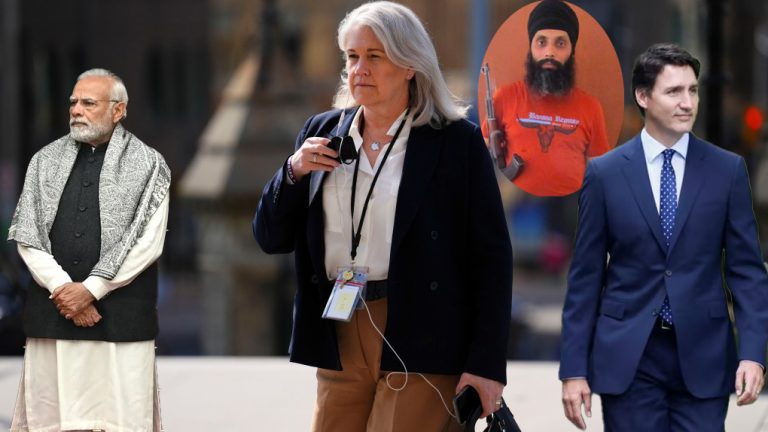
Canadian Prime Minister Justin Trudeau’s former national security and intelligence adviser Jody Thomas has said that Canada is “working back toward a healthier relationship” with India after months of tense relations following Trudeau’s baseless allegations against India over the murder of Khalistani terrorist Hardeep Singh Nijjar. Jody Thomas also said that India is cooperating in the investigation into the murder in British Columbia.
The former Canadian NSA said that the Canada-India relationship is changing, and called it an ‘evolution’. In an interview with CBC Talking about India’s strong reaction to Trudeau blaming India for the murder, Thomas said that the reaction by Indian officials was “really unfortunate” and a “bit of a surprise.”
“It’s counterproductive because it’s harmed the people-to-people relationship between Canada and India. We need diplomats there to issue visas and to execute programs on behalf of Canadians and Indians,” Thomas said, talking about India expelling 41 Canadian diplomates as a fallout of the incident.
Jody Thomas said that Royal Canadian Royal Canadian Mounted Police is probing the case very carefully, to ensure “that every ‘T’ is crossed and ‘I’ dotted to have a successful prosecution.”
In another interview with CTV news, Jody Thomas said Canada has made advancements in its relationship with India. “My discussions with my counterparts in India have been fruitful, and I think they’ve moved things forward,” she said.
Moreover, she said that India is now cooperating in the investigation of the murder of Hardeep Singh Nijjar in June last year. “I wouldn’t describe them as not co-operating. I think we’ve made advancements in that relationship,” she added. Thomas said that her discussions with her counterparts in India have been fruitful, and things are improving.
Jody Thomas, who retired on 26 January, claimed that relations with India improved following the US Justice Department blaming an Indian for plotting the murder of Gurpatwant Singh Pannun. Unlike the strong reaction to Canada blaming Indian govt for the murder of Nijjar, the Modi govt had assured cooperation to the allegation of the US, as only individual Indians were blamed for the alleged plot, not the govt.
“The information that they revealed supported our position and our assertions with India. India is working with us, and my counterpart, in particular, far more closely to resolve this,” claimed Thomas.
In December, the Canadian Prime Minister Justin Trudeau had also said that he believes India’s relations with Canada may have undergone “a tonal shift” in the days since US allegation over murder plot of Pannnun.
In September last year, Canadian Prime Minister Justin Trudeau had claimed that there were “credible allegations” that the Indian government may have been involved in the killing of Sikh separatist Hardeep Singh Nijjar, in Surrey in June 2023.
However, India denied the allegations as absurd and motivated. Following that relations between India and Canada have been strained, and both countries expelled diplomates of each other. In December last year Justin Trudeau said that he had made the allegations public as he expected the information to be leaked.
Later in December, in a parallel development, the US Justice Department unsealed an indictment against an Indian national for his alleged involvement in a foiled plot to assassinate Pannun.
The Justice Department claimed that an Indian government employee (named CC-1), who was not identified in the indictment filed in a federal court in Manhattan, recruited an Indian national named Nikhil Gupta to hire a hitman to carry out the assassination, which was foiled by US authorities, according to prosecutors. Gupta is currently in custody in Czech Republic and has been charged with murder-for-hire, which carries a maximum sentence of 10 years in prison.
In its response India said it would cooperate with the United States in this probe.
Several foreign leaders visiting India have expressed their amazement at the technology of India’s Unified Payments Interface (UPI), and French President Emmanuel Macron is no different. While recounting his experience with the UPI, Macron stated, “I wouldn’t forget the chai (tea) we (he and Prime Minister Narendra Modi) shared together, because this was a chai paid with UPI. This is innovation.” The French President was during Indian President Droupadi Murmu’s official banquet organised for President Macron at the Rashtrapati Bhavan.
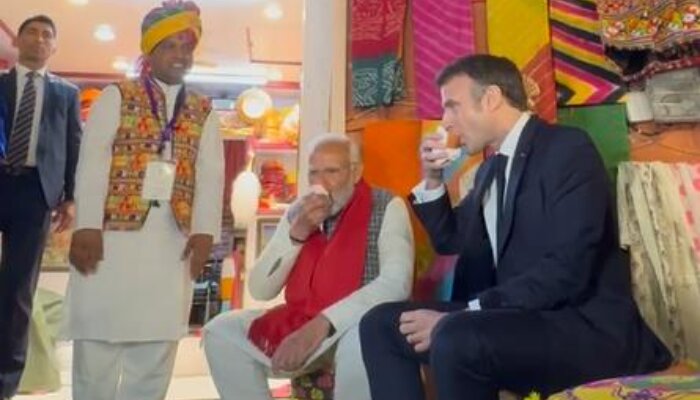
On 25th January, PM Modi and President Macron enjoyed kulhad (clay cup) tea at a store in Jaipur near the iconic Hawa Mahal. Prime Minister Narendra Modi used his phone’s UPI app to pay the bill for the tea while a surprised Emmanuel Macron looked on. Macron was further astonished as PM Modi showed him that the shop owner had received a payment confirmation on his phone instantly.
President Macron also mentioned how the UPI system’s effectiveness was demonstrated by the manner in which PM Modi’s payment confirmation showed up on the store owner’s phone. Additionally, he emphasised the strength of the friendship between France and India and expressed his gratitude for being a part of India’s Republic Day celebrations. Macron highlighted the intimacy of his and PM Modi’s interactions, characterising them as friends reuniting with the excitement of new learning.
President Macron referred to 26th January as “such an important day” and pointed out the close ties between France and India. The French President remarked, “We don’t seem to be able to stay apart. Our meetings have the warmth of friends meeting again, without losing the freshness of new discovery. You were in July in France and I am here in Delhi today.”
France has voiced a strong desire to take advantage of India’s UPI. It was announced during PM Modi’s visit to France in July last year that UPI would be implemented as a payment method beginning at the Eiffel Tower, enabling Indian visitors to France to make transactions in rupees. A memorandum of understanding (MoU) was also inked by the overseas branch of the global arm of the National Payments Corporation of India (NCPI) with Lyra Network in France to allow the latter to take RuPay and UPI.
UPI’s appeal extends beyond France. Japan has indicated interest following the visit of the country’s Digital Minister Kona Taro who witnessed firsthand the extensive use of UPI while in India. The Japanese minister was surprised to witness that everyone in the Khan Market coffee shop in Delhi was using QR codes to make online payments. Japan started talking about the UPI system’s execution at a high-level meeting after the minister’s return to Japan.
The fact that UPI is gaining traction as a digital payment system is evidenced by the reality that several countries are considering implementing it to improve their own financial systems. Leaders throughout the world have been influenced by UPI’s simplicity and efficacy which has made it a representation of India’s technological innovation in the arena of digital payments.
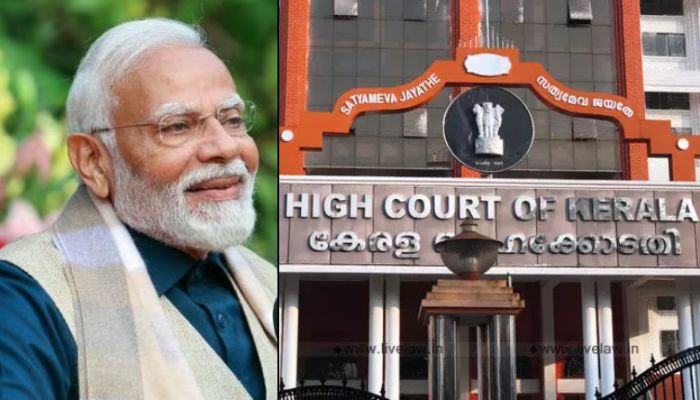
On Friday (26th January), the Kerala High Court directed the immediate suspension of two officials after a derogatory stage show targeting the Indian government was organised by them at the court auditorium on the occasion of Republic Day.
The two officials were identified as court keeper Sudheesh PM and Assistant Registrar Sudhish TA of the Kerala High Court. The Kerala High Court highlighted that the decision of their suspension was taken by the Chief Justice in the public interest.
“(They) should be suspended from service pending enquiry and disciplinary action, in the matter relating to derogatory content and criticism against the Government in the stage show performed at the High Court Auditorium during the Republic Day Celebrations, 2024,” it noted.
Kerala High Court suspends two officials for staging a drama containing remarks against the Prime Minister as part of Republic Day celebrations.
Citing “derogatory content and criticism against the Government in the stage show”, HC suspends the officials.#Keralapic.twitter.com/gfIinpXmrn
“The suspension shall take effect with immediate effect. They shall return government properties held by them, if any, including the Identity Card issued to them,” the court added.
“They will be paid during the period of suspension the subsistence allowance and other allowances admissible as per the relevant rules in practice during the period of suspension,” it further pointed out.
The Chief Justice of the Kerala High Court directed the Registrar (Vigilance) to conduct a detailed enquiry into the derogatory stage show organised at the High Court auditorium by the two officials.
The Registrar (Vigilance) has been asked to submit a report on the matter at the earliest. “Registrar (Administration) is directed to furnish a detailed explanation as to the circumstances in which the above said incident took place,” the Kerala High court directed.
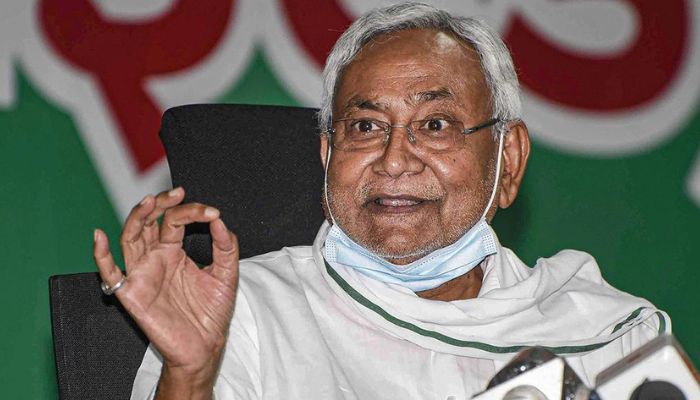
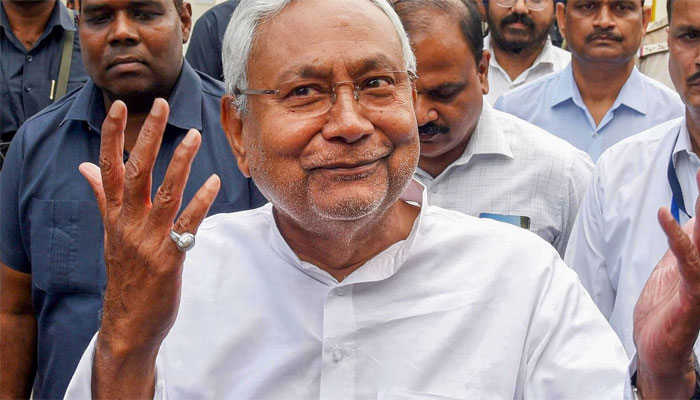
Nitish Kumar, the seasoned politician hailing from Bihar, has traversed a remarkable and often unpredictable political journey since his foray into active state politics in 1974. Influenced by stalwarts such as Jayaprakash Narayan, Ram Manohar Lohia, and George Fernandes, Kumar emerged as a prominent figure in the political landscape, embodying the ideals of the socialist class. His early years were marked by a commitment to challenging the hegemony of the Congress party, reflecting the values instilled by his political mentors.
The moniker “Sushasan Babu” was bestowed upon Nitish Kumar in 2005 when he undertook the Herculean task of steering Bihar away from the notorious “Jungle Raj” era that spanned from 1990 to 2005. However, his political trajectory has been punctuated by a series of alliances and realignments, earning him the epithet “Palti Master” or “Palti Kumar.” The epithet captures the essence of Kumar’s frequent switches between political camps, showcasing a dynamic and sometimes enigmatic aspect of his political persona.
As of January 2024, Nitish Kumar finds himself once again in the fold of the National Democratic Alliance (NDA) with the BJP, adding another chapter to his intricate political narrative. The question that looms is, how many political alliances has Nitish Kumar changed thus far in his illustrious career? Let’s delve into the nuanced tapestry of his political choices and alliances to decipher the complexities that have defined the trajectory of Bihar’s seasoned political operator.
Nitish Kumar has been a frequent side-switcher right from the beginning
In the nascent years of his political career, spanning from 1974 to 1987, Nitish Kumar showcased a penchant for aligning himself with various political entities, reflecting a fluidity that would become characteristic of his trajectory. Immersed in Jayaprakash Narayan’s movement, Kumar joined the Janata Party led by Satyendra Narain Sinha in the aftermath of the transformative period between 1974 and 1977. This marked the commencement of his active political engagement, a phase punctuated by a series of party affiliations.
Unlike the charismatic Lalu Prasad Yadav, renowned as a crowd puller, Nitish Kumar distinguished himself as a deft communicator. However, his early electoral endeavours were met with setbacks. Despite contesting the assembly elections in 1977 from Harnaut on a Janata Party ticket, victory eluded him. Undeterred, he persisted in his political pursuits, contesting once again from Harnaut in 1980, this time under the banner of the Janata Party (Secular). Unfortunately, success remained elusive.
The pattern of political realignments persisted, and Nitish Kumar continued his quest for political relevance. Finally tasting victory in the 1985 state assembly elections from Harnaut marked a turning point. However, the journey was marked not only by triumphs but also by a willingness to change allegiances. In 1987, he assumed the presidency of Yuva Lok Dal in Bihar, showcasing an ability to adapt to evolving political landscapes. The subsequent years saw Kumar’s rise within the Janata Dal, securing the position of General Secretary of the Bihar unit in 1989. Notably, during this period, he threw his support behind Lalu Prasad Yadav, endorsing him as the leader of the opposition in the Bihar Assembly in 1989. The early 13 years of Nitish Kumar’s active political career bear witness to a dynamic and evolving political figure, one who navigated the intricate web of alliances with a certain degree of unpredictability.
From Janata Dal to Samata Party
Nitish Kumar’s political journey from 1989 to 1996 was characterized by another series of strategic moves and political realignments. Representing the Barh Lok Sabha constituency, he embarked on a national role as the Agriculture Minister in V P Singh’s government in 1989. This period marked his initiation into national politics, where he held significant positions and contributed to various central governments until 1994. During this time, Nitish Kumar witnessed the rise of Lalu Prasad Yadav as the Chief Minister of Bihar in 1990. Initially, the two leaders were very close to each other.
The socio-political landscape of Bihar transformed under Lalu Prasad Yadav’s regime, marked by anarchy and the dominance of Yadavs with a simultaneous suppression of upper castes. Nitish, challenging the Yadav dominance in backward-class politics, broke away from the Janata Dal in 1994. Forming the Samata Party with George Fernandes, he strategically garnered support from his OBC caste (Kurmi) supporters.
In 1996, he further solidified his political position by aligning with the Bharatiya Janata Party (BJP). This shift marked a departure not only from the Janata Dal but also ideologically, as the NDA (National Democratic Alliance) formed in 1998, with its pro-Hindutva orientation, differed significantly from the socialist roots of Nitish’s earlier affiliations. This phase laid the groundwork for his subsequent roles within the NDA, setting the stage for the intricate political manoeuvres that would define his later years.
In NDA, Nitish Kumar became CM for the first time
The year 1998 marked the formal establishment of the National Democratic Alliance (NDA), and in the subsequent general elections in 1999, the alliance showcased its strength in Bihar, securing a commanding 41 out of 51 seats in the state. This resounding victory positioned the NDA as a formidable political force, with Nitish Kumar emerging as a key player within the alliance. Amidst the changing political landscape, the Janata Dal faced a nationwide setback, prompting Lalu Prasad Yadav to part ways and form the Rashtriya Janata Dal (RJD) in 1997.
The subsequent 2000 assembly polls in Bihar witnessed a closely contested battle between the RJD and the NDA. Despite the RJD securing 124 seats and the NDA winning 108, the latter fell short of the numbers needed to form the government. In a twist of fate, Nitish Kumar, who had assumed the Chief Ministership on March 3, 2000, found himself resigning merely a week later on March 10, 2000, due to the NDA’s inability to muster the required support. with the backing of the Congress, Rabri Devi assumed the reins of Bihar. Nitish Kumar’s brief stint as Chief Minister in 2000, though short-lived, marked the initiation of his tenure in the top office in the state. During the period from 1998 to 2004, Nitish Kumar ascended to prominence within the Atal Bihari Vajpayee-led government, holding various ministries and becoming a pivotal figure in national politics.
Nitish Kumar betrayed his political mentor George Fernandes
Nitish Kumar, once closely aligned with George Fernandes, his mentor and the chief architect of the Samata Party, navigated a tumultuous course that ultimately led to a rupture in their political association. He broke ties with George Fernandes during this period, and in a complex series of mergers, factions of the Samata Party and the Janata Dal coalesced to form a new entity known as Janata Dal (United) within the NDA on 30th October 2003. Despite the merger, Nitish Kumar continued to serve as a Union Minister.
The fallout with George Fernandes, however, went beyond mere political manoeuvring. Fernandes, a stalwart socialist and a mentor to Nitish, found himself sidelined within the evolving dynamics of the Janata Dal (United). According to reports, Fernandes had become a hindrance to Nitish Kumar’s perceived autocratic style of functioning. In a poignant 2009 letter to his old socialist associate Kumar Aurangabadkar, Fernandes expressed his disillusionment, stating, “What you mention about Nitish is correct. I brought that fellow, but he went on to see that I am sidelined.”
Ending a 17-year-old alliance with the BJP
In 2005, BJP and JDU jointly contested the Bihar assembly polls as NDA. They won a clear majority defeating Lalu Prasad Yadav’s RJD. The alliance came back to power in the 2010 assembly elections of Bihar. It was during this period that Nitish Kumar forged his image as the ‘Sushasan Babu’ committed to decimating the ‘Jungle Raj’ of Lalu Prasad Yadav’s Rashtriya Janata Dal that lasted from 1990 to 2005. In 2010, Narendra Modi – then CM of Gujarat – extended the help of Rs 5 Crores to the victims of the Kosi flood in Bihar. Big advertisements of the donation were seen in Hindi newspapers in Bihar.
This irked Nitish Kumar. By 2010, Narendra Modi had become a highly unwelcomed name in secular-socialist politics because of the allegations he faced regarding the Gujarat riots of 2002. Nitish Kumar had also kept his socialist face fairly intact despite his alliance with BJP. He was also aiming to snatch the Muslim vote bank in Bihar from Lalu Prasad Yadav. In that attempt, he started to distance himself from the BJP and especially Narendra Modi. Nitish Kumar’s motive behind this was to become a unanimously accepted secular face of the PM candidate of the NDA despite his limited seat shares. He was eyeing the prime ministerial post for the 2014 general elections.
The BJP declared Narendra Modi as the head of the election campaign committee in 2013 and subsequently made him the prime ministerial candidate in September 2013. Nitish Kumar broke the 17-year-old alliance with the BJP in June 2013 and moved out of NDA.
Sacking Jitan Ram Manjhi
In the 2014 general elections, Nitish Kumar decided that JDU would fight the elections alone. Out of 40 Lok Sabha seats in Bihar, JDU won 2. Taking the ‘moral responsibility’ for the defeat, Nitish Kumar resigned from the chief minister post on 17th May 2014. He made Jitan Ram Manjhi the chief minister. Within a year, the two leaders had a problem amongst themselves and Jitan Ram Manjhi had to leave the JDU to form his party Hindustani Awam Morcha. Nitish Kumar became the chief minister again on 22nd February 2015, just 8 months before the next assembly elections.
The Maha Gathbandhan Experiment
To fight the Modi wave, Nitish Kumar forged an alliance with Congress and Lalu Prasad Yadav’s RJD in the 2015 assembly elections. This alliance called the Maha Gathbandhan defeated the BJP in the 2015 assembly elections and Nitish Kumar became the chief minister yet again on 20th November 2015. Lalu Prasad Yadav’s son Tejashwi Yadav was made the deputy chief minister. This alliance lasted till 26th July 2017.
Nitish Kumar came back to NDA
On 26th July 2017, Nitish Kumar broke the Maha Gathbandhan and joined hands with the BJP again. This alliance lasted for five years. While in this alliance, his party JDU fought the Lok Sabha elections in 2019 and won 16 seats. The JDU-BJP alliance also contested the state assembly elections in 2020 as NDA. The alliance resumed power on 20th November 2020.
JDU and RJD partnered once again
In his next political flip, Nitish Kumar’s JDU left the BJP-led NDA and allied with Lalu Prasad Yadav’s RJD once again. The new government was formed on 10th August 2022. Tejashwi Yadav was made the deputy chief minister again. Now, in January 2024, speculations are on that Nitish Kumar may join hands with the BJP ahead of the Lok Sabha polls of 2024.
Conclusion
In tracing Nitish Kumar’s political odyssey, we witness a tapestry woven with strategic alliances, betrayals, and dynamic shifts. From his early years influenced by socialist ideals to the pivotal role in the formation of Janata Dal (United), Kumar showcased adaptability amid Bihar’s intricate political landscape. Nitish’s manoeuvring saw him as Bihar’s Chief Minister, switching alliances for political survival. His departure from the BJP-led NDA and return, the Maha Gathbandhan experiment and the recent alliance with RJD reflect a political journey marked by selfish pragmatism. Nitish Kumar’s moniker, from “Sushasan Babu” to the “Palti Master,” encapsulates the paradox of a leader who, despite transformative governance, remains enigmatic due to his ever-shifting political allegiances.
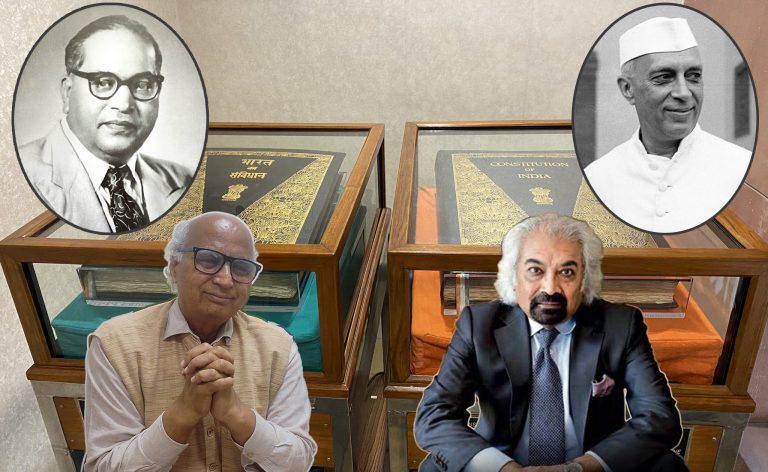
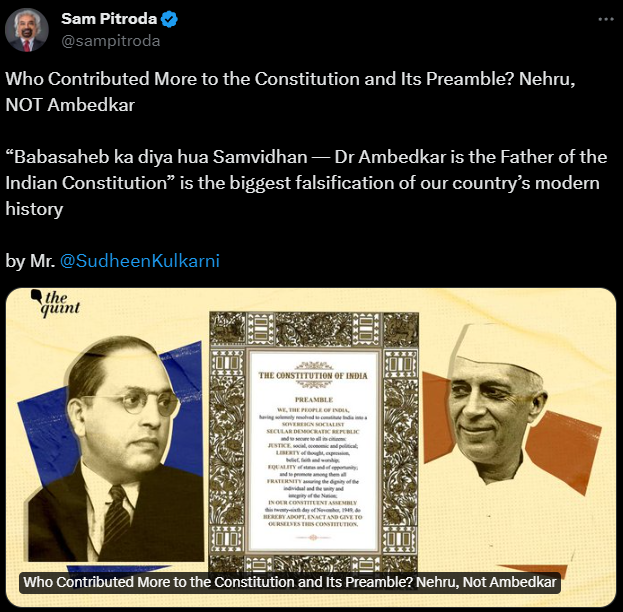
Controversial politician Sudheendra Kulkarni has started a new controversy by claiming that Jawaharlal Nehru contributed more to the drafting of the Indian Constitution, not Dr B R Ambedkar. The leftist news outlet ‘The Quint’ published a piece by Sudheendra Kulkarni, a former aide to Indian Prime Minister Bharat Ratna Atal Bihari Vajpayee, titled “Who Contributed More to the Constitution and Its Preamble? Nehru, Not Ambedkar” in which he tried to attribute the creation of the constitution to Indian’s first Prime Minister Jawahar Lal Nehru rather than Dr B. R. Amdedkar who is usually credited for its drafting.
Notably, advisor to former Prime Minister Dr Manmohan Singh and close associate of Rahul Gandhi, Satyanarayan Gangaram Pitroda, popularly known as Sam Pitroda, also endorsed the article in his social media post. However, he deleted it later.
In the article, Sudheendra Kulkarni expressed his displeasure with the manner in which it has permeated the national psyche to laud Dr Amdekar for the constitution. He bemoaned, “Dr Ambedkar is the Maker and Giver of the Constitution has now gained in the national consciousness of Indians the same degree of verité as ‘The sun rises in the east.’ Why? Because every leader of every political party says so. Prime Minister Narendra Modi says so. Rahul Gandhi, Mayawati, Nitish Kumar, M K Stalin and Arvind Kejriwal all of them say so. It is taught in school and college textbooks. Mass media outlets also mention it whenever there is a reference to the Constitution. So how can common citizens, who are not and who cannot be expected to be students of history, think otherwise?”
He claimed that historical facts paint a different picture. He stated that the majority of the information is derived from two of the most knowledgeable books on the topic, “Indian Constitution: Conflicts and Controversies” (2010) by former Lok Sabha Secretary General Subhash Kashyap and “The Indian Constitution: Cornerstone of a Nation” (1966) by American historian Granville Austin, as well as a few facts are taken directly from the works of Dr Ambedkar.
Referring to the contribution of the first Law and Justice Minister of independent India as “secondary” and calling him an ardent adversary of both Congress and Pandit Nehru, he declared, “When any unbiased person examines these facts, they will find that (a) Dr Ambedkar’s contribution to the content of the Constitution was secondary, even though he made a seminal contribution to its final drafting, (b) the greatest contribution to the content and making of the Indian Constitution came from the Indian National Congress (of which Dr Ambedkar was a bitter opponent throughout his life) and, especially, its tallest leader after Mahatma Gandhi, Pandit Jawaharlal Nehru.”
He further reiterated his displeasure with the Gandhi scion’s glorification of Dr. Ambedkar. “It is sad to see Rahul Gandhi and other ‘politically correct’ Congress leaders themselves wrongly eulogising Dr Ambedkar as the sole architect of the Constitution, thereby suppressing and denying Nehru’s central role in its evolution. Every other political party, again out of ignorance and/or ‘political correctness,’ has strengthened this narrative.”
Additionally, he targeted the Bharatiya Janata Party for their ‘villainization’ of Pandit Nehru and wrote, “Amplification of this narrative of course suits today’s BJP because its leaders have an un-hidden agenda to portray Nehru as a villain responsible for almost every problem facing the nation. Constant maligning of Nehru has become an essential part of the propaganda toolkit of the ruling party because that is the only way they can project Modi as the greatest among all the prime ministers of India.”
He further claimed, “Who moved the Objectives Resolution in the Constituent Assembly and elucidated its underlying principles on 13 December 1946? It was Nehru, a hero of the Freedom Struggle and one who spent more than nine years in jail. Whom did the President of the Constituent Assembly, Dr Rajendra Prasad, ask to respond to the debates and complete the discussion before its adoption? Nehru. His two speeches on the Objectives Resolution are among the greatest speeches by any Indian leader, ranking next only to his ‘Tryst with Destiny’ oration.”
Sudheendra Kulkarni alleged, “The Congress Working Committee (CWC) had set up the Congress Experts Committee (CEC) in July 1946, with Nehru as its chairman. And it was CEC ‘that set India on the road to her present Constitution.’ (Austin) Indeed, his association with the Congress’s efforts to prepare a constitution for free India had begun at least two decades earlier. He had assisted his father Motilal Nehru in preparing (in 1928) what came to be known as the ‘Nehru Report.’ It enunciated Fundamental Rights and other provisions in the future constitution.”
He mentioned various excerpts from the aforementioned books in support of his argument after which he highlighted Dr. Ambedkar’s relatively minor contribution. He noted, “Dr Ambedkar did participate in the discussion on the Objectives Resolution but as an ordinary member, along with others, in the 308-member Constituent Assembly. But he was not its architect, nor did he make any material contribution to its contents. Indeed, he called it “very disappointing and replete with pedantry.”
He pointed out, “Furthermore, one key thought he suggested for inclusion in the Objectives Resolution was not only rejected, but it did not find a place even in the final text of the Constitution. What was that thought? Dr Ambedkar wanted the Objectives Resolution ‘to state in most explicit terms’ that India would implement ‘nationalisation of industry and nationalisation of land’ in order that there may be social and economic justice in the country.”
He stated that Dr Ambedkar disagreed with the Constituent Assembly’s actual formation and quoted the latter’s presidential address at a meeting of the All India Scheduled Castes Federation on 6 May 1945I in which he proclaimed, “I must state that I am wholly opposed to the proposal of a Constituent Assembly. It is absolutely superfluous. I regard it as a most dangerous project, which may involve this country in a civil war.”
“People always keep on saying to me. Oh! You are the maker of the Constitution. My answer is I was a hack. What I was asked to do, I did much against my will. Sir, my friends tell me that I have made the Constitution. But I am quite prepared to say that I shall be the first person to burn it out. I do not want it. It does not suit anybody,” Sukhir Kulkarni cited Dr Ambedkar’s address in the Rajya Sabha on 2nd September 1953.
Sudheendra Kulkarni asserted, “Anyone who reads the contents of this memorandum, which Dr Ambedkar wanted to be accepted as the Constitution of India, would ask one question: how could he have expected the Constituent Assembly to accept his patently impractical and basically divisive ideas? As a matter of fact, none of the provisions suggested by him were incorporated into the Constitution by the Constituent Assembly on 26 November 1949.”
He conveyed, “In 1932, Mahatma Gandhi went on an indefinite fast to protest against the British government’s move to extend the provision of ‘separate electorates’ (which had been granted to Muslims and other religious minorities) to the Depressed Classes. He contended that the Depressed Classes (who are commonly known as Dalits now) were an integral part of the Hindu society, and hence the British move was a ploy to divide the Hindu society. The fast-unto-death undertaken by Gandhiji, who was then locked up in Yerawada Jail in Poona, triggered nationwide concern as well as support, which forced Dr Ambedkar to give up his demand. Consequently, an agreement known as the ‘Poona Pact’ was reached between Gandhiji’s supporters and Dr Ambedkar. As a result of this pact, the move to grant ‘separate electorates’ to the Depressed Classes was dropped and, instead, at Gandhiji’s suggestion, a much larger number of reserved seats were created for them within the general category.”
He accused Dr Ambedkar of going back on his words and conveyed, “Even though Dr Ambedkar was a signatory to this agreement in 1932, he backtracked on it in 1947 and again raised the demand for ‘separate electorates’ for SCs in the memorandum he submitted to the Constituent Assembly. The Constituent Assembly flatly rejected this demand. Indeed, it ended ‘separate electorates’ for Muslims as well. Instead, as stipulated by Mahatma Gandhi in the Poona Pact, seats were reserved for SCs and STs in Parliament and in state legislatures.”
Furthermore, he presented additional instances to bolster his claims and added, “The essence of the Preamble and most other defining features of the rest of the Constitution came from the Congress mainly from Nehru, but also from Patel, Prasad, Azad, and other leaders,” before concluding with “Now ask yourselves:Kya yah Dr Babasaheb ka diya hua Samvidhan hai? Is Dr Ambedkar the Father of the Indian Constitution?”
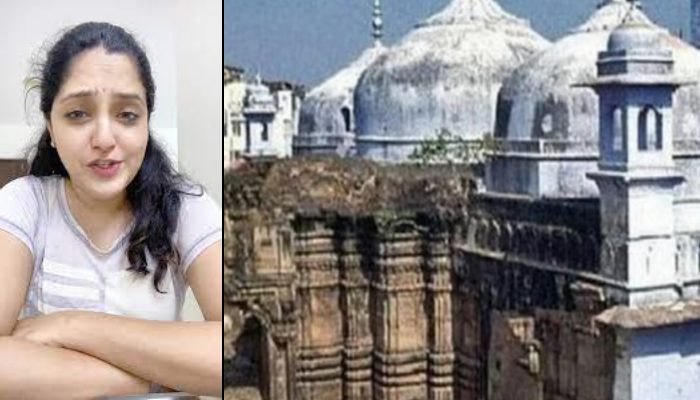
On Thursday (25th January), Congress spokesperson Lavanya Ballal Jain took to X (formerly Twitter) to take potshots at right-wing intellectuals over the findings of the Archaeological Survey of India (ASI) from the site of the disputed Gyanvapi mosque.
While doing so, she ended up exposing her ignorance about the workings of ASI. Lavanya assumed that the survey conducted by the Archaeological Survey of India was somehow similar to online surveys and not ‘real’ archaeological findings.
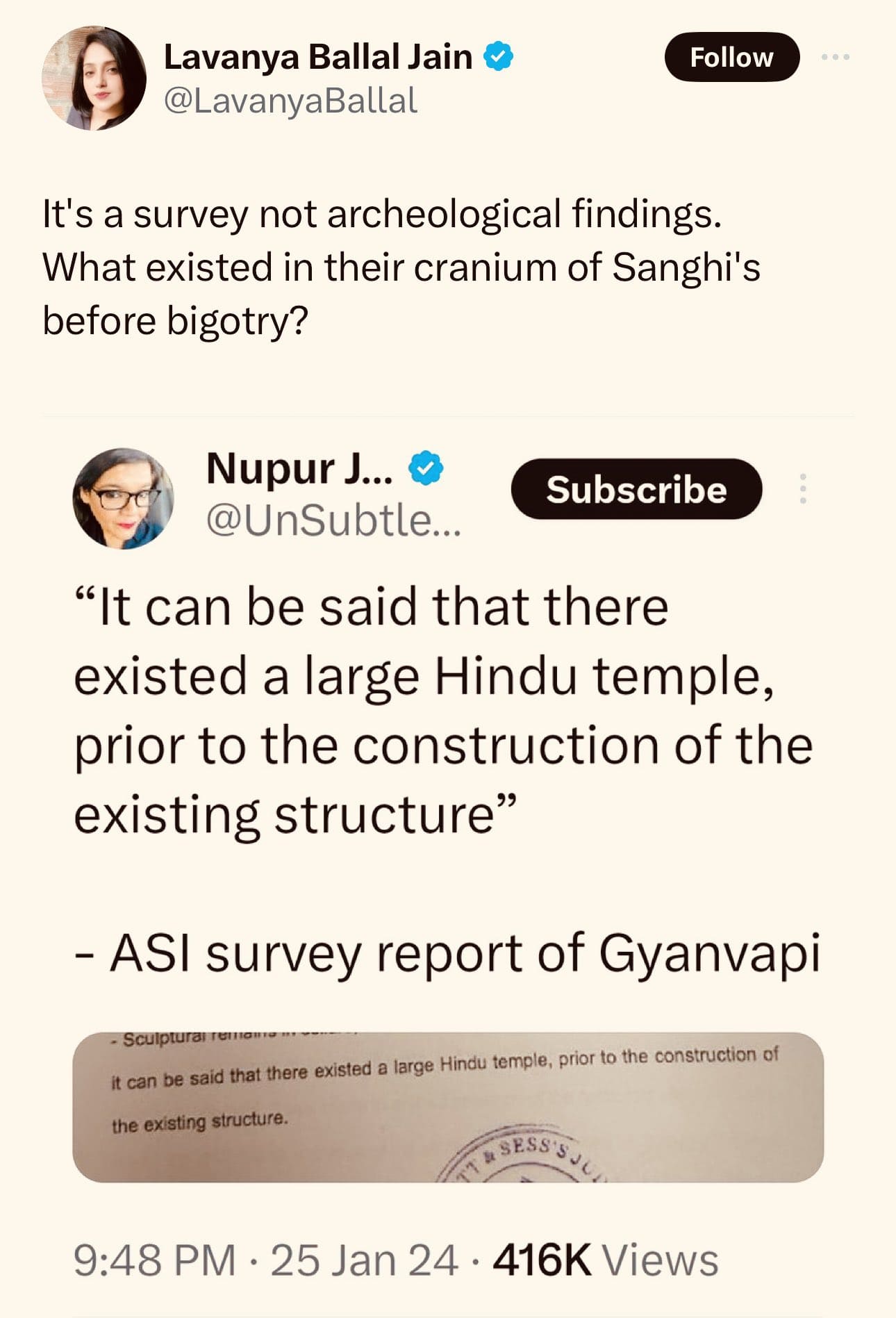
In a tweet (archive), she brazened out, “It’s a survey not archaeological findings. What existed in their cranium of Sanghi’s before bigotry?” The development came after ASI in its 850-page report revealed that a large Hindu temple existed at the site of the disputed Gyanvapi mosque.
Screengrab of the tweet by Lavanya Ballal Jain
While the Congress spokesperson wanted to downplay the findings of ASI and negate the fact that the mosque was built on the ruins of a Hindu temple, she ended up revealing her sheer lack of comprehension skills.
Nonetheless, social media users did not mince words before taking potshots at the ignorance of Lavanya Ballal Jain.
One Darshan Pathak posted the screenshot of a dubious, phishing online survey and asked the Congress spokesperson, “Did she really think it is one of these surveys?”
“Seriously, are you really this stupid? Do you think this is a market survey done by public? You come across as a consistent dunce #Lavanya BJ,” inquired one X user.
Seriously, are you really this stupid? Do you think this is a market survey done by public? You come across as a consistent dunce. #LavanyaBJ
Renowned advocate Shashank Shekhar Jha shared a meme, which stated, “Kid, if you have put your intelligence to sleep, then, allow your mouth to rest too.”
Archaeological survey in the context of the disputed Gyanvapi mosque
An archaeological survey is a systematic and organised method used by archaeologists to locate, identify, and record archaeological sites and artefacts within a particular area. This method helps researchers gain valuable information about past civilizations and cultures.
The goal is to identify and document any potential archaeological resources. One such survey conducted by the Archaeological Survey of India (ASI) at the site of the disputed Gyanvapi mosque revealed the existence of a large temple.
Congress spokesperson Lavanya Ballal Jain had insinuated that the research work undertaken by the Archaeological Survey of India at the disputed Gynavapi mosque was somehow not actual scientific finding but an opinionated survey of sorts devoid of scientific temperament.
However, nothing possibly could be farther from the truth. The ASI team used several scientific instruments for conducting their research. Those included Differential Global Positioning System (DGPS), Total Station, Electronic Distometre, GPS Map 76CSX, Handheld X-Ray Fluorescence (XRF) and Thermo-hygrometer.
The ASI team employed scientific methodologies to reach their conclusion, which has been detailed in its 850-page report. As stated in Volume 2 (Pages 9-14) of its report, the techniques include:
Ground Penetrating Radar:
This geophysical method played a significant role in the survey due to its non-invasive and non-destructive nature. ASI was able to generate high-resolution imaging, identifying and mapping buried foundation walls within the ancient ruins of the pre-existing temple.
The precise sub-surface mapping helped reduce the risk of inadvertent damage to the ancient structure.
Differential Global Positioning Systems (DGPS):
DGPS is an enhanced version of the Global Positioning System (GPS), which is used in archaeological surveys. It improves the accuracy of location data obtained from GPS by correcting the GPS signals for various sources of errors.
In a standard GPS system, errors can occur due to factors such as atmospheric conditions, satellite clock inaccuracies, and signal reflections. DGPS minimises these errors by using a network of stationary ground-based reference stations. These reference stations precisely measure the difference between the actual position and the position calculated by GPS satellites.
Total Station Survey:
It is an electronic instrument used in archaeology to measure distances, angles, and coordinates with a high level of accuracy. It combines the functions of a theodolite (for measuring angles) and an electronic distance measuring (EDM) device into a single unit. Total stations are equipped with data logging and data transfer capabilities and some have auto-tracking capabilities.
Handheld X-Ray Fluorescence Spectrometer:
XRF is an instrument used for non-destructive elemental analysis of materials. It is a valuable tool in various fields, especially archaeology. The technology relies on the principle of X-ray fluorescence to determine the elemental composition of a sample.
XRF is compact, lightweight, and portable. It provides quick results, allowing for efficient decision-making in the field or on-site. XRF analysis is non-destructive i.e.it does not damage the sample.
Thermo-hygrometer:
It is used to record humidity and temperature during working hours.
Radiocarbon dating:
Radiocarbon dating (C-14 dating) is a widely used archaeological method used for determining the age of an object. It measures the amount of carbon-14 present in an organic material. It was developed by Willard Libby in the late 1940s.
The method is highly effective for dating materials up to around 60,000 years old. However, it is not suitable for dating materials that are millions of years old, as the amount of carbon-14 becomes too small to measure accurately.
Interestingly, radiocarbon dating provides dates in radiocarbon years, which then need to be converted to calendar years. For this task, archaeologists need to account for fluctuations in atmospheric carbon-14 levels over time.
Thermoluminescence Dating:
Thermoluminescence (TL) dating is used in archaeology to determine the time elapsed since certain minerals were last exposed to daylight or heated. It is particularly useful for dating pottery, ceramics, burnt stones, and other materials that contain crystalline minerals.
The principle behind thermoluminescence dating is based on the fact that some minerals, such as quartz and feldspar, accumulate energy in the form of trapped electrons over time when they are exposed to ionizing radiation from natural sources.
This trapped energy is released when the minerals are subjected to heat, typically during the firing of pottery or when they are exposed to sunlight.
Isotopic Dating
Isotopic dating is used to determine the age of artefacts based on the decay of radioactive isotopes. This technique relies on the principle that certain isotopes decay at a known and constant rate over time.
The basic idea behind isotopic dating is to measure the ratio of parent isotopes to daughter isotopes in a sample. The parent isotope undergoes radioactive decay into a stable daughter isotope.
By measuring the ratio of parent to daughter isotopes, archaeologists can estimate the amount of time that has passed since the rock or mineral formed. Isotopic dating provides absolute ages, which makes it a powerful tool in understanding archaeological history.
Typological dating:
The method is used in archaeology to establish the chronological order of artefacts based on their typological characteristics. Typology refers to the systematic classification of artefacts into types/ categories based on shared characteristics such as form, style, decoration etc.
This method assumes that artefacts of one particular type were produced during a specific period and that these types could be used to create a relative chronological sequence. It is important to note that typological dating provides a relative chronology rather than absolute dates.
Thus contrary to the claims of Lavanya Ballal Jain, the ‘survey’ and ‘archaeological findings’ of the Archaeological Survey of India is one and the same thing.
It was a meticulous task executed by trained archaeologists with the latest advancements in science and technology and not an online survey that requires no application of intelligence and scientific spirit (as believed by the Congress spokesperson).
Findings of Arcaheological Survey of India
OpIndia has accessed relevant pages of the report, which states that it can be said that there existed a large Hindu temple, prior to the construction of the existing structure.
The study stated that for the reuse of pillars in the existing structure, vyala figures carved on either side of the lotus medallion were mutilated and after removing the stone mass from the corners that space was decorated with floral design. This observation was supported by two similar plasters still existing on the northern and southern walls of the western chamber in their original place.
“The pre-existing structure appears to have been destroyed in the 17th century, during the reign of Aurangzeb, and part of it was modified and reused in the existing structure. Based on scientific studies/ survey carried out, study of architectural remains, exposed features and artefacts, inscriptions, art and sculptures, it can be said that there existed a Hindu temple prior to the construction of the existing structure,” the report stated.
Screengrab of the survey report of ASI
As per the ASI report, the pre-existing Hindu temple had a big central chamber and at least one chamber to the north, south, east and west respectively. Remains of three chambers to the south and west still exist but the remains of the chamber to the east and any extension of it could not be ascertained physically, as the area is covered under a platform with stone flooring.
The ASI report also gave details of the instructions found in the structure that prove the existence of a Hindu temple. During the survey, a number of inscriptions were noticed on the existing and pre-existing structures. A total of 34 inscriptions were recorded during the present survey and 32 estampages were taken.
The report concluded by saying that based on scientific studies/ survey carried out, study of architectural remains, exposed features and artefacts, inscriptions, art and sculptures, it can be said that there existed a Hindu temple prior to the construction of the existing structure.
A political turmoil has engulfed Bihar as speculations are rife that JDU supremo and Chief Minister Nitish Kumar is set to jump ship again breaking his alliance with the Rashtriya Janata Dal (RJD). Amidst the rumours of Nitish Kumar returning to the NDA fold after abandoning RJD, the BJP has called a meeting of its MPs and MLAs on Saturday (27th January) in Patna.
As stated by BJP state unit chief Samrat Choudhary, the meeting will discuss the party’s strategy for the general elections. When asked about reports that the BJP is reuniting with Nitish Kumar’s JD(U), Choudhary said, “No such thing has been discussed at our level.”
On Friday, January 26, BJP leaders hinted at Kumar’s alleged discussions with senior party leaders. Meanwhile, Sushil Kumar Modi, a prominent BJP leader, told reporters, “No door is closed in politics. The door can be opened if needed.”
Bihar BJP leader Sushil Kumar Modi said, “In Thursday night’s meeting, the strategy for the Lok Sabha elections was discussed. As far as Nitish Kumar or JDU is concerned, the doors in politics are not always closed, if the door is closed then it can also open. Politics is a game of possibilities, anything can happen. Whatever decision will be taken by the central leadership will be acceptable.”
As reported earlier, the BJP is reportedly ready to form government in Bihar with Nitish Kumar’s Janata Dal-United and other parties in the NDA. It is also speculated that Sushil Kumar Modi may become deputy chief minister.
Congress calls meeting of party MLAs in Bihar
Notably, Bihar Congress leader Shakeel Ahmed Khan has also convened a meeting of party MLAs and former lawmakers in Purnea at 2 PM on Saturday. He further refuted that the meeting had anything to do with recent political happenings in the state.
“Yes, all Congress MLAs (present and former) and senior party leaders are meeting in Purnea tomorrow to discuss preparations related to the ‘Bharat Jodo Nyay Yatra’ of Rahul Gandhi when it enters Bihar on January 29,” Khan said in a statement.
#UPDATE | Bihar Congress CLP leader Dr Shakeel Ahmed Khan has called a meeting of Congress MLAs in Purnia, Bihar at 2 pm tomorrow.#BiharPolitics
IAS-IPS reshuffle in Bihar amidst political upheaval
On Friday, the Bihar government transferred 22 IAS officers, 79 IPS officers, and 45 Bihar Administrative Service officers.
According to a statement from the general administration department, Patna Collector Chandrasekhar Singh has been transferred to the Chief Minister’s Secretariat as a special secretary. IAS Shirsat Kapil Ashok, the IG (Prisons), has been appointed Patna’s new collector. IAS Senthil K Kumar, previously the Principal Secretary (Home Department), has been appointed as the next Principal Secretary of the Planning Department.
According to the Home Department’s transfers, new SPs have been posted in over a dozen districts. Begusarai, Jehanabad, Arwal, Navgachia, Saharsa, Purnea, Khagaria, Bagaha, Madhepura, Darbhanga, Munger, Sheikhpura, and Siwan are among the cities with new SPs.
Reports say that Nitish Kumar has scheduled a legislative party session for Sunday (28th January). Nitish Kumar’s solo attendance at the Republic Day event at Raj Bhavan on 26th January, sans his deputy Tejashwi Yadav by his side, led to further speculations about a festering feud between the Janata Dal (United) and the Rashtriya Janata Dal (RJD).
Nitish Kumar, once known as ‘Sushasan Babu’, has over the recent years turned into a “Paltu Kumar” who shifts sides at convenience. The JDU leader’s political trajectory reflects Bihar’s political dynamics.
Nitish Kumar’s rumoured departure from the opposition’s I.N.D.I. bloc would be a severe blow to an already collapsing opposition unity after Mamata Banerjee’s TMC opted to go solo in Bengal and AAP announced to do the same in Punjab.
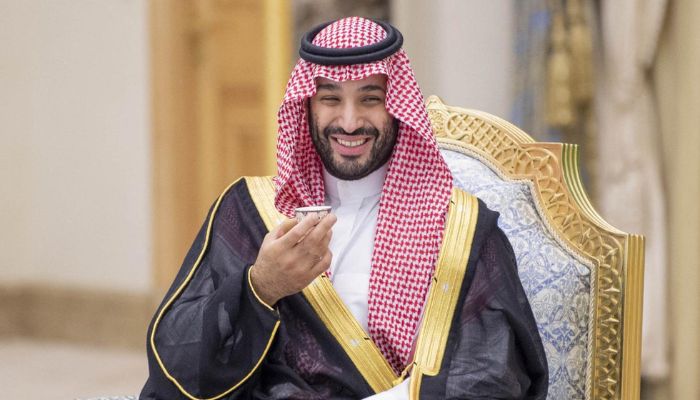
Saudi Arabia, under the leadership of Crown Prince Mohammed bin Salman, has permitted the sale of liquor for the first time in 72 years. This historic decision, effective from 22nd January 2024, reflects a paradigm shift in the country’s approach, marking a departure from the strict Islamic laws that have governed the nation for decades.
The Saudi administration has taken this unprecedented step as part of a broader vision to diversify the economy and reduce dependency on oil. The decision aligns with the ambitious “Vision 2030” initiative, a multifaceted plan to modernise and liberalise various aspects of Saudi society. The move is crucial in adapting to changing global circumstances, where the oil demand is expected to decrease with the rising popularity of electric vehicles.
The historic moment was marked with the opening of the first liquor store in Riyadh’s Diplomatic Quarter, available exclusively to non-Muslim foreign diplomats. The store, operational from 22nd January, introduces a meticulous system wherein customers must register through a mobile app, obtain clearance codes from the Foreign Ministry, and adhere to monthly quotas on purchases.
Saudi Arabia, governed by Sharia law, has strictly prohibited the sale and consumption of alcohol in the Kingdom since 1952. Crown Prince Mohammed bin Salman’s recent decisions, such as allowing women to drive, opening cinema halls, permitting music concerts, and now introducing alcohol sales, underscore his commitment to a progressive and open-minded approach to the kingdom.
This move comes as a response to the clandestine trade of alcohol in the country. Previously, diplomatic pouches were utilised to import limited quantities of alcohol for consumption within embassy grounds. However, the new regulations aim to curb the illicit trade of alcohol, introducing a centralised monitoring system and enforcing monthly quotas on diplomatic missions.
While the decision marks a significant departure from traditional norms, it reflects the pragmatic approach of Crown Prince Mohammed bin Salman, who seeks to align Saudi Arabia with global trends and promote a more inclusive and diverse society. As Saudi Arabia adapts to the changing global landscape, the recent decision to allow liquor sales stands as a positive sign of the nation’s readiness to embrace progressive policies in its pursuit of economic diversification and societal development.
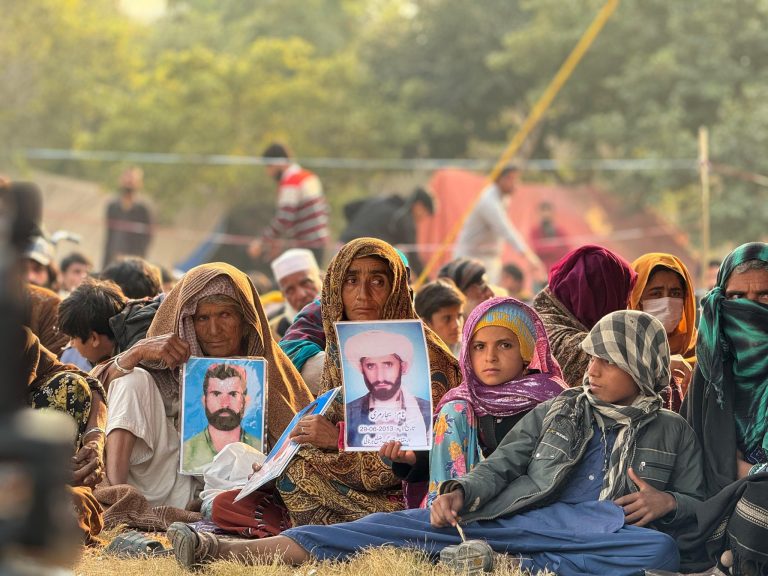
Baloch activist Mahrang Baloch on Saturday highlighted that the state institutions and their backed death squads have rendered Baloch mothers forcibly “Helpless”, as enforced disappearances, abduction and killings continue in the city.
The ongoing challenges faced by the Baloch people have been increasing as in every corner of Balochistan, people have been abducted, killed and dumped.
Activist Mahrang stressed that this is a people’s resistance, and only the people themselves can resist to end such barbaric policies. “The state institutions and their backed death squads have rendered our Baloch mothers and their entire families forcibly “Helpless”. From every corner of Balochistan, they have abducted, killed, and dumped our nation’s fellows. What else remains but ‘Resistance’ and a movement against the genocidal and brutal policies of the state? This is a people’s resistance, and only the people themselves can resist to end such barbaric policies,” she posted on social media ‘X’.
The state institutions and their backed death squads have rendered our Baloch mothers and their entire families forcibly “Helpless”. From every corner of Balochistan, they have abducted, killed, and dumped our nation fellows . What else remains but 'Resistance' and a movement… pic.twitter.com/smM3UAL9NF
Reportedly, two Baloch youths were forcibly displaced from the Kech district of Balochistan on Thursday, according to The Balochistan Post.
As per the reports, a large number of Pakistani forces raided different houses in Bulaida Bit and detained two young men, identified as Hafeezullah and Ismail who are said to be close relatives.
Meanwhile, After conducting a month-long protest sit-in in Islamabad, the participants of the Turbat long march, led by Mahrang Baloch, arrived in Quetta on Thursday. A crowd of thousands, including students and women, warmly welcomed the marchers at the Sariab area near Balochistan University, the Dawn News reported.
Mahrang Baloch urged the public to join the gathering scheduled in Quetta on January 27, emphasising that the Baloch Yakjehti Committee (BYC) would unveil its next course of action during this public meeting.
The Baloch Yakjehti Committee (BYC) and the families of the enforced disappeared victims will hold a public gathering on a large scale in Quetta city against the enforced disappearances and extrajudicial killings of Baloch people today.
BYC and other rights organizations alleged that Pakistan’s military institutions are behind the extrajudicial killings and enforced disappearances of innocent people in Balochistan and the state’s mainstream parties, government, judiciary, and media are backing these crimes.
(This news report is published from a syndicated feed. Except for the headline, the content has not been written or edited by OpIndia staff)
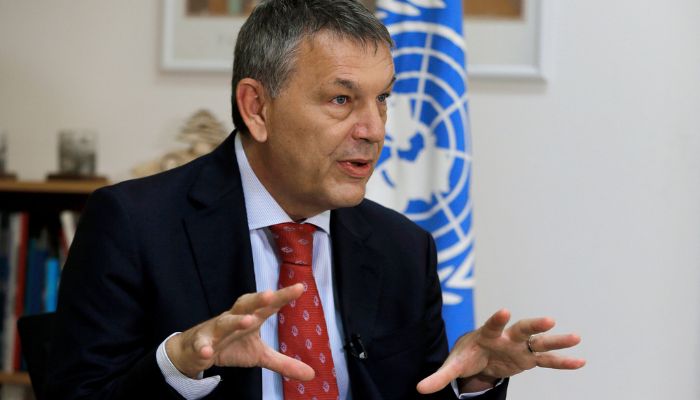
On Friday (26th January), UNRWA (United Nations Relief and Works Agency) Commissioner-General Philippe Lazzarini issued a statement to reveal that Israel has accused several UNRWA staff members of being involved in the 7th October terrorist attack on Israel by Hamas. The agency has terminated the contract of these employees and launched an investigation into this case.
Philippe Lazzarini said in the statement, “The Israeli Authorities have provided UNRWA with information about the alleged involvement of several UNRWA employees in the horrific attacks on Israel on October 7. To protect the Agency’s ability to deliver humanitarian assistance, I have decided to immediately terminate the contracts of these staff members and launch an investigation to establish the truth without delay. Any UNRWA employee who was involved in acts of terror will be held accountable, including through criminal prosecution.”
He added, “UNRWA reiterates its condemnation in the strongest possible terms of the abhorrent attacks of 7th October and calls for the immediate and unconditional release of all Israeli hostages and their safe return to their families.”
The UNRWA Commissioner-General further said in his statement, “These shocking allegations come as more than 2 million people in Gaza depend on lifesaving assistance that the Agency has been providing since the war began. Anyone who betrays the fundamental values of the United Nations also betrays those whom we serve in Gaza, across the region and elsewhere around the world.”
What is UNRWA
The United Nations Relief and Works Agency for Palestine Refugees in the Near East (UNRWA) was created by the United Nations General Assembly in 1949. Its primary mission is to offer humanitarian aid and protection to registered Palestine refugees within its designated operational area. UNRWA operates in the West Bank, including East Jerusalem, Gaza Strip, Jordan, Lebanon and Syria.
UNRWA facilitates the realisation of the full potential in human development for Palestine refugees by delivering high-quality services in education, healthcare, relief and social services, protection, camp infrastructure and enhancement, microfinance, and emergency assistance. The agency relies heavily on voluntary contributions for its funding.
Israel has provided information to the agency that its employees were involved in conspiring the terrorist attack by Hamas on 7th October 2023. In response to the allegations, the UNRWA has terminated the employees and launched an investigation. The Israel-Hamas conflict started after this terrorist attack. Israel is in an the middle of a war against Hamas following the terrorist attack.
October 7 terrorist attacks by Hamas on Israel
On 7th October, Hamas terrorists launched an all-out attack on Israel from sea, land, and air. At least 5,000 rockets were launched into Israel from Gaza and tunnels were used to breach the Israeli territory and butcher Israeli civilians, particularly in the border villages. A music festival hosting more than 200 people was turned into a slaughter ground with many women raped, mutilated and abducted to Gaza. At least 1,300 people, including some foreign nationals, babies, women and senior citizens died in the attacks. More than 200 were abducted and taken to Gaza.