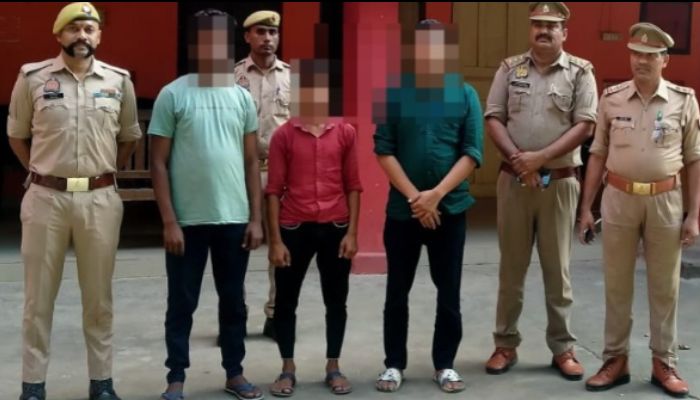
Two accused have been arrested, and a minor detained in Rajasthan’s Sikar for the alleged gang rape and murder of a minor girl. The police reportedly said that the primary accused, a 15-year-old minor, has been detained and his two associates, Sameer (19) and Ghulam (19) have been arrested. According to a report by Rajasthan Patrika, all three accused belong to a “samuday vishesh” (particular community).
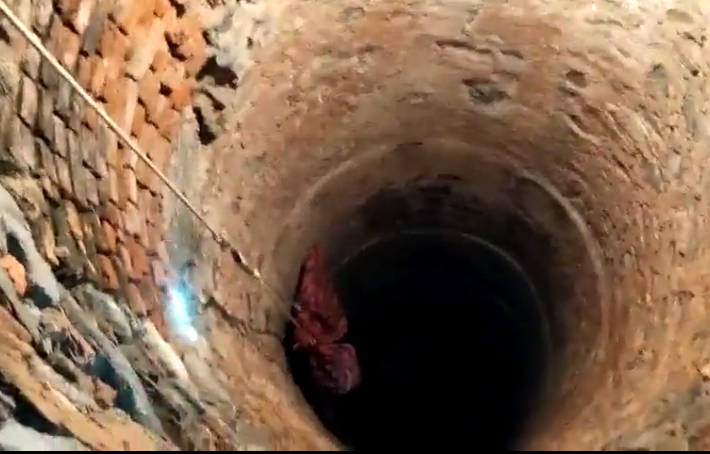
The minor girl’s body was recovered from a well in Sikar district of Rajasthan on Sunday (24 September). Family members allege that girl was murdered after being gang raped. The 15-year-old deceased was a class 10 student.
राजस्थान के रामगढ़ शेखावाटी में तीन दरिंदों ने रात 15 साल की एक बेटी के साथ गैंगरेप कर,उसकी हत्या कर कुएँ में फेंक दिया !! pic.twitter.com/nG5FAW2rTu
According to reports, the incident took place in Ramgarh market, Sikar where the 15-year-old girl, originally from Churu district, was staying at her maternal home for studies. According to the victim’s family, the accused entered their house on Saturday night and abducted the girl.
The victim’s family complained to the police, following which a missing person’s report was filed, and the police started searching for the victim. CCTV and surveillance footage revealed that the girl did not go out of the village.
During the search, the girl’s body was recovered from a well in the village. The police took the body into custody and sent it for post-mortem. The victim’s family has accused the culprits of gang rape and murder.
A police official said, “We have reviewed the CCTV footage installed along the route to the victim’s house. The suspects are seen approaching and leaving the victim’s residence. The identification of the suspects has been confirmed through the CCTV footage. One of the suspects also has an injury in his hand.”
Residents of Ramgarh launched a protest demanding action against the accused and have accused the Gehlot government of laxity. Protesters even advised the Rajasthan Chief Minister to learn from UP CM Yogi Adityanath to deal with criminals.
In a memorandum submitted to the administration, the protesters have demanded jobs and Rs 10 lakh compensation for the victim’s family. They have demanded that the house of the accused be razed. Protesters have warned the administration of further agitation if it does not take immediate action.
The accused are reportedly being interrogated. Police have said that action will be taken as per law based on the facts that emerge after the investigation and the findings in the post-mortem report. Family members reportedly confirmed that the victim’s last rites were conducted in Jasrasar village, Sardarseher.
Dev Anand, known initially as Dharamdev Pishorimal Anand, was born on September 26, 1923, in Shakargarh tehsil, Punjab. His father was a renowned advocate, but Dev Anand was inspired by the legendary actor Ashok Kumar’s performances in “Achhut Kanya” and “Kismet” and chose to pursue a career in films.
His debut in the Hindi film industry with “Hum Ek Hain” began a remarkable journey filled with blockbuster films, timeless songs, and unmatched stardom. Among all the popularity, stories and controversies around Dev Anand, one story stands out which is the love affair between him and actress Suraiya. Reportedly, they broke up after Suraiya’s grandmother objected to the relationship and threw the ring Dev Anand gave to Suraiya. Out of anger, Dev Anand threw the ring into the sea.
While Dev Anand enjoyed unprecedented popularity, a few are aware of his love affair with the beautiful actress Suraiya. Unfortunately, their love faced obstacles, mainly religious differences, leading to their separation. Dev Anand eventually married another famous actress, Kalpana Kartik, with whom he had two children, Suniel and Devina.
The love affair that ended painfully
Dev Anand’s biography, “Romancing With Life,” features a revealing chapter that sheds light on his love for the famous actress Suraiya. According to the book, Dev Anand expressed his love for her by gifting her an expensive diamond-studded ring. He had to borrow money from his friends to afford the Rs 3000 ring, a substantial amount in the 1950s. The ring served as a symbol of the depth of their love.
Suraiya, in a throwback interview, nostalgically recalled the beautiful ring that brought both joy and sorrow. She wore the ring during a film shoot, but unfortunately, someone on set informed her grandmother about it. Her grandmother forcefully took the ring off her finger and warned Suraiya to stay away from Dev Anand. This incident left Suraiya sad and heartbroken, especially since Dev had borrowed money to buy the ring. In a teary-eyed interview, she revealed that her grandmother’s refusal to return the ring devastated her. The opposition to their relationship extended beyond her grandmother to her entire family due to their religious differences as Dev was Hindu, and Suraiya was Muslim, which made their relationship unacceptable for her family.
Reportedly, Dev Anand threw the ring in the Arabian Sea, where it resides to date. Dev Anand again proposed to her a couple of years later, but Suraiya refused as she did not want to antagonize her conservative Muslim family. Suraiya never married following the heartbreaking incident. She died in 2004 at the age of 74.
On Monday, September 25, the first convoy of as many as 6500 ethnic Armenians left Nagorno-Karabakh. According to reports, the entire community of some 120,000 ethnic Armenians may be on the verge of abandoning its ancestral homeland, after Azerbaijan seized control of the disputed regions in a lightning military onslaught last week, stoking fears of persecution at the hands of Azerbaijani authorities.
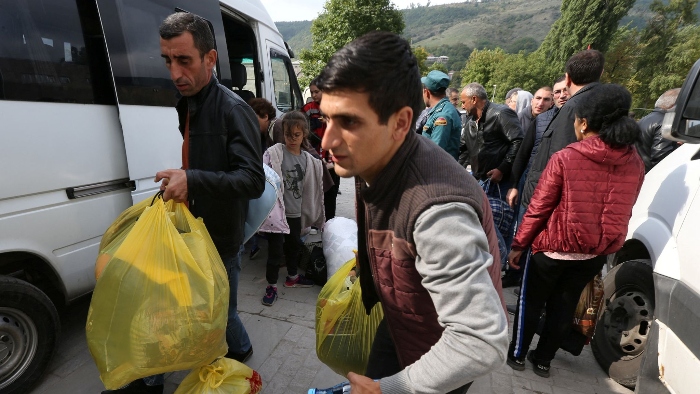
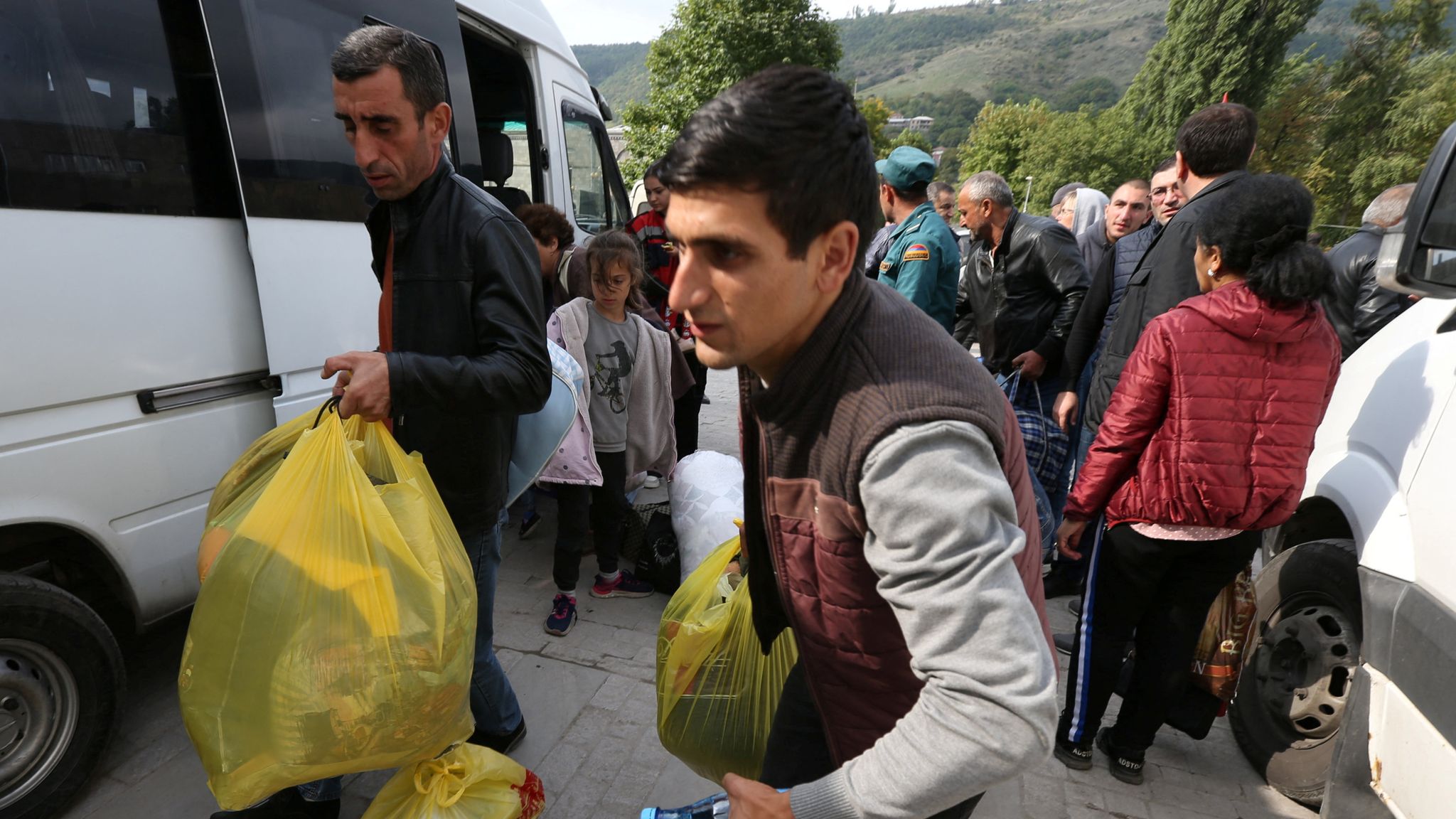
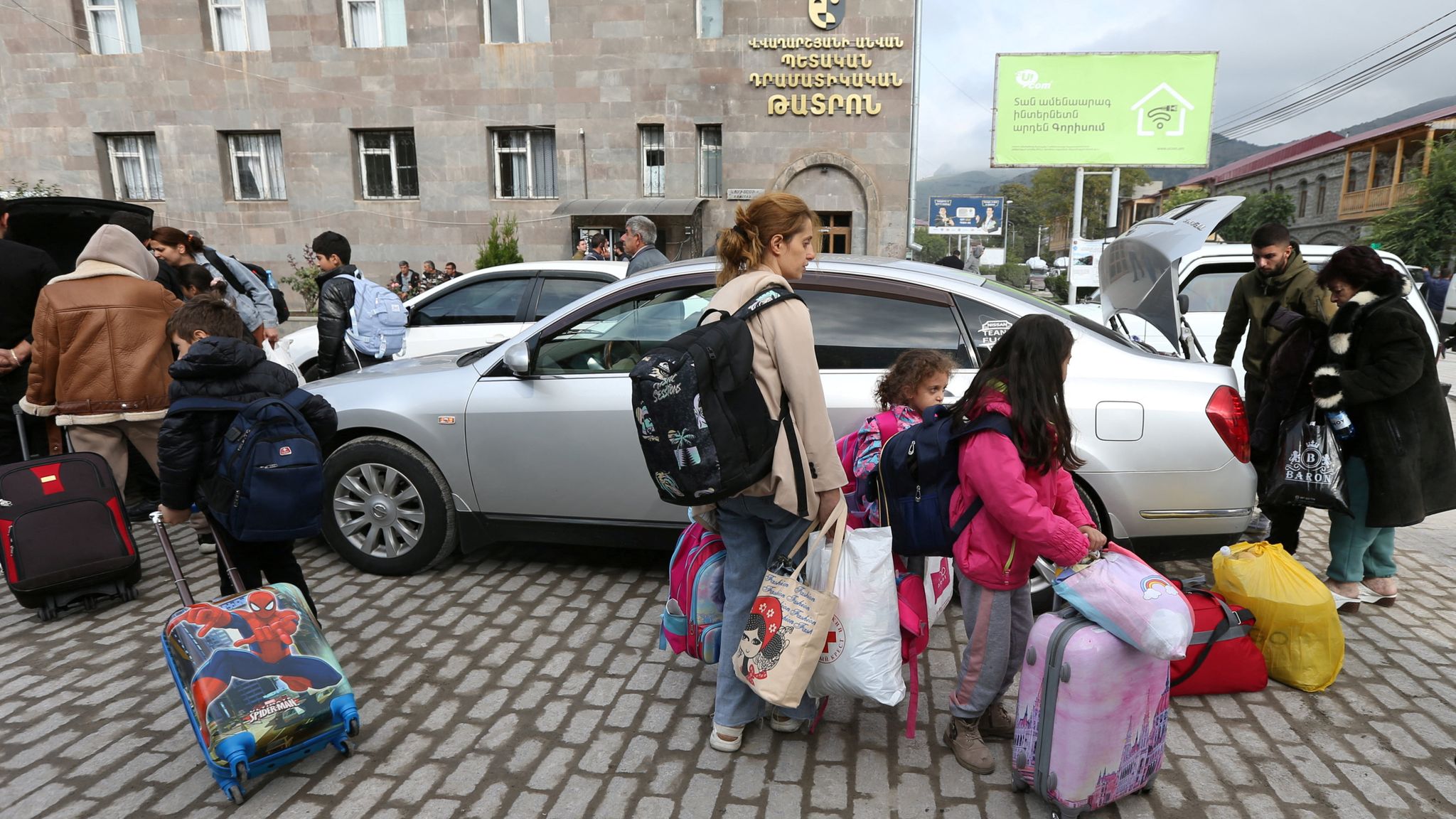
Several pictures have emerged showing ethnic Armenians, who are mostly Christians, preparing to leave the Muslim-majority Azerbaijan. In the Karabakh capital, known as Stepanakert by Armenia and Khankendi by Azerbaijan, crowds of people were loading belongings into buses and trucks as they left for Armenia.
Image source: SkyNews
Image source: SkyNews
More videos and images emerged wherein Armenians are seen stocking up vehicles and sitting in tailbacks which have brought the mountainous road to Armenia to a standstill.
Armenia's Prime Minister Nikol Pashinyan said it was highly likely that ethnic Armenians would flee the breakaway region of Nagorno-Karabakh, fearing persecution https://t.co/QyhOGjijyLpic.twitter.com/vhaOIeC5Sz
On Sunday, September 24, Reuters quoted the ethnic Armenians, who call Karabakh home as saying that they did not want to live as part of Azerbaijan and that they would leave for Armenia because they feared persecution and ethnic cleansing. The majority of Karabakh Armenians do not have faith in Azerbaijan’s promises to guarantee their rights after the recent military offensive.
Confirming the mass exodus of Armenians from Azerbaijan, the Armenian government said that as of 5 a.m. (0100 GMT) on Monday, September 25, more than 2,900 people from Nagorno-Karabakh had crossed into Armenia.
Armenia’s PM Nikol Vovayi Pashinyan has warned that ethnic cleansing is ‘underway’ in the region. “That’s happening just now, and that is a very unfortunate fact because we were trying to urge the international community on that,” Nikol Pashinyan told reporters.
Nikol Pashinyan added that “responsibility for such a development of events will fall entirely on Azerbaijan, which adopted a policy of ethnic cleansing, and on the Russian peacekeeping contingent in Nagorno-Karabakh.”
Reportedly, the dire humanitarian crisis ethnic Armenians are facing in Nagorno-Karabakh escalated after the Azeri soldiers launched a military assault in Nagorno-Karabakh on September 19. At least ten persons have been killed.
After Azerbaijan’s latest military offensive to regain control of the area, Turkey-backed Azerbaijan had promised to preserve ethnic Armenians’ rights and to reopen the supply routes that were cut in December. However, Artak Beglaryan, a former adviser to Artsakh’s government, told the media that people are afraid of retaliation and ethnic cleansing, thus “almost all the villages” and huge areas of the largest city Stepanakert, known in Azerbaijan as Khankendi, “are emptying.”
The Nagorno-Karabakh conflict
Trapped between Turkey and Azerbaijan is the tiny country of Armenia. The Azeris are ethnic Turks and have the same religion and culture as Turkey. For a long time, the mostly Christian Armenians were colonized by the Ottoman Empire. The Soviets took over the land in the 1920s and Armenia was cut up between three Soviet Republics: Georgia, Azerbaijan and Armenia.
When the Soviet empire collapsed in the 1990s, both Armenia and Azerbaijan became independent. But a portion of land, populated by ethnic Armenians, remained part of Azerbaijan. This region is known as Nagorno-Karabakh. Tensions erupted and this area declared independence in the 1990s, supported by Armenia. The stalemate has been around for nearly three decades until Azerbaijan (with Turkish support) unilaterally broke the ceasefire in 2020.
Following this, a major escalation in the conflict took place. Thousands of people were reported killed in six weeks of fierce fighting.
Azerbaijan took over large swaths of land, and by the time both sides agreed to sign a peace deal negotiated by Russia in November 2020, it had grabbed all of the regions surrounding Nagorno-Karabakh controlled by Armenia since 1994.
Armenian troops were forced to withdraw from these areas by the terms of the agreement and have since been confined to a smaller section of the region.
The presence of Russian soldiers temporarily halted the violence, although tensions had been rising for months before the recent military operation.
What led to the latest military onslaught by Azerbaijan soldiers
Fears of renewed bloodshed arose when in December 2022, Azerbaijan effectively blocked a vital passage into the Nagorno-Karabakh enclave.
The Lachin Corridor is the only road that connects the Republic of Armenia to Nagorno-Karabakh’s approximately 120,000 ethnic Armenians. It is a vital supply route, and inhabitants in Nagorno-Karabakh have reported serious shortages of basic food and medication in recent months.
Azerbaijan accused Armenia of using the road to bring in military supplies, which Armenia denied. Meanwhile, Azerbaijan claimed that it offered food and aid several times via another road but Armenians in Nagorno-Karabakh refused it.
Furthermore, observers claimed a buildup of Azerbaijani forces during the period of siege of the Lachin corridor, which Baku denied.
In mid-September, a small number of relief vehicles run by the International Committee of the Red Cross were allowed into Nagorno-Karabakh via the Lachin Corridor and, independently, the Aghdam Road from Azerbaijan.
However, maintaining these transportation links, particularly the Lachin Corridor, has been highly reliant on the presence of Russian soldiers stationed in the area since 2020 but the Russian invasion of Ukraine has distracted Moscow’s attention and military resources from the region.
Last week, the conflict between Azerbaijan and Armenia once again escalated the Turkey-backed Azerbaijani forces launched a military offensive in the region. The onslaught that lasted for 24 hours claimed the lives of as many as 10 innocent civilians and left several injured.
The following day, a cease-fire deal mediated by Russia was struck. The agreement stated that the military forces of Karabakh would be entirely disarmed and abolished. There will now be discussions about integrating the Nagorno-Karabakh enclave into Azerbaijan.
On September 20, the prime minister stated that Armenia was not a party to the deal, accusing Baku, the capital city of Azerbaijan of attempting to draw Armenia into a confrontation. Pashinyan also urged Russia to “fulfil its obligations” and secure ethnic Armenians’ safety in Nagorno-Karabakh.
Pashinyan stated the next day in a speech that, “if peacekeepers have proposed a peace deal, it means that they completely and without any reservations accepted the responsibility of ensuring the security of Nagorno-Karabakh Armenians, and provide the conditions and the rights for them to live on their land and in their homes safely.”
Amidst all this, over 1,20,000 ethnic Armenians living in the region started fleeing Muslim-majority Azerbaijan fearing persecution and ethnic cleansing by the Azeri authorities.
Karabakh Crisis
The ethnic Armenians, who form the majority in Nagorno-Karabakh are facing a dire humanitarian crisis and grave uncertainty about their future.
Azerbaijan’s latest blitz comes after months of hardship in Nagorno-Karabakh caused by Azerbaijan’s blocking of the Lachin road connecting the area to Armenia. Since mid-June, Azerbaijan has barred any humanitarian aid sent by Russian soldiers and the International Committee for the Red Cross (ICRC).
For months, the region’s population (tens of thousands of ethnic Armenians) has faced severe shortages of food, medicine, sanitation commodities, and other necessities. Azerbaijan’s embargo has also prevented the Red Cross from transferring medical patients out of the enclave on several occasions.
Nagorno-Karabakh victory brings pride: Turkey hails Azerbaijan military onslaught that rendered thousands of ethnic Armenians homeless
It is notable here that at a time when thousands of these ethnic Armenians, including aged, women and children, have been rendered homeless, Turkish President Recep Tayyip Erdogan and Azerbaijani President Ilham Aliyev have hailed Baku’s military victory in Nagorno-Karabakh.
According to reports, Turkey’s Erdogan arrived in Azerbaijan’s Nakhchivan exclave on Monday (September 25) and at a joint news conference with Ilham Aliyev, the president of Azerbaijan, Erdogan said Azerbaijan’s victory in Karabakh inspired pride.
“It is a matter of pride that the operation was successfully completed in a short period of time, with utmost sensitivity to the rights of civilians,” Erdogan said.
Russia’s silence over Azerbaijan offensive that has resulted in a massive humanitarian disaster
Russia has historically served as Armenia’s security guarantor, especially in moderating tensions surrounding Nagorno-Karabakh. After Azerbaijan grabbed regions in and around Nagorno-Karabakh, killing thousands, Russia negotiated a ceasefire deal between the two South Caucasus countries in 2020, which was overseen by Russian troops.
However, the once-friendly relationship between Armenia and Russia has deteriorated dramatically in recent months, with Armenian Prime Minister Nikol Pashinyan publicly questioning Moscow’s lack of attention during its invasion of Ukraine. In another indicator of Armenia’s mistrust of Moscow, the country staged a joint military training with the United States in September this year.
Hinting at the betrayal, Armenian officials said Tuesday they had not been warned by Moscow of Azerbaijan’s plans after Baku said it gave Russia advance notice.
Meanwhile, Russia has mostly remained silent, even as Armenia’s prime minister and ethnic Armenians in the region implored the Russian govt to strike another truce deal between Azerbaijan and Armenia. In such a situation, Azerbaijan’s current military offensive has further fuelled the flames rather than repairing the schism between Russia and Armenia.
According to media reports, days before Tuesday’s (September 19) escalation, Russian President Vladimir Putin told a journalist about escalating tensions in Nagorno-Karabakh that Armenia’s leadership had de facto acknowledged Azerbaijan’s sovereignty. “If Armenia itself recognized Karabakh as part of Azerbaijan, what do we have to do with it?” he said.
How the West turned a blind eye towards the Armenian crisis
What has been happening to the ethnic Armenians in Ngorno-Karabakh is a major humanitarian crisis. An ethnic conflict with a religious divide. The Muslim majority Turks on one side and the Christian majority Armenians on the other. Two much larger and more powerful countries coming together to crush a tiny neighbor. Thousands of people killed. Thousands of civilians forced to flee their homes.
But why is the West, especially the global liberals who has always been steadfast in protecting the human rights of even stone pelters and terrorists, never spoken about this? When Russia launched a full-scale invasion of Ukraine last year, Western liberals went crazy lambasting Russia for reoccupying Russian-speaking areas of Ukraine, and getting involved in the war militarily. The news went on the front pages of global newspapers for months. However, thousands of ethnic Armenians leaving their homes behind? Their lives have become footnotes in global media.
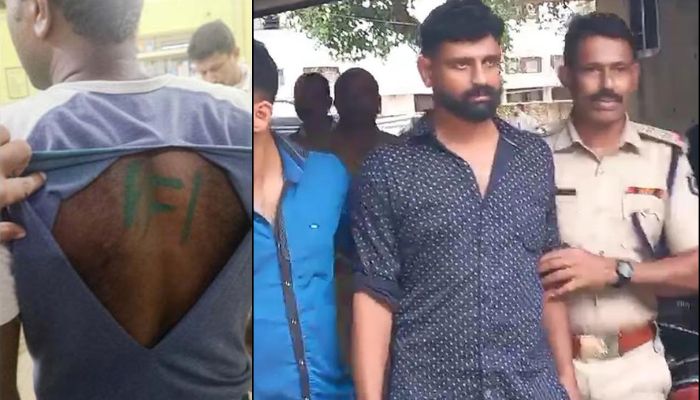
On Tuesday (September 26), an Indian armed force personnel was taken into police custody for falsely claiming that a mob of 6 people attacked him and inscribed the word ‘PFI’ on his back.
The man identified as Shine Kumar had previously claimed that he was assaulted and tortured by extremists belonging to the now-banned outfit, Popular Front of India (PFI) in Chanapara near Kollam on Sunday (September 24) night.
He had alleged that the mob tied up his hands with tape and wrote ‘PFI’ on his back. It has now come to light that Kumar staged the attack along with his friend.
#WATCH | Police take one person into custody in Kadakkal, in connection with the complaint of army personnel alleging he was attacked by six persons and 'PFI' painted on his back pic.twitter.com/V0wOR72YkW
A senior police officer told PTI that the man wanted to become famous and therefore staged the entire attack. Kumar’s friend told the media, “I was drunk, so I initially wrote DFI, but he (Kumar) said to write PFI. So I made it PFI. Then he asked me to beat him up, but I said I couldn’t because I was drunk.”
He further added, “Then he asked me to drag him on the ground and lay down, but I could not in my intoxicated state. So he asked me to tape his mouth and hands and then to leave. So I did that.”
While speaking about the matter, the police said that no arrests have been made so far and that the statements of the army solider and his friend were being recorded. “Further action would be taken after verifying the contents of their statements,” a senior official added.
The cops are now verifying the various reasons cited by Kumar for staging an attack on himself. They have also seized green paint, tape and brush from the house of the army soldier’s friend.
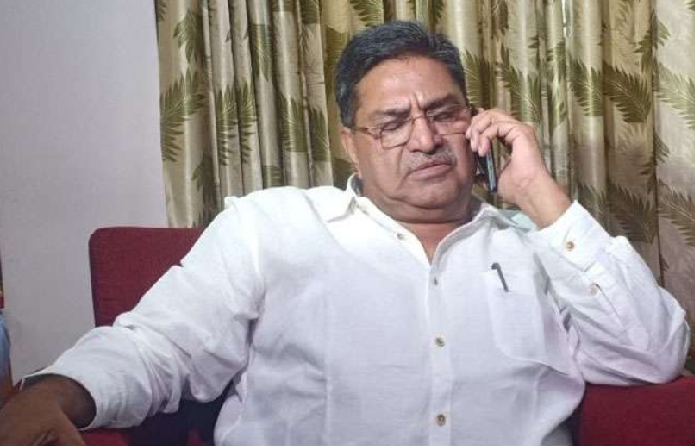
On Tuesday, September 26, the Enforcement Directorate (ED) conducted searches at multiple locations in Rajasthan in connection with a money laundering investigation. The locations searched by the ED in connection with the alleged mid-day meal scam included the residence of the state’s higher education minister, Rajendra Singh Yadav.
According to the reports, the raids were carried out at roughly ten locations in Kotputli, Jaipur, Behror, and Viratnagar associated with the minister, his colleagues, and their businesses. Rajendra Yadav, Minister of State for Home, is close to CM Ashok Gehlot, and the current raid comes only days after an Income Tax raid.
#WATCH | Enforcement Directorate is conducting raids at various locations including Jaipur and Kotputli of Rajasthan Minister Rajendra Yadav in alleged mid-day meal scam, as per sources.
The Income Tax Department on September 7, last yea,r had found cash and jewelry from the ancestral house and factory of Rajendra Yadav in Kichha. Around 53 properties linked to Rajendra Yadav and his family, including his son Madhur Yadav were investigated by the IT department in Jaipur, Kotputli, Gurgaon, and Uttarakhand.
On Tuesday, September 26, the ED officials confirmed that the raids were linked to the mid-day meal scam. However, other details in connection with the raid were not made public.
It has been reported that a company that Yadav founded delivered low-quality products to schools in 2018.
Yadav assured that his family was safe following the income tax raid last year. “We are clean. Let them investigate. If there is any political malice in the income tax action, that too will come to light. It is wrong to link names with political funding. Our work is packaging. We have no connection with mid-day meals. We make the packets and packaging the same. We are not responsible for what anyone fills in them,” he was quoted as saying.
Meanwhile, for security, a significant number of police officers have been stationed around Rajendra Yadav’s home and enterprises. It is expected that details regarding the raids will be published after the searches on the minister’s firms are completed.
Rajasthan Chief Minister Ashok Gehlot recently stated that the BJP is employing federal agencies to intimidate opposition leaders ahead of the state’s elections later this year. On the other hand, the BJP has slammed the Congress government in the state over corruption, citing the ‘Red Diary,’ which reportedly has details of stated corruption and transactions carried out by the Gehlot administration.
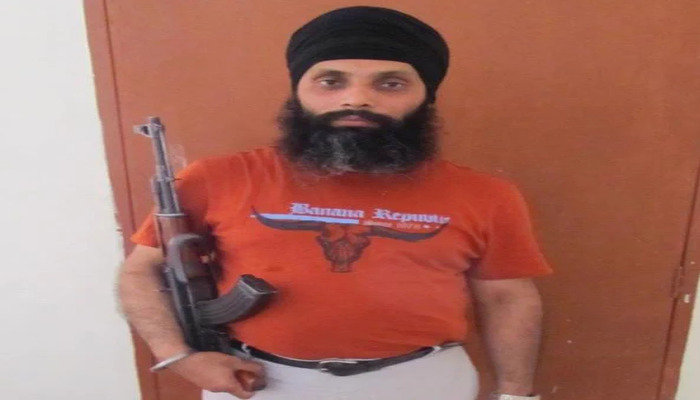
A report by The Washington Post has claimed that at least six men and two vehicles were involved in the murder of Khalistani terrorist Hardeep Singh Nijjar in Surrey on 18 June 2022. The Washington Post claims to have reviewed a 90-second recording of the video of the murder and witness accounts, “suggesting a larger and more organised operation than has previously been reported”.
The report details the sequence of events leading up to the murder of Nijjar, which was captured by a Gurudwara security camera. Interestingly, going by the video description in the report, a similar pattern of killing has been observed in cases of gang violence in both Punjab and Canada. The video has been shared with investigators.
According to The Washington Post, Nijjar’s gray pickup truck is seen pulling out of a parking space. A white sedan appears in an adjacent lot, pulls up and drives parallel to the truck.
The vehicles are initially separated by a walkway, the report claims. When the truck speeds up, the sedan matches its pace. Then the truck merges into the sedan’s lane and for a moment they’re side-by-side. As the vehicles approach the parking lot exit, the sedan pulls in front and brakes to block the truck.
Two men in hooded sweatshirts emerge from under a covered waiting area and move toward the truck. Each points a firearm at the driver’s seat. The sedan exits the parking lot and drives out of view. Then the two men run in the same direction, the report claims.
The report has quoted community members saying that investigators have told them that assailants fired about 50 bullets of which 34 hit Nijjar. Another report has further claimed that the two killers who shot Nijjar were Sikhs.
The report by The Washington Post also quotes a witness, and gurudwara committee member Malkit Singh, saying that while he did not recognise the gunmen, “he described them as wearing a Sikh get-up with hoodies pulled over small pughs on their heads and masks over their bearded faces. One, Just over five feet tall and heavyset, was struggling to run fast. The other was about 4 inches taller and leaner”, the report says.
Malkit Singh further narrated to The Post that the men ran out of the park to a cul-de-sac and got into a waiting silver car in which three other men were waiting. He reportedly said that he couldn’t see their faces.
The above details falsify Canadian allegations against India even more as no nation would be this sloppy if it wants to neutralise a wanted terrorist on foreign land. No State would launch such an exposed, and vulnerable operation on foreign soil that attracts such global attention. That the attackers were on the loose and were seen by witnesses including Nijjar’s Khalistani aides reveals the many flaws making the accusations weak. Clearly, the sequence of events sounds like a result of gang rivalry.
Moeover, The Washington Post report has quoted “members of the local Sikh community” as saying that Canadian “authorities have told them little about their investigation of the killing”. “They say police were slow to the scene, and disagreement between agencies caused further delay. Several business owners and residents near the gurudwara say investigators have not visited to ask questions of request security video,” the report claims.
Caretaker of the gurudwara Charanjeet Singh reportedly stayed with Nijjar’s body on the spot. He saw men he didn’t recognise recording videos of the scene. According to The Post, the Royal Canadian Mounted Police’s (RCMP) Integrated Homicide Investigation Team (IHIT) said the police first received the report of the shooting at 8:27 pm.
WaPo further quotes witnesses as saying that it took between 12 to 20 minutes after the gunshots for the first police officers to arrive. The community members reportedly described the interval as shocking claiming that a large number of police regularly patrol the neighbourhood.
Another witness, Bhupinderjit Singh, quoted by WaPo claimed, “There was an hours-long tussle between Surrey police and the RCMP. They couldn’t decide who would head the investigation, so there was a delay.” There was no response from the RCMP and its homicide investigation, the report says.
The Washington Post claims to have visited 39 businesses and homes along the path the assailants took during their escape. It says, “The majority of those interviewed said they had not been contacted by the authorities.”
It was only on 21 July, more than a month after the shooting that authorities reportedly asked the public for help identifying the two gunmen. On 16 August, they asked for help identifying a silver 2008 Toyota Camry and driver.
As per the report, community members say they’re most concerned that authorities did not offer Nijjar more protection before the killing, and that they have been given little information since. Moninder Singh, the spokesman of the British Columbia Sikh Gurdwara Council, reportedly said Nijjar’s mechanic recently found a tracker in the wheel well of his truck. Moninder says he’s unsure whether the federal agencies have shared the information with local authorities.
The details shared with WaPo by witnesses, most of whom were close aides of Nijjar, point to a lethargic response by Canadian authorities, and a botched up investigation into the murder. On 19 September, Canada expelled an Indian diplomat on baseless allegations of involvement of Indian agents in the murder of Khalistani terrorist Hardeep Singh Nijjar. The charges were levelled by Canadian Prime Minister Justin Trudeau himself in the House of Commons.
India responded in kind by expelling a Canadian diplomat and suspended visa services for Canadian nationals. India has also launched a massive crackdown on Khalistani terrorists in Punjab with the NIA conducting raids on property belonging to Sikhs for Justice (SFJ) terrorist Gurpatwant Singh Pannun. The Modi government has also ordered the cancellation of the OCI cards of Khalistanis living abroad.
Canada: Not just den of Khalistani terrorists but hub of gangsters
Besides a den of terrorists, Canada is also a hub of gangsters. According to a report, Canada’s national homicide rate increased for a third consecutive year in 2022. Nearly one-quarter of killings in 2021 were connected to gangs. In 2021, 788 homicides were recorded in Canada, up by three per cent from 2020 marking the highest rate of homicides in Canada since 2005.
A similar pattern of gang-violence has been witnessed in Punjab. On 29 May, just 19 days before Nijjar’s death in Surrey, Punjabi singer Sidhu Moosewala was shot dead in a similar manner in Mansa, Punjab. Moosewala’s Mahindra Thar SUV was blocked by a car from the front and a shot was fired from a vehicle behind him.
A man carrying an automatic assault rifle then appeared in front of Moosewala’s jeep and fired indiscriminately. Moosewala was shot over 30 times by around eight to ten attackers. The attackers had fled within minutes.
On 27 July this year, a United Nations-designated criminal named Ravinder Samra was shot dead in Richmond, Canada. The 36-year-old gangster was shot many times in the 8000-block of Minler Road, near Blundell.
According to Corporal Sukhi Dhesi of the Integrated Homicide Investigation Team, Samra’s death was a targeted killing related to the British Columbia gang violence. His brother Amarpreet Samra was killed two months ago in a similar attack in Vancouver.
On 20th September, one of the most wanted criminals by the National Investigation Agency (NIA), Sukhdool Singh alias Sukha Duneke, was killed in a gang war in Canada. The Lawrence Bishnoi gang took responsibility for the murder of Sukha Duneke.
Duneke was an associate of Arsh Dalla, a Khalistani terrorist who recently took responsibility for killing Congress leader Baljinder Singh Balli in Moga. Duneke was a member of the Davinder Bambiha gang that was named in Sidhu Moosewala’s murder.
Duneke escaped to Canada in 2017 and was operating his gang activities in India while sitting comfortably in Canada. Duneke was a known Khalistani sympathiser.
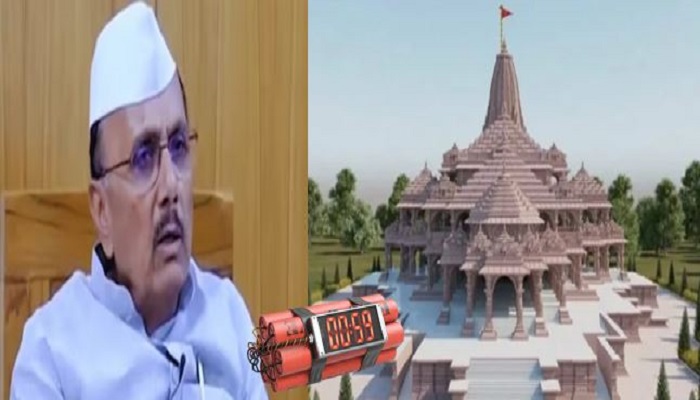
On Tuesday (26 September), a purported video of Congress MLA from Karnataka BR Patil is making rounds on the internet. In the viral video, the Congress leader can be heard floating a conspiracy theory. He accused the BJP by imputing that they would carry out a false flag operation and “bomb Ram Mandir”. He brazened it out alleging that it could then pin the blame for the bomb attack on Muslims. He argued that this would be done to consolidate Hindu votes in the wee hours of the 2024 Lok Sabha elections.
In the video, the Congress leader speaking in Kannada can be heard saying, “For Modi to win his next Lok Sabha election, there are chances that they [BJP] will bomb Ram Mandir and blame it on Muslims and consolidate Hindus.”
"भाजपा राम मंदिर पर बम से हमला करवा सकती है और इसका आरोप वे मुसलमानों पर मढ़ सकती है"
Apparently, the video in which the Congress leader can be heard spreading rumours and instilling fear among Hindu devotees was also shared by the Karnataka BJP.
Taking to X, Karnataka BJP lambasted Congress for casting “evil eyes” on the Ram Mandir. The saffron party asserted that Congress leaders had been targeting the foundations of Hinduism (Sanatan Dharma). It added that Congress is now attempting to destabilise the Ram Mandir and fuel communal tensions in the country. It also noted that the BR Patil’s remark gave away their intentions to castigate the government in that scenario.
ಹಿಂದೂ ಧರ್ಮದ ಬುನಾದಿಯನ್ನೇ ಪ್ರಶ್ನಿಸಲು ಹೊರಟ ಕಾಂಗ್ರೆಸ್ಸಿಗರು ಈಗಲೇ ರಾಮಮಂದಿರದ ಮೇಲೆ ಕಾಕದೃಷ್ಟಿ ಬೀರಿದ್ದಾರೆ.
ರಾಮಮಂದಿರವನ್ನೇ ಅಲುಗಾಡಿಸಿ ಹಿಂದೂ-ಮುಸ್ಲಿಂ ದಂಗೆಯೆಬ್ಬಿಸಿ ಅದನ್ನು ಸರ್ಕಾರದ ತಲೆಗೆ ಕಟ್ಟಲು @INCIndia ಈಗಾಗಲೇ ಸಜ್ಜಾಗಿರುವ ವಿಚಾರವನ್ನು ಸಚಿವರಾದ ಬಿ. ಆರ್. ಪಾಟೀಲರು ಬಾಯಿ ತಪ್ಪಿ ಹೇಳಿದ್ದಾರೆ. pic.twitter.com/YLwtVsvrH8
Sharing BR Patil’s video spreading conspiracy theory, Karnataka BJP wrote, “Congress members who have set out to question the foundation of Hinduism have already cast their evil eye on the Ram Mandir. By attempting to destabilise the Ram Mandir, and fuelling Hindu-Muslim tensions, INC India has already prepared the ground to blame the government. This is what the party’s Minister, BR Patil, had mentioned by mistake.”
However, the exact time or date when Patil made the remark remains unclear.
Earlier, on 10th September, Shiv Sena UBT leader Uddhav Thackeray too tried to spread rumours and instill fear among Hindu devotees. Apparently, while addressing an event in Jalgaon, the Shiv Sena (Uddhav camp) chief and former Maharashtra Chief Minister claimed that a “Godhra-like” incident could occur during the “return journey” of the large number of devotees expected to converge in Ayodhya, Uttar Pradesh, for the inauguration of the Ram Temple.
The probable dates for the inauguration of the Bhavya Ram Mandir in Ayodhya have been selected as 21/22 January 2024. More than tens of thousands of Hindus from throughout the country are expected to attend the grand ceremony.
“It is a possibility that the government could invite a large number of people for the Ram Temple inauguration in buses and trucks, and on their return journey, an incident similar to that in Godhra may occur,” Thackeray said.
VIDEO | "It is a possibility that the government could invite a large number of people for the Ram Temple inauguration in buses and trucks, and on their return journey, an incident similar to that in Godhra may occur," said Shiv Sena (UBT) leader Uddhav Thackeray earlier.
In the run-up to the inauguration of Ram Mandir in Ayodhya, there has been a concerted effort to pre-empt that anti-India forces and terror organisations could attain a shred of success in their perpetual pursuit to give a societal scare to India and carry out a bomb attack on the high-value target, especially Ram Mandir which is on the brink to shape Hindu cultural renaissance in India.
Some political elements have also tried to give terrorists a clean chit in advance if they attack the Ram Temple at Ayodhya.
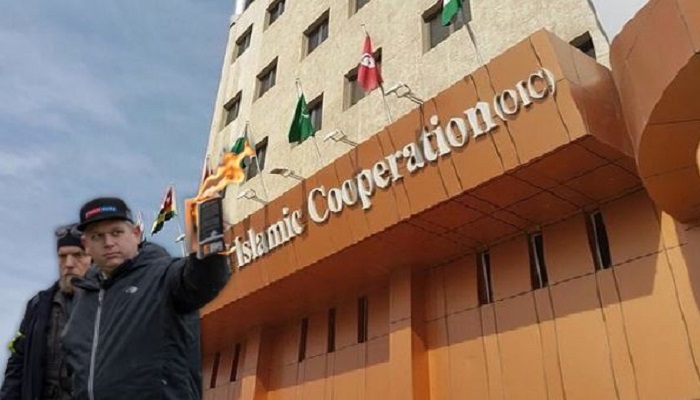
The General Secretariat of the Organisation of Islamic Cooperation (OIC) condemned the recent acts of desecration and public burning of copies of the Quran in the Netherlands. The Islamic body dubbed these acts as “provocative” and asserted that it condemns such acts in the strongest terms.
Notably, the recent incident of desecration of the Quran came to the fore from the Netherlands which reportedly took place on 23rd September, 2023.
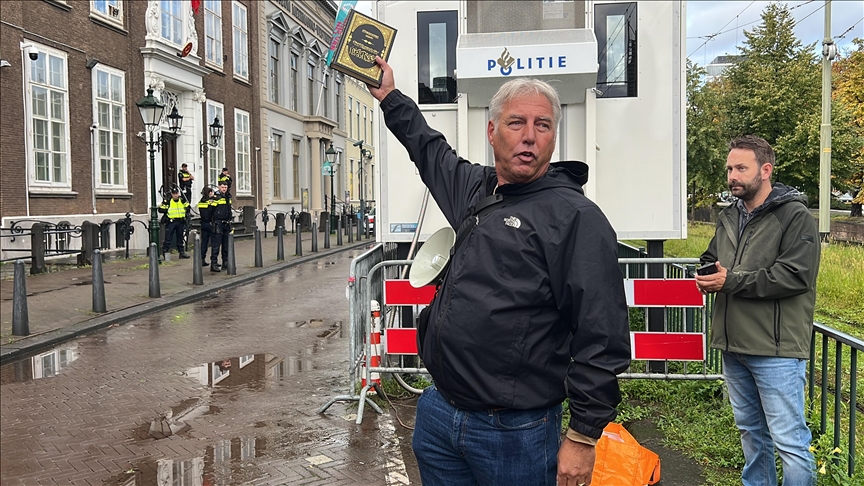
According to the Turkish state-run news outlet Anadolu Agency, Edwin Wagensveld, the leader of PEGIDA, or Patriotic Europeans Against the Islamisation of the West, tore copies of the Quran in front of the embassies of Türkiye, Indonesia and Pakistan in The Hague on Saturday (September 23).
Edwin Wagensveld, Dutch leader of PEGIDA allegedly tore the Quran in front of the Turkish Embassy in The Hague, Netherlands on September 23, 2023 (Image Credit – Turkish Media outlet Anadolu Agency)
In its official statement, OIC’s General Secretariat reiterated its earlier stance which was adopted on 31st July 2023. Back then, the OIC Council of Foreign Ministers adopted a resolution at its 18th extraordinary Session which was dedicated to the repeated incidents of desecration of copies of the Quran in several European countries, particularly Sweden and Denmark.
The statement added that the Council condemns all attempts to denigrate the sanctity of the Quran as well as other sacred books, values, and symbols of Islam and other religions under the garb of freedom of expression. The Islamic body added that these acts of denigration are contrary to the spirit of Articles (19) and (20) of the International Covenant on Civil and Political Rights (ICCPR).
The OIC General Secretariat further stated that it has asked the Dutch authorities to take necessary measures against such provocative acts to prevent their recurrence. They argued that these incidents constitute acts of religious hatred and they are in violation of international law.
Earlier, on September 20, 2023, the Secretary-General of the OIC, Hissein Brahim Taha, met with Danish Foreign Minister Lars Lokke Rasmussen at the sidelines of the UNGA session in New York.
As per the official release, the Danish Minister informed him about the steps taken by his country’s government including proposing a bill to criminalise the desecration of the Quran and other religious books.
Notably, on August 25, the Danish government announced that it would propose a law that would make it illegal to desecrate or burn any religious book in Denmark. The government added that Denmark has been viewed as a country that facilitates insults and denigration of the cultures, religions, and traditions of other countries.
After reiterating the July resolution of the OIC, Secretary-General Taha commended the step taken by Denmark in this regard.
Meanwhile, Sweden’s prime minister, Ulf Kristersson, maintained that Stockholm would not take the same step as its neighbour (Denmark) as that would probably require amending the constitution.
Repeated desecration of the Quran in European nation
In the last few months, Sweden and Denmark have seen a spree of public burning and desecration of the Quran which has irked Muslim nations and strained their ties with these European nations. While the majority of the incidents have been reported in Sweden and Denmark, several cases of public desecration of the Quran have also been reported in the Netherlands.
On August 12, members of a group named Danske Patrioter, or Danish Patriots, burnt a copy of the Quran in front of the Turkish Embassy in Copenhagen, Turkish media Anadolu Anjansi (AA) reported. The media report added that the same group burnt another copy of the Quran in front of the Iraqi Embassy in Copenhagen, Denmark. A similar incident unfolded on 21st July in Copenhagen where Danske Patrioter burnt a copy of the Quran in front of the Iraqi embassy.
On August 14, another incident of Quran burning was recorded in Sweden. A copy of the Quran was allegedly desecrated, kicked, and burnt in Sweden’s capital Stockholm in front of the Royal Palace in heavy police presence.
Reportedly, this was the second such case in a matter of weeks where some miscreants burnt the Quran, an act which is permitted under Sweden’s freedom of speech laws.
As per an Al Jazeera report, few men had printed multiple pages of the Quran that had text in Arabic as well as translations in Swedish that blew across the square.
The man is allegedly throwing pages of the Quran, Islam’s holy book (Image Source – Aljazeera)
Earlier, in April, a group in Denmark allegedly insulted the Turkish flag and the Quran in front of the Turkish Embassy in Copenhagen.
Later, on the 28th of June, a man tore up and burned a Quran outside Stockholm’s central mosque after Swedish Police authorised him to stage the demonstration.
The man allegedly burnt the Quran in Sweden. (Image source – India Today)
However, the number of incidents have seen a sharp increase even among the overall trend. On 1st August, Quran was burnt in front of the Embassies of Türkiye, Iraq, Egypt, and Saudi Arabia in Copenhagen.
An Iranian woman, Firoozeh Bazrafkan shreds the Quran with a grater outside the Iranian embassy in Copenhagen, Denmark.pic.twitter.com/Bbj4WMQi9x
— ? Information Worldwide (@InfoEarthwide) August 7, 2023
Later, on 3rd August, Quran was again burnt in front of the embassies of Türkiye, Iraq, Egypt, Saudi Arabia, and Iran. As per a Turkish news outlet, this happened on multiple occasions in front of embassies of Muslim countries, on the 1st, 3rd, 4th, and 7th of August.
While this has strained the diplomatic relations of these nations with the Muslim world, it has led to a fierce debate about limits of freedoms.
On Monday (September 25), the police arrested three people in connection to the abduction and gang-rape of a minor girl in Kushinagar district of Uttar Pradesh.
As per reports, the three accused were identified as Kayamuddin, Jahangir and Sikander Ali. They were booked under the Indian Penal Code (IPC) Sections 365 (kidnapping), 376 (punishment for rape) and 442 (house trespass), besides relevant provisions of the Prevention of Child Sexual Offences Act (POCSO).
The incident took place on September 9 this year. The men happened to be the neighbours of the 16-year-old victim. At about 1:30 p.m. on the fateful day, one of the accused asked the victim to clean a cow shed. He forcibly took her to a shanty at knifepoint and raped her.
While speaking about the matter, the minor girl recounted, “When I reached there, he took me to a shanty at knifepoint and forced himself upon me.” Later, two other accused kidnapped the victim and raped her in a moving car.
The trio then dumped the 16-year-old outside the cow shed in an unconscious state. When the girl regained consciousness, she reached home and informed her parents about the heinous crime.
She narrated, “Later, his two aides reached the spot and abducted me in a car. One by one, they took several turns (to rape me), before dumping me outside the house in an unconscious state.”
यूपी कुशीनगर में चलती कार में युवती संग गैंगरेप युवती को दुप्पटे के सहारे कार में बैठा किया रेप
“Somehow, I gained consciousness and reached home to narrate the ordeal and later my parents took me to a nearby hospital,” the victim added.
Thereafter, the girl’s father filed a complaint at the Kaptanganj police station. According to the victim, the cops initially did not register a First Information Report (FIR). It was only after her family met senior officers that the local police registered an FIR was initiated a probe into the matter.
On Monday (September 25), the Kushinagar district police arrested the three accused, Kayamuddin, Jahangir and Sikander Ali.
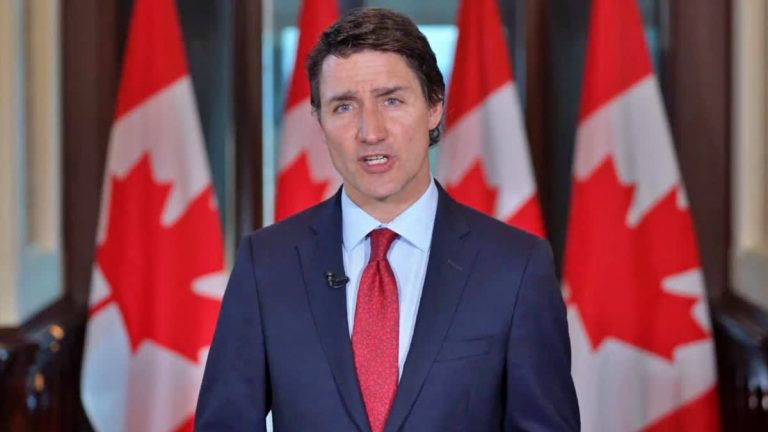
The last few days have been particularly embarrassing for PM Justin Trudeau and Canada. After engaging in a diplomatic spat with India over the killing of a Khalistani terrorist—evidence of which is yet to be furnished by Trudeau, Canada suffered the ignominy of honouring a Nazi soldier who fought for Hitler.
The incident sparked a severe backlash from countries around the globe and the Jew community, which blamed Canada and PM Justin Trudeau of anti-semitism for celebrating a man who was a part of a regime that mercilessly killed millions of Jews during the World War II.
Having left red-faced by the entire episode, Trudeau promptly tried to distance himself from the blunder, blaming ‘Russian propaganda’ for the Canada parliament’s bestowal of honouring to a Nazi soldier.
Earlier, Trudeau’s unsubstantiated allegations in the Canadian parliament that India was behind the killing of a Khalistani terrorist residing in Canada triggered a stern reaction from New Delhi, leading to a diplomatic standoff between the two countries. India has staunchly denied the allegations, while Canada is yet to provide evidence to back its claims that Indian diplomats were hand-in-glove with the militants who assassinated Hardeep Singh Nijjar, a Khalistani extremist designated as terrorist by India.
While the two issues may seem disparate and disjointed superficially, a common thread links them—Canada’s scant regard for international organisations and sensitivities of other countries while being a haven and breeding ground for extremists and terrorists of all hues. Be it Khalistani extremists that dream of slicing away the Indian state of Punjab to create a mythical Khalistan country or the Nazis that killed millions of Jews with abandon and without regret, Canada has been the place where they not only enjoyed state patronage and security but also received honour as witnessed recently.
However, Canada’s support for terrorists and extremists is not a recent phenomenon. While it has risen significantly in the last few decades, particularly under the current PM, Justin Trudeau, Canada has a longstanding tradition of shielding and protecting terrorists wanted elsewhere, perhaps to use them as instruments of their geopolitical policy.
Ahmed Ressam who planned to bomb Los Angeles airport
In the 1990s, Canada housed Algerian terrorist Ahmed Ressam, who later executed the foiled plot to bomb Los Angeles International Airport in late December 1999.
Ressam and other Islamic terrorists left Algeria in 1992 for France, where he lived for illegally until 1994. In 1994, he left for Canada on a forged passport. The immigration officials suspected Ressam of carrying a fake passport. But Ressam requested political asylum, alleging in his sworn statement that he was implicated in a fake case of terrorism and subjected to torture in Algeria. The immigration officials in Canada bought his story without verifying it with Algeria, France, or the Interpol, releasing him pending a hearing on his refugee status.
Canada’s then Immigration Minister, Elinor Caplan, defended the move stating that using a false passport to enter Canada was not deemed a severe offence. She highlighted that numerous genuine refugees often turn to this tactic.
Ressam resided in Montreal for a period of four years. He established his residence in an apartment building that was subsequently recognised by Canadian and international law enforcement as the Montreal base of operations for a terrorist cell associated with the Osama Bin Laden network. This cell was specifically linked to an Algerian terrorist organisation known as the Armed Islamic Group, or GIA.
In March 1998, Ressam travelled to Afghanistan for undertaking jihadi training. A year later, in 1999, he returned to Canada via Pakistan, South Korea, and Los Angeles, which is when he was struck with the inspiration of bombing the Los Angeles International airport. Back in Montreal and armed with the knowledge of making bombs, he got chemicals and equipments that helped him in making explosives designed to explode buildings. Later in the same year, he was arrested near the American city of Seattle while on his way to bomb the Los Angeles International airport.
Nazi veterans allowed entry and stay in Canada after WWII
Nevertheless, this wasn’t the only instance when Canada was caught sheltering individuals with a dubious background. The North American country also shares a sordid history with Ukrainian Waffen-SS Galicia Division, a military outfit founded by the Nazis.
Decades before the Galicia Division veteran Yaroslav Hunka received an invitation to Parliament Hill, Canada turned a blind eye and even provided official cover for the Nazi battalion 14th Waffen Grenadier Division of the SS that later claimed to consist of Ukrainian fighters. The organisation was initially established by Nazis, operated under Nazi command, and fought solely to further Nazi objectives.
The Galicia Division, officially designated as the 14th Waffen Grenadier Division of the SS, belonged to a group of “foreign” units within the Waffen-SS that were established during World War II. In the aftermath of the conquest of a new region in Europe, the Nazi commanders would call for volunteers to enlist in the Schutzstaffel (SS), an exclusive corps devoted to the Nazi Party and distinct from the German army.
The Nazis built respect SS units belonging to various nationalities, including French, Norwegian, Dutch, and even units formed from British and American prisoners of war. In 1943, the Nazi occupiers of the present-day Ukraine recruited a unit of ethnically acceptable Ukrainians to reinforce their invasion and domination of the Soviet Union.
After the war, an inordinately high number of Galicia Division members made their way to Canada. The existing immigration policy during that period was to decline entry to veterans of the German Wehrmacht or the SS. However, a 1986 federal public inquiry into war criminals present on Canadian soil revealed that a disproportionate number of the Galicia Division had been accorded a cabinet-level exemption in 1950.
Naturally, the revelation sent shockwaves throughout Canada, most notably among the Jewish community that felt betrayed for allowing Nazi soldiers accused of perpetrating unspeakable atrocities to reside in the country. The decision was strongly objected by the Canadian Jewish Congress at the time. However, the opposition was sidelined on the basis that the division’s soldiers had volunteered “not out of allegiance to the Germans but due to their animosity toward the Russians and the Communist regime.”
During the early 1980s, Simon Wiesenthal, a famous Nazi-hunter, passed a list of 217 names to the Canadian government. The list included former Galicia Division officers who were reported to be “residing outside Europe.” Subsequent investigation validated that at least 11 individuals from this list had retired and eventually passed away in Canada.
But in 1986, a public inquiry ultimately declared that “war crimes charges” against the division had “never” been substantiated. Consequently, the commissioners did not advocate for the deportation of Galicia Division veterans, emphasising that the Ottawa authorities were well aware of their Nazi affiliations when allowing them entry.
Canada courting Khalistani extremists
More recently, Canada has transformed from a democratic nation that believed in holding fast to the rules based world order to a safe haven for Khalistani terrorists. Increasingly, Khalistani elements fantasising the creation of a separate homeland from Sikhs have emigrated to Canada, where they have not only managed to earn citizenship but also enjoy state patronage, despite the fact that successive Indian governments have demanded Ontario stops shielding terrorists involved in anti-national activities against India.
Besides Nijjar, Gurpatwant Singh Pannun, the leader of the outlawed terrorist group Sikh Forum for Justice, is another Khalistani terrorist who continues to operate freely in Canada, often issuing threats against Indian diplomats, Hindus, and the Indian government over his delusion of carving out a separate homeland for Khalistanis.
Earlier this month, Pannun made a public appearance at the Khalistan referendum event organised by SFJ at a gurdwara in British Columbia, Canada. In it, the Khalistani terrorist delivered an provocative speech calling for ‘Balkanising India’. He was seen escorted by a team of security guards.
Notably, the referendum was organised in Canada on the same day when Canadian PM Justin Trudeau visited India to attend the G20 Summit, where PM Narendra Modi conveyed India’s strong concerns about the continuing anti-India activities of extremist elements in Canada.
In the video, Gurpatwant Singh Pannun, a Khalistani terrorist heading the Sikh Forum for Justice and henchman of the Pakistani intelligence agency ISI held PM Modi, HM Amit Shah, NSA Ajit Doval and EAM S Jaishankar responsible for the killing of his close aide Khalistani terrorist Hardeep Singh Nijjar, the Khalistani terrorist who was shot dead by two unidentified persons in Surrey in Canada’s British Columbia.
Ontario’s oversight on Khalistani terrorists have resulted in a spate of temple attacks in Canada. On September 8, Khalistani terrorists vandalised the Shree Mata Bhameshwari Durga Devi Society in Surrey, British Columbia, Canada. Pictures emerged on social media showing anti-India graffiti with the slogan “Punjab is not India” sprayed on the walls of the Hindu temple.
The frequency of such vandalism attacks on temples and against nationalist Indians have only increased in the last few months, underscoring the inability and perhaps the undeclared support by Canadian authorities to the Khalistani vandals. With Justin Trudeau’s party receiving crucial support from Jagmeet Singh’s political party for remaining in power has further emboldened Khalistanis to carry out their unlawful activities with impunity.