A day after the Supreme Court of India sentenced Navjot Singh Sidhu to one year of imprisonment for killing someone in a 1987 road rage case, the Congress leader and former cricketer sought more time to surrender on medical grounds. Chief Justice of India NV Ramana, has, however, refused to entertain the Congress leader’s plea.
Navjot Singh Sidhu, through his lawyer and party colleague Abhishek Manu Singhvi, had approached the apex court on Friday asking for a few weeks’ time before he surrenders in court. Singhvi said that his client needed some time to sort out his medical issues.
As Singhvi requested a hearing on Sidhu’s petition, the apex court instructed him to file a formal appeal with Chief Justice NV Ramana, for convening a special bench to hear the case today. As the issue had already been raised, the CJI refused to consider Singhvi’s request for an urgent hearing before the special bench.
Interestingly, hours after Supreme Court had pronounced the verdict, the Congress leader tweeted that he would surrender to the “majesty of law” and less than 24 hours later, he has refused to surrender citing health concerns.
SC awards one-year jail term to Congress leader Navjot Singh Sidhu in the 1988 road rage case
On May 19, the Supreme Court of India sentenced Sidhu to one year of imprisonment for a 1988 road rage case saying that Sidhu had knowingly caused the death. The apex court overturned its 2018 judgement reducing the punishment for Sidhu in the case, after a review petition was filed by the family of Gurnam Singh, the victim who had died in the incident in 1988.
In 2018, a Supreme Court bench of Justice J Chelameshwar (retired) and Justice SK Kaul had ruled that the offense of Sidhu didn’t amount to culpable homicide amounting to murder, and had let him go with just a fine of Rs 1000, reducing the sentence from 3 years imprisonment imposed by the High Court.
Accepting the review petition by the family of Gurnam Singh, a Supreme Court bench of Justices A. M. Khanwilkar and Sanjay Kishan Kaul has now sent Sidhu to jail for one year.
1988 road rage case
On December 27 1988, Sidhu and one of his friends had beaten Patiala resident Gurnam Singh for allegedly blocking his vehicle. Gurnam Singh was taken to a hospital where he was declared dead. Sidhu and his friend Rupinder Singh Sandhu were booked in the case.
In 1999, the Patiala district and sessions court acquitted them citing lack of evidence. The state govt had appealed against it, and the Punjab and Haryana High Court found them guilty in 2006 and had awarded them a three-year jail term. In 2007, the Supreme Court had stayed the conviction on Sidhu’s appeal, and in 2018, the apex court had reduced the term to a Rs 1000 fine, while Sandhu was acquitted.
On Tuesday (May 17), the headmistress of a government school was arrested for bringing beef to school and distributing it among her colleagues. The incident took place at the Hurkachungi Middle English School in the Goalpara district of Assam.
As per reports, the accused has been identified as 56-year-old Dalima Nessa. On Saturday (May 14), the woman carried beef for lunch and served it to some of the staff members on the occasion of the annual Gunotsav evaluation of the school.
In the annual Gunotsav evaluation programme in Assam, the schools are evaluated by an external official. The official can be from any department in the state government, including the ministers. The external visitor spends the whole day in the allotted school, interacts with students and teachers, and submit a report on the school including improvements needed. As part of this scheme, an external official had visited the Hurkachungi Middle English School on Saturday. On that day, the mid day meal workers of the school had prepared a special feast for all the staff of the school, including the external official.
On this occasion, headmistress Dalima Nessa had brought beef to the school that she had cooked in her home. She handed over the beef to the Mid Day meal workers, and asked it to be distributed along with the lunch. However, the staff workers, who are Muslims themselves, objected to it, and when other staff members of the school came to known about it, they were also unhappy over it. They felt that distributing beef in the school, which have students and teachers from various communities, will hamper the communal harmony in the school as well as in the region. Accordingly, they informed the matter to the school committiee.
Subsequently, a complaint was registered at the local police by the school management committee, following which Dalima was questioned by the cops on Sunday (May 15). A day later, she was booked under the Indian Penal Code (IPC) Sections 153A (promoting enmity between different religions) and 295A (deliberate act to outrage religious feelings).
The accused was arrested on Tuesday (May 17) and produced before a local court on Wednesday (May 18). She was then sent to judicial custody.
Accused not booked under Assam Cattle Preservation Act
While speaking about the matter to The Indian Express, a police officer remarked, “The school management committee said that she had brought beef to school for lunch, and was serving it to some members of the staff, which created a sense of discomfort among them.”
He emphasised how the incident upset the religious sentiments of both communities in the school. According to Additional Superintendent of Police (Goalpara) Mrinal Deka, an investigation is underway in the case.
“The provisions of Assam Cattle Preservation Act were not applied in this case as there is no sale of beef or slaughter of cattle involved,” he emphasised.
Cow protection law in Assam
In July last year, the Assam Vidhan Sabha enacted the Assam Cattle Preservation Bill, 2021. The law banned the sale and purchase of beef and beef products in areas where Hindu, Sikh, Jain and other non-beef-eating communities are in higher concentration.
Also, the law restricted the sale of such products within a radius of 5 KM of any temple or Sattra. It aimed to regulate the slaughter, consumption, and illegal transportation of cattle in the State.
Assam Chief Minister Himanta Biswa Sarma had earlier pointed out that the Assam Cattle Preservation Act, 1950 did not have sufficient legal provisions to regulate the slaughter, consumption and transportation of cattle.
On Thursday, Uttar Pradesh Chief Minister Yogi Adityanath and Assembly Speaker Satish Mahana looked over the progress of the Uttar Pradesh E-Vidhan Bhavan under the National E-Vidhan Application project. The training module for this paperless digital assembly will be inaugurated on May 20 at the hands of Lok Sabha Speaker Om Birla. He would also launch a new app for the Assembly.
Media Advisor to Chief Minister Yogi Adityanath lauded the initiative and said that the state of Uttar Pradesh is all set to adopt the new modern paperless assembly. “This is not the UN, it is the new modern paperless assembly of UP”, he tweeted.
According to the reports, the state of Uttar Pradesh has installed tablets on 416 seats in the Assembly under the National E-Vidhan Application project and the members will first be able to access the papers on tablet on May 23. Though the Assembly houses 403 seats, 416 tablets have been installed to allow the MLCs also to attend the sessions sometimes.
A special programme named ‘Prabhodhan’ will also be organised on Friday in presence of Lok Sabha Speaker Om Birla. He will address the newly elected members of the Assembly during the programme. The state has also decided to launch a special training programme for the assembly members to help them get friendly with the new digital, paperless system. 30 experts from National Informatics Centre would conduct the training programme that has been scheduled for May 21.
While all the provisions have been made and inspected by the Chief Minister to launch the first Assembly session on May 23, the state has decided to keep paper documents in initial sessions for those members who would take time to get used to the new digital system.
It is important to note that this is not the first Indian state to install tablets in Assembly and push for digital proceedings. Earlier, on March 28, 2022, the Assembly of Nagaland became the first state to go paperless, use tablets and e-books for proceedings. The 60 members of the Assembly utilised the electronic devices to participate in House proceedings. However, this is the first time that tablets have been installed in an Assembly on such a large scale.
Along with Lok Speaker Om Birla, senior members of the Uttar Pradesh Assembly including former Leader of Opposition Ram Govind Chaudhary, Parliamentary Affairs Minister Suresh Khanna, and former Uttar Pradesh Assembly Speaker Hriday Narayan Dixit will address the members in the special programme named ‘Prabhodhan’ today.
On Thursday, Canadian Member of Parliament of Indian origin Chandra Arya won many hearts by speaking in his mother tongue Kannada inside the Canadian Parliament.
Chandra Arya, who was re-elected to the Parliament in the 2019 federal election, shared a video of him speaking in his mother tongue Kannada on Twitter.
“I spoke in my mother tongue (first language), Kannada in the Canadian Parliament. This beautiful language has a long history and is spoken by about 50 million people. This is the first time Kannada is spoken in any parliament in the world outside of India,” tweeted Chandra Arya.
I spoke in my mother tongue (first language) Kannada in Canadian parliament. This beautiful language has long history and is spoken by about 50 million people. This is the first time Kannada is spoken in any parliament in the world outside of India. pic.twitter.com/AUanNlkETT
Speaking in the Parliament, Arya expressed his happiness to be able to speak in his mother tongue Kannada. He called it a proud moment for the five crore Kannadigas living in Canada.
The Indian-origin MP ended his speech with a poem written by Kuvempu, which is sung by Dr Rajkumar – “Elladaru iru enthadaru iru endendigu nee Kannadavaagiru“, meaning, “Wherever you are, However you are, be a Kannadiga forever.
Chandra Arya, who originally hails from the Tumakuru district in Karnataka, represents the electoral district of Nepean in the House of Commons. He holds a bachelor’s degree in engineering from Ramanagara and a master’s degree in Business Administration from Dharwad in Karnataka. Chandra Arya was elected to the Canadian Parliament for the first time in 2015 and again in 2019 for the second time.
The video has gone viral on social media platforms. Karnataka higher education minister Dr CN Ashwathnarayan shared the video and congratulated Chandra Arya for speaking in Kannada in the Canadian Parliament.
The Kanpur administration has discoveredthat a Pakistani national sold the Ram Janki temple land located in Doctor Beri Chouraha in Beconganj in Uttar Pradesh’s Kanpur area to a man named Mukhtar Baba in the 1980s, who then demolished the temple and erected a non-veg restaurant named Baba Biryani on the temple site. Action against the illegally constructed restaurant on the temple ground and its owners would now be taken under the Enemy Property Act 1968.
Kanpur’s Ram Jaanki temple converted into Baba Biryani non-veg restaurant by Muslims. Ram Janki Trust property first gifted by a Pakistani Aabid Rehman to one Mukhtar Baba’s mother who by will gave it to her son. Temple and 18 hindu shops disappeared, Biryani restaurant came up. pic.twitter.com/0BfwaPv2gY
According to the Hindi daily Jagran, the entire temple was destroyed brick by brick and converted into the ‘Baba Biryani’ restaurant. Only a small piece of the temple is still standing at the site, though in an extremely dilapidated condition. This remaining portion of the temple has been included as part of Mukhtar Baba’s restaurant’s kitchen area. Mukhtar Baba had also forcefully evicted 18 Hindu families from the temple premises, demolished their houses and expanded his restaurant to encompass the entire area.
The revelation was made when the Kanpur administration was searching for ‘enemy properties in the city. The office of the custodian of the enemy property has now initiated the process to enlist the temple property as ‘enemy property’. Based on a report submitted by the SDM office, a notice was issued to the owners of Baba Biryani restaurant warning them that the property would soon be demolished under the Enemy Property Act. Jagran reported how the owner, in turn, tore the notice and threw it away.
Baba Biryani restaurant built by destroying the Ram Janki temple in Baconganj, Kanpur
“We have given two weeks’ time to these people to respond. We are waiting for them to reply to five specific questions. No response has yet been received,” Col Sanjay Saha, chief supervisor and consultant, office of the custodian of enemy property, said.
According to media reports, in the year 1982, Pakistan national Abid Rehman sold the temple property to one Mukhtar Baba who owned a cycle repair shop in the temple complex in Kanpur. Rehman had migrated to Pakistan in 1962 where his family was already living. He returned briefly to sell the property to Mukhtar Baba. After acquiring the temple land, Mukhtar Baba then evicted 18 Hindu families from the premises and later built a non-vegetarian hotel by demolishing the temple structure.
The matter had come to light after Shatru Sampati Sanrakshan Sangarsh Samiti filed a complaint against Mukhtar Baba last year. The then district magistrate asked the joint magistrate to probe the matter. The report was later sent to the office of the custodian of enemy property. The Kanpur Municipal Corporation records stated that the property is still listed as a temple.
The office of the custodian of enemy property has now begun the process to enlist the temple property as ‘enemy’ property. Notices have been issued to those who bought the temple, dismantled it and converted it into a restaurant.
Mukhtar Babu’s son Mehmood Umar, meanwhile, has claimed that he has all of the relevant documents and would respond to the notice sent to Mukhtar Baba by the department of custodian of enemy property as soon as possible.
The Enemy Property Act
On December 22, 2016, Kiren Rijiju, the then Minister of State for Home Affairs Kiren Rijiju in Modi Government 1.0 introduced the Enemy Property (Amendment and Validation) Bill Fifth Ordinance and the President of India promulgated it. The act was initially passed following the Indo-Pakistani War of 1965.
“The amendments are aimed at plugging the loopholes in the principal Act to ensure that the enemy properties worth thousands of crores of rupees vested in the Custodian do not revert to the enemy, enemy subject or enemy firm. Thus, in the larger public interest and to safeguard the interest of Central Government, the Enemy Property (Amendment and Validation) Fifth Ordinance, 2016 (8 of 2016) has been promulgated,” the Ministry of Home Affairs had stated in its statement.
What qualifies as ‘enemy property’?
People migrated from India to Pakistan in the aftermath of the 1965 and 1971 India-Pakistan wars. The Government of India took over the properties and companies of people who adopted Pakistani citizenship under the Defence of India Rules enacted under the Defence of India Act, 1962.
These “enemy properties” were vested by the central government in the Custodian of Enemy Property for India. Property left behind by those who migrated to China following the Sino-Indian war in 1962 was treated the same way.
A section in the Tashkent Declaration of January 10, 1966, stated that India and Pakistan would consider the return of property and assets taken over by either side during the war. The Government of Pakistan, however, disposed of all such properties in their country in the year 1971 itself.
How did the Indian govt deal with ‘enemy property’?
The Enemy Property Act of 1968 mandated that enemy property be continuously vested in the Custodian of Enemy Property for India. The Custodian, on behalf of the central government, has control of enemy properties spread around the country. Some moveable properties are classified as ‘enemy property’ as well.
The Enemy Property (Amendment and Validation) Bill, 2016, was enacted by Parliament in 2017, amending the Enemy Property Act of 1968 and the Public Premises (Eviction of Unauthorized Occupants) Act of 1971.
The amended Act expanded the definition of the term “enemy subject”, and “enemy firm” to include the legal heir and successor of an enemy, whether a citizen of India or a citizen of a country which is not an enemy; and the succeeding firm of an enemy firm, irrespective of the nationality of its members or partners.
Even if the enemy or enemy subject or enemy firm ceases to be an enemy due to death, extinction, winding up of business, or change of nationality, or if the legal heir or successor is a citizen of India or a citizen of a country that is not an enemy, the amended law provided that enemy property shall continue to vest in the Custodian.
The Custodian may dispose of enemy properties vested in him in line with the provisions of the Act with the prior approval of the central government, and the government may issue directions to the Custodian for this purpose.
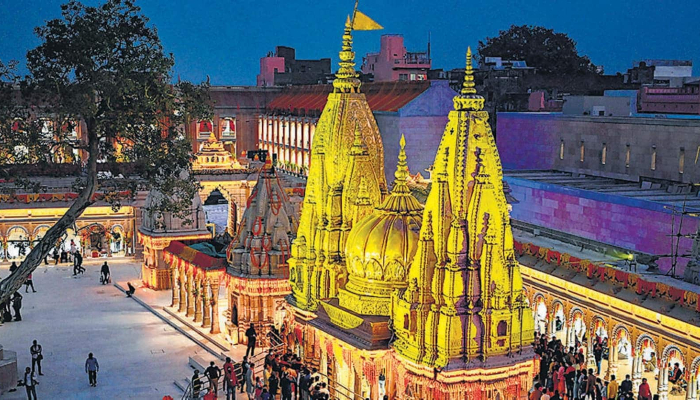
As the Shivling is found in the survey and the videography of the disputed structure at the Gyanvapi complex in Varanasi, Advocate Vishnu Shankar Jain has become a household name among the devotees of Kashi Vishwanath patiently waiting to reclaim the abode of their God. The young lawyer walking along the way to the disputed site along with the court commissioner and others in his team in the scorching hot sun became a frequently watched visual on the TV sets in the last two weeks.
With Vishnu Shankar Jain, who is now quite a familiar face with his impressive appearance in many TV debates, people also saw an experienced lawyer with a sagely look who walked on the streets of Varanasi with the court commissioner and others as he stood in the civil court senior division to represent the five petitioner women who asked for the permission to worship and pray to Goddess Shringar Gouri on a daily basis as their fundamental right. He is none other than Advocate Hari Shankar Jain – Vishnu Shankar Jain’s father.
Though much has been talked about the disputed structure, its legal status, and various suits filed in different courts about the site and their corresponding updates; the courage, and devotion of the Jain father-son duo is an aspect, not talked about enough in the popular discourse. It, therefore, becomes necessary to write about the ones who have been continuously pursuing the path less followed.
Advocate Hari Shankar Jain (born on 27th May 1954) is a practising lawyer from the year 1976. He started his practice from the Lucknow court and gradually took to the cases in High Court and the Supreme Court as his practice advanced. Vishnu Shankar Jain (born on 9th October 1986) has seen his father fighting various cases for the noble cause of civilizational reawakening right from his childhood. Vishnu Shankar Jain completed his law studies in 2010 and has been assisting his father since then in his cases which hold unparalleled significance in the Indian society in general and the Indic civilization in particular.
Vishnu Shankar Jain is the spokesperson of the ‘Hindu Front for Justice’. He started his practice with the Shri Ram Janmabhoomi case of Ayodhya, challenging the 2010 verdict of the Allahabad High Court in 2011. He assisted his father Hari Shankar Jain in this case. In 2016, he passed the exam of the advocate on record of the Supreme Court and registered his first appearance in the Supreme Court in the Shri Ram Janmabhoomi case of Ayodhya in the year 2016 itself. Vishnu Shankar Jain never forgets to mention that he and his family, especially his father and guide Hari Shankar Jain feel blessed to have had an opportunity to do the work they are into. Let’s have a look at what cases, other than the current Gyanvapi temple case, this father-son duo has represented the Hindu side.
There are as many as 102 cases in which either or both of the father-son duo appeared for the Hindu side before the court. The oldest of the cases dates back to 1990. Many of the cases are decisively won by them. Some others are still going on in various courts. Shri Krishna Janmabhoomi‘s case at Mathura is one of the major ongoing cases in which they are representing the Hindu side.
The duo is also fighting a case for the 27 Hindu and Jain temples which were destroyed by the Muslim invaders to build the Qutub Minar. Besides, there are also the cases filed for the claimed Shiv Mandir in the Taj Mahal, challenging the Places of Worship Act, 1991, challenging the Waqf Act of 1995 and its amendments made in 2013, challenging the validity of the Sachar commission, and hence the subsequent provisions made by various governments based on the Sachar committee report.
In Lucknow, which once was Laxmanpur, there is a disputed structure called Teele wali masjid which according to Hindu beliefs is Shesh Gufa. Advocate Vishnu Shankar Jain and advocate Hari Shankar Jain are fighting a case to reclaim that too. Not only this, but they have also challenged the validity of the constitutional amendment to include the words Socialist and Secular in the preamble of the constitution of India.
Well-known constitutional lawyer and one of the pioneers of India’s decolonization literature advocate J Sai Deepak has also praised their work after the civil court (senior division) ordered to ensure the security of the Shivling found in the disputed structure at Gyanvapi during the survey and videography by the court commissioner. J Sai Deepak tweeted, “Appreciation tweet for Advocates Shri Hari Shankar Jain and Shri Vishnu Shankar Jain for their unrelenting pursuit of freeing occupied Temple sites, from Sri Ramjanmabhoomi to Kashi Vishwanath. Kudos!”
Appreciation tweet for Advocates Shri Hari Shankar Jain and @Vishnu_Jain1 for their unrelenting pursuit of freeing occupied Temple sites, from Sri Ramjanmabhoomi to Kashi Vishwanath. Kudos!
While expressing himself in a public speech, advocate Vishnu Shankar Jain has shared some less-known facts about his family’s commitment to the work they have undertaken and the inspirations behind the same. He said in a talk at Ujjain in April 2022, “My father enrolled as a lawyer in 1976. In 1989, when he was in the middle of his innings that was running quite successfully, he got an opportunity to argue in the Shri Ramjanmabhoomi case of Ayodhya which was then transferred from the Faizabad district court to the Allahabad High Court. It was his test as a lawyer and as a human to choose between professionalism and one’s own Dharma.”
Elaborating on how his father chose his Dharma over his profession, Vishnu continued, “My father – advocate Hari Shankar Jain had an offer from the Muslim side to fight this case on behalf of the Waqf board. He was told that he will be paid all his fees properly. At that time he took a decision. He did not sell off his own conscience. As he narrated this to me, he said, ‘Vishnu, if I had wished so, I would have stood for the Babri mosque. I would get better fees and everything that comes along. Even while facing society, I can just tell people that it is my professional duty as a lawyer to defend my client irrespective of his background. But, I did not sell off my conscience in exchange for an attractive amount to stand opposite to my deity in the court of law.’ He went on to fight the case for 32 years as a part of the team of the lawyers.”
Vishnu Shankar Jain’s talk in Ujjain where he narrated the inspirations behind the commitment.
How Hari Shankar Jain fought against all odds to continue the Darshan Puja of Ramlala after Babri demolition
According to Vishnu Shankar Jain, the continued presence of Hindu devotees in the Ram Janmabhoomi premises that was reinitiated in 1949 when the idols were found inside the disputed structure, would have been stopped in 1992 when the disputed structure was demolished by the Karsevaks and subsequently after the site was sealed. To turn the case around on the Hindu side, it was necessary to continue the Darshan Puja of the deity Ramlala in Ayodhya in order to ensure the physical presence which holds equal importance as the evidence and witnesses and ASI reports, etc. in that case. In his talk, advocate Vishnu Shankar Jain narrated how amidst personal difficulties his father arose to file the relevant petition and get the court’s permission for the continued Darshan and Puja of Bhagwan Ramlala after the disputed structure was demolished.
Advocate Vishnu Shankar Jain said, “On 6th December 1992, the so-called Babri mosque was demolished. My grandmother passed away on the same day. My father was so much connected to her. It was my grandmother who taught my father about Hindutva and ignited his mind to fight these civilizational battles for our society, country, Dharma, and nation. And my father, in turn, passed it on to me. So it was a huge loss for my father and my family too. Grandmother was our key inspiration. But after the 13 days of post-death rites were completed, on 20th December 1992, with his head shaved as per the rituals, my father stood tall in front of the Lucknow bench of the Allahabad High Court with a petition.”
In his petition to the Allahabad High Court, Advocate Hari Shankar Jain contended that it was the birthright of every Hindu to get Darshan of Bhagwan Ram. “My father is the first person who put it on the floor of the court that Bhagwan Ram is a constitutional entity as his picture is denoted on the pages of the original copies of the Constitution of India. And, therefore, Hindus cannot be prohibited from his Darshan. So, the hearing took place in presence of honourable Justice Hari Nath Tilahari in a special court for 10 consecutive days.”
Vishnu Shankar Jain further added, “My father would go alone and come back alone; because in those days, there were not many facilities and we come from a very humble background. In those days, even in the High Courts, there would be no great security measures deployed out there. He was always surrounded by people from the Muslim community. So, amidst all these odds, a lawyer went to the court with the help of nothing but the will within and succeeded in bringing a historic judgment on the 1st January 1993 which said that Bhagwan Ram is a constitutional entity and his Darshan cannot be stopped and hence it should be opened with immediate effect.”
“From that day till today we are doing the Darshan continuously. This case is buried in the pages of history and not many people know about this. But this is a very important case. Because had there not been any such case or the decision, we would not have seen the decisions come in the manner they did in 2010 and 2019. It was our continuous existence on that site that had to be counted. Otherwise, many different kinds of people had brought a lot of offers for Hindus to compromise,” Vishnu had said.
Advocate Vishnu Shankar Jain also narrated an incident from 2013, when he was a fresh practising lawyer, that gave him a never-ending inspiration to fight the battles for civilizational causes. He said, “I would like to share an incident that ignited this fire within me to fight for my society, country, Dharma, and nation. The incident inspired me to dissolve all my personal wishes and voluntarily fight for society.”
The sheer devotion of the father-son duo towards reclaiming Hindu sites and commitment to protecting Dharma and the nation
“This experience truly shook me to the core. We are the youth of India. We all have personal aspirations and not everyone has that commitment to learning what is the actual meaning of Hindutva and one’s own Dharma, etc. As a young lawyer, it is very obvious to dream of becoming some advocate general and enjoy decent foreign tours. Why would one invest his time to see what is this secularism and why would one take up the cases? I too had such aspirational feelings which gradually faded away with time, especially after this incident,” he narrated the incident that inspired him to champion the cause of reclaiming civilisational heritage.
He added, “In 2013, I was practising in Delhi. My father had an asthmatic attack. I drove back home and reached the hospital to hear from the doctor that there are fewer chances of his survival and as we don’t even have a ventilator, we cannot say anything about what next. You may take the steps you feel right. He is suffering from septicemia and we don’t think that he can be saved. It was indeed like a death bed and from that death bed, my father told me, ‘Vishnu, don’t forget to send the notice of the case of the ‘Teele wali masjid’. If we miss the deadline, the case may be dismissed.’ Listening to these words, I was completely finished. Such a huge commitment he is carrying within his heart for our society, country, Dharma, and nation.”
Despite this dedication to his cause, advocate Vishnu Shankar Jain worships pious values in all the deities he believes in and fights for and gives his best to practice them, just like his father Hari Shankar Jain. A devotee of Bhagwan Shri Krishna, Vishnu Shankar Jain never forgets to express his gratitude for his ascetic Guru Jayant Balaji Athavale whose inspiration always keeps his morale on a higher note.
Advocate Vishnu Shankar Jain explained his resolution as he said, “After this incident of 2013, I assumed that whatever time of my life is left, I will dedicate it to rectifying the historical mistakes and injustice imposed on us for centuries. It is in this series that we have filed so many different cases. Whether we win in the courts or do we lose is a completely different issue. But I assure you that our legal research is very strong and honest.”
This commitment by Vishnu Shankar Jain and his father Hari Shankar Jain is in cohesion with what Lord Shri Krishna has said in Geeta “कर्मण्येवाधिकारस्ते मा फलेषु कदाचन । मा कर्मफलहेतुर्भुर्मा ते संगोऽस्त्वकर्मणि ॥” (Chapter Number 2, Verse Number 47 of Bhagvadgeeta) which means “You have the right to work only but never to its fruits. Let not the fruits of action be your motive, nor let your attachment be to inaction.”
The Anjuman Intizamia Masajid committee of the disputed site of Gyanvami mosque in Varanasi has asked people not to crowd the mosque for Jumma or Friday prayers today because the “Wuzukhana” and the toilet inside the structure has been sealed by the court owing to the pending lawsuit.
The Masajid Committee stated in a notice that “As you know that the case of Shahi Jama Masjid Gyanvapi Banaras is currently going on in Makami court as well as in High Court and Supreme Court and the Court here has decided to seal the toilet and the Wuzukhana. Every possible effort is being made to solve this issue…”
Uttar Pradesh | Anjuman Intizamia Masajid, Varanasi appeals to people not to come to the mosque in large numbers to offer Friday prayers today as the “wazukhana” has been sealed due to the ongoing case. pic.twitter.com/eyfjMnfaBm
“…Due to this compulsion, it is appealed to all the people by the Anjuman Intizamia Masajid Committee Banaras to refrain from coming for prayers in large numbers and like every time this too offer Juma prayers in their own locality. Also, those who come for the prayer Juma should come after performing Wuzu so that they do not face any kind of problem and Masjid Intezamiya also does not have to face problems. We hope that you will fully cooperate with us,” the notice further stated.
The custom of Wuzu refers to washing pars of the body including face, hands and legs before offering namaz by Muslims. For this custom, mosques generally have a dedicated place called Wuzukhana, which includes a water tank or any other source of water. As the Wuzukhana in Gyanvapi has been sealed on court orders, the district authority has allowed the mosque committee to take two drums of 1000 litres each for Wuzu. Along with that, the administration has also arranged 50 mugs for use by the Namazis for Wuzu.
District Magistrate Kaushal Raj Sharma held a meeting with Muslim leaders and clerics regarding the arrangements for the Jumma Namaz in view of unavailability of the Wuzukhana and toilets inside the structure. In this meeting the Muslims demanded for arrangement of water, and accordingly, the DC agreed to provide 2 drums of 1000 litres of water and 50 mugs to the mosque committee, so that the devotee don’ face any difficulties in performing Wuzu. Moreover, extra security forces have been deployed at the site.
The District Magistrate also appealed the Muslim clerics to not deliver any provocative speeches during the Friday Namaz. The clerics were also told they are responsible for the security of the sealed Wuzukhana.
It is worth noting that the Supreme Court issued an order requiring the Varanasi DM to ensure that the location of the disputed Gyanvapi edifice where the Shivling is said to have been discovered is properly preserved. It further said that the injunction should not in any way limit or obstruct Muslims’ freedom to use the Mosque for religious purposes. The order was rescindable until the next hearing. The next hearing before the Supreme Court is scheduled for today.
Notably, former court-appointed commissioner Ajay Mishra has filed his findings in the form of a report to the Civil Judge’s court in Varanasi, claiming that there are stone sculptures of Hindu Gods and Goddesses on the north-western edge of the centre area, just beyond the barricading. According to the report, the Gyanvapi complex has historic stone buildings with Hindu symbols like the lotus and idols, which are certainly ruins of an older Hindu temple. According to Mishra’s assessment, there has been ‘newer’ building activity using iron rods and concrete around the old structures.
The BJP-led-Haryana government has cancelled the licence accorded to Sky Light Hospitality Private Limited, a company owned by Robert Vadra, for real estate development.
The development comes 7 years after the BJP took over the reins of the State under the leadership of Chief Minister Manohar Lal Khattar. It must be mentioned that the deal surrounding the licence was a major issue in the run-up to the 2014 General Elections.
Robert Vadra is the husband of Congress scion Priyanka Gandhi and the son-in-law of Sonia Gandhi. He has been accused of receiving undue favours during the Congress era.
Background of the controversy
The licence was originally granted to Skylight by the Bhupinder Singh Hooda-led- Congress government in Haryana on December 15, 2008, to develop a commercial colony on 2.701 acres of land in Shikohpur village of Gurugram.
On April 3, 2012, the then Director of Town and Country Planning granted permission to Skylight to transfer the licenced land to DLF Universal Ltd (now DLF Home Developers Ltd). It was done in accordance with the Rule 17 of Haryana Development and Regulation of Urban Areas Rules
“Subsequently, the name of DLF Universal was also mutated in the revenue records by mutation number 4513 of September 20, 2012,” the realty major said.
Accordingly, on September 18, 2012, the firm sold 3.53 acres of land (including the licenced 2.701 acres) to DLF for a sum of ₹58 crores. This ‘mutation’ (transfer of title of property) was however set aside by the then Director General (Consolidation of Holdings) IAS Ashok Khemka on October 15, 2012.
Interestingly, his order was not given effect by the Gurugram revenue administration. On April 25, 2014, the Gurugram Deputy Commissioner noted that the ownership of land was transferred to DLF Home Developers Ltd.
Cancellation of licence of the company of Robert Vadra
On March 9, 2022, an order was issued by the Director of Town and Country Planning in Haryana, cancelling the real estate development licence of Robert Vadra’s Sky Light Hospitality Private Limited.
While speaking about the development, Director K Makrand Pandurang informed that the licence was cancelled due to a dispute in the land ownership of 2.701 acres. It must be mentioned that under the Haryana Development and Regulation of Urban Areas Act, a licence holder must have a clear title of the property.
He added that the developer could not initiate development work on the land, even though 13 years have passed. Director K Makrand Pandurang emphasised that DLF could apply for a fresh licence only after the dispute surrounding the land title is resolved.
Seven years after it took over the reins of the state, the BJP-led Haryana government cancelled the real estate development licence granted to Robert Vadra’s in Gurugram during the Congress reign in 2008. The cancellation order was issued by the director, town and country planning (TCP), Haryana on March 9.
“The land in question now becomes agricultural. Since no third-party rights have been created, the department of town and country planning will not take over its possession,” he informed.
Cancellation order challenged by DLF
DLF Retail Developer Limited has filed an appeal against the order of the Director of Town and Country Planning before the Additional Chief Secretary. It must be mentioned that the realty major is the only aggrieved party in the case.
In its defence, DLF has claimed that the development work was not completed because the Haryana government did not renew its licence. It has also claimed to have submitted an application with the necessary fees for transfer of licence but to no avail.
“The director, TCP has failed to show under which statutory provisions the licence has been cancelled in view of the fact that after sanction of building plans in 2012, it was beyond the control of company that development works could not be completed,” DLF stated.
“The conclusion that licence is cancelled since the developer failed to complete development works in 12 years is unsustainable in the eyes of law,” it further added.
A day after a Muslim mob pelted stones on a Baraat (wedding procession) of a Dalit man and pelted stones at the police in Madhya Pradesh’s Rajgarh district, the state administration has carried out an anti-encroachment drive in Jirapur Mataji to demolish the illegal buildings constructed on government land.
According to the reports, the Rajgarh district authorities carried out anti-encroachment drives in the locality and razed down shops and houses illegally built on public land. An official said some of the properties coincidentally belonged to the accused involved in pelting stones at the Dalit’s wedding procession.
At least 48 illegal encroached properties were demolished during the anti-encroachment drive that was carried out in Jirapur Mataji.
MP:दलित दूल्हे की बारात पर पथराव करने वाले मुस्लिम युवकों के घरों पर चला बुल्डोजर, 6 के शस्त्र लाइसेंस निलंबित.
समर, फरहान, जुनेद, सोहेल, साबिर, अनस कसाई, डग्गा खान व अन्य मुस्लिम युवकों ने मस्जिद के समीप से बारात निकालने पर DJ बंद करवाने के साथ ही बारातियों पर पथराव भी किया था. pic.twitter.com/Do6sZMRb5y
On May 17, a Muslim mob pelted stones on a wedding procession of Hindus when it passed through the road in front of a mosque in Rajgarh, Madhya Pradesh. The incident took place in the Jirapur Mataji locality of the city. As per reports, the Baraat was playing music that allegedly irked the Muslim mob, so they started pelting stones and bricks at them.
According to the police, Anju, daughter of Madan Malviya, was scheduled to get married to Suresh Chauhan’s son Lucky. Baraat came from Susner and had reached Jirapur. When the procession was taken out at around 11:30 PM, 20-25 people from the Muslim community came and beat up the people from the Dalit groom’s side. They also beat up the band members for playing the drums. Initial investigation revealed the dispute between the two communities started over the wedding procession playing music on the public road in front of the mosque.
Four people have been reportedly injured from the groom’s side, including a five-year-old girl who sustained serious injuries and has been referred to Ujjain for further treatment.
The Jirapur Police have registered a case against six people based on the complaint of the victims. Samar Lala, Farhan Khan, Junaid Khan, Sohail Khan, Sabir Khan, Anas Kasai, and Dagga Khan have been named as the accused. The arm licensees of the accused have also been canceled. The incident was captured on CCTV, helping the administration identify the culprits.
As per the reports, this was the second incident of an attack on a Dalit’s wedding function in the same district.
In another incident, a Muslim mob attacked a wedding party of Dalits in Piplia Kala village in Rajgarh district. The mob had uprooted the wedding tent, and when the police reached the village, they pelted stones at them, forcing the police to fire tear gas shells. The administration had to deploy a heavy police contingent in the village to control the situation.
On Thursday, the Shivsena-led government in the state of Maharashtra approved the construction of an Urdu Centre in the Mazgaon area of Mumbai. The Brihanmumbai Municipal Corporation (BMC) approved the tender to begin the project which is expected to cost the BMC Rs 12.88 crore.
According to the reports, the project Urdu Centre in Mazgaon is the brainchild of the Shivsena party who had announced its construction last year and had made a monetary provision of Rs 1.5 crore in the budget. The Urdu Centre is built in the area represented by the former chairperson of BMC’s standing committee, Yashwant Jadhav. Interestingly, Yamini Jadhav, wife of Yashwant Jadhav is the MLA of the Byculla constituency in which the project is located.
Secularism On Steroids in Maharashtra!!
• BMC under Shiv Sena floats tender for Urdu Ghar in Mazgaon; to cost around Rs. 12.88 CRORES.
• Meanwhile, more than 250 teachers have been protesting for more than 4 months, for jobs denied by BMC – as they studied in Marathi medium. pic.twitter.com/i3Sb309dLC
— Maha Vinash Aghadi ᴾᵃʳᵒᵈʸ (@MVAGovt) May 19, 2022
Jadhav last year had said that more funds would be set aside for the Urdu Bhavan in general and the body amendment. “This Urdu house will have a research center, auditorium, and library. It will become a hub for Urdu language learning excellence and scholarships. We will allocate more funds for this and work will start this year itself”, he had said. He had also asked the BMC to form a panel of Urdu scholars to oversee the construction.
Yashwant Jadhav has been under the Income Tax radar for enormous corruption and money laundering since February 2022. The Income Tax Department had raided his premises and found evidence of his close nexus with the Birhanmumbai Municipal Corporation (BMC) contractors. The department had also found proof of around 3 dozen properties, worth Rs 130 crore approximately during raids on properties linked to Shiv Sena leader Yashwant Jadhav.
Marathi medium teachers being denied jobs
It is important to note that Shivsena who took speedy steps to approve the tender for Urdu Centre in Mumbai has allegedly been ignorant about the issue of teachers being denied jobs in BMC English Medium Schools. Around 250 teachers have been protesting against being denied teaching jobs in BMC English schools because they’ve studied in the Marathi medium.
“BMC is contradicting itself by asking schools to put up their names in Marathi letters and encouraging Marathi in official correspondence on one hand and denying teachers jobs over their medium of instruction on the other”, one of the protesters was quoted in April 2022. The qualified protesters are demonstrating against the Corporation for 4 months now and the civic body is yet to get in touch with the state government seeking directives in this situation.
It is notable here that all the 250 teachers have passed the Teachers Eligibility Test (TET) and Teachers Aptitude and Intelligence Test (TAIT) before being recommended for the jobs in schools. Still, just because they had studied at the school level in Marathi medium, they have been denied jobs in BMC-run English medium schools.
It is further important to note that, the political party Shivsena has been making efforts at appeasement politics to win the Muslim vote bank. The timings of approving the tender for Urdu Bhavan on May 19, ahead of the civic body elections 2022, and prioritising the project over the issue of teacher’s protest cannot be missed.
Reports mention that in Mumbai, the Muslim community can prove to be a decisive factor in the more than 30 seats in the 227-strong BMC. At present lone 29 of the 227 corporators in BMC are Muslims. The dates of the Brihanmumbai Municipal Corporation election, 2022 are yet to be announced by the state election commission as of May 2022.