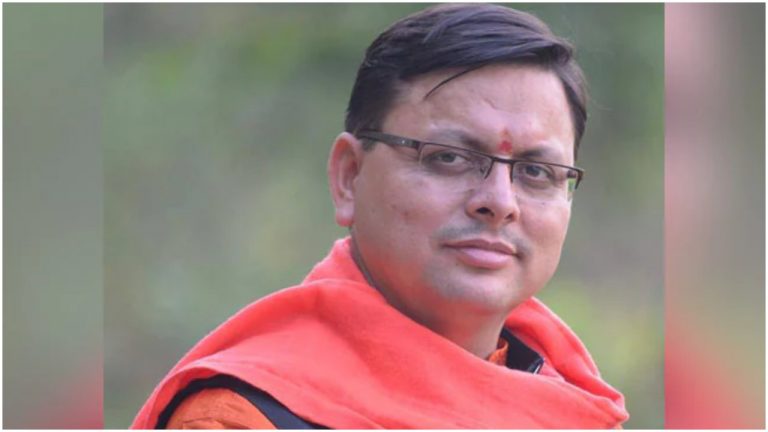
Days after Kashmiri Hindu youth Rahul Bhat was shot dead by Jaish-e-Mohammad terrorists, heartwarming pictures of him with his family, are making waves on social media. One of his pictures from his Facebook account has been particularly revealing, giving an insight into his political inclination.
Picture from Rahul Bhat’s Facebook that has gone viral.
Rahul Bhat in this picture could be seen supporting the cause of Rohingya Muslims, who fled Myanmar after a military crackdown on them in October 2016. Bhat, in his profile picture dated September 7, 2017, on Facebook, could be seen with a filter saying ‘Stop Killing of Rohingya Muslims’. Now, the reader might ask what the picture says about the personal politics of a slain Kashmiri Hindu.
Ideally – it should tell nothing, as reading too much from the personal life of a terror victim would not do justice to him or his family. However, it is amply clear that Bhat was not an apostle for Hindutva or Hindu political causes in the valley. Because, by the standard of secularism and liberalism set by the Indian ‘liberals’ any ‘Sanghi’ would never quite care about ‘Muslims’.
Scrolling through his Facebook feed, we see Bhat sharing vintage pictures of Kashmiri Hindus living in the valley, scenes from the local vistas and a rare picture of a 15-year-old Jawaharlal Nehru sporting a Janeu. Moreover, in solidarity with the Muslim community, he even went further to support the causes of Rohingyas with a Facebook filter on his profile. To judge Bhat over his political leaning by a mere scrolling of his social media profile is not the aim of this article.
However, as often pressed by separatists and Islamic terrorists in the valley, it is often the supporters of the Indian state and those who assert their Hindu identity are victimised for their acts. A picture is painted that because people in the valley are opposed to the ‘advances of the Indian State’ and ‘the politics of Hindu aggression’, they take up ‘militancy’ (read terrorism) in revenge. Hence, an argument is often made that because the local Kashmiris are opposed to the Indian worldview, the problem of Kashmir is a political one and not a religious one.
The gruesome killing of Rahul Bhat, however, shows us the real picture. Bhat was an ordinary citizen in the valley and was anything but a ‘Sanghi’. Neither was he a participant in Hindu politics in the valley, nor did he express his ideological affiliations openly. Yet, he was killed simply for being Hindu. The characterization of being a Sanghi – a supporter of RSS/BJP or that of a ‘Pandit’ – being a Hindu in Kashmir, converge here in being targets of Islamic terrorism.
This reflects the mindset of the terrorists in the valley in two ways – one that monickers like ‘Sanghi’, ‘Agents of the India State’, ‘Fascists’, etc are used as covers to target the Hindu population in the union territory. The second reason opens itself to be blatant that the war in Kashmir is nothing but a religious one – with strict Jihadist overtones.
One only remembers that once a magazine backed by the terrorist organisation ISIS released an issue in November 2021 issuing a direct threat to Hindu worship sites. The magazine cover had a computer-generated broken idol of Bhagwan Shiva with the tagline “It’s time to break false Gods”. Earlier, terrorist organisations have been unapologetic in their targeting of Hinduism and Dharmic faiths. Thus, the exercise to paint Kashmir as a ‘political problem’ only serves as an intellectual justification for underlying Jihadist dreams of Pakistan-backed separatists, Islamist extremists and Terrorists active in the valley.
It was the day India created history. The nation was elated as the Indian shuttle badminton team won the Thomas Cup 2022 for the first time. Being India’s first Thomas Cup title, a tournament which is touted as the world cup of shuttle badminton, the men’s team emerged victorious after they crushed 14-time champion Indonesia into defeat in the final held on Sunday.
Goosebumps!
Indian players chant “Bharat Mata Ki Jay” after winning historic #ThomasCup gold.
In a widespread display of emotion, spirit and elation, the celebratory videos of victorious Indians including Kidambi Srikanth, Lakshya Sen, Satwiksairaj Rankireddy, Chirag Shetty and others emerged from the contested court. One of the videos which were circulated highly on social media was of the Indian team giving chants of ‘Bharat Mata ki Jai’ in enthusiasm. Moreover, when the tricolour rose above everyone while the national anthem was being played, left everyone watching the ceremony teary-eyed.
When the young lads carved a smashing victory at the Thomas Cup, it was no longer their individual victory. For them to have represented a nation, it was a 1.30 Billion people to participate in the achievement and preserve the moment in their collective memory. After all, what are nations per se – extended societies of Individuals coming together to share a common goal and a common idea of who they are? Indeed, the unassailable victory at the badminton open final was one such common goal.
But it was a politician who landed himself in Udaipur on the very same day, daring to rethink what the idea of a nation is. The stage was set. The ailing Congress party which championed dynastic politics like no other had called for a convention to ponder over its fading existence as a political entity. Rahul Gandhi, completely aware of his party’s diminishing national stature thought of playing a regionalist card yet again. This time, it was for him to directly question the very character of India as a nation.
“Some days back, I made a speech when I said, India, Bharat is a union of states. That is the line that is written in our constitution. India is not described as a nation but as a union of states. The states of India and its people have come together to form the union. And it is critical for the union of this country that the states and the people are allowed to have a constitution,” Rahul Gandhi struck a chord in his speech.
He went further to state, “The conversation that should happen between the people of India, and the states of India are the institutions that the congress party, that your leaders including Mahatma Gandhi, Jawaharlal Nehru, Sardar Vallabhbhai Patel, Maulana Azad and Ambedkar have helped us create. These institutions do not belong to any political party, any individual but they belong to the Union of India.”
What Rahul Gandhi tried to suggest here is often touted as ‘The Idea of India’ by intellectuals patronised by the Congress ecosystem. According to the Congress’ view of India, India was formed in 1947. It was a jigsaw puzzle of several independent post-colonial entities that had to be stitched together as one country. Congress claims to have done so, by singlehandedly participating in the freedom struggle and thus founding a nation by bringing the principalities and presidencies together. Hence, Gandhi and Nehru become the ‘founding fathers’ of the nation who invented ‘India’ – as Shashi Tharoor claims in the title of his book.
Of course, while taking the credit for India’s ‘creation’, the Congress party does not hold itself accountable for the partition that followed with the creation of a separate nation for Muslims called Pakistan. Moreover, Rahul Gandhi’s quote from the constitution derives from the Article 1 of the Constitution which says, “India, that is Bharat shall be a Union of States.” However, in a clear sentiment to fan separatism, Rahul Gandhi willingly missed the context in which such words in the Constitution were chosen.
When B R Ambedkar was asked why ‘Union of States’ was preferred to a ‘Federation of States’, he had two reasons – “One, the Indian Federation is not the result of an agreement among the states like the American Federation. Secondly, the states have no right to secede from the federation. The federation is a Union because it is indestructible. The country states such only for the convenience of administration.” Rahul Gandhi’s wordplay categorically dismisses the fact that India is a ‘nation’ that does not hold much water when it has already been identified as a ‘republic’ in the same constitution itself.
The Congress’ Idea of India has always been about the party and its erstwhile stalwarts stitching together geographical entities with distinct identities together through administrative institutions. With this grand story to tell before the country, the Nehru-Gandhi dynasty stayed the course until 2014. Ever since the rise of Narendra Modi, however, the nation has been trying its best to throw off the shackles of this diminished sense of identity. With the advent of Narendra Modi at the centre stage of Indian politics, the consciousness of being a Civilizational State has rekindled.
Contrary to the Congress’ party-centric ‘Idea of India’, India for ages, has seen herself as a continuing civilization. Many thinkers have made the case for India as a ‘Civilization state’ than being a nation-state. Authors Harsh Madhusudan and Rajeev Mantri in their book ‘The New Idea of India’ say that India is an age-old continuing Civilization transforming into a young nation. The primary basis of this view of India is that it was not invented as yet another post-colonial entity after Independence from the British Empire, but has always existed historically as a singular cultural unit with a diverse geography.
The debate between these two ideas of India is not about India’s origins as such, but more of its continuum as a civilizational entity. The problem arises when leaders like Rahul Gandhi conflate the concept of a nation with that of a State. While the State is a set of institutions which run the nation – which Rahul Gandhi referred to in his speech; a nation is a large body of people united by common descent, history, culture, or language, inhabiting a particular territory.
As back as we dive into the Vishnu Puran, we find that Indians, though living under the rule of different kingdoms, have always had a notion of living together as a nation. A shloka in the Vishnu Puran goes –
“उत्तरं यत्समुद्रस्य हिमाद्रेश्चैव दक्षिणम् । वर्षं तद् भारतं नाम भारती यत्र संततिः ।।” which means, ” The country that lies north of the ocean and south of the snowy mountains is called Bharatam, and there dwell the descendants of Bharata.”
Throughout our history, one would find many such examples that state the diverse cultural, linguistic, spiritual and religious expressions in India emerging from one common cultural continuous that is timeless or ‘Sanatan’.
The Bharat Mata
Later in the early 20th century, of all the Gods and Goddesses that existed in the Hindu cosmos – a new entrant paved her way into the consciousness of our independence struggle. She was ‘Bharat Mata’ -the feminine personification of a force who stood as a solidified testament of this civilization. India’s geographical boundary was now being identified as a feminine entity. Alike many of the Hindu deities, she was being revered with many epithetic names. Some called her ‘Hind Devi’ while some recognized her as a visual depiction of their ‘Matru Bhoomi’. Vinayak Damodar Savarkar referred to her as ‘Svatantryajanani’ or the Mother of Independence.
The invoking of Bharat Mata at the Thomas Cup finals was not just a mere chest-thumping exercise in patriotism. It was symbolic of India as a feminine divine being, which has been an omnipresent driving force that binds our nation, through the ideals of Dharma. Here is where Rahul Gandhi’s diminished sense of India’s identity of the ‘union of states’ conflated with the larger idea of India as a nation. His statement should kindly remind us, that why India needs Nationalism even more.
For a party which goes with the name Indian ‘National’ Congress and identifies its stalwarts as founding fathers of the ‘nation’, Rahul Gandhi’s reduced self-worth scores a self-goal while Congress seeks to reinvent itself on a national level. Moreover, Congress’ Idea of India has trapped itself so intense, that the party no longer identifies India as a nation.
Earlier in the day, news broke that a Shivling had been discovered inside the disputed Gyanvapi structure during a videography survey on May 16. Ever since the news came out, devotees are celebrating the vindication of their long-held belief about the presence of the Shivling inside the structure.
The Gyanvapi Mosque complex is a disputed structure built over the ruins of the desecrated old Kashi Vishwanath Temple by the Mughal tyrant Aurangzeb.
The unrelenting attacks on Kashi Vishwanath began shortly after Islamic invaders entered India. It was first attacked in the 12th century by Qutb al-Din Aibak. The temple’s peak was damaged in the attack, still, Puja ceremonies continued there even after that. History has it that the destruction of the sacred Hindu temple was carried out under Mohammad of Ghori’s orders.
The Kashi Vishwanath Mandir was once again demolished during the rule of Sikandar Lodi (1489–1517). Evidence implies that Sikandar Lodi was responsible for the invasion of Kashi Vishwanath.
In 1669 CE, the ultimate assault on the Kashi Vishwanath Temple was carried out by the Mughal tyrant Aurangzeb. He demolished the temple and replaced it with the Gyanvapi masjid. The remains of the erstwhile mandir can still be seen in the foundation, the columns, and the rear part of the mosque.
The Kashi Vishwanath Temple complex, which stands today, is adjacent to the disputed mosque complex and where devotees can do puja and prayers, was built by the great Ahilya Bai Holkar of Indore in 1780.
In fact, the Islamic record of Maasir-i-Alamgiri states that on April 9, 1669, Aurangzeb had issued a ‘farman’ decree, “to governors of all the provinces to demolish the schools and temples of the infidels and strongly put down their teachings and religious practices.”
Aurangzeb ordered destruction of temples at Kashi & Mathura. ‘Masir i Alamgiri’ – By Mohd Saqi, Musta’idd Khan
The same is also mentioned in the Varanasi Gazetteer which was published in the year 1965. It is clearly stated on page number 57 that on April 9, 1669, Aurangzeb issued a decree to his governors to destroy the Hindu temples and schools in Kashi (Varanasi).
Former General Secretary of the Banaras Bar Association, Nityanand Rai, who is independently researching the history of Varanasi, said that the gazetteers are considered to be the most authentic along with being official documents about the districts and states. The gazetteers not only contain the history of the districts but also contain each and every piece of information about that district.
The Kashi Vishwanath temple is just one of many similar temples destroyed by the Mughal emperor Aurangzeb in his absolute disdain for Hindu culture and faith. The Islamic record of Maasir-i-Alamgiri describes many other instances of Aurangzeb’s fanatical cruelty.
When Aurangzeb had issued a decree to demolish Delhi’s Kalka Temple
In September 1667, Aurangzeb issued a similar ‘Farman’ (decree) for the demolition of the Kalka Temple in Delhi, dedicated to the Mother Goddess. The reason stated in the decree was that Hindus were gathering in large numbers at the temple. This was enough reason for the Mughal tyrant to order his hundreds of soldiers to go and demolish the temple.
Image source: True Indology
According to legends, when a Brahmin priest of the temple noticed the demolishers, he took his sword and killed one of them. He then turned around and attacked the Qazi who was leading the demolition squad inside the temple. The Brahmin was ultimately caught and stoned to death.
The present Kalka Temple was built over the ruins of an earlier temple dedicated to Goddess Kali shortly after Aurangzeb’s death (1707 A.D.). Two Akhbarat dated Sept 3 and Sept 12, 1667, provide details regarding the demolition of the temple on Aurangzeb’s ‘farman.’
When the Mughal tyrant had plundered the city of Mathura and destroyed the famous Keshav Rai temple
When Aurangzeb plundered the holy city of Mathura, he destroyed the famous and one of the most revered Keshav Rai temples in January of 1670. This temple marked the place where Lord Krishna had taken birth, the most important temple in the Vedic tradition, and he built a mosque in its place.
It is stated that the beautifully adorned deities were transported to Agra and placed beneath the steps leading to the mosque of Nawab Begum Sahib (Jahanara) so that they could be trampled by Muslims. Mathura’s name was changed to Islamabad after having destroyed the very foundation of deity worship.
Similarly, the Sita-Rama temple at Soron, as well as the Devi Patan temple in Gonda, were both destroyed in the same year. Under Aurangzeb’s command, the local ruler of Malwa dispatched 400 warriors to destroy all of Ujjain’s temples.
Furthermore, according to Muraqat-i-Abul Hasan, Aurangzeb ordered his soldiers and assistants from Cuttack, Orissa, and on to Medinipur in Bengal to destroy every house with a Hindu deity that was built in the last 12 years. Aurangzeb further ordered that if any temples were reconstructed, they should be demolished again completely so that Hindus could not revive worship at the sites.
According to two Akhbarat dated 28th March and 14th May 1680, even temples in the loyal and friendly Amber state, such as the famed Temple of Jagdish at Goner in Amber, were not spared due to his religious fervor.
Ram Temple in Ayodhya was destroyed on directions from Aurangzeb, not Babur
In fact, in 2016, a book titled Ayodhya Revisited, authored by former IPS officer Kishore Kunal, stated how the Ram Temple in Ayodhya was demolished and a mosque was built in its place by Fedai Khan, the governor of Ayodhya in 1660 AD, at the command of Mughal emperor Aurangzeb.
Kunal claimed that Francis Buchanan, who examined Ayodhya in 1813-14, erroneously attributed the mosque to Babar by relying on a ‘spurious inscription’ that comprised a ‘fabricated section,’ that stated that it was built by Mir Baqi at the command of Babar.
Earlier today, the court-monitored survey of the disputed Gyanvapi structure reportedly found a Shivling inside the Wuzukhana of the mosque. The Wuzukhana is a place inside a mosque where Muslims wash their hands and feet before offering namaz.
The discovery of a Shivling inside the mosque, that too at a place associated with ‘cleansing dirt’, sparked outrage among Hindus and brought to the fore the historical aversion that Muslim rulers who attacked India harboured for Kafirs in general and Hindus or idol-worshippers in particular.
The desecration of Somnath idol by Mahmud of Ghazni: The utter contempt harboured by Islamic marauders against Vedic faiths
One of the hallmarks of centuries of Islamic rule in India was the deep antagonism they held against Hindus, which was manifested from time to time in their perverse desire to humiliate Hindus and force them into embracing Islam. To this end, the Islamic marauders not only looted the legendary wealth of temples to fill their coffers but also subjected Hindus to mortification by destroying the temples and desecrating the idols that resided in them.
Perhaps, no one embodied this hatred against Hindus and their deities more zealously than Mahmud of Ghazni, who led 17 attacks against the hallowed Hindu temple of Somnath and made no bones about his aversion for Hindu beliefs and idols of Hindu Gods. While his primary aim to invade India was to loot its vaunted wealth, Mahmud of Ghazni was equally fanatic in attacking India to spread Islam. In his sixteenth expedition to India in 1025, he plundered the celebrated idol of Somnath. The word “Somnath” means master of the moon. The Somnath temple located in Gujarat, India, is one of the twelve jyotirlingas of Lord Shiva.
The subjugation of kafirs and subjection of their faith to ignominy were the key objectives undergirding the Islamic conquests in medieval India. The Mahmud of Ghazni not only launched repeated attacks on Somnath Temple to plunder its legendary wealth but also sought to humiliate Hindus by destroying the idol of one of their most revered deities.
According to historical accounts, during his 16th raid on the Somnath Temple, he smashed and broke the idol of Lord Somnath into four pieces. After successfully subduing defenders of the Somnath Temple, Mahmud of Ghazni entered the temple, where he saw the majestic idol of Lord Somnath. On seeing the idol, anger coursed through him and he lifted his mace and attacked with such ferocity that the reportedly five yard-long idol of Lord Somnath was broken into pieces.
Two of the four fragments were taken to Ghazni (in Afghanistan); one was deposited at the threshold of the Jama Masjid of Ghazni and the other at the court door of his own palace. The remaining two fragments were sent to Mecca and Medina to be buried inside the mosques there.
In Tariki-e-Alfi, an account of historical work compiled by a committee appointed by Akbar, it is mentioned that after defenders of Somnath temple were subjugated, Brahmins offered Mahmud of Ghazni an unprecedented amount of wealth in exchange for leaving the ling of Somnath unharmed. However, Mahmud replied to them that he would love to be called Butshikan (destroyer of idols) instead of ButParast (lover of idols) in the court of Allah after he dies. He turned down the offer of Brahmins and destroyed the idol of Somnath.
Source: Twitter
Al-Beruni, an Islamic scholar during the time of Mahmud of Ghazni, reiterated in his body of work that the fragments of the Somnath idol were buried inside the Jama Masjid in Ghaznin and under the entrance of the Sultan’s palace so that people would walk on it while visiting the mosque and the palace and continue to insult the idol worshippers.
Shivling found inside the Gyanvapi mosque
On completion of the videography survey of Gyanvapi mosque on Monday (May 16), petitioner Sohan Lal Arya informed the media that a Shivling was found inside the complex of the disputed structure.
“Baba mil gaye…Jiski Nandi pratisha kar rahi this (The Shivling has been found. The sacred bull Nandi was waiting for it),” he exclaimed. “We already knew what was inside… but found more than what we had imagined,” the petitioner emphasised.
“It is a very big day for us. Chants of ‘Har Har Mahadev’ reverberated in the complex of the Gyanvapi mosque. The next step is to demand a survey of the Western Wall of the mosque. There are inscriptions of Hindu Gods and Goddesses there.”
Ever since the news has come out that a Shivling has been found inside the disputed Gyanvapi structure in Varanasi, Hindus have been celebrating the vindication of their long-held belief about the presence of the Shivling inside the structure. The Islamists, however, on the expected line, are suffering a huge meltdown on the microblogging site Twitter.
The discovery of a Shivling inside the Gyanvapi mosque did not jibe with the prevailing narrative among the Islamists that the Gyanvapi mosque was not built on the ruins of a Hindu temple. They not only dismissed the unearthing of the Shivling inside the Wuzukhana on the premises of the disputed Gyanpavi mosque as ‘rumours’ but also called it a ploy of the BJP government to demolish all mosques in the country and convert them into temples.
Islamists suffer a meltdown after Shivling is unearthed from inside the Gyanvapi mosque
Among those who suffered a meltdown over the finding was none other than the AIMIM chief Asaduddin Owaisi who called upon Muslims to not lose the disputed structure at any cost.
“When I was 19-21, the Babri Masjid was snatched away from me. But we will never lose a Masjid again in front of the 19-20-year-olds. Do you take an oath that we will not lose any more mosques?” he asked a frenzied crowd. Amidst chants of ‘Naara-e-Takbeer’ and ‘Allahu Akbar’, his supporters vowed to protect the disputed structure of the Gyanvapi mosque. “They must know that we will not lose any more of our mosques. We know all your tactics,” Owaisi remarked.
This is a textbook repeat of December 1949 in Babri Masjid. This order itself changes the religious nature of the masjid. This is a violation of 1991 Act. This was my apprehension and it has come true. Gyanvapi Masjid was & will remain a masjid till judgement day inshallah https://t.co/8r4051ktkw
While dubbing the whole exercise of videography of Gyanvapi as the work of shaitan, the AIMIM leader remarked, “If we keep our mosques filled with worshippers, then, these Satanic forces who want to deprive us of our culture will understand that Indian Muslims are now not ready to lose their mosques.”
Sharing a new report on how the court has ordered to seal the premises after the discovery of the Shivling, a journalist who is accused of swindling money in the name of donation, Rana Ayyub, went on to rue how every day there is an incident like the Babri demolition in Modi’s India. “EVERY DAY A BABRI. EVERY DAY A TRIGGER,” she Tweeted.
In her subsequent Tweet, the miffed WaPo columnist and donation fraud accused fumed at those who had supported the historic Ram Janmabhoomi verdict by the Supreme court. She went on to write, “A big shout out to some of our well-meaning liberals and journalists who hailed the Babri verdict by the courts as a closure to hate politics. You were certainly not naive enough to mistake the beginning as the end. This one is as much on you as those bigots and opportunists.”
A big shout out to some of our well meaning liberals and journalists who hailed the Babri verdict by the courts as a closure to hate politics. You were certainly not naive enough to mistake the beginning as the end. This one is as much on you as those bigots and opportunists.
Reacting to the news, Arfa Khanum Sherwani of the far-left website ‘The Wire’, also bemoaned by just Tweeting in Hindi “इस रात की सुबह नहीं …” (There is no end to this night). Though she did not specify why she made the comment, it is apparent since her Tweet came almost at the same time when reports emerged that the court had sealed the Gyanvapi premises after the Shivling was discovered.
Likewise, many other rabid Islamists lamented how this incident is redux of the 1949 Babri Masjid demolition and that the government is spreading the rumour of a Shivling being found on the premises only so that the Gyanvapi mosque could be demolished like the Babri Masjid was.
Eventually,the rumor of Shivling being found in the Gyanvapi Masjid was also blown up, which would be tried to prove the truth and then the way to convert the mosque into a temple would be the same, as in 1949, forcibly placing the idol in the Babri Masjid. #GyanvapiMosquepic.twitter.com/RyMpynHuUf
— Munawar Ali منور علی?? (@ManvvarAli14) May 16, 2022
“They are preparing for Babri Masjid 2.0 As usual same Using Model using which was used In Demolishing Babri Masjid to Putting Idol in Babri Masjid Shame on Wokia Muslims Who were ready to give Babri Masjid land for Sake of secularism,” Tweeted user @faizan0008.
They are preparing for Babri Masjid 2.0
As usual same Using Model using which was used In Demolishing Babri Masjid to Putting Idol in Babri Masjid
Shame on Wokia Muslims Who were ready to give Babri Masjid land for Sake of secularism pic.twitter.com/xlw1WDmUnX
Another miffed Islamist Tweeted, “Give them Babri” they said “It will satisfy them” they said,” insinuating that the Muslims had returned Ram Janmabhoomi, where the disputed structure often referred to as ‘Babri Masjid’ once stood, as an act of kindness in the hopes of satisfying their hunger. However, their desire to acquire all mosques and convert them into temples is unquenchable.
“Give them Babri” they said “It will satisfy them” they said
The revelation of a Shivling being discovered from the disputed Gyanvapi site had such a far-reaching impact that another Twitter user, Samiullah Khan, who, according to his Twitter bio, is a ‘journalist’ and a human rights activist, got unduly ambitious in his frenzy. He Tweeted, “We’ll rebuild a magnificent Babri Masjid. We’ll reopen our #GyanvapiMosque The world will see. Insha-ALLAH.”
Well, it feels bad to see these radical Islamists so unsettled and perturbed. But the fact is that the absoluteness of the Ram Mandir is undisputable so is that of the Gyanvapi Mosque complex which is a disputed structure built over the ruins of the desecrated old Kashi Vishwanath Temple by Mughal emperor Aurangzeb after it was desecrated multiple times by Islamic monarchs such as Aurangzeb.
Even if these fanatics want to live in denial for the rest of their lives, the truth is that a temple previously stood on both of these sacred sites and Hindus have the full right to reclaim it.
Disputed Gyanvapi structure sealed, CRPF deployed as Shivling found inside during survey
Earlier in the day, OpIndia reported that on Monday, 16th of May, Civil Judge (Senior Division) Ravi Kumar Diwakar ordered the sealing of the disputed Gyanvapi structure. The court stated in its order that the Shivling discovery is significant evidence and has directed the CRPF commandant to guard the complex and prevent Muslims from entering. After counsel Hari Shankar Jain representing the Hindu side informed the court that a Shivling had been discovered inside the Gyanvapi premises during the survey, the court took this decision.
The court further ordered that the District Magistrate and the Police Commissioner should contribute to securing the place. Advocate Hari Shankar Jain made the request to secure the premises after a Shivling was found inside the premise. Madan Mohan Yadav, another lawyer representing the Hindu side, said the Shivling is 12 feet by 8 inches in diameter and is in the direction where Nandi is facing, as is customary.
The Gujarat High Court set aside the order of the Gujarat State Waqf Tribunal, which had halted the construction of a railway track near Firoz Saheb ni dargah in Rajpur Hirpur locality in Maninagar Taluka of Ahmedabad, reported Live Law.
Dargah trustee named Shaikh Onali Ismailji (Visawaarwala) had moved the State Waqf Board Tribunal, seeking a restraining order on the Collector and its servants from damaging the ‘property’ and interfering with the movement of the devotees in and out of the dargah.
He had claimed that the dargah had 4 constructions and witnessed a regular footfall of devotees. Shaikh had contended that the construction of a railway track would hinder devotees from offering prayers at the ‘shrine’.
The Applicant authority (Collector) had argued that the construction of the railway line was started only after receiving proper sanctions. He added that the railway line was in the greater interest of the public and that it would pass through the way to the dargah and not through the ‘shrine’.
The Applicant also informed that the dargah trustees refused to negotiate or chalk out alternate plans and instead approached the State Waqf tribunal with ‘incorrect facts.’
Gujarat State Waqf Tribunal had granted an injunction, favoring the dargah ‘trustee’ Shaikh Onali Ismailji (Visawaarwala) and had directed the District Collector to seek the permission from the Waqf Board for land acquisition and construction of railway lines.
Aggrieved by the Tribunal’s ‘misconceived’ and ‘premature’ order, the Applicant authority moved to the Gujarat High Court. The matter was heard by a single-Judge Bench of Justice Umesh Trivedi of the Gujarat High Court.
Observations made by the Gujarat High Court on dargah’s plea
During the hearing, it came to light that the dargah trustee provided no document that could prove that the Islamic shrine was indeed a Waqf property. Moreover, it came to light that Shaikh Onali Ismailji (Visawaarwala) was not a ‘trustee’ but a ‘manager’ of the dargah trust.
“The Respondent could be classified as a ‘person interested in Waqf but he had no right to file a suit asserting proprietary rights to the property itself,” the Court observed.
It stated that the railway track was not being laid on dargah property and as such the injunction by Waqf Tribunal was ‘uncalled for’. The Court held that the proximity of a dargah to a railway land did not automatically imply that the surrounding land belonged to the dargah authorities.
The Gujarat High Court also noted [pdf] that the Tribunal’s order also obstructed a National Level Project and thus set aside its injunction, given that it had no jurisdiction.
“What is claimed is that it (construction project) hinders the access to the dargah and it comes within two railway tracks if it is permitted to be laid down,” the court emphasized.
“It is not the case of the plaintiff in the suit itself that the railway track is being laid from the dargah or a property of a dargah, and therefore, relief granted by the Tribunal, prima-facie, appears to be uncalled for, restraining National Level project of laying down a 3rd broad gauge railway track. That too when, from both the ends project is already over except few meters because of this litigation,” it pointed out.
On Monday, some activists petitioned the Deputy Commissioner of Mandya for permission to worship the Anjaneya idol in the Jamia Masjid in Srirangapatna, Karnataka. According to the proponents, the structure was previously a temple that had been converted into a mosque. They asked that they be allowed to do pooja in the mosque.
Karnataka: Activists claim Jamia Masjid in Mandya originally temple, demand permission for Puja
The Narendra Modi Vichar Manch claims the Jamia Masjid in Srirangapatna was erected on the site of a Hanuman temple during Tipu Sultan’s reign. C T Manjunath, Manch state secretary, was part of the group that met with the deputy commissioner of Mandya district on Saturday and presented a memorandum allowing Hindus to perform pooja inside the Jamia Masjid, popularly known as Masjid-i-Ala.
Tipu Sultan was one of the most ruthless Islamic invaders in South India. There have been several recorded instances of Tipu’s army forcefully converting, raping and kidnapping Hindus on his orders. Many temples are recorded to have been demolished under his reign. Historians such as Khan Hussain Ali Kirmani have pointed out that Tipu Sultan had animosity for the local Hindus and tribals in the area.
Manjunath said, “The documentary evidence of Tipu writing to a ruler in Persia admitting that there was Hanuman temple and the mosque where Hindu inscriptions on its pillar and walls support our stand.” “We requested them to open the mosque’s doors to offer prayers,” he further added.
According to Rishi Kumar Swami of Kali Mutt, the Jamia mosque was erected on the site of an ancient Hanuman temple. He said that the masjid was erected after the Hanuman Mandir was destroyed in 1784. According to him, the Hanuman temple was turned into a mosque during the Tipu Sultan era, and symbols of the old Hoysala empire may have been unearthed within.
The mosque is located within the Srirangapatna Fort, which was erected under the Vijayanagar Empire and afterwards taken over by Tipu Sultan. He constructed the mosque near his palace. The mosque was constructed in the early 1780s and is now a historic monument managed by the Archaeological Survey of India (ASI). It also operates a madrassa.
This comes after a Shivling was reportedly unearthed inside the wuzukhana of the Gyanvapi mosque during the court-ordered survey of the disputed structure adjacent to the Kashi Vishwanath temple in Varanasi. After the Shivling was found during the survey, Civil Judge (Senior Division) Ravi Kumar Diwakar ordered the disputed Gyanvapi building to be sealed.
Taking suo moto cognizance of media reports that as many as 27 people died in a major fire in an office building in Mundka, Delhi, the National Human Rights Commission (NHRC) on Sunday sent a notice to the Delhi government. Slamming the Kejriwal government for its laxity in handling the tragic incident, the statutory body observed the fact that the city authorities have “learned little” from the past experiences.
The fire broke out in Mundka, on Delhi’s border with Bahadurgarh, Haryana, in the late afternoon on Friday, May 13. The inferno resulted in 27 dead bodies and 29 others going missing.
Looking at the severity of the incident, the statutory body has decided to send a team immediately to conduct an on-spot investigation into the matter.
“The NHRC has taken suo moto cognizance of media reports that as many as 27 people died in the Mundka fire incident,” the NHRC said in a statement. “Reportedly, this incident proved that the city authorities have learned little from similar incidents in the past that exposed the utter lack of fire safety mechanisms,” the NHRC notice read.
The panel has sent a notice to the Delhi government’s chief secretary, requesting a report within two weeks detailing the actions taken against those responsible, as well as the status of any assistance or rehabilitation offered by the government.
While issuing the notice NHRC observed that going by media reports, “this appears to be the worst case of gross violation of human rights of the victims due to utter apathy and complete dereliction of statutory duties of public servants in the national capital of Delhi causing loss of valuable lives due to fire”.
The human rights body expressed its displeasure while stating that according to media reports the building had no sanctioned plan and the factory was operating without any license.
“The fact has reportedly come out in an inquiry conducted by the North Delhi Municipal Corporation. Hundreds of buildings are operational in congested quarters with authorities struggling to curb them. There are several areas in Delhi where even fire tenders cannot enter because of rampant unauthorized constructions,” the statement said.
It mentioned another similar incident that took place in the Anaj Mandi area of Delhi in 2019 in which 43 people had lost their lives. The NHRC said that it had then taken suo moto cognizance of the matter and directed the authorities to lay down an action plan to tackle the problem of illegal industrial activities in Delhi. “Reportedly, a Special Task Force (STF) was formed by the Ministry of Housing and Urban Affairs, and an inter-departmental committee was formed by the civic body. The panel had submitted its action plan in the year 2020 and the STF gave its recommendations in 2021 but both have not yet been implemented,” it said.
It mentioned how that probe report regarding fixing the culpability of officials in the Anaj Mandi fire incident was also “never made public”.
The NHRC statement further read, “it is also mentioned in the news report that the urban development department of the Delhi government had issued an order to the Delhi Fire Service and the civic bodies, relaxing some of the norms, which were made strict after the earlier fire incidents occurred in Delhi.”
“Looking into the gravity of the matter and observing the authorities appear least bothered on its earlier recommendations in similar incidents, the commission has also asked its director-general to send a team immediately to conduct an on-spot investigation in the matter,” the NHRC said in a statement.
Fire tenders reach 1.5 hours late
When a fire broke out in a building in Mundka, a crane operator passing by the area used his crane to rescue more than 50 lives. Dayanand Tiwari, a crane operator, used his crane to rescue more than 50 lives during a fire in Delhi’s Mundka on May 13. He was on his way from Mundka Udyog Nagar when he noticed the fire. He hurried near the scene with his crane, saving many lives before fire tenders arrived.
According to the crane operator, fire tenders arrived at the scene around 1.5 hours after the fire broke. Initially, 15 fire engines came to the scene and began the rescue effort. Later, almost 30 fire tenders were involved in the efforts to extinguish the fire.
Recurring major fire incidents in Delhi
So far, six significant fires have occurred in the country’s capital. These accidents have claimed the lives of around 200 individuals. Every time there is an inquiry after a fire, it is discovered that carelessness is the leading cause of such events.
Prior to the Mundka tragedy, the most recent significant fire in Delhi occurred on December 8, 2019. Early in the morning, a major fire broke out at a four-storey factory on Rani Jhansi Road in the heart of the city. This terrible fire killed 43 workers in the factory. Earlier this year, on the intervening night of February 11 and 12, a fire broke out at Hotel Arpit in the Karol Bagh, in this incident, 17 persons died.
In 2018, there was again a significant fire accident in Delhi. The accident occurred in January 2018, when a fire broke out in an illegal firecracker factory in Bawana, killing 17 persons.
Nevertheless, the Uphaar Cinema fire remains the worst fire disaster in Delhi. On June 13, 1997, there was a devastating fire at Uphaar Cinema in South Delhi. The movie ‘Border’ was playing at the time, and the theatre was jam-packed. This accident claimed the lives of 59 persons. According to witnesses, the fire engines arrived at the scene half an hour later, which resulted in even more casualties.
CM Kejriwal away in Kerala
After such a massive tragedy in his home state, people expecting anything from the serving Chief Minister Arvind Kejriwal were left severely disappointed. After a cursory visit to the site of the tragedy, the CM left for Kerala soon after to continue his political campaign, without elaborating on any plans to curb these regular tragedies in Delhi on this watch.
After petitioner Sohan Lal Arya informed that a Shivling was found inside the complex of the disputed Gyanvapi structure, a Varanasi court Monday issued an order that directed authorities to immediately seal the area where the Shivling was found. In its order, the court stated that the Shivling discovery is substantial evidence and asked the CRPF commandant to secure the premises and prevent Muslims from entering the place where Shivling was found.
In the order, the copy of which has been made public, the Varanasi court directed the local administration to seal the area where Shivling was found inside during the court-mandated videography survey of the Gyanvapi Masjid complex. It stated that, at a time, only 20 Muslims should be allowed to enter the premises to offer Namaz. It also asked authorities to make sure that the Muslims are barred from performing Wuzukhana in the Gyanvapi premise’s pond, the place from where the Shivling has been discovered.
Page 1 of the copy of the Varanasi court order
Page 2 of the copy of the Varanasi court order
While accepting the application of the lawyer from the Hindu petitioners, the court of Civil Judge (Senior Division) Ravi Kumar Diwakar added the responsibility for the security and custodianship of the place, which will be sealed, will be considered personally by the Varanasi district magistrate and the CRPF commandant, Varanasi.
The court further stated that the UP director general of police (DGP) and the UP chief secretary (Administration) will be in charge of overseeing what efforts the authorities have taken to maintain the security of the site.
The court concluded that the survey inside the disputed Gyanvapi mosque located next to the iconic Kashi Vishwanath temple will continue and the report needs to be submitted by May 17. The court in Varanasi also added two advocates to the survey commission.
Shivling found inside the Gyanvapi mosque
On completion of the videography survey of Gyanvapi mosque on Monday (May 16), petitioner Sohan Lal Arya informed the media that a Shivling was found inside the complex of the disputed structure.
“Baba mil gaye…Jiski Nandi pratisha kar rahi this (The Shivling has been found. The sacred bull Nandi was waiting for it),” he exclaimed. “We already knew what was inside… but found more than what we had imagined,” the petitioner emphasised.
“It is a very big day for us. Chants of ‘Har Har Mahadev’ reverberated in the complex of the Gyanvapi mosque. The next step is to demand a survey of the Western Wall of the mosque. There are inscriptions of Hindu Gods and Goddesses there.”
“The survey is complete and we have come out of the Gynavapi mosque complex,” he concluded. It must be mentioned that petitioner Sohan Lal Arya had accompanied the Court commission on the mosque survey in Varanasi.
Gyanvapi mosque dispute and survey
The Gyanvapi Mosque complex is a disputed structure allegedly built over the ruins of the desecrated old Kashi Vishwanath Temple by Mughal emperor Aurangzeb after it was desecrated multiple times by Islamic rulers, such as Qutb al-Din Aibak and others who followed him.
To this day, parts of this ancient temple are clearly visible on the outer walls of the mosque, especially the western wall which has been kept intact. Moreover, there is enough historical evidence of the demolition of the temple, the building of the mosque, and the rebuilding of the temple at the current adjacent site.
The Kashi Vishwanath Temple complex, which is adjacent to the disputed mosque complex and where devotees can do puja and prayers, was built by Ahilya Bai Holkar of Indore in 1780.
A Varanasi court on May 12 allowed a videography survey of the disputed structure. Varanasi’s Civil Judge (Senior Division) Ravi Kumar Diwakar issued guidelines for the same and added that a report of the survey must be submitted by May 17.
A 54-member team, led by advocate commissioner Ajay Kumar Mishra, surveyed the Gyanvapi complex basement and the western wall on Saturday (May 14). According to the reports, the survey team opened eight vaults of the disputed structure of the Gyanvapi mosque.
Hours after a Shivling was reportedly discovered inside the disputed Gyanvapi structure, AIMIM chief Asaduddin Owaisi called upon Muslims to not lose the disputed structure at any cost.
“When I was 19-21, the Babri Masjid was snatched away from me. But we will never lose a Masjid again in front of the 19-20-year-olds. Do you take an oath that we will not lose any more mosque?” he asked a frenzied crowd.
Amidst chants of ‘Naara-e-Takbeer’ and ‘Allahu Akbar’, his supporters vowed to protect the disputed structure of the Gyanvapi mosque. “They must know that we will not lose any more of our mosques. We know all your tactics,” Owaisi remarked.
“A Momin is someone who doesn’t get bitten by the same snake twice. We will not allow them to bite us again. It (Gyanvapi) was a masjid and it will remain so till Qayamat (the Day of Judgment),” he continued to rage.
Asaduddin Owaisi added, “It is our responsibility to keep our mosques free.” He further called upon Muslims to visit mosques frequently all throughout the year and not just during the month of Ramzan.
While dubbing the whole exercise of videography of Gyanvapi as the work of shaitan, the AIMIM leader remarked, “If we keep our mosques filled with worshippers, then, these Satanic forces who want to deprive us of our culture will understand that Indian Muslims are now not ready to lose their mosques.”
This is a textbook repeat of December 1949 in Babri Masjid. This order itself changes the religious nature of the masjid. This is a violation of 1991 Act. This was my apprehension and it has come true. Gyanvapi Masjid was & will remain a masjid till judgement day inshallah https://t.co/8r4051ktkw
In a tweet, the AIMIM leader claimed, “This is a textbook repeat of December 1949 in Babri Masjid. This order itself changes the religious nature of the masjid. This is a violation of 1991 Act. This was my apprehension and it has come true. Gyanvapi Masjid was & will remain a masjid till judgement day inshallah.”
Gyanvapi mosque dispute and survey
The Gyanvapi Mosque complex is a disputed structure built over the ruins of the desecrated old Kashi Vishwanath Temple by Mughal emperor Aurangzeb after it was desecrated multiple times by Islamic monarchs such as Aurangzeb.
The Kashi Vishwanath Temple complex, which is adjacent to the disputed mosque complex and where devotees can do puja and prayers, was built by Ahilya Bai Holkar of Indore in 1780. A Varanasi court on May 12 allowed a videographic survey of the disputed structure.
Varanasi’s Civil Judge (Senior Division) Ravi Kumar Diwakar issued guidelines for the same and added that a report of the survey must be submitted by May 17. A 54-member team, led by advocate commissioner Ajay Kumar Mishra, surveyed the Gyanvapi complex basement and the western wall on Saturday (May 14).
According to the reports, the survey team opened eight vaults of the disputed structure of the Gyanvapi mosque. On Monday (May 16), counsel Hari Shankar Jain representing the Hindu side informed the court that a Shivling was discovered inside the premises during the survey.
The court further ordered that the District Magistrate and the Police Commissioner should contribute to securing the place. Madan Mohan Yadav, another lawyer representing the Hindu side, said the Shivling is 12 feet by 8 inches in diameter and is in the direction where Nandi is facing, as is customary.