Home Blog Page 332

Rajasthan: Amid India-Pakistan tensions, huge cache of explosive material found in abandoned truck, police seizes 2075 kg of ammonium nitrate

Amid India-Pakistan tensions, a shocking news came to light late at night on 10th May in the jurisdiction of the Bassi police station in Jaipur rural, Rajasthan. A substantial amount of explosive material was recovered from an abandoned pickup truck on Agra Road near the Mohanpura culvert. Authorities have confiscated 2075 kg of ammonium nitrate and opti star explosive from the vehicle which led to considerable panic in the vicinity.

The four-wheeler was standing on the roadside on Jaipur-Bharatpur National Highway in Rajasthan. Police have seized the vehicle and notified the Petroleum and Explosives Security Organization. Law enforcement was alerted to a white pickup truck that was left unattended in front of a tea stall close to the Mohanpura bridge. The vehicle’s steering was locked and several cartons were visible inside.

Subsequently, cops rushed to the location and conducted a search during which they discovered 63 cartons, each weighing 25 kilogram. There were 12 bundles in each carton and a total of 756 bundles were recovered. The cartons were labeled as Opti Star Explosive Classic 2-Cat ZZ AV. Furthermore, 10 plastic bags were found each weighing 50 kilogram. All items were marked as ammonium nitrate. The probe verified that every item contained explosive materials.

The police, upon checking the registration number of the pickup, identified it as registered to Ishwar Singh son of Arjun Sigh Rawat, who resides in Shivpur Nareli of Bhilwara. The police tried to get in touch with both the owner and the driver but failed. As a result, the vehicle was seized and taken to the Bassi police station with the assistance of a crane.

The authorities have also taken sample from the vehicles. Officer Jaswant Singh from the Bassi police station reported that while on patrol, at approximately 2:30 am on 10th May, a vehicle was found parked on the road leading from Dausa to Jaipur. The investigating officer, Sub-Inspector Surendra Singh, stated that the discovery of such a significant amount of explosive material is a grave issue. The Petroleum and Explosives Safety Organization (PESO) has been alerted regarding this matter.

According to other reports, Assistant Sub-Inspector (ASI) Jaswant Singh stated that Head Constable Shyamlal notified the police about a suspicious vehicle, leading to the arrival of the police team at the scene. During the investigation, containers and bags containing a white granular substance were retrieved from within the vehicle.

The police have filed a case and initiated an investigation. Efforts are underway to determine the origin of the explosives and their intended use. Authorities are also observing other potentially suspicious actions. The inquiry will determine if this explosive was involved in a larger criminal conspiracy.

Significantly, this development has occurred during heightened tensions between India and Pakistan. The diplomatic relations between the two nations reached a historic low following the attack by Pakistan-sponsored terrorists that resulted in the deaths of 26 Hindu tourists in Baisaran Valley of Pahalgam, on 22nd April. Subsequently, India suspended the Indus Water Treaty, and implemented substantial actions to penalize Pakistan before initiating “Operation Sindoor” to destroy Pakistan’s terrorist infrastructure.

The Islamic Republic, in response, engaged in attacks against civilians in Jammu and Kashmir, as well as other border regions in India, but their malicious efforts were successfully foiled. India also dismantled their primary military bases, after which Pakistan initiated a Director General of Military Operations (DGMO) call to request a ceasefire.

Kolkata: Cab driver Muhammad Irfan threatens Hindu girl with death for playing Hanuman Chalisa on phone; arrested

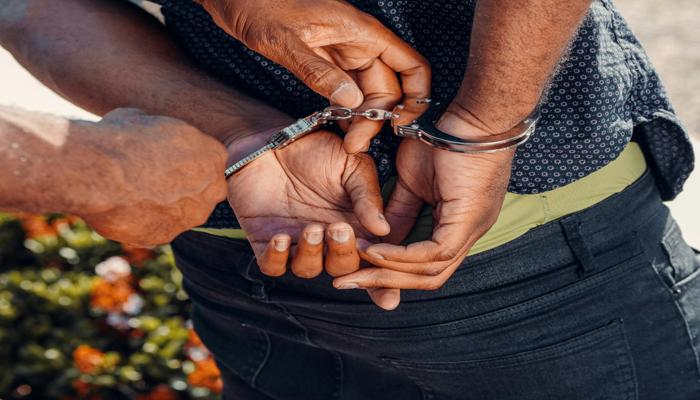
In a deeply disturbing case of religious intolerance, a Hindu girl from Kolkata faced a harrowing ordeal on May 9, 2025, when she was allegedly threatened with murder by a Muslim cab driver—simply for listening to the Hanuman Chalisa on her phone.

The incident occurred during a routine cab ride booked via the ‘Indrive’ app. What started as an ordinary commute home quickly spiraled into a nightmare. According to the victim, she was casually scrolling through social media when a reel featuring the Hanuman Chalisa began playing. The cab driver, identified as Muhammad Irfan, allegedly reacted with sudden fury, demanding that she stop the audio immediately.

Complaint filed by victim

When the girl refused, things escalated dangerously. Irfan reportedly threatened to kill her and, in a chilling turn, attempted to divert the car to an unknown location—allegedly his own neighborhood. The girl claims she was told she wouldn’t leave alive if she didn’t comply. Sensing grave danger, she somehow managed to escape and rushed to file a written complaint at the Shakespeare Sarani Police Station.

Kolkata Police responded swiftly, arresting the accused Muhammad Irfan and launching an investigation. The prompt action has been appreciated, but the incident has sparked outrage online, raising serious questions about passenger safety, religious intolerance, and the silence of app-based cab companies.

Notably, Indrive has yet to issue any statement regarding the incident—an omission that hasn’t gone unnoticed by netizens, many of whom are now calling for stricter vetting procedures for drivers. Others are urging female passengers to exercise caution when using ride-hailing apps, especially at night.

As the investigation unfolds, the broader implications of this shocking incident cannot be ignored. In a country that prides itself on diversity, is it now a crime to listen to devotional music in public? Or worse—does it make one a target?

Operation Sindoor: Pakistani Army attempts to pass off LeT terrorist as ‘preacher’, cites National ID as ‘evidence’ that matches US list of designated global terrorist

On 10th May, Pakistan’s Director General of Inter-Services Public Relations (DG ISPR), Lt Gen Ahmed Sharif Chaudhry, addressed the controversy over a viral image showing a man, later confirmed as Hafiz Abdur Rauf, leading funeral prayers alongside uniformed Pakistan army personnel.

During a press briefing, DG ISPR claimed that Hafiz, who has been named as a Lashkar-e-Taiba terrorist by Indian officials and media, is just a preacher and innocent family man. To support his claim, DG ISPR showed his ID and ran a video statement by Hafiz himself during the press meet.

Notably, Hafiz Abdur Rauf is internationally designated as a Specially Designated Global Terrorist by the US Treasury Department. He was placed on the list for his key role in LeT’s operations and fundraising activities. Despite this, DG ISPR claimed he is an innocent man.

Why the clarification was issued

The statement from DG ISPR came in response to a question asked by Express News journalist Khalid Mahmood, who mentioned that Indian officials and media houses showed a picture of Pakistani military officials offering prayers during a funeral. At the said funeral, Hafiz was seen leading the prayers.

On 8th May, India’s Foreign Secretary Vikram Misri accused Pakistan of publicly honouring terrorists. He stated that Pakistan continues to maintain links with leaders of The Resistance Front (TRF), Lashkar-e-Taiba (LeT), and Jaish-e-Mohammed (JeM), and offers them state honour. He referred to the viral image of Hafiz leading the funeral prayers as a key example, where military officials were seen standing behind in full uniform. Notably, India released list of op Lashkar and Jaish terrorists killed in the strike. In a releated report, OpIndia had mentioned that the funeral prayers were led by Hafiz.

India’s High Commissioner to the United Kingdom, Vikram Doraiswami, also referred to the same image during an interview. He highlighted that Hafiz, a designated terrorist, was leading funeral prayers while uniformed military officials stood behind, participating in the prayers. He asserted that it was proof of Pakistan’s continued sponsorship of terrorist activities.

National ID revealed matches OFAC designation of terrorist Hafiz Abdur Rauf

Interestingly, DG ISPR publicly displayed Hafiz Abdur Rauf’s national ID card as proof of his innocence. The details, however, including date of birth and national identification number, matched the information listed in the documents from the US Treasury Department and the OFAC Sanctions List.

Source: SS from video by DRM News of Pakistan’s DG ISPR Press Conference

According to the US Treasury Department, Hafiz has been a member of LeT’s senior leadership since at least 1999. He served as the chief of Falah-i-Insaniat Foundation (FIF), a LeT-linked organisation that carries out relief activities and raises funds. LeT has been using the name FIF since 2009 to evade international pressure, as the terrorist outfit was behind the deadly 26/11 Mumbai terror attack.

Furthermore, Hafiz also served as LeT’s Director of Humanitarian Relief in 2008 and Director of Public Services in 2003 under LeT terrorist Hafiz Muhammad Saeed. In August 2008, Hafiz led an LeT/Jamaat-ud-Dawa (JUD) delegation to assess relief and fundraising activities in Bajaur, Pakistan.

He has also served as a spokesperson for LeT, where he addressed the media and published on LeT’s website. He has created media programmes through FIF to generate support for the terror outfit. In December 2008, he was seen giving an interview on the LeT website, where he detailed welfare activities done to whitewash the crimes of LeT.

Earlier, in August 2003, he told a Pakistani newsweekly that LeT was openly fundraising and conducting relief work despite being officially banned by the Pakistan government.

In mid-2007, he travelled to Peshawar to supervise LeT’s other charitable wing, Idara Khidmat-e-Khalq (IKK), where LeT provided support for victims of floods. In 2004, he presented the annual report of a medical organisation as chief of JUD’s welfare wing.

Notably, these terrorist organisations are often seen conducting welfare activities not only to whitewash their crimes but also to gather public sympathy.

Pakistan’s statement contradicts international designation

Pakistan’s description of Hafiz Abdur Rauf as a civilian preacher directly contradicts his designation by the US government as a senior leader of a banned terrorist outfit. Pakistan tried to discredit Indian allegations; however, it inadvertently confirmed its association with a globally sanctioned terrorist, validating the accusations laid down by Indian officials.

What is the Union War Book, which has guided Indian officials during ‘Operation Sindoor’ against Pakistan

The most consulted book by senior Indian bureaucrats since 7th May, including during ‘Operation Sindoor‘ has been a substantial blue manual exceeding 200 pages, which remains confidential.

Officially titled the “Union War Book 2010,” this exclusive publication has surprisingly risen to prominence and is currently guiding the government’s preparations for war-like scenarios. The book provides an analysis of the responses and roles of the different branches of government in situations of armed conflict.

The original limited edition is highly classified and characterised by its extreme confidentiality. The officials from the Ministry of Defence, the Ministry of Home Affairs, and the Cabinet Secretariat who aid in its preparation and annual revisions are unable to reveal the identities of its rightful custodians.

However, each state chief secretary reportedly has a copy in addition to the Union ministries involved. While it is not publicly accessible, this manual has been quietly stored in the offices of chief secretaries across all Indian states and key ministries at the centre.

It outlines every task for emergency responses, including evacuations, sirens and fire drills. It has been studied, reopened and monitored more thoroughly than ever in recent days, especially as emergency exercises, siren tests and evacuation protocols have been conducted by authorities across the nation.

“It tells these key officers what each one of them should do in case of a war. So there is no confusion at all and everybody has a clear idea of what protocol to follow,” an official told Hindustan Times on condition of anonymity.

This document is not broadly shared or circulated, even within governmental circles. Additionally, there are no copies available for public viewing. Nevertheless, when necessary, it acts as the crucial guide directing all phases of the government’s response framework.

What is the Union War Book

The Union War Book has been in existence for a long period of time. The concept has evolved since the colonial era with significant revisions approximately every 15 years. The most recent iteration was created in 2010 in response to the Pakistan sponsored 26/11 Mumbai terror assaults which claimed the lives of 174 individuals, including security personnel. GK Pillai, the Union Home Secretary at the time, spearheaded the initiative to put together the 2010 edition.

This handbook is intended to serve as a comprehensive guide for government employees in times of war. Everything is covered in detail, from handling large mobilizations and managing misinformation to maintaining food supply, delivery of fuel and medications. The entire government apparatus, including the military, railroads, civil aviation, shipping, transportation, health and all other agencies, comes into action during a war. The book serves as the foundation for the military’s planning and strategy preparation.

“While an updated version of the book is brought out every 15 years or so, every year, the three ministries send notes. These are then pasted on the book. Technological updates are a part of it,” the aforementioned officer disclosed, clarifying how the edition remains aligned with modern techniques and progress. While the core text is from 2010, supplementary annotations addressing various subjects, including cyber warfare, drones, and social media surveillance, have been incorporated as margins and inserts.

Notably, the book encourages the use of time-tested tools. Hence, the officials observe that old is gold during wartime and point out that they continue to support the usage of traditional radios and flashlights because in the event of an war, enemies could incapacitate mobile networks or execute cyber attacks. Thus, returning to basic methods is vital. The government would then turn to more antiquated forms of communication.

Therefore, the Union War Book emphasizes the importance of having radios, flashlights and manual communication systems readily available. A mechanism to guarantee the security of critical infrastructure, such as the communication network and banking system also appears in the book. It contains instructions on when and how to activate civil defense and normalize the situation in public areas. “The thing for the public to know is that the Indian establishment is very good at handling emergencies. We have a lot of experience and we all know what to do,” an offcial stated.

Union War Book enters the scene

All authorities are openly citing this 15-year-old guidebook, even though its contents are concealed. For example, the office of Maharashtra Chief Minister Devendra Fadnavis released a statement in Marathi detailing the main points of a closed-door meeting thatthe chief recently conducted to review the state’s preparedness. “Study central government’s Union War Book and inform about the instructions to all the concerned,” the notification read. Some states have also also created their own War Books based on the Union War Book.

It is apparent that the manual has shifted from its secluded location on the shelf to become pivotal in the decision-making process. Although the book’s real contents remain under wraps, Hindustan Times was able to examine an example checklist from one state’s edition. The list covered everything from arrangements for food supplies to keeping an eye on contentious social media posts. The “social media management” section suggests that officials work with the local police’s Information Technology wing to monitor and report offensive content on the internet.

Officers are also urged in another section of the list to develop staff rosters that are updated frequently to ensure that administrative tasks do not stall in the event of an emergency. Several officials are, however, optimistic that they can soon return the book to its secured location without the necessity of implementing it.

The recent hostilities between India and Pakistan escalated following “Operation Sindoor,” executed to destroy the terror infrastructure in Pakistan and Pakistan occupied Kashmir, in response to the Pakistan-backed Pahalgam terror attack which ended the lives of 26 Hindu tourists, on 22nd April. Afterward, Pakistan not only breached the ceasefire agreement but also targeted civilian regions in various border areas, including Jammu and Kashmir, Gujarat and Rajasthan. Nevertheless, the forces successfully thwarted the attacks and retaliated by striking their key military installations.

Al Jazeera amplifies fake news, originally peddled by Pakistan about ‘capture’ of IAF pilot Shivani Singh: Here is the truth

Lies and embarrassment have been the constant companions of Pakistan. The Pakistani government, its army and its populace draw joy from claiming imaginary victories. In sustaining these lies, the global Islamo-leftist media outlets also play a key role. In this vein, the Qatar-based jihadist propaganda outlet Al Jazeera, on the 9th May, claimed that Pakistani forces had captured an Indian Air Force pilot, Squadron Leader Shivani Singh. However, Pakistan DGISPR has denied having captured any Indian pilot.

Al-Jazeera correspondent Kamal Hyder cited Pakistani military ‘sources’ to claim that Indian Air Force pilot Squadron Leader Shivani Singh was taken into custody by the Pakistan Army after the Pakistani forces shot down a Rafale fighter jet Singh was flying. As Al-Jazeera made this claim based on Pakistani sources and without confirming the facts with the Indian Air Force, Pakistani social media users widely circulated this claim even though neither Al Jazeera nor the Pakistani forces had shown evidence of shooting the Rafale jet or capturing Singh after she supposedly ejected.

However, during a press conference on 11th May, Director General of Pakistan’s Inter-Services Public Relations (ISPR), Ahmed Sharif Chaudhary, confirmed that none of the Indian pilots have been taken into custody by Pakistani forces. The Pakistani DG ISPR said that the claims of the capture of an Indian female pilot were only social media chatter. This came in response to a reporter’s question that international media have reported the capture of an Indian female pilot by Pakistan, and whether this is true and if true, is Pakistan will return the pilot.

“So, I can confirm you, we don’t have any pilot in custody. This is all social media chatter. This is all part of multiple sources of fake news and propaganda that has been generated from multiple sources,” the DG ISPR said.

Notably, even before DG ISPR clarified that none of the Indian pilots are in Pakistan’s custody, India’s Press Information Bureau had fact-checked Al-Jazeera for apparently passing off its wishful thinking as a ‘source-based’ report.

“Indian Female Air Force pilot has NOT been captured. Pro-Pakistan social media handles claim that an Indian Female Air Force pilot, Squadron Leader Shivani Singh, has been captured in Pakistan. This claim is FAKE!,” the PIB India said.

On 11th May, senior journalist Shiv Aroor said that Squadron Leader Shivani Singh is at her base and on duty. Aroor had this confirmation after speaking to her.

“If Pakistan dares take action, they know what we are going to do”: Indian Armed Forces issue strong warning at joint press briefing

Director General Naval Operations Vice Admiral A N Pramod on Sunday said the Indian Navy has full maritime dominance and is prepared to deliver a massive blow in response to any provocation from Pakistan, under the ongoing framework of Operation Sindoor.

Vice Admiral Pramod issued a clear warning to Pakistan stating, “This time, if Pakistan dare take any action, Pakistan knows what we are going to do, that’s all,” he said.

Speaking in Delhi, the Director General Naval Operations said, “I will make few sentences and leave it for your imagination. First of all, we have quantitative and qualitative edge to deliver a massive blow to our adversary. And we completely dominate in the maritime front.”

He added that the Navy’s role is part of a broader joint operations plan. “Indian Navy’s action is part of the escalation ladder mechanism which we have worked out amongst three services.”

Earlier, The Indian Armed forces on Sunday held a detailed news conference addressed by the Director Generals of Military operations, Naval operations and Air operations, detailing the success of Op Sindoor in eliminating terror targets deep inside Pakistan.

Vice Admiral A N Pramod informed that the Indian Navy’s operational edge at sea played a decisive role in Pakistan’s “urgent request for ceasefire.”

Vice Admiral Pramod said, “Along with the kinetic actions by the Indian Army and Indian Air Force, the overwhelming operational edge of the Indian Navy at sea contributed towards Pakistan’s urgent requests for a ceasefire yesterday.”

Additionally, Vice Admiral Pramod said the Indian Navy executed a swift and calibrated maritime response after the Pahalgam terror attack on April 22, deploying major combat assets within 96 hours.

“In the aftermath of the Pahalgam terror attacks, on innocent tourists by Pakistani-sponsored terrorists, the Indian Navy’s carrier battle group, surface forces, submarines, and aviation assets were immediately deployed at sea with full combat readiness in concert with the joint operation plan of the Indian Defence Forces,” Vice Admiral said during a press briefing.

The Vice Admiral stated that weapon firings were conducted in the Arabian Sea to refine procedures and validate readiness. “The aim was to revalidate our crew, our armament equipment and platform readiness to deliver various ordnance on selected targets precisely,” he added.

Following the drills, forces remained forward deployed in the northern sea region. “Our forces remained forward deployed into the Northern Sea in a decisive and deterrent posture with full readiness and capacity to strike select targets, including Karachi, at a time of our choosing,” the Vice Admiral informed.

Vice Admiral Pramod said Pakistan’s naval and air assets remained largely inside harbours or close to shore. “The forward deployment of the Indian Navy compelled the Pakistani naval and air units to be in a defensive posture, which we monitored continuously,” he said.

He emphasised the Navy’s operational awareness throughout. “We had and continue to have good battlespace transparency, using our maritime domain awareness grid.”

India’s response, he said, was deliberate. “Our response has been measured, proportionate, non-escalatory and responsible from day one.”

“The calibrated approach considered all options, including the ability of the Indian Navy for offensive action from and at sea,” Vice Admiral Pramod said.

He said that the use of naval force was part of a larger, integrated plan.

“As part of this escalation control mechanism, the application of force by the Navy was planned in a synchronised manner, in coordination with the Army and Air Force,” he added.

He highlighted the inter-service cooperation, noting, “The highlight being teams from the three services working closely in an integrated manner. “

Vice Admiral Pramod said, “As we speak, the Indian Navy remains deployed at sea in a credible deterrent posture to respond decisively to any inimical action.”


(This news report is published from a syndicated feed. Except for the headline, the content has not been written or edited by OpIndia staff)

BrahMos missile production unit inaugurated in Lucknow, 5 days after Akhilesh Yadav claimed that BJP government could not even make a sutli bomb

Five days after Samajwadi Party chief Akhilesh Yadav took a jibe at the BJP government, saying that after promising to manufacture missiles, they could not even make a sutli bomb (a firecracker), Defence Minister Rajnath Singh Uttar Pradesh today (11th May), virtually inaugurated the BrahMos supersonic cruise missile production unit and testing facility at the Uttar Pradesh Defence Industrial Corridor in Lucknow.

Yadav had attacked the BJP government during a press conference on Tuesday (6th May), claimed that BJP had promised to manufacture fighter pilots, rifles, arms and ammunitions in Jhansi and Bundelkhand region of the state, but they didn’t even make a “sutli bomb” there and the Centre is still importing defence equipment from different countries. He said, “They had lied that they would manufacture fighter pilots, missiles. If these missiles, arms, and ammunition were made in our Bundelkhand, then we wouldn’t need to import them from different countries. BJP has promised to manufacture all arms and ammunition. But we have heard that in Jhansi and Bundelkhand, they didn’t even make any sutli bombs and missiles and took the lands of the farmers,” said Yadav.

The BrahMos production unit

The newly launched Aerospace Integration and Testing Facility, built at a cost of ₹300 crore, will produce the BrahMos missiles with a range of 290 to 400 km and a top speed of Mach 2.8. The facility is designed to manufacture 80 to 100 missiles annually. In addition to that, 100 to 150 next-generation BrahMos missiles, having a range of over 300 kilometres, will also be produced within a year. The missiles, which will be developed by India’s DRDO and Russia’s NPO Mashinostroyeniya in a joint venture of India and Russia, are capable of being launched from land, sea or air.

The Brahmos production unit was announced as part of the Defence Industrial Corridor initiative launched by PM Modi during the 2018 Global Investors’ Summit. The defence corridor has six nodes– Lucknow, Kanpur, Aligarh, Agra, Jhansi, and Chitrakoot. Its foundation stone was laid in 2021. The Defence Minister also laid down the foundation stone of the Defence Testing Infrastructure System (DTIS), a dedicated facility for testing and certifying a wide range of defence products.

Operation Sindoor: Top defence officials narrate how targets in Pakistan were hit and navy was near Pakistan coast, say war is not over and forces remain in operational readiness

A day after India and Pakistan agreed to halt military operations, top Indian military officials held a press briefing on Sunday evening. In contrast to previous briefings held by Foreign Secretary Vikram Misri along with two mid-level miliary officials – Wing Commander Vyomika Singh and Colonel Sofia Qureshi – today’s briefing was held by senior defence officials.

DGMO Lt Gen Rajiv Ghai, Air Marshal A K Bharti – DG Air Ops, and Vice Admiral A N Pramod – DG Navy Ops addressed the briefing held at National Media Centre in New Delhi. DGMO Lt Gen Rajiv Ghai opened the briefing with the background of the Pahalgam terror attack that triggered the Operation Sindoor by India.

He stated, “When you combine those horrific scenes and the pain of the families that the nation witnessed with numerous other recent terrorist strikes on our armed forces and defenceless civilians, we knew that the time had arrived to make yet another compelling statement of our resolve as a nation. Operation Sindoor was conceptualized with a clear military aim to punish the perpetrators and planners of terror and to destroy their terror infrastructure. What I do not state here is the often stated determination of India and its intolerance to terror.”

The DGMO added, “Those strikes across those nine terror hubs left more than 100 terrorists killed, including high value targets such as Yusuf Azhar, Abdul Malik Rauf and Mudasir Ahmed that were involved in the hijack of IC814 and the Pulwama blast. The line of control was also violated soon after by Pakistan and the erratic and rattled response of our enemy was apparent from the number of civilians, inhabited villages and religious sites such as Gurudwaras that were unfortunately hit by them, leading to a sad loss of lives. The Indian Air Force played a major part in these strikes by engaging some of these camps and the Indian Navy provided wherewithal in terms of precision munitions. The Indian Air Force had their assets up in the sky.”

After that, Air Marshal A K Bharti described the air strikes undertaken by IAF, saying that the targets were selected carefully, and methods used to strike them were chosen based on various factors. The DG Air Ops displayed images showing the terror camps selected, and videos of precision guided weapons hit by Indian drones and missiles on the 7th May strike.

Before and after visuals of the targets were shown, visible damage to the terror infrastructure. These included the terrorist bases in Murdike and Bahalwalpur.

Air Marshal Bharti said that on 7th May after the Indian strikes, Indian airspace was saturated with Pakistani UAVs and small drone. These came in droves towards civilian areas and military installations, but they were successfully intercepted. However, 3 of them managed to land, although there was not much damage.

He added that India’s robust hard-kill and soft-kill systems did the job of eliminating the aerial threats. The Air Marshal pointed out that while India had targeted only terrorist camps, Pakistan targeted civilians and military infrastructure. Therefore, that very night, radar installations in radar and Gujranwala were struck by Indian forces. This was done to indicate that we are ready but don’t want to escalate.

DGMO Lt Gen Rajiv Ghai added that on the night of 8th and 9th May, Pakistan intruded into Indian airspace with drones and aircraft along the entire border.

Air Marshal Bharti said that Pakistan conducted a mass air raid from Kashmir to Gujarat, but Indian air defence was ready to counter them. He said that compared to the previous day, there were less armed UAVs but more quadcopter drones the next day. However, those were also successfully intercepted by Indian air defence system.

Pakistan launched its own military operation Operation Bunyanun Marsoos, targeting several key bases in India. Reports suggest that around 300-400 drones were used in the attack, targeting 36 Indian locations, including military bases and religious sites. The drones were reportedly of Turkish origin, specifically Asisguard Songar drones.

In response, India targeted military installations, including surface to air missile sites and radar sites. But despite the counter attack, Pakistani drone attacks continued. Air Marshal Bharti added that while launching drones from a place near Lahore, Pakistan continued to allow civilian flight operations.

DGMO Lt Gen Rajiv Ghai said that defence measures were also deployed on the ground, including air defence and electronic warfare assets. He referred to media reports narrating the effectiveness of Indian missile defence systems like S-400 and Akash, which were set up with the collaboration with air force. He said that troops were also deployed over land, air and water.

He said that on 9th, Pakistan again launched attacks, this time targeting military infrastructure. Some airfields and ammunition dumps were targeted repeatedly, but all of them were thwarted. Ghai said that Pakistan Army has lost around 35-40 personnel in artillery and small firing along the LoC.

Air Marshal A K Bharti added that on 8th May, Pakistani UAVs and drones targeted multiple IAF bases. However, all of them were neutralised using air defence systems and also using legacy systems, including Garuda snipers. After this relentless attack on Indian positions, a decision was taken to strike at Pakistan airbases, command centres, military infrastructure, air defence systems across the western front.

The bases struck by India included Chaklala, Rahim Yar Khan, Sukkur, sending a clear message that aggression will not be tolerated. This was followed by strikes at Sargodha, Jacobabad and Bholari. India also struck UAV complex at Murid, Rafiqui, radar base at Chunian, Rahim Yar Khan air field, and UAV hangar at Sukkur.

“We have the capability to target every system at these bases and more, but it was only a measured response to instill good wisdom to our adversary to refrain from further escalation,” Air Marshal Bharti said. He also displayed several before and after visuals of the targets, showing the extensive damage caused by Indian strikes.

This included detailed video of the effects of India’s Air Operations at Pasrur Air Defence Radar, Chunian Air Defence Radar, Arifwala Air Defence Radar, Sargodha Airfield, Rahim Yar Khan Airfield, Chaklala Airfield (Nur Khan), Sukkur Airfield, Bholari Airfield and Jacobabad Airfield.

After that, Vice Admiral A N Pramod narrated what the Indian Navy did during the operation, giving the first official detail of navy involvement. He said that Indian Navy’s carrier battle group, surface forces, submarines and aviation assents were immediately deployed at sea with full combat readiness according to the joint action plan of the Indian defence forces.

He revealed that within 96 hours of the Pahalgam terror attack, Navy tested and refined its tactics and procedures at sea during multiple firings in the Arabian sea. After that, the naval forces remained deployed at northern Arabian sea in a decisive and deterrent posture with full readiness and capacity to strike select targets at sea and on land, including Karachi, at any time chosen by India.

This compelled Pakistani naval and air units to be in a defensive posture, mostly inside harbours and close to the coast. The Vice Admiral said that Indian navy maintained continuous marine dominance during the entire duration, and was aware of location and movement of Pakistani units.

He said that the strong position of the three armed forces of India compelled Pakistan to request for end of military action. Vice Admiral Pramod said that even though there is ceasefire, Indian navy remains deployed at sea to respond decisively to respond to any action by Pakistan or Pakistan-bassed terrorists.

On asked about casualties suffered by Pakistan, Air Marshal AK Bharti said that aim was not to inflict casualties, but to hit targets, adding that their job is not to count the body bags. On the question of how many and what kind of Pakistani planes were hit, he said that “Definitely, we have downed a few planes…Definitely, there are losses on their side which we have inflicted.” He added that planes were prevented from entering inside Indian border, therefore we don’t have the wreckage to identify the downed planes. However, forces are working on technical aspects to get the details.

On the question on whether India will hit the remaining terrors camps from the 21 locations displayed in the first press briefing, the DGMO said that while he can’t reveal operational details, but operation is still ongoing and forces are in full readiness. He added that if need arises, remaining camps will be engaged. He added that over 100 terrorists were killed in the operation on 9 terror camps.

On the question of speculations and Pakistani claims that India has lost assets including Rafale aircraft, Air Marshal AK Bharti gave an indirect answer, indicating that there have been some losses. He said, ‘we are in a combat situation, and losses are a part of combat’. He added that the question that should be asked is whether we have achieved the objective of hitting the terror camps, and the answer is yes.

He added he won’t reveal the details of losses like the number and type of platform as we are still in combat position. If will reveal, it will be an advantage for the adversary, he said.

Operation Sindoor: Indian Navy deployed carrier battle group, submarines and other assets near Pakistan coast, was ready to hit several targets including Karachi

A day after India and Pakistan agreed to halt military operations, top Indian military officials held a press briefing on Sunday evening. DGMO Lt Gen Rajiv Ghai, Air Marshal A K Bharti – DG Air Ops, and Vice Admiral A N Pramod – DG Navy Ops addressed the briefing held at National Media Centre in New Delhi. In this briefing, the Indian government for the first time revealed the deployment of Indian Navy assets on the northern Arabian Sea, close to the Pakistani coast.

Vice Admiral Pramod said that the Indian Navy was present at sea with full force, including its carrier battle group. He said that the Navy was ready to hit several Pakistani targets at sea and on land, including the port city of Karachi.

He said that the Indian Navy’s carrier battle group, surface forces, submarines and aviation assets were immediately deployed at sea with full combat readiness according to the joint action plan of the Indian defence forces.

He revealed that within 96 hours of the Pahalgam terror attack, the Navy tested and refined its tactics and procedures at sea during multiple firings in the Arabian Sea. After that, the naval forces remained deployed at the northern Arabian Sea in a decisive and deterrent posture with full readiness and capacity to strike select targets at sea and on land, including Karachi, at any time chosen by India.

This compelled Pakistani naval and air units to be in a defensive posture, mostly inside harbours and close to the coast. The Vice Admiral said that the Indian Navy maintained continuous marine dominance during the entire duration, and was aware of the location and movement of Pakistani units.

He said that the strong position of the three armed forces of India compelled Pakistan to request for end to military action. Vice Admiral Pramod said that even though there is a ceasefire, the Indian Navy remains deployed at sea to respond decisively to respond to any action by Pakistan or Pakistan-based terrorists.

Inflicting potential nuclear damage, neutralising terror bases and violating Pakistan: How India does not need a ‘mediator’ and the ceasefire is a win-win situation for us


“This is not an era of war, but it is one of dialogue and diplomacy.”
With these carefully chosen words, Prime Minister Narendra Modi appealed to his “good friend” Vladimir Putin and to Ukraine amidst escalating global tensions.

But back home, India was navigating a far more immediate and volatile crisis: the Pahalgam terror attack, in which 26 civilians were brutally killed. The attackers left behind a chilling message—“Modi ko batana” (Tell Modi).

India’s response came swiftly and decisively. Under Operation Sindoor, the Indian state launched surgical strikes in retaliation, signalling that its threshold for terrorism had once again been crossed.

But even as Indian forces executed calibrated military action, a new development shifted the narrative: US President Donald Trump announced that India and Pakistan had agreed to a ceasefire.

What followed was a series of posts from Trump in which he portrayed himself not merely as a mediator, but as a commanding figure in South Asian affairs—boasting of having brought India, Pakistan, and even China to the negotiating table.

It was messaging intended not just for domestic consumption, but for global optics. The underlying message was unmistakable: America is back, and the world is under new management.

From a geopolitical standpoint, this projection of power is not unprecedented. Those who observe global currents closely would recall that Trump had already begun targeting the Global South even before retaking office for a second term.

Trade barriers were raised, tariffs imposed, and economic pressure points activated—ostensibly to assert American leverage over emerging economies seeking greater autonomy. Donald Trump’s entire election campaign revolved around the promise of MAGA—Make America Great Again.

I’ve said it before: in America, only the faces in power change, but the forces that actually run the country remain the same—powerful entities that are determined to ensure that the United States continues to be the boss of the globe, no matter what.

It is also noteworthy that US Senator JD Vance (VP JD Vance) was in India around the time of the Pahalgam attack. While his visit included cultural overtures—such as trips to Hindu temples—it coincided curiously with a terror strike bold enough to challenge India’s internal security architecture. The timing is suspicious, to say the least.

One cannot help but remember that during the last major India-China face-off in Galwan Valley, Trump was also in office. Now, as India and Pakistan lock horns again, Trump is once more the U.S. President. Coincidence? Perhaps. Pattern? Likely.

There appears to be a consistent undercurrent: efforts by external actors to prevent strategic stability between India and its regional neighbours. This is especially true as India, Russia, and China have grown increasingly vocal in challenging Western dominance—most notably through de-dollarisation efforts and alternative trade mechanisms.

The timing of the ceasefire—just as India seemed poised to assert itself militarily—coincides with an unexpected thaw between the US and China, following months of intensified tariff warfare.

Then came Trump’s “peacemaking.” His attempt to position himself as a mediator between India and Pakistan was not only tone-deaf but strategically flawed. In dragging Kashmir back into the equation and equating New Delhi with Islamabad, Trump committed a cardinal error.

Kashmir is not a mere territorial dispute—it is a 1,400-year-old civilisational faultline that defies simplistic Western frameworks. The conflict is not one of border demarcations but of clashing worldviews—one rooted in Indic pluralism, the other in geopolitical opportunism.

Trump’s failure to grasp this depth—and his penchant for transactional diplomacy—results in narratives that place India and Pakistan on the same moral plane. This is not just insulting to India’s sovereignty; it undermines the very idea of India as a democratic bulwark in a region riddled with instability.

Which brings us to the core question: Was the ceasefire a strategic error or a calculated pause?

The backlash from Indian nationalists has been sharp and emotional. Many who had rallied behind Operation Sindoor now feel blindsided.

Albeit, not all criticism is created equal. While most are rooted in patriotic concern, some appears orchestrated—especially from quarters known to echo Western intelligence interests.

Notably, several voices that had loudly WIRED and cheered India’s military action began, almost overnight, to demand PM Modi’s resignation following the ceasefire announcement. 

Why the Ceasefire Is a Win-Win for India—Despite the Outrage

Now comes the real question: how and why is this ceasefire a win-win situation for India?

When it comes to matters of sovereignty and diplomacy, India consistently holds itself accountable to global norms—a stark contrast to Pakistan, which has mastered the art of playing the victim while conveniently blaming its terrorist provocations on proxies like Lashkar-e-Taiba (LeT) or Jaish-e-Mohammed (JeM).

Yes, Pakistan may have sharpened its skills in shaping social media narratives, but in the aftermath of the Pahalgam terror attack, it is India that has scored clear victories across multiple strategic fronts:

  • In a deadly and precisely executed surgical strike, India eliminated ten close associates and family members of Masood Azhar, sending an unmistakable message of deterrence.
  • The Indian Air Force (IAF) targeted high-value sectors—not only operational strongholds but also symbolically important safe havens used by Pakistani terror networks.
  • Key Pakistani airbases in Lahore, Rahim Yar Khan, Jacobabad, and Hyderabad (Sindh) were effectively neutralised—demonstrating India’s tactical depth, combat readiness, and technological superiority.
  • While defence systems like Israel’s Iron Dome often grab headlines, India has quietly developed and deployed its own formidable missile defence capabilities, including:
  1. Barak-8 (jointly developed with Israel),
  2. Akash Air Defence System,
  3. S-400 Triumf (procured from Russia), and
  4. DRDO-developed QRSAM systems.

These systems were actively engaged during the retaliatory phase, reinforcing India’s preparedness for any escalation.

India has demonstrated not just military might but a comprehensive national security architecture that is constantly evolving to meet the challenges of asymmetric warfare.

Let us be clear: Pakistan, islam, and terrorism are no longer separable. The ideological infrastructure that fuels radical extremism is state-supported, making this a generational challenge for India and the world. Isolating and dismantling global sleeper cells linked to Pakistan will require sustained effort, strategic patience, and covert precision.

India has made it abundantly clear to the global community: we possess not only the resolve to retaliate, but the ability to dismantle Pakistan’s terror machinery entirely. And if pushed further, India is capable of extending tactical support to Baloch rebels—a card that would strike at the heart of Pakistan’s internal fault lines.

Indian intelligence and covert agencies are active—working silently, without public briefings or bravado. But their impact will be felt across borders.

While India abides by the ceasefire protocol, its strategic assets—including ‘unknown gunmen’—must remain operational, ready to shape shadow operations. India must also leverage sympathetic international media outlets—such as The Guardian—to reveal how India’s enemies are being neutralised in ways that conventional diplomacy cannot publicly endorse.

In a powerful turn of events, hours after this article was drafted, the IAF announced that Operation Sindoor is not over. This isn’t mere rhetoric—it’s the statement of a nation with a mission, a country that has evolved significantly over the past decade.

And just as I was about to finish this article, a few significant developments have emerged, raising eyebrows among strategic observers:

First, the landing of the US Department of Energy’s nuclear emergency support aircraft (B350 AMS) in Pakistan has sparked intense speculation. Many are questioning whether the Indian side may have, intentionally or otherwise, struck sensitive nuclear facilities in Pakistan during #OperationSindoor. The presence of a US nuclear emergency response team suggests that a potential leak or critical breach may have occurred—something the so-called “mediator country” may now be investigating quietly behind the scenes.

Second, highly placed sources are indicating that India has communicated a firm and unambiguous message to the international community:

“Our position on Kashmir is crystal clear. There is only one issue left: the return of Pakistan-Occupied Kashmir (PoK). There is nothing else to discuss. If Pakistan wishes to talk about handing over terrorists, we’re open to that. But we have no interest in entertaining any other topics. And let it be clear—we do not want any mediation. We do not need anyone to mediate.”

So, the question raised by Donald Trump, which I addressed earlier in this article, has now been answered—and answered diplomatically, yet firmly, on the very same day. The message to the world is unambiguous: America is not the boss of India.

It is under Prime Minister Narendra Modi that India has carved out a global identity. Even during the Pahalgam attack, most global powers—with the notable exception of Turkey, which India was assisting under Operation Dost—stood firmly by India’s right to retaliate. Many explicitly endorsed India’s right to act with full force against Pakistani terror groups. This level of global consensus in India’s favour is unprecedented.

This is the new India: a nation that no longer prioritises appeasing Western powers, Cold War-era patrons like the USSR, or a certain dynastic elite in Indian politics. It is an India that is finally aligning with its own strategic interests, an India that seeks to stand, rise, and shine on its own merit.

This is not Indira Gandhi’s India, where poets, intellectuals, and even Prime Ministers were often entangled in KGB-facilitated honey traps, and foreign policy was dictated by Cold War allegiance. Those who long for that era must also remember its costs—compromised sovereignty and strategic dependence.

Modi’s India is not known for passivity. This government has repeatedly shown its capacity for surgical precision, diplomatic agility, and long-term strategic vision. When necessary, it has chosen timing over theatre, and quiet execution over loud declarations.

The ceasefire, then, is not capitulation—it’s strategic calibration. A pause, perhaps. But not the end.