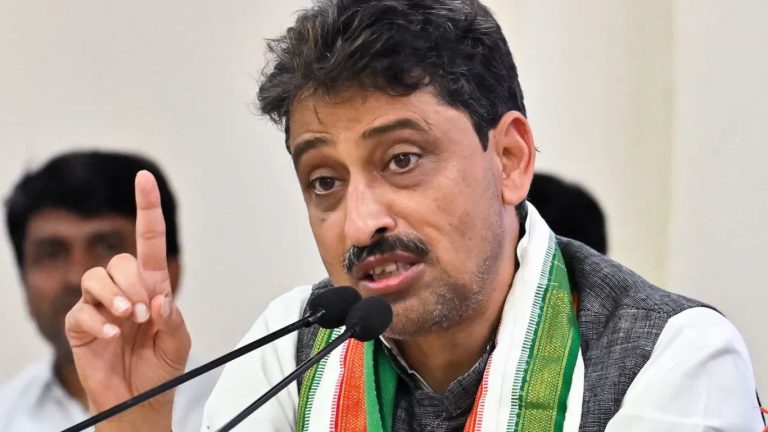
While the entire nation stands united as our security forces avenged the Pahalgam terror attack in Operation Sindoor by destroying the terrorist headquarters in Pakistan and Pakistan-occupied Kashmir, Congress leader Imran Masood has raised questions on the operation of the security forces by saying that he will be satisfied only when the details of the security operation are made public.
Speaking to the media, Masood demanded that the government disclose the details of the operation, such as the extent of damage inflicted in the strikes and the number of names of terrorists killed. “Salute to Indian security forces, this was the kind of reply we expected…how many (terrorists) were killed and what all damages could they inflict, this also should be announced…then we will feel at peace…we had said several times, we are with govt and that they should give befitting reply…” said Masood.
#WATCH | Saharanpur, UP: On #OperationSindoor, Congress MP Imran Masood says, " Salute to Indian security forces, this was the kind of reply we expected…how many (terrorists) were killed and what all damages could they inflict, this also should be announced…then we will feel… pic.twitter.com/hftXslz61R
This is not the first time that Masood, whose infamously threatened to chop PM Modi into pieces during the 2014 Lok Sabha elections, has questioned the operations of Indian security forces. Earlier this week, he cast aspersions on the Uri surgical strike and the Balakot air strike carried out by the Indian security forces in retaliation for the Pathankot and Pulwama terrorist attacks, respectively. In a TV interview with journalist Megha Prasad for the program Inside Out on ABP News, the Congress MP said that the entire world mocked the surgical strike.
?Congress MP Imran Masood says the whole world LAUGHED at India’s Surgical Strike.
~ First question the strike, then mock it? How far will they stoop just to appease their vote bank?
— The Analyzer (News Updates?️) (@Indian_Analyzer) May 6, 2025
When the interviewer asked Masood whether he believed that India carried out successful surgical and air strikes on terrorist launch pads sponsored by Pakistan, Masood replied, “The whole world mocked the air strike. Pakistanis are saying that they killed our three crows.”
Operation Sindoor
India conducted Operation Sindoor in the wee hours of Wednesday (7th May) in response to the April 22 Pahalgam terror attack in which 26 Hindu tourists were brutally gunned down by Islamic terrorists in Pahalgam, J&K. Since he terrorist attack, military tension had been simmering between India and Pakistan as India expressed its resolve to do justice. As a result, India targeted 9 locations linked to Jaish-e-Muhammed and Lashkar-e-Taiba in Pakistan and Pakistan-occupied Kashmir in Operation Sindoor, sending shockwaves across Pakistan.
A little past midnight on May 7, the Indian Armed Forces carried out one of the most audacious counter-terror operations in recent memory. Codenamed “Operation Sindoor,” the mission struck nine terror camps entrenched in Pakistan and Pakistan-occupied Kashmir, including the Jaish-e-Mohammed headquarters and a Lashkar-e-Taiba facility used to launch the 26/11 Mumbai attacks. Within minutes, videos of explosions, smoldering infrastructure, and Pakistani panic flooded social media. The Indian Army, in a rare public statement, confirmed its role, proudly proclaiming: “Justice is served.”
As the rest of India erupted in patriotic pride and collective catharsis, another response emerged—not from Pakistan but from the drawing rooms and editorial offices of India’s Left-liberal intelligentsia. If the Pakistani state was fuming, its apologists in Indian media circles appeared equally perturbed. What followed was a spectacle of intellectual subversion, with self-styled progressives rushing to cast doubt, question the government’s intent, and parrot the propaganda of India’s sworn enemy.
It is difficult to ignore the galling irony. Just days earlier, following the Pahalgam massacre where terrorists slaughtered unarmed Indian tourists, the Modi government faced flak from this very cohort. With performative outrage and righteous indignation, these commentators took swipes at the Centre, accusing it of being all hat and no cattle. They excoriated the central government, rightly so, for the security lapses that led to the attack. But they steered clear of blaming militant Islam, the underlying ideology that Pakistan taps to recruit an endless stream of terrorists willing to kill and cause slaughter, all in the name of “waging a war against kafirs” for Islam.
Demands for “decisive action” and lamentations about India’s “strategic paralysis” filled their op-eds and primetime slots. But when that decisive action came, the same voices performed a swift volte-face.
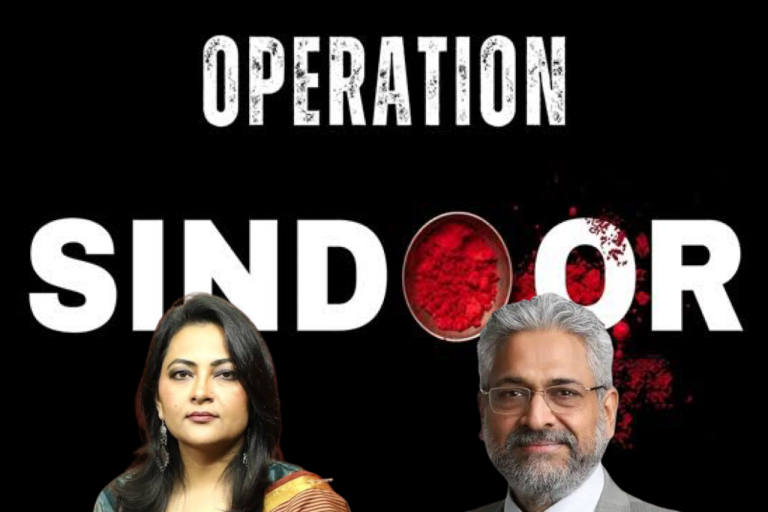
Take Arfa Khanum Sherwani of The Wire, for instance. Within hours of Operation Sindoor, she began echoing the Pakistani establishment’s line that India had attacked unarmed civilians, conveniently brushing aside the Indian Army’s statement and years of intelligence inputs from international agencies about terror camps operating in plain sight in Pakistan. According to her, no terrorist was killed. Her entire premise rested not on independent verification or journalistic investigation, but on statements released by the very state that has made terrorism an instrument of its foreign policy.
We don't want violence and Indian Armed Forces k*lled Pakistani civilians and not terrorists – Arfa
Sherwani didn’t stop there. In a telling moment that exposes the ideological roots of such narratives, she described Kashmir as being “sandwiched” between India and Pakistan. This framing is not just inaccurate; it’s dangerous. It erases the very real role of local terror networks, underplays the radicalization fostered by Pakistan, and presents the Indian state as the oppressor—a narrative lifted straight from the ISI playbook.
At one point during her conversation, Sherwani even appeared to mock the infographic of ‘Operation Sindoor’ shared by the Indian Army. ‘Sindoor’ holds profound cultural and symbolic significance, for it a marker of a married woman’s husband’s wellbeing. The Armed Forces had chosen the name presumably to honour the dead—men segregated by terrorists for being Hindu and shot dead in cold blood in front of their families.
Siddharth Varadarajan, founder of The Wire and a man who rarely misses a chance to question India’s security policies, joined in with a similar narrative of manufactured doubt. Speaking with Sherwani in the early hours after the strike, he fretted over the government’s initial reluctance to disclose the exact locations of the strikes. He insinuated that the government was forced to confirm the operation only because social media had already gone viral with videos and images of the destruction. The implication was clear: the state was hiding something.
The Wire panelists were busy pushing Pakistani talking points hours after Army conducted ‘Operation Sindoor’
Varadarajan went on to claim that the success of the strikes was unverifiable. It is a tactic we’ve seen before—most notably after the Balakot airstrikes in 2019, when the same cabal demanded GPS coordinates, photographic evidence, and death certificates of terrorists. They conveniently ignore the operational realities of airstrikes, the need for secrecy, and the tactical advantage of withholding evidence for the enemy to learn insights into the operation and prevent such strikes in future.
Perhaps the most bizarre contribution came from another Wire journalist, Rahul, who spoke at The Wire Live on YouTube, pushing an entirely fabricated story, presumably birthed in an ISI war room. According to this tale, the Pakistani Air Force had shot down five to six Indian fighter jets, including advanced French-made Rafales. Without a shred of evidence, Rahul amplified the claim, even as the Indian Armed Forces released no such confirmation and foreign defense analysts dismissed the story as fanciful fiction.
What this reveals is a disturbing reality: that a section of India’s commentariat has become indistinguishable from enemy propaganda. Their knee-jerk skepticism, selective outrage, and intellectual gymnastics are no longer about holding power to account; they are about sabotaging national morale and shielding Pakistan from international scrutiny.
This is not journalism. This is psychological warfare.
Fifth column in action, aiding and supporting Pakistani propaganda machinery
One might be tempted to attribute this to political bias—after all, the Modi government has always been the Left’s bête noire. But the pattern here is far too consistent, and the stakes far too high, to dismiss this as mere opposition politics. What we are witnessing is a textbook example of the Fifth Column in action—a segment of society that functions within a country while actively or inadvertently promoting the enemy’s objectives.
These intellectual mercenaries traffic in doubt and fear. Their aim is not truth, but paralysis. Their messaging always follows the same trajectory: first, deny the presence of terrorists; then, question the authenticity of the strikes; and finally, stoke fears of an apocalyptic retaliation by Pakistan.
The last point is particularly insidious. Every time India strikes back, these voices emerge from the woodwork to warn of war, escalation, and international fallout. They scream “recklessness” and “warmongering” while ignoring the decades-long pattern of Pakistan’s state-sponsored terrorism. This fear-mongering is not a coincidence—it is a calculated narrative designed to dissuade India from retaliating, to preserve the illusion that peace can be bought through passivity.
But the Modi administration has proven, repeatedly, that it no longer governs by the whims of these performative outrage merchants. The days of Track II diplomacy, dossiers, and strategic restraint are long gone. This is a new India—one that responds, not just reacts; one that won’t hesitate in crossing the international border for bringing the perpetrators of terrorism to justice. One that is not content with candlelight vigils after every terror attack, but seeks to ensure that such attacks responded with military might and not just diplomatic blitzkrieg.
Performative outrage merchants from Delhi’s Khan Market gang clings to fading relevance as India embraces strategic clarity
It is this transformation that rattles the old guard. Having lost their clout, their relevance, and their ideological grip over national discourse, they now resort to amplifying enemy narratives to remain in the spotlight. Their fear is not just of war; it is of irrelevance.
Operation Sindoor was not just a tactical success; it was a statement. It told the world that India will no longer tolerate terror sanctuaries across the border. That India’s response will be swift, precise, and unapologetic. And if it bruises some egos in Karachi—or in Delhi’s Khan Market circuit—so be it.
In the end, the real story is not just about the missiles that found their targets in terrorist camps. It is about the intellectual missiles fired by India’s own Fifth Column, aimed not at the enemy, but at the morale of its own people. And it is about time we called them out for what they are: enablers of terror, cloaked in the garb of dissent.
India has chosen to walk on a path of self-respect, strategic clarity, and zero tolerance for any form of terrorism. Thos who find it difficult to stomach it are welcome to wallow in their irrelevance. But India will march on unbothered, obliterating anyone and everyone who dares to cast evil eyes on its sovereignty.
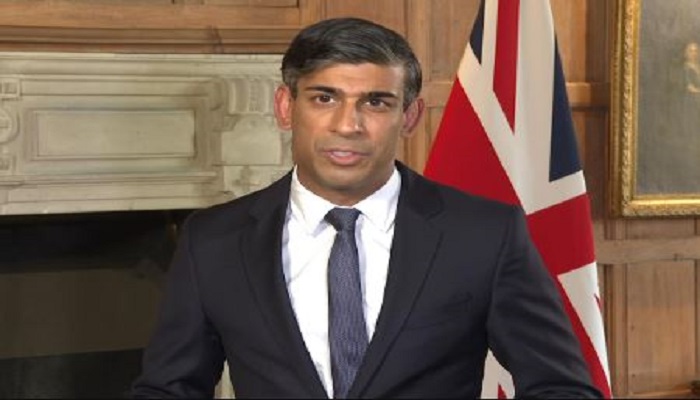
In a strong show of support to India, UK’s former Prime Minister Rishi Sunak firmly backed New Delhi’s action against cross-border terrorism following Operation Sindoor and said that “India is justified in striking terrorist infrastructure.”
Sharing a post on X, Sunak said, “No nation should have to accept terrorist attacks being launched against it from land controlled by another country. India is justified in striking terrorist infrastructure. There can be no impunity for terrorists.”
No nation should have to accept terrorist attacks being launched against it from land controlled by another country.
India is justified in striking terrorist infrastructure. There can be no impunity for terrorists.
Meanwhile, UK Foreign Secretary David Lammy urged India and Pakistan to show restraint and indulge in “direct dialogue” following Operation Sindoor, a targeted strike mission to destroy terrorist infrastructure in Pakistan and PoJK in response to the April 22 Pahalgam terror attack.The UK Foreign Secretary further said that both sides must work to restore regional stability and ensure the protection of civilians.
“Current tensions between India and Pakistan are a serious concern. The UK government is urging India and Pakistan to show restraint and engage in direct dialogue to find a swift, diplomatic path forward,” Lammy said.
“The UK has close and unique relationships with both countries. I have made clear to my counterparts in India and Pakistan that if this escalates further, nobody wins. The UK was clear in its condemnation of the horrific terrorist attack in Pahalgam last month. We need all sides to work urgently to see regional stability restored and ensure protection of civilians,” Lammy added.
Lammy further said that the Foreign, Commonwealth and Development Office is evaluating the situation and is ready to support any British nationals in the region.
“The safety of British nationals in the region will always be our priority. The FCDO continues to monitor developments closely and stands ready to support any British nationals 24/7. Any British nationals in the region should follow the FCDO’s travel advice for the country they are in, along with the advice of the local authorities,” Lammy said.
In the aftermath of the Pahalgam terror attack, the Indian Armed Forces launched a strike at the terror hideouts deep inside Pakistan and Pakistan Occupied Jammu and Kashmir under ‘Operation Sindoor’ on Wednesday morning. Wing Commander Vyomika Singh informed that a total of nine terror sites were targeted and successfully destroyed. She asserted that the locations were selected so that there was no damage to civilians and their infrastructure.
“Operation Sindoor was launched by the Indian Armed Forces to deliver justice to the victims of the Pahalgam terror attack and their families. Nine terrorist camps were targeted and successfully destroyed… The locations were so selected to avoid damage to civilian infrastructures and loss of any civilian lives,” Wing Commander Vyomika Singh said.
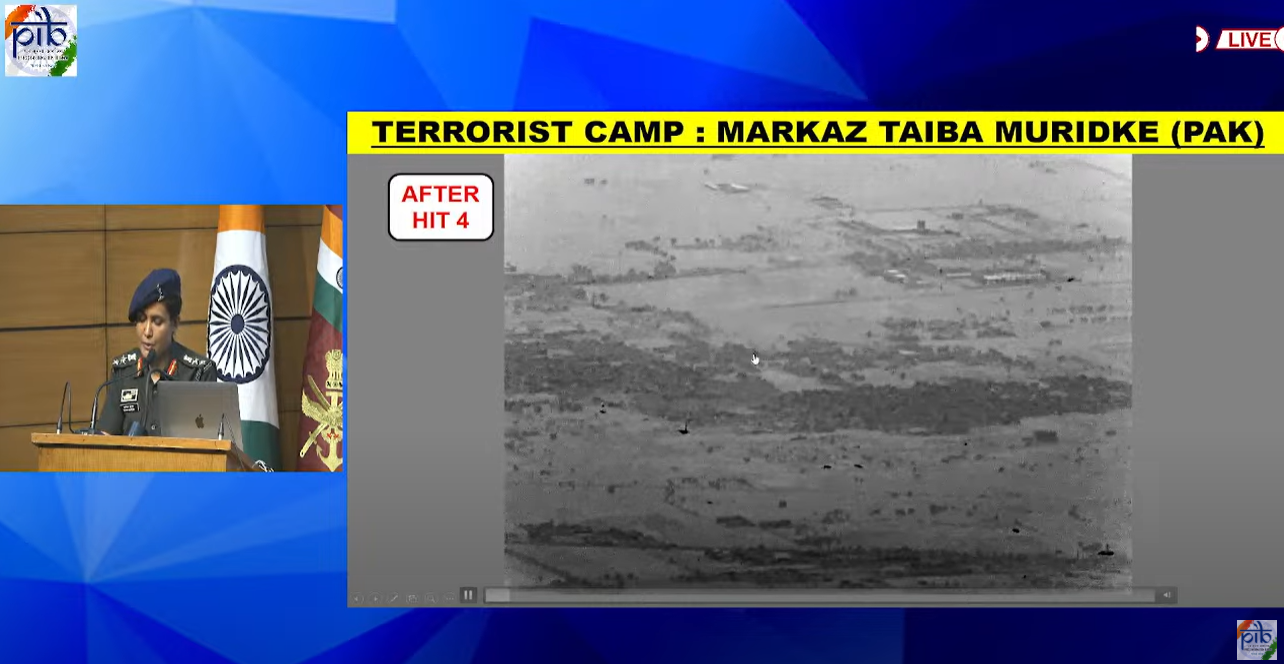
During the press briefing, Col Sofiya Qureshi presented the videos of the destruction of terror camps, including from the Muridke and where David Headley and Ajmal Kasab, perpetrators of the 2008 Mumbai attacks, received training.
Other than Muridke, Sarjal camp in Sialkot, Markaz Ahle Hadith, Barnala and Markaz Abbas, Kotli and Mehmoona Joya camp, Sialkot, were targeted in the strikes conducted by the Indian Army, Col Qureshi informed.
Foreign Secretary Vikram Misri said that the attack on Pahalgam was driven by an objective of undermining the return of normalcy in Jammu and Kashmir.
“The attack in Pahalgam was marked with extreme barbarity, with the victims mostly killed with head shots at close range and in front of their family…the family members were deliberately traumatised through the manner of killing, accompanied by the exhortation that they should take back the message. The attack was clearly driven by the objective of undermining normalcy returning to Kashmir,” he said.
(This news report is published from a syndicated feed. Except for the headline, the content has not been written or edited by OpIndia staff)
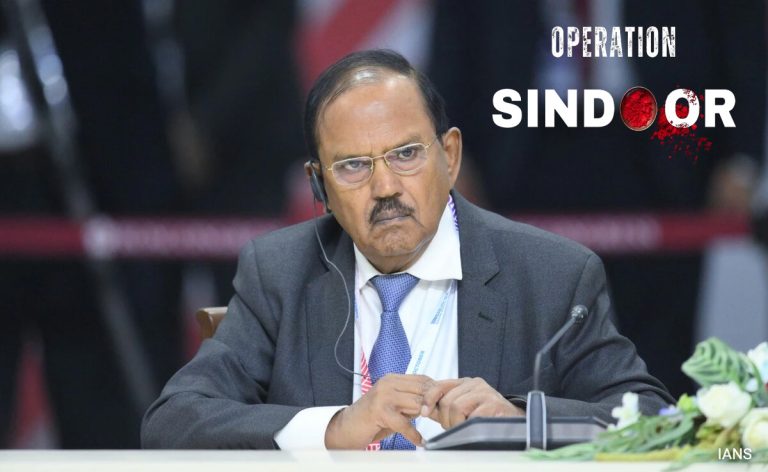
Soon after the focused strikes on terrorists and terrorist infrastructure at nine sites in Pakistan and PoJK as part of Operation Sindoor, National Security Advisor (NSA) Ajit Doval spoke with his counterparts from the United States, Japan and several other countries and briefed them about India’s “measured, non-escalatory” action, sources said.
India carried out precise strikes against terrorist infrastructure in response to the Pahalgam terror attack in which 26 people were killed.
Ajit Doval spoke with US NSA & Secretary of State Marco Rubio, UK NSA Jonathan Powell, Saudi NSA Musaid Al Aiban, UAE NSA Sheikh Tahnoon, Secretary General of NSC of UAE Ali Al Shamsi and NSA of Japan Masataka Okano.
The sources said contact was also established with Russian NSA Sergei Shoigu, China’s Foreign Minister Wang Yi and Diplomatic Adviser to French President Emmanuel Bonne.
NSA briefed his counterparts on actions taken and method of execution, which was measured, non-escalatory and restrained.
He emphasised that India had no intent to escalate but was well prepared to retaliate resolutely should Pakistan decide to escalate.
NSA will be in touch with his counterparts in the days ahead, sources said.
Marco Rubio had spoken to National Security Advisors from India and Pakistan on Tuesday (local time) and urged them to keep lines of communication open and avoid escalation.
“Earlier this afternoon, @SecRubio spoke to the national security advisors from India and Pakistan. He urged both to keep lines of communication open and avoid escalation,” US Department of State said on X.
At a joint briefing on Operation Sindoor in which nine terrorist camps were targeted with precision strikes, Foreign Secretay Vikram Misri said the terror attack in Pahalgam was marked with extreme barbarity, with the victims mostly killed with head shots at close range and in front of their family.
“The family members were deliberately traumatised through the manner of killing, accompanied by the exhortation that they should take back the message. The attack was clearly driven by the objective of undermining normalcy returning to Kashmir,” he said.
Misri said that Indian intelligence agencies had been monitoring terrorist activities and raised concerns regarding more terrorist attacks in India.
“Our intelligence indicated that further attacks against India are impending. Thus, compulsion, both to deter and prevent and hence earlier this morning, India exercised its right to respond to deter such more cross-border terrorism… Our actions were measured and non-escalatory, proportionate and responsible. They focused on dismantling terrorists’ infrastructure,” he said.
Wing Commander Vyomika Singh informed that a total of nine terror sites were targeted and successfully destroyed. She asserted that the locations were selected so that there was no damage to civilians and their infrastructures.
“Operation Sindoor was launched by the Indian Armed Forces to deliver justice to the victims of the Pahalgam terror attack and their families. Nine terrorist camps were targeted and successfully destroyed… The locations were so selected to avoid damage to civilian infrastructures and loss of any civilian lives, she said.
Col Sofiya Qureshi showed some videos of the strikes destroying terror camps.
The Indian Armed Forces launched ‘Operation Sindoor’ early Wednesday.
Twenty-six people were killed in the Pahalgam terror attack. The government had said that the perpetrators will face severe punishment.
(This news report is published from a syndicated feed. Except for the headline, the content has not been written or edited by OpIndia staff)
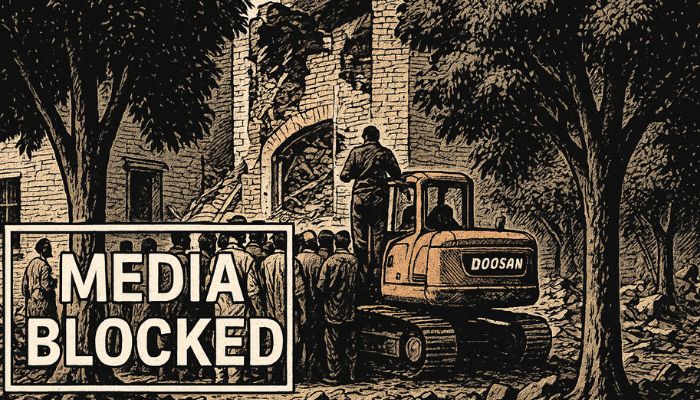
On the intervening night of 6th and 7th May, India conducted a targeted military operation, Operation Sindoor, and destroyed at least nine terror camps deep inside Pakistan and Pakistan-occupied Jammu and Kashmir (PoJK). Indian authorities have confirmed that the strikes were carried out to avenge the Pahalgam terrorist attack that claimed the lives of 26 innocent Hindu tourists and destroyed camps linked to Jaish-e-Muhammad, Lashkar-Taiba and Hizbul Mujhaideen. Meanwhile, Pakistan is as usual trying a cover-up and has blocked media access to all targeted locations. This raises questions about what the hostile neighbouring country is trying to conceal.
At one such site in Muridke, near Lahore, a complex was visibly seen to be damaged, as reported by BBC Urdu. Large buildings within the complex were hit. Eyewitnesses stated that three missiles struck the area and that a mosque within the complex was also destroyed. The location is linked to L:ashkar-e-Taiba’s terror camp, Markaz Taiba Muridke. It is also known as the Nursery of terror. Despite visible rescue operations underway, the presence of police personnel, and scattered debris, the BBC reporter was not allowed access to the actual site. He stated in his report that it was completely cordoned off. The officials also refused to give any statement.
Pattern of denial, repetition of history
This is not the first time Pakistan has blocked media access following strikes by Indian armed forces. After the two successful strikes by India in 2016 (surgical strike) and 2019 (Balakot air strike), Islamabad adopted a similar approach. In fact, Pakistan continued to call surgical strike of 2016 a “figment of imagination” for years. The hostile neighbour dismissed Indian claims, restricted media access, and circulated false narratives using its sold-out media. Only days later did select foreign journalists gain limited access, and they were guided by Pakistani authorities, by which time, the sites were cleaned up. The survey conducted by the media personnel was carried out under heavy surveillance, which raised doubts about the authenticity of the scenes presented.
The current refusal to grant access to the media—especially when India has categorically stated that it successfully neutralised active terrorist launchpads—puts the intentions of the Pakistani government under scrutiny. It appears that Pakistan wants to hide the real casualty figures, particularly those of trained terrorists. Pakistan’s actions suggest an intent to prevent the international community from confirming the nature of the installations that it has repeatedly claimed to be “civilian”.
Speculation will continue to persist unless Pakistan grants full access to the media and comes clean about the exact death toll of terrorists at the sites targeted by India. Until then, the question remains: “What exactly are you hiding, Pakistan?”
India launched “Operation Sindoor” in the wee hours of 7th May to target terrorist locations in Pakistan and Pakistan-occupied Kashmir. The Indian government declared the strikes “focused, measured, and non-escalatory in nature” in a statement released at 2 am. The government stated that the development, which followed the Pahalgam terrorist attack that claimed 26 Hindu lives, struck terrorist infrastructure in the neighbouring country, where assaults against India have been organized and carried out.
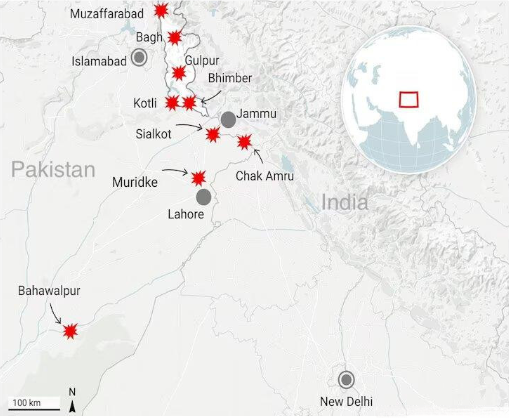
All three armed forces participated in the coordinated operation which was directed against nine locations in Pakistan and Pakistan-occupied Kashmir and lasted for 25 minutes, commencing at 1:04 am. These included Bahawalpur and Mudrike, which are the bases of the terrorist organizations Lashkar-e-Taiba (LeT) and Jaish-e-Mohammed (JeM), respectively. Pakistan also confirmed attacks on nine locations including Bahawalpur, Muridke, Sialkot, Bhimber and Kotli. The jihadist outfits of Jaish-e-Mohammed and Lashkar-e-Taiba, the two terrorist groups that have carried out major assaults on Indian territory over the previous thirty years were the primary targets of the extraordinary action.
India hits Pakistan-based terror camps. (Source: India Today)
The nine locations chosen for the operation were all linked to significant terror plots and infiltration efforts against India. These spots were chosen by India based on an analysis of their cumulative importance to the terrorist ecosystem on both sides of the India-Pakistan border.
JeM headquarters at Bahawalpur
Pakistan’s 12th largest city, Bahawalpur which is located in southern Punjab, is home to Jaish-e-Mohammad. It was one of the main targets of the strikes. The group has been implicated in and claimed responsibility for multiple high-profile assaults in India including the Pulwama suicide bombing in 2019 and the 2001 Parliament attack. Its operating base is at the Jamia Masjid Subhan Allah complex, also called the Usman-o-Ali campus, which is roughly 400 kilometers from Lahore.
A former religious trainer of Markaz Usman-o-Ali, Maulana Rafiqullah has been chief instructor there since the middle of 2022. It is situated across Khajuwala in Bikaner, Rajasthan, approximately 100.4 kilometers away from International Border (IB).
Masjid-e-Subhan Allah
Markaz of Jaish-e-Mohammad Bahawalpur. Family members of Jaish commander Masood Azhar are reportedly dead in Indian strike. pic.twitter.com/HZAyxVqsEz
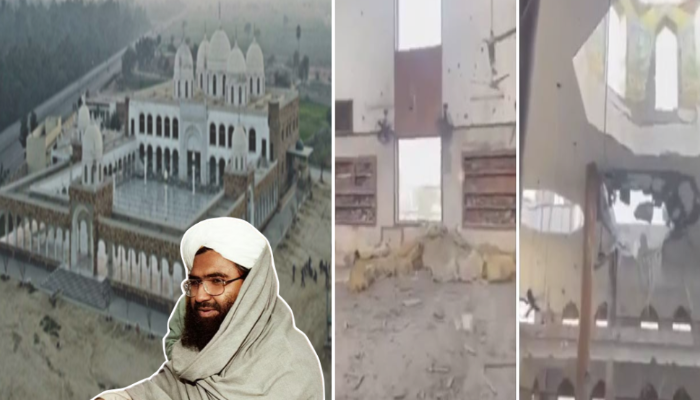
The Jamia Masjid Subhan Allah complex was one of the locations targeted by India. The campus, reportedly covering 18 acres, is identified as the central hub for JeM’s recruitment, fundraising, and indoctrination activities. Mohammad Masood Azhar Alvi alias Maulana Masood Azhar, the founder of JeM, was born in Bahawalpur and resides in a complex that is tightly guarded. Officially outlawed in 2002, the outfit gained complete operational independence to manage its camp, therefore negating the punitive punishment. A total of 10 members of Azhar’s family have been reported dead after India’s strikes, among other casualties.
JeM camp is within a few miles from Pakistan’s 31 Corps headquarters, an army cantonment, according to a report in India Today. There are also reports of a secret nuclear site there. The closeness to the cantonment has been interpreted as evidence of the ISI’s (Inter-Services Intelligence) protection and assistance to the organisation.
JeM headquarters in Bahawalpur. (Source: India Today)
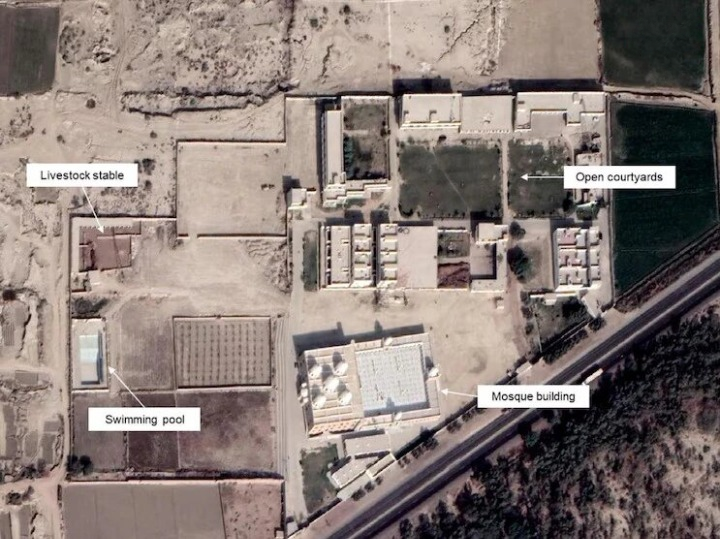
Jamia Masjid Subhan Allah: The mosque, masquerading as a seminary, received funding from the Al-Rahmat Trust which serves as a front for the JeM. It was a simple building till 2011, however, the mosque was transformed into an extensive complex with training facilities by 2012. Bahawalpur’s satellite imagery showcased an 18-acre complex that was undergoing sporadic development and construction. The establishment featured a madrassa for more than 600 pupils (trainees) as well as a large central mosque. It also had a gym, horse stables and a swimming pool, as per reports.
Bahawalpur chose Pakistan during partition
Bahawalpur which is a part of the Punjab states was an Indian princely state. Nawab Mohammad Bahawal Khan Abbasi established the state in 1802, just as the Durrani Empire, the final Afghan empire, was disintegrating. On 22nd February 1833, Nawab Mohammad Bahawal Khan Abbasi III, his successor, forged the state’s first “subsidiary alliance” with the British. While the British retained the final word over exterior affairs, this pact ensured his domestic dominance. Bahawalpur, while fundamentally a protectorate, was not officially classified as a British possession and upheld its position as a Feudatory State in the country.
Every princely state in the subcontinent was offered the option to join either India or Pakistan at the time of the partition. India offered several incentives to Nawab Sadiq Muhammad Khan Abbasi V but on 5th October 1947, he signed a deal to become the first state to join Pakistan. The primary factors were, of course, his personal friendship with Muhammad Ali Jinnah, the founder of the Islamic Republic and their similar Islamic views, which were shared by the majority of the people in the state.
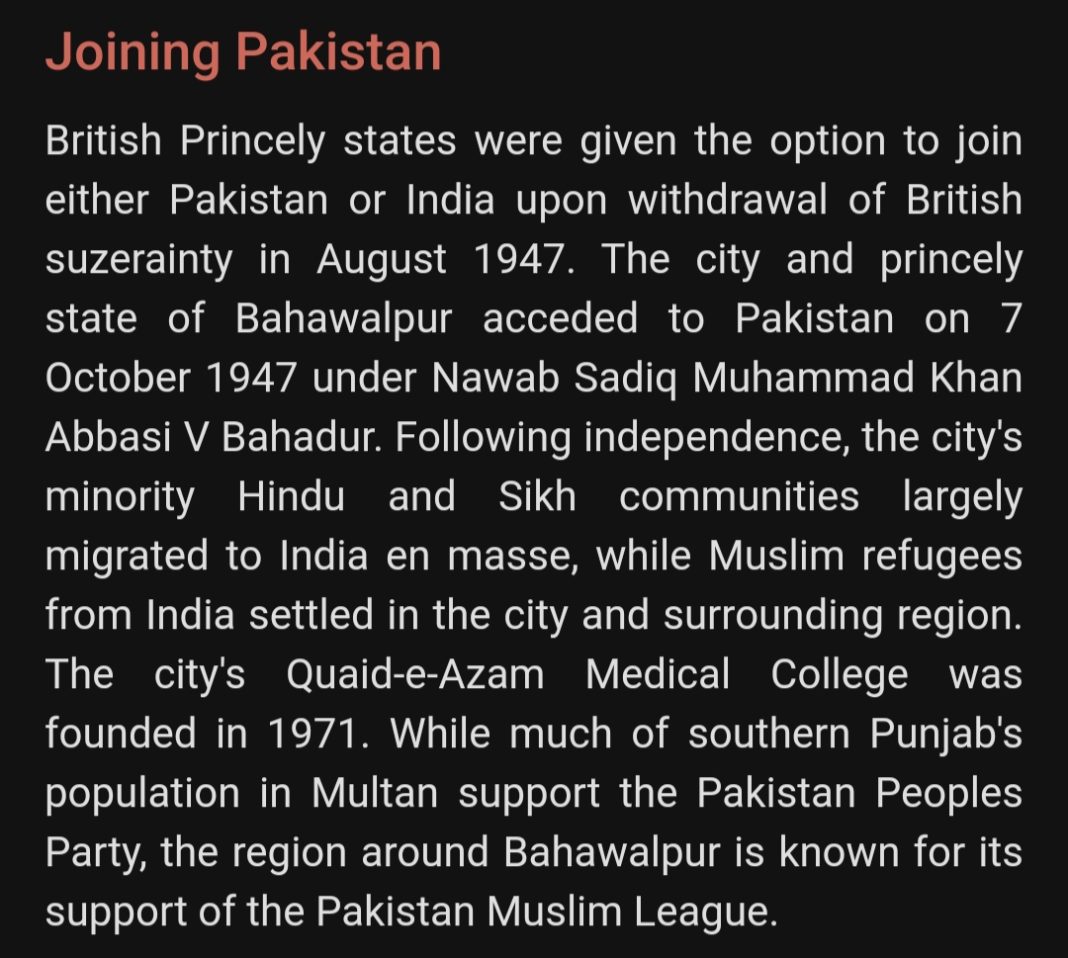
Indian kingdoms were offered the choice to join India or Pakistan after British suzerainty ended in August 1947. On 7th October 1947, Nawab Sadiq Muhammad Khan Abbasi V Bahadur led the city and princely state of Bahawalpur to become a part of Pakistan. A significant portion of the population in Multan, located in southern Punjab, aligned with the Pakistan Peoples Party whereas the area surrounding Bahawalpur was recognized for its allegiance to the Pakistan Muslim League, based on Pakistan government.
Image via Bahawalpur (punjab.gov.pk)
The Pakistani government also benefited greatly from the assistance of Nawab Sadeq Mohammad Khan V. He donated his own property to the University of the Punjab, King Edward Medical College and the Mosque of Aitchison College in Lahore. He also provided the government with seventy million rupees, sourced from the Bahawalpur state treasury, in addition to the monthly salaries of all government departments.
He represented Pakistan at the coronation of Elizabeth II and the installation of Faisal II of Iraq in 1953. Although Nawab Sadiq Muhammad earned a one-year stipend and continued to use the title (Nawab) and protocol both inside as well as outside of Pakistan, his official duty expired in 1955 when he joined the province of West Pakistan.
Notably, the accession document, which was signed by the two leaders, stipulated that the state must maintain its independence and distinct identity inside the Pakistani federation. However, with the creation of One Unit on 14th October 1955, it was combined into the province of West Pakistan. Afterward, it was merged in the Punjab province following the breakup of One Unit, in defiance of the terms of the accession agreement and against the wishes of the local populace.
Bahawalpur has a very rich history and culture, yet it is currently an impoverished and backward area. Despite the existence of several esteemed educational institutions, the general populace is ignorant and uneducated. Women’s literacy rates are quite low. The majority of people reside in rural areas, which lack basic services including jobs, healthcare, and education. Most people work in agriculture, which is in appalling shape because of its low yield. People of Bahawalpur believe that their ill fortune is the result of the actions of prominent Punjabi leaders. Another primary reason is, the subsequent governments and leaders of Pakistan, to this date, have been prioritising radical Islam over development.
Link between JeM and Bahawalpur
The JeM chief is believed to have traveled to Afghanistan to obtain the approval of former al-Qaeda leader Osama bin Laden before beginning his terror operations. The ISI provided his organization with funds for tours in addition to infrastructure assistance. The HuM (Harkat-ul-Mujahideen) cadres were the group’s initial source of recruits. Khyber Pakhtunkhwa (KPK) and Pakistan-occupied Kashmir (PoK) are reportedly the locations of JeM’s terror training camps while the Bahawalpur headquarters serves primarily for recruitment, fundraising and ideological indoctrination.
BREAKING:
First video of Indian missiles striking Pakistan.
This missile struck a mosque in Bahawalpur belonging to Maulana Masood Azhar
He’s the founder & leader of the Islamist terrorist organization Jaish-e-Mohammed (JeM) which is mainly focused on attacks in Indian Kashmir pic.twitter.com/IC7iJTXHEq
It is speculated that weaponry, including remaining NATO (North Atlantic Treaty Organization) M4 rifles were brought to this facility by JeM-affiliated terrorists from Afghanistan. Furthermore, the location functioned as a gathering place for JeM’s Afghan commanders and a launch pad for jihadi assaults, including those executed by Azhar’s close relatives. It was partially financed by the federal and provincial governments of Pakistan as well as by donations from the United Kingdom, the Gulf and other African countries. Azhar publicly demanded “revenge for Babri Masjid” from within the compound as recently as November 2024.
The Pakistani government declared that it had assumed administrative authority of the Bahawalpur headquarters, in response to international pressure following the 2019 Pulwama attack. Indian observers and intelligence sources brushed off the Punjab government’s appointment of an administrator to oversee the establishment, pointing out that Azhar had fled Bahawalpur and was now protected by the Pakistani military.
Watch: In a precision strike, India has destroyed Markaz Subhan Allah, the Jaish-e-Mohammed (JeM) terror headquarters and training facility in Bahawalpur, Pakistan. Once a key base for terrorist operations, the site has been reduced to rubble, signalling a strong response to… pic.twitter.com/6RKKR8d1UN
It is important to remember that a flight operated by Indian Airlines was hijacked by five Harkat-ul-Mujahideen terrorists on 24th December 1999. The plane, which was carrying 190 passengers and crew from Kathmandu to Delhi was diverted to Amritsar, Lahore, Dubai and then under Taliban-commanded Kandahar in Afghanistan. They demanded that three terrorists, Masood Azhar, Omar Sheikh and Mushtaq Zargar be released in exchange for the hostages and India complied on 31st October following long negotiations.
Azhar, a global terrorist designated by the United Nations, has not been seen in the public since April 2019. According to officials, he founded JeM in January 2000 with support from Osama bin Laden, Pakistan’s Inter-Services Intelligence, senior Taliban leaders in Afghanistan and other Sunni sectarian groups in Pakistan.
India hits terror bases in Operation Sindoor
Muridke, Lashkar-e-Taiba Base and Training Ground: Muridke is the long-standing headquarters of Lashkar-e-Taiba and its philanthropic front, Jamaat-ud-Dawa, located about 40 kilometers north of Lahore. The building, which spans more than 200 acres, consists of training grounds, indoctrination centres and logistical support infrastructure. LeT has orchestrated major terrorist strikes in India including the 2008 Mumbai attacks. The twrrorists behind the deadly 26/11 were trained there.
Kotli, Bomber Training and Terror Launch Base: India has regularly identified Kotli, in Pakistan-occupied Kashmir, as a key and suicide bomber training camp. Sources revealed that the Kotli complex could accommodate more than 50 trainees at one time.
Gulpur, Launchpad for Attacks in Rajouri and Poonch: Gulpur was frequently utilized in 2023 and 2024 as an advance launchpad for terror operations into Rajouri and Poonch in Jammu and Kashmir. Sources disclosed that the location served as a staging ground for terrorists who attacked civilian targets and Indian security convoys in nearby areas.
Watch: Full video of India targeting terror camps in Pak, PoK under operation Sindoor on 7th May pic.twitter.com/XPQYUdFTje
Sawai, LeT Camp Linked to Kashmir Valley Attacks: Attacks in northern Kashmir, specifically in Sonmarg, Gulmarg and Pahalgam, have been connected to Sawai.
Sarjal and Barnala, Infiltration Routes: Sarjal and Barnala are regarded as entry locations for infiltration because of their proximity to the International Border and the Line of Control.
Mehmoona, Hizbul Mujahideen Presence: Hizbul Mujahideen has historically operated in Kashmir via the Mehmoona camp which is close to Sialkot. Indian officials insisted that despite the group’s recent fall, remnants continue to be educated and guided from across the border, especially from places like Mehmoona where local support networks are still in place.
The Army, Navy and Air Force coordinated these strikes together, signifying the first operation following the 1971 India-Pakistan war which resulted in the liberation of Bangladesh.
Pakistan-backed terrorists massacred Hindu tourists in Pahalgam
Terrorists backed by Pakistan killed 26 Hindu tourists and wounded several others in Pahalgam’s Baisaran Valley on 22nd April after ascertaining their religious identity. The attackers asked for their names, identity cards and even forced them to take off their pants to verify their religious beliefs. The non-Muslims were then brutally murdered after they were asked to recite passages from the Islamic faith. This was confirmed by their family, relatives and many eyewitnesses.
The Resistance Front (TRF), a Pakistan-based LeT substitute, first claimed responsibility for the attack but later claimed that an unapproved message was issued on one of their digital channels due to a “coordinated cyber intrusion.” Pakistan has categorically denied any participation in the incident, however, the perpetrators underwent top-tier military training there. The training received by the Pakistani Special Service Group allowed them to carry out their terror plans in Jammu and Kashmir with success.
Three terrorists, including Hashim Musa, a para-commando in Pakistan’s Special Service Group, were responsible for the Pahalgam incident. He joined Lashkar-e-Taiba and has since been involved in additional terrorist attacks. He penetrated into India in 2023.
On Wednesday (7th May), the world woke up to the news of India carrying out precision strikes on the terrorist headquarters of Jaish-e-Mohammed and Lashkar-e-Taiba in Pakistan and Pakistan-occupied Kashmir in Operation Sindoor. Pakistan, which has provided a breeding ground to terrorists, failed to garner global sympathy after the strikes. The US has adopted a neutral stance regarding India’s military action, while China naturally sided with its ally Pakistan, calling India’s military action ‘regrettable’.
Here is how different countries reacted to India’s military action:
Hope it ends soon: Trump
Responding to India’s military action, US President Donald Trump said, “We just heard about it as we were walking in the doors of the Oval. I guess we knew something was going to happen based on a little bit of the past.” Speaking to the media in the White House, Trump added, “They have been fighting for many, many decades, and centuries when you think about it. Nah, I just hope it ends very quickly.”
Israel supports India’s right to self-defence
Within hours after Operation Sindoor, Israel was among the first countries to express support for India and recognise India’s right to self-defence. Backing India in its fight against terrorism, Israel’s ambassador to India, Reuven Azar, wrote on X, “Israel supports India’s right to self-defence. Terrorists should know there’s no place to hide from their heinous crimes against the innocent”.
Israel supports India’s right for self defense. Terrorists should know there’s no place to hide from their heinous crimes against the innocent. #OperationSindoor
As expected, China’s Ministry of Foreign Affairs released a statement calling India’s military action against terrorists in Pakistan ‘regrettable’. “China expresses regret over India’s military actions this morning and is concerned about the current developments. China opposes all forms of terrorism. We call on both India and Pakistan to prioritise peace and stability, remain calm and restrained, and avoid taking actions that further complicate the situation,” the statement read. “China finds India’s military operation early this morning regrettable… India and Pakistan are and will always be each other’s neighbours. They’re both China’s neighbours as well,” the statement added.
Russia deeply concerned by the confrontation
The Russian Foreign Ministry spokesperson said in a statement, “We are deeply concerned about the escalation of military confrontation between India and Pakistan following the terrorist attack near Pahalgam. We call on the parties involved to exercise restraint in order to prevent further deterioration of the situation in the region.”
France and UAE cals for restraint
French Foreign Minister Jean-Noel Barrot called on India as well as Pakistan to show restraint in order to avoid escalation. The statement said, “Nobody has anything to gain from prolonged confrontation between India and Pakistan. These are two major military powers, that is why we call for restraint.”
Similarly, the Foreign Ministry of the United Arab Emirates said, “Deputy Prime Minister and Minister of Foreign Affairs of the UAE Sheikh Abdullah bin Zayed has called on India and Pakistan to exercise restraint, de-escalate tensions, and avoid further escalation that could threaten regional and international peace.”
Japan condemns the Pahalgam terror attack and calls for restraint
Reacting to India’s military action, Japanese Cabinet Secretary Yoshimasa Hayashi condemned the Pahalgam terror attack and called for restraint by India and Pakistan. “In regard to the terrorist act that occurred in Kashmir on April 22, our country firmly condemns such acts of terrorism. Furthermore, we express strong concern that this situation may lead to further retaliatory exchanges and escalate into a full-scale military conflict. For the peace and stability of South Asia, we strongly urge both India and Pakistan to exercise restraint and stabilise the situation through dialogue,” said Hayashi.
UN Secretary General calls for military restraint between India and Pakistan
The spokesperson of the UN Secretary General, Antonio Guterres, said in a statement that Guterres is concerned about Indian military operations.”The Secretary-General is very concerned about the Indian military operations across the Line of Control and the international border. He calls for maximum military restraint from both countries. The world cannot afford a military confrontation between India and Pakistan,” the spokesperson said.
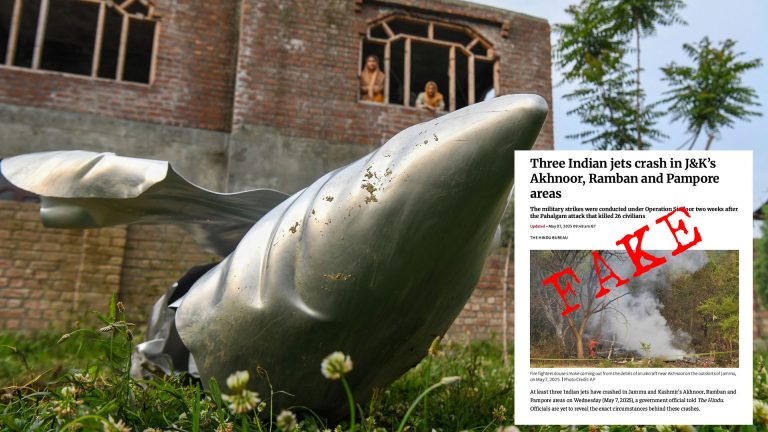
Hours after Indian forces launched a devastating strike on terror targets inside Pakistan and Pakistan-occupied-Kashmir, Pakistani media houses and social media users started to spread fake news of Indian fighter planes being hit by Pakistani forces. Many Indian left-liberals also circulated those claims, in an attempt to show that India’s action has proved to be costly. Newspaper The Hindu also joined in spreading this fake narrative, as it ‘reported’ that three Indian fighter jets crashed in Jammu and Kashmir.
However, after it was pointed by netizens that the news is fake and the images used by The Hindu were old, the newspaper was forced to remove the claim and issue an apology.
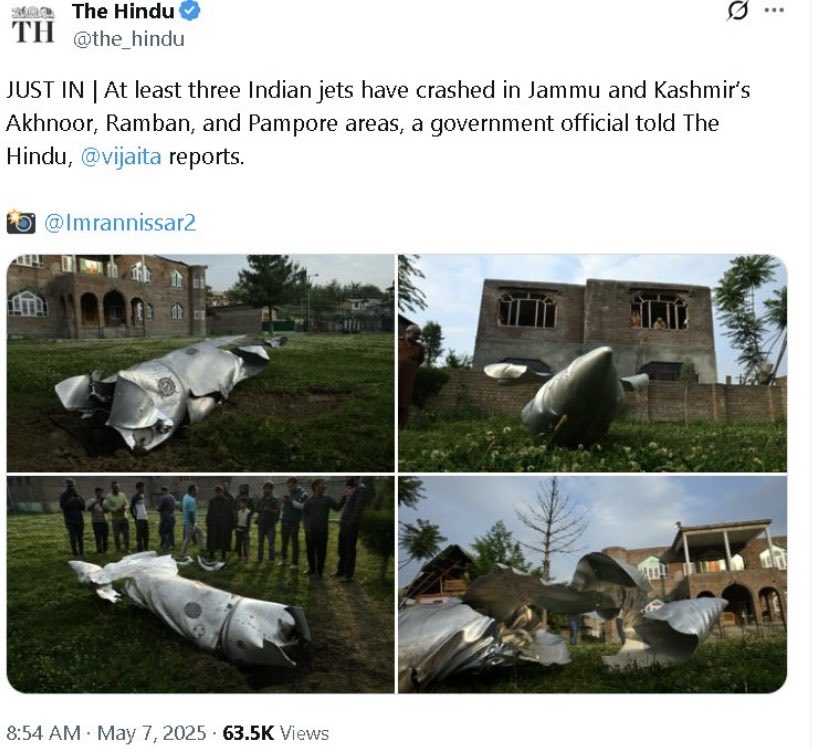
Earlier today, The Hindu posted on X, saying, “JUST IN | At least three Indian jets have crashed in Jammu and Kashmir’s Akhnoor, Ramban, and Pampore areas, a government official told The Hindu.” They stated that this report was filed by Deputy Editor Vijaita Singh, who has a long history of publishing fake and baseless reports.
The Hindu posted 4 photographs with the tweet, purportedly of the crashed Indian jets. They also published a report on the ‘crash’, saying that a govt official told the publication that at least three Indian jets crashed in Jammu and Kashmir’s Akhnoor, Ramban and Pampore areas on Wednesday. It added that the “officials are yet to reveal the exact circumstances behind these crashes.”
In one of the images used in the report, the caption said, “Wreckage of Indian Air force fighter jet that crashed in Wuyan Pampore, South Kashmir on May 7, 2025.” The caption of another image says, “Fire fighters douse smoke coming out from the debris of an aircraft near Akhnoor on the outskirts of Jammu, on May 7, 2025. “
However, no such crash took place, and the Hindu report was completely baseless. A study of the images published by them shows that the object that crashed onto the ground is actually an external fuel tank, not a fighter jet. Fighter jets on longer missions carry such external fuel tanks under its wings. After the fuels are used, the tanks are jettisoned, and they crash onto the ground. They are called ‘Drop tanks,’ as they are dropped from the air after they are no longer needed.
Therefore, this does not mean that the jets crashed; it just means the jets dumped their external fuel tanks inside Kashmir.
After the claim was found to be false, The Hindu deleted the post, and ‘regretted’ it created confusion among people.
We have deleted an earlier post about Indian aircraft involved in Operation Sindoor. There is no such on-record official information from India. We therefore decided to remove the post from our platforms. We regret that it created confusion among our readers.
The newspaper posted on X, “We have deleted an earlier post about Indian aircraft involved in Operation Sindoor. There is no such on-record official information from India. We therefore decided to remove the post from our platforms. We regret that it created confusion among our readers.”
On the intervening night of 6th and 7th May, the Indian Armed Forces launched Operation Sindoor, a swift and precise response to the brutal Pahalgam terror attack of 22nd April 2025, in which 26 civilians, including one Nepali national, were killed by Pakistan-backed terrorists. In an official press briefing on Operation Sindoor, defence officials noted that the armed forces targeted and destroyed nine key terrorist camps spread across Pakistan and Pakistan-occupied Jammu and Kashmir (PoJK).
Indian Air Force Wing Commander Vyomika Singh, Indian Army Colonel Sophia Qureshi, and Foreign Secretary Vikram Misri briefed the media about Operation Sindoor.
Key takeaways from today’s press briefing on Operation Sindoor:
? On 22 April 2025, Pakistan-backed Lashkar-e-Taiba terrorists massacred 26 civilians in Pahalgam, including a Nepali national. ? Victims were shot in the head at close range — in front of family members — to… pic.twitter.com/Jilu5YxEwF
Among the most significant of the neutralised camps was Markas Taiba Muridke, the notorious Lashkar-e-Taiba base where Ajmal Kasab and David Headley, terrorists behind the 26/11 Mumbai attack, were trained. Officials revealed that this facility was also used in 2008 to train terrorists responsible for the killing of four J&K Police personnel.
SourcE: PIB
Other camps struck include Gulpur in Kotli, Bernala in Bhimber, and Mehmuna Jaya in Sialkot—all known Lashkar strongholds. The strikes were carried out with clinical precision, avoiding civilian infrastructure and the loss of innocent lives.
Justified, responsible, and necessary
The officials stated that the action was “measured, non-escalatory, and responsible.” It was necessary to destroy the camps as there was concrete intelligence suggesting further cross-border attacks in the future. Pakistan, despite international pressure, has taken no credible action against the terror infrastructure on its soil. It has, instead, indulged in denials and accusations.
“This was about justice. Justice for the families in Pahalgam who watched loved ones executed with bullets to the head, just for visiting Kashmir,” said the official.
UN, FATF, and global pressure ignored
The Indian government had previously raised concerns with the United Nations and the Financial Action Task Force about Pakistan’s support for terrorist fronts like the TRF, a Lashkar proxy that claimed responsibility for the Pahalgam massacre.
Operation Sindoor is a reminder: while India continues to show restraint, it will not hesitate to strike back when its civilians are slaughtered and justice is denied.
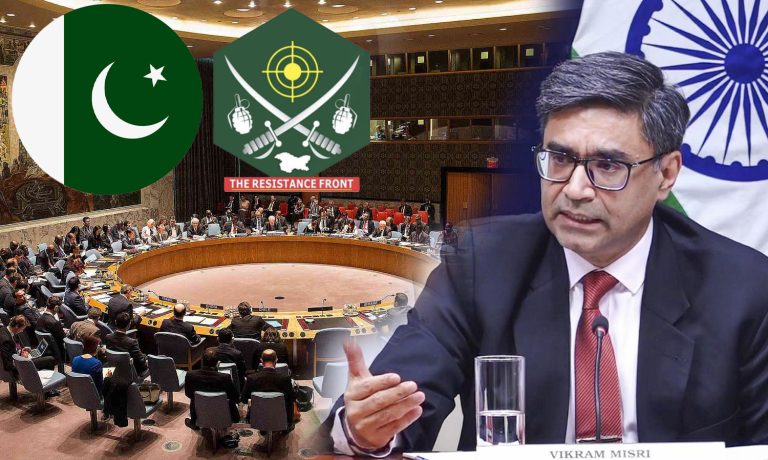
Foreign Secretary Vikram Misri has highlighted Pakistan’s role in removing references to the terrorist group The Resistance Front (TRF), which claimed responsibility for the Pahalgam terrorist attack, from the United Nations Security Council (UNSC) press statement issued on April 25.
While addressing a media briefing on Operation Sindoor in Delhi on Wednesday, Misri said that TRF, which is a front for the UN-proscribed terrorist group Lashkar-e-Tayyiba (LeT), claimed responsibility for the Pahalgam attack and added that claims made by TRF were reposted by LeT. He recalled how India had earlier shared inputs regarding the TRF with the UN, bringing out its role as a cover for terrorists based in Pakistan.
He said, “A group calling itself the Resistance Front has claimed responsibility for the attack. This group is a front for the UN-proscribed Pakistani terrorist group Lashkar-e-Tayyiba. It is notable that India had given input about the TRF in the half-yearly report to the monitoring team of the UN’s 1267 Sanctions Committee in May and November 2024, bringing out its role as a cover for Pakistan- based terrorist groups. Earlier, too, in December 2023, India had informed the monitoring team about Lashkar and Jaish-e-Mohammed operating through small terror groups, such as the TRF. Pakistan’s pressure to remove references to TRF in the April 25 Security Council press statement is notable in this regard.”
“Investigation into the Pahalgam terror attack have brought out the communication nodes of terrorists in and into Pakistan. The claims made by The Resistance Front and their reposting by now social media handles of the Lashkar e Taiba speak for themselves. Identification of the attackers based on eyewitness accounts as well as other information available to law enforcement agency has also progressed,” he added.
He said that Pakistan has a well-deserved reputation of being a haven for tourists from around the world with terrorists enjoying impunity there. He said that Pakistan also wilfully misleads the world and international forums like FATF on the terrorism issue.
Highlighting role of Pakistan-based terrorists to the Pahalgam terrorist attack, he said, “Our intelligence has developed an accurate picture of the planners and backers of this team. The features of this attack also tie in with Pakistan’s long track record of perpetrating cross-border terrorism into India which is well documented and beyond questions. Pakistan also has a well-deserved reputation as a haven for terrorists from around the world with internationally processed terrorist enjoying impunity there. In addition, Pakistan has been known to willfully mislead the World and International Forum as the Financial Action Task Force (FATF) on this issue. The Sajid Mir case in which this terrorist was declared dead and then in response to international pressure brought back to life, found alive and arrested is the most glaring example.”
He recalled how Pakistan-based terrorists conducted a “savage attack” on Indian tourists in Pahalgam on April 22. He said that the attack in Pahalgam was marked by extreme barbarity, with victims being killed with headshots in front of their families. He said that the attack was aimed to undermine the normalcy returning to Jammu and Kashmir.
Vikram Misri said, “As you are all aware, on April 22, 2025, Pakistani and Pakistan-trained terrorists belonging to the Lashkar-e-Taiba carried out a savage attack on Indian tourists at Pahalgam in Jammu and Kashmir in India. They murdered 26 people, including one national of Nepal, causing the largest number of civilian casualties in a terrorist attack in India since the 26th November 2008 attacks in Mumbai.”
“The attack in Pahalgam was marked by extreme barbarity, with the victims mostly killed with headshots from close range and in front of their families. Family members were deliberately traumatised through the manner of the killing, accompanied by the exhortation that they should take back the message. The attack was clearly driven by the objective of undermining the normalcy returning to Jammu and Kashmir. In particular, it was designed to impact the mainstay of the economy, tourism, with a record 23 million tourists visiting the valley last year,” he added.
Vikram Misri said that the terror attack in Pahalgam “generated deep anger in Jammu and Kashmir and other parts of India.” He said that Pakistan did not take any action against terrorists following the attack in Pahalgam and rather it resorted to denials and allegations.
Misri said, “Following the attacks, the government of India was naturally responded with a set of initial measures relating to any engagement with Pakistan. You are all aware of the decision that was announced on the 23rd of April. However, it was deemed essential that the perpetrators and planners of the 22nd April attack be brought to justice. Despite a fortnight having passed since the attacks, there have been no demonstrable step from Pakistan to take action against the terrorist infrastructure on its territory or on territory under its control. Instead, all it has been indulged in are denials and allegations.”
“Our intelligence monitoring of Pakistan-based terrorist modules indicated that further attacks against India were impending, there was a compulsion both to deter and to preempt. Earlier this morning, as you will be aware that India exercised its right to respond and preempt as well as deter more such cross-border attacks. These actions were measured, non-elementary, proportionate and responsible. The focus was on dismantling the terrorist infrastructure and disabling terrorists likely to be sent across India,” he added.
Indian Armed Forces successfully struck nine terror targets, four in Pakistan, including Bahawalpur, Muridke, and Sialkot, and five in Pakistan-occupied Jammu and Kashmir (PoJK), using special precision munitions in a coordinated operation, sources told ANI.
India’s Ministry of Defence said the action was in direct response to the terrorist attack in Jammu and Kashmir’s Pahalgam on April 22, which claimed the lives of 26 people and injured several others.
In its statement, the Ministry of Defence stated, “A little while ago, the Indian Armed Forces launched ‘OPERATION SINDOOR’, hitting terrorist infrastructure in Pakistan and Pakistan-occupied Jammu and Kashmir from where terrorist attacks against India have been planned and directed.”
“Our actions have been focused, measured and non-escalatory in nature. No Pakistani military facilities have been targeted. India has demonstrated considerable restraint in selection of targets and method of execution,” it added.
(This news report is published from a syndicated feed. Except for the headline, the content has not been written or edited by OpIndia staff)