Home Blog Page 4440

France: Commission investigating church child abuse scandals says the number of victims may be over 10,000

An independent investigation carried out to examine cases of rampant child abuse across Churches in France has made some shocking estimates regarding the number of victims. Jean-Marc Sauve, the head of the independent enquiry commission set up by the Catholic church, said on Tuesday that there might have been at least 10,000 victims of church child abuse since 1950.

Possible figure of victims is at least 10,000: Head of the probe commission

Sauve reportedly said that the number of victims estimated in June last year which was 3,000 was certainly an underestimate. “It’s possible that the figure is at least 10,000”, Sauve was quoted as saying at a press conference where he shared an update about the commission’s work. A hotline was set up in June 2019 for victims and witnesses to report abuses. It is reported to have received 6,500 calls in the first 17 months of its operation. Sauve told the reporters that the question before the commission was what percentage of victims have come forward and spoken about the abuse.

“The big question for us is how many victims came forward? Is it 25 per cent? 10 per cent? 5 per cent or less?”, he said.

The Commission was set up in 2018 following recurring child abuse scandals

In November 2018, the Bishops’ Conference of France had agreed to set up the independent commission following massive and recurring child abuse scandals. The decision attracted mixed reactions from the victims’ associations some of which praised the attempt to encourage the survivors to speak out while others doubted the willingness and ability of French prosecutors to press charges. The 20 members of the commission come from different walks of life including legal, academic and medical backgrounds. The commission was scheduled to deliver its final report by the end of 2020 but a new deadline of September 2021 has been set now.

In May 2019, Pop Francis had passed a legal degree obliging those who knew about sexual abuse in Catholic church to report about the same to their superiors. Under the decree, every diocese around the world was required to create a system for reporting sexual abuse by clerics by June 2020.

‘Isko maine kaat dala’ – Father beheads daughter after finding her in compromising position, takes the head to police station

On March 3, a man from Pandetara village, District Hardoi, Uttar Pradesh, allegedly found her 17-year-old daughter in an objectionable position and beheaded her in a fit of rage. He then took the head to the Majhila police station located 143 KM west of Lucknow and confessed to the crime.

As per reports, Sarvesh Kumar killed his daughter using a sharp object. A video of him walking with the head towards the police station has gone viral on social media. Following the incident, the district police team rushed to the location to investigate the crime.

Superintendent of Police Anurag Vats said that they had arrested the police, and the investigation is undergoing. He said, “Sarvesh is a vegetable vendor. A few days ago, he spotted his daughter in a compromising position with a youth. He made up his mind to teach his daughter a lesson. Sarvesh’s wife has also testified this in her statement to the police.”

During the investigation at the crime scene, SP Vats said that his team had reached the spot to investigate the matter. He further added that the police had arrested the father.

‘Isko maine kaat dala’ – accused father said with zero remorse

In the viral video, when the father was stopped by the police and asked whose head he was carrying, he said that it is his daughter and he had beheaded her. He added that the boy Aadesh who belonged to his family, ran away; otherwise, he would have killed him too.

Constable suspended for walking with the head in his hand

A constable took away the father’s head but could not find any piece of cloth to cover it. His video of holding the head and walking around the police station also went viral, after which he was suspended by Lucknow IG Laxmi Singh.

Additional SP Kapil Deo Singh said that after IG was informed about the video, she suspended the constable immediately.

IG Singh said it is the responsibility of the police to maintain law and order. They must carry themselves in a disciplinary manner. She added, “The constable was holding the beheaded girl’s head and taking a stroll in the police station”, after which he was suspended.

Trolls use fake, photoshopped images to attack Kangana Ranaut for pictures of a fruit smoothie

On March 4, trolls found yet another way to attack actress Kangana Ranaut when she shared a photograph of a fruit smoothie on Twitter. They used a screenshot of a photoshopped reverse-image search result and claimed Ranaut picked the image from the internet.

Kangana had shared a photograph of the smoothie she made using a personal recipe. She wrote, “There is nothing I appreciate more than self-made food; here’s my very own personal recipe a summer smoothie for breakfast with lots of organic honey nuts and fruits.”

Within minutes, her tweet started to get replies from countless trolls who tried to depict as if she had picked the image from Google. They shared a screenshot of reverse-image search results on Google where the photograph was mentioned to be posted by a website from Australia named Kuvings.

Fake claims by trolls

Several trolls claimed the same, but Ranaut’s fans came in her support and debunked the claims. They shared actual results and called out the trolls for trying to defame the actress.

Ranaut’s response

Kangana shared more photographs of the smoothie as proof that she did not pick anything from the internet. She wrote, “Hahahaha can’t believe some people are mistaking this picture from my van this morning for some international professional chef’s famous blog, I knew I am good but sooo good like a professional…. seriously had no clue. Thrilled to know I am awesome at everything that I do.”

In a follow-up tweet, Ranaut said paid campaigns are being run on social media platforms to tarnish her image. She said, “Many derogatory memes and fake information about me being spread… I know who is behind it.”

Ranaut further added that her team has tracked who is behind these campaigns, and she will reveal the name when the time is right. In another tweet, she said that the ‘influencers’ accounts automatically get memes to post and mock everything she does. She said, “All the influencers accounts automatically get memes to post mocking or making fun of everything I do, in this case this fake edit being spread claiming that I lied about cooking, this may seem frivolous on surface but deep down it’s made to damage one’s credibility and dignity.” Calling it a mafia racket, she alleged last week she lost 5 lakh+ followers.

Did Kangana Ranaut use any image from Google?

To ensure non-biased fact-check, OpIndia confirmed the claims made by Ranaut and her fans that the images trolls posted were photoshopped, and she did not copy anything from Google. We reverse searched the images Ranaut posted and did not find any similar image on any other website.

Screenshot of reverse-image search result

We also checked the website mentioned in the screenshots posted by trolls and found out that the images used on the said website were different.

Screenshot showing image from Kuvings.com.au which is completely different from what Kangana Ranaut posted
Screenshot from Kuvings.com.au

Verdict

Kangana Ranaut shared original photographs, and the claims that she copied them from Google are Fake.

Jalgaon hostel ‘strip dance’: Maha Home Minister dismisses allegations on police, says it was an entertainment program

Maharashtra Home Minister Anil Deshmukh has stoked a massive controversy after he termed the Jalgaon incident was an ‘entertainment programme’ organised by hostel inmates and gave a clean chit to the Maharashtra police saying that the police officials did not force any women residents to strip dance.

Speaking to the media, Maharashtra Home Minister Anil Deshmukh said that the government had formed a 6-member committee to probe the Jalgaon matter. Terming the ‘strip dance’ as an ‘entertainment program’, Maharashtra Home Minister dismissed reports alleging that Maharashtra police had forced women hostel inmates to dance nude in front of them.

“A 6-member committee formed to probe the Jalgaon matter has submitted its report. The report states that no such incident took place. Only an entertainment program was organised there by the hostel inmates,” said Maharashtra Home Minister Anil Deshmukh.

On Wednesday, there were reports that some police officials and other hostel employees had forced the residents of a women’s hostel to strip dance at the government-run Ashadeep Hostel in Jalgaon, Maharashtra.

A complaint was also lodged in this regard by a social service organisation with the District Collector. Several videos of the shocking incident were also submitted as proof of the incident. In the complaint, it is was alleged that some police personnel and some other people entered the hostel in the name of investigation and coerced the women to undress and dance. When the girls refused to do so, they were threatened with murder.

The hostel, located in Ganesh Nagar of Jalgaon, was run by the Department of Women and Child Welfare, provides shelter and food to the destitute and oppressed women and girls. 

There were complaints of malpractices being committed in the hostel. The incident of police personnel and hostel employees forcing women to undress and perform indecent dance came to light when Jananayak Foundation presidents Feroz Pinjari, Farid Khan and Mangala Sonawane had decided to pay a visit to the hostel and find out more information about the wrongdoings happening in the hostel.

“I have not seen the video,” says Maharashtra Women & Child Development Minister

Meanwhile, Yashomati Thakur, the Maharashtra Women and Child Development Minister, said that she had not seen the video yet. Asking the reporters to submit a copy of the video, Thakur claimed that she would assure that nobody will be spared.

Home Minister has ordered a probe and I am personally looking into it too, said Maharashtra Women and Child Development Minister.

The Minister responded to the controversy after BJP MLA Shweta Mahale had raised the issue in Maharashtra Assembly.

The Home Minister has also said the government has ordered a probe in the matter and a committee will be formed, and they have been asked to submit a report in two days.

Shiv Sena backs out from the ‘Didi Vs All’ fight in West Bengal, stands in ‘solidarity’ with the ‘real Bengal Tigress’

Days after Shiv Sena announced its decision to contest the West Bengal Assembly elections, that party seems to have changed its mind. Party’s senior leader Sanjay Raut has taken to Twitter today to announce that his party has now decided against fighting the upcoming West Bengal Assembly polls. He said that his party is of the opinion that it has become a ‘Didi Vs All’ fight in the state of West Bengal. “All ‘M’s – money, muscle and media – are being used against ‘M’amata Didi”. For this reason, Shiv Sena has decided not to contest the elections and stand in ‘solidarity’ with Mamata Banerjee, said the Shiv Sena leader.

Referring to Mamata Banerjee as West Bengal’s “real tigress”, Raut said that his party “wishes Mamata Didi a ‘roaring’ success”.

Screengrab of the Tweet by Shiv Sena senior leader Sanjay Raut

Interestingly, Shiv Sena had only in January expressed its interest to contest the West Bengal Assembly elections after consultations with his party supremo Uddhav Thackeray. It was Sanjay Raut who had taken to Twitter then too, to make this announcement. Raut referred to the same as ‘much awaited update’ and said that the party had decided to contest the upcoming elections. “We are reaching Kolkata soon. Jai Hind, Jai Bangla,” he had tweeted.

It is still unclear as to what has compelled the party to suddenly take this contrasting decision, that to in less than a span of a month.

Shiv Sena had earlier contested Assembly elections in 2016 and general elections in 2019. Recently, Shiv Sena contested Bihar Assembly elections where it failed to win a single seat.

Congress tries to pass off multiple images of tea gardens from Taiwan as that of Assam, gets fact-checked by BJP leader Himanta Biswa Sarma

Traditionally a Congress stronghold, BJP came to power for the first time in Assam, that too with a thumping mandate, in the year 2016. BJP’s overwhelming success in the last Assembly elections left the Congress party reeling in shock. Now, with the 2021 Assembly elections approaching, the desperate Congress is leaving no stone unturned to woo the people of Assam. The party supremo Rahul Gandhi, in fact, recently launched an Assam Bachao page on Facebook, providing a platform to the people of Assam to share with the Congress party, ‘issues which are close to their heart’. This page is used extensively by the Congress party to connect with the people of Assam.

Probably to show its endearment towards the northeast state, Congress shared pictures of tea gardens on its official campaign page on Facebook. One of the pictures was captioned “Team garden estate workers Assam”. The motive behind sharing the picture was probably to show how connected Congress is with the northeastern state and its affinity with the people of the state. 

No sooner did it share the picture, BJP leader Himanta Biswa Sarma took to Twitter to fact-check the grand old party. Much to the embarrassment of the grand old party, Biswa pointed out that the picture Congress shared as a part of its ‘Assam Bachao’ campaign page, was actually a tea garden from Taiwan.

When we too searched for the picture on the internet, we learnt that the BJP leader had correctly pointed out that the image Congress tried to pass off as that of Assam was actually of “Tea pickers working in the Nantou Tea Garden, Nantong, Taiwan, China, Asia”.

Search result on Fotosearch, a stock photography company

Similarly, another photograph of a tea garden used by the Congress party in its Assam Bachao campaign also turned out to be from Taiwan. This was also pointed out by minister Himanta Biswa Sarma.

As can be seen in the screenshots posted by Mr Sarma, the photograph used by Congress party showed a tea garden with workers plucking leaves. A careful examination of the photo shows that the women in the garden are not from Assam, as their attire is different from the traditional attire worn by tea workers in Assam. And as the minister pointed out, the photograph is from a tea garden in Taiwan.

It is evident that the Congress social media campaign used stock images for tea gardens, and they ended up using images from Taiwan.

It is ironical that just a couple of days after Congress leader Priyanka Gandhi visited a tea garden in Assam, where she spent time with the workers and posed for photos pretending to be plucking leaves, the party could not find a photograph of tea garden from Assam, and had to use stock images of tea gardens in foreign countries.

The Assam Assembly elections are scheduled to be held from March 27 to April 6 in three phases. In 2016, BJP had scripted an electoral history in Assam. From five seats in 2011 to a massive 60 in 2016, the BJP got a stunning mandate in the previous Assembly elections, breaking 15 years of the Congress regime in the state.

Now, the desperate Congress is leaving no stone unturned to regain its foothold. Prior to the upcoming polls, Congress is cashing in on the anxiety and sentimentality of the people of Assam, making CAA one of its main poll planks. This has been evident in their speech campaigns, promises to build a CAA martyrs’ memorial, collection of anti-CAA gamosas, among others. Its campaign, Assam Basaon Ahok, or “Let’s Save Assam” plays into these very sentiments as well.

It may be noted that Congress has allied with AIUDF for the polls in Assam, along with left parties and BPF, which has been unceremoniously ditched by its former ally BJP.

Temple trust purchases 7,285 square feet land adjacent to the Ram Janmbhoomi for extension of premises

In accordance with its plan to expand the temple premise from the existing 70 acres to 107 acres of area, the Shri Ram Janmbhoomi Teerth Kshetra trust has purchased a 7,285 square feet land adjacent to the Ram Janmabhoomi premises in Ayodhya, Uttar Pradesh, PTI quoted a trust official as saying. The land purchased by the trust is located next to the Asharfi Bhawan.

The trust which has been entrusted with the responsibility of constructing the Bhavya Ram Mandir in this holy town of Uttar Pradesh has paid one crore rupees for the 7,285 square feet land to its owner at a rate of Rs 1,373 per square foot.

Trustee Anil Mishra told PTI, “We have purchased the land as we need more space for the Ram temple.”

Speaking about the development, SB Singh, the sub-registrar of Faizabad in whose office the deed was signed, said the landowner, Deep Narain, signed a registry deed for the 7,285 square feet of land in favour of Champat Rai, the secretary of the trust, on February 20. Trustee Anil Mishra and Apna Dal MLA Indra Pratap Tiwari were the witnesses, added SB Singh.

“I was fortunate to be part of the first purchase deed of the Ram Mandir trust,” Tiwari said.

According to reports, Shri Ram Janmbhoomi Teerth Kshetra plans to acquire more land and for this, it is in talks with the owners of temples, houses and open land adjacent to the Ram temple complex.

Recently it was reported that an amount of Rs 1,511 crore had been deposited in the account of Shri Ram Janmbhoomi Teerth Kshetra for the construction of the Ram Mandir in Ayodhya. This amount was collected during the mass contact and contribution campaign, the ‘Shri Ram Mandir Nidhi Samarpan’, which launched by the trust on January 15, for the construction of the grand temple in Ayodhya. 

While the fund collection drive had seen massive participation from Hindus, many VHP and Bajrang Dal activists are being brutally attacked, assaulted and even killed for being a part of this campaign.

New public enemy no. 1? Twitter censors account for Pepe the Frog meme citing ‘hateful imagery’

Twitter appears to have found its new public enemy no.1 and the unfortunate target of its wrath if ‘Pepe The Frog’.

Shoe (@shoe0nhead), a Twitter user with more than 400k followers on Twitter, was censored because the account had a Twitter header with Pepe the Frog on it.

Twitter told the user, “You may not use hateful images or symbols in your profile image or profile header.” The user’s Pepe header apparently violated rules against posting ‘hateful imagery’.

What is ‘Pepe The Frog’ meme?

‘Pepe The Frog’, one of the most popular internet memes of all time, was originated in the non-political comic “Boy’s Club” by Matt Furie in 2005. The comic featured Pepe along with his three roommates, all living together and hanging out. In 2008, Pepe made it into internet stardom, however, it was mostly non-political.

In the following years, more and more social users started using Pepe, and many were coming up with their own version of memes. Pepe became a versatile meme, showing all sorts of emotions and became one of the most used memes on the internet.

As Pepe grew stronger and reached mainstream status, the memes took a political turn. The memes of ‘Pepe The Frog’ were used by varied section across the internet but was mostly associated with conservatives and right-wing social media users. Conservatives and right-wing users aggressively used the Pepe meme to put out their content on social media platforms.

Soon, ‘Pepe The Frog’ had to face the left-liberals’ wrath in the United States, who categorised these memes as ‘an alt-right campaign’ to associate Pepe with ‘white nationalism’. With Donald Trump tweeting an image of ‘Pepe The Frog’ in the run-up to the Presidential elections, the comic began to receive more hate from ‘left-liberals’ in the US.

In 2016, Hilary Clinton’s campaign website denounced Pepe and called it “a symbol associated with white supremacy.” In September 2016, the Anti-Defamation League officially added Pepe The Frog to its database of hate symbols. Since this designation, the social media platforms have found urgency in deleting posts that feature the ‘Pepe The Frog’ meme.

Ironically, the liberals had hailed the protesters in Hong Kong, who used the ‘Pepe the Frog’ as a symbol of their resistance to rally against police brutality and Hong Kong’s extradition bill in 2019. Interestingly, nobody opposed the usage of the symbol of ‘white nationalism’ – the ‘Pepe The Frog’ by the Hong Kong protestors as it supported their political narrative then.

However, with Twitter now openly censoring contents that features ‘Pepe The Frog’, the conservatives and right-wing users have now condemned the actions of Twitter to accuse the micro-blogging site of deliberately silencing their voices on its platform.

Twitter displays its left-bias, censures contents posted by nationalists, conservatives

Concerns regarding Twitter’s left-wing bias regarding censorship have been a dominant concern for quite some time. The platform has been accused of engaging in politically motivated censorship to censor political opinions it does not agree with. Twitter has time-and-again stated openly that it posses a left-wing bias and has been actively targeting users who post nationalistic contents or expose the lies of left-liberals.

In the run-up to the US elections, Twitter played a significant role in censoring content inconvenient to Democratic Presidential candidate Joe Biden. Following the elections, Twitter conveniently banned Donald Trump and his supporters from the platform, citing their alleged role in the Capitol Hill violent protests in January and spreading ‘misinformation’ related to the presidential elections.

Not just in the US, Twitter has also displayed its own bias towards left-wing accounts and has often targeted nationalist accounts. A few days back, Twitter had forced a user in India to delete a tweet highlighting Hindu victims of the Godhra massacre. The arbitrary diktat to the users to delete tweets highlighting the Hindu victims of the Godhra massacre came just a few days after the platform had refused to block accounts and tweets that peddled incendiary fake news capable of inciting law and order unrest in the country during the farmer protests.

A major controversy has erupted in the country after Twitter disrespected Indian laws by refusing to follow orders passed by an elected government asking them to ban anti-India and pro-Khalistani accounts that incited violence on the platform.

Ironically, Twitter’s decision not to impose similar bans on accounts that peddled hate speech and incited violence using fake news in India had come after it had permanently banned former POTUS Donald Trump for his alleged incitement of violence in the United States. Perhaps, Twitter interprets its own rules based on its ideological convenience.


Icchadhari protestor Yogendra Yadav finally admits that farmers’ protest is political and is about defeating PM Modi: Read how

Ever since Prime Minister Modi came to power in 2014, the opposition has fuelled a constant cycle of outrage, often culminating in violence. The latest cycle was the farmers’ protest, which erupted after the central government passed three laws that would actually benefit farmers and free them from the deathly grip of middlemen. The involvement of Congress, the Communist organisations and parties, Khalistanis and even oversees elements that sought to interfere in India was as stark as day. However, for the longest time, the trope that the protests were organic and apolitical by the ‘annadaatas’ of the nation was vociferously peddled by the ‘liberals’.

Now, however, about 4 months after the farmers protest erupted and a month after the Republic Day violence, icchadhari protestor Yogendra Yadav, whose tentacles were visible in every single cycle of protest and violence, has come out to admit that the farmers’ protest was indeed political, as it supposedly should be, and has the explicit aim of defeating the Modi government.

Yogendra Yadav wrote an article in The Print headlined, “Farmers’ movement can’t and shouldn’t be apolitical. That’s not a democracy”.

In the article, Yogendra Yadav explicitly makes the claim that the farmers’ protest is not apolitical. He then goes on to claim that it should not be apolitical and that any demand that it should be apolitical is against the basic tenet of democracy.

The article, as is evident, was written with the explicit intention to paint the decision of the Samyukta Kisan Morcha (SKM) to campaign in poll-bound states as a grand act of political dissent by apolitical farmers. Whatever that means.

Yogendra Yadav starts by talking about the decision by SKM do go to poll-bound states and campaign against BJP. He writes, “We have decided to appeal to the voters in Bengal, Assam, Kerala, Tamil Nadu and Puducherry to electorally punish the Bharatiya Janata Party (BJP) for its anti-farmer laws, for its outrageous attacks on the movement, for its use of state machinery to suppress and criminalise the movement and, above all, for its imperious arrogance. It is for the voters to decide how they wish to mete out this punishment to the BJP.  It is not for SKM to suggest who they should vote for”.

Essentially, here Yogendra Yadav tries to say that the farmers are politicised just to the ‘right’ degree and not to a point where the entire ‘movement’ must be discredited. They only want to ‘defeat’ BJP and have no stake in who wins. They are ok even with Abbas Siddiqui winning Bengal, essentially, as long as Modi and BJP are kept out of power. That is the ‘right’ amount of democracy.

While droning on about how politicians are making ‘politics’ a dirty word by demanding that farmers remain ‘apolitical’, he says that farmers themselves are doing a great disservice by calling their organisations “Arajnaitik”. He further admits that most farmer organisations are affiliated to some political party or the other and it is true even for the SKM, which has several organisations within itself that are affiliated with political parties.

Interestingly, what he fails to mention, maybe because he assumes that everyone would know, is that he himself is a member of the coordination committee of SKM – Yogendra Yadav, who runs a political party called Swaraj Abhiyaan. Others include those associated with Congress and even the Communists.

Further, the legal cell that was created by SKM has 4 members –  Colin Gonsalves, Dushyant Dave and Prashant Bhushan, H S Phoolka.

Who are these people, one might ask? Prashant Bhushan is a notorious lawyer who was one of the founders of AAP. HS Phoolka is himself an AAP leader who quit recently. Dushyant Dave is a lawyer of many laurels, one of them being fighting against the Hindu rights on Ram Janmabhoomi and Colin Gonsalves is the founder of HRLN, appeared in the Supreme Court demanding a judicial inquiry into the Police action at Jamia. The HRLN receives a significant amount of funding from George Soros’ Open Society Institute as well. The combination of PUCL and HRLN was also involved in the ‘Civil Society’ attack on Akshaya Patra.

From Rakesh Tikait of BKU, who fought elections on an RLD ticket, an ally of Congress, to Darshan Pal who was a founder of Maoist PDFI and the involvement of elements like Yogendra Yadav, those from Congress, AAP etc, the farmers protest have been political.

While Yogendra Yadav says that being ‘political’ is a part of democracy, and one agrees, it is also true that when the very same elements appear in every outrage cycle. And when they lie blatantly to foment trouble, it is their political agenda that is the central reason for protest and not some grand values of dissent or even the issue that they claim is the reason.

During the anti-CAA riots, we saw the very same people get involved claiming that the law was anti-Muslim. It was not. During the farmers protest, the same elements are involved yet again claiming that the farmers laws are against the interests of the farmers – it is not. In both cases, the international community of global Left got involved to fan propaganda against India and specifically, Hindus and the Modi government. In both cases violence erupted in the capital city of Delhi.

While Yogendra Yadav is not wrong in saying that every protest and in fact, every individual has a political preference and that is indeed the very foundation of a democracy, when the same group of vested political interests starts to burn the country because they wish to ensure that a democratically elected government is thrown out of power by violence and propaganda, it is not democracy that the political interests serve. It is political interests of the political parties they serve.

Yogendra Yadav craftily tries to pass off a deeply political agenda as one that is a part and parcel of democracy. Violence is not and groups with vested political interests lying and leading an insurrection to seize power from a democratically elected government, with the help of foreign vested interests is also, certainly not democracy.

With this opinion piece in The Print, Yogendra Yadav has made one thing extremely clear – The farmers protest, that led to an attempted insurrection against a democratically elected government and is now campaigning against one party in state elections is not about the farm laws at all – they are about seizing political power – by hook or by crook.

What are the farm laws that Yogendra Yadav and his political hacks are protesting against?

One of the biggest factors plaguing the growth of agriculture sector in the country is the inability of the farmer to find a market and to get a fair price to his produce. To address the issue, the erstwhile governments of different states enacted the Agricultural Produce Market Regulation Acts (APMC Acts), which authorised them to set up and regulate marketing practices in wholesale markets. 

The objective of these markets was to ensure that farmers get a fair price for their produce. However, with each passing year, the APMCs turned out to be inefficient with increasing cartelisation of middlemen, ban on private players to enter the trade, increasing corruption etc. 

The Modi government recently introduced three bills to promote much easier trade for the farm produce and to provide a competitive market for the producers outside the existing APMC system. The three laws were

  1. The Farming Produce Trade and Commerce (Promotion and Facilitation) Bill, 2020: This law aims at creating additional trading opportunities outside the APMC market yards to help farmers get remunerative prices due to additional competition
  2. The Farmers (Empowerment and Protection) Agreement on Price Assurance and Farm Services Bill, 2020: This law relates a framework for contract farming through an agreement between a farmer and a buyer prior to the production or rearing of any farm produce. 
  3. The Essential Commodities (Amendment) Bill, 2020: This law aims to regulate the supply of certain food items only under extraordinary circumstances.

It is pertinent to mention that the farm laws are set of three laws that allow farmers to sell their products outside APMC act (most states make it compulsory for the farmers to sell at APMC mandis). It also allows farmers to directly have a contract with corporate houses.

That farm laws don’t do away with APMC, and if someone is not willing to trust markets outside the current system, they are free to stick to the ongoing system. It doesn’t do away with MSPs either. However, the prevalent narrative that seems to be motivated by political concerns falsely claims that APMCs and MSP are being done away with. 

They also allege that due to these laws, big corporations would have the upper hand in a deal with farmers, however, that again is a lie. In fact, The Farmers (Empowerment and Protection) Agreement on Price Assurance and Farm Services Bill, 2020 ensure that a contract is agreed upon and gives the farmer the power to even cancel contracts.

Convicted prisoner’s conspiracy to kill two accused jailed in Delhi riots case foiled by Delhi police: Details

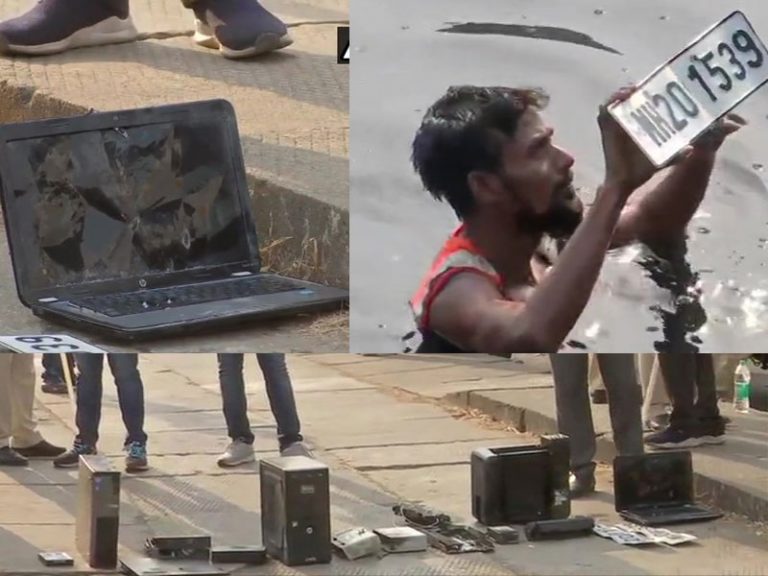
The Special Cell of Delhi police has reportedly foiled a conspiracy hatched by a convicted prisoner to kill two accused imprisoned in the Delhi riots case. As per information shared by journalist Raj Shekhar Jha, the convicted prisoner had planned to kill the two accused lodged in the jail by administering them mercury.

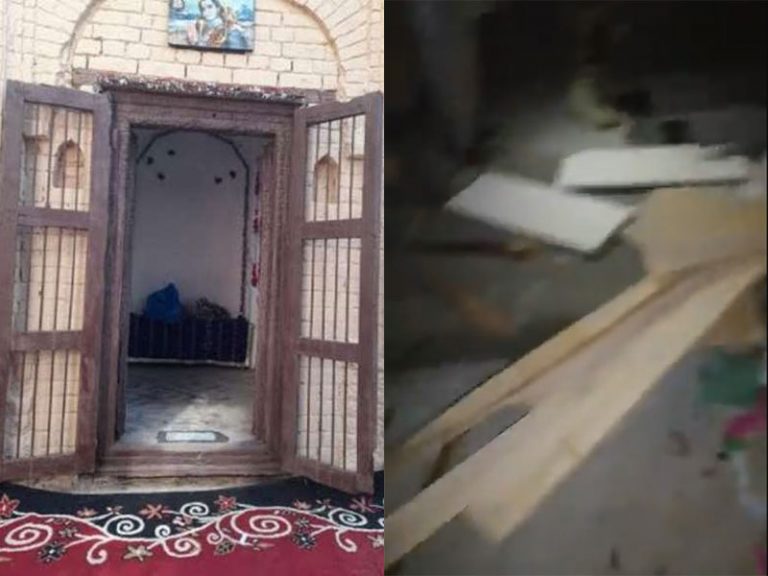
According to Jha, the two accused targeted by the convicted prisoner were arrested last year in relation to a case of murder and desecration of a mosque. The police have seized the mercury and two people have been arrested including an outsider.

The anti-Hindu riots that engulfed Delhi last year

The national capital was engulfed by horrific anti-Hindu riots in the last week of February last year. The riots broke out on February 24 following prolonged violent protests against the Citizenship Amendment Act (CAA). The chargesheets filed by the Delhi Police and the Special Cell investigating the case detail a malicious plan to instigate Muslims against Hindus that resulted in the outbreak of riots.

Around 53 people reportedly died in the riots including an IB officer named Ankit Sharma and a migrant worker from Uttarakhand named Dilbar Negi. More than 200 people were reported to have been injured in the riots. Public and private property worth crores including shops were set on fire during the riots.

Delhi police special cell has filed multiple chargesheets in the Delhi riots case which is still being investigated. The list of alleged key conspirators in the riots have names like former AAP councillor Tahir Hussain and former student union leaders Umar Khalid and Sharjeel Imam. Several far-left protestors including Natasha Narwal, Devangana Kalita and former Congress leader Ishrat Jahan have also been named in connection with the anti-Hindu Delhi riots.

The Delhi anti-Hindu riots that started on the 24th of February had a definite precursor to it. While the organisation of the riots started in January, on the 23rd of February, an incident in Jafrabad can be considered the first incident of violence that started the Delhi riots of February. In the charge-sheet, it categorically mentioned that it was the anti-CAA Muslims who had started pelting stones and indulging in violence at those who were demanding re-opening of the roads blocked by the anti-CAA protestors.

A group of individuals who were demanding the opening of the 66-Foot road near Jafrabad had assembled at Maujpur Chowk around 3:00 PM on 23rd February. The Maujpur Chowk where they had assembled was about 750 M away from the Jafrabad Metro Station. 

The charge sheet then reveals that the residents of Jafrabad and Kardampuri who were supporting the blockage of the Jafrabad metro station congregated in the thousands and started pelting stones from all quarters at the group that was demanding the re-opening of the roads. While the violence against Hindus was planned carefully right from the month of December and January, after the violence erupted on the 23rd, by the evening of 24th and early 25th, Hindus had retaliated to the violence as well.