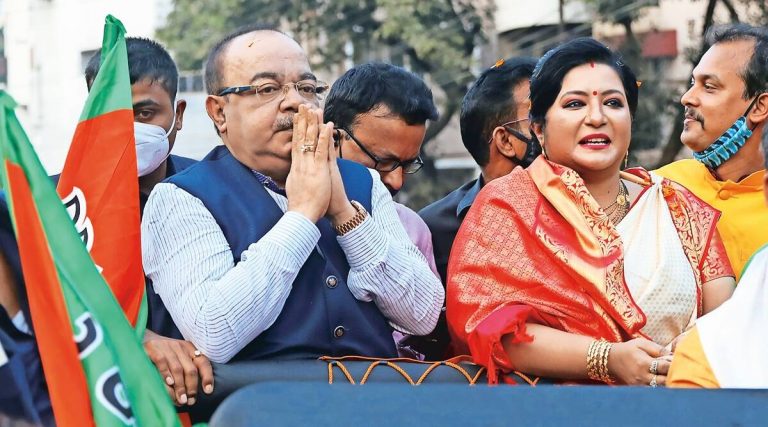
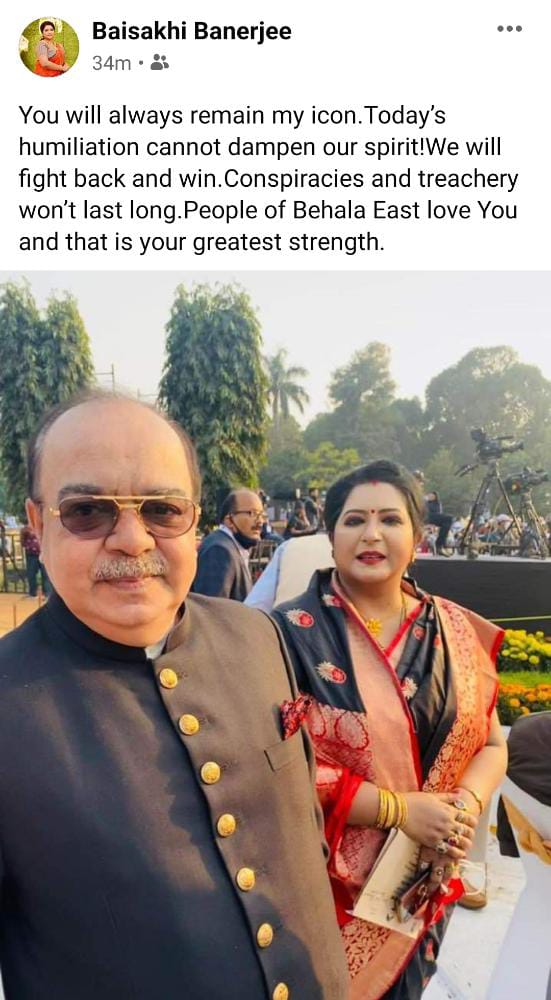
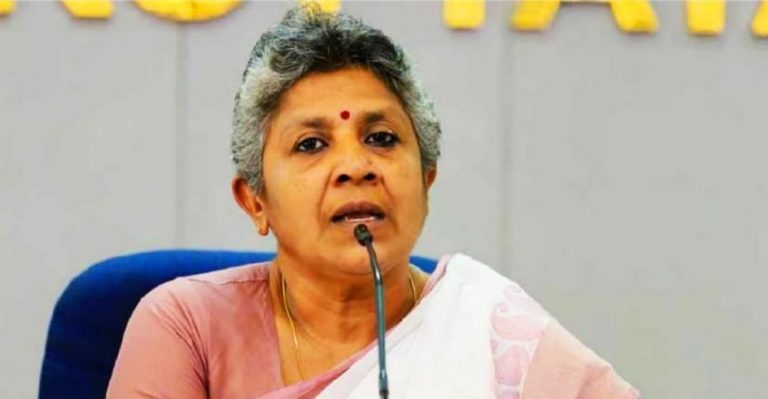
West Bengal BJP leaders Sovan Chatterjee and Baisakhi Banerjee have quit the party after the former did not receive the party ticket to contest from Behala East, reports say. Baisakhi Banerjee has reportedly made a post on Facebook where she vows to ‘fight back’ against the ‘conspiracies and treachery’.
Source: @AninBanerjee/Twitter
“Today’s humiliation cannot dampen our spirit! We will fight back and win. Conspiracies and treachery wont last long. People of Behala East love you and that is your greatest strength,” Baisakhi Banerjee says in the Facebook post.
The former Mayor of Kolkata who had joined the BJP after quitting TMC has reportedly sent a letter to BJP state president Dilip Ghosh informing the party leadership of the resignation. BJP has fielded actress Payal Sarkar, who recently joined the party, in Behala East.
Trinamool MP Derek O’Brien, taking a jibe at the BJP, said in a tweet, “Has the world’s most destructive political party got their khaki knickers in a twist before #BengalElections”.
The BJP has announced its candidates for the 3rd and 4th phases of the West Bengal Assembly Elections on Sunday. Journalist-turned-politician Swapan Das Gupta, who is currently a nominated Rajya Sabha member, has been fielded from the Tarakeswar Assembly seat. BJP MP Nisith Pramanik has been fielded from the Dinhat constituency.
Hooghly MP Locket Chatterjee will contest the elections from Chunchura. Bengal actor Yash Das Gupta, who had joined BJP recently, will contest from Chanditala. MP Babul Supriyo will contest from Tollygunge.
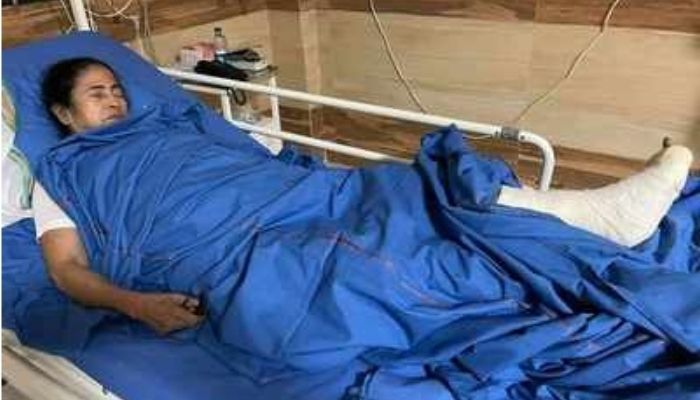
A day after Special Observers reported to the Election Commission (EC) that the West Bengal Chief Minister Mamata Banerjee was injured in an accident and not due to a ‘planned attack’, the nodal election body has cracked down on officials for negligence. The EC had accepted the report earlier on Sunday.
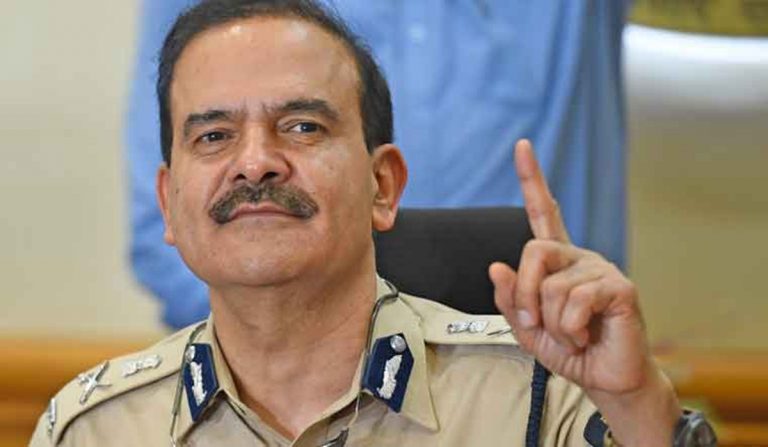
In a statement, the Election Commission has ordered the suspension of IPS Vivek Sahay from the post of Director of Security. “Charges must be framed against him within a week for grossly failing in discharge of his primary duty as Director Security to protect the Z+ protectee,” it added.
#UPDATE | Election Commission removes Vivek Sahay from post of Director, Security & places him under suspension.
“Charges must be framed against him within a week for grossly failing in discharge of his primary duty as Director Security to protect the Z+ protectee,” the EC says
The nodal election body has also transferred Vibhu Goel from the post of District Magistrate (DM) and DEO of Purba Medinipur and placed IAS Smita Pandey in his place. At the same time, the Election Commission has also suspended the Superintendent of Police (SP) of Purba Medinipur Pravin Prakash for a major failure in the management of the situation. “Charges shall be framed against him for major failure of bandobast,” it said.
Election Commission action on Nandigram incident: EC suspends Purba Medinipur SP Pravin Prakash. “Charges shall be framed against him for major failure of bandobast,” the commission says.
According to Times of India journalist Bharti Jain, IPS officer Sunil Kumar Yadav (2009 Batch) will replace IPS Pravin Prakash as the SP of Purba Medinipur. She informed that the Chief Secretary has been asked to appoint Director of Security in place of IPS Vivek Sahay. The Chief Secretary has been directed to consult the Directorate General of Police (DGP) and communicate the same to the EC by 1 pm on Monday (March 15).
She further stated, “A Committee of Chief Secretary and DGP shall identify within next 3 days the other proximate security personnel below Director Security, who failed in their duties to prevent the incident and protect the Z+ protectee and take suitable action for their failure.” At the same time, the CEOs of all poll-bound states and Union Territories have been directed by the Election Commission to ensure the security of star campaigners and candidates of all political parties, in accordance with their respective category of protection.
The Election Commission has also directed the West Bengal Chief Secretary to complete the probe in Mamata Banerjee’s accident case in Nandigram (Case No. 97/21) and take necessary action within 15 days. The nodal election body also asked for a report on the same by March 31, 2021. The EC has also appointed Anil Kumar Sharma, former Punjab DGP (Intelligence), as 2nd Special police Observer along with Vivek Dube.
Mamata Banerjee was injured in an accident, no evidence of attack: Special Observers
West Bengal Chief Minister Mamata Banerjee was injured on Wednesday evening in Nandigram, where she had claimed that she was pushed by 4-5 people, and there was no police security around her. Following it, the TMC leaders had launched a massive attack against BJP and the Election Commission, accusing them of the ‘attack’.
Special police observer Vivek Dubey and special observer Ajay Nayak inspected the accident site in Nandigram before submitting their detailed report to the Election Commission on Saturday. , the report by the special observers has ruled out any possibility of an attack on Mamata Banerjee, saying there is no evidence of any attack.
The observers said that the CM was surrounded by heavy police cover at the time of the incident, and it was not possible for anyone to come near her and push her causing the injury, as claimed by the CM minutes after the incident on Wednesday.
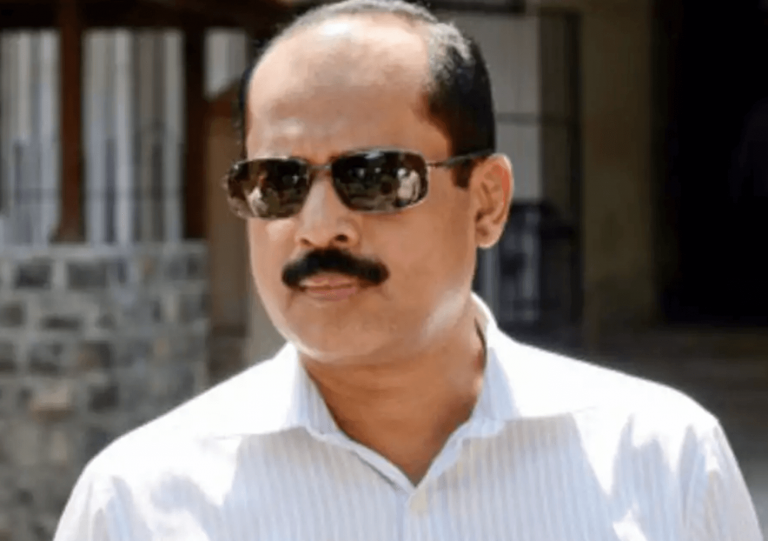
Mumbai top cop Sachin Vaze is at the heart of the grave conspiracy that has surfaced over the Antilla Bomb Scare case. The controversial cop who remained suspended for 16 years over a case of custodial death finds himself embroiled in another controversy less than a year following his reinstatement.
The circumstances of his reinstatement has come under intense scrutiny as well following his arrest by the NIA. According to Goa Chronicle, Sachin Vaze was reinstated following a decision that was reached in 10 minutes.
The Goa Chronicle report says that Mumbai Police Commissioner Param Bir Singh called for a meeting at 10 pm on the 5th of June, 2020. A Committee was convened at 11 pm to review the suspension of Mumbai Police officers.
Following the decision in 10 minutes, the gazette notification for the reinstatement of police officers including one Sachin Vaze was sent to print at 2 a.m. in the night. The notification was printed by 3 a.m. and an hour later, concerned police officers have the gazette notification with his reinstatement.
Thus, at 4 a.m. on the 6th of June, 2020, Sachin Vaze was officially reinstated into the Mumbai Police. the same day, when he reported to the Mumbai Police Arms Division, he was asked to report to the Mumbai Commissioner of Police Office at 10AM. Reportedly, an internal order was issued by the Mumbai Commissioner of Police to depute him to Mumbai Crime Branch.
While his reinstatement was explained away as a measure to deal with staff shortage precipitated by the Covid-19 pandemic, even the Indian Express noted that he was by no means a ‘staff filler’.
The Indian Express noted in its report, “Within days of being taken back into the force, Vaze was moved to the Mumbai Crime Branch and made in charge of the CIU. Soon after, he began probing cases such as the fake social media followers case in which rapper Badshah was summoned.”
“Despite his relatively junior position in the hierarchy, he was soon handling every important case in Mumbai, from the Television Ratings Point (TRP) scam, to leading the team that arrested Arnab Goswami in the Anvay Naik suicide case to the Dilip Chhabria case to the Hrithik Roshan fake e-mail case,” it added.
Sachin Vaze was even part of the Crime Intelligence Unit (CIU) that was felicitated by Param Bir Singh for “best detection of the TRP scam”. The team comprised of ACP Shashank Sanbhor and assistant police inspectors Sachin Vaze, Nitin Londhe, Santosh Kotwal and Riyaz Kazi. Riyaz Kazi has also been reportedly arrested by the NIA in the current case.
Sachin Vaze was suspended in March, 2004 over the custodial death of Khwaja Yunus, a 27-year-old software engineer. He resigned three years later and following his resignation, he reportedly joined the Shiv Sena.
Since his arrest late Saturday night, he has admitted that he was involved in the Antilla Bomb Scare case, ABP News has reported. The report says that sources have claimed that Sachin Vaze was a very small part of the plan and the Shiv Sena leaders he named played a bigger role.
Earlier, it was reported that the explosive laden car found outside Reliance Group’s chief Mukesh Ambani’s residence Antilia was the same that was used by Mumbai top cop Sachin Vaze to escort Alibagh Police in Arnab case.
Furthermore, a white Innova, which was found tailing the explosive-laden Scorpio was recovered from Mumbai Police commissionerate office. The Scorpio car owner, Mansukh Hiren, was later found dead under mysterious circumstances. He was reportedly in touch with Vaze. Hiren’s wife has accused Vaze of murdering her husband.
He has been has been sent to NIA custody till 25th March.
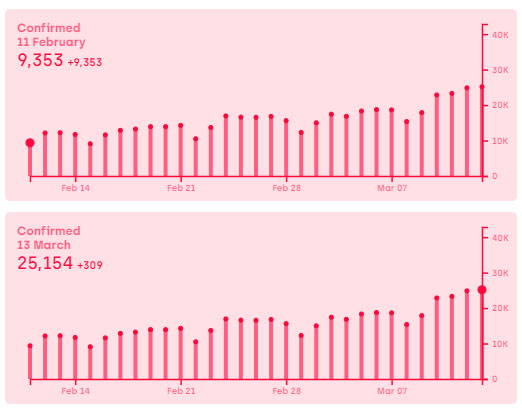
The number of cases recorded in India was under 10,000 at a point in January. Sadly, they are again on the rise. What is more alarming is that the top three states are contributing a little over 76% of the new cases. On March 13, India reported 25,154 new cases. Out of these, Maharashtra contributed 15,602 new cases, Kerala reported 2,035, and Punjab was in the third position with 1,510 new cases totalling 19,147. While Kerala has seen a downfall in the number of cases, Maharashtra and Punjab are possibly heading towards a strong second wave of the cases in next few days.
The 30-day trend
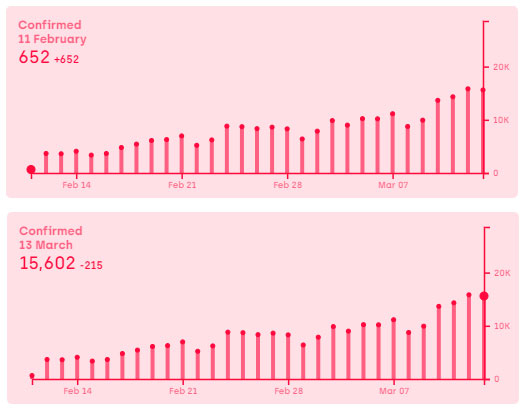
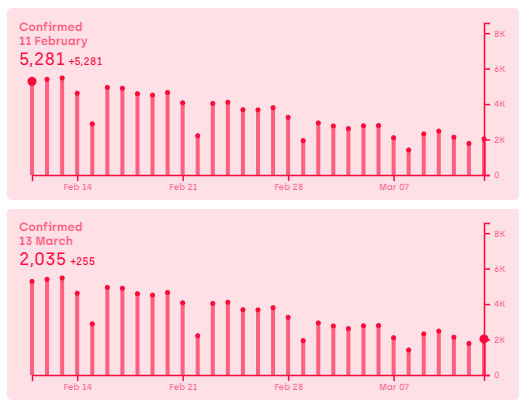
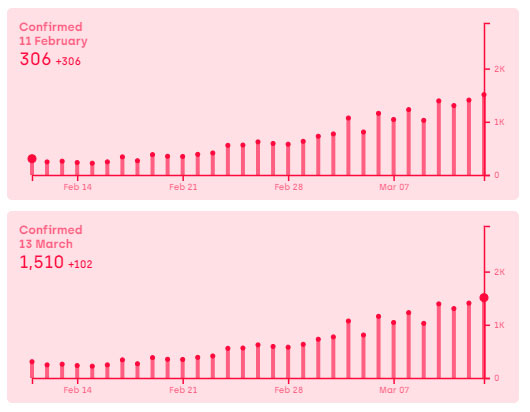
Just 30 days ago, on February 11, India had recorded 9,353 cases. On that day, Maharashtra had reported just 652 cases. Kerala was the highest contributor with 5,281 cases, followed by Punjab with just 306 cases.
India has reported over 25,000 cases (Image source: https://www.covid19india.org/)
The next day, Maharashtra reported over 3,000 cases, and since then, the number in the state has been on the rise. The state crosses the 10,000 marks on March 5 and the 15,000 marks on March 12. The visuals of people breaking mask mandate in Maharashtra are still common. Recently, a video went viral in which a large group of people were seen pushing each other at a vaccination centre. As per the government’s guidelines, only one person can be vaccinated at a given slot to ensure there is no spread of infection. However, the regulations were tossed away.
Maharashtra is currently the largest contributor (Image source: https://www.covid19india.org/)
Kerala, which was leading the race of contributing maximum cases across the country, has come down to the second position. However, the state is still contributing over 2,000 cases. Notably, the Kerala model of Covid management was lauded by many intellectuals during the initial months of virus spread.
Kerala with 2035 new cases is on the second position (Image source: https://www.covid19india.org/)
In Punjab, the numbers were very much in control in February. The state was reporting less than 400 cases till February 22. After that, the cases started to rise, and by March 4, the state started to report over 1000 cases per day. Currently, the state is reporting above 1300 cases from the last four days, with a rise in cases every day.
Punjab has seen rise in consistent rise in the cases (Image source: https://www.covid19india.org/)
Other major contributors in the last 24 hours are Karnataka (921 new cases), Tamil Nadu (695 new cases), Madhya Pradesh (675 new cases), Gujarat (775 new cases), Chhattisgarh (543 new cases), and West Bengal (276 new cases).
Lockdowns announced in Maharashtra, Punjab and Kerala
Shiv Sena’s Udhdhav Thackeray-led Maha Vikas Aghadi government in Maharashtra has imposed lockdowns in Nagpur, Nashik, Parbhani and Pune amid the rising number of Covid-19 infections in the state.
Night curfews have returned in Congress-led Punjab in several districts, including Ludhiana, Patiala, Mohali, Fatehgarh Sahib, Jalandhar, Nawanshahr, Kapurthala and Hoshiarpur. All Anganwadi centres and schools have been closed in these districts.
States sharing a border with CPI(M)-led Kerala have imposed strict guidelines for the travellers coming from Kerala. In Karnataka, if someone is coming from Kerala, a Covid-19 negative report is mandatory. Notably, Lakshadweep reported its first Covid-19 case in January 2021 when it relaxed travel norms and a passenger who arrived from Kerala infected over 40 people. As of now, there are 604 reported cases in Lakshadweep, with 208 active cases and one death.
The current state of Covid-19 cases and vaccination in India
According to the Ministry of Health and Family Welfare, India has reported 1,13,59,048 cases. 1,09,89,897 have recovered while 1,58,607 have lost their lives. 2,97,38,409 people have been vaccinated [state wise PDF] so far out of which 2,43,07,635 have received the first dose while 54,30,774 have received the second dose.
Lathika Subhash, Mahila Congress chief in Kerala, has resigned from her post in protest against inadequate representation of women in the candidate list released by the party for the assembly elections in the state. She has also reportedly gone on to tonsure her head as a mark of protest.
Mahila Congress chief in Kerala, Lathika Subhash resigns from her post protesting against inadequate representation of women in the candidate list, she goes on to tonsure her head in protest. @IndianExpresspic.twitter.com/5aYDGluyPS
Kerala Pradesh Congress Committee president Mullappally Ramachandran rejected women while making the candidate list, claimed Lathika Subhash, saying that it is not acceptable. There were only 9 women among the 91 candidates announced while Mahila Congress in the state demanded at least 20 per cent of the seats for women.
Lathika Subhash said that she expected to be the party candidate from Ettumanur but the party anointed Prince Lukose as its candidate. ‘I had expressed my desire to contest from Ettumanur as this is my birthplace and this is where I have grown up,’ she said.
The Congress party in Kerala have been struck by a series of resignations recently. Kerala Pradesh Congress Committee (KPCC) secretary M.S. Viswanthan, Mahila Congress state secretary Sujaya Venugopal, Indian National Trade Union Congress (INTUC) general secretary P.K. Anil Kumar and KPCC member K.K. Viswanathan are some of the people who have resigned in recent weeks.
A Catholic priest, who is currently facing grave allegations of sexual abuse, has physically attacked an elderly bishop in Ajmer, Rajasthan.
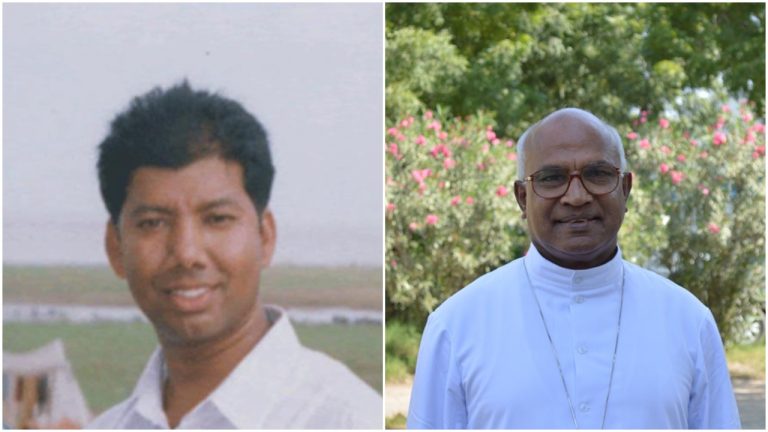
According to a report by the news website Matter, a Catholic priest identified as Father Varghese Palappallil was suspended from his priestly duties after he physically attacked Bishop Pius Thomas D’Souza over a complaint of sexual harassment against him.
As per Bishop D’Souza, Father Varghese, a native of Kottayam and a diocesan priest with the Catholic Diocese of Ajmer, confronted him on March 7 when he was having his lunch.
“Since he is a priest of the diocese, I waited, and he came and sat close to me,” narrated the bishop, adding, “Without losing time, the priest began to argue about his case on a sexual allegation from a married woman. I explained to him that I have nothing to do with the case as it is pending in Rome, being dealt with according to the procedure of Canon Law, and I am not against him”.
The Bishop further alleged that Father Varghese began physically attacking him. The priest allegedly punched the Bishop near the eyes, which caused his spectacles to fall. As he bent to pick them up, Father Varghese allegedly hit him with another “blow” on his neck.
“With unbearable pain, I kept sitting on my chair. Father Varghese was forcing me to give him an appointment immediately,” Bishop D’Souza recounted, adding that he tried to calm down the priest and advised him to wait until the sexual harassment case against him is over.
However, Father Varghese again attacked the Bishop in the chest and raised a chair in an attempt to harm him further when another priest intervened. “He attacked me as if he had pre-planned it,” the Bishop alleged.
Father Varghese suspended for attacking Bishop
Following the attack, Father Varghese has been suspended from his duties till the charges are cleared. In a letter to Father Varghese Palappallil, Bishop Pius Thomas D’Souza of Ajmer cited the second section of Canon law 1370 to state his priest assaulter that his action has incurred “Latae Sententiae Interdict and suspension” from all priestly duties and priestly ministry.
The Catholic Church enforces a “latae sententiae penalty” automatically on those attacking its authorities such as a bishop.
The letter has been sent to all bishops in India, major superiors of religious congregations working in the northern Indian diocese, deans in the diocese, bishops of the Agra region and Father Martin Anto, parish priest of the diocese’s Vallabhnagar church.
The suspension includes staying on all priestly duties and priestly ministry, the celebration of Eucharist, sacraments and sacramentals, along with receiving sacramentals in the Church, from the moment the assault happened. The instances of the Church invoking ‘Latae Sententiae’ against a priest are rare.
Interestingly, Father Varghese, who has charges of sexual harassment levelled against him by a woman who belonged to the Catholic diocese of Ajmer, faced no disciplinary action. However, he was immediately suspended after he was accused of assaulting a senior Bishop.
Father Cosmos Shekawath, the Vicar General of the Ajmer diocese, said that the diocese has so far not initiated any action against Father Varghese in the sexual harassment case, as “the internal inquiry into the allegations raised by a lady who is currently residing in the UK is ongoing.”
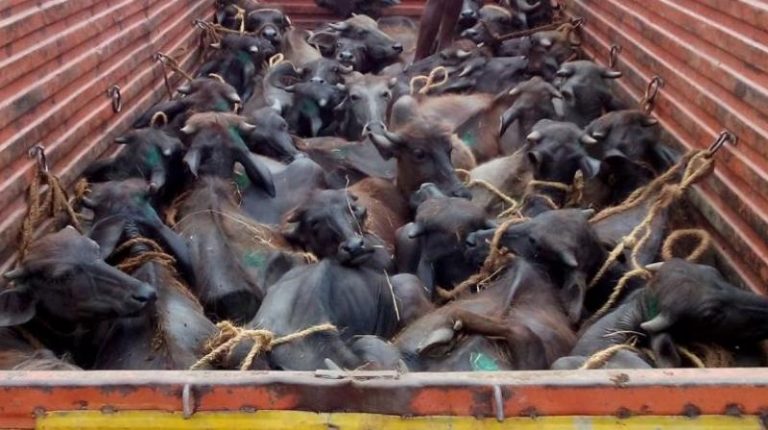
Union Minister of State for Home Nityanand Rai said on Wednesday that over 4.76 lakh cattle meant to be smuggled to Bangladesh were seized by the Border Security Forces (BSF) along the Indo-Bangladesh border.
According to reports, 1,68,801 cattle were seized along the border in 2016, 1,19,299 in 2017, 63,716 in 2018, 77,410 in 2019 and 46,809 in 2020. The figures show a steep decline from nearly 1.7 lakh in 2016 to barely 47,000 in 2020.
Nityanand Rai said that the BSF had taken effective measures to curb cattle smuggling along the border including round-the-clock patrolling, laying nakas, establishing observation posts and strengthening the existing defences of Border Outposts.
Cattle smuggling remains a concern along the international border with Bangladesh and steps have been taken to curb the menace in recent years. Recently, three BSF personnel were dismissed for their involvement in cattle smuggling.
According to reports, Special Director General of BSF Pankaj Kumar Singh informed that apart from the three dismissed BSF personnel, about a dozen other personnel have been transferred since September last year in connection with the trans-border cattle smuggling case.
Nityanand Rai said that whenever the involvement of BSF personnel in the smuggling comes to light, appropriate disciplinary action is taken following investigation by the forces.
Syed Waseem Rizvi, the ex-chairman of the UP Shia Central Waqf Board, has recently stirred the hornet’s nest by filing a petition in the Supreme Court seeking the removal of 26 verses from the Quran. In his petition, Rizvi has argued that the Quran contains “some verses that are used to promote terrorism, violence, jihad.” This had led to a series of threats, with a Muslim cleric even offering a bounty of ₹20,000 for anyone who brings Rizvi’s head.
While such a petition might seem unusual today, it was 36 years ago when advocate Chandmal Chopra and one Sital Singh moved the Calcutta High Court seeking a ban on the Quran altogether. An application was filed on March 29, 1985, under Article 226 (power of the High Court to issue some writs) of the Indian Constitution, asking the Calcutta High Court to direct the government to ‘forfeit’ every copy of the ‘Holy book’.
The petition argued that every copy of the Quran is ‘liable to be forfeited’ under Code of Criminal Procedure (CrPC) Section 95 (Power to declare certain publications forfeited) when read with Indian Penal Code (IPC) Sections 153A (Promoting enmity between different groups on grounds of religion) and 295A (Deliberate and malicious acts, intended to outrage religious feelings). The petition had argued that Muslims have been exploiting the laws so far to ban books critical of Islam. He added, “so far it had been the privilege of the Peoples of the Book to ban and burn the sacred literature of the Pagans.”
Calcutta High Court entertained the petition
Chandmal Chopra and Sital Singh cited direct verses from the Quran, calling for violence against the ‘infidels’. “When the sacred months are over, slay the idol-worshippers, wherever you find them. Arrest them, besiege them and lie in ambush everywhere for them,” they quoted one verse from the ‘Holy book’. Another verse, cited by them, read, “Believers! make war on the infidels who dwell around you. Let them find harshness in you’. The matter initially came up before Justice Khastgir J of the Calcutta High Court.
Far from dismissing the application, as one would expect today, the learned Judge had entertained the application. She also issued notice to the contending parties. “Everything seems insane and absurd. No mortal on earth can challenge the holy scripture and no court in the world has any authority over it,” senior advocate had Alhaj C.F. Ali remarked. Soon, over 70 advocates passed an ‘official resolution’ urging other lawyers to boycott the court of Justice Khastgir J.
Muslim groups opposed the historic petition
Radical Islamist organisations, such as Jamait-e-Islami and Kerala Muslim Association of Calcutta set up a ‘Quran Defence Committee‘ to strengthen the movement. However, they decided to not become a respondent in the case, for ‘fear’ of law and order turmoil (at the hands of common Muslims). The CPI(M)-ruled West Bengal government took a firm stand against the petition and its admission in the Calcutta High Court. In its affidavit, it said, “the court has no jurisdiction to pronounce a judgement on the Koran, the holy scripture of the Muslims the world over, each and every word of which, according to Islamic belief, is unalterable”.
Congress and CPI(M) up in arms
The government claimed that it was filed with malafide intent and that such a petition has never been filed in Indian history. The Congress-led-Union government also sided with the Left and opposed the plea. With mounting political pressure, Justice Khastgir dropped it from her list and sent it to the Court of Justice Satish Chandra. On the advice of state Advocate-General S.K. Acharyya, the matter was transferred to the Bench of Justice Bimal Chandra Basak, who dismissed the petition on May 17, 1985.
Review petition and the arguments
Advocate Chandmal Chopra noted several ‘errors’ in the Court’s verdict and thus filed another application on June 18 of that year, seeking a review of the judgement. Justice Basak, in his earlier judgement, had noted that the Quran had divine origin and had no earthly source. He had also proclaimed that the Court cannot entertain matters related to the ‘Holy book’ and that it did not insult other religions.
Chopra, in his review petition, had argued that the observations made by the Judge are against the basic tenets of secularism and therefore unconstitutional. He had also pointed out that the verdict claimed that Quran did not insult other religions, despite the verses quoted in the writ petition (calling for violence against infidels) suggested otherwise.
In his review petition, he said, “A book, even if it be a book held sacred by any community living in India, loses the protection of Sec 295 of the Indian Penal Code if its publication amounts to offences under Section 295-A of the Indian Penal Code and should have been held accordingly.” However, Justice Bimal Chandra Basak again dismissed the petition on June 21, 1985, highlighting the time-barred nature of the petition and without going into the merits of the case.
The publication of Calcutta Quran Petition book and aftermath
Following the dismissal of the petition, historian Sita Ram Goel along with Chandraal Chopra published the book named ‘The Calcutta Quran petition’ in 1986. The book highlights the saga of Muslim appeasement and the vote-bank politics of pseudo secularism. After the book was published, Hindu Raksha Dal President Indra Sain Sharma and Secretary Rajkumar Arya were arrested. They had published 24 Ayats of the Quran under the caption, ‘Why riots take place in the country?’
They had argued, “These Ayats command the believers (Musalmans) to fight against followers of other faiths’ and that ‘so long as the Ayats are not removed from the Quran, riots in the country cannot be prevented.” However, they were soon released on the orders of the Metropolitan Magistrate of Delhi Justice Z S Lohat. While Waseem Rizvi faces threats to his life for citing ‘violent verses in the Quran’, it was the heroics of Chandmal Chopra that set the precedent.
Mumbai top cop Sachin Vaze has been sent to the National Investigation Agency (NIA) custody till 25th March. Vaze is currently under investigation in the Antilia bomb case where explosive-laden car was found parked outside Reliance Group’s Mukesh Ambani residence. He was arrested by the NIA after hours of interrogation on Saturday night. A Thane court had dismissed his interim bail plea stating that custodial interrogation is necessary.
Vaze has admitted that he was involved in the Antilla Bomb Scare case, ABP News has reported. The report says that sources have claimed that Sachin Vaze was a very small part of the plan and the Shiv Sena leaders he named played a bigger role.
Earlier today, a white Innova, which was found tailing the explosive-laden Scorpio was recovered from Mumbai Police commissionerate office. The Scorpio car owner, Mansukh Hiren, was later found dead under mysterious circumstances. He was reportedly in touch with Vaze. Hiren’s wife has accused Vaze of murdering her husband.
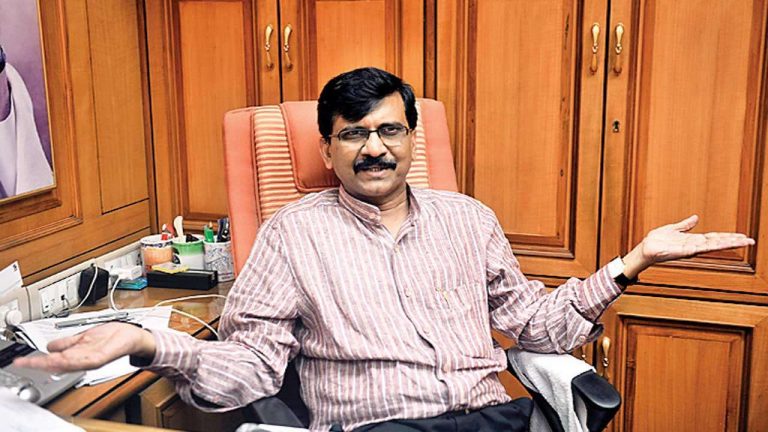
While Shiv Sena leader Sanjay Raut is busy hailing Mumbai Police, in particular, Sachin Vaze, the latter has reportedly named Shiv Sena leaders in the Antilia explosives case.
We respect NIA but our Police could've done it too. Mumbai Police & ATS are well respected but central agencies repeatedly enter Mumbai & demoralise Mumbai Police – it creates instability in the state & creates pressure on Mumbai Police & administration: Sanjay Raut, Shiv Sena MP
Earlier today, Raut claimed that Sachin Vaze is a very honest and capable officer. “He has been arrested in connection with gelatin sticks that were found. One suspicious death also occurred. It’s Mumbai Police’s responsibility to investigate the matter. No central team was needed,” he claimed.
Raut further claimed that while he respects the central agencies, Mumbai Police could have also got the job done. He also accused the central agencies of creating instability in the state and putting pressure on Mumbai Police and administration.
The statement comes at a time when Vaze, a former Shiv Sena leader himself, had allegedly named Shiv Sena leaders in the gelatin case. Vaze had reportedly said that he was just the ‘tip of the iceberg’ and policemen and Shiv Sena leaders had a bigger role.
Earlier today, it was reported that the white Innova car, which was found tailing the explosive-laden Scorpio which was found outside Mukesh Ambani’s residence, was recovered from Mumbai Police Commissionerate office. The car, which belongs to the Mumbai Police, was being used by Vaze himself. Further, it was revealed that the numberplate of Innova did not have any official records. Which means, it is quite likely the numberplate was fake.