Home Blog Page 5051

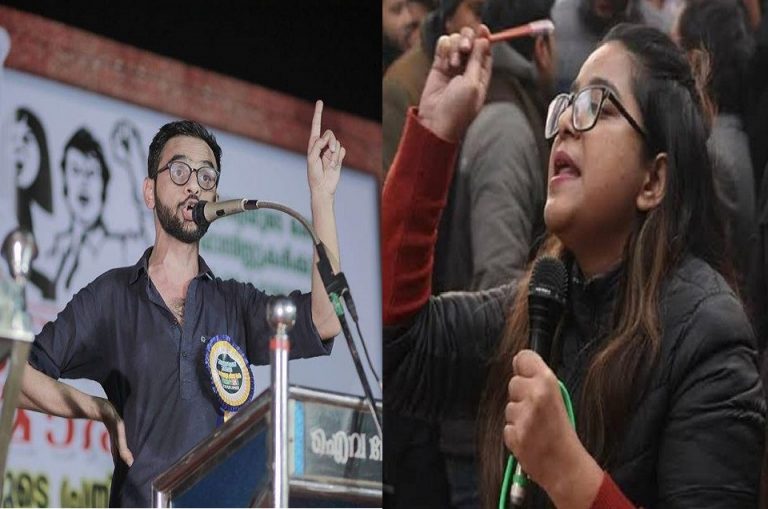
Chargesheet 59, that indicated a larger conspiracy to incite Delhi riots and named Umar Khalid and Safoora Zargar, admitted by court

0

A Delhi Court has admitted the charge-sheets filed by the Delhi Police against the 15 accused in the Delhi riots. In its charge-sheet, the Delhi police had alleged that the anti-Hindu Delhi riots that took place in February were the result of a pre-planned conspiracy.

Earlier, the Delhi Police had filed charge-sheet before the Delhi court in connection with the riots case. The Delhi police had invoked various sections of the Unlawful Activities (Prevention) Act (UAPA) along with the Indian Penal Code in the case. The case emanates from FIR No. 59, which was lodged by Delhi Police’s Crime Branch on March 6, 2020.

According to the reports, Additional Sessions Judge Amitabh Rawat has now directed Delhi Police to supply copies of the charge-sheet filed on Wednesday to the accused persons. The court will now take up the hearing of the case from September 21.

The Delhi Police has named 15 prime accused in the Anti-Hindu Delhi riots case that includes former Aam Aadmi Party leader Tahir Hussain, former Congress leader Ishrat Jahan, self-proclaimed activist Khalid Saifi, Jamia Coordination Committee members Safoora Zargar and Meeran Haider.

Far-left ‘activists’ and members of Pinjra Tod members – Devangana Kalita and Natasha Narwal have also been named in the charge-sheet along with Jamia Millia Islamia (JMI) student Asif Iqbal Tanha.

The other names in the Delhi Police charge-sheet are Mohd Parvez Ahmed, Mohd Illyas, Shahdab Ahmed, Tasleem Ahmed, Saleem Malik, Mohd Saleem Khan and Athar Khan.

The Delhi Police had filed over 750 FIRs in connection with the Delhi riots cases against offences such as giving communally insinuating speeches, creating religious hatred, looting, arson, destroying public and private property, causing injury and murder among others.

The police said it has produced a chronology of conspiracy and relevant events in its charge-sheet. “The evidence include WhatsApp chats of February 24, the time when riots were happening. At that point, key conspirators were guiding their foot shoulders about violence in the area. The key conspirators were directly in touch with their foot shoulders,” the Delhi police reportedly said.

Charge-sheet emanates from FIR-59 filed by Delhi Police

The charge-sheet filed by the Delhi Police reportedly emanates from the FIR No. 59, which is considered to be one of the most crucial piece in the entire Delhi Police investigation into the riots.

In the FIR, the Delhi Police had alleged that the communal riot was a pre-planned and the protest against the Citizenship Amendment Act (CAA) prior to that had created a communally-charged atmosphere that led to the communal clashes in February.

The Delhi Police has arrested over 20 accused persons including former Jawaharlal Nehru University (JNU) students and Jamia Millia Islamia students in this particular case on the charges of instigating Muslim mobs to unleash terror on the streets of the national capital.

Notorious radical Islamist and far-left ‘activist’ Umar Khalid is one of the most recent arrests in this case. Earlier, the Delhi Police had arrested Jamia Co-ordination Committee member Safoora Zargar in the case but was granted bail under compassionate grounds by the Delhi High Court. 

Safoora Zargar is accused of instigated a Muslim mob near Chand Bagh area that attacked Delhi police personnel leading to the death of police constable Ratan Lal.

Umar Khalid and his friends plotted the anti-Hindu riots in Delhi, says charge-sheet

The charge-sheet had stated that the conspiracy to cause communal riots was hatched by Umar Khalid and his friends during the visit of United States President Donald Trump to India. The FIR has alleged that the firearms, petrol bombs, acid-stone-slingshots, and other dangerous articles were gathered at various places in North-East Delhi.

The Delhi Police, in its charge-sheet, had said that on February 23, 2020, as a per pre-planned conspiracy, many children and women were instigated to block the Jaffrabad metro station to create communal tension in the area. According to the police, this resulted in a clash at the metro station, which then led other Muslim mobs to riot across other parts of the city.

In the charge-sheet, the Delhi police has revealed that on January 8, Aam Aadmi Party leader Tahir Hussain had met Umar Khalid and Khalid Saifi at Shaheen Bagh sit-in protest. During such meetings, Umar Khalid had reportedly assured logistical support to the mob through his PFI contacts, the police said.
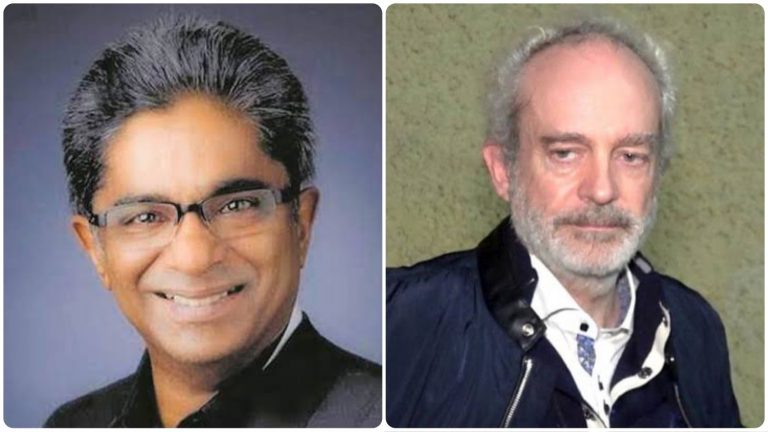

VVIP chopper scam: CBI names middlemen Christian Michel, Rajiv Saxena and 13 others in a supplementary charge-sheet filed in AgustaWestland scandal

0

The Central Bureau of Investigation filed a supplementary charge sheet on Saturday in the Rs 3,600 crore VVIP chopper scam against key middlemen Christian Michel James, Rajiv Saxena and 13 others. As per the officials privy to details, the latest charge-sheet mentions the alleged role of middlemen and entities used to transfer the kickbacks to politicians, bureaucrats, and Indian Air Force (IAF) officials in the scandal involved in the purchase of AgustaWestland AW101 helicopters by India.

This is the second charge sheet filed in the case, and it elaborates in detail about the alleged role played by Michel in receiving and routing the alleged kickbacks through a web of entities to alleged beneficiaries, which include bureaucrats and politicians. The agency has so far not charge-sheeted any politician in this scam. In its first charge sheet, filed in September 2017, the agency had established the money trail of 62 million euros (around Rs 415 crore) out of suspected 67 million euros (Rs 452 crore) total bribe paid to Indians through middlemen.

The CBI has charged a few Indian and foreign-based companies purportedly used by accused-turned-approver Rajiv Saxena and Christian Michel in “transferring” the alleged kickbacks in the latest charge sheet.

In March this year, the CBI had sought prosecution sanction against former defence secretary Shashi Kant Sharma, former Air vice-marshal Jasbir Singh Panesar and three other IAF officers – deputy chief test pilot SA Kunte, wing commander Thomas Mathew and former group captain N Santosh. However, it went ahead and filed its charge sheet without awaiting the prosecution sanction against the aforesaid individuals. As per officials, the agency will file a charge sheet against the individuals after it receives a prosecution sanction from the Department of Personnel and Training (DoPT) and Ministry of Defence.

ED contested approver status after it found accused Rajiv Saxena had withheld information

It is pertinent to mention here that charge-sheeting of Rajiv Saxena, one of the middlemen in the alleged scam, assumes significance after he was accorded the approver status. It was months later, in October 2019, that another agency, Enforcement Directorate, had approached the court seeking cancellation of his approver status claiming he had concealed facts from the agencies.

A dossier received from Mauritius, along with the forensic data analysis and scrutiny of WhatsApp chats has led the Enforcement Directorate to suspect the authenticity of disclosures made by Rajiv Saxena, one of the main accused in the Rs 3600 crore AgustaWestland scam. As per a report in the Economic Times, the investigating agency has now pointed out that Saxena has concealed and withheld information at the instance of co-accused, especially Ratul Puri.

The documents received from Mauritius contained one titled “Consent to act as Director” of M/s Interstellar Technologies Ltd, dated June 20, 2000, bearing Saxena’s signatures.

However, when ED had questioned about the same in February last year, Saxena had withheld information regarding the same and had lied to the investigation team that these signed documents were misused by his lawyer and co-accused Gautam Khaitan. The new information submitted to ED by the CBI revealed that the signatures belong to Saxena.

Saxena had allegedly operated a firm named Interstellar, which received a kickback worth 12.4 million euros which were then re-routed as “payment of bribes” to influential people, including politicians and bureaucrats in India to influence the VVIP chopper deal in favour of AgustaWestland. The middleman Christian Michel James allegedly routed bribe money to a company through Interstellar, according to ED investigation.

Rajiv Saxena and Christian Michel extradited to India

Rajiv Saxena, described by the ED as one of the “key money launderers” was picked up by UAE government security agencies in Dubai and later extradited to India on January 30, 2019.

It was reported that Rajiv Saxena has several accounts in Switzerland. OpIndia had acquired the list of accounts that Rajiv Saxena allegedly used for kickbacks received in the AgustaWestland scam.

Prior to the extradition of the two main accused Rajiv Saxena and Deepak Talwar, several startling revelations had come to light in the VVIP chopper scam soon after the case gained momentum post middleman Christian Micheal’s extradition to India. From the names of “Italian Lady”, to “Italian Lady’s son R“ to how Christian Michel was lobbying for the Eurofighter and against the Rafale deal and how he had unbridled access to the PMO under Congress regime, the CCS and even the investigative agencies.

Nine individuals already charge-sheeted in the AgustaWestland Case

Before the latest charge sheet filed by the CBI, nine individuals, four Indians and five foreigners were charged in the initial charge sheet filed by the CBI. The charge sheet included SP Tyagi and his cousins, alleged European middlemen Carlo Gerosa, Michel James and Guido Haschke, former AgustaWestland chief executive Bruno Spagnolini and former Finmeccanica chairman Giuseppe Orsi. AgustaWestland was a subsidiary of Italy’s Finmeccanica.

Truth behind India’s slip in Global Economic Freedom ranking: Change in methodology responsible, not what Congress party want you to believe

Earlier this month, Canada’s Fraser Institute released the Global Economic Freedom Index 2020, where India’s rank dropped considerably. According to the index, India fell 26 spots to the 105th position in the ranking, which was 79th in the previous year’s index. City-states Hong Kong and Singapore occupied first and second spot in the index, while China ranked 124 and Pakistan was ranked 129, both below India.

Expectedly, the fall in India’s ranking gave the opponents of the Modi government ammunition to target the government. After the report was released, the Congress party tweeted on 11th September, saying that India is moving only downwards under BJP government.

The ranking measures the economic freedom, or the ability of individuals to make their own economic decisions in a country, by analysing policies and institutions of these countries. Although a fall of 26 spots in the Economic Freedom Index in a single year is worrisome, that is not the correct analysis of the report. Because a major reason in changes in rankings of the countries this year is due to several changes made to the methodology adopted in the report. Therefore, this year’s rankings are not comparable with previous years, as the methods to calculate that has been changed considerably.

The Economic Freedom Index 2020 report has been prepared using data from 2018. The degree of economic freedom is measured in five broad areas, which are Size of Government, Legal System and Property Rights, Sound Money, Freedom to Trade Internationally, and Regulation. India’s ranking decreased in all five areas, contributing to the overall decline. The 5 areas have several components and sub-components in each of them, and several changes have been in the measurements of those.

India’s rank in 2019 and 2020 in five different areas included in Global Economic Freedom Index

Within the Size of the Government Area, the ‘Government investment’ component saw the greatest decline, by 43 spots. However, the previous year had a different component ‘Government enterprises and investment’ which is replaced by the ‘Government investment’ component this year. The rating formula also is different, and now it is based on a standard maximum and minimum formula instead of the categorical rating method used earlier.

In the ‘Regulation’ Area there is a decline of 14 places. The maximum decline in rank is in the ‘Business regulations’ component. Here also, the “Extra Payments/Bribes/Favoritism” based on the Global Competitiveness Report has been replaced with V-Dem data on “rigorous and impartial public administration” which has resulted in a decline in rating of -0.33.

In the ‘Freedom to Trade Internationally’ area there are 4 components. Maximum decline is in the component of ‘Controls of the movement of capital and people’. However, this is due to a change of a sub-component in this component. Earlier Index in 2017 had ‘Foreign ownership / investment restrictions’, Where India had a rating of 5.84, while in the present index has ‘Financial openness’ where India has a rating of 1.66.

Therefore, it can be seen that there have been significant changes in the calculations for the 2020 ranking based on 2018 data, which have resulted in changes in the Economic Freedom Index. In fact, the report itself says that it can’t be compared with the 2019 report due to the changes. It says, “In this year’s report, we have made key and important changes to nine components. This means that making comparisons for these variables (and for the associated area and summary ratings) between the 2019 report and this 2020 report will be extraordinarily difficult.”

The report further adds, “it is impossible to make so many changes without an impact on the ratings and rankings of the countries in the EFW index. While most nations’ ratings and rankings change only modestly, there are a few that are affected to a fairly significant degree.”

As India has made improvements in other global economic rankings, like the World Bank’s Ease Of Doing Business ranking, the fall in the Economic Freedom Index is largely attributed to the changes in the methodology in arriving at the index. And therefore, the Narendra Modi government is not responsible for the same, as alleged by the Congress party.

On PM Modi’s birthday, Rath Yatra carrying 613 Kg bell inscribed with ‘Jai Shree Ram’ flagged off, to go from Rameswaram to Ayodhya

0

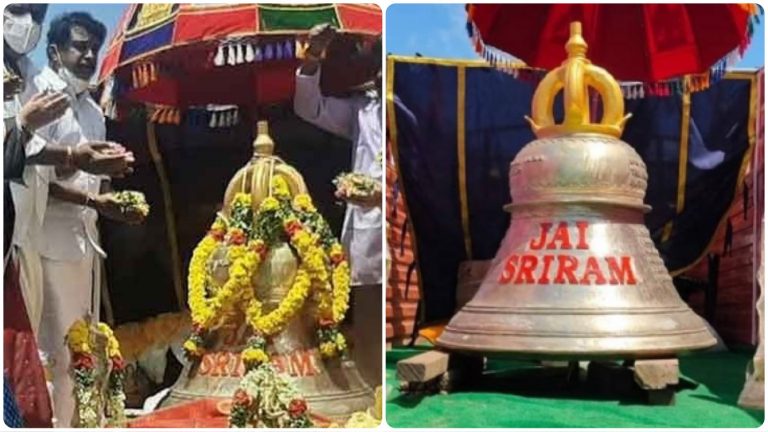
With the commencement of the construction of the Ram Mandir in Ayodhya, the Hindu devotees of Lord Ram, along with the BJP members, embarked upon a new Rath Yatra, this time from the southern holy city of Rameswaram to the temple town Ayodhya, said a report published in RSS affiliate ‘The Organiser’. The Rath Yatra was flagged off on September 17, coinciding with the birthday of Prime Minister Narendra Modi.

The ‘Rath Yatra’ will be different in a sense that it would be carrying a Bronze bell emblazoned with “Jai Shri Ram” and weighing around 613 kilograms. It will also be carrying idols of Lord Ram, Sita, Lakshaman, Hanuman to the Ram Mandir in Ayodhya.

Rath Yatra to pass through different states before reaching Ayodhya

South Zone BJP Election in-charge Nainar Nagendran, Ramanathapuram district president Muralidharan flagged off the Rath yatra on 17th September which would pass through different cities of Tamil Nadu and other states before finally arriving at Ayodhya.

The city of Rameswaram has a special significance in the Hindu mythology, with it being the place from where Lord Ram and his Vanara Sena started the construction of the bridge on that connected the Indian subcontinent to the island nation of Sri Lanka. Rameswaram was the place where Lord Ram offered prayers and performed pooja and other rituals. It has historical and cultural importance and served as a geographical link between the northern and southern India.

Rajalakshmi Mandha, General Secretary of Chennai based Legal Rights Group, donated the 613-kilogram heavy bronze bell, along with the idols of Lord Ram, Sita, Hanuman and Lakshman. The idols and bell are made out of copper metal. A well-decorated chariot has been prepared, which will carry the idols and the bell to Ayodhya. Before the start of the yatra, special poojas were performed in front of Ramanathar Mandir at Rameswaram.

Bells to be donated by Andhra Pradesh and other states to be installed at Ram Mandir in Ayodhya

Also, another bronze bell weighing 600 kilograms is being prepared at Eral Ramakrishna Nadar vessel merchant store. Similarly, bells from Andhra Pradesh and other states would also be installed at the Ram Temple in Ayodhya.

Earlier, a similar Rath Yatra was carried out by the then BJP president L K Advani, who started from Kanyakumari in Tamil Nadu to Kashmir, demanding the construction of a Ram Mandir at the Janma Bhoomi site where the Mughal invaders had built a mosque dedicated to Babri.

However, this time around, the yatra is carried out after the completion of Bhoomi pujan ceremony of the Ram Mandir in Ayodhya that marks the official construction of the temple. PM Modi had laid the foundation stone on August 5 this year. This ground-breaking ceremony happened following the Supreme Court’s landmark judgment last year, settling the long-drawn-out conflict and permitting the Hindus to build a temple to Lord Ram at the Janmabhoomi site.

Protests against Left minister in Kerala gold smuggling case ‘anti-Quran’, says Communist Party leader: Here is how he came to that strange conclusion

A day after the National Investigation Agency (NIA) questioned Kerala Higher Education Minister KT Jaleel for his role in the gold smuggling case, the CPI(M) on Friday gave a communal twist to the investigation and claimed that the Opposition’s protest against the minister was an “anti-Quran” agitation.

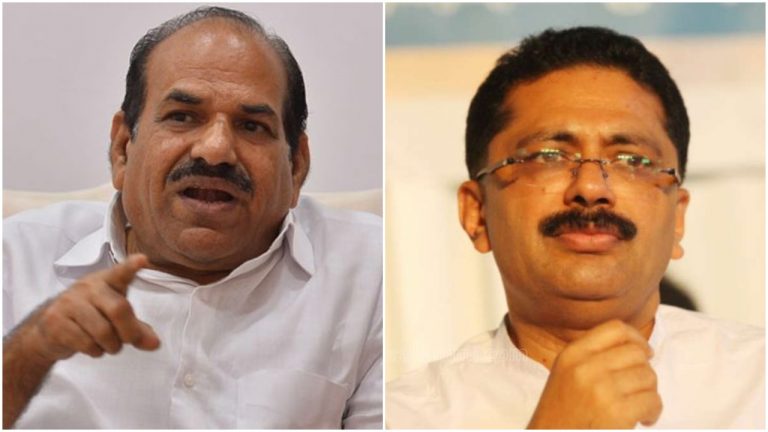
According to the reports, CPI(M) state secretary Kodiyeri Balakrishnan, in his weekly column in party daily Deshabhimani, has referred to the protest against the Kerala Communist government and minister KT Jaleel as an “anti-Quran agitation”.

In the article, the CPI(M) leader Kodiyeri Balakrishnan defended minister Jaleel, who is an accused in the ongoing National Investigation Agency (NIA) investigation into the gold smuggling case. The investigations had revealed that KT Jaleel had illegally imported the Quran from UAE with the help of main accused Swapna Suresh, bypassing protocol norms.

The investigating agencies have suspected the presence of gold in these consignments as key accused Swapna Suresh was also aware of these shipments.

“It is not a criminal act to distribute a few copies of the holy book as requested by the UAE consulate in the state capital. The minister is in charge of the Waqf Board also. The Muslim League is adding fuel to the fire ignited by the Sangh Parivar,” he said.

IUML, Congress joining hands with RSS to launch ‘anti-Quran’ agitation, says Kodiyeri Balakrishnan

Attacking the opposition parties for demanding the resignation of the Kerala Minister, Balakrishnan said that the protests are part of a huge political conspiracy against the government. He claimed that the opposition parties were disrespecting the Quran and accused Congress, Muslim League of joining hands with the RSS to launch, to what he referred to as ‘anti-Quran’ agitation.

“IUML is adding fire to the anti-Quran agitation of RSS. Congress will also be with IUML in that act. We are opposing the agitation against Quran on the ground that no religious text should become subject of ridicule,” he wrote.

Opposition attacks Communist party of playing ‘communal card’

Following the attempts by the Communist party to give a communal twist to the gold scam, the opposition parties have rejected Balakrishnan’s charges and accused the LDF of communalising the issue.

Responding to Balakrishnan’s ‘anti-Quran’ tirade, Congress state president Mullappally Ramachandran said that the government has lost its face and using the Quran for political ends is dangerous.

IUML national general secretary P K Kunhalikutty said the CPI(M) and Jaleel should answer to the allegations related to the gold smuggling. BJP state chief K Surendran said CPI(M) is trying to project Jaleel as the symbol of a religion and said that the Communist party was communalising the issue.

Kerala Gold Smuggling case: Link of accused Swapna Suresh with Kerala’s Higher Education minister KT Jaleel had surfaced

Last month the call details of main accused Swapna Suresh had revealed that the accused was in regular touch with Kerala’s Higher Education minister KT Jaleel.

According to the Call Detail Record (CDR), KT Jaleel had made several calls to Swapna Suresh. The details revealed that the minister and Suresh exchanged several calls in the month of May and June. Jaleel’s two personal staff members were also reportedly in touch with Suresh.

Sandalwood drug case: Bengaluru crime branch summons to former Congress corporator for questioning

0

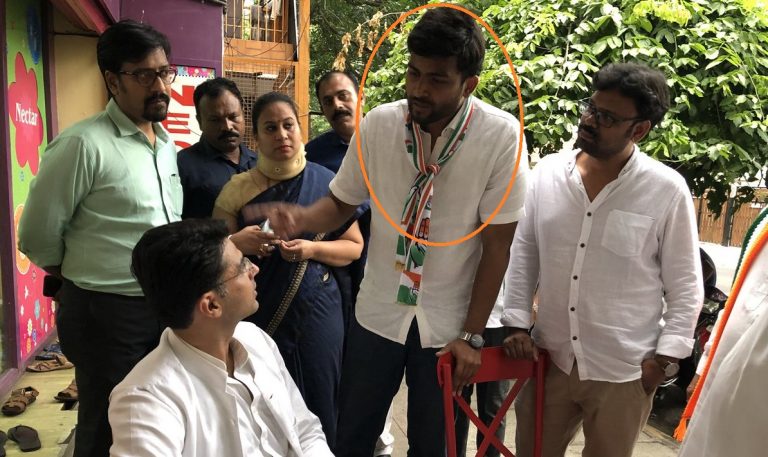
The Sandalwood drug case in Karnataka has now taken a political turn after the Bengaluru Central Crime Branch (CCB) asked former Congress corporator RV Yuvraj to appear before them in connection with the drug case.

According to the reports, the Central Crime Branch (CCB) of Bengaluru police, which has been investigating the massive drug scandal in the state, issued summons to the young Congress leader asking him to appear for further questioning on Saturday. RV Yuvraj is the son of former Congress MLA RV Devraj.

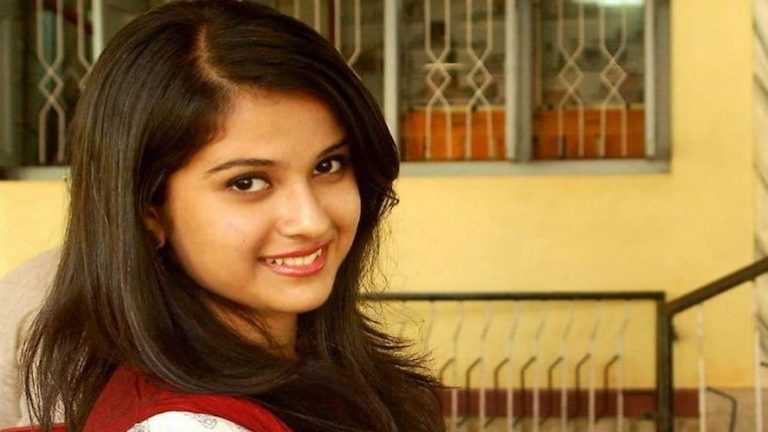
The CCB officials reportedly sent notices to RV Yuvraj via WhatsApp asking him to join the probe. The 29-year-old Yuvraj was a BBMP corporator from Sudhamnagar. Reportedly, the Congress leader Yuvraj used to visit a yoga institute run by actor Sanjjanaa Galrani. Both were seen together in a few events in the past.

Reacting to the notice, Congress leader Devraj said, “My son doesn’t even smoke cigarettes nor does he drink. So how will he use drugs? He goes to London and Paris as he is a good tennis player. The CCB has served notice. I don’t know why the CCB has called him.”

Addition to RV Yuvraj, the CCB has also issued summons to Kannada TV anchor Akul Balaji, actor Aryann Santosh. Akul Balaji is a well-known TV anchor and Aryann Santhosh is an upcoming actor in the Kannada film industry.

The CCB summons to Yuvraj comes a week after the NCB officials had issued a notice to Congress corporator’s son in connection with the Sandalwood drug case. The notice was served to Yashas K, the son of S Keshavamurthy, Congress corporator from Mahalakshmipuram. 

Former minister’s son under scanner in drug case

Aditya Alva, the son of former Karnataka minister Late Jeevaraj Alva, is also under the scanner of the Bengaluru Crime Branch for his alleged involvement in the drug scandal.

The Bengaluru Crime Branch officials had also carried out a raid on the farmhouse of Aditya Alva located near Hebbal lake. Aditya Alva is former Karnataka Minister Jeevaraj Alva’s son and actor Vivek Oberoi’s brother-in-law. The raids were carried out after police had suspected that Alva organised parties, where drugs were allegedly supplied.

However, Alva, who is one of the prime accused in the drug case, has gone missing ever since the CCB launched a crackdown against the drug mafia in the state capital.

Ravishankar, one of the prime accused in the Sandalwood drug case had informed the police that most of the drug parties were held at Aditya Alva’s farmhouse, which is located in Bengaluru. Ravishankar had also confessed to the use and consumption of drugs in these parties. According to Ravishankar, it is the same farmhouse where ecstasy pills were consumed.

Sandalwood drug case

Amidst the raging debate in the country over the issue of narcotic influence in the movie industry, a massive drug scandal was unearthed by the Bengaluru police recently.

In a major crackdown against drug peddlers in the state, the Bengaluru police ahs recently arrested some top actresses in the Kannada film industry over alleged involvement in drug trafficking.

The Crime Branch officials in Bengaluru have arrested Kannada actresses Ragini Dwivedi and Sanjjanaa Galrani in connection with a Sandalwood drug case. Many more actresses, musicians, are under the police scanner for their alleged links to the massive drug racket.

So far, the police have booked more than 15 people in connection with the Sandalwood drug mafia case. The police have already arrested nine accused including actor Ragini Dwivedi, her friend Ravishankar, realtor Rahul Shetty, actress Sanjjanaa Galrani and an event manager, Viren Khanna.

An eyewitness tells media that Disha Salian was gang-raped by 4 men in the party held on the eve of her death: Here are the details

0

A new sensational fact has come to light in the case of the mysterious death of Disha Salian, the former manager of late actor Sushant Singh Rajput. An eyewitness has told News Nation that Disha Salian was gang-raped by 4 men in the party which she attended on the eve of her death on June 8. The person, who the media house claims was present at the party which the celebrity manager had attended in Juhu, said that Disha’s screams were suppressed behind the blaring music which was being played in the party.

The eyewitness confirmed that there were a total of 6 people in the party, including Disha Salian’s fiance Rohan Rai. Notably, BJP leader Nitish Rane has been raising questions on Rohan’s disappearance since Disha’s death on June 8 and has demanded that the CBI investigates the role of Rohan Rai into celebrity manager Disha Salian’s death case as well.

Meanwhile, the eyewitness further revealed to News Nation that a filmstar’s son was also present at the party. Amongst the 4 people who allegedly sexually assaulted Disha, one was allegedly a close friend of hers and another was a minister’s security guard, claimed the eyewitness, furthering that he would recognise the minister’s security guard if he sees him.

News Nation has claimed that it has many evidences in the Disha Salian’s death case which it would be handing over to the CBI at 1pm today.

Interestingly, earlier, Disha Salian’s parents had said that the rape angle was completely false.

Speaking to India Today about the politician’s theories of rape and murder, Vasanti Salian said, “All this is false. Statements in this case are taken twice. Malvani police (where Disha Salian case is being investigated) has all documents on record. We have seen post mortem report. Mumbai police are doing their job properly and therefore we trust Mumbai police. We were quiet earlier but all these in media defaming our daughter we just can’t take it anymore. Therefore I request people to understand what is the truth.”

The past revelations which indicate that Disha Salian did not die by suicide

It is pertinent to note here that recently, a forensic expert had claimed that Disha had two sets of injuries—one before the fall and another one upon her fall—implying that Disha’s death might be a homicide. The expert also added that either Disha was assaulted or tortured, or that might have been the reason she had tried to escape the assault. They can be resistance injuries from the attack, he added.

Earlier, the post mortem report of Disha Salian had revealed that she didn’t have clothes on her body when she was found dead after falling from the 14th floor of a building. This revelation had raised questions over the claim of Mumbai police that Disha had committed suicide.

In fact, BJP leader Nitish Rane had also alleged last month that the late Bollywood actor Sushant Singh Rajput’s former manager had not committed suicide but she was raped and murdered. Speaking at a press conference, Rane alleged that Disha’s autopsy report reveals she had injury marks on her private parts.

He had accused Mumbai police of trying to scuttle the probe.

How Mumbai police impeded inquiry into the death case of the celebrity manager

Notably, Mumbai police from day one had been trying to push Disha Salian’s death as a case of suicide, but it has been alleged that she was murdered and her case has links with the similar mysterious death of actor Sushant Singh Rajput. Disha, who had worked as Sushant Singh Rajput’s manager for a brief period of time, was found dead under mysterious circumstances on June 8, six days before Sushant allegedly died of suicide. 

It was reported last month how Salian’s phone had remained active even after her death on June 8. Sources privy to the details claimed that Disha’s phone remained active for 9 days after her death. They also stated that Internet calls were made between June 9 and June 17 from Disha’s phone. However, though the Mumbai Police had reached the spot within minutes of Disha’s death, no phone was seized by the officials.

Moreover, Disha Salian’s dead body was allegedly found lying as far as 14-15 feet away from the compound wall, which is not possible in the case of suicide.

Earlier, the Mumbai Police had claimed that the files of the investigation into Sushant’s ex-manager Disha Salian’s alleged suicide case have been deleted “accidentally”.

HRCE Dept uses the ‘we are doing what Kings did’ argument, claims ‘secular’ state of Tamil Nadu entitled to control temples

The Hindu Religious and Charitable Endowments (HR&CE) Department has filed an affidavit at the Madras High Court saying that though the state of Tamil Nadu is secular, it is entitled to control temples. The departments said that under Article 25(2) of the Constitution, the state could regulate or restrict any economic, financial, political, or other secular activity linked to religious practice.

Affidavit in reply to the petition by Indic Collective Trust

In the first week of August 2020, Indic Collective Trust and its president T.R. Ramesh filed a petition in the Madras High Court against the HR&CE Minister and Commissioner stating misuse of temple vehicles and funds. The petition was attached to another case filed by Rangarajan Narasimhan, who has accused the state government of ordering 20 rich temples of the state to pay Rs.10 crore surplus funds. The Tamil Nadu government said that the funds were to be used for renovating 10,000 village temples. The court had put a stay on order.

Tamil Nadu govt and Temples: The state is doing what kings did

In the counter-affidavit filed in front of a Division Bench of Justice M.M. Sundresh and Justice R. Hemalatha, the HR&CE Department said that majority of the famous temples in the state were constructed by kings. They also gave acres of land and other properties to those temples. The kings used to appoint officials to manage the temples. The government is doing the same via the HR&CE Department.

The department in its affidavit said that the HR&CE Act of 1959 was approved by the then-President on 19th November 1959, and it was preceded by a 1951 Act that was upheld by the Supreme Court of India in 1954. The petitioners are attempting to tarnish the image of the department to relive temples from the government’s control.

Government vehicles not fit for the road

Answering the charges of using temple vehicles for the department’s use, the affidavit said that the state government allotted vehicles long back to the department no longer fit for the road. The department uses the temple vehicles until the state government alot money to buy new vehicles. It emphasized that the vehicles and the drivers were only being used for official purposes. The petitioner had alleged in the petition that the vehicles were being used for personal use.

Alleged exaggeration of misuse of temple funds

The department said that temple funds that were collected under the pretext of darshan, Abhishegam, Archanai, Urchavam, etc. stay with the temple and not controlled by the department or the state government. It added that the department controls 38,449 religious institutes, including 57 mutts, 57 temples attached to mutts, 1,721 specific endowments, 3,479 temples with hereditary trustees, and 16,783 temples with temporary appointees.

The temples under the administration of temporary appointees are till the time trustees are appointed as per the regulations. The petition stated that there are 19,000 temples under the administration of the government-appointed ‘fit person’ since 2011. In the counter-affidavit, the department said that the petitioners had exaggerated the amount used for refreshments during review meetings chaired by the HR&CE Minister, Secretary, and Commissioner.

Television channel ‘Tirukovil’

In June 2020, the state government announced that it would launch a television channel to broadcast special festivals and pujas at famous temples of Tamil Nadu. In the petition, it was alleged that the temple funds are being used to start the channel. The department, in its reply, said that the channel is still in the proposal stage. The state government has not taken any final decision. It said that the proposed channel is only to propagate the Hindu religion.

The court has set 25th September for the next hearing in the case.

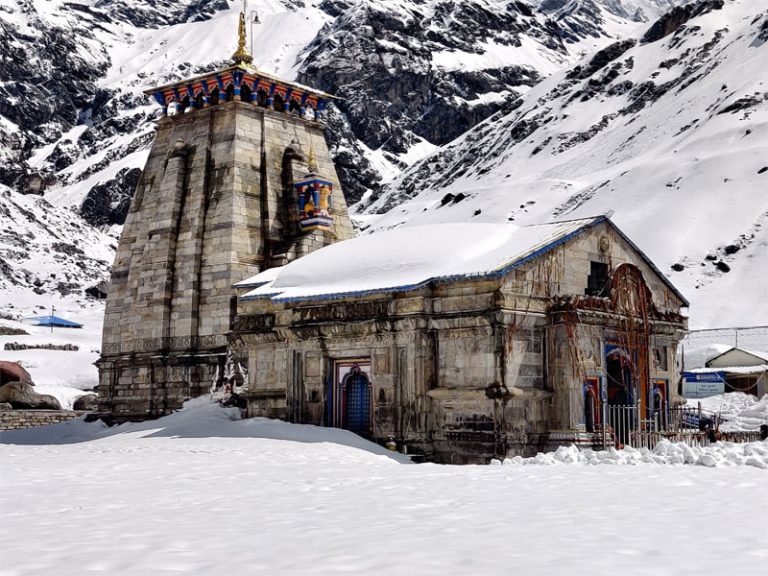
Temple takeover issue: Uttarakhand govt bans protests within 200 meters of Kedarnath, priests say they won’t budge

Since June, the priests at Kedarnath Dham are protesting against the formation of Char Dham Devasthanam Management Board. On Thursday, the Uttarakhand government has banned protests within 200 meters of the temple. The administration alleged that the Yatris were “feeling uncomfortable” because of the protests.

Orders passed after complaints by Yatris

Rudraprayag district administration issued a statement on Thursday in which they said that orders had been passed that prohibit any sit-in demonstrations in the 200-meter radius of the shrine and the main access road from the Valley Bridge. The orders were passed under section 15 (5) (6) of the Devasthanam Management Act.

Ravinath Raman, chief executive officer of Char Dham Devasthanam Management Board, said that yatris complained about the protesting priests outside the shrine. The decision was taken based on their complaint. He added that if the priests do not comply, the administration may launch criminal proceedings against them.

He said, “We got a few complaints from yatris that priests are sitting outside the shrine bare chested and protesting, making the yatris feel uncomfortable. We had also learned that the priests tried to convince yatris to join their protest. Representatives from the Board have tried talking to the priests along with attempts from the district administration also, but they are not budging. Now, we have said that they are free to carry out their protests, but not in the temple premises.”

Kedarnath Tirtha Purohit Mahasabha called orders against their rights

President of Kedarnath Tirtha Purohit Mahasabha, Vinod Shukla, said that they have been protesting for months. The government is not listening to their demands. They said that the orders passed by the government is against their rights. “We have been holding a peaceful protest. Now, our protest will continue, and we will intensify it with support from people of the whole Kedarnath valley, and we will not move till the chief minister comes to talk to us,” he added. Shukla denied any attempts made by the Board to initiate a discussion with the priests.

Santosh Trivedi, a priest from Kedarnath, was protesting since 12th June outside the temple. He had warned the government that he would leave his religion if they do not listen to his demands. After his condition worsened on 7th September, the administration airlifted him to AIIMS, Rishikesh. The Priests had written a letter to the state government on 5th September to mark their displeasure on the formation of the board.

About the Char Dham Devasthanam board

Uttarakhand Char Dhaam Devasthanam Board was formed in January 2020 to manage temples in the state. In June 2020, the Uttrakhand High Court dismissed the PIL filed by Subramanian Swamy against the formation of the board as it allowed the government to take over control of Char Dham and 51 other shrines. The court said that the board will only handle the administration and management of the properties.

Hindu activists have opposed the move of the Uttarakhand government saying that this is an attempt by the government to take over temples while Hindus have been fighting to free temples from government control.

‘No right to question integrity of successors’: 26 former cops slam Julio Ribeiro for supporting people pushing ‘anti-India and communal narrative’

0

After former Mumbai Police chief Julio Ribeiro wrote a letter to Delhi Police chief SN Shrivastava raising doubts about the fairness in the investigation into the Delhi Anti-Hindu riots case, nearly 26 former police officers have written a letter slamming the former cop for supporting people who push ‘anti-India and communal narrative’.

In their letter, the former IPS officers have questioned Ribeiro, who was casting aspersions on the Delhi Police investigation into the Anti-Hindu riots case. They also accused Ribeiro and his associates of backing anti-India elements like Umar Khalid, who is accused of raising “Bharat ki Barbadi Tak Jung Rahegi” slogans.

Former IPS officer Julio Ribeiro had written a letter to Delhi Police chief regarding their supposedly flawed investigation into the Anti-Hindu riots that was unleashed by Muslim mobs on the streets of Delhi in the month of February.

In his letter, Ribeiro had questioned the Police’s supposed lack of action against BJP leaders and had come to rescue of the riots accused Harsh Mander and Delhi University professor Apoorvanand.

Ribeiro has no right to question the integrity and professionalism of police officials

The letter, signed by several former DGPs, Addl DGPs, at least two former IB officials, three former-IGPs, said that Ribeiro or any other former officer has no right to suspect or question the integrity and professionalism of their successors in the Indian Police Service and demoralise the forces.

“The Delhi Police has every right and duty to investigate the role of any such person, and the custodial investigation is a part of due process of law. The accused has his rights under the law to seek anticipatory bail or a regular bail, as the case may be, and the right to a fair trial where he can prove himself innocent,” the former cops defending the Delhi Police investigation said.

The letter by former IPS officers also schooled Ribeiro regarding the due process of law and added that no one is above the law.

“Such posturing and adverse commentary by such officers may demotivate the police officers and dilute their firm resolve to act against the criminals, including those who incite communal divide in India by instigating riots,” they said.

Julio Ribeiro’s letter to Delhi Police

Former Mumbai Police chief Julio Ribeiro, who has a history of writing open letters in support of controversial political events, had recently written a letter to Delhi Police chief SN Shrivastava, questioning the fairness of the investigation in the Anti-Hindu Delhi riots case.

Without fully apprising himself about the actual status of the investigation of the Anti-Hindu Delhi Riots, former cop Julio Ribeiro wrote to Delhi Police expressing his concerns had called the Delhi Police investigation as a miscarriage of justice. In an interview, he had claimed that he had not seen this kind of one-sided action by Police before.

Defending the controversial far-left activists Harsh Mander and Apoorvanand, Ribeiro had said Shrivastava doubted the patriotism of Harsh Mander and Apoorvanand and had termed them as “true patriots”.

“Harsh and Apoorvanand are Gandhians. I should have remembered that Gandhians have lost favour with this regime!” Ribeiro had written in his letter.

Delhi Police chief SN Shrivastava responds to Julio Ribeiro

Following Ribeiro’s letter, SN Shrivastava, Commissioner of Police, Delhi, had responded to him with a detailed reply clarifying his doubts about the Anti-Hindu Delhi Riots investigation.

In his response, Shrivastava said that there is no discrimination based on caste or religion, and the whole investigation is backed by documentary and scientific evidence.

The Delhi Commissioner of Police had said it was his duty to put things in the right perspective. The Delhi Police has not revealed many details of the investigation other than those that are in the charge sheets and status reports submitted in the court.

While dismissing the allegation raised by Riberio, Shrivastava mentioned that when he talked to him on the phone, the ex-cop acknowledged that he does not have first-hand information about the cases. He further added that it was clear Ruberio did not contact any police officer from Delhi Police to understand the actual situation.