Home Blog Page 189

Vasanta Dupare raped and murdered a 4-year-old, got death sentence, now Supreme Courts reopens the case after the convict’s plea

The Supreme Court on Monday, 25th August, gave a fresh chance to death row convict Vasanta Sampat Dupare by reopening his sentencing. The Court stated that it had to reconsider his punishment in view of its 2022 judgment in Manoj vs State of Madhya Pradesh, which had formulated mandatory protections for granting the death penalty.

The three-judge Bench of Justice Vikram Nath, Justice Sanjay Karol, and Justice Sandeep Mehta concurred to revisit Dupare’s sentencing. The judges stated Article 32 enables the Court to intervene when a fundamental right of an accused is infringed, particularly if procedures in death penalty matters are not adhered to.

“The corrective power under Article 32 is invoked to ensure that a person is not deprived of his fundamental right to equal treatment by being denied the rigorous safeguards required at the sentencing stage,” the Court observed.

At the same time, the Bench explained that this extraordinary power cannot be employed lightly. It emphasised that reopening old matters under Article 32 should be an exception and would be exercised only when grave violations of procedure erode the right to life.

The Bench cautioned, “Article 32 is the bedrock of constitutional remedies, but its special scope can’t become a routine for reopening concluded matters. Such reopening will be allowed only where breaches of safeguards are so serious that leaving them uncorrected would undermine the accused’s right to life.”

Background of the case

Dupare was found guilty of raping and killing a four-year-old girl and sentenced to death, a sentence affirmed by the Supreme Court in 2014. His review petition was rejected in 2017, with the Court labelling the crime one of “extreme depravity.” Then, his mercy petitions to the Governor and the President were also refused in 2022 and 2023.

Having tried all these avenues, Dupare approached the Supreme Court a second time, this time seeking a writ petition under Article 32 of the Constitution. In his writ petition, he stated that even though his case was concluded, he was entitled to a rethink since his sentencing had not adhered to the protection the Court had established in 2022.

Fresh hearing ordered

By Monday’s order, the Court overruled its previous 3rd May order that had upheld Dupare’s death penalty. It is ordered that the case now be referred before the Chief Justice of India, who will allot it to an appropriate Bench for a retrial on a fresh hearing. This fresh hearing will be only on sentencing, not on conviction.

“The sentence awarded by this Court on 3rd May is set aside and the matter is remitted to this Court for a fresh hearing on sentence alone to be conducted in conformity with Manoj,” the Bench said.

Arguments in court

At the hearing, Senior Advocate Gopal Sankaranarayanan, who appeared on behalf of Dupare, contended that safeguards made in the 2022 Manoj judgment should also extend to his case. The judgment had made it obligatory for courts to scrutinise carefully mitigating circumstances, including the background of the convict, his mental state, and the possibility of rehabilitation, before the death penalty could be awarded.

On the other side, the Advocate General for Maharashtra opposed the plea. He said Dupare could not use Article 32 to reopen a case that had already reached finality and should have instead pursued a review petition.

The Bench had also shown apprehensions at previous hearings. Justice Nath had said, “It is a dangerous proposition that after any judgment or a matter which is closed can be opened up under Article 32.” Justice Karol also questioned whether the Court’s hands were “tied under Article 32” in such cases.

Delhi: Mohammed Salim strangles Rupa to death over money dispute, dumps her body in a drain, arrested

In the Dabri area of ​​West Delhi, tailor Mohammad Salim strangled a 22-year-old Hindu girl named Rupa to death. Two days after the murder, the girl’s decomposed body was found in a sack lying in the drain.

The body was identified by the tattoo on her hand. After investigating the case, the police have arrested the 35-year-old Muslim accused from Hardoi.

On 23rd August, at around 2.54 pm, Delhi Police received information through a PCR call about the body of a girl found in a sack. The police reached the location of the body found in Dabri police station area.

Image via News18

The police started investigating the body of the girl found in the sack. They said that the girl’s mother had lodged a missing person’s complaint on 21st August 2025.

The body was identified on the basis of the tattoo on the deceased victim’s hand. The body was identified as belonging to 22-year-old Rupa, who works as a maid. Rupa left her house at 10.30 am on 21st August and did not return. According to the police, she was talking to someone on her phone while leaving the house.

During investigation, the policy scanned the nearby CCTV cameras. In the camera, Rupa was last seen entering a building in Mahavir Enclave with the accused, 35-year-old Salim. After some time, Salim came out of the same building, Roopa’s hidden body was also seen in his hand.

According to the police, accused Salim was going to dispose of the girl’s body by placing it on his bike but the body slipped off the bike on the way. In a hurry, Salim threw the body in the drain and fled. Police have arrested Salim from Hardoi.

During Salim’s questioning, it emerged that Salim and Rupa knew each other and had a monetary dispute. When Rupa asked for her money, Salim strangled her to death in anger. After this, he took the girl’s body on a bike and threw it in a drain. Scared of being caught by the police, Salim left for his ancestral home in Hardoi, however, the police arrested him from there.

Meanwhile, the police said that the accused is being interrogated and more facts are likely to emerge, adding that further action will be taken in the matter accordingly. The police have registered a case against the accused Salim under the relevant sections of the Indian Penal Code (BNS) for murder.

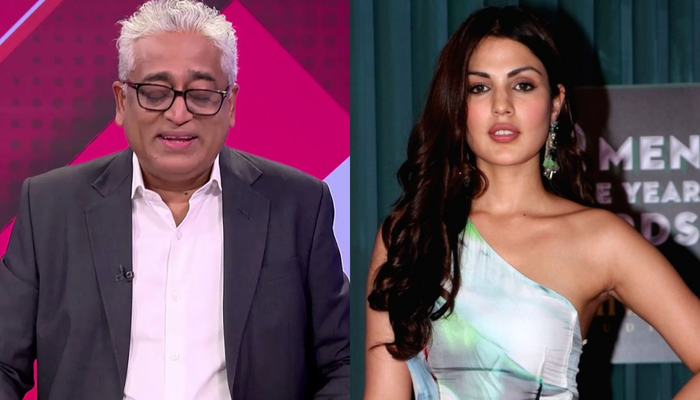
OpIndia Exclusive: ‘Propaganda, sheer defamation’ – Panvel voter slams The Hindu and Rajdeep Sardesai over false double voting charge

On 25th August, yet another allegation of “vote theft” collapsed after the voter at the centre of the controversy, Pradeep Poraji, spoke exclusively to OpIndia and accused The Hindu and Rajdeep Sardesai of defaming him. Poraji’s name was quoted in a report published by The Hindu based on a claim made by a defeated MVA candidate and shared by Sardesai. The report claimed that Poraji voted twice at two different places.

What The Hindu reported on Panvel voter duplication

According to the report in The Hindu, voter duplication was one of the most serious issues in the Panvel Assembly constituency. Defeated MVA candidate Balaram Patil claimed that thousands of names were listed more than once in the electoral rolls. The report claimed that individuals, including Poraji, appeared twice with different EPIC IDs and allegedly cast their votes at separate booths. This was presented as part of a broader pattern of what the Congress Party and its allies have called “Vote Chori” across Maharashtra.

Rajdeep Sardesai pushed The Hindu’s propaganda

Accusing Poraji and others of double voting, Rajdeep Sardesai wrote on X, “BIG: a seasoned opposition candidate from Panvel constituency in Maharashtra 2024 elections has provided hard ‘evidence’ of duplicate voters in his constituency running into several thousands . Most importantly, Balaram Patil actually complained with ‘proof’ BEFORE the elections but local officials did not act. Maharashtra SEC and ECI cannot stay silent any longer. They must respond and clear the air. Credibility of voting process is at stake.”

Source: X

Earlier, Sardesai tried to use India Today’s report to amplify “vote chori” claims of Rahul Gandhi but the report itself had debunked the claims.

‘I voted only in my village’

While speaking to OpIndia, Poraji dismissed the charges outright and clarified that he had cast his vote only once in his native Dhansar village. He said, “I voted only in my village. That is Dhansar village. Our family has always lived in Dhansar. Our home is Dhansar.” He rejected the suggestion that his name was registered in another village called Papdicha Pada under Kharghar.

ECI’s revision of voter list defended

Poraji backed the Election Commission of India’s (ECI) decision to revise the voter list and weed out anomalies. Calling the process “absolutely right” he said, “Those unnecessary and extra names must be removed. Those who are no more and those having their names twice should be removed from the list.”

Ink makes double voting impossible

He also dismissed the practicality of the allegation and pointed out that the indelible ink applied during voting prevents such malpractice. He said, “No question of double voting, we apply voting ink. It does not fade away so easily. It remains for 2–3 days at least.”

‘This is sheer defamation’

Poraji expressed anger at the media coverage and termed the allegations “sheer defamation”. He accused the media of exploiting his name to malign the ECI and create false propaganda. “Yes, it is wrong to do so. It is sheer defamation and nothing else, that too for no reason,” he said.

The incident has exposed yet another baseless allegation of “vote chori” by Congress leader Rahul Gandhi, propagated further by the opposition parties to target ECI, with the voter himself rubbishing the claim and showing trust in the electoral process.

West Bengal SSC scam: TMC MLA Jiban Krishna Saha arrested by ED, had jumped over a wall, thrown phone into bushes while trying to escape

The Enforcement Directorate (ED) on Monday, 25th August, arrested Trinamool Congress (TMC) MLA from the the Burwan constituency, Jiban Krishna Saha from his home in Andi, Murshidabad. The arrest came after a raid at his residence that lasted for more than five hours, as part of the ongoing probe into the School Service Commission (SSC) recruitment scam.

According to ED officials, Saha refused to cooperate during the search. In an attempt to dodge investigators, he jumped over a wall and even threw his mobile phone into nearby bushes. The phone was later recovered. 

This is not the first time he has tried to hide evidence. Back in 2023, during a CBI raid, the MLA had reportedly thrown two of his phones into a pond.

Bhartiya Janata Party (BJP) IT cell chief Amit Malviya also reacted to the incident. Sharing a post on X, Malviya said, “TMC MLA Jiban Krishna Saha’s clownish Bollywood-style escape, leaping over walls and throwing his phone into a pond to dodge the ED, is nothing but a flop scene directed by Mamata Banerjee herself!”

Relatives’ house also raided

The agency also carried out raids at the homes of Saha’s relatives. His in-laws’ residence in Raghunathganj, Murshidabad, and Maya Saha’s home, a Trinamool councillor from Ward 9 in Sainthia municipality, was also searched in Birbhum. Maya is reportedly Jiban Saha’s maternal aunt. She later said she cooperated with officials and was asked to appear before them on 28th August.

In Purulia, ED teams searched the house of the in-laws of the accused Prasanna Roy, who is currently in jail. Roy is suspected of playing the role of a “middleman” in the recruitment scam. Earlier, the agency had seized several of his properties. There are also allegations that three of his sisters-in-law managed to get jobs as primary school teachers a few years ago, raising further questions.

Apart from this, ED officials searched the home of a bank employee in Andi Mahish village, Murshidabad, suggesting that the scope of the investigation is expanding.

The SSC recruitment scam has already led to several arrests, and the latest developments show that investigators are now widening their net across West Bengal.

Bengal SSC Scam

The West Bengal School Service Commission (WBSSC) case is one of the biggest recruitment scams, carried out under the watch of the Mamata Banerjee-led Trinamool Congress government.

The recruitments were made in 2016 for positions of Assistant Teachers for Classes 9-12 and non-teaching staff in Groups C and D. Written examinations, interviews/ personality tests were conducted as part of the initiative to fill the vacancies.

The WBSSC had tasked a company named ‘Nysa Communications’ to scan the Optical Mark Recognition (OMR) sheets of the candidates and assess the results, which helped execute the recruitment scam.

From the very onset, the selection process was fraught with a lack of transparency. WBSSC did not upload a common list of candidates with their respective marks (both during the initial and final stages).

No age relaxations were granted during the exams in contravention of existing norms, which kickstarted the saga of writ petitions in court. One Baishakhi Bhattacharyya became the first to file a case against WBSSC in 2016.

By 2021, several discrepancies came to light in the manner in which 25,753 individuals were appointed by the WBSSC for the positions of Assistant Teachers and non-teaching staff. 

Poison of Communism and Islamist appeasement of Mamata Banerjee destroyed Bengal: Read how the civilisational model of the BJP is the only alternative

West Bengal was once Bharat’s cultural and industrial jewel. Kolkata was the intellectual capital of India, Bengal’s factories gave jobs to millions, and its thinkers lit the fire of nationalism. The soil of Bankimchandra, Vivekananda, Aurobindo, Subhas Bose, and Syama Prasad Mookerjee inspired entire generations to dream of a self-reliant, strong, and proud Bharat.

But today, that land of renaissance has been reduced to rubble. Its youth are migrants in Kerala, Maharashtra, or Delhi. Its villages are ghostly, emptied of men who go out in search of dignity denied at home. Its industries are gone, its entrepreneurs strangled by corruption, and its politics hijacked by Islamist appeasement.

This destruction is not fate; it is betrayal. The betrayal of communists who ruled for 34 years and the betrayal of Mamata Banerjee, who replaced Marx with mullah appeasement. Together they buried Bengal’s economy and dignity. What remains is a state run not by Ma-Mati-Manush but by Migrant, Misrule, and Mamata.

The Communist Curse: Class War over Nation

For 34 years, the Left Front poisoned Bengal with Marxist ideology. They destroyed enterprise by branding industry “bourgeois exploitation.” They drove out the Tatas, Birlas, and every investor who dared to dream of industry in Bengal. Thousands of factories shut, jobs vanished, and poverty became permanent.

But the Marxists were not only anti-industry; they were also anti-nation. They mocked religion, mocked culture, and mocked patriotism. They turned Durga Puja into a “folk festival” while glorifying Lenin. They weakened national pride and opened the door for demographic invasion.

By the time Mamata came in 2011, Bengal was on life support. Instead of reviving it, she finished the patient off.

Mamata’s Appeasement Republic

Mamata Banerjee calls herself the “Didi” of Bengal. But whose Didi is she? The Bengali Hindu migrant struggling in a brick kiln in Kerala? The unemployed youth of Malda? Or the infiltrator from Bangladesh who enjoys ration cards, Aadhaar, and political protection?

The truth is clear: Mamata Banerjee has converted Bengal into an Appeasement Republic. Festivals are subsidized with hundreds of crores, not to promote culture, but to buy loyalty. Illegal infiltrators are treated better than citizens. Madrasa expansion is prioritized over skill training. Police are used not to protect Hindus from Islamist mobs but to shield the mobs themselves.

Her Rajya Sabha MP Sushmita Dev even went so far as to say that the Centre’s review of Bengali migrant workers in Bihar amounted to “racial profiling.” Really? When lakhs of Bengalis are forced to leave their homes due to unemployment, this government defends infiltrators instead of its own people. That is not governance; that is treachery.

The Demographic Time Bomb

Border districts like Malda, Murshidabad, and North Dinajpur have already seen a demographic inversion. Hindus are now minorities in large parts of their own homeland. This is not an accident; it is state-sponsored vote-bank engineering.

Every Hindu child forced to migrate for lack of jobs is replaced by an infiltrator from across the border. Every exodus of Bengali Hindus is matched by an influx of Bangladeshis. The result is clear: a slow-motion partition within Bengal itself.

This is the RSS warning come true. What Syama Prasad Mookerjee predicted in 1947 that unchecked appeasement would reduce Hindus to second-class citizens in their own land is unfolding before our eyes in Mamata’s Bengal.

The Migration Tragedy

Look at any construction site in Bengaluru, Hyderabad, or Gurgaon, and you will hear Bengali voices. Young men from Murshidabad, Malda, Birbhum, and Jalpaiguri are forced out because their land cannot feed them. They are not migrants by choice but by compulsion.

The irony is brutal. Bengal, once the Manchester of the East, now exports labor instead of goods. Its educated youth drive Ola cabs in Delhi, while infiltrators in Bengal receive welfare doles. This is not migration; it is humiliation.

And what does Mamata do? She blames the Centre, blames the BJP, and blames “outsiders” while squandering crores on Puja grants and minority appeasement. This is not just economic failure; it is cultural betrayal.

Syndicate Raj: Mafia as Government

If Bengal had any chance left, the TMC killed it with the “Syndicate Raj.” No construction, no trade, and no small business survives without greasing the palms of TMC syndicates. From coal to sand, from school recruitment to healthcare, everything is run as a mafia racket.

Even jobs are sold. The SSC scam, the teacher recruitment scam, and the coal scam—every scandal shows one thing: Bengal is not governed; it is looted. Investors flee because no businessman wants to deal with extortionists dressed as politicians.

Between 2011 and 2024, more than 6,600 companies left Bengal. That is not migration; that is evacuation. Bengal is not just losing people; it is losing hope.

The BJP Alternative: Pride and Progress Together

Now compare this with BJP-ruled states.

  1. Gujarat under Modi transformed into India’s industrial hub. Ports, highways, power plants, and industries made it the engine of Bharat’s economy.
  2. Uttar Pradesh under Yogi has gone from a “BIMARU” state to an investment magnet, hosting global summits and building expressways.
  3. Assam under Himanta is cracking down on infiltrators and child marriage while bringing IT parks, medical colleges, and universities.

This is the BJP’s double-engine model: nationalism plus development. Pride in culture and prosperity in economy. The RSS vision of Integral Humanism made real.

This is what Bengal needs. Instead of exporting migrants, Bengal should be exporting goods. Instead of appeasing infiltrators, Bengal should be empowering its own youth. Instead of festival doles, Bengal needs factories, jobs, and dignity.

Civilisational Choice for Bengal

Bengal today stands at a civilizational crossroad. On one side is Mamata’s path: appeasement, infiltration, migration, and humiliation. On the other side is the BJP’s path: development, nationalism, dignity, and pride.

The question is simple: Does Bengal want to be a colony of infiltrators or a cradle of renaissance?

Bengal gave Bharat Bankim, Vivekananda, Subhas, and Syama Prasad. Will it now surrender to infiltrators and mafias? Or will it rise again, with pride and progress under a nationalist government?

The migrant exodus is not destiny; it is a verdict on Mamata’s betrayal. The revival of Bengal lies not in Marx or Mamata but in Modi, Yogi, Himanta, and the RSS vision of a Viksit Bharat.

Until then, Bengal will remain trapped in its tragic slogan: not Ma-Mati-Manush, but Migrant, Misrule, Mamata.

More than 1000 Hindu and Christian girls are forcefully converted to Islam each year in Pakistan, reports human rights body: Read about some of the disturbing cases

In the Islamic Republic of Pakistan, the rights of Hindus and other religious minorities are muzzled by the Islamists. In the Muslim majority country, Hindu, Sikh and Christian girls are regularly abducted, forcibly converted to Islam and married off to their Jihadist abductor. These conversions take place with tacit support of the government and courts and all it takes to validate this fraud is a forced ‘confession’ video of the Hindu victims.

There has been a substantial rise in cases of abduction and forced conversion of Hindu and other non-Muslim girls to Islam in the recent years. As per an estimate by the Movement for Solidarity and Peace (MSP), as many as 1,000 Christian and Hindu girls, aged between 12 to 25 years, are abducted annually in Pakistan. In most cases, the police refuse to act against the perpetrators or is found to be helping the Islamists.

MSP’s 2014 study traced numerous cases wherein Hindu and other non-Muslim girls, mostly underage, were kidnapped, subjected to physical and mental torture, forced to convert to Islam, marry their abductor or older Muslim men, and when the victim’s family would approach court, the girls would be threatened with murder of their parents if they testified against her oppressors.

Abductions, forced conversion to Islam, killings and a complicit ‘system’: The continued struggle of Pakistani Hindus to save their identity and life

In the last decade, nothing has changed in the failed state of Pakistan, their economy remains in shambles, their army continues to dominate and persecute Pashtuns and Baloch. Besides inflation, hatred for Hindus and IMF loans are the only two things that never go down in Pakistan.

As per an October 2024 report by human rights group Jubilee Campaign, the modus operandi of perpetrators of such crimes rarely deviates from the following pattern: an adult Muslim man (in some cases married with children of their own) identifies a young Christian or Hindu girl (often a neighbour or acquaintance) that he wishes to make his wife. The perpetrator exploits Sharia legal loopholes; the climate of police disinclination to investigate offenses against faith minorities; and the willingness of some radical Muslim leaders and entities to fabricate documentation regarding the victim’s age, religious affiliation, and marital status.

Source: Jubilee Campaign report

In May 2023, a Christian girl named Muskan was kidnapped at gunpoint by Mohammad Adnan and his father, after which the minor was forced to convert to Islam. The minor was declared Adnan’s ‘wife’. Muskan was repeatedly subjected to sexual abuse. In June, 14-year-old Muskan Liyaqat of Muridke in Punjab’s Sheikhpura district escaped from captivity after nearly two years. After escaping captivity, Muskan said that she was beaten with an iron rod and insulting words were used for Christians. She had a miscarriage after torture during forced pregnancy.

As per a Jubilee Campaign report, in the case of the forced conversion and marriage of a Christian girl named Shifa, the police officer told the 14-year-old victim’s father, “Your daughter will never return to you, inshallah [if Allah wills].” During court hearing, her 48-year-old Muslim ‘husband’ Syed Shabbar Ali Gillani, presented fake conversion and marriage documents to claim that Shifa was 18-years-old even though she was 14. Shifa was abducted by her neighbour Najma Liaquat.

In February 2023, a 17-year-old Hindu girl in Pakistan’s Sindh was kidnappedv and converted to Islam. The minor is a resident of Naukot, Mirpur Khas district in Sindh province in Pakistan. According to her family, the girl was kidnapped on February 15 from Naukot market where she had gone with her younger brother to purchase vegetables. Her younger brother said the girl was being taunted by one Rouf, a resident of Umerkot and his two friends. On 15th February 2023, when the siblings reached Naukot market, Rouf along with his friends forcefully took the girl away with them. The police registered FIR with entries in the records of missing persons and did not name the perpetrators.

Mirpur Khas is notorious for the big conversion rackets operating there. Reports say that not only Hindu girls but entire families are targeted for forced conversions and then kept in mosque-cum-training centres to properly ‘Islamise’ them. In May 2023, around 50 Hindus were converted to Islam and were subjected to four months Islamic training. In this event organised by an Islamic outfit, Mohammad Samroz Khan, son of Minister of Religious Affairs and Senator Mohammad Talha Mahmood, was invited as the chief guest in this program. This program was organised in a madrasa in Baitul Imam New Muslim Colony. 

In June 2025, four Hindu siblings, Jiya (22), Diya (20), Disha (16) and Ganesh Kumar (14) were kidnapped from Shahdadpur in Sindh. Two days after their kidnapping, an online video showed the siblings praying namaz with their new names. Notably, Punjab, Sindh and Khyber Pakhtunkhwa are the centres of forced conversions to Islam with individuals and Islamists groups functioning with the purpose of bringing in more and more convert to Islam.

In 2024 alone, rights groups say that over a dozen cases of forced conversion have been reported in Pakistan. Not to forget, most cases of forced Islamic conversion in Pakistan go unreported.

In March 2025, Pakistan’s Human Rights Commission of Pakistan (HRCP) released its  report on the human rights situation in the country. The report, “Under Siege: Freedom of Religion or Belief in 2023/24,” gave a dark account of increasing violence, forced conversions, and institutionalised discrimination against Pakistan’s Hindus, particularly in Sindh province.

Violence against Hindus in Pakistan includes mob violence, temple desecration, targeted kidnappings and forced conversion of Hindu girls. The report highlights how the judicial process in Pakistan, extremist elements, and inaction of government officials have placed Hindus in a seriously vulnerable position with little chance of justice.

Sindh’s Ghotki, Umerkot, and Tharparkar are Hindu abduction hubs. Most of the victims are underage girls who are abducted, coerced into conversion to Islam, and wedded to Muslim men in the guise of “voluntary conversions.”

Islamic Jihadist clerics like  Mian Abdul Haq (Mian Mithu) play a crucial role in such forced conversions. The report indicated that his seminary, Dargah Bharchundi Sharif in Ghotki, is repeatedly used for the forced conversion of abducted Hindu girls.

One of the cases that were reported by international media included two Hindu sisters, Reena and Raveena, who were kidnapped in Sindh. Their parents begged the court to return them, but the judge legalised their forced marriage. Interestingly, the Sindh Child Marriage Restraint Act has 18 as the minimum age for marriage, but the judge categorically ignored the law. HRCP noted that now majority of the Hindu families have stopped sending their daughters to school out of fear of abduction.

In the year 2022 alone, 124 including 81 Hindu women forcefully converted to Islam with 58% of them being minors.  A Human Rights Observer 2023 fact sheet revealed  81 Hindu, 42 Christian and one Sikh girl were forcibly converted to Islam. The fact sheet revealed that 23 per cent of girls were below 14 years of age, 36 per cent of them were between the age of 14 and 18 years, and only 12 per cent of the victims were adults, while the age of 28 per cent of the victims was not reported.

Notably, besides being forced to convert to Islam, Hindus in Pakistan are subjected to religious discrimination, humiliation and killings over the false accusations of ‘blasphemy’, by Islamists. Hatred against Hindus is indoctrinated in educational institutes in the country.

In August 2025, Pakistan’s own National Commission on the Rights of the Child (NCRC)  exposed the serious and long-standing discrimination faced by children from minority religions, especially Christians and Hindus in the country.

With state inaction rather complicity, Islamists in Pakistan are emboldened to carry out forced conversions. Under the rule of Madrassa-bred jihadist Asim Munir, the de facto ruler of Pakistan who often expresses his hatred for Hindus, the hostile neighbour is witnessing increased radicalisation. Given the world’s convenient silence on the plight of Pakistani Hindus, who are either forced to abandon their religion or flee to India, continue struggle to exist and preserve their religious identity from third-fourth generation Muslim converts whose own ancestors were Hindus.

‘Attacks caused widespread distress within the Hindu community’ – Indo-Fijians urge PM Modi to seek action over temple vandalism and targeting of Hindu homes

0

On 24th August, the World Hindu Federation (Pacific) wrote to the Prime Minister of India, Narendra Modi, and urged him to intervene with Fijian Prime Minister Sitiveni Rabuka over recent attacks on Hindu temples, homes and sacred symbols in Fiji.

Concerns over repeated desecrations

In a strongly worded letter, WHF (Pacific) President Dr Sunil Kumar expressed deep concern over the “recent spate of desecrations” involving theft and vandalism. He said that families in Fiji had reported disturbing incidents including the theft of a sacred Shivling and statues from temples and homes.

He said, “These attacks have caused widespread distress and insecurity within the Hindu community.” Furthermore, he criticised what he described as a pattern of inaction, pointing out that “despite repeated condemnations in the past, such crimes continue with alarming frequency.”

Questions raised over political climate

The WHF suggested that the current political environment may have emboldened such behaviour. He added, “We are compelled to ask why these acts of religious disrespect persist and whether the political climate under Prime Minister Sitiveni Rabuka has emboldened such behaviour.”

The organisation has called on PM Modi, who was hosting Rabuka on an official visit to India, to raise the matter directly during bilateral talks. The letter said, “It is crucial that Mr Rabuka explains how his government plans to protect the Hindu minority community from these disrespectful attacks.”

Temple vandalism sparks outrage

The letter came days after thefts at Hindu temples at five locations in a single day. As per media reports, theft and vandalism were reported at temples in Korociri, Nakurakura, and Sagayam Road.

A few weeks ago in July, the century-old Samabula Shiv Temple in Suva was vandalised, which triggered widespread condemnation and renewed concerns over the safety of the Indo-Fijian community in the country. The 100-year-old idols were destroyed in the attack.

The accused in the matter was identified as 28-year-old Samuela Tawake. He was charged with one count of sacrilege and one count of throwing an object. He was sent for psychiatric evaluation by the court.

Earlier in April this year, sacred Ramayan texts were torn in Vunicuicui Shiv Mandir in Labasa.

This is not the first time Hindu temples and establishments have come under attack in Fiji. In 2018, temples were vandalised in Suva and Nadi with hate graffiti, idols were damaged and donation boxes were stolen. Similarly, in 2006, there were several attacks on Hindu temples which forced temple administrations to hire private security after police admitted they could not provide 24×7 protection. In 1991, there were incidents of firebombing and burning of sacred texts in Fiji.

VHP Fiji condemns temple desecration, urges strong action and protection of Hindu faith

After the July attack on the century-old Samabula Shiv Mandir, the Vishva Hindu Parishad (Fiji) strongly denounced the desecration of sacred idols, calling it not just vandalism but an assault on the very foundations of the Hindu faith. VHP (Fiji) President Jay Dayaal described the act as deliberate and deeply disturbing, warning of growing hostility towards Hindu temples and scriptures. He urged Fijians to reject religious intolerance, called for robust government action to safeguard places of worship, and demanded strict punishment for the perpetrator.

Fijian Minister vows zero tolerance against religious attacks

Minister for Trade, Cooperatives, MSMEs and Communications, Manoa Kamikamica, and Minister of Education Aseri Radrodro asserted during an event organised by the Hindu community in Fiji that unity, compassion, and understanding are the building blocks of a peaceful Fiji where all communities can live in harmony.

Kamikamica assured the Indo-Fijian community that the government has a zero-tolerance stance on religiously motivated attacks and assured that such attacks would not be tolerated.

Pakistan refuses to apologise for 1971 genocide in East Pakistan, claims the issue was ‘settled’ as Bangladesh demands apology for the atrocities and $4.52 billion in reparations

The attempts of Muhammad Yunus’ interim  government in Dhaka to mend relations with Pakistan were hit by a serious setback on Sunday, 24th August. Pakistani Foreign Minister Ishaq Dar, who visited Bangladesh for two days starting Saturday, 23rd August, refused point-blank to apologize for the genocide perpetrated by Pakistani soldiers in 1971, when Bangladesh was still East Pakistan.

Dar’s take on the issue of the 1971 war

According to media reports, Dar, who visited Dhaka on Saturday, said that all problems concerning the 1971 Liberation War already had been resolved, initially in 1974, and again in 2002. He asserted that past agreements and gestures between the nations had closed the issue. His words, however, were ignored by Dhaka, which has been pursuing Pakistan relentlessly to apologize for the Pakistani Army’s mass killings and sexual atrocities committed during the war that gave birth to Bangladesh‘s independence.

Dhaka’s strong reaction

Yunus’ foreign minister in his interim government, Touhid Hossain, dismissed Dar’s statement. Dhaka requested Pakistan to apologise for the murder of hundreds of thousands of Bengali-speaking Hindu citizens and rape of countless Hindu women in East Pakistan (now Bangladesh) by the Pakistan Army and the country’s pro-government militias during 1971. 

Yunus’ also requested Islamabad to pay Bangladesh its share of the pre-1971 assets of undivided Pakistan in the form of a reparation of $4.52 billion. Aside from this, Islamabad was requested to bring back the Pakistanis stranded in Bangladesh for more than half a century since 1971.

For Bangladesh, the pains of 1971 still cut deeply. The genocide perpetrated by the Pakistan Army killed hundreds of thousands and countless women were subjected to rape. The question of an official apology has been a chronic problem in Dhaka’s foreign policy, recurring every time the top leaders of both countries try to strengthen relations. Although Dar contended the issue was “historically settled,” Hossain intimated Bangladesh did not see it that way. 

Agreements signed despite tensions

Despite the rift, both sides were also able to sign a number of agreements for enhancing cooperation. These involved granting exemption from the visa requirement for holders of official and diplomatic passports, Memorandums of Understanding on commerce, cooperation between their foreign service institutes, cooperation between national news agencies, and collaboration between think tanks. There was also an agreement on a cultural exchange program for the enhancement of people-to-people contacts.

First senior-level visit in more than a decade

Dar’s visit was important, as it was the first by a Pakistani foreign minister to Bangladesh since Hina Rabbani Khar’s in 2012. During his visit, he also met with Yunus, leader of Bangladesh’s interim government, and engaged in talks with opposition leaders of the Bangladesh Nationalist Party (BNP) and the Jamaat-e-Islami.

India’s strategic autonomy in a shifting geopolitical order: Trump’s tilt towards Pakistan and the new test for New Delhi’s foreign policy

The last few months have shown how quickly the geopolitical landscape can change, and India today stands at the heart of this churn. After Operation Sindoor exposed Pakistan’s weakness and intensified hostility between the two neighbors, the bigger surprise has come from across the Atlantic. America, once celebrated as India’s “natural ally,” has chosen to embrace Islamabad again, impose arbitrary tariffs on India, and indulge in rhetoric that undermines the very foundations of the partnership that took two and a half decades to build. For a country like India, which, under Prime Minister Narendra Modi, has pursued a proud and independent foreign policy, this is less a setback and more a reminder that the path of strategic autonomy and multi-alignment is the only way forward.

The reality is that U.S. President Donald Trump’s second term has overturned many assumptions in New Delhi. His first term saw sharp words against Pakistan, a suspension of aid, and a recognition that the so-called “frontline state” was the epicenter of global terror. But the Trump of today has taken a U-turn. Pakistan’s Army Chief Asim Munir, who tasted defeat during Operation Sindoor, found not hostility but red-carpet treatment in Washington. Trump hosted him for lunch, praised America’s counter-terrorism partnership with Pakistan as “fantastic,” and even tried to falsely claim credit for ceasefires between India and Pakistan. Reports that his family’s company signed a ₹17,000 crore cryptocurrency deal with Pakistan only reinforce the perception that America’s newfound affection for Islamabad has less to do with strategy and more to do with private business interests. For India, this is not merely disappointing; it is insulting.

It is worth reminding ourselves how far India-U.S. relations have come since the Cold War. In 1998, after India’s nuclear tests, the Clinton administration punished New Delhi with sanctions. Yet within two years, President Bill Clinton himself visited India and reset the relationship. From that point onward, every American administration, Republican or Democrat, treated India as a strategic partner. Indians across the political spectrum, whether under NDA or UPA governments, saw value in building this bond. The 2008 Civil Nuclear Agreement ended India’s nuclear isolation, the 2016 LEMOA agreement deepened defense ties, the 2023 iCET initiative boosted technology collaboration, and the 2024 Supply Security Agreement further cemented trust. For twenty-five years, the partnership grew steadily, even during Trump’s first term. But now, the same Trump has chosen to cozy up to Pakistan, blame India for buying oil from Russia, threaten to dismantle BRICS, and even insult India by declaring its economy “dead.” America is no longer guided by principles, only by profit.

India’s response has been dignified but decisive. Instead of begging for American approval, New Delhi has quietly reinforced ties with Moscow. National Security Advisor Ajit Doval’s meetings with Sergei Shoigu, Prime Minister Modi’s direct conversation with President Putin, and Foreign Minister S. Jaishankar’s visit to Russia all demonstrate that the India–Russia partnership remains rock solid. At the same time, India has engaged China pragmatically, with Foreign Minister Wang Yi visiting Delhi ahead of the SCO Summit, showing that Modi’s government is willing to talk where interests demand it. This is the essence of multi-alignment, strengthening one relationship without weakening another. Modi’s success in securing African Union membership in the G20 in 2023 proves that India’s independent foreign policy carries weight in global forums. Unlike America’s transactional diplomacy, India’s voice is trusted across the Global South.

This course correction is nothing new. Since independence, India has redefined its foreign policy whenever needed. Nehru built the Non-Aligned Movement to protect sovereignty in a bipolar world. Later governments used that principle to safeguard national interests while cultivating ties with both superpowers. Today, Modi has adapted that legacy into strategic autonomy, multi-alignment, and de-hyphenation. Unlike the Congress era, however, this is not about passive non-alignment or hiding behind slogans. This is about the active pursuit of national interest, the unashamed assertion of sovereignty, and the refusal to allow any foreign power to dictate India’s choices. The days when America could take India for granted are over.

At the same time, foreign policy strength must rest on domestic power. Modi has repeatedly stressed Atmanirbhar Bharat as the foundation for India’s rise. A nation that leads in advanced technologies, artificial intelligence, drones, and bioengineering will not need to plead for recognition; the world will seek its partnership. This is what strategic autonomy means in the 21st century: not just keeping distance from power blocs, but becoming so strong that others naturally align with India.

The message is clear. America may remain an important partner, but it cannot be the sole anchor of India’s foreign policy. Trump’s opportunistic embrace of Pakistan and his arrogant tariffs have exposed Washington’s double standards. A nation that once lectured the world on democracy and counter-terrorism is today dining with Pakistan’s generals, who run a terror factory as state policy. Such hypocrisy cannot be ignored. Under Modi’s leadership, India must continue to chart its path, deepen ties with trusted partners like Russia, engage the Global South, and prepare for a world where alliances shift overnight.

India has walked this road before, balancing between competing powers while protecting its sovereignty. The difference now is that India is no longer a weak post-colonial state but an emerging civilizational power with global ambitions. The turbulence of today is not a threat but an opportunity to assert independence more strongly than ever before. The real test is not whether India can adapt to a changing world, is whether the world can adapt to a stronger, self-reliant India. And in that test, New Delhi under Modi has already shown the will and vision to succeed.

HM Amit Shah recalls his bail episode under Justice Alam while defending 130th amendment bill

0

On 25th August, Union Home Minister Amit Shah, in a detailed interview with news agency ANI, strongly defended the Constitution (130th Amendment) Bill, 2025. He asserted that the measure was essential to ensure governance is not conducted from jail. The Bill proposes the automatic removal of the Prime Minister, Chief Ministers, and Ministers if they remain in jail for 30 consecutive days under charges carrying a punishment of five years or more.

During the interview, HM Shah explained that the provision was fair and the judiciary would provide safeguards. He underlined that before any arrest, there are several stages which include enquiry, FIR, summons, and the scope of stays. He added, “Nothing happens overnight. If someone is neck-deep in corruption, then naturally arrest and resignation will follow. But once bail is granted, the individual can return, take oath again, and resume duties.”

He also spoke about the controversy surrounding Justice Aftab Alam and clarified that when he was booked in a fake encounter case, the judge never came to his house. However, during the hearing of his bail application, which was scheduled on a Sunday at the judge’s residence in urgency, it was argued that as Home Minister of the state, he might influence witnesses or tamper with evidence. His advocate suggested that if the court had such concerns, he would remain out of the state, and HM Shah did so at that time, for two years.

HM Shah stressed that despite such hardships, he resigned immediately after being summoned by the CBI and did not return to office until acquitted.

In contrast, the Chief Minister of Delhi, Arvind Kejriwal, and other ministers of the Aam Aadmi Party refused to resign while facing corruption charges and lodged in jail. He questioned whether India should ever accept a Prime Minister or Chief Minister governing from prison, insisting that morality in public life must stand firm beyond political convenience.