In Madhya Pradesh’s Indore, Bhavans College chairman Sameer Mir has been accused of love jihad by his wife. The wife has told the police that Sameer was pressuring her to convert to Islam. The victim has also accused him of threatening her and of domestic abuse.
The victim says that she was married to Sameer Mir in 2006, according to Hindu customs. According to the victim, her husband’s behaviour changed about 4 years ago. Sameer himself started visiting the mosque and praying Namaz. And at that time, she was shocked to know her husband’s full name was Sameer Mir, and he is Muslim.
Moreover, he also started pressuring his wife to pray Namaz and accept Islam. He also started to force her to wear Burqa. He threw away the idols of Hindu gods and goddesses kept in the house, and stopped her from performing puja and visiting temple. When his wife did not listen to Sameer, he started beating her and threw her out of the house in 2020. Sameer and the victim also have two children.
“About 4 years ago, Sameer’s behaviour started changing. He started performing namaz, and he also changed his attire completely. After this, he started pressuring me to pray namaz and accept Islam,” the victim said.
She added that Sameer also forced her and their children to observe Roza
He came to meet the victim several times till 2024, but every time he pressured her to convert to Islam. After being harassed continuously, the victim lodged a complaint against Sameer Mir with the Indore Police.
The police have registered a case against Sameer Mir under relevant sections of the Madhya Pradesh Religious Freedom Act 2021. The victim has presented her wedding photographs and other evidence to the police. The police are investigating the matter.
A family gathers in their living room, engaging in laughter and light conversation as they plan an upcoming birthday celebration for one of their members, when their joyful discussion is interrupted by an unexpected power outage. Initially, they speculate that it might be a technical fault or a problem with the transformer while their house is illuminated by the inverter’s light. However, their confusion is soon resolved when a series of loud noises, unlike anything they have experienced before, reverberate throughout the area.
They rush outdoors and observe an object soaring above their residence. Given the current tensions between India and Pakistan, they feel a sense of scepticism, aware that the neighbouring country has a propensity to strike at civilians, due to its inability to challenge our defence forces. Upon reaching the rooftop, they are confronted with a startling scene: the entire vicinity is shrouded in darkness, accompanied by eerie sounds echoing from every side as similar objects pass overhead. It is at that time that they come to understand they are truly under attack from Pakistan.
This was how the evening of 8th May unfolded for my family, myself and the people of Jammu. It is noteworthy that the assault was directed not at the borders, but at the heart of the city, which caught many off guard, as the citizens, especially the younger generation, were quite unfamiliar with this kind of aggression from Pakistan, which typically engages in shelling border territories. Nevertheless, the incident clearly demonstrated how unsettled Pakistan has become following “Operation Sindoor,” as it desperately attempted to target civilians deep within the city due to its failure to counter India’s strikes at its terror infrastructure following the Pahalgam terror attack on 22nd April.
We returned to the safety of our residence, closed the curtains and turned off the lights. We were still evaluating the unprecedented events when our phones began to ring with calls from relatives, friends, and other family members, both from within and outside Jammu, inquiring about the situation in the area. Those who live in Jammu advised us to ensure our safety by securing our doors and remaining indoors, as they were facing similar circumstances. On the other hand, the ones who were in other regions implored us to leave the city and join them as soon as the situation stabilised.
As the expression goes, “The further one is, the more they tend to worry,” our family members and friends who are not in Jammu were noticeably more troubled about our safety. They came up with a variety of ideas to protect ourselves while repeatedly requesting us to come to their place the very next day. While we assured them that we were fine, there was a feeling of genuine apprehension about the potential ramifications of the attack.
Meanwhile, my phone began to explode with notifications and numerous videos of foiled missile and drone attacks from different parts of Jammu. At that time, everyone in Jammu was linked to one another, whether directly or indirectly. I consistently monitored social media and remained connected with my friends in Jammu to gather information regarding the ground situation. I was informed by a cousin that Satwari Cantonment was the intended target, and loud blasts were even audible along with the red projectiles in the sky in the Gandhinagar area, which is one of the most upscale and affluent regions of Jammu.
As the initial surprise faded, we reconciled with the situation and, truthfully, discovered a renewed sense of determination among ourselves against the terror state of Pakistan. The intensity of the attacks soon escalated, and at one point, it nearly felt as though the explosions were occurring on our house’s roof. Amid the cacophony of loud blasts, I questioned my grandmother, who is in her late eighties, about her feelings of fear.
She calmly stated, “I have lived my life and do not have concerns for myself. My primary concern lies with you. I am also troubled by those enduring similar situations in other regions of Jammu and India. I even feel anxious for those who do not have the privilege of safety behind closed doors or in rooms, facing bullets and missiles to protect the nation. Nevertheless, all my worries fade when I invoke the name of my Lord Ram. He is with us all. Sooner or later he will take care of all our problems. Just have faith.”
She has lived through communal riots when she was a minor, lost her people to the violence, was forced to leave her home along with her family and live as a refugee in a different region before returning and rebuilding her life from scratch. Her answer eliminated any remaining uncertainty I possessed.
Although there was a sense of unease among everyone, they chose to respond with strength, calmness and resilience rather than panic or fear. In spite of all circumstances, there existed unwavering confidence in our defence forces and an indomitable trust in the protection bestowed by Goddess Vaishno Devi and Goddess Kali (Bawe Wali Mata). The primary fear for everyone was the likelihood of casualties or substantial losses, however, as the night progressed, the absence of any such report offered us great comfort and further solidified our faith. Our security forces managed to prevent every attack from reaching its target.
We did not sleep, and shortly thereafter, in the early morning hours, we heard similar loud sounds followed by another blackout. However, this time we were neither surprised nor taken aback. We simply prayed for everyone’s safety and hoped for the best. Some individuals were already asleep by then. We later discovered that Pakistan’s attempts have been thwarted once more by our brave forces. The city, however, remains on high alert, as an advisory has been issued to turn off the lights tonight, aware of the malicious intentions of our adversary.
The night that initially took many, including me, by surprise ultimately turned into a matter of pride for our forces and their capabilities, further strengthened our faith in God and profound respect for the courage shown by the ordinary people in the face of such a brutal attack, not only in Jammu but other areas as well. We do not wish to experience this again, nor do we want it for any of our fellow citizens, however, we are not scared either. The message was articulated unequivocally from all households in Jammu yesterday.
Indian ambassador to the US, Vinay Kwatra, meticulously countered CNN’s anti-India propaganda during a live interview on the news channel on Thursday (8th May). Kwatra corrected the CNN anchor who referred to the Indian union territories of Jammu and Kashmir as “Indian administered parts of Kashmir” by asserting that the entire Jammu and Kashmir, including the Pakistan-occupied Kashmir (PoK), is an integral part of India. “First of all, I’m sorry, but let me correct you. The entire Jammu and Kashmir is an integral and unalienable part of India. The only issue to be resolved there is the return of the Pakistan-occupied Kashmir,” said Kwatra.
India’s Ambassador to the U.S., Vinay Kwatra, spoke eloquently with @CNN on Pakistan’s terrorism in Kashmir, detailing how Pakistan escalates conflict with India. Listen to his articulate remarks. pic.twitter.com/AHVZ5U2VNk
Responding to the CNN anchor’s question about the ongoing military tensions between India and Pakistan, Kwatra set the record straight regarding India’s military action against terror hubs in Pakistan and PoK following the gruesome Pahalgam terror attack.
The Indian ambassador clarified that the military escalation between the two countries did not start with India and, in fact, it started with the April 22 Pahalgam terror attack, which was carried out by Pakistan-backed terrorists. He added that Operation Sindoor was India’s counter-terrorism operation in retaliation for the Pahalgam terror attack in which terrorists brutally killed 26 Hindu tourists after verifying their religion. “The strikes were intended to hold the terrorists accountable and deliver justice to the victims. Pakistan’s subsequent military action is them saying that they stand with the terrorists,” he said.
India’s response was precise, calibrated and measured: Kwatra
He said that India did not target the civilian and military locations in Pakistan and PoK and acted in a measured and calculated manner against the terror infrastructure. He described India’s response as “a very precise, calibrated, measured response to these terrorists, to their factories, to their integrated facilities, which they run out of Pakistan and Pakistan-occupied Kashmir.”
Without mincing words, Kwatra called out Pakistan for sponsoring and harbouring terrorism on its soil and unabashedly denying it. “What it shows the world is that Pakistan has again decided to stand with the terrorists. Rather than take action against them, they are essentially lending them support. We wouldn’t be surprised if they are themselves involved in this,” Kwatra said.
When the CNN anchor asked Kwatra whether India is at war with Pakistan, in order to elicit a desired response, he calmly responded by saying, “We are at war with the terrorists. And we will bring justice to the victims and hold them accountable (terrorists),” Kwatra replied.
Thwarting the anchors’ attempts to label the ongoing conflict between India and Pakistan as a religious war, Kwatra reiterated, “I think it is an Indian action against the terrorists. The ones who carried out the killings of the civilians are the frame of reference in doing these attacks (India’s military actions), and holding them accountable is holding terrorism accountable.”
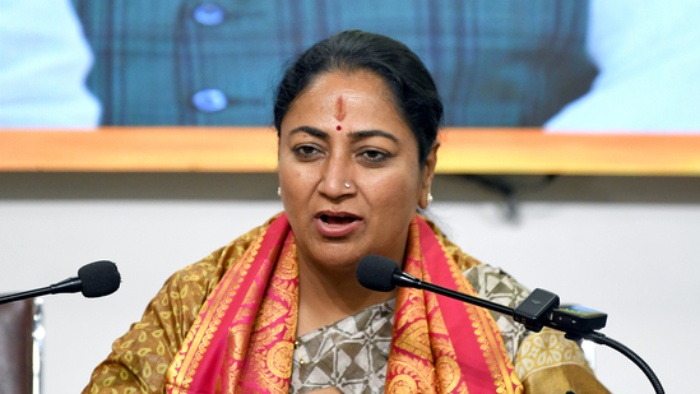
The Delhi High Court on Friday directed Trinamool Congress leader Saket Gokhale to publish a public apology within a week to former diplomat Lakshmi Puri, as per the court’s previous judgment on July 1, 2024.
This decision comes after Lakshmi Puri filed a contempt petition against Gokhale for failing to comply with the court’s orders.
Lakshmi Puri filed a defamation suit against Saket Gokhale in 2021 after he published tweets questioning her property purchase in Switzerland, raising concerns about her and her husband, Union Minister Hardeep Singh Puri’s, assets.
The Delhi High Court deemed Gokhale’s tweets defamatory, citing Shakespeare’s Othello to emphasise the damage inflicted on Puri’s reputation.
Saket Gokhale appeared before the Delhi High Court on February 28 and April 15, 2025, in compliance with orders issued in the contempt petition.
After reviewing submissions, Justice Anish Dayal directed Gokhale to pay Rs 50 lakh in damages to Lakshmi Puri, issue an unconditional public apology on his X handle, to remain visible for six months, publish the apology prominently in a national daily newspaper, specifically The Times of India and refrain from making any further defamatory statements against Puri on any platform
Additionally, regarding the Rs 50 lakh damages, a coordinate bench led by Justice Manmeet Pritam Singh Arora had already ordered the attachment of Gokhale’s salary on April 24, 2025.
The Court further directed that arguments on the issue of wilful noncompliance would be considered on the next hearing date, which is 12.09.2025.
Gokhale failed to comply with the court’s previous judgment, leading to a contempt petition filed by Lakshmi Puri.
Recently, another bench of the Delhi High Court dismissed applications filed by Trinamool Congress MP Saket Gokhale, who sought to recall an order directing him to pay Rs50 lakh in damages and publicly apologise to Lakshmi Puri, former Assistant Secretary-General of the United Nations, in a defamation case.
Another bench of the Delhi High Court also issued an order attaching a portion of Saket Gokhale’s salary, a Member of Parliament from the Trinamool Congress (TMC). The court directed that the salary will remain under attachment until a total sum of Rs 50 lakh is deposited in the court.
The defamation case originated in 2021 after Gokhale published a series of tweets questioning Puri’s property purchase in Switzerland. His posts raised concerns regarding her and Union Minister Hardeep Singh Puri’s assets.
Additionally, Gokhale tagged Finance Minister Nirmala Sitharaman in his tweets, calling for an ED investigation. In its July 2023 ruling, the High Court deemed the tweets defamatory, citing Shakespeare’s Othello to emphasise the damage inflicted on Puri’s reputation.
Earlier, in July 2021, the court had issued an interim injunction, mandating Gokhale to remove the tweets within 24 hours and barring him from making further defamatory statements. However, Gokhale failed to comply with the court’s previous judgment, leading to a contempt petition filed by Lakshmi Puri.
(This news report is published from a syndicated feed. Except for the headline, the content has not been written or edited by OpIndia staff)
As India continues to hit terror camps in Pakistan while also neutralising Pakistani missiles and drones targeted at India, the Ministry of External Affairs held a special press briefing on Friday evening. Foreign Secretary Vikram Misri, along with Wing Commander Vyomika Singh and Colonel Sofia Qureshi, described last night’s events in the briefing.
Vyomika Singh said that on the intervening night of 8 and 9 May, the Pakistan military carried out multiple violations of Indian airspace along the entire western border with an intent to target military infrastructure. Pakistan military also resorted to firing heavy-calibre weapons along the line of control.
Drone intrusions were attempted from Leh to Sir Creek along the international border and LoC, the Wing Commander said. She added that around 300 to 400 drones were used to attempt infiltration at 36 locations. The Indian armed forces shot down many of these drones using kinetic and non-kinetic means. The possible purpose of such large-scale aerial intrusions was to test air defence systems and gather intelligence.
Forensic investigation of the wreckage of the drones is being done. Initial reports suggest that they are Turkish Asisguard Songar drones. Later in the night, an armed UAV of Pakistan attempted to target Bathinda military station, which was detected and neutralised.
In response to the Pakistani attack, armed drones were launched at 4 air defence sites in Pakistan. One of the drones was able to destroy an air defence radar, Singh said.
Pakistan also carried out artillery shelling across the LoC using heavy-calibre artillery guns and armed drones at several places in Jammu and Kashmir, which resulted in some losses and injuries to Indian Army personnel. Pakistan’s army also suffered major losses in India’s retaliatory firing.
Calling out Pakistan’s irresponsibility, the Wing Commander said that despite launching a failed unprovoked drone and missile attack on 7th May evening, it didn’t shut down its civilian airspace. She said that Pakistan is using civil airliners as a shield, knowing fully well that its attack on India will result would elicit a swift defence response. This is not safe for unsuspecting civil airliners including international flights that were flying near the international border.
The Indian government shared screenshots of flight tracking site Flightradar24, showing civilian aircraft flying between Karachi and Lahore when Pakistan was sending drones and missiles to India. Vyomika Singh said that IAF demonstrated considerable restraint in its response, ensuring the safety of the international civil airliner.
After the briefing by Colonel Sofia Qureshi in Hindi and Wing Commander Vyomika Singh in English, Foreign Secretary Vikram Misri addressed the media, saying that Pakistan targeted civilian and military establishments, and Indian armed forces responded proportionately, adequately and responsibly.
Misri highlighted the official and blatantly farcical denial of the attacks by the Pakistan government, saying it is yet another example of their duplicity, and the new depths they are plumbing in their quest for disinformation. Referring to Pakistan’s claims that Indian armed forces were attacking religious sites in India, Misri called them preposterous and outrageous.
He said that Pakistan will not succeed in its attempts to mislead the world. He said that the Gurudwara in Poonch was attacked by Pakistan, in which some lives were lost. The foreign secretary said that the notion that India will attack its own cities is a deranged fantasy that only the Pakistani state can come up with. “Perhaps they do it, as they are well versed in it, as history shows,” he added.
He said that Pakistan’s claim that India targeted the Nankana Sahib Gurudwara is a blatant lie and a part of Pakistan’s disinformation campaign. Misri said that Pakistan is trying to impart a communal hue to the situation with the intention of creating discord. He said, “Another point in the same context is Pakistan’s claims that they did not target or attack any religious places. You would recall that yesterday I shared an incident related to the attack on a Gurdwara in Poonch. Instead of owning up to these attacks, Pakistan made the preposterous and outrageous claim that it was the Indian Armed Forces and the Indian Air Force that were targeting cities like Amritsar.”
He added, “This is nothing but a desperate attempt by Pakistan to disown its acts of aggression, and it is consistent with their pattern of deceiving and misleading the world. It will not succeed. The Gurdwara in Poonch, in particular, was attacked by Pakistan, and some local members of the Sikh community, including a Ragi of the Gurdwara, lost their lives in this incident.”
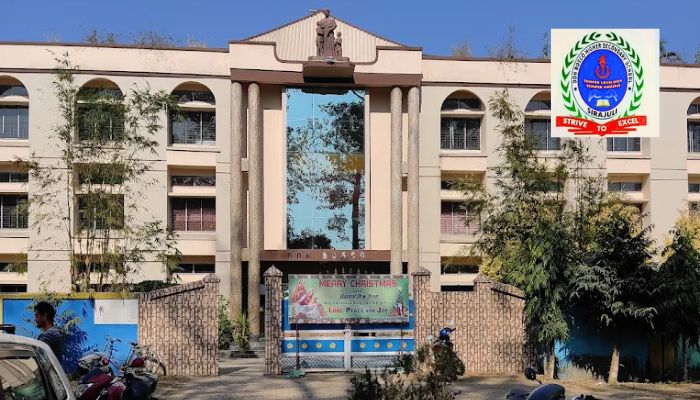
In response to a question, Foreign Secretary Vikram Misri further said that in view of the existing security scenario, the services of the Kartarpur Sahib Corridor have been suspended till further directions. He informed the press that an artillery shell fired by Pakistan hit a house near a Christian missionary school in Poonch, in which two students of the Christ school died and several others were injured. Similarly, another Pakistani struck a nearby Christian convent of nuns, damaging infrastructure while people in the institution took shelter in an underground hall of the Christ school, which was closed at that time.
Talking about India’s appeal to IMF to stop the bailout package extended to Pakistan, Misri said, “IMF meeting is going on today, we will present our side in the meeting. Our perspective on these things will be shared with the fellow members. It is on the board to decide further.” He added that India has responsibly and adequately responded to the activities carried out by Pakistan early today morning.
Talking about India eliminating the terrorist responsible for the beheading of Jewish American journalist Daniel Pearl, Misri said, “Jaish-e-Mohammed was in some way directly or indirectly responsible for the death of Daniel Pearl. But the real connection is through Ahmed Omar Saeed Sheikh, the British Pakistani jihadi who was held in India but was finally released in 2000, and he was the one who lured Daniel Pearl to his eventual murder. So, these are all obviously connected figures, connected individuals, connected institutions. The attack on Bahawalpur, on that facility of Jaish-e-Mohammed in Bahawalpur, is, I would imagine, a fitting part of this unfortunate incident.”
On Thursday evening, India faced a dramatic escalation as Pakistan launched a barrage of Hamas-style attacks—missiles, drones, and artillery fire—across Jammu and Kashmir, Punjab, and Rajasthan. But every strike was repelled by India’s vigilant defence forces.
However, News18, citing top defence sources, reports that the purpose behind the attack may not have been sheer aggression—it could have been a calculated “probing action.”
According to these exclusive revelations, Pakistan’s intent may not have been to cause destruction, but rather to test India’s detection and air defence capabilities.
This comes just a day after India’s powerful Operation Sindoor, carried out on May 7, struck nine terror hubs across Pakistan and Pakistan-Occupied Kashmir (PoK) in retaliation for the April 22 Pahalgam attack that claimed 26 Indian lives.
In response to Operation Sindoor, Pakistan escalated hostilities by shelling J&K’s Poonch—killing 16—and attempting to strike military installations at 15 locations within India. All attempts failed. In fact, one of their Air Defence systems in Lahore was reportedly damaged.
Mapping India’s capabilities
Defence sources speaking to News18 said Pakistan’s strikes on Thursday evening were “more about mapping our capabilities than causing real damage.” Over 40 locations were targeted, but the drones and missiles carried either no warheads or weak munitions.
“In a probing action, the goal is to see where their assets get through undetected. If a drone returns untouched, they know our systems are weak there. If it’s intercepted, they know we’re covered,” one source explained.
India responded swiftly and aggressively—drones swarmed strategic locations in Sialkot, Lahore, and Karachi. Counter air defence systems were activated, and retaliatory fire was returned across the Line of Control.
Hamas delegation visited Pakistan and PoK earlier this year
Notably, the possibility of Pakistan using the aerial assault as a ‘probing action’ against India’s defence readiness assumes profound significance, given that a Hamas delegation recently visited the Jaish-e-Muhammed (JeM) headquarters in Bahawalpur and a Pakistani Army combat simulation centre, inaugurated by Army chief Gen. Asim Munir. The site falls under the Bahawalpur Corps, Pakistan’s rapid deployment force near the Rajasthan border.
But that wasn’t the only signal of growing ties. In February, top Lashkar-e-Taiba and JeM operatives gathered in Rawalakote, Pok, for ‘Kashmir Solidarity Day’—where Hamas spokesperson Khalid Qaddoumi delivered a fiery speech under the banner of “Al Aqsa Floods.” The reference to Jerusalem’s flashpoint mosque was no accident. Indian agencies see this as a deliberate attempt to fuse the Palestinian cause with the jihadist agenda in Jammu and Kashmir, branding both as “resistance against occupation.”
What is a ‘Probing Action’?
A probing action in military terms is a tactical move aimed at gaining crucial intelligence on enemy defences. These operations are typically used to assess the strength, readiness, and vulnerability of the opponent before committing to a larger offensive.
Such actions are not about conquering territory—they’re about data. Small units or equipment are sent in to provoke a response and observe patterns. In this case, Pakistan may have been mapping India’s radar coverage and interception response time.
While Thursday’s missile and drone attacks did not cause significant physical damage, the strategic implications are significant. If this was indeed a probing action, it signals that Islamabad could be preparing for a larger military engagement—and India must remain vigilant.
The Rafale Jets equipped with Scalp missiles and the Russian S-400 Air Defence System have been India’s weapons of choice in both the ongoing war with Pakistan and “Operation Sindoor” which was laucnched in the aftermath of the Pahalgam terror attack which took the lives of 26 Hindu tourists and injured dozens of others. A few years ago, the government of Narendra Modi added them to India’s arsenal while fending off internal and external pressure.
The significance of the S-400 air defence system was once again demonstrated on the intervening night of 8th and 9th May when India effectively stopped an extensive onslaught by the Pakistani army employing drones and other missiles. The Russian S-400 and indigenous Akashteer defence systems successfully repelled every Pakistani strike, preventing any projectiles from hitting their objective. The ammunition was shot in multiple places, including Jaisalmer, Punjab and Jammu and Kashmir. India’s defence forces even neutralised Pakistan’s one Airborne Warning and Control System (AWACS) aircraft in Punjab province of Pakistan.
When India chose to purchase the S-400 defence system in 2018 through a $5 billion agreement with Russia, the Modi government was faced with significant criticism from the United States. Three years prior, the Western power had declared that it was “discouraging” India from moving forward with procuring S-400s from Russia. The acquisition of the S-400 by India was met with resistance from the earlier administrations of Joe Biden and Donald Trump. There had even been threats of sanctions from the White House under Donald Trump.
However, Modi was aware of the importance of the S-400 in improving our air defences against China and Pakistan. Thus far, three S-400 squadrons have been received and are currently in service, with more expected to follow this year. It is the most advanced long-range air defence weapon in the world, with the ability to track and engage several aircraft targets up to 600 kilometres away. It is known as the “Sudarshan Chakra” inside the Indian Air Force and is capable of detecting, tracking and eliminating a wide range of airborne threats, including ballistic missiles, UAVs and fighter aircrafts.
Intense US pressure and intimidation to discourage India from buying S-400
The United States threatened to impose penalties on India for moving forward with the multi-billion-dollar agreement with Russia under the Countering America’s Adversaries Through Sanctions Act (CAATSA). Washington argued that Russian weapons may jeopardise defence cooperation between the two nations and lobbied for alternatives like the Patriot and Terminal High Altitude Area Defence (THAAD) systems from USA.
President Joe Biden’s nominee for Coordinator for Sanctions Policy told lawmakers in 2022 that the United States is clearly preventing India from moving forward with its purchase of S-400 missile defence systems from Russia. It was further conveyed that Washington will need to carefully consider “important geostrategic considerations” before making a decision on the mounting calls for a presidential CAATSA waiver to New Delhi.
CAATSA is a stringent US legislation enacted in 2017 that empowers the government to impose sanctions on nations acquiring significant defence equipment from Russia. James O’Brien, President Biden’s nominee for the US State Department’s coordinator for sanctions policy, declared, “The administration has made clear that it is discouraging India from proceeding with the acquisitions of Russian equipment, and there are important geostrategic considerations, particularly with (unintelligible) relationship to China. So, I think we have to look at what the balance is.”
The US “told India it is unlikely to get a waiver on its planned acquisition of Russian S-400 air defence systems, raising the risk of sanctions,” reported Reuters. It pointed out that the Biden administration is committed to an even more aggressive approach toward Russia and is “unlikely to change the tough stance adopted by the Trump administration on the S-400 deal.”
A US official indicated that there was “still time for Delhi to reconsider, and that the punitive measures would only kick in if the deal with the Russians was consummated (missiles being delivered).” The report outlined, “Washington has told New Delhi that if India acquires the S-400, it would affect how its systems interact with US military equipment that India now has and would jeopardise future arms transfers such as high-end fighter planes and armed drones.”
S-400 system
However, India did not back down. The Ministry of External Affairs (MEA) emphasised that India has an autonomous foreign policy and that its national security objectives aim its defence purchases. Officials insisted that no foreign legislation could control India’s defence decisions, particularly in light of constant threats from China and Pakistan. The S-400 was considered essential for protecting Indian airspace because of its exceptional tracking, range and multi-target capabilities.
Foreign ministry spokesman Anurag Srivastava asserted, “India and the US have a comprehensive global strategic partnership. India has a special and privileged strategic partnership with Russia.” He added, “India has always pursued an independent foreign policy. This also applies to our defence acquisitions and supplies which are guided by our national security interests.”
The S-400 started to be delivered in late 2021. The Modi government’s diplomacy was able to obtain a waiver from sanctions from the US House of Representatives. India’s contribution to Indo-Pacific stability and its significance in opposing China were cited by multiple members of the US House as justifications for a waiver.
India’s multi-layered air defence network swiftly embraced and integrated the technology. The S-400 was activated and effectively intercepted the incoming projectiles during this week’s escalation, which saw at least 15 Indian cities targeted by Pakistani drones and missiles. The system’s operational value was shown by the fact that no injuries or damage were reported.
Subramanian Swamy’s unwavering opposition to the S-400
Subramanian Swamy, a former Rajya Sabha MP from the Bharatiya Janata Party (BJP), was also opposed to purchasing the S-400 from Russia. He issued a warning in December 2019 that the missile system would be “compromised” in a conflict with Pakistan due to the presence of Chinese electronics. The first S-400 missiles were delivered to China in 2018, making it the initial purchaser. He repeated the warning in 2020 as well.
The Namo government would be well advised not to use S400 in a possible battle with China. This is because S400 is made with Chinese electronics. Russia is today a junior partner of China
The politician maintained that the blunder of the Modi government would be akin to Chamberlain’s certificate to Hitler about Poland, after Britain sacrificed Czechoslovakia in 1938, if India moves forward with the S-400 deal with Russia. He alleged, “India should have asked US to sell the equivalent or superior to S-400 of Russia. But we did not,” and even argued that India “should not use weapons with Chinese technology.”
Modi government blunder will be like Chamberlain’s certificate to Hitler on Poland after Britain sacrificed Czechoslovakia in 1938–if he goes ahead with S-400 purchase from China’s junior partner Russia. Read my book: Himalayan Challenge. For nation’s sake open your ears
Subramanian Swamy cautioned that India’s “moment of truth” has come in his response to the Reuters article. “The moment of truth has arrived for us Indians. We are being forced to choose and not flirt around on archaic ideas of being friends with everybody,” he wrote on social media.
However, what was once a cause of contention in India-US relations is now a clear indication of India’s strategic independence. What was once a cause of contention in India-US relations is now a clear indication of India’s strategic independence. High-level diplomatic engagement helped India handle the implications, highlighting its dedication to strengthening its relationship with the US while retaining the freedom to diversify its defence capabilities. The Sudarshan Chakra has now transcended procurement politics for India. It is now a functional and tested shield.
Purchase of the Russian air defence system instead of an American system is also significant because of the fact that the American government tightly controls how its systems can be used. Moreover, while Russia has been India’s trusted defence supplier for decades, the USA has proven to be an unreliable supplier of defence equipment. For example, India’s Tejas Mk1A program has been delayed due to a delay in engine supply by GE.
Modi resisted political pressure on the Rafale purchase
In a government-to-government agreement, India bought 36 Rafale fighter jets from France in 2020. This has greatly improved India’s aviation capabilities and afforded it a competitive advantage over Pakistan in the US-made F-16 fighter jet market. According to reports, India targeted Bahawalpur, which is located about 100 kilometres deep into Pakistani territory, using Rafale fighters equipped with Scalp missiles. Moreover, owing to its long-range attack potential, Rafale didn’t even need to cross the border to accomplish this.
However, former French President Francois Hollande’s statement caused a political controversy in India when he claimed that Dassault Aviation had been allegedly forced by the Modi government to collaborate with Reliance Defence of India to comply with its “offset policy.” Foreign companies must contribute at least 30% of a deal’s value back in India, according to the clause in Delhi’s defence procurement regulations.
In 2008, it was added to India’s Defence Procurement Procedure in an effort to increase indigenous production. Dassault committed to investing half of the projected $8.7 billion (£6.6 billion) contract in India to build parts of the jet’s components with billionaire Anil Ambani’s Reliance Defence as part of the 2016 Rafale deal. “It was the Indian government who proposed this [Reliance] service group, and Dassault who negotiated with Ambani. We did not have a choice, we took the interlocutor who was given to us,” he stated.
Subsequently, the Congress party charged Prime Minister Modi with prioritising an Indian company and even engaging in crony capitalism by supporting Anil Ambani’s company. On the other hand, the Bharatiya Janata Party (BJP) consistently refuted these claims, asserting that the government entered into the agreement to fulfil the combat needs of the Indian Air Force and played no part in selecting the local partner of the French manufacturer.
Rafale jet of Indian Air Force
Rahul Gandhi even called the Rafale acquisition a scam during the 2019 general elections, as part of the Congress party’s massive electoral attack against the Modi government for proceeding with the deal. He was even reprimanded by the Supreme Court for misusing its name and disseminating falsehoods purely for political smear tactics aimed at Prime Minister Narendra Modi.
The Rae Bareli Lok Sabha MP coined “chowkidar chor hai”, after which former union minister Minister Meenakshi Lekhi initiated a contempt case against him for misattributing the slogan to the initial ruling of the apex court in the Rafale case. He had expressed an apology at the prior hearing for misquoting the Supreme Court. However, the latter was not persuaded by his prior affidavit and had asked for a written apology.
Notably, the matter was even dragged to the top court by Aam Aadmi Party Rajya Sabha MP Sanjay Singh, All India Trinamool Congress (AITC/TMC) leader Yashwant Sinha and others, alleging that the Rafale Fighter Jet Deal had significant procedural flaws. The bench, however, rejected the appeal for a court-monitored investigation on 14th December 2018 and noted that there were no anomalies in the price, decision-making procedure or choice of off-set partner.
Afterwards, Yashwant Sinha, Arun Shourie and Prashant Bhushan filed a review petition contesting the ruling, which the court consented to consider on 21st February 2019. They contended that the government’s incorrect factual assertions form the basis of the decision. The court reserved an order on the review petitions on 14th March 2019, addressing the particular issue of whether or not leaked materials could be added to the record.
It rejected the union government’s defence and ruled on 10th April 2019, that the confidential documents could be added to the record. The court reserved a decision in the review petitions on 10th May. It emphasised that it had limited authority to examine defence contracts under its Article 32 jurisdiction, as it dismissed the review applications on 14th November. The party had even based its campaign on this issue during the 2019 national elections, a tactic that ultimately proved detrimental.
Large sums of money were paid to middlemen in the transaction, according to papers that the Congress claimed supported its accusations of corruption against Prime Minister Narendra Modi and his administration in 2021. “The way Rahul Gandhi is behaving, it will not be an exaggeration to say that he is being used as a pawn by competing companies. He has been lying right from the beginning on the issue. Probably, he is acting as an agent or some member of Gandhi family has been for a competing company,” countered present BJP Lok Sabha member Sambit Patra.
Prime Minister Modi’s decision validated
Meanwhile, the Modi administration remained steadfast, citing national security concerns even during the general elections, while the Supreme Court dismissed the legal challenges, removing the legal obstacles for the centre. The aircraft have demonstrated significant utility for India’s offensive capabilities in the recent dispute with the Islamic Republic.
Nearly the whole family of Jaish-e-Mohammad (JeM) founder Mohammad Masood Azhar Alvi alias Masood Azhar, along with the outfit’s headquarters at Bahawalpur was destroyed by Rafale jets in the early hours of 7th May. They were also used to demolish multiple terror bases of terrorist groups, including JeM and Lashkar-e-Taiba (LeT) at nine pivotal locations inside Pakistan and Pakistan-occupied Kashmir.
Abdul Rauf Azhar, the de facto leader of Jaish and the most wanted individual, is also among the deceased. He is the brother of Masood Azhar and the orchestrator of the IC-814 hijacking, as well as behind the beheading of American journalist Daniel Pearl. The operation has killed at least 100 terrorists. The exceptional success of India’s anti-terror action is a result of the prowess of Rafale jets.
Notably, India and France have recently finalised a substantial agreement worth ₹63,000 crore for the acquisition of 26 Rafale Marine aircraft for the Indian Navy. The PM Modi-led cabinet committee on security approved the pact earlier this month. The native aircraft carrier INS Vikrant’s deck will be the primary operating location for the planes.
Some armaments, simulators, crew training and five-year performance-based logistics support are all included in the government-to-government contract for the 22 single-seat Rafale-M fighters and four twin-seat trainers. India will pay an initial 15% instalment of the deal’s cost in order to receive the 26 Rafale-M aircraft, which are intended for maritime strike, air defense and reconnaissance missions. The estimated time of delivery is 37 to 65 months.
This clearly illustrates how Prime Minister Narendra Modi endured both internal and external pressures to protect the sovereignty and integrity of the nation. More importantly, his decision has proved beneficial for the nation, especially during these challenging times.
On the intervening night of 8th and 9th May, Pakistan launched a coordinated attack involving a wave of drones and other munitions targeting 15 locations across northern and western India, including Srinagar, Jammu, Amritsar, Bathinda, and Chandigarh. To thwart the wave of Pakistani missiles and drones, India activated its multi-layered air-defence system, including Akashteer ADCRS, S-400 Sudarshan Chakra, Barak 8 MRSAM (Medium Range Surface to Air Missile) and Akash Missile System.
India deployed its “Iron Dome” to destroy Pakistani drones and missiles
In response to Pakistani strikes, Indian armed forces activated the indigenously made Akashteer Air Defence System to intercept and destroy a wave of Pakistani missiles and drones. Dubbed as India’s Iron Dome, the made-in-India Akashteer ADS is a command-and-control air defence platform.
This air defence system integrates inputs from radar sources like early-warning systems and ground-based radars to render a live web of real-time data to precisely track aerial threats. With the Akashteer system’s help, Indian forces intercepted and neutralised each and every missile launched by Pakistan towards India.
During the Pakistani attack on 8th May night, Akashteer fused data from Indian Air Force and Indian Army Air Defence, such as 3D tactical radars and low-level lightweight radars, to detect and track incoming Pakistani missiles and drones. Akashteer effectively coordinated the response across multiple layers of defence to ensure seamless communication and targeting of enemy weapons.
S-400 missile defence system and HARPY drones complemented Akashteer perfectly
Besides Akashteer, the Indian Air Force used a combination of the Russian-made S-400 missile defence system to intercept and Israeli-made HARPY drones for counterattack against Pakistani missiles and drones.
Hours later, when air-raid sirens sounded across cities in the bordering states of Jammu and Kashmir, Rajasthan and Punjab during a second wave of Pakistani strikes, the Indian air defence repulsed the attack and shot down two Pakistani fighter jets, including a US-made supersonic F-16. These Pakistani warplanes were hit by a surface-to-air missile shortly after take-off from the Sargodha base.
Reports say that the Indian Air Force used a combination of anti-aircraft guns and surface-to-air missiles along with an integrated counter-UAS grid to take down Pakistani projectiles. The integrated counter-UAS grid was used to counter unmanned aircraft systems and neutralise drones and other incoming threats like missiles launched by Pakistan. This grid utilises multiple technologies, including radar and radio frequency sensors, to locate, identify, and track potential airspace threats. Once a threat is detected, the system can deploy various non-explosive countermeasures, like jamming radio signals and explosive countermeasures like firing an interceptor projectile. India used C-UAS against Pakistan in the last two attacks.
The other layer of India’s impregnable air defence system is S-400. This Russian-made missile defence system can track incoming threats from 600 km away and intercept threats within a 400 km range, making it one of the best in the business. S-400 comprises three components: a powerful radar for 360-degree tracking, missiles to intercept, and a command centre. The S-400 missile defence system is capable of engaging almost any modern warplane.
India signed a $5 billion deal with Russia to buy five squadrons in October 2018. It is essential to recall that when the Modi government decided to purchase the S-400 defence system, it faced significant criticism from the United States. Three years prior, the Western power had declared that it was “discouraging” India from moving forward with procuring S-400s from Russia. India’s acquisition of the S-400 was met with resistance from the earlier administrations of Joe Biden and Donald Trump. Despite threats of sanctions, the Modi government prioritised the importance of the S-400 in improving Indian air defences against China and Pakistan and went ahead with the deal. It is because the Modi government remained undeterred despite international and domestic pressure that today Indian forces have a formidable missile defence system, thwarting Pakistani threats.
The other layer in India’s air defence system is a short-range, surface-to-air defence system—SAMAR. This was used last night to deflect and intercept Pakistani missiles. SAMAR uses Russian Vympel missiles and has a range of 12 km, meaning it can take on low-flying aerial targets like drones. In addition, India also uses the Spyder system, an Israeli low-level quick-reaction anti-aircraft missile with a 15 km range. Indian forces also reportedly used Soviet-made twin-barrel 23 mm automatic anti-aircraft gun Zu-23, Swedish-made and Indian upgraded 40 mm anti-aircraft gun L-70, and self-propelled anti-aircraft gun Shilka to counter Pakistani attacks.
Besides, our forces also used Akash, an indigenous short-medium range ADS effective within a 50 km range. India, however, has a plethora of options to tackle any misadventure of Pakistan, including S-125 Pechora (surface-to-air missiles) and VSHORAD, or very short-range air defence. VSHORAD can be launched from the shoulder or carried on tripods.
Synergy of India’s air defence systems makes it unmatchable
The cost-effective, interoperability, multi-layered defence, and real-time coordination between India’s air defence systems offered the country an edge over the enemy, helping it essentially destroy over 8 missiles with no impact on Indian soil. More than two dozen drones and loitering munitions were neutralised through a perfect combination of kinetic—Akash, MRSAM, Zu-23 —and non-kinetic—jamming and spoofing methods. The multiple interceptions were confirmed as debri from various locations has been recovered. Reports are also emerging that two to three Pakistani fighter jets were also shot down.
Most importantly, in what stands as the testament of the effectiveness of India’s air defence systems, there were no casualties or significant damages despite Pakistan’s aggressive and desperate attack to secure a PR win against India to fool its brainwashed public. The countermeasures taken by India against Pakistani strikes on the night of 8th May demonstrated India’s advanced, layered capabilities as well as its ability to counter complex and multi-vector threats effectively destroying the nefarious designs and motivations of the enemy.
The Telecom Regulatory Authority of India (TRAI) has released its recommendations for satellite-based commercial communication services. It includes the administrative allocation of spectrum for Satcom at a price fixed by the government, which will be reviewed every five years.
For Geostationary Orbit (GSO)-based FSS (fixed satellite service), TRAI recommended a spectrum usage fee of 4 per cent of Adjusted Gross Revenue, subject to a minimum annual spectrum charge of Rs 3,500 per MHz.
A similar fee will apply for non-Geostationary Orbit/Geostationary Orbit (GSO/NGSO)- based mobile satellite service (MSS).
For NGSO-based FSS, spectrum usage charges will be 4 per cent of the Adjusted Gross Revenue plus an additional charge of Rs 500 per subscriber per annum in urban areas. Rural and remote areas will be exempt from this additional charge, subject to a minimum annual spectrum charge of Rs. 3,500 per MHz.
TRAI proposed that these recommendations remain valid for five years from the date the central government notifies the policy regime, further extended by up to two years.
The telecom regulator proposed that the AGR-based spectrum charges should be paid on an advance quarterly basis and be payable within 15 days of the commencement of the respective quarter.
Minimum spectrum charges should be paid in advance at the time of spectrum assignment and at the beginning of every year. The quarterly/annual adjustment of payment dues shall be made with the minimum spectrum charge for the particular year only.
TRAI was requested to provide recommendations on the terms and conditions of spectrum assignment, including spectrum pricing, while accounting for a level playing field with terrestrial access services for satellite-based communication services.
The Recommendations made today have been placed on the TRAI’s website.
Recently, Airtel and Jio have partnered with Elon Musk’s Starlink to bring the latter’s high-speed satellite internet services to their customers in India. Satellite telecom in India will help the country provide much-needed services to remote interior places where conventional telecom services tend to be costly.
Starlink’s application to provide satellite-based services in India is pending approval with the Department of Telecommunications, Government of India. Its entry into India has gained currency lately, with Donald Trump winning the US presidency for a second term. Elon Musk is a close aide of President Trump.
(This news report is published from a syndicated feed. Except for the headline, the content has not been written or edited by OpIndia staff)
A day after the Pakistan government claimed that its forces intercepted and shot down 25 drones sent by India to multiple locations including Lahore, Karachi and Rawalpindi, Pakistani defence minister has now taken a U-turn. Talking about the recent developments in the National Assembly, Pakistan’s defence minister Khwaja Asif claimed that Pakistani forces didn’t intercept the drones as it would have given away the locations of defence establishments.
He said, the drones were sent into Pakistan to detect the locations of Pakistani defence systems, adding that he can’t explain it as it is technical matter. He then added to avoid giving away the locations, Pakistani forces didn’t intercept the drone. Khwaja Asif said that after the drones reached a ‘safe limit’, they were shot down.
Pakistani defence minister says they didn’t intercept Indian drones to avoid giving away their defence locations pic.twitter.com/7h18wMTXzG
Notably, the claim of shooting down the drones is misleading, as videos show that at least some drones hit their targets and then exploded. Notably, the ‘drone’ sent by India, Israeli IAI Haron, are actually loitering munition. They are combinations of drone and missile, and they are design to hover over an area for a long time and then dive onto a target and detonating the onboard bomb.
For example, the following video from Lahore shows a Harop drone diving onto a target and then exploding. It shows that the drone was intact before hitting the ground, which means it was not shot by Pakistani forces, it dived on its power to hit the target, probably a Pakistani air defence system.
These are also known as kamikaze drones, as they are on a suicide mission, instead of firing missiles like regular drones, they themselves hit the target. Therefore, allowing such drones to enter Pakistani airspace to avoid giving locations and then shooting them down after they reached their target does not make sense.
The video in this tweet also shows an undamaged drone diving onto target, so this one was also not shot.
Notably, as per Indian govt, the drones were used to target Air Defence Radars and systems at a number of locations in Pakistan. A statement by Defence ministry said that an Air Defence system at Lahore was neutralised in this attack.