Home Blog Page 4

Zojila Tunnel reaches final breakthrough: How this Himalayan mega project will transform strategic connectivity and strengthen India’s security

India is set to achieve a major infrastructure milestone on Tuesday, 9th June, with the final breakthrough of the Zojila Tunnel, one of the country’s most ambitious and technically challenging engineering projects. The breakthrough marks the completion of the excavation phase of the 13.153-kilometre-long tunnel that is being built beneath the snow-covered mountains of the western Himalayas.

Once completed and opened to traffic, the Zojila Tunnel will become the world’s longest single-tube bi-directional road tunnel at the highest altitude. Located at nearly 11,578 feet above sea level, the tunnel is expected to transform connectivity between Kashmir and Ladakh, a region that remains cut off for several months every year because of extreme winter weather.

Connecting Kashmir and Ladakh through the mountains

The Zojila Tunnel is being constructed between Baltal near Sonmarg in Jammu and Kashmir and Meenamarg in the Drass region of Ladakh. The project aims to provide seamless all-weather connectivity along the strategic Srinagar-Kargil-Leh highway, which serves as the main road link between Kashmir and Ladakh.

For decades, the Zojila Pass has been both a lifeline and a challenge. Heavy snowfall, blizzards and avalanches regularly force the closure of the mountain pass during winter. Entire stretches of the highway become inaccessible for months, disrupting civilian movement, trade, tourism and the transportation of essential supplies.

The tunnel is designed to eliminate this seasonal isolation by allowing vehicles to travel safely throughout the year regardless of weather conditions outside.

The scale of the project is enormous. While the main tunnel itself stretches for 13.153 kilometres, the total project length, including approach roads, bridges and associated infrastructure, extends to nearly 30.9 kilometres.

Apart from the main tunnel, the project also includes the Nilgrar twin tunnels measuring 457 metres and 1,953 metres respectively, seven cut-and-cover structures covering 2.35 kilometres, a 450-metre snow gallery and three major bridges with a combined length of 460 metres.

An engineering marvel in the mountains 

The Zojila Tunnel is not just another road project. It is one of the most complex engineering undertakings ever attempted in the Indian Himalayas.

The project is being executed by Megha Engineering & Infrastructure Limited (MEIL) for the National Highways & Infrastructure Development Corporation Limited (NHIDCL), the Union government’s specialised agency for highway development in difficult terrains.

One of its most remarkable features is the ventilation and safety system. Since there is no separate escape tunnel, engineers have constructed three massive vertical shafts to provide ventilation and emergency access. The largest shaft extends 474.3 metres deep into the mountain and is currently the longest vertical shaft in India. The other two shafts measure 367.38 metres and 213.5 metres respectively.

The tunnel is being built using the New Austrian Tunnelling Method (NATM), a construction technique specially suited for fragile mountain geology. Unlike conventional tunnelling methods, NATM allows engineers to continuously adapt to changing rock conditions through phased excavation, immediate reinforcement and constant geological monitoring.

This flexibility proved essential because the geology along the Zojila alignment turned out to be highly unpredictable. Engineers recorded as many as 67 changes in rock classification along the 13-kilometre stretch, forcing frequent modifications in excavation and support strategies.

Adding to the challenge were the extreme weather conditions. Temperatures in the region often fall below -20°C and can drop to -30° during peak winter. Construction teams have worked through severe snowfall, blizzards and multiple avalanche incidents over the years.

Despite these difficulties, more than 1,200 workers continued construction activities, helping the project achieve over 10 million safe man-hours.

Why the tunnel is a major infrastructure milestone 

The Zojila Tunnel represents a significant leap in India’s ability to execute large-scale infrastructure projects in some of the world’s most difficult terrain.

The project showcases advanced tunnelling technology, high-altitude engineering expertise and the country’s growing capability to build strategic infrastructure in remote mountain regions. The successful excavation of a tunnel of this scale beneath avalanche-prone Himalayan mountains is itself considered a major achievement.

The tunnel is also expected to bring substantial economic benefits. Once operational, it will reduce travel time between Baltal and Meenamarg. The journey through the Zojila Pass, which currently takes around three and a half hours under normal conditions, is expected to be reduced to just about 15 minutes.

Reliable year-round connectivity will improve the movement of people, goods and services between Kashmir and Ladakh. Businesses will no longer need to stockpile supplies for months due to road closures. Farmers, traders and transporters will benefit from uninterrupted access to markets.

The tourism sector is also expected to receive a major boost. Destinations such as Sonmarg, Drass, Kargil, Zanskar and Leh could attract visitors throughout the year instead of only during the summer season. Improved accessibility is likely to create new economic opportunities and generate employment across the region.

For residents of Ladakh, the tunnel promises relief from the annual isolation that has shaped life in the region for generations. Access to healthcare, education and essential services is expected to become far more reliable once the road remains open throughout the year.

A critical asset for National Security 

The Srinagar-Leh highway serves as a crucial logistics corridor for the Indian Armed Forces. It is the primary route used to transport troops, equipment, fuel and supplies to Ladakh, a region that has become increasingly important following tensions along the Line of Actual Control (LAC) with China.

In recent years, India has strengthened infrastructure across Ladakh to improve military mobility in the high-altitude frontier region. The Zojila Tunnel forms a key part of that broader effort.

Currently, heavy snowfall and weather-related closures can restrict movement through the Zojila Pass for several months. The tunnel will remove this vulnerability by ensuring uninterrupted access to Ladakh throughout the year.

Military experts believe the project will greatly improve operational flexibility by allowing faster deployment of troops and equipment whenever required. It will also reduce dependence on weather windows and alternative routes that are often longer and more vulnerable.

The strategic value of the tunnel becomes even more significant in the context of increasing military activity along India’s borders with China and Pakistan. Reliable all-weather connectivity strengthens India’s logistics preparedness and enhances its ability to maintain a strong presence in sensitive border areas.

The need for such infrastructure was first highlighted during the 1999 Kargil War. More recently, tensions along the India-China border have reinforced the importance of maintaining uninterrupted road access to Ladakh.

CJP’s Discord channel is swarming with Umar Khalid supporters running manipulation tactics hailing the UAPA accused as a hero: Read what the deep dive into cockroach harborage revealed

The 6th June protest called by the “Cockroach Janta Party” founder Abhjeet Dipke was more or less a flop show. Though Dipke and his associates are claiming it was a “huge success”, ground reports suggest that there were hardly a couple of thousand followers who joined the protest at Jantar Mantar. Moreover, most of the protesters present were not “Gen Z” or youth, but older adults and people in the middle age group. It was confusing for many backers of Dipke, as CJP managed to gain 22 million (over 2 crore) followers on social media but failed to convert it into a movement on the ground.

While the calls to join the protests were made on X, Facebook, Instagram, and other platforms, one place where discussions have been happening under CJP’s banner is Discord. Around 10 days ago, CJP launched its Discord channel, which now has over 20,000 members, with over 1,500 members online at any given time. OpIndia dug into the Discord channel and found that there were a lot of supporters of anti-Hindu Delhi Riots larger conspiracy accused Umar Khalid who believe he is some sort of “hero”.

Source: Discord

On 26th May, there was a discussion about the authenticity of websites and social media handles that were supposedly linked to CJP. During that conversation, one user on Discord stated that while he was a supporter of the concept behind CJP, he was not a supporter of Abhijeet Dipke.

Source: Discord

When asked why, another user mentioned he “is from Aam Aadmi Party”.

Source: Discord

When he was countered that Dipke “was” associated with AAP, the user initially opposing Dipke mentioned “he supports Umar Khalid”. This was the first instance when Khalid was mentioned in the conversation. From that point, several members of CJP’s Discord channel came out in support of Khalid.

Source: Discord

As the conversation continued, one of the users came out in full support of Dipke if he supports Umar Khalid. He wrote, “If Abhijit Dipke supports Umar Khalid, then consider me a full supporter of CJP and a strong supporter of Abhijit Dipke as well… No doubt Dipke has spine… What is happening with Umar Khalid is a human rights violation.”

Source: Discord

On the same day, in the evening, someone suggested that “Abijeet is only a medium from where the revolution started”. The same user who had pointed out Dipke’s support for Khalid earlier mentioned it again. Surprisingly, one of the users suggested that Khalid is also one of them, a “cockroach”.

Source: Discord

On 28th May, Khalid again became a topic of discussion, and it became evident that CJP supporters were not aware of the details of Umar Khalid’s role in the anti-Hindu Delhi Riots of 2020. When one of the users pointed out that what concerned him was Dipke’s support for Khalid, another user asked who he was and what the story behind him was.

Source: Discord
Source: Discord

The user replied that Khalid is a separatist who was jailed for the Delhi Riots and has been booked under UAPA. “He wanted a separate Kashmir and openly yapped about it,” he added. Replying to him, the other user said jailing Khalid for “just saying so” was not correct.

Source: Discord
Source: Discord

Another user raised the issue of delay in trial. He said, “They have not been able to prove him guilty in five years, and even if he says now that Kashmir is a part of India, it will not make any difference to them. He was wrong, maybe he had read something wrong and formed a wrong thought, and maybe that thought would have changed later. Ruining his entire life for that is not right. He is not a terrorist, otherwise it would have been proved by now.”

Source: Discord

This manipulation tactic has been used by several left-liberals over the years to prove Khalid’s innocence. However, no one out there wants to talk about the delay caused by Khalid himself and his attorneys, including Kapil Sibal.

On 1st June, During one of the video chats titled “Chai Pe Charcha”, it appears that Khalid’s name was mentioned by one of the speakers. In the related chat, a user claimed, “Umar Khalid is exactly what we need in this country, which is why CJP exists.”

Source: Discord

On the same day, several calls were made to “free Umar Khalid” in different forums on the Discord channel.

Source: Discord
Source: Discord
Source: Discord

During one of the discussions, one of the members of the channel claimed that Umar Khalid was not the problem but the problem was his religion. He connected Khalid’s case with that of gangster Lawrance Bishnoi.

Source: Discord

When the other person said brining religion into the discussion was a convinient way to ignore the facts of the case, the user who supported Khalid asked why he was not convicted yet.

Source: Discord

The other user said he cannot ride on two boats and say, “Let the trial happen”, while also saying that the lack of conviction means innocence.

Source: Discord

And then blame shifted to the judicial system itself.

Source: Discord

Meanwhile, another user, who claimed to be a law student, flatly stated that “all the allegations against Umar Khalid are baseless”.

Source: Discord

In a seperate discussion on 4th June, a user asked about people’s though on Umar Khalid. One of the users called him “revolutionary”.

Source: Discord

In another conversation on the same day, one of the users claimed that all of Khalid’s speeches were about “peaceful protest and unity”. He further claimed that nothing Khalid said could be interpreted in a violent sense. He also claimed that “the judiciary is compromised”. In the end, the user claimed, “Khalid and Abhijeet are both fighters for freedom.”

Source: Discord

On 5th June, a user questioned whether CJP believes “Kashmir is illegally occupied by the Indian state”. Another user questioned why he had asked such a question, to which he replied, “Because the founder supports Umar Khalid, the same person who says Kashmir is illegally occupied by the Indian state.”

Replying to him, a Khalid supporter rushed to prove him innocent and said, “Umar Khalid is not a terrorist. He is a JNU student and political activist, so first read about him and his speeches. He also went for peaceful protests against the government over scams and other policies. Watch his speeches on YouTube. When his voice was getting stronger, the godi media gave him the tag of terrorist because of his religion.”

Source: Discord
Source: Discord
Source: Discord
Source: Discord

Another user randomly dreamed of meeting Umar Khalid and claimed that he has been in jail over “false, frivolous charges”. He called it a blot on India’s judiciary while expressing “mad respect” for Khalid and his “undying spirit”. This was a completely random post.

Source: Discord

On 7th June, in the Hindi Video Chat section, one of the users dreamt of Dipke as the Prime Minister of India and Umar Khalid as the Defence Minister, with other left-liberals in the remaining ministerial positions.

Source: Discord

Discord is not the only place where whitewashing of Umar Khalid’s involvement in anti-Hindu Delhi Riots has been happening. During the protests on Jantar Mantar, several CJP supporters expressed solidarity with Umar Khalid. One of the “cockroaches” suggested Sharjeel Imam and Umar Khalid are “President/PM” material.

An older “cockroach” got so irked by a woman at the protest site when she opposed Khalid that he asked, “Did Khalid rape you?” (Strong language. Viewer discretion is advised.)

Umar Khalid’s role in Delhi Riots

Umar Khalid’s role in the Delhi Riots larger conspiracy case is not presented as that of a street rioter, but as that of a planner, coordinator, and ideological driver. His physical absence from North East Delhi during the violence does not weaken the case against him because the allegation is of conspiracy, where presence at the riot site is not required once the plan has been set in motion. His 20th February Amravati speech, in which he referred to 24th February, the day of Donald Trump’s India visit, has been cited as a key link, with riots breaking out four days later.

Umar Khalid’s role in Delhi Riots and the aftermath.

His name also appears in FIR 59, FIR 114, and chargesheets linked to the larger conspiracy. The 8th January Shaheen Bagh meeting, Khalid Saifi’s link between Umar Khalid and Tahir Hussain, discussions on “big action” over CAA and NRC, alleged PFI funding and logistical support, WhatsApp groups, pamphlets, speeches, secret meetings, digital trails, and witness statements have all been cited to show his role. The prosecution also cited his post riot chats with celebrities, activists, journalists, and media figures to argue that a favourable narrative was being built around him.

Conclusion

The pattern visible in these Discord conversations shows a clear attempt to recast Umar Khalid from an accused in the anti-Hindu Delhi Riots larger conspiracy case into a victim, a revolutionary, and even a moral symbol for the so-called movement. Instead of engaging with the serious allegations against him, his supporters repeatedly shift the discussion towards emotion, identity, delay in trial, and alleged institutional bias. The same users who ask others to “let the trial happen” also use the lack of conviction as proof of innocence, while conveniently ignoring the delay caused by Khalid and his own legal team.

Whenever questions are raised about his alleged separatist statements, UAPA case, or role in the Delhi Riots conspiracy, the response is not factual rebuttal but deflection. He is described as a student, political activist, freedom fighter, victim of media propaganda, and someone targeted because of his religion. This is a familiar manipulation tactic. First, dilute the seriousness of the allegations by reducing them to “just speeches” or “peaceful protest”. Second, create sympathy by calling the case a human rights violation or a blot on the judiciary. Third, delegitimise every institution involved, from the police to the judiciary to the media. Fourth, turn the accused into an aspirational figure by linking him with revolution, freedom, and resistance.

In the CJP Discord ecosystem, Khalid is not merely being defended, he is being normalised and glorified. The attempt appears to be to make young and politically impressionable followers believe that questioning Khalid’s record is itself unjust, while supporting him is a badge of ideological courage.

Suvendu Adhikari orders investigation into 2019 anti-CAA riots in Bengal: Read how Mamata Banerjee’s govt allowed Muslim mobs to destroy railway assets at that time

The fifteen-year-long tyrannical reign of Mamata Banerjee in West Bengal was marred by violence, vandalism, and her deliberate silence. From post-poll violence, anti-CAA riots to the Muslim mob attacks during anti-Waqf Bill protests, the TMC government in West Bengal allowed, enabled, or downplayed anarchy as per convenience. Now, the new CM Suvendu Adhikari-led BJP government has ordered an investigation into the 2019 anti-CAA riots that caused extensive damage to Indian Railways in the state.

West Bengal Chief Minister Suvendu Adhikari has directed the West Bengal Police under DGP Siddh Nath Gupta to review and probe all complaints of arson, vandalism, and damage to public property, particularly railway assets, during the 2019 protests against the Citizenship Amendment Act.

A special police cell will be set up to investigate verified cases, and efforts will be made to recover costs estimated at around Rs 93 crore for railways from the rioters in Murshidabad, Howrah, and other areas. The action follows a meeting with Union Railways Minister Ashwini Vaishnaw.

West Bengal anti-CAA riots, and the TMC government’s tacit support

On 12th December 2019, the Citizenship Amendment Act (CAA) was passed to provide a fast-tracked path to Indian citizenship for persecuted religious minorities; Hindus, Sikhs, Buddhists, Jains, Christians, and Parsis, from Pakistan, Bangladesh, and Afghanistan, who entered India before 31st December 2014.

The Islamo-leftist cabal, however, was outraged over the CAA not including Muslims and dubbed the legislation discriminatory, defying common sense that Muslims cannot face persecution in Islamic countries for being Muslims, and the fact that the Indian constitutional mandate for equal rights applies to Indian citizens, not foreign nationals in hostile nations. Rumours were floated that the CAA was linked to a proposed National Register of Citizens (NRC), and that Indian Muslims would be stripped of their citizenship. In no time, anti-CAA protests erupted nationwide. CM Mamata herself had perpetrated those claims on a number of occasions.

The politics, propaganda, and protests escalated into violence in several states, including West Bengal.

In West Bengal, then Chief Minister Mamata Banerjee herself led several protest rallies and declared that the CAA would be implemented only over her dead body. “If they want to implement CAA, they will have to do it over my dead body,” Banerjee said on 16th December 2019.

The state’s chief minister, leading anti-CAA protests, emboldened Islamists already itching to wreak havoc. On 14th December 2019, violence erupted in the Muslim-majority Murshidabad district.

Muslim mobs set fire to five empty trains at Lalgola and Krishnapur railway stations. In Suti, railway tracks were damaged. The rioters also targeted Beldanga station. The rioters vandalised more than five railway stations and set fire to a toll plaza in Murshidabad district alone.

Trains, railway counters, coaches and vast assets of Railways were damaged by mobs during the anti-CAA protests of 2019

The rioting Jihadis had gone on a rampage in West Bengal’s Howrah district as well.  They resorted to extreme violence by blocking tracks at the Uluberia railway station. The Muslim mobs had vandalised the complex and some trains by resorting to stone pelting, injuring a driver, officials said. The violence affected train services in the Sealdah division of the Eastern Railways. The Muslim mob also attacked the Sujnipara railway station under the Malda division of Eastern Railways.

The Anti-CAA Muslim mobs also attacked the ticket counter at Sankrail railway station in Howrah district and set fire to the station. The rioting mob also targeted the Nimtita station, damaged railway property and pelted stones.

Trains were stopped by burning tyres on the railway tracks, and they pelted stones. The police vehicle that reached the spot was also set on fire. As a precautionary measure, many trains were cancelled. Internet services were also shut down in 6 districts.

Musim mobs destroying railways assets during anti-CAA protests

Between 12th and 16th December 2019, violent ‘protests’ occurred in Murshidabad, Birbhum, and spread across North 24 Parganas.

Rail services between Nungi and Akra stations in the South 24 Parganas district were severely affected as protesters blocked the tracks. Akra station was vandalised and set on fire. In addition to violence and arson, the rioting mob also looted the money kept at the ticket counter. 

Back then, OpIndia had reported on the horrific experience of a local Bengali, Sankhadeep Shome, during the jihadi riots in West Bengal. In a Facebook post, Shome narrated that he was on board the UP Howrah-Chennai Central Coromandel Express, which rolled into Uluberia station on the Howrah-Kharagpur section at around 3:20 pm on Friday.

He stated that a large crowd of around 500-700 miscreants emerged from the “Jummah Namaz” at a mosque adjoining the station, who blocked the entire railway line at a level crossing outside the station.

Trains were being vandalised, railway stations ransacked, while CM Mamata Banerjee was busy playing politics, and downplaying Jihadi violence

While Bengal was burning, CM Mamata Banerjee was discovering ways to add fuel to the fire and burnish her own image of a self-declared defender of ‘secularism’.  

It must be recalled that amid protests in West Bengal, then Governor Jagdeep Dhankhar had called Chief Minister Mamata Banerjee’s advertisement, in which she stated that the NRC and Citizenship Amendment Act would not be implemented, unconstitutional. The governor stated that as head of government, Mamata Banerjee cannot use government funds for such advertisements.

Meanwhile, the BJP had alleged that Muslim mobs were attacking Hindu houses in border districts.

From 13th to 17th December 2019, more than 19 railway stations and 20 trains were vandalised or set ablaze by Muslim rioters joined by TMC workers in many places. The rioters also pelted stones at passing trains, vandalised ticket booking counters, stole money, and laid siege to tracks.

Railways suffered extensive damage, properties worth crores were destroyed, hundreds of trains had to be cancelled

Consequently, the Railway Ministry was forced to cancel around 655 trains in West Bengal. Around 17 FIRs were registered in multiple cases of rioting and arson on railway premises. Eastern Railways (ER) was reported to have cancelled 127 mail/express trains, 190 passenger trains and 290 suburban trains. South-Eastern Railways’ Kharagpur division alone suffered losses of around Rs 16 crore due to Jihadi mob violence, as 48 trains were cancelled, six stations were ransacked, and five trains were set ablaze, and RPF teams were attacked by rioters, between 13th and 17th December 2019.

However, then Chief Minister, Mamata Banerjee, who on many occasions boasted how she is not a Kafir and she fights Kafirs, dismissed the incidents of Muslim mob violence as ‘small incidents’.

Banerjee did not stop here; she went on to play the victim card and villainise the BJP-led Central government, accusing them of deliberately cancelling trains in West Bengal to “defame” the state and her government. This opprobrious and spiteful statement came after the Railways Ministry suspended services in riot-affected areas in West Bengal, citing safety risks from the prevailing tensions, blockades, attacks and the TMC regime’s failure to act against rioters.

Not only this, while railway officials had to run and hide to save themselves from Muslim mobs, Mamata Banerjee shrugged off accountability by saying that protecting railway officials and infrastructure was not the state government’s job. Banerjee said this even as law and order come under the state government, and she was directly responsible for ensuring peace and order in the state she rules.

“There were some small incidents at some places. But they (the central government) almost shut down railway services. People are facing serious problems due to the random cancellation of trains. It is not our responsibility to protect the railways, but we tried to help them as much as possible. They have their force, RPF, to protect trains and stations,” Banerjee said at a rally in Jadavpur, south Kolkata, on 17th December 2019.

The TMC supremo’s casual defence that protecting railway assets and officials was not her government’s job was no less than a boastful admission that she allowed Jihadis to run riots and specifically target Central government assets to build pressure, all this over a law that had nothing remotely to do with any Indian citizen.

Banerjee’s shamelessness in letting Islamists run riots, disrupt law and order, put the lives of numerous people in jeopardy just because she got to benefit politically from a non-issue, was appalling.

The then West Bengal Chief Minister distanced herself from the constitutional duty of protecting peace and public property, by claiming that protecting railway infrastructure is the Centre’s, specifically the RPF’s job. However, it was Banerjee herself who refused to accept the offer by the Central government to deploy central paramilitary forces for assistance.

This indicated that Banerjee deliberately created circumstances conducive for Jihadis to run riots with impunity, while the TMC government would politically attack the Centre, and deflect attention from violence her regime enabled.

TMC government did not cooperate with Centre to recover costs from vandals for damages to railway property during the 2019 anti-CAA riotsin West Bengal

In addition to extending tacit support to rioters and dodging accountability, the Mamata Banerjee-led TMC government also effectively prevented the recovery of costs for damages caused to railway property during 2019 anti-CAA protests and violence.

Days after the anti-CAA riots, Railway Board Chairman V.K. Yadav had publicly stated that the Indian Railways suffered losses of over Rs 80-93 crore in West Bengal due to destruction of trains, stations, tracks and other assets.

The Ministry announced explicitly that they would coordinate with state authorities to recover the costs from the identified rioters involved in destroying railway property.

Despite law and order being a state subject, the TMC government did not actively pursue identification and arrests of rioters or facilitate compensation proceedings against the perpetrators.

The Ministry of Railways had cited the West Bengal Maintenance of Public Order (Amendment) Act, 2017 (allowing collective compensation) and the Prevention of Damage to Public Property Act, 1984 (mandatory penalties and recovery), to seek cooperation of the TMC government. However, no meaningful recovery action could be taken due to Mamata Banerjee’s non-cooperation.

The necessity for a new government in 2026 to order a fresh, time-bound probe into the 2019 anti-CAA violence, six years later, speaks volumes of Mamata Banerjee-led TMC government’s deliberate inaction, systematic downplaying of documented arson and violence, and non-cooperation with Central government.

A Parsi woman married to a Muslim cremated per Hindu rituals after both the Muslim and the Parsi communities refused to perform her last rites: Read why she was excommunicated

The mortal remains of a Parsi woman, who had married a Muslim man, were kept waiting for the last rites for two days at a mortuary after both the Muslim and the Parsi communities refused to accept her. The husband of the woman consulted some Muslim clerics seeking permission for her burial, but the permission was not granted. The Parsi community also refused to perform her last rites. Rejected by both the communities, the woman was finally cremated as per Hindu rituals in the Veraval area of ​​Navsari in Gujarat on Friday (5th June).

The incident has thrown light on the inherently accepting and inclusive nature of Hinduism. Generations of Hindus have been able to protect and nurture these features of Hinduism despite facing persecution at the hands of Islamic invaders for centuries. Hinduism embraced the woman, who was abandoned by her and her husband’s communities even in death.

What is the entire case?

The 55-year-old woman from Gujarat had married a Muslim man against the wishes of her family and community. While she went against her family and community to be with her Muslim husband, the Muslim community did not accept the woman, not even in her death. The Muslim community denied her dignity in death by not allowing her to be buried as per Islamic rituals, and her Parsi community also did not accept her.

According to The Indian Express, about 35-years ago, the Parsi woman had married Professor Nisar Ahmed while she was a student. Professor Nisar Ahmed met the student while she was pursuing a bachelor’s degree in the Gujarati language at a college affiliated with the Veer Narmad South Gujarat University. She grew close to Professor Ahmed and told her family that she wanted to marry him, even though he was 15 years older than her. The woman came from an educated family. Her father worked for a private firm, while her mother was a teacher at a government school in Navsari. Despite her family’s disapproval, the woman married Professor Ahmed.

Her decision to marry Professor came with a huge cost. She was ostracised by her Parsi community, and her family severed all ties with her. She was not allowed to participate in any Parsi community social gatherings. Her parents maintained distance from her for nearly 10 years, but later relented. Some close family members of the woman revealed that a few years ago, she was not allowed to attend the weddings of her elder brother and younger sister.

The woman had not converted to Islam and remained a Zoroastrian. The couple had no children. Recently, she fell severely ill and passed away on 4th June, following days of medical treatment. After her death, her husband contacted the Parsi community for her last rites, but the community did not give permission. Then he consulted Muslim clerics, requesting her last rites to be performed as per Islamic rituals, but they also refused to accept her. The professor contacted the caretakers of a Muslim cemetery, who also refused to allow them to bury the body according to Islamic customs.

While several incidents of Muslim women luring non-Muslim women into relationships and marrying them to bring them within the Islamic fold emerge every day, the Muslim community refused to accept this Parsi woman, even though she married a Muslim man, only because she did not convert to Islam.

The family of the woman was distraught, as her body remained in the hospital morgue for two days. Her parents are no longer alive. Her brother and younger sister were informed of her death and came to the scene. After facing rejection by both communities, the family turned to the Hindu community for help. A member of the Vishwa Hindu Parishad (VHP), Sajan Bharwad, arranged for her last rites to be performed as per Hindu rituals with the permission of her family. “Seeing no other way, we sought help from Sajan Bharwad, a social worker and Vishwa Hindu Parishad leader from Navsari. He offered to cremate the body if we all agreed… to which we all agreed,” said the sister of the deceased woman.

The Parsi community, or Zoroastrians, is one of the smallest and oldest religious communities in India. Many of their social and religious rules are centuries old, aimed at preserving their distinct religious identity and traditions. These have remained unchanged over time. Even today, a Parsi woman’s rights are revoked if she marries outside her community. She cannot visit places of worship like the Agni Mandir or participate in social events.

How did the Parsis come to India?

According to popular Zoroastrian legend, Parsis came to the western coast of India, especially Gujarat, between the 8th and 10th centuries as refugees to escape religious persecution following the Islamic conquest of Persia (Iran). As per a 17th-century historical chronicle, ‘Kissah-i-Sanjan’, the local king, Jadi Rana, permitted them to settle in his kingdom. The legend says that the Parsis pledged to live peacefully in local society, adopt the local language, and integrate into society while maintaining their identity.

Why is the Parsi population dwindling?

The number of Parsis is continuously decreasing. In response to a question in the Rajya Sabha, Union Minority Affairs Minister Kiren Rijiju had said that in 1941, there were more than 1 lakh 14 thousand Parsis in the country, which reduced to 57 thousand in the 2011 census. Under the National Commission for Minorities Act 1992, the Central Government has taken several initiatives to stop the decline in the population of the minority community. He said that the Jiyo Parsi scheme has been started, which aims to encourage marriage, family and birth of children in the Parsi community.

The Parsi community has a fertility rate significantly lower than almost all other major communities in India. A large number of young Parsis do not marry or marry very late. The elderly population has increased. The death rate exceeds the birth rate. Rules regarding interfaith marriage are very strict. If a woman marries someone from another religion, her religious identity is revoked. Even the religious identity of her children is disputed. A large number of Parsis from India have settled abroad. This is also a major reason for their declining numbers.

(The article is a translation of the original article published on OpIndia Hindi.)

West Bengal excise scam: How Mamata Banerjee-led TMC govt’s 2017 liquor policy created a monopoly network in West Bengal 

The political storm around liquor distribution policies, which first grabbed national attention during the controversy over Delhi’s excise policy, has now found echoes in West Bengal. Fresh reports have emerged regarding the liquor trade in the state during the tenure of the Trinamool Congress (TMC) government, with a confidential Excise Department document pointing towards a systematic restructuring of the liquor distribution network that benefited a select group of entities and created a monopolistic ecosystem.

According to the report, the changes introduced in West Bengal’s liquor distribution policy after 2017 were carried out at the behest of TMC Supremo Mamata Banerjee and her nephew Abhishek Banerjee. A copy of the report accessed by OpIndia claims that the revised system gradually pushed out the earlier model of private wholesale distribution and replaced it with a structure that enabled a handful of favoured intermediaries to dominate the liquor supply chain.

The allegations are significant because they suggest that what was officially presented as a reform to streamline liquor distribution has instead become a mechanism for extracting money from private bottlers and liquor manufacturers. 

A confidential report prepared by the Excise Department examined these changes in detail. According to the findings, the restructuring that began in 2017 fundamentally altered how liquor moved from manufacturers to consumers across West Bengal. The report argues that the traditional principles of free competition and decentralised distribution were replaced by a tightly controlled network that concentrated enormous power in the hands of a few selected players.

The chart that shows how TMC centralised the whole process of liquor distribution 

One of the most important elements of the report is a distribution channel chart that explains how liquor products traditionally move through the market and how the system evolved in West Bengal under the previous Mamata government.

The chart begins with the manufacturer’s warehouse or “Mother Godown,” from where products move to a Carrying and Forwarding Agency (C&FA). The C&FA acts as a storage and logistics hub before goods are supplied further down the chain.

Screengrab via report

From there, products are usually supplied to distributors or super stockists. These distributors are authorisabhed business partners of a company and are responsible for ensuring that products reach retailers and wholesalers across different regions.

The chart illustrates that distributors form a critical link between manufacturers and retailers. They maintain sales teams, collect orders from the market, manage stock movement, and ensure that products are available across retail outlets. In many industries, distributors also provide credit facilities to retailers and wholesalers, helping maintain smooth cash flow within the market.

Wholesalers occupy another important position in the chain. They purchase products in bulk from distributors and then break those larger quantities into smaller lots for retailers. Their profits come from the difference between the purchase price and resale price.

Under a healthy market structure, manufacturers, distributors, wholesalers and retailers each perform distinct functions. Competition among multiple distributors and wholesalers helps ensure efficient pricing, wider availability and a smooth flow of goods.

According to the report, however, the changes introduced in West Bengal disrupted these traditional market principles by concentrating distribution power in a much smaller group of entities, reducing competition and creating opportunities for rent-seeking behaviour.

Why distributors and wholesalers matter

The report detailed the distinction between distributors and wholesalers. 

A distributor generally enters into agreements with manufacturers and serves as an official channel partner. Distributors are responsible not only for selling products but also for marketing them, maintaining supply networks and expanding market reach. They usually operate across larger territories and deal with retailers, wholesalers and sometimes even direct consumers.

Wholesalers, on the other hand, primarily buy products in bulk and resell them to retailers. They function as intermediaries whose main objective is inventory management and profit generation through bulk purchasing.

The report argues that these functions are fundamentally different and that combining them under a government-controlled structure created operational distortions. It notes that distributors typically bear commercial risks associated with distribution, whereas wholesalers focus on inventory movement.

According to the report, the liquor distribution reforms introduced in West Bengal blurred these distinctions and created a model that did not fit established business principles.

The 2017 shift towards a government-controlled distribution structure 

The report identifies 2017 as the turning point.

That year saw the formation of the West Bengal State Beverages Corporation Limited (WBSBCL), a government-owned company that took over wholesale distributorship of packaged liquor in the state. Through WBSBCL the Mamata Banerjee-led TMC government took up the liquor business. 

Screengrab via report

Before WBSBCL came into existence, wholesale distribution was largely handled by private license holders operating under the Bengal Excise Act of 1909. These private wholesalers purchased products from manufacturers and supplied them to retailers across the state.

Following the creation of WBSBCL, the corporation became the central purchaser and distributor of liquor products. It began procuring liquor from registered suppliers and selling it to approximately 5,200 retail outlets throughout West Bengal.

The report points out a legal concern regarding this arrangement. While Section 20 of the Bengal Excise Act requires a licence for the sale of liquor, many suppliers in the foreign liquor segment reportedly operated merely as registered brand owners or importers rather than licensed sellers. Despite this, they were permitted to sell products to the corporation and issue invoices.

According to the report, this created a situation that appeared inconsistent with the spirit of the Act.

Why retailers and manufacturers complained

The report highlights several operational and financial issues arising from the new model.

One major complaint concerned the absence of credit facilities. Under the earlier private wholesale system, retailers often received products on credit. This allowed them to maintain stock without making large upfront payments.

After WBSBCL took over, retailers reportedly had to pay the full procurement cost in advance. Since taxes and duties account for roughly 70-80% of the Maximum Retail Price (MRP) of liquor, this significantly increased the financial burden on retailers.

The report argues that this shift blocked substantial amounts of working capital throughout the supply chain. Smaller retailers were particularly affected because they now had to invest more money upfront while receiving none of the credit support previously available.

As a result, market volumes reportedly declined, and revenue growth suffered.

Warehousing and logistics problems

The report also raises concerns about the corporation’s warehousing and logistics infrastructure.

WBSBCL reportedly operated dozens of depots across the state, including facilities for country spirit, foreign liquor and beer. However, many of these depots were established on an ad-hoc basis and lacked proper compliance certifications, including fire safety approvals.

Loading and unloading operations were often handled by local labour groups, leading to variations in costs and operational inefficiencies. The report further notes allegations that local syndicates exercised influence over these activities.

Inventory management also became a major issue. The report states that the corporation frequently failed to follow the “First In, First Out” (FIFO) principle, resulting in stock ageing and storage complications.

Space shortages in warehouses led to restrictions on supply approvals, particularly during peak demand periods such as festivals and summer months when liquor consumption typically increases.

The report argues that many of these problems would not have arisen under a competitive private distribution network.

WBSBCL tried to function simultaneously as a distributor and wholesaler

The report ultimately concludes that the corporation’s structure was inconsistent with established business principles.

According to the findings, WBSBCL attempted to function simultaneously as a distributor and wholesaler while not assuming the commercial risks normally associated with either role.

The report argues that because the corporation could not actively promote products like a private distributor, manufacturers were forced to engage separate promotional agents.

Similarly, they had to rely on independent carrying and forwarding agents for logistics.

This created a situation in which manufacturers were dependent on multiple entities that were neither organically connected to the distribution channel nor directly accountable under the traditional liquor trade framework.

The report states that instead of simplifying the supply chain, the system added more layers and more costs.

Allegations of a new monopoly emerging

According to the report, things changed with the advent of WBSBCL. The new system introduced a new set of distributors who extorted the bottlers. This system was allegedly put in place under the stewardship of then Excise Commissioner Uma Shankar S, allegedly operating at the behest of now embattled TMC leader Abhishek Banerjee. The system, the report documents, was run by a close nexus of several senior officers at the Excise Directorate. 

As the report states, “the concept of decentralised business, fair trade practices, healthy competition and multi-supply points gave way to a Monopolistic Business Model.”

Money collection network and the Camac Street connection 

The most explosive allegation in the report concerns the collection of money from manufacturers and bottlers.

The report claims that the introduction of selected distributors was designed to extract money in the name of revenue generation.

According to the allegations, distributors imposed charges of ₹4 per crate as warehouse rent and ₹3 per crate as transportation costs.Manufacturers and bottlers were compelled to pay these charges irrespective of actual logistics costs. The report further says that portions of these collections were diverted outside official channels.

According to the findings, these funds flowed to 9 Camac Street, also known as Shantiniketan, which has long been associated with the nephew of former Chief Minister Mamata Banerjee and TMC national general secretary Abhishek Banerjee.

Pressure on bottlers to join the system

The report and related accounts also claim that bottlers who resisted the new arrangement faced significant pressure.

One example frequently cited is IFB Agro Industries Ltd.

The company wrote multiple letters to Excise Department officials expressing concerns about what it described as unlawful interference and coercive practices.

In one communication, the company stated that it had repeatedly raised concerns regarding “illegal interference by certain Excise Officials arising out of our refusal to comply with their unlawful demands.”

The company further requested that investigations be conducted and actions taken against officials involved in such activities.

“We are sure that you must have conducted the required investigation on the issues raised. We would request you to kindly share the facts found and the action taken against the officers, indulge in such activities.”

“Additionally, we would like to bring to your kind notice that, in light of the issues raised in our earlier communications and as already communicated, the arrangement has been made solely based on your instructions, and whereunder we have been compelled to make steps to inform the new Government of the activities undertaken by you in this regard,” the letter read.

The officials behind the centralised Policy framework

The report named the five officers who were involved in drafting the policy framework that led to the creation of WBSBCL.

These included former Special Commissioner (Revenue) and General Manager (Operations) Goutam Ghosh, Senior Joint Commissioner Shantanu Acharya, Deputy Commissioner Sanchayan Ganguly, Additional Commissioner Rajarshi Chakraborty and Special Commissioner Kunas Biswas.

According to the report, these officials played key roles in designing and approving the new policy architecture.

One of the report’s most serious criticisms concerns the introduction of a two-tier excise duty collection system.

Previously, duty collection largely occurred at the manufacturing stage, which is generally considered the safest and most efficient method of revenue collection.

The new model split duty collection between the manufacturing stage and the distributor stage.

According to the report, this resulted in delayed revenue realisation and disruptions within the distribution network because distributors frequently failed to maintain sufficient balances for additional duty payments.

The report argues that this not only complicated the system but also weakened revenue efficiency.

Conclusion

The confidential Excise Department report presents a detailed and controversial account of how West Bengal’s liquor distribution network evolved from a competitive wholesale model into a tightly controlled system after 2017 under the previous TMC Government. At the centre of its findings are allegations of monopolisation, excessive control, operational inefficiencies and a collection mechanism that extracted money from manufacturers and bottlers.

The report argues that the creation of WBSBCL fundamentally altered the traditional distribution chain, replacing decentralised competition with a structure that concentrated power in the hands of a few intermediaries. It further says that this model not only increased costs for businesses and retailers but also created opportunities for political and bureaucratic influence over the liquor trade.

Sadiq Ali spreading anti-India propaganda online: Read how the Canada-based Pakistani is using fake content to ‘create so much anti-India hatred that it becomes normal to kill Indians’

A Pakistani-Canadian individual named Sadiq Ali, who is based in Toronto, has been exposed for operating a large-scale online network spreading hate and misinformation against India and Indians. The revelation resulted in the deletion of one of his associated Telegram groups and the suspension of related X accounts.

The controversy emerged after a screenshot from a Telegram group called “Poop world order,” administered by Sadiq Ali under the handle Sadiqqqq, went viral. In the message, he urged his followers to intensify efforts so that hatred against Indians becomes normalised to the extent that people do not hesitate to beat or even kill them occasionally.

Sadiq used the claims of a Korean man disguised as a pregnant woman harassed in India to incite anti-India hatred, saying that a video on it posted on his X account @iShowPooo went viral, and asked people to spread it more. He wrote, “amplify it even harder now, we are winning.”

He wrote that his main X was ‘search banned’, so he was using his alternative account. He asked everyone to share the video with captions like “young Korean tried to prove that India isn’t bad, bit got destroyed the moment he entered in India masquerading as a woman”.

Sadiq then added after that, “We hv to make sure indian are hate is normalised enough that ppl dont hesitate to beat them or even k!ll them occasionally.” He further said that he has paid some Arab and Western X accounts to amplify it more.

Notably, the Korean content creator Sumin has clarified that there was no harassment in India and that his video was deceptively edited to incite hostility toward India. In a post on Thread, Sumin wrote, “Hello, this is Sumin, the creator of the video content currently being circulated. I am writing to address the recent misuse of my videos, which have been deceptively edited to incite hostility toward a specific country. I find it deeply troubling that my content is being manipulated for the purpose of spreading misinformation and fueling hatred.”

He clarified that the video was shot in Bangladesh, not India, and he appeared during Holi in India without any disguise, and added, “Claims that I was cross-dressing or pretending to be a pregnant woman simply because I have long hair are entirely baseless.”

Therefore, the Korean vlogger was harassed in Bangladesh, but Sadiq made it a mission to defame India for it. He even paid others to amplify the fake claim.

The Telegram post by Sadiq showed how Sadiq boasted about manipulating algorithms to spread false anti-India content on social media. However, as soon as the screenshot of the chat went viral, it generated widespread outrage against Sadiq. His open call for violence against Indians was prominent in the screenshot, prompting him to delete the Telegram group.

Subsequently, his X account @PooWorldOrderr also got suspended, but his alternative X account remains.

X user @AgniVesa_07 identified Sadiq Ali as the head of “TF-2990” or Task Force 2990, and posted screenshots of Telegram discussion under TF-2992. The user further claimed that Sadiq coordinates dozens of accounts focused on anti-Indian propaganda and operates or influences multiple Telegram groups with thousands of members collectively. Participants in these groups are reportedly instructed to create larping or impersonation accounts, cross-post content, use specific keywords to game algorithms, and target “low-hanging fruit” to fuel racist engagement.

The activities are said to have intensified following Operation Sindoor, India’s military response in May 2025 to terror attacks. The thread also alleges that TF-2990 was initiated by Pakistan’s Directorate General of Inter-Services Public Relations (DGISPR) to spread hate and misinformation against Indians, though this remains an unverified allegation without publicly available documentary evidence.

Sadiq Ali’s X accounts have a large number of followers, who diligently amplify his posts. Most such followers have Hindu-Indian names, but post and repost anti-India and Hinduphobic messages, indicating that those accounts are using fake identities.

@AgniVesa_07 was able to join Sadiq’s main discussion group on Telegram using a fake account and took screenshots of discussions and instructions to amplify anti-India content.

Following the viral backlash after the screenshots were posted, one of the key Telegram groups linked to Sadiq Ali was promptly deleted. Sadiq’s main X account was also suspended after mass reporting by Indian netizens.

A look at his alternative account @iShowPooo shows that it is dedicated to spreading anti-Indian content. He posts specific videos like dirty drains, unhygienic street food etc to create the impression that entire India is same. He also amplifies videos targeting Indians in other countries, often with fake claims. He often uses videos from Pakistan, Bangladesh, and other countries claiming them to be from India.

Meet Kalpana Wilson: Marxist academic who blamed Hindus for Leicester violence and sought Delhi Riots accused Umar Khalid to be released; heckles CJI Surya Kant in London

On 4th June 2026, High Commission of India in London condemned the ‘indecorous audience behaviour’ at a lecture by Chief Justice of India, Surya Kant. The reaction from the High Commission came after video of individuals hackling CJI surfaced online.

In the official statement, HCI said, “On 04 June 2026, Hon’ble Chief Justice of India attended an event at the University of London, Birkbeck, at the invitation of the organizers, to deliver a lecture on ‘Artificial Intelligence and International Law’.

A lively discussion followed his address. Thereafter, a certain individual tried to disrupt the event. Such indecorous audience behavior is unacceptable and inconsistent with respectful engagement that should govern public discourse. Differences of opinion are a natural part of a democratic society. However, they must be expressed in a manner that is civil and respectful.”

In the viral video, an attendee was seen raising question about the state of dissent in India. CJI was attending an interactive session where he gave a lecture on ‘Artificial Intelligence and International Law’ at Birkbeck College, University of London.

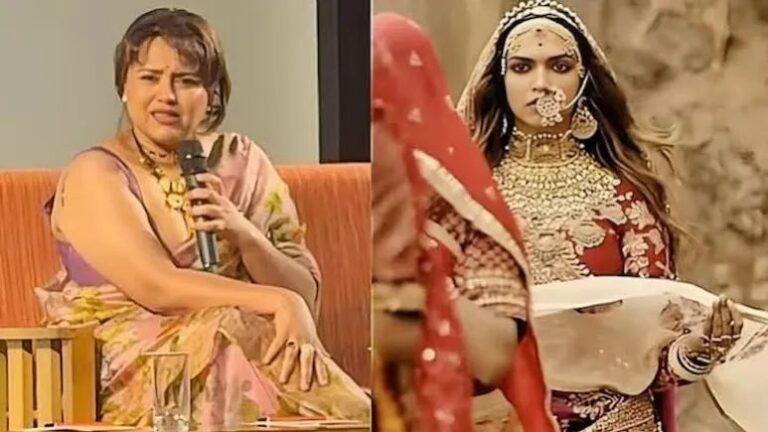
The attendee, a woman, in question, first referred to CJI’s remarks and then asked him about dissent. She was heard saying, “His Lordship made some very important points, I think, about the Indian track record of protecting democracy in the context of AI. We now hear from a number of legal observers within the country as well as internationally that there’s a great deal of concern about growing hostility to dissent within India. And it does seem that this hostility is somewhat reflected in His Lordship’s speech and it’s very well publicised.” Before she could complete the question, the moderator on the stage declined the question as it was not on the topic of discussion.

Later the woman was identified as Kalpana Wilson, daughter of Amrit Wilson. Kalpana is serving as Professor of Geography at the Birbeck University.

Who is Kalpana Wilson?

According to her profile on Birbeck University, she is serving as a Senior Lecture in the School of Social Sciences, and her work revolves around critical international development and social justice. She has done research on topics around race/gender, labour, neoliberalism, and reproductive rights and justice, with a particular focus on South Asia and its diasporas.

Kalpana holds BA (Hons) in Economics from the University of Sussex, and an MA in Area Studies (South Asia). She has also done PhD in Political Economy from SOAS, University of London. Before joining Birbeck, she was employed at the London school of Economics and at SOAS.

However, her academic record cannot overshadow her consistent anti-India activities. Her bio on social media platform X suggests that she writes about “racism and international development, gender, neoliberalism, imperialism and Hindutva fascism” and she identifies herself as “Marxist Feminist”.

Kalpana is married to CPI(M) Liberation All India General Secretary Dipankar Bhattacharya. The couple has a daughter Ananya.

Her association with leftist and anti-India networks

Her association with leftist and anti-India networks is not limited to academic writing. Kalpana Wilson has regularly appeared on platforms and in campaigns that paint India, the BJP, RSS and Hindu organisations as fascist, majoritarian and oppressive, while extending support to those accused of anti-national activities or violent mobilisation.

Blaming Hindus for the Leicester violence

In 2022, Kalpana Wilson, her mother Amrit Wilson and their group blamed Hindus for the communal violence in Leicester in the United Kingdom. Instead of acknowledging the targeted violence and intimidation faced by Hindus in the city, their activism focused on blaming “Hindutva” for the tensions. They also protested outside the Indian High Commission in London against what they described as the growing influence of Hindutva in UK politics. OpIndia’s detailed coverage on Leicester violence can be checked here.

Protests against India linked issues

The same network has also been involved in protests on several India linked issues. They protested for waiving Pakistan’s debt, against bulldozer action on illegal constructions in India, against the film The Kashmir Files, which they described as “Turning Tragedy into Propaganda”, supported the farmers’ protest in India, and held a vigil over the 2002 Gujarat violence, projecting it through a familiar anti-Modi lens.

Communist politics and attacks on capitalism

Kalpana Wilson’s ideological position has also shaped her writings on India’s economy and politics. As a Communist Marxist, she has opposed capitalism in India and has accused big industrial houses of spreading inequality and helping the growth of Hindutva. She has described the RSS, BJP and other Hindu groups as “pro capitalist”. Her writings have appeared on the website of the Communist Party of India, Marxist Leninist Liberation, CPI(ML), further underlining her links with leftist political networks.

Stand during the Karnataka hijab controversy

During the hijab controversy in Karnataka, Kalpana Wilson accused the state government of excluding Muslim girls from colleges merely because they expressed their faith by wearing hijab. She also claimed that Muslim girl students were being taunted and harassed by gangs shouting Islamophobic abuse, allegedly empowered by the ruling party. Her framing of the controversy again followed the familiar template of portraying India as hostile to minorities while ignoring the legal and institutional aspects of the debate. Details of Karnataka Hijab row can be checked here.

Support for Stan Swamy

Kalpana Wilson also came out in support of Stan Swamy, the Jesuit priest accused by India’s National Investigation Agency of links with the banned CPI (Maoist). Swamy was arrested in connection with the Elgar Parishad case and was accused of being part of a larger Maoist conspiracy. Wilson’s support for him was consistent with the wider leftist campaign that projected him as a human rights activist while downplaying the serious charges levelled by the investigating agency.

Source: X

Participation in the India EU Summit

In 2021, Kalpana Wilson was one of the speakers at the India EU Summit sponsored by IAMC and Foundation, The London Story. The panel featured several familiar anti-India voices, including Anand Grover, Christophe Jaffrelot, Pradyumna Jairam, Nodeep Kaur, Ravinder Kaur, Umair Khan of the Indian Council of International Muslims, CPI(ML) member Kavita Krishnan, Harsh Mander, Nikhil Mandalaparth and Sravya Tadepalli of Hindus for Human Rights, Ritumbra Manuvie of Foundation, The London Story, Raqeeb Hamid Naik, Karuna Nundy, Aakar Patel, Pamela Philipose, N Ram, Manu Sebastian, Pratik Sinha, Ashok Swain, Audrey Truschke and Richard Wilson, among others.

Speaker at ‘India at the Brink: Preventing Genocide’

She was also a speaker at the event titled “India at the Brink: Preventing Genocide”. The event included Australian Greens Party members David Shoebridge, Janet Rice and Lee Rhiannon, Haroon Kasim of The Humanism Project, Kancha Ilaiah Shepherd, CPI(ML) member Kavita Krishnan, Mohan Dutta of Massey University, Pieter Friedrich, former AAP linked IPS officer R B Sreekumar, Teesta Setalvad, IAMC’s Rashid Ahmed, Delhi riots accused Safoora Zargar, Suchitra Vijayan of The Polis Project, Aakar Patel, Raqeeb Hamid Naik, Ritumbra Manuvie, Sunita Viswanath of Hindus for Human Rights and Angana Chatterjee.

Dismissal of Hinduphobia concerns

In another event organised by Educate, Organise, Resist, Australia, Kalpana Wilson and Keval Bharadia attended a session titled “Exposing the Myth of Hinduphobia, Building Anti-Fascist Solidarities”. During the discussion, Wilson said it was “not useful” to describe killings and attacks on temples in Bangladesh as Hinduphobia. She claimed that communal and sectarian violence has existed in South Asia since the colonial period and linked its intensification to the rise of Hindutva in India and the return of the Taliban in Afghanistan. She further argued that attacks on Hindus are not global in the same manner as attacks on Muslims and Jews.

Support for the Dismantling Global Hindutva conference

Wilson also supported the Dismantling Global Hindutva conference, a controversial event that claimed to distinguish between Hinduism and Hindutva, but where several participants pushed arguments that effectively targeted Hindu identity, Hindu organisations and Hindu civilisational assertions under the garb of opposing Hindutva.

Source: X

“Dismantling Global Hindutva” was a 3-day conference co-sponsored by 60+ Departments or Centres from 45+ Universities, mostly from the US. It took place in September 2021. There were several anti-Hindu elements associated with the conference including Audrey Truschke, Anand Patwardhan and Nandini Sunder.

Links with The Polis Project and anti India Kashmir narratives

In a conversation with The Polis Project in 2019, Kalpana Wilson spoke about “Hindu fascism” and Hindutva ideology. The Polis Project has been known for its anti-India and anti-Hindu positions. Its co-founder Suchitra Vijayan has supported separatist narratives on Kashmir and has appeared on platforms where Pakistan backed anti-India voices have also been present. In the interview, Wilson opposed the abrogation of Articles 370 and 35A and claimed that outsiders were buying land and plundering Kashmir after the constitutional changes.

Article 370, Covid lockdown and allegations of fascism

Her views on Kashmir have repeatedly mirrored the language used by separatist and leftist networks. In 2020, while writing on India’s Covid lockdown in an article titled “Locking down rights, ramping up hate: fascism and Covid 19 in India”, Wilson accused the Indian government of using the pandemic to mobilise religious and caste based hate. She also claimed that by abrogating Article 370, India was “occupying” Kashmir through an Israeli style “settler colonialism” and denying Kashmiris access to life saving information through partial internet shutdowns.

Repeated attacks on the Modi government

Her writings have repeatedly described the Modi government as fascist and Hindu supremacist. In her article, she claimed that the pandemic in India had confirmed what many on the left already believed, that the regime represented a form of fascism in which Hindu supremacism and neoliberalism were linked. She claimed that the Modi government’s central focus during the pandemic was to weaponise the virus as part of its ideological project.

Support for Umar Khalid and call to repeal UAPA

Kalpana Wilson has also extended support to Umar Khalid, accused in the larger conspiracy case linked to the anti-Hindu Delhi riots of 2020. Khalid has been denied bail by courts, with observations regarding premeditation and the attempt to create unrest during the visit of then US President Donald Trump. Wilson has also called for the repeal of the Unlawful Activities (Prevention) Act and demanded the release of so called political prisoners, including Umar Khalid. Details of role of Umar Khalid in larger conspiracy can be checked here and the details of anti-Hindu Delhi Riots 2020 can be checked here.

Attack on Swachh Bharat Abhiyan

Her attacks on the Indian government have also extended to flagship welfare and development schemes. In 2017, she made a bizarre comparison between lynchings, development and the Swachh Bharat Abhiyan, claiming that the Clean India Mission was violent for the poor. The comment reflected her tendency to interpret even sanitation and public welfare initiatives through a rigid ideological lens.

SASG panel and pitch for ‘freeing’ Kashmir

In 2019, the CPI(ML) covered a panel discussion held by the South Asia Solidarity Group (SASG) at SOAS, London, under the title “Resisting Fascism, Building Solidarities, India Kashmir and Beyond”. The event featured Kavita Krishnan, Dibyesh Anand, Amrit Wilson, Kalpana Wilson, Satpal Muma, Sajjad Hassan, Rajratna Ambedkar, Nitasha Kaul and others. The CPI(ML) write up made a pitch for “freeing” Kashmir, once again placing Wilson in the ecosystem that routinely internationalises India’s internal matters and amplifies separatist narratives.

SASG was also condemned by National Investigation Agency (NIA) Court in the judgment of Chandan Gupta murder case. The court expressed concerns over the influence of certain NGOs, including Alliance for Justice and Accountability (New York), Citizens for Justice and Peace (Mumbai), Indian American Muslim Council (Washington DC), People’s Union for Civil Liberties (New Delhi), Rihaee Manch (Lucknow), South Asia Solidarity Group (London), and United Against Hate (New Delhi). It stated, “The communal sentiment subtly infiltrates human activities at the ideological level and is often manifested through reports and interventions by such NGOs. This court has often observed that when accused persons involved in anti-national activities are brought for trial, certain advocates, reportedly linked to these NGOs, are already present with vakalatnamas to represent them.” The court also raised questions over the funding of these NGOs. Details of the case, judgment and these NGOs can be checked here.

Praise for CPI(ML) and allegations against NIA

In a 2014 article for The Guardian titled “It’s not just India’s middle classes who have a problem with Narendra Modi”, Kalpana Wilson praised the CPI(ML)’s electoral victory in a village in Bihar. In the same article, she made serious allegations against India’s National Investigation Agency in connection with arrests after the Patna blasts during a Modi rally, claiming that Muslim youths were detained and tortured to extract false confessions. The allegations were made without providing credible evidence.

Writing for Communist website Salvage

Writing for the Communist website Salvage in an article titled “Hedge funds, Hype and Hindu Fascism”, Wilson linked the RSS, cow protection groups, caste, Gujarat 2002, poverty, malnutrition, capitalism and British colonialism to attack Hindutva. In the same piece, she accused Hindutva of being colonial, Brahmanical, patriarchal and masculinist, and claimed that it seeks to homogenise Hinduism. She even alleged that the Hindutva project involved destroying temples of Hindu goddesses and gods whose origins lie in indigenous religions or those worshipped by Dalits.

Signatory to campaigns against India

Kalpana Wilson has also been a signatory to letters condemning alleged assaults on students and staff at Jawaharlal Nehru University, raising the Rohith Vemula case, and criticising the Indian government over violence against women and girls. Her activism, writings and public engagements show a consistent pattern of targeting India, the Modi government, Hindu organisations and Hindutva, while aligning with leftist, Islamist linked and anti-India advocacy networks on international platforms.

OCI card of Kalpana Wilson’s mother revoked, no relief from Delhi High Court

Amrit Wilson, mother of Kalpana Wilson, had lost her OCI previleges for her consistent anti-India stance. She had approached Delhi High Court which refused to intervene saying that the court cannot allow the country to be maligned. Wilson has publicly criticised various policies of the Government of India. She has opposed the Citizenship Amendment Act, CAA, the proposed National Register of Citizens, NRC, and the National Population Register, NPR. She has described Prime Minister Narendra Modi and his government in strong terms in public forums, often calling them fascist.

It is important to note that while protests against NRC and NPR were widespread, no operational rules were ever notified for implementation of NRC or NPR at a nationwide level. In addition to criticism of domestic politics, Wilson has participated in international events where India’s legislative measures were described as Islamophobic and as steps towards “ethnic cleansing”. She has also made statements regarding the unrest in Leicester. She claimed that RSS supporters were transported to provoke conflict and to strengthen a narrative of Hindus as victims. Such claims were strongly contested by several community organisations and commentators who cited evidence of Islamist mobs attacking Hindu homes and temples.

Wilson has been associated with the South Asia Solidarity Group based in Britain, which has organised protests outside the Indian High Commission and has frequently posted material critical of the BJP and RSS on social media. The group has portrayed developments in Kashmir through a lens that aligns with separatist narratives and has participated in campaigns framing India as an aggressor in the region.

Her social media activity has included use of symbolic imagery associated with separatist campaigns after the abrogation of Article 370, further placing her in alignment with narratives viewed by the Indian government as hostile to its territorial integrity. In short, both mother and daughter have a long history of anti-India activities.

Not an isolated academic intervention

The hackling of CJI cannot be seen as an isolated event. Kalpana’s presence at the event itself raises questions about her intensions given her history and previous statements.

Kerala’s Congress govt releases white paper to expose the misrule of LDF regime: Read how Congress and the Left, both follow the same pattern when in power

The newly elected Congress-led United Democratic Front (UDF) government in Kerala has released a detailed White Paper on the state’s finances on Thursday, 4th June, presenting what it describes as a grim picture of an economy pushed into severe financial distress during the ten years of Left Democratic Front (LDF) rule. Titled “Kerala’s Fiscal Health: A Status Report”, the 195-page document was prepared by an expert committee headed by former Cabinet Secretary K M Chandrasekhar and was tabled in the Assembly by Chief Minister V D Satheesan, who also holds the Finance Ministry.

The White Paper was among the first major decisions taken by the new UDF government after assuming office. It seeks to explain the scale of the fiscal challenge inherited by the administration and argues that Kerala’s economy is suffering from deep structural problems that have accumulated over the past decade.

According to the report, Kerala has violated the basic principle of public finance that governments should “borrow to invest, and growth will repay.” Instead, borrowing increasingly financed consumption and recurring expenditure rather than productive investments. As a result, the state’s growth-generating capacity weakened while debt continued to pile up.

The White Paper comes at a politically significant moment. It has been projected by the UDF as an honest assessment of the state’s finances and as a roadmap for future corrective action. However, it also opens up a larger political debate: whether Congress governments across India have developed a pattern of blaming previous administrations for financial troubles and then finding themselves trapped by similar fiscal challenges after coming to power.

How LDF ruined Kerala’s economy in the last ten years

The most striking finding of the White Paper is the scale of Kerala’s public debt. According to the report, total public debt has ballooned to ₹5.07 lakh crore. Such a large debt burden means a significant portion of the state’s resources now goes toward servicing old liabilities rather than creating new assets or funding development projects.

An excerpt from the report

The report argues that the financial situation has reached a stage where future governments will continue to carry the burden of decisions taken during the previous decade. Rising debt has translated into rising interest obligations, creating a vicious cycle in which more borrowing is required merely to meet existing commitments.

Another major concern highlighted in the report is the state’s committed expenditure. Nearly 77% of total revenue receipts are already pre-committed to salaries, pensions and interest payments. This leaves very little fiscal space for fresh development initiatives, infrastructure creation or social sector investments.

Interest payments alone account for more than one-fifth of the state’s revenue receipts. In practical terms, this means a substantial amount of taxpayer money is being spent simply to service old debt.

The report also points to Kerala’s poor capital expenditure performance. Capital expenditure is often considered one of the most important indicators of long-term economic health because it creates infrastructure and productive assets that generate future growth. However, Kerala’s capital expenditure has fallen to just 1.3% of GSDP, among the lowest levels in the country.

An excerpt from the report

The White Paper argues that this trend directly contradicts the justification often offered for high borrowing. Governments generally defend borrowing by claiming that the funds are being invested in projects that will generate future growth. However, when capital expenditure remains low despite high borrowing, the benefits of such borrowing become difficult to justify.

KIIFB under the scanner 

A major portion of the report focuses on the role of the Kerala Infrastructure Investment Fund Board (KIIFB), a flagship institution promoted during the LDF era.

An excerpt from the report

The White Paper describes KIIFB as a “parallel fiscal authority” and argues that it contributed significantly to Kerala’s present liabilities. According to the report, KIIFB has left the state with financial obligations worth around ₹56,000 crore. Of this amount, nearly ₹21,000 crore relates to loan liabilities while another ₹35,000 crore is linked to projects currently in the pipeline.

The report also raises questions about the geographical distribution of KIIFB spending. It alleges that more than 20% of KIIFB funds were concentrated in Kannur, a district widely considered a political stronghold of the CPI(M). The implication is that political considerations may have influenced investment decisions.

The White Paper further argues that many KIIFB-funded projects increased liabilities without creating sufficient economic returns to justify the costs.

Massive pending liabilities

The UDF government has also highlighted what it calls inherited payment arrears worth ₹48,733 crore. These include substantial Dearness Allowance (DA) and Dearness Relief (DR) arrears owed to government employees and pensioners. The report suggests that the state delayed payments to manage immediate fiscal pressures, effectively pushing liabilities into the future.

As a result, the new government faces the challenge of honouring commitments made years ago while simultaneously trying to stabilise public finances.

A familiar political pattern of Congress-led government

While the Kerala White Paper directly targets the previous LDF government, Congress governments elsewhere have adopted a similar political approach. The pattern, they often begins with blaming the previous administration for financial distress and then, after coming to power, launching expansive welfare schemes and election promises that place additional pressure on state finances.

The results are clearly visible in prominent states such as Karnataka and Himachal Pradesh, where Congress governments have repeatedly cited inherited debt and financial stress while simultaneously struggling to fund their own commitments.

From South India to North India, the story has remained remarkably similar: blame the previous government, announce ambitious welfare guarantees, and then face mounting fiscal challenges when revenue growth fails to keep pace with expenditure.

Karnataka: From revenue surplus to fiscal stress

Karnataka can be seen as a warning about the long-term consequences of aggressive welfare spending without adequate fiscal planning.

When the BJP government under Basavaraj Bommai presented its budget in 2023, Karnataka was in a relatively comfortable fiscal position. The state recorded a revenue surplus and maintained a balance between welfare spending and infrastructure investment.

The budget allocated significant resources to agriculture, education, irrigation and infrastructure projects while avoiding major fiscal disruptions. Education alone received allocations exceeding ₹37,000 crore. Major irrigation projects such as Upper Bhadra and Kalasa-Banduri also received substantial funding.

However, after the Congress government led by Siddaramaiah came to power, it implemented its five flagship guarantee schemes, Gruha Lakshmi, Gruha Jyoti, Anna Bhagya, Shakti and Yuva Nidhi.

These schemes formed the core of Congress’s election campaign and were credited with helping the party secure a decisive victory.

But the financial implications soon became apparent.

According to a report by the Comptroller and Auditor General (CAG) released last year, the guarantee schemes alone carried a budgetary provision of ₹36,538 crore in 2023-24, equivalent to around 15% of the state’s total revenue expenditure.

The impact on Karnataka’s finances was shocking. Revenue grew by only 1.86% while expenditure surged by 12.54%. The state slipped into a revenue deficit of ₹9,271 crore.

The fiscal deficit rose sharply from ₹46,623 crore in 2022-23 to ₹65,522 crore in 2023-24. To bridge the gap, Karnataka borrowed nearly ₹63,000 crore from the market, almost two and a half times the borrowing of the previous year.

Meanwhile, capital expenditure fell substantially, leading to delays and unfinished infrastructure projects.

Congress leaders themselves sound alarm bells

Perhaps the strongest criticism of Karnataka’s financial position has come from within the Congress ecosystem itself.

On 11th July, 2024, Siddaramaiah’s financial advisor, Basavaraj Rayareddy, openly acknowledged the strain on state finances.

“Many MLAs are demanding funds for development works in their constituencies; however, there is no money with the government. We are spending approximately Rs 65,000 crore on guarantee schemes,” he said.

He added: “People want development. But believe me, there is absolutely no money.”

The remarks triggered a major political debate because they appeared to confirm what opposition parties had been alleging for months.

Congress’s freebies have even resulted in internal strife. There are some Congress leaders who claim that the schemes failed to provide the electoral returns anticipated, and there are doubts about whether such lavish expenditure was worth the price.

The financial strain has been acknowledged on several occasions by senior Congress leaders themselves. CM DK Shivakumar admitted in July 2023 that the government was finding it difficult to have funds for development because ₹40,000 crore had to be kept aside for party’s guarantees.

These admissions have been used by critics to argue that Karnataka’s fiscal stress is no longer merely an opposition talking point.

The impact on infrastructure

As expenditure on welfare schemes increased, concerns emerged regarding infrastructure spending.

The CAG noted a decline in capital expenditure and a sharp rise in incomplete projects. Critics argue that resources which could have gone toward roads, irrigation, transport and industrial infrastructure are increasingly being diverted toward recurring welfare obligations.

The situation has also affected state-owned transport corporations. Under the Shakti scheme, women are provided free bus travel. However, transport corporations later reported significant financial pressures and delayed obligations.

KSRTC salary crisis: how ‘Shakti’ broke public transport

Earlier, in August last year, workers of the Karnataka State Road Transport Corporation (KSRTC) and Bengaluru Metropolitan Transport Corporation (BMTC) went on a strike against unpaid salary revisions and arrears.

They were demanding a 25% hike in salary and payment of arrears for 38 months, which totals ₹1,800 crore. The state government, however, proposed to settle arrears of just 14 months due to financial constraints.

What infuriated workers was that their salaries were being withheld even while the government was spending thousands of crores on the Shakti scheme, under which women get free bus travel. The Congress government owes ₹1,600 crore to the four state-owned transport corporations (KSRTC, BMTC, NWKRTC, KKRTC) for carrying out Shakti.

The debate in Karnataka has therefore evolved into a broader question: how should governments balance welfare commitments with long-term development spending?

Himachal Pradesh: A similar story in the hills

The financial debate surrounding Congress governments is not limited to South states only.

In Himachal Pradesh, where Congress came to power under Chief Minister Sukhvinder Singh Sukhu in December 2022, concerns over fiscal stress have repeatedly surfaced.

Before the election, Congress promised a range of welfare measures, including free electricity, monthly financial assistance for women, restoration of the Old Pension Scheme, government jobs and several subsidy-based initiatives. After coming to power, however, the state increasingly faced fiscal pressures.

Reports emerged of difficulties in meeting salary and pension obligations. The government reportedly struggled with monthly commitments of nearly ₹2,000 crore toward salaries and pensions alone.

At one stage, delays in salary and pension payments affected hundreds of thousands of employees and retirees, sparking a major political controversy. The state also resorted to additional borrowing to meet expenditure requirements.

New taxes, higher charges and cost-cutting measures

As fiscal pressures mounted, the Himachal government introduced several measures aimed at increasing revenue.

The Assembly approved amendments introducing environmental cess and milk cess. The government also reduced some subsidy benefits and increased certain user charges.

Opposition leaders accused the government of burdening ordinary citizens after winning elections on promises of generous welfare schemes. Among the controversial decisions were the withdrawal of some free power benefits, higher diesel prices and increased water charges in rural areas. The government also explored new revenue sources, including discussions around regulated cannabis cultivation for industrial and medicinal purposes.

These measures are evidence that the state’s finances were under severe stress.

Even temple trusts drawn into the debate 

One of the most politically sensitive controversies emerged when a notification encouraged temple trusts to contribute funds toward welfare schemes such as the Mukhyamantri Sukh-Aashray Yojana and Mukhyamantri Sukh Shiksha Yojana.

The move generated intense political reactions and became another symbol cited by opponents who argue that the state government is struggling to finance its welfare commitments.

Meanwhile, Chief Minister Sukhu has continued to argue that much of the state’s debt burden was inherited and that a large portion of recent borrowing has gone toward repaying old loans and interest obligations.

The same blame game in Kerala, Karnataka, and Himachal

The Kerala White Paper has reignited a broader pattern of blame game and about fiscal responsibility and freebies politics.

The Congress-led UDF government in Kerala has presented the report as evidence of financial mismanagement under the previous LDF administration. The document highlights rising debt, mounting liabilities, low capital expenditure and structural weaknesses in the state’s finances.

However, similar explanations have been offered by Congress governments in Karnataka and Himachal Pradesh after assuming power. In both states, the previous governments were blamed for fiscal difficulties, but concerns later emerged regarding the sustainability of new welfare commitments and the resulting pressure on public finances.

As Kerala begins examining the financial legacy of the past decade under the LDF through its White Paper, the experiences of Karnataka and Himachal Pradesh are likely to remain central to the debate. 

Cockcroach Janta Party supporters heckled journalists, raised “Godi Media” slogans during Jantar Mantar protest: Here are six incidents of journalists targeted by protestors

The much-awaited Cockcroach Janta Party (CJP) protest was organised at Jantar Mantar in New Delhi on Saturday (6th June). With all the social media hype around the protest, it was expected that at least thousands of supporters of the CJP, which has millions of followers on social media, would attend the protest. However, the protest turned out to be a flop show, with very few people gathering at the site. The protestors were outnumbered by media persons and the police personnel.

Interestingly, many of the CJP supporters, who came to protest, had little idea about the agenda and purpose of the protest. While the CJP had claimed that the protest was being organised against the central government, especially the education minister, over recent issues like NEET and CBSE exams, anti-national slogans of Azadi-Azadi were raised during the protests. When some journalists tried speaking to the protestors to understand their agenda and questioned the anti-national slogans being raised by CJP supporters, they were heckled and intimidated. Many protestors pushed and hounded journalists who were only doing their jobs.

OpIndia journalist Anurag Mishra had a similar experience at the protests when he tried to speak to the CJP supporters regarding their demands. The CJP supporters, who claim to be fighting for the freedom of expression, surrounded Anurag Mishra and started shouting slogans calling him “Godi Media”. Mishra had merely asked the CJP supporters why the turnout at the ground was so low while the CJP has millions of followers on social media. The CJP supporters got irritated by the question and started intimidating and shouting at him.

The OpIndia journalist was not the only one who was nearly assaulted by CJP supporters at the protest site; another journalist from Zee News also had a similar experience. The journalist was covering the protest when several CJP protestors came charging at him, raising slogans of “Godi Media”. As the situation grew tense, some police personnel intervened and rescued the journalist.

Some women journalists had a tough time covering the protests as they were harassed by CJP supporters. In a viral video, CJP protestors were seen encircling a woman journalist, shouting slogans and showing her an obscene gesture.

Another woman journalist was also targeted by CJP hooligans, who heckled her as she was trying to cover the protests, accusing her of being a government agent. One of the CJP protestors taunted her, saying, “Modi (PM Modi) must have handed her a ₹500 note”, as others shouted slogans at her.

Similarly, a News24 journalist was pushed around and hounded by CJP supporters as he was trying to ask them questions. The journalist tried to reason with the protestors, but they kept shouting slogans of “Shame, Shame” and “Godi Media Vapas Jao” (Go Back Godi Media).

In yet another incident, an ABP journalist was roughed up by the CJP supporters as he was trying to speak to them. The journalist displayed great calm despite being pushed and shoved by protestors, who were aggressively shouting provocative slogans.

These incidents of journalists who came to cover the protests being heckled by CJP supporters expose the hypocrisy of CJP leaders, who portrayed the entire campaign against the government and the protest as an attempt to ‘raise a voice’ or ‘to be heard’. On the one hand, the party wants to ask questions to the government and fight for the freedom of expression and liberal values, and on the other hand, its supporters harass and intimidate people asking questions to them.

E85 fuel launched in India with ₹20 lower price than Petrol: Read what this new green fuel with 85% ethanol is and whether your vehicle will run on it

Union Minister for Petroleum and Natural Gas Hardeep Singh Puri launched E85 fuel at an Indian Oil retail outlet in New Delhi on World Environment Day, June 5, 2026. Senior officials from the Ministry and CMDs of public sector oil marketing companies (OMCs) attended the event. The launch marks the commencement of E85 rollout across 48 retail outlets of Public Sector OMCs, with plans for nationwide expansion to around 500 outlets by December 2026 and about 5,000 by December 2027, enabling flex-fuel vehicle users to access this cleaner fuel. This initiative is expected to help raise India’s aggregate ethanol blending levels to nearly 26 per cent by 2030-31.

E85 is a high-ethanol blended fuel comprising 80–85 per cent ethanol and 14–19 per cent petrol. It is specifically designed for use in flex-fuel vehicles (FFVs), which are capable of operating on ethanol blends ranging from E20 all the way to E100 without restricting consumers to a single blend. Ethanol for this fuel is produced domestically primarily from sugarcane and other agricultural feedstocks, supporting farmers and reducing reliance on imported crude oil.

Public sector OMCs such as Indian Oil Corporation (IOC), Bharat Petroleum, and Hindustan Petroleum are leading the production and distribution in collaboration with ethanol suppliers under the government’s Ethanol Blended Petrol (EBP) programme. This builds on the successful increase in ethanol blending from just 1.53 per cent in 2014 to 20 per cent today, achieved five years ahead of schedule, which has already saved over ₹1.84 lakh crore in foreign exchange and substituted nearly 302 lakh metric tonnes of crude oil imports.

In Delhi, E85 is priced nearly ₹20 per litre lower than conventional E20 petrol, passing on the economic benefits of domestically produced ethanol directly to consumers. For instance, it is available at around ₹82 per litre compared to higher prices for regular petrol. This lower price is the result of ethanol’s production economics, though its lower energy density means vehicles may experience a noticeable drop in mileage.

Beyond cost savings, E85 offers substantial environmental advantages. Flex-fuel vehicles running on E85 can reduce lifecycle greenhouse gas emissions by around 61 per cent compared to conventional petrol vehicles. With ethanol’s high Research Octane Number (RON) of about 108, it provides superior knock resistance, enabling engines to run at higher compression ratios and optimised ignition timing for better performance. Higher ethanol blends also promote cleaner and more complete combustion, resulting in near-zero particulate matter emissions that significantly improve urban air quality.

E85 compatible vehicles

Only specially designed flex-fuel vehicles (FFVs) can safely use E85. Standard petrol vehicles, including most E20-compliant models on Indian roads, are not compatible. Using E85 in non-FFVs risks corrosion of fuel system components, damage to seals and hoses, starting issues in cold weather, and overall performance degradation.

Flex-fuel vehicles feature modified engines, fuel lines, injectors, pumps, and sensors engineered to handle the corrosive properties and different combustion characteristics of high-ethanol fuels. They offer the flexibility to run on any blend from E20 to E85 (or even E100 in some cases) depending on availability.

Prominent flex-fuel models already introduced or showcased include Maruti Suzuki’s WagonR Flex Fuel, India’s first mass-market flex-fuel passenger car, which supports blends up to E85 and has been positioned for commercial buyers initially. Hero MotoCorp has launched flex-fuel variants of popular motorcycles such as the Splendor+ Flex Fuel and HF Deluxe Flex Fuel. A Toyota Innova flex-fuel model was also unveiled in 2023.

Other models like the Maruti Suzuki Fronx Flex Fuel are expected in the coming months, prototypes of which were already demonstrated. More two-wheeler and four-wheeler FFVs from various manufacturers are anticipated as the ecosystem matures. Automakers including Maruti Suzuki and Hero MotoCorp are actively supporting the transition, with industry associations on board. Most models contain the words Flex Fuel in their names, to avoid any confusion.

Minister Hardeep Singh Puri emphasised that E85 is meant exclusively for these specially designed flex-fuel vehicles and not for normal petrol cars. He addressed common misconceptions by noting that since E20 became the standard fuel, there has not been a single reported case of engine failure or vehicle breakdown due to ethanol blending. E20-compatible vehicles often deliver improved acceleration and better ride quality, especially in city conditions, and ethanol use does not affect vehicle insurance validity.

FFVs also remain competitive with electric vehicles due to lower upfront costs and utilisation of existing infrastructure, while relying on domestically produced ethanol from Indian farmers rather than imported batteries and minerals.

If 50 per cent of new two-wheelers and four-wheelers transition to flex-fuel technology, it could generate demand for over 312 crore litres of ethanol annually, directing nearly ₹12,403 crore directly to farmers, saving about ₹15,151 crore in foreign exchange, and reducing CO2 emissions by 66.4 lakh metric tonnes. The initiative draws inspiration from Brazil’s successful experience, where over 80 per cent of the light vehicle fleet operates on flex-fuel technology. States have been urged to support the shift through favourable taxation policies for E85 and FFVs.

This launch advances India’s broader biofuel strategy and Atmanirbhar Bharat goals by reducing oil imports, boosting rural economies, and promoting cleaner mobility. E85 will be dispensed from dedicated pumps to prevent misuse. While initial availability is limited and most existing vehicles will continue using E20 petrol, the expanding FFV options and infrastructure promise greater choices for consumers seeking cheaper, greener fuel.