Home Blog Page 413

Operation Sindoor: Women pilots led India’s fierce retaliation, 200+ killed in Pakistan

Over 200 terrorists and Pakistani military personnel were killed in India’s bold and meticulously planned military campaign, Operation Sindoor. The campaign was launched by the armed forces in response to the deadly 22nd April Pahalgam terrorist attack in Jammu and Kashmir that claimed the lives of 26 innocent Hindu tourists.

According to an exclusive report by CNN News18, top defence sources said that at least 42 Pakistani soldiers and 170 terrorists were neutralised in the strikes that were initiated by Indian armed forces targeting the terrorist bases and Pakistani airbases across Pakistan and Pakistan-occupied Jammu and Kashmir (PoJK). Notably, women pilots of Indian Air Force played a crucial role in the operation.

Indian women pilots play historic role

Operation Sindoor was first-of-its-kind as several Indian women pilots played active combat roles. It became a landmark moment not just in military terms but in gender inclusion within the armed forces. These women were part of precision air missions that destroyed nine terrorist bases on 7th May, including the Jaish-e-Mohammad base in Bahawalpur where several of the family members of terrorist Maulana Masood Azhar were killed.

After that, 9th and 10th May strikes on Pakistan’s airbases in Sargodha, Rahim Yar Khan and the strategic Nur Khan base demolished the Pakistani infrastructure to a large extent. According to News18 sources, the operation was an outcome of years of military readiness post the Doklam standoff in 2017.

Operation paused, not ended

Despite the success, officials have categorically noted that Operation Sindoor is only “paused, not over”. India remains on high alert, anticipating possible retaliation. According to sources, “Pakistan has been humiliated. We expect them to try something. All forces are on alert.”

Notably, General Asim Munir of the Pakistani Army has been promoted to Field Marshal after his failure in leading the Pakistan Army during Indian operation. Indian officials have called it a “face-saving” move.

PM Modi’s powerful address – ‘They tried to erase our sindoor. We turned them to dust’

On 22nd May, Prime Minister Narendra Modi confirmed that India had struck back hard to take revenge for the Pahalgam terrorist attack. He hailed the armed forces and unveiled what he called a “new doctrine” of Indian security – swift, unrelenting, and unapologetic retaliation.

He declared, “Our forces have created a chakravyuh that has brought Pakistan to its knees.” He added, “Rahim Khar air base is now in the ICU,” while referring to Pakistan’s failed strike attempt on India’s Nal airbase.

Ending on a warning, he asserted, “If you attack India, you’ll face fire. And nuclear threats don’t scare us anymore.”

Danish, Shoaib and the web of espionage woven around YouTuber Jyoti Malhotra by Pakistan’s ISI

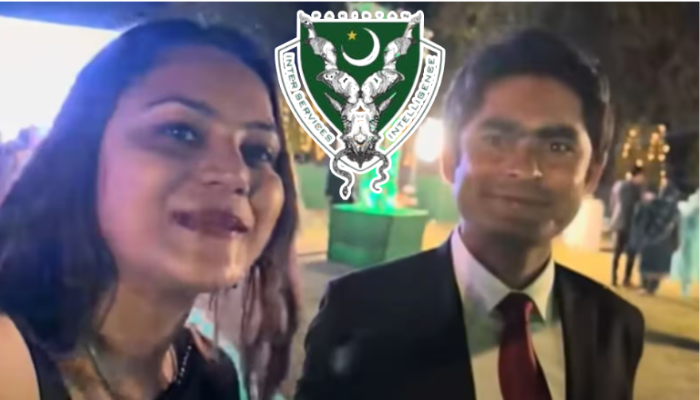
The inquiry into the espionage case concerning the popular YouTuber and vlogger Jyoti Malhotra from Hisar has been disclosing alarming details consistently. According to the reports, Ehsan-ur-Rahim, also known as Danish, expelled staffer of the Pakistan High Commission, attempted to cultivate over two dozen people in the capital who had either filed for a visa to Pakistan or were related to the applicants.

Notably, the conspiracy extended far deeper than it initially appeared. A special branch officer indicated that the Delhi Police launched a preliminary probe in response to information from the Pakistan desk of the police’s intelligence branch that raised concerns. An investigation by Delhi Police unveiled that Danish was an inspector-rank officer with Pakistan’s notorious Inter-Services Intelligence (ISI) rather than a visa officer as the high commission had stated.

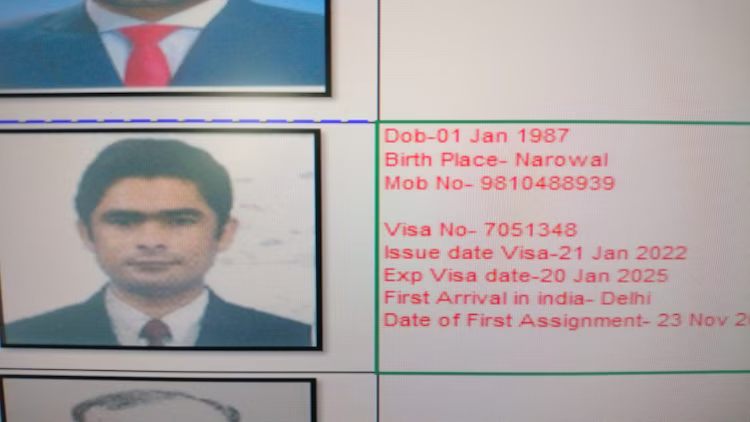
“He was reporting to a senior ISI officer named Shoaib and was tasked with arranging Indian SIM cards, besides recruiting influencers. Danish’s passport was issued at Islamabad, and he was granted a visa for India on 21st January 2022. According to documents, Danish was born in Narowal in Pakistan’s Punjab province,” according to a source, reported The Times of India.

Image via India Today

Danish was banned from India on 13th May after it was revealed that he assisted in hiring and supervising Indian nationals who were assigned to collect confidential data and spread pro-Pakistan sentiments on the internet. He was in contact with Jyoti Malhotra who was arrested from the New Aggarsain Extension on 16th May.

She ran her YouTube channel “Travel with JO” and went to Bangladesh, China, Pakistan and a few more places. She has around 4 lakh subscribers on the platform and 1,32,000 followers on Instagram.

According to authorities, Jyoti Malhotra was charged under sections of the Bhartiya Nyay Sanhita and the Official Secrets Act. She is currently being held by the Haryana Police and her custody extended by four days on 22nd May. Her laptop and three cell phones have been transferred for forensic analysis by the police.

Her four bank accounts are also under probe. The nature of the intelligence she shared with the Pakistani operatives is being looked into by agencies. She was questioned by representatives of the Intelligence Bureau, the National Investigation Agency and military intelligence. They are also examining her travel itinerary and business dealings.

Ties between Jyoti and Danish

Danish received a visa for India on 21st January 2022 and his passport was issued from Islamabad. He was born in Narowal, in the Punjab province of Pakistan, according to a report in India Today. Security organizations are currently investigating if Danish was his true name or an ISI-provided code name.

According to sources, he worked at the Pakistan High Commission’s visa desk in Delhi but his true duties included espionage and laying traps for Pakistani spies. Jyoti Malhotra was being swiftly developed as an intelligence asset by him. The YouTuber admitted to security agencies that she first spoke with him in 2023 while applying for a visa at the Pakistan High Commission.

She took his number and they stayed in touch. She had been in constant communication with him ever since. He assisted her in obtaining an extension for her Pakistani visa, organized place for her to stay and facilitated introductions to various intelligence operatives,

The vlogger added that she met Ali Hassan, Danish’s contact in Pakistan, who made travel and lodging arrangements for her. Shakir and Rana Shahbaz, two intelligence officials were introduced to her by the former. She reportedly met them in Lahore and saved Shakir’s phone number as  “Jatt Randhawa.”

Shakir targeted Indians, particularly YouTubers, in search of financial gain or travel chances. He changed his name three times in a single year – Walton, Mehr Shakir and Shakir Date. Following Jyoti Malhotra’s arrest, his WhatsApp business account was deleted. He also uses a Saudi number. He made two Facebook pages to connect with Indian vloggers and he has several Indians on his friend list.

In a further twist of events, a United Arab Emirates (UAE) company is now under the lense, adding another layer to the case. According to sources, the sponsorship that Jyoti Malhotra received from a travel firm based in the United Arab Emirates is of special interest to the investigative authorities. The company Wego, which is also licensed to operate in Pakistan has sponsored several of her videos.

It is a travel firm licensed to operate in Pakistan and has operations in Singapore and Dubai. The International Air Transport Association (IATA) has also granted it accreditation. Although there isn’t evidence that Wego is sponsoring Pakistan, the company’s activities there have prompted suspicions.

Pakistan’s spy-ring in India

Jyoti Malhotra is among multiple Pakistani spies recently apprehended following “Operation Sindoor” which occurred in the aftermath of the Pahalgam terror attack. The startling revelations following the development and the Islamic Republic’s strategy to destabilize India from within might come as a shock or surprise, however, the country has been previously exposed for using similar tactics.

According to reports, Pakistani officials screened people like job applicants and sought signs of monetary need, enthusiasm in traveling to Pakistan and financial desperation. Jyoti Malhotra was a YouTuber with access and social reach, traveling alone and unemployed following Covid and hence she turned into an ideal candidate.

“She could easily blend in anywhere. That made her useful to Pakistani handlers. That’s when she was contacted by an intelligence agent,” per Dainik Bhaskar.

The Delhi Police and Military Intelligence (MI) conducted a sting operation in 2021 as well, exposing a visa officer of Pakistani descent named Rana Mohammad Zia. It was discovered that he was an ISI spy employed by the Pakistan High Commission as a visa officer. Habib, a military contractor connected to him was detained in Pokhran .

Two such Pakistan High Commission officials were discovered to be ISI operatives on 31st May 2020, after being exposed by Delhi Police’s Special Cell and MI for acting as visa officers in India. They were identified as Tahir Khan and Abid Hussain. The officials were sent back to Pakistan after being deemed persona non grata.

The strength of the Pakistan High Commission was reduced from 180 to 90 immediately following this incident. Security services have been often contacted over the years by employees of the Pakistan High Commission who are ISI agents. They create their passports under false pretenses and travel to India for espionage purposes.

Mehmood Akhtar, an ISI officer who masqueraded as a visa officer at the high commission was unmasked by Delhi Police and MI in 2016. Two of his Indian friends were detained, revealing their method of operation while he was released on diplomatic immunity. He was hired by ISI and assigned to the Delhi high commission in 2013.

At the time of his arrest, documents pertaining to border and defense deployment were uncovered from his possession. Likewise, a spy ring linked to Pakistani intelligence was busted by Delhi Police and military intelligence in 2015, leading to the arrest of five individuals, including an Air Force officer.

Pakistan High Commission and espoinage

It is noteworthy that there has long been a connection between espionage and the Pakistan High Commission in New Delhi. Sources mentioned that ISI rotates its operatives among different positions while planting them in the high commission for its sinister plans.

The inquiry into these Pakistani intelligence officials (PIOs) revealed that the ISI consistently reintegrates army officers, provides them with training in espionage techniques and dispatches them to the high commission using bogus passports and identities.

The Public Information Officers assist visa applicants in locating vulnerable members of the army or paramilitary forces in exchange for easier visa processing. Additionally, the visa seekers aid them in acquiring Indian mobile SIM cards, which are subsequently utilized for reaching out to potential agents, as stated by a senior official. The probe found out that PIOs were attempting to enlist a few Indian social media personalities to promote their agenda.

It is clear that the recent revelations represent merely the tip of the iceberg and there are numerous other YouTubers and influencers on Islamabad’s payroll in the country. While Pakistan may not possess the skills or ability to combat India in warfare, it certainly excels in employing unscrupulous methods and fabricating a tapestry of lies and trickery.

Karnataka Deputy Chief Minister DK Shivakumar admits that he donated ₹25 lakh to the National Herald, says it is a newspaper run by Congress party

0

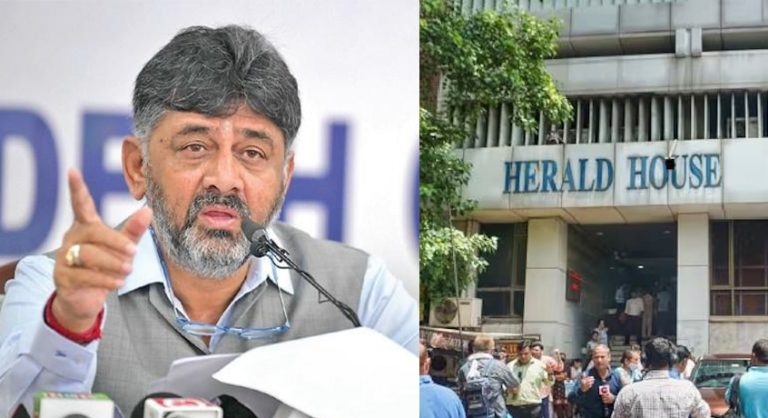
Karnataka Deputy Chief Minister DK Shivakumar on Friday admitted that he had donated Rs 25 lakh to the National Herald, which he said was a newspaper run by his party.

“I donated Rs 25 lakh to the National Herald. It is a newspaper run by our party. My brother and I have given money to the publication. We have also given donations from our trust. We have given our hard-earned money; there is nothing to conceal,” Shivakumar told reporters.

The National Herald newspaper remains under the scanner of the Enforcement Directorate (ED) in relation to an ongoing investigation by the central investigative agency. The investigation involves top Congress leaders, including Lok Sabha Leader of Opposition (LoP) Rahul Gandhi and Sonia Gandhi.

Shivakumar’s reaction comes after his brother DK Suresh and Telangana CM Revanth Reddy were named in the chargesheet filed by ED in connection with the National Herald case.

Meanwhile, Bharat Rashtra Samithi (BRS) working president K.T. Rama Rao (KTR) on Friday, alleged that Telangana has become an “ATM for Scamgress” (Congress), with Chief Minister A Revanth Reddy implicated in corrupt practices.

Taking to X, sharing screenshots of newspaper reports related to National Herald case, he wrote, “Telangana has become an ATM for Scamgress and it’s been now corroborated by agencies As the ED charge sheets Telangana “Bag Man” in National Herald case, he is trying his best to distract the people’s attention from his corrupt practices The million dollar question is whether the NDA Govt will act this time or pardon Revant Reddy as they’ve done in the case of Amrut Scam, RR Tax and Civil supplies scam”

On Wednesday, the ED presented its opening arguments before Delhi’s Rouse Avenue Court regarding the cognisance of its complaint against Congress leaders Sonia Gandhi, Rahul Gandhi, and others in connection with a money laundering case linked to the National Herald.

In the opening submissions, Additional Solicitor General (ASG) S V Raju submitted that an offence of money laundering is made out in this case. He also submitted that there were proceeds of crime. It was also submitted that there was continuing criminal activity for the generation of proceeds of crime, which constitutes the offence of money laundering.

After hearing the opening submitted by ASG S V Raju and Special Counsel for ED Zoheb Hosain, the Special Judge listed the matter for remaining arguments from July 2 to July 8. Special judge Vishal Gogne listed the matter for day-to-day hearing on the point of cognisance of ED’s Prosecution complaint against Gandhi and other accused persons.

The court listed the matter in July after hearing the submissions of defence counsel, who urged a hearing in July and gave voluminous documents totalling 5,000 pages.


(This news report is published from a syndicated feed. Except for the headline, the content has not been written or edited by OpIndia staff)

What is PAN-PAN call and how it helped save the IndiGo flight after Pakistan denied airspace entry: All you need to know

Pakistan keeps outdoing itself in setting new lows. Days after using civilian airlines as a shield against India’s retaliatory attacks during Operation Sindoor, Pakistan denied permission to a distressed IndiGo Delhi-Srinagar flight on 21st May from entering its airspace briefly to avoid a fierce hailstorm. However, the crew’s PAN PAN call to Srinagar ATC helped the pilots navigate a safe landing at Srinagar International Airport.

What began as a routine flight from Delhi to Srinagar turned into a harrowing ordeal for 222 passengers aboard IndiGo Flight 6E 2142 on Wednesday evening, as the aircraft was violently caught in a hailstorm and severe turbulence near Pathankot. Startlingly, the Lahore’s Air Traffic Control had denied the pilots’ desperate requests to deviate from their course to avoid the impending weather threat, according to a DGCA statement released Friday (May 23, 2025).

According to the DGCA, the incident unfolded after the crew attempted to return to Delhi upon detecting a thunderstorm cell ahead. But boxed in by restricted military airspace and a closed Pakistan corridor, they had little choice. The Indian Air Force first declined permission to reroute toward the international border, and Lahore ATC refused a similar request shortly after. With the storm fast approaching, the pilots made a split-second decision to proceed through the weather system rather than risk circling back.

PAN PAN call and how the Indigo flight pilots and the Indian Air Force ensured a safe landing

As Lahore ATC denied permission to use Pakistani airspace briefly, the pilots manually flew the aircraft through the storm, maintaining remarkable control despite the extreme conditions. After navigating the worst of the turbulence, the crew declared a PAN PAN call to Srinagar Air Traffic Control, indicating an urgent situation requiring assistance but was not immediately life-threatening.

The PAN PAN call, which stands for “Possible Assistance Needed”,  is a standard aviation protocol used to prioritise communication and request support, such as radar vectors. Radar vectors are specific navigational headings provided by ATC to guide the airplane along a safe flight route.

The Srinagar ATC promptly responded to the PAN PAN call by the distressed flight by providing radar vectors, which helped the pilots stabilise the aircraft carrying more than 200 passengers and navigate to a safe landing at the Srinagar International Airport at around 6:30 PM.

Although the nose radome of the aircraft suffered significant damage, all the passengers and the crew were safe. As per the DGCA, the incident is under investigation.

“Crew flew the aircraft manually till they exited the hailstorm.”. Upon completing all check list procedures (ECAM procedures), the crew announced PAN PAN (urgency message) to Srinagar ATC and asked for RADAR vectors and landed safely with auto thrust in normal condition. There was no damage to any of the passengers on the flight. Post-flight walk-around indicated Nose radome damage,” the DGCA stated.

Meanwhile, the Indian Air Force is reported to have confirmed assisting the safe landing of the Indigo flight by providing control vectors and groundspeed readouts.

A NOTAM A0220/25 issued by Pakistani Civil Aviation Authorities was in vogue upto 23 May 25 midnight (2359 hrs), which mentions, “Pakistan airspace is not available for Indian registered aircraft and aircraft operated/owned or leased by Indian airlines/operators, including military flights. Northern Area Control advised the Indigo crew within the frame of the NOTAM (which is also a regular planning feature for all airlines in their route planning), ensuring the safety of aircraft and passengers.”

“The aircraft was immediately assisted in coordinating their route diversion by contacting Delhi Area and passing the requisite contact frequencies of Lahore control for an overflight weather diversion request. Once Lahore refused overflight clearance, and the aircraft proceeded towards Srinagar, the flight was subsequently professionally assisted till a safe landing at Srinagar airfield by giving control vectors and groundspeed readouts,” the IAF sources said.

Punjab Vigilance Bureau arrests AAP MLA Raman Arora in connection with a corruption case following raid at his residence

AAP MLA from Jalandhar Central, Raman Arora, was arrested by the Punjab Vigilance Bureau (PVB) on Friday (23rd May) in connection with a corruption case after raiding his house in the morning. He was arrested after 8 hours of interrogation. The case also reportedly involves Sukhdev Vashisht, former assistant town planner (ATP) of the municipal corporation who was arrested last week.

Days before Arora’s arrest, his security cover of 14 police personnel was withdrawn by the Punjab government on 12th May. Ironically, he has been holding anti-corruption drives in Punjab. In the preceding three years, Arora is the third AAP MLA to face corruption charges.

Interestingly, the Aam Aadmi Party posted on X taking credit for taking action against its own MLAs facing serious corruption charges. The party said that Arora used to extort money from common people by sending them false notices in connivance with officials of Jalandhar Municipal Corporation.

As per reports, Arora’s name came up when the PVB was interrogating Vashisht who was arrested following the complaint filed by colonisers and commercial unit owners for allegedly demanding a bribe of ₹30,000 on 14th May. “Vashisht enjoyed Arora’s patronage. He was posted in Jalandhar Central zone for one-and-a-half years and was deployed in Jalandhar West zone before that for four years,” a VB official was quoted as saying. “The complainants alleged he had been delaying file approvals and extorting money from applicants,” the official added.

Vashisht allegedly threatened to seal the buildings of complainants if they failed to pay the bribe. He is said to have admitted to have issued around 350 notices to stakeholders from April 2022 to March 2025 which are being investigated by the authorities. The PVB has seized documents relating to permissions granted for change of land use, notices issued to commercial and residential units to pay their dues and authorisation granted to residential colonies and development of commercial hubs in Jalandhar Central and West assembly constituencies in the last 2 years.

On May 22, 2024, the PVB arrested former health minister and Mansa MLA Dr Vijay Singla on corruption charges. A year before that, in February 2023, Bathinda Rural AAP MLA Amit Rattan Kotfatta was also arrested in a corruption case.

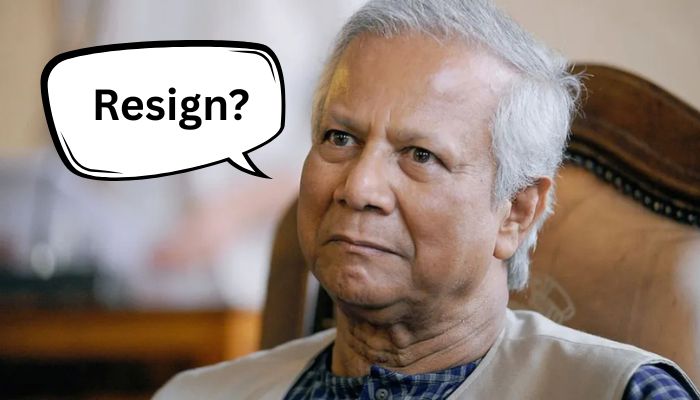
Muhammad Yunus threatens to resign? How ‘chief advisor’ to Bangladesh interim govt, who came to power via regime change, is now left with no options

On Thursday (22nd May), the media landscape was rife with source-based reports about Muhammad Yunus threatening to resign as the ‘chief advisor’ to the interim government of Bangladesh.

Yunus, a controversial US asset, took over the reins of the country on 8th August 2024 i.e. just 3 days after the undemocratic ouster of former Bangladeshi Prime Minister Sheikh Hasina in a well-coordinated ‘regime change‘ operation.

He initially received overwhelming support from the public, so-called ‘student protestors’, the Opposition Bangladesh Nationalist Party (BNP), Islamic extremists and even the Bangladeshi military.

Muhammad Yunus, who had the backing of the US deep State, was tasked to stir the country amid the political turmoil and chaos that ensued after the fall of Dhaka.

His reputation of being a ‘Nobel laureate’ and a champion of ‘microfinance’ gave hopes of ‘renewed democracy’ to the Bangladeshis. But the facade could only last 10 months.

The growing discontentment, across all sections of society, against the interim government has now left Muhammad Yunus cornered.

His failure to conduct a ‘free and fair’ election till date has brought his nefarious ambition, of staying the de-facto leader of Bangladesh, under the spotlight.

In a last bid attempt to salvage his image, Muhammad Yunus has leaked it to media via his sources that he is frustrated over ‘recent developments’ and wants to step down.

“I won’t be able to work unless the political parties can reach a common ground,” Yunus conveyed his message to BBC Bangla through Nahid Islam, who previously served as ‘information adviser‘ under him.

Muhammad Yunus tired to appease Islamic extremists

Bangladesh witnessed a drastic rise in Islamism after Yunus came to power. He first revoked the ban on the radical Islamist outfit ‘Jamaat-e-Islami.’

Thereafter, he released the leader of the radical outfit ‘Ansarullah Bangla Team (ABT)’ Muhammad Jasimuddin Rahmani.

At the same time, Muhammad Yunus downplayed the targeted attacks on the Hindu community by violent Muslim mobs. He has gone on record from lamenting about attacks on Hindus to saying that the claims of atrocities are ‘exaggerated‘.

In that way, the controversial US asset was able to placate Islamic extremists. Given that Awami Legaue was against Islamism, the interim government first banned its student wing ‘Chhatra League,’ and then the parent party.

Under the watch of Muhammad Yunus, Bangladesh saw a drastic rise in vigilante Muslim mobs, which unleashed violence under the pretext of protecting the tenets of Islam.

These mobs were largely unorganised and called themselves ‘Tawhidi Janata (meaning Revolutionary People).’ They came under the spotlight over acts of vandalism and harassment of people.

The Yunus regime introduced new textbooks for primary and secondary students, which falsely claimed that the first declaration of independence of Bangladesh was made by Ziaur Rehman (a favourite icon of Muslim hardliners in Bangladesh).

The interim government also appointed a Hizb ut-Tahrir terrorist named Mohammad Azaz as the administrator for the Dhaka North City Corporation (DNCC).

The situation had become so grim that Bangladeshi ambassador to Morocco Mohammad Harun Al Rashid was forced to slam the Muhammad Yunus-led interim government in a scathing Facebook post in March this year.

“Under Muhammad Yunus’s regime, the media has been both servile and silenced. Brutalities have unfolded daily—hidden from the world. The extremists have convinced Bangladeshis that the West no longer takes Islamic terrorism seriously—giving radicals free rein. And so far, they have been proven correct,” he pointed out.

Rashid added, “Minorities and secularists live in constant fear, while Hizb ut-Tahrir, IS, and Al-Qaeda flaunt their red and black flags, openly demanding Islamic theocracy. The July–August terrorists came straight from their ranks. But Yunus didn’t just shield them—he empowered them.“

Yunus tried to capitalise on anti-India sentiment in Bangladesh

Given that India is a perceived as a ‘Hindu nation’ by Bangladeshi Muslims, Yunus set out to antagonise the neighbouring country as well and capitalise on his growing anti-Indian sentiment in the country.

He first attempted to ban the export of Hilsa fish to India but it was in vain. He then strategically downplayed the crucial role played by India in the 1971 Bangladesh Liberation War by distorting textbooks.

Yunus remained tight-lipped when officials, appointed by him, issued threats to India. In October 2024, Law adviser Asif Nazrul in Bangladesh’s interim government warned that if India tried to refuse the extradition of Sheikh Hasina, the country would launch a “strong protest.”

Sarjis Alam, a so-called ‘student activist’, issued veiled threats to Indian Prime Minsiter Modi. And yet again, Yunus maintained strategic silence. His own ‘adviser’ Mahfuz Alam threatened to annex parts of India.

Former Director General of the Border Guard Bangladesh (BGB), A.L.M. Fazlur Rahman, had also threatened to occupy the 7 States of North-East India in case of war with Pakistan. He is a close aide of Muhammad Yunus.

Border Guard Bangladesh (BGB) commander Lt. Col Golam Kibria also issued threats to India’s Border Security Force (BSF). The interim government maintained stoic silence yet again.

Yunus went on a trip to China and urged the expansonist nation to use the 7 sisters of India as an extension of its economy.

According to him, the chief adviser expressed concerns about whether he would be able to continue working under the current circumstances.

Shrewd tactics of Yunus and the last nail in the coffin

Besides appeasing Islamic extremists and riding on anti-India sentiment in Bangladesh, Muhammad Yunus also ensured the revival of the politically dormant Bangladesh Nationalist Party (BNP).

He had given a free hand to the ‘student activists’, who played a crucial role in the regime change operation in Bangladesh, to indulge in corruption. Yunus also tried to placate the Bangladesh army from time to time.

However, it now appears that the ‘chief advisor’ to the interim government of Bangladesh has finally run his course.

The Bangladesh Army Chief General, Waker-Uz-Zaman, has directed Muhammad Yunus to hold elections by December 2025 under any circumstances. This has dented the latter’s sinister agenda to hold steadfast to the reigns of power.

The sitauation has been further excaerbated with the BNP launching an all-out protest against the interim government.

The party demanded the appointment of its candidate (Ishraque Hossain) as Dhaka’s mayor. BNP also sought for a fixed election date and removal of controversial advisors from the Yunus cabinet.

The ‘student activists,’ who practically oversaw the rise of Muhammad Yunus to the power corridors of Bangladesh, have their own political organisation (National Citizen Party or NCP) now.

They hold demonstrations every other day against one institution or another, creating more hindrance in the functioning of the interim government.

In the meantime, Jamaat-e-Islami has made it clear that it wants elections only after Awami League politicians have been tried by the govt and ‘necessary reforms’ are implemented.

With no support to continue the facade of unelected, ‘democratic’ governance, Muhammad Yunus is now left with no options. A timely resignation may still save face amid growing uncertainities (both political and economic) in Bangladesh.

The ‘chief advisor’ to the interim government has now claimed to feel like a ‘hostage’ due to protests by NCP and BNP.

He has been asked to ‘reconsider his decision’ but the question remains – Does Muhammad Yunus really have a choice anymore?

Jamnagar: AAP worker Akram raped a married woman for three years, forced her to convert to Islam and sexually exploited her minor daughter, case filed

An incident of rape of a Hindu woman by an Aam Aadmi Party worker named Muhammad Akram has come to light from Jamnagar, Gujarat. As per reports, Akram sexually exploited the victim for 3 years by making false promise to marry her. Akram also sexually abused the victim’s 7-year-old daughter. The victim filed a complaint with the police after which a case was registered against the accused at the Jamnagar City A Division Police Station under the relevant provisions of the BNS and the POCSO Act.

The victim met the accused during 2022 assembly elections in Jamnagar where he promised to help her as she was going through a difficult time. He lured the victim into a relationship and had sexual intercourse with her on multiple occasions. The accused lied to her that he was not married and even promised to marry her. The victim alleged that the accused made her undergo abortion four times.

As per the victim, relying on Akram’s promise to marry her, she divorced her husband, and started living with him. Later on, Akram told her that he would seek permission from his family to marry her. About a year later, the victim recieved a call from his wife and mother who told her that they would allow her to marry Akram only if she agreed to convert to Islam. They asked her to read Qalma and visit a Dargah. The victim alleged that Akram’s family performed black magic on her.

The police have recorded the statement of the victim. An investigation is going on in the case.

Donald Trump threatens Apple with 25% tariff if iPhones sold in the USA are made in India, after Foxconn announced $1.5 billion plant in India for iPhone components

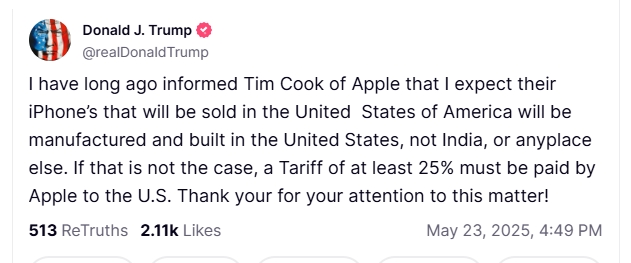
Continuing his tariff war against supplier countries, US president Donald Trump has threatened to impose 25% tariff on iPhones imported from India to the USA. His comments come a week after saying that he told Apple CEO Tim Cook not to make iPhones in India.

In a post on his Truth Social, Trump said, “I have long ago informed Tim Cook of Apple that I expect their iPhone’s that will be sold in the United States of America will be manufactured and built in the United States, not India, or anyplace else. If that is not the case, a Tariff of at least 25% must be paid by Apple to the U.S.”

The US president added, “Thank your for your attention to this matter!”

Donald Trump’s comments came after Apple’s top supplier Foxconn announced that it is moving forward with a $1.5 billion investment in a new component factory near Chennai. . In an exchange filing at the London Stock Exchange earlier this week, Foxconn said it was investing $1.49 billion in one of its India units, Yuzhan Technologies (India) Pvt Ltd.

As per reports, the Taiwanese electronics giant is setting up the new plant in Tamil Nadu’s Oragadam industrial hub, next to its existing iPhone assembly unit. The new plant will assemble the display module for iPhones.

Earlier on 15th May, Trump had said that he does not support Apple investing in manufacturing plants in India.  In a media interaction during his Doha visit, Trump said, “I had a little problem with Tim Cook yesterday. I said to him, my friend, I am treating you very good. You are coming up with $500 billion but now I hear you are building all over India. I don’t want you building in India.”

He had added, “You(Apple) want to build in India, if you want to take care of India. India is one of the highest-tariff nations, it is very hard to sell in India. And they have offered us a deal where there is literally no tariff. So from the highest tariff, we are going to almost no tariff. So I said to Tim, we put up with all the plants you built in China for years, but we are not interested in you building in India can take care of themselves very well.”

However, both the Indian government and Apple have said that the company’s investment plans in India will go ahead as announced. The Indian government downplayed Trump’s Doha remarks, saying that Apple has assured that is will make India a major manufacturing base for its products.

Sources in Apple also indicated that the company has no plan to change its plans for investments in India based on Trump’s comments. Company executives told news agency PTI that the proposal to set up a major manufacturing facility in the country will go ahead as scheduled.

As Apple has decided to reduce its reliance on manufacturing in China, the company has decided to shift its suppliers away from China to other countries like India and Vietnam. The company currently produces nearly 15% of all iPhones in India, and plans to increase that share to 25% in the near future.

Apart from Foxconn, Tata Electronics is making iPhones in India.

TMC MPs, silent and indifferent during Murshidabad anti-Hindu violence, now tour Jammu and Kashmir to assess the situation after Pahalgam terror attack

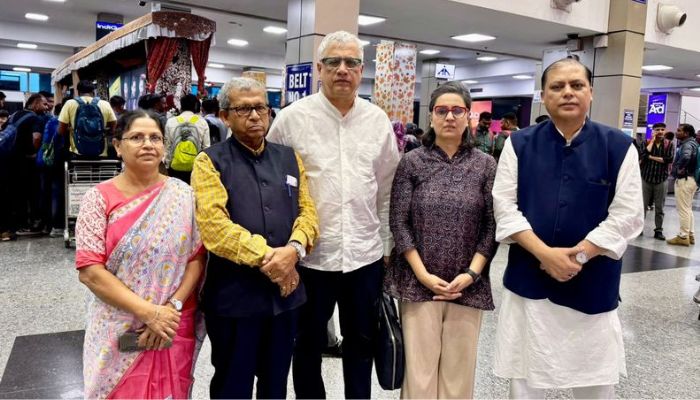
A five-member delegation of Trinamool Congress (TMC) leaders is on a three-day visit to Jammu and Kashmir to assess the situation following the Pakistan-sponsored Pahalgam terror attack and Pakistan’s artillery firing in the border villages. The delegation comprising Rajya Sabha MP Derek O’Brien, Nadimul Haque, Mamata Bala Thakur, TMC minister Manas Ranjan Bhunia and Rajya Sabha MP Sagarika Ghose visited Srinagar, Poonch, and Rajouri to interact with locals and extend “solidarity, empathy and sympathy”.

The TMC leaders met Jammu and Kashmir Chief Minister Omar Abdullah as visited the residence of National Conference leader Farooq Abdullah. The TMC delegation met the family of retired army officer Amarjeet Singh who was killed in Pakistani shelling on 8th May.

Sagarika Ghose and other TMC leaders in the delegation also visited the Christ School which was hit by shelling and claimed the lives of twin siblings Zayn Ali and Zoya.

On 22nd May,  Sagarika Ghose asserted that the border villages of Jammu and Kashmir have suffered the most, and the delegation has come to tell the people that they are not alone. She stated that the border villages must not be “ignored,” and they must get the attention and relief and rehabilitation they deserve.

“We, a five-member delegation of public representatives from Bengal, have come to Kashmir on a journey of solidarity, empathy, and sympathy. The border villages of Jammu and Kashmir have suffered the most… We have come to tell the people of border villages that they are not alone… Our voyage here reflects our commitment to an inclusive India where every citizen’s needs are cared for and attended to. The border villages must not be ignored. They must get the attention, the relief, and rehabilitation they deserve”, she told reporters in Srinagar.

While the TMC leaders are claiming to have arrived in Jammu and Kashmir to express solidary and empathy for the victims of those killing in Pakistani firing earlier this month, their ‘empathy visit’ is more of a political tour.

At a time, when even foremost advocate of the restoration of Jammu and Kashmir’s statehood, Chief Minister Omar Abdullah has decided not to raise this issue, TMC leaders brought up the statehood issue.

“It is a legitimate aspiration of the people. We firmly believe that Statehood must be fully restored to J&K. We believe that the elected government of J&K must be the empowered agency to look after the welfare and well-being of the people of Kashmir,” Sagarika Ghose said.

“The federal principle is ingrained in our Constitution… we believe that the elected government of Jammu and Kashmir must be the empowered agency to look after the welfare and wellbeing of the people,” she added.

TMC leaders travel all the way to Kashmir to express solidarity with victims of Pakistani violence, but fail to stand by the victims of anti-Hindu violence in Murshidabad

On the face of it, TMC delegation’s Jammu and Kashmir visit may seem like a genuine effort towards understanding the plight of the victims of Pakistan cross-border firing, however, it reeks of political opportunism when juxtaposed against the party’s tepid response to the anti-Hindu violence in West Bengal’s Murshidabad in April this year.

In Jammu and Kashmir, TMC leaders projected a unified front against Pakistan-sponsored terrorism, positioning the party as responsible national players, however, their statements, dripping with overwhelming empathy were missing when Hindus were attacked and killed by Islamist mobs in Murshidabad last month during anti-Waqf Act protests.

Sagarika Ghose could find time to visit Kashmir to meet families of those killed in Pakistani firing, however, she did not care to meet the family of Hargobinda Das and Chandan Das who were brutally killed by Islamist mob in Dhulian’s Shamsherganj for simply being Hindus. Forget meeting the Hindu victims of Murshidabad violence, TMC leaders had resorted to downplaying the attacks and playing political blame-game.

It, however, seem like TMC indulged in politics of convenience by visiting Kashmir but skipping Murshidabad due to the revelations of involvement of local TMC leaders in Murshidabad violence. The report by the fact-finding formed by the Calcutta High Court highlighted that local TMC councillor Mehboob Alam and MLA came with rioters on 11th April and saw the violence and went away. The report says that these attacks were carried out on directions of Mehboob Alam adding that the local police in the TMC-ruled state remained inactive and completely absent when Islamist mobs ran riots.

While the state was burning due to communal violence, members of the ruling All India Trinamool Congress (AITC or TMC) were preoccupied with downplaying the incidents, placing blame on the Bharatiya Janata Party (BJP), Rashtriya Swayamsevak Sangh (RSS) and even Hindus from other states as well as alleging conspiracy.

Instead of acting against the Islamist rioters, TMC leaders including motormouth Mahua Moitra issued a video helplessly pleading the rioters to halt their rioting. This outspoken leader, who positions herself as a staunch feminist and a fierce advocate against majoritarianism appears to have lost her voice when it comes to addressing the oppression of Hindu minorities in Murshidabad. The necessity of catering to the Muslim vote-bank incapacitated even the most “fearless” leaders.

Similarly, Sagarika Ghose who is empathising with victims of Pakistani brutalities in Kashmir, had turned apathetic to the plight of innocent Hindus in Murshidabad as her party’s votebank attacked them. Ghose had blamed the BJP for violence and declared Bengal police as “best in the country” even as the latter failed to act against Islamist mobs and remained nothing more than a mute spectator, a fact confirmed by the fact-finding committee’s report.

Sagarika Ghose’s apathy towards Hindus, however, is not shocking given it is an undeclared prerequisite for joining the Trinamool Congress. Ghose had not only downplayed anti-Hindu Murshidabad violence but also downplayed the Sandeskhali unrest last year. She brushed off the raging controversy as a ‘local land dispute.’ OpIndia had reported the testimonies of several women of Sandeshkhali. They courageously narrated the sexual exploitation suffered by them at the hands of TMC leaders such as Sheikh Shahjahan and his aides, Uttam Sardar and Shiba Prasad Hazra.

While illegal land grabbing by the Trinamool Congress was one of the concerns of the villagers, it wasn’t the crux of the issue. The former ‘journalist’ shrewdly dismissed key concerns of women’s safety and threats of gang rape received by the victims from her party leaders. Besides denying the harrowing experiences of the women in Sandeshkhali as a ‘local land dispute’, Sagarika Ghose accused the ‘outsiders’ of politicising the issue. Here, the ‘outsider’ reference was for the BJP. Apparently, downplaying Islamist violence or TMC-orchestrated political violence as a non-issue, blaming the BJP and secularising communal violence has become part of TMC’s SOP.

TMC leaders, however, have only been following their supreme leader, Mamata Banerjee. Not to forget, the West Bengal Chief Minister had last year attempted to downplay the harassment and sexual exploitation of women at the hands of Trinamool Congress goons. During a public meeting at Birbhum, she dubbed the unrest in Sandeshkhali as a ‘minor incident’ and blamed the BJP and the media for amplifying the issue in the public discourse.

Mamata Banerjee, who has a pathological obsession with fighting against the Kafirs (Islamic term for non-Muslims) had also downplayed the Islamist mob violence in Murshidabad. She even attempted to shift the blame from Muslim rioters to the Border Security Force (BSF) and the BJP as well as called it a “well-planned conspiracy”.

What further exposed the apathy of TMC towards victims of violence in West Bengal was that when Murshidabad was grappling with Islamist mob violence against Hindus, the TMC MP from Bahrampur, Yusuf Pathan, was ensconced  in “calm surroundings” and was sipping tea. His Instagram post had sparked massive outrage last month.

Similarly, Derek O’Brien, who had been very vocal against the Waqf Act, also shared pictures of his lunch a day later on 13th April, on Instagram. “Sunday lunch. Home. Kolkata. Rice. Dal. Palong saag (spinach). Tengra maach (catfish) jhaal. What are you having for Sunday lunch?”, wrote O’Brien in the caption.

While TMC MPs like Khalilur Rehman and Samirul Islam made token visits to Murshidabad, the absence of Bahrampur MP Yusuf Pathan and the focus of TMC’s top brass on downplaying the Islamist violence against Hindus to shield its Muslim votebank reveal a callous disregard for their own state’s victims.

TMC’s hypocrisy is glaring. The party sends high-level delegation to Jammu and Kashmir leveraging the emotional issue of Pakistan-sponsored terrorism to deflect public attention from their governance lapses in home state. The TMC delegation’s Kashmir visit to express solidarity and demand statehood restoration demonstrated that the party is playing politics of convenience. TMC is not a stakeholder, it is neither in power in Jammu and Kashmir nor in Centre, yet it is raking up the statehood issue to position itself relevant in national politics, all while failing to protect innocent people from its own party goons and Islamist rioters in West Bengal.

The Trinamool Congress’s desperation to tour Kashmir, while failing to firmly stand with the victims of Murshidabad Islamist violence, exposes the party’s double standards. The party is quick to champion peace in a region where it faces no direct accountability but dodges responsibility where it is accountable.

Even the seriousness of TMC’s solidarity, sympathy, empathy and whatnot for the victims of Pakistan-sponsored terrorism can be comprehended from the theatrics the party displayed during appointment of multi-party delegations which were to visit foreign countries to present India’s anti-terror stance and inform allies about Operation Sindoor.

The TMC chose not to send its Lok Sabha MP Yusuf Pathan who was nominated by the centre or any other Member of Parliament in the multi-party delegations “They cannot decide a member’s name on their own. It is not their choice. If they request, the mother party will decide as is customary,” West Bengal Chief Minister Mamata Banerjee stated.

“How can the union government decide the representative of Trinamool? They should have held discussions with the opposition to decide which representative a party will send,” party’s National General Secretary Abhishek Banerjee argued. “The BJP government is at the helm of affairs. They can decide for their party, but not for Congress or AAP (Aam Aadmi Party),” he added.

The government selected the MP from Murshidabad to be a member of the delegation after its floor leader for the Lok Sabha, Sudip Bandhyopadhyay, stated that his health prevented him from taking part in the campaign. According to TMC, the government did not consult them. After high-voltage political drama, the TMC dropped its boycott plan and decided to send Abhishek Banerjee as a member of one of the multi-party delegations, considering the national sentiment.

TMC demonstrated an outpour of empathy for victims of Pakistan-sponsored Islamist terrorism in a region where it faces no direct accountability and cruel indifference towards victims of Islamist mob violence in a state it is under scrutiny. While standing in solidarity with the innocent victims of Pakistani attacks in Jammu and Kashmir is not wrong, however, nailing national optics while turning a blind eye to Islamist attacks on innocent people in own state begs the question: Why TMC runs out of ‘solidarity’, ‘sympathy’ and ‘empathy’ for victims of violence be it Islamist mob violence, or political violence in West Bengal?


Supreme Court frees man convicted of sex with 15-year-old girl saying she didn’t view it as a crime, says she suffered more from the system

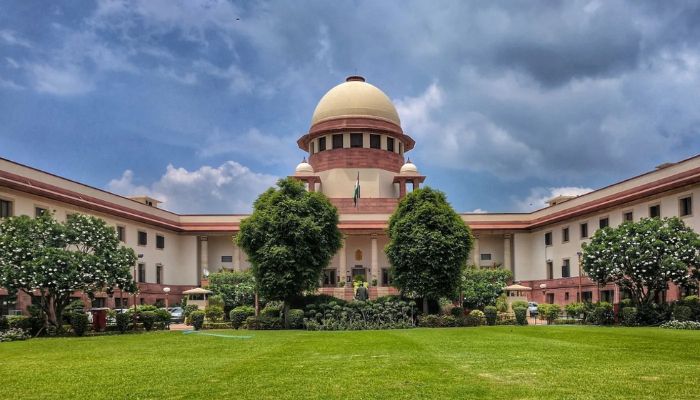
On 23rd May, the Supreme Court ruled against sentencing a man found guilty under the Protection of Children from Sexual Offences (POCSO) Act. It stated that the girl did not consider the incident to be criminal in nature, according to the committee’s report, and she had suffered more as a result of the ensuing legal and social repercussions.

While the conviction was upheld, the bench ordered no sentencing for the man who is now the girl’s husband. “What troubles is the issue of sentencing. Victim didn’t treat this as heinous crime. She couldn’t make informed choice. Society judged her, legal system failed her, family abandoned her. She is trying to save her husband,” the court pronounced.

It added, “The facts of this case are an eye-opener for everyone. It highlights the lacunae in the legal system,” pointed out a bench of Justice Abhay S Oka and Justice Ujjal Bhuyan. The case initially made its way to the Supreme Court following controversial comments of the Calcutta High Court in its 2023 ruling exonerating the guy.

The apex court highlighted, “The final report concludes that though the incident is seen as crime in law the victim did not accept it as one. The committee records that it was not the crime that caused any trauma to the victim but rather it was the consequence that followed which took a toll on her. What she had to face as a consequence was the police, the legal system, and constant battle to save the accused from punishment.” 

The bench chose not to impose a penalty after exercising its authority under Article 142 of the Constitution, which grants it the authority to administer full justice. The convicted guy who was 24 at the time of the crime married the girl who is now an adult and lives with her and their child.

Additionally, it stated that the victim has developed an emotional bond with the accused and has became “very possessive about her small family.” The court then concluded, “That is the reason we are giving for exercising power under Article 142 not to impose sentence.”

The State Women and Child Welfare Ministry and the West Bengal government were also directed by the top court concerning cases involving adolescent sexual relationships. It instructed them to reflect about taking additional action in light of the recommendations made by Amicus Curiae. The bench also demanded actions to enhance sex education, increase public knowledge of the POCSO Act and guarantee the mandatory reporting of sexual assault instances to safeguard kids.

Background of the case

The Supreme Court started the proceedings as a suo motu case after the Calcutta High Court made contentious remarks while acquitting a 25-year-old man who had been convicted under the POCSO Act of having sex with a 15-year-old girl. Among other directives to teenage males and girls, the high court made comments about adolescent sexuality, noting that female teenagers should restrain their sexual urges.

The apex court set aside the high court’s ruling on 20th August 2024. It upheld the accused’s acquittal under sections 363 and 366 Indian Penal Code (IPC) while restoring his conviction under section 6 of the POCSO Act and sections 376(3) and 376(2)(n) of the IPC. The high court’s comments were deemed offensive and unjustified and they also violated Article 21 of the Constitution, according to the court’s instructions on authoring judgments. Furthermore, the State of West Bengal appealed the decision of the high court.

The Supreme Court, in its decision, laid down multiple instructions to ensure that the state complies with Section 19(6) of the POCSO Act and Sections 30 to 43 of the Juvenile Justice (Care and Protection of Children) Act. Even after the conviction was reinstated, the court made the decision to carefully consider the facts before determining the appropriate sentence.

The court ordered the West Bengal government to form a three-person expert committee with support from organizations such as NIMHANS or TISS. It consisted of a social scientist, a clinical psychologist and a child welfare official serving as the coordinator and secretary.

The committee was required to help the victim make an informed decision about her future, including whether to stay with the accused and to educate her about the benefits that the state and the union government had to offer. The court directed that the committee’s report, whether preliminary or final, be sent under a sealed cover so that the case might be reviewed for sentence consideration.

The court further directed that its judgment should be forwarded to Law and Justice Departments across all States and Union Territories to convene meetings with relevant authorities to ensure strict implementation of Section 19(6) of the POCSO Act and relevant JJ Act provisions. They also had to consider framing Rules to implement Section 46 of the JJ Act and submit compliance reports to the Ministry of Women and Child Development which was to compile and submit a final report to the court.

The court documented the state’s commitment to give the victim’s kid a top-notch education on 24th October 2024. After speaking with committee of experts members and listening to the victim, the court noted on 3rd April that she need financial assistance. It stated that the West Bengal State Legal Services Authority should assist in exploring the her options for vocational training or part-time work following her completion of her 10th board exams.