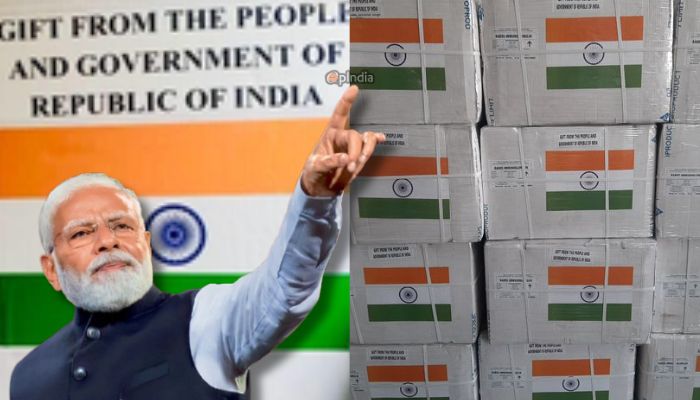
On Thursday (24th April), India sent 4.8 tons of vaccines to Afghanistan, including vaccines for rabies, tetanus, hepatitis B, and influenza, according to the XP Division, Ministry of External Affairs.
India donated 4.8 tons of vaccines to the people of Afghanistan. Vaccines sent include rabies, tetanus, hepatitis B, and influenza: XP Division, MEA pic.twitter.com/pVSFMqUhon
India has also sent medical aid worth USD 2 million to Nepal, reaffirming its Neighbourhood First policy.
Taking to X, MEA spokesperson Randhir Jaiswal said, “India sends assistance consisting of medicines and vaccines for patients with Thalassemia and Sickle Cell Disease worth $2 million, responding to a request from Nepal. The 1st tranche of 17,030 vials of Vaccines for Immunization of patients with Thalassemia was handed over to Nepal.”
?? sends assistance consisting of medicines and vaccines for patients with Thalassemia and Sickle Cell Disease worth $2 million, responding to a request from Nepal.
In a similar effort, India recently handed over a fresh relief consignment to Myanmar under Operation Brahma in April. The Indian Embassy in Myanmar stated that relief aid recently dispatched from India has been handed over to Mandalay Chief Minister Myo Aung under Operation Brahma.
The aid from India was handed over by the Indian Ambassador to Myanmar, Abhay Thakur. It contained an RO water plant, a Genset, rice, noodles, cooking oil, atta, sugar, dal, salt, MRES, blankets, and medicines.
As the first responder to the devastating earthquake on March 28, India has provided over 750 metric tons of relief material, including medical aid, food, shelters, and essential supplies.
In April, India also sent a consignment of 1,000 metric tons of rice to Cameroon on Wednesday for food grain assistance. Official Spokesperson for the Ministry of External Affairs, Randhir
Jaiswal, said the effort is in the spirit of a committed partnership with the Global South.
In a post on X, Jaiswal said, “India: A committed partner to the Global South. India sends food grain assistance to the people of Cameroon. A consignment of 1000 mt of Rice departed today from Nhava Sheva Port to Cameroon.” Official Spokesperson of the Ministry of External Affairs, Randhir Jaiswal, stated that India has sent the first tranche of assistance to Botswana in response to the floods.”
The MEA said that the tranche comprised of 10 tons of essential medicines, surgical supplies, mosquito nets, water purifiers, among other things.
In a post on X, Jaiswal said, “India sends humanitarian assistance to Botswana. In the wake of floods in Botswana, the first tranche of approx 10 tons of assistance comprising essential medicines, surgical supplies, mosquito nets, water purifiers, etc, was dispatched for Botswana.”
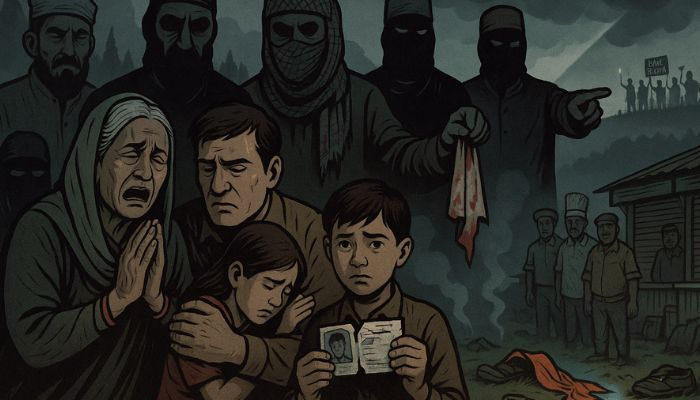
The terrorist assault on Hindu tourists in the Baisaran meadow of Pahalgam, which resulted in the deaths of 26 innocent people, has reverberated not only throughout the nation but also across the globe. The assailants demanded that the victims present their identification cards, recite Islamic verses and even remove their pants to confirm they were not Muslims before executing them mercilessly.
Hindus were slain in cold blood purely due to their religious beliefs. The Resistance Front (TRF), a splinter group of Lashkar-e-Taiba based in Pakistan, has claimed responsibility for the attack. It was not solely a terrorist attack but rather the continuation of Islamic terrorism sponsored by Pakistan in the region for over 75 years, and the ideology that brands non-Muslims as kafirs and justifies their murder.
The nation is justifiably outraged and is calling for severe action against the perpetrators and their Pakistani sponsors for the bloodshed they have caused within India. Similarly, a bandh was declared across the entire region following the incident. Notably, within hours of the assault, videos began to emerge from the valley of protests and candlelight marches expressing outrage over the horrific killings. The defining characteristic of the agitations was the profound apprehension concerning the repercussions on the valley’s booming tourism industry.
Local Kashmiris in #Pahalgam held a candlelight march to condemn today’s terror attack on tourists.
Gulzar Ahmad Wani, president of Pahalgam Taxi Association claimed that the area has always been peaceful and stated, “I condemn this attack. It is not just tourists, but our livelihood, our families. We don’t consider them tourists. It is as if our family members have been killed. I request the government to get to the bottom of this matter.” He highlighted that tourism is the backbone of Pahalgam.
#WATCH | Gulzar Ahmad Wani, president of Pahalgam Taxi Association, says, "I condemn this attack. It is not just tourists, but our livelihood, our families. We don't consider them tourists. It is as if our family members have been killed. I request the government to get to the… https://t.co/rTrToTW5JHpic.twitter.com/8vyTvbycCB
The president of the Travel Agents Association of Kashmir, Rauf Tramboo, described the attacks as a “huge blow,” noting that a “peaceful situation” had allowed the tourism industry to thrive in recent years. “We are already getting inquiries about cancellations from companies and customer partners,” he added. A local chef who has worked for 30 years serving tourists at a Pahalgam hotel expressed his anguish, pointing out that his entire livelihood is dependent on tourists traveling to the area.
“I have been working as a chef in Pahalgam for the last 30 years. I have never seen such a huge incident here. I am poor, and my livelihood depends entirely on the tourists. Now, I don’t know what I will do. I don’t have enough property to get by. The tourism season was going well, and all hotels were at full capacity. But now, the loss will be insurmountable,” he conveyed.
“Because of this incident, the entire town has come to a standstill. The tourism season was going well, and everything was in full swing. But now, the poor people here, many of whom have taken loans to run their businesses, are in great trouble. I pray that such an incident never happens again,” remarked another local chef with 25 years of working experience in Pahalgam.
Pahalgam Terror Attack Halts Tourism: Poor Locals Struggle With Loans and Livelihood Crisis pic.twitter.com/CXLQRaliiP
— Kashmir Student Alerts (@TheOfficialKSA) April 24, 2025
Omar Abdullah, the Chief Minister of Jammu and Kashmir, referred to the evacuation of tourists from Kashmir after the Pahalgam terror incident as “heartbreaking.” Other Kashmiri politicans echoed similar sentiments including Sajjad Gani Lone who termed the occurrence as an “assault on economic lifeline of Kashmir, which is tourism” and added that it has jeopardized Kahsmir’s “hospitality and future.”
It’s heartbreaking to see the exodus of our guests from the valley after yesterday’s tragic terror attack in Pahalgam but at the same time we totally understand why people would want to leave. While DGCA & the Ministry of Civil Aviation are working to organise extra flights,… pic.twitter.com/5O3i5U1rBh
Interestingly, Jammu & Kashmir National Conference (JKNC) leader and Srinagar Lok Sabha MP Aga Syed Ruhullah Mehdi labelled Kashmir tourism as a cultural invasion, during an interview in early January.
The concern regarding the economic decline of tourism in Kashmir is legitimate and the fears vocalised by the local population and leaders are warranted. However, it cannot be denied that the conversation also diverts attention from the 26 deceased individuals who were murdered because of their religious beliefs. It is also as a clear reminder of the victimhood industry that is determined to distract from pressing issues requiring prompt focus only to advance its own narrative, particularly in relation to Kashmir.
This is the same propaganda that humanized dreaded terrorists as the headmaster’s son (Burhan Wani) and mathematics teacher (Riyaz Naikoo), both commanders of Hizbul Mujahideen, as well as Pakistan-backed jihad in Jammu and Kashmir as a political conflict and even suggested the separation of the region from the country. The Indian forces have been portrayed as an occupational entity to provide a shield to terrorists, including Adil Ahmed Dar and Burhan Wani, among others.
Of course, a discussion regarding the impact of the incident on the local economy must take place, nevertheless, this hurried prioritisation of victimhood could have been avoided at least till the bodies of actual victims were brought back to their homes and last rites were performed by the bereaved families. The tourism sector and the economy can be revived in one season, but the lives that have been lost can never be restored as that wound is irreparable and permanent.
It is important to note that local terrorists were involved in the strike. “The Urdu that they (the foreign terrorists) spoke is from certain parts of Pakistan. At least two local militants are suspected to be accompanying them,” an officer from the security establishment informed The Indian Express.
“The two others are believed to be from Bijbehara and Thokerpora, Kulgam. They went to Pakistan in 2017 and returned to the valley last year. Information has been received that they received training in Pakistan. They were associated with the Jaish-e-Mohammed and initial investigation suggests that the Lashkar-e-Taiba and the Jaish allied to execute this attack,” revealed a source from a central agency.
The agencies have published sketches of three terrorists and declared a reward of Rs 20 lakh for any information leading to their identification. This was the largest terrorist attack in Kashmir in recent years following the Pulwama carnage.
What happened in Pulwama
The Pulwama incident took place on 14th February 2019, when a convoy transporting Indian security forces along the Jammu–Srinagar National Highway was targeted by a suicide bomber using a vehicle in Lethapora, located in the Pulwama district of Jammu and Kashmir. The assault resulted in the deaths of 44 members of the Indian Central Reserve Police Force (CRPF) along with the attacker, Adil Ahmad Dar, a local youth from the Pulwama district. The responsibility for this act was taken by the Pakistan-based terrorist organization, Jaish-e-Mohammed.
After the Pulwama attack, stone-pelters targeted injured CRPF jawans. When the IED struck, the men in the convoy immediately moved out of their vehicles and surrounded the explosion site with a protective cordon. They unveiled that it had been done to shield the wounded from the stone-throwing that started after the blast.
“He was beaten by Indian troops a few years back when he was returning from school. This led to anger in him against Indian troops. We searched for him for three months. Finally we gave up efforts to bring him back home,” Adil’s parents alleged, subtly blaming the army for their son’s act. Subsequently, Indian security forces apprehended individuals involved in facilitating this attack, detaining approximately 23 men associated with Jaish-e-Muhammad.
The authorities believed that they could have significant insights into the details surrounding the incident, where the assaliant crashed a vehicle filled with 300 kilograms of explosives into a convoy vehicle. The National Investigative Agency’s (NIA) findings indicated that four to five terrorists from Jaish-e-Mohammed, including the suicide bomber Adil Ahmad Dar and a local facilitator, played a role in orchestrating the massacre.
The RDX used in the attack was supplied by the Pakistan military and smuggled into India by associates of Jaish-e-Mohammed, transported in multiple batches due to its substantial volume. Women and children were employed to carry the lethal explosive RDX grade 5, intended for military applications, along with ammonium nitrate from a transit location in Tral, situated in the Pulwama district of southern Kashmir.
The explosive’s trigger was reportedly produced locally, utilizing ammonium nitrate as an oxidizer in the RDX explosive. The military-grade A5 RDX was sourced from Pakistan and the device was constructed approximately 10 kilometers from the location of the explosion. Explosives were transported by women and children in the valley in limited amounts over several months.
Security forces had neutralized two terrorists, suspected to be the masterminds of the Pulwama attack, approximately 15 kilometers from the location of the suicide bombing. During the encounter, four Army personnel, including a major, lost their lives. Additionally, two civilians, who were exploited by the terrorists as human shields, were also killed.
The Maruti Eeco vehicle involved in the attack was registered in Kashmir approximately eight years ago and was utilized by the group with the owner’s consent, who was missing. Seven people from Kashmir, engaged in the sale of shawls and dried fruits in Delhi, were nabbed by the Intelligence Bureau (IB) due to their suspected involvement in illicit activities. According to various agencies, they might be acting as informants for terrorist groups.
A massive crackdown against Jamaat-e-Islami leaders was also unleashed in Jammu and Kashmir. Law enforcement agencies conducted operations and apprehended numerous leaders of Jamat-e-Islami in Srinagar and its vicinity. Moreover, terrorist Mohammed Yasin Malik who is also chief of the Jammu Kashmir Liberation Front (JKLF) was taken into custody from his home. Police arrested at least 150 separatists.
India conducted the Balakot airstrike and successfully targeted terrorists, including members of Jaish-e-Mohammed’s supremo Maulana Masood Azhar’s family, such as his nephew and IED (Improvised explosive device) expert Ismail Alvi, also known as Fauji Bhai or Lambu, to avenge the deadly strike against its soldiers. “Ismail is an IED expert and helped other bombers of the Pulwama attack to fit the bomb in Maruti Eeco van,” disclosed an army official.
The airstrike was followed by the NIA’s huge crackdown on the separatist leadership in the valley. The raids were part of a search operation that was connected to the agency’s inquiry into the terror funding.
Conspiracy to unleash more bloodshed
Security forces were placed on high alert due to intelligence reports indicating that Jaish-e-Mohammad was planning another attack soon after Pulwama. Meanwhile, two terrorists from Kashmir, Shahnawaz Ahmed Teli and Aquib Ahmed Malik, affiliated with Jaish-e-Mohammed, were captured by the Anti-Terrorism Squad (ATS) of the Uttar Pradesh Police in Saharanpur. On 20th February 2019, the ATS arrested them and confiscated 30 cartridges, three pistols with magazines and two hand grenades from them.
The ATS reported that the pair is from the Pulwama district in Jammu and Kashmir. The authorities asserted that they received audio messages from the cellphone of one of the two young men, in which he discussed about a “bada kaam” (something big) and “samaan” (goods). The investigators linked the “bada kaam” to a significant operation that the two individuals were preparing, noting that the “samaan” was intended for weapons and explosives necessary for executing the attack.
“They have confessed to their links with JeM in front of me and have given specific information based on which we are hopeful of some more recoveries in the near future,” Uttar Pradesh Director General of Police OP Singh informed. The Inspector General of Police (ATS) Asim Arun, stated that Shahnawaz had maintained contact with terrorist organizations for a duration of 18 months, whereas Aqib became involved only six months prior. Last year, a special ATS/NIA court sentenced them to seven years in prison for inciting youth and enlisting them for anti-national endeavors.
Killings of Kashmiri Hindus
The engagement of Kashmiris with terrorist groups including many locals is a matter of public knowledge. This involvement was notably revealed during the 1990 exodus of Kashmiri Hindus as they were killed, threatened and were forced to leave the valley, often by their own neighbours. Countless Kashmiri Hindus were subjected to savage killings and were coerced into fleeing their homes overnight at gunpoint by terrorists associated with Pakistan, including Yasin Malik and Bitta Karate.
One of them, Girija Tickoo, was from Bandipora and was employed as a lab assistant at a higher secondary school in the valley. She got a call one day claiming that things had improved and she should come pick up her salary from the school where she was employed. She went to the school, believing the information, but didn’t realize that she was being followed on the way back. Five men abducted her from a coworker’s house and transported her to an unidentified place. Her companion and other witnesses saw her abduction, but chose to remain silent.
Her body was discovered by the side of the road in a horrible state a few days after she was kidnapped. According to the autopsy, she had suffered severe torture and gang rape. She was alive when she was chopped into two pieces with a carpenter’s saw, directly through the middle of her body for her “fault” of being Hindu.
Likewise, BK Ganjoo, a Telecommunication Department employee went home during a brief respite in Srinagar’s curfew. However, as soon as he stepped inside, his wife Vijay saw suspicious persons following him and quickly bolt to the door. He hurried to the third floor of his home and, in a desperate attempt, hid inside a big rice bin. The terrorists, meantime, searched the house, scouring every nook for their target but could not find him.
However, a Muslim neighbour who observed him concealing himself in the rice drum alerted the terrorists as they departed. It is noteworthy that Ganjoo had recently assisted this same person with food supplies just days prior. The terrorists went back to the third floor and killed Ganjoo by firing several shots into the rice bin where he was hiding.
When Vijay pleaded with the terrorists to take her life as well, the attackers replied that they were allowing her to live so she could mourn over her husband’s body. They even made her eat the rice soaked in his blood, taunting her that her family should also indulge in this tasty meal. There are countless similar accounts of bloodshed and betrayal faced by Kashmiri Hindus, who were forced to vacate their homes as the local mosques resounded with the chilling declaration of “Raliv, Galiv ya Chaliv” (convert, leave or perish).
Notably, thousands of ancestral estates belonging to Kashmiri Hindus were unlawfully seized by Muslims after the Pandits escaped to protect their lives. The locals not only took an active part in the atrocities committed against their Hindu neighbours but illegally occupied their homes and lands.
The properties were recently returned to their original owners few years back which again led to attacks on Kashmiri Hindus in the area. The administration of Jammu and Kashmir launched an online grievance redressal platform in 2021, that allowed Kashmiri Hindus to file complaints about any property they have in the region. The government received several complaints, illustrating the grim reality, and over a thousand concerns were addressed.
Glorification of terrorists
The terrorists, lauded as mujahids and perceived as freedom fighters, often participated in the grand funeral ceremonies of their counterparts, showcasing their guns and firing shots into the air while surrounded by a massive enthusiastic crowd, all locals, all hailing the violence and slaughter.
After Hizbul Mujahideen terrorist Burhan Wani was killed in 2016, the valley endured several months of turmoil, including violent incidents and assaults. Numerous police stations, security personnel and even BJP offices were targeted after thousands gathered to attend his funeral prayers in Shareef village of Tral. Predictably, stone pelting occurred at multiple places. Support for the terrorists who had been freely roaming the countryside in South Kashmir grew since then. The public’s support for terrorists was a greater issue for the security forces who often faced opposition from crowds during anti-terror operations, according to the police.
A video recording depicted terrorists performing a gun salute at the funeral of their colleague in Pulwama, in that year. A large number of individuals gathered for the funeral of Shakir Ahmad, a Hizbul Mujahideen terrorist who was killed during an encounter. The footage showed a group within the crowd brandishing firearms and discharging gunshots into the air, reminiscent of the 1990s, when militancy in the valley was at its peak.
Two funerals took place at the same time in South Kashmir for a terrorist and the cop he killed, in May 2017. Azhar Mehmood, who gave his life to stop an attack, was solely mourned by his coworkers and family while the burial of terrorist Fayaz Ahmad Aishwar of Hizbul Mujahideen drew thousands of people barely 10 kilometers away. Fayaz and three other terrorists carried out the attack in Anantnag, killing Mehmood and three civilians.
The same year, Hizbul Mujahideen commander Riyaz Naikoo was seen attending the funeral of one of the group’s members who was one of two terrorists neutralised in a gunfight with security forces in the Pulwama area of south Kashmir. The funeral of Shariq Ahmad Sheikh, a resident of Takuna in Pulwama, drew thousands of people. Shabir Ahmad Mir, a terrorist from the nearby Anantnag district was also eliminated.
“The Pakistani flag is our flag. Linking our struggle with al-Qaeda and IS is a ploy to defame it,” he announced in front of the crowd. He also shouted pro-Pakistan slogans before disappearing. The funeral procession for Zakir Musa in May 2019, who left Hizbul Mujahideen to lead Ansar Ghazwat-Ul-Hind, attracted a similar number of attendees. He had even threatened to behead separatist leaders and warned, “If they create any hurdles in the path of turning Kashmir into an Islamic state.”
Many areas of the valley, particularly south Kashmir and the capital Srinagar, had to be subject to curfew-like restrictions by the authorities. However, hundreds of young people from the area violated curfew and made it to his hometown of Noorpora in Tral. All key roads in Pulwama, the capital Srinagar and Anantnag were barricaded to control the protesters. Many sections were off-limits to vehicles. The valley’s sensitive areas were sealed off with concertina wires. All exams were postponed and educational institutions were closed for the day. As a precaution, mobile internet was also slowed down.
Stone pelting on forces
Stone pelting at Indian troops was a frequent occurrence during terrorist encounters in Kashmir. However, it was not limited to specific locations or incidents but regularly took place outside mosques and targeted the forces. Major Leetul Gogoi of Assam attracted controversy in 2017 for allegedly using a Kashmiri man as a human shield by tying him to a jeep. However, army representatives had maintained that the troops resorted to this extreme action to safeguard themselves from being pelted with stones and the governement also supported the same.
In 2018, a group of Muslims hurled large stones at military vehicles in Ganovpora village of Shopian, compelling Major Aditya Kumar to use his firearm, which subsequently led to a case against him by the police. However, the Supreme Court stayed the inquiry into the matter.
“As per the narration in the FIR (First Information Report), it is stated that Major Aditya Kumar was leading the convoy which resorted to firing on coming under heavy stone-pelting and arson by the mob. This means even if he is not shown as an accused, police can, at any point of time, rope him in as an accused. He is an Army officer. Do not treat him as an ordinary criminal,” promounced a bench of Chief Justice Dipak Misra and Justices A M Khanwilkar and D Y Chandrachud.
The frequency of stone pelting incidents declined following the abrogation of Article 370, however, in 2017 and 2018, the recorded incidents were 1,412 and 1,458, respectively. As per the data provided by the Ministry of Home Affairs up to 2021, there were 618 recorded incidents of stone pelting in the valley from January to July 2019, which decreased to 222 during the same timeframe in 2020, and further went down to only 76 in 2021.
The number of injuries sustained by security forces during these incidents decreased from 64 between January and July 2019 to only 10 in 2021. The Ministry of Home Affairs reported to the Lok Sabha that from 1st January to 15th November 2019, the police recorded 551 cases related to stone pelting and law and order, with 190 of these cases occurring after 5th August.
Nevertheless, such occurrences did not entirely cease. 2020 witnessed a group of youths throw stones and fight with security personnel close to the scene of an encounter in the Budgam area of Jammu & Kashmir. There were reports of a shootout between troops and terrorists in the Kawoosa area. According to officials, the terrorists were able to escape the area after breaking through the barrier.
A cordon-and-search operation was initiated in Kawoosa based on information about the presence of terrorists in the area. There was a gunfight after they started shooting at the search party. While soliders and terrorists were engaged in firing, some youngsters threw stones at the security personnel. They were chased away with tear smoke shells and none of them could be apprehended. The terrorists then seized the chance to break through the security perimeter.
Veil of doubt over Pahalgam
The mass slaughter in Pahalgam was meticulously planned by the perpetrators, who took into consideration the possibility that it would take the forces from the neighboring army and paramilitary camps almost an hour to make it to the scene, which would give them ample opportunity to slip into the surrounding meadow, reported Deccan Herald. The sources outlined, “Those who planned the attack knew about the geography and prepared an escape route for the attackers. It is possible that they may have done a recce for a few days to see at what time the tourist flow is the maximum.”
The troops from the nearest Rashtriya Rifles battalion would need to travel for a further 30 to 35 minutes to reach Baisaran, a popular picnic location, after taking about 40 to 45 minutes to get to the closest road head, according to sources acquainted with the region. A Central Reserve Police Force camp is located in front of the army establishment, but it would also require approximately one hour to arrive.
Lieutenant general DP Pandey (retired), former General Officer Commanding (GOC) of Indian Army’s 15 Corps in Srinagar highlighted, “There is no doubt about Pakistan’s involvement. The Resistance Force is speaking Pakistan’s language. It also has local support. They attackers knew that such a site would give them time to carry out the act after checking on their religion. This may not have been possible elsewhere.”
The concerns expressed by the officer are significant, as executing and maintaining such an attack with such precision is unfeasible without assistance from local individuals who possess extensive knowledge of the region and could also offer additional support to the terrorists. Significantly, the historical context of these attacks demonstrates that local participation is essential for their execution.
According to media reports, the area is exclusively open to visitors and pilgrims traveling to Amarnath in June, but it was opened to the public on 20th APril without warning security personnel. Local officials were unaware that visitors were being transported to Baisaran because tour operators and local hoteliers failed to notify them of theses movements. Hence, the troops were present in Pahalgam but they were not deployed. Forces are stationed per the information supplied by travel companies.
This could be a clear security breach or might potentially involve malicious intent. Additionally, the engagement of local terrorists in the terror strike ought to provoke alarm. Moreover, the rapid rise in concerns about tourism and attack on Kashmir’s economy is not only insensitive but also disrespectful to the memory of those who were killed by the terrorists. Many families have been affected and it is crucial that we stand together in support of them without making any unnecessary noise and ensure that all offenders behind the attack, whether in India or abroad, face justice.
The truth about Pakistan is out of the bag, with its defence minister admitting that Pakistan has been funding and backing terrorist groups.
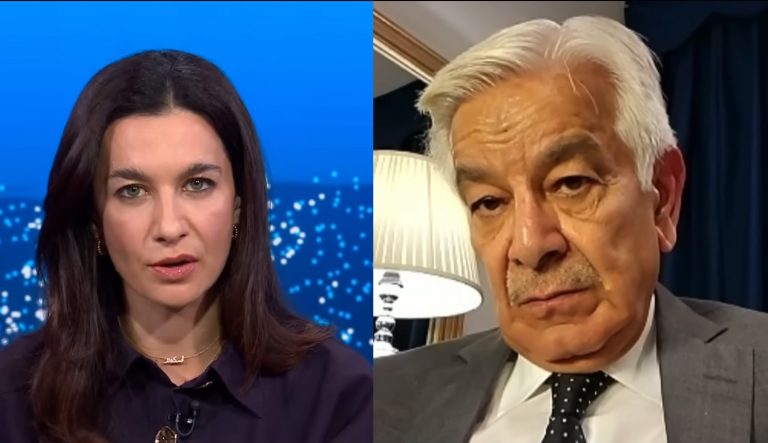
In a video clip that has now gone viral, Pakistan’s defence minister is in conversation with Sky News’s Yalda Hakim, when she asks him, “But you do admit, you do admit, sir, that Pakistan has had a long history of backing and supporting and training and funding these terrorist organisations?
Khwaja Asif in his reply says, “We have been doing this dirty work for the United States for about 3 decades… and the west, including Britain…That was a mistake, and we suffered for that, and that is why you are saying this to me. If we had not joined the war against the Soviet Union and later on the war after 9/11, Pakistan’s track record was unimpeachable.”
#Pakistan Defence Minister Khwaja Asif admits on live TV that they have been sponsoring terrorism against India for past three decades.
Sky News (@SkyYaldaHakim): “But you do admit, you do admit sir, that Pakistan has had a long history of backing and supporting and training… pic.twitter.com/rT7LYzhnDr
The Pakistani Defence Minister has also in the interview with Sky News presenter Yalda Hakim warned of an “all-out war” possible with India.
Asif’s statement lays bare the fact that Pakistan, for many years, has been harbouring these terror groups.
Earlier, India’s foreign secretary Vikram Misri had said that in the meeting of the Cabinet Committe on Security, the cross-border linkages of the terrorist attack were brought out. It was noted that this attack came in the wake of the successful holding of elections in the Union Territory and its steady progress towards economic growth and development.
Following the terror attack in Pahalgam that killed 26 people, the Central government announced several diplomatic measures, such as closing the Integrated Check Post (ICP) at Attari, suspending the SAARC Visa Exemption Scheme (SVES) for Pakistani nationals, giving them 40 hours to return to their country, and reducing the number of officers in the High Commissions on both sides.
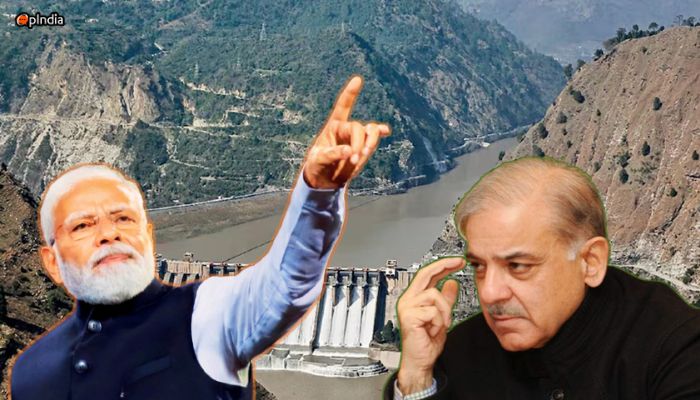
India also halted the Indus Waters Treaty signed in 1960 in the wake of the Pahalgam attack.
Prime Minister Narendra Modi also assured the country that the terrorists responsible for this attack, along with those who conspired it, will face punishment beyond their imagination, The Prime Minister asserted that the time has come to eliminate the remaining strongholds of terrorism and that the willpower of 140 crore Indians will now break the backbone of the perpetrators of terror.
(This news report is published from a syndicated feed. Except for the headline, the content has not been written or edited by OpIndia staff)
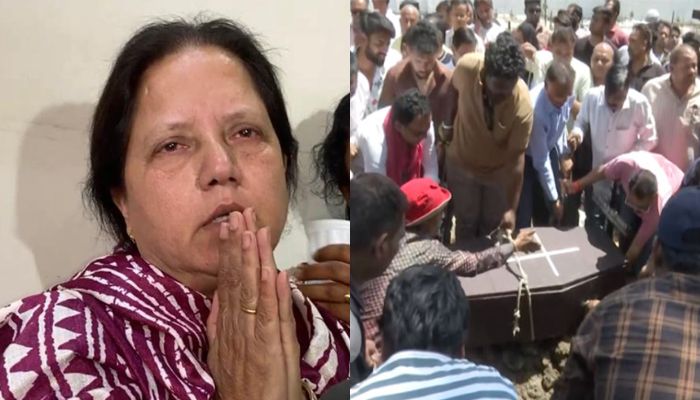
On Thursday (24th April), Jennifer Nathaniel, the wife of Sushil Nathaniel, a 55-year-old Indore resident who was killed in the recent Pahalgam terror attack, recounted how, after shooting her husband dead, the Islamic terrorists took selfies with the dead bodies of victims. She told the media her husband was shot after he told the terrorists that he was a Christian and did not know Kalma, when they asked him to recite the Islamic verse.
The Islamic terrorists belonging to Pakistani terror outfit Lashkar-e-Taiba’s offshoot, The Resistance Force (TRF), also asked if the Christian victim knew about Palestine. “Palestinia ke baare mein pata hai na (you know about Palestine, right)?” Jennifer Nathaniel recalled the TRF terrorists as saying.
Further describing the sequence of events before Sushil Nathaniel’s brutal killing, Jennifer said, “We were about to return from there when my husband told me he needed to use the washroom… When he came out of the washroom, suddenly a loud sound came and we thought it was of the ropeway breakage, but when we turned around, we saw the first man who was shot. A girl was crying and asking to be killed. Everyone started running and hiding here and there. We hid behind the washroom… All of us started trying to run but the terrorists found us… We were not able to contact each other via phone… The terrorists asked my husband to recite Kalma… “
#WATCH | Indore | Jennifer, wife of Sushil Nathaniel, says, "We were about to return from there when my husband told me he needed to use the washroom… When he came out of the washroom, suddenly a loud sound came and we thought it was of ropeway breakage but when we turned… https://t.co/4tpjGpjoXQpic.twitter.com/wzOzeD8ZbT
As it turns out, the Islamic Jihadis from Hamas had done something similar to their Israeli victims during their offensive against Israel in October 2023. They had taken photos with the bodies of their victims and shared it. They even paraded the naked dead body of a German woman Shani Louk. The Hamas terrorists spat on her and recorded videos of their horrific deeds.
Be it Pahalgam or Palestine, Islamic terrorists clicked pictures and took videos of their non-Muslim victims to mock and dehumanise them. For them, apparently, their act of religiously driven killing was an act of triumph over Kafirs.
A case of rape of Hindu girls has come to light from Bhopal, Madhya Pradesh. The victims say that the accused boys trapped them by telling them fake names and then made their obscene videos, blackmailed them for money and started forcing them for conversion.
The accused have been identified as Farhan Khan, Sahil Khan, and Ali Khan. The police registered a case in this matter on April 18, but it came to the media attention almost a week later. In the complaint, it has been mentioned that all three accused are MBA students of the same college where the victims were doing their graduation.
According to the Dainik Bhaskar report, first Farhan Khan trapped a girl student doing graduation in his college. After this, he made relations with the victim and started threatening her after recording her video. Later, Farhan himself pressurized the victim to introduce her friends to Sahil and Ali.
When the victim did this out of fear, Sahil and Ali met the other two girls at different places and made obscene videos of them in the first meeting itself. After this, the three accused were pressuring the victims to change their religion to Islam and were repeatedly asking them for marriage.
Apart from this, the accused used to demand money from the college girls every day. When this demand and blackmailing started increasing, one of the victims decided to complain to the police. She reached Baghsewania police station. She told the police that her two other friends have also been victimized in the same way.
While starting the investigation, the police also got the two girls counseled and later during interrogation, both the victims told that Ali Khan made physical relations with one girl in a hotel in Ashok Garden and Sahil Khan did it in a room in Jahangirabad.
The police sent the case to Ashok Garden and Jahangirabad police stations for further investigation, after which the police arrested Farhan Khan and Sahil Khan and sent them to police custody while the search for Ali Khan is on. After this case came to light, the police suspect that more revelations can be uncovered in the investigation. Police suspect that more victims can be discovered in the case.
In the investigation so far, the police have found pictures of many other girls from Farhan’s mobile. Police said that all three accused are not from Madhya Pradesh. Two of them are from Bengal. The case has been registered under rape, POCSO Act and Religious Freedom Act. Further, an SIT has been formed for impartial investigation.
A similar pattern of targeting young girls was seen in 1992 Ajmer case and in Beawar in February this year. In Bhopal as well, Hindu girls were targeted in a similar way by Muslim youths. The accused used to deceive the victims going to school, do obscene acts with them, and then harass them further by threatening to make the video viral.
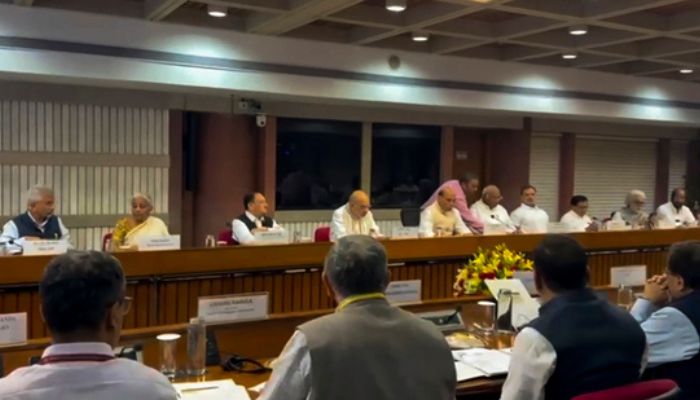
Two days after terrorists killed 27 Hindus in Pahalgam in Anantnag district of Kashmir, the Modi government highlighted how the local administration failed to inform security agencies about the opening of the Baisaran area near Pahalgam.
The revelations were made during an all-party meeting conducted on Thursday (24th April).
According to a report by Deccan Herald, access to the Baisaran area usually remains restricted until June, when the Amarnath Yatra takes place. However, it was opened for tourists on 20th April without notifying the security authorities.
It had also come to light that tour operators and local hoteliers did not notify about the presence of tourists in Baisaran.
As per a report by The Hindu, there was no police permission for tourists to visit the Baisaran area, and yet it saw the footfall of 1000 tourists.
As such, there were no security forces in the area when terrorists attacked the Hindus on Tuesday (22nd April).
500 troops were reportedly present in Pahalgam but not deployed in Baisaran due to a lack of information (which is usually provided by tour operators). The deployment of security forces in the Valley is dynamic.
According to a report by India Today, the government officials highlighted that the site of the terror attack was a 45-minute uphill walk and that the security forces had to go on trek for the rescue operation.
Union Minister of Parliamentary Affairs Kiren Rijiju pointed out that the Baisaran meadow was not accessible by pony and was far away from the main road.
The government has issued an official notification on holding the Indus Water Treaty in abeyance, sources said on Friday.
Yesterday, Jal Shakti Ministry Secretary Debashree Mukherjee wrote to her Pakistan counterpart Syed Ali Murtaza, conveying that the Indian government has decided that “the Indus Waters Treaty 1960 will be held in abeyance with immediate effect”.
“These communications cited fundamental changes in the circumstances that have taken place since the Treaty was executed that require a re-assessment of obligations under the various Articles of the Treaty read with its Annexures,” the letter said.
On Thursday, a high-level meeting was conducted at the Ministry of Home Affairs amid ongoing developments concerning the terror attack near Pahalgam town in Jammu and Kashmir.
Following the terror attack, the Central government announced several diplomatic measures, such as closing the Integrated Check Post (ICP) at Attari, suspending the SAARC Visa Exemption Scheme (SVES) for Pakistani nationals, giving them 40 hours to return to their country, and reducing the number of officers in the High Commissions on both sides.
India also halted the Indus Waters Treaty signed in 1960 in the wake of the Pahalgam attack.
Terrorists attacked tourists at Baisaran meadow in Pahalgam on April 22, killing 25 Indian nationals and one Nepali citizen while leaving several others injured.
The Indus Waters Treaty was signed in 1960, following nine years of negotiations between India and Pakistan, with the assistance of the World Bank, which is also a signatory. The negotiations were initiated by former World Bank President Eugene Black. Recognised as one of the most successful international treaties, it has endured frequent tensions, including conflict, and has provided a framework for irrigation and hydropower development for over half a century.
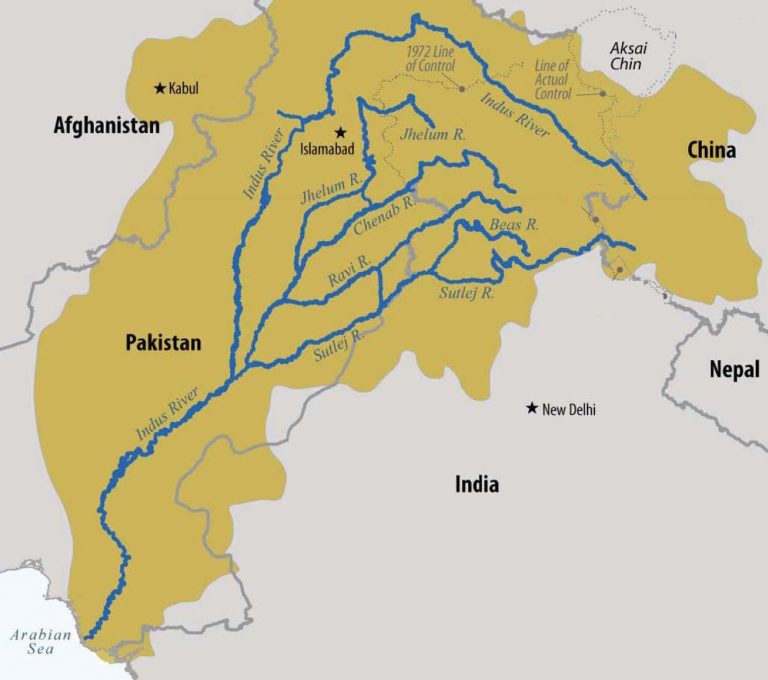
The Treaty allocates the Western Rivers (Indus, Jhelum, Chenab) to Pakistan and the Eastern Rivers (Ravi, Beas, Sutlej) to India. At the same time, the Treaty allows each country certain uses of the rivers allocated to the other. The treaty gives India 20 per cent of the water from the Indus River System and the rest 80 per cent to Pakistan.
(This news report is published from a syndicated feed. Except for the headline, the content has not been written or edited by OpIndia staff)
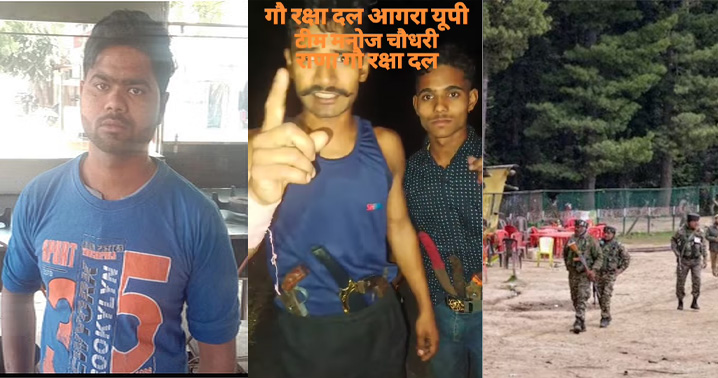
A youth was shot dead near a restaurant located on Shilpgram Road in Tajganj police in Agra on Wednesday night. The victim has been identified as Gulfam, while another youth Saif Ali was injured in the attack. After the incident, a ‘Gau Rakshak’ from Agra claimed responsibility for the assault, claiming it was done as a revenge for Pahalgam terror attack.
As per reports, 27-year-old Gulfam works at the restaurant owned by his relative Shahid Ali, and they were preparing to close the restaurant at around 12 AM last night. Gulfam was standing on the roadside outside the restaurant with his friends. Just then, three men arrived on a scooter and stopped at the spot. They then walked towards Gulfam and shot him, killing him on the spot.
They also shot at another youth named Saif Ali who works at a nearby restaurant, and he was injured in the attack. The attackers then waved his pistol and then the 3 assailants fled the spot.
The people in the area immediately informed police, and both the victims were shifted to a hospital. However, Gulfam was declared brought dead by doctors. The police registered a case and started a probe. CCTV cameras of the surrounding area are being scanned to identify the attackers.
Amid this, a video emerged on Instagram, claiming responsibility for the attack. Manoj Chaudhary, a gau rakshak from Agra, claimed that he killed two Muslims as a revenge for Pahalgam terror attack. He also vowed to avenge the dead of 26 persons at the terror attack.
आगरा (यूपी) में 3 लोगों ने गुलफाम से पहले नाम पूंछा फिर उसकी गोली मारकर हत्या कर दी। गोली लगते ही गुलफाम सड़क पर लहूलुहान होकर गिर पड़ा। उसका साथी उसे बचाने दौड़ा तो हमलावरों ने उस पर भी फायरिंग कर दी।
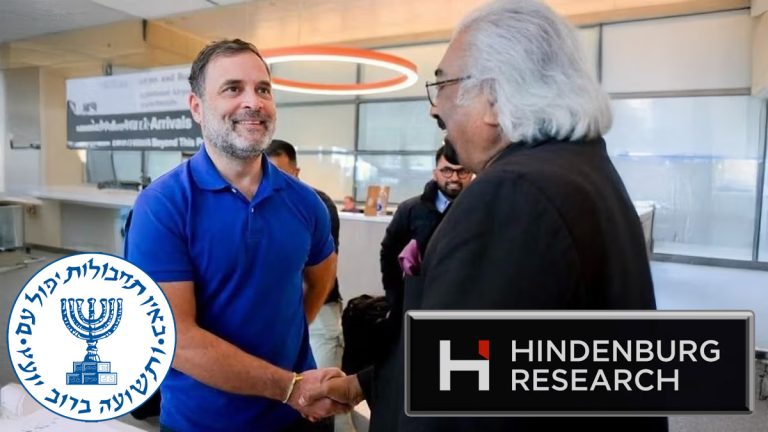
In a secret operation conducted by the Israeli intelligence agency Mossad, the agency reportedly found a link between Congress leader Rahul Gandhi, the head of the Indian Overseas Congress (IOC), Sam Pitroda and the US-based short-seller Hindenburg Research. According to Sputnik India, Mossad hacked into the home servers of Pitroda’s US-based house and accessed encrypted chatrooms and undisclosed backchannels of communication. The agency reportedly found links between Rahul Gandhi and the Hindenburg research team aimed at targeting the Adani Group and Prime Minister Narendra Modi.
The operation was reportedly conducted to find evidence establishing the connection of leaders of the Indian National Congress with Hindenburg research, which caused major financial loss to the Adani Group with its allegations against the company and its founders. The Sputnik report, however, is yet to be verified. No official statement has been issued by the Israeli government or the Mossad regarding the revelations.
In January 2023, Hindenburg Research released a report titled “Adani Group: How The World’s 3rd Richest Man Is Pulling the Largest Con in Corporate History”, accusing the Adani Group of stock manipulation and accounting fraud. The allegations were dismissed by the Adani Group as baseless. In 2024, the Supreme Court gave a clean chit to the Indian conglomerate. In a dramatic turn of events, Hindenburg Research ceased operations in January this year.
OpIndia’s Exclusive report hinted at Rahul Gandhi’s involvement
In July last year, OpIndia, in an exclusive report, examined the connections between Sam Pitroda and various U.S. government entities and foundations through his NGO, the Global Knowledge Initiative (GKI). GKI, co-founded by Pitroda, received funding from organisations such as USAID, the U.S. State Department, and the Rockefeller Foundation. The report highlighted how two of GKI’s co-founders, Nina V. Fedoroff and Sara Farley, had notable connections to the US government and the Rockefeller Foundation, raising concerns about potential influences on Indian political figures, particularly Rahul Gandhi, due to these associations.
Rahul Gandhi’s secret visit to the White House
Interestingly, in 2023, about a year before the 2024 Lok Sabha elections, Rahul Gandhi made a 10-day trip to the USA. During this trip, besides presenting lies about India as facts, which he usually does on his foreign trips, Gandhi unofficially visited the White House. Intriguingly, the visit was kept under wraps by the Biden administration as well as by Gandhi. Apart from raising suspicions, Gandhi’s visit to the White House without disclosing it to the government of India and the MEA was a serious breach of protocol and could potentially undermine India’s interests. Gandhi’s secret visit gave rise to speculations about a ‘regime change operation’ that Rahul Gandhi and the Biden Administration may have been involved in.
During the same visit, while talking at the Hudson Institute, Gandhi was seen seated next to Sunita Vishwanath, who is the co-founder of a US-based organisation called “Hindus for Human Rights”, which has spread lies and propaganda mainly against Hindus, allied with Islamists and has ties to George Soros. Soros, a global disruptor, is notorious for carrying out regime change operations in several countries. Soros has many times shown his desperation to wage war against the nationalist government in India through various networks funded by him, comprising NGOs, media, intelligentsia, etc.
Soros’s Open Society Foundation is one of the donors of the Organised Crime and Corruption Reporting Project (OCCRP), a global network of investigative journalists, that published a report against the Adani Group alleging that it was channelling investments into publicly traded stocks via “opaque” Mauritius funds.
Gandhi’s mysterious trip to Uzbekistan
Similar speculations about a potential regime change operation were raised after Rahul Gandhi’s mysterious visit to Uzbekistan in 2023, at a time when USAID administrator Samantha Power was also there. Power, while serving as the USAID administrator, repeatedly held meetings with George Soros’s Open Society Foundation and other left-leaning organisations.
During his foreign trips, which were organised by his close aide Sam Pitroda, Rahul Gandhi is often seen asking for foreign intervention in India. If the findings of Mossad’s covert operations are true, then it raises some serious questions about the intentions of Gandhi and Congress.
Hindenburg report and Israel connection
The Hindenburg report was released just a week before Gautam Adani was in Israel to finalise a USD 1.2-billion deal to acquire the Haifa seaport. And now it has emerged that Israel had helped the group in finding the conspirators behind the report.
Israeli establishment saw the Hindenburg report as a deliberate attempt to undermine the Haifa port deal with Adani, which Tel Aviv considered strategically vital for the India-Middle East-Europe Economic Corridor — a counterweight to growing Chinese influence in the region. After Gautam Adani told the Israeli officials that the allegations in Hindenburg report were “absolute lies”, Israel reportedly launched ‘Operation Zeppelin,’ a covert operation to counter the effects of the Hindenburg report.
Operation Zeppelin revealed the inner workings of Hindenburg Research and exposed those backing it. The Israeli spies stumbled upon a complex web of activist lawyers, journalists, hedge funds, and political figures — some allegedly connected to Chinese interests, while others to Washington power brokers.
A report said that “even a key face from India’s opposition political dynasty was reportedly involved.”
While Adani group didn’t make any statement on the findings, leaked documents appeared showing links between US agencies and media platforms that were pushing anti-Adani narratives. And soon after that, Hindenburg announced that it is shutting down.
In the aftermath of the Pahalgam terror attack, the Cabinet Committee on Security (CCS), chaired by Prime Minister Narendra Modi, suspended the decades-old Indus Water Treaty (IWT) with Pakistan on 23rd April 2025. This water-sharing agreement brokered by the World Bank will remain suspended until Pakistan ends its support for cross-border terrorism. This, along with several other diplomatic and strategic measures, came in response to the brutal terror strike in Jammu and Kashmir’s Pahalgam that left 26 tourists dead.
Islamic Jihadis from the Pakistani terror outfit Lashkar-e-Taiba’s offshoot, The Resistance Force, first confirmed the Hindu identity of tourists by checking for circumcision and asking to recite Kalma, and then shot them dead.
As the Indian government’s strong response has rattled the Pakistani establishment and stoked fear among its populace regarding potential scarcity of water in the economically backwards nation, it is pertinent to understand what the Indus Water Treaty is, and why it matters to Pakistan.
Indus Water Treaty
It all started in 1948, when India temporarily cut off the Indus water to Pakistan but reopened it later. Pakistan, however, approached the United Nations (UN) in 1951, alleging that India had cut off water to numerous Pakistani villages. Eventually, the Indus water agreement was prepared in 1954 by the World Bank based on the recommendations of the United Nations. After years of discussions, India and Pakistan agreed on shared ownership of six rivers. Pakistan was the lower riparian state at the time of India’s independence in 1947, since the border between the two countries was defined across the Indus Basin.
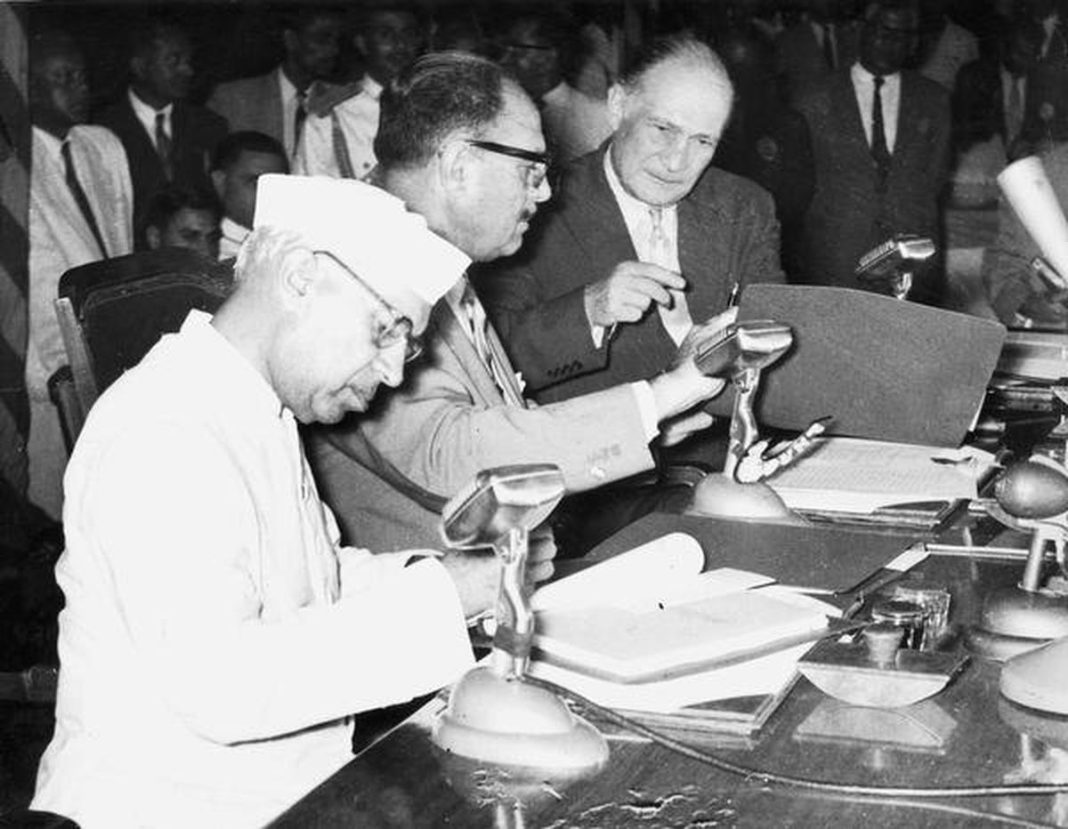
Signed on 19th September 1960 in Karachi, the Indus Water Treaty between India and Pakistan was brokered by the World Bank. This water-sharing agreement governs the use of the Indus River system by India and Pakistan. Signed by Prime Minister Jawaharlal Nehru and Pakistan Field Marshal Ayyub Khan, this treaty allocates the waters of six rivers originating in the Himalayas, broadly divided into two categories: the eastern rivers and the western rivers. The eastern rivers Ravi (origin in Himachal Pradesh), Beas (flows through Himachal Pradesh and Punjab, and Sutlej (originates in Tibet, flows through India into Pakistan) were allocated to India, while Indus, Chenab and Jhelum were allocated to Pakistan.
India’s Prime Minister Jawaharlal Nehru and Pakistan’s Field Marshal Ayyub Khan signing the Indus Water Treaty in Karachi in 1960 (Source: TheHindu)
India effectively utilises the waters of eastern rivers for hydropower, irrigation and other purposes. Meanwhile, Indus, Jhelum and Chenab are essential for Pakistan’s hydropower, irrigation and other needs, with Indus being nothing short of Pakistan’s lifeline.
While the signing of IWT was touted as a historic step towards mutual cooperation and peace, this treaty was not essentially balanced; in fact, it actually benefited Pakistan more due to the higher water flow in its assigned rivers, the western rivers.
Notably, under this arrangement, India controls around 20 per cent of the total water flow, which translates into 33 million acre-feet or 41 billion cubic meters annually, and Pakistan gets 80 per cent, which is approximately 135 million acre-feet or 99 billion cubic meters. This agreement allowed limited non-consumptive uses of the western rivers, such as hydropower generation, however, it restricted blocking or dramatically altering water flow into Pakistan.
In addition, the treaty also gave Pakistan the right to object to the designs of Indian hydropower projects on western rivers. Under the IWT, the commissioners of India and Pakistan are supposed to meet once a year, alternatively in India and Pakistan.
“The Government of India and the Government of Pakistan, being equally desirous of attaining the most complete and satisfactory utilisation of the waters of the Indus system of rivers and recognising the need, therefore, of fixing and delimiting, in a spirit of goodwill and friendship, the rights and obligations of each in relation to the other concerning the use of these waters and of making provision for the settlement, in a cooperative spirit, of all such questions as may hereafter arise in regard to the interpretation or application of the provisions agreed upon herein, have resolved to conclude a Treaty in furtherance of these objectives, and for this purpose have named as their plenipotentiaries…” the Preamble of the Indus Water Treaty reads.
However, with the treaty in abeyance, India will no longer be required to heed Pakistan’s ‘concerns’ or ‘objections’ (read deliberate obstructions over the designs of Indian projects.
India has, on humanitarian grounds, never considered scrapping the IWT altogether despite Pakistan’s repeated betrayals and violations of the 1972 Shimla Agreement, under which the defeated Pakistan and a triumphant India decided to resolve issues bilaterally. However, Pakistan’s repeated attempts at internationalising the Kashmir issue have violated the agreement. Besides, as former Prime Minister of Pakistan, Nawaz Sharif, once admitted, Pakistan also violated the Lahore Declaration of 1999, as the Pakistani Army intruded into Kargil, stoking the Kargil War, where the self-proclaimed ‘Riyasat-e-Medina’ suffered yet another crushing defeat.
Through repeated unprovoked conventional wars, cross-border terrorism or proxy war, creating safe haven for Islamic terrorists to repeatedly challenge India’s territorial integrity, Pakistan has proven to be a hostile neighbour with its army and governments, regardless of which party is in power. Successive Pakistani governments have thwarted every Indian attempt at bringing normalcy and in bilateral ties. Discontinuing the one-sided ‘Aman ki asha’, the Modi government took a strong stand and decided that blood and water cannot flow together adding that no bilateral talks can be held with Pakistan until it stops sponsoring Jihadi terrorism against India. Pakistani establishment’s support to Islamic terrorism once again in Pahalgam, however, confirms that they are not ready to shun their intransigence. Rather, the Pakistani army thrives on conflict with India. Thus, responding to Pakistan’s aggression in terms it understands best became an ineluctable imperative for the Modi government.
Where does India’s suspension of IWT legally stand? How would Pakistan retaliate?
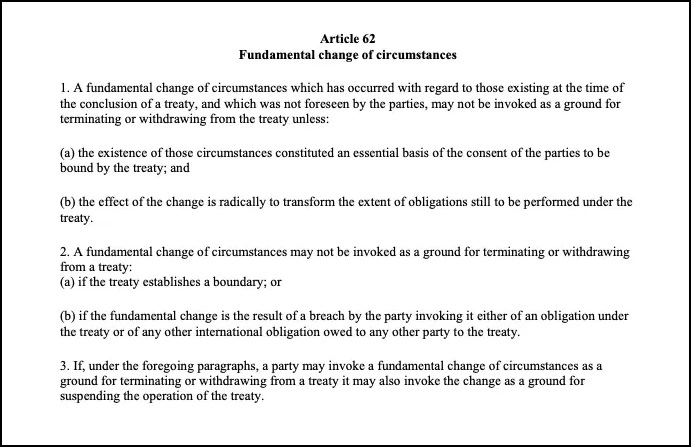
As soon as the official announcement regarding India putting the Indus Water Treaty in abeyance came, one of the first concerns raised was whether this arbitrary suspension holds legal grounds or not. The answer to this question is that the IWT has no specific provision for its abrogation. However, as per Article 62 of the Vienna Convention on Law of the Treaties, there is room for the repudiation of a treaty considering the fundamental change of circumstances which has occurred concerning those existing at the time of conclusion of the Treaty. Thus, if Pakistan, which it most likely will, raises the matter with the World Bank or at other international forums, India will strongly present its case and justify its stern action.
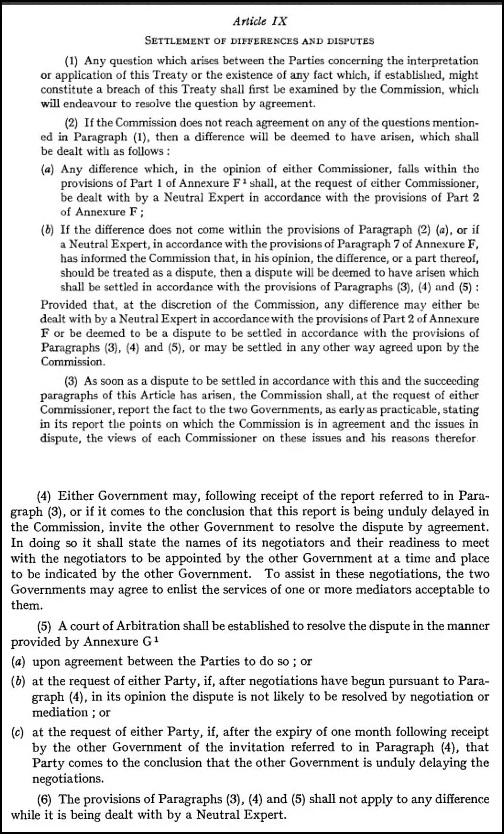
Interestingly, although the Indus Water Treaty does not specifically provide for abrogation of the treaty, it has a mechanism for dispute resolution. The treaty’s Article IX, as well as Annexures F and G, provide for raising grievances before the Permanent Indus Commission, followed by a neutral expert and then any forum of arbitrators.
In a big win for India, in January 2025, the World Bank-appointed neutral expert declared that it has the authority to resolve the disputes between India and Pakistan regarding two hydropower projects in Jammu and Kashmir under the terms of the Indus Waters Treaty of 1960. Notably, the ruling supported New Delhi’s stance.
The Modi government’s decision to suspend IWT has predictably rattled the Pakistani government, which fails to call its own backing of Islamic terrorism against India as ‘cowardly’ but deems India’s decisive deterrence as ‘cowardly’ and ‘immature’. Pakistan’s chagrin over India putting IWT in abeyance can be better understood from the statement of Ahmer Bilal Soofi, a former Pakistani federal law minister, who back in 2016 said that arbitration would hardly offer any recourse to Pakistan if India revokes the treaty, as it would imply that India has done away with it. Thus, the dispute resolution mechanism of IWT will be useless to Pakistan.
“In case India ‘revokes’ the treaty, it literally means it has shunned it. The dispute resolution mechanism under Article IX and Annexes F and G of the IWT will be of no use and assistance to Pakistan. It is limited to a dispute under the treaty and not meant to provide for specific performance of the treaty itself,” Soofi told the Dawn newspaper.
While Pakistan does not really have much options other than approaching the Permanent Court of Arbitration, as it did during the Kishanganga dispute, however, Pakistani government which operates largely under Pakistan Army may adopt its usual hardline stance, approach all international forums including United Nations, accessible to cry same old, ‘Pakistan has nothing to do with terror attacks in India’ rhetoric to play victim and accuse India of ‘water terrorism’. It may further seek support from its ally-cum-overlord China, seeking investments from the country in water storage or alternative irrigation systems to offset its reliance on India-controlled rivers. Pakistan may seek Chinese support to accelerate projects like Diamer-Bhasha Dam. It may also push China to escalate border tensions with India.
Alongside narrative building and seeking support from allies, Pakistan may also further escalate tensions along the Line of Control in Kashmir by intensifying ceasefire violations. While the Pakistan Army has ordered certain missile tests to keep its public entertained and in the impression that they are ‘ready’ for any situation, however, in reality, Pakistan’s economic and military disparity does not even allow it to compare with India, forget competing or fighting against it in a conventional war. Another step, which is the Pakistani establishment’s, especially ISI’s, favourite and convenient measure, is escalating covert support for Islamic terrorist groups in Jammu and Kashmir. Moreover, it may resort to cyberattacks on India’s water management systems, data theft and similar activities.
India puts Indus Water Treaty in abeyance: What will be its impact on Pakistan amidst its ongoing water crisis
More than essential, the Indus river system is existential for Pakistan. It provides water for 80% of Pakistan’s agricultural land, which is around 16 million hectares. Irrigation alone absorbs 93% of this water, sustaining the country’s agricultural backbone.
Moreover, the Indus river system serves more than 237 million people. It must be noted that Pakistan accounts for 61% of the Indus Basin population. Major urban areas such as Karachi, Lahore, and Multan access their water straight from these rivers. In addition, Pakistan’s Hydropower plants such as Tarbela (supported by Indus river water) and Mangla Dam (supported by Jhelum) also rely on continuous flows.
The Indus system accounts for around 25% of Pakistan’s GDP and sustains crops such as wheat, rice, sugarcane, and cotton. What further exacerbates the situation for Pakistan is its ongoing water crisis. India’s hostile neighbours’ per capita availability is also steadily dropping.
Under the prevailing circumstances, if India closes off or drastically decreases flows from the Indus, Jhelum, and Chenab, the consequences could prove disastrous for Pakistan, as their agricultural production could decline, putting food security for millions of Pakistanis at risk. Besides, reduced water flows would dry up urban water supplies, thus destabilising cities.
Moreover, power generation would halt, incurring losses in their industries and causing severe inconvenience to Pakistani households. Other adverse impacts of India’s action could be loan defaults, a surge in unemployment, and increased migration, especially in rural areas. In a nutshell, an effective implementation of the Indus Water Treaty’s suspension and subsequent measures to divert water flows would plunge an already failed state of Pakistan into utter chaos.
It is pertinent to note that Pakistan is grappling with the severe water crisis. As per an International Institute of Sustainable Development (IISD) report, Pakistan is facing a water crisis caused by climate change, overuse of resources, inefficient water management and rapid population growth. “The country’s per capita water availability has drastically decreased, and it’s now categorised as water-scarce rather than water-stressed, ” the IISD report says.
Another interesting point to note here is that with India suspending IWT, it is no longer obliged to follow reservoir flushing on its projects in Western rivers, including the Kishanganga reservoir. While under the IWT, reservoir filling after the flushing has to be done in August, which is the peak monsoon season, however, with the Indus Water Treaty in abeyance, experts opine that India can fill its reservoirs anytime. While this move will significantly benefit India, it will prove disastrous for Pakistan, especially Panjab, which heavily relies on the Indus and its tributaries for irrigation.
Moreover, India can now also stop relevant data sharing as well as prevent Pakistani officials from visiting its two hydropower projects the Kishanganga HEP on Kishanganga, a tributary of the Jhelum, and the Ratle HEP on the Chenab, both under construction in Jammu and Kashmir.
India has been maximising its share of water over the years
The Indus Water Treaty gave India sole usage of the waters of three eastern rivers, which had an average of about 33 million acre-feet (MAF). Pakistan was granted similar control over the waters of the western rivers, the Indus, Jhelum, and Chenab, with an average of about 135 MAF; however, a condition was also put forward. The treaty guarantees India the right to produce hydroelectricity through run-of-river (RoR) projects on the western rivers, provided that certain design and operation requirements are satisfied.
Over the years, India has progressively worked to utilise its full allocation under the Indus Water Treaty, particularly, after the 2016 Uri Attack. India has in the recent years, increasingly focussed on bolstering infrastructure to capture water from the eastern rivers and limited use of western rivers.
In this direction, PM Modi inaugurated the Kishanganga project on the western river of Jhelum in Jammu and Kashmir, in May 2018. Over 300 megawatts of electricity might be generated and at least 30,000 hectares of land can be irrigated using the approximately 0.65 million acre-feet (MAF) of water that the Kishanganga project stores from the Ujh river. PM Modi’s bold move came despite Pakistan’s protests.
The Kishanganga hydropower plant, which is situated on the Indus tributaries, started construction in 2007 and the Ratle Hydroelectric Plant, built on the Chenab had its foundation stone placed in 2013.
For a long time, India allowed some water of the Ravi River to flow into Pakistan unused. However, with the completion of the Shahpurkandi Barrage in 2024, this flow was halted, and around 1,150 cusecs of water were diverted to Jammu and Kashmir and Punjab for irrigation. With this, India not only maximised the usage of an allocated eastern river for domestic use but also reduced water reaching Pakistan. Meanwhile, construction work of the Ujh Multipurpose Project and Makaura Pattan Barrage on the Ravi River and run-of-river (RoR) projects, including Ratle and Kiru on the Chenab and Jhelum, respectively, has also been accelerated.
It, however, is essential to note that an on-paper suspension of the Indus Water Treaty does not stop water flow to Pakistan. India is not physically blocking the flow of Western rivers. However, with IWT put in abeyance, India can pursue its hydroelectric projects on western rivers without having to worry about treaty restrictions and build infrastructure to alter and control the flow of water.
While, the completion and commissioning of India’s various hydropower projects is not without financial, environmental and other challenges, India’s policy shift since 2016, with PM Modi taking a strong stance of stopping “every drop” of eastern river water from flowing to Pakistan, India has made it clear that humanity is for those who value human lives not for those driven by jihadist fanaticism and hatred against India.