Home Blog Page 478

Tawhidi Janata: How violent Muslim mobs are wreaking havoc in Bangladesh under the watch of Muhammad Yunus

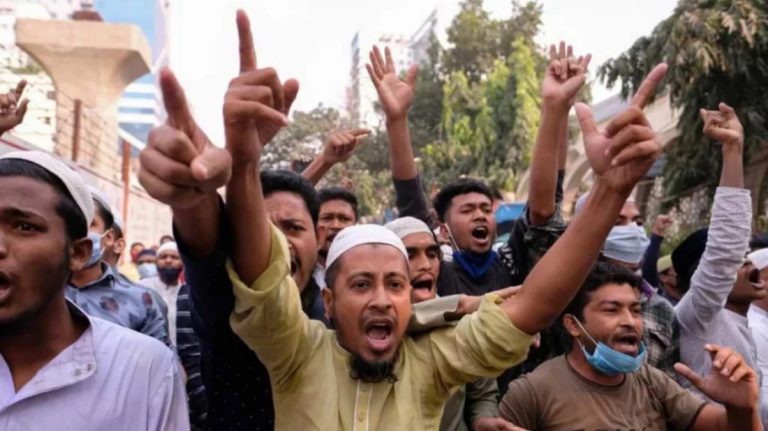
Bangladesh is witnessing a drastic rise in vigilante Muslim mobs, unleashing violence under the pretext of protecting the tenets of Islam. These mobs are largely unorganised but they call themselves ‘Tawhidi Janata (meaning Revolutionary People).’

They have come under the spotlight over recent acts of vandalism and harassment of people. The development comes at a time when the interim government in Bangladesh, led by Muhammad Yunus, is pandering to Islamists.

While Yunus has not directly recommended these Muslim mobs to run rampage, he has strategically remained tight-lipped on their activities.

His regime has released Islamic hardliners and convicted terrorists and tried to downplay attacks on Hindu minorities as ‘fake‘, ‘exaggerated‘ or ‘politically motivated‘.

Violence unleashed by Tawhidi Janata during the reign of Sheikh Hasina

These violent Muslim groups, functioning under the banner of ‘Tawhidi Janata’ have been around since atleast 2013. They would sporadically target those who they believe worked against the interests of Islam during the tenure of Sheikh Hasina.

Hindu minorities frequently became the target of ‘Tawhidi Janata’. In October 2019, a frenzied mob of Muslims carried out violence in Borhanuddin upazila in Bhola district of Bangladesh after accusing a Hindu boy of committing ‘blasphemy’ on Facebook.

They set a house belonging to the Hindu community on fire and vandalised 12 others. ‘Tawhidi Janata’ also clashed with the law enforcement authorities, resulting in 4 deaths.
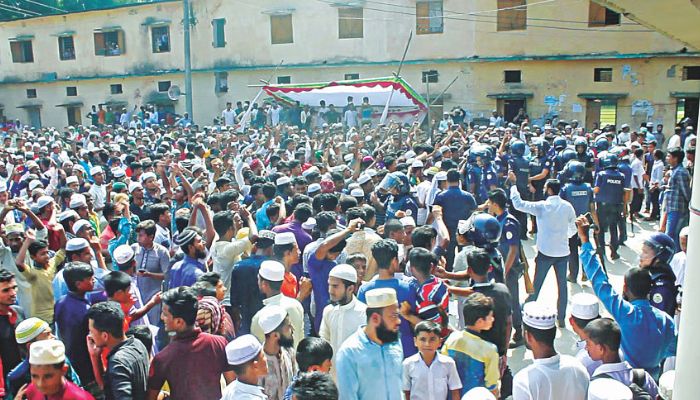
Tawhidi Janata at work in Bhola, image via The Daily Star

This was despite the fact that the Hindu victim’s Facebook account, which supposedly posted blasphemous content, was hacked by two Muslims named Sharif and Emon.

2 years later in October 2021, ‘Tawhidi Janata’ was involved in pelting stones at a Hindu temple and carrying out vandalism in Chandpur district of Bangladesh.

The attack was carried out to ‘avenge’ desecration of the Quran, which was also interestingly executed by a Muslim man named Iqbal Hossain.

‘Tawhidi Janata’ also carried out attacks on the Lama Central Hari Mondir in Bangladesh’s Bandarban upazila. They also destroyed shops belonging to the Hindu community.

Tawhidi Janata gains strength after interim govt comes to power

Following the undemocratic ouster of former Prime Minister Sheikh Hasina in August 2024, violent Muslim mobs operating under the banner of ‘Tawhidi Janta’ have become bolstered.

On 28th January this year, ‘a Muslim mob ‘Tawhidi Janata’ laid siege to the Tilakpur High School in Joypurhat district of Bangladesh. The extremists, comprising madrassa students, carried out vandalism to protest against a friendly football match between two women’s teams.

The match was scheduled to take place on 29th January 2025 at the playground of the Tilakpur High School between the Joypurhat and Rangpur women’s football teams.

In visuals that have surfaced on social media, the Muslim mob could be seen vandalising the tin fence of the school. Prior to carrying out the attack, they gathered outside the Tilakpur railway station and gave provocative speeches.

Muslims carry out vandalism, destroy tin fence of Tilakpur High School

The mob demanded the cancellation of the women’s football match, alleging non-observance of purdah. Thereafter, the extremists made their way to the Tilakpur High School and unleashed mayhem.

A radical Muslim declared, “I want to warn those who want to earn money by exposing our women. Be careful. Stop all women’s games in the future. If you don’t stop, then we will show our resistance.”

In the meantime, the Akkelpur Police Station Officer-in-Charge (OC) Anisur Rahman and the Upazila Executive Officer (UNO) Manjurul Alam claimed to have no knowledge about the incident.

‘Tawhidi Janata’ vandalised shops for selling flowers on the occasion of Valentine’s Day. The incident occurred on 14th February in Bhuapur Upazila in Tangail district of Bangladesh.

One of the shops targeted by the mob includes ‘Mama Gift Corner’, which is located close to the Bhuapur police station. The radical Muslims attacked the store and threw the flowers on the street.

The shop belonged to a man named Alam, who had been selling flowers at the same location for a long time. He informed that the mob told him that selling flowers on Valentine’s Day was a crime.

Alam said that another shop (identified as Nirbili Food Corner) was similarly attacked a day earlier on 13th February 2025. ‘Tawhidi Janata’ held demonstrations outside the eatery and held ‘anti-love’ protests.

They raised slogans, threatening couples with physical harm for public display of affection. The owner of Nirbili Food Corner, Asad Khan, had to shut down his shop following the incident.

Due to the chaos and fear perpetrated by the Muslim mob, a ‘Spring festival’ which was scheduled to be held in Bhuapur on Saturday 15th February was also postponed.

Conclusion

OpIndia spoke to renowned Bangladesh journalist Salahuddin Shoaib about the matter. He pointed out, “This is not an organisation. Instead, Tawhidi Janata is purely a terminology used by opportunists in the society for creating anarchy or even posing a threat to national security.”

“Inventors of this terminology belong to Urdu-speaking stranded Pakistanis as well as inhabitants of the older part of Dhaka city and other cities in the world, who mostly were supporters of Muslim League who opposed Bangladesh’s war of independence in 1971,” he told us.

Salahuddin Shoaib further revealed, “For the recent months, Pakistani agencies are providing funds to these people in continuing notoriety using the “umbrella” of Tawhidi Janata.”

Following public ire over the recent activities of the violent Muslim groups, Islamist Mahufz Alam issued a ‘token condemnation’.

“As a devout Muslim myself, I am a monotheist. However, when extremism is shown in the name of Tawhid, it is my duty as a responsible person to warn about the impending consequences,” he said in a statement in February 2025.

He was careful enough to not upset radical Muslims, who constitute a large part of his supporter base. For the unversed, Mahfuz Alam is an ‘adviser’ to the interim government of Bangladesh.

The anti-India propagandist had previously served as a ‘special assistant’ to Muhammad Yunus. Interestingly, Yunus had described the same man as the ‘brain’ behind the campaign to remove Sheikh Hasina from power in August 2024.

In the absence of any firm adminsitrative action against Tawhidi Janata, the orgy of violence, vandalism and harassment to protect Islam is likely to continue unabated in forseeable future.
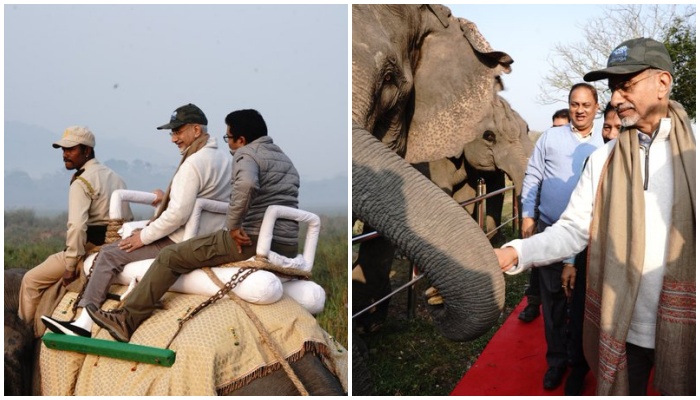

EAM Jaishankar accompanies Ambassadors from 45 nations for elephant safari in Kaziranga National Park, Assam

0

External Affairs Minister S Jaishankar along with the Head of Mission and Ambassadors from 45 countries took an Elephant Safari in Kaziranga National Park on Monday ahead of the Advantage Assam summit that is being held in Guwahati from February 25.

“I am very happy to see more, tourists growing. We are here for Advantage Assam. We are going to Guwahati after this. We want to you know, give Assam and NE states a higher profile. Get more tourists, International interest, more investors. So it is a very good direction and to see this early morning. It’s a great start to the day.” External Affairs Minister, S Jaishankar said.

Responding to a comment by media that Kaziranga has the highest Tourist inflow he said, “Yes I know. They were telling me that we have already crossed three lakhs. It’s a good trend. Even the PM says we should visit every state because we have abundance of both natural and creative tourism.

Speaking about his experience, the delegate from Timor-Leste said, “It was a privilege to visit this Kaziranga park, wild animals like elephants, rhino and tiger. So I think it’s one of the potential your state of Assam, India can offer to the world. By this visit I am really enjoying. What I can learn from the nature? The wild animals they teach us about peace. How can rhino live along elephant. Both of them aggressive but they can live side by side.”

“I thank the Minister of External Affairs and the Assam authorities for offering us something that will remain a lifelong memory from India. We are based in New Delhi. But now having the opportunity to see Assam and the natural beauty and to immerse ourselves in this natural beauty. I wish the animals here a long life,” another delegate said while talking to the press.

Advantage Assam marks the largest investment promotion and facilitation initiative by the Government of Assam, highlighting the state’s geostrategic advantages and its potential as a major investment destination. Assam is strategically located in the northeastern region of India, serving as a gateway to Northeast India and Southeast Asia. The state is renowned for its lush tea gardens and petroleum resources and is now diversifying into sectors such as agriculture, food processing, handicrafts, tourism, and information technology. 


(This news report is published from a syndicated feed. Except for the headline, the content has not been written or edited by OpIndia staff)

India bans 2 painkillers allegedly creating serious opioid addiction in African countries, Palghar based company accused of making combination drug without approval

India has banned the production of two highly addictive painkillers after a BBC report revealed that an Indian pharmaceutical company based in Palghar, Maharashtra had been involved in the export of the drugs to certain African countries causing a health crisis there. The Drug and Controller General of India, Dr Rajeev Singh Raghuvansi said on Friday (21st February) that permission to produce and export the two drugs – tapentadol and carisoprodol – has been withdrawn.

The decision came after an investigative report by the BBC exposed that an Indian pharmaceutical company named Aveo Pharmaceuticals was exporting a mix of the two drugs in countries like Ghana, Nigeria and Cote D’Ivoire. Reportedly, the combination drug caused serious opioid addiction in those countries. Tapentadol is a strong opioid and is used to relieve severe pain, while carisoprodol is a muscle relaxant used in acute cases or painful bone conditions.

The investigation found that Aveo Pharmaceuticals was manufacturing the Tafrodol brand as a combination of the two drugs without any approval. In a sting operation by BBC India, company officials admitted that they targeted teenagers in Nigeria and other African countries to sell the drug.

While the drug is sold in different brand names in Nigeria, Ghana, Cote D’Ivoire etc countries, they were traced back to Aveo Pharmaceuticals.

Subsequently, Maharashtra’s Food and Drug Administration (FDA) issued a show-cause notice to the company on Sunday (23rd February) under the Drugs and Cosmetics Act, 1940. A joint team of drug inspectors from the centre and the state government raided the company’s factory in Mumbai and seized the entire stock. The company has been prohibited from producing the drug.

An advisory was issued by the Centre on Friday directing all state governments to withdraw the export NOC (No Objection Certificate) for all unapproved combinations of Tapentadol and Carisoprodol and revoke manufacturing permissions for these drugs to prevent their misuse. The Central Drugs Standard Control Organization said the combination of tapentadol and carisoprodol had significant abuse potential.

The company denies allegations

Aveo Pharmaceuticals has denied the allegations and assured full cooperation with the government authorities. In a statement on its website, the company states, “In response to the allegations made against us in the BBC film dated 21st February 2025, we categorically deny all claims. The allegations against us are entirely baseless and without merit. We have always adhered to the rules and regulations set by various regulatory authorities to manufacture and export our products.”

It further adds, “Tafrodol is our registered trademark, which contains both Tapentadol and Carisoprodol. This combination is licensed by the relevant State Food and Administration and is exported under the necessary No Objection Certificate (NOC) from the Assistant Drug Controllers (ADC) and with an export license issued by the Central Drugs Standard Control Organisation (CDSCO),” a company spokesperson was quoted as saying.

Claiming that Aveo is not the only company to manufacture the combination, the spokesperson alleged that several companies have been illegally using Aveo’s brand name and logo to produce the combination. “We have already filed multiple legal cases against such companies, and the matter is currently being heard in the High Court,” he added.

Aveo Pharmaceuticals is based in Boisar, Palghar industrial zone near Mumbai.

The BBC Investigation

The BBC World Service reportedly found packets of the drugs with the Aveo logo being publicly sold in Nigeria and Cote D’Ivoire. As part of its investigation, the BBS sent an undercover operative posing as an African businessman inside one of Aveo’s factories in India. The operative met one of Aveo’s directors Vinod Sharma. He told Sharma that he was looking to supply opioids to Nigeria. The entire conversation was recorded on camera.

The drugs are banned in Europe and regulated in the US

Tapentadol, a powerful opioid, and Carisoprodol, a muscle relaxant, are highly addictive. Carisoprodol is banned in Europe and is approved for use in the US for short periods. The withdrawal symptoms of the drug are said to include anxiety, insomnia and hallucinations. The combination of the two drugs is reportedly not licensed for use anywhere in the world because of its harmful side effects which include death from overdose. The combination is not sold in India, and the company was selling it only in Africa. The opioid is popular in West African countries because of its cheap price and wide availability.

Notably, both the drugs are not included in the list of Narcotic Drugs and Psychotropic Substance (NDPS), and that is how the company was able to produce and export it.

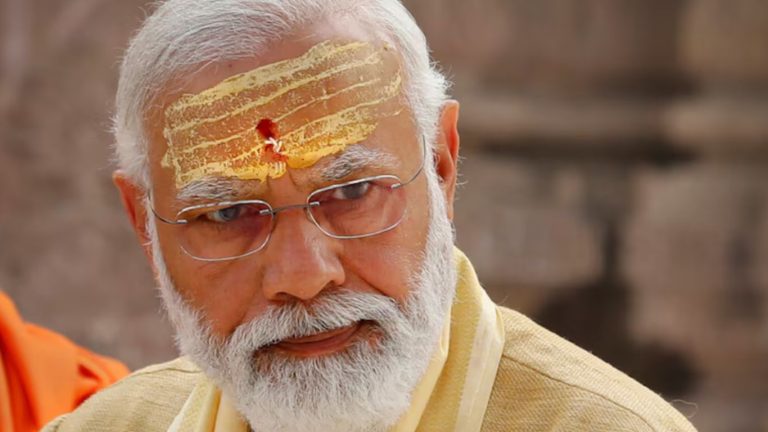
People with slave mentality have consistently been attacking Hindu faith and practices: PM Modi

Prime Minister launched a scathing attack on the opposition leaders for mocking the Hindu religion. PM Modi made the statement during a public address in Chhattarpur Madhya Pradesh on Sunday after laying the foundation stone of Bageshwar Dham Medical and Science Research Institute for Cancer.

PM Modi said that a certain group of politicians regularly ridicules the Hindu religion and divides people. He added that foreign elements have been using such politicians to target the country. “Many times, foreign powers are seen taking support of such people to weaken the country,” he said. “Such Hindu-hating people have existed in some phase or the other for centuries”, he added.

Modi called out people targeting Hindu practices

His remarks come at a time when some opposition leaders criticised the Maha Kumbh Mela in Prayagraj. Mincing no words the Prime Minister described such politicians as having a ‘slave mentality’ and said that they have been consistently attacking the Hindu religion and practices. “These people suffering from the slave mentality have been attacking our faith, beliefs and temples; our saints, culture and principles,” he said slamming the opposition. “They abuse abuse our festivals, traditions and customs,” he added.

Prime Minister Modi said that Hinduism by nature is a progressive religion and yet some people selectively target it. “They dare throw mud at a faith and a culture that is progressive by nature, ” he said.

PM praised Pandit Dhirendra Shastri

Calling him a younger brother, the Prime Minister applauded Pandit Dhirendra Shastri of Bagheshwar Dham for making efforts to promote unity in the society. “For a long time, my younger brother Dhirendra Shastri Ji has been spreading awareness among people using the mantra of unity, ” said PM Modi. Modi praised Shastri for deciding to set up Bageshwar Dham Medical and Science Research Insitute for Cancer. Expressing pleasure, Modi said that people would now be able to receive treatment at Bageshwar Dham. “Here, in Bageshwar Dham people will now be blessed with prayers, food and disease-free life,” he added.

Mamata Banerjee described Maha Kumbh as Mrityu Kumbh

Following the stampede at the Maha Kumbh Mela in Prayagraj that claimed several lives, West Bengal Chief Minister Mamata Banerjee attacked the Uttar Pradesh government. Describing the Maha Kumbh Mela as ‘Mrityu Kumbh’ (Kumbh of deaths), Banerjee accused the BJP government of prioritising the rich over the poor. “This is Mrityu Kumbh. I respect Maha Kumbh, and I respect the holy Ganga Ma. But there is no planning. How many people have been rescued? For the rich and VIPs, there are systems in place to get camps (tents) for as much as Rs 1 lakh. But for the poor, there are no arrangements at Kumbh,” she alleged addressing a budget session of the state assembly on 18th February.

Earlier this month, Samajwadi Party MP Jaya Bachchan dismissed the government figures of the number of devotees visiting Mahakumbh and claimed that the water in Prayagraj is contaminated as dead bodies of stampede victims have been thrown in the holy Ganga river. After the stampede in the Maha Kumbh Mela, Samajwadi Party (SP) MP Ram Gopal Yadav alleged that there was a massive administrative failure in Prayagraj and that “thousands were killed,” some “were thrown in Ganga,” and others “buried.” He accused the state government of concealing the true death toll and claimed that officials were ordered not to report figures exceeding 30.

Several unfortunate accidents have taken place at different locations in the country due to a massive number of people turning out to visit the historic Maha Kumbh Mela in Prayagraj, Uttar Pradesh.

How terror attacks in mainland Europe have become a new normal with multiple knife attacks and car attacks

In recent months, mainland Europe has seen a troubling surge in terror attacks, including knife assaults and vehicular rammings. These attacks have been executed by individuals with extremist ideologies, mostly by individuals who came to European countries under the guise of seeking refuge or asylum. Continuous attacks have instilled a pervasive sense of insecurity among the locals in these countries.

Recent incidents highlight a growing threat

There have been numerous attacks involving so-called refugees. For instance, on 23rd February, a 37-year-old man, who was on a terror prevention watchlist, went on a stabbing spree in France, leaving at least one person dead and two police officers seriously injured. French President Emmanuel Macron condemned the incident as an “Islamist terror act.” The attacker first targeted the municipal police officers, shouting “Allahu Akbar.” The attack happened shortly before 4:00 PM (local time) during a demonstration.

On 16th February, a 23-year-old man stabbed five passers-by in southern Austria’s Villach on Saturday, leaving a 14-year-old dead and four others injured. Following the incident, the suspect was detained in the city of Villach. The suspect was a Syrian national with legal residence in Austria.

On 13th February, a man drove a car into a union demonstration in Munich, Germany, injuring 28 people, including children. The person driving the car was identified as an Afghan asylum seeker. The incident took place at around 10:30 AM when the attacker rammed the car into the back of a rally by the Verdi Union during a strike by public sector workers.

In December 2024, a Saudi Arabian ‘doctor’ deliberately rammed his car into multiple people at a Christian market in Magdeburg city in the Saxony-Anhalt state of Germany, killing two people and injuring 60 others. One of the deceased was a child. The accused had been living in Germany for around 20 years and held permanent residency.

In August 2024, a man went on a stabbing spree during the ‘Festival of Diversity’ in Fronhof market square in Solingen city, Germany. The lone-wolf attack took place at 10 PM, leading to the deaths of three people and injuring several others.

In May 2024, a radical Islamist went on a stabbing spree in Mannheim city, Germany, injuring two people, including a police officer. The attack was carried out ahead of a political event against growing Islamism in Europe by an organisation named Citizens’ Movement Pax Europa.

In June 2023, a Syrian refugee went on a stabbing spree in Annecy, France. The attacker, identified as Abdel Masih H, injured seven people, including six children. The incident took place at a park in Annecy at around 9:45 AM, where several children aged three to five were present as part of a school excursion.

Statistical trends and analysis

According to data available from the European Union, in 2022 alone, there were 28 recorded terrorist attacks within EU member states, resulting in four fatalities. The prevalence of low-tech, high-impact methods such as stabbings and vehicular assaults is a serious concern in European countries today.

While 98% of terrorism-related deaths in 2023 occurred in conflict zones, the spread of extremist ideologies has led to a notable increase in so-called lone-wolf attacks in Europe. Reports suggest that these “lone wolves” are actually part of a larger radicalised groups. According to a Euro News report from 2023, Spain alone was monitoring over 300 such individuals whom agenices believed might carry out terrorist attacks.

As such attacks become more common, their profound implications can be seen in European societies, as fear and anxiety among locals have increased, leading to changes in daily routines and heightened security measures in public spaces. Such incidents have fuelled debates over immigration policies, integration, and national security.

While European governments have intensified efforts to counteract this trend, demands for stricter immigration policies have increased from far-right political parties.

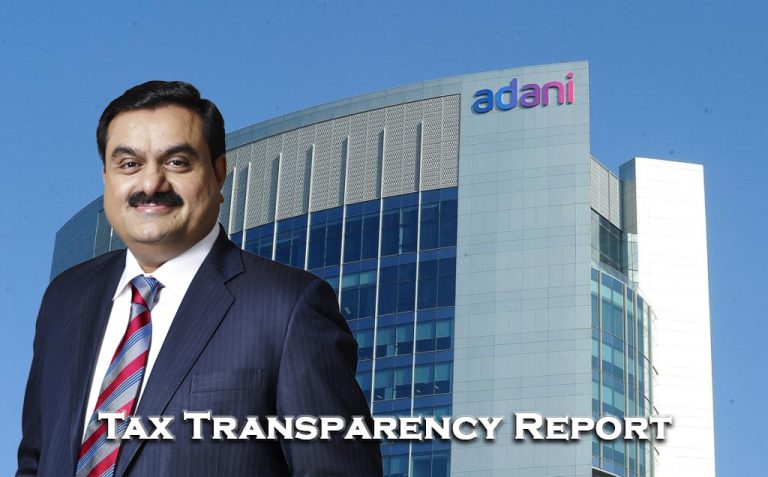
Adani Group paid ₹58,104.4 crore in global taxes in 2023-24, group companies release Tax Transparency Reports

The Adani Group, a major leader in infrastructure development, has released its Tax Transparency Reports for the fiscal year 2023-2024.

According to the release by the group, for the financial year 2023-24, the Adani Group’s total global tax and other contributions to the exchequer amounted to Rs 58,104.4 crore, showcasing a significant increase from the previous year’s Rs 46,610.2 crore through its portfolio of listed entities.

The details are covered in the independent reports published by seven of the group’s listed entities–Adani Enterprises Limited, Adani Ports and Special Economic Zone Limited, Adani Green Energy Limited, Adani Energy Solutions Limited, Adani Power Limited, Adani Total Gas Limited, and Ambuja Cements Limited. The figure also includes tax paid by three other listed companies–NDTV, ACC and Sanghi Industries–that are held by the seven companies.

“Transparency is the foundation of trust, and trust is essential for sustainable growth,” said Gautam Adani, Chairman of the Adani Group. “As one of India’s largest contributors to the exchequer, we recognise that our responsibility goes beyond compliance. It is also about operating with integrity and accountability. Every rupee we contribute to our nation’s finances reflects our commitment to transparency and good governance. By voluntarily sharing these reports with the public, we aim to foster greater stakeholder confidence and set new benchmarks for responsible corporate conduct.”

Through this voluntary initiative, the Group aims to demonstrate its commitment to transparency, foster stakeholder trust and contribute to a more accountable global tax environment, the release stated.

The Adani Group said that it considers tax transparency as an integral part of its broader ESG framework.

The group strives to harmonize growth with social responsibility, aiming to transform India’s infrastructure landscape while promoting innovation and creating long-term value for stakeholders, it added.

With the global tax environment entering a new age, forward-looking companies are voluntarily bringing out the Tax Transparency Report, even though the same is not mandatory.

Through the report, such companies seek to drive wider stakeholder attention and greater credibility, besides creating the basis for the highest standards of tax transparency, the release added.

The Tax Transparency Report offers a comprehensive breakdown of the Adani Group’s global tax and other contributions. It includes direct contributions, such as taxes, duties, and other charges paid by the Adani portfolio of companies.

Additionally, it covers indirect contributions, detailing taxes and duties collected and paid on behalf of other stakeholders.

The report also highlights other contributions, like social security payments made for the benefit of employees, providing a full overview of the group’s financial impact across various sectors.

The group has engaged a professional agency to provide an independent assurance report on its global contribution to the exchequer.

This report is included in the Tax Transparency Reports and provides details on the various types of taxes and other contributions paid by the group companies globally, as well as the group’s approach to tax.

By emphasizing transparency and integrity in tax compliance and reporting, the group aims to build trust with stakeholders and demonstrate its commitment to responsible business practices.

By voluntarily disclosing information about its global tax contributions, the company strengthens its commitment to economic development, fosters stakeholder understanding, and builds trust through transparent tax practices.

The detailed reports of each of the seven companies can be accessed on their respective company websites, the group said in the release.


(This news report is published from a syndicated feed. Except for the headline, the content has not been written or edited by OpIndia staff)

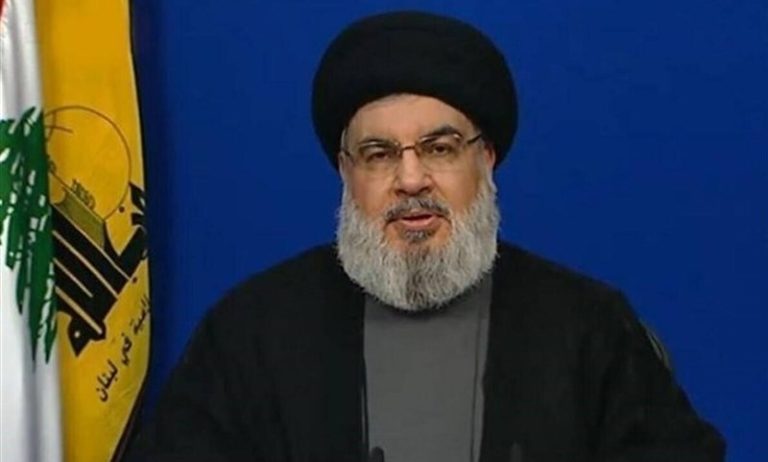
Israel confirms strikes on Hezbollah launchers hours before Hasan Nasrallah’s funeral

0

Israeli aircraft struck a Hezbollah site containing rocket launchers and other weapons on Sunday, the Israel Defense Forces confirmed.

According to Lebanese media reports, the strikes took place in the southern Lebanese area of Tyre. The IDF said some of the launchers posed an “imminent threat.”

The confirmation came as thousands of Lebanese converge in Beirut for the funeral of Hezbollah leader Hassan Nasrallah, which is due to begin at noon.

On Saturday night, Israeli confirmed aircraft struck crossings along the Syria-Lebanon border through which Hezbollah was trying to transfer weapons.

Under the terms of a two-month ceasefire that went into effect on November 27 and has since been extended, Hezbollah is supposed to withdraw its armed presence from areas of southern Lebanon south of the Litani River.

Israeli forces have withdrawn from most of southern Lebanon. Dissatisfied with the Lebanese army’s deployment, Israel is keeping soldiers in five locations with US approval.

(This news report is published from a syndicated feed. Except for the headline, the content has not been written or edited by OpIndia staff)

61 Heads of Missions along with PM Modi to witness mega Jhumoir Binandini in Guwahati: Read why Assam is showcasing the folk dance to the world

Assam is gearing up to showcase its vibrant tea garden community to the world. 61 Heads of Missions, dignitaries, Prime Minister Narendra Modi, and External Affairs Minister S Jaishankar will witness the mega Jhumoir event in Guwahati.

But why is Assam showcasing this folk dance to the world? The mega Jhumoir event is part of a larger celebration, which includes the Advantage Assam 2.0 summit.

The event will feature over 8,000 Jhumoir artists from across Assam, performing at Guwahati’s Sarusajai Stadium. The state government will also provide financial support to the artists and tea gardens to promote the dance form.

The chief minister, Himanta Biswa Sarma, confirmed at a press conference on Sunday the total number of Heads of Missions who will be in Guwahati for these two events.

They will land at Jorhat airport this evening and then travel to Kaziranga National Park. On Monday morning, they will enjoy the flora and fauna of the UNESCO World Heritage Site, which is located in the upper Assam districts, some 250 kilometres from the state capital city of Guwahati.

The idea behind taking the heads of missions to Kaziranga was to promote Assam’s immense tourism potential.

From Kaziranga, they will move towards Guwahati to attend the Jhumoir event on Monday evening and the Advantage Assam 2.0 summit starting Tuesday. The Ministry of External Affairs (MEA) has facilitated this visit of the Heads of Missions.

Jhumoir is an integral part of Assam’s tea garden workers and Adivasi community, and its origins date back to the early 19th century when tea plantations were established in the region.

The dance form was a way for workers to express joy and camaraderie after a long day of laborious work in the tea gardens. Today, Jhumoir is synonymous with the identity of Assam’s vibrant tea community.

“…do you know it has a connection to your cup of tea,” Chief Minister Sarma wrote on X, as he explained the dance form and why his government is showcasing this folk dance to the world stage.

The Assam government is celebrating the state’s tea industry, which has turned 200 years old. The industry provides livelihoods to millions and is renowned globally for its richly coloured and aromatic tea.

As the chief minister put it in his X timeline, the origins of Jhumoir began as an expression of joy and camaraderie after a long day of laborious back-breaking work in tea gardens.

“What was once meant to uplift the spirits of workers is now synonymous with the identity of our vibrant Chai Samuday,” he wrote.

This energetic dance is performed by both men and women who are dressed in traditional ornaments like sitapati, hasuli, jhumka, chandhar and payeri. Its catchy accompanying music comes from dhol, madal, dhamsa and bamboo flute.

“Assam’s tea community has long been trapped in poverty and neglect. Generations after generations have not escaped this cycle of tough labour work. We want to end this and celebrate their glorious culture in a way not seen before,” Chief Minister Sarma further wrote.

To uplift the socio-economic conditions of tea garden workers, the state government is building new schools and roads and providing affirmative action in colleges and recruitment.

“…we are leaving no stone unturned to ensure that their next generation becomes doctors, engineers and civil servants,” the chief minister concluded.

Assam’s rich cultural heritage is not limited to Jhumoir. The state government has organized similar mega-dance event — a Bihu performance that entered the Guinness World Record in 2023. Next, they plan to showcase the Bagurumba dance, a traditional dance form of the Bodo community.

Over 11,000 artists performed Bihu in the presence of the prime minister.

This time, arrangements are being made to ensure that the mega Jhumur is broadcast on LED screens or through other modes at all 800 big tea estates across the state so that the village folks can witness this historic event.

Over 8,000 Jhumoir artists will demonstrate their folk dance form at Guwahati’s Sarusajai Stadium. These artists have been drawn from all the tea-growing districts of Assam. Initially, they had rehearsal sessions at the Assembly Constituency level, then the District, and finally at the Guwahati venue for the past three days.

Following the review of preparations at Sarusajai the chief minister yesterday announced that his government will provide Rs 25,000 to each artist and an additional Rs 25,000 for every tea garden to procure Jhumoir-related articles and instruments.

The tea community in Assam, which comprises a sizeable portion of the state’s population, plays a critical role in dozens of Assembly constituencies.

Assam produces nearly 700 million kg of tea annually, accounting for around half of India’s overall tea production.

Assam is celebrating the plantation industry’s reaching a crucial milestone of 200 years. Tea estates around plantations, hitherto unexplored and unpicked, in the state’s upper reaches first came to be established in 1823.

Renowned globally for its richly coloured and aromatic tea, Assam’s tea industry, which is the country’s largest, provides livelihoods to millions, with many others directly or indirectly dependent on the plantations. The state is famed for both Orthodox as well as the CTC (Crush, Tear, Curl) varieties of tea.

In 1823, Robert Bruce discovered wild tea plants growing in the upper Brahmaputra Valley. Subsequently, the government started a tea garden in the erstwhile Lakhimpur district in 1833.

India as a whole contributes 23 per cent to the global tea output and employs around 1.2 million workers in the tea plantation sector. 50 per cent of what India contributes comes from Assam tea gardens.


(This news report is published from a syndicated feed. Except for the headline, the content has not been written or edited by OpIndia staff)

Assam cabinet approves investment MoUs worth ₹1.22 lakh crore to be signed during Advantage Assam 2.0 summit, proposals of around ₹45,000 crore rejected

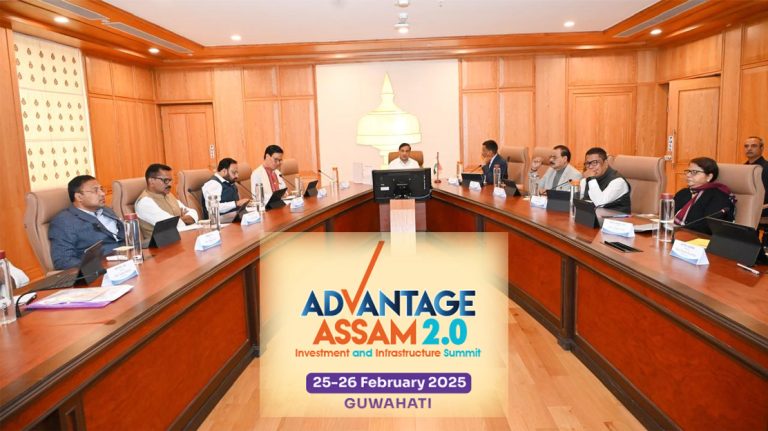
In a significant boost to Assam’s economic growth, the state cabinet led by Chief Minister Himanta Biswa Sarma, has approved Memorandums of Understanding (MoUs) for investments worth over ₹1.22 lakh crore. These approvals, announced after today’s cabinet meeting by CM Himanta Biswa Sarma, are going to be formalized during the Advantage Assam 2.0 – Investment and Infrastructure Summit, scheduled for February 25-26, 2025, in Guwahati.

The summit is set to kick off with the approval of these ₹1.22 lakh crore investments by the state Cabinet, and the figures are expected to soar during the Advantage Assam 2.0 summit days.

Chief Minister Himanta Biswa Sarma told the reporters that the Cabinet also rejected investment proposals worth about Rs 35,000-45,000 crore, as they were “casual kind of proposals”. “Whatever filmsy kind of proposal, we are not taking them for MoU. We will discuss this with them later. We don’t want to create unnecessary euphoria among people. We want to be very very rational and reasonable,” he said.

The Assam government decided to take all investment proposals to the Cabinet before inking the MoUs during the summit so that they could be properly scrutinised. “We had decided we won’t sign investment proposals before taking them to the Cabinet. We will closely scrutinise the proposals,” the CM said. 

In addition to the major investments during the Advantage Assam 2 summit, around 2,600 MoUs will also be signed at the district levels for small investments – investments worth from as low as Rs 5 lakh to upwards of Rs 50 crore. CM Sarma said that about Rs 15,900 worth MoUs have been confirmed so far, and they are in addition to the Rs 1.22 lakh investments approved by the state Cabinet.

The decisions underscore Assam’s ambition to position itself as a leading investment destination in Northeast India and a key player in India’s Act East policy. The investments, spanning multiple sectors, are expected to drive industrial growth, create jobs, and enhance infrastructure, aligning with the state’s vision of becoming the “expressway to ASEAN” and the heart of India’s economic outreach to Southeast Asia.

These MoUs to be signed during the Advantage Assam 2.0 summit represent a major leap in attracting domestic and global investors to the state. The investments build on recent high-profile projects, such as the USD 3.3 billion Outsourced Semiconductor Assembly and Test (OSAT) facility by Tata Group in Jagiroad.

The Advantage Assam 2.0 summit, to be held at the Veterinary Field, Khanapara, Guwahati, will serve as the platform for signing these MoUs. The summit will be inaugurated by Prime Minister Narendra Modi on Tuesday morning, along with participation from several Union ministers including S Jaishankar, Jyotiraditya Scindia, Ashwini Vaishnaw, Piyush Goyal, Nirmala Sitharaman, Hardeep Puri, Sarbananda Sonowal, Pabitra Margherita, among others.

Heads of Mission and Ambassadors of over 60 countries will be attending the summit, apart from industry leaders like Gautam Adani, Mukesh Ambani, N Chandrasekaran, Sajjan Jindal, Prashant Ruia, Anil Agarwal, Anil Kumar Chalamalasetty and others.

High-level delegations from several countries — Australia, South Korea, Singapore, Malaysia, Taiwan, Indonesia, Thailand, Bhutan, and industrialists from Japan – will also converge in Guwahati.

The Prime Minister will arrive in Guwahati on February 24 evening and witness the mega Jhumoir performance at Sarusajai Stadium. Over 8,600 artists from 800 tea gardens across the state will perform the traditional Jhumoir dance.

External Affairs Minister S Jaishankar will lead a delegation The Union Ministerial Sessions at the Summit will feature Union Ministers leading discussions on critical sectors and topics such as “I-Way to Viksit Assam,” Act East policy, semiconductors, export promotion and others, highlighting Assam’s growth potential. They will share insights on national and regional economic strategies.

Union External Affairs Minister S Jaishankar will conduct the “Act East, Act Fast and Act First” session with diplomats, and Union Minister Jyotiraditya Scindia will conduct the “I-Way to Viksit Assam” session. Union Railway Minister Ashwini Vaishnaw will conduct a session on semiconductors and Railways.

Additionally, there will be 20 Thematic Sessions focusing on Healthcare, Green Gold Revolution, Tourism, Startups, and other transformative themes, fostering strategic collaborations.

The cabinet has also approved a comprehensive policy to boost the textile and apparel industry. Aimed at fostering a robust ecosystem for raw materials, manufacturing, and exports, the policy is expected to create thousands of jobs, while supporting the state’s traditional handloom and handicraft sectors.

An allocation of ₹55 crore has been sanctioned by the cabinet for augmenting urban infrastructure, including the construction of Tier 2 and Tier 3 cities. This initiative is part of a broader plan to improve connectivity, housing, and civic amenities, making urban areas more investor-friendly.

Rising cases of targeting of girls for conversion and extortion becomes a major concern in Rajasthan – read details

The recent cases of religious conversion by gangs of Muslim men in Rajasthan have highlighted an alarming situation where minor Hindu girls are being targeted by these gangs. These gangs have almost the same modus operandi. Members of these gangs use social media to approach their victims and lure them by entering into relationships with them. Thereafter, they sexually exploit the victims and take their obscene pictures and videos to blackmail them and extort money. In some cases, they forced their victims to contact more girls for exploitation.

Here are three recent cases where minor school-going girls were groomed, sexually exploited and forced to convert to Islam in different areas of Rajasthan.

Minor girls trapped by a gang of Muslim men in Beawar, Rajasthan

In this case, a gang of Muslim men trapped several school-going minor girls As per reports, the Muslim men blackmailed and sexually exploited the minor girls and forced them to convert to Islam. All the culprits are said to be friends and live in the same locality. Notably, all of them work as labourers and none of them go to school and still, they managed to target these school-going minor girls.

The Muslim boys operated like a gang of criminals. They used to follow the girls until they responded. They gifted the girls mobile phones to contact them. Then they would invite the girls for meetings where they would sexually exploit them and click their obscene pictures for blackmailing. The culprits also shared phone numbers, obscene pictures and videos of their victims among themselves. They were also teaching Hindu girls about namaz, roza, and Kalma (Islamic declaration of faith).

The incident came to light after a mobile phone was found with one of the girls. When the family called one of the Muslim men, he responded with abuses and threats. The victim’s family rushed to the police station and filed a complaint about the matter, after which the case unfolded layer by layer. The police have arrested several people including Rehan Mohammad (20), Sohail Mansuri (19), Lukman (20), Arman Pathan (19), Sahil Qureshi (19), and two minors in connection with the case. An investigation is going on in the case while the police denied the love jihad angle in it.

Ajmer IG Omprakash Chaudhary said that the victims were trapped in the name of friendship through social media. Three separate FIRs have been filed in the case. So far, 10 accused have been apprehended by the police, out of whom two are minors.

Two minor girls committed suicide in the Gogunjda suicide case, one Shahnawaz arrested

This unfortunate incident of suicide by two minor Hindu girls came out on 11th November 2024 from the Gogunda police station area of Udaipur in Rajasthan. Two cousins aged 16 and 17 years, studying in 11th class, committed suicide by consuming poison. The victims had been missing since the evening of 10th November. Their families found their bodies in a field 500 metres away from their house the next morning. They were wearing clothes of the same colour and a black and white thread was tied around their necks.

It was revealed after a police investigation that they were being blackmailed by a 19-year-old Muslim man named Shahnawaz. He was arrested by the police from Hapur in Uttar Pradesh. The families of the victims revealed that they were in stress for some time. When police checked their mobile phones and social media accounts, it was found that they were in contact with the accused. The police also found a notebook with Kalma and Quranic verses scribbled in it in the school bags of the girls. The accused had contacted the victims through Instagram and was allegedly trying to extort money from them.

Furthermore, a few phrases were written in Urdu and Hindi, indicating that they were being influenced. Both had changed their names to Anisa and Muskan on social media. The police believe that they were brainwashed to convert to Islam. The possibility of love jihad has also been expressed in the case.

Muslim men extorted Rs 5 lakh by blackmailing a minor girl in Christian Ganj, Rajasthan

Another shocking case of Love Jihad came to light from the Christian Ganj area of Rajasthan, where a minor Hindu girl was gang-raped by some Muslim men who also extorted Rs 5 lakh from her. The incident came out after the victim’s father filed a complaint on 30th May 2024 at the Christian Ganj police station. The father reportedly informed the police that his daughter, studying in the 11th class, came in contact with a girl in October 2023, who introduced his daughter to a Muslim man named Irfan. Irfan lured the victim and entered into a relationship with her. He took her Instagram ID password and sent obscene messages to several other girls using her ID. He also extorted money from the victim by blackmailing her using her obscene pictures and videos.

The victim secretly gave money to Irfan in instalments without the knowledge of her parents. The victim was also gang-raped by the accused and his accomplices in her own house. They were further pressuring her to give them Rs 10 lakh. The father came to know about this after he questioned his daughter noticing that significant amounts of money were disappearing from the house.

The police arrested Irfan, Arbaaz and a minor on 1st June 2024 in connection with the case. Later on, Aslam, Razzaq, Mubarak and Imran were also arrested on 3rd June 2024. It was revealed during the investigation that the accused were operating in a gang. They had the phone numbers of several girls. Police also found obscene chats, pictures and videos of several girls on their phones.

Considering the rising cases of love jihad in the state, the Rajasthan government tabled the ‘Rajasthan Prohibition of Unlawful Conversion of Religion Bill 2025’ during the budget session in the state assembly on 3rd February. The bill criminalises forced religious conversion. Any person who is found guilty of practising forceful religious conversion shall be punished with a jail term of 2 to 10 years. Also, a monetary fine of Rs 25,000 is provided for anyone found guilty of forcefully trying to convert women, minors, and those from Scheduled Castes and Scheduled Tribes. Rajasthan Minister KK Vishnoi commented on the bill and said that the bill was introduced against Love Jihad so that the cajoling of innocent girls could be stopped.