Home Blog Page 5519

Arnab Goswami vs Maulana Saad, a battle for the ages: Drama, suspense, thrill, wholesome entertainment and sheer rage

While the country battles with the Wuhan Coronavirus pandemic, there is another war happening on the sidelines. It is Arnab Goswami, the Chief Editor of Republic TV, vs Tablighi Jamaat, the Islamic Missionary organization responsible for spreading the virus across the lengths and breadths of the country, head by Maulana Saad. The war has everything that anyone could possibly ask for. It has drama, suspense, thrill and, of course, high voltage entertainment.

Arnab Goswami is not very pleased with Maulana Saad of Markaz Nizamuddin of Tablighi Jamaat. And that would be putting it mildly. Ever since the Tablighi Jamaat Corona bomb blew up on the face of the nation in March, the Republic TV journalist has been waging his own war against Maulana Saad. Since the 31st of March, Arnab Goswami has dedicated around 15 debates of ‘Puchhta Hai Bharat’ on Republic Bharat on the antics of Tablighi Jamaat alone.

Arnab Goswami on Republic Bharat: On a different level altogether

The title of the debates makes it abundantly clear where things would be headed. One is titled, ‘Lootera Saad, Desh karega Barbaad?’ Another was titled, ‘Corona se khatarnak virus Markaz?’ Arnab Goswami on Republic Bharat is on a whole different level altogether from his usual demeanor on Republic TV. A sample of his monologues can be seen here:

In the same monologue, Arnab Goswami asks Maulana Saad, “Maulana Saad, Tu apna ilaaj kyu kara raha hai? Apna ilaaj kara rahe ho Maulana?” Since the very first day, he has been demanding the arrested of the Maulana of Markaz Nizamuddin.

The colourful epithets Arnab Goswami has used for Maulana Saad

Arnab Goswami has used very colourful words for Maulana Saad. He has called him ‘Hathyara’, ‘Supari Killer’, ‘Maut ka Maulana’, ‘Bhagoda’, ‘Darpok’, ‘Professional killer’, ‘Dhandebaaz’, ‘Lootera’, ‘Makkar’, ‘Kaayar’, ‘Desh Virodhi’ and ‘Bujhdil’. He has also asked quite a few pertinent questions such as ‘Jo hazaaron logo ko bimaar lare woh Maulana kaise banaa (How did someone who make thousands of people fall sick become a Maulana)?’ and ‘Yeh bhaag kyu raha hai (Why is he running)?’ In yet another instance, Arnab Goswami asked, ‘Yeh (Tablighi Jamaat members) bill mein Chuhe ki tarha chhupe kyun hain? Yeh bill main, bura an maanein, chuhe ki tarha chhupe kyun hain? (Why are they hiding like rats? Why are they, pardon me, hiding like rats?)’

Arnab Goswami has also offered the defenders of Maulana Saad very pertinent wisdom, ‘Iss desh ka naam Bharat hai (The name of this country is Bharat)’. On another occasion, he said, ‘Hum tumhara ilaaj karein aur tum humein bimaari do, yeh ab desh ko manzoor nahi (We treat you and you make us sick, this is not acceptable to the country anymore)’.A segment on his debate said, “The whole country is now searching more for a cure of the Jamaati virus than the Corona because as much as the country is progressing towards defeating the Coronavirus, the members of the Tablighi Jamaat by hiding are taking the country backward.”

Arnab Goswami did not spare Shaheen Bagh either

Maulana Saad is not the only individiual who has suffered the wrath of Arnab Goswami, Shaheen Bagh too has come under the radar. In one debate, Arnab Goswami asked the country, ‘The people of Shaheen Bagh want to spread the pandemic in the country?’ In another, he asked, “Corona phailayega Shaheen Bagh?”

Source: Republic Bharat/YouTube

Arnab Goswami refuses to cower before the Liberal Establishment

Contrary to the rest of the mainstream media, Arnab Goswami has been treating the members of Tablighi Jamaat with utter contempt. He has claimed that he has been receiving threats from certain quarters due to his reportage of events but says that he doesn’t care two hoots about ‘two rupees people’. While the rest of the mainstream media and certain governments have come up with incredulous names such as ‘Single Source’ and ‘Under Special Operations’ to hide the true nature of the biggest superspreader in India, Arnab Goswami has come up with adjectives such as ‘Bhagoda’ and ‘Kaayar’ and ‘Makkar’ for Maulana Saad of Tablighi Jamaat. Once again, it appears, Arnab Goswami has refused to cower before the liberal establishment.

As hard as the mainstream media is trying to absolve the Tablighi Jamaat of its sins, Arnab Goswami is working twice as hard to ensure that people remember who is responsible for the chaos that has been unleashed in the country. Arnab Goswami has repeatedly blamed Maulana Saad for the Markaz Nizamuddin becoming a cluster of the Wuhan Coronavirus infections. He has also held him responsible for those who have died due to the virus after visiting the Markaz Nizamuddin. With the reach that he has, it appears almost certain that the liberal agenda is destined to fail.

What did the Tablighi Jamaat do to make Arnab Goswami so angry?

The Tablighi Jamaat time bomb erupted across the country in the last week of March when around 200 people with Wuhan Coronavirus symptoms were admitted to various hospitals in Delhi from the Markaz Nizamuddin and surrounding places. Subsequently, the area around the Markaz Nizamuddin was cordoned off by the Delhi Police. Soon, cases began to erupt across the country with links to the Tablighi Jamaat and the country stood horrified as the magnitude of the Islamic Missionary organization’s transgressions became known.

Soon enough, it became known that around two thousand people, quite possibly a lot more, had attended the event and as late as the 22nd of March, 2500 people were present at the premises of the Markaz Nizamuddin and around 1500 of them left the place on the 23rd of March. Even so, it meant that around a thousand people were still stuck at the global headquarters of the Tablighi Jamaat as of the 24th of March. Since then, it has been a continuous series of escalations and atrocious conduct by the members of the Jamaat who have made things difficult for the administration and the healthcare providers at every step along the way.

Fact Check: Was Rajasthan IAS officer Tejasvi Rana transferred only for stopping Congress MLA’s car as reported by Times of India?

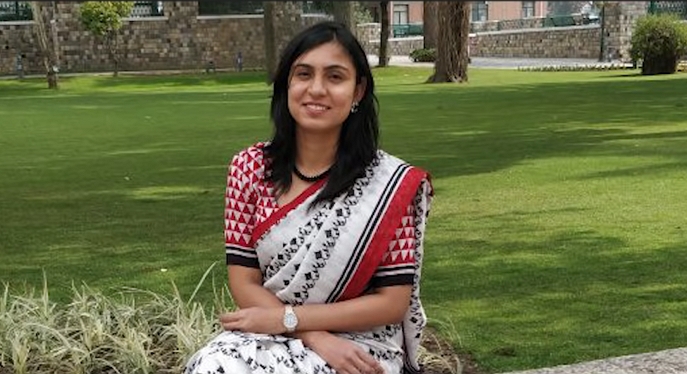
Today Times of India published a report which tried to insinuate that an IAS officer in Rajasthan was transferred because she had fined the driver of a vehicle carrying a Congress MLA for driving without driving licence. The report titled ‘IAS officer fines MLA’s driver, transferred’ said that the Congress government in Rajasthan has transferred IAS officer Tejasvi Rana after she had fined the driver of the vehicle carrying Begun Congress MLA Rajendra Bhiduri on April 14.

The report said that IAS officer Tejasvi Rana, who was posted as SDM Chittorgarh earlier, was transferred to the post of joint director at state health assurance authority in Jaipur a day after she had stopped the car carrying Congress MLA Rajendra Bhiduri, and it has raised eyebrows.

But the Times of India misses one important detail, that Tejasvi Rana was already facing ire of traders and local leaders in Chittorgarh over an incident two days ago, and that is probably the real reason of the transfer. On Tuesday, SDM Rana had gone to the vegetable market, where she had misbehaved with vendors, and even had vandalised some shops, all of which were caught in CCTV cameras. In the market, Rana had slammed the people there for not maintaining social distance as mandated to prevent the spread of Coronavirus. When the vendors showed her the passes issued by her in response, she got angry and tore them away. After that, she had proceeded to tear the registers of the shops, and threw away chairs and tables.

One employee of a shop named Manohar Lal had even alleged that Rana had snatched cash from his notes and torn them. Passes issued to NGOs and individuals engaged in distributing essential materials to the poor were also torn by the SDM, some of which were issued by Rana herself.

After the incident, the traders had lodged a complaint against the officer with the DC, and the DC prepared a report on the incident based on all the evidence and sent it to the state government. According to reports, the chief secretary decided to transfer Tejasvi Rana based on the report.

It is interesting to note that Times of India’s sister publication Navabharat Times had reported on the incident on 14th April, including the CCTV footage. The video clearly shows her throwing away registers and vandalising furniture.

Moreover, the Times of India report itself quotes Bhiduri saying that he had no role in the transfer of the officer. Speaking to the media, Bhiduri had claimed that the officer, DSP stopped his vehicle and asked the driver to produce the driving licence when he was on his way to his constituency in the vehicle of a party worker. He said his driver did not have the licence at that time. The MLA claimed that he paid the fine and the officers were very polite.

Bhiduri further added that he does not know the reason for the officer’s transfer. He added, “I have not made any complaint to anyone. They were doing their duty. I have appreciated the officers who had been in the field and fighting COVID-19 from the front.”

Therefore, although the transfer of the officer has been linked to the incident of fining the driver of a Congress MLA, the incident in the market three days ago is another reason for that, and most probably the main reason, because there were a formal complaint and an official report against her on that incident.

AIIMS’ RDA write to Amit Shah, demand implementation of bill prohibiting violence against health personnel: Here are 7 incidents the letter cites

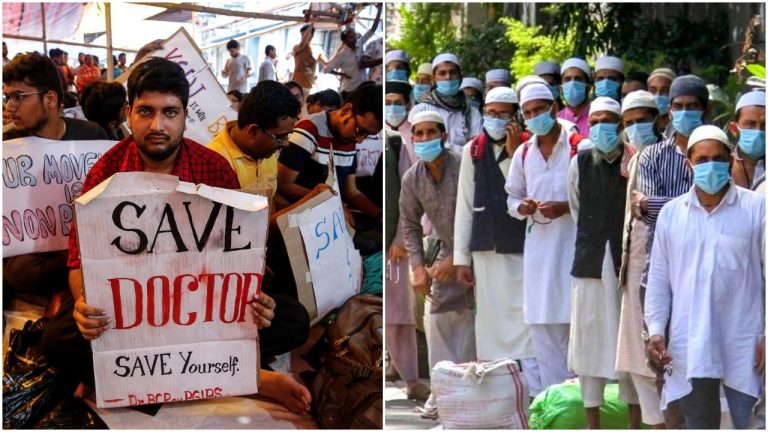
In view of rising cases of violence against doctors and healthcare professionals dealing with coronavirus pandemic, especially by members of the Tablighi Jamaat, the Resident Doctors Association (RDA) of the All India Institute of Medical Sciences (AIIMS) has written a letter to Union Home Minister Amit Shah, requesting him to implement the ‘Health Services Personnel and Clinical Establishments (Prohibition of Violence and Damage to Property), Bill’.

In its letter to the Home Minister, the RDA has highlighted seven cases of assault on doctors while on coronavirus duty, including the most recent one in Uttar Pradesh’s Moradabad and Lok Nayak Hospital in Delhi. The letter also lists incidents of targetted harassment against female nurses by members of the Tablighi Jamaat.

“We, as healthcare professionals, are not as scared of infections as we are of being assaulted and abused by the very community we treat,” the RDA stated, adding that such incidents had become an unforeseen ‘occupational hazard’.

The ‘Health Services Personnel and Clinical Establishments (Prohibition of Violence and Damage to Property) Bill’ was drafted by the Union Health Ministry last year after medical fraternity across the country went on a strike last June after repeated targetted attacks on them.

However, the Bill, which had stringent provisions of a jail term of up to ten years for those assaulting on-duty doctors, was discarded by the Ministry of Home Affairs (MHA) in December, stating that there was no need for a separate law in this regard.

Incidents of violence against doctors cited by RDA in letter to Amit Shah

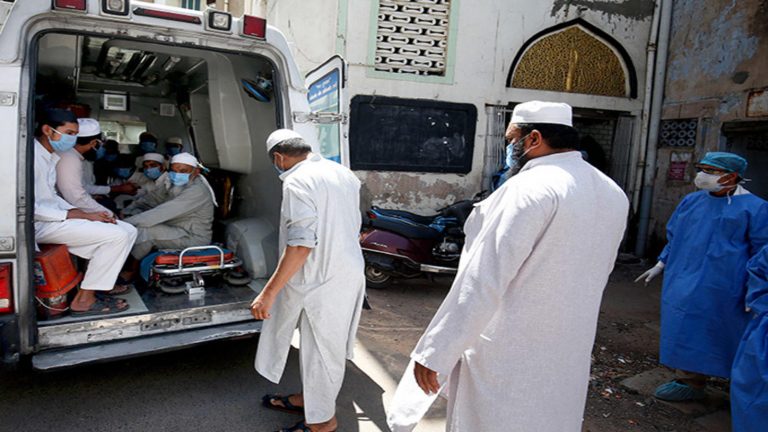
  1. The incident took place at Haji Neb Masjid area in Moradabad when a team of doctors and medical staff went to take away two persons suspected of having novel coronavirus in the area. The mob pelted stones at the ambulance and doctors.

    The stones were also pelted on the police van which came to rescue the health workers later. Several people have been injured in the ensuing mayhem, including Dr Sudhish Agrawal. According to health officials, a thousand people came out on the streets to attack the medical team.
  2. A female doctor was assaulted by patients at Lok Nayak Jai Prakash Narayan Hospital in New Delhi. OpIndia was informed that the members who attacked the female doctor were Tablighi Jamaat members who are currently undergoing treatment at the Delhi government hospital. 

    The shocking incident occurred on Tuesday when patients attacked a female doctor inside a surgical ward. As a male doctor tried to rescue female doctor from the unruly mob, he was also manhandled by the unruly mob. The doctors had to hide inside a room to save his life from the attacks of the Tablighi Jamaat mob.
  3. A Post Graduate doctor at Osmania General Hospital was attacked by a relative of a suspected coronavirus patient in the hospital’s isolation ward on April 14. The incident took place when the suspected patient and their relatives came to know that two-more persons who were in the same isolation ward had tested positive for coronavirus.

    The patient’s relative had demanded that the patient be discharged, which was denied by the attending PG doctors. Angered over the development, the father of the suspected patient had attacked the PG doctor.
  4. Two women resident doctors of Safdarjung Hospital were assaulted on Wednesday by a 42-year-old man who accused them of “spreading” coronavirus near Gautam Buddh Nagar area in the national capital. The incident happened around 9.30 pm on April 8 when the two doctors had stepped out of their houses to buy fruits in the area.
  5. The Resident Doctor’s Association of AIIMS Bhopal had alleged that junior doctors at the hospital were assaulted at the hands of policemen. On April 8, two doctors were going home after completing their shifts. The police stopped them and hurled abusive words at them and even thrashed them with a bamboo stick, alleged the junior doctors.
  6. On April 11, a junior doctor at Government Hospital in Bharatpur, Rajasthan, who was returning to the hostel after finishing his shift, was stopped and attacked by police personnel with a stick. The police personnel had allegedly slapped the doctor.
  7. A doctor was physically attacked and verbally abused by her next-door neighbour in Surat on April 5. The neighbour had threatened to kick her out of her house as he believed that the doctor had novel coronavirus and she would spread it to the entire building. The doctor, Dr Sanjivani, works at Surat Civil Hospital, where novel coronavirus patients are also treated.

Continued attacks on healthcare workers by Tablighi Jamaat members

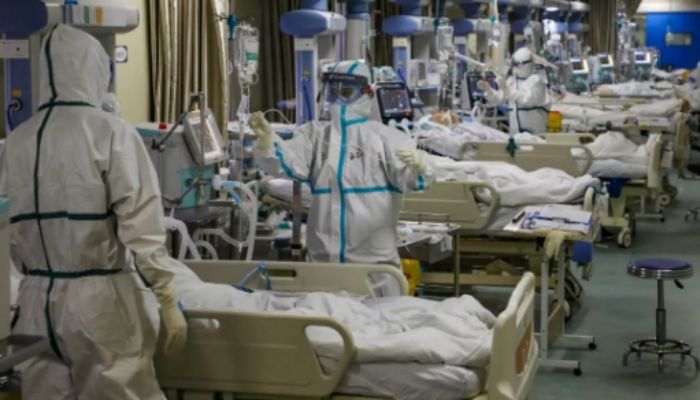
At a time when frontline workers are risking their lives to limit the spread of the Chinese epidemic, there have been concerted attacks against them by many Tablighi Jamaat members who refuse to cooperate in the treatment. There have been reports of Jamaat members molesting nurses in UP, defecating in corridors in Delhi and even spitting at the healthcare workers.

We had reported regarding the series of attacks unleashed against frontline health workers by Muslim mobs during the coronavirus epidemic.

From attacking medical teams, policemen who were searching for Tablighi members who had attended the religious congregation to check them for possible infection, to spiting on doctors at Isolation centres, to roaming naked in their ward and making lewd gestures for female staff, the Muslim mobs have been displaying extreme crassness.

More to be added? China increases its official death toll in Wuhan from Coronavirus by 50%

0

On Friday, the Chinese government has revealed that the death toll in Wuhan, the place of origin of the deadly Coronavirus, has witnessed a 50% spike from what was previously reported. As such, the total deaths due to the Wuhan Coronavirus in China now stand at a whopping 3,869. 3,869 is the official number and as such, there are still strong suspicions that the actual number of infected and dead due to the Wuhan Coronavirus is far greater.

The revelation came following aspersions cast by world leaders about China withholding the impact of the pandemic in the country of its origin. In its defence, the Communist-ruled country said that the reports of additional death were either missed entirely or mistakenly reported.

Pressure from World Leaders on China amidst the Wuhan Coronavirus

On April 3, the Australian Prime Minister Scott Morrison urged the World Health Organisation (WHO) and the United Nations to act against China’s wet markets. Generally, wet markets refer to the markets that sell fresh meat, fish, etc, but in China, these markets are known to sell the meat of wild animals, even smuggled endangered species from other nations, which are known sources of several deadly pathogens like the Wuhan Coronavirus.

Earlier, at the UNSC meeting, USA called for an analysis of the origins of Coronavirus, in an obvious dig at China, while the latter insisted that no country should be made a scapegoat and called for global solidarity in the wake of the pandemic. SG Anthony Gutierres’s call for a global ceasefire received no support and the only thing the UNSC agreed on was on press elements post the meet.

In a recent interview with the Financial Times, French President Emmanuel Macaroon expressed scepticism about China’s role and urged people not to be “naive” in assuming that it had been great at handling the Coronavirus pandemic. “We don’t know. There are clearly things that have happened that we don’t know about”, he reiterated.

On Friday, British Foreign Secretary Dominic Raab said that hard questions must be asked to China about the origins of the deadly virus and how the outbreak was not stopped earlier.

Earlier it was reported that a 57-year-old female shrimp seller, Wei Guixian, at a Chinese wet market in Wuhan is believed to be the ‘Patient Zero’ or the first person to have been diagnosed with the virus. On December 11, 2019, she had visited a local clinic and was given an injection. When her condition worsened, Guxian rushed to the Eleventh Hospital in Wuhan. The doctors gave her some medicines but could not cure her disease. She then went to the Wuhan Union Hospital where a doctor had called her disease as “ruthless.”- article continues after ad — article resumes –

The notorious wet markets of China, which are believed to be the epicentres of the Chinese Coronavirus from where the deadly pandemic was exported to the rest of the world, have recently reopened, selling bats pangolins and dogs for human consumption.

A paper published by scientists years ago predicted the reemergence of such viruses. The paper published by Cheng VC, Lau SK, Woo PC and Yuen KY in 2007 warned, “The presence of a large reservoir of SARS-CoV-like viruses in horseshoe bats, together with the culture of eating exotic mammals in southern China, is a time bomb.” It added, “The possibility of the re-emergence of SARS and other novel viruses from animals or laboratories and therefore the need for preparedness should not be ignored.” 

The cover-up by WHO – Mismanagement of Coronavirus

The US President Donald Trump had also suspended funding for the World Health Organisation (WHO) until a review was conducted to assess its role in mismanaging the Chinese coronavirus outbreak.

He said, “Everybody knows what is going on there. American taxpayers provide between 400-500 million dollars per year to the WHO and in contrast, China contributes roughly 40 million dollars a year or even less. As the organisation’s leading sponsor, the United States has a duty to insist on full accountability. One of the most dangerous and costly decisions from the WHO was its disastrous decision to oppose travel restrictions from China and other nations. “

Markaz gathering in Bihar’s Nalanda creates another coronavirus scare, manhunt started to trace 363 Tablighi Jamaatis

0

Similar to the Tablighi Jamaat event in Nizamuddin Markaz, which emerged as the epicentre of the coronavirus cases in the country, another Tablighi event held in Bihar’s Nalanda is now under the scanner.

According to a Times Now report, the health authorities are now tracking attendees of Tablighi Markaz held in Bihar’s Nalanda, another potential event which could have transmitted the coronavirus pandemic across the country.

640 Tablighis attended Markaz, 363 attendees still missing

It is being reported that at least 640 Tablighi Jamaat members had attended the event out of which 277 have been traced and quarantined. However, as many as 363 Tablighis are still missing, which has led to officials launching a manhunt to trace the remaining Tablighis.

This Nalanda Markaz event was conducted from 14 to 15 March. Lookout notices have been issued by the authorities against Nalanda Markaz attendees.

District authorities had warned about religious congregation

In a letter dated April 12, the District Magistrate reportedly warned other departments about the incident. The authorities had realised about this event after finding out that one coronavirus positive individual was in touch with the Nalanda Markaz.

The authorities have now locked down the area in Bihar Sharif and have initiated the required lockdown protocols including sealing the mosque which hosted the event.

The officials stated that the attendance for this event was lower than expected due to rains. The participants had reportedly arrived from various parts of Bihar and also from Jharkhand.

The Nizamuddin Markaz has become a major cause of concern for authorities across the country after it turned out that several of the Tablighi Jamaat members who attended the event tested positive for coronavirus. Several of the attendees had also dispersed to all parts of the country and many of them have since tested positive.

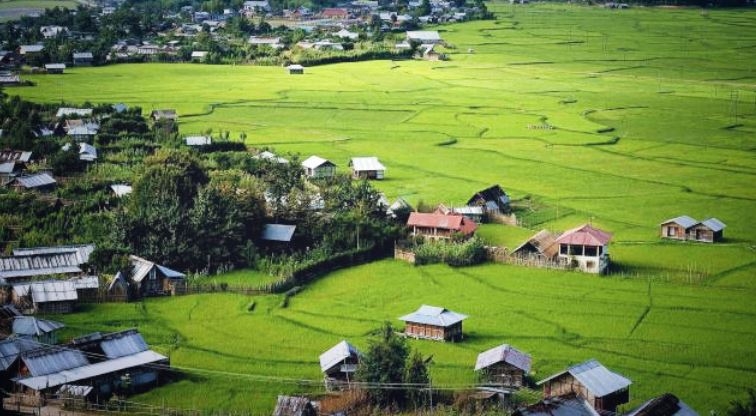
Re-imagining Ruralscape to bring changes to the lives of people in rural India

For past few months, India is facing the challenge of Covid-19 pandemic, like any other country. Govts (Central & State) are totally dedicated to containing it, check it, treat it as much as possible, provide relief, etc. Heartening is the fact, that, statistics in India are being compared with statistics of developed countries and developed regions. Without being insensitive, I also take pride that today, in times of crisis, India is being compared with developed nations of the world and not with other developing nations. I also take pride from the fact that had there not been certain social fissures, India was more or less able to pre-empt and contain this threat right in the nascent stage. Still, hopes are on, and with a collective will, despite certain slips at the community level, India may still be able to come out as a winner.

This pandemic has also shown that India is unique in many ways. The statistical models, the model of governance, inner strength of Indians, uniting them as one entity, to fight this threat, etc. show that it is not necessary that if something works elsewhere that if adopted in toto in India will be equally successful, and similarly if something fails elsewhere, will fail in India too. India requires improvisation in each little or big thing, to suit its needs.

This pandemic has also highlighted the fissures in the Indian habitat, and urban/rural planning, which so far were not under focus, as something of priority. As a matter of fact, it is also time to identify and plug those holes, so that India, while it is positioning self to enter into next orbit of development, will not have to face some major setbacks right at the launching pad, or at the time of landing. The first of such fissure was noticed when a large number of the migrant population started on the journey back to their towns/villages after lockdown. Reasons can be many, but the intention of this writeup is to focus only on planning aspects that lead to these large number of migrant population to go through such ordeal of travelling to and from cities, religiously two times in a year, with or without facilities to travel.

This migrant population faces interesting challenges: they are indispensable for urban comforts, as well as indispensable for Rural needs, yet they are seen as a drag on the system. While in cities, they are seen as a major reason for slums and super dense areas, crimes as well, and while in rural setups they are people without root and labour to work in fields. Interestingly nil provisions are kept in the planning of cities for these people and similarly rural India doesn’t want to acknowledge either, hence Ruralscape has no catalysts for them to remain in villages.

It is time to understand, therefore, how planning can make a difference to the success of citizens (a large number of them are rural & migrant) leading to the success of the country. First of all, it seems to be an objective (obvious, yet seemingly utopian) that if this migrant population is somehow kept wherever they belong to, then pressure on cities will be released to an extent, and also rural India will also have some life, simply because, due to migration rural India is left with elderlies, females and children. It is a pathetic situation both ways; a person who migrates to cities, is subjected to live in pathetic and challenging conditions, and at the same time his family, living in the village, faces social issues, foremost of them is children without father of family and females without husband. Such living, in challenging conditions, also has a deep impact on the psychology of the child while growing up. This may be another big topic in itself for experts to look into.

Idea of this article to stick to planning aspects and how planning of Ruralscape be a catalyst to handle all such problems and may even lead to reverse migration and ultimately help rural India to be seen as important component of developed India, in its own way.

Rural upliftment is not new terminology, in the Indian context, and almost all stalwarts of Indian polity, right from Mahatma Gandhi, to Deen Dayal Ji, to Nanaji Deshmukh and Dr Abdul Kalam Azad said in no uncertain terms that progress of India is through villages. They also did show some models, like Gram Swaraj, the concept of Antyoday, the concept of zonal independence of village economy and capacity building of villages, and PURA (Provision of Urban Amenities to Rural Areas). Nanaji Deshmukh’s approach was a step forward to concepts of Gandhi Ji & Deen Dayal Ji, combined. He tried to generate real-life models through his intervention at Chitrakoot. These approaches can be studied in depth through all the material available on the net, and hence there is no need elaborate (read, repeat) it here.

How does planning play its role? This question won’t seem to be important at first, but if analysed deeper, it seems that it is like the nucleus of every urban problem. The answer lies in focus on rural planning. This is one thing, on which Nana Ji hinted, as well, and could not implement, in Chitrakoot, because his initial focus was on capacity building of otherwise super backward rural populace of Chitrakoot region, a herculean objective in itself. Having worked with him as young architect of 28 years of age, I had the chance to get into discussions on several occasions, with him, that how planning is important for any region for its growth. With his encouragement, a comprehensive development plan for Chitrakoot was also prepared and was probably submitted by him to the government but later his efforts ran into political conflicts when government at Madhya Pradesh change.

The aspect of planning of Ruralscape of India, has very simple and understandable objectives.

It is obvious the unhealthy and uncontrolled urbanization is primarily due to rampant migration towards cities. All cities are bursting through their seams and no workable. But what are the reason that this migration…. one of the reasons was already mentioned earlier, and this is the most obvious one, is the reason of economy. People come to cities for want of earning and another reason, less obvious, is the ambience of the city. Focusing on later, first, the city offers them spaces and the opportunity to be present in those spaces, that are not otherwise available to them. Here I am not talking about the most obvious answer, which may be skyscrapers and Malls, rather public spaces, and psychology of confidence emanating out of spaces. This confidence is the magnet which keeps them in cities despite challenging living conditions. Space around imbibes them with lateral confidence and they feel part of that success despite being rejected, in reality. It is a matter of satiating needs of their subconscious mind.

Many years ago, Sarah Williams Goldhagen became interested in research on how our brains register the environment around us. “This Paradigm,” she writes in her new book, Welcome to Your World: How the Built Environment Shapes Our Lives, “holds that much of what and how people think is a function of our living in the kinds of bodies we do.” Not just conscious thoughts, but non-conscious impressions, feedback from our senses, physical movement, and even split-second mental stimulations of that movement shape how we respond to a place, Goldhagen argues. And in turn, the place nudges us to think or behave in certain ways. Thoughts of Sarah Williams Goldhagen were inspired by the book, Metaphors WE Live By. It’s co-authored by George Lakoff, who’s is a cognitive linguist, and Mark Johnson, who’s a philosopher. The basic argument of that book was that much of how our thought is structured emerges from the fact of our embodiment. And many of ways those thoughts are structured are metaphorical. Goldhagen argues that the built environment, we inhabit, is drastically more important than we ever thought they were. One of the Chapter is titled, “The Sorry Places We Live,” it talks about “beggary” of the built environment, and what are the most flagrant sins that buildings and cities commit against human wellbeing.

The takeaway from Goldhagen’s study is very pertinent to what we think of our Ruralscape, in future. The most common mental hurdle, that is manifested in reactions such as, “before that we need to do this…. we need to improve this……” As a result, the Ruralscape shall always remain what it has been, for so many years; it is associated with poverty and most of the negative aspects. India is still one of the few countries in which the Urban image and Rural image have no resemblance, these are diametrically opposite to each other. While Rural India remained, where it was in 1947, whilst Urban India marched ahead.

We need to change ruralscape to give rise to a place where people would love to be, not just remain out of compulsion. We have to make ruralscape as a symbol of success, and not a failure. Here it will be pertinent to mention that there exists a lot of potential of development (planned and sustainable, and not haphazard like most of India), to respond to a large number of urban population who don’t want to live in cities and are desperate to have reasons to leave cities. Numbers are huge and serve both purposes, it gives a reason enough to invest in village and it also gives the opportunity to recover such expenses.

There can never be two opinions about it, that, for India to progress, the progress of Rural India is a must. The social and geographical fabric of India does not have room for the nation to grow just as Industrial Nation or Technology Driven Nation.

Today in India, many changes are taking place across the board in urban India, which may result in strengthening of Indian economy, as well as result in the further development of Urban Infrastructure, such as, Smart City concept adopted by Govt with full zeal. The result, however, will be seen in coming years, but I think it will have a similar fate as of PURA or any other of such initiative, simply because detailing of the concept was left to the people who knew little about the objective. More or less, it became a catalyst of business of all kinds. This is no criticism but it is a statement as I see it, and I won’t mind being proved wrong either. However, all this push has a glaring pitfall……. the gap between Rural and Urban India shall increase. As the cities will grow, the problems at the level of Rural India is going to aggravate and that will be a major game spoiler, manifested by an increase in unchecked migration of rural population to urban India. For cities to survive, it is important that rural India is developed in a manner that people in Rural India will start looking down on Urban India.

Time has come for some aggressive & out-of-box thinking, and to bring to the table, the need for revitalizing of Rural India, hence the need of “Reimagining Ruralscape.” A holistic and daring approach, (which may prove to be a game-changer), will result in real upliftment of rural India, and would also change the way “Rural India” is perceived. The added benefit would be checking of migration to cities, and rather it may initiate the reverse migration.

The genesis of the idea lies in two aspects, first; since independence, no efforts were made for Rural Planning. The whole focus remained on the improvement of Urban India. Therefore, cities had many plans done, however, the rural domain was left to fend for itself. At the maximum, some cosmetic improvements were done to Rural India, and that too with much gratification. A large portion of GDP was always year marked for improvement of Urban India, which in the long term has proved not only ineffective, but also counterproductive.

To maintain the continuity of nation’s march towards progress, we certainly cannot let a gap in vision to take place, or to widen further, hence it is important that we extend the ‘depth of our vision’ and include the topic, “Reimagining Ruralscape,” in our discourses and intellectual churnings.

It is further important, therefore, to shed the vision of improving the villages with cosmetic changes. It is must that we need to adopt a new paradigm for the village of India of 21st Century. Let us have a village which is no inferior to the villages of developed countries. This village shall be re-designed, if so needed, well planned for all the needs related to living, storage of produce, processing of produce, market place, etc.

Some of the features in so re-designed Ruralscape can be: (The features can be improvised as per local needs)

1. The newly designed village cluster shall have prefabricated houses, specially designed to positively respond to ‘living of villager’. The dwelling units will respond to their way of life as well as to comforts of time. Such as space for day time sitting, and still be part of happening around, (verandah at the individual unit level, and chaupal at cluster level), space for storing fodder, kitchen with connection to internal court (aangan) where children while playing are in contact with vigil eyes of a mother, etc.

2. In addition to the living clusters, there shall be an integration of appropriate market place, storage and distribution of their produce, by providing specially designed structures for the same. These structures will be responsive to loading/unloading and other commercial requirements, in terms of facilities. Important to note that India, till today, has only 5% of storage capacity, at the points of produce. This huge gap needs to be bridged, this will lead to more employment, and better prices to farmers. This will empower farmer to take decision, (read, benefitted) suited to demand and supply concept. This will be a goldmine opportunity for not only villager but will also be an opportunity for new investments.

3. The village shall be able to generate employment by engaging maintenance team amongst the people living there.

4. These villages shall have all components of sustainability integrated within itself; village shall have inbuilt system of rain water storage (harvesting of excess water), toilets, disposal of waste system, collection of human and organic waste and conversion of same into fertilizer, etc.

5. The village will have a potential of migration of urban people who want to live there. A large number of young and middle-aged professionals are looking forward to living in village surroundings. If the planning allows them to move to villages, then these professionals will bring in not only monetary investments but will also be a catalyst of the capacity building of youth of villages in many ways. Opportunities for education and training may undergo a paradigm shift from present existing systems.

6. The villages, so designed will uplift the moral of the villages, hence of national image.

7. It will also help tremendously in checking the migration of villagers towards cities. Thereby also resulting in solving problem of overpopulation in urban areas.

8. Revitalizing of natural ponds & water bodies.

9. The above are some of the suggestions only, and features can be further added/refined, based on collective brain-storming.

To address the issue of the economy of the idea. It is important to note that even a single flyover in cities costs around 100 crores. Whereas in the same amount of money, it is possible to construct approx 3,000 new village houses, including the related infrastructure development.

It is high time, that an approach of holistic development is initiated for rural India instead of pumping money in cosmetic changes. This will trigger the transformation of rural India. It is time we must re-imagine our Ruralscape…..do we want it to remain as leftover space, or do we want some kind of planning/technology to bring changes to the lives of people who in their wildest of the dreams never have expected this. I am sure, this change of thought will take India a long way, and even sky shall not be the limit.


Author: Ashutosh Agarwal

Member of Council of Architecture (2018-2021)
Member Governing Board – School of Arch. & Planning Bhopal
Member Finance Committee – School of Arch. & Planning Bhopal
Member Senate – School of Arch. & Planning Delhi

Here is how the cyber cell thinks your ‘saree challenge’ photos can be misused on the web: The world of ‘Deep Nude’

The Maharashtra cyber cell has cautioned people against a website named ‘Deep Nude’ and its several versions that use Artificial Intelligence to generate naked picture of a person when a normal photograph is uploaded to the site, thus leaving women participating in online trends such as ‘Saree challenge’ vulnerable to extortion, pornography, and blackmail.

As per a report in The Hindu, a cyber police officer warned, “Recent trends like the ‘Saree Challenge’, where women upload their pictures on their social media accounts and tag their friends, creating a chain, present endless opportunities to criminal elements to prey on them using websites like Deep Nude. It is best to have privacy settings that do not allow strangers access to pictures.”

The looming Threat

The contentious platform that shut down its operations last year is back in the business now. Reportedly, Indian cybercriminals are also using the site for catfishing. Cybercriminals also honey-trap married men through explicit chats and compromising pictures and later use inappropriate messages for character assassination, revenge porn, and blackmail.

The cybercriminals make use of people’s reluctance to complain about such crimes to the police. Maharashtra SP (Cyber Cell) Balsing Rajput informed that a team had been set up to monitor the site so that stringent action could be taken against the serious crime.

The dangers of social media pictures

The images shared on social media by women, as per the reports, are frequently used by the cybercriminals to create nudes, which are then used for extortion, pornography and blackmail.

One of the worst dangers of sites like Deep Nude is that experts say there are different versions of the site available. The Hindu report mentions that the versions even include an app and even a Twitter handle. One webpage even seeks donation from users. Already there are reports of women being targeted.

Zoom’s Security Threat

Earlier, the Singapore government had suspended the use of Zoom Video Communications Inc’s conferencing app for online education after hackers hijacked a lesson and showed obscene images to students. Singapore’s Ministry of Education (MOE) said on April 9 (Thursday) that it is currently investigating the breaches, which it described as “serious incidents”.

Singapore teachers are just the latest to be staggered by the act, in which strangers join conversations and shout offensive slogans, show obscene and distressing images or post objectionable messages. Taiwan has also banned the usage of Zoom software for teleconferencing applications. The Indian government has also recently stated that the Zoom software is not safe.

Shiv Sena leader intimidates social media voices with police action for speaking against Tablighi Jamaat and Uddhav Thackeray’s govt

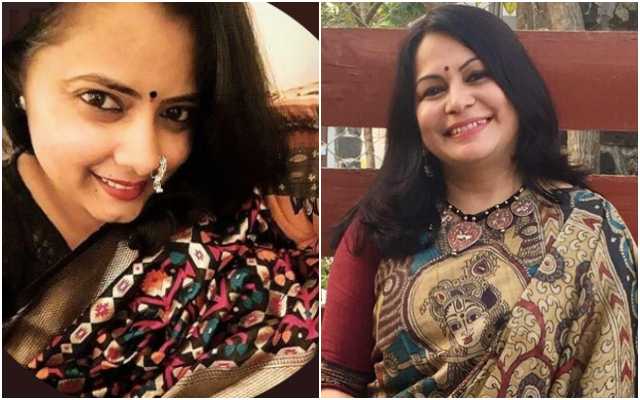
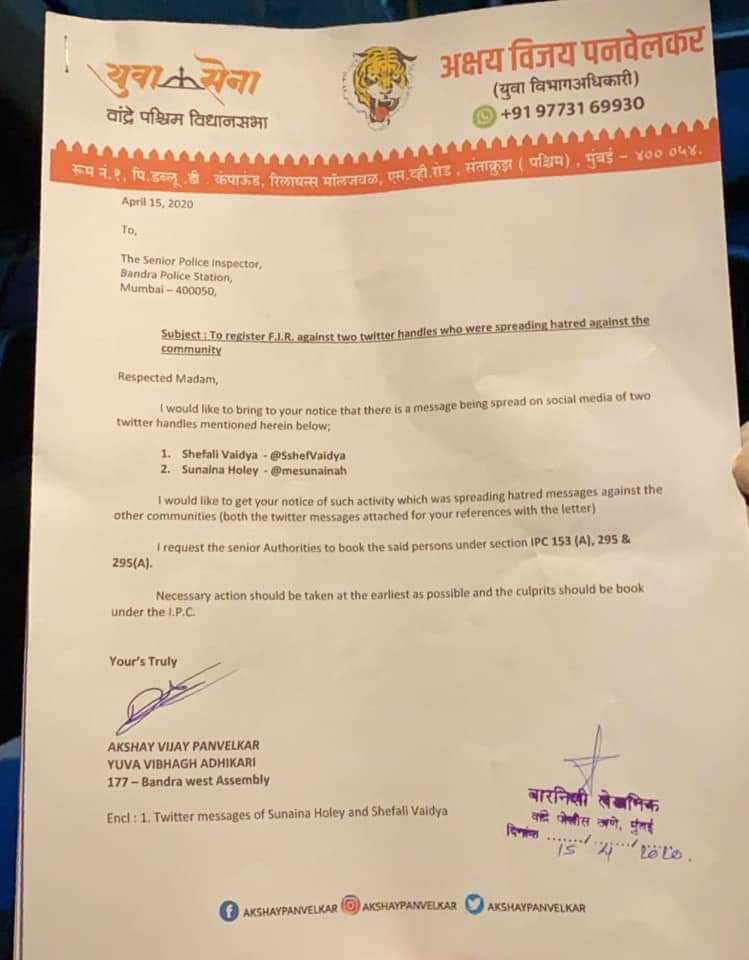
On April 15, a Shiv Sena leader Akshay Vijay Panvelkar has written to the senior police inspector of the Bandra Police Station, asking him to take action against political commentators Shefali Vaidya and Sunaina Holey, for speaking against the role of Tablighi Jamaat in endangering public health and safety and highlighting the failure of the Uddhav Thackeray government to prevent the massive gathering at Bandra.

In the letter, the saffron party member claimed that the duo was spreading “hatred messages against the other communities.” He also requested the cops to press charges under Indian Penal Code Sections IPC 153A (Promoting enmity between religious groups), IPC 295 (Defiling place of worship to insult a religion) and 295A (Deliberate and malignant act to outrage religious feelings )

Image of the contentious letter

Tweet by Shefali Vaidya

On April 14, migrant workers had gathered in large numbers at Ahle Sunnat Sunni Raza Jama Masjid near Bandra station, Mumbai, demanding to go back home as the nationwide lockdown got extended till May 3. It is crucial to remember that the Jamaatis had earlier flouted government orders and attended at a religious congregation at Nizamuddin Markaz between March 13 and March 15, resulting in a spike in the number of Wuhan Coronavirus cases in India.

Author Shefali Vaidya had compared the unprecedented scenario at Bandra to that of the Tablighi Jamaat’s religious event. She called out the Maharashtra Chief Minister Uddhav Thackeray for failing to stop the large gathering of migrant workers.

Tweet by Sunaina Holey

Swayamsevak Sunaina Holey was also targeted for voicing her opinion about the mass gathering at Bandra that took place in complete disregard to the nationwide lockdown. Criticising Uddhav Thackeray, she had asked whether the Chief Minister would blame the Prime Minister for the violation of social distancing guidelines. Holey also took a jibe at the reference of “single source” which is a ‘secularised version’ of the number of Coronavirus cases caused due to Tablighi Jamaat.

Intimidation to Suppress Free Speech

The above tweets show only concern for a possible virus spread, just like the Tablighi Jamaat congregation led to a sudden spike in positive cases across the nation, and calls out the Uddhav Thackeray government for lapses that had failed to prevent a massive gathering in Bandra. The Shiv Sena leaders seem not to have taken the criticism of their leader kindly.

Earlier, a non-cognizable offence against a doctor had been lodged by Aurangabad Police for allegedly sharing a post on social media terming the Tablighi Jamaat chief Maulana Mohammad Saad a ‘terrorist’. According to the police, the doctor had posted Saad’s photograph on social media with a caption, “Wanted, please inform your local police if you have any input about the location of this terrorist.”

Thackeray’s Shiv Sena has been trying various methods to intimidate those who criticise the CM or his family. Earlier, Shiv Sena goons had beat up a Mumbai man and had shaved his head in the public for speaking against Uddhav Thackeray.

As the ‘Year of The Metal Rat’ returns, China fears the coronavirus may trigger far more damage than anticipated

The coronavirus pandemic is ravaging the world and experts agree that by the time the pandemic is done with us, the world as we know it today would have changed forever. As it had happened with every major calamity, be it economical, pathogenic or geo-political, major disruption in the established order are bound to follow and this coronavirus pandemic, many believe, will be no different.

As the world suffers from a pandemic that many believe was originated from China, caused by China and was made worse by China’s policies, slowly, an anti-China wave is surging. Irrespective of conspiracy theories and sci-fi references, as the pandemic ravages supply chains, and brings economies to a halt, many nations have paused and taken note of how dependent they have been on China and how can they change the situation in future.

A report in the Nikkei Asian Review discusses the current scenario in the context of the Chinese astrological concept of the ‘Year of The Metal Rat’ or the Gang-Zi. 2020 is the reportedly the Gang-Zi, a time period that comes every 60 years and brings calamity to China.

Chinese astrologers believe that every time the ‘Metal Rat’ rolls, major history shaking incidents take place that change their nation forever.

As per the Nikkei report, 1840 was a ‘Year of The Metal Rat’, a year during the rule of the Qing dynasty, that saw the Opium War break out in China, bringing almost a century of misery and poverty.

60 years later, in 1900, another ‘Year of The Metal Rat’ followed and it saw the combined forces of the UK, USA, Germany, France, Italy, Russia, Japan and the then Austria-Hungary moved on Beijing to counter the ‘Siege of the International Legations’, an event that was triggered by the 1899 Boxers’ Rebellion.

The joined forced had marched from Tianjin to Peking (former name of Beijing) and had captured the city. The Qing empress had to flee the capital, only to be allowed entry two years later with humiliating peace terms. Eventually, the Qing dynasty was overthrown a few years later.

The next arrival of the ‘Year of The Metal Rat’ in 1960 brought with it a devastating famine to China, a result of Mao Zedong’s orders and communist policies. The great famine is believed to have caused 36 million deaths, though the Chinese official figures are far lower.

Now in 2020, exactly 60 years after the great famine that killed over 36 million people, China faces another behemoth that may as well change the way their nation, and even the world functions.

As the coronavirus ravages through populations, nation states are already re-thinking their policies, or dependency on China. Over the years, China had captured a major chunk of the world’s manufacturing operations.

Japan is one of the major nations that are keen to move their manufacturing operations out of China. Chinese President Xi Jinping’s visit to Japan had to be cancelled in March in the wake of the coronavirus crisis. on March 5, Japan PM Shinzo Abe chaired a meeting of the Japanese ‘Council of Investments for the Future’. That meeting, where Japan’s most powerful business houses and business lobbies were present, it was decided that they want high-value Japanese product manufacturing bases to ‘come home to Japan’.

“Due to the coronavirus, fewer products are coming from China to Japan. People are worried about our supply chains of the products that rely heavily on a single country for manufacturing. We should try to relocate high added value items to Japan. And for everything else, we should diversify to countries like those in ASEAN”, said Abe.

Since then, Japan has declared an economic package of over 2.2 billion USD to assist Japanese companies to shift their manufacturing base from China to Japan, or other Southeast Asian nations.

China was worried. On the very next day, as per the NAR report, Jinping held a meeting of the CCP’s Politburo Standing Committee and told his party leaders to prepare for the worst, not in as many words. Jinping reportedly told that it is time for “bottom-line thinking”, which means assuming the worst, and called for “preparedness in mind and work to cope with prolonged external environment changes.”

Not just Japan, the US has been very vocal against China ever since the pandemic broke, Through US President Trump has now stopped calling it a ‘Chinese Virus’, his government has made amply clear that they would like to see American companies shift their manufacturing base away from China, a call that aptly fits into their ‘America First’ policy. Recently, White House National Economic Council Director Larry Kudlow stated that like Japan, the US should also pay the moving cost for US companies seeking to move out of China.

It was also reported that major Korean companies, including Hyundai and POSCO are in talks with the Indian government, keen to move their manufacturing bases out of China and away from the US-China trade war. Only last year, mobile giant Samsung had ended its production operations in China. In the same year, it had opened its largest manufacturing facility in India’s Noida.

The economic ramifications are only a part of China’s woes. As per the Nikkei report, an increasing number of experts, including Dr Zhong Nanshan believe that the current pandemic is only the first wave of the virus. He says that like the second wave of the Spanish Flu killed more people than the first wave in 1918-20, the coronavirus will return in a second wave, bringing far more deaths. He has stated that the coronavirus has already mutated and the death rates have reached 20 times higher than that of influenza.

The coming months will reveal a massive shift in the ways of the world as we know it.

Middle-aged ‘Comedian’, Atul Khatri, hurls casteist slur against Rangoli Chandel after she tweeted angrily against ‘Mullahs’

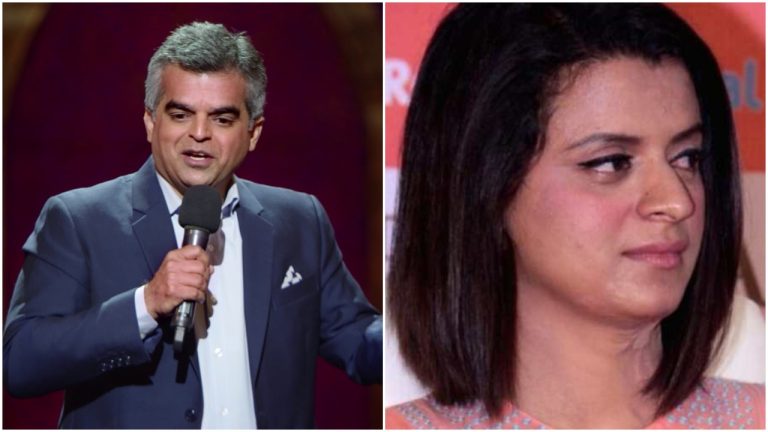
Atul Khatri, the out-of-job ‘comedian’, on Thursday shamelessly indulged in hurling casteist slur against Bollywood actor Kangana Ranaut’s sister Rangoli Chandel by referring to her as ‘Chandaal’.

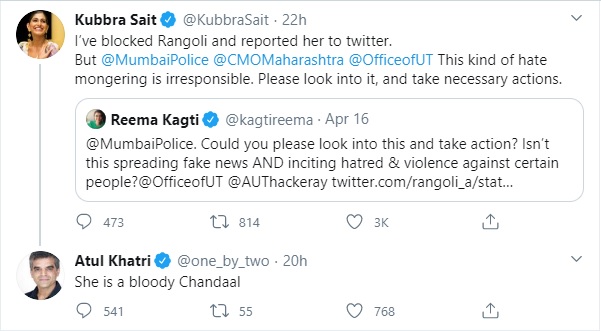
Atul Khatri took to Twitter to abuse Rangoli Chandel for her alleged comments against Muslim clerics. Khatri, who seems to have got upset at Rangoli following her comments against Muslim clerics, responded to one actress called Kubbra Sait to hurl casteist slurs against Rangoli Chandel. Kubbra was demanding that Mumbai Police and the CM of Maharashtra take “necessary action” against Rangoli Chandel.

Tweet by Atul Khatri

In a blatant act of casteism, Khatri referred Rangoli Chandel as ‘Chandaal’. Chandaal is a Scheduled Caste community who deals with the disposal of corpses and also performs last rites. Chandaal has been notified as Scheduled Caste in at least six states of the country.

Islamists and how they attacked Rangoli Chandel

The attack against Rangoli by the middle-aged-comedian Khatri came after she tweeted an angry message against ‘mullahs’ who are constantly unleashing violence against frontline workers like the doctors, nurses and cops during the coronavirus.

Following her anger against Muslim clerics, Rangoli Chandel, who has been an acid attack survivor herself, was attacked by Islamists and trolls. Just like Khatri, trolls abused Rangoli and said that she deserved the acid attack and some Islamists also wished for another acid attack on her.

Khatri’s obsession with Rangoli Chandel

Atul Khatri seems to have a great obsession with Chandel as time and again he has resorted to abusing her. In his attempt to make fun of Rangoli, Khatri had mocked the acid attack survivor and had also referred to as ‘Chandaal’ then.

During the JNU violence episode, Khatri had mocked ABVP by claiming that the ‘aukaat’ (worth) of ABVP workers was such that, they only deserved sympathy from Rangoli ‘Chandaal’.

Twitter demands action against Atul Khatri

There were several people who demanded that action be taken against Khatri for hurting the sentiments of SC/CT and also condemned him for the casteist slur.

Adviser of Dalit Indian Chambers of Commerce & Industry (DICCI), Mr Guru Prakash also condemned the language used by Khatri and called it ‘deeply offensive’.

The tragedy of Indian standup comedy scene is that not only are most of these ‘comedians’ unfunny but also they are extremely abusive. Addition to that, their constant hatred for Hindu traditions stand out as they have often used their platforms to inject hatred against Hindus and their religious tradition in the name of comedy.